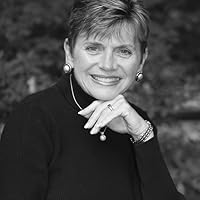
This book was so inspirational! Molly Melching's story of working in Senegal, founding the NGO Tostan, and spurring the end of FGM in Senegal is amazing. I loved that this woman wears boubous and speaks Wolof. Her approach was of entering into conversation with the Senegalese, versus the stiff and formal relations that dominated development work in the 1970's. In 1974 Melching came to Dakar for a study abroad and has lived in Senegal since then. Melching was inspired in her work when in 1993 the U N adopted the Declaration on the Elimination of Violence Against Women. Noteworthy is that Senegal ratified CEDAW in 1980 and "put it into effect in 1985" (120). There is a discussion of the terminology of FGM, FGC and the UN's choice of FGM, pgs. 175-176 Melching advocated the term FGC as FGM inferred intentional harm and was offensive to villagers.]
Melching asked village women what their needs were; they responded they wanted education and to know about their own health. For example, malaria was believed to come from mangoes (93). Melching educated on the transmission of germs through an ingenious lesson whereby she put perfume in a bowl of water and had everyone dip their hand in the water. She explained how one did not see anything there, but one knew something was there, just like germs.
In 1995 some of the Tostan women approached Melching about the need to educate on FGM; Melching hesitated and felt conflicted as an outsider. However, she built a module on Human Rights and women's reproductive health. In 1997 a village in Thies made a public declaration against FGM. By 2002, 392 villages publicly declared ending cutting (204). As of 2013, over 5000 Senegalese villages have publicly declared against FGM.
When the women learned that many women in the world do not practice FGM they were surprised. They were empowered to learn about their human rights and as a result became leaders. Also, when they learned the scientific health consequences of FGM their opinions on FGM changed. Lastly, when Imams confirmed that FGM was not written in the Koran or part of Islam, their perspectives on FGM further changed. Melching realized the strong community values and work ways. Thus, she saw it was necessary for community consensus in order for large change (i.e. ending FGM), so she encouraged the women to talk with first the men in their communities, the religious leaders, their relatives in the neighboring villages. Many men did not even know what the genital cutting entailed- how it was done- what was cut. They then learned about the health consequences.
The taboo around sex meant a silence on this subject. Most inspiring was how Oureye Sall was herself a cutter (practictioner of FGM) who had cut hundreds of girls. This career was lucrative and prestigious for her; however, she could not continue in it after learning about the damages of FGM. She became one of the biggest educators and advocates against FGM for Tostan. Also Demba Diawara (a respected elderly man from Keur Simbara village) is another excellent enlightenment story. Melching had been working with him and consulting with him. However, when he heard about Tostan's work on FGM, he visited her in her office to tell her to stop. She asked him to come back to her after he did three things first: 1. talk with the women in his village about the cutting 2. talk with doctors about the health consequences 3. talk with imams. He went and did this, changed his opinion, and then came back to tell Molly he wanted to talk to villages, educating them (158-161).
In January 13, 1999 Senegal made FGM illegal. Melching and Tostan staff spoke with the government before they made it illegal, urging them to hold off on legislation because they believed they were making more progress from the communities rather than top down. Indeed they were right because the day after the law was passed, 100 girls were cut in the Kedougou region in protest (200). Women's resistance to un-supportive men is also presented. In Fouta women's voices and democracy from other casts were not supported. The women were frustrated by the lack of support by the men in their community. The women in this region refused to support male relatives (as protest) in a tradition where the women usually gave money and food (209).
Gerry Mackie a scholar on the ending of foot binding in China with game theory (Schelling convention) connected with Tostan and was excited to see public declarations against FGM; he foresaw the soon eradication of FGM before he even learned about Tostan's activities. Mrs. Alicia Archibald Little moved to China in 1887 and got involved with ending foot binding. By chance she stumbled upon a community that did not bind its women's or girl's feet. She was surprised. She asked the village people why they did not bind the feet and they said that they decided as community to end this suffering tradition. Mrs. Little understood how important collective decisions were and took this as a methodology. She founded a movement of reform through education around 1895. 1. She taught that women elsewhere did not bind their feet 2. taught the benefits of natural feet & the health detriments of bound feet 3. forming natural-foot societies that pledged not to bind and not to allow their sons to marry women with bound feet (179-183). By 1911 foot-binding was basically gone (182).
Tostan's approach is "to approach people--always in a peaceful, nonaggressive way, determined to find solutions rather than focus on the problems"(201). Melching and Tostan have won numerous awards. The WHO chose Tostan as a model for ending FGM in 2000. Melching was called by UNICEF to work in Somalia for ending FGM. As of 2013 over 5000 Senegalese villages have publicly declared against FGM. A new Tostan project addresses literacy through countering beliefs that it is bad to speak to one's baby. Melching was puzzled over literacy problems. For example: "In 2009, in eleven regions of Senegal, a study was conducted on the reading levels of children who had attended three years of formal school. The results were highly disheartening: only 7 percent of girls and 11 percent of boys evaluated were found capable of reading at a minimum level"( 246). She continued to question and dialogue with people and learned the root of the problem to be in early childhood development. Talking to one's baby was considered "crazy" and was taboo (247). Tostan educates parents about infant brain development and how talking to one's baby spurs on brain growth and applies social norm theory (247). The Tostan model is being applied in many countries, and Tostan takes on new initiatives.