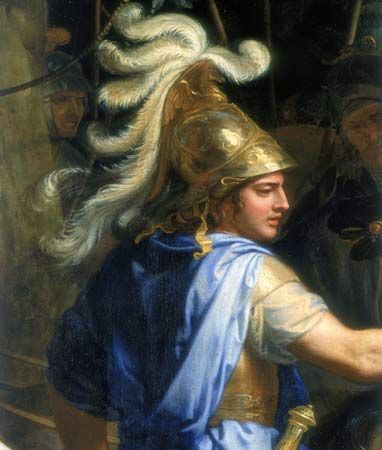
All his life, Alexander defied the limits the gods gave mortals. That passion overwhelmed cities and armies...and united a vast empire. Alexander was no longer simply King of Macedonia: The Pan-Hellenic League had named him Supreme Leader. Egypt crowned him Pharaoh. And all Persia acknowledged him as Great King. He was a true heir to Achilles and Hercules, a leader who had guided troops to victory beyond the Nile, the Tigris, and the Euphrates. Now, conquering India would place all of Asia in his hands.
But his army reached the limit of its endurance, and the cost of triumph had been high — in blood, betrayal, and tragedy. Alexander lost Barsine, his first beloved; Bucephalus, a steed unequaled; Peritas, his loyal hound; and Hephaestion, the closest companion of his youth. Still he sought the wisdom and might to transform the empire he had claimed into the one of which he dreamed, no longer divided into victors and vanquished, but a unified people under his rule. For Alexander was destined for timeless glory in the domain of heroes and gods — both in his lifetime and in the realm of eternal legend.
Valerio Massimo Manfredi is an Italian historian, writer, archaeologist and journalist. He was born in Piumazzo di Castelfranco Emilia, province of Modena and is married to Christine Fedderson Manfredi, who translates his published works from Italian to English. They have two children and live in a small town near Bologna. Valerio Massimo Manfredi defines himself as an "Ancient World Topographer". Since 1978 he spends his time teaching in several European universities, digging ruins in the Mediterranean and in the Middle East, and writing novels. The Professor of Classical Archaeology in the "Luigi Bocconi" University of Milan and a familiar face on European television, he has led scientific expeditions, excavations and explorations in Italy and overseas. In addition to this, he has published a number of scientific articles and essays as well as thirteen novels, including the Alexander trilogy and The Last Legion. Alexander was published in thirty-six languages in fifty-five countries and The Last Legion was sold for a major film production in the USA. The Last Legion film was released in 2007.
بيريتاس مات و بوسيفلاس مات و هيفاستيون مات و الإسكندر مات و بيرديكاس مات. انا زعلان جدًا بسبب موت الإسكندر اللي كان تقريبًا آخر حدث حصل للرواية قبل ما بطليموس يلخص اللي حصل بعد موت الإسكندر و اللي كان جديد بالنسبة ليا و صادم و غريب يعني حاربوا بعض علي ارض الإسكندر و في نفس الوقت بطليموس بيأكد انهم بطريقة ما كانوا دايمًا أصدقاء عجبني جدًا ملاحظات الكاتب في نهاية الرواية مع اني مش معاه في دمج شخصية إيومينس مع شخصية الإسكندر الثالث احنا كنا عارفين اسكندر المقدوني و عارفين إسكندر إيبيروس مظنش ان الإسكندر الثالث كان هيسبب اي مشكلة للقارئ زي ما الكاتب ظن كما لاحظت أيضًا استخدامه للتعبيرات الحديثة في بعض الأحيان و اللي الكاتب فسره بان المجتمع اليوناني نفسه كان عصري بشكل من الأشكال لانهم كانوا ناس بيتذوقوا الفن و الفلسفة و الرياضة و لم يكونوا إناس من عصور ظلامية يعني غير ان التعبيرات لم تكن كثيرة لهذه الدرجة عجبني برضه دخول الإسطورة في جو الرواية تاني و نبؤات الضالعين و السحرة و اللي كانت دايمًا صحيحة و نقدر نفسر ده بانهم كانوا علي علاقة بالشياطين التي تأتي بأخبار السماء لان القصة قبل ظهور المسيح نفسه كمان و الموضوع ده اتمنع في عصر الرسول محمد علي ما اعتقد. الكاتب وصل تاريخ الإسكندر و تاريخ غزواته بذكاء فظيع و مظنش ان حد هيقدر يحقق نجاح في نقل القصة بطريقة احسن من كده الراجل غير انه مدرس علم الآثار في جامعته الا انه قرأ كتب كثيرة جدًا بتوثق مغامرة الإسكندر و اللي اتفق مع الكاتب انها بالفعل اعظم مغامرة حصلت في التاريخ كما انه الغازي الأكثر ذكاءًا في التاريخ من وجهة نظري كما انه المنطقة اللي كانت بتقع تحت إيده كانت الأكبر بالفعل عن اي غازي آخر أتي بعده أو قبله و مينفعش ننسي انه عمل كل ده في 13 سنة بس.
So, my adventures with the great king of Macedonia are over. I will miss him but at the same time I am happy to resume a more stationary life for a while. If you want to know what happened, here are some of my notes:
We have left Asia minor behind us. Darius is defeated. Barsine, Alexander's great love, is dead. The army is on the way to Babylon where it is to rest for a month after which every soldier will be given a choice if he wants to follow his leader to the furthest shores, where the river Oceanos encompasses the earth, or if he wants to return home.
Asia, where a mysterious substance called ”naphta” emerges from the ground in springs - allowing barbarians to conjure a fire of incredible heat, where unfamiliar peoples, among unfamiliar landscapes, worship unfamiliar gods, and where even plants and animals are a source of wonder, is a paradise for explorers. But the further into the unknown continent, the more controversial is the expedition. Alexander begins slowly to dissolve the original composition of his troops. He adopts some of the Persian ways, accepts the prostration (’proshynesis’), that is a Persian custom to greet their king, marries the daughter of Darius becoming the rightful heir to the Persian empire. Survives an assacination attempt and comes close to mutiny in his own army. Great leader and a strategist that he is, he understands that with his faithful Greek troops he can only conquer Asia, but not keep it. So he slowly introduces changes. The veterans and earlier companions are being let go, one after another the old allies travel back to Greece while new contingents composed of Persians trained in Macedonian way, are taking their place. A strategically brilliant move, but at the same time a step towards alienating his own people, who with time will not be able to recognise the empire as their own. But Alexander must move on, whatever the price. To stop, or return, is not in his nature.
Seven years have passed since he left Pella. His friends are still with him, building of the empire continues, but conflicts between him and his friends occasionally flame up. After a particularly ominous dream involving Cleitus the ’Black’ (a friend and a warrior who fought alongside Alexander, and before him by his father Filip) Alexander decides to arrange a feast to clear the air after the nasty dream. Both he and Black become drunk. A recently arrived poet recites a text insulting one of the Macedomian generals who just died. Black gets angry, and challenges Alexander to punish the insulter, but Alexander does not hear the insult, only sees that his companion is hostile towards a guest. Situation accelerates, insults continue and intoxicated Alexander throws a spear at Black, hitting and killing him instantly.... A scene as if from the beginning of the end. But it is not the end - not yet anyway.
The adventures of the travelling king continue and the army pushes on into the depth of the continent, attacking and being attacked by native tribes, experiencing the fertile and hostile nature of the subtropical regions. Rain season makes the man feel not like man any more, but like beasts. Tension rises, and finally there comes the time to turn back. Alexander under pressure from his friends and his generals realises that his troops can not go on. His own curiosity for what lies beyond the next hill and next river, can not be satisfied. But the army is now somewhere at the foot of Hindukush, and even with the decision to turn back, the adventure is long from over. The army will fall victim to oceanic tides that they didn’t know anything about, they will travel through mountains and deserts, they will lose the way and almost perish of thirst and starvation, on the way to explore the unknown coast. And the troops are by now tired, so very tired, that it is unbelievable that they find the strength to go on. And although I enjoyed their company so much, I am tired too. It is time to end the adventure, and go home. Some of us, among them Alexander himself will never return home, and perhaps that’s just as well. Perhaps he will finally find solace when his spirit free of the confinement of his royal body will be able to go on to discover the ends of the earth.
It was an amazing and almost unbelievable adventure. Fascinating and frustrating at times but always a pleasure to read. Thank you professor Manfredi, for making it possible for me to join in.
الجزء الثالث والأخير من الملحمة التاريخية لسيرة الإسكندر المقدوني، استطاع الإسكندر قهر أعظم إمبراطورية عُرفت في ذاك الوقت. بعد أن خاض حروب وملاحم بطولية ضد أعدائه الفرس. يتوّج الإسكندر بألقابٍ عديدة منها فرعون مصر، وملك البابليين، وملك الفرس العظيم بالإضافة إلى لقبه ملك مقدونيا. ولولا وفاته المبكرة لاجتاح الجزيرة العربية وروما. فقد كان طموحه لفتح الدول وإخضاعها لحكمه وسيطرتهِ لا حدّ له.
انغمس الإسكندر في عادات وتقاليد الفرس بعد أن تزوج بابنة الملك الفارسي. ارتدى الأزياء الفارسية، وجند رجال الفرس في جيشهِ، ووضع البرابرة على قدم المساواة مع اليونانيين. مما أغضب أصدقائهِ القادة والمحاربين. ولم يكتف بذلك بل ازداد طغيانًا وتجبّرًا وغرورا عندما أعمته السلطة وتبجيل الفرس له بالسجود بين يديه، فأراد من الجميع أن يحذوا حذو الفرس بالسجود له. وهذا ما جعل القادة والجنود يستهجنون هذه الأوامر ويرفضون ذلّ السجود وهم المقدونيون الأحرار الذين خاضوا الحروب والفتوحات معه. حيكت الدسائس، وغزلت خيوط الخيانة والمؤامرة في آناء الليل وأطراف النهار، كرهًا وبغضًا لهذا الملك المتأله. وليومنا هذا لم يُعرف حقيقة سبب موت الإسكندر وهو في قمّةِ مجدهِ وشبابهِ وطموحه.
رواية جميلة وشيقة وممتعة لمحبي قراءة الروايات التاريخية.
اقتباسات . . .
“إن المشعل الذي يضيئ الغرفة أكثر هو المشعل الذي ينطفئ قبل غيره، لكن الموجودين سيتذكرون كم كان ضوؤه جميلاً في ذروة اشتعاله”.
“يتمتع الملك بامتيازات محددة. لكن يجب عليه كذلك أن يستعد ليكون أول من يموت في كلّ مرة يواجه فيه شعبه خطرًا داهمًا”.
“إن كل شعوب العالم ترى الشر في غيرها، وفي الأجانب وفي أسيادها”.
“تضع الأسياد الأحلام في قلوب الرجال. فهي تضع في قلوبهم الأحلام، والرغبات، والتطلعات التي تكون عادةً أكبر منهم. وتتوقف عظمة الإنسان على ذلك التناقض المؤلم القائم بين الهدف الذي يضعه لنفسه، وبين القوة التي وهبته إياها الطبيعة عندما قَدِم إلى هذا العالم”.
“إن الذي يرتكب جريمة في حالة ثمالة يكون ذنبه مزدوجًا، وذلك لأنه ثملٌ، ولأنه اقترف جريمة” ـ أرسطو.
“إن السلام في العالم هو الخير الأسمى، ولا يُمكن تحقيق الخير الأسمى من دون المرور عبر النار والسيف”.
“ليست هناك غزوة تحمل أي معنى، وما من حربٍ تستحق الخوض فيها، لأنه في النهاية لا نحصل على أرضٍ لنا سوى تلك التي نُدفن فيها”.
Reseña de la Trilogía completa en unos días, me ha gustado mucho en términos generales. No es Posteguillo, Negrete, Harris o Fabbri pero es una obra muy bien documentada, de lectura fácil y muy amena e instructiva acerca del gran Aléxandros.
Τελείωσα την τριλογία. Κάπου το επαναλαμβανόμενο μοτίβο, μαζεύω στρατό, εκστρατεύω, πολεμώ, νικώ και πάω παρακάτω ήταν λίγο κουραστικό από ένα σημείο και πέρα. Νομίζω δε, ότι πρώτη φορά διάβασα μία τόσο ωραιοποιημένη περιγραφή του χαρακτήρα και της ζωής του Αλέξανδρου. Πάντως ήταν ενδιαφέρουσα η τριλογία.
"El Confín del Mundo" es probablemente la parte más floja de las tres en que "Massimo Manfredi" ha decidido dividir su historia sobre "Alejandro Magno": no obstante esta división, del todo artificial, es un poco absurda y carece de sentido a la hora de valorar la obra porque la historia hay que entenderla como una unidad.
En realidad, y el propio autor así lo confiesa, escribir esta última parte del periplo vital de "Alejandro Magno" es una tarea difícil de acometer: información historiográfica escasa, fuentes originales oscuras y confusas, una etapa plagada de traiciones, intrigas y confabulaciones que confieren al libro un carácter más político y personal; soslayándose ligeramente la épica, la batalla y el ascenso y, con ello, la gloria casi divina del Rey macedonio para mostrarnos una faceta más humana, con todo lo que ello comporta.
"El Confín del Mundo" me ha atrapado bastante menos que sus predecesoras, llegándome incluso a cansar en ciertas etapas. En general es un libro más pausado, con una atmósfera triste, muy acorde con el declive que narra, con ese final tan emotivo y acertado, que me ha provocado una sensación de melancolía y desasosiego que no me ha resultado nada desagradable, al revés, la interpreto como la prueba, como la constatación física, de haber sentido como mía la historia de "Alejandro Magno". Uno de los mayores éxitos que puede atribuirse un autor, sin duda.
En definitiva, una serie de libros relativamente cortos, muy entretenidos, con un ritmo ágil y desenfadado, donde encontrarás literatura de calidad sin renunciar al entretenimiento. Y, bueno, ¿por qué no decirlo? Te llevas una clase de historia económica y divertidísima con la que es imposible no aprender, no empaparte de cultura clásica. Inconcebible no recomendar estos libros del autor italiano.
La nota de esta obra gravitaría sobre las 3,5 estrellas, redondeándola hacia abajo para ser coherente con los otros dos, que me gustaron bastante más y se llevaron ambos las 4 estrellas. Entendiéndolo todo como una historia, que es lo que realmente es, la nota conjunta alcanza los 4 astros.
Whilst I still enjoyed this, the third and final book in the trilogy, Alexander's biography does start to get a little bit repetitive - he raises an army, fights a battle, expands his kingdom, it's not enough so he moves on - he raises an army, fights a battle, expands his kingdom, it's not enough so he moves on... occasionally he meets the odd Arabian princess and falls in love (or lust?). That said, there are some genuine insights into the kind of person Alexander the Great might have been - and it is in this book that he makes some of his more difficult and ruthless decisions. Well-worth reading the trilogy right to the end.
Lo que nos cuenta. En el libro El confín del mundo (publicación original: Aléxandros: il confine del mondo, 1998), y tras sus visiones en Egipto, Alejandro y sus ejércitos ponen rumbos al este, primero pasando por Oriente Próximo y después camino a terminar con los restos de los persas que todavía operan más allá del Éufrates. Aunque en la retaguardia, en casa, hay movimientos rebeldes, sus ojos siguen puestos mucho más al oriente. Tercer libro de la trilogía Aléxandros.
¿Quiere saber más de este libro, sin spoilers? Visite:
Reached the end. I think the best you can say about this series is that if you want to read a fairly accurate and not-too-difficult account of Alexander's life, it performs that function. It avoids difficult language, does not stray very far from the source material, and tries to keep things lively. As well as the battles and drama that are inherent to the story, Manfredi inserts a fair amount of sex, I think rightly for detailing the lives and motivations of characters -- though the teenage reader should be warned that it rarely goes much beyond 'and then they had sex', and anyone looking for romance should be warned that Alexander has multiple wives, all of whom he professes to love but quickly abandons, and also a gigantic caravan of concubines (and of course a number of young boys).
The final volume moves into the darkest period of Alexander's story, and Manfredi seems to lack the stomach for some of it. Anything underhanded performed by the king is attributed to Eumenes, and Alexander's brutal purges of Parmenion and Callisthenes -- who dared challenge the egomaniac -- are passed off as regrettable necessities. The narrative perspective is sometimes hard to understand -- we get some events with Alexander's mental state described, and others where we see him only from the outside, following his own inscrutable whims. In general, though, there is a lack of internal life, no depth even really to the central character. We don't see Alexander as moved through various moods, struggling with deification or orientalisation or the solitude of command. Those things certainly matter to the story, but Alexander's own attitude never comes through -- there is no sense of him wrestling with questions, just a mysterious veneer punctured at times by a temper tantrum. This mysterious-actor vision of Alexander would even work, I think, if the cast around him were richer, deeper humans with their own problems and character development, but sadly they are even more faintly sketched, 2D characters following in his orbit only to play out scenes.
I think the main problem (other than the trilogy not being terribly well-written) is that Manfredi was writing in Alexander's favour, and the events in the period covered in this book are actually fairly difficult to square with the desire to present Alexander in an unwaveringly good light. You have to write this like history writes it -- gloriously audacious, but doomed, punctuated by human frailty. I would also say that the side-plot of Detective Aristotle is drawn out to a great degree for what felt like very little payoff, and never connected back to the main narrative, making it a very dubious addition.
Though I found it altogether disappointing, there is some value to this series. I think it perhaps might be best for teenage boys, who are (to generalise horribly) most open in their love of sex and violence and least concerned with character development. It's a viable alternative to the lower-grade kinds of sci-fi and fantasy they might otherwise get this fix from, and perhaps might stimulate some interest in history (which of course contains all the best sex and violence).
Última parte de las tres de una vida novelada de Alejandro Magno. En esta parte asistimos a la máxima expansión del Imperio de Alejandro, a su legado y su muerte. De las tres creo que es la menos lograda, porque se le va un poco de trascendente al autor, y nos endiña algún que otro rollazo.
El estilo de la trilogía me encantó, bordeando la lírica y la épica sin lanzarse de cabeza a ninguna de las dos (salvo en trozos de esta tercera parte), muy fácil de seguir, muy interesante, muy ágil. Disfruté muchísimo con esta trilogía.
Alexander life was Inspiring .... a flame that glowed fiercely and ended so soon ... I liked the history in th 3 Novel but as a novel it wasn't much really the craft of the novel was not satisfying ... the Arabic version - which I read - I think was censored by the translator - I have to check that :)
Pues muy bien Manfredi. Lo he disfrutado mucho. Igual me quedo con el segundo (en este último me hubiera gustado que el autor se detuviera en según que momentos. Son tantas las batallas y las conjuras que no te da tiempo a saborearlas), pero aún así, más que una trilogía, lo concibo como un único tomo dividido en 3 partes que te deja seco (en el mejor de los sentidos). Solo puedo recomendarlo y afirmar rotundamente que volveré a leer a Valerio próximamente.
I'm very glad to have finished Manfredi's trilogy: it was good, well-researched and introduced me to Peritas, Alexander's dog. I think that, having read Mary Renault's The Persian Boy, it will be hard for me to really enjoy any narrative retelling of Alexander's conquests. That said, this is a great attempt, I'm not surprised that it was an international bestseller, but...a lot of the major issues were avoided or brushed over: Alexander's bisexuality, the murder of his father, the speculation over the cause of his death, etc. I would highly recommend this trilogy for someone interested in ancient history, but a well-researched biography would certainly be of more use to a scholar. Good reading, entertaining and all that, but it could have been so much more, maybe. Manfredi sticks very closely to the facts and sources, and that's very admirable. We'll let that be the last word.
I did a readathon today and finally finished reading the third volume of the Alexander trilogy, 'The Ends of the Earth'.
The third part takes the story from the Egyptian adventure and continues with the story of Alexander's and his army's journey into Persia and the Middle East, Central Asia and India. There are lots of battles and wars and blood spilled. There are some beautiful, moving scenes in between. Some of those moving scenes look real. Others look like they have been inserted by the author to relieve the monotony of the war scenes.
This third part was interesting, but I felt at some point that the story was running on autopilot mode – one more new country, one more new war, one more new conquest, more killing. Out of the three parts, the first part was the best, the second part was good, and the third part was the weakest. But on the positive side, the third part has some of the most heartbreaking scenes in the story. The Alexander who comes in the first part is very likeable, the Alexander in the second part is half likeable, but the Alexander in the third part is far from likeable. This grownup Alexander is a ruthless person, who razes down cities which have surrendered and have opened their gates, killing thousands of innocent people. This Alexander is so ruthless that he kills a whole community of innocent people because they don't bow to him. This Alexander is so insecure that he suspects his close friends and people who are loyal him and gets them executed and assassinated. This Alexander is a tyrant and is a barbarian himself. At some point the story changes from an adventure into a tragedy when Alexander tells his troops to loot and ransack a city which has surrendered and then he watches them raping and pillaging and burning down things. The story then descends into a farce when Alexander marries the Persian princess and tries to take revenge for the Persian king's murder, the very king whom Alexander himself went to war against and tried to kill. Then it descends to worse than a farce with more and more illogical behaviour on Alexander's part. It is hard to blame the author Manfredi for all this, of course, because he is just trying to keep the story close to historical events. And the historical Alexander was like this. Not the noble hero as we are led to believe but a spoilt brat and a ruthless tyrant. His close friends are mostly 'Yes' men who occasionally speak their mind, but mostly toe the line. The only person who comes out of the story with his honour intact was General Parmenion, who serves King Philip first and then continues serving Alexander after he becomes king. He is old, his hair is white, but he is brave and loyal, and he speaks his mind. Things don't end well for him. He was my favourite character in the book.
After finishing the book, it is hard not to ask what is the point behind all these wars and conquests. What is the point of invading countries and killing people and razing down cities, especially when the people were minding their own business? How is that glorious? In the end how did all this benefit Alexander? He died young, in his thirties, leaving behind three wives and a kid. His wives were not Macedonian – two of them were Persian and one of them was Central Asian. They were all probably killed by his generals who fought over his kingdom. So what was the point in the end? It was all just a waste of time. It makes for a good epic story, 2500 years later, but otherwise, it is just lots of time wasted on unpleasant activities which resulted in unnecessary loss of thousands of lives. This is the story of every war. There are no winners. One of the unfortunate consequences of Alexander's invasions was that other kings and armies tried doing similar things across the centuries and millennia, trying to conquer the world or atleast their neighbouring countries. This has persisted deep into the 20th century and is continuing to this day.
The book has a note in the end in which the author describes the historical basis behind the story and it is fascinating to read.
I'm happy that I finally got to read the Alexander trilogy. It is my second chunkster this year, and at 1171 pages, it is the second longest book that I've ever read. Yay!
Have you read the Alexander trilogy by Manfredi? What do you think about it?
قراءة المصادر والجهد الذي صرفه الكاتب لإخراج الكتاب بهذا الشكل كفيلة بأن تترك للقراء نظرة عن أي تجربة ورحلة عظيمة ستُخاض.
الجزء الثالث الذي حمل أحداثاً مأساوية تجلت في خسارة ركائز الانتصارات وأعمدة الجيش العظيم،، المؤامرات والإحباط الذي كان يتواتر خاصة في أوقات الفراغ وهو أمر معروف في الحياة العسكرية أن قلة العمل توجب اختلاق النزاعات... تجربة الإسكندر ليكون ملكاً أكبر من عرش مقدونيا واكبر من تاجها وإنما ملكاً للعالم كانت مريرة ومؤسفة ومحاولات الإدماج بين الشرق والغرب فشلت بموته.. الإسكندر نوع من الرجال الذي يمكن القول بعد التعرف عليه أنه فعلاً من الأسياد الذين كان بإمكانهم أن يغيروا وجه العالم.
ينصح بالعمل بالأجزاء الثلاثة وبشدة.... رحلة دسمة وتروي العطش .
Terza e ultima parte della trilogia alessandrina di Manfredi, che va dalla battaglia di Gaugamela (tanto ancipata alla fine del secondo romanzo) alla tragica e misteriosa fine del mitico conquistatore. Lo stile è conservato nella sua essenza formulare, con più elementi tragici e introspettivi rispetto ai primi due libri. Notevoli le rievocazioni e i resoconti tattici delle battaglie e degli spostamenti in oriente (soprattutto durante la tentata invasione indiana), un po' meno caratterizzate le vicende personali del Re con le sue mogli, rispetto invece ai suoi tormentati rapporti con la torma e i generali. L'autore riesce soprattutto a evidenziare le discrepanze tra greci e persiani, i traumi del Re dovuti alle morti infauste (e spesso ordite da lui) dei suoi uomini migliori, tra i quali Parmenione ed Efestione, oltre a sottolineare, verso la fine, come tutti questi fasti incredibili abbiano avuto poi vita effimera e una fine amara tra i peggiori presagi. L'efficace epilogo di Tolomeo difatti sottolinea con rimorso le lotte intestine che hanno portato alla disgregazione del sogno del loro beniamino oltre che del suo gruppo, con la speranza di poter riviverlo con lui nell'eternità che spetta dopo la vita.
Ed eccomi a recensire questa trilogia che mi ha rubato il cuore e mi ha fatto amare ancora di più un grande uomo, un grande re, condottiero, stratega, un grande studioso, ma soprattutto un grande GRECO! Ma meglio non iniziare a parlare di Alessandro Magno, potrei non finire più.
In questa trilogia, Manfredi, con la sua impeccabile scrittura, ci fa entrare nel pieno della vita di Alessandro, partendo dalla sua infanzia nel primo libro che termina con la morte del padre, per poi passare alla sua crescita come re e all'inizio delle sue conquiste nel secondo e infine, nel terzo, entriamo nella sua mente, ascoltiamo i suoi ragionamenti e le sue strategie per conquistare mezzo mondo e un impero potente e imbattibile come quello dei Persiani. Nel terzo libro ho pianto molto, ho odiato Alessandro insieme al suo esercito quando sembrava sfiorare i limiti della pazzia o quando ha fatto scelte sbagliate che dimostravano la sua umanità, ma l'ho amato di nuovo quando spiegava le ragioni di alcuni suoi atti inspiegabili ed ho sofferto con lui in moltissime pagine.
Alessandro è stato un grande, ha sempre dimostrato bontà anche verso i nemici e una tale ferocia verso chi lo provocava non capendo l'errore che stava facendo.
Un romanzo storico, oltre ad aggiungere episodi fantastici e inventati per adornare la storia, fa conoscere al lettore molti dettagli e molti personaggi storici che nei libri di storia non vengono nemmeno nominati, ma che sono fondamentali. E questo è un capolavoro senza ombra di dubbio!
لا أصدق بأنني لن أجد الإسكندر لأقرأه عندما أصحو في الغد.. لقد كان روتيناً صباحياً لمدة أسبوعين..
هل برهن الكاتب على موهبته الفذة في البحث والكتابة بطريقة تسحبك تماماً لقصته وعيش جميع اللحظات مع الشخصيات؟ نعم! وبجدارة.
هذا الجزء بالتحديد كان كئيباً وبه الكثير من الحزن الذي كان يُغرق عينيَّ بالدموع فأفقد القدرة على الرؤية كليةً..
- حرق للأحداث -
ما كنت على علم واستعداد له هو قتل الإسكندر لكلايتوس، لكن ما حصل من خيانات واعدامات أخرى أحزنني للغاية.. فيلوتاس، كاليستين، بارمينون، إمينتاس أحزنتني تلك الحوادث جداً لأن أحداً منهم لم يكن له صلة مباشرة بخيانة الإسكندر! وصف الكاتب لهذه اللحظات، لحظات الإعدام وماقبلها، ثم مابعدها، الندم والحزن وهالة الكآبة التي تغطي الإسكندر وتخطف البريق الحي من عينيه، كان مبهراً جداً.
موت الإسكندر أبكاني بالطبع، لكن وعلى عكس المتوقع، لم يستطع الكاتب استحضار أي دمعة من عينيَّ عندما وصف موت هيفاستيون، بالرغم من أنني أحبه كثيراً لكنني لم أستطع أن أبكيه مع الوصف المقتضب لموته..
--إنتهى--
كما أشيد مجدداً بالترجمة، فهي رائعة بشكل يفوق الوصف.
عموماً، هذه الثلاثية تستحق فعلًا أن تُقرأ، ليس لمرة فقط، وإنما أكثر من ذلك بكثير. وقت رائع قضيته معها، بحق.
الإسكندر ، شخصية ليس لها نظير ، انه اعظم فاتح عرفه التاريخ على الاطلاق ، حتي هذا الوصف تشعر انه ضئيل امام عظمة الاسكند ، الذى ارتقى مصاف الاساطير حتى قبل ان يموت ، عندما تتخيل حوله اصدقاء طفولته بطليموس وبيرديكاس وليوناتوس وفيلوتاس ولايسيماخوس وايومنينيس وسلوقس وكرواتيرواس وحرس والده فليب القديم انتيباتر وبارمنيان والاسود ، تشعر انك تمام أمام الآلات حرب رهيبة بفرقهم وفرسانهم واسلحتهم ودروعهم ومشاتهم ذات الحراب الطويلة.
حاول الكاتب خلال الثلاث اجزاء تصوير الرواية الاصدق تاريخيًا لحياة الاسكند عير نصوص وادلة تاريخية وادبية ناقشه حيات ذلك الفاتح العظيم ، حتي في لحظاته الاقل جاذبية والتي فشل الاسكندر فيها ان يتمسك بالتعاليم التي لقنها له ارسطو وحتي عندما تاثر كاي بشر بنجاحاته التي لم يسطع ان يحققها بشر لا من قبله ولا من بعده صورها الكاتب بشكل اقرب للواقعية والاصاله .
رغم ان ( لسيت هناك غزوة تحمل اي معني وما من حرب تستحق خوضها لانه في النهاية لانحصل علي ارض لنا سوي التي ندفن فيها ) رغم ان هذة التقشف الفلسفي لاثنين من اعظم الحكماء الذين عاصرهم الاسكند وتاثر بهم ، لكن لانستطع لا ان نقول سلام علي سادة المعارك واعظم الفاتحين ، الإسكند ورفاقه.
يختتم الرواي رائعته في هذا الجزء، حيث ذهب الإسكندر إلى الأراضي البعيدة في الهند التي لم يطأها يوناني قط ولا تجرأ فارسي على إجتيازها ولم يثنه عن حلمه إلا تمرد جيشه الذي أنهكته الحروب و المؤامرات مما أجبره على الرجوع إلى بابل فسعى إلى توحيد العالم تحت قبضته لأنه أصبح ملك مقدونيا، قائد اليونان، فرعون مصر و إمبراطور فارس ولكن الموت أطل عليه باكرًا فترك مجدًا و مملكةً كانت الأعظم حينئذ لتنقسم بين رفاقه الذين ما لبثوا أن أصبحوا أعداءًا يتقاتلون على عرش مقدونيا في حرب أهلية راح ضحيتها كل أقرباء الإسكندر هكذا انتهت قصة فاتح عظيم كتب لنفسه الخلود في التاريخ
تحتاج مراجعة اخر جزء الى وقت لترتيب الافكار ، و الى التغلب على الحزن الطفيف الذي تلبس روحي المنغمسة في قلب القصة . لا اصدق بأنني انهيت السلسلة الآن ! لا مزيد من مغامرات الاسكندر ، لا مزيد من الفتوحات، ولا مزيد من المجهول . "كان جسدك لا يزال دافئا عندما بدأنا بالجدال حول من سيخلفك ...و اختفى ذلك الحلم الذي جمعنا فيما مضى" -سيعاد تحرير هذه المراجعة بما يليق بإذن الله-
اعتقدت مع نهاية الجزء الثاني ان climax القصة انتهى و مابعد ذلك سيكون انخفاض في الرتم حتى النهاية لكن مستوى الأحداث ظل متصاعد حتى الثلث الأخير من الكتاب تقريبًا .
Novela histórica de 389 páginas, tercera parte de la trilogía de Alexandros escrita en 1998. En esta llegamos al final de las conquistas de Alejandro que lo llevarán a la India con un ejército híbrido compuesto por su vieja guardia macedonia y nuevos contingentes persas, escitas e indios. Se trata de la parte más compleja de la historia, donde Manfredi ha tenido que novelar muchos de los acontecimientos difusos y con escasa bibliografía, normalmente producida por historiadores partidistas. Pero el autor cierra la trilogía de una forma exquisita y tan épica como la inició. Una historia totalmente recomendable que no debéis dejar pasar.
The concluding novel to Manfredi's Alexander Trilogy is the biggest in the series which reflects Alexander's growing ambition as he turns his sights on the Persian empire and beyond. Like the first few books, the novel moves at a brisk pace and deals with the struggles that the army endures both from the environment and every varying foes. The author must be commended for the exhaustive effort that has gone into the background research for this book as well as for depicting the events of the novel in a way that is easy to follow due to his choice to use contemporary language while depicting the events of the novel in as realistic a way as possible.
While it is understandable that anyone who goes to such lengths to research and understand a character, should view him or her in a positive light, the author however seems to give Alexander the benfit of the doubt with regard to the burning of Persepolis where it is portrayed as a tactical decision rather than the result of a drunken orgy. While the author himself admits that this is his version of the event and there are no accounts of what the real circumstances were as to what took place, it felt in a way that the actions of Alexander were detached from the rest of his generals and men which may in fact be what the author was trying to convey. Indeed, when Alexander first entered Persepolis he was even embarrassed to sit on Darius's throne but after the burning of Persepolis in quick succession he married Darius's daughter, adopted Persian customs and his ambitions grew with it. By the end of the novel, Alexander went as far as to create a spectacle out of the funeral pyre for Hephaeston which was a clear example of his excesses.
One criticism I have of the novel is that it seems to follow the received wisdom that the downfall of Alexander can be attributed to is embracing of the Persian culture which is presented in a way that is characterized by excess. This is quite surprising particularly given the fact that Macedonian culture for all its aspirations of being a martial culture does give way to these same excesses.
One of the things I would liked to have seen in the novel would have been to get a glimpse of what the sentiment was back in Macedon and how Alexander's immediate family coped with his absence. It was also quite disappointing that the story involving Aristotle and his quest to find the true culprits behind the murder of Phillip was left in an unsatisfactory manner.
However apart from these, the novel is punctured by some great emotional moments.One of my favourite scenes is the scene of Alexander's companions saluting and standing by Alexander's decision which was a throwback to a scene depicted in the first novel. The scene underlies the role reversal that has taken place from when they first gave the Salute to a Young prince Alexander in the first book when they were fugitives from King Phillip to now where they were masters of their own destinies world. The other strength of the novel is the depiction of the changing landscape and the wonderment of the troops as they push the boundaries of the known world and travel towards the "Ends of the Earth". The ending and the epilogue of the book is bittersweet and it seems that this objective of reaching the ends of the earth does prove to be an elusive goal. Overall, well worth the read.
Valerio Massimo Manfredi's ALEXANDER: THE ENDS OF THE EARTH is the final part of his epic trilogy charting the life of Alexander the Great. This one takes us through to the gruelling end, incorporating Alexander's war against the Persian king, Darius, and his invasion of India along the way.
It's an eventful read as ever, although it never quite reaches the same level of quality as the previous instalment, THE SANDS OF AMMON. The main reason for this is that THE ENDS OF THE EARTH is a lot thicker and format does become a little repetitive, with Alexander, his companions and his army going somewhere, fighting people, then going on to the next place.
Saying that, there's plenty of incident along the way, and the fates of some of his companions makes for particularly engaging reading. It's also interesting looking at what fame and fortune does to a young man's mind, so that come the end he really does believe that he's a god. Manfredi's writing is assured and confident, and the quality of this trilogy has led me to purchase some of his other works in the hope that they're as good.
رائعة ومشوقة وأنهيت قراءة الأجزاء الثلاثة في أسبوع،، أحببت الروايات التاريخيةوبدأت بالاستمتاع بها وبحثت عن فلم الاسكندر لمشاهدته،، أنصح بقراءتها والاستمتاع بفتوحات الاسكندر
أقاصي الأرض، ليست مجرد رواية عن الإسكندر المقدوني، بل هي ترحالٌ في قلب الحلم البشري حين يتمرد على الخرائط ويرفض أن تنتهي السماء عند الأفق. يخرج الإسكندر من مقدونيا فتىً تتوهج في رأسه صورة العالم، ويعود — أو يحاول أن يعود — رجلًا أثقلته الطرق البعيدة، والانتصارات التي تشبه الظلال، والأسئلة التي يعجز النصر عن إسكاتها.
أكثر ما يتركه الكتاب في الروح هو ذلك الشجن العميق: أن الرجال الذين يطاردون السلطة يظلون أسرى طريقٍ لا يبلغ نهايته أحد. فكل مدينة تُفتح تنبت على أطرافها مدينة أخرى، وكل مملكة تُضمّ تلد حنينًا إلى مملكة أبعد. وكأن السلطة ليست قمةً تُعتلى، بل سرابًا يبتعد كلما اقترب منه الساعي إليه، وعطشًا يزداد اتقادًا مع كل جرعة.
«لا شيء يكفي من يظن أن العالم كله يجب أن يكون له.»
يصور الكتاب الإسكندر لا تمثالًا من أسطورة، بل إنسانًا تطارده أحلامه كما تطارد الريح سفينةً وحيدة في بحرٍ لا ينتهي. فكلما اقترب من أقاصي الأرض، اكتشف أن أقاصي الرغبة أبعد من أن تُمسّ. وهنا تتجلى مأساة العظماء: ينتصرون على الجيوش والأسوار، لكنهم يعجزون عن الانتصار على النار المشتعلة في أعماقهم.
«كان يبحث عن نهاية الأرض، فوجد أن النهاية تسكن داخله.»
ولعل لهذا السبب يترك الكتاب في القلب غيمةً من الحزن بعد الصفحة الأخيرة. فالإسكندر الذي أخضع الممالك لخطواته لم يستطع أن يوقف عقارب الزمن، والذي ارتجفت لهيبته عروش الملوك لم يجد كلمةً يقايض بها الموت حين وقف على بابه. رحل شابًا، وترك وراءه إمبراطورية تتشقق كمرآةٍ واسعة، كأن التاريخ أراد أن يهمس بأن المجد، مهما اتسعت أجنحته، يظل طائرًا عابرًا في سماء الأيام.
سلام على أسطورةً ظنت أن العالم يتسع لحلمٍ واحد. لقد عبر الإسكندر الصحارى التي تشبه البحار، وتسلق الجبال التي تلامس الغيم، وأبحر نحو آفاقٍ لم تطأها الرغبة من قبل، لكنه في النهاية مضى كما يمضي الجميع: بلا تاج، بلا جيش، وبيدين فارغتين. ولم يبقَ منه إلا الاسم، يلمع في صفحات التاريخ كشهابٍ شقّ عتمة السماء طويلًا، ثم ذاب في البعيد.
«أقاصي الأرض» تذكيرٌ مؤلم وعذب في آنٍ واحد بأن بعض الرجال لا يطاردون السلطة لأنها تمنحهم القوة، بل لأنهم يحاولون بها أن يملؤوا فراغًا لا تملؤه الممالك ولا البحار ولا النجوم. لذلك تبقى أحلامهم أوسع من انتصاراتهم، وتبقى نهاياتهم أكثر شاعريةً وحزنًا من أمجادهم.
V tejto konkrétnej knihe sa vôbec neuvádza ani nenaznačuje ze by mal byt gay. Mal asi 3 manželky, možno sa vyspal s niakym týpkom ale pochybujem že by ho to klasifikovalo ako homosexuala, max. bisexuala. Na internete som našla že pár historikov prepoklada že bol gay alebo bi pretože odmietol niake dievča ktoré mu matka dohodila lebo sa jej zdal moc “ženský”. A ani sa mu nedivím jeho matka bola úplne vypatlaná osoba. Plus ešte k tomu historici poukazujú že sa rad pekne obliekal, nosil pekne šperky a nosil iba sukňu - čo bolo v tom čase pre Grékov normálny go-to outfit. Peržania (ich úhlavní nepriatelia) nosili nohavice takže logicky alexander ich nenosil ((ani spodné prádlo heheh). Myslím si že dosť chabé dôkazy. Rozoberám totu len preto lebo dedko mi požičiaval tieto 3 knihy o alexandrovi veľkom so slovami že bol teplý - nevidím kde? Mám chuť dedkovi kúpiť pieseň o achillovi aby vedel čo je gay😁. Otec zase hovori že umrel na aids čo je tiež asi naša ďalšia rodinná !spekulace. Celkovo alexandrova smrť je veľká záhada ale ja osobne som najviac priklonena k verzii že umrel na Guillain-Barré Syndrom čo je zriedkavé, ale závažné ochorenie, pri ktorom imunitný systém napáda zdravé bunky v nervovom systéme. Tento syndróm najviac korešponduje so záznami o jeho smrti. Avšak, záznami sa dajú ľahko sfalšovať alebo prepísať, ešte k tomu alexander III žil pred našim letopočtom takže mohlo sa to ešte všelijako zeditovať.😃
Alessandro Magno è da sempre stato uno dei personaggi storici che più mi hanno affascinato, con la sua sete di conquista e di voglia di vedere che cosa c’era oltre. Da sempre ho letto moltissimi libri su di lui e adesso era un po’ che cercavo un motivo per leggere anche l’ultimo volume di questa trilogia, motivo che finalmente è arrivato.
La trama è davvero molto intrigante, non solo perché racconta di moltissimi fatti storici di cui ignoravo l’esistenza, ma soprattutto per come è raccontata. La storia, infatti, scorre fluida, quasi sempre uno si ritrova incollato alle pagine, incapace di smettere di leggere, e solo raramente si imbatte in dei punti morti. E poi, soprattutto, sin da subito uno si ritrova completamente catapultato all’interno della storia, come se fosse davvero lì. Come i personaggi si incomincia a soffrire il caldo degli aridi territori asiatici come se si fosse in marcia da anni, e non stesi a letto a leggere, meravigliandosi del paesaggio circostante, proprio come se ci fosse davvero davanti agli occhi. E presto ci si ritrova in empatia con tutti i personaggi, dal primo all’ultimo. E si soffre con loro, in particolare con Alessandro, ma non solo, di fronte alle innumerevoli perdite e ai tradimenti che costellano questo libro. Non importa quanto uno se le aspettasse, quanto sapesse che quella morte sarebbe dovuta succedere, quando arriva è una stilettata al cuore.
Nel complesso un libro, anzi, una trilogia, che merita davvero la pena di essere letta.
Eğer vatan dediğin,üzerine bastığın toprağın geçmişini bilmek , zengin kültürünü özümseyip gerçekten ben buralıyım diyorsan bu 3 kitabı mutlaka okumalısın. Aslında bu bir roman fakat yazar Manfredi bu 3 kitabı tarihi roman olarak yazmış . Tarihi seviyorsanız , bugünkü olayları kavrayarak geleceği tahmin edebilmenin geçmiş tarihlerdeki olayları kavramaktan geçtiğini düşünüyorsanız bu 3 lü kitap mutlaka okunmalı.