

What do you think?
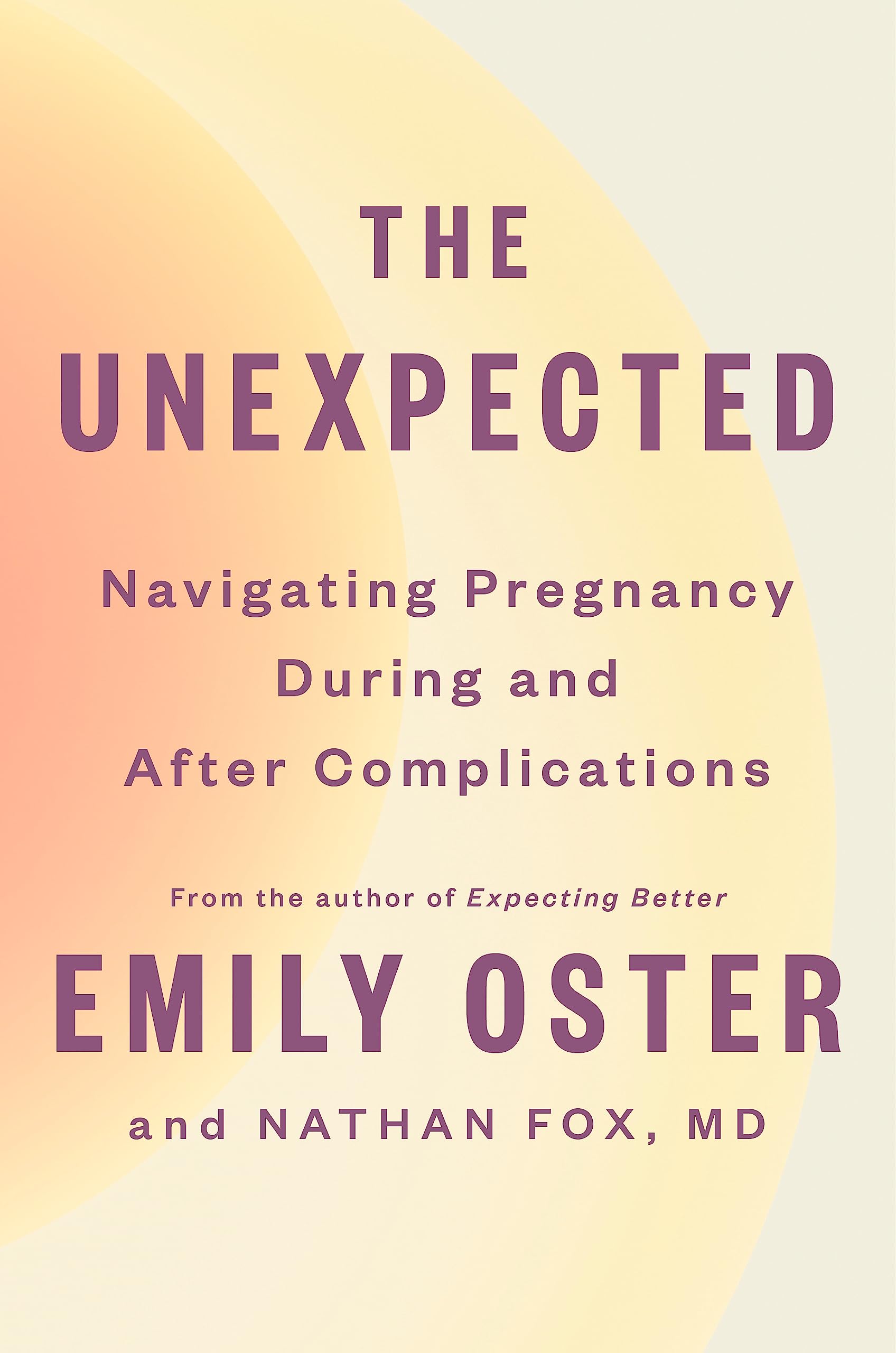
The Unexpected: Navigating Pregnancy During and After Complications
From the New York Times bestselling author of Expecting Better, a guide to navigating a second pregnancy when the first did not go as planned—with Dr. Nathan Fox, maternal-fetal medicine specialist
In Expecting Better, Emily Oster revolutionized the pregnancy landscape with her data-driven approach. In the years since, she kept hearing questions from readers on how to approach a second pregnancy when the first has not gone as planned.
While The Unexpected is a book that Oster hopes no one needs, the reality is that 50 percent of pregnancies include complications, a fact we don’t talk about. Preeclampsia, miscarriage, hyperemesis gravidarum, preterm birth, postpartum these are lonely experiences, and that isolation makes treatment harder to access—and crucial research and policy change less likely to happen.
A reassuring window into what can feel like weighted unknowns, The Unexpected lays out the data on recurrence and treatments shown to lower or mitigate risk for thirteen different conditions and challenges that may impact subsequent pregnancies. It also provides readers road maps to facilitate productive conversations with their providers and make diagnosis and treatment more efficient, with insights from lauded maternal-fetal medicine specialist Dr. Nathan Fox.
By bridging the knowledge gap and making space for difficult conversations, The Unexpected promises to make the hardest parts of pregnancy a little bit less so.
In Expecting Better, Emily Oster revolutionized the pregnancy landscape with her data-driven approach. In the years since, she kept hearing questions from readers on how to approach a second pregnancy when the first has not gone as planned.
While The Unexpected is a book that Oster hopes no one needs, the reality is that 50 percent of pregnancies include complications, a fact we don’t talk about. Preeclampsia, miscarriage, hyperemesis gravidarum, preterm birth, postpartum these are lonely experiences, and that isolation makes treatment harder to access—and crucial research and policy change less likely to happen.
A reassuring window into what can feel like weighted unknowns, The Unexpected lays out the data on recurrence and treatments shown to lower or mitigate risk for thirteen different conditions and challenges that may impact subsequent pregnancies. It also provides readers road maps to facilitate productive conversations with their providers and make diagnosis and treatment more efficient, with insights from lauded maternal-fetal medicine specialist Dr. Nathan Fox.
By bridging the knowledge gap and making space for difficult conversations, The Unexpected promises to make the hardest parts of pregnancy a little bit less so.
267 pages, Kindle Edition
Published April 30, 2024
About the author
Emily Oster
63 books939 followersEmily Oster is an American economist and bestselling author. After receiving a B.A. and Ph.D. from Harvard in 2002 and 2006 respectively, Oster taught at the University of Chicago Booth School of Business. She later moved to Brown University, where she holds the rank of Professor of Economics. Her research interests span from development economics and health economics to research design and experimental methodology.
She is the author of two books, Expecting Better and Cribsheet, which discuss a data-driven approach to decision-making in pregnancy and parenting.
She is the author of two books, Expecting Better and Cribsheet, which discuss a data-driven approach to decision-making in pregnancy and parenting.
Ratings & Reviews
Friends & Following
Create a free account to discover what your friends think of this book!
Community Reviews
Displaying 1 - 30 of 99 reviews
May 13, 2024
Really disappointed in this book and actually returned after purchasing. As someone that loves Emily Oster and owns several of her other books, this book was a huge disappointment.
Pregnancy and infant loss spans a wide range of causes and issues outside of miscarriage. I found it extremely disappointing that she only dedicated a small portion of the book to miscarriage and none to other forms of loss like TFMR.
Normally I wouldn’t write a negative review on something so specific but if you’re trying to help women navigate “the unexpected” and then you exclude a huge host of issues, you further alienate your reader and make them feel isolated (the opposite of her intention.)
Additionally, I found her advice and data provided in the sections extremely surface-level. It didn’t seem to actually help with anything and definitely didn’t help provide more information to someone who has experienced an issue as they’ve likely already come across the surface level info she provides.
Also, whereas her first book really dove into the human element of her pregnancies (and what she experienced) it seems she stayed away from that here…likely because she didn’t experience these things. It’s disappointing she didn’t somehow capture it, because humanizing pregnancy issues and showing the behind the scenes is critical in wholly understanding the challenge and toll it takes on women.
Pregnancy and infant loss spans a wide range of causes and issues outside of miscarriage. I found it extremely disappointing that she only dedicated a small portion of the book to miscarriage and none to other forms of loss like TFMR.
Normally I wouldn’t write a negative review on something so specific but if you’re trying to help women navigate “the unexpected” and then you exclude a huge host of issues, you further alienate your reader and make them feel isolated (the opposite of her intention.)
Additionally, I found her advice and data provided in the sections extremely surface-level. It didn’t seem to actually help with anything and definitely didn’t help provide more information to someone who has experienced an issue as they’ve likely already come across the surface level info she provides.
Also, whereas her first book really dove into the human element of her pregnancies (and what she experienced) it seems she stayed away from that here…likely because she didn’t experience these things. It’s disappointing she didn’t somehow capture it, because humanizing pregnancy issues and showing the behind the scenes is critical in wholly understanding the challenge and toll it takes on women.

May 30, 2024
Really disappointed with Oster’s lack of mention of TFMR - a very real and incredibly heartbreaking complication that could desperately use the exposure and support from someone who claims to be an ally. The omission certainly doesn’t seem to align with her views on genetic testing that can be found in her first book, which is even more frustrating and confusing.
It’s time to stop tip toeing around the true realities of women’s health, as uncomfortable as they may be. Willingly choosing to ignore TFMR only further perpetuates unfair stigma. I was definitely -expecting better- on this one. What a massive let down.
It’s time to stop tip toeing around the true realities of women’s health, as uncomfortable as they may be. Willingly choosing to ignore TFMR only further perpetuates unfair stigma. I was definitely -expecting better- on this one. What a massive let down.
May 13, 2024
I’ve genuinely enjoyed Oster’s books prior to this one and found them to be excellent sources of data, so I was disappointed that this one didn’t hit it out of the park for me.
I felt this was more of a superficial skim of widely-discussed complications and conditions rather than presenting a lot of new information. Being an avid listener of her podcast, I can’t say that I heard anything deeper than I’ve heard in episodes in the last year. If anything, I enjoy the dynamic conversations on the podcast versus the more dry presentation of this collaboration.
Admittedly, most of my disappointment is based on the fact that I was hoping for a frank discussion of some of the complications I experienced. I couldn’t identify with most highlighted, therefore felt excluded from the conversation.
I felt this was more of a superficial skim of widely-discussed complications and conditions rather than presenting a lot of new information. Being an avid listener of her podcast, I can’t say that I heard anything deeper than I’ve heard in episodes in the last year. If anything, I enjoy the dynamic conversations on the podcast versus the more dry presentation of this collaboration.
Admittedly, most of my disappointment is based on the fact that I was hoping for a frank discussion of some of the complications I experienced. I couldn’t identify with most highlighted, therefore felt excluded from the conversation.

May 5, 2024
I thought this was the weakest book written by Oster. I'm going to bump it up to 3 stars because I think the beginning of the book is fantastic where Oster walks you through some preparation for a second pregnancy. She describes how to frame the question and make a decision if you are even going to go through a second pregnancy (this is a repeat of her strategy from The Family Firm), gather information that will help you have a serious medical conversation with your doctor, and the questions to ask at that conversation so that you can go into a second pregnancy with the most knowledge and a plan of action. Then this is followed by tons of chapters about specific scenarios that could apply to you and I read them all even though most didn't apply to me. Oster provides information about what the data can tell you about recurrence and treatment and then Fox provides a medical perspective as a maternal-fetal medicine specialist. Oster's parts of these chapters are fine and may reassure or give a good warning to people who experienced these conditions in their first pregnancy. However, I wasn't impressed by Fox's contributions. In the introduction, it is stated that he'll give insight into how to talk to your medical provider about the specific condition, but that only happened in one chapter on VBAC where he broke down questions you should discuss with your doctor. In the rest of the chapters, he largely reiterated what Oster said about possible treatments with some extra details added. This was disappointing because I thought seeing specific conversation scripts for specific complications would be a very useful resource for women, but it was largely absent. Maybe this could be added for future revisions? Ultimately, however, I'm glad we're having the conversation and trying to get data out there to illuminate complicated pregnancies.

March 25, 2026
Good info, and I appreciate that they don’t discount some of the more natural remedies. However, I disagree with her stance on evolution and abortion.
December 28, 2024
This book is a must read for anyone who wants to become pregnant. Although it is written for women going into their second pregnancy, it addresses information that is incredibly hard to find- all the complications that can happen and the chance that they happen again. This helped me better understand how to be prepared when pregnant and what warning signs to look out for. It does have some hard to read material but I think being more informed always leads to better outcomes.

May 7, 2025
This book is about how to approach a second pregnancy when you’ve had serious complications (e.g., preeclampsia, miscarriage, hyperemesis gravidarum (HG), preterm birth, stillbirth, postpartum depression, 4th degree tears, etc) in your first pregnancy. 85% of the stuff discussed is not currently relevant to me so the remaining 15% that could still happen grabbed my attention the most.
Nathan Fox is fine and I listen to his healthful woman podcast sometimes but Emily is better on her own and I did not need the separate “medical perspective” sections from Nathan that would have been better integrated into the rest of the book rather than cordoned off.
Nathan Fox is fine and I listen to his healthful woman podcast sometimes but Emily is better on her own and I did not need the separate “medical perspective” sections from Nathan that would have been better integrated into the rest of the book rather than cordoned off.

May 8, 2024
Is there even such a thing as a completely uncomplicated pregnancy? I seriously doubt it. There are so many things than can go wrong to a lesser or greater extent. I have two healthy children and my two pregnancies were considered fairly easy and yet, I have personal experience with premature childbirth, fetal growth restriction and severe placental abruption. I wish this book was available when I was going through my second pregnancy to get some extra data instead on relying on sparse information from healthcare providers.
The book has comprehensive information regarding several different pregnancy complications which will be useful for many women who want statistics when faced with the uncertainty of different conditions they end up experiencing when pregnant. When it comes to some practicalities, some information will not be useful for people outside of the US, which is my biggest critique point.
I wish there was information on more conditions. For example, placental abruption is only introduced as one of the leading causes for fetal mortality in the second trimester of pregnancy and not as a complication in itself. I feel this is misleading when you take into consideration that even in its severe cases fetal mortality is 10-15%, dependent on the country, so far from a death sentence.
The book had a really good structure and was easy to navigate. If desired, it's easy to jump to a relevant section and skip all the rest without any confusion. Just like with the previous books by this author, the language was accessible to anyone, despite relying heavily on statistics and working with highly specialised medical data.
I admire the author's dedication to gather, distill, shape and share the knowledge about pregnancy and children. It's something still missing despite it being the 21st century.
The book has comprehensive information regarding several different pregnancy complications which will be useful for many women who want statistics when faced with the uncertainty of different conditions they end up experiencing when pregnant. When it comes to some practicalities, some information will not be useful for people outside of the US, which is my biggest critique point.
I wish there was information on more conditions. For example, placental abruption is only introduced as one of the leading causes for fetal mortality in the second trimester of pregnancy and not as a complication in itself. I feel this is misleading when you take into consideration that even in its severe cases fetal mortality is 10-15%, dependent on the country, so far from a death sentence.
The book had a really good structure and was easy to navigate. If desired, it's easy to jump to a relevant section and skip all the rest without any confusion. Just like with the previous books by this author, the language was accessible to anyone, despite relying heavily on statistics and working with highly specialised medical data.
I admire the author's dedication to gather, distill, shape and share the knowledge about pregnancy and children. It's something still missing despite it being the 21st century.

June 8, 2024
This book was disappointingly generic and unhelpful. Oster's classic "Expecting Better" was a great overview of scientific literature with novel insights about the traditional advice often doled out to pregnant women without much logical basis. This book, on the other hand, is no more helpful than the generic articles by doctors in the top results of Google searches. For example, the chapter on stillbirth basically amounts to, "Don't underestimate how difficult your next pregnancy will be emotionally." No techniques for coping, just "I've seen a lot of women who had stillbirths, and it's hard."
In "Expecting Better," Oster herself was an expecting mother, and that drove her to dig deep into the data. I think the difference here is neither Oster nor her co-author, Nathan Fox, have personal experience with loss. Oster has received a lot of emails from women who have, and Fox has seen a lot of patients who have, but their understanding of these complications is purely theoretical and observational. They don't know what women who have experienced these tragedies really want and need in a book like this, which is not, "Get your documents together" and "There's an X% chance of Y happening again," but actual solid advice on how to get through another pregnancy when you're no longer naive enough to believe that two pink lines means you'll be holding a healthy baby in nine months.
In "Expecting Better," Oster herself was an expecting mother, and that drove her to dig deep into the data. I think the difference here is neither Oster nor her co-author, Nathan Fox, have personal experience with loss. Oster has received a lot of emails from women who have, and Fox has seen a lot of patients who have, but their understanding of these complications is purely theoretical and observational. They don't know what women who have experienced these tragedies really want and need in a book like this, which is not, "Get your documents together" and "There's an X% chance of Y happening again," but actual solid advice on how to get through another pregnancy when you're no longer naive enough to believe that two pink lines means you'll be holding a healthy baby in nine months.

May 25, 2024
This is (in my opinion) the least engaging/fascinating of Emily Oster’s books, but it gets 5 stars from me for laying out a lot of info in an organized, empowering manner. I particularly liked the checklist at the beginning for which medical records you should be obtaining, as well as the updated discussion on preterm labor (including post-Makena info) and the thorough discussion of hypertension/preeclampsia. It feels like this is a book mostly written for those considering a second pregnancy after complications with the first, but I’m a mom of four (all HG or borderline-HG pregnancies and all premature + some with hypertension issues and breastfeeding issues + 1 emergency c-section), and I thought I had sufficiently processed all of those things in my mind, but this book was really helpful to me in just mentally moving past some of the things I’ve been through and confirming some of my thoughts/experiences in a data-backed way. Thanks, Emily!
July 7, 2024
I don’t know what compelled me to read this book but it was great!
I was very interested in pregnancy and the menstrual cycle during college and this book brought me right back to those days.
Is this book comforting, informative and helpful for those expecting? No idea!
Is this book interesting, informative and education for those not expecting? Yes!
I loved the way the author organized the book and would recommend!
I was very interested in pregnancy and the menstrual cycle during college and this book brought me right back to those days.
Is this book comforting, informative and helpful for those expecting? No idea!
Is this book interesting, informative and education for those not expecting? Yes!
I loved the way the author organized the book and would recommend!
May 27, 2024
This book is for someone considering a second pregnancy after a first pregnancy with any number of complications. This book helped inform me about recurrence risks and prevention strategies for future pregnancies. The information in the book helped me formulate a list of questions and provided the knowledge I need to better advocate for myself.

February 14, 2026
Fairly generic book on “complications” that can occur during pregnancy and postpartum. Liked that they addressed maternal mental health, disliked that many of the topics she addressed felt surface level. I think this would be great to read purely for awareness, but I could not see this book being helpful if you are someone that has experienced any number of the complications in this book

Read
June 22, 2024This was tough for my anxiety and residual birth trauma, but I can see how it would be a very helpful resource for people. Although tbh the chapter on VBAC would have made me more anxious about going for it so it’s good this book wasn’t out 2 years ago!

October 31, 2024
I went into this book knowing I would only read the opening and sections relevant to me. Knowing that, the book provided insight and questions for me to ask myself and provider. It all felt very brief, but did give me enough information in some areas and a place to look further in others.

June 24, 2025
Love EO so much. A good read for anyone who just likes to know the surface data regarding risk and recurrence, and a helpful stepping stone to more specific conversations with your healthcare team
I especially loved her chapter on breastfeeding issues as she specifically addressed several struggles I faced
I especially loved her chapter on breastfeeding issues as she specifically addressed several struggles I faced

February 25, 2026
Not particularly helpful for me- as the book focused on how to prep for a second child after a complex pregnancy- which I am not planning to prep for. But if you need encouragement or medical thoughts, this book could help as it summarizes birth complications.

May 10, 2024
A wonderful tool for those who have ever experienced loss or complications in pregnancy/childbirth. So informative and incredibly empathetic.

July 19, 2024
TW: pregnancy loss, tfmr mentioned
Helpful for framing conversations about risk. Condition specific information is very general and may not be very elucidating. The information about delayed lactogenesis II was very helpful to me specifically.
I do find it a little strange that tfmr is not covered when other kinds of loss are. I get that tfmr happens for so many reasons and may be hard to generalize. However, many of those reasons overlap with stillbirth, so I don't know why one would be discussed and not the other.
Helpful for framing conversations about risk. Condition specific information is very general and may not be very elucidating. The information about delayed lactogenesis II was very helpful to me specifically.
I do find it a little strange that tfmr is not covered when other kinds of loss are. I get that tfmr happens for so many reasons and may be hard to generalize. However, many of those reasons overlap with stillbirth, so I don't know why one would be discussed and not the other.

May 26, 2024
There are so many things to breakdown on this one. But I’ll start with this: THIS BOOK NEEDED A (BETTER?) BIAS READER. Never mind the near-non-stop “woman,” “women,” “breast,” etc. Let’s talk about the misogynistic undertones. While “provider” and “doctor” are used liberally, the first time “midwife” is actually written out is in the context of switching providers “…if you didn’t like your doctor or midwife”, similarly in the setting of seeking lactation consultation “you may have had experience with a lactation consultant and that experience may not have been a good one.” Sure, of course you can have challenges with any prior provider (even doctors, shocking!!) but why call out the specialities held mostly by people who identify as women?
Also, what if your unexpected outcome was that you were mistreated during the birth process? Where’s that chapter? Vedem et al. (2019) found that 1 in 6 birthing people experienced mistreatment (making it a pretty common complication!). Niles et al. (2023) found much better experiential outcomes related to autonomy and respect when the birthing person was cared for in the community setting by midwives.
To say “this is not a book I would recommend” is an understatement. I’m sorry that is was published, I’m sorry it will further bias readers.
Also, what if your unexpected outcome was that you were mistreated during the birth process? Where’s that chapter? Vedem et al. (2019) found that 1 in 6 birthing people experienced mistreatment (making it a pretty common complication!). Niles et al. (2023) found much better experiential outcomes related to autonomy and respect when the birthing person was cared for in the community setting by midwives.
To say “this is not a book I would recommend” is an understatement. I’m sorry that is was published, I’m sorry it will further bias readers.

September 24, 2024
I have previously enjoyed Emily Oster’s books including Expecting Better and Cribsheets. I felt that they were very helpful, especially going through a pregnancy for the first time. When first hearing about The Unexpected, I was so excited to see a book that was going to focus on the complications of pregnancy. As a perinatal mental health therapist, I have worked with many women who’ve experienced “the unexpected” and I was hoping to find a helpful resource.
When I saw the audiobook was less than 6 hours, my red flags went off and I started to lessen my expectations for this book. Ultimately, this book skims (at best) some of the most common complications of pregnancy. For me, there was no wealth of knowledge to be found or gained. There was also a glaring issue I had with the book… they mentioned genetic screening but didn’t really discuss what that looks like when results are less than ideal. Amniocentesis is mentioned, but not explained. Termination for medical reasons (TFMR) is completely skipped. Ugh. What a shame. An entire subset of women completely ignored in a book that was supposed to focus on the unexpected. I would not recommend this to friends or clients.
When I saw the audiobook was less than 6 hours, my red flags went off and I started to lessen my expectations for this book. Ultimately, this book skims (at best) some of the most common complications of pregnancy. For me, there was no wealth of knowledge to be found or gained. There was also a glaring issue I had with the book… they mentioned genetic screening but didn’t really discuss what that looks like when results are less than ideal. Amniocentesis is mentioned, but not explained. Termination for medical reasons (TFMR) is completely skipped. Ugh. What a shame. An entire subset of women completely ignored in a book that was supposed to focus on the unexpected. I would not recommend this to friends or clients.

February 4, 2026
I rate the impact of this book on me a 4 out of 5. It gave me a lot of new information, but some I already knew or was not relevant, neither of which are issues with the book. Some parts helped me stay prepared.
The author opens by saying this is a book many may need but she hopes most do not have to read it. That fits. The book is about unexpected negative complications in pregnancy.
I found it helpful that she says most causes of challenges in this or a previous pregnancy are external or genetic. So you did not do something wrong. You do not need to feel guilty.
Five reasons a baby can be born prematurely
By accident your labor clock is set to the wrong date.
Preeclampsia.
Bacterial infection.
Gestational Diabetes
If you had gestational diabetes in a previous pregnancy, the probability of having it again is 50%. High.
8% of births have complications from gestational diabetes. That is why screening is so common. If you know you have it, the way to keep symptoms and the problem under control is well defined.
Against Preeclampsia
Calcium supplements can reduce the likelihood of preeclampsia. But the ideal daily dose is very high: 1000 mg. Prenatal vitamins are already large. You need multiple tablets. Adding enough calcium would make the pill so big you would need a fork and knife to eat it.
Baby aspirin can reduce the chance of preeclampsia.
Preterm birth
Only one third of babies survive when born at 24 weeks. At 36 or 40 weeks, 99% or more survive.
You can try to reduce the likelihood of preterm birth with omega-3 fatty acids (from fish oil), progesterone, or baby aspirin. The data on all three is mixed and not strong.
C-section and VBAC
About 35% of births in the US are by c-section. If you had a c-section before, your later pregnancy is more than 50% likely to be a c-section too. A few years ago the default was: if you had a c-section, you would have a c-section again. From 1970, VBAC attempts started.
18% of women try. 14% succeed.
Success rates are higher at academic centers where it is easier.
Women who had an elective c-section and women who had a natural birth both rate their experience well. Women who went through labor and then had an emergency c-section rate their experience low.
If your earlier c-section was because of stalled labor, those same conditions might happen again in your next pregnancy and delivery.
Trial of labor after cesarean (TOLAC)
A more accurate term is TOLAC: trial of labor after cesarean.
One rare risk when you attempt labor after a previous c-section is that the scar is close to the uterine wall and labor forces might break open the uterus.
There are multiple types of plans. One example: I want to try for labor, but if I need to be induced I would rather have an elective c-section.
39 weeks
In 20 to 50% of third-trimester stillbirths, the cause is chromosomal abnormalities or medical issues (maternal infections, physical injury from something like a crash). If you had a stillborn previously, in your next pregnancy it is better to be offered induction at 39 weeks.
Episiotomy
Episiotomy in the research went from routinely doing it for everybody to routinely not doing it for anybody. Now the latest numbers say about 10% might need it. Most women delivering their first child will have some vaginal tearing. The doctor decides whether to do an episiotomy: for example when a fourth-degree delivery is required, or when the doctor needs to move the tear away from the urethra (where the tear is painful) toward the anus.
Postpartum depression and psychosis
If you had postpartum depression the first time, it is very likely again because the underlying causes are the same. Postpartum psychosis is a different problem. You might feel like harming the baby. Depression is when negative emotions make it hard to function day to day and may lead to self-harm. Some women are so traumatized by postpartum feelings that it is one of the factors they consider when thinking about another baby.
Breastfeeding the second time
Research shows that breast milk supply is usually enough for more than one child at a time. The rest depends on demand from the baby or a pump.
Research shows that the second time you breastfeed it is much easier than the first. That fits the popular notion that we have evolved to give birth and know intuitively how to do it.
Severe nausea
Some women have severe nausea that requires hospitalization and an IV. Those women may face stigma and judgment from friends, family, and colleagues because it is common for women to have some manageable nausea.
Miscarriage
90% of first-trimester miscarriages are chromosomal. So there is nothing the parents could have done. Older maternal age means older eggs and more likelihood.
There is no problem trying for another pregnancy right after one miscarriage. If you wait for one period, it is easier to date the next pregnancy. In some cases you may need to wait so any infection clears.
Blood loss and delivery
Blood loss from the uterus after delivery can be 1 liter per minute. Sounds scary.
C-section involves more blood loss than vaginal delivery.
Many other complications are clearly complications. C-section is somewhere in between: a reasonable way to deliver, not a complication in itself.
Known unknowns
The cause is unknown for 50% of stillbirths.
I first wrote this reviews at: https://www.harshal-patil.com/post/th...
The author opens by saying this is a book many may need but she hopes most do not have to read it. That fits. The book is about unexpected negative complications in pregnancy.
I found it helpful that she says most causes of challenges in this or a previous pregnancy are external or genetic. So you did not do something wrong. You do not need to feel guilty.
Five reasons a baby can be born prematurely
By accident your labor clock is set to the wrong date.
Preeclampsia.
Bacterial infection.
Gestational Diabetes
If you had gestational diabetes in a previous pregnancy, the probability of having it again is 50%. High.
8% of births have complications from gestational diabetes. That is why screening is so common. If you know you have it, the way to keep symptoms and the problem under control is well defined.
Against Preeclampsia
Calcium supplements can reduce the likelihood of preeclampsia. But the ideal daily dose is very high: 1000 mg. Prenatal vitamins are already large. You need multiple tablets. Adding enough calcium would make the pill so big you would need a fork and knife to eat it.
Baby aspirin can reduce the chance of preeclampsia.
Preterm birth
Only one third of babies survive when born at 24 weeks. At 36 or 40 weeks, 99% or more survive.
You can try to reduce the likelihood of preterm birth with omega-3 fatty acids (from fish oil), progesterone, or baby aspirin. The data on all three is mixed and not strong.
C-section and VBAC
About 35% of births in the US are by c-section. If you had a c-section before, your later pregnancy is more than 50% likely to be a c-section too. A few years ago the default was: if you had a c-section, you would have a c-section again. From 1970, VBAC attempts started.
18% of women try. 14% succeed.
Success rates are higher at academic centers where it is easier.
Women who had an elective c-section and women who had a natural birth both rate their experience well. Women who went through labor and then had an emergency c-section rate their experience low.
If your earlier c-section was because of stalled labor, those same conditions might happen again in your next pregnancy and delivery.
Trial of labor after cesarean (TOLAC)
A more accurate term is TOLAC: trial of labor after cesarean.
One rare risk when you attempt labor after a previous c-section is that the scar is close to the uterine wall and labor forces might break open the uterus.
There are multiple types of plans. One example: I want to try for labor, but if I need to be induced I would rather have an elective c-section.
39 weeks
In 20 to 50% of third-trimester stillbirths, the cause is chromosomal abnormalities or medical issues (maternal infections, physical injury from something like a crash). If you had a stillborn previously, in your next pregnancy it is better to be offered induction at 39 weeks.
Episiotomy
Episiotomy in the research went from routinely doing it for everybody to routinely not doing it for anybody. Now the latest numbers say about 10% might need it. Most women delivering their first child will have some vaginal tearing. The doctor decides whether to do an episiotomy: for example when a fourth-degree delivery is required, or when the doctor needs to move the tear away from the urethra (where the tear is painful) toward the anus.
Postpartum depression and psychosis
If you had postpartum depression the first time, it is very likely again because the underlying causes are the same. Postpartum psychosis is a different problem. You might feel like harming the baby. Depression is when negative emotions make it hard to function day to day and may lead to self-harm. Some women are so traumatized by postpartum feelings that it is one of the factors they consider when thinking about another baby.
Breastfeeding the second time
Research shows that breast milk supply is usually enough for more than one child at a time. The rest depends on demand from the baby or a pump.
Research shows that the second time you breastfeed it is much easier than the first. That fits the popular notion that we have evolved to give birth and know intuitively how to do it.
Severe nausea
Some women have severe nausea that requires hospitalization and an IV. Those women may face stigma and judgment from friends, family, and colleagues because it is common for women to have some manageable nausea.
Miscarriage
90% of first-trimester miscarriages are chromosomal. So there is nothing the parents could have done. Older maternal age means older eggs and more likelihood.
There is no problem trying for another pregnancy right after one miscarriage. If you wait for one period, it is easier to date the next pregnancy. In some cases you may need to wait so any infection clears.
Blood loss and delivery
Blood loss from the uterus after delivery can be 1 liter per minute. Sounds scary.
C-section involves more blood loss than vaginal delivery.
Many other complications are clearly complications. C-section is somewhere in between: a reasonable way to deliver, not a complication in itself.
Known unknowns
The cause is unknown for 50% of stillbirths.
I first wrote this reviews at: https://www.harshal-patil.com/post/th...
September 24, 2024
DO NOT READ THIS BOOK IF YOU SUFFERED A MISCARRIAGE, OR MORE
I was looking forward to this book while being pregnant in my first trimester after two previous miscarriages, waiting for the release date. I had high hopes, after reading Emily Oster's landmark book "expecting better".
What can I say? This book sucks. Rather than being helpful, it is rather detrimental. It cannot deliver what it promises and it seems completely outdated, when being fresh of the press. It left me anxious, frustrated and lowered my hope for a good outcome. It also does not give you much extra knowledge from what you can google.
If you would summarize the key message of the first trimester miscarriage chapter it would be: bad luck, there is nothing you can do to improve your chances at future better outcomes. Unless you have some rare disease and find a doctor who tests for it. This is backed up by many graphs and table of statistics. The book notes that the most common cause is genetic abnormalities in the embryo/fetus, and also suggest, that there is nothing you can do about avoiding future genetic abnormalities, but hoping for better luck next time. This is NOT in line with current science.
What it does not mention are easy detectable issues around: Vitamin D deficiency, Vitamin B12 deficiencies, MTFHR mutations for folic acid metabolism, issues around homocystein metabolism, the role bad sperm plays for miscarriages. How can the role of bad sperm be omitted here? And the list goes on: chemicals in our environment which disrupt the "ripening/production" of healthy eggs and sperm, PCOS and insuline resistence etc.
If you want to reduce your chances of a future miscarriage save the money on this book and buy "It start's with the egg" from Rebecca Fett (Third edition from 2023). You will get more knowledge, feel empowered to talk to your medical team, get actionable lab values to what to test before trying again and much more. The book is full of practical recommendations and makes the science of IVF patients available to the general public.
If you hate yourself you can of course buy this book and hate yourself some more.
I was looking forward to this book while being pregnant in my first trimester after two previous miscarriages, waiting for the release date. I had high hopes, after reading Emily Oster's landmark book "expecting better".
What can I say? This book sucks. Rather than being helpful, it is rather detrimental. It cannot deliver what it promises and it seems completely outdated, when being fresh of the press. It left me anxious, frustrated and lowered my hope for a good outcome. It also does not give you much extra knowledge from what you can google.
If you would summarize the key message of the first trimester miscarriage chapter it would be: bad luck, there is nothing you can do to improve your chances at future better outcomes. Unless you have some rare disease and find a doctor who tests for it. This is backed up by many graphs and table of statistics. The book notes that the most common cause is genetic abnormalities in the embryo/fetus, and also suggest, that there is nothing you can do about avoiding future genetic abnormalities, but hoping for better luck next time. This is NOT in line with current science.
What it does not mention are easy detectable issues around: Vitamin D deficiency, Vitamin B12 deficiencies, MTFHR mutations for folic acid metabolism, issues around homocystein metabolism, the role bad sperm plays for miscarriages. How can the role of bad sperm be omitted here? And the list goes on: chemicals in our environment which disrupt the "ripening/production" of healthy eggs and sperm, PCOS and insuline resistence etc.
If you want to reduce your chances of a future miscarriage save the money on this book and buy "It start's with the egg" from Rebecca Fett (Third edition from 2023). You will get more knowledge, feel empowered to talk to your medical team, get actionable lab values to what to test before trying again and much more. The book is full of practical recommendations and makes the science of IVF patients available to the general public.
If you hate yourself you can of course buy this book and hate yourself some more.
Read
July 1, 2024I guess I won't rate due to only skimming the book (as suggested by the author) and also because I'm waffling between a 3 and a 5. I'm a big Emily Oster fan and so appreciate that she wrote this book. In the muddiness of what is pregnancy and child rearing I found her other books to be super clarifying and she's always one of my first suggestions when I hear a friend is pregnant. I keep her advice of acknowledging that there is "no third option" with me for pretty much all of life's decisions. I appreciate her empathy and compassion woven in with her data and the general vibe of treating parents with respect.
That said, this book felt like it had a lot more distance from the topics than her others. I assume this comes from the fact that the authors had not experienced each of these complications, unlike Osters's experiences with pregnancy and the early childhood years. The guidance for talking to your healthcare team in the beginning was excellent, clear and organized, but the chapters on each topic felt lacking to me.
My focus was on the sections on hypertension and cesareans and vbacs all of which I did learn something about. That said, I still feel like I'm not clear on a few things, like why vbacs result in a large number of cesareans or how hypertension is such high risk even if you've had a healthy pregnancy until the end. I would have liked more from the miscarriage section as well as that's such a frequent occurrence that I still feel like I, a person very interested in all things related to pregnancy and birth, still don't know a ton about. For these reasons I don't see myself enthusiastically recommending it the way I do her other books.
Once again, I am left with the absolute injustice of how our country and the history of the world have treated and currently do treat mothers. So many women have challenging pregnancies and births and its talked about so little that I have to appreciate any effort to keep women educated in their decisions around having children.
That said, this book felt like it had a lot more distance from the topics than her others. I assume this comes from the fact that the authors had not experienced each of these complications, unlike Osters's experiences with pregnancy and the early childhood years. The guidance for talking to your healthcare team in the beginning was excellent, clear and organized, but the chapters on each topic felt lacking to me.
My focus was on the sections on hypertension and cesareans and vbacs all of which I did learn something about. That said, I still feel like I'm not clear on a few things, like why vbacs result in a large number of cesareans or how hypertension is such high risk even if you've had a healthy pregnancy until the end. I would have liked more from the miscarriage section as well as that's such a frequent occurrence that I still feel like I, a person very interested in all things related to pregnancy and birth, still don't know a ton about. For these reasons I don't see myself enthusiastically recommending it the way I do her other books.
Once again, I am left with the absolute injustice of how our country and the history of the world have treated and currently do treat mothers. So many women have challenging pregnancies and births and its talked about so little that I have to appreciate any effort to keep women educated in their decisions around having children.
Want to Read
November 7, 2025As heard on Self-Conscious with Chrissy Teigen - Emily Oster: Moving Forward After Pregnancy Loss
https://rss.art19.com/episodes/f5f1a8...
When pregnancy veers off the script, what do you do next—and how do you reclaim your power? Chrissy talks to economist and parenting data expert Emily Oster discussing her bestseller The Unexpected: Navigating Pregnancy During and After Complications, translating the hardest parts of miscarriage, stillbirth, preeclampsia, hyperemesis, and postpartum mental health into clear questions, better conversations with your care team, and compassionate next steps.
Five Key Takeaways
Name it to navigate it: Understanding what actually happened (not just the label) is the first step toward clarity, closure, and planning. Ask the four questions: What happened? Why did it happen to me? Could it happen again (and how likely)? What can we do to lower the risk or prepare? Recurrence isn’t one-size-fits-all: Some complications (e.g., gestational diabetes, postpartum depression) have higher repeat risk; others (like many abruptions) are less likely to recur—plan accordingly. Advocacy is a skill: Decide the communication style you want (all the numbers vs. big-picture), switch providers if you don’t feel heard, and bring your true self to appointments. Postpartum is medical, not moral: Screening for depression/anxiety (for birthing and non-birthing partners), pelvic recovery, lactation after loss, and body-image grief deserve proactive care—not silence or shame.
See Privacy Policy at https://art19.com/privacy and California Privacy Notice at https://art19.com/privacy#do-not-sell-my-info.
https://rss.art19.com/episodes/f5f1a8...

August 24, 2025
I loved Expecting Better, so when this was announced I wanted to get it during my next pregnancy, because of my traumatic birth. Nobody knows why my situation happened, so I can't know how likely it is that it will happen again. I almost wish it was a complication written about in this book, so it could be monitored, but alas. Either way I thought this book might help me mentally anyway.
The first part talks about preparing for a second pregnancy, and processing what happened to you last time. A very important step, it took until my first child was 21 months before we tried for a second - and even then I wasn't super ready nor over the birth trauma.
The main part of the book goes through the complications HG, miscarriage, GD, preeclampsia, FGR, preterm birth, C-section + VBAC, severe maternal morbidity and stillbirth. Lots of good fundemental information about each, including recurrence and treatment, plus a perspective from Dr. Nathan Fox, which fit well into the discussion. They cite plenty of research from all over the world, some of it was very fascinating, and I had to do some further reading. I shared some facts with my husband several times as well, plus got some ideas for planning my own upcoming birth that we discussed.
The last part is about post-birth complications. Recovery complications, mental health conditions and breastfeeding barriers, which were a nice touch. People often tend to forget about our issues after the baby is out.
If you liked Expecting Better, and something unexpected happened to you in a previous pregnancy, I recommend this book. Especially if it's one of the topics mentioned above, but I really enjoyed reading it myself, even though I couldn't personally relate to most of the conditions.
The first part talks about preparing for a second pregnancy, and processing what happened to you last time. A very important step, it took until my first child was 21 months before we tried for a second - and even then I wasn't super ready nor over the birth trauma.
The main part of the book goes through the complications HG, miscarriage, GD, preeclampsia, FGR, preterm birth, C-section + VBAC, severe maternal morbidity and stillbirth. Lots of good fundemental information about each, including recurrence and treatment, plus a perspective from Dr. Nathan Fox, which fit well into the discussion. They cite plenty of research from all over the world, some of it was very fascinating, and I had to do some further reading. I shared some facts with my husband several times as well, plus got some ideas for planning my own upcoming birth that we discussed.
The last part is about post-birth complications. Recovery complications, mental health conditions and breastfeeding barriers, which were a nice touch. People often tend to forget about our issues after the baby is out.
If you liked Expecting Better, and something unexpected happened to you in a previous pregnancy, I recommend this book. Especially if it's one of the topics mentioned above, but I really enjoyed reading it myself, even though I couldn't personally relate to most of the conditions.

August 25, 2026
A thorough, precise, and informative resource to aid in exploring options around complicated pregnancy. It felt helpful and eye opening as someone with very little familiarity to the conversation. It was also emotionally sensitive and honest, compassionate. I also enjoyed the "medical perspective" sections describing a basic thought process for a medical specialist, which also gave advice on what questions to ask and how to have more productive conversations. I would recommend :)
I notice some reviewers were disapointed, around the conversation of different conditions feeling more surface level. It seems like this may have been because the authors stick very much to facts and data, and are straightforward and honest about where said data is simply lacking. If youre a researcher, you'd probably be into this book, but also find it extremely introductory and would be able to come accross more potentially relevant information independently, if youre into that. Other reviewers left 1 star ratings because Terminated for Medical Reasons (TFMR) was excluded from the conversation. They noted how TFMR is not recognized by or familiar to the general public, and so it was a perfect opportunity to introduce that and bring exposure to the issue. It was also noted this left them feeling even more isolated and marginalized-- definitely not Oster's intended purpose at all. Others mentioned it seemed weaker overall than her other books, but i havent read them before so I don't really have anything to compare it to.
Overall, good, concise read i likely may refererance down the road, but complaints about lack of recognition of TFMR seem valid.
I notice some reviewers were disapointed, around the conversation of different conditions feeling more surface level. It seems like this may have been because the authors stick very much to facts and data, and are straightforward and honest about where said data is simply lacking. If youre a researcher, you'd probably be into this book, but also find it extremely introductory and would be able to come accross more potentially relevant information independently, if youre into that. Other reviewers left 1 star ratings because Terminated for Medical Reasons (TFMR) was excluded from the conversation. They noted how TFMR is not recognized by or familiar to the general public, and so it was a perfect opportunity to introduce that and bring exposure to the issue. It was also noted this left them feeling even more isolated and marginalized-- definitely not Oster's intended purpose at all. Others mentioned it seemed weaker overall than her other books, but i havent read them before so I don't really have anything to compare it to.
Overall, good, concise read i likely may refererance down the road, but complaints about lack of recognition of TFMR seem valid.
June 10, 2024
This book made me so angry!
I usually only write reviews if I love a book rather than when I have a strong opinion against a book but I absolutely have to make an exception with this one.
This book is primarily based on research and theory (and what is given is limited and biased) but there is no empathy, comfort, or support for those experiencing heartbreaking losses. If anything-it focuses on the assumption that the losses and complications are the same for each person-which especially dehumanizes their experiences.
The part that really made me upset was her short snippet about postpartum psychosis. This is very personal to me because I am a survivor of postpartum psychosis and part of the reason it is such a hard experience to go through is because of all the stigma and misinformation that is publicized about it. It is a complication that requires intervention but it is sensationalized because of scary news stories and books from the perspective of those who have never gone through it themselves. Even fiction books about it are so incredibly cold to those affected by it.
If you are going through a traumatic time during pregnancy and/or postpartum please know that you're not alone and we care about you.
Please don't pick up this book if you are looking for someone who is going to empathize with your struggles and losses.
There are so many more worthy and valuable books out there for you instead.
I usually only write reviews if I love a book rather than when I have a strong opinion against a book but I absolutely have to make an exception with this one.
This book is primarily based on research and theory (and what is given is limited and biased) but there is no empathy, comfort, or support for those experiencing heartbreaking losses. If anything-it focuses on the assumption that the losses and complications are the same for each person-which especially dehumanizes their experiences.
The part that really made me upset was her short snippet about postpartum psychosis. This is very personal to me because I am a survivor of postpartum psychosis and part of the reason it is such a hard experience to go through is because of all the stigma and misinformation that is publicized about it. It is a complication that requires intervention but it is sensationalized because of scary news stories and books from the perspective of those who have never gone through it themselves. Even fiction books about it are so incredibly cold to those affected by it.
If you are going through a traumatic time during pregnancy and/or postpartum please know that you're not alone and we care about you.
Please don't pick up this book if you are looking for someone who is going to empathize with your struggles and losses.
There are so many more worthy and valuable books out there for you instead.

May 3, 2024
I know Emily Oster is controversial in the parenting sphere, but I love her books. I love having all the data laid out for me so that I can make my own decisions, even when I don't necessarily agree with her about which risks are worth taking. I read her first two books and plan to read her third when my daughter is school age, but this was probably the book I was most excited to read, especially with it coming out just as people are starting to ask me if I'm going to have a second baby.
This book was the final push I needed to decide that I never want to be pregnant again. My pregnancy was very low risk right up until I gave birth, and it was reassuring to learn that the complications that could have killed my daughter and I are unlikely to happen again. It was less reassuring to learn that the complications that made my pregnancy and postpartum hell, specifically nausea so severe that my doctor threatened to hospitalize me if I lost more weight and postpartum anxiety so intense that I was scared to hold my baby, were very likely to recur. It was also terrifying to read about all of the other complications that could occur, especially with the current state of obstetrical care in the US. Having all the data laid out for me helped me to be sure of my decision instead of going back and forth about what ifs, and I really appreciated this book for that reason.
This book was the final push I needed to decide that I never want to be pregnant again. My pregnancy was very low risk right up until I gave birth, and it was reassuring to learn that the complications that could have killed my daughter and I are unlikely to happen again. It was less reassuring to learn that the complications that made my pregnancy and postpartum hell, specifically nausea so severe that my doctor threatened to hospitalize me if I lost more weight and postpartum anxiety so intense that I was scared to hold my baby, were very likely to recur. It was also terrifying to read about all of the other complications that could occur, especially with the current state of obstetrical care in the US. Having all the data laid out for me helped me to be sure of my decision instead of going back and forth about what ifs, and I really appreciated this book for that reason.
June 29, 2026
I know this book means well, but it’s poorly executed from start to finish. I would hard pass on this book if you have a low risk pregnancy. It talks about some potential risks and things that can happen during pregnancy/labor/post, with a lot of statistics with little empathy. Very dry and also not exactly helpful. The book feels like when a stranger or your unliked aunt just starts talking to you about horrific events that are very unlikely to happen. Although it’s information, doesn’t mean it’s exactly appreciated or helpful.
Going into my first pregnancy I thought I wanted to know certain risks and how to avoid them, but some of these unexpected risks are statistically so low that they will even happen. But now when I go into labor those thoughts will live in my brain rent free.
This book made me more anxious. I didn’t feel good reading it and wouldn’t recommend to anyone - maybe except a nursing student who isn’t pregnant? I don’t know. I get that it’s a book about the unexpected but that’s why I’m not recommending it to someone with a little anxiety. It’s not helpful.
Going into my first pregnancy I thought I wanted to know certain risks and how to avoid them, but some of these unexpected risks are statistically so low that they will even happen. But now when I go into labor those thoughts will live in my brain rent free.
This book made me more anxious. I didn’t feel good reading it and wouldn’t recommend to anyone - maybe except a nursing student who isn’t pregnant? I don’t know. I get that it’s a book about the unexpected but that’s why I’m not recommending it to someone with a little anxiety. It’s not helpful.
Displaying 1 - 30 of 99 reviews