

What do you think?

The Things We Lose, The Things We Leave Behind
The Things We Lose, the Things We Leave Behind is a new collection by Billy O'Callaghan that explores everyday existence in the aftermath of cataclysms both subtle and overt. The characters who populate these stories are people afflicted by life and circumstance, hauled from some idyll and confronted with such real world problems as divorce, miscarriage, cancer, desertion, bereavement and the disintegration of love.
238 pages, Paperback
First published September 1, 2013
About the author
Billy O'Callaghan
18 books318 followersBilly O'Callaghan was born in Cork, Ireland, in 1974. His books include the short story collections: In Exile (2008, Mercier Press), In Too Deep (2008, Mercier Press), and The Things We Lose, the Things We Leave Behind (2013, New Island Books/2017, CITIC Press, China); and a novel: The Dead House (2017, O'Brien Press/Arcade, USA).
His breakthrough novel, My Coney Island Baby, was published in 2019 by Jonathan Cape (UK, Ireland & the Commonwealth) and Harper (USA), as well as in translation by Grasset (France), Ambo Anthos (the Netherlands), btb Verlag (Germany), Paseka (Czech Republic), Ediciones Salamandra (Spain), L’Altra Editorial (Catalonia), Jelenkor (Hungary), Guanda (Italy) and Othello (Turkey). The novel was also shortlisted for the Royal Society of Literature's Encore Award.
A new short story collection, The Boatman, and Other Stories was published in 2020 by Jonathan Cape (UK) and Harper Perennial (USA), and is forthcoming from btb Verlag (Germany) and Sefsafa (Egypt - Arabic).
His novel, Life Sentences, published to critical acclaim by Jonathan Cape in 2021, and reached #3 Irish fiction bestsellers list. 'Life Sentences' was published in the US by David R. Godine as well as on audiobook by Blackstone, as well as in Czech translation by Paseka, in Croatian by Petrine Knjige, in Farsi by Rahetalaei, and in French by Christian Bourgois. The French edition was shortlisted for the Prix Littéraire UIAD and the Littératures Européennes Cognac Prix du Lecteurs. An edition of the book is also forthcoming from btb Verlag (Germany) in April 2025).
His work has been recognised with numerous honours, including Bursary Awards for Literature from the Arts Council of Ireland and the Cork County Council, a Bord Gais Energy Irish Book Award, as well as being shortlisted for Encore Award and Costa Short Story Award shortlistings, and his short stories have appeared in more than 100 magazines and literary journals around the world, including: Agni, the Bellevue Literary Review, the Chattahoochee Review, Fiction Magazine, the Kenyon Review, the London Magazine, the Massachusetts Review, Narrative, Ploughshares, Salamander, the Saturday Evening Post, the Stinging Fly and Winter Papers.
His latest novel, The Paper Man, was published in May 2023 by Jonathan Cape (UK) & Godine (USA), and as an audiobook by Blackstone. It has also been translated into Czech, published by Paseka.
His breakthrough novel, My Coney Island Baby, was published in 2019 by Jonathan Cape (UK, Ireland & the Commonwealth) and Harper (USA), as well as in translation by Grasset (France), Ambo Anthos (the Netherlands), btb Verlag (Germany), Paseka (Czech Republic), Ediciones Salamandra (Spain), L’Altra Editorial (Catalonia), Jelenkor (Hungary), Guanda (Italy) and Othello (Turkey). The novel was also shortlisted for the Royal Society of Literature's Encore Award.
A new short story collection, The Boatman, and Other Stories was published in 2020 by Jonathan Cape (UK) and Harper Perennial (USA), and is forthcoming from btb Verlag (Germany) and Sefsafa (Egypt - Arabic).
His novel, Life Sentences, published to critical acclaim by Jonathan Cape in 2021, and reached #3 Irish fiction bestsellers list. 'Life Sentences' was published in the US by David R. Godine as well as on audiobook by Blackstone, as well as in Czech translation by Paseka, in Croatian by Petrine Knjige, in Farsi by Rahetalaei, and in French by Christian Bourgois. The French edition was shortlisted for the Prix Littéraire UIAD and the Littératures Européennes Cognac Prix du Lecteurs. An edition of the book is also forthcoming from btb Verlag (Germany) in April 2025).
His work has been recognised with numerous honours, including Bursary Awards for Literature from the Arts Council of Ireland and the Cork County Council, a Bord Gais Energy Irish Book Award, as well as being shortlisted for Encore Award and Costa Short Story Award shortlistings, and his short stories have appeared in more than 100 magazines and literary journals around the world, including: Agni, the Bellevue Literary Review, the Chattahoochee Review, Fiction Magazine, the Kenyon Review, the London Magazine, the Massachusetts Review, Narrative, Ploughshares, Salamander, the Saturday Evening Post, the Stinging Fly and Winter Papers.
His latest novel, The Paper Man, was published in May 2023 by Jonathan Cape (UK) & Godine (USA), and as an audiobook by Blackstone. It has also been translated into Czech, published by Paseka.
Ratings & Reviews
Friends & Following
Create a free account to discover what your friends think of this book!
Community Reviews
Displaying 1 - 23 of 23 reviews

December 21, 2015
"We find a thought that helps to get us through, and cling to it like moss. And we bear the clouds for the occasional glimpse of sky.”
Billy O'Callaghan is an award-winning Irish author who sees with an artist's eye, analyses with a philosopher's mind, and writes with a poet's pen.
There is such a profusion of beautifully crafted, mellifluous phrases that if I highlighted passages, many pages would be more yellow than white. Beautiful. Brilliant. Profound.
The thirteen stories combine variety with universality: most focus on contemporary forty-something men or couples looking back - and sometimes forward - as they cope with loss or imminent loss. Variety comes from the individual situations, the locations, the length of stories, the narrative style and first or third person, and layers of complexity.
Characters move from joy or contentment, to shock and despair. Maybe, eventually, to acceptance or even happiness - or death. People cling to shards of joy, even as they cut deep into their flesh, or make vain efforts to run away from pain. Some live in past and present - two selves. What is not, or cannot, be said is a feature of many of these beautifully-written stories: “If we talk now, what will we say?”
I am fortunate that I have not directly experienced many of the situations, yet all felt painfully - but bearably - real to me: minor tragedies leave similar, shallower wounds. Readers more battle-scarred than I am probably experience salve, rather than salt, in their wounds: empathy and hope. “As people, we’re not much more than the scars we wear.”
“We live our lives around the edge of a gaping hole, but we have to live” (though that rather assumes you can freely move around, rather than being stuck in a rut or different hole).
”Most of us, maybe all of us, wear our histories as shackles.”
The challenge is to slip them.
Poet’s Pen
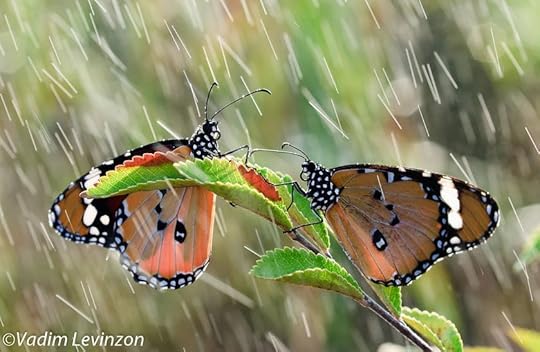
Many of my favourite lines concern relentless rain, mist, showers, drizzle, downpours. The Irish climate may be famously wet, but here, it also suggests cleansing or cathartic tears, being subject to forces beyond one’s control, a cause or effect of characters’ mood, the rhythm of the seasons, or just something to endure and attempt to conquer.
• “The low white sky bulges with the certainty of rain, giving Enniskeane a bruised, tormented look.”
• "See the rain as smoking sheets... smothering detail and obliterating distance... The rain, soft and dense, clouds the listening day in whispers."
• “The rain, soft and dense, clouds the latening day in whispers.”
• “Even when the rain eases the sky seethes.”
• “The air has dimmed to a sickly twilight, and vast yellow and dirt brown continents of cloud heave with the menace of further rain.”
• "Rain pecking at the glass and light the colour of day-old fireplace ash.”
• “The rain comes soft against the glass, and she closes her eyes to thicken the darkness and her breathing slows in tandem with its caress.”
• "Noon is smothered in rain, a cold, heavy fur of mist that mutes everything. It feels like weather made for whispers. Or, even better, for silence. Whenever she floats by a window, the dim light finds a way of penetrating her body. The world blurs, the way it does when tears come. But he is not quite ready yet to cry."
• “The rain, which has been murmuring against the window, presses tightly to the glass and becomes soundless.”
Philosopher’s Mind
Each story unfolds in a natural way. There is no judgementalism, even in situations where it would be easy - perhaps right - to moralise. The people and situations are never sordid, even if the setting sometimes is (a hotel “good enough for those whose needs are measured in hourly lots”). O’Callaghan let me draw my own conclusions.
Artist’s Eye
“The sky is doing something new to the light. The sun has slipped behind the fringe of western cloud. The colours feel too raw to be natural, but the salt-flecked window frames a scene that is undeniably immaculate to a painterly eye.”
When not describing nature, there is something of Edward Hopper in the "nondescript and desolate" bars "that provide easy shelter for the deeply lost", slightly seedy rooms, with peeling gray paint and "never enough light”, and "the sky blue and white speckled Formica veneer that had come as part of the apartment's original décor and which had long since been ringed by a multitude of too-hot coffee mugs." Coney Island is “a place for decaying and perhaps deluded pleasures”.
THE STORIES
Losses include death of a child, sudden career collapse, infertility, disability, miscarriage, relationship breakdown, terminal illness, exploitation and abuse (no graphic details), illicit affairs, and parentless children. Coping strategies include denial, sewing, running away, God, work, reading, rituals, indulging memories, embroidering memories, alcohol, fantasies, questioning the concepts of time and reality, and confronting one’s insignificance in the universe.
Deceptively ordinary. Unlike the stories themselves.
The settings include Ireland, Taiwan, USA, and Spain.
Zhuangzi Dreamed He was a Butterfly
“Slip beneath the pain to a paradise moment.” Zhuangzi sounds Chinese, and his wife’s name, Hiromi, sounds Japanese. That set suitably dreamy doubts about where it was set.
Farmed Out
A rain-sodden story of a young farm hand, a few decades ago. One of many “who have seen the sky from the gutter… People of the soil, like him, living small and barely perceptible lives.” At crisis point, “Time loses all shape and substance against his struggles… The sense of calm surprises him. Everything has its own way of ending.”
Are the Stars Out Tonight
“Everything burns out in time”: love, stars, everything. This is the the least dramatic story, so in a slow and subtle way, the most powerful: “wanting tears, but they don’t fall”.
We’re Not Made of Stone
The quiet erosion of hope; a study in grey. “Her face was turning grey. Not her hair: her face, her actual flesh”, rather like the couple, and their home, which was once a love nest and now “fit their needs well enough without really fulfilling any cravings”.
Goodbye, My Coney Island Baby
This was the story that left me wanting to know the characters better, but not because it was incomplete. The seedy setting is subtly described - and, crucially, distinguished from the tender, beautiful, ritualistic relationship at its heart. A delicate balance.
Update: It became a novel, published in January 2019, and it's brilliant. See my review HERE.
Lila
A chance sighting, a world away, summons memories, and tantalises with the possibility of recapturing something of the past. Someone from the past. Someone who thought they’d left the past behind.
Matador
A more layered story than most of the others, with a sub-plot that foreshadows the main narrative, and echoes of Hemingway. “There are things between them that can never be discussed, who she was, who he has become... On a level, they might be perfect for one another, but it's a theoretical perfection only, compromised by timing. Their bests passed one another on the way to here, and now exist epochs apart.”
A Game of Confidence
Poker. Not really my thing, but very atmospheric, and with plot twists I didn’t anticipate. It’s also about stories, truth, trust, and survival. And revenge.
Keep Well to Seaward
First love: “Something disconnects inside you, causing your consciousness to shift. You take to living almost purely through your senses… And you feel at once free and imprisoned.” A writer/journalist is in Taiwan, living in the present because he’s too young and inexperienced to have a significant future or past. He can only write about it “when I’d finished living the story”. He quotes Neruda’s Tonight I Can Write The Saddest Lines: “Love is so short, forgetting is so long”.
Throwing in the Towel
A story named after a boxing analogy opens with a sighting of a once-famous boxer. In another way, it ends with that as well.
For Old Times’ Sake
A teenager who ogled another teenager was “driven by curiosity, not perversion”. Making contact decades later is risky.
Icebergs
The situation was rather similar to We’re Not Made of Stone and Throwing in the Towel, and I thought the iceberg analogy was heavy-handed at the end, but the actual writing and imagery were as superb as the rest of the stories: “I’ve been alone for years. We both have. That’s who we are. That’s what we are.”
The Things We Lose, The Things We Leave Behind
“Our pasts pool around our ankles, dragging at every forward step we take, but it doesn’t do to dwell too deeply on what has gone before, even if we sometimes use those past events to explain or excuse the things we’ve done.”
The final, title story, has a punch, but not the pugilistic sort. A stranger on an island, who is not a stranger. “I wanted to believe that would be more than far enough for escape. But it was not. Home can be like a disease. It gets in your blood and poisons everything.”
“My old world and this one now seem like the two perspectives offered by a piece of one-way glass.” “Time should change things, really change them, not merely tug at the seams.”
Other Quotes
• “There is no substance to time… Reality is just a concept.”
• “Just holding X’s hand the way I sometimes do when words feel like too great a challenge.”
• Her “death has made two of me. One part is the true me, the part willingly lost heart and soul to the past, before the sky fell in, and the other is the husk that has been left to drift at the whim of the wind.”
• “I could feel the day’s light dribbling like a wound and the first tempered lean of darkness.”
• “In winter when some days never find anything more than a dull swab of light.”
• “Mumbling prayers… a litany that feels separate from himself and quickly takes on the soft outward caress of a mantra.”
• “I smile, just wanting to feel it on my face and to assure myself that I still can.”
• “She uses silence as a thrown punch.”
• “In place are the nuts and bolts of a smile, but nothing has been assembled.”
• “The sky is an enamel of cloud polished by winds and cold to a bright sheen.”
• “There are many ways of making love and no time spent together ever feels wasted.”
• “The carriage’s illuminated glare etches ghostly washed-out portraits of her past and future selves across the dusts-encrusted glass.”
• “I hated knowing all the things I knew, and my insides broke like hammered glass every time she’d tell me… I did what best friends are meant to do: I’d shrug and try to act like it didn’t matter.”
• “A slash-wound in the low west mined the sky for hues of amber and russet; a vague, slanted final cough of day that split my shadow long and spectral away across the beach.”
• “She’d have become what she always yearned to be: invisible, one of the crowd. A ghost.”
• Singing in “a low husky sound that pulses with feeling without bothering to properly shape its sentiment”.
• “Neither of them had any expectations now, just having a body to lie with, having gentle fresh to feel against their own.”
• “Soft jazz dripped from the stereo speakers.”
• “If nobody can tell the difference between the truth and a lie, then surely one is just as good as the other.”
• “Tiredness clung to him like a coat.”
• “We’d shared our bodies, but kept the important parts of ourselves concealed.”
• A final trip, “part catharsis… part benediction”.
• “The tines of his fork flash a signal across the room, full of some intent as they lean into and away from the light.”
• “A nearly-smile that’s just another conga-line of lies.”
• “You step back far enough, grief softens to fog, and the world remains real but not all the way real.”
• She “skirts against a place of tears. We talk, the way people do when they are trying to grope their way through a downpour of sudden, unexpected grief.”
• “Static bleeds into the line in tiny, shapeless whispers, imprints of things long since said and done, breaths spent like easy money.”
• “All words echo. Every footstep leaves a mark, however vague.”
• “Music often deters them from talking, or at least lets them feel a little easier about saying nothing.”
• "A huge cloak of sky completes the picture, a sky forever working, from minute to minute moiling to churn out yet more new tricks of the light, now the glare of a tilted looking-glass, now the deception of smoke. The ocean today is calm, another April lie in a place that has practised such skill to perfection."
• “Big subjects lie between us like shards of glass… we tread lightly, but the words prove difficult to come by.”
• “Riptides of memory claw at my mind.”
Image source for butterflies in the rain:
http://media.fromthegrapevine.com/ass...
Other Stories by Billy O'Callaghan
See the collection of stories published four years earlier, In Too Deep, which I reviewed HERE. The excitement of the new, the reassurance of familiarity, and very nearly as brilliant as these.
O'Callaghan's first novel is Dead House, a beautiful ghost story published in 2017, which I reviewed HERE.

March 7, 2019
”The pain is real even if nobody knows
And I'm crying inside and nobody knows it but me”
-- Nobody Knows, Kevin Sharp, Songwriters: Songwriters: Don Dubose / Joe Rich
”Over these past few weeks, I have come to understand that there is no substance to time. None. One minute I am thirty-four years old, doing all the things that people of my age do, all the things we can get away with, and the next I’m fourteen again, huddled beneath the sheets and wishing that the whole world was nothing more than a fetid dream. To the vast majority of us, time travel seems ridiculous until we actually experience its turmoil.”
This is how this collection of thirteen short stories begins, with Zhuangzi Dreamed He Was A Butterfly, a story about unmentionable sorrow. But it is not alone in stirring feelings, this entire collection is profoundly moving, but also a confirmation that we are not alone in our heartbreaking moments, or in our joyous ones, that moments such as these are simply part of our shared human experience.
Loss, loss of loved ones, of a marriage on the verge of ending, affairs, former loves, the realities of life and love, and the memories we are left with at the end of our days are part of the themes in these stories – and yet this collection managed to also leave me with a sense of hope, tranquility, and even more appreciation for this author, and his ability to say so much in so few words.
”We find a thought that helps to get us through, and cling to it like moss. And we bear the clouds for the occasional glimpse of sky.”
A mesmerizingly lovely, thought-provoking, beautifully written collection.
And I'm crying inside and nobody knows it but me”
-- Nobody Knows, Kevin Sharp, Songwriters: Songwriters: Don Dubose / Joe Rich
”Over these past few weeks, I have come to understand that there is no substance to time. None. One minute I am thirty-four years old, doing all the things that people of my age do, all the things we can get away with, and the next I’m fourteen again, huddled beneath the sheets and wishing that the whole world was nothing more than a fetid dream. To the vast majority of us, time travel seems ridiculous until we actually experience its turmoil.”
This is how this collection of thirteen short stories begins, with Zhuangzi Dreamed He Was A Butterfly, a story about unmentionable sorrow. But it is not alone in stirring feelings, this entire collection is profoundly moving, but also a confirmation that we are not alone in our heartbreaking moments, or in our joyous ones, that moments such as these are simply part of our shared human experience.
Loss, loss of loved ones, of a marriage on the verge of ending, affairs, former loves, the realities of life and love, and the memories we are left with at the end of our days are part of the themes in these stories – and yet this collection managed to also leave me with a sense of hope, tranquility, and even more appreciation for this author, and his ability to say so much in so few words.
”We find a thought that helps to get us through, and cling to it like moss. And we bear the clouds for the occasional glimpse of sky.”
A mesmerizingly lovely, thought-provoking, beautifully written collection.
October 28, 2015
There is a certain moment at the equinox of life, when age starts to shrink the body with the burdening pressure of the past and the impossibility of imagined futures, when the losses start to pile up and become bigger than ourselves, when the emptiness is so unconquerable that we forget ourselves and the zest for life goes out from us surreptitiously, like the fading light of a slowly dying star.
Billy O’Callaghan’s characters don’t inhabit the same physical spaces, but they converge in that same precise moment. They also carry the scars the Irish landscape has imprinted on their retina and have the commonality of staring back at the younger versions of themselves from the standpoint of middle age as they struggle to gain leverage against the eroding process of domestic tragedies, traumatic experiences that have festered in silence, rotting their illusions, while trying to subdue the yearning to snatch a morsel of happiness that won’t ever materialize, knowing that time is ticking out.
Zhuangzi copes with the death of his daughter locking himself in the alternative reality of a bright summer day spent with his family. Bill returns to Dublin to face the son he couldn’t bear to see growing up because he reminded him too much of his wife. James tries to keep his grief hidden from Margaret, unaware that her secret is deeper than his.
The wound of true love lost forever won’t ever mend in Lila, no matter how many years pass by, how many commitments are undertaken, her name will always remain. Oceans and continents won’t erase the memories of Mei and the fluttering movements of her fragile hands and tiny wrists in Keep Well to Seaward.
Solid marriages that dissolve in tenderness, improbable affairs that last for seventeen years, lives cut short by inglorious sickness, by untimely death, by the panic and revulsion of growing old, of forgetting who we were, who we wanted to be, of not recognizing the stranger we have become.
Delivered mostly from the perspective of the male characters and alternating the first and third person narrator, O’Callaghan’s contained, yet highly visual, supple prose makes the turmoil underneath the apparently still surface of these wide-ranged stories hang over the reader like a sword of Damocles.
Their daily battles overlap with our own, they fly off the page and into our consciousness; conjuring the complexities of life and yet touching the heart because they are written with the simplicity of pure emotion, and yet without an ounce of mawkish sentimentalism.
Tremendously sad, devastatingly real and achingly beautiful often at the same time, O’Callaghan’s collection of stories is an intricately constructed meditation on the power of love, the evanescence of time and the painful realization that in order to merely “be”, we have to acknowledge The things we lose, the things we leave behind.
Billy O’Callaghan’s characters don’t inhabit the same physical spaces, but they converge in that same precise moment. They also carry the scars the Irish landscape has imprinted on their retina and have the commonality of staring back at the younger versions of themselves from the standpoint of middle age as they struggle to gain leverage against the eroding process of domestic tragedies, traumatic experiences that have festered in silence, rotting their illusions, while trying to subdue the yearning to snatch a morsel of happiness that won’t ever materialize, knowing that time is ticking out.
Zhuangzi copes with the death of his daughter locking himself in the alternative reality of a bright summer day spent with his family. Bill returns to Dublin to face the son he couldn’t bear to see growing up because he reminded him too much of his wife. James tries to keep his grief hidden from Margaret, unaware that her secret is deeper than his.
The wound of true love lost forever won’t ever mend in Lila, no matter how many years pass by, how many commitments are undertaken, her name will always remain. Oceans and continents won’t erase the memories of Mei and the fluttering movements of her fragile hands and tiny wrists in Keep Well to Seaward.
Solid marriages that dissolve in tenderness, improbable affairs that last for seventeen years, lives cut short by inglorious sickness, by untimely death, by the panic and revulsion of growing old, of forgetting who we were, who we wanted to be, of not recognizing the stranger we have become.
Delivered mostly from the perspective of the male characters and alternating the first and third person narrator, O’Callaghan’s contained, yet highly visual, supple prose makes the turmoil underneath the apparently still surface of these wide-ranged stories hang over the reader like a sword of Damocles.
Their daily battles overlap with our own, they fly off the page and into our consciousness; conjuring the complexities of life and yet touching the heart because they are written with the simplicity of pure emotion, and yet without an ounce of mawkish sentimentalism.
Tremendously sad, devastatingly real and achingly beautiful often at the same time, O’Callaghan’s collection of stories is an intricately constructed meditation on the power of love, the evanescence of time and the painful realization that in order to merely “be”, we have to acknowledge The things we lose, the things we leave behind.

November 21, 2018
Thirteen stories, set in many different locations... Ireland, Taiwan, United States, Spain.
Thirteen stories of people dealing with loss, grief, survival, seeking out another path.
Some people are looking at the past to survive, other’s just walk away.
I took my time with this collection, I don’t read too many short stories, I have a few favorites in this collection, but I thoroughly enjoyed every single one of these! So much realness (yeah, that’s not a word but it fits) and heart here
.
Looking forward to reading his new novel coming out in January 2019, and his past short story collections. I don’t want to miss a thing!
Thanks for your insight into the human condition Billy O’callaghan!
Thirteen stories of people dealing with loss, grief, survival, seeking out another path.
Some people are looking at the past to survive, other’s just walk away.
I took my time with this collection, I don’t read too many short stories, I have a few favorites in this collection, but I thoroughly enjoyed every single one of these! So much realness (yeah, that’s not a word but it fits) and heart here
.
Looking forward to reading his new novel coming out in January 2019, and his past short story collections. I don’t want to miss a thing!
Thanks for your insight into the human condition Billy O’callaghan!

May 23, 2018
As I presently have far too much on my plate (i.e. writing commitments) to type anything resembling a barnstorming review, I urge you to read @Cecily's instead, as it enthused me to read this wonderful selection of short stories, each jewelled with beautiful prose.
read Cecily's fab review
read Cecily's fab review

December 30, 2017
This book of short stories by Billy O'Callaghan was simply phenomenal. There are 13 stories in this collection and each one caused me to pause and reflect. He is a poetic writer- no word is misplaced.
All the stories are character driven. What the author does so well is bring us into their minds so we can feel what they are feeling.
These stories focus on the death of a child, an affair about to end, a couple who have settled for the mundane, past love, a marriage ending-- life's many tragic moments. They are about loss and the memories that are left. I just realized there is not too much happiness in this book, but yet I never felt sorrowful. All the stories felt like a slice of life and coping with what is thrown at you.
There were so many beautiful lines, I would like to share a few:
1. Our pasts pool around our ankles, dragging at every forward step we take, but it doesn't do to dwell too deeply on what has gone before, even if we sometimes use those past events to explain or excuse the things we've done.
2. Sometimes, she says, her voice small and lost in the blackness, the things that break us apart seem less if we keep them hidden.
3. It feels like weather made for whispers. Or, even better, for silence.
4. Most of us, maybe all of us, wear our histories as shackles around our necks.
5. In such moments, pressed to her body and feeling the punch of her heart beating against his eye, he recognises love for what it is, a two-faced thing, good on one side but selfish on the other, and he wishes now that he'd been able to give her more of himself, that she could have had the chance to know the best of him.
6. This place, and these last few hours, are what help to keep her alive, but a heart needs more than dreams to go on beating.
If you like short stories and especially stories that are short but very complete, I highly recommend this book by Billy O'Callaghan.
I would like to thank Cecily, my GR friend, for bringing this book to my attention.
All the stories are character driven. What the author does so well is bring us into their minds so we can feel what they are feeling.
These stories focus on the death of a child, an affair about to end, a couple who have settled for the mundane, past love, a marriage ending-- life's many tragic moments. They are about loss and the memories that are left. I just realized there is not too much happiness in this book, but yet I never felt sorrowful. All the stories felt like a slice of life and coping with what is thrown at you.
There were so many beautiful lines, I would like to share a few:
1. Our pasts pool around our ankles, dragging at every forward step we take, but it doesn't do to dwell too deeply on what has gone before, even if we sometimes use those past events to explain or excuse the things we've done.
2. Sometimes, she says, her voice small and lost in the blackness, the things that break us apart seem less if we keep them hidden.
3. It feels like weather made for whispers. Or, even better, for silence.
4. Most of us, maybe all of us, wear our histories as shackles around our necks.
5. In such moments, pressed to her body and feeling the punch of her heart beating against his eye, he recognises love for what it is, a two-faced thing, good on one side but selfish on the other, and he wishes now that he'd been able to give her more of himself, that she could have had the chance to know the best of him.
6. This place, and these last few hours, are what help to keep her alive, but a heart needs more than dreams to go on beating.
If you like short stories and especially stories that are short but very complete, I highly recommend this book by Billy O'Callaghan.
I would like to thank Cecily, my GR friend, for bringing this book to my attention.

September 13, 2018
A rare, deeply moving ,stunning collection of short stories. Written by a master of the pen. I savored them slowly one by one...drinking in the beauty ...page by page...sentence by sentence...unforgettable.

November 18, 2014
What to say about a book that stunned me, time and again. I might call Billy O'Callaghan a "writer's writer," if that term did not immediately consign a writer to obscurity. (In the USA, Richard Yates is often referred to as a "writer's writer," and until the movie REVOLUTIONARY ROAD, few people, apart from those who taught in MFA programs, knew his name.
I would like to invent a new way to describe what I think Billy O'Callaghan will leave as his literary legacy. I would call him a "human's human" (with a pen) or an "explorer's explorer" of our dreams. I would call him a poet of the spirit. Or, maybe, to use a more prosaic analogy, he is a housekeeper who assiduously dusts the cluttered rooms we keep closed, even from our conscious minds.
In the moving first story of the collection, "Zhuangzi Dreamed He Was A Butterfly," a husband and wife grieve a daughter's death, and the husband explores the idea of time. "When you think about it, there is just so much that can go wrong. If any one of those tiny workings should crack or spit apart, then that's it; as fast as a finger-snap the whole thing comes grinding to a halt. One small break and all time stops." Anyone who has lost a child knows that the speeding up or slowing down of time, the infinite replaying of the disaster-that-might-have-been-averted, forms only one side of the prism through which a grieving parent views the past.
In "Lila" the narrator, riding the L, spots a familiar face. "In the two decades since moving to Chicago I have thought of her often, the way we all do with close friends who for a time mean more than the world itself to us but then, for whatever reason, fall out of our lives." True, right? We've all thought this at one time or another.
As the story progresses, we learn why their paths diverged; the narrator must come to terms with what happened before they lost touch. When the story returns to the present, the reader is fully anchored in the physical world. "Seconds build, full of the train's dull inner-ear heartbeat, a smooth enough sensation, but only by comparison, and yet it felt as though time were moving in reverse, taking us out of ourselves back to some better state."
I wish I had written that sentence. Here's another.
"He was wearing yesterday's wool shirt, and the fibres held his musk in a way that was not pleasant. She felt an urge to pull back, but couldn't, because his big hands held gentle but secure against her hips. Trapped, all she could do, short of insulting or embarrassing him by making a fuss, was pray that God would grant her the small mercy of not having this stench forever attach itself in her mind to what was supposed to be one of the most special and precious of moments of her entire life."
As writers we strive to use all five senses, but I've rarely seen a writer evoke so much emotion from a sense of smell.
Each story in this collection invites readers into the inner torments of its characters. I could not race through these stories, nor did I want to. When I finished each one, I went back to the beginning and read the story again, only to discover moments of lightness, moments when a character turned away from a choice that might have led down a different path, or moments when a character settled for what was and gave up on what might have been.
Some people talk about our "illusions," as if there were some all-seeing Eye that could pass judgment on what is, or is not, the right way of understanding life's confusions. Instead of illusions, Billy O'Callaghan talks about "dreams." For the characters in "Goodbye, My Coney Island Baby," "The Matador," and many of these stories, dreams are where people find relief from the weight of their losses, disappointments, self-inflicted wounds, and limitations.
This is writing at its finest.
I would like to invent a new way to describe what I think Billy O'Callaghan will leave as his literary legacy. I would call him a "human's human" (with a pen) or an "explorer's explorer" of our dreams. I would call him a poet of the spirit. Or, maybe, to use a more prosaic analogy, he is a housekeeper who assiduously dusts the cluttered rooms we keep closed, even from our conscious minds.
In the moving first story of the collection, "Zhuangzi Dreamed He Was A Butterfly," a husband and wife grieve a daughter's death, and the husband explores the idea of time. "When you think about it, there is just so much that can go wrong. If any one of those tiny workings should crack or spit apart, then that's it; as fast as a finger-snap the whole thing comes grinding to a halt. One small break and all time stops." Anyone who has lost a child knows that the speeding up or slowing down of time, the infinite replaying of the disaster-that-might-have-been-averted, forms only one side of the prism through which a grieving parent views the past.
In "Lila" the narrator, riding the L, spots a familiar face. "In the two decades since moving to Chicago I have thought of her often, the way we all do with close friends who for a time mean more than the world itself to us but then, for whatever reason, fall out of our lives." True, right? We've all thought this at one time or another.
As the story progresses, we learn why their paths diverged; the narrator must come to terms with what happened before they lost touch. When the story returns to the present, the reader is fully anchored in the physical world. "Seconds build, full of the train's dull inner-ear heartbeat, a smooth enough sensation, but only by comparison, and yet it felt as though time were moving in reverse, taking us out of ourselves back to some better state."
I wish I had written that sentence. Here's another.
"He was wearing yesterday's wool shirt, and the fibres held his musk in a way that was not pleasant. She felt an urge to pull back, but couldn't, because his big hands held gentle but secure against her hips. Trapped, all she could do, short of insulting or embarrassing him by making a fuss, was pray that God would grant her the small mercy of not having this stench forever attach itself in her mind to what was supposed to be one of the most special and precious of moments of her entire life."
As writers we strive to use all five senses, but I've rarely seen a writer evoke so much emotion from a sense of smell.
Each story in this collection invites readers into the inner torments of its characters. I could not race through these stories, nor did I want to. When I finished each one, I went back to the beginning and read the story again, only to discover moments of lightness, moments when a character turned away from a choice that might have led down a different path, or moments when a character settled for what was and gave up on what might have been.
Some people talk about our "illusions," as if there were some all-seeing Eye that could pass judgment on what is, or is not, the right way of understanding life's confusions. Instead of illusions, Billy O'Callaghan talks about "dreams." For the characters in "Goodbye, My Coney Island Baby," "The Matador," and many of these stories, dreams are where people find relief from the weight of their losses, disappointments, self-inflicted wounds, and limitations.
This is writing at its finest.

February 12, 2016
The Things We Lose, The Things We Leave Behind is collection of masterfully written short stories by Billy O’Callaghan. Each of the thirteen stories, while told mostly from the perspective of a middle aged man, are all very different and touch on what some might consider the darker aspects of life such as bereavement, cancer, divorce, longing, mid-life crisis and miscarriage.
Although O’Callaghan’s prose is infused with rawness and melancholy he also displays moments of insight and profundity which could only come from the mind of one who has known intimately the heartache and loss experienced by the characters he writes about. Reading about the couple dealing with the loss of a child in ‘We’re Not Made of Stone’, and again in ‘Icebergs’, was so close to the bone that I literally had to put the book down to process the emotions it brought up.
Read the full review at Writerful Books
Although O’Callaghan’s prose is infused with rawness and melancholy he also displays moments of insight and profundity which could only come from the mind of one who has known intimately the heartache and loss experienced by the characters he writes about. Reading about the couple dealing with the loss of a child in ‘We’re Not Made of Stone’, and again in ‘Icebergs’, was so close to the bone that I literally had to put the book down to process the emotions it brought up.
Read the full review at Writerful Books

November 12, 2014
I loved this collection! The writing is incredibly beautiful and several stories moved me to tears. I wish I had better words to express the loveliness of it!

January 5, 2017
'The Things We Lose, The Things We Leave Behind' is a remarkable collection of short stories by one of Ireland's best authors. O'Callaghan has written thirteen compelling stories that combine poetic intensity and an often stark realism to explore the emotional, psychological and physical truths of his characters' lives.
In the book's extraordinary title story, which won the Writing.ie Short Story of the Year at the prestigious Bord Gais Energy Irish Book Awards in 2013, the narrator realises that, although he has not been home in six years, the only thing that has changed there is "the fresh coat of whitewash". O'Callaghan slowly reveals the hard truths that have caused the man to leave, bringing the story to a denouement that is all the more devastating for its calmness.
The first story, 'Zhuangzi Dreamed he was a Butterfly', is narrated by a father trying to come to terms with the loss of his daughter. In this beautiful, sad account of a tragedy that is all too common in our modern, hurried world, the fragility of life pushes against its seeming futility, and we "live our lives around the edges of a gaping hole, but we have to live."
Unlike many of today's writers, O'Callaghan is unafraid to write honestly about women. As the narrator of 'Are the Stars Out Tonight?' reveals of his ex, his child's mother, "She is young again until I look too close. Then her eyes give away the lie." His disillusionment, or his abandoning of illusions about life, are summed up when he says that everything changes, and rarely for the better. "Everything burns out in time." But in this story, a child - the narrator's daughter Nell - arrives home, and her "arrival is announced in song." She is the embodiment of life and hope and youth, making this story a counterpoint to the previous one.
The difficulty of relationships coming to an end is one of O'Callaghan's most urgent themes, in stories seeming sometimes almost too real to be labelled "fictions". In 'We're Not Made of Stone', a story never less than authentic, the comfortably numb life she shares with James is broken apart by personal tragedy, and Margaret's fantasies, beginning as a way to reject her reality, bring her to a place outside of the sad, humdrum life she shares with her husband. In 'Goodbye, My Coney Island Baby', on the other hand, there is no pretence between the lovers, in a deeply felt, honestly written account of a man and a woman "holding onto one another, lending and finding support, until the end is in sight."
I have mentioned just some of the thirteen stories in this exceptional collection, each one of which takes place in its own vividly imagined reality, whether in Ireland, America, Spain or Taiwan. Beautiful, disconcerting, profound, and unforgettable, 'The Things We Lose, The Things We Leave Behind' is a book that I recommend to all serious readers of literature.
In the book's extraordinary title story, which won the Writing.ie Short Story of the Year at the prestigious Bord Gais Energy Irish Book Awards in 2013, the narrator realises that, although he has not been home in six years, the only thing that has changed there is "the fresh coat of whitewash". O'Callaghan slowly reveals the hard truths that have caused the man to leave, bringing the story to a denouement that is all the more devastating for its calmness.
The first story, 'Zhuangzi Dreamed he was a Butterfly', is narrated by a father trying to come to terms with the loss of his daughter. In this beautiful, sad account of a tragedy that is all too common in our modern, hurried world, the fragility of life pushes against its seeming futility, and we "live our lives around the edges of a gaping hole, but we have to live."
Unlike many of today's writers, O'Callaghan is unafraid to write honestly about women. As the narrator of 'Are the Stars Out Tonight?' reveals of his ex, his child's mother, "She is young again until I look too close. Then her eyes give away the lie." His disillusionment, or his abandoning of illusions about life, are summed up when he says that everything changes, and rarely for the better. "Everything burns out in time." But in this story, a child - the narrator's daughter Nell - arrives home, and her "arrival is announced in song." She is the embodiment of life and hope and youth, making this story a counterpoint to the previous one.
The difficulty of relationships coming to an end is one of O'Callaghan's most urgent themes, in stories seeming sometimes almost too real to be labelled "fictions". In 'We're Not Made of Stone', a story never less than authentic, the comfortably numb life she shares with James is broken apart by personal tragedy, and Margaret's fantasies, beginning as a way to reject her reality, bring her to a place outside of the sad, humdrum life she shares with her husband. In 'Goodbye, My Coney Island Baby', on the other hand, there is no pretence between the lovers, in a deeply felt, honestly written account of a man and a woman "holding onto one another, lending and finding support, until the end is in sight."
I have mentioned just some of the thirteen stories in this exceptional collection, each one of which takes place in its own vividly imagined reality, whether in Ireland, America, Spain or Taiwan. Beautiful, disconcerting, profound, and unforgettable, 'The Things We Lose, The Things We Leave Behind' is a book that I recommend to all serious readers of literature.

June 11, 2019
The Things We Lose, The Things We Leave Behind is a collection of thirteen short stories about people facing challenges in their lives, sometimes for the better but mostly for the worse. There's love that goes wrong or love that dies. Some face the death of a child or a miscarriage and some deal with the loss of a spouse through death, divorce, cancer, or adultery. And there are some who dwell on a lost love from the past, wondering what might have been. My favorites are "Lila," "Keep Well to Seaward," and the title story, "The Things We Lose, The Things We Leave Behind."
These stories are beautifully written with language that is remarkably descriptive, containing phraseology that enables you to clearly visualize the countryside or feel the torment of the characters. The blurb on the back jacket describes these stories as "emotionally truthful narrative thread[s] of hope and redemption in the face of adversity." I did not feel hope or redemption; instead I found these stories to be painfully sad, filled with a melancholy that stayed with me. As a result, I could read only one or two of these stories at a sitting. Well-worth reading but be forewarned.
These stories are beautifully written with language that is remarkably descriptive, containing phraseology that enables you to clearly visualize the countryside or feel the torment of the characters. The blurb on the back jacket describes these stories as "emotionally truthful narrative thread[s] of hope and redemption in the face of adversity." I did not feel hope or redemption; instead I found these stories to be painfully sad, filled with a melancholy that stayed with me. As a result, I could read only one or two of these stories at a sitting. Well-worth reading but be forewarned.

October 5, 2014
The Things We Lose, The Things We Leave Behind and Other Short Stories, by Billy O’Callaghan. These stories, all about deep and serious loss – of life, of love, of marriage, of self – reminded me that all motion is not forward and that good things found may not last. They are sad, sometimes moving, sometimes daunting stories. O’Callaghan’s a good writer. Born in County Cork in 1974, he sets his stories in places that span the globe, from Ireland to Taiwan, New York to Spain. I’ll look for more from him. Rosemary Brown lent me this book earlier this summer when my sister Barb and I visited her – I’m looking forward to talking with her about it. In some ways the stories reminded me of Flannery O’Connor, but with perhaps less “convergence.”
February 2, 2017
Superb stories, beautifully crafted and deeply moving.

July 16, 2017
I slip my hands into my pockets and stroll away, counting the steps so that I won't look back.
Billy O'Callaghan's third short story collection, "The Things We Lose, The Things We Leave Behind", is painfully real. The thirteen stories submerge their characters, and also the reader, in often complex, often sad and always believable circumstances. There is an orphaned boy sent to work in the harsh environment and harsh practicalities of 1950s Ireland; a man on a train who sights someone from his past that he never imagined he'd see again; a bullfighter whose days of glory and purpose have passed; a gambler whose days of glory and purpose are still with him; and a father who is drawn back to his home, to see the child he left behind there years previously. Nothing about the stories is fantastical in the slightest, and all of them ring true with themes we've all felt in our lives; themes of heartbreak and difficult decisions, and whether it is ever truly possible to move on from the past.
One of the collection's most appealing features is its country-hopping nature. The stories take the reader from Ireland to Coney Island to a café in Taiwan, all described thoroughly enough to be an interesting touch but sparingly enough to be accurate instead of gimmicky. For a collection where all the stories broadly focus on the same theme, and not an uplifting one at that, the variation of setting provides necessary relief and freshness for the reader.
The narratives themselves are all very much character studies. O'Callaghan puts people in a place and a problem and tries to explore how they would really deal with it, and his exploration is almost always foolproof. Each story features a character studying incidents from his or her past and using that to come to some understanding of who they are today. Each journey seems well-rounded, and it's worth noting that, even beneath the banners of "dark pasts" and "sad memories" which overshadow many of these stories, O'Callaghan always finds a way to inject some welcome optimism in the end.
One small criticism is that the prose is not very memorable. The use of language itself plays second fiddle to the emotions going on beneath the surface, which is fine because those emotions are certainly fascinating enough on their own. But that being said, some readers like myself might seek stories where the individual sentences have been thoughtfully crafted, rather than a few words put together to state a plot point and not to impress of their own accord.
Overall, though, "The Things We Lose, The Things We Leave Behind" is a deeply affecting and emotionally intelligent collection of short stories that is well worth reading, and certainly deserves more publicity than it has received thus far. I wish Billy O'Callaghan the greatest of success in his future endeavours.
Billy O'Callaghan's third short story collection, "The Things We Lose, The Things We Leave Behind", is painfully real. The thirteen stories submerge their characters, and also the reader, in often complex, often sad and always believable circumstances. There is an orphaned boy sent to work in the harsh environment and harsh practicalities of 1950s Ireland; a man on a train who sights someone from his past that he never imagined he'd see again; a bullfighter whose days of glory and purpose have passed; a gambler whose days of glory and purpose are still with him; and a father who is drawn back to his home, to see the child he left behind there years previously. Nothing about the stories is fantastical in the slightest, and all of them ring true with themes we've all felt in our lives; themes of heartbreak and difficult decisions, and whether it is ever truly possible to move on from the past.
One of the collection's most appealing features is its country-hopping nature. The stories take the reader from Ireland to Coney Island to a café in Taiwan, all described thoroughly enough to be an interesting touch but sparingly enough to be accurate instead of gimmicky. For a collection where all the stories broadly focus on the same theme, and not an uplifting one at that, the variation of setting provides necessary relief and freshness for the reader.
The narratives themselves are all very much character studies. O'Callaghan puts people in a place and a problem and tries to explore how they would really deal with it, and his exploration is almost always foolproof. Each story features a character studying incidents from his or her past and using that to come to some understanding of who they are today. Each journey seems well-rounded, and it's worth noting that, even beneath the banners of "dark pasts" and "sad memories" which overshadow many of these stories, O'Callaghan always finds a way to inject some welcome optimism in the end.
One small criticism is that the prose is not very memorable. The use of language itself plays second fiddle to the emotions going on beneath the surface, which is fine because those emotions are certainly fascinating enough on their own. But that being said, some readers like myself might seek stories where the individual sentences have been thoughtfully crafted, rather than a few words put together to state a plot point and not to impress of their own accord.
Overall, though, "The Things We Lose, The Things We Leave Behind" is a deeply affecting and emotionally intelligent collection of short stories that is well worth reading, and certainly deserves more publicity than it has received thus far. I wish Billy O'Callaghan the greatest of success in his future endeavours.

December 21, 2017
I find many short stories thin and unsatisfying. This fine collection is quite the opposite. Each of the thirteen stories is charged with a remarkable emotional intensity: the father, trying to learn how to carry on after the loss of his child ("Zhuangzi Dreamed he was a Butterfly"); the slave-labourer child on an Irish farm ("Farmed Out"); and the title story, a tale of failure and disappointment and unexplained tragedy. Billy O'C does that so well - creating the story beneath the story, whose bones rise up and hint at a much bigger life, without telling us the whole. The least satisfying story, for me, was "Lila" - perhaps not quite as nuanced as the others, not so remarkable. I was much more affected by the ending of mature love in "Are the Stars Out Tonight." Overall, this is a wonderful collection, full of love and loss and the struggle to pick a delicate way through it all.

April 12, 2016
Irish flair, beautiful language and a big variety of topics that still all dance around the main theme of loss.
January 4, 2020
some of the most beautiful stories I have ever read

September 17, 2022
4.5
Reading this book was like watching someone go through the most difficult and defining moment of their life from behind a curtain. I enjoyed the external descriptions of the characters and the setting and seeing their inner workings in each thought and emotion they experience. Billy O'Callaghan writes in a way that luxuriously and poetically stretches out these moments so we can experience their fullness. Each story has a moment, an emotion, and a sadness that I could relate to; they are very human stories.
Reading this book was like watching someone go through the most difficult and defining moment of their life from behind a curtain. I enjoyed the external descriptions of the characters and the setting and seeing their inner workings in each thought and emotion they experience. Billy O'Callaghan writes in a way that luxuriously and poetically stretches out these moments so we can experience their fullness. Each story has a moment, an emotion, and a sadness that I could relate to; they are very human stories.

February 22, 2023
Beautiful collections of brilliant if gloomy stories.


Want to Read
June 11, 2016Given 5 stars by Cecily

April 14, 2019
Bought as an ebook which has turned me off finishing it.
Displaying 1 - 23 of 23 reviews