Jump to ratings and reviews
Rate this book

The Last Walk: Reflections on Our Pets at the End of Their Lives

Rate this book
From the moment when we first open our homes—and our hearts—to a new pet, we know that one day we will have to watch this beloved animal age and die. The pain of that eventual separation is the cruel corollary to the love we share with them, and most of us deal with it by simply ignoring its inevitability.


With The Last Walk , Jessica Pierce makes a forceful case that our pets, and the love we bear them, deserve better. Drawing on the moving story of the last year of the life of her own treasured dog, Ody, she presents an in-depth exploration of the practical, medical, and moral issues that trouble pet owners confronted with the decline and death of their companion animals. Pierce combines heart-wrenching personal stories, interviews, and scientific research to consider a wide range of questions about animal aging, end-of-life care, and death. She tackles such vexing questions as whether animals are aware of death, whether they're feeling pain, and if and when euthanasia is appropriate. Given what we know and can learn, how should we best honor the lives of our pets, both while they live and after they have left us?         


The product of a lifetime of loving pets, studying philosophy, and collaborating with scientists at the forefront of the study of animal behavior and cognition, The Last Walk asks—and answers—the toughest questions pet owners face. The result is informative, moving, and consoling in equal parts; no pet lover should miss it.

271 pages, Paperback

First published January 1, 2012

62 people are currently reading
415 people want to read

About the author

Jessica Pierce

22 books34 followers
Bioethicist Jessica Pierce, Ph.D., is the author of the book The Last Walk: Reflections on Our Pets at the Ends of Their Lives (University of Chicago, 2012). Some of the questions she explores are: Do animals have death awareness? Why is euthanasia almost always considered the compassionate end point for our animals, but not for our human companions? Is there ever a good reason to euthanize a healthy dog? Why do people often grieve more deeply for their pets than they do for people? What is animal hospice?

Her other books include Wild Justice: The Moral Lives of Animals, Morality Play, Contemporary Bioethics: A Reader with Cases and The Ethics of Environmentally Responsible Health Care.

Ratings & Reviews

What do you think?
Rate this book

Friends & Following

Create a free account to discover what your friends think of this book!

Community Reviews

5 stars
69 (32%)
4 stars
82 (38%)
3 stars
43 (20%)
2 stars
17 (7%)
1 star
3 (1%)
Displaying 1 - 30 of 45 reviews
1 review
February 24, 2015
My husband bought this book to help us go through end-of-life decisions for our dear cat. Rather than finding comfort in the pages of "The Last Walk", I was left in anguish and full of anger for the author's harsh criticisms for those who don't agree with her viewpoints. I wish I had never read it.

My biggest problem with this book is the author casts harsh judgments on those who choose to end an animals suffering before it gets out of hand (unlike the author who let her dog suffer needlessly for months - he had terminal cancer with severe mobility issues, defecating himself, difficulty eating/underweight, blind, deaf, in pain and obviously scared and anxious due to the fact that he spent much of his time hiding under a piano - still the author "wasn't sure" if her dog was suffering?).

She accuses those who euthanize their pets to end suffering as "shoving them brusquely off a precipice". Ouch. In another chapter she alludes that those who euthanize their pets are denying their animal to have a "spiritual transition" to the afterlife (although she herself eventually chose to euthanize - this book is full of such odd contradictions). She also seems to have disdain for veterinary offices as she often describes them negatively as "smelling bad", having "cold metal tables" and even goes as far as pointing out that she wouldn't want her dog euthanized at her own vet's office because it's located "near a shabby liquor store" (simply absurd).

Bottom line: I would not suggest this book if you have an ailing animal and are trying to find answers as to when is the right time to let them go from suffering. This book will guilt you into thinking that you should hang on to your animal and prolong life for the sake of "quantity" and not quality of life (this author claims to understand what quality of life means, yet when asked to evaluate it for her own pet she missed the mark terribly). If you are an animal lover and are able to bravely put your animals needs before your own, then this book may send a shiver down your spine and leave you feeling upset, as it did for me.
Profile Image for Terence.
1,313 reviews470 followers
December 28, 2012
This time last year (Dec 2011/Jan 2012) was a particularly rough time for me and the Clan. In the space of four months, I lost three of my cats to various medical complications:

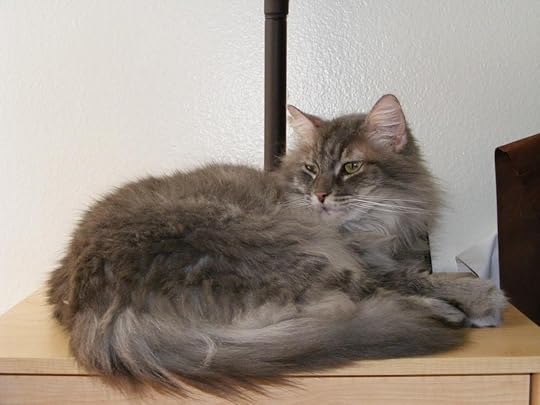
Image of Malcolm

Malcolm had advanced kidney disease for the last year of his life, which I spent giving him subcutaneous transfusions and worrying every day that I would come home from work and find him dead from kidney failure. As it turned out, he began bleeding uncontrollably when he cut his gum one morning and the vet put him to sleep just before Christmas (2011).

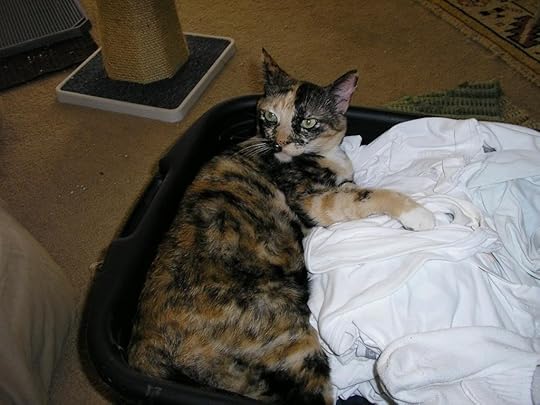
Image of Calvin

Calvin had hyperthyroidism for the last two or three years of his life. Outside of having to force a pill down his throat once or twice a day (depending upon the disease’s stage at the time), it was only in the last two weeks of his life that I had to take what might be considered extraordinary measures – sub-Q IVs, bottle feeding, more drugs to help his appetite. He wound up dying curled up with me early one morning about a week after Christmas.

Image of the Monkey

Cassandra’s (or, as she was more commonly known, the Monkey) death was the real shocker. For the 16 years of her life, she was always the healthy one but one day I noticed she was breathing heavily and not eating. Within a week she was dead. Like Calvin, she died with me at home in April.

And I still have two geriatric cases to take care of: Emma, the Monkey’s sister, and Meggie (short for Megaera, one of the Erinyes, though my cat’s the sweetest-natured creature you could ever hope to meet). Emma has hyperthyroidism and an irritable bowel condition. She gets two pills once a day. Meggie also has irritable bowels, and she gets one pill a day plus a teaspoon of Maalox in her breakfast to keep her "reg’lur."

This is all prologue to why Jessica Pierce’s The Last Walk caught my eye. I had bought a copy for a friend (the same who gave me Emma and the Monkey) for Xmas, and I took the opportunity to read it for myself.

The book arose out of Pierce’s chronicling Odysseus’ (Ody), her own dog’s, year-long struggle with approaching death, and each chapter ends with an excerpt from her journal. It’s that latter part that makes the book stand out from similar endeavors – I could easily identify with the efforts she took to make Ody’s last months as comfortable as possible, the anxiety she felt every day that this would be the day, the questions about how far to go to keep him alive, and the guilty relief when it was all over.

In between, Pierce discusses how we treat our pets (or “animal companions,” as some would have it). She enumerates a set of guidelines, largely based on the UK Farm Welfare Council’s guidelines for treating animals:

1. Freedom from hunger and thirst
2. Freedom from pain, injury and disease
3. Freedom from discomfort
4. Freedom to express normal behavior
5. Freedom from fear and distress

And a sixth one she adds: Freedom to die a good death. (pp. 12-3)

Her ultimate conclusion – one that will not satisfy those who fear ambiguity – is that each case (just as with humans and how we deal with our deaths) is unique. It doesn’t matter how I acted in Calvin’s case, when Emma’s end comes or Oberon’s or any of the other cats’, I’m going to go through all the same questions and soul searching I did with him, e.g., How aggressive should I be in keeping him alive?

The one thing I wish Pierce had explored more fully is what do you do when you aren’t in the privileged position (as both she and I are) where we can actually consider pet hospices, extensive (and expensive) vet tests and drugs. How should you deal with a pet when you can’t afford yearly wellness exams, vaccinations and a gold-plated health plan?

Other than that, an you’re a pet owner (sorry, companion) or not, Pierce’s book is valuable since it raises serious questions not just about how we deal with their deaths but also with how we deal with death in general (not very well, unfortunately). Even better, she doesn’t provide any easy answers.

And you can skip the Ody journal entries if you fear you’d have difficulties with the subject matter.

Really.

Ody was euthanized on November 29, 2010; I teared up as Pierce described the final decision and the fateful day not just because it’s well written and in no way mawkish but because it reminded me of the two painful nights and one awful morning that I had recently gone through.
Profile Image for Kate.
42 reviews1 follower
December 29, 2019
If you're looking for a sappy, feel-good tome, this is probably not for you. I loved this book, however, because it was part academic, part diary—an exploration of animal studies and how they die. Pet thanatology. Do pets or wild animals have an awareness of death? What do scientists and veterinary experts know about animal pain, and of animal personalities and happiness?

Reading this book felt like discussing end-of-life care with a good-hearted friend and professor. I loved the author's tone and just felt that I related to her views on many things.

Half the book is a gripping account of animals, the aging process and dying. And it touches on the ethics of how we treat and also regard pets, animals grown for food, those experimented on in research labs, and animals in the wild. I love how the author gently points out the hypocrisies of how society views farm animals as unworthy of protection from suffering. She briefly delves into things you could never imagine: do-it-yourself euthanasia, killing of healthy animals in shelters, convenience euthanasia (breeders asking vets to "euthanize" puppies with overbites).

Interspersed throughout is the author's diary on the final years of Ody, her adorably anxious & "inscrutable" Vizsla, a kind of hunting dog. As the owner of a 15-year-old sporting dog, I felt like I was reading my own story. She woke up in the middle of the night, almost every night, to some sort of excremental disaster with Ody. Or Ody confused and wanting to go in and out of doors. Ody would fall over and need help getting up. Ody would be a confused, senile, bony old man but still had a lot of pep. She called Ody a great love of her life, but also her millstone. Damn, that hit home.

The other half of the book touches on hospice care and euthanasia. Sadly, many pet owners feel they only have the option of euthanasia or treatment once their companion animal is facing a terminal diagnosis. Palliative care and hospice services are becoming more widely available for pets. It should be noted that not everyone can afford cutting-edge treatments, but palliative care/pain meds don't have to be prohibitive.

While I'm reading this in the remaining days of my dog's life, I would recommend this book to any pet owner, regardless of stage of life. Because aging and "good death" are issues that should be considered sooner than later. As the author notes, many people take a passive approach and wait to visit the vet when signs of pain and discomfort are clear. But by then, medical problems may be advanced and hard to treat. Don't just attribute signs to "just getting old."

Of course, the book ends with Ody getting "the blue needle" at home, surrounded by his family. The author struggled with whether she did the right thing, whether this was done at the right time. (Relatable = an understatement!)

I think we need to set aside the notion that there is a Right Time—some moral target that we need to hit precisely. Our goal is not to pinpoint but to find a golden mean between too soon and too late, between premature and overdue.


Anyway, the end explores after-care and body disposal and some ugly questions that are worth asking your veterinarian or people at the crematorium or funeral home. By the end, I was crying while reading the last few pages—her waking to phantom barks in the middle of the night and remembering Ody was gone.
Profile Image for David.
1,698 reviews16 followers
October 7, 2012
Pierce follows the last year of life of one of her dogs - Ody - in a journal. Through that experience Pierce explores pet pain, pet death, how and when to end a pet's life, how to dispose of the pet's body and how to grieve for the pet. Difficult to read, very sad when Ody finally is euthanized, but an important book for anyone who has an aging pet. The key seems to be to find a way to assess the pet's quality of life. When the quality falls below some threshold - the book actually presents a decent scale for this evaluation - then euthanasia might be the right path. Good thing my aging dog was nearby as I read this...
Profile Image for Degenerate Chemist.
931 reviews50 followers
April 1, 2022
"The Last Walk" is about end of life care for old and ill dogs. Pierce uses her own experience with her dog Odysseus to discuss what she has learned about the death of a pet. Her commentary is insightful and her practical suggestions are incredibly helpful.

I have to admit, my dogs are getting up there in age. They are not in poor health and they still have years of life left in them. It's just that every time I look at them I can see their faces getting whiter and whiter. Copper has started to suffer from incontinence. Stevie has started to struggle getting in and out of bed in the morning. I am not immediately worried about their health, but I can see how they are both changing as they age and I am already trying to picture what my life will be like without them. I love them too much and I am already bracing myself for the end of their lives.

Pierce's book was a lifeline. Her honesty about her feelings for Ody and her courage in writing about her experiences helped me immensely. Her well researched review of the data available on topics like pawspice, euthanasia, and methods to preserve quality of life for elderly pups was invaluable.

I definitely recommend this book for any pet owner. It is beautifully written. Pierce's background in bioethics and her love of animals shine through in her thoughtful considerations on pet death. It is a relief to have a guide when dealing with the death of a beloved pet.
Profile Image for Janet.
2,296 reviews27 followers
December 20, 2012
Exceptional book that addresses the murky uneasy subject of how to determine and address the scope and depth of the needs of our aging and elderly pets--particularly when "it's time" to consider euthanasia. The author weaves together her personal story of her aging Vizsla, Ody, with scientific, moral and practical issues that surround this topic.

Things to remember:
*BrightHaven Holistic Retreat and Hospice for Animals in Santa Rosa.

*The Pawspice Q of L Scale = a shorthand method for assessing how an animal is doing
Rate the areas of Hurt, Hunger, Hydration, Hygiene, Happiness, Mobility and More Good Days than Bad on a scale of 1-10. An unacceptable score of 35 out of 70 suggests that euthanasia may be the best option. This shifts some of the guesswork, but belies the painful subjectivity of our judgements.

*Consider In-home euthanasia with a place like Home-to-Heaven (CO) that ensures everything slows down and is quiet. Other animals should be present for the event. She tells of two situations where the animals show how aware they are of the change. 1: Two labradors were present at the death of their companion lab. At the moment of her death they began to howl, having never howled before. 2: A cat was euthanized on one of the beds. Three other animals in the house (two cats and a dog) were not present, but after the body had been removed, all three went onto the bed and curled up in a circle, with the dead cat's spot in the middle.

*Check the Pet Funeral Home Directory and Pet Loss Professionals Alliance to plan aftercare.
Profile Image for Samantha.
156 reviews
June 18, 2021
I’m not crying your crying 😭. This was just a tough book to get thru as such an animal lover and almost
One year on Missing my Roo.♥️
2 reviews
May 29, 2014
In the past year my little Yorkie (13 years old) developed breathing problems. He was already starting to show signs of aging but this started speeding up the process. For months we tried everything and anything to help him. We nursed him 24 hours a day and then were faced with the worst decision in the world when the vet said that there was no more that could be done. His health was bad, he was out of ideas and he was old. We had already tried many other vets previously too & holistic treatments. Nothing was working anymore.

I was scared about what was to come and so I went online and looked for books to help prepare me for what lay ahead. This book looked good. Once I started reading it, I could not put it down. All the questions and guilt I had were the same as the book documented and I finally didn't feel so alone. The months of struggles that we had faced looking after a pet that was getting old very quickly were experienced by others. The fear of not knowing what the next month, day & hour holds were made easier knowing someone else had also walked in these shoes.

This book really carried me through one of the hardest times a dog lover faces and exceeded my expectations of what I thought would be. (Basically a woman's journey with her old furry friend).

I was surprised & delighted that it also included so much research and factual information. It made decisions a bit easier for me and prepared me for what would eventually come. The journey this book took me through answered my many questions: Am I doing what is best for him or what is best for me? How do I take a life away when God really should only hold that power? Would I be doing this because it has become to hard for me or is it to hard for him? When is the right time? When is enough really enough ?

When Toby's final day arrived, I knew what was going to happen and how the process worked as well as all the questions that would follow (cremation or burial etc) because I was armed with all the knowledge this book provided me with. I was able to make well informed decisions that I am 100% certain were the right ones.I have no regrets. I was able to go into that room and hold him in my arms, talk to him and comfort him. I didn't cry or make him feel scared with my own anxiety because there was none. I felt calm & confident. That moment was about him and I was prepared. I was by his side comforting him like he was always at mine.

I recommend this book to:

- Anyone that is facing life with an old dog. (Being prepared & knowledgeable takes a lot of the fear away. It also helps you make decisions that are informed & from a place of confidence)
- Anyone who has lost a dog after a lifetime of memories and is trying to heal. You will relate with many things the Author documents and find comfort that you are not alone
- Anyone with a love of pets and a thirst for knowledge. It is a beautifully documented account of an old dogs last year and is entwined with so much well researched information that it is a fascinating read.
Profile Image for Lacey Louwagie.
Author 8 books68 followers
December 29, 2017
This book didn't quite give me the clarity I was hoping for when it comes to end-of-life issues for a beloved pet.

It's kind of two books -- part diary/memoir of the author's last year or so with her aging, decrepit dog, and part academic analysis of various issues relating to end-of-life issues for pets, such as whether animals feel pain the way humans do, how they perceive their own lives and suffering, etc. At first I felt that she might be of the "keep your pet alive no matter what" sensibility, which put me immediately at odds with her (she kept her dog alive far past when I would have), but as I read further I was better able to appreciate the nuance of her perspective. As caregivers who have the power of life and death over our animal companions, it really does behoove us to consider the choice to euthenize (or not) as carefully as possible, if we have the luxury of time to do so.

I felt like I didn't get to the "meat" of this book until past the halfway point, when she starts seriously examining various ways to judge an animal's quality of life and options for what she refers to as a "good death." Some of this veered into the morbid, which is actually exactly what is needed when contemplating the reality of a companion's death. So it was a little dryer than I expected, a little more bogged down with the minutiae of the author's own experiences than I wanted, but still thought-provoking if not necessarily healing. And it doesn't provide the sure, "easy" answers I was hoping for, which leaves me more or less where I started except with a few more thoughts to mull over.
Profile Image for Shelley.
51 reviews7 followers
March 22, 2013
Jessica Pierce's book was poignant and psychological concerning the passing of her dog, Odie. The structure went back and forth from a diary format about the last day's of Odie's canine life and Pierce's reflections upon her actions and emotions as his keeper. I enjoyed reading Odie's story as many dog owners might since many of us will be faced with that common experience of seeing our dog grow up and old long before we do and when his/her quality of life is in question, what should be done. That was the main reason I read this book. Pierce is bioethicist and adds some striking arguments and discussion concerning the ethical treatment of animals. It is meaty with narrative and information. It is also non-frivilious and ..a deep read that may surprise readers. Don't judge The Last Walk by its compelling cover. It way more than that. Sensitive readers be warned--- some of the information inside you may wish later that you didn't know.
Profile Image for Cario Lam.
251 reviews7 followers
August 13, 2015
The author presents a very detailed look at how do deal with our ageing four legged friends. What makes this book even more credible is that Ms. Pierce includes entries from her own journal about Ody, her vizsla during the last year of his life. Dealing with an ageing four legged friend is anything but straightforward. In writing this book, Ms. Pierce seems to hope that the reader would not necessarily rush straight to euthanasia as a way of dealing with a sick pet. This book should be read by pet lovers while their loved one is still healthy. That way any end of life care decisions will not be made in haste.
Profile Image for Molly.
324 reviews
October 12, 2012
This book made me roll my eyes... a lot. I like the premise-providing our pets with kind and dignified senior years and ultimately a gentle death. Unfortunately, the author chooses to provide us with tales of her own senior dog, blind and deaf,dying of liver cancer, no longer eating well, in great pain, falling multiple times daily and laying in his own excrement... for an entire year whilst in "pawspice". So basically, she undermines her whole soapbox performance. This dissonance made the book a struggle for me to read.
Profile Image for Tracy.
165 reviews
January 24, 2015
Not quite what I was looking for, but interesting. Written from an ethics/ bioethics/ scientific perspective with some journal entries thrown in. I can't help but feel like her poor dog suffered but I believe she was in denial and I can't really hold it against her. I fear I may have let mine go too soon. And that's exactly the point of this book. Somewhere towards the ending I found comfort from this quote " I would rather help my best friend one month too early than one day too late " RIP Gretyl, I will miss you forever.
Profile Image for Ally.
6 reviews23 followers
March 11, 2022
I'm not big on leaving reviews, but as the last review posted was extremely negative and I found this book to be immensely helpful in grappling with the question of euthanasia, I have decided to leave my thoughts.

I bought The Last Walk to read when I discovered an excerpt online bringing up the question of human verses pet euthanasia. I appreciate that the author did not make a definitive argument either way, but rather brought both viewpoints to the table and posed the important question: If euthanizing pets to alleviate suffering is humane then why don't we euthanize people and if euthanizing people is inconceivable, why do we euthanize pets?

I feel this book helped me through a moral dilemma in my own life and helped me understand the dear person on the other side of that moral dilemma.

The negative reviewer before me took issue with the author's personal decision not to euthanize her dog until the signs of suffering became overwhelming. I'm not responding directly to that review because it was left more than seven years ago, and I know I personally find it very irksome when I get emails digging up ancient comments I've made. But I wanted to say here that the author says it best herself when she says in the chapter on animal hospice, "Our own subjective values as pet companions will undoubtedly color our vision; if we are strongly committed to natural passing, perhaps we will 'read' signs of suffering differently--as 'signs of a transitioning soul' rather than 'signs of an animal in torment.'" The author was not sure of Ody's suffering because she could still see positives in Ody's life, much like the dear person in my life saw positives in his dog's life when I felt the evidence of the dog's suffering was overwhelming. When you value life as something to be fought for, for as long as you can, then that might color how you see your pet's quality of life. I can respect that moral standing, and honestly... I feel I respect it more than I respect the standing that suffering must be avoided, though I understand where the idea comes from.

I have found my personal stance to have fallen somewhere in the middle. Life is valuable, yes. And it should be fought for, yes. But there does come a point where a good, peaceful death is preferable to continued existence in turmoil. So even though this book was hard to read, I'm giving it five stars. It helped me grapple with important questions, and I recommend it to anyone who wants to dive deeper into the issue of euthanasia and aging pets.
Profile Image for Judith.
133 reviews11 followers
February 19, 2019
I read this two weeks or so after I chose to end my much-loved dog's life at age 13+. I skipped to the part about making that dreaded decision and read the rest of the book from there. I had to read it in two sessions, though, because I was crying nearly all the way through. It's a chronicle of the declining months of one of her dogs while also covering all related matters, it seems, so I think it's reasonable to read just the parts that made you want to read the book unless you're also involved with dogs professionally in some way.

Her confessions of her own doubts and her process were very helpful, because doubt is overwhelming before and after such an overwhelming decision. But this one paragraph (and the one after it) were what helped me the most:

“The issue of timing is one of the most excruciating for pet owners. You often hear ‘They will tell you when it’s time’ or ‘You will know when it is time.’ But, really? I don’t buy this. You don’t know and they can’t tell you—and no matter what, you will agonize over whether it is too soon or too late. You will never know, not before and not after the fact. You will be left wondering whether you were wrong to set a time for death and whether this awesome responsibility shouldn’t rest always in the hands of some great power, someone who doesn’t suffer from the same limitations and blind spots."
Profile Image for Alexhounder.
87 reviews
June 25, 2024
I do not recommend this book for those that are currently grieving, or close to making the final decision about their dog.

Anyone who wants a comforting read, or a book that will hold your hand and guide you through your grief - this is not the book for you.

This book discusses animal death, in part from an ethicists pov, and from the pov of a pet parent in the form of a diary. It starts from the first thought of "noticing" your dog is very unwell, all the way to memorialising your dog post-death. It covers everything.

This was an exceptionally difficult read for me, and it's the longest I've ever spent reading one of Jessica Pierce's books. I work with dogs professionally and I have two canine kids of my own. It has made me think of their inevitable death's in a different way.

I would say this book is essential reading. I would strongly advise anyone who reads it, to either read it prior to adopting a dog, or way before you need to make any "decisions". I don't think this book was intended to help grieving people.
Profile Image for Danna Kedrowski.
245 reviews
May 3, 2022
This was so helpful in helping me navigate the beginning of my journey through pet loss. There were profound observations I took notes on, and found myself learning even more about how to be a better veterinarian. There are things I will use in my practice daily (the hmmmm scale, the weekly candle memorial) and things I can recommend for my patients regarding hospice care.

There were some areas my opinion certainly differed. I see euthanasia as a good thing in most instances and my experiences first hand have shaped these thoughts whereas I feel the author may feel differently were she the veterinarian instead of the pet owner.

This is definitely a book I will recommend to clients and colleagues, friends and family.
1,034 reviews1 follower
September 30, 2023
You would assume, based on the title, that this book would leave you feeling sad. I found it to be much more informative than sad. Probably 75% of the book is information about how, as a society, we deal with the aging and end of life issues with animals. That includes both pets and animals in shelters and sanctuaries.

The end was a bit sad, but it is the kind of sad that you are all too familiar with if you have had pets long enough. We have been through this process with four dogs. Its never easy, but you learn to recognize that helping them through the dying process is just as much a privilege as anything else you get to do during their lifetime. And I do believe that they will let you know when its time, you just have to make sure you're paying attention.
92 reviews5 followers
September 6, 2019
I was looking for a sad and touching book about a pet and the end of their life. This was not the book I was looking for. There were a few touching moments, but mostly the book is about the ethics and practical considerations around end of life issues for pets. Instead of having my heartstrings tugged, I found myself frustrated by the author's difficulties. I really need to read reviews more carefully before I start a book, especially when I know what I want.

If you're in the mood to read about an ethicist slowly thinking her way through every aspect of what to do with her very sick dog, you may enjoy this book.
Profile Image for Amy Grossman.
262 reviews14 followers
April 26, 2024
I started to read this during our dog Tyson’s final week with us. We knew he was extremely sick but still, we hoped and prayed for more time.

I had a very difficult time with the diary of Ode’s last year. At times I felt a cold disconnect and an annoyance to Ode’s aging and failing health. His barking, his falls…

I don’t feel the kindness and love that I feel and have felt.aunt, I would view the book differently if I didn’t read it during such a difficult time.
This entire review has been hidden because of spoilers.
10 reviews
July 22, 2024
From the first few paragraphs, this book made me so angry. The author's premise is that we hold on to people longer than we do animals. I, like many people, believe in euthanasia to end human suffering as well as the suffering of animals. I found the author allowing her poor dog to linger when it was so clearly in emotional and bodily pain, unforgivable. Any interest in anything she had to say disappeared, and the book was returned to the library pronto.
Profile Image for Beth.
106 reviews
February 5, 2021
“Aging can be hard on animals and on their human companions. But the challenges of aging can invite us to know and love new dimensions of our animals, as we become particularly attuned to their evolving needs. It is a time for us to give back some of the unconditional love, patience, and tolerance that our pets offer us throughout their lives.”

This. <3
Profile Image for Ashley Jarosi.
29 reviews1 follower
April 25, 2022
Read this BEFORE your animal passes away. Had I known what other options were available I could have had more time with my dog. After reading this I’m so upset my vet said there was nothing else we could do. This book is difficult to get through while grieving. I didn’t feel all warm and fuzzy. I felt guilt and anger. The content of the book is helpful and informative and relatable.
Profile Image for Ignacio.
47 reviews
February 1, 2019
While I marked this one as "read", I haven't been able to finish it. Too many memories that are still too raw to relive with this book. But I can tell you the initial ~70% or so is interesting. I hope one day I can finish it without feeling a punch to my gut.
Profile Image for John.
121 reviews
May 23, 2020
I read this book with the hope of finding an answer to the question, when is the right time? Unfortunately, the book doesn't provide that answer, because it's probably unknowable. Still, it's a good read, addressing the end-of-life issues from a variety of perspectives.
Profile Image for Yvette.
123 reviews2 followers
August 23, 2018
A highly recommended read for anyone with a senior dog. An easy quick read but don’t wait til you’ve made a decision as there are many options for caring for your senior dog that are presented.
156 reviews
March 28, 2023
I had to read this for a class, hence it being out of my usual realm (no animated cover). I knew this would be sad but oof. 4 stars because the middle felt long at times
Profile Image for Joline.
55 reviews1 follower
January 22, 2024
Made me feel less alone in the emotions of a pet's end of life. It was also lots of important things to know and understand about euthanasia.
Profile Image for Eileen Anderson.
Author 4 books15 followers
April 3, 2016
I need to state a partial conflict of interest. I have a book out on dementia in dogs and there is an overlap in material (when to euthanize one's dog) and format (weaving the story of one's own dog through a non-fiction book) with this book. But even so, I would have been delighted to have a book on the subject of euthanasia to recommend on my website and to my own readers. My book has a chapter on euthanasia; this is a whole book about it.

I was thrilled that a bioethicist would tackle this subject, and for me the strengths of the book are the direct coverage of the ethics of euthanasia (mostly in the first and sixth chapters). I learned some things. I was struck by her juxtaposition of the tragedy of euthanasia of homeless shelter pets with the care we take with taking our own pets' lives, the latter seen as an act of mercy. Also the rather horrible statistics about the tradition--and still existing practice--of performing surgery on pets without anesthesia.

She nicely covers the research about what animals may understand about death with the inevitable conclusion of "we don't know yet."

I found some resources I may add to the next edition of my own book: the upswing in pet hospice and palliative care, the list of signs of pain put out by the International Veterinary Academy for Pain Management. (I have a couple of lists in my book, but this is a good one.)

But the author's story of her own dog didn't work for me, and I suspect it's not one that would be helpful to the majority of people who are struggling with the question of euthanasia. Many are already very sensitized on the topic of "when is it time?" and would have a very hard time reading of the difficulties of poor Ody, the author's dog.

Although Ody was an extremely well cared for dog and an integral part of their family, I was disappointed that an educated person wouldn't have learned more about training and behavior modification to help him. He was bullied for his whole life by one of their other dogs, and suffered from mild separation anxiety, which went untreated. To their credit, they were completely dedicated in working their lives around his needs. She mentions "behaviorists," so they must have had some consults, but both consultants gave recommendations regarding pack behavior, one to let the bully dog continue, and the other to try to elevate Ody's status. No mention of the behavior modification techniques to help anxiety, separation anxiety, and inter-dog relationships that have been well known since at least the 1990s.

So even before the extreme infirmities of old age and possible dementia, we already have a picture of a dog who is anxious and bullied and didn't have access to the help out there about that. And his situation just goes downhill. Despite her attempts to fill in the picture of him by writing about when he was young and athletic, he just seems pathetic. Plus there is way more detail than we need about poop accidents, over and over again. This is already a hard enough topic to read about.

I will continue to recommend Facing Farewell: Making the Decision to Euthanize Your Pet. It's less about the general ethics and more about the process of euthanasia and making individual decisions. And I think much more helpful to most people.


Profile Image for Elizabeth.
16 reviews9 followers
April 26, 2023
Readability: 7
The author’s mix of practical information and personal experience made this a very engaging read.

Thought provoking: 7
There is a lot to process here. It started a lot of conversations with my husband about end-of-life care and what choices we wanted made for ourselves, the ethics of pet ownership, and Vet care.

Argument: 7
Much of the book is informational, but the author makes a strong argument for increasing hospice care for animals. This part really resonated with me, especially the discussion of things like care fatigue and the limited resources for someone trying to navigate a pet’s last few months/years.

Other Thoughts:

I bought this after I lost one pup, and read it a couple of years later after having to decide when to put a terminal pup down. It really helped me sort out some of the different emotional reactions I had to their deaths. This is an emotional book, but I am really glad to have read it as I think about navigating pet ownership in the future, and even my own aging.

My one complaint is about a couple of areas that I don’t feel are related to the main theme. She addresses things like animal testing and global animal treatment in specifics that made my heart hurt even more than it already did. She also includes a section on afterlife that doesn’t fit with the scientific tone of the rest of the book.

I can’t imagine anyone reading this book without crying, especially if you have ever had a dog in your life. Choose your reading time/locations accordingly.
Displaying 1 - 30 of 45 reviews

Can't find what you're looking for?

Get help and learn more about the design.