

What do you think?

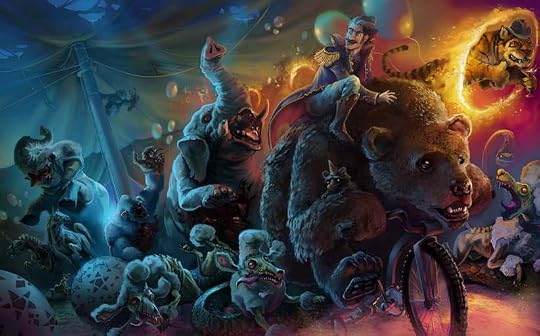
Carnival of the Animals
""Pequenas histórias, grande literatura Numa noite de temporal, um navio naufragou ao largo da costa africana. Partiu-se ao meio, e foi ao fundo em menos de um minuto. Passageiros e tripulantes pereceram instantaneamente. Salvou-se apenas um marinheiro, projetado à distância no momento do desastre. Meio afogado, pois não era bom nadador, o marinheiro orava e despedia-se da vida, quando viu a seu lado, nadando com presteza e vigor, a vaca Carola. [...] Agarrado aos chifres da vaca, o marinheiro deixou-se conduzir; e assim, ao romper do dia, chegaram a uma ilhota arenosa, onde a vaca depositou o infeliz rapaz, lambendo-lhe o rosto até que ele acordasse. Trecho do conto “A vaca” Em O carnaval dos animais, leões, ursos, coelhos, vacas e cachorros são os grandes protagonistas deste conjunto de histórias. Este que foi um dos primeiros livros do imortal Scliar reúne contos que, por meio do fantástico e do insólito, revelam a maior parte das temáticas que acompanhariam o autor ao longo de sua carreira: a condição de imigrante, as raízes judaicas, a vida em família, a condição humana, tudo regado com muito humor.""
Paperback
First published January 1, 1968
About the author
Moacyr Scliar
199 books138 followersMoacyr Jaime Scliar (born March 23, 1937) is a Brazilian writer and physician.
Scliar is best known outside Brazil for his 1981 novel Max and the Cats (Max e os Felinos), the story of a young man who flees Berlin after he comes to the attention of the Nazis for having had an affair with a married woman. Making his way to Brazil, his ship sinks, and he finds himself alone in a dinghy with a jaguar who had been travelling in the hold.[1] The story of the jaguar and the boy was picked up by Yann Martel for his own book Life of Pi, winner of the 2002 Man Booker Prize, in which Pi is trapped in a lifeboat with a tiger
Scliar is best known outside Brazil for his 1981 novel Max and the Cats (Max e os Felinos), the story of a young man who flees Berlin after he comes to the attention of the Nazis for having had an affair with a married woman. Making his way to Brazil, his ship sinks, and he finds himself alone in a dinghy with a jaguar who had been travelling in the hold.[1] The story of the jaguar and the boy was picked up by Yann Martel for his own book Life of Pi, winner of the 2002 Man Booker Prize, in which Pi is trapped in a lifeboat with a tiger
Ratings & Reviews
Friends & Following
Create a free account to discover what your friends think of this book!
Community Reviews
Displaying 1 - 3 of 3 reviews

May 18, 2016
From a New York Times article on Brazilian novelist, short story writer and fabulist par excellence Moacyr Scliar (1937-2011): "He came to public attention with his second collection of short stories, The Carnival of the Animals, whose intertwining of allegory, fable, fantasy and folklore and Borges-like excursions into metafiction, marked him as a distinctive new fictional voice."
My goodness, what a collection - two dozen of some of the most inventive, magical short story blast-offs you will ever encounter. And all told in such an easy, breezy, fun-to-read style, like munching on peanuts, once you start, it's hard to stop.
We read in one story how Barbara, a tall, blonde beautiful pilot has to crash land her Piper airplane in the desolate Bolivian plateau and, although she has plenty of gourmet foods, she refuses to give a crumb to her dark complexioned foster sister, Angelina. What is poor Angelina to do? Why, of course, after a few days of starvation, she begins to cut off and eat her own fingers.
And that’s just for starters. In other stories, a sailor is stranded on a desert island with a cow; a miniature dog turns out to be the fiercest critter ever; and Captain Marvel lives in retirement as Zorro keeps receiving indecent letters from fans who have a fetish with anything beginning with the letter “Z.” Here are my write-ups of three other tales I hope will whet your appetite:
THE PHANTOM TRAIN
Nine-year-old Matias is diagnosed with leukemia and, through tears, his mother requests our ten-year-old narrator to please help grant what has always been Matias’ greatest wish: to take a ride on the Phantom Train. Since Matias can’t go to the amusement park, the narrator (let’s call him Pedro) figures he will help set up a custom-made Phantom Train right in the old mansion where Matias lives. To this end, Pedro takes a few spine-tingling rides at the amusement park and afterwards methodically jots down all the details complete with diagram. With the help of Matias’ family, he is able to buy the needed equipment and set up his version of Phantom Train.
The event takes place on an evening in July, 1956. A shivering Matias, so withered and small by now, is placed in a baby carriage. Pedro strolls him to the entrance hall of the mansion. All the lights go out, the signal to start: Pedro pushes the baby carriage down the hall at full speed, enters the drawing room where Matias’ mother, now a witch dressed in black, her face painted ghastly colors, a stuffed owl on her shoulder, invokes evil spirits. Pedro races Matias around the room a couple of times, the witch in full chase. Matias shrikes with fright and pleasure. Pedro moves to the old-fashion bathroom – Matias’ father is a dead man hanging from the shower head with a noose around his neck and his purplish blue tongue sticking out. Next, Pedro pushes Matias to a bedroom where Matias’ brother is a skeleton on the bed with chains in his boney hands. Then they quickly move to the den where Matias’ two sisters are stabbed in the chest and covered with blood.
Thus ends the Phantom Train. Exhausted, covered with sweat, Matias is lifted out of the carriage with utmost care and placed back in his bed. His parents cry softly; his mother wants to give Pedro some more money but the ten-year-old refuses. The story ends with Pedro telling us how Matias died two weeks after this event and that he himself has never ever taken another ride on the Phantom Train. I can believe it! Can you imagine setting up and participating in such a house of horrors with your nine-year-old son on the cusp of his premature death? If the Phantom Train was Matias’ greatest wish, too bad his parents didn’t ask him what would be his second choice.
THE FISHING TOURNAMENT
“An extremely unpleasant incident took place during the last fishing tournament on Joy Beach.” This tale begins on such an up note, such heaven on earth for fishermen in love with the sport of fishing: outstanding, eager participants, fantastic weather, and, most importantly, a lake full of fish. But this good luck took a decided turn when on the third day of the tournament a weird, gaudy wagon pulled up and an entire family of unruly, boisterous, coarse louts pile out - father, mother, many children all unpleasant as can be, especially the father with his bronze skin, evil black eyes, thick lips and gold-capped teeth, incapable of walking past a woman, young or old, married or single, without mouthing his crude jokes.
To top it off, the next morning, the father, this Antonio, without bothering to request permission, rolls up his pants and wades in the water right were the fishing lines are cast; he dips his arms into the water up to his elbows, utters some mysterious words and stands up, his arms full of fish! Well, the tournament participants complain to the officials. When Antonio and his loutish family merely scoff and laugh off these officials, the officials, outraged in the extreme, appeal to the head of the court. This head is a tall, nimble, energetic man who is overcome by righteous indignation. Sidebar: Anytime I hear the words "righteous indignation" I sense trouble, big trouble. It might be time for artists and writers to take cover, fast.
The court head, a man not of words but of action, announces to all, not to fret, he will take care of the problem. The next morning when the participants see Antonio come down to the river, he has not forearms and hands but two bloody stumps. The court head’s trusty fishing knife still works fine – he cut both of Antonio’s arms off. The story takes another unexpected twist. You will have read for yourself but with this tale we are well to remember Moacyr Scliar utilized symbol and allegory to outwit censors at the time of repression under the reigning military regime in Brazil.
THE AGING MARX
An absurdist romp where Karl Marx, having his belly full of theory, decides to enjoy the rest of his life and make some real money so he and his family can live well. What, you may ask, does Marx do to live out his dreams? Why, of course – he and his family take a boat to Brazil. A Jewish head of a furniture factory takes Marx on as manager and then the fun begins.
At one point, when he installs some creative initiatives as factory manager, we read: “Churchill was offering blood, sweat, and tears to the Englishmen. Marx had a loudspeaker system installed at the factory in order to broadcast patriotic, anthems as well as requests for increased productivity on the part of the workers. “London has been suffering bombings! And what about you, what have you been doing?” He was one of the very first entrepreneurs to invest in an advertising campaign. Thanks to his vision and other qualities, he made a lot of money.”
Yes, of course, in the author’s story Karl Marx lives during World War Two and has an opportunity to see his economic and philosophic theory in action. He also has an opportunity to keep an eye on one of his more pressing preoccupations: the number of toes he has on his left foot. Will he keep five? Or will he ultimately have only four or an added sixth? Moacyr Scliar plays with the ironies of history and the improbabilities of physiology as he addressed issues of oppression, persecution and the dynamic interplay of good and evil.

Brazilian author Moacyr Scliar, 1937 - 2011

October 14, 2019
Moacyr é um autor que ouço pouco falar mais me intriga desde que vi seu nome. A Voz do Poste é um dos meus livros favoritos e Deu no Jornal é uma obra legal para ler no domingo. O Carnaval dos Animais traz contos bons e interessantes, mas tive problemas com o vocabulário usado em alguns textos. Parecia ter um cunho racista que me deixou atônito!

June 27, 2019
Os textos do Scliar, mesmo os mais curtos, sempre me tocam profundamente. Com esse livro também foi assim.
Displaying 1 - 3 of 3 reviews