Against a backdrop of the ethnic strife in the Balkans and the collapse of Yugoslavia in 1991, Robert Greenberg describes how the languages of Croatia, Bosnia, Kosovo, Serbia, and Montenegro came into being and shows how their genesis reflects ethnic, religious, and political identity. His first-hand observations before and after Communism offer insights into the nature of language change and the relation between language and identity.
I don't usually tend to review books like this one (the books on other subjects besides literature), but I just couldn't let this one pass.
To show you what I mean I'll tell you a short story. In a toilet (yes a bloody toilet) I noticed something that looked odd. It was a photograph in a magazine with something that looked like glagolitic alphabet but not quite. Taking the magazine in my hands, I've seen an article about an uncanny significance between an Ethiopian and this ancient Slavic script invented by a Greek monk that you wouldn't have probably heard about...There were just a few paragraphs about it written by some Croat who drives around the world in the car or something like that (that part of the article didn't much interest me)...
This was a magazine about cars. My brother's magazine about cars...you know the kind with naked chics and cars. Last time I've read something really interesting about linguistics was in a bloody car magazine?!!! What is this world coming to?
...and here is a book about linguistics in which and author describes his insights into...what? For example into how he is so amazed to see people kneeling. It must mean something! I'm sure that the linguists that hosted this guy will be really happy that he describes them like they're monkeys in a zoo.
They're kneeling on a grave of a linguist? How extraordinary!! Wtf? Have you ever heard of the orthodox and catholic religion ?! People kneel when they pray because...Well, why do you do what you do? Why anyone practicing any religion does anything? Show some respect you piece of white trash!
Now, that is what the linguist of the Balkan should have answered to this book...because that is what it deserves! They (I've read the responses of Serbian and Croatian linguists, I'm not sure are there others), on the other hand, wrote very polite and intelligent responses to this book that will surely interest noone. Guys, you're wasting your time. After all, who wants to read about it? This guy? He had shown you what he thinks about you, your language and your culture and even your religion for that matter. You're wasting your time, my dear Balkan linguists. Write real books. I'll read them I promise. Even if you only publish it in a fancy edition that coast more than makes sense. But please... Don't write books in response to this crap. Don't encourage this poor excuse for a linguist.
I'll take Robert whatever seriously when he writes a book about linguistics and includes some research into it that is not his personal impressions(and btw the history of languages in these areas doesn't start in the 19th century)... and now I'm going to find the person who gave this book 4 stars and kick their ass...and than I'm going to kneel and pray to the lord to forgive me. Yeah, right...but feel free to write a book about it. Seriously, what has this world come to? I'm giving up the fancy books and starting to read car magazines.
While the “Serbo-Croatian language” seemed solid to outsiders during the long decades of Yugoslavia’s existence, inside the country there was very little consensus at all between Serbs and Croats about language issues. With the fall of Yugoslavia there were not only drastic pushes for distinct Serbian and Croatian languages, but vocal advocates for independent Bosnian and Montenegrin standard languages appeared as well. These developments of the 1990s and very early millennium are the subject of Robert D. Greenberg’s Language and Identity in the Balkans, which was published in 2004. To enjoy this book, one doesn’t need a proficient command of "Serbo-Croatian" or the languages that appeared in its wake, as all quotations are given in English translation with the original below in a footnote, but you will need at least some knowledge of the language(s) and Slavic historical linguistics.
Greenberg’s book is very neatly broken down. First, we get an overview of 19th-century relations between Serbs and Croats aiming for a standard language in the age of nationalism. Then, he talks about the attempts in postwar Yugoslavia to either maintain a compromise Serbo-Croatian language or do away with it and assert a full-on Croatian standard. The bulk of the book consists of separate chapters for the debates over new Bosnian, Croatian, Montenegrin, and Serbian standard languages since 1990. Drawing on scholarly publications and the popular press, Greenberg describes the polemics of language advocates and the competing publications which aim to present new rules for word usage and orthography. Major personalities and their ties to state authorities (or lack thereof) are identified.
There was hardly a page here where I didn’t think that the former Yugoslavia is a real mess, and Greenberg deserves credit for untangling all these arguments and presenting them in a way accessible to outsiders. The great downside of the book is that no second edition has appeared to take into account more recent developments. Greenberg was writing as rump Yugoslavia was transforming into the country officially called "Serbia and Montenegro", but shortly after that Montenegro declared its independence, which brought new pressures in language policy (a new 2009 orthography, for instance). The reader will also wonder how further Croatian has gone in drawing on the Cakavian or Kajkavian lexicon to further distinguish standard Croatian from Serbian.
I don't know whether the author was consciously tendentious, or he simply had been rinse-repeat writing what he had studied.
Be as it may, this book is ahistorical. I think it would be a waste of time to address Greenberg's theses (that, basically, all began with the dissolution of Yugoslavia). So I'll try to sketch a bigger picture.
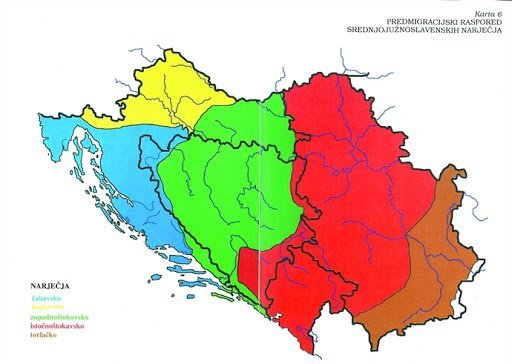
Croatian and Serbian are basically mutually highly intelligible languages, like Hindi and Urdu (and unlike German, English, Italian, French,..). There was never a common linguistic culture & heritage for Bosnian, Croatian and Serbian. The parallel with Hindi and Urdu goes for the dialectal basis of standard languages: in the case of Indian-Pakistani languages, it was Khariboli dialect; in the case of Croatian, Bosnian and Serbian, it was neo-Štokavian dialect. But this is a dialectal basis, not the whole standard language with orthoepy, morphology, word-formation,variety of functional styles, grammar, phraseology, syntax, stylistics, semantics, pragmatics, vocabulary etc. And- it is only Croatian, which has, as a system of dialects, Čakavian, Štokavian and Kajkavian (Serbian and Bosnian- don't). There is mutual intelligibility & the core grammar and vocabulary; just, there was never a unified language (Serbo-Croatian or Croato-Serbian) that ever existed (or dissolved). When you have linguistic corpora of written texts, going back to 1000 years, and they unmistakably belong either to Croatian or Serbian (or in the case of Bosnian, 500 years) - then, you've never had a unified language.
Croatian language, as a system of dialects, consists of Kajkavian, Čakavian & Western Štokavian dialects; Serbian of Eastern Štokavian and Torlak; Bosnian of mostly Western Štokavian and some Eastern Štokavian.
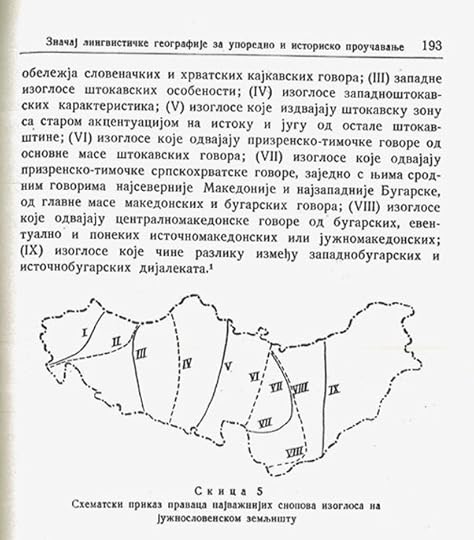
Zones III and IV- Western Štokavian; zones V and VI-Eastern Štokavian; zone VII- proto-Torlak.
These languages are highly mutually intelligible, and- so what? Consider this Croatian poem, written around 1400. in a variant of Čakavian, and virtually all Bosniaks & Serbs will understand it. And yet It is is definitely Croatian and only Croatian.
Muka svete Margarite
Those who try to apply socio-linguistic theory of pluri-centric/poly-centric languages on these standard languages fail, because:
1. you have to have the same name. Historically, Croatian has been named, mostly, Croatian, Illyrian and Slovin (plus regional names like Slavonian, Ragusan, Bosnian, Dalmatian,..). Serbian has been named Serbian and Serbian-Slavic. This evidently is not the case with the varieties of English, German, French,….
2. you have to have the same literary corpus, at least in the beginning. In the case of English, you got Beowulf, Piers Ploughman, various texts from Chancery, Chaucer, Shakespeare, Locke, Gibbon,… In the case of Serbian (Saint Sava’s texts, Dušan’s codex, Dositej Obradović, Jovan Raić, Sava Mrkalj, Vuk Karadžić, Laza Lazarević, Miloš Crnjanski,..) and Croatian (Baška tablet, Vinodol codex, Hrvoje’s Missal, Džore Držić, Marko Marulić, Vatican Croatian Prayer Book, Bartol Kašić, Ivan Belostenec, Junije Palmotić, Ivan Mažuranić, Bogoslav Šulek, August Šenoa, Miroslav Krleža,..)- you got two non-intersecting language corpora. Which is not the case with, say, American and British English.
3. you have to have the same language-cultural community, or speakers who not only understands “other” group(s), but forms a cultural-historical unity with them. Croatian speakers do not belong to the same cultural-historical- language community with Serbs & Bosniaks. Nor do Serbs & Bosniaks do with “others”. The same goes for Urdu and Hindi.
4. you have to have the standardization process that took place at the same time & the same place. For Croatian, standardization has begun in the early 17th C (Kašić’s grammar in 1604, Kašić’s Roman Rite in 1640, Mikalja’s dictionary in 1649, Divković’s sermons in 1611), continued in the 18th C (Belostenec, Della Bella, Džamanjić, Jambrešić, Relković, Kačić Miošić, Stulli) & was finalized in the 19th C (Gaj, Babukić, Mažuranić, Veber, Šulek, Maretić, Broz). Serbian language has begun its standardization in the 18th C (Avramović, Obradović, Vezilić..) and was basically standardized in the 19th C (Karadžić, Daničić, Novaković, Popović..)
Greenberg has simply "forgot" centuries old traditions of those languages.