Jump to ratings and reviews
Rate this book

The Two Noble Kinsmen

Rate this book
Palamon and Arcite, cousins and devoted friends, meet the beautiful Emilia. Both fall instantly in love with her, and their attachment turns to hatred. This dark-edged tragicomedy is now widely regarded as having been written by Shakespeare in collaboration with John Fletcher.

256 pages, Mass Market Paperback

First published January 1, 1614

54 people are currently reading
2375 people want to read

About the author

William Shakespeare

27.6k books46.9k followers
William Shakespeare was an English playwright, poet, and actor. He is widely regarded as the greatest writer in the English language and the world's pre-eminent dramatist. He is often called England's national poet and the "Bard of Avon" (or simply "the Bard"). His extant works, including collaborations, consist of some 39 plays, 154 sonnets, three long narrative poems, and a few other verses, some of uncertain authorship. His plays have been translated into every major living language and are performed more often than those of any other playwright. Shakespeare remains arguably the most influential writer in the English language, and his works continue to be studied and reinterpreted.
Shakespeare was born and raised in Stratford-upon-Avon, Warwickshire. At the age of 18, he married Anne Hathaway, with whom he had three children: Susanna, and twins Hamnet and Judith. Sometime between 1585 and 1592, he began a successful career in London as an actor, writer, and part-owner ("sharer") of a playing company called the Lord Chamberlain's Men, later known as the King's Men after the ascension of King James VI and I of Scotland to the English throne. At age 49 (around 1613), he appears to have retired to Stratford, where he died three years later. Few records of Shakespeare's private life survive; this has stimulated considerable speculation about such matters as his physical appearance, his sexuality, his religious beliefs, and even certain fringe theories as to whether the works attributed to him were written by others.
Shakespeare produced most of his known works between 1589 and 1613. His early plays were primarily comedies and histories and are regarded as some of the best works produced in these genres. He then wrote mainly tragedies until 1608, among them Hamlet, Romeo and Juliet, Othello, King Lear, and Macbeth, all considered to be among the finest works in the English language. In the last phase of his life, he wrote tragicomedies (also known as romances) and collaborated with other playwrights.
Many of Shakespeare's plays were published in editions of varying quality and accuracy during his lifetime. However, in 1623, John Heminge and Henry Condell, two fellow actors and friends of Shakespeare's, published a more definitive text known as the First Folio, a posthumous collected edition of Shakespeare's dramatic works that includes 36 of his plays. Its Preface was a prescient poem by Ben Jonson, a former rival of Shakespeare, that hailed Shakespeare with the now famous epithet: "not of an age, but for all time".

Ratings & Reviews

What do you think?
Rate this book

Friends & Following

Create a free account to discover what your friends think of this book!

Community Reviews

5 stars
403 (15%)
4 stars
763 (28%)
3 stars
1,049 (39%)
2 stars
372 (14%)
1 star
63 (2%)
Displaying 1 - 30 of 318 reviews
Profile Image for Bill Kerwin.
Author 2 books84.3k followers
October 27, 2019

I've believed for years that I loved Shakespeare, but while reading the collaboration The Two Noble Kinsmen for the first time, I was gratified to have that love confirmed by my autonomic nervous system.

After reading the Prologue (obviously not Shakespeare) and the initial song (charming, generic, possibly Shakespeare), I began to read the first scene--the one in which the wedding of Theseus and Hippolyta is interrupted by the pleading of three widowed queens—and, as I gradually began to recognize the concentrated, characteristic poetry of the later plays, my breathing began to quicken and my heart began to beat a little faster. I realized I was reading poetry in Shakespeare's most mature style, poetry I had never encountered before. I was both excited and pleased, like the way I always feel when I watch my wife enter a room.

An ironic observation: the subplot of Kinsmen--involving a jailer's daughter driven mad by love—although it owes an obvious debt to the mad scenes in both “Hamlet” and “Macbeth” and is the most derivative part of the play, is clearly the work of Shakespeare's collaborator, John Fletcher--not Shakespeare himself.

I won't pretend that this is a great play--it is strong on pageantry and poetry, weak in structure and characterization--but those like me who enjoy the tragi-comedies will find much here to admire.
Profile Image for leynes.
1,316 reviews3,685 followers
December 27, 2020
Oh boy, oh boy ... where do I even start with this? I have honestly no idea how to rate this play, so I went with an unmeaning 3-stars-rating. On the one hand, I hated this play and everything it stands for. It's one of the worst explorations of masculinity in all of Shakespeare's canon, and the way women are treated in this play is absolutely disgusting. On top of that, character consistency was neither Shakespeare's nor Fletcher's strong suit. On the other hand, I like how accessible this play was. It's so easy to follow the story and the premise is engaging enough to keep you reading. On top of that, I loved analysing this play. So ... where does this leave me? I don't know.

The Two Noble Kinsmen is basically another shit show in which two men fall for the same woman, then battle it out and at the end of it, one of them gets the woman. Albeit, at the end of this play, there's a twist (that literally no one could've seen coming) where the first victor falls from his horse and dies (#lmao), so that the "loser" actually gets the woman. So far, so ... not good at all. I've read so many Shakespeare plays and I was quite surprised by how often he features strong women in his work. Sure, there are often problems with belittling and abusing them (e.g. The Taming of the Shrew) or sometimes even raping them without consequences (e.g. The Two Gentlemen of Verona), but we are also treated to women who are smart, brilliant, absolutely savage and overall just well-rounded characters who get a voice.

Now, the reason why The Two Noble Kinsmen just annoyed me so much is the fact that Shakespeare and Fletcher fucked the one interesting female character that they had completely over. Yes, I'm talking about Emilia. Emilia is Theseus' sister, and the woman that both Arcite and Palamon have fallen in love with. At the beginning of the play we are introduced to her as a strong woman who is not interested in men.
Loved for we did, and like the elements
That know not what nor why, yet do effect
Rare issues by their operance, our souls
Did so to one another. What she liked
Was then of me approved, what not, condemned,
No more arraignment. The flower that I would pluck
And put between my breasts—O, then but beginning
To swell about the blossom—she would long
Till she had such another, and commit it
To the like innocent cradle, where, Phoenix-like,
They died in perfume.
Quite frankly, she even seems to be gay. The tone in which she reminisces about her childhood friend Flavina was pretty specific and more than just friendly ("That the true love ’tween maid and maid may be / More than in sex individual."). Furthermore, even when Hippolyta (Theseus' wife ... who is completely boring because she has no personality apart from her husband) belittles her and tells her that she is "weak" and that she doesn't believe her when Emilia says that she's sure she will never "love any that's called a man", because surely all women need men in their lives, Emilia stays true to her believes. Hippolyta even has the nerve to say that Emilia's loathing for men is really just longing for them. Miss me with that bullshit.

The reason I'm so mad is that Emilia, who was so confident in herself and in her beliefs (and sexuality), got, through the course of the play, reduced to the shell that she once was. As soon as she becomes the "prize" in the game that Arcite and Palamon play, she expresses her love for both of them, she muses about how handsome both of these men are and that she wants both of them to live. Excuse me? The woman who, a mere act ago, told us that there is nothing greater than the relationship between two women and who boldly asserted her beliefs when Hippolyta got on her damn nerves with her heteronormative bullshit: "I am not / Against your faith, yet I continue mine", is all of a sudden "a virgin flower" who must be "unplucked". EXCUSE ME????? A VIRGIN FLOWER? What's that supposed to mean, Willy? Pluck yo flowers in your own garden but leave my Emilia alone.

Furthermore, the two men vying for Emilia's attention are among the worst characters I ever encountered in all of Shakespeare's canon. The hatred I feel towards Palamon ... wow, I cannot put it into words.
PALAMON
I, that first saw her; I that took possession
First with mine eye of all those beauties
In her revealed to mankind.
Albeit Arcite was way more mature in the beginning, he, too, turned into a toxic asshole at the end.
Emily,
To buy you I have lost what’s dearest to me
Save what is bought, and yet I purchase cheaply,
As I do rate your value.
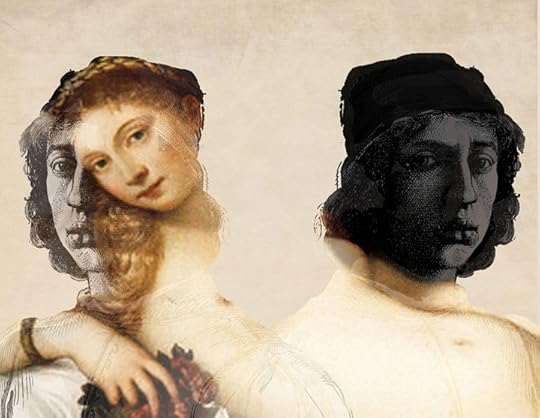
Seeing women as possessions who can be handed around and be bought or won is just ... ugh, Willy, we all know you can do better than this??? So miss me with that bullshit that it was the time period he lived in. We all know that 15th century England was hell for women. Nonetheless, Shakespeare showed us in some of his works than he can do better than this, that he is able to craft interesting female characters who are not just objects and pieces on a chessboard. Peace out.
Profile Image for Michael Finocchiaro.
Author 3 books6,259 followers
April 6, 2022
A great story at the very end of Shakespeare's career, we get to see Hippolyta and Perseus again from Midsummer Night's Dream and see another twist of the triangular love story. It was certainly a collaborative work, but we still have Shakespeare's hand at work in many of the scenes.

Fino's Reviews of Shakespeare and Shakespearean Criticism
Comedies
The Comedy of Errors (1592-1593
The Taming of the Shrew (1593-1594)
The Two Gentlemen of Verona (1594-1595)
Love's Labour's Lost (1594-1595)
A Midsummer Night's Dream (1595-1596)
The Merchant of Venice (1596-1597)
Much Ado About Nothing (1598-1599)
As You Like It (1599-1600)
Twelfth Night (1599-1600)
The Merry Wives of Windsor (1600-1601)
All's Well That Ends Well (1602-1603)
Measure for Measure (1604-1605)
Cymbeline (1609-1610)
A Winter's Tale (1610-1611)
The Tempest (1611-1612)
Two Noble Kinsmen (1612-1613)

Histories
Henry VI Part I (1589-1590)
Henry VI Part II (1590-1591)
Henry VI Part III (1590-1591)
Richard III (1593-1594)
Richard II (1595-1596)
King John (1596-1597)
Edward III (1596-1597)
Henry IV Part I (1597-1598)
Henry IV Part II (1597-1598)
Henry V (1598-1599)
Henry VIII (1612-1612)

Tragedies
Titus Andronicus (1592-1593)
Romeo and Juliet (1594-1595)
Julius Caesar (1599-1600)
Hamlet (1600-1601)
Troilus and Cressida (1601-1602)
Othello (1604-1605)
King Lear (1605-1606)
Macbeth (1605-1606)
Anthony and Cleopatra (1606-1607)
Coriolanus (1607-1608)
Timon of Athens (1607-1608)
Pericles (1608-1609)

Shakespearean Criticism
The Wheel of Fire by Wilson Knight
A Natural Perspective by Northrop Frye
Shakespeare After All by Marjorie Garber
Shakespeare's Roman Plays and Their Background by M W MacCallum
Shakespearean Criticism 1919-1935 compiled by Anne Ridler
Shakespearean Tragedy by A.C. Bradley
Shakespeare's Sexual Comedy by Hugh M. Richmond
Shakespeare: The Comedies by R.P. Draper
Tyrant: Shakespeare on Politics by Stephen Greenblatt
1599: A Year in the Life of William Shakespeare by James Shapiro

Collections of Shakespeare
Venus and Adonis, the Rape of Lucrece and Other Poems
Shakespeare's Sonnets and a Lover's Complaint
The Complete Oxford Shakespeare
Profile Image for Darwin8u.
1,835 reviews9,034 followers
December 27, 2017
“Our reasons are not prophets
When oft our fancies are.”

― William Shakespeare, The Two Noble Kinsmen

description

This play sits next to Pericles, The Two Gentlemen of Verona, Henry VIII, and Cymbeline as one of my least favorite Shakespeare plays. Ugh. I'm not a fan of Shakespeare's collaborations (see Henry VIII) and the Two Noble Kinsmen is also just a bit boring.

The story is loosely based on Chaucer's 'A Knight's Tale', but Shakespeare puts the two cousin's in love with one woman and sets the story in Athens and Thebes. I think the failing of this tragedy stems from, surprisingly, the inability of the play to convince me (the reader) in the transformation of the cousins from noble cousins to jealous dicks. There just isn't a strong enough catalyst. My other major beef with the play, is there isn't enough Shakespeare in it. Not enough amazing lines. Not enough dance to the English.

Most scholars agree on the following division in the play:

Prologue - Fletcher
Act 1 - Shakespeare
Act 2.1 - Shakespeare
Act 2.2-2.6 Fletcher
Act 3.1-3.2 Shakespeare
Act 3 Fletcher
Act 4 Fletcher
Act 5.1 Shakespeare
Act 5.2 Fletcher
Act 5.3-5.4 Shakespeare
Epilogue - Fletcher

There is some disagreement about whether Shakespeare or Fletcher wrote the first 33 lines of Act 5. Think about THAT. That is Biblical level exegesis when scholars, nearly 400 years after the fact are still disputing a page of lines of a VERY minor play. That level of byzantine back and forth is worthy of a play, or at least a narrative poem.
Profile Image for Cindy Rollins.
Author 20 books3,382 followers
December 19, 2018
This was the last play of Shakespeare and the last one on my 2015 list. My holidays were so busy I did not have time to finish this in 2015 but overall I am surprised I stayed on track as well as I did. I have learned to never quit something just because I fall behind. My life motto is:plod on. Not the stuff of poetry but helpful to me.
I enjoyed this final play and especially noted Shakespeare's own strong desire that his play should be liked in the Epilogue. Even Shakespeare suffered from fear of failure. If only he knew....
Profile Image for David.
744 reviews2 followers
July 3, 2020
Pretty thin stuff, only some of it Shakespeare's, and none of that his best. Of course even weaker work from the Bard is interesting and has merit. Among those plays that are known to be hybrid efforts, however, this one (written in collaboration with Fletcher) is my least favorite.

2.5 stars
Profile Image for Leslie.
2,760 reviews231 followers
May 11, 2020
This play is supposedly co-authored by Shakespeare and John Fletcher (of Fletcher & Beaumont fame) though that attribution is considered questionable. I have nothing to add to that debate but note the fact (which explains why this play isn't in my Kindle "The Complete Works of Shakespeare").

The play is apparently based upon one of Chaucer's tales and I found the setting of ancient Athens a bit forced and unlikely. For example, did the ancient Greeks in the time of Theseus do Morris dancing? Despite these oddities, I did enjoy the play. I may not have gotten as much out of reading it if I hadn't also watched it courtesy of Shakespeare's Globe Theater (https://www.shakespearesglobe.com/wat...) which cut a significant bit of the written text but made what was written much easier to understand. The Project Gutenberg text I read was based on a 1908 printed version which kept a lot of archaic spelling.

There was a lot of comedy in this play but I guess that overall I would classify it as a tragedy because of the way it ended. Often I find Shakespeare's comic relief in his tragedies not at all funny but this time I was chuckling a lot.
Profile Image for David Sarkies.
1,930 reviews383 followers
December 23, 2017
Is It Shakespeare?
23 December 2017

This seems to be one of those plays where the main debate centres around whether Shakespeare actually wrote it – more than the usual debate if you include the discussions (for want of a better word) over whether Shakespeare actually existed, and whether he was just another writer going under an assumed name. Mind you, the general consensus regarding this play seems to be that he did, well, sort of, at least in collaboration with John Fletcher. Okay, Fletcher might be one of those people that us literary buffs may have heard of, but the thing I have noticed is that you don't seem to find collections of books entitled 'The Complete Works of John Fletcher', at least not in your average bookshop, and other than the plays that he wrote in collaboration with Shakespeare, you generally don't encounter much of his work.

It's probably because he isn't all that good.

Which sort of makes me wonder why Shakespeare even considered going in collaboration with him. Well, it could be similar to how big name bands regularly have opening bands at their concerts – namely to create a connection between the lesser known band and the more popular band – if they are willing to have them perform with them then they must be good. Well, sometimes it works, but sometimes it doesn't, as is the case here. On the other hand it could be that Fletcher was one of Shakespeare's understudies, but considering that by the time this play was written Shakespeare was well into retirement then that probably doesn't work either.

To suggest that this play is not really all that popular is a huge understatement – the section at the back of my edition that looked at the performances of the play over the centuries was rather short, and also it was noticeable that there wasn't any reference whatsoever to any film productions of this play. In fact I wonder whether the BBC did a version of it. I note that this play wasn't even included in the original Shakespeare folios, which goes to show what the original editors actually thought about it. As for me, well, it had its moments but I am probably going to have to go with the majority view of the opinion of this play, at least where academics are concerned (and of the essays at the back, only two actually looked at the play - the third one simply looked at Shakespeare's time at Blackfriars theatre).

The play is actually an adaptation of The Knight's Tale as written by Chaucer. As such this is probably one of the reasons that it really isn't liked all that much. It is sort of like that film that has been made of a really popular book and when you go and see it, you leave with the realisation that the book is far better. Okay, I can't compare the play to the book because I haven't read the book, but one thing that I've discovered is that Heath Ledger film isn't actually an adaptation of the book either, but rather a story that basically uses the same title and has Chaucer as one of the main characters.

So, we have two knights who decide that they don't particularly like Creon, the king of Thebes, so leave, however when they discover that Theseus, the king of Athens, has gone of war against their country they decide to join the losing side. As such they are captured and land up in prison. This is where the fun sort of starts because they meet Theseus' daughter and both fall in love with here, and the rest of the play is a competition between them to get Emily's affections. At the same time the gaoler's daughter falls in love with one of the knights and spends the entire play bemoaning how she can't get him to return her affections.

While I could write about how it seems that Theseus and Hypollita seem to appear in a couple of the plays as the traditional king and queen of Athens, I should remember that this is actually the story that happens to be the Knights Tale. Then again, if you know your Greek mythology, you will know that a lot of them do have Theseus as king of Athens, at at the same time we have Creon king of Thebes – who happens to be a bit of a cretin by the way, which is why he is painted as the bad guy in the piece. Oh, and we also have the knights escape from gaol, which means that there is also that tension where they are attempting to court Theseus' daughter, yet with the knowledge that if Theseus captures them, then it is off to the gallows they go.
Profile Image for Kailey (Luminous Libro).
3,579 reviews548 followers
September 26, 2025
In Ancient Greece, three queens come to plea with King Theseus and Queen Hippolyta to avenge the deaths of their three kingly husbands, who died at the hand of the evil tyrant Creon. Theseus agrees to go to war against Creon.

In Creon's army are two cousins, Palamon and Arcite, who are noble of heart, and do not agree with the tyrannous methods of Creon, but they are honor-bound to fight for Creon, and are taken as prisoners in the war.

While imprisoned they both fall in love with the beautiful Emilia, sister to Queen Hippolyta, and these two cousins who were once so close begin a fight to the death over Emilia's hand. They escape prison, are caught fighting, and agree to a tournament for Emilia's hand in marriage.

The Greek gods are prominent in this play, and the characters offer up various prayers for how they want the tournament to end. The brilliant thing is that although they all pray to different gods for different outcomes, ALL their prayers are answered in one way or another. It's a genius little plot twist that makes the whole story come together.

I was astonished to see the difference in the cousins' behavior towards each other from before they see Emilia to afterwards. They are not just friendly, but closely bonded with one another. It reminded me of the book of I Samuel where it says that "the soul of David was knit to the soul of Jonathan." These two had grown up together, been through many battles together, laughed and cried together for years. Their kindness and selfless care for each other was so strong in the beginning.
Then the insta-love happened, and they are immediately at each other's throats, calling each other names, and threatening all sorts of violence. But they do it in the name of honor, and still treat each other with a degree of respect due to their nobility of heart. They embrace one another for the last time before they fight, with expressions of regret at losing a close relative and friend.

I think I would have liked it better if they had struggled a little more with choosing between their friendship and their lady love, instead of immediately arguing about it. But still they are beautifully complex characters with wonderful dialogue!

I liked Emilia's character a lot! She is upset that these two men are fighting over her, she regrets that her beauty has caused a rift between them, she pleads to King Theseus for mercy on their behalf. The best part though is that she has difficulty deciding which of the cousins she likes more, so she prays that the one who loves her best will win the fight and be her husband. Her character is womanly and gracious. I like how elegant and regal her personality is.

A wonderful play! I would love to see it performed.
Profile Image for Alp Turgut.
430 reviews141 followers
February 17, 2018
William Shakespeare’ın sadece belli bölümlerini kaleme aldığı "The Two Noble Kinsman / İki Soylu Akraba", Geoffrey Chaucer’ın "Canterbury Hikayeleri"nde anlattığı Theseus’un Kreon’u yenip iki yeğenini esir aldığı hikayeyi anlatıyor. Hikayeyi daha derin bir şekilde ele alması ve Oidipus efsanesindeki Antigone’un hikayesini devam ettirmesi açısından önemli bir eser olduğu belirtmeliyim. Buna rağmen oyunun büyük bir kısmını tamamlayan John Fletcher’ın karakterlerin yapısını fazlasıyla değiştirdiği oyunda ciddi tutarsızlıklar mevcut. Başta dramatik başlamasına rağmen Fletcher’la birlikte bir anda komediye dönen eserde hikayeye katkı sağlamayan yan karakterlerin oyuna dahil edilmesi oyunun ciddiyetini yerle bir etmiş. Açıkçası "Cardenio"dan sonra ilk defa bir Shakespeare eserini okurken hiç keyif almadım ki "Cardenio" oyununu da Fletcher’ın tamamladığını düşünürsek sonuç çok da sürpriz değil. Kısaca Kendi içinde dramatik olmaya çalışan ama olayları ele alış biçimiyle gülünç olan "İki Soylu Akraba", sadece ele aldığı hikayeyle öne çıkıyor. Shakespeare ve mitoloji severlerin yine de göz atmasında fayda var.

01.02.2018
İstanbul, Türkiye

Alp Turgut

http://www.filmdoktoru.com/kitap-labo...
Profile Image for Calista.
5,432 reviews31.3k followers
February 18, 2017
This seems to be one of his longer plays. I feel for the women in these plays. I do hope they had more choice in their lives than is depicted in these plays. The story is based on Chaucer's A Knight's Tale. Two cousins are jailed and end up falling for the same woman, a princess. Since they are prince's they are allowed to marry the princess and fight to the death for the woman - who has no say in the matter really. The loser will be beheaded. Not really a comedy and not really funny. This is an ok play. I see why it's more unknown. It is not Shakespeare's best.
Profile Image for Linda ~ they got the mustard out! ~.
1,893 reviews139 followers
September 26, 2023
This is another play that he cowrote (and how much he was actually responsible for, I don't know, but it did feel more Shakespearan than some others that were cowritten), and it's likely the last one he wrote. So that language is polished, if not particularly inspiring, and the characters are about what you'd expect from a tragicomedy. The two gentlemen of the title are cousins and besties, until a woman comes between them. Or rather, until they put a woman between them. 🤦🏻‍♀️

Not helping things at all, the text was not updated to modern English in any of the copies I could find. Look, I appreciate if scholars and enthusiasts want to get the plays as close to their original condition as possible. More power to them. I don't want to wade through all that. Even with the audiobook from Librivox, I found myself constantly losing my place. 🙁 I may listen to it again at some future point when I'm less distracted.
Profile Image for Robert.
827 reviews44 followers
January 31, 2018
Shakespeare's final play, a collaboration with Fletcher, is more show than substance and allegedly often stolen by the Jailer's Daughter, who plays a small but crucial role in the main plot but ends up the lead character in a bizarre and controvercial subplot that even on the page is in some ways more interesting than the main action of two knights who fall instantly in love with their enemy's sister and fall to rivalry and rancour despite being cousins and also best pals five seconds earlier... Apparently one such modern day show stealer was Imogen Stubbs, which, given what I've seen/heard her do in other contexts, I find not so much plausible as inevitable.

So this is typical of late Shakespeare - an insubstantial Romance, this time based on Chaucer's Knight's Tale, with a silly plot and thin characters that can probably be made into a lively stage spectacle, at least, but far distant from the works that made his name echo down over four hundred years of history.
Profile Image for Elentarri.
2,065 reviews65 followers
April 18, 2023
The plot of The Two Noble Kinsmen is based on "The Knight's Tale" in Geoffrey Chaucer's The Canterbury Tales, and is attributed jointly to John Fletcher and William Shakespeare. This play was apparently William Shakespeare's final play before he retired to Stratford-upon-Avon and died three years later.

The play is a simple tragic-comedy where two knights (Arcite and Palamon, cousins, best friends and former prisoners of the Duke of Athens together) fight over a woman (Princess Emilia) they have both fallen in love/strike> lust with after seeing her only once, and at a distance at that. After escaping captivity by various means and some other episodes, a public tournament is ordered by the Duke of Athens with the stakes stated as the loser gets executed and the winner gets to marry the prize. (Not the most rational of men, these two) 🙄 The most interesting part of this play for me, was the strange subplot that seems to have been influenced by Hamlet's Ophelia. The jailer's daughter frees one of the knights (Palamon) but then goes mad due to unrequited love, since Palamon abandons her. (She isn't the sharpest tool in the shed either.) I found the characters to be superficial (and not particularly intelligent), the plot weak, and the romance silly, but the Jailer's Daughter (who doesn't even get a name!) deserves an extra half-star (just because she made the play at least a bit more interesting).
Profile Image for bri.
435 reviews1,408 followers
Read
February 8, 2025
This is definitely one of the lesser known Shakespeare plays, as the tragicomedies often are. And what’s interesting to me is that I’m usually a much bigger fan of reading the tragedies than the comedies but I was actually much more compelled in the comedic to neutral elements. Maybe it’s because I prefer Fletcher’s comedies as a reading experience?

I know this is a retelling of a Chaucer story so it’s somewhat nonsensical to take up arms with the plot itself but I really felt unsure about the tragical elements when there was so much room for it to end like a comedy, a la The Two Gentlemen of Verona or even Love’s Labour’s Lost.

But alas. I did really enjoy the characters in this (especially my sapphic queen Emilia who canonically has sex with a woman during the play’s events) and the layers of meaning and symbolism Shakespeare always so brilliantly injects into his work. I’m definitely excited to go read some scholarship on this one while I brainstorm how I would stage this in a way that depicts a lavender marriage situation.
Profile Image for Tori Samar.
601 reviews99 followers
July 5, 2024
Honestly wasn't sure what I'd think of this one since it's not entirely Shakespeare's work, but I enjoyed it, and there was plenty that felt like, "Ah yes, this is the Bard." Retelling of Chaucer's "The Knight's Tale."

(Lit Life Patreon SIAY 2023-2024)
Profile Image for han.
55 reviews24 followers
January 1, 2023
another one i read for school but i loved this one so much. also it’s gay as shit.
Profile Image for Roy Lotz.
Author 2 books9,051 followers
December 13, 2019
I have been slowly making my way through Shakespeare’s plays for years now. So it feels a little bittersweet to reach his final play, especially since Shakespeare’s last act is more of a whimper than a bang. We see a man gradually growing uninterested in the stage and withdrawing himself from the theater, delegating work to his colleagues. Considering how little we know about Shakespeare the man, it is tempting to look for clues in these final works. But facts cannot be wrung from poetry, no matter how hard you squeeze it.

While Shakespeare at the height of his powers was a man preternaturally sympathetic—able to throw his mind into any person he pleased—this late Shakespeare seems to have grown disenchanted with his fellow men and women. Instead of deeply individual characters, we get baroque puppets, speaking sublime poetry with wooden mouths. These characters follow conventional motivations—love, jealousy, honor, glory—but the bard seems to go out of his way to make these goals appear vain and foolish. Thus, here we have two apparently noble souls driven mad with love after a single glance, who break all bonds of blood and loyalty to win the hand of a woman who, for her part, hardly seems to care for either of them.

We, thus audience, hardly care for either of them, too, since Shakespeare does not bother to differentiate their personalities. In any case, I bet that Shakespeare’s audience (who were more worldly than most of us, I am sure) would have found this love-at-first-site conceit just as ridiculous as we do; and this puts the play’s plot in a rather uncomfortable light. For Shakespeare seems to be saying, first, that love is based on self-delusion; and, second, that love destroys what is truly precious for the sake of what is really worthless. The two noble cousins begin the play with a bond so deep they seem to be twins. Likewise, Hippolyta describes Theseus’s profound friendship with a general, which may forever be deeper than their marriage, and her sister Emilia tells of her lost childhood friend who meant more than the world to her.

All of these life-defining bonds contrast sharply with the perfectly arbitrary marriages that take place in the play. Should we infer something about the bard’s own marital situation? Well, I seem to be breaking my own rule. Even so, this final play—uneven as it is, and tinged with a strange sort of world-weariness—is certainly not the weakest in the Shakespearean oeuvre. Indeed, if we judge the play based on its finest parts, we can see that Shakespeare’s edge was in no way dulled.
Profile Image for Metin Yılmaz.
1,071 reviews136 followers
May 11, 2019
Sanki bazı kısımlar olmamış ya da bağlanmamış gibi geliyorsa, bilin ki bu Shakespeare kitabına başkası el atmıştır. Diğer eserlerine oranla daha az istekle okunmasının ana nedeni bu bence. Belki sorun, John Fletcher tarafından sonuna ve başına eklemeler yapılmış bir Shakespeare kitabı olması. Belki de konuda bazı alanların kopuk olmasına yol açan ana neden üstadın kendisidir, bilemeyiz. Ama herşeye rağmen, okunması gereken eserlerinden biri ve tüm eserlerini okumak isteyen benim gibi kimseler için ise bir ara durak. İyi okumalar.
Profile Image for Richard Seltzer.
Author 27 books133 followers
July 21, 2020
Not as bad as I expected. Better than such other collaborations as Edward III, Thomas Moore, Henry VIII, and the three Henry VI plays. A few weak echoes of Midsummer Nights Dream, with Theseus and Hippolyta and instantaneous falling in love. Plus a gaoler's daughter in a subplot who is an Ophelia wantabe.

I read this as research for my novel The Shakespeare Twins.
Profile Image for Rebecca Fell.
210 reviews
February 25, 2023
Based off Chaucer’s “The Knights Tale”, I chose this play for an upcoming presentation assessment. This was due to my interest in the medieval chivalric tradition and my curiosity towards how Shakespeare and Fletcher would translate it on stage. I really enjoyed how they embody the trope and tradition through objects and food (I particularly liked the duality between Palamon and Acrites feast and suiting scenes). Out of all of Shakespeare’s works, this is probably one of the most underrated. It’s a shame that it isn’t performed or really recognised.
Profile Image for Anastasija.
284 reviews31 followers
March 2, 2025
It's a wonderful play for readers who might be looking to explore some of Shakespeare's lesser-known works and readers who enjoy stories that don't fit neatly into the "comedy" or "tragedy" box.
The co-authorship with John Fletcher is noticeable (well, I noticed it - after reading all Shakespeare’s plays 😊). I especially liked the moving scenes showing the disintegration of Palamon and Arcite's friendship. You can feel the genuine anguish as these two men who would have died for each other now find themselves rivals.

And I also liked this lovely parallel subplot involving the Jailer's Daughter, who falls in love with Palamon and gradually descends into madness when her love isn't returned. Heartbreaking!
Profile Image for Melissa.
184 reviews28 followers
January 9, 2022
“The world’s a city full of straying streets, and Death’s the market place, where each one meets.”

A lesser-known of Shakespeare’s plays but it's worth knowing, all the same.
Profile Image for Bryn Hammond.
Author 21 books413 followers
January 29, 2015
A tragedy of friendship - friendship ruined by love.

I came to this through Harold Bloom. He quotes Emilia on her dead girlhood friend, a speech which has this end, That the true love 'tween maid and maid may be More than in sex dividual. And Bloom says, this declaration is unique in Shakespeare, and deserves to be better known as the locus classicus in defense of such love in the language.

The play runs on strong friendships - love-friendships; that of Theseus and Pirithous is hymned by Theseus' (conquered) Amazon wife; there is the Amazon Emilia who is never a convert to love; and the friends of the title, who fall to rivalry for her sake. Emilia acts very sensibly: she tries not to come between them, she tells them their friendship is more important.

That's the plot. The style is late, dark but elegiac, at times staggeringly bitter, with a ghastly hymn to the Goddess of Love, and can be as gory a romp as Titus.

Is it anti-love? Possibly; at least, friendship is centre stage, and how unusual is that? It's one of his late experiments, tragic and comic, and is unafraid to do things differently.

#
A note on the Arden 3rd (one of the few available editions, I imagine): the editor seems to think Emilia a weak person who is stupid not to choose between the friends. But isn't that the point? She stands apart from the romance demands, she keeps a different ethic -- and she'd have prevented a tragedy. I find her strong, and an identity-figure for me, which I can't say often even of Shakespearean women.
Profile Image for Carol Bakker.
1,541 reviews137 followers
December 2, 2017
Melancholy laced with comedy.

This last play recalls motifs from previous plays. Hamlet came to mind: a mad song-singing Ophelia (Jailor's daughter); a duel; a funeral followed by a wedding.

Two noble kinsmen, the cousins Arcite and Palamon, are the best of friends. Moments after Palamon asks Is there record of any two that loved better than we do, Arcite? ... I do not think it possible our friendship should ever leave us, they look out a window, see enchanting Emilia, both fall in love, both declare ownership of Emilia (!), and both become instant Enemies.

It is curious (and delicious) to me that Shakespeare's plays begin with Two Gentlemen of Verona and end with The Two Noble Kinsmen.

How I love synchronicity in my reading, reading intersections. Yesterday I read the book of Acts (Bible) where a jailor prepares to die when his prisoner escapes. Today in this play the gaoler fears for his life when his prisoner escapes.

I'm also in the middle of a biography of William the Conqueror, full of medieval chivalry. I was reminded that nobility were forbidden by social norms to take pay for any occupation other than fighting. No wonder they loved wars and duels. Only in the context of medieval mores could two cousins profess their love for one another while they fight to kill each other in the name of honor.

Which brings me to the word noble. I failed to find the word count for "noble" in this play. But it is always present, at times with admiration, at times basted in irony.


Profile Image for TAB.
327 reviews12 followers
October 3, 2013
Authorship be damned, this is a great play. I remembered that I really liked Chaucer's "The Knight's Tale" from high school, but truthfully when I started this play I thought I was going to hate it. I admittedly also thought that there was no way Shakespeare wrote this. But all that changed quickly once Arcite and Palamon came on the scene.

Like The Tempest and probably other late plays, Shakespeare is given to very long speeches and soliloquies at times that often come across as more philosophical than action-oriented, but the play moves along at a good pace and gives all the characters good time to grow with the story.

____________________reread

The above still holds true but I definitely backed Arcite earlier on and thought Palamon was a bit of a goon until he really got to unload his passion and prowess for the spoken word, and then yeah his horse wins easily (pun intended).
Profile Image for Rachel Louise Atkin.
1,358 reviews600 followers
August 5, 2016
I REALLY LOVED THIS. Do you know why I loved this? Because it's about two guys who are best friends until they both fall in love with the same girl and then EVERYTHING TURNS TO SHIT. Literally one character is driven completely insane and there is some crazy bromance between these two guys who one second are trying to kill each other and the next are trying to save each other's life.
As a tragi-comedy, it had a really nice mix between those rude Shakesperean jokes that I actually find funny and long soliloquies which are full with stunning imagery I am very excited to unpack. I just felt like the balance was perfect and honestly didn't want this to end. AND WHEN IT DID END I SCREAMED BECAUSE OH MY GOD NOTHING ABOUT THIS WAS FAIR.
So yes. An underrated Shakespeare play but do read.
Profile Image for Laura.
7,132 reviews606 followers
May 15, 2019
From BBC Radio 3 - Drama on 3:
This and the Two Gentlemen of Verona are the least performed of the Shakespeare cannon and I wanted to see the progression between the first and the last. It is for this reason that I have given this production a modern feel in terms of sound and music. I wanted to record them with the same actors entirely on location to give the sense of a strolling company, making the most of the countryside around enabling them to be as honest to the story as they possibly could be.

On the day planned for his wedding to Hippolyta, Duke Theseus of Athens is petitioned by three queens to go to war against King Creon of Thebes, who has deprived their dead husbands of proper burial rites. In Thebes, the 'two noble kinsmen', Palamon and Arcite, realize that their own hatred of Creon's tyranny must be put aside while their native city is in danger, but in spite of their valour in battle it is Theseus who is victorious. Imprisoned in Athens, the cousins catch sight of Hippolyta's sister, Emilia, and both fall instantly in love with her. Arcite is set free, but disguises himself rather than return to Thebes, while Palamon escapes with the help of the Jailer's Daughter, who loves him. Meeting each other, the kinsmen agree that mortal combat between them must decide the issue, but they are discovered by Theseus who is persuaded to revoke his sentence of death and instead decrees that a tournament shall decide which cousin is to be married to the indecisive Emilia and which is to lose his head. The Jailer's Daughter has been driven mad by unrequited love, but accepts her former suitor when he pretends to be Palamon. Before the tournament Arcite makes a lengthy invocation to Mars, while Palamon prays to Venus and Emilia to Diana – for victory to go to the one who loves her best. Although Arcite triumphs, he is thrown from his horse before the death sentence on Palamon can be carried out, and with his last breath bequeaths Emilia to his friend.

JAILER'S DAUGHTER ..... Lyndsey Marshal
EMILIA ..... Kate Phillips
PALAMON ..... Blake Ritson
ARCITE ..... Nikesh Patel
THESEUS ..... Ray Fearon
HIPPOLYTA ..... Emma Fielding
JAILER ..... Hugh Ross
PIRITHIOUS ..... Daniel Ryan
WOOER ..... Oliver Chris
QUEEN 1 ..... Susan Salmon
QUEEN 2 ..... Sara Markland
QUEEN 3/DOCTOR ..... Jane Whittenshaw
COUNTRYMAN 1/FRIEND ..... Sam Dale
ARTESIUS/COUNTRYMAN 2 ..... Carl Prekopp
COUNTRYMAN 3/BROTHER ..... Pip Donaghy

Music composed and performed by Tom Glenister and sung by Emma Mackey and Tom Glenister.


4* Antony and Cleopatra
4* A Midsummer Night's Dream
3* Twelfth Night
5* Lenny Henry in Shakespeare's Othello
3* The Tempest
5* Hamlet
3* Romeo and Juliet
3* As You Like It
5* Macbeth
4* The Taming of the Shrew
4* Julius Caesar
3* The Winter's tale
5* King Lear
4* Henry VIII
4* Pericles
4* Richard II (Wars of the Roses #1)
4* Henry VI (War of Roses #4)
5* Richard III (War of Roses #5)
4* Measure for Measure
4* The Merchant of Venice
4* The Two Gentlemen of Verona
4* The Two Noble Kinsmen
TR Henry IV (Wars of the Roses #2)
TR Henry V (War of Roses #3)
TR The Comedy of Errors

About Shakespeare (fiction&non-fiction):
3* Mistress Shakespeare by Karen Harper
3* Mrs. Shakespeare: The Complete Works by Robert Nye
3* Shakespeare's Local by Pete Brown
4* Shakespeare's Restless World by Neil MacGregor
2* Chasing Shakespeares by Sarah Smith
3* Another Shakespeare by Martyn Wade
4* 1606: William Shakespeare and the Year of Lear by James Shapiro
4* Molière et Shakespeare by Paul Stapfer
3* A Play for the Heart: The Death of Shakespeare by Nick Warburton
4* William Shakespeare by Victor Hugo

https://www.bbc.co.uk/programmes/m000...
Displaying 1 - 30 of 318 reviews

Can't find what you're looking for?

Get help and learn more about the design.