

What do you think?

The Other Side of Everest: Climbing the North Face Through the Killer Storm
This dramatic tale of the storm that hit Mount Everest in the spring of 1996 will resonate with anyone fascinated by life on the outer edge of physical and psychological limits. Before the killer storm subsided, some climbers reached the summit, others abandoned their quest, and twelve people froze to death. Matt Dickinson, a filmmaker and a novice climber, chose that fateful May for his first ascent of Everest, up the treacherous North Face. His story is one of discovery, tragedy, and personal triumph--told, literally, from the other side of the world's tallest peak. It will be cherished by all readers eager to experience adventure, from their armchairs to their own base-camp bivouac.
233 pages, Paperback
First published January 1, 1999
Ratings & Reviews
Friends & Following
Create a free account to discover what your friends think of this book!
Community Reviews
Displaying 1 - 30 of 63 reviews
April 18, 2012
I guess I keep looking for another Into Thin Air. I remember the experience of reading it for the first time, of literally being unable to put it down, ignoring a large pile of end of term marking and staying up all night. The natural human drama combines with Krakauer's storytelling to form a masterpiece. And I keep hoping for that literary rush again. Unfortunately The Other Side of Everest did not provide me that rush. It is no Into Thin Air. That said, I did enjoy reading it. Knowing the story of 1996 on the south side inside and out, it was interesting to see things from the north side. I also quite liked Matt Dickinson; he wasn't always likable and respectful, but I appreciated his honesty. He is also very British (if that makes sense), and I like that I sense his personality so strongly in his writing. I also appreciate that he is self-depreciating. One of the things that let me down, however, is that he focused quite a bit in the beginning on his relationship with his wife and his motivation. I was waiting for him, after the Everest climb, to complete his commentary on these subjects: How had the climb affected his marriage? How had his attitude towards increasingly more dangerous adventures been altered by his experience? He just seemed to gloss over these points, as if his editor said, "Hey, Matt, you set your reader up with these questions, now you need to answer them." The response was a quick paragraph paying lip-service to these issues. But the meat of the book, the disaster and the climb, was enjoyable. I guess I'm just fascinated by the people who do stuff like this, so I want more insight into their makeup.

May 10, 2021
This is another book about the terrible storm and lost lives on Mt. Everest, in May 1996. However, Dickinson was on the North Face, the Tibet side. This side of the mountain is said to be more difficult due to the cold, landscape and winds.
Dickinson was a film maker and part of an expedition that included Brian Blessed, a British entertainment personality. Dickinson's assignment was to film Blessed as he attempted to conquer Everest. Dickinson never intended to go for the summit. He hired a more qualified climber and film maker to join the expedition. Dickinson did, however, catch "summit-fever" and joined the final push to the top.
I have read better mountaineering stories, however this one still kept me entertained. Although it took nearly 100 pages of lead-in to get to the meat of the story. Once there, it was a gripping tale, but I don't think there was enough there for a book, even one this short. Dickinson includes events that occurred on the south side of Everest to fill in where his experience left off.
I am not sure why I read anything I can find on mountaineering and Everest. I suppose it is because I know it is something I will never experience. Also, I love the photo's that are usually included in the book. This one does have some awesome shots.
I am going to be on a mountaineering kick for awhile. I found a pile of books I had forgotten about and now I have "summit-fever" too.
Dickinson was a film maker and part of an expedition that included Brian Blessed, a British entertainment personality. Dickinson's assignment was to film Blessed as he attempted to conquer Everest. Dickinson never intended to go for the summit. He hired a more qualified climber and film maker to join the expedition. Dickinson did, however, catch "summit-fever" and joined the final push to the top.
I have read better mountaineering stories, however this one still kept me entertained. Although it took nearly 100 pages of lead-in to get to the meat of the story. Once there, it was a gripping tale, but I don't think there was enough there for a book, even one this short. Dickinson includes events that occurred on the south side of Everest to fill in where his experience left off.
I am not sure why I read anything I can find on mountaineering and Everest. I suppose it is because I know it is something I will never experience. Also, I love the photo's that are usually included in the book. This one does have some awesome shots.
I am going to be on a mountaineering kick for awhile. I found a pile of books I had forgotten about and now I have "summit-fever" too.

August 30, 2017
Every time I read an Everest survival book, I feel like quitting my job and going to stand at Base Camp with a sandwich board sign reading WHAT ARE YOU DOING - EVEREST IS LITTERED WITH BODIES -
YOU WILL LITERALLY STEP OVER THEM AS YOU CLIMB - TURN BACK NOW. But for some reason, although these books upset and infuriate me, I keep reading them. Since not all survival books are of the same quality, such reading experiences are often frustrating on multiple levels. Fortunately, this was a solid read. Although nothing touches Into Thin Air for quality, this book is at least higher on the totem pole than some others I've read.
YOU WILL LITERALLY STEP OVER THEM AS YOU CLIMB - TURN BACK NOW. But for some reason, although these books upset and infuriate me, I keep reading them. Since not all survival books are of the same quality, such reading experiences are often frustrating on multiple levels. Fortunately, this was a solid read. Although nothing touches Into Thin Air for quality, this book is at least higher on the totem pole than some others I've read.

May 20, 2017
Disclaimer: I rarely write reviews for anything, so this may be rambling and disjointed. Fair warning.
The Other Side of Everest: Climbing the North Face Through the Killer Storm by writer and film-maker Matt Dickinson was an interesting, well-written book, and it held my interest throughout, though it was a bit on the short side. Overall the book was an enjoyable read, however I had a few issues with it.
1) I chose this book because the blurb seemed to indicate that it would include the story of the three Indian climbers who lost their lives on the north side of Everest during the deadly storm of 1996. Most of the books about the 1996 storm cover the events on the south side of Everest: the Adventure Consultants expedition led by Rob Hall and the Mountain Madness group led by Scott Fischer that made their summit bids as the storm approached. So I was hoping to get the details surrounding the climbers caught in the storm on the north side and what really occurred there.
Among other things I'd hoped the book would cover: details and backgrounds of the Indian climbers, whether the indications that the climbers did not reach the summit were enough to constitute proof [did they lose their lives pushing on to attempt their summit bid well past the point of recklessness, only to believe themselves at the top while still 150m below the summit due to the whiteout conditions - and does it truly matter if they summited?], and the miscommunication between the Indian expedition and other climbing groups regarding the likelihood that a rescue would be attempted [which would have been nearly impossible at the altitude at which the Indian climbers were stricken.]
The book primarily covered the filming of Dickinson's Everest documentary, his background, his home life and work history, the members of his expedition, and actor Brian Blessed's third summit attempt. There was, in fact, precious little detail about "climbing the North Face through the killer storm," and there was less than a chapter covering the doomed Indian expedition. However, the story that Dickinson told was an interesting one in its own right.
2) In covering briefly the events on the south side of Everest, Dickinson mostly went along with Jon Krakauer's descriptions of the events, particularly those surrounding Anatoli Boukreev's actions. This is a biased recounting and diminishes Boukreev's heroism. I highly recommend reading The Climb by Boukreev for a rebuttal to Krakauer's Into Thin Air.
3) I can honestly admit that this is just a petty personal irritation, but the author claims to have had a part in various decisions such as turning back when the group had been climbing too slowly to safely reach the next camp or deciding to wait rather than attempt a summit bid due to storm clouds in the distance. Dickinson nearly always raged with frustration about his documentary failing if they did not summit Everest rather than heeding the advice of experienced climbers, which he freely admits he is not. The expedition guides likely saved the climbers' lives, but all Dickinson could do was complain because he didn't see an immediate problem. He was honest, at least, in describing his behaviour, however he later claims to have been a part of those decisions that he argued so strenuously against and only went along with under sufferance.
Brief example - one of several:
And then a few pages later, after the storm had arrived:
---
Aside from these issues that personally bothered me, this was a quick, interesting, engaging read.
I would not recommend this book to anyone looking for a recounting of the 1996 storm that took so many lives on Everest, as there's very little detail about these events. Dickinson mainly provides a relatively brief overview of the events.
However if you're interested in how a documentary crew manages to film safely and effectively at over 8,000m or how relatively inexperienced climbers manage to scale this difficult and dangerous mountain then this is the book for you.
The Other Side of Everest: Climbing the North Face Through the Killer Storm by writer and film-maker Matt Dickinson was an interesting, well-written book, and it held my interest throughout, though it was a bit on the short side. Overall the book was an enjoyable read, however I had a few issues with it.
1) I chose this book because the blurb seemed to indicate that it would include the story of the three Indian climbers who lost their lives on the north side of Everest during the deadly storm of 1996. Most of the books about the 1996 storm cover the events on the south side of Everest: the Adventure Consultants expedition led by Rob Hall and the Mountain Madness group led by Scott Fischer that made their summit bids as the storm approached. So I was hoping to get the details surrounding the climbers caught in the storm on the north side and what really occurred there.
Among other things I'd hoped the book would cover: details and backgrounds of the Indian climbers, whether the indications that the climbers did not reach the summit were enough to constitute proof [did they lose their lives pushing on to attempt their summit bid well past the point of recklessness, only to believe themselves at the top while still 150m below the summit due to the whiteout conditions - and does it truly matter if they summited?], and the miscommunication between the Indian expedition and other climbing groups regarding the likelihood that a rescue would be attempted [which would have been nearly impossible at the altitude at which the Indian climbers were stricken.]
The book primarily covered the filming of Dickinson's Everest documentary, his background, his home life and work history, the members of his expedition, and actor Brian Blessed's third summit attempt. There was, in fact, precious little detail about "climbing the North Face through the killer storm," and there was less than a chapter covering the doomed Indian expedition. However, the story that Dickinson told was an interesting one in its own right.
2) In covering briefly the events on the south side of Everest, Dickinson mostly went along with Jon Krakauer's descriptions of the events, particularly those surrounding Anatoli Boukreev's actions. This is a biased recounting and diminishes Boukreev's heroism. I highly recommend reading The Climb by Boukreev for a rebuttal to Krakauer's Into Thin Air.
3) I can honestly admit that this is just a petty personal irritation, but the author claims to have had a part in various decisions such as turning back when the group had been climbing too slowly to safely reach the next camp or deciding to wait rather than attempt a summit bid due to storm clouds in the distance. Dickinson nearly always raged with frustration about his documentary failing if they did not summit Everest rather than heeding the advice of experienced climbers, which he freely admits he is not. The expedition guides likely saved the climbers' lives, but all Dickinson could do was complain because he didn't see an immediate problem. He was honest, at least, in describing his behaviour, however he later claims to have been a part of those decisions that he argued so strenuously against and only went along with under sufferance.
Brief example - one of several:
“We’re not happy about it,” Al said.
"What?" I was flabbergasted. "It's one of the best mornings we've had. Let's go." [...]
I looked over to the Col, where a string of climbers were already working their way up the ice. "What about them? They think it's going to be OK." [...]
“Patience, Matt.” Brian could see my growing frustration. “There’s always a window—we’ll get four or five perfect days. If it’s not now, then it’ll come later. We might have to wait until the end of May. But if Barney and Al say it’s not right, then we stay here. That’s the game.”
And then a few pages later, after the storm had arrived:
Our gut feeling on the weather had delayed our departure that morning. If we had left as we had originally planned, we would now be trapped in the storm at Camp Four—a far more dangerous prospect.
---
Aside from these issues that personally bothered me, this was a quick, interesting, engaging read.
I would not recommend this book to anyone looking for a recounting of the 1996 storm that took so many lives on Everest, as there's very little detail about these events. Dickinson mainly provides a relatively brief overview of the events.
However if you're interested in how a documentary crew manages to film safely and effectively at over 8,000m or how relatively inexperienced climbers manage to scale this difficult and dangerous mountain then this is the book for you.

August 29, 2011
I found this book in the MWR (Morale, Welfare and Recreation) facility of Camp Cole here in Tarin Kowt. Having read Jon Krakauer's 'Into Thin Air' and Anatoli Boukreev's rebuttal, 'The Climb', and having enjoyed both - as well as being a notorious MWR book thief - I grabbed it.
Matt Dickinson is a adventure documentary filmmaker. In 1996 he was approached by a British TV network about filming actor Brian Blessed's third attempt at climbing Everest. As fate would have it Dickinson and the members of his expedition were on the mountain when the terrible storm hit on May 10 that claimed the lives of eight climbers.
The book is a quick yet highly entertaining read. Dickinson gives us a brief personal history and some insight into why he does what he does - extreme documentary film-making. He also is surprisingly candid about the state of his relationship with this wife and family. While not exactly central to the narrative it does demonstrate his forthrightness, honesty, acumen and capability for self-examination. He explains his decision for choosing to take on the project, which includes a few pages about Blessed's previous summit efforts, and then moves quickly to the action.
Dickinson's expedition attempted to summit via the north face (i.e. the other side from the traditional route) and they weren't attempting to summit when the storm of May 10 - 11 hit but they were on the mountain during those events. Three of the eight fatalities were from the Indo-Tibetan Border Police team who were attempting to summit from the north side as well. Dickinson does include a chapter on those events but they aren't central to the narrative here.
When his team does get around to the actual summit attempt, Dickinson's description is surprisingly detailed and accurate. I suppose one of the reasons for reading a book like this is it allows me to think about whether or not I could achieve something like this. Climbing an 8,000 m peak is as much a mental challenge as it is a physical one. I suppose for me it's the same type of thinking as when I read 'Black Hawk Down' or stare at the picture of a young CPT Dick Winters in 'Band of Brothers' and ask myself if I could do what they did.
I won't spoil the outcome of the book and I don't want to re-hash what happened in the May 1996 Everest disaster. If you enjoy reading about Himalayan climbing, then you won't be disappointed by 'The Other Side of Everest'.
P.S. Reading this book prompted me to download the audiobook of Krakauer's 'Into Thin Air' and I have been listening to it and will likely post a review of it and there I will get into the controversy of those events.
Matt Dickinson is a adventure documentary filmmaker. In 1996 he was approached by a British TV network about filming actor Brian Blessed's third attempt at climbing Everest. As fate would have it Dickinson and the members of his expedition were on the mountain when the terrible storm hit on May 10 that claimed the lives of eight climbers.
The book is a quick yet highly entertaining read. Dickinson gives us a brief personal history and some insight into why he does what he does - extreme documentary film-making. He also is surprisingly candid about the state of his relationship with this wife and family. While not exactly central to the narrative it does demonstrate his forthrightness, honesty, acumen and capability for self-examination. He explains his decision for choosing to take on the project, which includes a few pages about Blessed's previous summit efforts, and then moves quickly to the action.
Dickinson's expedition attempted to summit via the north face (i.e. the other side from the traditional route) and they weren't attempting to summit when the storm of May 10 - 11 hit but they were on the mountain during those events. Three of the eight fatalities were from the Indo-Tibetan Border Police team who were attempting to summit from the north side as well. Dickinson does include a chapter on those events but they aren't central to the narrative here.
When his team does get around to the actual summit attempt, Dickinson's description is surprisingly detailed and accurate. I suppose one of the reasons for reading a book like this is it allows me to think about whether or not I could achieve something like this. Climbing an 8,000 m peak is as much a mental challenge as it is a physical one. I suppose for me it's the same type of thinking as when I read 'Black Hawk Down' or stare at the picture of a young CPT Dick Winters in 'Band of Brothers' and ask myself if I could do what they did.
I won't spoil the outcome of the book and I don't want to re-hash what happened in the May 1996 Everest disaster. If you enjoy reading about Himalayan climbing, then you won't be disappointed by 'The Other Side of Everest'.
P.S. Reading this book prompted me to download the audiobook of Krakauer's 'Into Thin Air' and I have been listening to it and will likely post a review of it and there I will get into the controversy of those events.

April 10, 2019
The author was honest about the expedition and about himself. The book mentioned many minute daily routines in mountains where other books has omitted or missed. I felt the book was really interesting in the beginning and somewhat slow in few chapters and awesome in the end. I liked how he said Nothing really changed after he climbed Everest and came back. But he did climbed the mountain against all the casualties that happened that season. Hats off to his determination and will power to go on despite his less experiences in high altitude.

August 31, 2020
I truly enjoyed his book from cover to cover. Matt hired to film the ascent of British actor Brian Blessed. Matt wrote this book with his totally brutal candor, honesty, and humor. I loved it! Telling it like it was for him, who is a novice climber. A great companion to the other books written about the 1996 Mt. Everest disaster.

November 15, 2016
Yet ANOTHER account of the 1996 Everest tragedy, although as the author was climbing the north side, he doesn't really have much to add to the Hall/Fisher episode. He does give more details about the three Indian climbers who were killed on the north side, who are usually just a footnote in the south side accounts. The first part is biographical, and once again, here is the poor long-suffering wife who needs a good cast iron skillet and an alibi. I could go off on men who should never get married doing so anyway, then having children on top of it, but I will control myself. His account of his life is pretty amusing at times, though, I must admit, in a very British sort of way. His account of his Everest climb is very, very detailed, sometimes to the point of making you nauseous. And I think, as I always do while reading this in my nice warm comfortable chair, WHY? I know they all list their reasons, but I have yet to read one that makes any sense. I fell in a river on a rafting excursion in British Columbia. Snow melt. I had to sit in heavy soaking wet clothes, on the bank in a strong wind, for a couple of hours. I had never been so cold. I shivered violently for three hours in a heated van on the way back to our hotel in Vancouver, where I took a very, very long very hot shower then went out to dinner. That is MY idea of wilderness adventure.

July 28, 2017
I held my breath throughout the final ascent
Wow, this story is riveting. The detail is splendid, much more than any other Everest books I've read. I felt that I'd climbed this mountain right beside Matt! And good grief, the descent as well. I looked up photos on the web to grasp the route, the Steps and ridge; who does this for fun? It seems utterly impossible.
Wow, this story is riveting. The detail is splendid, much more than any other Everest books I've read. I felt that I'd climbed this mountain right beside Matt! And good grief, the descent as well. I looked up photos on the web to grasp the route, the Steps and ridge; who does this for fun? It seems utterly impossible.
March 29, 2009
I've read other books about Everest but nothing compares to this one. Dickinson's account of his ascent, immediately following a storm that killed 12 climbers, is sobering and suspenseful. I read this book years ago, yet it is a story I remember well. It will always remain one of my favorites.

August 2, 2019
* Matt Dickinson spends too much time talking about filming the experience, and not the experience itself. Half-way thru the book and they haven't even started climbing yet! For all the dialog regarding filming, the illustrations are alarmingly few & poor (some taken with a $5 'toy' disposable camera.)
* Dickenson spends inordinate time recounting the Mountain Madness & Adventure Consultants teams on the south side. There is really nothing intelligent here regarding scaling of the North Face. Almost nothing regarding the 1996 storm is recorded here other than his disappointment they were slowed several days.
* Although the book opens with an attractive writing style, nearing the last third seems nothing more than a punch-list of events.
* Condensed, this might be an OK article for Yachting magazine. In fact, I have not read such a disappointing volume-on any topic-since 2016!
* Excellent accounts of the 1996 Everest disaster are recounted in Jon Krakauer's Into Thin Air: A Personal Account of the Mount Everest Disaster, Anatoli Boukreev's The Climb - Tragic Ambitions on Everest & Beck Weathers Left for Dead: My Journey Home from Everest. The most authoritative (and illustrated) volume I've found is the National Geographic Societie's Everest: Mountain Without Mercy authored by Brot Coburn.
* Dickenson spends inordinate time recounting the Mountain Madness & Adventure Consultants teams on the south side. There is really nothing intelligent here regarding scaling of the North Face. Almost nothing regarding the 1996 storm is recorded here other than his disappointment they were slowed several days.
* Although the book opens with an attractive writing style, nearing the last third seems nothing more than a punch-list of events.
* Condensed, this might be an OK article for Yachting magazine. In fact, I have not read such a disappointing volume-on any topic-since 2016!
* Excellent accounts of the 1996 Everest disaster are recounted in Jon Krakauer's Into Thin Air: A Personal Account of the Mount Everest Disaster, Anatoli Boukreev's The Climb - Tragic Ambitions on Everest & Beck Weathers Left for Dead: My Journey Home from Everest. The most authoritative (and illustrated) volume I've found is the National Geographic Societie's Everest: Mountain Without Mercy authored by Brot Coburn.

October 8, 2008
Matt Dickinson, a British adventure film director, was hired to shoot a film about the attempt of British actor Brian Blessed to climb Mount Everest. The year was 1996 -- an infamous year on Everest in which 12 people died, including two very experienced and world famous guide-climbers. Dickison's expedition climbed from the North side, the other side from where most of the casualties occurred. Blessed dropped out halfway up the mountain, and the focus of the film shifted to another climber. Surprisingly enough, Dickinson made it all the way up and back, although he wasn't sure when he started that he even wanted to do that.
The book provides a gritty and realistic look at what it's really like to climb Mount Everest, including the effects of high altitude and extreme cold. It's anything but glamourous, that's for sure. Dickinson provides interesting insight into the roles of luck and experience in coming back alive. Dickinson wasn't really in top physical condition, and was not very experienced at high altitude climbing. He also made some dumb mistakes. Nonetheless, he was persistent and tough, willing to endure harsh and unpleasant conditions, but not to take foolish risks.
Perhaps the greatest luck he had wasn't really luck at all. It was being part of an expedition with a leader who looked at the weather on the day the storn trapped and killed so many climbers near the summit, and decided that didn't like what he saw. Because of that decision, made from a gut feeling and a wealth of experience, the expedition's summit attempt was postponed to wait for more favorable weather.
The book provides a gritty and realistic look at what it's really like to climb Mount Everest, including the effects of high altitude and extreme cold. It's anything but glamourous, that's for sure. Dickinson provides interesting insight into the roles of luck and experience in coming back alive. Dickinson wasn't really in top physical condition, and was not very experienced at high altitude climbing. He also made some dumb mistakes. Nonetheless, he was persistent and tough, willing to endure harsh and unpleasant conditions, but not to take foolish risks.
Perhaps the greatest luck he had wasn't really luck at all. It was being part of an expedition with a leader who looked at the weather on the day the storn trapped and killed so many climbers near the summit, and decided that didn't like what he saw. Because of that decision, made from a gut feeling and a wealth of experience, the expedition's summit attempt was postponed to wait for more favorable weather.

March 28, 2014
The accounts of the climb in this book are interesting, and I must admit that I was riveted by certain parts, flipping back to check the handy maps within earlier sections to better understand the geography and difficulties of the North Face. That said, the emotional drama is thin, irritating, and full of cliche. It's not exactly Dickinson's fault, he just isn't a particularly strong writer. The result is that the sections detailing his wandering tendencies, his marital issues, and the disappointments and trajectory of his career read kind of a like high school diary, which is to say overly self-conscious descriptions worded to portray the maximum "thoughtfulness" in a way that must make him cringe to look back on now. He also manages to trivialize the experiences of some of his fellow climbers in a way that makes their struggles with life after Everest seem overly dramatic and absurd when what he is really trying much too hard to portray is a sense of poignancy--again, a better writer would bring some subtlety to the portrayals and sidestep the caricature treatment. In the end, these things occupy so little of the book, however, that they are only slight irritations, so you can get past the eye rolling and into the adventure of the climb with a minimum of discomfort.

October 27, 2015
I started this book almost a year ago. I put it down after reading a little less than half of it. I picked it back up months and months later. I am glad I did. The men and women who even attempt to climb to the highest reaches of the world are insane, yet strong, beautiful giants to me. Their strength and sheer will to achieve the unachievable is awe inspiring. While the first half of the book, which I struggled through, is about Matt Dickinson's personal life, the second half is super...and harrowing. The second half is a vivid and tense account of his climb up the technically challenging (like any of it is easy...right?) North Face. The second half of this book is beautifully written, sad, and respectful to those who perished before Dickinson's climb to the summit. He also writes about the tragedies that befell the famous climbers Rob Hall and Scott Fisher (and the other men and women in their groups) just days before his ascent to the summit. I sobbed through some of those chapters. It is unfathomable to me that anyone would put themselves in this position; how foolish they seem to me, even...and yet, like a bad car accident, I can't stop looking. Or in this case, I can't stop reading about it.
March 1, 2016
This book seems like it was written by two different people. The beginning is a hokey account of the author's personal and professional life, which I didn't think was written well (I usually don't favor English writers). The last third part of the book was excellent. As the author focused on the challenges of the actual climb, I didn't want to put the book down. His account was full of descriptive words and allowed the reader to appreciate the physical climb. My favorite line was, "Sunset must have been an incredible sight, but all I saw of it was a glimmer of red light reflected in the metal of an oxygen cylinder outside the tent." I got a real sense of the danger of Everest from the North side, which is more technically challenging. There was so much tension in the writing and this was a story of survival. The dangers of climbing Everest were spine-tingling. I found myself uttering words of disbelief about the author's bid for the summit. There were sad stories of lost lives that are bone-chilling. This is a story I will not forget. At the end, the author states that his experience on Everest did not change his life at all. I don't know how that can possibly be, if his story is true.
December 8, 2016
This books starts in a small town below Everest in Nepal, they travel by car to the base and then the mountain is the setting for the rest of the book. Jon, Brain, and Al are the main characters along with the sherpas and other teams that made the journey and tried to climb the mountain. This story is about a group of guys trying to climb Mount Everest in order to make a film, they face many hardships, and a deadly storm, and in the end only a couple actually reach the summit, and get to say they've been on top of the world. These storms take them trough many mental challenges, in which it is very hard for them to decide what to do because of the altitude. These characters show how strong you really have to be to climb Everest and it is really cool to see what there days are like on the mountain. What makes people want to go back to Everest after all the hardships? Leaving family's is a big part of this because a climber is gone for so long, what is that like? You would like this book if you like books with a lot of adventure and a lot going on, it makes you always want to read more. You may have challenges with this book because it is a little slow in the beginning.
January 8, 2017
Matt Dickinson was hired by the BBC to produce a movie about a British celebrity's attempt to climb Everest. Matt had quite a bit of adventure/expedition experience but was he really capable of scaling Everest? No spoiler alert necessary - the opening pages of the book tell us that he made it. I've read numerous books about Everest but this one was unique in that it really gives you a sense of what the experience is like. Physical and psychological challenges, boredom, fear, elation. The disgusting conditions at the upper base camps - trash; abandoned storm-torn tents; urine-stained snow and frozen feces. Dead bodies along the route. It almost seemed incidental that he was on Everest in May 1996, when a terrible storm killed a dozen people, which is described in Jon Krakauer's "Into Thin Air". He was aware of some of the deaths but because he was climbing on the north side of Everest, his expedition team was somewhat isolated from the worst of it all.
January 10, 2021
There’s a lot of literature out there on Everest and its many climbers over the past 100 years. This is the first one I’ve read about climbing the North Face from Tibet. As far the books on the 1996 tragedy, this complements “Into Thin Air” and “The Climb” as well as Beck Weathers’s account. I found it gave new information about the climbing experience there—especially the dangerous terrain of rotten limestone and the challenges of high altitude, wind, and even the famous plume at the top. The author’s writing style is a joy to read, and when things get too tough to describe, he uses very appropriate comparisons. Everything is breathtaking—the scenery, literally the thin air, and stumbles along the ridge where one can fall 10,000 feet—but he never uses purple prose.
Although I was very familiar with the 1996 tragedy, this book kept me riveted to each page from beginning to end.
Although I was very familiar with the 1996 tragedy, this book kept me riveted to each page from beginning to end.

March 30, 2011
Quite frankly I found the author to be annoying, which ruined it for me. He writes condescendingly towards the locals and their habits compared to other authors I've read, and uses overly flowery metaphors about the mountain. I was annoyed that he hardly touched on his descent from the summit... even if it wasn't "dramatic" I still think it warranted at least a page. Suddenly he's back at Kathmandu and it's a bit jarring. Many points are paraphrased from other more interesting sources. The high part of the book was the description of the upper camps and the eyewitness account of the Indian climber.
I read this book because I'm on an Everest kick right now, but unless you are super dedicated I'd say skip this one.
I read this book because I'm on an Everest kick right now, but unless you are super dedicated I'd say skip this one.

July 15, 2014
Matt Dickinson's novel of his climb on the North Face of Everest seems like a much more personal memoir than that Jon Krakauer's "Into Thin Air." The real guts of this recollection is not just that a person with limited mountain climbing experience wrote it, but that he had gone to the North Face of Everest, a side of the mountain not often successfully climbed. It is the same route followed by George Mallory and Sandy Irvine in June 1924. It was assumed that both men had fallen off this side either on the climb up, or on the way down, and after 75 years, George Mallory's body was finally found with physical evidence of a fall. Sandy Irvine still remains missing. So reading how treacherous a journey it was by the author, lets one consider what Mallory and Irvine had experienced.

June 17, 2018
Solid addition to the (many) 1996 Everest as it focuses on the events on the Northern route. Dickinson handles the drama that came from the North side well (the Japanese climbers who did not stop to help Indian climbers who had attempted to summit on the day of the storm). As a film maker with limited climbing experience, he represents those who were shocked the Japanese did not attempt a rescue before his own summit attempt. But after his own experience in the death zone (and seeing where the bodies of the Indian climbers were), he comes to understand the decisions made by the Japanese.
I was also into this as a memoir about trying to make a documentary on Everest. So, the added challenges that filming adds to a summit attempt and the possible technical failures.
I was also into this as a memoir about trying to make a documentary on Everest. So, the added challenges that filming adds to a summit attempt and the possible technical failures.
August 26, 2015
Really interesting to read a North Face point of view of the storm, even though the climbers depicted in this book weren't directly involved in the tragedy.
At times Dickinson's writing was a little heavy on the adjective use, but overall I didn't mind it and think he's a better writer than many of the others who have also authored books about Everest. For whatever reason, I find the 1996 killer storm and Everest climbing in general, fascinating. This was a good companion read to books such as "Into Thin Air," "Dark Summit," and "The Climb."
At times Dickinson's writing was a little heavy on the adjective use, but overall I didn't mind it and think he's a better writer than many of the others who have also authored books about Everest. For whatever reason, I find the 1996 killer storm and Everest climbing in general, fascinating. This was a good companion read to books such as "Into Thin Air," "Dark Summit," and "The Climb."

February 8, 2016
Another view of the 1996 year on Everest. Very different than Krakauer's 'Into Thin Air' in that Dickinson's group was on the North Face, but his story is just as compelling and perhaps a better account of what it is like to actually summit. Dickinson does narrate the disaster of Fischer and Hall's expeditions during May of '96 and his views of what happened are very insightful and significant. But 'The Other Side of Everest' concentrates on his own successful summit and film project and everything that goes into such an accomplishment.

February 18, 2016
Another great addition to the Everest accounts of that fateful storm that killed so many on the South face. Look, Jon Krakauer's book is my favorite. It drew me in and left me craving more. Matt Dickinson's novel is the first I've read about the North face and I really enjoyed it. It provided a new perspective to Everest with extensive and interesting details which expanded my knowledge and helped feed my curiosity. I am addicted to Everest books and have watched every episode of the Discovery Channel series as well.

May 12, 2017
I read this after Krakauer and Boukreev's stories, and found it every bit as gripping. Must admit to having become a fanatical armchair Everesteer, and it has to be a pretty bad book to not hold my interest (Lene Gammelgard manages though!) And, yes, it is called 'The Death Zone' in the English and Australian editions at least.

October 25, 2019
Second book in its series, and definitely doesn't dissapoint. Don't fret if you havent read the first book, you will not miss out on any continuation (Although I do highly recommend it). The book gives you a rare perspective into a Tibetan nomads life and the daily hardships they overcome to lead their joyful life.
February 1, 2017
I haven't even finished this book, but it is an engrossing true tale of what happened in 1996 on the other side of Everest. Love how Dickinson writes. He gets more personal and is great at showing the reader how it looked and felt during his climb. I want to read more from him.
January 25, 2020
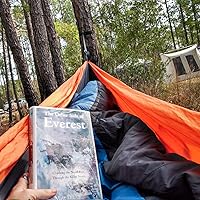
It was an entertaining read, and I enjoyed hearing about the Everest disaster of 1996 from the view point of someone who doesn't consider themselves a "climber". However, the ending left much to be desired, it felt flat and rushed.
April 28, 2018
Good companion read to "Into Thin Air."
April 10, 2020
I read this after I finished Into Thin Air and actually enjoyed this book more. Thrilling story that has less technicality which makes it easier to read.
Displaying 1 - 30 of 63 reviews