What do you think?
Rate this book

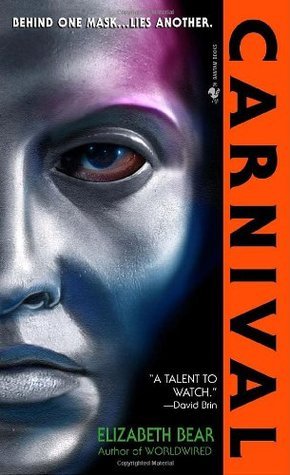
392 pages, Mass Market Paperback
First published January 1, 2006
at once familiar and alien, like coming home to a place where you used to live.
“Now that we’ve established that we think each other monsters, do you suppose we can get back to business?”
The Coalition was a typical example of what men did to women when given half an excuse: petty restrictions, self-congratulatory patronization, and a slew of justifications that amounted to men asserting their property rights.
“Not only will whoever’s on top fight to stay there, but if you reset everyone to equality, whoever wins the scramble for power will design the rules to stay there.”
“Just because we’ve disavowed Old Earth history doesn’t mean we fail to study it. You can file that one with sense of humor, if you like.”
“Traditionally, the responsibility for safety falls on the victim. Women are expected to defend themselves from predators. To act like responsible prey. Limit risks, not take chances. Not to go out alone at night. Not talk to strange men. Rely on their own, presumably domesticated men for protection from other feral men—in exchange for granting them property rights over the women in question.”
“And the New Amazonian system is superior in what way?”
“Punishes the potential predator and arms the potential victim. If men cannot control themselves, control will be instituted. Potential predators are caged, regulated.”
This is what we are when we’re left to our own devices—savage, selfish, short-sighted. [...] But free. Any government founded on a political or religious agenda more elaborate than “protect the weak, temper the strong” is doomed to tyranny.
“So slavery is more moral than engineering out aggression.”
“It’s not chattel slavery.”
“No,” Kusanagi-Jones said. “An extreme sort of second-class citizenship.”
“Not much worse than women in the Coalition.”
“Women in the Coalition can vote, can work—”
“Can be elected to the government.”
“Theoretically.”
“Practically?”
“Doesn’t happen.”
There were a lot of weird worlds, a lot of political structures based on points of philosophy. Not all the ships of the Diaspora had been faster than light, even; humanity had scrambled off Earth in any rowboat or leaky bucket that might hold them, and dead ships were still found floating between the stars, full of frozen corpses.
Vincent found it alternately creepy and reassuring when he considered that no matter how strange the culture might be, every single world out there, every instance of intelligent life that he had encountered, claimed common descent from Earth.
Strike two for utopia. The problem with the damned things always comes when you try to introduce actual people into your philosophical constructs.