

What do you think?

The Lost Explorer: Finding Mallory on Mt. Everest
On June 8, 1924, George Leigh Mallory and Andrew Irvine disappeared somewhere near the summit of Mount Everest, leaving open the tantalizing question of whether they had reached the summit of Everest twenty-nine years before Edmund Hillary and Tenzing Norgay. In 1999, climber Conrad Anker discovered Mallory's body on Everest and helped solve one of the greatest mysteries in the history of adventure and exploration. In The Lost Explorer, Anker and historian David Roberts craft a dramatic account of the expeditions of 1924 and 1999, and ultimately capture the passion and spirit of two men driven to test themselves against nature at its most brutal.
192 pages, Paperback
First published January 1, 1999
Ratings & Reviews
Friends & Following
Create a free account to discover what your friends think of this book!
Community Reviews
Displaying 1 - 30 of 123 reviews

May 28, 2022
It's obvious that I'm not the only one who finds the story of the 1924 Everest Expedition of interest. The fate of the two young men, George Leigh Mallory and Sandy Irvine is a tragic one, but what exactly happened that June day in 1924 cannot be absolutely known. Did they or didn't they summit? Books have been written ever since that fateful day of which this is another, but it has one major advantage. The men on this expedition actually found Mallory's body. Frustratingly, it did not offer any proof, one way or another. Still, it's an interesting read in basically two parts: the 1924 expedition and the 1999 expedition, which found Mallory.
The author has a definite opinion, and does a fairly good job in his descriptions of this fatal world of ice and snow. Many of the terms are difficult to understand if you're not a climber, but it's not impossible to understand why people torture their bodies to take on these rocky behemoths. They need to do it, just as people have always pushed themselves to go a bit farther. That they may pay the ultimate price is a risk they are seemingly willing to take.
The author has a definite opinion, and does a fairly good job in his descriptions of this fatal world of ice and snow. Many of the terms are difficult to understand if you're not a climber, but it's not impossible to understand why people torture their bodies to take on these rocky behemoths. They need to do it, just as people have always pushed themselves to go a bit farther. That they may pay the ultimate price is a risk they are seemingly willing to take.

May 24, 2022
On June 8, 1924, George Mallory - handsome, charming, accomplished, a man so graceful he made climbing look like poetry - set out for the summit of Mount Everest with his junior climbing partner, Andrew "Sandy" Irvine. Their expedition had not gone to plan. But this, they believed, would be the final push - the successful summit. For the first time in recorded history, man would stand atop the highest point on Earth.
At 12:50 that afternoon, a fellow member of the expedition, Noel Odell, looked up from where he waited some fifteen hundred feet below. The clouds parted for an instant, and in that moment he saw two minuscule figures, moving swiftly far above him towards the summit: Mallory and Irvine, pushing on towards the top.
Then the clouds returned, and the figures vanished. They would never return.
.
.
.
Did Mallory and Irvine reach the summit of Everest, twenty-nine years before Edmund Hillary and Tenzing Norgay? The feat would be all the more impressive for the sheer primitiveness of their gear. They wore layers of tweed and silk; they couldn't even wear crampons - the ubiquitous metal climbing spikes used for snow and ice - because the straps, when cinched over soft leather boots (no hardshell footwear for them!), would cut off circulation and inevitably cause frostbite.
Most hauntingly, perhaps - what exactly happened to Mallory and Irvine in the hours after the clouds closed back in? Did they turn back before the summit and stumble on their way down? Their distant watcher had noted with alarm that they were far behind their schedule (why were they so late?). Did they get caught in a snow squall, and have to find their route once again through the fresh snow? Did they reach the summit and then, short of daylight, have to bivouac out in the open, facing the killing winds in only their primitive gear? Did one man fall and, roped to the other, pull him down, too? Did a rope break mid-belay (again - primitive gear, with only a fraction of today's rope strength) and send one man crashing down, leaving the other to make his way down alone? Why did they leave their flashlight and compass behind? Had they brought a flashlight, would it have made a difference?
Could any of the tiny little plot points, these little choices that mapped out the slope towards disaster, have been changed, and in so doing could the outcome have been shifted, too? Where did it go wrong, and did it have to go wrong? This is, as always, the great mystery, the great haunting question that always tugs at us. In a world of human certainty and awareness, what little thing gave us away, and was it inevitable?
.
.
.
This book, co-written by Conrad Anker, one of the preeminent mountaineers of our time, and David Roberts, author and climber himself, begins with the moment in 1999 when Conrad Anker split off from his expedition, following a hunch and a sense of how mountains worked. The expedition had been formed with the express purpose of locating some remnant of the 1924 expedition; a researcher had tenaciously studied every scanty piece of evidence, every spare phrase and misted sighting from across the years, to create detailed instructions and analyses of where the bodies of the missing men should be found. For the reader, naturally rooting for Anker, there's no better moment than when his gamble pays off. Defying all studied logic, he spies something that doesn't fit. He finds a body: an old body.
.
.
.
The book jumps, chapter by chapter, from Anker's story of the 1999 expedition to Roberts's historical background and narrative of the 1924 expedition. It's fast-paced and engrossing; Roberts writes smoothly and eloquently, but so does Anker, albeit a little more simply.
Both sections intrigued me. Anker is a good storyteller, and his narrative reminds us that even with modern technology, Everest is not an easy climb. He traces not only the discovery of the body, but also his expedition's following push towards the summit and the very real, life-threatening obstacles they faced, including the unexpected need to rescue other stranded climbers. There's suspense in this narration: even with their crampons, their down suits, their modern ropes and their streamlined oxygen systems, will they make it? Who will make it? And, more importantly, will they make it back down? Nothing, on Everest, can be taken for granted, even now.
In his turn, Roberts dives into Mallory's background and character, touching on his family, his wife Ruth (whose photograph, curiously, was not found among Mallory's possessions), his Great War experience, and a telling injury. Roberts does a great job of capturing Mallory's personality - his charisma and his charm, his dedication and his absentmindedness. I would hardly know good climbing from bad climbing, but Roberts has so expertly culled his sources and translated them into prose that I felt Mallory's spell, his charisma, and his charm coming down from across the years, elevated far beyond the grainy distance of black-and-white photography. Roberts shares this observation from a contemporary of Mallory's:
"He would set his foot high against any angle of smooth surface, fold his shoulder to his knee, and flow upward and upright again on an impetuous curve... [T]he look, and indeed the result, were always the same - a continuous undulating movement so rapid and powerful that one felt the rock either must yield, or disintegrate... [he] could make no movement that was not in itself beautiful."
Some people have criticized the book's heaping praises of Anker. I think it's a just criticism; the adulation gets to be a little much. I like Anker, though, and didn't mind too much. If anyone in the climbing world deserves the praise, it's Anker. Instead, I read this praise as an attempt to rebut the nasty publicity the expedition received for the photographs and evidence it collected from the body.
The nasty publicity feels in some ways justified. One senses the discomfort the authors feel in reckoning with the grisly underside of what they'd sought. They'd been looking, after all, for bodies - human remains of men who have become legend, but who also remain deceased beloved to grieving families, including a living daughter. On Everest, death takes on a different tone; one need look no further than the ubiquitous Green Boots. In finding a body, where is the line between scientific research and human dignity? Where does our quest for answers turn a man into a piece of evidence?
In some ways the book falls short on these questions and others, which is too bad, because its narrative opens up the perfect opportunities for some serious questioning - not just of this individual case, but about Everest in general. Mallory, after all, snapped at a reporter "Because it's there," when he was asked why he wanted to climb Everest. He never meant that answer seriously, Roberts points out, and I think that stands true for all of what Everest, and these entwined stories, represents. To take "because it's there" at face value is to miss the depth beneath.
This was an engrossing and satisfying read. It's a great adventure tale with a good blend of history and action, well-paced, with some satisfying well-reasoned conclusions. With Anker as our detective, we learn a lot. He has a good eye for detail - the same eye and instinct that guided him to the body in the first place - and picks up on those little things that begin to paint a picture. Why did Mallory leave the flashlight behind? What does the gear, the evidence of the body reveal?
The writing and the explanations are also simple enough for the layperson (IE, me) to understand. It's hampered a little in its refusal to push the boundaries, to ask a few more questions, although Anker comes close, with some quiet reflections at the end. Still, this is a great introduction to two interesting mountaineers, and an engrossing primer on Everest itself. In the end, the mountain is always there.
At 12:50 that afternoon, a fellow member of the expedition, Noel Odell, looked up from where he waited some fifteen hundred feet below. The clouds parted for an instant, and in that moment he saw two minuscule figures, moving swiftly far above him towards the summit: Mallory and Irvine, pushing on towards the top.
Then the clouds returned, and the figures vanished. They would never return.
.
.
.
Did Mallory and Irvine reach the summit of Everest, twenty-nine years before Edmund Hillary and Tenzing Norgay? The feat would be all the more impressive for the sheer primitiveness of their gear. They wore layers of tweed and silk; they couldn't even wear crampons - the ubiquitous metal climbing spikes used for snow and ice - because the straps, when cinched over soft leather boots (no hardshell footwear for them!), would cut off circulation and inevitably cause frostbite.
Most hauntingly, perhaps - what exactly happened to Mallory and Irvine in the hours after the clouds closed back in? Did they turn back before the summit and stumble on their way down? Their distant watcher had noted with alarm that they were far behind their schedule (why were they so late?). Did they get caught in a snow squall, and have to find their route once again through the fresh snow? Did they reach the summit and then, short of daylight, have to bivouac out in the open, facing the killing winds in only their primitive gear? Did one man fall and, roped to the other, pull him down, too? Did a rope break mid-belay (again - primitive gear, with only a fraction of today's rope strength) and send one man crashing down, leaving the other to make his way down alone? Why did they leave their flashlight and compass behind? Had they brought a flashlight, would it have made a difference?
Could any of the tiny little plot points, these little choices that mapped out the slope towards disaster, have been changed, and in so doing could the outcome have been shifted, too? Where did it go wrong, and did it have to go wrong? This is, as always, the great mystery, the great haunting question that always tugs at us. In a world of human certainty and awareness, what little thing gave us away, and was it inevitable?
.
.
.
This book, co-written by Conrad Anker, one of the preeminent mountaineers of our time, and David Roberts, author and climber himself, begins with the moment in 1999 when Conrad Anker split off from his expedition, following a hunch and a sense of how mountains worked. The expedition had been formed with the express purpose of locating some remnant of the 1924 expedition; a researcher had tenaciously studied every scanty piece of evidence, every spare phrase and misted sighting from across the years, to create detailed instructions and analyses of where the bodies of the missing men should be found. For the reader, naturally rooting for Anker, there's no better moment than when his gamble pays off. Defying all studied logic, he spies something that doesn't fit. He finds a body: an old body.
.
.
.
The book jumps, chapter by chapter, from Anker's story of the 1999 expedition to Roberts's historical background and narrative of the 1924 expedition. It's fast-paced and engrossing; Roberts writes smoothly and eloquently, but so does Anker, albeit a little more simply.
Both sections intrigued me. Anker is a good storyteller, and his narrative reminds us that even with modern technology, Everest is not an easy climb. He traces not only the discovery of the body, but also his expedition's following push towards the summit and the very real, life-threatening obstacles they faced, including the unexpected need to rescue other stranded climbers. There's suspense in this narration: even with their crampons, their down suits, their modern ropes and their streamlined oxygen systems, will they make it? Who will make it? And, more importantly, will they make it back down? Nothing, on Everest, can be taken for granted, even now.
In his turn, Roberts dives into Mallory's background and character, touching on his family, his wife Ruth (whose photograph, curiously, was not found among Mallory's possessions), his Great War experience, and a telling injury. Roberts does a great job of capturing Mallory's personality - his charisma and his charm, his dedication and his absentmindedness. I would hardly know good climbing from bad climbing, but Roberts has so expertly culled his sources and translated them into prose that I felt Mallory's spell, his charisma, and his charm coming down from across the years, elevated far beyond the grainy distance of black-and-white photography. Roberts shares this observation from a contemporary of Mallory's:
"He would set his foot high against any angle of smooth surface, fold his shoulder to his knee, and flow upward and upright again on an impetuous curve... [T]he look, and indeed the result, were always the same - a continuous undulating movement so rapid and powerful that one felt the rock either must yield, or disintegrate... [he] could make no movement that was not in itself beautiful."
Some people have criticized the book's heaping praises of Anker. I think it's a just criticism; the adulation gets to be a little much. I like Anker, though, and didn't mind too much. If anyone in the climbing world deserves the praise, it's Anker. Instead, I read this praise as an attempt to rebut the nasty publicity the expedition received for the photographs and evidence it collected from the body.
The nasty publicity feels in some ways justified. One senses the discomfort the authors feel in reckoning with the grisly underside of what they'd sought. They'd been looking, after all, for bodies - human remains of men who have become legend, but who also remain deceased beloved to grieving families, including a living daughter. On Everest, death takes on a different tone; one need look no further than the ubiquitous Green Boots. In finding a body, where is the line between scientific research and human dignity? Where does our quest for answers turn a man into a piece of evidence?
In some ways the book falls short on these questions and others, which is too bad, because its narrative opens up the perfect opportunities for some serious questioning - not just of this individual case, but about Everest in general. Mallory, after all, snapped at a reporter "Because it's there," when he was asked why he wanted to climb Everest. He never meant that answer seriously, Roberts points out, and I think that stands true for all of what Everest, and these entwined stories, represents. To take "because it's there" at face value is to miss the depth beneath.
This was an engrossing and satisfying read. It's a great adventure tale with a good blend of history and action, well-paced, with some satisfying well-reasoned conclusions. With Anker as our detective, we learn a lot. He has a good eye for detail - the same eye and instinct that guided him to the body in the first place - and picks up on those little things that begin to paint a picture. Why did Mallory leave the flashlight behind? What does the gear, the evidence of the body reveal?
The writing and the explanations are also simple enough for the layperson (IE, me) to understand. It's hampered a little in its refusal to push the boundaries, to ask a few more questions, although Anker comes close, with some quiet reflections at the end. Still, this is a great introduction to two interesting mountaineers, and an engrossing primer on Everest itself. In the end, the mountain is always there.
December 30, 2008
The story of the discovery of Mallory's body was interesting, but by the time I was halfway through the book I was ready to push Conrad Anker off the mountain, and David Roberts with him. They needed an editor who was willing to delete all of Anker's musings on his own awesomeness, as well as Roberts's worshipful agreement.

May 3, 2023
Enterándome ahora mismo, en este preciso instante y con este libro, de que Mallory podía haber sido bisexual; me queda una micra de cordura.
Read
June 12, 2022Many many bodies.

April 6, 2018
I enjoyed the book and yet seriously disliked it, as you shall see. It seems to me that high-altitude mountaineering has a serious credibility gap. Or at least it did 18 years ago when the book was written. Perhaps times have changed. the book wants you to believe that once you ascend into the death zone, strong, experienced climbers suddenly go catatonic and die of exposure or other mishap. Which climber gets struck by this is utterly random and unpredictable.
I don't believe it. I expect that a blood oxygen level test, simple cognitive tests, and other medical tests taking only a few minutes would identify which climbers are weakening under the strain. These should be required to return to camp before they ascend the next obstacle and place themselves further beyond aid. As it is, identifying which climbers are not physically capable of summiting and returning to camp is left up to each climber individually. To their credit, some climbers sense that "it's not their day" and they return to safety. However, far too many climbers miscalculate, summit, and then die while descending.
Life and death decisions should not be made by people with their mental skills deteriorating and the summit of Everest literally within sight. The age of heroic exploration is over. There is no glory in summiting Everest and then spending the next couple days dying of exposure, unable to descend, all while leaving behind a wife and kids. Furthermore, the companies that sponsor these expensive expeditions should insist on a simple testing system to avoid these outcomes. Surely they find it extremely embarrassing to sponsor an expedition that leaves several of its members dead on Everest. Or do they have no shame?
In case you think I'm being dramatic, read the book. Everest is apparently littered with bodies. The difficulty of finding Mallory was partially about DIFFERENTIATING HIS CORPSE FROM ALL THE OTHER CORPSES. Fortunately that wasn't too hard, since he didn't have modern climbing gear. Still, the corpses they found could be catalogued by the condition of the body, since some victims apparently cartwheeled down the precipice at terminal velocity. The authors fail to give us perspective by publishing guesses as to how many feet the corpses fell.
I was also unimpressed with how the high-altitude climbing community processes such deaths, many of which appear to be needless. This is done with a combination of alcohol and Buddhist beliefs. I don't know much about Buddhism, but frankly it appears to be a form of escape from reality. Instead of contemplating your mistakes while slowly dying of exposure, mistakes which surely sink to the level of sins when leaving behind a family, and coming to the realization that you are dying due to a lack of humility, and that perhaps it's time to ask for forgiveness before death, the Buddhist initiate instead concentrates on keeping his/her emotions flat while becoming one with the abominable snowman. Or some such ridiculousness. Yes, definitely unimpressed with Buddhism and mountain climbing.
Mallory at least had an excuse. He literally had no idea that he could not successfully summit Everest. He did not know the obstacles in the way, because no one else had climbed Everest. He did seem to be aware that the climbing gear of the day was simply inadequate. However he, too, was guilty of miscalculating. The authors believe he slipped while attempting to down climb in the dark. Very plausible.
So, read the book, enjoy it, but don't be impressed by the underlying attitude of indestructibility. The truth is there, but I'm not sure the mountaineering community has embraced it yet.
I don't believe it. I expect that a blood oxygen level test, simple cognitive tests, and other medical tests taking only a few minutes would identify which climbers are weakening under the strain. These should be required to return to camp before they ascend the next obstacle and place themselves further beyond aid. As it is, identifying which climbers are not physically capable of summiting and returning to camp is left up to each climber individually. To their credit, some climbers sense that "it's not their day" and they return to safety. However, far too many climbers miscalculate, summit, and then die while descending.
Life and death decisions should not be made by people with their mental skills deteriorating and the summit of Everest literally within sight. The age of heroic exploration is over. There is no glory in summiting Everest and then spending the next couple days dying of exposure, unable to descend, all while leaving behind a wife and kids. Furthermore, the companies that sponsor these expensive expeditions should insist on a simple testing system to avoid these outcomes. Surely they find it extremely embarrassing to sponsor an expedition that leaves several of its members dead on Everest. Or do they have no shame?
In case you think I'm being dramatic, read the book. Everest is apparently littered with bodies. The difficulty of finding Mallory was partially about DIFFERENTIATING HIS CORPSE FROM ALL THE OTHER CORPSES. Fortunately that wasn't too hard, since he didn't have modern climbing gear. Still, the corpses they found could be catalogued by the condition of the body, since some victims apparently cartwheeled down the precipice at terminal velocity. The authors fail to give us perspective by publishing guesses as to how many feet the corpses fell.
I was also unimpressed with how the high-altitude climbing community processes such deaths, many of which appear to be needless. This is done with a combination of alcohol and Buddhist beliefs. I don't know much about Buddhism, but frankly it appears to be a form of escape from reality. Instead of contemplating your mistakes while slowly dying of exposure, mistakes which surely sink to the level of sins when leaving behind a family, and coming to the realization that you are dying due to a lack of humility, and that perhaps it's time to ask for forgiveness before death, the Buddhist initiate instead concentrates on keeping his/her emotions flat while becoming one with the abominable snowman. Or some such ridiculousness. Yes, definitely unimpressed with Buddhism and mountain climbing.
Mallory at least had an excuse. He literally had no idea that he could not successfully summit Everest. He did not know the obstacles in the way, because no one else had climbed Everest. He did seem to be aware that the climbing gear of the day was simply inadequate. However he, too, was guilty of miscalculating. The authors believe he slipped while attempting to down climb in the dark. Very plausible.
So, read the book, enjoy it, but don't be impressed by the underlying attitude of indestructibility. The truth is there, but I'm not sure the mountaineering community has embraced it yet.

June 24, 2008
This is one of the best books I've read since Edmund Hillary's. One writer is a historian; the other a mountain climber on the expedition that found George Mallory's body in 1999. The mountain climber, Conrad Anker, is contemplative and humble, and he climbs mountains because he loves them. He pieces together what might have happened in 1924 in chapters alternating with a recounting of Mallory's several expeditions. A most excellent book that left me humbled and happy despite the fact that it could have been quite morbid.

January 24, 2024
Another very good book about the Mallory and Irvine expeditions of 1924 and 1999. Though the split narration style doesn't always work (it often feels like Roberts has more to say than Anker), it does provide a compelling dual account of both adventures. Unlike Ghosts of Everest, it pays attention to Mallory's earlier expeditions, and you are left with a much more personal, holistic view of Mallory as a man. This makes his eventual fall even more emotional.
Though not a main aspect of the book, I found myself strongly affected by Anker's discussions of the other mountaineers on Everest during his expedition. Not only does it provide interesting accounts of the Ukrainian, Polish, and Belgian groups and their terrible fates, but it also emphasizes the eternal danger of the mountain. It helps frame Mallory and Irvine's challenges well, even though it doesn't appear that was the goal of their inclusion.
Anker's conclusions about the mountain are quite well-evidenced and convincing. They are contingent, in a few cases, on other conclusions which aren't laid out (his feelings about the 1970 Chinese expedition, for example), but overall are very compelling. His personal experience, having located Mallory, (almost) free-climbed the Second Step, and summiting, all give him a firsthand idea of what they experienced, as well as a fascinating mountaineering tale.
I would recommend this book to anyone interested in the two expeditions. It's nearly as good as Ghosts of Everest, and just as interesting. Certainly, Anker's sections are more interesting than Ghosts. I would recommend this book to my Dad, my friend Carter, and maybe my friend Russ.
Though not a main aspect of the book, I found myself strongly affected by Anker's discussions of the other mountaineers on Everest during his expedition. Not only does it provide interesting accounts of the Ukrainian, Polish, and Belgian groups and their terrible fates, but it also emphasizes the eternal danger of the mountain. It helps frame Mallory and Irvine's challenges well, even though it doesn't appear that was the goal of their inclusion.
Anker's conclusions about the mountain are quite well-evidenced and convincing. They are contingent, in a few cases, on other conclusions which aren't laid out (his feelings about the 1970 Chinese expedition, for example), but overall are very compelling. His personal experience, having located Mallory, (almost) free-climbed the Second Step, and summiting, all give him a firsthand idea of what they experienced, as well as a fascinating mountaineering tale.
I would recommend this book to anyone interested in the two expeditions. It's nearly as good as Ghosts of Everest, and just as interesting. Certainly, Anker's sections are more interesting than Ghosts. I would recommend this book to my Dad, my friend Carter, and maybe my friend Russ.

June 30, 2020
Read this some time ago, when I was in my Everest phase - every time a book came out on the subject I just had to read it. It helped that the authors were mountain climbers and, I think, had summitted Everest multiple times.
It later turned out that a guy I had known in college was a hiker to the Everest area (not a climber though) during the late '90s.
But I was totally enthralled by the Mallory story. It isn't known if Mallory summitted, however it is known that most disasters and falls occur on the descent rather than the ascent. People are more careful climbing up and perhaps let their guard down afterwards or altitude sickness is getting to them.
But this was a good book, written by people who had knowledge and experience about the subject.
It later turned out that a guy I had known in college was a hiker to the Everest area (not a climber though) during the late '90s.
But I was totally enthralled by the Mallory story. It isn't known if Mallory summitted, however it is known that most disasters and falls occur on the descent rather than the ascent. People are more careful climbing up and perhaps let their guard down afterwards or altitude sickness is getting to them.
But this was a good book, written by people who had knowledge and experience about the subject.

June 25, 2023
This book was fascinating!
I enjoyed the way that it was put together by the two authors. The historical connections and more modern portions blended well and enabled me to experience a bit of the adventure from where I was. The insights left me speechless many a time during my reading. I was just enthralled throughout the entire text. Anker's thoughts and explanations at the end were a great conclusion.
I enjoyed the way that it was put together by the two authors. The historical connections and more modern portions blended well and enabled me to experience a bit of the adventure from where I was. The insights left me speechless many a time during my reading. I was just enthralled throughout the entire text. Anker's thoughts and explanations at the end were a great conclusion.

January 6, 2022
Can you imagine finding George Mallory on Everest in 1999 when he went missing in 1924? It's the greatest missing person story since Amelia Earhart. I was fascinated that it took 75 years to locate his body, and yet they still did not discover his climbing partner Sandy Irvin or the illusive camera he had with him. I continue to be entralled by all things Everest.
February 8, 2022
Absolutely loved this book. Great format - half was more historical about Mallory's life and half was a 1st person recounting by Conrad about how he and his team found Mallory's body. Made me very curious to know exactly what happened to Mallory and his partner Irvine, though I guess we will probably never really know!
Read
February 15, 2026Hard to believe Mallory and Irvine made it to the top. A nice read adding to my research into the 1924 expedition..

October 23, 2024
To start, this is not the best book I’ve ever read about mountaineering or Everest. That said, it was still very enjoyable and informative, particularly in the latter half of the book. I was relatively unfamiliar with Mallory and Irvine going into this book and I do feel like I learned a lot about them and better understand why they are so well respected in the mountaineering community.

January 29, 2024
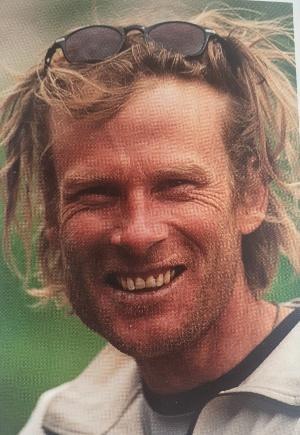
3.5 rated up. Ah, mountaineer writers, who give zero fucks about author photo guidelines, I love you:
This was a very interesting read, although it did at times, perhaps inevitably, come across as something of a downer, a kind of myth-busting, “okay-real-talk-now” addendum to the much more emotive Ghosts of Everest: The Authorized Story of the Search for Mallory & Irvine. The latter was co-written by Jochen Hemmleb, who is convinced, to the point of obsession (relatable, lol), that Mallory and Irvine made it to the summit of Everest on June 8, 1924, and perished on the descent. Hemmleb has done amazing feats of research into the topic, and his theories are sound, but he is not himself a mountaineer. In this much shorter and somewhat drier book, Conrad Anker – who found Mallory’s body on the Mallory and Irvine Research Expedition of 1999 – shares his own perspective on the search expedition, the circumstances surrounding it, and his own conclusions on the likelihood of a successful summit bid in 1924. David Roberts adds details about the 1924 third British expedition to Everest.
I have the greatest respect for Conrad Anker as a mountaineer, and his reasons for not believing Mallory made it to the summit are sound and well argued. At several points, he accuses (in a gently-ish way) Hemmleb of bias due to his obsessive study of the subject, and the members of the 1924 expedition of bias due to their friendship with Mallory. He’s not wrong but I will say that I think Anker brings his own bias to the table: the bias of a modern climber, with 1999 standards of mountaineering, and an ingrained reliance on modern climbing equipment. Much of his argument rests on the fact that 1924 gear (basically a bunch of silk and wool layers, inflexible rope, wonky oxygen apparatus, and a brazen bit of “tally-ho” on top) would never have been up to the formidable challenge that Everest’s cold, wind, and high altitude present. At one point, he even projects an “awareness” of lacking modern support onto Mallory that Mallory, a confident climber to whose mind Everest was overcomeable and his gear (at the time) state-of-the-art, would simply not have had.
The conclusions Hemmleb and his co-authors drew about the 1999 expedition, based on the position of Mallory’s body and various items found on his person, as well as Noel Odell’s final sighting of Mallory and Irvine high on what he believed to be the Second Step in 1924, were that the pair summited, but dangerously late in the day, leading to a descent in the dark on which Mallory fell and Irvine succumbed to exposure/exhaustion. Anker’s conclusions have them stymied by the Second Step and perishing after turning back. I have my own bias, because Ghosts of Everest did change my mind when I read it, from “inconclusive” to “you know what, I think they made it.” Ironically, a big part of what convinced me was Conrad Anker himself, partially free-climbing the Second Step, and ultimately rating it a 5.10 climb. That bit demystified the Second Step for me personally (having climbed a bunch of 5.10s in my day), to the point where, formidable as it is, I actually genuinely don’t think it would have been a technical problem for Mallory, hailed as the most brilliant and technically accomplished mountaineer of his time. If he were stymied by the Second Step, it would have been due to high-altitude exhaustion and unpredictable snow conditions, which is of course entirely possible. But I still don’t think a man of Mallory’s climbing abilities would have balked at the technicality of the climb. He wouldn’t have thought of it like Anker would have had him think, in terms of “oh no, I don’t have crampons or proper carabiners or pitons,” modern items that were not part of his experience. His gear would have been sufficient to him because it always was, and because his climbing strength was in his own confidence and physicality.
The same concept applies, I think, to the “impossibility” factor of the expedition as a whole. Later climbers have judged it by later standards; they couldn’t not. You can’t literally put yourself into the headspace of a 1920s mountaineer, to whom his current mountaineering standards were the best his climbing world had ever seen. They would have tried what would later be considered “impossible,” because to them… it wasn’t? And often they were right. “Impossible” feats of athleticism have been challenged and surpassed so many times in all kinds of sports, and especially in climbing. It was considered impossible to summit Everest without oxygen until Reinhold Messner and Peter Habeler did it in 1978… but as this very book points out, until then the oxygen-less altitude record was held by Teddy Norton, a member of the 1924 expedition, who got to ~270 metres below the summit, WITHOUT OXYGEN, a few days before Mallory and Irvine. I mean, think about that. That altitude record itself was not broken until 1952. Teddy Norton, a man whose name most people don’t even remember because everything about the 1924 expedition is always about Mallory and Irvine, held the record for altitude for 28 years, and the record for oxygen-less altitude for FIFTY-FOUR YEARS. Even then it was only broken by Messner and Habeler, two of the greatest mountaineers of all time, and plenty of people didn’t believe them they'd done it in 1978 (so naturally Messner did it again in 1980, solo, from the trickier North side, lol). Impossible is relative, is what I’m saying.
Describing feats like Teddy Norton’s is actually where this book added some real interest, because David Roberts delved into some of the lesser-known events of the early British expeditions, like the miraculous belay that Mallory executed in 1922, saving two of his team mates in a feat that should have been (wait for it) impossible. These climbers, and the porters who supported them, achieved things that would not be achieved again for decades. Actually, demonstrably achieved, not, as in Mallory’s case, maybe-hopefully-wouldn’t-it-be-nice-if-they-did. Yes, Anker’s arguments are sound, but I still think he underestimated what Mallory was capable of. It’s also easy to dismiss the opinions of Mallory’s team mates and friends, but they knew the man, they knew his climbing style and his (definitely not healthy) obsession with making it up Everest. They didn’t believe he’d have turned back, and I believe their accounts of him. I also remain sceptical of Noel Odell ultimately changing his mind (after returning home and being badgered about it by a bunch of people who weren’t there) about where exactly he last spotted Mallory and Irvine. His first account, which he didn’t start second-guessing until later, was that he last saw them high up, on or near the Second Step. I don’t think there’s much point to simply insisting he was wrong. He was the one who was there.
As Anker points out, the question will now very likely never be answered, so ultimately it doesn’t really matter what anyone believes. They did incredible things even if they didn’t summit. Part of me hopes no one ever does find Sandy, and part of me hopes someone will.
Ultimately, I found the parts of the book that focused on the 1924 expedition, and especially on those lesser-known triumphs and defeats, more interesting than Anker’s 1999 account, which goes into descriptions of various other 1999 summit bids and the troubles they ran into. The most thought-provoking part of the 1999 parts, to me, were the sections on sharing the news of how Mallory’s body was found, the way internet dispatches and immediate leakage of the story took control of the narrative away from the expedition members, and the backlash they experienced over having disturbed Mallory’s body. This year marks a quarter century since they found him (which is absolutely mind-blowing to me!), and the way we consume news has changed so much even since then. In the toddler years of the internet in 1999, they struggled with the “insta” share of having the story break on the same day, with not having time to prepare proper statements, with their inadequate immediate responses captured for all the world to see, with the vast discrepancy between their “lame” commentary and the poetic writings of the 1920s climbers. I haven’t kept up with how mountaineering reporting has evolved in the days of social media, but I shudder to think how this discovery would have gone down today.
Anyway. It wasn’t a super-strong book but it made me think a lot, and I’m guessing as it’s the centennial this year, I’ll be reading and rereading some more books on the subject. It never gets old or less moving.
This was a very interesting read, although it did at times, perhaps inevitably, come across as something of a downer, a kind of myth-busting, “okay-real-talk-now” addendum to the much more emotive Ghosts of Everest: The Authorized Story of the Search for Mallory & Irvine. The latter was co-written by Jochen Hemmleb, who is convinced, to the point of obsession (relatable, lol), that Mallory and Irvine made it to the summit of Everest on June 8, 1924, and perished on the descent. Hemmleb has done amazing feats of research into the topic, and his theories are sound, but he is not himself a mountaineer. In this much shorter and somewhat drier book, Conrad Anker – who found Mallory’s body on the Mallory and Irvine Research Expedition of 1999 – shares his own perspective on the search expedition, the circumstances surrounding it, and his own conclusions on the likelihood of a successful summit bid in 1924. David Roberts adds details about the 1924 third British expedition to Everest.
I have the greatest respect for Conrad Anker as a mountaineer, and his reasons for not believing Mallory made it to the summit are sound and well argued. At several points, he accuses (in a gently-ish way) Hemmleb of bias due to his obsessive study of the subject, and the members of the 1924 expedition of bias due to their friendship with Mallory. He’s not wrong but I will say that I think Anker brings his own bias to the table: the bias of a modern climber, with 1999 standards of mountaineering, and an ingrained reliance on modern climbing equipment. Much of his argument rests on the fact that 1924 gear (basically a bunch of silk and wool layers, inflexible rope, wonky oxygen apparatus, and a brazen bit of “tally-ho” on top) would never have been up to the formidable challenge that Everest’s cold, wind, and high altitude present. At one point, he even projects an “awareness” of lacking modern support onto Mallory that Mallory, a confident climber to whose mind Everest was overcomeable and his gear (at the time) state-of-the-art, would simply not have had.
The conclusions Hemmleb and his co-authors drew about the 1999 expedition, based on the position of Mallory’s body and various items found on his person, as well as Noel Odell’s final sighting of Mallory and Irvine high on what he believed to be the Second Step in 1924, were that the pair summited, but dangerously late in the day, leading to a descent in the dark on which Mallory fell and Irvine succumbed to exposure/exhaustion. Anker’s conclusions have them stymied by the Second Step and perishing after turning back. I have my own bias, because Ghosts of Everest did change my mind when I read it, from “inconclusive” to “you know what, I think they made it.” Ironically, a big part of what convinced me was Conrad Anker himself, partially free-climbing the Second Step, and ultimately rating it a 5.10 climb. That bit demystified the Second Step for me personally (having climbed a bunch of 5.10s in my day), to the point where, formidable as it is, I actually genuinely don’t think it would have been a technical problem for Mallory, hailed as the most brilliant and technically accomplished mountaineer of his time. If he were stymied by the Second Step, it would have been due to high-altitude exhaustion and unpredictable snow conditions, which is of course entirely possible. But I still don’t think a man of Mallory’s climbing abilities would have balked at the technicality of the climb. He wouldn’t have thought of it like Anker would have had him think, in terms of “oh no, I don’t have crampons or proper carabiners or pitons,” modern items that were not part of his experience. His gear would have been sufficient to him because it always was, and because his climbing strength was in his own confidence and physicality.
The same concept applies, I think, to the “impossibility” factor of the expedition as a whole. Later climbers have judged it by later standards; they couldn’t not. You can’t literally put yourself into the headspace of a 1920s mountaineer, to whom his current mountaineering standards were the best his climbing world had ever seen. They would have tried what would later be considered “impossible,” because to them… it wasn’t? And often they were right. “Impossible” feats of athleticism have been challenged and surpassed so many times in all kinds of sports, and especially in climbing. It was considered impossible to summit Everest without oxygen until Reinhold Messner and Peter Habeler did it in 1978… but as this very book points out, until then the oxygen-less altitude record was held by Teddy Norton, a member of the 1924 expedition, who got to ~270 metres below the summit, WITHOUT OXYGEN, a few days before Mallory and Irvine. I mean, think about that. That altitude record itself was not broken until 1952. Teddy Norton, a man whose name most people don’t even remember because everything about the 1924 expedition is always about Mallory and Irvine, held the record for altitude for 28 years, and the record for oxygen-less altitude for FIFTY-FOUR YEARS. Even then it was only broken by Messner and Habeler, two of the greatest mountaineers of all time, and plenty of people didn’t believe them they'd done it in 1978 (so naturally Messner did it again in 1980, solo, from the trickier North side, lol). Impossible is relative, is what I’m saying.
Describing feats like Teddy Norton’s is actually where this book added some real interest, because David Roberts delved into some of the lesser-known events of the early British expeditions, like the miraculous belay that Mallory executed in 1922, saving two of his team mates in a feat that should have been (wait for it) impossible. These climbers, and the porters who supported them, achieved things that would not be achieved again for decades. Actually, demonstrably achieved, not, as in Mallory’s case, maybe-hopefully-wouldn’t-it-be-nice-if-they-did. Yes, Anker’s arguments are sound, but I still think he underestimated what Mallory was capable of. It’s also easy to dismiss the opinions of Mallory’s team mates and friends, but they knew the man, they knew his climbing style and his (definitely not healthy) obsession with making it up Everest. They didn’t believe he’d have turned back, and I believe their accounts of him. I also remain sceptical of Noel Odell ultimately changing his mind (after returning home and being badgered about it by a bunch of people who weren’t there) about where exactly he last spotted Mallory and Irvine. His first account, which he didn’t start second-guessing until later, was that he last saw them high up, on or near the Second Step. I don’t think there’s much point to simply insisting he was wrong. He was the one who was there.
As Anker points out, the question will now very likely never be answered, so ultimately it doesn’t really matter what anyone believes. They did incredible things even if they didn’t summit. Part of me hopes no one ever does find Sandy, and part of me hopes someone will.
Ultimately, I found the parts of the book that focused on the 1924 expedition, and especially on those lesser-known triumphs and defeats, more interesting than Anker’s 1999 account, which goes into descriptions of various other 1999 summit bids and the troubles they ran into. The most thought-provoking part of the 1999 parts, to me, were the sections on sharing the news of how Mallory’s body was found, the way internet dispatches and immediate leakage of the story took control of the narrative away from the expedition members, and the backlash they experienced over having disturbed Mallory’s body. This year marks a quarter century since they found him (which is absolutely mind-blowing to me!), and the way we consume news has changed so much even since then. In the toddler years of the internet in 1999, they struggled with the “insta” share of having the story break on the same day, with not having time to prepare proper statements, with their inadequate immediate responses captured for all the world to see, with the vast discrepancy between their “lame” commentary and the poetic writings of the 1920s climbers. I haven’t kept up with how mountaineering reporting has evolved in the days of social media, but I shudder to think how this discovery would have gone down today.
Anyway. It wasn’t a super-strong book but it made me think a lot, and I’m guessing as it’s the centennial this year, I’ll be reading and rereading some more books on the subject. It never gets old or less moving.

June 13, 2017
It is somewhat ironic how this excursion and discovery brought Conrad Anker into the spotlight globally, when in fact he was already one of the best, renowned climbers in the world. Nevertheless, I thought he did a fantastic job describing not only the process and importance of finding Mallory, but upholding the ultimate respect for the sanctity of what it all meant. He goes into great detail in the latter chapters detailing his evidence and opinions on why he believes Mallory did not make the summit.
Some think the body should have been left alone on the mountain. I disagree in this case. It was an expedition in 1924 - almost thirty years before an official summit was obtained on Everest by Sir Edmund Hillary. The discovery brought into view further details of the climb and death of the great explorer, and it is important to determine whether he and Irvine had made the summit, and if not, what the evidence available portrays.
This is a very humble, respectful depiction of a discovery of great importance detailed by one of the most likable and respected climbers on the planet.
Some think the body should have been left alone on the mountain. I disagree in this case. It was an expedition in 1924 - almost thirty years before an official summit was obtained on Everest by Sir Edmund Hillary. The discovery brought into view further details of the climb and death of the great explorer, and it is important to determine whether he and Irvine had made the summit, and if not, what the evidence available portrays.
This is a very humble, respectful depiction of a discovery of great importance detailed by one of the most likable and respected climbers on the planet.
March 16, 2024
Rating:
I rate this book 4 out of 5 stars for:
- the fascinating and unique subject matter
- the explorers’ efforts to balance respectful handling of Mallory’s remains with their compulsion
to gather artifacts and collect evidence, all while striving to not be overwhelmed or undermined
by their own strong emotional responses to the situation
- Anker’s detailed reasoning about his opinion on the likelihood of whether or not Mallory and
Irvine summitted Everest
- Anker’s explanation of how his mountaineering experiences have impacted his life and worldview
Recommendation:
I think this book is intended for, and best suited to, an audience that already has an interest in mountaineering and/or Everest. The writing style isn’t overly engaging, so the subject matter does the heavy lifting. There are passages where Anker describes particular mountaineering adventures in great detail and at some length, using a lot of jargon that goes undefined. Because I have no background understanding of mountaineering, I think the jargon led me to miss the full significance of these sections.
Peeves:
Only one thing stood out as irksome to me. The chapters have alternating sections written by either Anker or Roberts. Some of Roberts’ sections were long enough that I lost a sense of what the prior section by Anker had been about. At times, this led me to feel a disjointedness between their two narratives. I had to skip back to the last section by Anker and scan it quickly to remember what he had been discussing before I moved on to his next section. This might have happened about 2-3 times for me.
Praise:
I enjoyed Anker detailing his career as a professional climber sponsored by The North Face and explaining how his mountaineering experiences have shaped his worldview and influenced his values.
I appreciate Anker’s brief mention of him embracing Buddhist philosophy and practices.
Anker gives an engaging account of his participation in a mission to rescue a Ukrainian climbing team that was endangered in harsh conditions on the mountain during his expedition. He expresses admiration for the strength and passion of Ukrainian mountaineers in general. While discussing the life risking circumstances they encountered, he chooses not to criticize, but to consider them with compassion and understanding.
Significant Quotations:
“With the sole exception of Amelia Earhart, no lost explorer in the twentieth century has provoked a more intense outpouring of romantic speculation than George Mallory.” ~David Roberts
“As a North Face representative, Conrad travels around the country, giving slide shows, taking potential clients out for a day of easy skiing or climbing, or giving a climbing demonstration on an artificial wall. He can be sardonic about the work, which he sometimes alludes to as ‘the petting zoo’. Yet, in his habitually earnest way, he waxes enthusiastic about his encounters with a public avid to taste adventure, even if vicariously. ‘I can use my slide shows and ski outings as a chance to share my outlook on life, which is fundamentally Buddhist. People come to see slides of me climbing, to share my adventures, but I can use the opportunity to talk about being a good person, about how anger and hatred disrupt an expedition, and how sometimes it takes a little more effort to be positive than negative, but that it’s ultimately life-enriching. I’d like to take what notoriety or fame comes my way and turn it into something good, as for instance Sir Edmund Hillary has, building schools and hospitals in Nepal. I’d like to share what mountains have done to change my life, and become a spokesperson for goodness.” ~David Roberts
“I wouldn’t call myself a Buddhist, but I have a great admiration for the religion. The Dalai Lama says his religion is kindness. If you’re going to be kind to yourself, be kind to your friends, to your partner, your family, the animals, the trees. I believe in that. I also believe in karma. It’s not just a matter of the right actions; you have to have the right intentions as well.” ~Conrad Anker
“The Ukrainians were good climbers – full professionals, to the extent that one can be a professional climber in Ukraine…Finally, they took off his gloves and boots. The hands and feet weren’t completely black, but they looked bad. What nonplussed me was to see that on the lower part of his body, Volod had only long underwear on, then fleece pants, then Gore-Tex pants. No down suit on his lower body. That serves as a reminder of just how important mountaineering is in certain impoverished Eastern European countries. …all those countries have produced superb Himalayan climbers, who’ve succeeded without even being able to afford proper equipment, let alone having the luxury of being sponsored. There’s a tremendous amount of national pride involved in their efforts.” ~Conrad Anker
“The Lord is compassionate and gracious, slow to anger, abounding in love. He will not always accuse, nor will he harbor his anger forever; he does not treat us as our sins deserve or repay us according to our iniquities. For as high as the heavens are above the earth, so great is his love for those who fear him; as far as the east is from the west, so far has he removed our transgressions from us. As a father has compassion on his children, so the Lord has compassion on those who fear him; for he knows how we are formed, he remembers that we are dust. The life of mortals is like grass, they flourish like a flower of the field; the wind blows over it and it is gone, and its place remembers it no more. But from everlasting to everlasting the Lord’s love is with those who fear him, and his righteousness with their children’s children…” ~ Excerpt from Psalm 103, the prayer of committal read by Andy Politz over the expedition team’s makeshift grave for for George Mallory.
I rate this book 4 out of 5 stars for:
- the fascinating and unique subject matter
- the explorers’ efforts to balance respectful handling of Mallory’s remains with their compulsion
to gather artifacts and collect evidence, all while striving to not be overwhelmed or undermined
by their own strong emotional responses to the situation
- Anker’s detailed reasoning about his opinion on the likelihood of whether or not Mallory and
Irvine summitted Everest
- Anker’s explanation of how his mountaineering experiences have impacted his life and worldview
Recommendation:
I think this book is intended for, and best suited to, an audience that already has an interest in mountaineering and/or Everest. The writing style isn’t overly engaging, so the subject matter does the heavy lifting. There are passages where Anker describes particular mountaineering adventures in great detail and at some length, using a lot of jargon that goes undefined. Because I have no background understanding of mountaineering, I think the jargon led me to miss the full significance of these sections.
Peeves:
Only one thing stood out as irksome to me. The chapters have alternating sections written by either Anker or Roberts. Some of Roberts’ sections were long enough that I lost a sense of what the prior section by Anker had been about. At times, this led me to feel a disjointedness between their two narratives. I had to skip back to the last section by Anker and scan it quickly to remember what he had been discussing before I moved on to his next section. This might have happened about 2-3 times for me.
Praise:
I enjoyed Anker detailing his career as a professional climber sponsored by The North Face and explaining how his mountaineering experiences have shaped his worldview and influenced his values.
I appreciate Anker’s brief mention of him embracing Buddhist philosophy and practices.
Anker gives an engaging account of his participation in a mission to rescue a Ukrainian climbing team that was endangered in harsh conditions on the mountain during his expedition. He expresses admiration for the strength and passion of Ukrainian mountaineers in general. While discussing the life risking circumstances they encountered, he chooses not to criticize, but to consider them with compassion and understanding.
Significant Quotations:
“With the sole exception of Amelia Earhart, no lost explorer in the twentieth century has provoked a more intense outpouring of romantic speculation than George Mallory.” ~David Roberts
“As a North Face representative, Conrad travels around the country, giving slide shows, taking potential clients out for a day of easy skiing or climbing, or giving a climbing demonstration on an artificial wall. He can be sardonic about the work, which he sometimes alludes to as ‘the petting zoo’. Yet, in his habitually earnest way, he waxes enthusiastic about his encounters with a public avid to taste adventure, even if vicariously. ‘I can use my slide shows and ski outings as a chance to share my outlook on life, which is fundamentally Buddhist. People come to see slides of me climbing, to share my adventures, but I can use the opportunity to talk about being a good person, about how anger and hatred disrupt an expedition, and how sometimes it takes a little more effort to be positive than negative, but that it’s ultimately life-enriching. I’d like to take what notoriety or fame comes my way and turn it into something good, as for instance Sir Edmund Hillary has, building schools and hospitals in Nepal. I’d like to share what mountains have done to change my life, and become a spokesperson for goodness.” ~David Roberts
“I wouldn’t call myself a Buddhist, but I have a great admiration for the religion. The Dalai Lama says his religion is kindness. If you’re going to be kind to yourself, be kind to your friends, to your partner, your family, the animals, the trees. I believe in that. I also believe in karma. It’s not just a matter of the right actions; you have to have the right intentions as well.” ~Conrad Anker
“The Ukrainians were good climbers – full professionals, to the extent that one can be a professional climber in Ukraine…Finally, they took off his gloves and boots. The hands and feet weren’t completely black, but they looked bad. What nonplussed me was to see that on the lower part of his body, Volod had only long underwear on, then fleece pants, then Gore-Tex pants. No down suit on his lower body. That serves as a reminder of just how important mountaineering is in certain impoverished Eastern European countries. …all those countries have produced superb Himalayan climbers, who’ve succeeded without even being able to afford proper equipment, let alone having the luxury of being sponsored. There’s a tremendous amount of national pride involved in their efforts.” ~Conrad Anker
“The Lord is compassionate and gracious, slow to anger, abounding in love. He will not always accuse, nor will he harbor his anger forever; he does not treat us as our sins deserve or repay us according to our iniquities. For as high as the heavens are above the earth, so great is his love for those who fear him; as far as the east is from the west, so far has he removed our transgressions from us. As a father has compassion on his children, so the Lord has compassion on those who fear him; for he knows how we are formed, he remembers that we are dust. The life of mortals is like grass, they flourish like a flower of the field; the wind blows over it and it is gone, and its place remembers it no more. But from everlasting to everlasting the Lord’s love is with those who fear him, and his righteousness with their children’s children…” ~ Excerpt from Psalm 103, the prayer of committal read by Andy Politz over the expedition team’s makeshift grave for for George Mallory.

December 19, 2016
Great book, though I recommend also watching the documentary The Wildest Dream as a supplement. Filmed several years after this book was written, Conrad Anker actually tries to summit Everest in similar conditions to what Mallory would have faced- at times even wearing similar clothes and free climbing areas where modern climbers use a ladder. As a result, Anker comes to a different conclusion than the one laid out in this book. Either way still interesting.
September 26, 2008
the best parts of the book are Anker's observations when he finds Mallory's body and his conclusions about why he doesn't think Mallory and Irvine could have reached the summit. There's also some good details from the historical accounts of the 1920s expeditions. The rest of the book is a bunch of fawning over how great Anker is, which is annoying

August 25, 2009
"On June 8, 1924, George Leigh Mallory and Andrew Irvine disappeared somewhere near the summit of Mount Everest, leaving open the tantalizing question of whether they had reached the summit of Everest twenty-nine years before Edmund Hillary and Tenzing Norgay."
This is as action/adventure as I want to ever get. I read it in 2002, and I'm still cold. Bundle up, and start climbing!
This is as action/adventure as I want to ever get. I read it in 2002, and I'm still cold. Bundle up, and start climbing!
May 30, 2012
Pretty good book. Wanted a little more information after reading Into the Silence. Conrad Anker is good writer and one of the finest climbers in the world. Still I am not sure of his conclusions. I think we often forget the in the past people found amazing ways to use the equipment they had on hand. Still a very good book.

October 19, 2025
DNF review. Finished past the halfway mark.
Glorification of a ‘British’ climber is what it is. It’s not much of a mountaineering book rather it’s kind of a biography for Malory who really did astounding things in this line of work. I picked this book up to be an adventure book, to keep me on the edge but it turned out to be a memoir.
Glorification of a ‘British’ climber is what it is. It’s not much of a mountaineering book rather it’s kind of a biography for Malory who really did astounding things in this line of work. I picked this book up to be an adventure book, to keep me on the edge but it turned out to be a memoir.

April 14, 2020
submerged in an unknown world :)

January 20, 2020
I first became interested in Mount Everest when I watched that movie "Everest." I was so moved by it, that I spent a few hours afterward researching the incident. When I saw this ebook on sale, I couldn't pass it up. And wow! I read it in two days!
Now, I've never gone mountaineering and have no intention to. I've never really understood the draw of climbing Everest, but the book basically said that mountaineers got to go mountaineering, it's a part of them, in their blood, so to speak. I liken it to chefs got to cook, writers got to write, artists got to paint, etc. There doesn't have to be a solid reason. It's what you do. That was an interesting insight on its own.
I thought the book was so well-written. It alternates between Conrad Anker in the first person and David Roberts in the third person, chronicling George Mallory's story. Mr. Anker was part of the expedition that found Mallory's body on Everest, where he was lost in the 1920s. The big question has been: did Mallory and Irvine summit? Were they the first to summit Everest? I thought that perhaps they did, it was the romantic in me. Even if they didn't summit, Mallory and his team still had performed amazing feats.
I found Mr. Anker's hypothesis to be compelling, especially as he described the logistics and what it's like up there: the cold, the terrain, comparing modern gear with Mallory's gear, and observing the geology of the area. Mr. Anker described his role in the expedition and in the aftermath, including the controversies of bringing down artifacts and publishing photos of the deceased. Tabloids gonna tabloid, though, right? They're not known for being tasteful and sensitive.
Mr. Roberts offered a biography of George Mallory, including his school years and his two previous trips to Everest, with interesting insights into his other team members. I can't imagine how difficult such a journey must have been in the 1920s. I mean, it's challenging enough today! But back then, you had to sail, board a train (?), ride mountain ponies, and walk. There were no planes and cars that could make the travel easier. And on the mountain itself, there were no fixed lines to help with climbing and the ropes were thinner and weaker than today's. Their gear and instruments were rudimentary by today's standards. I cannot imagine the endurance required for such an excursion. I thought it was most interesting that Mallory predicted that he wouldn't come home. I wonder what made him think that? I wonder what he thought about before he left, on the journey, and on the mountain. Mysteries that we can only speculate on.
I hope that someday a future expedition will find Irvine and their camera. I'd love to see what photos they had taken, if they offer insight into their last hours. However, I recognize that they might never find him. I was a bit surprised that no one tried to bring Mallory home to his family, but after a few moments thought, I imagine that would be insanely difficult and it's for the best to let him rest in peace on his mountain.
Now, I've never gone mountaineering and have no intention to. I've never really understood the draw of climbing Everest, but the book basically said that mountaineers got to go mountaineering, it's a part of them, in their blood, so to speak. I liken it to chefs got to cook, writers got to write, artists got to paint, etc. There doesn't have to be a solid reason. It's what you do. That was an interesting insight on its own.
I thought the book was so well-written. It alternates between Conrad Anker in the first person and David Roberts in the third person, chronicling George Mallory's story. Mr. Anker was part of the expedition that found Mallory's body on Everest, where he was lost in the 1920s. The big question has been: did Mallory and Irvine summit? Were they the first to summit Everest? I thought that perhaps they did, it was the romantic in me. Even if they didn't summit, Mallory and his team still had performed amazing feats.
I found Mr. Anker's hypothesis to be compelling, especially as he described the logistics and what it's like up there: the cold, the terrain, comparing modern gear with Mallory's gear, and observing the geology of the area. Mr. Anker described his role in the expedition and in the aftermath, including the controversies of bringing down artifacts and publishing photos of the deceased. Tabloids gonna tabloid, though, right? They're not known for being tasteful and sensitive.
Mr. Roberts offered a biography of George Mallory, including his school years and his two previous trips to Everest, with interesting insights into his other team members. I can't imagine how difficult such a journey must have been in the 1920s. I mean, it's challenging enough today! But back then, you had to sail, board a train (?), ride mountain ponies, and walk. There were no planes and cars that could make the travel easier. And on the mountain itself, there were no fixed lines to help with climbing and the ropes were thinner and weaker than today's. Their gear and instruments were rudimentary by today's standards. I cannot imagine the endurance required for such an excursion. I thought it was most interesting that Mallory predicted that he wouldn't come home. I wonder what made him think that? I wonder what he thought about before he left, on the journey, and on the mountain. Mysteries that we can only speculate on.
I hope that someday a future expedition will find Irvine and their camera. I'd love to see what photos they had taken, if they offer insight into their last hours. However, I recognize that they might never find him. I was a bit surprised that no one tried to bring Mallory home to his family, but after a few moments thought, I imagine that would be insanely difficult and it's for the best to let him rest in peace on his mountain.

January 9, 2021
In June 1924, British climbers George Mallory and Sandy Irvine began what they hoped would be the first successful summiting of Mount Everest. Instead, they would vanish and set in motion a mystery as to their fate and possible accomplishment. A mystery whose solution began to come into focus in May 1999 with the discovery of Mallory's final resting place on the mountain by an expedition including noted climber Conrad Anker.
The Lost Explorer is, despite being comparatively short, two books in one. Part of it, arguably the more interesting, is a biography of Mallory and a history of his efforts to climb Everest. The other is Anker and the 1999 expedition that found his remains. One offers the past, the other a view from the then present. The differences in climbing, both terms of people and equipment, and the public perception of them, especially with the discovery of Mallory's remains, highlight the 75-year gulf between events. It's something that sometimes leaves the 1999 sections of the book feel a bit snippy and a tad self-congratulatory, perhaps as it's the first draft of history instead of analysis in the way the Mallory-centric sections are.
But it's the climber's tales that make this book as readable as it is. Even for someone who doesn't climb, it's hard not to be in awe of what they accomplished or might even have done, as feats of courage and strength. Carl Sagan in Cosmos said that "Exploration is in our nature," and there's little doubt in this reviewer's mind of how true that was for Mallory and Anker both. Even if you're in disagreement with Anker's conclusions about what his illustrious predecessor may have done on a June day nearly a century ago, the respect is clear, even with the snowy mists of time.
The Lost Explorer is, despite being comparatively short, two books in one. Part of it, arguably the more interesting, is a biography of Mallory and a history of his efforts to climb Everest. The other is Anker and the 1999 expedition that found his remains. One offers the past, the other a view from the then present. The differences in climbing, both terms of people and equipment, and the public perception of them, especially with the discovery of Mallory's remains, highlight the 75-year gulf between events. It's something that sometimes leaves the 1999 sections of the book feel a bit snippy and a tad self-congratulatory, perhaps as it's the first draft of history instead of analysis in the way the Mallory-centric sections are.
But it's the climber's tales that make this book as readable as it is. Even for someone who doesn't climb, it's hard not to be in awe of what they accomplished or might even have done, as feats of courage and strength. Carl Sagan in Cosmos said that "Exploration is in our nature," and there's little doubt in this reviewer's mind of how true that was for Mallory and Anker both. Even if you're in disagreement with Anker's conclusions about what his illustrious predecessor may have done on a June day nearly a century ago, the respect is clear, even with the snowy mists of time.

September 25, 2019
Un libretto carino ed intelligente che imbastisce il suo lavoro intrecciando gli scritti di David Roberts, storico e giornalista di montagna e di Conrad Anker, alpinista. Il primo cura le parti storiche: propone un ritratto di Mallory, della sua squadra, delle tre spedizioni all’Everest, il secondo racconta del vero e proprio ritrovamento del corpo e traccia un leggero ritratto di sé. Se la parte storica riesce a reggersi bene perché poggia su basi ben note e solide, la parte di Anker è purtroppo molto leggera. Da una parte il ritrovamento del corpo non sfocia poi in molto altro: non ha preparato il lettore da un punto di vista emotivo né poi ci sono delle ricadute particolari di questa scoperta (verrà trasportato negli States e poi consegnato alla famiglia). Certo, Anker è un alpinista e non uno scrittore, pur tuttavia il lettore ha tra le mani un libro quasi sparente per quello che riguarda la parte contemporanea. Ed è un peccato perché da quello che si intuisce di Conrad, dev’essere una persona gentile, generosa, rispettosa ma anche timida, riservata e schiva a tal punto che nessuno sa che è stato fino al 2018 il team leader degli alpinisti per la North Face. La combinazione quindi di poca elaborazione letteraria per la parte non storica e la timidezza di Anker, quello che resta è poco e datato. Molto utile ed interessante però per chi si vuole informare sulla storia di Mallory.

June 24, 2020
On June 8, 1924, English climbers George Mallory and Andrew Irvine vanished without a trace while climbing toward the summit of Mt. Everest. The last person to see them alive, Noel Odell, saw them ascending the northeast ridge of the mountain. Then clouds closed in, and Mallory and Irvine disappeared into legend, until 1999 when Conrad Anker discovered Mallory's body at 27,000 feet on Everest's north face.
This book, cowritten by Anker and David Roberts, traces Mallory's storied history and relationship with Mt. Everest, and details the expedition that searched for and found his body. It is a tale that bridges two very different eras in mountaineering--eras distinguished by technology, technique, and attitude, yet united by a mountain that remains as daunting and dangerous as ever.
Well written and engaging, the only thing this book lacks is a satisfying conclusion, but that's not the fault of the authors. For although Mallory's body was found, Irvine's remains missing to this day, along with the camera that could establish without doubt whether or not they made it to the "top of the world" twenty-nine years before Edmund Hillary and Tenzing Norgay. Regardless, Anker explains in great detail why he believes Mallory and Irvine fell to their deaths before reaching the summit. Although his may not be the last word on the subject, he makes a strong case.
I highly recommend this book to anyone interested in the history of Everest or climbing in general.
This book, cowritten by Anker and David Roberts, traces Mallory's storied history and relationship with Mt. Everest, and details the expedition that searched for and found his body. It is a tale that bridges two very different eras in mountaineering--eras distinguished by technology, technique, and attitude, yet united by a mountain that remains as daunting and dangerous as ever.
Well written and engaging, the only thing this book lacks is a satisfying conclusion, but that's not the fault of the authors. For although Mallory's body was found, Irvine's remains missing to this day, along with the camera that could establish without doubt whether or not they made it to the "top of the world" twenty-nine years before Edmund Hillary and Tenzing Norgay. Regardless, Anker explains in great detail why he believes Mallory and Irvine fell to their deaths before reaching the summit. Although his may not be the last word on the subject, he makes a strong case.
I highly recommend this book to anyone interested in the history of Everest or climbing in general.

June 5, 2021
Fascinating. The writing was not elegant - the sections by Anker read like the non-professional journal entries they are, though I greatly admire the detail, and the sections by Roberts felt ... a little unpolished, maybe? Sensationalized? But the adventure they describe is fully amazing. I spent a serious quantity of time online looking at the photos this book describes. They are every bit as shocking and (literally) awesome as the book's descriptions led me to expect.
I waited too long after reading to write this review to be much more specific, I'm afraid. I will note that, having finished this book, I went back and reread the passages dealing with Mallory from Dan Simmons' Abominable, the book that started my Everest obsession. I remember reading some reviews of that book which suggested Simmons had dealt unfairly with Mallory. Much to my amusement, I discovered that the passages where the characters in that fictional novel find Mallory (in 1925, mind you, one year after his disappearance), the descriptions given by the narrator are taken directly from Anker's journals, right down to specific phrasings. I'm not crying plagiarism, only saying that Simmons could not have presented a more specifically accurate portrait. I had somehow assumed that Simmons wrote his book before Mallory's body was actually discovered, but nope - he was working from the most direct possible source material, which is kind of fascinating all on its own.
I waited too long after reading to write this review to be much more specific, I'm afraid. I will note that, having finished this book, I went back and reread the passages dealing with Mallory from Dan Simmons' Abominable, the book that started my Everest obsession. I remember reading some reviews of that book which suggested Simmons had dealt unfairly with Mallory. Much to my amusement, I discovered that the passages where the characters in that fictional novel find Mallory (in 1925, mind you, one year after his disappearance), the descriptions given by the narrator are taken directly from Anker's journals, right down to specific phrasings. I'm not crying plagiarism, only saying that Simmons could not have presented a more specifically accurate portrait. I had somehow assumed that Simmons wrote his book before Mallory's body was actually discovered, but nope - he was working from the most direct possible source material, which is kind of fascinating all on its own.

March 26, 2021
I agree with other reviews that it's a bit too 'oh isn't Conrad Anker amazing' and got a bit sickly at times with all the Conrad admiration 😂 However, he deserves credit for his achievements, it can't be argued that he has played a pivotal role in rescuing people and the fact that he and his team found Mallory 75 years after he vanished is incredible.
I very much enjoyed learning more about George Mallory, Sandy Irvine and the rest of the team, it really is amazing what they managed to do back in 1924. Do I think Mallory and/or Irvine made it to the summit? In all likelihood, no. Between the primitive equipment and clothing they had, the fact that some equipment that they may have needed was left behind, the fact that they started late in the day (by modern standards) and would have been coming down in the dark (having left the flashlight and compass behind.) It all adds up to it being highly doubtful but not, I admit, impossible. As Ed Viesturs says: "getting to the top is optional, coming down is mandatory" so it almost doesn't matter if they did because they didn't make it back to tell anyone. It's very sad as Mallory, in my opinion, deserved to be the first but that's not how the world works is it?
I very much enjoyed learning more about George Mallory, Sandy Irvine and the rest of the team, it really is amazing what they managed to do back in 1924. Do I think Mallory and/or Irvine made it to the summit? In all likelihood, no. Between the primitive equipment and clothing they had, the fact that some equipment that they may have needed was left behind, the fact that they started late in the day (by modern standards) and would have been coming down in the dark (having left the flashlight and compass behind.) It all adds up to it being highly doubtful but not, I admit, impossible. As Ed Viesturs says: "getting to the top is optional, coming down is mandatory" so it almost doesn't matter if they did because they didn't make it back to tell anyone. It's very sad as Mallory, in my opinion, deserved to be the first but that's not how the world works is it?

Read
August 18, 2025Op zich wel een interessant boek, al is de 'zoektocht' die vermeld wordt in de titel blijkbaar niet al te moeilijk geweest. Conrad Anker komt toe, wandelt wat rond, kijkt eens goed rond, ziet een aantal lijken die duidelijk niet interessant genoeg zijn wegens niet oud genoeg, tot er opeens 'iets wits' in zijn gezichtsveld komt dat nog een lijk blijkt te zijn en... het kan toch niet waar zijn - tis de George! (Al waren ze er in eerste instantie van overtuigd dat het zijn buddy Irvine was.) Gezien na amper 40 pagina's alles al gebeurd is, gaat het voor de rest dan wat over de historische feiten rond Mallory en Irvine, maar vooral over de beklimming van de Mount Everest door Anker zelf, waarbij hij zelfs proefondervindelijk vast stelt dat in 1924 het onmogelijk zou zijn geweest om de top te bereiken, gezien hij zelf ook het grootste obstakel niet zonder hulp (in de vorm van een ladder) kon overwinnen (wat eerder een indruk van mans ego geeft m.i.).
Opmerkelijk is evenwel dat er na dé vondst geen enkele moeite meer is gedaan om Irvine ook terug te vinden, ook al betrof het een "Mallory en Irvine Research Expedition" en zijn er enkele aanwijzingen opgenomen in het boek over waar hij zich misschien kon bevinden.
Opmerkelijk is evenwel dat er na dé vondst geen enkele moeite meer is gedaan om Irvine ook terug te vinden, ook al betrof het een "Mallory en Irvine Research Expedition" en zijn er enkele aanwijzingen opgenomen in het boek over waar hij zich misschien kon bevinden.
Displaying 1 - 30 of 123 reviews