For years I had wandered Australia with an aching heart. Everywhere I had ever travelled across the vast expanse of the fabulous country where I was born I had seen devastation, denuded hills, eroded slopes, weeds from all over the world, feral animals, open-cut mines as big as cities, salt rivers, salt earth, abandoned townships, whole beaches made of beer cans...
One bright day in December 2001, sixty-two-year-old Germaine Greer found herself confronted by an irresistible challenge in the shape of sixty hectares of dairy farm, one of many in south-east Queensland that, after a century of logging, clearing and downright devastation, had been abandoned to their fate. She didn't think for a minute that by restoring the land she was saving the world. She was in search of heart's ease.
Beyond the acres of exotic pasture grass and soft weed and the impenetrable curtains of tangled Lantana canes there were Macadamias dangling their strings of unripe nuts, and Black Beans with red and yellow pea flowers growing on their branches ...and the few remaining White Beeches, stupendous trees up to forty metres in height, logged out within forty years of the arrival of the first white settlers. To have turned down even a faint chance of bringing them back to their old haunts would have been to succumb to despair. Once the process of rehabilitation had begun, the chance proved to be a dead certainty. When the first replanting shot up to make a forest and rare caterpillars turned up to feed on the leaves of the new young trees, she knew beyond doubt that at least here biodepletion could be reversed.
Greer describes herself as an old dog who succeeded in learning a load of new tricks, inspired and rejuvenated by her passionate love of Australia and of Earth, most exuberant of small planets.
Germaine Greer is an Australian born writer, journalist and scholar of early modern English literature, widely regarded as one of the most significant feminist voices of the later 20th century.
Greer's ideas have created controversy ever since her ground-breaking The Female Eunuch became an international best-seller in 1970, turning her overnight into a household name and bringing her both adulation and criticism. She is also the author of Sex and Destiny: The Politics of Human Fertility (1984), The Change: Women, Ageing and the Menopause (1991), and most recently Shakespeare's Wife (2007).
Tucked away in the easternmost corner of Australia, in the bulge along the border of New South Wales and Queensland, is the Numinbah Valley. Here, spread over some 60 hectares, is the Cave Creek Rainforest Rehabilitation Scheme (CCRRS). Not a government initiative for conservation, but proof of the love of a lone woman who decided that Queensland’s rainforests needed saving.
White Beech: The Rainforest Years is feminist and academician Germaine Greer's account of how and why she bought a patch of land and worked to revive the forest that once covered it. The book isn’t merely that; it is also an insight into how fragile ecosystems are, and how easy it is to—sometimes with the best of intentions—disturb the balance and end up wiping out entire species.
In December 2001, after years of searching for land on which to restore the endemic forest, Greer came upon a steep, rocky section near the Nerang River. It had been, for a short period, a dairy farm. Earlier still, it had been—like nearly all of Australia's forests—the scene of widespread deforestation and timber operations. Greer bought the land, and with the help of various friends, relatives and associates, set about rehabilitating it, restoring the rainforest.
The very first chapter—The Tree—gives an indication of the course this book follows. This chapter is about the white beech, an indigenous Australian species (Gmelina leichhardtii), which was nearly felled out of all existence during the 19th century. Like the chapters that follow, this one focuses on a particular aspect of not just the Cave Creek forest, but of Australian nature in general: a tree, in this case. Greer goes deep into the heart of the white beech, into its botany and history and economics: what makes it special, why it was exploited, and why it is important to conserve it.
Each successive chapter of the book explores other aspects of Cave Creek—and, invariably, of Australia as a whole, too. From Eden through to The Forest, Greer describes her journey to acquire this stretch of land. From The Traditional Owners to The Inhabitants: Furry, she examines everything from the lives (and deaths) of the aborigines, to the whites who displaced them—and to the subsequent ravaging of the land. The reckless felling of trees, the destruction of endemic species, the introduction of exotic species. The industries—timber and dairy—that were the mainstay of local populations.
An important aspect of this book is the vast amount of information it contains. From everything about macadamia nuts to the lives of the people who forayed into Australia—whether on arduous expeditions to explore the outback and catalogue its flora and fauna, or to establish homes and businesses—Germaine Greer goes deep into it. History, zoology, ecology, botany, politics, race relations, feminism (unsurprisingly): everything finds a mention, and often more than a mention here. Greer's research is obviously extensive and thorough.
This vast amount of research proves the greatest obstacle to the readability of this book. Certain sections, like The Pioneer, degenerate into a plethora of numbers: so many hectares bought for this much money, in so-and-so year; or become a confusing family history, not all of which has much bearing on Greer’s story. Another irritant is the dialogue Greer adds as conversations between herself and various people: it sounds far too bookish and unreal.
On the other hand, Greer's writings about the rainforest brim with affection for it and its creatures. Here, when she writes about the animals and birds, the trees and plants, she sounds no longer the academic, but someone who deeply and truly loves the land.
‘The forest is not just the trees, it is everything that lives in and on the trees, every fungus, every bug, every spider, every bird, every serpent, every bat,’ Greer writes in the first chapter of her book. ‘As a newcomer to this community. I cannot delude myself that I should or can control it. I am glad to be the forest's fool.’
That is one philosophy that is reflected in this book. It is what makes White Beech: The Rainforest Years worth a read, even if not an especially easy one throughout.
I saw Germaine Greer at a speaking event in 2012. I was enthralled to hear her discuss her project to rehabilitate the 60 hectare Cave Creek rainforest site in South-Eastern Queensland. I made a mental note to one day read her book White Beech once she got around to publishing it.
It is now three years later, and I managed to finally track down a copy of the book. Unfortunately, my reading experience left me quite underwhelmed.
In short, I wish that Germaine had focused her book on the events from 2001 onwards, from the time that she bought the Cave Creek property and began the rehabilitation. I want to know the specifics of the 'how' it all happened.
Disappointingly, White Beech is padded with entire chapters that diverted me from what I presumed was the core essence of the book. I had to wade through chapters about Germaine's descision-making process, as she toured prospective properties in New South Wales and the Northern Territory, before deciding not to buy them. We also have multiple chapters dedicated to the historical events that took place in Australia's ecology during the 225+ years of European settlement. Such as the escapades of Australia's pioneer botanists, who worked to classify the country's flora.
In other words, I wish that Germaine Greer had written far less about the 1860s endeavours of botanist Ferdinand von Mueller, and far more about the 2010s endeavours of conservationist Germaine Greer and her helpers.
Based on the vigour with which Germaine discussed her Cave Creek rehabilitation project in 2012, White Beech (2013) is a missed opportunity.
I was unfamiliar wuth the author prior to reading this book, so I had no prior expectations on that front. This book is an account of the author trying to learn everything she can about a piece of property while expanding the remnants of the native rainforest. I really enjoyed the descriptions of the land, and the history was enlightening for this non-Australian. I also enjoyed the excitement expressed when the author found some new species on the property. That said, this book is a difficult read, the writing style is awkward, but not merely because of the technical jargon. I am a scientist and enjoy technical descriptions. This book often felt like the author had a list of topics (a list of birds, a list of trees) and wrote a paragraph about each item, neglecting to really tie them together. The occassional dialogue was so stilted that I recovered suppressed memories of my own 8th grade English writing assignments of nearly 40 years ago. Thankfully, these segmenta were rare. To recap, a fascinating topic with lots of great content in need of editing.
A whopping read and just the perfect choice for this holiday weekend spent in a patch of rainforest in southern Queensland. Germaine Greer's rainforest project in the Gold Coast hinterland at Numinbah is a fascinating if, at times, exhausting read as you plough through her efforts to regenerate a dairy farm and return it to its Gondwanaland pristine forest state. Dr Greer's scrupulous academic approach to writing will have you wanting a botanical glossary as you read about her almost 15 year tussle with the forest - although she's pretty good with explanations often in exhaustive detail. It would be an ideal candidate for an e-book format with links and cross-referencing capability. It's also a love story of sorts and a deeply personal quest narrative that had me feeling inspired for and guilty - in fairly equal measure - about my own patch of bushland. Germaine hasn't lost her power to persuade and piss off her readers, that's for sure. I love her passion, prickly hauteur and open-heart. She's as much a living treasure as the remnants of rainforest she's spending these years to preserve.
This looked like it would be right up my street - ecology, Australiana (I've recently visited from the UK), stewardship of a piece of land (something I'm currently doing). I was disappointed. I enjoyed the quest (to find a suitable piece of land) and the description of the amazingly rich fauna and flora on the land she subsequently acquired. However, my enjoyment of the book was tempered by long and tedious academic-style historical sections on land rights, white incomers ("pioneers") and their destructive tendencies. I guess that given that GG saw it (or came to see it) as a serious conservation project she felt the need to adopt a serious documentary/scientific style. Ah well. I would have probably loved it if she had opted for a style more along the lines of Roger Deakin.
On the 2006 death of 'Crocodile Hunter' Steve Irwin at the barb of a stingray, Germaine Greer infamously declared: "The animal world has finally taken its revenge".
Portrayed as uncaring in the international media, Greer was at the time custodian of a piece of South East Queensland rainforest, in the midst of rehabilitating it from a dairy farm, banana plantation and logging resource.
The habits of local flora and fauna were commanding her attention as a cross-section of living ecology and heritage, but she was also making it the subject of what surely ranks as the greatest feat of research ever undertaken on the one plot of Australian land.
The result was published as White Beech, and it's quite a read.
Once again, Greer provides an enormous wealth of research, so much that White Beech is as much a textbook as it is a memoir.
Her deft search for any semblance of Aboriginal ownership of the land is bravely captured, and it's a necessity in a book which tackles the very notion of land being property, but it's so dispassionate the writer opens herself to controversy in a manner which has now become like clockwork.
Greer pushes the boundaries of archival knowledge further with each of her books, but as a memoir I felt White Beech to be a bit of a let down. Surely there is plenty more to know about the process of rehabilitating the forest, the obstacles Greer faced and the stories of those who helped her.
While she describes pivotal encounters with several animals at Cave Creek over the years (particularly the bower bird who Greer says called her to purchase the place), these vignettes reveal plenty about the author's true affection for the natural world, but they also suggest Greer has a better time relating to animals than she does humans, and this is perhaps why there is little human drama in the tale... but let us in on the reasons!
Can this be the same writer as Daddy We Hardly Knew You, which blended tremendous accounts of human frailty with the elemental environments that story traversed?
Revisiting where she was at with the rainforest at the time of Irwin's death would have been an interesting plot point. Perhaps the controversy was painful, but it would have made for more courageous storytelling.
Yet you can see Greer trying. Whole conversations are published in inverted commas, but they don't ring true as real dialogue, despite having the odd colloquialism thrown in. Great literary non-fiction this would be, if it framed the story of Cave Creek in a classic story arc, which I refuse to believe was impossible, given 'one woman and her forest' has all the hallmarks of the greatest plots.
Greer lets her academic front down for a rare moment in the chapter 'Bloody Botanists' when she speculates on the sexual orientation of naturalist and explorer Ludwig Leichhardt, after revealing she also feels Australian icon Sir Joseph Banks may have been a perennial bachelor for a reason.
"You have to wonder whether plant-hunting was a way for gay men to escape from societal pressure," she writes.
Do we have to wonder? Given her ability to research literally anything, what prevented Greer from leaching the archives on this subject? Evidence on Banks and Leichhardt's contemporary Matthew Flinders has fleshed-out a living, breathing homosexual mariner.
She could also take a leaf out of other writer's forests, like that of E. M. Forster, to find what she has in common with LGBTI wordsmiths, plantsmen and women, and their sense of place.
If Greer was willing to do more than write about her gut feelings, it would set her apart from the one-dimensional approach to nature (human and otherwise) she observed so bravely in Steve Irwin.
"The one lesson any conservationist must labour to drive home is that habitat loss is the principal cause of species loss," Greer wrote in The Guardian on the occasion of Irwin's death, just one peak on her climb to the summit of understanding what she so deftly captures in White Beech.
'Diary of a Conservationist' would have been a better subtitle, had White Beech revealed more about Greer than her cracking research skills, for a conservationist is what she became in her rainforest years.
Because I suspect this transformation involved much more than research.
This is nonfiction. I don't usually read nonfiction. I keep trying but they don't grab my attention. I fall asleep before I can read a chapter. Granted, this book is all about the history, flora and fauna of the rainforest in Australia, so there are a lot of scientific words and historical characters. Part of me was intrigued by her efforts to reforest the area with the native species but the other part was asking "what is she talking about?". Pictures would have made a huge difference for me.
A little disappointed. Fascinating history but I wanted more info on the actual restoration of the land without too much of the botanical technical stuff.
Germaine Greer there are two things I want to say to you.
1)Stop freezing toads. It's not humane, even if you use a fridge first. You have no moral superiority over any of the animal abuses you've railed against while subjecting the toads to a cruel death because you're squeamish.
2)In 40 odd years of a personal and professional interest in animals, I have never once heard anyone refer to 'reverse sexual dimorphism'. Women have plenty of problems. Please don't look for trouble in places where there is none.
The book is not a quick or easy read, but despite some irritations with the author, I liked the call to arms to look after the local flora and fauna wherever you are, and the spirit of being able to make a difference however small your means. It does indeed feed the soul.
amazon review closest to my opinion : 18 of 18 people found the following review helpful This story is a wake up call to learn from the past NOW !!! challenging Australian read By rosie may on November 13, 2013 Format: Kindle Edition Verified Purchase Having never read any of Germaine Greer's books before I was truly amazed at her passionate story . The story of White Beech is historically enthralling ( the research is impeccable). The story is spiced with lots of local politics (does life ever change!! ), charged with a stark environmental reality message (I couldn't believe that one of the chemicals of agent orange was sprayed on our forest floor) and filled with lots of confronting true stories (one story quoted "destruction of the forest was the best entertainment going") Even though the story is very specific to the Numinbah Valley and South East Queensland ( with interesting connections to lots of other regions ) I urge all to read it as it challenges our attitudes past and present to all the ecosystems that we have destroyed and are trying to rebuild. My main criticism of the book was that the scientific jargon was overwhelming ( okay if you are a botanist) but it really interrupted the flow of the story and made many chapters very hard going
Reading about nature of Eastern Australia, I stumbled across this title. The author, Germaine Greer, was a surprise, not a name I would have associated with nature writing. But I quickly got engaged by the author's mission to find land to care for and restore, and was fascinated by the historical background to the Cave Creek area that she eventually settled on. The book's chapters each address different topics: the traditional owners, botanists, fauna - furry and fauna - non-furry, and so on. As each topic goes into some depth this allows the reader to pick and choose areas of interest. One style feature that didn't work for me, were the long dialogues between the author and experts. I found myself skimming these for the key points, but others might like this conversational style.
Such a fascinating topic, but the book was just so packed full of detail about plant names and their changes, easy settlers and exact dates, aboriginal languages, different accounts of the same historical event. I like that sort of thing, but I still found I had to skip to get through the book. I think more personal responses would have made it more interesting to read. It seemed to be a book that wasn't quite clear about its purpose or its audience.
Excellent read, love her voice, well constructed and detailed. Also a timely and frank account of Australian History as a result opf reading this I will now become a Friend of Gondwana Rainforest and write to her to thank her personally and request some macademia seeds to plant out on the property.
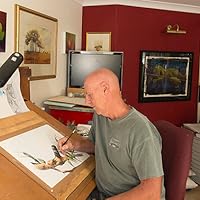
I had recently painted a picture of a Regent Bowerbird perched on an old branch on Mt Warning NSW and was made aware of this book by a friend, for that reason alone.
It was not just the fact that we had travelled and stayed in the area nearby to Ms Greer’s adventure that appealed to me as I got further into the book. It was also the fact that we had lived in Alice Springs for several years in 70’s and 80’s and could relate to all that was written about her sojourn to the so called desert of central Australia. It was the early chapter describing her personal search for purpose or meaningfulness that it seems even famous people seek out, that got me moving excitedly into this book.
And then to top off that we were also rebuilding a much smaller block of degraded land where we live in Margaret River.
Putting those alignments to one side this is an amazing telling of a story of restoration of land with a confident understanding of creatures and plants of the region.
Love Germaine Greer’s writing and the overall concept of this book—however, I do think this book was a firehouse of information at times, and sometimes not the information that I really cared for or expected as a reader. For instance, the chapter “Bananas” only talks about the history of banana plantations in Australia for like two pages—the bulk of that chapter discusses various fig plants at considerable length…not exactly riveting stuff for us non-botanists.
I agree with other reviewers that I wish Greer had leaned more into explaining her personal experiences with undertaking this massive project more than just discussing the native plants and animals that inhabit Cave Creek. That would have pulled me in more.
I wish I'd found this one sooner - a great read and intelligently researched and written, as one would expect from Ms Greer. Respect to her for the sentiment behind the purchase of this piece of Rainforest and her insatiable thirst for the knowledge to sympathetically restore, reclaim and maintain to support as many bugs, plants, birds, mammals and reptiles as possible. She is a force of nature herself and continues to support conservation of her home land and I found her writing style addictive. Learned a lot and when I finished - wanted to go back to page one and re-read immediately. I didn't but I have kept on the bookshelf to read again and will seek more of her work :-)
The Prologue is my favorite chapter of this book as Greer speaks to you about her vision and plan to restore a piece of her home country, Australia. From here, it all goes down hill and I'm stunned that this book was published as is. Unless you're a botanist, horticulturist or dendrologist, I can't imagine enjoying a sit-down with this book.
I'll say that Greer had one great line that I want to share -- "Better a swift agony in the desert than my mother's long twilight in a seaside nursing home."
I gave this book far more time than I wish I had, and I'm pondering who I can pass it on to who might enjoy it.
devastating indictment of immigrant australian historical destruction of the lands and life natural to the continent they invaded along with their flora and fauna. framed by greer's dream here executed to restore a section of rain forest. dense with information which i wish greer had digested on her own and then reflected on personally in the spirit of memoir. partially my problem for expecting a memoir and not a more academic work of history & science. i am glad i read it though it's a very sad tale indeed.
What’s that saying about heroes living long enough to become the villains? Academic, journalist and feminist thinker Germaine Greer has spent her recent years fueling hate for trans people and going down dead ends about rape. She has always been a provocateur, better described these days as a troll. But as she writes in the preface of White Beech, published in 2014, her proudest life achievement is not her writing but her work restoring the land. Read more on my blog.
I'm actually skimming through the last half of the book. It's dense with facts and lean with story. I did manage to understand the reasons she loves Australia. I am a dull middle-aged woman who is interested in an adventuresome middle-aged woman who did something remarkable by making a native forest in Australia. The book seems to be more about the history and details of Australia’s natural environment.
This is a long, dense book. I loved the sections about plants and fauna, but found some sections just too detailed and I must admit, boring. A long divergence into the family tree of people who lived in the Cave Creek region almost made me give up reading, as did the section on macadamia trees. Just too many facts listed. Greer is at her best when she describes being in the rainforest and experiencing the life around her.
Challenging to read, deeply researched, shattering information about environmental destruction by successive waves of Australians and a hope filled epilogue. It is important to make the effort to read this book.
The narrative is good and the stories excellent, but the details about the animals and especially the plants gets to be a drag. The only map stinks. Even with all its drawbacks, I deem it a must read.
This book was not an easy read as it was quite technical in places (pictures or photos would have helped). However it is a great book, informative and interesting. I learnt lot. Greer is certainly an inspiration
I wasn't expected this topic from Germaine Greer, but really enjoyed her passion and learning about this important forested area. It took me back to my ecological roots.
The book is stuffed with research - possibly a little too much research. (The lengthy history of the Nixon family, for instance, one of whom at one point owned the land she knows as Cave Creek, turned out to be largely irrelevant, but was presumably included after the author put a lot of effort into having traced it.) The didactic conversations become a bit annoying and too obviously contrived, although they were presumably introduced in a attempt to make the dense information more palatable to the reader.
Greer is attempting to give a potted history of Australian botany and land settlement, the gist of which is that the native species were pretty much universally regarded as useless, to be replaced by introduced tropical and/or drought resistant species from all around the world. She points out that the settlers were basically comparing wild species to their detriment with those which had been domesticated to human tastes and requirements for millennia, and suggests somewhat optimistically that it might have been better to set up breeding programmes to improve the native raspberry and citrus varieties rather than importing blackberries and lemons, both of which (like so many imports into Australia's isolated and distinctive ecosystem) have simply become invasive and expensive pests.
As a famous controversialist she doesn't shrink from being unashamedly opinionated, openly picking favourites among historical botanists and explorers (although I thought the suggestion that the reason why so few of them married was that the profession attracted closet homosexuals was a bit crass; it wasn't a lifestyle conducive to family responsibilities, and one suspects was more Iikely to appeal to pugnacious and disputatious loners besides). She makes great play about her reverence and respect for the Aborigine peoples ("I wouldn't call Australia home until Aboriginal sovereignty was recognised") and her desire to obtain "permission to camp" on the property she has bought, but I note that when her research leads her to the conclusion that her property was a taboo sacred ground avoided by all and sundry, she doesn't show any inclination to remove her presumably polluting presence from the area. (The revelations that modern Aborigine groups are apparently laying claim to territories vastly in excess of those in which their actual ancestors inhabited and quarrelling among themselves about it is unedifying, but really not too surprising, given human nature...)
But she is not entirely one-sided; she acknowledges that the wholesale logging and clearing of the native rainforest was a disaster, both for the environment and ultimately as an attempt to settle the land, but also that the settlers themselves put heroic effort into it and suffered in the process, rather than being Manifest Evil - a verdict she reserves for petting zoos and TV naturalists! And she writes very evocatively about her encounters with wildlife and with the landscape. One quirk that I did find rather wearing was that she insists on capitalising all the common names all the time of all the species she mentions, so we have a Wedge-Tailed Eagle and Swamp Wallabies, for example, or Eastern Cave Bats feeding on Booyongs, Rosewood, Stingers and Carabeens; it's possibly done to avoid ambiguity as to what is a species name and what isn't, but it's not idiomatic English usage and I found it made reading dense passages hard work.
I'd have liked to have had more description of the actual restoration process, and a section at the end describing what had been achieved up to the current day - apparently the project has been running for fifteen years, but the text only gives the impression of one or two. Far more of the book is spent in general historical discussion than in talking about how the CCRRS was set up and operates; there are a few passages describing her arrival, and then just the odd offhand mention of a 'workforce' who are apparently a fount of local knowledge, and of 'the propagation unit and the shade house', unexplained. I felt it would have been nice to have had some kind of chronological narrative of the development and functioning of the place...
But all in all and despite all the caveats I did enjoy the book, reading it in one great gulp across a single day. I felt I'd learned a lot, and by and large Greer does make her mass of facts seem accessible. i'm not converted to the beauty of native Australian flora (photos might have helped), but I can appreciate the author's devotion to it.