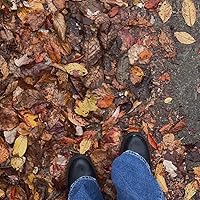
For Aristotle, excellence is not an act but a habit, and Hume regards habit as ‘the great guide of life’. However, for Proust habit is ‘if habit is a second nature, it prevents us from knowing our first.’ What is habit? Do habits turn us into machines or free us to do more creative things? Should religious faith be habitual? Does habit help or hinder the practice of philosophy? Why do Luther, Spinoza, Kant, Kierkegaard and Bergson all criticise habit? If habit is both a blessing and a curse, how can we live well in our habits? In this thought-provoking book Clare Carlisle examines habit from a philosophical standpoint. Beginning with a lucid appraisal of habit’s philosophical history she suggests that both receptivity and resistance to change are basic principles of habit-formation. Carlisle shows how the philosophy of habit not only anticipates the discoveries of recent neuroscience but illuminates their ethical significance. She asks whether habit is a reliable form of knowledge by examining the contrasting interpretations of habitual thinking offered by Spinoza and Hume. She then turns to the role of habit in the good life, tracing Aristotle’s legacy through the ideas of Joseph Butler, Hegel, and Félix Ravaisson, and assessing the ambivalent attitudes to habit expressed by Nietzsche and Proust. She argues that a distinction between habit and practice helps to clarify this ambivalence, particularly in the context of habit and religion, where she examines both the theology of habit and the repetitions of religious life. She concludes by considering how philosophy itself is a practice of learning to live well with habit.
Clare Carlisle is a British philosopher and biographer. She is the author of books on Baruch Spinoza, Søren Kierkegaard, and George Eliot. She was born in Manchester in 1977. She studied philosophy at Trinity College, Cambridge between 1995 and 2002. She is a professor at King's College London. In 2024 she gave the Gifford Lectures at the University of St Andrews. Her writing has appeared in the Guardian, The Nation, the Times Literary Supplement, and the Los Angeles Review of Books.
Clare Carlisle, em "On Habit", traz um panorama sobre algumas das concepções filosóficas clássicas sobre o hábito. O repertório da autora é amplo: vamos da ética das virtudes de Aristóteles à fruição da repetição em Marcel Proust, passando por Spinoza, Hume, Kant, Kierkegaard e tantas outras figuras. Curiosamente, a sensação não é a de que estamos lendo um catálogo das posições desses autores, mas enfrentando o problema do caráter dual do hábito — o de possibilitar uma economia mental para as atividades cotidianas, e o perigo de automatizar a percepção dos objetos ao nosso redor —, e que, em seguida, esses autores apresentam as suas contribuições. A leitura é agradável e a erudição de Carlisle faz com que o leitor tenha vontade de continuar a pesquisa e busque as várias obras recomendadas.
A lucid survey of philosophical theories of habit. Carlisle's deconstructive approach to habit as a pharmakon is helpful, and her discussion of Kierkegaard's Christian existentialism is surprising and provocative. As she points out, Kierkegaard's advocacy of a difficult form of faith targets a form of unthinking habituation cemented in the state religion, which Kierkegaard calls "habitual Christianity," culminating in the transformation of Christian thought into second nature. Building on Luther's critique of Aristotelian philosophy, Carlisle uncovers in Kierkegaard a hidden critique of voluntarism, a dimension of his thought that is lost whenever he is understood solely as a thinker of choice.
Highly impressed with the amount of subjects and points of view that are covered within this book. Habits consume each of our lives - Carlisle did an amazing job breaking them down. I especially loved Carlisle’s analysis regarding religion and habit.