

What do you think?
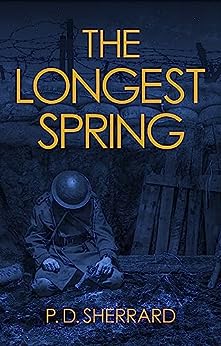
The Longest Spring: A gripping and poignant WW1 drama, where loyalty and betrayal collide in the trenches of Northern France
March 1916. No Man’s Land, Northern France. In darkness and torrential rain, Second Lieutenant Alex Ryan makes a terrible mistake. To make matters worse, the only witness is the famous war hero, Captain Eden, who convinces Alex that unless they both lie about what happened, Alex will be shot for what he’s done. Life in the trenches is brutal and death is never far away, but behind the lines, Alex finds solace with Odette, a beautiful farmer's daughter. Eden disapproves and tension between the two officers grows. And there are rumours that Eden might not be the hero that he seems... When a soldier’s life is threatened, after seeing something that could destroy Eden’s reputation, Alex knows he should intervene. But Eden knows his secret. So a choice must be made. One that will test Alex’s loyalty, his morality, and even his humanity. Inspired by true events and the stories of 306 British soldiers who were shot for cowardice during the Great War, The Longest Spring is a poignant exploration of how even in the most extreme circumstances, we still love, grieve and seek validation from our peers. If you loved Birdsong and All Quiet on the Western Front, then you’ll love The Longest Spring.
332 pages, Kindle Edition
Published September 4, 2023
About the author
P.D. Sherrard
1 book1 followerPete is a photographer, actor, sculptor and writer. He's spent many years living in places that are not England. But now he does live in England, in Bristol, with his partner, his son, and a three-legged dog.
Ratings & Reviews
Friends & Following
Create a free account to discover what your friends think of this book!
Community Reviews
Displaying 1 - 25 of 25 reviews
May 15, 2025
P.D. Sherrard's The Longest Spring is a recent entry into the canon of Great War literature. It's a remarkable work for a first novel and certainly belongs on the same shelf as Birdsong, All Quiet on the Western Front, Three Day Road, and Pat Barker's Regeneration trilogy.
The story is fairly straightforward, spanning March 1916 to the eve of the Battle of the Somme at the end of June that year. A young officer, Alex Ryan, arrives in France to join Company D. He is thrilled to be assigned to the same company as Captain James Eden, a celebrated hero of the war. Lieutenant Ryan is sent out as part of a trench raid on his first night at the front. His naive excitement soon turns to shock and horror when something goes terribly wrong during the raid. The remainder of the book evolves from that incident.
Like the marvelous books mentioned at the outset of this review, The Longest Spring depicts the horrors of trench warfare and its effects on the men immersed in its surreal brutality. More than that, though, Sherrard's novel explores the nature of heroism and leadership, and suggests that "heroes" aren't necessarily good leaders, and that some "leaders" are self-serving and oblivious to those who look to them for leadership. Such leaders view the men under their command as nothing more than replaceable parts in the larger machinery of war.
As with Stephen Wraysford in Birdsong, Alex Ryan also finds love with a French woman.
Similarly to Paul Baumer in All Quiet on the Western Front, Ryan discovers a family of sorts with the men of his platoon. However, the book differs from those works because its scope is more narrow and focused. Whereas, Birdsong and All Quiet on the Western Front give readers a glimpse of their characters' lives before the war, on the home front, and after the war (Birdsong), The Longest Spring focuses almost exclusively on Alex's experiences at a sector of the Front over a period of about four months. Even his romantic liaison with Odette, the French girl, takes place at his billet not far behind the trenches. Because of this, The Longest Spring seems somehow more personal than the other classic works of Great War fiction.
Among other things, Sherrard's novel was influenced by Britain's execution of over 300 soldiers for cowardice during the Great War. This heightens the overall tragedy of The Longest Spring, begging the question, "What is the point of more murder on top of all this butchery?" This is basically the same question Kurt Vonnegut posed in Slaughterhouse-Five.
P.D. Sherrard's writing style is clear and propulsive. This, along with the book's short chapters (which I've always liked), make The Longest Spring a quick but unforgettable read, one that will linger in the reader's mind days after finishing the book.
I recommend The Longest Spring to anyone who shares my fascination with the Great War and Great War literature. Even more, though, I believe those who ponder the nature of leadership, heroism, friendship, and love will also find much to admire and digest. This is an excellent first novel, and I'm looking forward to further works by P.D. Sherrard.
The story is fairly straightforward, spanning March 1916 to the eve of the Battle of the Somme at the end of June that year. A young officer, Alex Ryan, arrives in France to join Company D. He is thrilled to be assigned to the same company as Captain James Eden, a celebrated hero of the war. Lieutenant Ryan is sent out as part of a trench raid on his first night at the front. His naive excitement soon turns to shock and horror when something goes terribly wrong during the raid. The remainder of the book evolves from that incident.
Like the marvelous books mentioned at the outset of this review, The Longest Spring depicts the horrors of trench warfare and its effects on the men immersed in its surreal brutality. More than that, though, Sherrard's novel explores the nature of heroism and leadership, and suggests that "heroes" aren't necessarily good leaders, and that some "leaders" are self-serving and oblivious to those who look to them for leadership. Such leaders view the men under their command as nothing more than replaceable parts in the larger machinery of war.
As with Stephen Wraysford in Birdsong, Alex Ryan also finds love with a French woman.
Similarly to Paul Baumer in All Quiet on the Western Front, Ryan discovers a family of sorts with the men of his platoon. However, the book differs from those works because its scope is more narrow and focused. Whereas, Birdsong and All Quiet on the Western Front give readers a glimpse of their characters' lives before the war, on the home front, and after the war (Birdsong), The Longest Spring focuses almost exclusively on Alex's experiences at a sector of the Front over a period of about four months. Even his romantic liaison with Odette, the French girl, takes place at his billet not far behind the trenches. Because of this, The Longest Spring seems somehow more personal than the other classic works of Great War fiction.
Among other things, Sherrard's novel was influenced by Britain's execution of over 300 soldiers for cowardice during the Great War. This heightens the overall tragedy of The Longest Spring, begging the question, "What is the point of more murder on top of all this butchery?" This is basically the same question Kurt Vonnegut posed in Slaughterhouse-Five.
P.D. Sherrard's writing style is clear and propulsive. This, along with the book's short chapters (which I've always liked), make The Longest Spring a quick but unforgettable read, one that will linger in the reader's mind days after finishing the book.
I recommend The Longest Spring to anyone who shares my fascination with the Great War and Great War literature. Even more, though, I believe those who ponder the nature of leadership, heroism, friendship, and love will also find much to admire and digest. This is an excellent first novel, and I'm looking forward to further works by P.D. Sherrard.

September 4, 2023
This extraordinary debut novel left me with much to reflect on, but my overriding impression was that of the futility of war and its devastating impact on those drawn into its all consuming maw.
Trench warfare is unremittingly bleak and this novel does not shy away from describing the reality of constant bombardment on the soldiers forced to endure it. The inhumane conditions; the pervasive stench; the deafening noise; the endless battle against the elements: but more than this, the inescapable psychological warfare as officers and soldiers alike are forced to choose, on a daily basis between their own survival and that of their trench fellows.
The novel focuses on a small platoon over a couple of months as they prepare for the 'big push' and their place in the history books: compelling for those who are bent on glory, terrifying for those who feel a personal responsibility for the men they are tasked with leading into battle. A well drawn cast of characters gradually evolves and as Sherrard explores their hopes, dreams and motivations we come to understand a little more of the complexity of human emotion in a world where life is considered cheap for some and worth lauding for others. This is a glimpse into one tiny stretch of trench warfare, which, when extrapolated across all fronts tells of a devastating death toll. A death toll of names still to be recited in towns and villages across Europe and beyond, even today.
Characters who have grown familiar, revealed to the reader incrementally over the previous three hundred pages are despatched in the blink of an eye. Cut down without ceremony, like so many countless lives lost over the course of human history. There are no punches pulled, this is a heart-rending story repeated hundreds of times during the course of WW1.
And yet there is joy to be found amongst the mire. Sherrard has a unique ability to contrast fierce destruction with exquisite beauty - the trembling of a grass blade in the breeze; the sound of a skylark piercing the air. Likewise, the humour and camaraderie of people under pressure and their ultimate mercy in the face of utter despair restore a sense of humanity stripped bare by war.
A thought-provoking and well researched read which has as much to say to us today, as it would have a hundred years ago. I hope to read more from this talented author.
Trench warfare is unremittingly bleak and this novel does not shy away from describing the reality of constant bombardment on the soldiers forced to endure it. The inhumane conditions; the pervasive stench; the deafening noise; the endless battle against the elements: but more than this, the inescapable psychological warfare as officers and soldiers alike are forced to choose, on a daily basis between their own survival and that of their trench fellows.
The novel focuses on a small platoon over a couple of months as they prepare for the 'big push' and their place in the history books: compelling for those who are bent on glory, terrifying for those who feel a personal responsibility for the men they are tasked with leading into battle. A well drawn cast of characters gradually evolves and as Sherrard explores their hopes, dreams and motivations we come to understand a little more of the complexity of human emotion in a world where life is considered cheap for some and worth lauding for others. This is a glimpse into one tiny stretch of trench warfare, which, when extrapolated across all fronts tells of a devastating death toll. A death toll of names still to be recited in towns and villages across Europe and beyond, even today.
Characters who have grown familiar, revealed to the reader incrementally over the previous three hundred pages are despatched in the blink of an eye. Cut down without ceremony, like so many countless lives lost over the course of human history. There are no punches pulled, this is a heart-rending story repeated hundreds of times during the course of WW1.
And yet there is joy to be found amongst the mire. Sherrard has a unique ability to contrast fierce destruction with exquisite beauty - the trembling of a grass blade in the breeze; the sound of a skylark piercing the air. Likewise, the humour and camaraderie of people under pressure and their ultimate mercy in the face of utter despair restore a sense of humanity stripped bare by war.
A thought-provoking and well researched read which has as much to say to us today, as it would have a hundred years ago. I hope to read more from this talented author.
August 26, 2023
Very impressive!
I wasn't expecting too much from a first book by an unknown author, though the earlier reviews intrigued me. But they were right - this is a wonderful book, a beautifully written emotive page-turner, and I was hooked within a dozen pages!
One of the best WW1 books I've read, and having been a keen reader for over half a century, I've read a fair few! It's on a parr with Sebastian Barry's, I think!
Although it's been widely written about before, I think it gains from being about a small group of soldiers and a narrow time-span, so the action and emotions are condensed. It's thought-provoking, upsetting, but ultimately reinforces the sense of mankind's innate capacity for goodness in the midst of horror and the evil of war.
There were some wonderfully descriptive passages - metaphors, similies, alliterative phrases - but not so many that it distracts from the story, which draws you along and encompasses the changing moods of the plot, from uncertainty and fear, to buccolic lulls which allow the characters to reclaim their humanity amongst the chaos and confusion of the battlefield.
Initially I was a little disappointed by the apparent steroetypes, especially the officers - the wise and experienced one; the raw recruit who proves himself; the dashing, disturbing one - but as the characters develop we get to see the larger reality, striving, fallible, vulnerable humans, doing their best in an impossible hell, not of their own making. And lots of little touches that bring even the minor charaters to life, written with sympathy and a deep sense of understanding.
So many outstanding passages, beautifully written and skillfully wrought, and with little gems of learning dotted here and there - Epictitus; ancient alphabets - like crumbs of sugar to lighten the heaviness. And each time a question was raised in my mind, the author provided the answer within a few pages. (And I do appreciate it when authors provide Historical Notes -it put the events into context!)
I chuckled, I wept, and was very sad when it ended - I wanted to continue their journey with them!
And how disappointing that this is his first book - that means there's no back-list that I can enjoy reading, I'll have to wait eagerly for his next!!
I wasn't expecting too much from a first book by an unknown author, though the earlier reviews intrigued me. But they were right - this is a wonderful book, a beautifully written emotive page-turner, and I was hooked within a dozen pages!
One of the best WW1 books I've read, and having been a keen reader for over half a century, I've read a fair few! It's on a parr with Sebastian Barry's, I think!
Although it's been widely written about before, I think it gains from being about a small group of soldiers and a narrow time-span, so the action and emotions are condensed. It's thought-provoking, upsetting, but ultimately reinforces the sense of mankind's innate capacity for goodness in the midst of horror and the evil of war.
There were some wonderfully descriptive passages - metaphors, similies, alliterative phrases - but not so many that it distracts from the story, which draws you along and encompasses the changing moods of the plot, from uncertainty and fear, to buccolic lulls which allow the characters to reclaim their humanity amongst the chaos and confusion of the battlefield.
Initially I was a little disappointed by the apparent steroetypes, especially the officers - the wise and experienced one; the raw recruit who proves himself; the dashing, disturbing one - but as the characters develop we get to see the larger reality, striving, fallible, vulnerable humans, doing their best in an impossible hell, not of their own making. And lots of little touches that bring even the minor charaters to life, written with sympathy and a deep sense of understanding.
So many outstanding passages, beautifully written and skillfully wrought, and with little gems of learning dotted here and there - Epictitus; ancient alphabets - like crumbs of sugar to lighten the heaviness. And each time a question was raised in my mind, the author provided the answer within a few pages. (And I do appreciate it when authors provide Historical Notes -it put the events into context!)
I chuckled, I wept, and was very sad when it ended - I wanted to continue their journey with them!
And how disappointing that this is his first book - that means there's no back-list that I can enjoy reading, I'll have to wait eagerly for his next!!
September 4, 2023
I have to say I pretty much devoured this novel, which is high praise from someone who normally avoids world war fiction! (I may have been slightly put off by my GCSE English set texts...) But what can I say? I read the first page and I was hooked, not only by the premise but also the beauty of the writing.
The story of main character Alex and his complex relationships with his fellow officers and the men he leads is utterly compelling. It's a journey of maturity that takes some unexpected twists and turns and comes to a conclusion that, frankly, made me have to put my e-reader down and just, sort of... stare out of the window and emote for a while after I'd finished.
If you've ever had a historical novel ruined by the author's mistaken assumptions about a period they haven't researched and geographical locations they haven't even looked at on a map, have no fear! The Longest Spring is clearly the product of meticulous research and the historical detail breathes through the entire narrative without ever pushing the descriptions into ‘exposition’ territory.
The author manages to get across the grim reality of trench warfare, without turning the entire book into an unrelenting trudge through all of the brutalities of WWI. There are enough touches of hope and beauty in the story, whether in the descriptive detail of a world seen through an artist’s eyes, or the sheer decency that glimmers through the interactions with Alex and his men, that it balances out the inevitable horrors.
In short, the writing is pure poetry, the characters complex, and the narrative has you gripped from the first page. I read this on KU and liked it so much I've bought my own copy!
The story of main character Alex and his complex relationships with his fellow officers and the men he leads is utterly compelling. It's a journey of maturity that takes some unexpected twists and turns and comes to a conclusion that, frankly, made me have to put my e-reader down and just, sort of... stare out of the window and emote for a while after I'd finished.
If you've ever had a historical novel ruined by the author's mistaken assumptions about a period they haven't researched and geographical locations they haven't even looked at on a map, have no fear! The Longest Spring is clearly the product of meticulous research and the historical detail breathes through the entire narrative without ever pushing the descriptions into ‘exposition’ territory.
The author manages to get across the grim reality of trench warfare, without turning the entire book into an unrelenting trudge through all of the brutalities of WWI. There are enough touches of hope and beauty in the story, whether in the descriptive detail of a world seen through an artist’s eyes, or the sheer decency that glimmers through the interactions with Alex and his men, that it balances out the inevitable horrors.
In short, the writing is pure poetry, the characters complex, and the narrative has you gripped from the first page. I read this on KU and liked it so much I've bought my own copy!

April 13, 2025
The writing here is simply fantastic, along the lines of Hillary Mantel and Robert Harris. Yes, it's that good. Sherrard creates a diverse set of characters whose actions are not formulaic. Events unfold that are unpredictable but very plausible.
The Longest Spring takes place in the First World War, leading up to the day before the Battle of the Somme begins. Alex Ryan, a newly minted officer in the Sussex battalion, quickly learns the brutality and senseliness that war encompassed. Captain Eden, a haughty but successful officer, holds a secret on Ryan, which he uses to constrain the protagonist's better nature. Woodhouse, the battalion's leader, is a stick-in-the-mud empty suit who, along with Eden, roadblocks Ryan from doing anything other than feed men into the First World War's meatgrinder. Percy, a teenager out to avenge his brother's death in the war, is prone to stress-induced seizures that are incorrectly interpreted as cowardice. Then there is Odette, a beautiful French farm girl who captures Ryan's heart.
My sole quibble about The Longest Spring involves how trench warfare logistics are not described better. I would have appreciated a more detailed rendering.
The Longest Spring is not a book with a deus ex machina ending. Terrible things occur, and the book has a solemn ending. If you're looking for an escapist piece of fiction, look elsewhere. However, if you want a terrific story during the First World War, immediately grab this page-turner.
The Longest Spring takes place in the First World War, leading up to the day before the Battle of the Somme begins. Alex Ryan, a newly minted officer in the Sussex battalion, quickly learns the brutality and senseliness that war encompassed. Captain Eden, a haughty but successful officer, holds a secret on Ryan, which he uses to constrain the protagonist's better nature. Woodhouse, the battalion's leader, is a stick-in-the-mud empty suit who, along with Eden, roadblocks Ryan from doing anything other than feed men into the First World War's meatgrinder. Percy, a teenager out to avenge his brother's death in the war, is prone to stress-induced seizures that are incorrectly interpreted as cowardice. Then there is Odette, a beautiful French farm girl who captures Ryan's heart.
My sole quibble about The Longest Spring involves how trench warfare logistics are not described better. I would have appreciated a more detailed rendering.
The Longest Spring is not a book with a deus ex machina ending. Terrible things occur, and the book has a solemn ending. If you're looking for an escapist piece of fiction, look elsewhere. However, if you want a terrific story during the First World War, immediately grab this page-turner.

July 24, 2023
A gripping and beautifully written novel, based on true events, which explores the chaos and tragedy of the first world war, where enemies may not be where you think they are.
When young officer Alex Ryan arrives in the trenches, he is immediately met with bloodshed and trauma - but he also quickly makes friends with other officers and a young private named Percy. Also on the frontlines is the charismatic Captain Eden, whom Alex has admired from afar.
Alex and Eden head out on a secret mission, but disaster strikes, meaning Eden knows a deadly secret of Alex's. This secret festers and grows, and ultimately leads to a tragedy which will stick with you for a long time.
Sherrard handles the gruesome reality of war with a light, poetic touch, and mixes hard-hitting history with humour and grace. I was glued to the pages of this beautiful debut novel and cried like a baby at the ending. Highly recommended.
When young officer Alex Ryan arrives in the trenches, he is immediately met with bloodshed and trauma - but he also quickly makes friends with other officers and a young private named Percy. Also on the frontlines is the charismatic Captain Eden, whom Alex has admired from afar.
Alex and Eden head out on a secret mission, but disaster strikes, meaning Eden knows a deadly secret of Alex's. This secret festers and grows, and ultimately leads to a tragedy which will stick with you for a long time.
Sherrard handles the gruesome reality of war with a light, poetic touch, and mixes hard-hitting history with humour and grace. I was glued to the pages of this beautiful debut novel and cried like a baby at the ending. Highly recommended.

October 13, 2023
Gripping, visceral, poetic
A book that reveals the rawness and brutality of trench warfare, juxtaposed with the humanity of the men caught up in the madness of the First World War.
The writing draws you in and the short chapters pass effortlessly, the narrative compelling and the story holding you in its grasp.
My only issue was with the characterisation of the senior officers. If you are of a certain generation you may find yourself drawing parallels with Blackadder Goes Forth, General Melchett, Captain Blackadder et al! One of them even utters a Melchett like 'Baabp!' But that is more down to my association and doesn't affect the storyline.
In summary, I would definitely recommend The Longest Spring. A book of contrasts, of the utter madness of warfare, and the bravery and stupidity of men.
A book that reveals the rawness and brutality of trench warfare, juxtaposed with the humanity of the men caught up in the madness of the First World War.
The writing draws you in and the short chapters pass effortlessly, the narrative compelling and the story holding you in its grasp.
My only issue was with the characterisation of the senior officers. If you are of a certain generation you may find yourself drawing parallels with Blackadder Goes Forth, General Melchett, Captain Blackadder et al! One of them even utters a Melchett like 'Baabp!' But that is more down to my association and doesn't affect the storyline.
In summary, I would definitely recommend The Longest Spring. A book of contrasts, of the utter madness of warfare, and the bravery and stupidity of men.
August 8, 2023
P D Sherrard's novel of a soldier in The Great War is based on true accounts. It shows an ordinary young man trying to do his best and sometimes failing, sometimes getting things spot on.
The language Sherrard employs is that of a painter of the natural world in all its gore and glory. I found the book gripping and captivating because we get to know Alex and the world around him very well.
I felt a growing affinity with Alex as the book developed, feeling for him as he finds his way and matures. I was sometimes choked up and sometimes I really had to laugh out loud, as the fine line between horror and humour was natural and finely balanced.
A great read, a good yarn, and plenty to keep the reader's imagination alive. I loved it.
The language Sherrard employs is that of a painter of the natural world in all its gore and glory. I found the book gripping and captivating because we get to know Alex and the world around him very well.
I felt a growing affinity with Alex as the book developed, feeling for him as he finds his way and matures. I was sometimes choked up and sometimes I really had to laugh out loud, as the fine line between horror and humour was natural and finely balanced.
A great read, a good yarn, and plenty to keep the reader's imagination alive. I loved it.
October 3, 2023
This book came highly recommended by a friend, so I thought I’d give it go. To be honest I wasn’t expecting much – World War I isn’t usually my thing, and I knew it was by a first-time author. But boy was I wrong!
It was such a beautifully written book from the first page. Gorgeous language, amazing detail, well developed characters and a story line that kept me hooked. Best book I’ve read in ages.
It really stayed with me this book; the places, the story, the characters, the sad reality of war and a moment in history. Reading that it was based on a real platoon, and real battles also gave me food for thought. I found myself still reflecting on certain elements (I won’t spoil it for you) long after I’d finished the last page.
So give it a go! It might just surprise you :)
It was such a beautifully written book from the first page. Gorgeous language, amazing detail, well developed characters and a story line that kept me hooked. Best book I’ve read in ages.
It really stayed with me this book; the places, the story, the characters, the sad reality of war and a moment in history. Reading that it was based on a real platoon, and real battles also gave me food for thought. I found myself still reflecting on certain elements (I won’t spoil it for you) long after I’d finished the last page.
So give it a go! It might just surprise you :)
August 28, 2023
This is a thought provoking and well written novel that captures the confusion and horror of war and its impact on those caught up in it - whether soldiers or civilians. The author takes us inside the minds of the characters in a way that made me want to keep reading to learn more about their lives. The ethical dilemmas of young men and women trying to care for their friends and colleagues, whilst staying alive themselves is clearly captured. This is a book about human struggle and endurance - against the violence and brutality of war but also against conscience and the consequences of personal decisions - I highly recommend it.
September 11, 2023
A deeply satisfying read, moving, provocative, humourous, tender. The noble and the outright ignoble jostle throughout against the backdrop of the squander of war. Deftly the writer describes the horror as an impressionist might paint the scene, sufficient enough to convey the shocking facts without obscuring the onward thrust of the novel towards its denouement. Much happens along the way to keep one turning the pages, immersed scene by scene in a gamut of emotions by the crisp prose propelling the action and intensely poetic moments to punctuate the pathos.
A redeeming tale superbly told.
A redeeming tale superbly told.

August 7, 2023
An astounding debut novel that pulled me in, broke my heart and held me captivated until the bitter end.
A beautifully written and heart rending story of life, love and loss in the WW1 trenches of northern France.
The Longest Spring tells the story of Alex, a young and naive officer who arrives at the Western Front with boyish enthusiasm, excited to play his part in the war effort. We follow Alex into the trenches and experience the peril and terror, the boredom, the discomfort and the powerlessness of soldiers ordered to fight and die for their country. We see how his experiences shape and change Alex as he strives to find his place and to be a good soldier, to be a good man and to fight, not for his country, but for the lives of his men.
The absolute tragedy of war is thankfully given light relief in this book with warm relationships, acts of kindness and humouress scenes. The love story is tender and captivating, particularly so because Odette is a strong female character with her own dreams and a fire in her belly.
The central explorations of heroism, obedience and morality feel as relevant today as they did 100 years ago. The author pulls you so closely into the plight of his characters that you feel their dilemmas and choices as your own and start to question your own sense of right and wrong. How would I handle this situation? What would I do? What is the right thing?
Something in the craft itself had an effect on me in this book. I laughed out loud several times not just at the humour in the story but in sheer appreciation for the writing itself: the clever close to each chapter, the rhythm of the words and the descriptions of the world the characters inhabit.
I sobbed my heart out on more than one occasion (like full ugly cry - snot, puffy cheeks, hide in the bathroom and wail type cry) and I challenge anyone not to shed a tear or at least get a lump in their throat during the scene that explains the title of this novel.
I loved The Longest Spring, it's really a very good book and I recommend it to anyone who enjoys reading!
The characters will stay with me for a long time. I truly miss them.
I look forward to reading more from P.D Sherrard in the future.
A beautifully written and heart rending story of life, love and loss in the WW1 trenches of northern France.
The Longest Spring tells the story of Alex, a young and naive officer who arrives at the Western Front with boyish enthusiasm, excited to play his part in the war effort. We follow Alex into the trenches and experience the peril and terror, the boredom, the discomfort and the powerlessness of soldiers ordered to fight and die for their country. We see how his experiences shape and change Alex as he strives to find his place and to be a good soldier, to be a good man and to fight, not for his country, but for the lives of his men.
The absolute tragedy of war is thankfully given light relief in this book with warm relationships, acts of kindness and humouress scenes. The love story is tender and captivating, particularly so because Odette is a strong female character with her own dreams and a fire in her belly.
The central explorations of heroism, obedience and morality feel as relevant today as they did 100 years ago. The author pulls you so closely into the plight of his characters that you feel their dilemmas and choices as your own and start to question your own sense of right and wrong. How would I handle this situation? What would I do? What is the right thing?
Something in the craft itself had an effect on me in this book. I laughed out loud several times not just at the humour in the story but in sheer appreciation for the writing itself: the clever close to each chapter, the rhythm of the words and the descriptions of the world the characters inhabit.
I sobbed my heart out on more than one occasion (like full ugly cry - snot, puffy cheeks, hide in the bathroom and wail type cry) and I challenge anyone not to shed a tear or at least get a lump in their throat during the scene that explains the title of this novel.
I loved The Longest Spring, it's really a very good book and I recommend it to anyone who enjoys reading!
The characters will stay with me for a long time. I truly miss them.
I look forward to reading more from P.D Sherrard in the future.
August 29, 2023
This book drew me in from the first page and I was hooked! The rest of it did not disappoint and it was hard to put down. It is beautifully written with wonderfully descriptive passages that paint the scenes vividly and bring the characters very much to life. The horror and inhumanity of war is never glossed over, making it a heartbreaking read at times, but the humanity of some of the characters shine from within the pages.
This is a brilliant debut novel - let’s hope there will be more from P.D. Sherrard.
This is a brilliant debut novel - let’s hope there will be more from P.D. Sherrard.

August 16, 2023
I CANNOT RECOMMEND THIS BOOK ENOUGH!
It's got friendships that'll survive anything, it's got raw emotions, it's got love; it touches on the topics of manipulation of power, of disability, of mental health; it has *all* the twists and turns that you would never expect... Even as someone who has no real interest in books based in a war setting, I COULD NOT PUT THIS DOWN! It had me laughing, smiling, staring at the pages in stunned shock, and absolutely sobbing.
I cannot thank you enough P.D. Sherrard for creating such a fantastic piece of art - it was such an honour to experience it 😁
It's got friendships that'll survive anything, it's got raw emotions, it's got love; it touches on the topics of manipulation of power, of disability, of mental health; it has *all* the twists and turns that you would never expect... Even as someone who has no real interest in books based in a war setting, I COULD NOT PUT THIS DOWN! It had me laughing, smiling, staring at the pages in stunned shock, and absolutely sobbing.
I cannot thank you enough P.D. Sherrard for creating such a fantastic piece of art - it was such an honour to experience it 😁
August 31, 2023
Complimentary copy, and initially wasn’t sure about this book, but stuck with it, and so glad I did. The book got better as it went along, and I ended up thoroughly enjoying it!
The author explores a “ shot at dawn “ storyline within the book which is both interesting and disturbing at the same time. A tough read at times, but WW1 was no bed of roses.
The author explores a “ shot at dawn “ storyline within the book which is both interesting and disturbing at the same time. A tough read at times, but WW1 was no bed of roses.
September 4, 2023
Really loved it. Right up my street. Having read All Quiet on the Western Front, this felt in a similar vein: vivid, visceral but also with a deep sense of poignancy. The author does a brilliant job of transporting me to that time and place and the mindset of these young men. Looking forward to seeing what PD Sherrard comes up with next!
July 30, 2023
A really thought provoking story bringing to life the history of WW1.Young men from widely different backgrounds thrust together and transformed from full of bravado and excitement to the reality of trench life.
Heartbreaking,Horrifying and Heartwarming in equal measure.Excellent read!
Heartbreaking,Horrifying and Heartwarming in equal measure.Excellent read!

August 1, 2023
I really liked this novel! I wouldn’t have necessarily chosen to read a book about World War 1, but the characters kept me engaged and I found myself pulled in and wanting to find out what happened. The descriptions were gorgeous too.
August 26, 2023
Thoroughly enjoyed this book, so much so I couldn't put it down. The author writes with great detail that you feel you really get to know the characters. I'd recommend this book and encourage people who wouldn't usually read this genre to give it a read too.
September 13, 2023
This book gives insight into the extreme brutality of war. The characters are well developed and I came to have an attachment to them. It is a very emotional read and I carried this story while and after I read it.
September 14, 2023
If you enjoyed Birdsong by Sebastian Faulks then I'm sure you'll enjoy this book too. The Longest Spring clearly evokes the environment of trench warfare in WW1 - along with believable characters, and a great story which is well written. I highly recommend this book.
October 14, 2023
WW1 historical
I enjoyed reading this very much. It gave a detailed account of what it was like in that terrible war.
I enjoyed reading this very much. It gave a detailed account of what it was like in that terrible war.

October 7, 2025
If I taught a writing class, I would use The Longest Spring by P.D. Sherrard as one of my textbooks. It is the story of Alex Ryan, a second lieutenant in the British Army, who is deployed to the front lines in March 1916 just in time to be involved in the Battle of the Somme. The story only takes five months, when the life expectancy of an officer was just six weeks. He is thrilled to be installed with one of his heroes, Captain James Eden. Throughout the story, Eden develops into the consummate gung-ho warrior who doesn’t care about his life or any of the men he leads, and the conflict between the two grows in intensity.
The book is written in the present tense, something that I am not generally happy with and something that seems quite fashionable. I almost put the book down at the beginning when saw that, but Sherrard managed to make that disappear for me. Writing in the present tense makes the story more immediate, pushing it forward into the ‘now’ so that the reader is right there with Alex in the mud and blood and explosions.
There are a few forced elements, such as Alex meeting and falling in love with a beautiful farmer’s daughter. Of course, life was brief in those conditions, so perhaps their rapid and torrid affair is not out of place.
Sherrard uses a basket of storyteller tools, putting Alex in situations where he is forced to make decisions he doesn’t want to make while diligently following orders. Sherrard brings out the insipid motivations of officers to advance their careers instead of the welfare of the men they are commanding. He also does a masterful job of developing the horrors and meaninglessness of the ‘Great War’.
This is a beautifully written book. The story is based on diaries and other accounts of the Battle of the Boar’s Head Salient described in the closing scenes of the book. Of all the books that I have read as research for my novel, this one is the best.
The book is written in the present tense, something that I am not generally happy with and something that seems quite fashionable. I almost put the book down at the beginning when saw that, but Sherrard managed to make that disappear for me. Writing in the present tense makes the story more immediate, pushing it forward into the ‘now’ so that the reader is right there with Alex in the mud and blood and explosions.
There are a few forced elements, such as Alex meeting and falling in love with a beautiful farmer’s daughter. Of course, life was brief in those conditions, so perhaps their rapid and torrid affair is not out of place.
Sherrard uses a basket of storyteller tools, putting Alex in situations where he is forced to make decisions he doesn’t want to make while diligently following orders. Sherrard brings out the insipid motivations of officers to advance their careers instead of the welfare of the men they are commanding. He also does a masterful job of developing the horrors and meaninglessness of the ‘Great War’.
This is a beautifully written book. The story is based on diaries and other accounts of the Battle of the Boar’s Head Salient described in the closing scenes of the book. Of all the books that I have read as research for my novel, this one is the best.
August 18, 2026
Looking at war and its effects
I really enjoyed this book.Alex and Eden had demons and qualities that were needed at times of a changing war.
I really enjoyed this book.Alex and Eden had demons and qualities that were needed at times of a changing war.
September 12, 2023
Read it in two sittings - loved it. Best book I've read in ages.
Displaying 1 - 25 of 25 reviews