Beginning shortly before the turn of the last century, there was a noticeable trend towards the ambiguous in modern Brazilian literature. Writers such as Machado de Assis and Jorge Amado have both explored the use of the unstated and the forced compromise between extremes that have grown to be so crucial to the modernist movement. No Brazilian author, however, has mastered the compromise quite like João Guimarães Rosa, a man who was once described as not only leading, but preceding the reader "to a place where there is discord and cacophony under which there is a strange harmony…the third bank of the river…the land every soul craves for." In his collection of short stories, Primeiras Estórias (1962), Rosa pays particularly close attention to ambiguity as a main theme in Brazilian backland writing. First translated to English in 1968 under the title First Stories, Primeiras Estórias, and in particular, "The Third Bank of the River," is in many ways the defining work of the Brazilian short story.
João Guimarães Rosa (27 June 1908 - 19 November 1967) was a Brazilian novelist, considered by many to be one of the greatest Brazilian novelists born in the 20th century. His best-known work is the novel Grande Sertão: Veredas (translated as The Devil to Pay in the Backlands). Some people consider this to be the Brazilian equivalent of Ulysses.
Guimarães Rosa was born in Cordisburgo in the state of Minas Gerais, the first of six children of Florduardo Pinto Rosa (nicknamed "seu Fulô") and D. Francisca Guimarães Rosa ("Chiquitinha"). He was self-taught in many areas and from childhood studied many languages, starting with French before he was seven years old. Still a child, he moved to his grandparents' house in Belo Horizonte, where he finished primary school. He began his secondary schooling at the Santo Antônio College in São João del Rei, but soon returned to Belo Horizonte, where he graduated. In 1925, at only 16, he applied for what was then called the College of Medicine of Minas Gerais University. On June 27, 1930, he married Lígia Cabral Penna, a girl of only 16, with whom he had two daughters, Vilma and Agnes. In that same year he graduated and began his medical practice in Itaguara, then in the municipality of Itauna, in Minas Gerais, where he stayed about two years. It is in this town that he had his first contact with elements from the sertão (semi-arid Brazilian outback), which would serve as reference and inspiration in many of his works. Back in Itaguara, Guimarães Rosa served as a volunteer doctor of the Public Force (Força Pública) in the Constitutionalist Revolution of 1932, heading to the so-called Tunel sector in Passa-Quatro, Minas Gerais, where he came into contact with the future president Juscelino Kubitschek, at that time the chief doctor of the Blood Hospital. Later he became a civil servant through examination. In 1933, he went to Barbacena in the position of Doctor of the 9th Armed Battalion (Official Médico do 9º Batalhão de Infantaria). Most of his life was spent as a Brazilian diplomat in Europe and Latin America. In 1938 he served as assistant-Consul im Hamburg, Germany, wher he met his future second wife, the Righteous Among the Nations Aracy de Carvalho Guimarães Rosa In 1963, he was chosen by unanimous vote to enter the Academia Brasileira de Letras (Brazilian Academy of Letters) in his second candidacy. After postponing for 4 years, he finally assumed his position only in 1967: just three days before passing away in the city of Rio de Janeiro, victim of a heart attack. His masterpiece is The Devil to Pay in the Backlands. In this novel, Riobaldo, a jagunço is torn between two loves: Diadorim, supposedly another jagunço, and Otacília, an ordinary beauty from the backlands. Following his own existential quest, he contemplates making a deal with Lucifer in order to eliminate Hermogenes, his nemesis. One could say that Sertão (the backlands) represents the whole Universe and the mission of Riobaldo is to pursue its travessia, or crossing, seeking answers for the metaphysical questions faced by mankind. In this sense he is an incarnation of the classical hero in the Brazilian backlands. Guimaraes Rosa died at the summit of his diplomatic and literary career. He was 59.
One of the most profound characteristics of the great literary pieces is the unease they leave you with, a kind of unease as to how you may interpret them in multiple ways. Although some may say that a closure is essential for a story, however, it may not always be true, but we could speculate about a closure of a different manner. In other words, having more than one ways to interpret the ending of a story could one of the probable closures, however outrageous it might sound. The Third Bank of The River is one of such stories which push the literature to its maximum limits and thereby stretching the scope of literature itself. Though I knew the author- João Guimarães Rosa and read why he is so highly regarded in the world literature but never really got the chance to read him so this story came as a pleasant coincidence for me, even though it just provides you just a bite of his unique prose and in a way leave you craving for more.
The tale starts with an unnamed narrator trying to cope up with the inexplicable act of his father who one fine day decides, without any explanation, to abandon his home and family, and marches off towards a mysterious and haunting journey to the river on a canoe, the enigmatic sojourn continues for the rest of his life, leaving his family members robbed off himself. Gradually, all the family members move on in life, as we have to, except for the son who seems to be stuck in the time as if his life stumbles upon an impasse and he could not free himself from the shackles of affection towards his father, who over the period of time gets reduced to a mere apparition.
The Third Bank of the River is a haunting tale of human existence exploring the themes of solitude, freedom, yearning and fulfillment. The complexity of human existence is well portrayed by the poetic prose of Rosa through the son’s reaction to the step taken by his father. The decision of the father could be interpreted in multiple plausible ways, one of the most obvious inferences could be that the father has taken the unceremonious path of suicide. In our society there are some social taboos associated with suicide as we see that the family feel ashamed on the act of the father, it also reminds me of a mourning I recently attended wherein the priest was scolding the deceased as he took the path which is supposed to be pious in the eyes of most of the religions. The tale could be said a serious examination of effects of death on the people who love you, how much and in what manner it transforms their lives, and how do they cope up with it.
We are told that the father keeps himself around the family and never goes far as if to keep an eye on his family members. It may also represent the grieving mechanism of the family members for they find it hard to cope up with the sudden disappearance of the father, however, gradually they make peace with it but the son find it hard to accept it so the seemingly apparition of the father floating around in the river could be a grieving mechanism developed by the conscience of the son to assuage his troubled soul. It reminds me of The Body Artist by Don DeLillo, and Everything Passes by Gabriel Josipovici as the authors of both the books penned down great meditations on grief and how human beings cope with it.
There could be another possibility that even though the act of the father may appear the sheer manifestation of madness at the outset, but on careful analysis one may find out that it may not so. What if the father may want to transcendence this world to move towards a higher world, a spiritual dimension giving the story a trans-realist identity by incorporating the surreal elements. As we know that in most of the culture water represent life so the river may represent the stream of life, agua viva, water serves a great symbol to represent the transformational and fluid nature of life. The water keeps on renewing itself as life does, it may represent the transitional nature of human existence. The life may be limited by two banks of the river, but as human beings it is our nature to go beyond the limits of life, to transcend those earthly limits of life towards the third bank where the life may be limitless, and we know, such a heavenly sojourn demands the bliss of solitude and the willfulness to reject the conventional roles defined by family and community.
The characters of the story are not given any name as they are playing just their roles which may be identified universally with humanity. The story infuses the traditional elements of realism with fantastic elements to create a new higher reality which is transrealist in nature. Though all members of the family move on with time, get married and have children, but the narrator, the son, stays there in the village itself, maintaining his respect and deep affection for his father, by crediting his father for the things is praised for. It takes some time for the son to get over the dilemma of why his father has abandoned them, however, he realizes what his father is trying to convey, by getting over his demons even though he may not muster the courage to follow the path his father has taken. The father’s act of transcendental solitude portrays the complexities of human existence as we long for isolated existence to realize the utter fulfillment in life, the attainment of utmost pleasure may be the enduring enigma of human existence.
I was profoundly moved by this enigmatic Brazilian fable from 1962, The Third Bank of the River. I'm not sure I fully understood the central metaphor (there are many ways to interpret it), but I certainly felt it.
The narrator’s “dutiful, orderly, straightforward” father leaves the family to live in a canoe, without explanation, food, water, or spare clothes, never rowing very far, nor setting foot on land. For years. Is he mad, bad, or on a religious quest? Or is his son, the narrator, imagining it? “He never talked to a living soul. And we never talked about him. We just thought.”
The son is the only one with any sympathy for his father, but is increasingly burdened by bafflement and guilt: “What bad had I done, what was my great guilt? My father always away and his absence always with me. And the river, always the river, perpetually renewing itself. The river, always.”
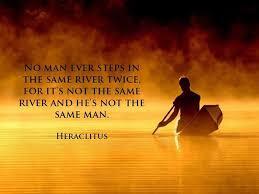
Image: Heraclitus said “No man ever steps in the same river twice, for it’s not the same river and not the same man”. (Source)
The ending is ethereal and ambiguous, swirling love, life, death - and possibly betrayal, but certainly closure.
Note: The title is translated as “The Third Bank of the River” but “margem” can also mean “border” or “edge”. Or perhaps the third bank is the river bed?
Coping with death
Water imbues the mythology and sacraments of many religions. I’m an atheist, but I acknowledge the essential elemental power of water for mind as well as body.
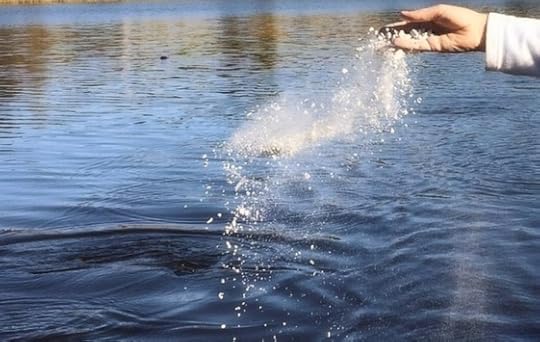
My father died by suicide a few years ago. He was not ill, and the note merely said it was a deliberate and considered act. I’d spoken to him only a day earlier - and reprimanded him for something. My comment was justified, and I don’t think that’s why he ended his life when he did, but I was mortified that my last words to him were not kinder and more typical of our relationship. I chose to scatter his ashes on water: they glistened in the sunlight as they drifted away, sinking slowly. It was beautiful, understated, cathartic, and cleansing. The nearest I had to a final farewell.
In contrast, a few weeks ago I was invited at short notice to a lavish barbecue with former colleagues of a small startup I’d worked at for a decade, years ago. The first couple of hours were filled with happy recognition as we shared memories and news over food and wine. Then, a tall figure shuffled in, warmly wrapped, and the reason for the event became clear: our beloved founder had weeks to live. It was a shock, but also rather lovely. Far better to thank him for his place in our lives and careers, and regale him with anecdotes, than to send flowers and a card to his widow and children later.
This story also reminded me of Kafka’s The Hunger Artist, which I reviewed HERE.
Qual é A Terceira Margem do Rio? Será a margem da escolha, da libertação, da afirmação? Ou será o oposto - a margem do desalento, do derradeiro refúgio de uma vida desesperançada? Primeiro, ouvi o conto. Depois li. E de seguida reli enquanto ouvia. Foi a melhor opção; ler devagar, no embalo da voz calma do narrador. Todas as vezes se apoderou de mim uma profunda tristeza. Todas as vezes caíram por terra as poucas certezas de entendimento. Todas as vezes descobri mais pontos de interrogação.
Quem quiser aventurar-se por estas margens pode fazê-lo aqui:
Em «A Terceira Margem do Rio» fala-se de um homem refugiado numa canoa no meio do rio, onde em absoluto silêncio resiste ao tempo «por todas as semanas e os meses e os anos sem fazer conta do se-ir do viver.»
Que maravilha ser nativa da Língua Portuguesa e ler João Guimarães Rosa no original. ...................
«O homem está indo embora na sua canoa, decidiu passar o resto da vida no meio do rio, e a mulher dele, Teo, apenas diz: cê vai, ocê fique, você nunca volte. Você não sente a distância entre eles aumentando dolorosamente a cada letra? Cada letra diminuindo a intimidade? E você fechou os olhos, e eu já não sabia mais se você dormia ou sentia. E então você disse uma das coisas que peço, todos os dias, para não esquecer: - Sinto que esse homem pra sempre no meio do rio, esse rio largo com jeito de mar, na sua canoa sem movimento mais forte do que a correnteza, pois o rio é manso e lento...Esse homem distante, mas diante dos que o amam...sinto...Que posso fotografar a solidão.- E abrindo os olhos ainda me disse:- É lindo ver você sair de si. [...] E saiba agora, pelos meus lábios, que te ofereci os meus seios mesmo você estando errado, Teo, porque os livros nunca me tiraram de mim, sempre me devolveram a mim.»
Obrigada Carmo. Pela partilha do conto e pelo incentivo a lê-lo.
Presumia eu que, aventurando-me por essas margens, iria entender tudo e poderia vir cá elucidar-te... presunção apenas... Tentei... li e meditei; ouvi e meditei... e não sei qual poderá ser o verdadeiro significado da Terceira Margem do Rio...
Sendo a vida um Rio, invento as minhas Margens: — A Primeira Margem - a das normas - será aquela em que olhamos o curso sereno do Rio; amamos, constituímos família, trabalhamos,... — A Segunda Margem - a das escolhas - será a dos sonhos; por ela passa a zona obscura do Rio, à beira do qual esperamos algo, que não sabemos bem o que é, e que, provavelmente, nunca virá. Quando ousamos ir ao seu encontro, assustamo-nos com o desconhecido e fugimos... — A Terceira Margem - a do destino - é onde está o final do Rio, o lado da libertação, no qual navegamos para um lugar de que não há regresso... Será? Provavelmente não. Talvez o João Guimarães Rosa me elucide... quando Caronte me transportar para a Última Margem...
Obrigada Carmo e Teresa por terem partilhado a vossa opinião sobre este conto, de outra forma talvez nunca o tivesse lido.
Este conto faz parte do livro Primeiras Estórias de João Guimarães Rosa. Um conto muito triste, com frases curtas que dão uma cadência lenta à leitura, onde as personagens não têm nome, e a melancolia nos abraça.
Ao longo da leitura deste conto há uma pergunta que não quer calar: O que é afinal a terceira margem do rio? Gosto de imaginar que o rio simboliza a vida, as margens o real e o surreal, e por fim a terceira margem simboliza, quem sabe, a morte.
Este cuento me ha dejado fascinada. Tantas posibilidades en tan pocas páginas. Una interpretación diferente en cada lectura. Lo he leído y he buscado diferentes traducciones para hacerme una idea del estilo del autor brasileño, que dicen que es único, y aún no me quedo satisfecha. Creo que intentaré leerlo en portugués para poder conocerlo bien.
Cometí el error de leerla primero en español. Luego fui a buscar el original. Y claro. No hay nada que se compare a leer un autor de lengua portuguesa, en su idioma original. No hay nada que se compare a Guimarães Rosa, en su idioma original. Además, la versión en español que leí tiene pequeños errores de traducción. Este cuento corto, publicado en la recopilación Primeiras Estórias, es una maravilla. Un relato misterioso, existencialista como califican algunos críticos, que tiene a un hijo y su padre como protagonistas. Y al río, el Río San Francisco. El padre un día se manda construir una canoa, y se va, a vivir y permanecer en el río. Con un lenguaje poético, metafórico y muy propio de la región del nordeste brasileño, el Sertão, el Brasil profundo, desértico y despoblado, lleno de simbolismos, nos da a entender que la tercer orilla puede ser ese padre en esa canoa, vagando sin tiempo por el río. Bellísimo.
Enigmatic, ambiguous short tale, nicely written with a compelling anticipation and captivating pace. The family members - father, mother, daughter, son - almost feel allegorical. My sense is it is about life, time, aging, loyalty, duty, and the need for isolation or, that we are all on this journey alone.
When I find out what it's really about, I'll update.
Dositej Beograd, 1989. Prevela Sonja Asanović Jezično govoreći izuzetno atmosferična furka, tekst vas uvuče u svoju tkaninu crnine i bjeline, odvojite se na tren od ostatka svijeta. Sadržajno govoreći jako zanimljiva spika. Topos rijeke i prolaza vremena je svevremenski, no ne doima se istrošeno u ovoj kratko priči. Pročitajte! ¡Hasta luego mis murcielagos!
João Guimarães Rosa sabe usar as palavras como ninguém, esse conto é um exemplo claro disso. Aqui a gente se depara com uma narrativa pulsante e acelerada. Nos fala sobre decisões da vida e sobre a importância do seguir. Eu sempre achei que todo rio tinha duas margens, me enganei.
''Os tempos mudavam, no devagar depressa dos tempos.''.
O que é A Terceira Margem do Rio? É o elemento mágico indefinido pelo autor que torna a história aberta para a imaginação e fantasia. É a reflexão sobre a morte através do medo de ir no lugar de um familiar; é a nova dimensão-não-existente do rio; a dimensão de barco-homem-margem; é a emoção inexplicável que transcorre das penas e do estilo do Rosa; ou, talvez, a procura de sentido na existência.
Eu não consigo pôr em palavas o que a linguagem desse conto fez comigo, me deixou com lágrimas nos olhos e não consigo apontar um único motivo nem se quisesse; esta talvez seja a purgação das emoções pela poética, como concebe o Aristóteles; numa forma de vai-vem de um rio de sensações, muitas dúvidas, muitas interpretações, no entanto, com uma coisa como certa: esta é uma das melhores histórias curtas que já li, talvez da literatura universal como um todo.
''Mas minha irmã teve menino, ela mesma entestou que queria mostrar para ele o neto. Viemos, todos, no barranco, foi num dia bonito, minha irmã de vestido branco, que tinha sido o do casamento, ela erguia nos braços a criancinha, o marido dela segurou, para defender os dois, o guarda-sol. A gente chamou, esperou. Nosso pai não apareceu. Minha irmã chorou, nós todos aí choramos, abraçados.''
Bingo de Fantasia e Sci/fi do /RFantasy 4.3: 5 Histórias Curtas
Conto 01
Eu sou meio traumatizado por Guimarães Rosa. Li Grande Sertões Veredas muito cedo, e foi muito doloroso, a grande dor da minha vida de leitor juvenil. Certamente eu não sabia apreciar o que tava lendo na época, e eventualmente pretendo reler. Eventualmente, não tão cedo. Preciso angariar coragem para voltar lá.
Entretanto, um conto para abrir minhas recomendações de histórias curtos para terminar essa parte do bingo é uma boa opção. E é um bom conto, que me é familiar, mas não tenho nenhuma ideia de quando li antes. Bem construído, ele gera um clima forte, todo questionamento sobre a presença da morte, o fantasma onipresente que fica para trás quando algo parte. É subjetivo, fantástico, e se abre a várias interpretações, extremamente bem construído. Faltou me evocar emoções fortes, mas ainda assim intrigante.
A Terceira Margem do Rio - Guimarães Rosa Nota 9/10 Um conto sensível e poético de Guimarães Rosa que apresenta sua substância temática e teor simbólico-enigmático desde o título. O que uma terceira margem do rio indicaria? O que há além das duas margens? Solidão? Morte? Destino? O texto é narrado por um filho que vê seu pai, homem recluso e introvertido, repentinamente construir uma canoa e ir rio adentro com ela. Em síntese poética, toda a vida desse filho e sua família é narrada em parágrafos explicando o destino dos elementos do núcleo familiar, como a filha que se casou e teve um filho, que até o último momento esperava o pai e sentia o vazio de não tê-lo nos momentos que deveriam ser os mais felizes de sua vida. Acredito que é isso que a terceira margem significa, a morte em vida. Do que importa esse pai continuar vivo? Do que importa sua jornada de solidão no rio se para o mundo ele estava morto? Para sua família, para sua comunidade, para seu filho ele estava morto. A terceira margem representa a morte em vida e a canoa seu meio mortal. Para o mundo atual, os tempos atuais, o que pode ser uma canoa? O dinheiro? A inveja? A raiva? Um celular ou rede social? O que está além da terceira margem da tela; o que acontece quando o rio de apatia e morte em vida não está na beira do litoral e requer uma canoa; mas sim em seu bolso a cliques de distância? O penúltimo parágrafo é, na visão de muitos, um simples medo da figura caquética e moribunda do pai, mas eu interpreto de outra forma. O pai já morreu no momento que escolheu a canoa, sua figura retornando não é o pai retornando à vida, é a morte invadindo a vida. Portanto, o filho não sentia medo do pai. O filho sentia medo da morte, medo da canoa e tudo que ela representava. Sua fuga desesperada era bastante lógica, ele não fugia do pai, ele fugia do destino do pai. Porém, ao final do conto, sofreu do mesmo destino. Mesmo que seja um final aberto, todos os finais abertos carregam uma certeza, sendo essa a morte. E no final o filho deseja, que em seu leito final, a morte venha em forma de canoa, tal qual o pai.
How odd when the narrator’s dutiful father one day had a sturdy boat built only for one, said goodbye, rowed away without food or any belonging, and never came back! The man simply floated around in the river to the consternation of his bewildered wife and children. Was he ill? Was he mad? Was he a modern day Noah?
"He just moved about on the river, solitary, aimless, like a derelict.” Why the self-imposed exile? Although the family members did not talk about him, he was always on their mind. How could he not? The boy’s love, respect, and solicitude for his father was unwavering and touching. Either the father loved them, or he did not. But it was never clear to the narrator who suffered the ambiguity of his father’s behavior. He was not with them, but he hovered around them. The narrator felt a nagging sense of guilt over a wrong he did not commit.
Meantime life went on. The narrator grew old; the father older. Death became more real. The only thing that remained young was the river. ”And the river, always the river, perpetually renewing itself.” Perhaps, the river held the answer to the father’s exile, which the narrator, now grey-haired, seemed to grasp with a mingling of understanding and fear.
I am not sure what to make of the ambiguous and enigmatic ending. My vague sense is that a third river bank beckons to each of us at different times, and we are not at liberty to say “no.”
Thank you, Cecily, for putting this Brazilian fable on my radar.
Um conto tão profundo, tão cheio de significados. Guimarães Rosa era um gênio, não há o que dizer além disso! Pra mim, tão grande quanto Machado de Assis. Planejo reler Grande Sertão: Veredas esse ano!
Todos nós sabemos, os rios só têm duas margens: a esquerda e a direita. Uma terceira é obra de ficção e, como tal, tem realidade quando se lê Guimarães Rosa. Nela, um chefe de família entra numa canoa e decide viver fora da "esquerda" e fora da "direita". Ele decide viver no meio do rio, criando uma margem marginal - um terceiro lado onde havia somente dois. Impossível? Não é.
Na família, só temos um par: pai e mãe e, na vida, temos homens e mulheres e vivos e mortos. Mas a magia da dinâmica social supera dualidades estanques e inventa transposições. Assim, todos os dualismos têm mediações ou canoas-pontes que transcendem a polarização absoluta.
Por que, pergunta-se, não há uma terceira margem na política e por que essas margens se repetem impedindo o fluir do rio da história?
Se a política demorou alguns séculos para ser ponte entre modos de vida inevitavelmente desiguais, no Brasil ela tem servido como uma canoa furada para manter as diferenças entre todas as margens, seja ela de esquerda ou direita.
A única certeza que você tem é a de que o barco está afundando.
A Terceira Margem do Rio é o tipo de coisa que me faz sentir extremamente burra por ler e não entender. É uma belíssima metáfora, mas de que? Meu palpite é que seja sobre a morte e o luto (e o medo).
Já é a segunda vez que leio, e sinto que precisarei de uma terceira, quarta, quinta, vigésima e centésima.
“Nosso pai não voltou. Ele não tinha ido a nenhuma parte. Só executava a invenção de se permanecer naqueles espaços do rio, de meio a meio, sempre dentro da canoa, para dele não saltar, nunca mais”
Read in English "The Third Bank of the River" with the Goodreads Short Story Club A mysterious little gem of a short story. I am still grappling over the meaning.
4.5 ⭐ A complexidade do cabra! Guimarães Rosa olhando pra a gente lendo rindo enquanto pensa "agora quebre a cabeça aí se é ou não sobre morte, luto e perda"