Rudolf Flesch (8 May 1911 – 5 October 1986) was an author, readability expert, and writing consultant who was an early and vigorous proponent of plain English in the United States. He created the Flesch Reading Ease test and was co-creator of the Flesch-Kincaid Readability Test. He was raised in Austria and finished university there, studying law. He then moved to the United States and entered a graduate program at Columbia University, where he earned a Ph.D in English.
Flesch was born in Vienna, Austria. He fled to the United States to avoid the imminent invasion of the Nazis, to avoid Jewish prosecution. Once in America, he met Elizabeth Terpenning, whom he married. They had six children: Anne, Hugo, Jillian, Katrina, Abigal, and Janet. Flesch lived the majority of his life with his wife and children in Dobbs Ferry, New York, a small village in southern Westchester county. [edit] Professional Information
Not long after finishing his degree, he wrote what became his most famous book, Why Johnny Can't Read, in 1955. The book was a focused critique of the then-trendy movement to teach reading by sight, often called the "look-say" method. The flaw of this approach, according to Flesch, was that it required learners to memorize words by sight. When confronted with an unknown word, the learner was stumped. Flesch advocated a return to phonics, the teaching of reading by teaching learners to sound out words.
Flesch flourished as a writing teacher, plain-English consultant, and author. He wrote many books on the subject of clear, effective communication: How to Test Readability (1951), How to Write Better (1951), The Art of Plain Talk (1946), The Art of Readable Writing (1949), The ABC of Style: A Guide to Plain English (1964), and Rudolf Flesch on Business Communications: How to Say What You Mean in Plain English (1972).
Flesch produced three other books of note:
In The Art of Clear Thinking (1951), Flesch consolidates research data and then-recent findings from the fields of psychology and education, and suggests how his readers can apply that information in their daily life. As he writes in his introduction, "It would be impudent to tell intelligent, grown up people how to think. All I have tried to do here is to assemble certain known facts about the human mind and put them in plain English."
In Lite English (1983), Flesch advocated the use of many colloquial and informal words. The subtitle of the book reveals his bias: Popular Words That Are OK to Use No Matter What William Safire, John Simon, Edwin Newman, and the Other Purists Say!
And in 1979, Flesch published a book he had produced while working as a communication and writing consultant to the Federal Communications Commission: How to Write Plain English: A Book for Lawyers and Consumers. This book was and is a "how to" for writing rules and regulations that must be read and understood by the general public.
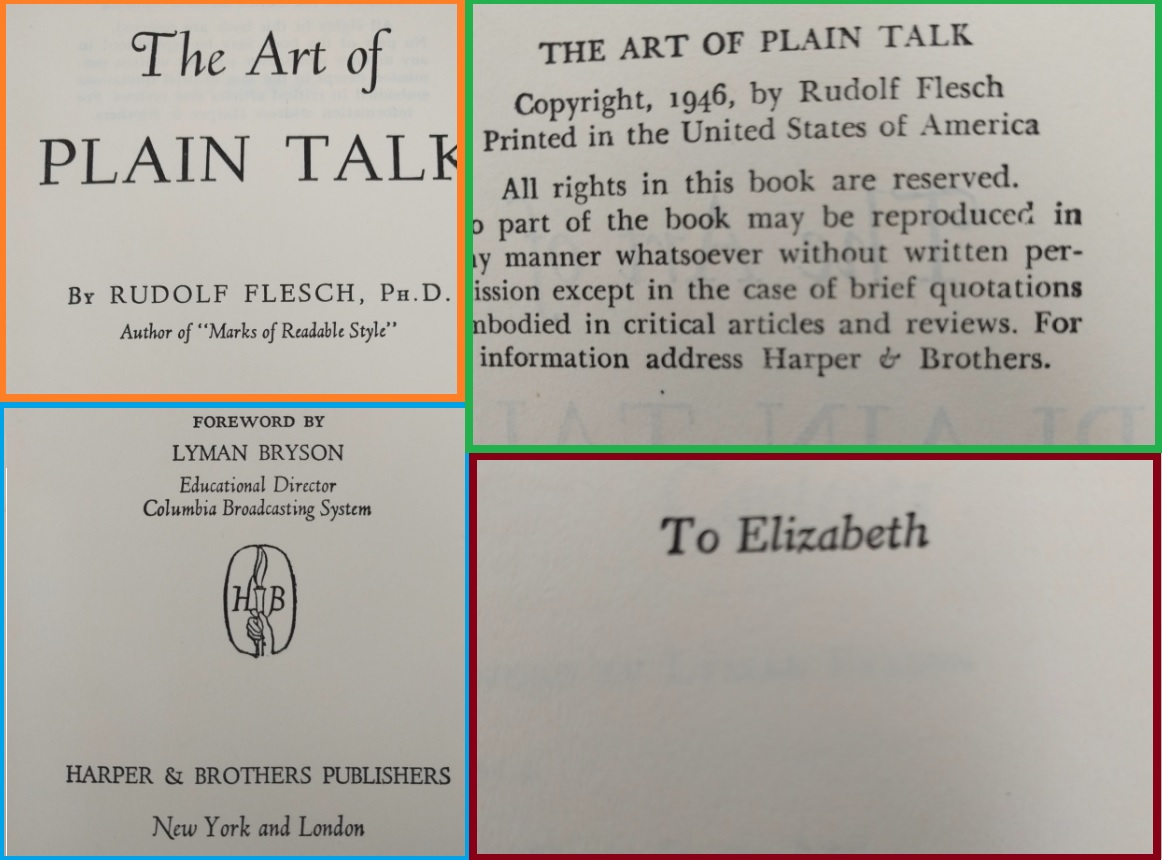
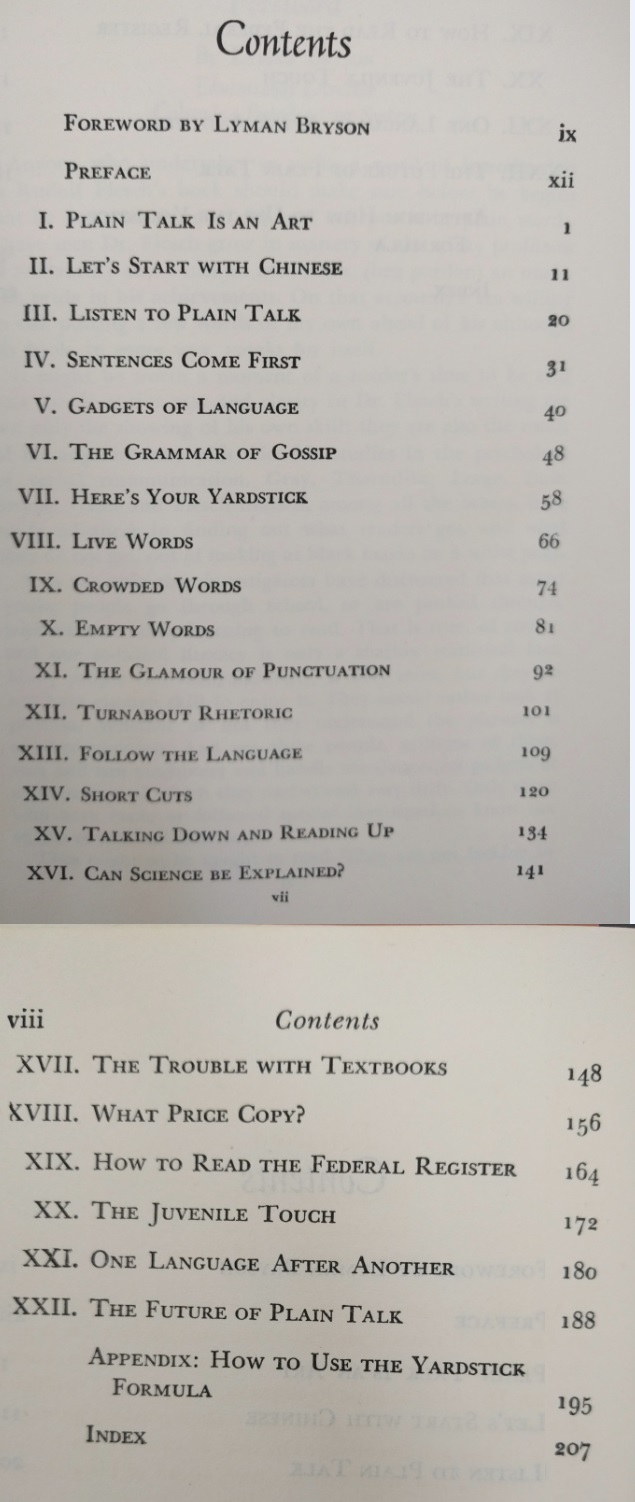
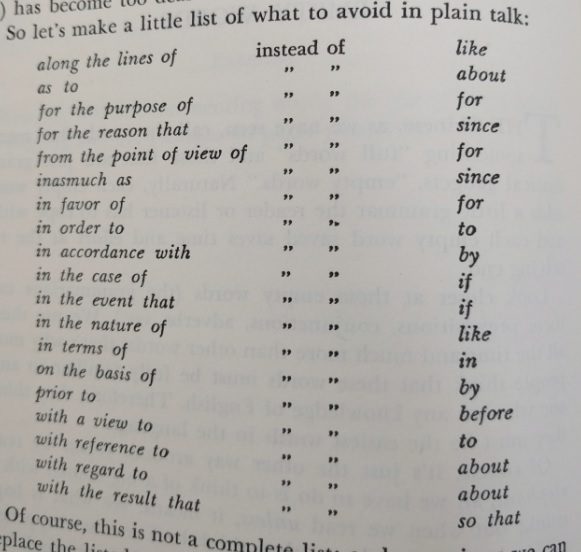
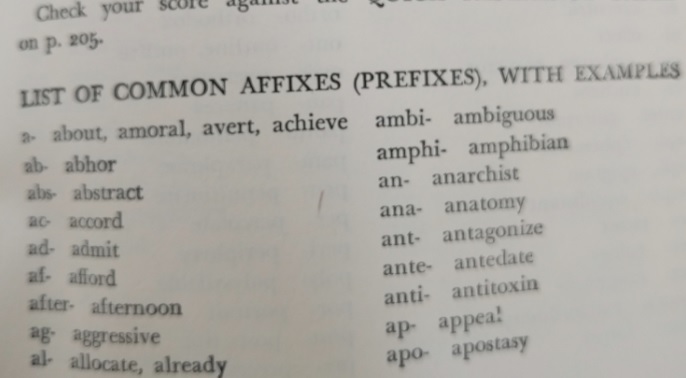
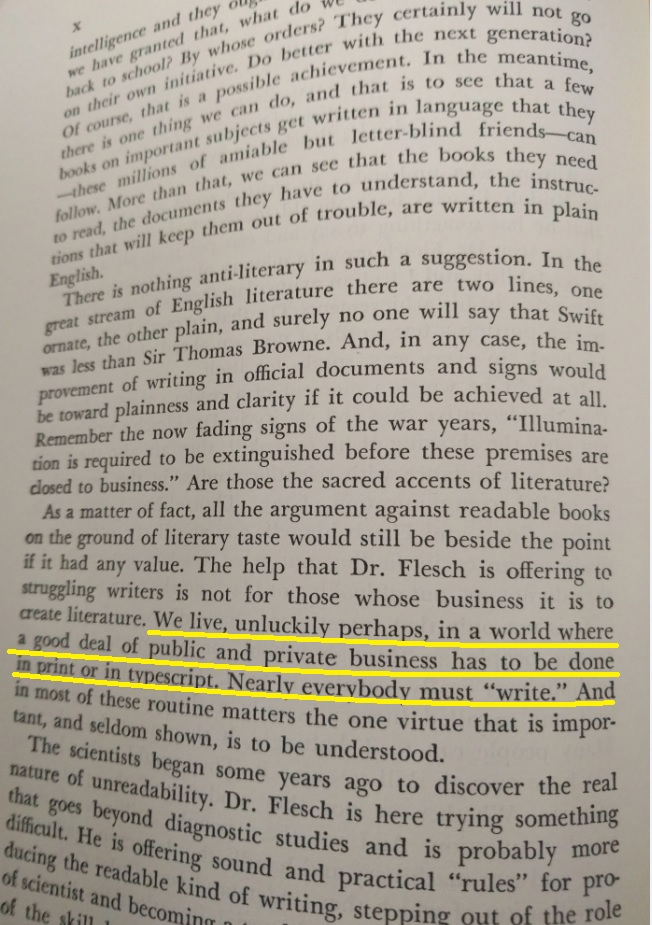
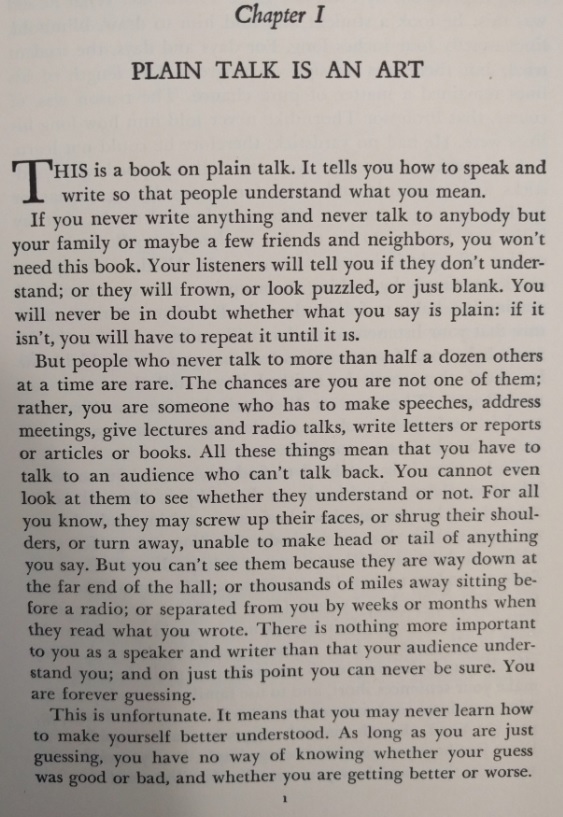
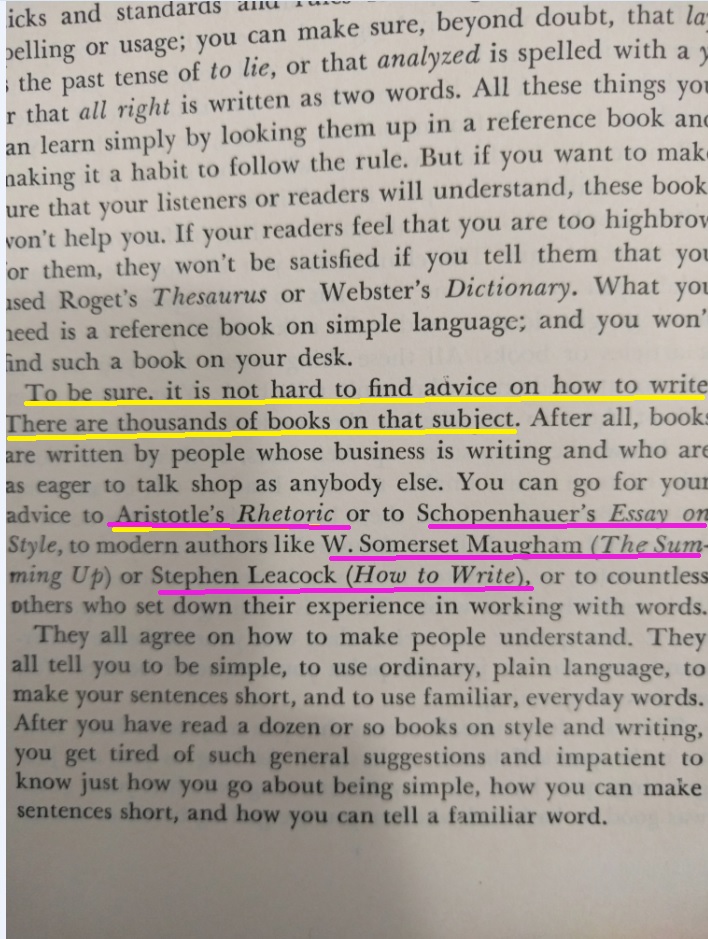
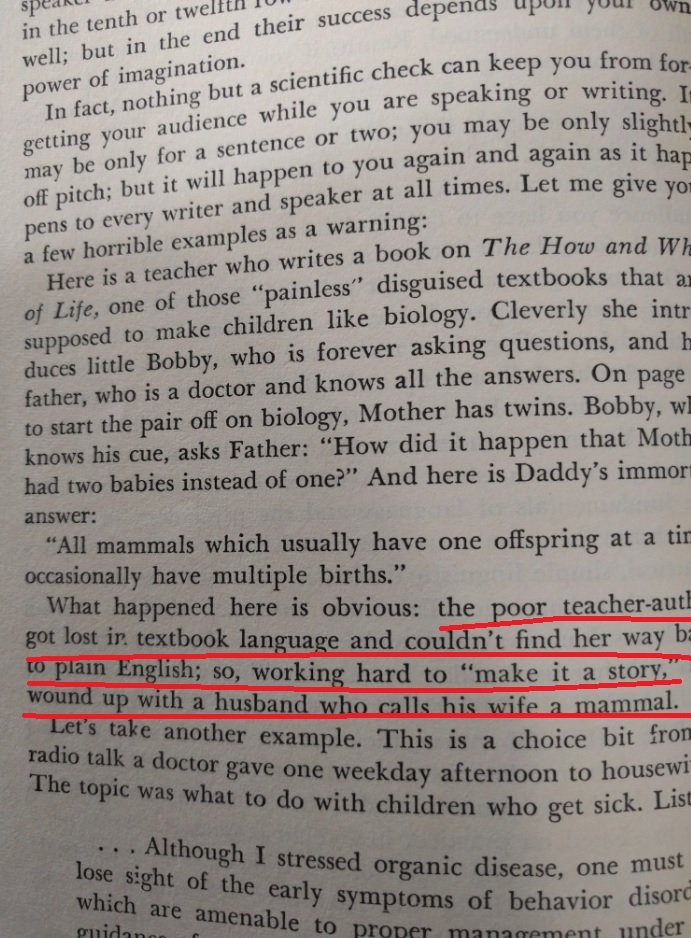
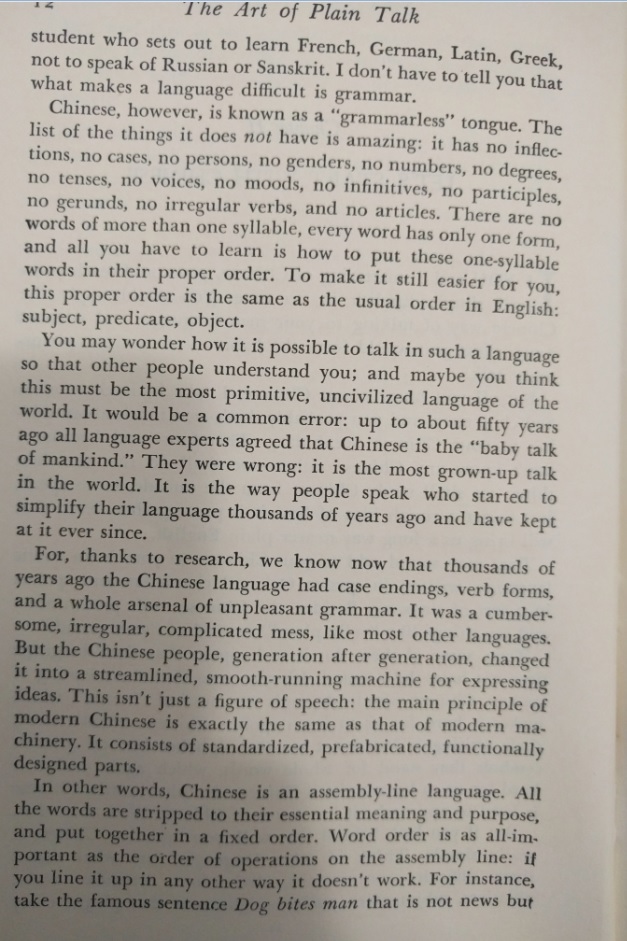
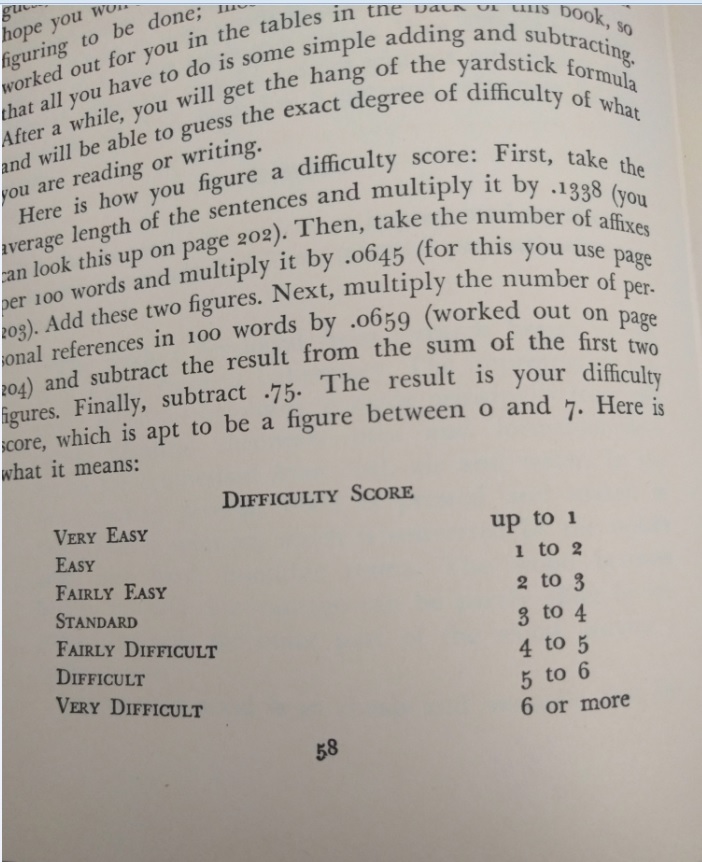
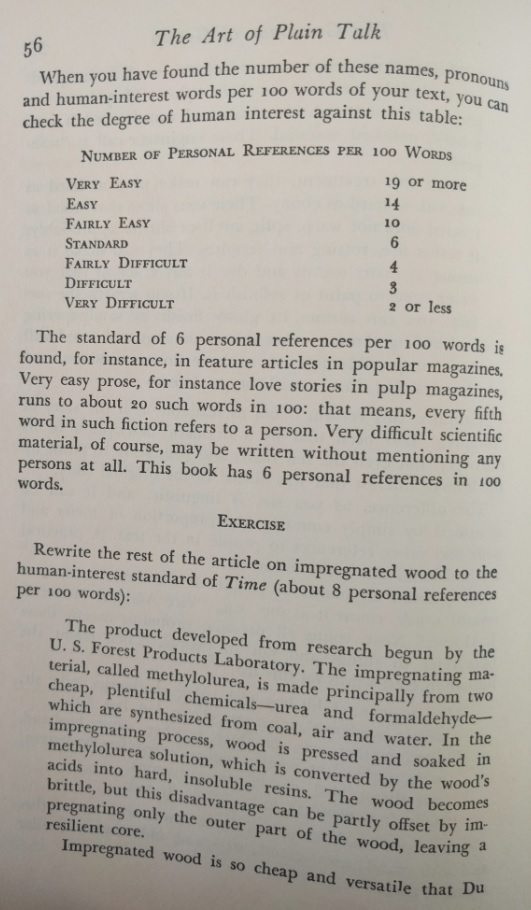
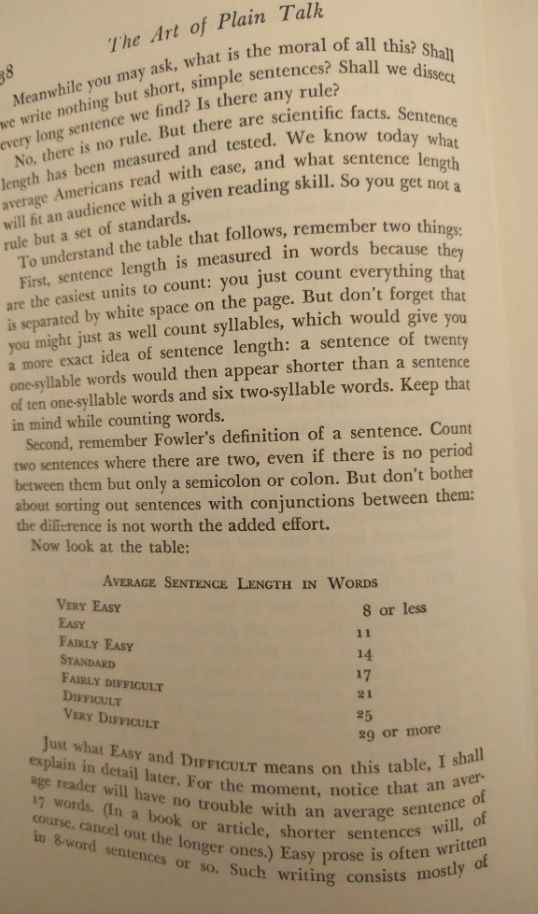
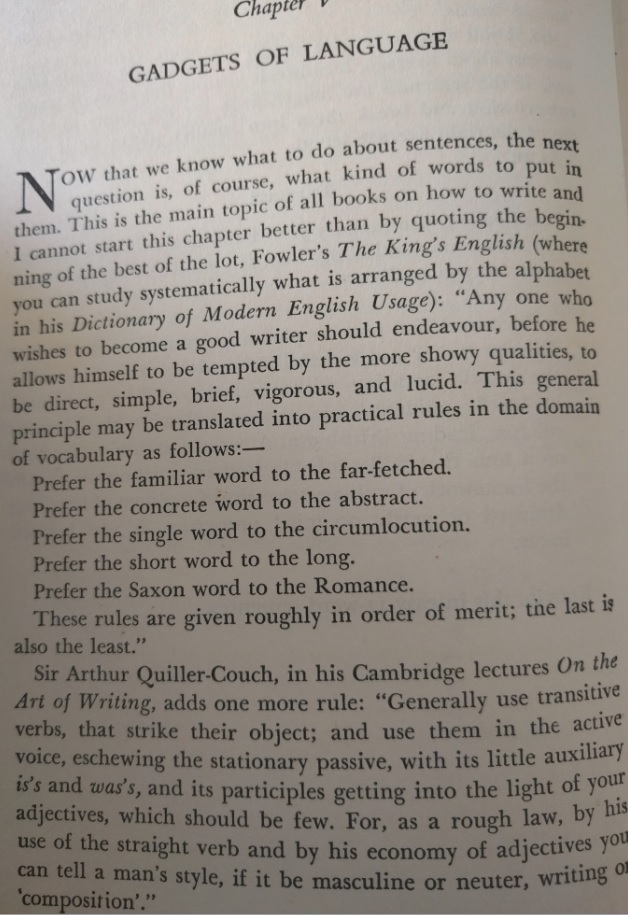
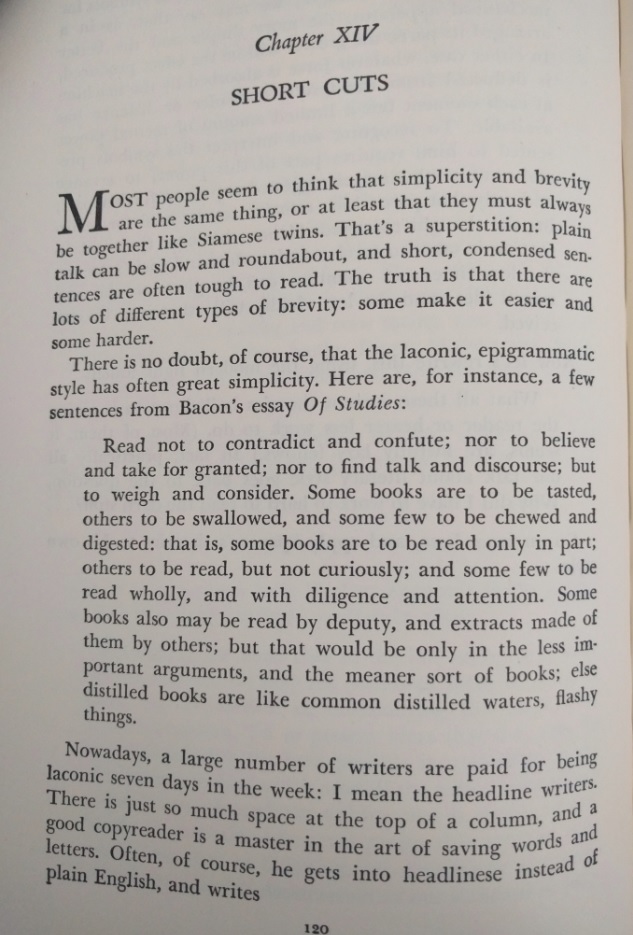
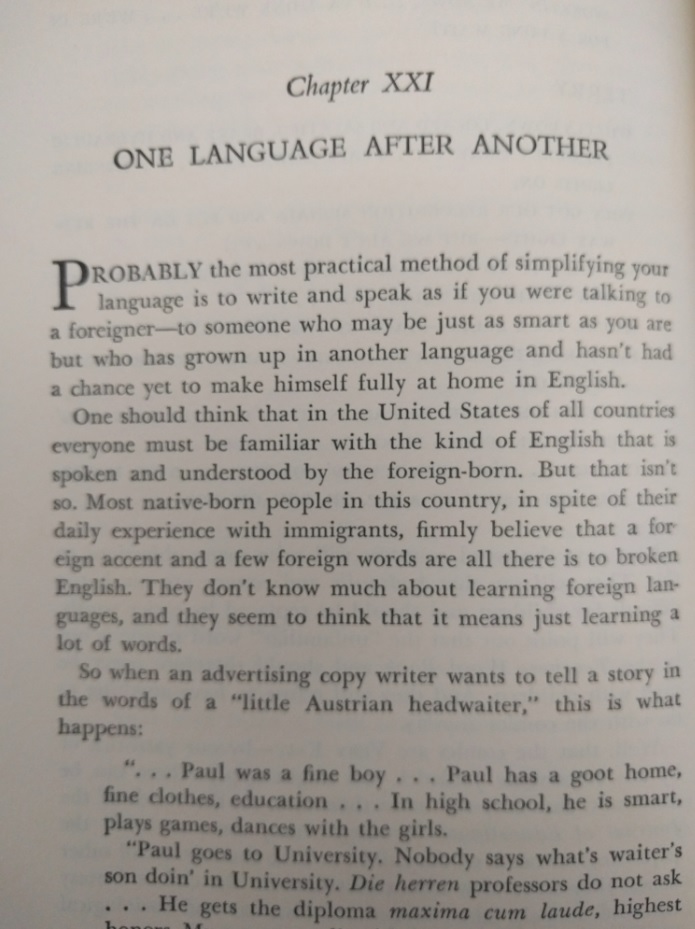
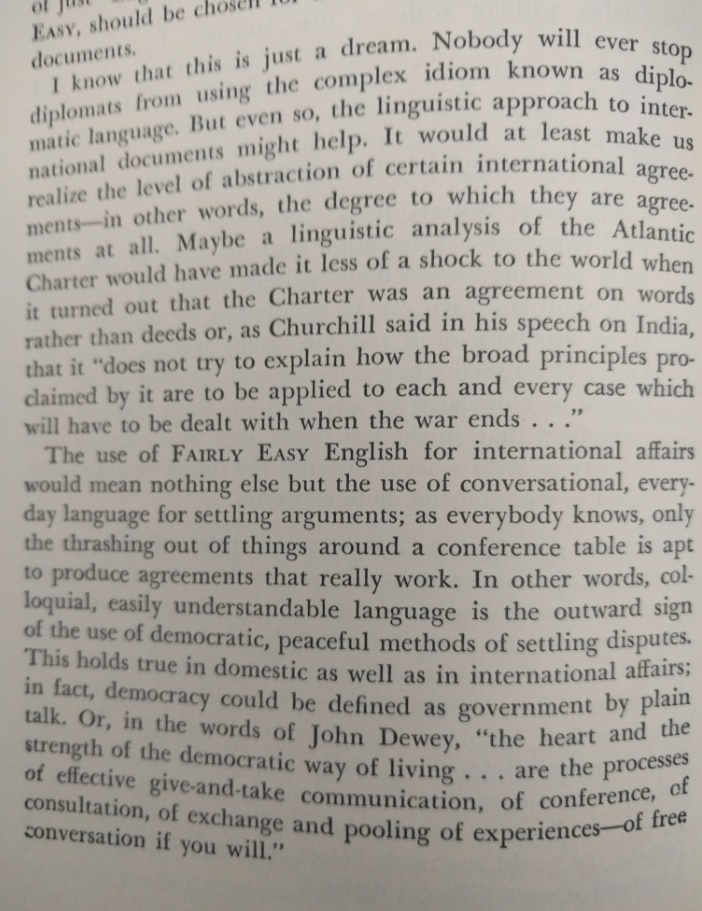
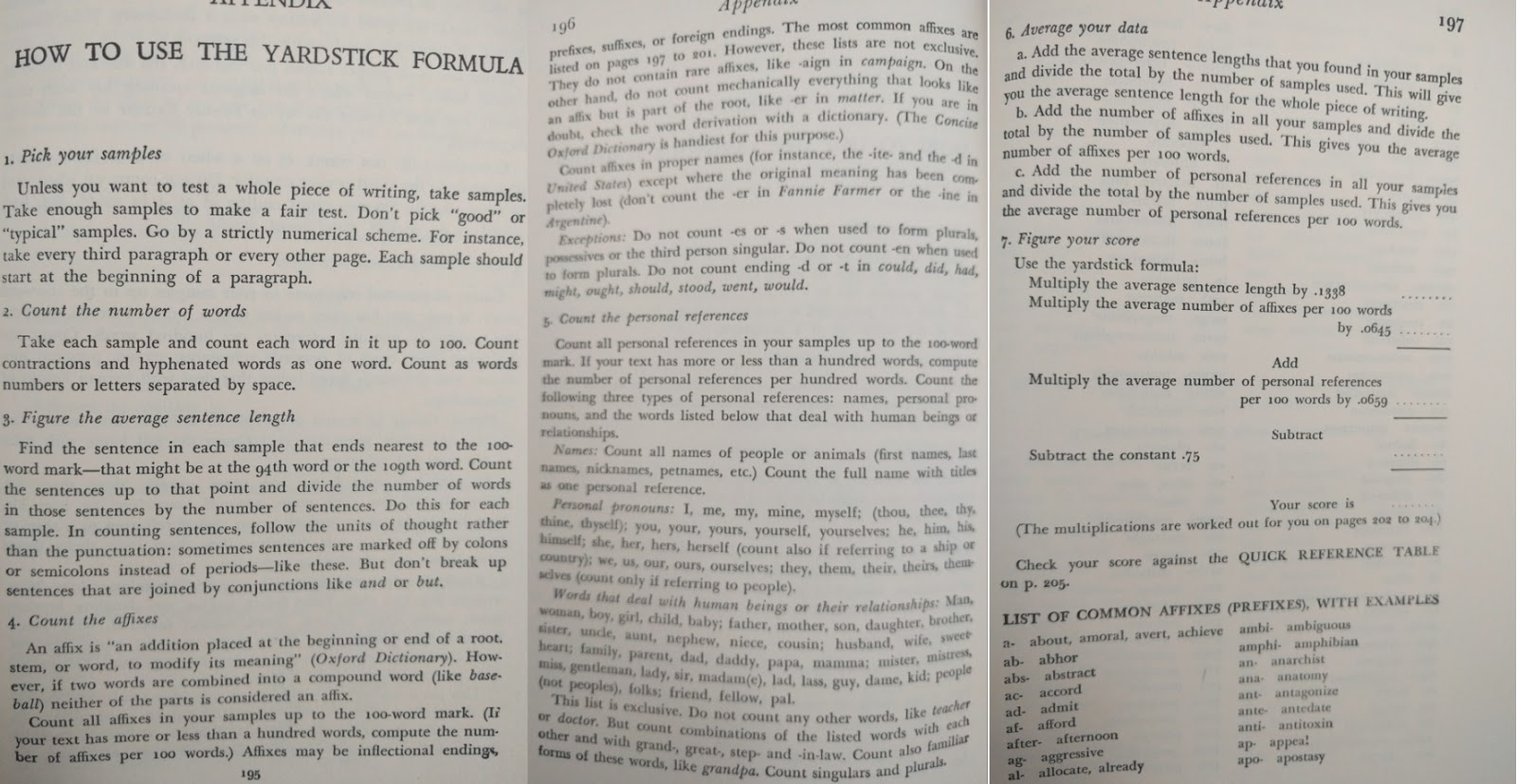
Reading this book is such a pleasure! It was written before twitter and even before computers existed. The author wrote a PhD dissertation on how to measure the clearness of the message when a person speaks, and his work was so successful that his teachers convinced him to create this book which is a beautiful jewel. This is the editorial information of the book Here is the table of contents. Each one of them is a mini-essay on what does it mean to speak clearly. Also, each chapter has exercises to try the suggestions of the author. I must confess that I tried two of the exercises, but ended up giving them up because they are extremely difficult. Not because I couldn't do them, but because it is difficult not to be very critical with your own work once you have seen the excellent things this master writes. Here is a list of common expressions that the author says we should avoid, also bookish expressions that will make a speech sound cocky . One I use a lot is "since", I am glad the convoluted form is "inasmuch as", because I have never employed such a rare expression, even when I was trying to seem intelligent :-) The author says that we live in a word where we have to write a lot. And this was back in 1946! Little did he know how often we write now, and how current is the need to be concise and clear (twitter anyone?). Here are the initial words of the book. This man was a master of expressing himself clearly. I don't know what to say except "read it for yourself". It is always a pleasure to enjoy such good pieces: The following page is interesting for two reasons: one is that the author clarifies that he does not want to teach you how to write, and the second reason is that he gives three very interesting examples of books that can help you with the writing endeavor: This book is full of funny anecdotes and many excerpts of great writing. Only because of that, to enjoy the amazing taste of the author it is worth to open it up. Here is one of those funny stories: a teacher that couldn't find her way to plain English, so she ends up creating a story where a husband calls his wife a mammal: And this is one of my definite takeaways from this wonderful book: a discussion about the Chinese language. I never knew that Chinese (spoken) is the easiest language in the planet. All words have only one syllable and one form (no tenses, no voices, no moods, no infinitives, no participles, no gerunds, no irregular verbs and no articles) Only the order and the tone count. It is fantastic! This book made me want to learn to speak Chinese. The following are several pages on the author's 'formulas' for plain talk. There are some mathematical terms and calculations on how many words or expressions of a particular class should be in a paragraph in order to classify it as 'plain'. This methodology is really interesting, and I understand that he developed a whole mini-industry around his model. He of course makes fun of lawyers and diplomats equally. Those are people that make a living on writing complicated paragraphs so people don't really understand what are they signing: There is one chapter that suggest a method to simplify the speech: imagining that you are speaking to a foreigner. This way you will use the least complicated terms of your vocabulary: Finally, in the Appendix, the author generously lays out all his secrets and shares the "magic" formula to speak clearly and plainly. He says that there is a magic number with which you can rate your speech and with it, you can try to improve your message:
- Language is made up on sentences, not words - Ties within a sentence should not run in different directions. The reader should be able to read along. - Affixes hinder plain talk because the reader must disentangle it from the word it is attached to before he can understand the sentence - Talk about people - Use verbs often - Use adjectives sparingly - Don't focus too much on condensation. It can actually make your writing more difficult to understand
I simply think that English has no need to be simplified all of the time, because one has to make room for stylistic differences among individuals. As long as the statements made are sensible and not unnecessarily complex, I find nothing wrong. Even Flesch admits that there are simply some idea or concepts that cannot be explained without prior knowledge in that field: I can't explain algebra to people who have no inkling about basic math, and I can't explain Gaussian surfaces to people not versed in the basic physics of electricity and magnetism.
It was a light, easy read, however, and I enjoyed it for that.