

What do you think?
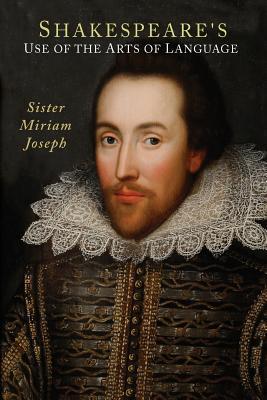
Shakespeare's Use of the Arts of Language
2013 Reprint of 1947 Edition. Full facsimile of the original edition, not reproduced with Optical Recognition Software. This was the first book which presented, in a complete manner, a general theory of composition then current in Renaissance England. Its particular contribution is the reorganization of the two hundred figures of speech, distinguished by Renaissance rhetoricians, into a simple, understandable pattern basic in Aristotle's Rhetoric: grammar logos, pathos and ethos. The purpose of the book is to provide a handbook of the theory of composition then current during the English Renaissance and to show Shakespeare's use of this theory by simple illustration from his plays and poems. The book is addressed to the wide audience of teachers of English and Renaissance literature, the philologist, the Shakespearian scholar, and to students and teachers of all Romance languages.
438 pages, Paperback
First published November 1, 2005
About the author
Miriam Joseph
10 books42 followersSister Miriam Joseph Rauh, C.S.C., PhD (1898–1982) was a member of the Sisters of the Holy Cross. She received her doctorate from Columbia University and was Professor of English at Saint Mary's College from 1931 to 1960. She is the author of several books including The Trivium which is a text she developed as part of the core curriculum of Saint Mary's College. It discusses the medieval liberal arts education based upon grammar, logic, and rhetoric.
Ratings & Reviews
Friends & Following
Create a free account to discover what your friends think of this book!
Community Reviews
Displaying 1 - 6 of 6 reviews

July 14, 2017
I have an interest in rhetoric and, more specifically, figures of speech. Shakespeare and the KJV Bible use them to a beautiful effect and I enjoy identifying them and trying to use them.
With that background, I was very interested in this book. The scope of the book is much larger than figures of speech, however. It covers a wide range of linguistic devices and techniques (grammar, logic and rhetoric).
However, interested readers should know that this is less a close analysis of Shakespeare’s use of these devices, and more a catalog of the Classical/Renaissance devices with examples. The author is more interested in spelling out the elements of Classical/Renaissance language and checking off the fact that Shakespeare used a particular device, than how or why he used it.
So, it’s good for what it is – a lesson on classical rhetoric and evidence that Shakespeare knew it well and practiced its basic tenets with aplomb. It does not answer what devices or figures Shakespeare used most, how this changed throughout his career, and what he hoped to achieve by using them.
But this is for the hardcore grammarian/rhetorician/logician only. It’s pretty dry reading.
With that background, I was very interested in this book. The scope of the book is much larger than figures of speech, however. It covers a wide range of linguistic devices and techniques (grammar, logic and rhetoric).
However, interested readers should know that this is less a close analysis of Shakespeare’s use of these devices, and more a catalog of the Classical/Renaissance devices with examples. The author is more interested in spelling out the elements of Classical/Renaissance language and checking off the fact that Shakespeare used a particular device, than how or why he used it.
So, it’s good for what it is – a lesson on classical rhetoric and evidence that Shakespeare knew it well and practiced its basic tenets with aplomb. It does not answer what devices or figures Shakespeare used most, how this changed throughout his career, and what he hoped to achieve by using them.
But this is for the hardcore grammarian/rhetorician/logician only. It’s pretty dry reading.

January 24, 2011
Unbelievable scholarship.

January 25, 2022
This is a really impressive work of scholarship on understanding Shakespeare's background in logic and rhetoric, but it is not an easy or intuitive read. It's better taken as a valuable reference guide (with a very thorough index) than read cover-to-cover.

February 27, 2025
Extremely good reference for rhetoric
June 16, 2026
As a practicing lawyer, student of storytelling, and aspiring classicist, this may well be the most important book I have read for all of those endeavors. Brilliant through and through.
Currently Reading
March 25, 2019reading
This entire review has been hidden because of spoilers.
Displaying 1 - 6 of 6 reviews