

What do you think?
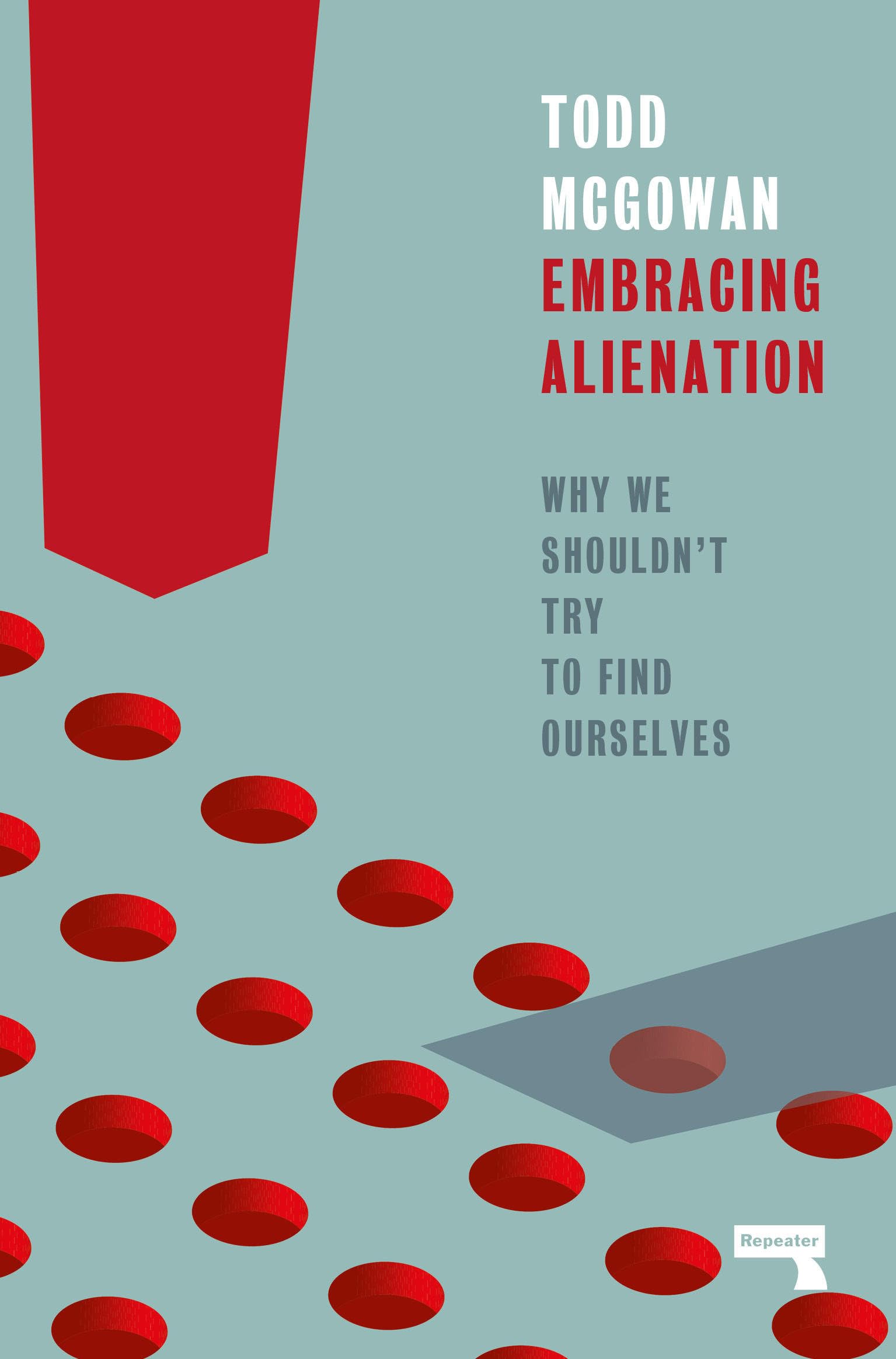
Embracing Alienation: Why We Shouldn't Try to Find Ourselves
The left views alienation as something to be resisted or overcome, but could it actually form the basis of our emancipation?
In Embracing Alienation, Todd McGowan offers a completely different take on alienation, claiming that the effort to overcome it is not a radical response to the current state of things but a failure to see the constitutive power of alienation for all of us. Instead of trying to overcome alienation and accede to an unalienated existence, it argues, we should instead redeem alienation as an existential and political program.
Engaging with Shakespeare’s great tragedies, contemporary films such as Don’t Worry Darling, and even what occurs on a public bus, as well as thinkers such as Descartes, Hegel, and Marx, McGowan provides a concrete elaboration of how alienation frees people from their situation. Relying on the tradition of dialectical thought and psychoanalytic theory, Embracing Alienation reveals a new way of conceiving how we measure progress — or even if progress should be the aim at all.
In Embracing Alienation, Todd McGowan offers a completely different take on alienation, claiming that the effort to overcome it is not a radical response to the current state of things but a failure to see the constitutive power of alienation for all of us. Instead of trying to overcome alienation and accede to an unalienated existence, it argues, we should instead redeem alienation as an existential and political program.
Engaging with Shakespeare’s great tragedies, contemporary films such as Don’t Worry Darling, and even what occurs on a public bus, as well as thinkers such as Descartes, Hegel, and Marx, McGowan provides a concrete elaboration of how alienation frees people from their situation. Relying on the tradition of dialectical thought and psychoanalytic theory, Embracing Alienation reveals a new way of conceiving how we measure progress — or even if progress should be the aim at all.
206 pages, Paperback
Published April 9, 2024
About the author
Todd McGowan
55 books246 followersTodd McGowan is Associate Professor of Film at the University of Vermont, US. He is the author of The Fictional Christopher Nolan (2012), Out of Time: Desire in Atemporal Cinema (2011), The Impossible David Lynch (2007), The Real Gaze: Film Theory After Lacan (2007), and other books.
Ratings & Reviews
Friends & Following
Create a free account to discover what your friends think of this book!
Community Reviews
Displaying 1 - 30 of 42 reviews

January 20, 2026
“It is only as alienated beings that we can find ourselves where we are not. It is only as alienated beings that we can experience solidarity with equal alienated others.” (151)
A great thesis, felt repetitive in some instances but otherwise, very well written, accessible language and some fresh ideas.
Although I know, at this stage, I’m just happy whenever I encounter smart philosophical takes on Hegel.
A great thesis, felt repetitive in some instances but otherwise, very well written, accessible language and some fresh ideas.
Although I know, at this stage, I’m just happy whenever I encounter smart philosophical takes on Hegel.

March 6, 2024
My biggest problem with this book isn’t even that I don’t disagree with the central argument that alienation has liberating properties to it. It’s the way this argument is presented and the evidence used to support it. The initial exploration that alienation is inherent in subjects I have no disagreement with. The book's flaw is the constant repetition of “a society that aims to transcend alienation will fail” and “we must embrace alienation as key to any political project.” These are paraphrases but are repeated endlessly. Its misstep is that it provides no way to actually cohere this vision or what this vision means for leftist political projects. It feels very vibes-based and easily co-opted. I’m sure the author expects pushback in their Hegel-Marx duel and I’m hardly read enough to do so, but the constant harp on that even though Marx doesn’t use alienation in his later work but the vibe of it is still there hardly feels like any analysis I want to get behind.
Even though they malign Marcuse for not going far enough I think One-Dimensional Man much better explores what happens to administrative systems that try to act as “one”. I think the book fails to acknowledge the struggle that embracing alienation has already produced since recognizing everyone’s alienation is inherent to class consciousness and thus organizing, movement building, etc. It fails to acknowledge or put forward a coherent argument about what we’re supposed to do when embrace alienation. It feels stuck in terms and arguments from 19th and 20th-century thought without incorporating a concrete set of politics.
3 stars because it does have some incisive moments and sentences.
Even though they malign Marcuse for not going far enough I think One-Dimensional Man much better explores what happens to administrative systems that try to act as “one”. I think the book fails to acknowledge the struggle that embracing alienation has already produced since recognizing everyone’s alienation is inherent to class consciousness and thus organizing, movement building, etc. It fails to acknowledge or put forward a coherent argument about what we’re supposed to do when embrace alienation. It feels stuck in terms and arguments from 19th and 20th-century thought without incorporating a concrete set of politics.
3 stars because it does have some incisive moments and sentences.
July 26, 2025
In Embracing Alienation, Todd McGowan makes a counter-intuitive move.
He challenges the common conception that alienation is a problem or a kind of social pathology that needs to be cured; either through self-help, therapy, or revolutionary change.
Instead, he argues that alienation is inescapable.
But this is not a pessimistic take.
He claims that alienation is the very foundation of human subjectivity and the source of our freedom, solidarity and creativity.
In contrast, for McGowan, it is the belief that alienation can and should be overcome, and the attempt (and inevitable failure) to do so, that leads to suffering, exclusion, and oppression.
The Alienated Subject
He primarily draws from Hegelian philosophy and Lacanian psychoanalysis.
We are never “whole” beings that are then disrupted by alienation.
There is always an ontological gap between me (subjectivity) and any symbolic identity or community I may belong to.
Moreover, I am out of joint with myself.
Self-divided.
There is something foreign within me, the unconscious, producing conflicting desires, self-sabotaging behavior, etc.
There is also always a distance between me and any social identity I inhabit.
I may be a partner, a brother, a musician, a researcher — but “I” can never fully coincide with any of these roles or statuses, nor with the combination of them all.
There is no “place” where one can be “whole” and fully “belong”.
Alienation as the Source of Freedom, Solidarity, and Creativity
A non-alienated subject (one totally at one with itself, with no internal division or lack) would be fully determined.
Alienation creates a distance that allows one to transcend what they’re given: their identity, situation, background, upbringing, etc.
If someone were internally “whole” and “rooted” (perfectly at home in their community), they would not have the space to reflect, to hesitate, to choose differently.
Alienation introduces a gap between the subject and its social identities, and its world, and it is precisely this gap that makes self-reflection, decision, and agency possible. The ability to act otherwise than what one’s identity or social order demands.
And because alienation is universal, it can serve as a non-identitarian basis for solidarity. Whereas traditional forms of solidarity often rely on shared identity, background, or experience, but “community” is, by its nature, exclusive.
We could also add that creativity is made possible by alienation. If one was fully self-contained and satisfied, there would be no impulse to create. The “lack” can fuel art, invention, and imagination. The subject creates in response to something that is missing, off, unresolved.
The dangerous fantasy of unalienated life
So, McGowan argues that alienation is not contingent and historical but rather constitutive.
Modernity did not create alienation, it simply made it visible.
McGowan argues that Marx misunderstood the nature of subjectivity, and was mistaken that alienation could be overcome after the communist revolution.
He sides with Hegel, whose conception of alienation is ontological and emancipatory, while Marx treats it as historical and eliminable.
Instead of capitalism causing alienation, McGowan argues that capitalism promises the cure of alienation. “If you buy the proper commodity, you will be complete at last!”. But the more one tries to escape alienation, the more they consume, the more alienated they feel.
When the effort to “find oneself” or to return to an “unalienated place” inevitably fails — but the belief in that possibility remains — it breeds resentment and reaction.
If one still feels alienated and believes that it should be possible to overcome alienation, they must find someone to blame: “Why am I not happy? It’s because the Jew/Migrant/Queer gets in the way, by destroying my way of life”.
Sexism can arise when men imagine women as either: the object that would complete them (romantic fantasy), or the force that threatens their supposed wholeness (misogynistic backlash), or from the belief that there is a “proper place” where women “belong”; namely, the “domestic sphere”.
For McGowan, embracing alienation is both an existential and political project. Alienation is not unbearable. It’s only unbearable if one believes in the fantasy of an unalienated state. That belief traps us in a false promise.
Embracing alienation can be a form of freedom. If not the escape from unhappiness, the transformation of hysterical misery into ordinary dissatisfaction, to paraphrase Freud.
The political dimension for McGowan is to move from private communities to the Public; because in the Public, we are all equally alienated. For example: the public bus is only public if all are equally included. No one “belongs” more than others. There is no community that dominates. In cases where the community dominates the Public, we get segregation ...
Embracing Alienation(s)?
I truly appreciated McGowan’s analysis and found it valuable. I’m persuaded that some forms of alienation are indeed constitutive of subjectivity and that embracing them can be freeing. But throughout the book, especially in the discussions of Marx, I kept returning to a nagging question: Is alienation really ‘one thing’? Or are there different forms? Different degrees? Are there specific forms of alienation that arise under certain historical conditions or social systems?
For instance, when McGowan criticizes Marx, his argument seems to apply most clearly to the concept of alienation from one’s “species-being”. If alienation as self-devided subjects is universal within the human species, then this kind of alienation cannot be overcome. But what about other forms of alienation? What about alienation from the product of one’s labor? From the labor process itself? From other people? From nature? These seem to come in degrees, and they seem historical and contingent, not ontological. And some forms seem worth resisting and even worth overcoming.
Consider alienation from one's labor process and product of their labor: Under capitalism, workers do not own or control what they produce. The products become the property of the capitalist. “I don't control my labor; I don’t determine how I spend a third of my day”. The product of my effort is taken and used for someone else's profit. This isn’t an existential condition. It arises from a specific social arrangement. A historical form of alienation. I see no reason why it couldn’t, or shouldn’t, be overcome.
Similarly, with alienation from others: Yes, there may always be a gap between individuals. The Other is always, in some sense, a stranger. We never fully know someone else, nor even ourselves. That kind of distance seems to be intrinsic to human subjectivity. But still, there’s a meaningful difference of degree between this existential distance and the more concrete forms of alienation shaped by society: extreme individualism, “me against the world”, the commodification of relationships, competition among workers etc. These social forms are not ontological; they are structural, and exacerbated by Capitalism.
So perhaps the key is to distinguish between ontological alienation from contingent, historical forms — the ones that deserve critique and can, perhaps, be overcome.
He challenges the common conception that alienation is a problem or a kind of social pathology that needs to be cured; either through self-help, therapy, or revolutionary change.
Instead, he argues that alienation is inescapable.
But this is not a pessimistic take.
He claims that alienation is the very foundation of human subjectivity and the source of our freedom, solidarity and creativity.
In contrast, for McGowan, it is the belief that alienation can and should be overcome, and the attempt (and inevitable failure) to do so, that leads to suffering, exclusion, and oppression.
The Alienated Subject
He primarily draws from Hegelian philosophy and Lacanian psychoanalysis.
We are never “whole” beings that are then disrupted by alienation.
There is always an ontological gap between me (subjectivity) and any symbolic identity or community I may belong to.
Moreover, I am out of joint with myself.
Self-divided.
There is something foreign within me, the unconscious, producing conflicting desires, self-sabotaging behavior, etc.
There is also always a distance between me and any social identity I inhabit.
I may be a partner, a brother, a musician, a researcher — but “I” can never fully coincide with any of these roles or statuses, nor with the combination of them all.
There is no “place” where one can be “whole” and fully “belong”.
Alienation as the Source of Freedom, Solidarity, and Creativity
A non-alienated subject (one totally at one with itself, with no internal division or lack) would be fully determined.
Alienation creates a distance that allows one to transcend what they’re given: their identity, situation, background, upbringing, etc.
If someone were internally “whole” and “rooted” (perfectly at home in their community), they would not have the space to reflect, to hesitate, to choose differently.
Alienation introduces a gap between the subject and its social identities, and its world, and it is precisely this gap that makes self-reflection, decision, and agency possible. The ability to act otherwise than what one’s identity or social order demands.
And because alienation is universal, it can serve as a non-identitarian basis for solidarity. Whereas traditional forms of solidarity often rely on shared identity, background, or experience, but “community” is, by its nature, exclusive.
We could also add that creativity is made possible by alienation. If one was fully self-contained and satisfied, there would be no impulse to create. The “lack” can fuel art, invention, and imagination. The subject creates in response to something that is missing, off, unresolved.
The dangerous fantasy of unalienated life
So, McGowan argues that alienation is not contingent and historical but rather constitutive.
Modernity did not create alienation, it simply made it visible.
McGowan argues that Marx misunderstood the nature of subjectivity, and was mistaken that alienation could be overcome after the communist revolution.
He sides with Hegel, whose conception of alienation is ontological and emancipatory, while Marx treats it as historical and eliminable.
Instead of capitalism causing alienation, McGowan argues that capitalism promises the cure of alienation. “If you buy the proper commodity, you will be complete at last!”. But the more one tries to escape alienation, the more they consume, the more alienated they feel.
When the effort to “find oneself” or to return to an “unalienated place” inevitably fails — but the belief in that possibility remains — it breeds resentment and reaction.
If one still feels alienated and believes that it should be possible to overcome alienation, they must find someone to blame: “Why am I not happy? It’s because the Jew/Migrant/Queer gets in the way, by destroying my way of life”.
Sexism can arise when men imagine women as either: the object that would complete them (romantic fantasy), or the force that threatens their supposed wholeness (misogynistic backlash), or from the belief that there is a “proper place” where women “belong”; namely, the “domestic sphere”.
For McGowan, embracing alienation is both an existential and political project. Alienation is not unbearable. It’s only unbearable if one believes in the fantasy of an unalienated state. That belief traps us in a false promise.
Embracing alienation can be a form of freedom. If not the escape from unhappiness, the transformation of hysterical misery into ordinary dissatisfaction, to paraphrase Freud.
The political dimension for McGowan is to move from private communities to the Public; because in the Public, we are all equally alienated. For example: the public bus is only public if all are equally included. No one “belongs” more than others. There is no community that dominates. In cases where the community dominates the Public, we get segregation ...
Embracing Alienation(s)?
I truly appreciated McGowan’s analysis and found it valuable. I’m persuaded that some forms of alienation are indeed constitutive of subjectivity and that embracing them can be freeing. But throughout the book, especially in the discussions of Marx, I kept returning to a nagging question: Is alienation really ‘one thing’? Or are there different forms? Different degrees? Are there specific forms of alienation that arise under certain historical conditions or social systems?
For instance, when McGowan criticizes Marx, his argument seems to apply most clearly to the concept of alienation from one’s “species-being”. If alienation as self-devided subjects is universal within the human species, then this kind of alienation cannot be overcome. But what about other forms of alienation? What about alienation from the product of one’s labor? From the labor process itself? From other people? From nature? These seem to come in degrees, and they seem historical and contingent, not ontological. And some forms seem worth resisting and even worth overcoming.
Consider alienation from one's labor process and product of their labor: Under capitalism, workers do not own or control what they produce. The products become the property of the capitalist. “I don't control my labor; I don’t determine how I spend a third of my day”. The product of my effort is taken and used for someone else's profit. This isn’t an existential condition. It arises from a specific social arrangement. A historical form of alienation. I see no reason why it couldn’t, or shouldn’t, be overcome.
Similarly, with alienation from others: Yes, there may always be a gap between individuals. The Other is always, in some sense, a stranger. We never fully know someone else, nor even ourselves. That kind of distance seems to be intrinsic to human subjectivity. But still, there’s a meaningful difference of degree between this existential distance and the more concrete forms of alienation shaped by society: extreme individualism, “me against the world”, the commodification of relationships, competition among workers etc. These social forms are not ontological; they are structural, and exacerbated by Capitalism.
So perhaps the key is to distinguish between ontological alienation from contingent, historical forms — the ones that deserve critique and can, perhaps, be overcome.

October 18, 2024
The desire to "belong", to find ones "true identity", to find the right community or the one philosophy or worldview that is free from contradiction started to seem more and more like yet another desire for something that isn't even there. I don't really want those things, I just want to keep wanting. In the tension between what I want and what I don't have, a sense of subjectivity can flourish. As we continue to exist in that lack, a recognition and embrace of the tension between the two is in itself important it seems. Maybe something interesting can come out of this tension, when we stop trying to end it and embrace it instead.
-
There is no home where we belong, we are all "homeless" or pretending we aren't. We want others to tell us where our place is, or we want to tell others where their place is, so that we might feel like we have a place that feels like home. Yet still, every home is a hiding place and security is never found.
And collectively, how can we understand others when we are aliens even to ourselves? Maybe what connects us universally is precisely our alienation, our "not-belonging". It's not that we should aspire to have a place for everyone in society, but to recognize that there is no place for anyone in society. And through the embrace of this shared alienation and lack of solid identity we might be able to connect to each other and work together in new and surprising ways.
I think that what was presented in this book was such a fresh perspective and a fascinating way of seeing the world. I found the writing profoundly clear and understandable. Very much accessible without any strong background knowledge in theory or philosophy. I now am quite convinced about the importance of embracing alienation.
Most importantly, now I have a new way of deriving enjoyment out of sitting in a public bus. Embracing the shared alienation among my fellow travellers :)
-
There is no home where we belong, we are all "homeless" or pretending we aren't. We want others to tell us where our place is, or we want to tell others where their place is, so that we might feel like we have a place that feels like home. Yet still, every home is a hiding place and security is never found.
And collectively, how can we understand others when we are aliens even to ourselves? Maybe what connects us universally is precisely our alienation, our "not-belonging". It's not that we should aspire to have a place for everyone in society, but to recognize that there is no place for anyone in society. And through the embrace of this shared alienation and lack of solid identity we might be able to connect to each other and work together in new and surprising ways.
I think that what was presented in this book was such a fresh perspective and a fascinating way of seeing the world. I found the writing profoundly clear and understandable. Very much accessible without any strong background knowledge in theory or philosophy. I now am quite convinced about the importance of embracing alienation.
Most importantly, now I have a new way of deriving enjoyment out of sitting in a public bus. Embracing the shared alienation among my fellow travellers :)

June 7, 2024
Anything by Todd McGowan makes for necessary reading. Embracing Alienation is a guidebook for rethinking alienation as the site of subjectivity and universality rather than a modern discomfort to be overcome. And McGowan does this by going over how ubiquitous the disavowal of alienation is in both philosophy and the current era.
McGowan's writing style is extremely lucid, almost taking the form of notes. His approach is close to that of a primer, giving you the tools to view things in terms of alienation (or in his other works capitalist desire, racist fantasy, etc.) yourself. EA is a bit lighter and shorter than his others, and he allows for secondary lines/paragraphs that redouble a point rather than press things further. There is more that could have been drilled down on here, but the lightness of his approach gives you what you need to continue the work yourself. I wouldn't exactly recommend starting here with his work--you get the ubiquity and necessity of alienation but not the breadth of its significance. Anything else he's written in the past 5 or so years would probably make for a better foundation; EA is more of an addendum.
McGowan's commentary on Hamlet, Heidegger, feminism, Marx contra Hegel, the public vs private, and Jane Austen are the standout sections of the book--definitely pick it up if any of these topics is of interest.
McGowan's writing style is extremely lucid, almost taking the form of notes. His approach is close to that of a primer, giving you the tools to view things in terms of alienation (or in his other works capitalist desire, racist fantasy, etc.) yourself. EA is a bit lighter and shorter than his others, and he allows for secondary lines/paragraphs that redouble a point rather than press things further. There is more that could have been drilled down on here, but the lightness of his approach gives you what you need to continue the work yourself. I wouldn't exactly recommend starting here with his work--you get the ubiquity and necessity of alienation but not the breadth of its significance. Anything else he's written in the past 5 or so years would probably make for a better foundation; EA is more of an addendum.
McGowan's commentary on Hamlet, Heidegger, feminism, Marx contra Hegel, the public vs private, and Jane Austen are the standout sections of the book--definitely pick it up if any of these topics is of interest.

December 13, 2024
typical todd mcgowan banger. well written and versatile in drawing from popular culture, history, literature, etc. he writes in that sweet, lyrical way that repeatedly checks for understand and supplies examples. my kind of cutlural theory.
i like the argument in this book! like his other ideas, it feels a little tautological and unfalsifiable. but the core claim is explicit and concrete: a life well lived is one where you embrace and accept common unhappiness. the feeling of not having direction, of being out of step, of frustration at self sabotage -- these are parts of the human condition. the sooner we embrace our alienation, the sooner we find solidarity with our fellow human beings and an authentic freedom.
savor insecurity, dont run away from it!
tangentially, i found more appreciation and patience for mcgowan's fruedian/psychoanalytic after listening to their podcast episode(s) defending frued: https://podcasts.apple.com/us/podcast...
i like the argument in this book! like his other ideas, it feels a little tautological and unfalsifiable. but the core claim is explicit and concrete: a life well lived is one where you embrace and accept common unhappiness. the feeling of not having direction, of being out of step, of frustration at self sabotage -- these are parts of the human condition. the sooner we embrace our alienation, the sooner we find solidarity with our fellow human beings and an authentic freedom.
savor insecurity, dont run away from it!
tangentially, i found more appreciation and patience for mcgowan's fruedian/psychoanalytic after listening to their podcast episode(s) defending frued: https://podcasts.apple.com/us/podcast...

August 7, 2024
Reread this banger of a book. And honestly I wish we all stop trying to find our 'true selves' and commit ourselves to transcendental goals (feminism or a better world for all for instance) that exceed our small little minds and ego-centred twists and turns. And that we stop trying to fully identify with the Symbolic positions we take (our jobs, our hobbies, our roles in relationships) and embrace that sneaky disruptive gap that is often contradictory to those things.
Amazing!! On why embracing alienation rather than embarking on all kinds of activities and practices to escape alienation to 'find ourselves' is the way to go, especially when it comes to truly universal political emancipation.
Amazing!! On why embracing alienation rather than embarking on all kinds of activities and practices to escape alienation to 'find ourselves' is the way to go, especially when it comes to truly universal political emancipation.
July 18, 2024
I am not who I am, nor who I will be.
A manifesto for non-joiners: “belonging is always a trap.”
A manifesto for non-joiners: “belonging is always a trap.”

January 19, 2025
Rubbish.

November 17, 2025
speed read this one. not without its pleasures or benefits. ultimately there's not anything that you wouldn't expect from the title and any experience with post-zizek versions of psychoanalysis. conflates several different senses and theories of alientation. argues that all movements against alienation are reactionary. suggests the ills attributable to modernity stem not from any modern social structure, but from people fighting for identity and against alienation rather than embracing modernity's dislocations. very bad and oddly anti-hegelian reading of marx. unhelpful to me, sorry!

July 28, 2026
there is some interesting theoretical work being done here but it’s incredibly apparent that mcgowan has not engaged in any of recent work on alienation (he doesn’t cite it at the very least) which leads him to saying things like ‘Hegel gives us the first account of alienation’ which is 1) blatantly incorrect and 2) doesn’t do justice or really engage with marx, heidegger or althusser as their accounts of alienation are considered with the clear aim of reinforcing hegel’s (and the psychoanalytic usages) superiority. i am sympathetic to the argument but it is so circular it’s almost dizzying
anyway dumb of me to have expectations of this (you can never have expectations of a repeater book anyway!) and to read it so close to submission
anyway dumb of me to have expectations of this (you can never have expectations of a repeater book anyway!) and to read it so close to submission
Read
April 8, 2025I was excited going into this book as feeling alienated is one of the things I do best, and was eager to have someone tell me how right I was for that.
Simplified, the premise of the book is that alienation whilst it seems bad is actually the other side of freedom, and that if we want freedom we necessarily must be alienated. We join and form communities in order to feel less alienated, but since these communities have rules and exist separately, we cannot ever actually be unalienated within them. Belonging to or identifying a group restricts freedom. Therefore stop identifying, and just like the fact that you are alienated which is only unbearable when you believe it’s possible to be unalienated, which is not possible.
I wasn't fully convinced. I felt that there are varying degrees of alienation, and there doesn't exist the all or nothing state 'alienated'. One can feel more or less alienated, therefore to give up trying, means to give up the life-giving push to belong and give oneself (e.g. for a greater good). All the community bashing was interesting on an intellectual level, but I couldn't leave the premise that communities are how humans coordinate, and that coordination often requires specialisation, heirarchy, protection and exclusivity (cf. Durkheim). At times, his rejection of structured belonging felt so thorough that it implied a kind of solitary, drifting subjectivity, politically idle, he'd rather spend his life milling about aimlessly free in a public park.
Also from my notes, he argues that human behavior is not fundamentally driven by self-interest, especially at the unconscious level. But what appears as excessive or maladaptive (e.g. risk-taking, desire beyond need) may actually serve adaptive functions at a systemic level, symptoms of a capacity for flexibility and imagination. One perspective of the human capacity for behavioral excess is that it serves as a form of insurance against unpredictable environmental changes and perhaps it's a case of when the environment becomes too predictable, or doesn't offer enough negative feedback we get bored/anxious and test limits (e.g. Karl Friston). McGowan gets his perspective I think from Freuds death drive / Lacan's jouissance. Deleuze however is famously anti-death drive and argues that Freud invented it because he couldn’t understand desire as fundamentally creative, life-giving and productive.
Despite these points, I did take away what felt like a healthy general reminder that alienation is not always something to fight against. I could question how this relates to my own sense of freedom as well as being more attuned to the alienation of others in that moment too.
Simplified, the premise of the book is that alienation whilst it seems bad is actually the other side of freedom, and that if we want freedom we necessarily must be alienated. We join and form communities in order to feel less alienated, but since these communities have rules and exist separately, we cannot ever actually be unalienated within them. Belonging to or identifying a group restricts freedom. Therefore stop identifying, and just like the fact that you are alienated which is only unbearable when you believe it’s possible to be unalienated, which is not possible.
I wasn't fully convinced. I felt that there are varying degrees of alienation, and there doesn't exist the all or nothing state 'alienated'. One can feel more or less alienated, therefore to give up trying, means to give up the life-giving push to belong and give oneself (e.g. for a greater good). All the community bashing was interesting on an intellectual level, but I couldn't leave the premise that communities are how humans coordinate, and that coordination often requires specialisation, heirarchy, protection and exclusivity (cf. Durkheim). At times, his rejection of structured belonging felt so thorough that it implied a kind of solitary, drifting subjectivity, politically idle, he'd rather spend his life milling about aimlessly free in a public park.
Also from my notes, he argues that human behavior is not fundamentally driven by self-interest, especially at the unconscious level. But what appears as excessive or maladaptive (e.g. risk-taking, desire beyond need) may actually serve adaptive functions at a systemic level, symptoms of a capacity for flexibility and imagination. One perspective of the human capacity for behavioral excess is that it serves as a form of insurance against unpredictable environmental changes and perhaps it's a case of when the environment becomes too predictable, or doesn't offer enough negative feedback we get bored/anxious and test limits (e.g. Karl Friston). McGowan gets his perspective I think from Freuds death drive / Lacan's jouissance. Deleuze however is famously anti-death drive and argues that Freud invented it because he couldn’t understand desire as fundamentally creative, life-giving and productive.
Despite these points, I did take away what felt like a healthy general reminder that alienation is not always something to fight against. I could question how this relates to my own sense of freedom as well as being more attuned to the alienation of others in that moment too.
September 11, 2025
“Alienation is not unbearable in itself. It is unbearable when one believes in the possibility of an unalienated state, in a past or a future free from the burden of it”
Bogen kritiserer ideen om at fremmedgørelse er en dårlig ting, med ideen om at man altid er uidentisk med “sig selv”. Selvom jeg er født på Bornholm som en dreng i en venstreorienteret familie, er det ikke endegyldigt definerende, og jeg kan bryde ud af disse såkaldte symbolske identiteter. Og selvom jeg ikke bryder ud af dem skal jeg stadig relaterer til dem, som om de er fremmede. De er noget jeg skal tage på mig, ikke noget som jeg “er”
Tesen er at man altid er fremmedgjort fra sig selv, fx via ens ubevidste og det at venstreorienteret politik altid har prøve at overkomme fremmedgørelse er en fejlslagen projekt. I stedet kommer bogen med ideen om at omfavne ens fremmedgørelse og forsone sig med den i stedet for at forsøge at undslippe den, da det er umuligt.
Min yndlings eksempel fra bogen er hans idé om det private mod det offentlige. Når vi sidder hjemme i vores private opstår illusionen om helhed. “Nu er jeg herhjemme og er 100 procent mig selv”. Men det er i det offentlige at vi bliver konfronteret med fremmedgørelse og burde omfavne den. Bussen fx er et sted hvor alle(hvis man har råd) kan være, og hvis man er racist kan komme til at være sammen med dem man hader, eller hvis man er pro-Palæstina kan man stå med en som støtter Israel. Det er i de offentlige rum at man bliver konfronteret med sin egen og andres fremmedgørelse og bliver bevidst om sin egen subjektivitet. Dette er ikke behageligt og er derfor man sidder med høretelefoner i eller sidder og kigger på sin telefon.
God bog, som jeg klart vil anbefale! 4,5 stjerner
Bogen kritiserer ideen om at fremmedgørelse er en dårlig ting, med ideen om at man altid er uidentisk med “sig selv”. Selvom jeg er født på Bornholm som en dreng i en venstreorienteret familie, er det ikke endegyldigt definerende, og jeg kan bryde ud af disse såkaldte symbolske identiteter. Og selvom jeg ikke bryder ud af dem skal jeg stadig relaterer til dem, som om de er fremmede. De er noget jeg skal tage på mig, ikke noget som jeg “er”
Tesen er at man altid er fremmedgjort fra sig selv, fx via ens ubevidste og det at venstreorienteret politik altid har prøve at overkomme fremmedgørelse er en fejlslagen projekt. I stedet kommer bogen med ideen om at omfavne ens fremmedgørelse og forsone sig med den i stedet for at forsøge at undslippe den, da det er umuligt.
Min yndlings eksempel fra bogen er hans idé om det private mod det offentlige. Når vi sidder hjemme i vores private opstår illusionen om helhed. “Nu er jeg herhjemme og er 100 procent mig selv”. Men det er i det offentlige at vi bliver konfronteret med fremmedgørelse og burde omfavne den. Bussen fx er et sted hvor alle(hvis man har råd) kan være, og hvis man er racist kan komme til at være sammen med dem man hader, eller hvis man er pro-Palæstina kan man stå med en som støtter Israel. Det er i de offentlige rum at man bliver konfronteret med sin egen og andres fremmedgørelse og bliver bevidst om sin egen subjektivitet. Dette er ikke behageligt og er derfor man sidder med høretelefoner i eller sidder og kigger på sin telefon.
God bog, som jeg klart vil anbefale! 4,5 stjerner

August 27, 2025
This is an intriguing read and although I don't yet feel fully comfortable with the references to Hegel, Marx etc (perhaps alienated from my identity as well read). This is a thereupeutic read that does a far better job of pragmatically explaining the awkwardness of public life.
I found the appraisal of Jane Austen's work to be moving, McGowan sets up and perfectly executed his concept through it's analysis.
This could just be a boomer telling me to relax on the public bus (or exactly the opposite).
I found the appraisal of Jane Austen's work to be moving, McGowan sets up and perfectly executed his concept through it's analysis.
This could just be a boomer telling me to relax on the public bus (or exactly the opposite).

July 12, 2026
Wiedereinmal spannende Grundthese. Die dialektische Methode und das Cherry-picking der Contraargumente lassen einem aber aus wissenschaftlicher Perspektive die Haare zu Berge stehen. Als philosophische Abhandlung taugt die Argumentation trotzdem, solange man die fragwürdigen und antiquierten Grundannahmen nicht in Zweifel zieht.
April 5, 2026
Es wird dauernd ziellos auf irgendwelche Konzepte eingegangen. Die Gründe für die Kernthese des Buches erschließen sich mir auch leider nicht

February 14, 2026
A simple, accessible, and undeniably important work, but it falls to its own occasional critique of something being dualistic - you either embrace alienation or believe in the false possibility of an unalienated state. But isn’t it clear as day to anyone that alienation itself has degrees, intensities, extremities, threats? Alienation is dynamic, not simply the innocent gears behind the motions of reality. But it’s been painted as this singular thing - alienation is good! And there is nothing granted of what kind, how much, and so on.

July 16, 2024
"The chartered bus obscures alienation, while the public bus highlights it. When we consider the relationship between these two related forms of travel, the contrast between the public and the community becomes clearer. Even though the public bus leaves the rider displaced [*in having only seats and no places], it reveals the rider's alienated subjectivity through this displacement. On the chartered bus, riders can have a place. But to have a place, they must obey the dictates of the community and acquiesce to its complete inequality. Chartering turns the potentially public bus into a land version of the cruise ship." (p.130).

January 21, 2025
revolution alienation style now

May 15, 2026
The best book by McGowan I've read so far and one that a simple but important, but somewhat paradoxical, point about identity. I love that McGowan and Zizek are keeping Lacan in circulation.

January 1, 2025
One of the problems with Foucault is that he learnt too well a lesson from Nietzsche, that power is inevitably and all-pervasive. And this means there is no real hope of freedom in the traditional sense. We are either the subjugated or the subjugators and, since each defines the other, are ability to be free is impossible.
This book does something similar with alienation. We hope for community as a means of reinforcing our identity, but identity denies us freedom in a similar way to how power does – if they are not already synonymous. It is only in our feelings of alienation that we have any hope of becoming ourselves – even if there is no real thing that truly is ourselves.
To take this all a bit more slowly. He begins this book by saying that we are essentially alienated from even our names. We are given our names by our parents, often in the hope that our name will define the person we will become. This is most evident with names like Chastity or religious inspired names like Peter – the rock upon which a church might be built. But even when I named my first daughter, Fiona, it was because I knew the name meant fair one, and that was a large part in my choosing it. The names we are given are just that – given to us – and so not entirely ours. This theme runs through our lives. If we are a carpenter or a priest we have joined a kind of community that has expectations and rituals and forms of respect across society that we then are expected to live up to. We identify with these symbolic worlds and become part of them. They become our identity – but there is always part of us that rebels.
I learnt this when I realised, after not having been in Ireland since I was 5, that I could not really consider myself Irish. Not only had the accent faded with the years, but also I knew virtually nothing of the day-to-day being that being Irish involved. This became particularly obvious to me when I spoke with people ‘just off the boat’. They knew things I would never know. And yet, I could never fully believe I was Australian either. The sense of not belonging fully in Australia was not negated by the feeling of not being truly Irish either. The sense of being an outsider would not go away. That said, people are much more likely to treat me as if I was an Australian than they are to treat me as if I were Irish. And I can easily pass as Australian. Much more easily than someone born here who does not have white skin can pass as Australian. Belonging is a complicated affair. And more than that, there is something in us that never wants to fully belong in any of the categories and classes and groupings that society presents to us. And that is alienation.
The author argues that it is that feeling of alienation that allows us to change – to deny our identity and find pathways towards our subjectivities that might otherwise appear to be denied us. His point is that rather than the task of life being to end alienation, alienation is actually a boon and the only way for us to be able to become something different from the people the structures of society has mapped out for us. Rather than being a bad thing, alienation is something to be celebrated.
This flies in the face of much of what society wants to achieve. It also undermines something many revolutionaries believe is the basis upon which to build their utopian visions. Marx, for example, wants to end the alienation of the worker from the product of their labour – by abolishing surplus value and capitalist exploitation – this abolition of alienation is meant to bring about the start of history. But the author here refers back to Hegel and says that, like Nietzsche and his obsession with power – that alienation is inevitable and linked to freedom. He quotes Marx on the relationship between freedom and necessity – where freedom is a kind of overcoming of necessity. But what too often becomes socially necessary is a world without a sense of alienation – and this would only be possible in a world where we do what we can to ensure that we belong. And we belong by fully realising the demands of our identities – identities that have been determined before we were born and into which we need to attempt to fit like a glove. This is a kind of positive identity – where we make life easier for ourselves by fitting in. And this he says is a kind of death – because we can only grow as people once we are dissatisfied with that as an option. That dissatisfaction is the sense of being alienated from the various socially constructed forms of identity available to us. As such, alienation is the motive power that drives us towards self-realisation.
I think this is a fascinating argument. Much more dialectical than I had expected. The point isn’t to avoid discomfort – but rather to see why we feel discomfort and where that discomfort is attempting to lead us. As such, even though feeling alienated is never a nice place to be, without it we have no hope of constructing an identity that is truly our own.
This book does something similar with alienation. We hope for community as a means of reinforcing our identity, but identity denies us freedom in a similar way to how power does – if they are not already synonymous. It is only in our feelings of alienation that we have any hope of becoming ourselves – even if there is no real thing that truly is ourselves.
To take this all a bit more slowly. He begins this book by saying that we are essentially alienated from even our names. We are given our names by our parents, often in the hope that our name will define the person we will become. This is most evident with names like Chastity or religious inspired names like Peter – the rock upon which a church might be built. But even when I named my first daughter, Fiona, it was because I knew the name meant fair one, and that was a large part in my choosing it. The names we are given are just that – given to us – and so not entirely ours. This theme runs through our lives. If we are a carpenter or a priest we have joined a kind of community that has expectations and rituals and forms of respect across society that we then are expected to live up to. We identify with these symbolic worlds and become part of them. They become our identity – but there is always part of us that rebels.
I learnt this when I realised, after not having been in Ireland since I was 5, that I could not really consider myself Irish. Not only had the accent faded with the years, but also I knew virtually nothing of the day-to-day being that being Irish involved. This became particularly obvious to me when I spoke with people ‘just off the boat’. They knew things I would never know. And yet, I could never fully believe I was Australian either. The sense of not belonging fully in Australia was not negated by the feeling of not being truly Irish either. The sense of being an outsider would not go away. That said, people are much more likely to treat me as if I was an Australian than they are to treat me as if I were Irish. And I can easily pass as Australian. Much more easily than someone born here who does not have white skin can pass as Australian. Belonging is a complicated affair. And more than that, there is something in us that never wants to fully belong in any of the categories and classes and groupings that society presents to us. And that is alienation.
The author argues that it is that feeling of alienation that allows us to change – to deny our identity and find pathways towards our subjectivities that might otherwise appear to be denied us. His point is that rather than the task of life being to end alienation, alienation is actually a boon and the only way for us to be able to become something different from the people the structures of society has mapped out for us. Rather than being a bad thing, alienation is something to be celebrated.
This flies in the face of much of what society wants to achieve. It also undermines something many revolutionaries believe is the basis upon which to build their utopian visions. Marx, for example, wants to end the alienation of the worker from the product of their labour – by abolishing surplus value and capitalist exploitation – this abolition of alienation is meant to bring about the start of history. But the author here refers back to Hegel and says that, like Nietzsche and his obsession with power – that alienation is inevitable and linked to freedom. He quotes Marx on the relationship between freedom and necessity – where freedom is a kind of overcoming of necessity. But what too often becomes socially necessary is a world without a sense of alienation – and this would only be possible in a world where we do what we can to ensure that we belong. And we belong by fully realising the demands of our identities – identities that have been determined before we were born and into which we need to attempt to fit like a glove. This is a kind of positive identity – where we make life easier for ourselves by fitting in. And this he says is a kind of death – because we can only grow as people once we are dissatisfied with that as an option. That dissatisfaction is the sense of being alienated from the various socially constructed forms of identity available to us. As such, alienation is the motive power that drives us towards self-realisation.
I think this is a fascinating argument. Much more dialectical than I had expected. The point isn’t to avoid discomfort – but rather to see why we feel discomfort and where that discomfort is attempting to lead us. As such, even though feeling alienated is never a nice place to be, without it we have no hope of constructing an identity that is truly our own.

June 22, 2024
On the opening page of Embracing Alienation: Why We Shouldn’t Try to Find Ourselves, Todd McGowan challenges the prevailing view of alienation, stating, “From almost every perspective, people view alienation as a problem to be surmounted” (1). Alienation is inevitable and potentially animating; it is a force that can propel us forward (i.e., to a place of unbridled excess). It is not the site of emancipation but rather a barrier that the subject must transcend to discover themselves. This conventional narrative, as McGowan describes, is deeply intertwined with capitalism and the capitalist subject. For capitalism, self-division creates endless opportunities for accumulation because the capitalist can market their latest commodity as the solution to one’s alienation. However, as McGowan and others have argued, this dynamic is endless, as no commodity can truly eradicate alienation. So, what is the solution? For McGowan, the solution lies in one’s acceptance of alienation.
But acceptance is not enough. As McGowan argues, “We should sit around extolling the virtues of alienation and trying to find ways to heighten our experience of it” (1). McGowan’s word choice is subtle and important. By describing alienation as a virtue, McGowan underscores alienation’s ethical contours. Furthermore, “to heighten” alienation emphasizes “the lack of self-identity” we all experience (3). That is to say, “As a being separated from myself that is not just one thing, I can never just be what any external forces would have me be. My internal split indicates a resistance to what my biology or my society would make me” (3). A cinematic example that succeeds in theory but fails in execution is M. Night Shyamalan’s 2019 film Glass. Kevin Wendell Crumb (James McAvoy) is a 24-year-old man who houses 24 personalities. He has little control over these personalities, which suggests that he is an alienated subject. While criticism from the mental health community has merit, no one criticized Glass for not taking its point about alienation far enough. While alienated from himself, Glass argues that Crumb’s split-personality disorder emerged as a response to familial trauma. By offering an explanation, the film retreats from alienation’s liberatory potential. Instead of operating as a metaphor for the subject’s unavoidable alienation, Crumb is a pathological subject, which suggests his alienation was avoidable, assuming his familial situation was different. If Glass adhered to McGowan’s point regarding alienation, it would refuse to explain how Crumb became an alienated figure since the explanation is the same for everyone, regardless of personal pathologies. In short, alienation is not a problem that needs a solution because “We are free through our self-division” (5).
Alienation also possesses utility. McGowan writes, “Rather than just suffering this self-division until it eventually spells our doom, we can relate to it, manipulate it, and even augment it” (7). To understand alienation, we should consider it something we tend to. As a Type-1 Diabetic, I understand this point quite intimately. Living with diabetes offers a consistent reminder that I am not and cannot be whole, complete, or unified. For some inexplicable reason, my immune system decided to attack and destroy all of the insulin-producing cells in my body. Ironically enough, by attempting to protect me, my body almost killed me. So, while I experience my alienation every day, I also feel empowered by it. Sure, I suffer diabetes, but I have methods to combat this suffering. This is why I think of my diabetes as such a striking metaphor for McGowan’s point regarding self-division and alienation. But one need not be a diabetic to experience alienation. While alienation is experientially different for everyone since everyone is subject to it, alienation (conceptually speaking) is the one thing we share.
Since our alienation unmoors us, embracing it makes us communal beings. McGowan writes, “The embrace of alienation leads us to an existence as public beings. The alienated subject is displaced and outside of itself” (110). When we are outside ourselves, we see the limits of capitalism’s fetishism of the individual. As McGowan suggests in other works, we only experience ourselves as individuals by ensconcing ourselves in the communal, not by attempting to circumvent the communal. For McGowan, at least, this is how we mobilize a politics of alienation.
But acceptance is not enough. As McGowan argues, “We should sit around extolling the virtues of alienation and trying to find ways to heighten our experience of it” (1). McGowan’s word choice is subtle and important. By describing alienation as a virtue, McGowan underscores alienation’s ethical contours. Furthermore, “to heighten” alienation emphasizes “the lack of self-identity” we all experience (3). That is to say, “As a being separated from myself that is not just one thing, I can never just be what any external forces would have me be. My internal split indicates a resistance to what my biology or my society would make me” (3). A cinematic example that succeeds in theory but fails in execution is M. Night Shyamalan’s 2019 film Glass. Kevin Wendell Crumb (James McAvoy) is a 24-year-old man who houses 24 personalities. He has little control over these personalities, which suggests that he is an alienated subject. While criticism from the mental health community has merit, no one criticized Glass for not taking its point about alienation far enough. While alienated from himself, Glass argues that Crumb’s split-personality disorder emerged as a response to familial trauma. By offering an explanation, the film retreats from alienation’s liberatory potential. Instead of operating as a metaphor for the subject’s unavoidable alienation, Crumb is a pathological subject, which suggests his alienation was avoidable, assuming his familial situation was different. If Glass adhered to McGowan’s point regarding alienation, it would refuse to explain how Crumb became an alienated figure since the explanation is the same for everyone, regardless of personal pathologies. In short, alienation is not a problem that needs a solution because “We are free through our self-division” (5).
Alienation also possesses utility. McGowan writes, “Rather than just suffering this self-division until it eventually spells our doom, we can relate to it, manipulate it, and even augment it” (7). To understand alienation, we should consider it something we tend to. As a Type-1 Diabetic, I understand this point quite intimately. Living with diabetes offers a consistent reminder that I am not and cannot be whole, complete, or unified. For some inexplicable reason, my immune system decided to attack and destroy all of the insulin-producing cells in my body. Ironically enough, by attempting to protect me, my body almost killed me. So, while I experience my alienation every day, I also feel empowered by it. Sure, I suffer diabetes, but I have methods to combat this suffering. This is why I think of my diabetes as such a striking metaphor for McGowan’s point regarding self-division and alienation. But one need not be a diabetic to experience alienation. While alienation is experientially different for everyone since everyone is subject to it, alienation (conceptually speaking) is the one thing we share.
Since our alienation unmoors us, embracing it makes us communal beings. McGowan writes, “The embrace of alienation leads us to an existence as public beings. The alienated subject is displaced and outside of itself” (110). When we are outside ourselves, we see the limits of capitalism’s fetishism of the individual. As McGowan suggests in other works, we only experience ourselves as individuals by ensconcing ourselves in the communal, not by attempting to circumvent the communal. For McGowan, at least, this is how we mobilize a politics of alienation.

August 12, 2025
This book started out feeling quite difficult. I think that’s partly due to being introduced to new ideas and partly due to waiting in an airport with a one year old and crazy three year sitting across from me.
It wasn’t a fast read, I’d pick it up and put it down, started in June, finished in August. Note, I’m mainly a reader of fiction.
That said I really enjoyed the book. I read the Kindle version and found myself highlighting quite a lot of it and… for the first time I used the notes on Kindle to argue against ideas or compare my experiences with. I’m really glad that this book grabbed me in such a way that I needed to interact with it.
In some ways the ideas feel a bit like Buddhism (which I’m not well versed in) in that resisting our suffering just causes more suffering. Replace suffering with alienation and you kind of get the idea.
I’m an introvert and someone who’s always dealt with anxiety and so I’m very aware of my own feelings of alienation. I’m also at a place in life where I’m more a part of communities than I’ve been for a long time and so I really feel some of the points made by the author. I’ve also had a good share of public space experiences, rode many Fresno Area Express (the bus) back in the day… school, college, university etc.
Life experiences help to feel the book and argue or agree with it.
The author mentions several movies and TV shows, mostly science fiction. The author definitely should have mentioned The Breakfast Club which consists of several kids who have very solidified identities tied to class, community, etc. And here they are, forced together in a public space, all alienated from each other but also free to allow their subjective selves to eventually emerge and there’s a massive kind of transformation there I think, a freedom that if this were real life would stay with them. To me that film depicts an almost perfect example of what the possibilities for freedom might be derived from alienation in a public space and I wonder if moments like that could carry over to the rest of our lives and identities and communities.
I also became aware of how tightly some of us hold on to our identities. I know “some people” who I couldn’t discuss the book with without them fighting me and the book, assuming the book was right wing and just being trapped by their political identity. I find this kind of scary and sad. We need at times to detach from our identity and to understand that we are not the identity. The author brings up a French nationalist and the fact that this identity is created from the outside and I think is in a sense false as are all of our identities.
I think this book also had me see what my two biggest identities are, my sex, male and my religion. Sex makes sense, it’s biology. I’m not the world’s most physical guy, but male, heterosexual… it’s a pretty easy identity to hold without messing with my subjective self. I think my other strong identity is my faith and it’s so imperfect, something that I struggle with yet identify with… I mean I don’t know if I’m going to Heaven or hell or if either really exist. In my small but dogmatic church I’m okay, it’s a community I enjoy (there’s coffee and donuts), I actually for the first time in my life look forward to going to church, but I can comfortably hold my own subjective views (not that I’m going to argue them in church), I can be okay with and accept my alienation there. I think my being an introvert helps. I’m finding power in my introversion and this book has helped me recognize that, change power to freedom.
So, I agree and I argue and I introspect and as I come to the conclusion I feel that the author has kind of come to what I’ve been arguing about with him, he just didn’t rush to get there.
I think we need to sometimes detach from our identities. If we’re with our community and feel alienated we can just feel alienated without self judgment, maybe even without great discomfort. We can realize that maybe 10 other people are feeling just as alienated and maybe the person who loves neighborhood watch meetings is really the strange one and that’s okay too.
I think/hope that this book has been of actual value to me, that in my alienated thoughts and feelings I’ll note the worth and freedom of encountering a more authentic part of myself.
Four and a half stars, worth reading and allowing yourself to be challenged, to think, to argue and hopefully to find some peace in this mixed up, muddled up, shook up world. Amen.
It wasn’t a fast read, I’d pick it up and put it down, started in June, finished in August. Note, I’m mainly a reader of fiction.
That said I really enjoyed the book. I read the Kindle version and found myself highlighting quite a lot of it and… for the first time I used the notes on Kindle to argue against ideas or compare my experiences with. I’m really glad that this book grabbed me in such a way that I needed to interact with it.
In some ways the ideas feel a bit like Buddhism (which I’m not well versed in) in that resisting our suffering just causes more suffering. Replace suffering with alienation and you kind of get the idea.
I’m an introvert and someone who’s always dealt with anxiety and so I’m very aware of my own feelings of alienation. I’m also at a place in life where I’m more a part of communities than I’ve been for a long time and so I really feel some of the points made by the author. I’ve also had a good share of public space experiences, rode many Fresno Area Express (the bus) back in the day… school, college, university etc.
Life experiences help to feel the book and argue or agree with it.
The author mentions several movies and TV shows, mostly science fiction. The author definitely should have mentioned The Breakfast Club which consists of several kids who have very solidified identities tied to class, community, etc. And here they are, forced together in a public space, all alienated from each other but also free to allow their subjective selves to eventually emerge and there’s a massive kind of transformation there I think, a freedom that if this were real life would stay with them. To me that film depicts an almost perfect example of what the possibilities for freedom might be derived from alienation in a public space and I wonder if moments like that could carry over to the rest of our lives and identities and communities.
I also became aware of how tightly some of us hold on to our identities. I know “some people” who I couldn’t discuss the book with without them fighting me and the book, assuming the book was right wing and just being trapped by their political identity. I find this kind of scary and sad. We need at times to detach from our identity and to understand that we are not the identity. The author brings up a French nationalist and the fact that this identity is created from the outside and I think is in a sense false as are all of our identities.
I think this book also had me see what my two biggest identities are, my sex, male and my religion. Sex makes sense, it’s biology. I’m not the world’s most physical guy, but male, heterosexual… it’s a pretty easy identity to hold without messing with my subjective self. I think my other strong identity is my faith and it’s so imperfect, something that I struggle with yet identify with… I mean I don’t know if I’m going to Heaven or hell or if either really exist. In my small but dogmatic church I’m okay, it’s a community I enjoy (there’s coffee and donuts), I actually for the first time in my life look forward to going to church, but I can comfortably hold my own subjective views (not that I’m going to argue them in church), I can be okay with and accept my alienation there. I think my being an introvert helps. I’m finding power in my introversion and this book has helped me recognize that, change power to freedom.
So, I agree and I argue and I introspect and as I come to the conclusion I feel that the author has kind of come to what I’ve been arguing about with him, he just didn’t rush to get there.
I think we need to sometimes detach from our identities. If we’re with our community and feel alienated we can just feel alienated without self judgment, maybe even without great discomfort. We can realize that maybe 10 other people are feeling just as alienated and maybe the person who loves neighborhood watch meetings is really the strange one and that’s okay too.
I think/hope that this book has been of actual value to me, that in my alienated thoughts and feelings I’ll note the worth and freedom of encountering a more authentic part of myself.
Four and a half stars, worth reading and allowing yourself to be challenged, to think, to argue and hopefully to find some peace in this mixed up, muddled up, shook up world. Amen.

September 16, 2025
4.0
i very much enjoy McGowan’s podcast Why Theory (with Ryan Engley) so it’s been on my list for a while to read one of the hosts’ books, and I’m glad i finally did. an interesting book but some parts felt a little repetitive while other parts could’ve been fleshed out in a little more detail. but take all comments with the consideration that i have no formal training in critical theory!
the main argument is that instead of seeing alienation as something to overcome, it’s a requirement for our subjectivity and our freedom. we are alienated because we cannot always fully be identical with who we are according to biology and society. there is always space for us to act outside of it and this is the space where freedom arises. alienation is not something unique to modernity; instead it is “primary. We are alienated in our subjectivity”. alienation is also what makes transcendence of our “objective” situation possible and the ground for solidarity with others.
I wish there was more detailed and systematic treatment of this frame wrt to various thinkers and writers he discusses, it felt a bit touch and go at some places. this may be partly be because he assumes a level of familiarity with many texts which I lack. more likely i think is that he is trying to establish that alienation exists, but from this point it’s hard to build a positive argument about what we should do as a result. except that we should embrace it and not accept false solutions. some of the analysis I enjoyed as below:
ALIENATION EXISTS AND IS PRIMARY
this alienation is evident in language. language enables us to identify with specific signifiers. any identification (e.g. I am an environmentalist) shows itself that I am performing an identity and not identical with it (otherwise I would not need to claim I am XYZ, XYZ and i would simply be one [left unsaid]).
self alienation is also evident in philosophy on the subject. for Kant, subjectivity is “always alienated” (“one that is never just what it is”). the transcendental structures projected by the subject are a prerequisite to experience - “the subject gives itself a world with which to relate”. to be a subject is to not be completely one with the world. in Kant’s antimony of freedom - the subject is both free and determined because of this alienation.
MODERNITY BRINGS ALIENATION TO THE FORE
McGowan considers alienation in Hamlet as one of the first great modern tragedies, Hamlet struggles against the spectre of his father and the status of that authority. “self doubt and self questioning [are] modern forms of action”. the modern subject questions his purpose (or what he has been told is his purpose), he sees his alienation. in contrast, the tragic heroes of Ancient Greece just execute their plans. I enjoyed this and I enjoyed discussions on tragedy on the podcast - i‘d like to read/ hear more of his reflections on tragedy!
FALSE GODS
He goes on to discuss Marx and Hegel at more length. It goes something like: Marx argues that workers are alienated from the product of their labour under capitalism, but we are actually all alienated and capitalism tells us (falsely) we can be complete by: accumulating more capital or accumulating more things. In contrast Hegel recognises subjects are alienated (i will leave it here to avoid doing it injustice). Other ideologies similarly propose solutions to alienation but falter where they don’t recognise it as a fundamental condition of our subjectivity and freedom. This was interesting but it would’ve been interesting to see this worked through in more detail in the context of diff movements.
McGowan argues that instead we should embrace alienation and consider ourselves as “public beings” (as opposed to developing given community), as the latter involves identifying as a member of a given group (at the exclusion of some other groups) instead of resting in our common alienation in the public.
A REFLECTION
this argument appealed to me, but it seems like many people go through life without “experiencing” themselves as alienated. there are plenty of people who want to do X, where X is generally socially approved of and where they can straightforwardly execute on. they probably find Hamlet whiny instead of the great chronicler of the (modern) human condition. this obviously should not itself undermine the strength of the arguments, but i suspect it does affect people’s (subjective?!) agreement with it.
i very much enjoy McGowan’s podcast Why Theory (with Ryan Engley) so it’s been on my list for a while to read one of the hosts’ books, and I’m glad i finally did. an interesting book but some parts felt a little repetitive while other parts could’ve been fleshed out in a little more detail. but take all comments with the consideration that i have no formal training in critical theory!
the main argument is that instead of seeing alienation as something to overcome, it’s a requirement for our subjectivity and our freedom. we are alienated because we cannot always fully be identical with who we are according to biology and society. there is always space for us to act outside of it and this is the space where freedom arises. alienation is not something unique to modernity; instead it is “primary. We are alienated in our subjectivity”. alienation is also what makes transcendence of our “objective” situation possible and the ground for solidarity with others.
I wish there was more detailed and systematic treatment of this frame wrt to various thinkers and writers he discusses, it felt a bit touch and go at some places. this may be partly be because he assumes a level of familiarity with many texts which I lack. more likely i think is that he is trying to establish that alienation exists, but from this point it’s hard to build a positive argument about what we should do as a result. except that we should embrace it and not accept false solutions. some of the analysis I enjoyed as below:
ALIENATION EXISTS AND IS PRIMARY
this alienation is evident in language. language enables us to identify with specific signifiers. any identification (e.g. I am an environmentalist) shows itself that I am performing an identity and not identical with it (otherwise I would not need to claim I am XYZ, XYZ and i would simply be one [left unsaid]).
self alienation is also evident in philosophy on the subject. for Kant, subjectivity is “always alienated” (“one that is never just what it is”). the transcendental structures projected by the subject are a prerequisite to experience - “the subject gives itself a world with which to relate”. to be a subject is to not be completely one with the world. in Kant’s antimony of freedom - the subject is both free and determined because of this alienation.
MODERNITY BRINGS ALIENATION TO THE FORE
McGowan considers alienation in Hamlet as one of the first great modern tragedies, Hamlet struggles against the spectre of his father and the status of that authority. “self doubt and self questioning [are] modern forms of action”. the modern subject questions his purpose (or what he has been told is his purpose), he sees his alienation. in contrast, the tragic heroes of Ancient Greece just execute their plans. I enjoyed this and I enjoyed discussions on tragedy on the podcast - i‘d like to read/ hear more of his reflections on tragedy!
FALSE GODS
He goes on to discuss Marx and Hegel at more length. It goes something like: Marx argues that workers are alienated from the product of their labour under capitalism, but we are actually all alienated and capitalism tells us (falsely) we can be complete by: accumulating more capital or accumulating more things. In contrast Hegel recognises subjects are alienated (i will leave it here to avoid doing it injustice). Other ideologies similarly propose solutions to alienation but falter where they don’t recognise it as a fundamental condition of our subjectivity and freedom. This was interesting but it would’ve been interesting to see this worked through in more detail in the context of diff movements.
McGowan argues that instead we should embrace alienation and consider ourselves as “public beings” (as opposed to developing given community), as the latter involves identifying as a member of a given group (at the exclusion of some other groups) instead of resting in our common alienation in the public.
A REFLECTION
this argument appealed to me, but it seems like many people go through life without “experiencing” themselves as alienated. there are plenty of people who want to do X, where X is generally socially approved of and where they can straightforwardly execute on. they probably find Hamlet whiny instead of the great chronicler of the (modern) human condition. this obviously should not itself undermine the strength of the arguments, but i suspect it does affect people’s (subjective?!) agreement with it.
This entire review has been hidden because of spoilers.

February 7, 2026
McGowan’s point in writing this book is to attempt to persuade the reader of the positive qualities of alienation and to promote it as a political project as well as an existential one. Recognizing the emancipatory potential found within the awareness of one’s own alienation can substantially increase one’s ability at better understanding themselves and the world at large. It opens up a door for true freedom in a sense. Alienation and lack of self identity prevent us from being controlled be external forces (societal, biological) thereby allowing us to forge a new path not determined by outside factors. This also allows for the growth of a stronger feeling of empathy.
Utilizing this as a part of one’s own personal outlook appears to be immensely helpful! There is a lot of important insight to be found in this work and McGowan has done a terrific job at explaining his position in simple terms. Turning this into a political project however I’m not so sure of…
What I will say is that a political program which at least includes the acceptance of alienation is something definitely positive in my book. I just can’t see it being at the center of an ideology. While I agree with my fellow readers that it is a bit repetitive I would still highly recommend this book!
Pg66 “Freedom is another word for the acceptance of alienation.”
Utilizing this as a part of one’s own personal outlook appears to be immensely helpful! There is a lot of important insight to be found in this work and McGowan has done a terrific job at explaining his position in simple terms. Turning this into a political project however I’m not so sure of…
What I will say is that a political program which at least includes the acceptance of alienation is something definitely positive in my book. I just can’t see it being at the center of an ideology. While I agree with my fellow readers that it is a bit repetitive I would still highly recommend this book!
Pg66 “Freedom is another word for the acceptance of alienation.”

May 21, 2026
I came to this book in an unusual way: my therapist recommended it. He thought the central concept would resonate with what I’ve been working on. And intellectually, he was right.
This is not an easy read and it’s not trying to be. It’s clearly written by a scholar, for scholars. There’s no sexy narrative to carry you forward, no lyrical prose to soften the ideas. It’s dense, academic and at times, genuinely stale. The cultural references (mostly plays and books) feel like an attempt to make the material more accessible, but they only partially succeed.
And yet, I can’t dismiss it. The core argument is genuinely provocative: that society conditions us to ignore or overcome alienation, when perhaps the more honest (and more freeing) response is to embrace it. That idea alone gave me plenty to sit with.
My biggest frustration? The repetition. The concepts circle back on themselves so frequently that what could have been a lean, sharp philosophical argument starts to feel padded.
If your therapist hands you this book, read it. And if you find yourself losing the thread somewhere in the middle, just skip to the conclusion. It’s a great summary of everything that came before it: clear, grounded and written in a way that will drop your shoulders and lighten whatever load you’re currently carrying.
This is not an easy read and it’s not trying to be. It’s clearly written by a scholar, for scholars. There’s no sexy narrative to carry you forward, no lyrical prose to soften the ideas. It’s dense, academic and at times, genuinely stale. The cultural references (mostly plays and books) feel like an attempt to make the material more accessible, but they only partially succeed.
And yet, I can’t dismiss it. The core argument is genuinely provocative: that society conditions us to ignore or overcome alienation, when perhaps the more honest (and more freeing) response is to embrace it. That idea alone gave me plenty to sit with.
My biggest frustration? The repetition. The concepts circle back on themselves so frequently that what could have been a lean, sharp philosophical argument starts to feel padded.
If your therapist hands you this book, read it. And if you find yourself losing the thread somewhere in the middle, just skip to the conclusion. It’s a great summary of everything that came before it: clear, grounded and written in a way that will drop your shoulders and lighten whatever load you’re currently carrying.
Read
February 1, 2026McGowan’s work offers an incredibly powerful lens for looking at the modern status game. I constantly see people struggling to assert or improve their status, unaware that they are trying to solve an unsolvable equation. By explicitly defining the gap between our subjectivity (who we are) and our symbolic identity (the 'status' we project), we can stop the frantic search for a 'wholeness' that doesn't exist.
The book got a little too academic in areas that I don't fully understand. Hearing where all these other frameworks failed because they didn't consider the unfixable alienation seemed smug.
But then I realized it's all a setup for the funniest line I've read in a book in a while:
The book got a little too academic in areas that I don't fully understand. Hearing where all these other frameworks failed because they didn't consider the unfixable alienation seemed smug.
But then I realized it's all a setup for the funniest line I've read in a book in a while:
One of the most important questions in the history of cinema is why Speed (Jan de Bont, 1994) is so superior to its sequel, Speed 2: Cruise Control (Jan de Bont, 1997).

January 6, 2026
Full review and summary.
After years of living in different countries and cities, I kept wondering when the feeling of not quite belonging would finally end. Embracing Alienation offers an anti-mainstream suggestion: what if alienation is not a problem to solve, but the very condition that makes freedom possible?
A provocative philosophical take on alienation that argues against the idea that we should ever overcome it. Instead, the book frames alienation as the source of freedom, creativity, and political agency.
I like how this helped me rethink identity, belonging, and why displacement can feel strangely liberating.
The argument is strong, but the writing can feel dense and repetitive.
After years of living in different countries and cities, I kept wondering when the feeling of not quite belonging would finally end. Embracing Alienation offers an anti-mainstream suggestion: what if alienation is not a problem to solve, but the very condition that makes freedom possible?
A provocative philosophical take on alienation that argues against the idea that we should ever overcome it. Instead, the book frames alienation as the source of freedom, creativity, and political agency.
I like how this helped me rethink identity, belonging, and why displacement can feel strangely liberating.
The argument is strong, but the writing can feel dense and repetitive.
June 29, 2025
The whole book is implicit in the introduction, so if you can get what he’s saying from the outset then everything McGowan says will make perfect sense.
I think he’s right on the mark with just about everything here. It’s not some rigorously argued philosophy text filled with close readings: this is written for your average joe.
If you find yourself on the left, especially if you consider yourself a Marxist in any way, you have to read this book because it problematizes exactly what Marxists are often most sure of.
I think he’s right on the mark with just about everything here. It’s not some rigorously argued philosophy text filled with close readings: this is written for your average joe.
If you find yourself on the left, especially if you consider yourself a Marxist in any way, you have to read this book because it problematizes exactly what Marxists are often most sure of.
June 8, 2024
It is not a masterwork, as his other essays are (Enjoying what we don't have, Capitalism and Desire, Emancipation after Hegel...), but a a divulgative pill to shake our existential grounds. Easy to read, just envisaged to show how important modern subjectivity is and how much threatened it is.
If you haven't read McGowan, Zizek, Hegel, Freud or Lacan you could feel a bit lost. If that is the case, you will need more readings to grasp the foundations of alienation and its ethical appeal.
If you haven't read McGowan, Zizek, Hegel, Freud or Lacan you could feel a bit lost. If that is the case, you will need more readings to grasp the foundations of alienation and its ethical appeal.
Displaying 1 - 30 of 42 reviews