As a world religion, Hinduism remains one of the most elusive for many. Its teachings, beliefs, practices, and history are reviewed here by an expert hoping to introduce readers to the world of Hinduism. While there are many forms of Hinduism, and offshoots as well, the complex nature of this faith makes it elusive to many. This straightforward overview, focusing on Vaishnavism-the most common form of Hinduism―is ideal for those who wish to learn more about this ancient tradition..
Beginning with chapters about the foundations of Hinduism, Rosen clearly lays out what is otherwise a complicated history. Providing Hindu terms alongside English translations, he is able to bring the faith alive for readers unacquainted with its varieties and its tenets. Moving on to chapters about practices, including festivals, teachings, chanting, eating habits and more, Rosen brings Hinduism to life in vivid detail.
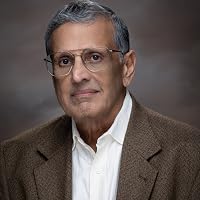
Steven J. Rosen, also known as Satyaraja Das is an American writer. He is the founding editor of The Journal of Vaishnava Studies and an associate editor of Back to Godhead, the magazine of the Hare Krishna movement. He has authored more than 30 books on Vaishnavism and related subjects, including Black Lotus: The Spiritual Journey of an Urban Mystic (2007), which is the life story of Bhakti Tirtha Swami.
A very solid 3-star, Essential Hinduism suffers only from something that is probably unavoidable when you're a book on religion: it gets a little boring in places. If I had to cite one more gripe, it would be that Rosen, a Hindu himself, tries only weakly, and only in a handful of spots in the book, to come across as objective. Elsewhere, he really lays on effusive praise of all things Hindu -- and to be fair, there is a lot to praise. It's just that, as a non-Hindu reader seeking information and not conversion, it can be a little much.
But Essential Hinduism does an excellent job of condensing a very complex religion -- or set of religions -- into something digestible. Rosen hits the high points, explains the issues that likely interest Western readers most (vegetarianism, festivals, reincarnation), and does so in fairly engaging prose. I got what I hoped for in this book, as a total beginner in things Hindu: a basic primer without being bored stiff.
In my all honesty, it was a very good book. The only problem is that it took a lot of time to read, but even then it was a great read and interesting as a whole. If you tend to drop books easily if it gets boring after a bit, this isn't the book for you. If you are devoted to finishing and find the topics interesting, this would be the book to read.
A good introduction, focused on Vaishnavism, which makes sense when you realize the author's connection to the Hare Krishnas. Although the author's references in the last quarter of the book to International Society for Krishna Consciousness (ISKCON) seem a bit forced, they hardly dominate, and Essential Hinduism should be seen more as a Vaishnavism 101 book than a piece intended for attracting followers.
"Essential Vaishnavism" ought to be the title of this book. It obsesses about the Vaishnava school of Hindu thought, and particularly the ISKCON (Krishna Consciousness) movement. I encourage looking up a 1988 book titled "Monkey On A Stick: Murder, Madness and the Hare Krishnas." When I visited their "Palace of Gold" in West Virginia in the 1990s, I was taken aback by what I felt was an atmosphere of sinister foreboding. Decades later, there have been many lawsuits against the Hare Krishnas of ISKCON accusing the organization of child abuse and other evils. That isn't exactly what the God Krishna would approve of, I don't think. Krishna was called the "Supreme Personality of Godhead" by Prabhupada the founder of ISKCON. Sadly, these "Gods" can't seem to lift a finger to admonish, punish, the misdeeds of their devotees.
Being a Hindu and also a student of Hindu philosophy, I can't stop appreciating this book. Infact, halfway, I began searching about the author's background as his understanding and articulation of the concepts is amazing. the topics S.J. Rosen has chosen are appropriate and the way he elaborates on each also shows his own scholarship. A great read for those who want to learn about the religion.
Great look at Hinduism. He retells the Mahabhrat, the Gita, other famous Hindu tales - but he retells them in a very accessible way. Explained a lot of things I hadn't understood. Great book.
A very good introduction to one of the world's major religions. Rosen brings across his main point clearly - Hinduism, unlike Judeo-Christian religions, is more a collection of varying philosophies and not an "ism" (or even a religion) at all. As a result of this, Rosen has to take a specific perspective to illustrate his points, and he chooses that of Vaishnavism, one of the more conservative viewpoints. Nevertheless, he explains all the major ideas of Hindu philosophy very well. A great starting place for any Westerner who would like to learn about this peaceful, non-violent, non-organized system of beliefs.
Felt like a good foundation for understanding Hinduism, however the author is a practicing member (a Hare Krishna). This is helpful I think in communicating the abstractions of belief and how they translate practically, but an apparent bias also comes through.
For example, the author often opts to dismiss research about dates and historical context in favor of leaving the origins of Hinduism shrouded in the ancient and supernatural. Often times also felt like I was being evangelized more than educated.
Still though I was pleased with the depth and breadth of information. I feel like I have a much greater understanding of Hinduism in history and practice.