

What do you think?

Claire DeWitt Mysteries #1
Claire DeWitt y la ciudad de los muertos
Goodreads Choice Award
Nominee for Readers' Favorite Mystery & Thriller (2011)Claire DeWitt es la mejor detective del mundo. Forma parte de un elitista club que utiliza métodos de investigación como la consulta del I Ching o drogas capaces de abrir la mente a otras realidades. La desaparición de un acaudalado ciudadano durante el huracán Katrina la lleva hasta una ciudad destrozada que significa mucho para ella: Nueva Orleans.
392 pages, Paperback
First published May 24, 2011
About the author
Sara Gran
17 books2,128 followersSara Gran's most recent book is LITTLE MYSTERIES, available from Dreamland Books on 2/11/25. She is the author of 7 1/2 previous novels, a screenwriter, and a publisher.
Ratings & Reviews
Friends & Following
Create a free account to discover what your friends think of this book!
Community Reviews
Displaying 1 - 30 of 1,856 reviews

May 21, 2011
I was a little afraid to re-read this book, because the first time through was so absolutely stunning, it was as if it was written for me. As my first review did not do justice to its wonderful combination of mystery, introspection, and setting, I'm setting out to rectify it.
Claire DeWitt is a detective, willing to use all means necessary--including hallucinogens, the I Ching and fingerprint analysis--to solve her cases. She knows ultimately she will be solving the case for herself, because sometimes the client doesn't want it solved:
"The client already knows the solution to his mystery. But he doesn't want to know. He doesn't hire a detective to solve his mystery. He hires a detective to prove that his mystery can't be solved."
Leon is a client who has requested her help finding his uncle Vic, a lawyer who disappeared during Hurricane Katrina. He feels a little guilty: "'You know what it says in the Bible,' Leon said with resignation. 'Look out for thine uncle as you would thineself. Or whatever.'"
Claire tends to lie a little if it suits, usually in service to detecting, and isn't entirely honest about her history to Leon.
"'How old are you?'
'Forty-two,' I said. I was thirty-five. But no one trusts a woman under forty. I'd started being forty when I was twenty-nine."
Claire's search brings her into contact with gangs of feral, forgotten children and with her own tumultous history as a detective when she apprenticed in New Orleans. Claire frequently references a book by a famous detective (albeit fictional in the real world) whose thoughts on detecting are philosophical bon mots on mystery, truth, and humanity, as well as her history with her mentor, Constance. The time shifts flow smoothly and don't feel the intrusive into the story; in fact, they blended very well, sometimes foreshadowing the next development in the mystery. Claire's own mystery was worked in nicely, leaving a feel for her character but with a sense there is a lot more to discover.
As in many detective mysteries, setting plays a crucial role. One of the many small mysteries of the book is how Claire and the people of New Orleans never refer to Katrina by name, the way the rest of the country does. They call it a 'flood' and speak of it in terms of days ("'By Monday the phones were down and...' The rest of his sentence was obvious and he didn't say it out loud") or by location: at the Superdome, Houston, back home. Claire notes the problem with locating people, phone numbers, addresses in post-Katrina New Orleans, and at least a couple of the locals involved in Claire's mystery are suffering from post-traumatic-stress disorder. Finding Vic means visiting some of the ravaged areas, and Gran's imagery is striking in its naked description:
"Signs with letter missing told the story: lots of OTELS and HOT BO LED CRA FISH and AWN SH PS. In the intermediate zone I started to see the marks spray-painted on houses: circles with X's through them, numbers and letters in the hollows of the X."

For those that are sensitive to it, there is proliferate drug use, but it is handled well. Without being judgmental, it is apparently an activity Claire engages in to self-medicate as well as bridge gaps between herself and other people. Interestingly, I thought Gran managed a nice balance between acknowledging the reasons for doing it at the same time showing the non-glamorous side.
I can't say enough about Gran's ability with language--my Kindle copy has highlights every chapter. The dispassionate descriptions lend themselves to the creation of emotionally blunted characters, and yet somehow Gran manages to convey humanity, tragedy and humor, as well as the character of a city.

Gran's writing has a lovely sense of balance, injecting small bon mots of humor, sarcasm, and absurdity that leaven the emotional weight of the mystery and of the post-flood setting. Claire is very good at mocking herself as well as those that ignore the mysteries around them:
--"He looked like he was waiting to see a doctor about an unusual lump."
--"I concentrated on the goats. They were good company. They overlooked most of my personality defects and failures, my withdrawal of food from the fatties, and my inability to speak goat."
--"You don't know that," Mick said, weakly trying to fake liberal outrage.
--"Houses are like people, only less annoying."
--"I heard Mick roll his eyes over the phone."
Yet despite the humor, both Claire and Gran are very careful and compassionate with the hollow-eyed thin adolescents of New Orleans. I loved that finesse, the unwillingness to sacrifice a character or story to the villain prototype. The inclusion of the social-economic commentary elevates it beyond mere mystery to a meditation on humanity, all without sermonizing or being particularly heavy-handed.

It's an odd little cross-genre read, but a highly enjoyable, thought-provoking one. After reading, I immediately tracked down a hardcover so I could be assured of being able to read it again, anytime, much like Claire and her copy of Détection.
Cross posted at http://clsiewert.wordpress.com/2013/0...
re-read July 16, 2015. Because it's just that good.
re-read July 24, 2017, because I need a drug-smoking detective who believes in the IChing to help me understand my own mysteries.
re-read October, 2024, because there's something so Buddhist about Claire's approach. Also, hurricanes.
Claire DeWitt is a detective, willing to use all means necessary--including hallucinogens, the I Ching and fingerprint analysis--to solve her cases. She knows ultimately she will be solving the case for herself, because sometimes the client doesn't want it solved:
"The client already knows the solution to his mystery. But he doesn't want to know. He doesn't hire a detective to solve his mystery. He hires a detective to prove that his mystery can't be solved."
Leon is a client who has requested her help finding his uncle Vic, a lawyer who disappeared during Hurricane Katrina. He feels a little guilty: "'You know what it says in the Bible,' Leon said with resignation. 'Look out for thine uncle as you would thineself. Or whatever.'"
Claire tends to lie a little if it suits, usually in service to detecting, and isn't entirely honest about her history to Leon.
"'How old are you?'
'Forty-two,' I said. I was thirty-five. But no one trusts a woman under forty. I'd started being forty when I was twenty-nine."
Claire's search brings her into contact with gangs of feral, forgotten children and with her own tumultous history as a detective when she apprenticed in New Orleans. Claire frequently references a book by a famous detective (albeit fictional in the real world) whose thoughts on detecting are philosophical bon mots on mystery, truth, and humanity, as well as her history with her mentor, Constance. The time shifts flow smoothly and don't feel the intrusive into the story; in fact, they blended very well, sometimes foreshadowing the next development in the mystery. Claire's own mystery was worked in nicely, leaving a feel for her character but with a sense there is a lot more to discover.
As in many detective mysteries, setting plays a crucial role. One of the many small mysteries of the book is how Claire and the people of New Orleans never refer to Katrina by name, the way the rest of the country does. They call it a 'flood' and speak of it in terms of days ("'By Monday the phones were down and...' The rest of his sentence was obvious and he didn't say it out loud") or by location: at the Superdome, Houston, back home. Claire notes the problem with locating people, phone numbers, addresses in post-Katrina New Orleans, and at least a couple of the locals involved in Claire's mystery are suffering from post-traumatic-stress disorder. Finding Vic means visiting some of the ravaged areas, and Gran's imagery is striking in its naked description:
"Signs with letter missing told the story: lots of OTELS and HOT BO LED CRA FISH and AWN SH PS. In the intermediate zone I started to see the marks spray-painted on houses: circles with X's through them, numbers and letters in the hollows of the X."
For those that are sensitive to it, there is proliferate drug use, but it is handled well. Without being judgmental, it is apparently an activity Claire engages in to self-medicate as well as bridge gaps between herself and other people. Interestingly, I thought Gran managed a nice balance between acknowledging the reasons for doing it at the same time showing the non-glamorous side.
I can't say enough about Gran's ability with language--my Kindle copy has highlights every chapter. The dispassionate descriptions lend themselves to the creation of emotionally blunted characters, and yet somehow Gran manages to convey humanity, tragedy and humor, as well as the character of a city.
Gran's writing has a lovely sense of balance, injecting small bon mots of humor, sarcasm, and absurdity that leaven the emotional weight of the mystery and of the post-flood setting. Claire is very good at mocking herself as well as those that ignore the mysteries around them:
--"He looked like he was waiting to see a doctor about an unusual lump."
--"I concentrated on the goats. They were good company. They overlooked most of my personality defects and failures, my withdrawal of food from the fatties, and my inability to speak goat."
--"You don't know that," Mick said, weakly trying to fake liberal outrage.
--"Houses are like people, only less annoying."
--"I heard Mick roll his eyes over the phone."
Yet despite the humor, both Claire and Gran are very careful and compassionate with the hollow-eyed thin adolescents of New Orleans. I loved that finesse, the unwillingness to sacrifice a character or story to the villain prototype. The inclusion of the social-economic commentary elevates it beyond mere mystery to a meditation on humanity, all without sermonizing or being particularly heavy-handed.
It's an odd little cross-genre read, but a highly enjoyable, thought-provoking one. After reading, I immediately tracked down a hardcover so I could be assured of being able to read it again, anytime, much like Claire and her copy of Détection.
Cross posted at http://clsiewert.wordpress.com/2013/0...
re-read July 16, 2015. Because it's just that good.
re-read July 24, 2017, because I need a drug-smoking detective who believes in the IChing to help me understand my own mysteries.
re-read October, 2024, because there's something so Buddhist about Claire's approach. Also, hurricanes.

September 1, 2013
’There are no innocent victims’, wrote Jacques Silette. ‘The victim selects his role as carefully and unconsciously as the policeman, the detective, the client, or the villain. Each chooses his role and then forgets this, sometimes for many lifetimes, until one comes along who can remind him. This time you may be the villain or the victim. The next time your roles may switch.
It is only a role. Try to remember.’
Claire DeWitt has been enticed back to her former stomping grounds in New Orleans to investigate the disappearance of a prominent DA attorney, Vic Willing. He disappeared during Hurricane Katrina. The most natural reaction to such a request is that LOTS of people disappeared during Katrina, some by choice and some because they were washed out to sea or in those turbulent times were the victim of circumstances. It wasn’t difficult to be in the wrong place at the wrong time because there was no right place. Still there is a ripple in the universe that tells Claire this is a case for her.
Even though her client, Leon, is an idiot.
”’He fed the birds,’ I said to Leon.
Leon made a little face of disgust. People in New Orleans have a thing about birds.
‘Oh I forgot about that,’ he said. ‘Those parrots. I think they’ve got some program getting on to get rid of them. They’re an inverted species or whatever you call it.’
‘Invasive,’ I said. ‘So are we.’
‘Yeah. They eat crops,’ Leon said.
‘Unlike us,’ I said.
He frowned. ‘They’re dirty,’ he said. ‘They spread disease.’
I looked at him.
‘They’re from--’ he began, then stopped. ‘They live in--’
‘I heard some of ‘em are communists,’ I said. ‘Watch out. Do you mind if I take fingerprints?’
‘Fingerprints?’ Leon said, confused. ‘They have fingers?’
‘Uh, no,’ I said.’Well, maybe. But not from the parrots. From the house.’”
While checking through Vic’s bathroom Claire palms some down payment on the investigation... bottles of Vicodin and Valium. Leon you are just WAY too slow man.
Claire is the best private investigator on the planet for two reasons. Jacques Silette the writer of the investigative bible called Detection is dead and Claire’s mentor in the Silette investigative techniques Constance Darling is also unfortunately dead. By default Claire is now the best. They both were key in shaping Claire’s life and both still intrude like mystics into every case.
”Never be afraid to learn from the ether,” Constance told me. “That’s where knowledge lives before someone hunts it, kills it, and mounts it in a book.”
That might be what I’m doing with this review...killing it and mounting it.
”The clue that can be named is not the eternal clue,” Silette wrote. “The mystery that can be named is not the eternal mystery.”
Please feel free to ponder for as long as you like.
Claire went through a hard time after Constance was killed. She lost her center. Her rock. Her reason for reasoning. The state of Utah declared her officially insane. She got kicked out of a tattoo convention in L.A. and was banned for life from the Sands in Vegas. I have a feeling that a bit of advice from Constance eventually percolated through the mist of pain.
”You can’t change anyone’s life,” she said. “You can’t erase anyone else’s Karma.”...”All you can do is leave clues,” she said. “And hope that they understand, and choose to follow.”
Constance left plenty of clues providing a path for Claire for when she was ready to follow. I have people in my office asking for advice about just about everything from what car to buy to whether their personal relationships are working.
I’m thinking about hanging out a shingle.
The frustrating part is that usually they are looking for someone to agree with them not offer advice. I persist in the face of such disappointment and hope that after their determinations don’t pan out that the way will be cleared to at least take another look at the advice I gave them. (Maybe if enough time has passed the idea will now be theirs.) I never thought about advice as clues and certainly that is a more Zen way to look at these situations. I’ve had my moments where I’ve felt more like saying to heck with everyone and closing my door to their problems.
Constance’s advice made me remember to use…Serenity Now!
”Happiness is the temporary result of denying the knowledge one already has,” Silette wrote. “Once one knows what one knows--once one knows the solution to his mysteries--happiness is besides the point. But in rare cases, something much better can bloom.”
Let that bang around in your head for a while. Is that a martini crooning to me from the bar?
Leon decides to fire Claire because the investigation is moving slooowwwly (clues don’t always reveal themselves quickly or in an orderly fashion),and also because Claire is circling around some revealing characteristics of Vic that may tarnish his image.
Don’t panic this has happened before.
”Leon,” I said. “At some point in the development of the detective/client relationship, it’s natural for the client to want to fire the PI. It’s a part of the process, and that’s okay. But we need to move past that, to a better place--a place of healing, if you will.”
I didn’t think any of that was true, about clients wanting to fire their private dicks. They usually wanted to fire me. That was true enough. Almost always they wanted to fire me. Actually, every time. Every time except one, the time in Dallas when the guy killed his own mother and then hired me to find the killer because he didn’t know the murderer was one of his own personalities. He never fired me.
Sara Gran’s writing style reminds me of Jasper Fforde. Like Fforde she balances witty repartee, and wacky characters with weighty philosophical concepts that made this reader stop frequently to take a few of those thoughts for a lap or two around the brain before moving on to the next paragraph. She has introduced us to characters like Constance Darling and Jacque Silette that could each merit their own books in the future. I’m more than curious, maybe insatiably so, to discover where Gran will take Claire DeWitt in book two.
If you wish to see more of my most recent book and movie reviews, visit http://www.jeffreykeeten.com
I also have a Facebook blogger page at:https://www.facebook.com/JeffreyKeeten
It is only a role. Try to remember.’
Claire DeWitt has been enticed back to her former stomping grounds in New Orleans to investigate the disappearance of a prominent DA attorney, Vic Willing. He disappeared during Hurricane Katrina. The most natural reaction to such a request is that LOTS of people disappeared during Katrina, some by choice and some because they were washed out to sea or in those turbulent times were the victim of circumstances. It wasn’t difficult to be in the wrong place at the wrong time because there was no right place. Still there is a ripple in the universe that tells Claire this is a case for her.
Even though her client, Leon, is an idiot.
”’He fed the birds,’ I said to Leon.
Leon made a little face of disgust. People in New Orleans have a thing about birds.
‘Oh I forgot about that,’ he said. ‘Those parrots. I think they’ve got some program getting on to get rid of them. They’re an inverted species or whatever you call it.’
‘Invasive,’ I said. ‘So are we.’
‘Yeah. They eat crops,’ Leon said.
‘Unlike us,’ I said.
He frowned. ‘They’re dirty,’ he said. ‘They spread disease.’
I looked at him.
‘They’re from--’ he began, then stopped. ‘They live in--’
‘I heard some of ‘em are communists,’ I said. ‘Watch out. Do you mind if I take fingerprints?’
‘Fingerprints?’ Leon said, confused. ‘They have fingers?’
‘Uh, no,’ I said.’Well, maybe. But not from the parrots. From the house.’”
While checking through Vic’s bathroom Claire palms some down payment on the investigation... bottles of Vicodin and Valium. Leon you are just WAY too slow man.
Claire is the best private investigator on the planet for two reasons. Jacques Silette the writer of the investigative bible called Detection is dead and Claire’s mentor in the Silette investigative techniques Constance Darling is also unfortunately dead. By default Claire is now the best. They both were key in shaping Claire’s life and both still intrude like mystics into every case.
”Never be afraid to learn from the ether,” Constance told me. “That’s where knowledge lives before someone hunts it, kills it, and mounts it in a book.”
That might be what I’m doing with this review...killing it and mounting it.
”The clue that can be named is not the eternal clue,” Silette wrote. “The mystery that can be named is not the eternal mystery.”
Please feel free to ponder for as long as you like.
Claire went through a hard time after Constance was killed. She lost her center. Her rock. Her reason for reasoning. The state of Utah declared her officially insane. She got kicked out of a tattoo convention in L.A. and was banned for life from the Sands in Vegas. I have a feeling that a bit of advice from Constance eventually percolated through the mist of pain.
”You can’t change anyone’s life,” she said. “You can’t erase anyone else’s Karma.”...”All you can do is leave clues,” she said. “And hope that they understand, and choose to follow.”
Constance left plenty of clues providing a path for Claire for when she was ready to follow. I have people in my office asking for advice about just about everything from what car to buy to whether their personal relationships are working.
I’m thinking about hanging out a shingle.
The frustrating part is that usually they are looking for someone to agree with them not offer advice. I persist in the face of such disappointment and hope that after their determinations don’t pan out that the way will be cleared to at least take another look at the advice I gave them. (Maybe if enough time has passed the idea will now be theirs.) I never thought about advice as clues and certainly that is a more Zen way to look at these situations. I’ve had my moments where I’ve felt more like saying to heck with everyone and closing my door to their problems.
Constance’s advice made me remember to use…Serenity Now!
”Happiness is the temporary result of denying the knowledge one already has,” Silette wrote. “Once one knows what one knows--once one knows the solution to his mysteries--happiness is besides the point. But in rare cases, something much better can bloom.”
Let that bang around in your head for a while. Is that a martini crooning to me from the bar?
Leon decides to fire Claire because the investigation is moving slooowwwly (clues don’t always reveal themselves quickly or in an orderly fashion),and also because Claire is circling around some revealing characteristics of Vic that may tarnish his image.
Don’t panic this has happened before.
”Leon,” I said. “At some point in the development of the detective/client relationship, it’s natural for the client to want to fire the PI. It’s a part of the process, and that’s okay. But we need to move past that, to a better place--a place of healing, if you will.”
I didn’t think any of that was true, about clients wanting to fire their private dicks. They usually wanted to fire me. That was true enough. Almost always they wanted to fire me. Actually, every time. Every time except one, the time in Dallas when the guy killed his own mother and then hired me to find the killer because he didn’t know the murderer was one of his own personalities. He never fired me.
Sara Gran’s writing style reminds me of Jasper Fforde. Like Fforde she balances witty repartee, and wacky characters with weighty philosophical concepts that made this reader stop frequently to take a few of those thoughts for a lap or two around the brain before moving on to the next paragraph. She has introduced us to characters like Constance Darling and Jacque Silette that could each merit their own books in the future. I’m more than curious, maybe insatiably so, to discover where Gran will take Claire DeWitt in book two.
If you wish to see more of my most recent book and movie reviews, visit http://www.jeffreykeeten.com
I also have a Facebook blogger page at:https://www.facebook.com/JeffreyKeeten

August 8, 2021
“Once you’ve read Silette there’s no going back, people say. Something in you is changed, and you won’t be your old self ever again.”
Private investigator Claire DeWitt won’t go anywhere without her copy of Jacques Silette’s Détection. There may be decades between the investigation handbook’s publication and when Claire first chanced upon a dusty copy with her childhood pals in New York City, but she’s been living and breathing its words ever since. I’m sure we can all relate to that one book in our life that made such an impact that we won’t ever let it go. There’s something even more special about it when first discovered in childhood. But this is not some sentimental story about books and childhood. Rather, it’s some fine noir detective fiction set in New Orleans in the aftermath of Hurricane Katrina.
“It had been more than a year since the storm. But on some blocks it was as if nothing had happened since then; literally nothing, not even a breeze or a rainfall or a bird or even a breath.”
Author Sara Gran shines a realistic light on a city that suffered from one of the most devastating natural disasters in the country. Combining this with a murder victim, an assistant district attorney no less, made for a super engaging read. How Claire goes about solving a crime is downright unconventional and often humorous. Gran never veers into the territory of reducing the situation into an absurdity, however. She handles the seedier and violent sides of New Orleans with care and compassion. She depicts the most unfortunate of her characters as fully fleshed individuals not as caricatures. Claire believes in second chances. One person Claire doesn’t take enough care with, however, is herself. Solving crimes while intoxicated, medicated and stoned seemed, well, a bit risky to say the least! But what do I know? Maybe she’s onto something here with her sense-altering (heightening?!) tactics.
“Drugs take you places—some fun, some terrible. But the important thing about those places isn’t whether or not they’re fun. The important thing is that, sometimes, in some places, you can find clues.”
In this first book of the series, the reader learns a lot about Claire DeWitt’s background, what makes her tick. I loved this aspect even more than the solving of the crime itself. But I’m all about character-driven stories, even when it comes to mysteries. The plot is rather secondary. It’s simply an added bonus if I have a little fun putting my own inept, investigative skills to work. There was a little of that here, but I’d say the crime itself is the least compelling piece of the book. This is all about Claire and her calling, her childhood friends, gun violence, adolescent crime, the inadequate handling of a disaster in a vibrant city, and parrots. Yep, parrots. Read it to find out.
Thanks to my friends Left Coast Justin and Lisa for paving the way towards this stimulating diversion from my regular course of reading!
“It isn’t the dead we should feel sorry for. It’s the living.”
Private investigator Claire DeWitt won’t go anywhere without her copy of Jacques Silette’s Détection. There may be decades between the investigation handbook’s publication and when Claire first chanced upon a dusty copy with her childhood pals in New York City, but she’s been living and breathing its words ever since. I’m sure we can all relate to that one book in our life that made such an impact that we won’t ever let it go. There’s something even more special about it when first discovered in childhood. But this is not some sentimental story about books and childhood. Rather, it’s some fine noir detective fiction set in New Orleans in the aftermath of Hurricane Katrina.
“It had been more than a year since the storm. But on some blocks it was as if nothing had happened since then; literally nothing, not even a breeze or a rainfall or a bird or even a breath.”
Author Sara Gran shines a realistic light on a city that suffered from one of the most devastating natural disasters in the country. Combining this with a murder victim, an assistant district attorney no less, made for a super engaging read. How Claire goes about solving a crime is downright unconventional and often humorous. Gran never veers into the territory of reducing the situation into an absurdity, however. She handles the seedier and violent sides of New Orleans with care and compassion. She depicts the most unfortunate of her characters as fully fleshed individuals not as caricatures. Claire believes in second chances. One person Claire doesn’t take enough care with, however, is herself. Solving crimes while intoxicated, medicated and stoned seemed, well, a bit risky to say the least! But what do I know? Maybe she’s onto something here with her sense-altering (heightening?!) tactics.
“Drugs take you places—some fun, some terrible. But the important thing about those places isn’t whether or not they’re fun. The important thing is that, sometimes, in some places, you can find clues.”
In this first book of the series, the reader learns a lot about Claire DeWitt’s background, what makes her tick. I loved this aspect even more than the solving of the crime itself. But I’m all about character-driven stories, even when it comes to mysteries. The plot is rather secondary. It’s simply an added bonus if I have a little fun putting my own inept, investigative skills to work. There was a little of that here, but I’d say the crime itself is the least compelling piece of the book. This is all about Claire and her calling, her childhood friends, gun violence, adolescent crime, the inadequate handling of a disaster in a vibrant city, and parrots. Yep, parrots. Read it to find out.
Thanks to my friends Left Coast Justin and Lisa for paving the way towards this stimulating diversion from my regular course of reading!
“It isn’t the dead we should feel sorry for. It’s the living.”

July 23, 2014
Claire DeWitt is probably one of the most unique characters I've ever read in a mystery book. She has a "bible" that she goes by written by her idol French detective Jacques Silette, she doesn't mind using a few drugs to enhance her abilities, and she believes she is the world's greatest detective.
Several of those very qualities got on my nerves at times during the book.
Lord, forgive my sins, of which there are too fucking many to count.
Then there were times I liked her. She fully admits her troubles and does not mind if people think she is bat shit crazy.
New Orleans after the storm...

A respected DA goes missing and his nephew hires Claire to find out what happened to him. He went missing a few days after Katrina hit and no one wants to talk about what happened to him.
New Orleans is really the star of this book. That mystical city is showcased here in a way that most books just don't begin to touch on.

It's a haunting book that's not fast paced but rather streams along and pushes you to think about the why's and why not's of a person's disappearance.
Several of those very qualities got on my nerves at times during the book.
Lord, forgive my sins, of which there are too fucking many to count.
Then there were times I liked her. She fully admits her troubles and does not mind if people think she is bat shit crazy.
New Orleans after the storm...
A respected DA goes missing and his nephew hires Claire to find out what happened to him. He went missing a few days after Katrina hit and no one wants to talk about what happened to him.
"The client already knows the solution to his mystery. But he doesn't want to know. He doesn't hire a detective to solve his mystery. He hires a detective to prove that his mystery can't be solved."
New Orleans is really the star of this book. That mystical city is showcased here in a way that most books just don't begin to touch on.
It's a haunting book that's not fast paced but rather streams along and pushes you to think about the why's and why not's of a person's disappearance.

Read
January 9, 2025I bet my reader friends are wondering how this non-mystery reader started the reading year with a mystery!
Claire DeWitt says, “the solution to every mystery is never more than inches away.” Let's see...
The New Year in my world began on a dying note. It wasn't quite City of the Dead, but maybe House of the Walking Dead would be an apt title? I could just about walk from the bed to the bathroom and back. Worst flu I've had in a short while.
But enough about the flu. On the second day, I felt like reading but only had my phone to hand—ok there was a copy of John Ruskin's Stones of Venice on my bedside table but it was somehow too heavy to hold.
Anyway, I had a look at the ebook samples I'd downloaded on my phone in the last few months and started reading Lea Ypi's Coming of Age at the End of History. I reached the end of the sample very quickly and tried to buy the book but I couldn't get into my account. I knew the password was in my desk somewhere but I hadn't the energy to go look for it or to explain to my husband where to find it—or indeed where to find the stash of unread books I'd tidied away in odd places before the Christmas celebrations. So I had no choice but to read another sample book: Samantha Harvey's Orbital. That suited my slumbersome state perfectly, the many sunrises the astronauts experienced in one day while orbiting the earth over and over mirrored the many sleeps I woke from during one day.
But that sample was very short. The next one was Hyper by Agri Ismaïl, a novel about the destinies of a family of Kurdish migrants over several generations. I became deeply invested in their tribulations but that sample was soon finished as well.
The next sample I came on was the book I'm reviewing—see, the solution to the mystery really was only inches away!
But here's another mystery. Why had I downloaded this sample in the first place? Looking through the review page of the book, I've found some clues: it seems I read GR friend carol's review in October and left a comment: "carol, you've entertained me into thinking I might one day grow up to be a reader of detective novels."
Would I have downloaded it based on that little burst of enthusiasm?
Here's another clue: it seems that after reading carol's review, I read GR friend Justin's because he'd commented intriguingly on carol's, and I left a comment on his review too: "I came here from the comment thread of carol's review where I saw you mentioning goats—next to sheep, goats are my favourite animals. Between you and carol, I may yet cross the genus/genre gap and read this detective story..."
So that's the solution to the second mystery: how I owned the sample.
I bet you're wondering if I read the whole book since I couldn't access my ebook account? Well, when I got to the end of the sample—which was particularly long—I was so energised by the indefatigable Claire DeWitt that I rose from my sickbed, flew downstairs, and found my password. I didn't go back up. Claire DeWitt had made me better!
But how did she do it? Could it be all the drugs she was taking that subliminally entered my system and knocked out my flu symptoms completely. Hmm, we may have to leave that mystery unsolved.
But then again, there was this line in the book:
"The mysteries you leave unsolved will last for lifetimes after you are gone."
That makes mysteries sound like plastic, doesn't it? I don't want to leave any such mysteries around so let's settle for the fact that Claire De Witt was so unrestrainedly crazy that she made me smile many times over. That's what cured me I think. Take this other line:
"Crows used to be bad omens, but now they were so common that it was hard to say. Omens change. Signs shift. Nothing is permanent."
I don't know why that one made me smile, it just did. Maybe it's because I like when things get turned around, expectations proven wrong, predictabilities thrown overboard.
And there were also two perfect little echoes from my 2024 reading year:
"Before they got the house they lived at the Chelsea Hotel and ran up a legendary bill at El Quixote, which they never paid."
I happened to read about that very same Chelsea Hotel in September 2024 in A Greenwich Village Memoir while sitting in its Quixote bar—where I paid my astronomical bill quite cheerfully, it has to be said.
And this other line echoed the same visit to NYC:
"I also started stealing more from stores, things I could sell: mostly books, which were easy to take and easy to sell to the Strand."
I was in the Strand bookshop in September though I bought rather than sold, but that scene echoed an episode in the The Savage Detectives, another 2024 read, where a young character stole books from every bookshop in Mexico City.
And when I think about it, it wouldn't be a huge exaggeration to call the completely unrestrained and totally crazy Claire DeWitt a truly savage detective!
………………………
In case you're wondering about the goats...ah, you've forgotten the goats? Well anyway, I think maybe Sara Gran forgot about the goats too. There was a mention of someone receiving a postcard from the place where the goats were but no connection between that and anything else as far as I could see...
Claire DeWitt says, “the solution to every mystery is never more than inches away.” Let's see...
The New Year in my world began on a dying note. It wasn't quite City of the Dead, but maybe House of the Walking Dead would be an apt title? I could just about walk from the bed to the bathroom and back. Worst flu I've had in a short while.
But enough about the flu. On the second day, I felt like reading but only had my phone to hand—ok there was a copy of John Ruskin's Stones of Venice on my bedside table but it was somehow too heavy to hold.
Anyway, I had a look at the ebook samples I'd downloaded on my phone in the last few months and started reading Lea Ypi's Coming of Age at the End of History. I reached the end of the sample very quickly and tried to buy the book but I couldn't get into my account. I knew the password was in my desk somewhere but I hadn't the energy to go look for it or to explain to my husband where to find it—or indeed where to find the stash of unread books I'd tidied away in odd places before the Christmas celebrations. So I had no choice but to read another sample book: Samantha Harvey's Orbital. That suited my slumbersome state perfectly, the many sunrises the astronauts experienced in one day while orbiting the earth over and over mirrored the many sleeps I woke from during one day.
But that sample was very short. The next one was Hyper by Agri Ismaïl, a novel about the destinies of a family of Kurdish migrants over several generations. I became deeply invested in their tribulations but that sample was soon finished as well.
The next sample I came on was the book I'm reviewing—see, the solution to the mystery really was only inches away!
But here's another mystery. Why had I downloaded this sample in the first place? Looking through the review page of the book, I've found some clues: it seems I read GR friend carol's review in October and left a comment: "carol, you've entertained me into thinking I might one day grow up to be a reader of detective novels."
Would I have downloaded it based on that little burst of enthusiasm?
Here's another clue: it seems that after reading carol's review, I read GR friend Justin's because he'd commented intriguingly on carol's, and I left a comment on his review too: "I came here from the comment thread of carol's review where I saw you mentioning goats—next to sheep, goats are my favourite animals. Between you and carol, I may yet cross the genus/genre gap and read this detective story..."
So that's the solution to the second mystery: how I owned the sample.
I bet you're wondering if I read the whole book since I couldn't access my ebook account? Well, when I got to the end of the sample—which was particularly long—I was so energised by the indefatigable Claire DeWitt that I rose from my sickbed, flew downstairs, and found my password. I didn't go back up. Claire DeWitt had made me better!
But how did she do it? Could it be all the drugs she was taking that subliminally entered my system and knocked out my flu symptoms completely. Hmm, we may have to leave that mystery unsolved.
But then again, there was this line in the book:
"The mysteries you leave unsolved will last for lifetimes after you are gone."
That makes mysteries sound like plastic, doesn't it? I don't want to leave any such mysteries around so let's settle for the fact that Claire De Witt was so unrestrainedly crazy that she made me smile many times over. That's what cured me I think. Take this other line:
"Crows used to be bad omens, but now they were so common that it was hard to say. Omens change. Signs shift. Nothing is permanent."
I don't know why that one made me smile, it just did. Maybe it's because I like when things get turned around, expectations proven wrong, predictabilities thrown overboard.
And there were also two perfect little echoes from my 2024 reading year:
"Before they got the house they lived at the Chelsea Hotel and ran up a legendary bill at El Quixote, which they never paid."
I happened to read about that very same Chelsea Hotel in September 2024 in A Greenwich Village Memoir while sitting in its Quixote bar—where I paid my astronomical bill quite cheerfully, it has to be said.
And this other line echoed the same visit to NYC:
"I also started stealing more from stores, things I could sell: mostly books, which were easy to take and easy to sell to the Strand."
I was in the Strand bookshop in September though I bought rather than sold, but that scene echoed an episode in the The Savage Detectives, another 2024 read, where a young character stole books from every bookshop in Mexico City.
And when I think about it, it wouldn't be a huge exaggeration to call the completely unrestrained and totally crazy Claire DeWitt a truly savage detective!
………………………
In case you're wondering about the goats...ah, you've forgotten the goats? Well anyway, I think maybe Sara Gran forgot about the goats too. There was a mention of someone receiving a postcard from the place where the goats were but no connection between that and anything else as far as I could see...

January 11, 2019
In “Claire DeWitt and The City of The Dead” by Sara Gran, Claire DeWitt is not your average P.I. She's the self-proclaimed world's greatest detective; she also uses her dreams, partakes in mind-expanding herbs and utilizes a manual on detection from a mysterious Frenchman to help her solve cases. That book gives her advice like “Only a fool looks for answers. The wise detective seeks only questions.“ or "Those who try to grasp on to the mystery will never succeed, only those who let it slip through their fingers will come to know it and hear its secrets." Claire also utilizes the I Ching (the obvious forerunner of the I Phone) to help direct her to solve cases. She isn’t any kind of Nancy Drew.
If my recollection is correct, Sherlock Holmes used cocaine when he was bored,
The story takes place largely in New Orleans some months after the Katrina Hurricane. At one point a character says, "If you're hoping for a happy ending, you lookin' in the wrong city." This is a repeating message throughout the book. There are also flashbacks to Claire’s history and childhood in Brooklyn. Sara Gran captures the tough realities of New Orleans its street violence, lost children, homeless people and Gran makes it all fresh, intriguing, and convincingly real.
As a storyteller, Gran's greatest strength is her ability to envelope the reader into the time and place of the story. I really enjoyed this tale that fulfilled many reading levels. “Claire DeWitt and the City of the Dead” is a highly original, refreshing, sometimes humorous, often ironic mystery, with an intriguing and involved plot and even more fascinating backstories.
Highly Recommended and Most Enjoyable.
If my recollection is correct, Sherlock Holmes used cocaine when he was bored,
The story takes place largely in New Orleans some months after the Katrina Hurricane. At one point a character says, "If you're hoping for a happy ending, you lookin' in the wrong city." This is a repeating message throughout the book. There are also flashbacks to Claire’s history and childhood in Brooklyn. Sara Gran captures the tough realities of New Orleans its street violence, lost children, homeless people and Gran makes it all fresh, intriguing, and convincingly real.
As a storyteller, Gran's greatest strength is her ability to envelope the reader into the time and place of the story. I really enjoyed this tale that fulfilled many reading levels. “Claire DeWitt and the City of the Dead” is a highly original, refreshing, sometimes humorous, often ironic mystery, with an intriguing and involved plot and even more fascinating backstories.
Highly Recommended and Most Enjoyable.

November 5, 2016
Claire DeWitt and the City of the Dead is the fourth novel by Sara Gran, an exquisitely titled and wonderfully composed introduction to what publishers like to call "an unprecedented private investigator." Published in 2011, the author doesn't fall back on gimmick or try to build her mystery on the basis of a quirky characterization--alcoholic private eye, OCD private eye, 1980s private eye--but instead uses drunkenly rich language to unravel a mystery in, where else, New Orleans. Neither Claire or anyone she comes into contact with is in a partying type of mood and while the novel is desaturated of romance and often difficult for me to love, I did really like it.
The story begins in January 2007 with the self-proclaimed "world's greatest private eye" returning to the Big Easy, the city she left ten years ago, for a meeting at the Napoleon House in the French Quarter with her client, Leon Salavatore. The client hires Claire to find his late mother's brother, assistant district attorney for the New Orleans prosecutor's office, Vic Willing, who his nephew and sole heir has not seen since the flood. Leon's first question to the private eye is how old she is. "Forty-two," I said. I was thirty-five. But no one trusts a woman under forty. I'd started being forty when I was twenty-nine.
Leon is just as tentative about Claire's mental health, mentioning that he heard she was in the hospital for a nervous breakdown, rumors Claire shoots down by claiming she was in an ashram. The background she's already assembled on Vic Willing--fifty-six, male, white, single, no children--suggests a prince among men, an honest lawyer who was well-respected by his peers and clean as a whistle. Examining a photograph of her target taken on the balcony of his apartment on lower Bourbon Street, Claire discovers hundreds of green parrots perched in a tree in the background. So begins The Case of the Green Parrot.
Claire is a disciple of Jacques Silette, the Parisian private investigator whose book, Détection, was published in 1959 and though now out of print, Claire considers her Bible. She moved to New Orleans in 1994 to work for Constance Darling, a former student and lover of Silette's, and she left the city when her boss was murdered three years later. Claire first came into contact with Détection as a child when her friend Tracy found a copy in a dumbwaiter in her parents' house. They began solving mysteries in the fourth grade with another friend, Kelly, discovering Silette's first rule of solving mysteries: most people don't want their mysteries solved.
I'd met Constance in Los Angeles in 1984. A detective named Sean Risling had set up an introduction, knowing I needed work and Constance needed help. She was in L.A. on the famous HappyBurger murder case. Of course I knew who she was; the famous detective, student of Silette, the eccentric from New Orleans, admired by some, reviled by more. Stilette and his followers have never been the most popular detectives. No matter how many cases we solved or how quickly we solved them, respect was always hard to come by. It was like an episode of Quincy, stretched out over fifty years. All the better, Constance explained later, when we were friends. High expectations from others can cripple you.
Claire navigates New Orleans with the help of another former student of Constance Darling's, an amateur criminologist named Mick Pendell, heavily tattooed and trying to recover from losing his home and his marriage in the flood. Fingerprints she's recovered at Vic's apartment indicate that eighteen year old Andray Fairview has been there. Native New Orleanean, orphan, with a record for possession and assault and two arrests for murder. Claire has already met Andray, coming out of a gas station to find him leaning against her rental pickup with his goofy buddy Terrell. She dubbed the pair Suicide Boy and Dreadlock Boy, unsure which of them peed on her tire.
Mick knows Andray through his work with Southern Defense, providing legal services for the underprivileged. He doesn't want to believe the boy would murder Vic Willing, but Claire is ready to wrap up the case. Interviewing Suicide Boy at Orleans Parish Prison where he's been interned for loitering, Andray maintains that he met Vic while cleaning swimming pools. He claims they talked about birds and to prove it, shows Claire a book that Vic gave him: Détection by Jacques Silette. The more time Claire spends with Andray, the more inclined she is to believe his innocence and to suggest to her client that Vic Willing wasn't the prince others claimed he was.
Claire's personal life remains a FEMA disaster area. She frequently slips into stupors, whether drug induced or from simply not eating or sleeping, which is how she ended up under medical supervision back in San Francisco. Clues come easier to her in blackouts, though they've been unable to help her locate her childhood friend Tracy, who disappeared in Brooklyn in 1987 and whose vanishing irreparably damaged her friendship with Kelly, also a private investigator. Fate is unkind to those of Claire DeWitt's profession, as she discovers trying to seek out the legendary Jack Murray, a brilliant New Orleans private eye and Silette disciple who now wanders Congo Park, homeless.
"The first thing you need to know about being a detective," Constance explained when she was interviewing me to be her assistant, "is that no one will ever like you again. You will turn over their stones and solve their crimes and reveal their secrets and they will hate you for it. If you're stupid enough to marry, your husband will never trust you. Your friends will never relax around you. Your family will shut you out. The police, of course, will loathe you. Your clients will never forgive you for telling them the truth. Everyone pretends they want their mysteries solved but no one does." She leaned toward me. I smelled her violet perfume, her expensive face powder. "No one except us."
Claire DeWitt and the City of the Dead is a novel for antiquarians, for those whose pulses race at the thought of discovering rare out-of-print books, priceless artifacts warehoused in attics or pirate treasure buried under redwood trees. The lurid elements of pulp fiction--broads, bullets and booze--are not to be appreciated here. Gran has worked in used and rare books, at The Strand and Shakespeare and Co, and was an independent bookseller, and this is what the novel is about. My fault with it is how often character and story are subordinated to book reviewing, with so many passages devoted to Détection that the novel starts to resemble a Chinese fortune cookie.
While reading the novel is as much fun as getting shushed in a library and Claire DeWitt seems to have that brilliant detective's tendency to know key things with a minimum amount of detection, her background is unlike any other sleuth I've encountered, moving discontented from one city to the next--Brooklyn, L.A., New Orleans, San Francisco--more like a Gaslight Era ghost than an analog hipster. NOLA is a haunted city and Claire DeWitt is one haunted character, solving mysteries that fail to reveal the bigger truths she's really looking for. I have too much of a heavy dark wheat taste left in my mouth to order the 2013 sequel, Claire DeWitt and the Bohemian Highway, but this one isn't bad.
The story begins in January 2007 with the self-proclaimed "world's greatest private eye" returning to the Big Easy, the city she left ten years ago, for a meeting at the Napoleon House in the French Quarter with her client, Leon Salavatore. The client hires Claire to find his late mother's brother, assistant district attorney for the New Orleans prosecutor's office, Vic Willing, who his nephew and sole heir has not seen since the flood. Leon's first question to the private eye is how old she is. "Forty-two," I said. I was thirty-five. But no one trusts a woman under forty. I'd started being forty when I was twenty-nine.
Leon is just as tentative about Claire's mental health, mentioning that he heard she was in the hospital for a nervous breakdown, rumors Claire shoots down by claiming she was in an ashram. The background she's already assembled on Vic Willing--fifty-six, male, white, single, no children--suggests a prince among men, an honest lawyer who was well-respected by his peers and clean as a whistle. Examining a photograph of her target taken on the balcony of his apartment on lower Bourbon Street, Claire discovers hundreds of green parrots perched in a tree in the background. So begins The Case of the Green Parrot.
Claire is a disciple of Jacques Silette, the Parisian private investigator whose book, Détection, was published in 1959 and though now out of print, Claire considers her Bible. She moved to New Orleans in 1994 to work for Constance Darling, a former student and lover of Silette's, and she left the city when her boss was murdered three years later. Claire first came into contact with Détection as a child when her friend Tracy found a copy in a dumbwaiter in her parents' house. They began solving mysteries in the fourth grade with another friend, Kelly, discovering Silette's first rule of solving mysteries: most people don't want their mysteries solved.
I'd met Constance in Los Angeles in 1984. A detective named Sean Risling had set up an introduction, knowing I needed work and Constance needed help. She was in L.A. on the famous HappyBurger murder case. Of course I knew who she was; the famous detective, student of Silette, the eccentric from New Orleans, admired by some, reviled by more. Stilette and his followers have never been the most popular detectives. No matter how many cases we solved or how quickly we solved them, respect was always hard to come by. It was like an episode of Quincy, stretched out over fifty years. All the better, Constance explained later, when we were friends. High expectations from others can cripple you.
Claire navigates New Orleans with the help of another former student of Constance Darling's, an amateur criminologist named Mick Pendell, heavily tattooed and trying to recover from losing his home and his marriage in the flood. Fingerprints she's recovered at Vic's apartment indicate that eighteen year old Andray Fairview has been there. Native New Orleanean, orphan, with a record for possession and assault and two arrests for murder. Claire has already met Andray, coming out of a gas station to find him leaning against her rental pickup with his goofy buddy Terrell. She dubbed the pair Suicide Boy and Dreadlock Boy, unsure which of them peed on her tire.
Mick knows Andray through his work with Southern Defense, providing legal services for the underprivileged. He doesn't want to believe the boy would murder Vic Willing, but Claire is ready to wrap up the case. Interviewing Suicide Boy at Orleans Parish Prison where he's been interned for loitering, Andray maintains that he met Vic while cleaning swimming pools. He claims they talked about birds and to prove it, shows Claire a book that Vic gave him: Détection by Jacques Silette. The more time Claire spends with Andray, the more inclined she is to believe his innocence and to suggest to her client that Vic Willing wasn't the prince others claimed he was.
Claire's personal life remains a FEMA disaster area. She frequently slips into stupors, whether drug induced or from simply not eating or sleeping, which is how she ended up under medical supervision back in San Francisco. Clues come easier to her in blackouts, though they've been unable to help her locate her childhood friend Tracy, who disappeared in Brooklyn in 1987 and whose vanishing irreparably damaged her friendship with Kelly, also a private investigator. Fate is unkind to those of Claire DeWitt's profession, as she discovers trying to seek out the legendary Jack Murray, a brilliant New Orleans private eye and Silette disciple who now wanders Congo Park, homeless.
"The first thing you need to know about being a detective," Constance explained when she was interviewing me to be her assistant, "is that no one will ever like you again. You will turn over their stones and solve their crimes and reveal their secrets and they will hate you for it. If you're stupid enough to marry, your husband will never trust you. Your friends will never relax around you. Your family will shut you out. The police, of course, will loathe you. Your clients will never forgive you for telling them the truth. Everyone pretends they want their mysteries solved but no one does." She leaned toward me. I smelled her violet perfume, her expensive face powder. "No one except us."
Claire DeWitt and the City of the Dead is a novel for antiquarians, for those whose pulses race at the thought of discovering rare out-of-print books, priceless artifacts warehoused in attics or pirate treasure buried under redwood trees. The lurid elements of pulp fiction--broads, bullets and booze--are not to be appreciated here. Gran has worked in used and rare books, at The Strand and Shakespeare and Co, and was an independent bookseller, and this is what the novel is about. My fault with it is how often character and story are subordinated to book reviewing, with so many passages devoted to Détection that the novel starts to resemble a Chinese fortune cookie.
While reading the novel is as much fun as getting shushed in a library and Claire DeWitt seems to have that brilliant detective's tendency to know key things with a minimum amount of detection, her background is unlike any other sleuth I've encountered, moving discontented from one city to the next--Brooklyn, L.A., New Orleans, San Francisco--more like a Gaslight Era ghost than an analog hipster. NOLA is a haunted city and Claire DeWitt is one haunted character, solving mysteries that fail to reveal the bigger truths she's really looking for. I have too much of a heavy dark wheat taste left in my mouth to order the 2013 sequel, Claire DeWitt and the Bohemian Highway, but this one isn't bad.

June 4, 2018

It's a great noir detective story set in post-Hurricane Katrina New Orleans. Ninja bonus points, it's the first of a series.

Sara Gran

July 20, 2014
When prosecutor Vic Willing goes missing in post-Katrina New Orleans, Claire DeWitt comes to town to find out who killed him. Can she put her personal demons aside long enough to find out?
This is the sixth book in my Kindle Unlimited Experiment. For the 30 day trial, I'm only reading books that are part of the program and keeping track what the total cost of the books would have been.
This is one of those books that's going to be really hard to do justice to in a review.
Claire DeWitt is the greatest detective in the world and a very unconventional one. Her bible is a book called Detection by renowned French detective Jacques Silette, a confusing and contradictory philosophical tome that is either a work of genius or utter insanity.
If George Pelecanos' Nick Stefanos learned his methods from Douglas Adams' Dirk Gently and was female, the result would be a lot like Claire. Or if Nancy Drew suffered a great loss and got hooked on drugs. Rather than relying on conventional methods, Claire supplements them with intuition, dreams, the I-Ching, and a cocktail of alcohol and mind-expanding drugs. City of the Dead reads like a vision quest at times.
The combination of philosophy and the wreckage of post-Katrina New Orleans do a lot to raise this above a lot of similar detective fiction involving missing persons. The setting is a character unto itself.
Claire's background is explored in dreams and flashbacks, revealing how she became the world's greatest detective, starting with solving mysteries with her two friends when she was just a teenager, having found Detection in a forgotten dumbwaiter in her parent's dilapidated mansion. Lots of dark things are only hinted but you get the feeling Claire has been to hell and back several times.
The case was suitably serpentine and while I had an idea what happened to Vic Willing, I was in the dark about the particulars for most of the book, which I love in a mystery. The whole thing reminded me of Twin Peaks a bit in its strangeness.
I've made the book sound really dark but it's not. Claire's sense of humor keeps the book from descending too far into the darkness despite the horrors she uncovers.
Claire DeWitt and the City of the Dead is one of the best books I've read all year. Five out of five stars.
Current Kindle Unlimited Savings Total: $35.12.
This is the sixth book in my Kindle Unlimited Experiment. For the 30 day trial, I'm only reading books that are part of the program and keeping track what the total cost of the books would have been.
This is one of those books that's going to be really hard to do justice to in a review.
Claire DeWitt is the greatest detective in the world and a very unconventional one. Her bible is a book called Detection by renowned French detective Jacques Silette, a confusing and contradictory philosophical tome that is either a work of genius or utter insanity.
If George Pelecanos' Nick Stefanos learned his methods from Douglas Adams' Dirk Gently and was female, the result would be a lot like Claire. Or if Nancy Drew suffered a great loss and got hooked on drugs. Rather than relying on conventional methods, Claire supplements them with intuition, dreams, the I-Ching, and a cocktail of alcohol and mind-expanding drugs. City of the Dead reads like a vision quest at times.
The combination of philosophy and the wreckage of post-Katrina New Orleans do a lot to raise this above a lot of similar detective fiction involving missing persons. The setting is a character unto itself.
Claire's background is explored in dreams and flashbacks, revealing how she became the world's greatest detective, starting with solving mysteries with her two friends when she was just a teenager, having found Detection in a forgotten dumbwaiter in her parent's dilapidated mansion. Lots of dark things are only hinted but you get the feeling Claire has been to hell and back several times.
The case was suitably serpentine and while I had an idea what happened to Vic Willing, I was in the dark about the particulars for most of the book, which I love in a mystery. The whole thing reminded me of Twin Peaks a bit in its strangeness.
I've made the book sound really dark but it's not. Claire's sense of humor keeps the book from descending too far into the darkness despite the horrors she uncovers.
Claire DeWitt and the City of the Dead is one of the best books I've read all year. Five out of five stars.
Current Kindle Unlimited Savings Total: $35.12.

December 21, 2018
3***
“The detective thinks he is investigating a murder or a missing girl. But truly he is investigating something else altogether, something he cannot grasp hold of directly. Satisfaction will be rare. Uncertainty will be your natural state. Sureness will always elude you. The detective will always circle around what he wants, never seeing it whole. We do not go on despite this. We go on because of it.”
Claire DeWitt, one of the more unusual PI's I've come across in literature, is set the task of finding a missing man after the storm in New Orleans. Claire DeWitt is definitely not your typical PI; tattoo's, consumption of a lot of alcohol, smoking weed-she takes no nonsense from anybody. Armed with her copy of a book called "Detection" by a famous Detective called Silette, and knowledge developed from her old mentor, Constance, she investigates crimes.
I found that this book didn't flow as smoothly as I hoped. The parts that did flow smoothly was between showing her past, with the disappearance of her friend Tracey, and the present, the investigation and solving of the case of the missing Vic Willing. The parts that were difficult to separate were to determine what were her imagination/visions (due to being in a drug induced state) and what was reality.
Some parts of DeWitt's character I particularly liked and I found a believable PI- I liked the fact she was rather snarky. However, some parts of the book I didn't fully understand, for example, her heavy reliance and belief from tea drinking and I Ching coins. Some of the clues seemed so far-fetched as well and everything, to me, seemed to fit and coincidences occurred almost 'too nicely'. DeWitt's character is shrouded in things that happened in her past, things that we touch upon but we do not go into detail- leaving many questions unanswered.
However, I did enjoy the author's ability to give the city of New Orleans character after Hurricane Katrina. I come from another country and was very young when this occurred so I do not remember much, but it was interesting to see how a place is devastatingly effected by this and the people in it. Sara Green does brilliantly when describing the heavily stricken places and the poverty of it's patrons, the heavy gun violence and gang violence and affiliations of the streets of New Orleans.
Overall this was a good novel to read for private investigating. Claire DeWitt was an interesting and snarky character, even though I did not understand or fully appreciate her reliance on 'psychic' methods for clues. A lot of the clues seemed like massive coincidences that fitted just a little too nicely for me and isn't how detective work is usually portrayed (e.g. hard work and really trying hard to seek the truth).
“The detective thinks he is investigating a murder or a missing girl. But truly he is investigating something else altogether, something he cannot grasp hold of directly. Satisfaction will be rare. Uncertainty will be your natural state. Sureness will always elude you. The detective will always circle around what he wants, never seeing it whole. We do not go on despite this. We go on because of it.”
Claire DeWitt, one of the more unusual PI's I've come across in literature, is set the task of finding a missing man after the storm in New Orleans. Claire DeWitt is definitely not your typical PI; tattoo's, consumption of a lot of alcohol, smoking weed-she takes no nonsense from anybody. Armed with her copy of a book called "Detection" by a famous Detective called Silette, and knowledge developed from her old mentor, Constance, she investigates crimes.
I found that this book didn't flow as smoothly as I hoped. The parts that did flow smoothly was between showing her past, with the disappearance of her friend Tracey, and the present, the investigation and solving of the case of the missing Vic Willing. The parts that were difficult to separate were to determine what were her imagination/visions (due to being in a drug induced state) and what was reality.
Some parts of DeWitt's character I particularly liked and I found a believable PI- I liked the fact she was rather snarky. However, some parts of the book I didn't fully understand, for example, her heavy reliance and belief from tea drinking and I Ching coins. Some of the clues seemed so far-fetched as well and everything, to me, seemed to fit and coincidences occurred almost 'too nicely'. DeWitt's character is shrouded in things that happened in her past, things that we touch upon but we do not go into detail- leaving many questions unanswered.
However, I did enjoy the author's ability to give the city of New Orleans character after Hurricane Katrina. I come from another country and was very young when this occurred so I do not remember much, but it was interesting to see how a place is devastatingly effected by this and the people in it. Sara Green does brilliantly when describing the heavily stricken places and the poverty of it's patrons, the heavy gun violence and gang violence and affiliations of the streets of New Orleans.
Overall this was a good novel to read for private investigating. Claire DeWitt was an interesting and snarky character, even though I did not understand or fully appreciate her reliance on 'psychic' methods for clues. A lot of the clues seemed like massive coincidences that fitted just a little too nicely for me and isn't how detective work is usually portrayed (e.g. hard work and really trying hard to seek the truth).
June 25, 2025
I first heard about Sara Gran and her Claire DeWitt Mysteries thanks to this delightful review by Fionnuala. And indeed, as Fionnuala pointed out in the very first line, it made me wonder: what was a mystery doing in Fionnuala's reading list, usually filled with the creme de la creme of contemporary and classic literary fiction. I was intrigued, especially that I'm always on the lookout for new(for me) detective fiction to add to my list of favorites. So when I saw that Fionnuala enjoyed the book, I added it to my wishful-thinking-TBR.
Also, thanks to my monthly subscription the audiobook version was available for free on audible.com, until August 7th. So, as I've been looking for an easier read between regular excursions into the bombshelter, I picked up the first of the mysteries, cheerfully titled Claire DeWitt and the City of the Dead.
It quickly became obvious that it was no cosy mystery. Set in New Orleans, the story showcased not its colorful touristic wrapping but the dark underneath of poverty and criminal gangs, with the plot revolving around the catastrophe of the Hurricane Katrina. The writing (excellent, for the most part) pulled me into the strange and dark world of Claire DeWitt, who lives to solve mysteries and solves mysteries to live, not only by dusting for fingerprints and breaking into police databases, but also by relying on esoteric knowledge, dreams, and hallucinations.
Truth be told, I'm very much a materialist and extremly skeptical about esoterics as a mystery solving tool and reading leaves as a reliable future prediction instrument. Sherlock Holmes with his seemingly mysterious brilliant deductions based on known facts and attention to detail is my HERO. Still, there was enough of internal crazy logic to the world of Claire DeWitt, enough gritty realism mixed with mystics, enough mastery to the writing to keep my interest. But there's only so much esoterics and misery I can take, and sometime by 80% of the book I thought, "I'm going to rate this with three stars, well, maybe four... No, three's enough. And no way am I reading the next book in the series!"
And then all the different strings of the story came together, with most of the pieces of the puzzle falling in place (except those meant to last through the whole series), and in the rush of enthusiasm I decided I really wanted to read the next book sometime, which put me into generous mood and resulted in a five star rating.
Well done, Sara Gran! And many thanks to Fionnuala for making me curious about Claire DeWitt's detective adventures.
Also, thanks to my monthly subscription the audiobook version was available for free on audible.com, until August 7th. So, as I've been looking for an easier read between regular excursions into the bombshelter, I picked up the first of the mysteries, cheerfully titled Claire DeWitt and the City of the Dead.
It quickly became obvious that it was no cosy mystery. Set in New Orleans, the story showcased not its colorful touristic wrapping but the dark underneath of poverty and criminal gangs, with the plot revolving around the catastrophe of the Hurricane Katrina. The writing (excellent, for the most part) pulled me into the strange and dark world of Claire DeWitt, who lives to solve mysteries and solves mysteries to live, not only by dusting for fingerprints and breaking into police databases, but also by relying on esoteric knowledge, dreams, and hallucinations.
Truth be told, I'm very much a materialist and extremly skeptical about esoterics as a mystery solving tool and reading leaves as a reliable future prediction instrument. Sherlock Holmes with his seemingly mysterious brilliant deductions based on known facts and attention to detail is my HERO. Still, there was enough of internal crazy logic to the world of Claire DeWitt, enough gritty realism mixed with mystics, enough mastery to the writing to keep my interest. But there's only so much esoterics and misery I can take, and sometime by 80% of the book I thought, "I'm going to rate this with three stars, well, maybe four... No, three's enough. And no way am I reading the next book in the series!"
And then all the different strings of the story came together, with most of the pieces of the puzzle falling in place (except those meant to last through the whole series), and in the rush of enthusiasm I decided I really wanted to read the next book sometime, which put me into generous mood and resulted in a five star rating.
Well done, Sara Gran! And many thanks to Fionnuala for making me curious about Claire DeWitt's detective adventures.

June 14, 2011
This is the most inventive and unconventional crime novel I've read in years--a meditation on the nature of mystery as much as it is a "mystery" novel.
Claire Dewitt is a student of the famous French detective Jacques Silette, has been mentored by one of Silette's protoges, and is now herself the world's greatest detective. Picture Nancy Drew by way of Hunter S. Thompson.
After an absence of ten years, Claire is called back to New Orleans in the wake of Hurricane Katrina, to solve the disappearance of a local prosecutor, Vic Willing, who has not been seen since the storm. In addition to the investigative skills utilized by most normal detectives, Claire relies on her dreams, the I Ching and an awful lot of dope to set her on the path to a truth her client and a lot of others may not wish to hear. The investigation also takes her into the local gangsta culture where she develops some strange alliances and makes some dangerous enemies.
In Claire, Sara Gran has created an amazing new incarnation of the private detective and may, single-handedly, reinvigorate the genre. Above all, she has written a deeply moving book that captures brilliantly the heart-wrenching personal costs of Katrina for the city of New Orleans and its residents. Gran says she plans to write at least three more books in this series, and a lot of readers will be waiting not very patiently to read them.
Claire Dewitt is a student of the famous French detective Jacques Silette, has been mentored by one of Silette's protoges, and is now herself the world's greatest detective. Picture Nancy Drew by way of Hunter S. Thompson.
After an absence of ten years, Claire is called back to New Orleans in the wake of Hurricane Katrina, to solve the disappearance of a local prosecutor, Vic Willing, who has not been seen since the storm. In addition to the investigative skills utilized by most normal detectives, Claire relies on her dreams, the I Ching and an awful lot of dope to set her on the path to a truth her client and a lot of others may not wish to hear. The investigation also takes her into the local gangsta culture where she develops some strange alliances and makes some dangerous enemies.
In Claire, Sara Gran has created an amazing new incarnation of the private detective and may, single-handedly, reinvigorate the genre. Above all, she has written a deeply moving book that captures brilliantly the heart-wrenching personal costs of Katrina for the city of New Orleans and its residents. Gran says she plans to write at least three more books in this series, and a lot of readers will be waiting not very patiently to read them.

December 31, 2012
How do I love a book? Let me count the ways.
1. Setting: Post-Katrina New Orleans. Swampy, sensual, tragic, dangerous. A complete immersion into the sights, sounds, smells and tastes of a damaged and depressed city, betrayed and forgotten, seeking its redemption.
2. Heroine: Kick-ass, ruthless, complicated, haunted. Claire DeWitt is much like the city of New Orleans itself: damaged and dangerous, tragic and seeking redemption. Neither needs nor desires your pity or understanding.
3. Language: Hard-boiled dialogue that snaps and shows its teeth, married with gorgeous turns of phrase and a robust philosophy about the very nature of solving mysteries.
The client already knows the solution to his mystery. But he doesn't want to know. He doesn't hire a detective to solve his mystery. He hires a detective to prove that his mystery can't be solved.4. Mystery: I don't read a lot of "mysteries" where there is a genuine, bona fide puzzle to be solved. I'm not a clue junkie hoarding each item the author throws down in an effort to beat him or her to the big reveal. Here, I really felt compelled to sit up straight and pay attention. It didn't take very long before I became incredibly invested in Claire's investigation and its outcome, no mere detached observer but something akin to an actual participant.
Despite the fact that Claire's methods are anything but conventional -- bordering on mystical and clairvoyant -- the investigation remains firmly grounded in reality and logic. I adore how everything comes together in a satisfying "click" "snap" "lock" way that isn't pretty and predictable, but all the more beautiful for that very reason.
Finally, I can't do this book justice on my own so I'm going to call in the big guns. Without these two reviews I don't think I ever would have found my way to Claire. Take it away Carol and Anthony.

July 20, 2018
Quite frankly, one of the most unconventional detective novels I've ever read. But I liked it.
Claire gets a job to find the root cause behind the death of well-liked prosecutor who died during the storm. And that's where our mystery begins.
I've literally never read a novel with a detective whose behaviour was as outlandish as Claire's.
To clarify, here are some things she's done and claimed to have done over the span of this novel:
> smoked pot on the job
> dropped out of school at 17
> smelled consistently of stale booze and cigarettes during the end of her teen years
> harasseda more than a one receptionist to reach another individual
> used drugs to attain an altered state of mind to solve the mystery
Not necessarily in that order.
All of which methods, made me give the page a re-read or two.

Oddly enough, or rather seemingly enough I more than enjoyed. Her unconventional behaviour as a detective more than drew me into her persona and the story as a whole.
At times I was very confused. I would sit there with whatever pieces I could understand and still be very confused as to where the plot was going.
And while I might call that a flaw for most books I read, that type of attitude seemed intrinsic to this plot. As if I wasn't really supposed to be able to piece it together.
That feeling was heavily enhanced by Silette's contributions that also made little sense to me for the most part.
Interestingly enough, despite the how swell the ending seemed to be, Gran managed to end the novel in a more depressing note. One that's managed to hook me for the next books.
Claire gets a job to find the root cause behind the death of well-liked prosecutor who died during the storm. And that's where our mystery begins.
I've literally never read a novel with a detective whose behaviour was as outlandish as Claire's.
To clarify, here are some things she's done and claimed to have done over the span of this novel:
> smoked pot on the job
> dropped out of school at 17
> smelled consistently of stale booze and cigarettes during the end of her teen years
> harassed
> used drugs to attain an altered state of mind to solve the mystery
Not necessarily in that order.
All of which methods, made me give the page a re-read or two.
Oddly enough, or rather seemingly enough I more than enjoyed. Her unconventional behaviour as a detective more than drew me into her persona and the story as a whole.
At times I was very confused. I would sit there with whatever pieces I could understand and still be very confused as to where the plot was going.
And while I might call that a flaw for most books I read, that type of attitude seemed intrinsic to this plot. As if I wasn't really supposed to be able to piece it together.
That feeling was heavily enhanced by Silette's contributions that also made little sense to me for the most part.
Interestingly enough, despite the how swell the ending seemed to be, Gran managed to end the novel in a more depressing note. One that's managed to hook me for the next books.

September 8, 2011
So for this book, I listened to the audio version which is not something I normally do. I have a few upsets with this book. When I say a few, I mean probably ten. First of all the main character Claire Dewitt isn’t a badass at all, but the story attempts to write her as such. One scene in particular she speaks of walking upon several gang-banger guys who are armed to the teeth, and in the author’s words “with enough to take on Fallujah”. The main character says, “they were tough, but I was tougher,” and then says she was thankful for the .38 in her purse. Okay, what the heck was she going to do with a .38 when each of these gang members had loads of firepower.
Secondly, this chick was addicted to every sort of drug and alcohol product in the book. Yeah, that makes for an excellent private investigator. Can you imagine, “Oh, yeah I’m trustworthy, I’ll get right on your case just as soon as I smoke this bowl and shoot up real quick, oh and can you help me tie off please?” I can only assume that this character’s next novel will be called, Claire Dewitt and the Missing Needles: The Rehab Casefiles.
Thirdly, she states several times in the book that she is the “greatest detective” in the world and she is constantly referencing a guy named Jacques Sillette who wrote a book called Detetcion (French guy/French book). A book that she says is “extremely” rare and yet it keeps turning up……like everywhere.
Next, I’d like to talk about the “she-just-so-happens-to-always-run-into-the-same-characters” in New Orleans. It’s one thing to talk to someone and they say, “oh that guy you are looking for works at such and such place and then you head there and what a surprise he’s there. But, oh no! Not Claire Dewitt, when she is looking for some guy, usually Andre, she rolled a pair of dice, and got a 7. That is miraculous, because everyone knows in craps 7 comes up a lot, but for Miss Dewitt, that means she has take 7th street! Wow!! Then by the by, who do you think would be on the front porch of some random house on 7th street? The exact person she is looking for. This happens over and over and over, in the book. “I looked up and it was Andre…” “Andre was there…”, “I looked over and it was Andre so we shared a joint…” I’ve never been to New Orleans, but it’s not that small of a town that you would see the same guy, EVERYWHERE!
Clues! This detective woman is supposed to be looking for clues for a murder/missing person. And according to Detetcion, clues are everywhere including the first random clue found. She is having lunch with her client Leon at the beginning, and the waiter comes by and drops the check for the meal and when he picks it up for her, stuck to the bottom of the bill is a business card and the character clearly says, “The first clue”, but being the "greatest detective" in the world she doesn’t even follow up on this lead. Albeit as silly as it came into her possession. That’s like saying I was working on a case and decided to take a crap at a McDonalds and as I was washing my hands and I saw the clue of all clues near the trash can next to the wall-stall urinal. SO STUPID!! I should have stopped listening to this book at that point, but I kept listening hoping for it to get better. (<-- definition of insanity closely resembles that last statement)
Word usage is extremely irritating in this book. Not just the boring conversations that go nowhere for five minutes and people keep repeating themselves over and over and over and over and over and over, like I’m doing right now. Here is a taste of what I endured:
“No!” she said.
“Yes, I need to speak with him!” I said.
“No!” she said.
“But it’s important!” I said.
“No!” she said.
“Just tell him it’s Claire.” I said.
“No!” she said.
“It’s a matter of life and death.” I said.
“No!” she said.
“I really need to speak with him now.” I said.
“No!” she said.
(Anyone else placing a gun to their temple yet?)
I changed the scene a bit, but it happens like this all the time, you get the point”
Listening to the audio made it more frustrating for me, “I said” “she said” “he said” “I said”. Almost, every single line was followed up by those pronouns-then verb. To say repetitive and irritating would be understatements.
Greatest detective my BUTT!! So there is this one scene, she goes up to a group of guys/kids and says she is a P.I., oh and she once again says she is amazing at it. She demonstrates her, ah..., skills by asking one of the kids to say something personal about himself. He responds, “My sister used to call me Nay-nay.” Then Claire uses her “insight”, “You were raised by your uncle, you moved from Alabama, you had three siblings, your parents left you when you were a kid, you had a gout flare when you were nine, and you had chicken cordon bleu for supper three nights ago.” I’m paraphrasing that last part, but you see what I'm talking about! So this is a sampling of her talent. Yet, here lies the mystery to me. She can tell this whole kid’s life story after hearing a nickname, but when she spends hours and hours in the home of the missing/murdered individual she has no clue where this guy is. I’ll let you in on a little info or as you like to call it a “clue”, Miss Dewitt, there is a reason you aren’t a Mentalist like Simon Baker, it’s the drug use. You have smoked yourself stupid, and perhaps so brain dead you are the only one who believes you are an awesome…or should I say "the greatest detective" in the world.
(YAWN) Much like the rotation of weed at a frat party, I’ll be passing on this grass for subsequent novels. So to sum up, like the “7” Claire Dewitt rolled, this book craps out just the same! That should have been your first and last clue that you needed Miss Claire!
Secondly, this chick was addicted to every sort of drug and alcohol product in the book. Yeah, that makes for an excellent private investigator. Can you imagine, “Oh, yeah I’m trustworthy, I’ll get right on your case just as soon as I smoke this bowl and shoot up real quick, oh and can you help me tie off please?” I can only assume that this character’s next novel will be called, Claire Dewitt and the Missing Needles: The Rehab Casefiles.
Thirdly, she states several times in the book that she is the “greatest detective” in the world and she is constantly referencing a guy named Jacques Sillette who wrote a book called Detetcion (French guy/French book). A book that she says is “extremely” rare and yet it keeps turning up……like everywhere.
Next, I’d like to talk about the “she-just-so-happens-to-always-run-into-the-same-characters” in New Orleans. It’s one thing to talk to someone and they say, “oh that guy you are looking for works at such and such place and then you head there and what a surprise he’s there. But, oh no! Not Claire Dewitt, when she is looking for some guy, usually Andre, she rolled a pair of dice, and got a 7. That is miraculous, because everyone knows in craps 7 comes up a lot, but for Miss Dewitt, that means she has take 7th street! Wow!! Then by the by, who do you think would be on the front porch of some random house on 7th street? The exact person she is looking for. This happens over and over and over, in the book. “I looked up and it was Andre…” “Andre was there…”, “I looked over and it was Andre so we shared a joint…” I’ve never been to New Orleans, but it’s not that small of a town that you would see the same guy, EVERYWHERE!
Clues! This detective woman is supposed to be looking for clues for a murder/missing person. And according to Detetcion, clues are everywhere including the first random clue found. She is having lunch with her client Leon at the beginning, and the waiter comes by and drops the check for the meal and when he picks it up for her, stuck to the bottom of the bill is a business card and the character clearly says, “The first clue”, but being the "greatest detective" in the world she doesn’t even follow up on this lead. Albeit as silly as it came into her possession. That’s like saying I was working on a case and decided to take a crap at a McDonalds and as I was washing my hands and I saw the clue of all clues near the trash can next to the wall-stall urinal. SO STUPID!! I should have stopped listening to this book at that point, but I kept listening hoping for it to get better. (<-- definition of insanity closely resembles that last statement)
Word usage is extremely irritating in this book. Not just the boring conversations that go nowhere for five minutes and people keep repeating themselves over and over and over and over and over and over, like I’m doing right now. Here is a taste of what I endured:
“No!” she said.
“Yes, I need to speak with him!” I said.
“No!” she said.
“But it’s important!” I said.
“No!” she said.
“Just tell him it’s Claire.” I said.
“No!” she said.
“It’s a matter of life and death.” I said.
“No!” she said.
“I really need to speak with him now.” I said.
“No!” she said.
(Anyone else placing a gun to their temple yet?)
I changed the scene a bit, but it happens like this all the time, you get the point”
Listening to the audio made it more frustrating for me, “I said” “she said” “he said” “I said”. Almost, every single line was followed up by those pronouns-then verb. To say repetitive and irritating would be understatements.
Greatest detective my BUTT!! So there is this one scene, she goes up to a group of guys/kids and says she is a P.I., oh and she once again says she is amazing at it. She demonstrates her, ah..., skills by asking one of the kids to say something personal about himself. He responds, “My sister used to call me Nay-nay.” Then Claire uses her “insight”, “You were raised by your uncle, you moved from Alabama, you had three siblings, your parents left you when you were a kid, you had a gout flare when you were nine, and you had chicken cordon bleu for supper three nights ago.” I’m paraphrasing that last part, but you see what I'm talking about! So this is a sampling of her talent. Yet, here lies the mystery to me. She can tell this whole kid’s life story after hearing a nickname, but when she spends hours and hours in the home of the missing/murdered individual she has no clue where this guy is. I’ll let you in on a little info or as you like to call it a “clue”, Miss Dewitt, there is a reason you aren’t a Mentalist like Simon Baker, it’s the drug use. You have smoked yourself stupid, and perhaps so brain dead you are the only one who believes you are an awesome…or should I say "the greatest detective" in the world.
(YAWN) Much like the rotation of weed at a frat party, I’ll be passing on this grass for subsequent novels. So to sum up, like the “7” Claire Dewitt rolled, this book craps out just the same! That should have been your first and last clue that you needed Miss Claire!

June 29, 2021
How does a book stand out in the bloated, commoditized sea of mindless fiction that threatens to drown the reader of private eye stories? Sara Gran answers that question convincingly with this novel, which I would have rated four stars, but: It stayed true to itself until the final paragraph, did not fall back on cliche and maintained Gran's vision. Heck, I'm feeling generous today, let's bestow one of LCJ's rare five-star reviews on this one.
The most invidious cancer eating away at the publishing world today may be readily found online by Googling something like "How to Write Crime Fiction". Here's an example:
But Gran gets everything right. Her ex-husband and the book's setting are efficiently dispatched in Chapter 14:
Gran's heroine, the eponymous Claire DeWitt, is the greatest detective in the world, a role that regrettably brings her no joy. Neither she nor the other P.I.'s she encounters along the way are happy people, but at least they're interesting. She prefers to hang out with acolytes of a mythical French detective who wrote a book of philosophy disguised as a how-to book for aspiring detectives. This, dear reader, is not how your average hack writer approaches their project. (I particularly love reference to nonexistent journals such as Detective's Quarterly -- one guy made the cover five times! --and International Detection).
None of this would matter if DeWitt didn't spread her unique brand of joy across every page:
As DeWitt smokes, drinks, lies, goatherds, bird-watches and philosophizes her way through a straighforward murder mystery, an entirely new approach to the detective novel is rolled out. It's a small miracle that so many of the characters with the shittiest lives have great hearts; a bigger miracle yet that a book this quirky ever saw the light of day, given the craven disregard of the publishing industry for an original thought.
The most invidious cancer eating away at the publishing world today may be readily found online by Googling something like "How to Write Crime Fiction". Here's an example:
5. Now invent your detective.Yes! Those patterns are awfully damned noticeable! And as lame as the one-legged detective invented by J.K. Rowling in her failed detective book. (Other examples abound; hearing-impaired detectives, detectives with Aspberger's, P.I.'s who speak in a funny accent etc.) The problem is that 'quirky' does not automatically mean 'interesting'. It just means the author read the same manual as everybody else.
You can be entirely original about this, but you will notice some patterns in the most famous detectives of fiction: the most well-known have some ‘defect’ in their make-up, something which sets them apart.
But Gran gets everything right. Her ex-husband and the book's setting are efficiently dispatched in Chapter 14:
I remembered what he used to smell like, woodsy and sweaty. I rolled over on the bed to the spot where he'd been.
He didn't smell like that anymore. Now he smelled like pot and plaster dust and smoke and mold. Like sadness. Like New Orleans.
Gran's heroine, the eponymous Claire DeWitt, is the greatest detective in the world, a role that regrettably brings her no joy. Neither she nor the other P.I.'s she encounters along the way are happy people, but at least they're interesting. She prefers to hang out with acolytes of a mythical French detective who wrote a book of philosophy disguised as a how-to book for aspiring detectives. This, dear reader, is not how your average hack writer approaches their project. (I particularly love reference to nonexistent journals such as Detective's Quarterly -- one guy made the cover five times! --and International Detection).
None of this would matter if DeWitt didn't spread her unique brand of joy across every page:
I concentrated on the goats. They were good company. They overlooked most of my personality defects and failures, my withdrawal of food from the fatties, and my inability to speak goat.
As DeWitt smokes, drinks, lies, goatherds, bird-watches and philosophizes her way through a straighforward murder mystery, an entirely new approach to the detective novel is rolled out. It's a small miracle that so many of the characters with the shittiest lives have great hearts; a bigger miracle yet that a book this quirky ever saw the light of day, given the craven disregard of the publishing industry for an original thought.

December 5, 2024
It was ok? Clair was an interesting character and I liked her well enough, urban decay is one of "my things" so the post Katrina New Orleans environment did it for me too. Unfortunately, I think I would have liked it better with less of the Silette stuff which got rather boring after a while.

July 19, 2020
I follow a couple of the top crime fiction awards and I have never seen Sara Gran crop up in those nominations. It is a colossal blunder on their part because Gran has an unique narrative voice that demands attention. Claire DeWitt, self proclaimed world's best detective is on the redemption trail after being in recovery for addiction issues. Set in post Katrina New Orleans, realized beautifully and heartbreakingly, her latest job is to find an assistant DA who went missing during the storm.
DeWitt is a drug addicted sad sack entrenched in fatalistic defeatism. Show her a new mother with a healthy new born kid and she will say something like congratulation on your biggest mistake. She is more quotable than most as she deals mainly in snappy retorts and philosophical non sequiturs. I could relate with her because unlike a lot of crime fiction leads, she does not seem cynical for convention's sake. Gran puts us in her head and lets the reader understand her frustrations. It helps that she has no romantic interest. I have read so many new award winning crime authors like Lou Berney, Abir Mukherjee, Adrian McKinty who turn their hard boiled leads into mushy romantics half way in. In those cases it is obvious, they are walking cliches, they are cynical because focus group demands cynicism whereas DeWitt earns her depth.
DeWitt is unique in other ways. She considers herself a disciple of Silette, the greatest detective in human history and follows Detection, Silette's autobiography. There are a lot of quotes from Detection and almost none of it is about detecting. Mostly it is folksy philosophy about being a detective. Silette warns one in 100,000 detective will understand it. Sample Happiness is the temporary result of denying the knowledge one already has. DeWitt combines these aphorisms with shallow mysticism and a lot of narcotics, and it creates a pretty quirky protagonist with an unique perspective.
In a rare case of stars aligning, setting and plotting consistently supports characterization. If there was one city where hope came to die, post Katrina New Orleans will be it. The city further hides tragedies from DeWitt's past. And Gran does justice to it. The setting seems to be lurking in the shadows around the narrative poised to pounce on DeWitt every time she comes close to finding an answer. I love crime stories set in New Orleans (anyone who has followed my reviews know how highly I regard the Robicheaux series). But I will let Gran explain it in a wonderful quote why hopeless crime narratives and the city seem like long lost lovers.
Of 161 murders in New Orleans in the past year, only one murderer had been successfully prosecuted and convicted. Talk about unlucky—160 of your pals go free and you go to Angola.
The plot similarly deals with themes of loss, what New Orleans symbolized to DeWitt. And while it is meandering at first, it wraps things up poignantly hinting at complexities for characters more hapless than Claire. Giving DeWitt hope that there is chance for personal growth for her too.
I think a lot of readers took the narrative at face value aka they thought DeWitt is indeed the best detective in the world and Silette was a genius. If you do that you might find DeWitt inept and the book badly written because Gran never backs up those assertions. Plus you would find the pacing unfocused with DeWitt often going on tangents unrelated to the case. I am not giving it a perfect score because I understood what Gran tried to do with DeWitt but those are genuine concerns. I thought that's what DeWitt believed rather than who she actually was.
For me it was pretty obvious Gran wrote DeWitt as a junkie. She was connecting abstracts that were not related, hallucinating with drugs to find clues. And Silette's Detection oscillated between pondering existential philosophy and an absurd stoner's ravings. Gran deserves credit. Lots of crime authors addle their characters with an addiction without having enough insight into how it works. But Gran knows her stuff and it gives her work an authenticity. Not everyone will recognize it for it is but they will probably call it unique. And in a landscape as crowded as crime fiction, anything this unique and quotable deserves checking out. Rating - 4/5
Quotes: They’d train him to be obedient to a boss and a wife instead of a pimp or a gang leader. Explaining the difference between how New Orleans and other cities treat their kids
I’m working on being as stupid as everyone else but I’m not there yet. I’m hoping more drugs will help. They say they kill brain cells.
Simplicity is the refuge of fools. - Silette again
Tangentially Related Musings: I use pot recreationally. It is way less dangerous and way more interesting than the other two socially acceptable addictions - organized religion and booze. I hate the former and love the latter. I never smoke it, sinus issues, I drink it in form of a local concoction called bhang. The effect is a lot more psychedelic and long-lasting than smoking it. So maybe I had an easier time recognizing DeWitt's habits.
There are other subtle clues too - DeWitt drops a reference to a Hindu God. The cannabis plant is considered a gift from him. It is obvious even if you don't get high that Gran is fond of the hippie culture. Incidentally the psychedelic pioneers, think the underground English bands from late 60s, early 70s like Magic Carpet used classical Indian instruments for the same reason - Ganja / Acid and Eastern mysticism has always gone hand in hand. Anyway enough of my ramblings, I just tried to explain my inferences because I am surprised more reviewers have not caught on to it. Plus if you don't have patience for the occasional detour such as mine, you won't enjoy the book as much as me.
DeWitt is a drug addicted sad sack entrenched in fatalistic defeatism. Show her a new mother with a healthy new born kid and she will say something like congratulation on your biggest mistake. She is more quotable than most as she deals mainly in snappy retorts and philosophical non sequiturs. I could relate with her because unlike a lot of crime fiction leads, she does not seem cynical for convention's sake. Gran puts us in her head and lets the reader understand her frustrations. It helps that she has no romantic interest. I have read so many new award winning crime authors like Lou Berney, Abir Mukherjee, Adrian McKinty who turn their hard boiled leads into mushy romantics half way in. In those cases it is obvious, they are walking cliches, they are cynical because focus group demands cynicism whereas DeWitt earns her depth.
DeWitt is unique in other ways. She considers herself a disciple of Silette, the greatest detective in human history and follows Detection, Silette's autobiography. There are a lot of quotes from Detection and almost none of it is about detecting. Mostly it is folksy philosophy about being a detective. Silette warns one in 100,000 detective will understand it. Sample Happiness is the temporary result of denying the knowledge one already has. DeWitt combines these aphorisms with shallow mysticism and a lot of narcotics, and it creates a pretty quirky protagonist with an unique perspective.
In a rare case of stars aligning, setting and plotting consistently supports characterization. If there was one city where hope came to die, post Katrina New Orleans will be it. The city further hides tragedies from DeWitt's past. And Gran does justice to it. The setting seems to be lurking in the shadows around the narrative poised to pounce on DeWitt every time she comes close to finding an answer. I love crime stories set in New Orleans (anyone who has followed my reviews know how highly I regard the Robicheaux series). But I will let Gran explain it in a wonderful quote why hopeless crime narratives and the city seem like long lost lovers.
Of 161 murders in New Orleans in the past year, only one murderer had been successfully prosecuted and convicted. Talk about unlucky—160 of your pals go free and you go to Angola.
The plot similarly deals with themes of loss, what New Orleans symbolized to DeWitt. And while it is meandering at first, it wraps things up poignantly hinting at complexities for characters more hapless than Claire. Giving DeWitt hope that there is chance for personal growth for her too.
I think a lot of readers took the narrative at face value aka they thought DeWitt is indeed the best detective in the world and Silette was a genius. If you do that you might find DeWitt inept and the book badly written because Gran never backs up those assertions. Plus you would find the pacing unfocused with DeWitt often going on tangents unrelated to the case. I am not giving it a perfect score because I understood what Gran tried to do with DeWitt but those are genuine concerns. I thought that's what DeWitt believed rather than who she actually was.
For me it was pretty obvious Gran wrote DeWitt as a junkie. She was connecting abstracts that were not related, hallucinating with drugs to find clues. And Silette's Detection oscillated between pondering existential philosophy and an absurd stoner's ravings. Gran deserves credit. Lots of crime authors addle their characters with an addiction without having enough insight into how it works. But Gran knows her stuff and it gives her work an authenticity. Not everyone will recognize it for it is but they will probably call it unique. And in a landscape as crowded as crime fiction, anything this unique and quotable deserves checking out. Rating - 4/5
Quotes: They’d train him to be obedient to a boss and a wife instead of a pimp or a gang leader. Explaining the difference between how New Orleans and other cities treat their kids
I’m working on being as stupid as everyone else but I’m not there yet. I’m hoping more drugs will help. They say they kill brain cells.
Simplicity is the refuge of fools. - Silette again
Tangentially Related Musings: I use pot recreationally. It is way less dangerous and way more interesting than the other two socially acceptable addictions - organized religion and booze. I hate the former and love the latter. I never smoke it, sinus issues, I drink it in form of a local concoction called bhang. The effect is a lot more psychedelic and long-lasting than smoking it. So maybe I had an easier time recognizing DeWitt's habits.
There are other subtle clues too - DeWitt drops a reference to a Hindu God. The cannabis plant is considered a gift from him. It is obvious even if you don't get high that Gran is fond of the hippie culture. Incidentally the psychedelic pioneers, think the underground English bands from late 60s, early 70s like Magic Carpet used classical Indian instruments for the same reason - Ganja / Acid and Eastern mysticism has always gone hand in hand. Anyway enough of my ramblings, I just tried to explain my inferences because I am surprised more reviewers have not caught on to it. Plus if you don't have patience for the occasional detour such as mine, you won't enjoy the book as much as me.

April 6, 2011
I've been an avid fan of Sara Gran's work since Come Closer. Her books are difficult to categorize, like the works of so many of my favorite authors. Her new one is a sort of existential-detective-literary-noir with heavy supernatural (or at least occult) overtones. God help the book store clerk who has to figure out where to shelf it. It's also brilliant, delightful, delicious, and an absolute joy to read, full of the most unexpected cadences and rhythms, rife with surprising plot twists, witty dialogue, sudden moments of wrenching poignancy ... all the more effecting for their surreal aspects.
In a world glutted with formulaic genre fiction, how often does one come across a book where it's impossible to guess what's going to happen next? I totally enjoyed hanging out with Claire DeWitt and fervently hope this is the beginning of a series.

November 16, 2021
"The client exists not as a part of the whole but as an external source of power," Silette wrote. "If the mystery is Shiva, the client is Shakti. The client initiates the descent into the mystery, but after that she is no longer needed; the detective proceeds of his own accord. The detective will more often than not solve the mystery despite the client, not because of her.
"The client is the errant goat that leads Persephone to the weak spot of earth where Pluto can let her in.
"No one remembers the name of the goat. Everybody remembers the name of the first detective, Persephone."
What a stunning novel. I'm so glad I kept trying - I bounced off it a couple of times, very early, but caught the right mood on this attempt and absolutely devoured it.
There is a meandering, almost stream of consciousness (but right over on the actually comprehensible side of that scale) quality to the writing here that you have to pay attention to. Claire DeWitt would have a lot in common with Dirk Gently, I think, though she lives in a far more serious world that doesn't deal in happy endings - but it does deal in strangers doing good for other strangers, because who else is going to?
I loved that about it. I loved that this was so grim, and so willing to talk about how absolutely shitty things can be, especially if you're one of thousands of people abandoned to floodwaters in a town full of people seen as too poor or too black to warrant real help, when they're seen at all. I loved that it showed how people will do their best for each other anyway, sometimes, or punch down because they've been the one punched down on all their lives. It didn't feel grim. It felt real. And there were moments of real magic towards the end, I'm pretty sure.
"The client is the errant goat that leads Persephone to the weak spot of earth where Pluto can let her in.
"No one remembers the name of the goat. Everybody remembers the name of the first detective, Persephone."
What a stunning novel. I'm so glad I kept trying - I bounced off it a couple of times, very early, but caught the right mood on this attempt and absolutely devoured it.
There is a meandering, almost stream of consciousness (but right over on the actually comprehensible side of that scale) quality to the writing here that you have to pay attention to. Claire DeWitt would have a lot in common with Dirk Gently, I think, though she lives in a far more serious world that doesn't deal in happy endings - but it does deal in strangers doing good for other strangers, because who else is going to?
I loved that about it. I loved that this was so grim, and so willing to talk about how absolutely shitty things can be, especially if you're one of thousands of people abandoned to floodwaters in a town full of people seen as too poor or too black to warrant real help, when they're seen at all. I loved that it showed how people will do their best for each other anyway, sometimes, or punch down because they've been the one punched down on all their lives. It didn't feel grim. It felt real. And there were moments of real magic towards the end, I'm pretty sure.

May 21, 2013
I have to admit it, I was very surprised by how much I enjoyed this novel. Honestly, it's the first time I picked up something from the "mystery" section of the library. And certainly the first time I read something endorsed by Sue Grafton (cough).
As far as mysteries go,the best thing about this one was the lack of predictability. I mean, I guess I should have seen the ending coming in retrospect, but I didn't. At all. So kudos to you, Gran, for keeping me on my toes and holding my interest.
I mean, yeah, it was a bit hokey here and there, but the hokey-ness was not eye-roll inducing. And I liked the flawed loner, drug-addled female private detective. And there are birds. You know how I love birds.
Put it on your summer reading list!
As far as mysteries go,the best thing about this one was the lack of predictability. I mean, I guess I should have seen the ending coming in retrospect, but I didn't. At all. So kudos to you, Gran, for keeping me on my toes and holding my interest.
I mean, yeah, it was a bit hokey here and there, but the hokey-ness was not eye-roll inducing. And I liked the flawed loner, drug-addled female private detective. And there are birds. You know how I love birds.
Put it on your summer reading list!

December 29, 2018
"That's the thing about being a private eye. The job will bleed you dry. No one ever says 'Hey, maybe the PI needs a break. Hey, let's buy the PI a drink.' No thank-you cards, no flowers, no singing telegrams, and half the time you don't even get paid." -- Claire DeWitt, private investigator, on her chosen profession
Sara Gran's City of the Dead takes that classic American archetype - a hard-drinking, cynical private eye with some integrity - and kicks it firmly into the 21st century with the newest character who should join the ranks of Spade, Marlowe, Archer, and Spenser in PI lore. Claire DeWitt is her name, and after this debut I hope this original, offbeat character sticks around to tackle a lot more cases.
DeWitt was a Brooklyn teenager influenced by two incidents: the finding of the influential book Detection by Jacques Silette, and the abrupt and unexplained disappearance of her best friend Tracy. Flash forward a few years and DeWitt receives her informal training from (the wonderfully named) Constance Darling, a Silette contemporary operating in New Orleans. Silette's words and Darling's ways are repeatedly referenced in DeWitt's thoughts and/or actions throughout the story.
City of the Dead has DeWitt, now a grown-up solo San Francisco PI, reluctantly back in 'The Big Easy' to investigate the disappearance of a respected assistant district attorney. The events take place only a year or so after the traumatic Hurricane Katrina, so things are still off-kilter in a damaged community that already had extreme and on-going issues with crime, poverty, corruption, etc.
Along the way we learn about DeWitt, especially with the classic first-person narration often used to great effect in private eye books. She's no angel (but who is?), and she's not Nancy Drew. DeWitt is prone to alienate herself from friends / acquaintances with her sometimes abrasive attitude. There may be some mental health issues. She also uses some questionable controlled substances to relax. And yet once she starts her investigation she will stubbornly see this thing through until the end.
Sara Gran's City of the Dead takes that classic American archetype - a hard-drinking, cynical private eye with some integrity - and kicks it firmly into the 21st century with the newest character who should join the ranks of Spade, Marlowe, Archer, and Spenser in PI lore. Claire DeWitt is her name, and after this debut I hope this original, offbeat character sticks around to tackle a lot more cases.
DeWitt was a Brooklyn teenager influenced by two incidents: the finding of the influential book Detection by Jacques Silette, and the abrupt and unexplained disappearance of her best friend Tracy. Flash forward a few years and DeWitt receives her informal training from (the wonderfully named) Constance Darling, a Silette contemporary operating in New Orleans. Silette's words and Darling's ways are repeatedly referenced in DeWitt's thoughts and/or actions throughout the story.
City of the Dead has DeWitt, now a grown-up solo San Francisco PI, reluctantly back in 'The Big Easy' to investigate the disappearance of a respected assistant district attorney. The events take place only a year or so after the traumatic Hurricane Katrina, so things are still off-kilter in a damaged community that already had extreme and on-going issues with crime, poverty, corruption, etc.
Along the way we learn about DeWitt, especially with the classic first-person narration often used to great effect in private eye books. She's no angel (but who is?), and she's not Nancy Drew. DeWitt is prone to alienate herself from friends / acquaintances with her sometimes abrasive attitude. There may be some mental health issues. She also uses some questionable controlled substances to relax. And yet once she starts her investigation she will stubbornly see this thing through until the end.

August 26, 2026
This is a quirky book, set in New Orleans shortly after Katrina. You can almost smell the stench of the French Quarter; the booziness, violence, and poverty are palpable. There is a mystery, actually a pretty good one, but it is really secondary to the characters. Claire is a child of the decayed rich, still trying to find herself. She is not only a detective, she is a devotee of the mysterious French detective Silette and his book Détection, who has become a cult figure. She quotes from him frequently; Many characters quite unexpectedly have copies of his book, which are scarce. Her methods are unorthodox, including I Ching, tripping, dreams, role-playing, just wandering around town waiting for clues to present themselves. She is looking, sort of, for a friend who vanished when they were teenagers in Brooklyn. Other characters from her past, such as her eccentric detective mentor Constance, appear in flashbacks. Past and present sometimes merge.
There are many references to eastern religions and to the more arcane aspects of New Orleans and Mardi Gras subcultures. The cult of Silette occasionally reminds me of the Work.
The writing is excellent; Gran often presents the most outrageous situations in the most understated and elegant prose.
There are many references to eastern religions and to the more arcane aspects of New Orleans and Mardi Gras subcultures. The cult of Silette occasionally reminds me of the Work.
The writing is excellent; Gran often presents the most outrageous situations in the most understated and elegant prose.

November 5, 2018
This book was..interesting. I know that word is often used as some low-key shade like, "How was dinner? It was interesting." But I don't mean it that way. I just don't know what I think, exactly.
Claire DeWitt lives in an alternate universe (I thought this before I read an interview with the author that pretty much says the same thing) where private investigators are much more prevalent and revered and loathed in equal measure. They are also less Marlowe-style gumshoes and more loopy metaphysical vision questers. And Claire, ever since her mentor Constance died, is considered the best of the best. She's also given to pinching painkillers from clients’ bathrooms and using palmistry and the I Ching just as much as surveillance and interviews.
In this book, the first in a series of three thus far (as of this writing, the third one was just published), Claire is asked to take the case of a missing man in New Orleans about a year and a half after Katrina. Claire has not been there since Constance died. It's also her first case since hernervous breakdown really long spa weekend. Along the way she'll seek answers in dreams, muse frequently about the long shadow of the hurricane and what followed, and, uhm, smoke PCP with some suspects.
This was such an odd book. I liked Claire--I think--but for most of the story I wondered what in the actual hell she was doing, which I guess was the point. I did fear the mystery would be solved in an unsatisfactory, random way, especially after Claire meets a young homeless boy and proves she's a detective by accurately guessing his biographical history down to his once having worked in an ice cream parlor. How could she possibly know that? Unlike Sherlock Holmes or Hercule Poirot, her means of deduction is never explained, probably because there really isn't any.
However, the mystery is solved in a way that makes sense, I found the ending surprising moving, and I could see this character having some staying power (there is the long-standing unsolved case of the disappearance of a childhood friend from Brooklyn that I expect will come back at some point.) I think I liked this and want to read more? I've got to let this book sit for a while before I decide. I have seen some glowing reviews of the sequels by fellow Goodreaders and that, as you probably know for yourselves, is a good sign.
Claire DeWitt lives in an alternate universe (I thought this before I read an interview with the author that pretty much says the same thing) where private investigators are much more prevalent and revered and loathed in equal measure. They are also less Marlowe-style gumshoes and more loopy metaphysical vision questers. And Claire, ever since her mentor Constance died, is considered the best of the best. She's also given to pinching painkillers from clients’ bathrooms and using palmistry and the I Ching just as much as surveillance and interviews.
In this book, the first in a series of three thus far (as of this writing, the third one was just published), Claire is asked to take the case of a missing man in New Orleans about a year and a half after Katrina. Claire has not been there since Constance died. It's also her first case since her
This was such an odd book. I liked Claire--I think--but for most of the story I wondered what in the actual hell she was doing, which I guess was the point. I did fear the mystery would be solved in an unsatisfactory, random way, especially after Claire meets a young homeless boy and proves she's a detective by accurately guessing his biographical history down to his once having worked in an ice cream parlor. How could she possibly know that? Unlike Sherlock Holmes or Hercule Poirot, her means of deduction is never explained, probably because there really isn't any.
However, the mystery is solved in a way that makes sense, I found the ending surprising moving, and I could see this character having some staying power (there is the long-standing unsolved case of the disappearance of a childhood friend from Brooklyn that I expect will come back at some point.) I think I liked this and want to read more? I've got to let this book sit for a while before I decide. I have seen some glowing reviews of the sequels by fellow Goodreaders and that, as you probably know for yourselves, is a good sign.
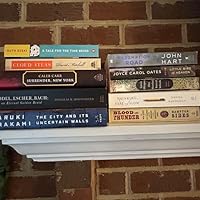
February 19, 2020
I read The Infinite Blacktop on the basis of strong reviews when it was first published in 2018. I enjoyed it, but when I was done I realized that I very much wanted to read the first book in the series, Claire DeWitt and the City of the Dead. Infinite Blacktop was laced with references to Claire's personal history, and I had an idea that it would all make more sense if I started at the beginning.
Well, I've just done that, and although I can't say that "making sense" is something Sara Gran is going for in the Claire DeWitt series, I can say that I enjoyed City of the Dead even more than Infinite Blacktop. Her descriptions of the aftermath of Hurricane Katrina, the impact of the storm and the broken levees (the worst engineering disaster in the history of the US, according to Wikipedia) not just on the physical structures of New Orleans but on the mental health of the survivors, is nothing short of amazing. It is not a conventional rendering in any sense, but I would venture to say that it is far more compelling than 90% of what you've seen on broadcast news or social media.
The mystery that brings Claire back to The City of the Dead is both tied to the storm and its aftereffects, and separate from them. And as is so often the case with books set in New Orleans, the city itself is something of a character.
Gran is an author of unique talents, one who stimulates us to consider issues related to The Meaning Of Life and other equally weighty topics through Claire's musings, her search for omens, her interest in the I-Ching and her ingestion and inhalation of all manner of illicit and unhealthy substances. It's easy to feel connected to her even if you share no life experiences simply because she challenges you at every turn and presents you with realities that, as she would say, you may not want but you definitely need.
I look forward to reading the middle book in the series, Claire DeWitt and the Bohemian Highway. I guess at the end of the day I just enjoy being in the reading company of difficult women who challenge me to think beyond the mystery they are ostensibly attempting to resolve.
Well, I've just done that, and although I can't say that "making sense" is something Sara Gran is going for in the Claire DeWitt series, I can say that I enjoyed City of the Dead even more than Infinite Blacktop. Her descriptions of the aftermath of Hurricane Katrina, the impact of the storm and the broken levees (the worst engineering disaster in the history of the US, according to Wikipedia) not just on the physical structures of New Orleans but on the mental health of the survivors, is nothing short of amazing. It is not a conventional rendering in any sense, but I would venture to say that it is far more compelling than 90% of what you've seen on broadcast news or social media.
The mystery that brings Claire back to The City of the Dead is both tied to the storm and its aftereffects, and separate from them. And as is so often the case with books set in New Orleans, the city itself is something of a character.
Gran is an author of unique talents, one who stimulates us to consider issues related to The Meaning Of Life and other equally weighty topics through Claire's musings, her search for omens, her interest in the I-Ching and her ingestion and inhalation of all manner of illicit and unhealthy substances. It's easy to feel connected to her even if you share no life experiences simply because she challenges you at every turn and presents you with realities that, as she would say, you may not want but you definitely need.
I look forward to reading the middle book in the series, Claire DeWitt and the Bohemian Highway. I guess at the end of the day I just enjoy being in the reading company of difficult women who challenge me to think beyond the mystery they are ostensibly attempting to resolve.

July 14, 2011
An existential mystery! Who'd have thought it would have it's own manual? Claire Dewitt learned at the feet of an apparent master who used the manual in teaching her students the way of living as well as the ways of detecting. As Claire tells us:
"Silette wrote one book, Detection, in 1959. Jaques Silette
was a genius. So I thought. So a few thousand others around
the world thought too." (loc 344)
This was the man who created her bible, the book that gave meaning to her life, the very frazzled life she lived, trying to decipher other people's mysteries.
Per Silette,
"There are no innocent victims....The victim selects his
role as carefully and unconsciously as the policeman, the
detective, the client, or the villain. Each chooses his role
and then forgets this, sometimes for many lifetimes, until
one comes along who can remind him. This time you may be
the villain or the victim. The next time your roles may
switch. It is only a role. Try to remember." (loc 344)
Claire has returned to New Orleans to solve a missing person mystery. This is a city she has a history with and no longer loves. It's not long after Katrina and the city and lives are a mess. The mystery she comes to solve proves to be a mess too. She is unlike any detective I've experienced before, using methods and the universe at large to help her.
I love many of the quotes from Detection and will give a couple here.
"Clues are the most misunderstood part of detection.
Novice detectives think it's about finding clues. But
detective work is about recognizing clues.
"Clues are everywhere. But only some can see." (loc 644)
"There are no coincidence," Silette wrote. "Only
mysteries that haven't been solved, clues that haven't
been placed. Most are blind to the language of the bird
overhead, the leaf in our path, the phonographic record
stuck in a groove, the unknown caller on the phone. They
don't see the omens. They don't know how to read the signs.
"To them life is like a book with blank pages. But to
the detective, it is an illuminated manuscript of
mysteries." (loc 812)
There are too many more and you should discover them for yourself as you experience Claire DeWitt attempting to solve this case in post-Katrina New Orleans. Unless you expect your experience to remain on Bourbon Street, you are unlikely to be disappointed. Be aware, this is not for those who want a gentle read.
"Silette wrote one book, Detection, in 1959. Jaques Silette
was a genius. So I thought. So a few thousand others around
the world thought too." (loc 344)
This was the man who created her bible, the book that gave meaning to her life, the very frazzled life she lived, trying to decipher other people's mysteries.
Per Silette,
"There are no innocent victims....The victim selects his
role as carefully and unconsciously as the policeman, the
detective, the client, or the villain. Each chooses his role
and then forgets this, sometimes for many lifetimes, until
one comes along who can remind him. This time you may be
the villain or the victim. The next time your roles may
switch. It is only a role. Try to remember." (loc 344)
Claire has returned to New Orleans to solve a missing person mystery. This is a city she has a history with and no longer loves. It's not long after Katrina and the city and lives are a mess. The mystery she comes to solve proves to be a mess too. She is unlike any detective I've experienced before, using methods and the universe at large to help her.
I love many of the quotes from Detection and will give a couple here.
"Clues are the most misunderstood part of detection.
Novice detectives think it's about finding clues. But
detective work is about recognizing clues.
"Clues are everywhere. But only some can see." (loc 644)
"There are no coincidence," Silette wrote. "Only
mysteries that haven't been solved, clues that haven't
been placed. Most are blind to the language of the bird
overhead, the leaf in our path, the phonographic record
stuck in a groove, the unknown caller on the phone. They
don't see the omens. They don't know how to read the signs.
"To them life is like a book with blank pages. But to
the detective, it is an illuminated manuscript of
mysteries." (loc 812)
There are too many more and you should discover them for yourself as you experience Claire DeWitt attempting to solve this case in post-Katrina New Orleans. Unless you expect your experience to remain on Bourbon Street, you are unlikely to be disappointed. Be aware, this is not for those who want a gentle read.

March 17, 2024
Crime is my favourite genre to read because at the hands of a competent writer, the crime is just a window dressing to tell a story about the people or place/community in which the crime took place in. A mediocre crime book however would still provide a solid entertainment from a reading standpoint. It's actually hard to want to read to get my entertainment when there are other ways such as turning on the telly or listening to the newest album of my favourite band or just go and play some video games. That's why crime novel just hit the sweet spot for me because if it's good, it's real good and when it's not...I still get the crime. It's hard to say that about horror etc...etc... But this is also why I love Noir as my preferred subgenre of crime fiction, because Noir is about the crime.
The City of The Dead
though is not that. It's a detective fiction but there's a thin layer of noir atmosphere laid on top of it without being one.
City of the Dead opened with how a detective fiction would normally happen - Claire DeWitt, the main protagonist getting hired by a client. The client here is Leon Salvatore, a man looking to find out what happened to his uncle Vic Willing who went missing in the days after Katrina hit New Orleans. Like many good crime fiction, the setting plays an important role and this is where Gran's writing shine. The New Orleans that Sara Gran conjured up is a living one and it's broken. You could feel the humid air and funky rancid smell of the street, the people tired and weary, the food...the do make my mouth watering just for a taste.
Impressive worldbuilding however did not let Gran slacked on the characters and the character moments. The investigation/detecting scenes are twice as good having a sense of Claire DeWitt as a character and the type of detective she is. "There are two kinds of detectives… The first are those that decide to be a detective. The second are those that have no choice at all.'' her former lover said and that's what she believe in. Another is a French PI named Silette whose book on detective she holds dear as her scripture. Claire is also an oddball of a person who took drugs, drinks too much, isn’t afraid to put her lips around a cigarette recently marinaded in embalming fluid. A little too much in the hands of lesser writers but Gran made it believable, and should be envied at how good she is able to create a dark but still loose character.
Unlike a lot of the first book of a proposed series however, City of the Dead doesn't feel like the number one in that it doesn't feel like a set-up novel, nor it doesn't overexplained anything. What we read are what we got. Brief trip to the past but it's mostly connected to the subject of being a detective and how a PI does it their work. Sara Gran is a writer for whom expectations are there to be overturned.
City of the Dead opened with how a detective fiction would normally happen - Claire DeWitt, the main protagonist getting hired by a client. The client here is Leon Salvatore, a man looking to find out what happened to his uncle Vic Willing who went missing in the days after Katrina hit New Orleans. Like many good crime fiction, the setting plays an important role and this is where Gran's writing shine. The New Orleans that Sara Gran conjured up is a living one and it's broken. You could feel the humid air and funky rancid smell of the street, the people tired and weary, the food...the do make my mouth watering just for a taste.
Impressive worldbuilding however did not let Gran slacked on the characters and the character moments. The investigation/detecting scenes are twice as good having a sense of Claire DeWitt as a character and the type of detective she is. "There are two kinds of detectives… The first are those that decide to be a detective. The second are those that have no choice at all.'' her former lover said and that's what she believe in. Another is a French PI named Silette whose book on detective she holds dear as her scripture. Claire is also an oddball of a person who took drugs, drinks too much, isn’t afraid to put her lips around a cigarette recently marinaded in embalming fluid. A little too much in the hands of lesser writers but Gran made it believable, and should be envied at how good she is able to create a dark but still loose character.
Unlike a lot of the first book of a proposed series however, City of the Dead doesn't feel like the number one in that it doesn't feel like a set-up novel, nor it doesn't overexplained anything. What we read are what we got. Brief trip to the past but it's mostly connected to the subject of being a detective and how a PI does it their work. Sara Gran is a writer for whom expectations are there to be overturned.
May 18, 2019
Good, different. Could have done without Silette's "Wherever you go- there you are." words of wisdom, and
PS Would never have tried this book- as well as sooooo many other books- if not for carol's wonderful reviews.
PS Would never have tried this book- as well as sooooo many other books- if not for carol's wonderful reviews.

January 20, 2020
Not as charming as it thinks and very consistently incredibly problematic in the way it treats New Orleans, especially its Black residents. Did everyone else reading this book not notice that "the best detective in the world" literally dressed up in blackface to try to get people in Congo Square to talk to her about her case?
"This time I went as Elmyra Catalone, African-Italian recovering crack addict from Memphis, Tennessee, raised Baptist, now occasionally Pentecostal, occasional sex worker, victim of sexual abuse at the hands of a cousin, mother of four children, one dead, one in foster care, one in Angola, one living in the town of Celebration, Florida, with a wife and two children. Elmyra is off the crack cocaine but she likes her liquor and has a schnapps now and then to be sociable."
Like, is this a joke? Spoiler: It's not; it's how Claire DeWitt sees everyone Black in New Orleans. This colors the entire case, it's impossible to ignore during the reading experience, and it's super weird to me that other people dgaf about this. There are so many other problematic things about the plot, not least that Claire intervenes at the end to "better" things for a young Black man she decides from the moment she meets him has a death wish because of the life he's led, the misfortune he's had to be born in the city she seems to literally think is the worst place on earth.
(Aside: Claire also "knows" a lot about mysticism in other cultures (Chinese, Mexican, Indian, Native American) and does things like read from the I-Ching, the darling of Western intellectuals, to guide her through her detecting, and chant prayers she learned from "a lama in Santa Cruz" when in times of danger. Not really the kind of character I enjoy spending hundreds of pages with.)
Is Claire DeWitt the same as Sara Gran? Of course not. But Sara Gran might want to watch this video all the way through: https://www.youtube.com/watch?v=QKzob...
"This time I went as Elmyra Catalone, African-Italian recovering crack addict from Memphis, Tennessee, raised Baptist, now occasionally Pentecostal, occasional sex worker, victim of sexual abuse at the hands of a cousin, mother of four children, one dead, one in foster care, one in Angola, one living in the town of Celebration, Florida, with a wife and two children. Elmyra is off the crack cocaine but she likes her liquor and has a schnapps now and then to be sociable."
Like, is this a joke? Spoiler: It's not; it's how Claire DeWitt sees everyone Black in New Orleans. This colors the entire case, it's impossible to ignore during the reading experience, and it's super weird to me that other people dgaf about this. There are so many other problematic things about the plot, not least that Claire intervenes at the end to "better" things for a young Black man she decides from the moment she meets him has a death wish because of the life he's led, the misfortune he's had to be born in the city she seems to literally think is the worst place on earth.
(Aside: Claire also "knows" a lot about mysticism in other cultures (Chinese, Mexican, Indian, Native American) and does things like read from the I-Ching, the darling of Western intellectuals, to guide her through her detecting, and chant prayers she learned from "a lama in Santa Cruz" when in times of danger. Not really the kind of character I enjoy spending hundreds of pages with.)
Is Claire DeWitt the same as Sara Gran? Of course not. But Sara Gran might want to watch this video all the way through: https://www.youtube.com/watch?v=QKzob...

December 23, 2014
I'm not sure where to start. How about with this: I don't recommend this book.
There aren't any likeable characters. In fact, I could care less if they all died. Which, you know, seems entirely possible given how they live. I'm surprised that the "greatest detective in the world" is able to function at all when most of her time is spent high, or drunk, or both. Much of the rest of her time is devoted to ridiculous attempts to discern truth using omens, dice, or dreams. Actually, we could break it down:
Claire DeWitt's Actions
50% substance abuse
25% superstition, mysticism, & charlatanism
15% unnecessary bad language
10% fumbling around town and accidentally figuring stuff out
When you realize that these things have an undercurrent of fear, anger, bitterness, loneliness, and despair, well... It doesn't make for a very likeable or believable "greatest detective in the world", as she repeatedly claims for herself.
The writing itself- the structure of the novel and the methods used to tell the story- is so convoluted and mystical that the book felt like a dream. (Or a nightmare.) It was disjointed and relied heavily on quotes from Claire's favorite book, which is an invention of Gran's. It could have been a clever device; instead, it was overdone, and the text nonsensical. I guess that's why Claire loves it so much; she seems to be very much part of the "What is truth?" school of thought.
There's a heavy emphasis on the drowning theme, which makes sense, given the setting of post-Katrina New Orleans. I'm left wondering if the book is a cry for help. So many of the characters are in deep misery and despair, unable to help themselves or figure out what is good and true, drowning in wickedness and sorrow. Claire is drowning, too. In the end, there's no redemption. Just a temporary reprieve.
There aren't any likeable characters. In fact, I could care less if they all died. Which, you know, seems entirely possible given how they live. I'm surprised that the "greatest detective in the world" is able to function at all when most of her time is spent high, or drunk, or both. Much of the rest of her time is devoted to ridiculous attempts to discern truth using omens, dice, or dreams. Actually, we could break it down:
Claire DeWitt's Actions
50% substance abuse
25% superstition, mysticism, & charlatanism
15% unnecessary bad language
10% fumbling around town and accidentally figuring stuff out
When you realize that these things have an undercurrent of fear, anger, bitterness, loneliness, and despair, well... It doesn't make for a very likeable or believable "greatest detective in the world", as she repeatedly claims for herself.
The writing itself- the structure of the novel and the methods used to tell the story- is so convoluted and mystical that the book felt like a dream. (Or a nightmare.) It was disjointed and relied heavily on quotes from Claire's favorite book, which is an invention of Gran's. It could have been a clever device; instead, it was overdone, and the text nonsensical. I guess that's why Claire loves it so much; she seems to be very much part of the "What is truth?" school of thought.
There's a heavy emphasis on the drowning theme, which makes sense, given the setting of post-Katrina New Orleans. I'm left wondering if the book is a cry for help. So many of the characters are in deep misery and despair, unable to help themselves or figure out what is good and true, drowning in wickedness and sorrow. Claire is drowning, too. In the end, there's no redemption. Just a temporary reprieve.
Displaying 1 - 30 of 1,856 reviews