In revisiting Sítio do Picapau Amarelo (a.k.a. Yellow Woodpecker Ranch), I found myself more concerned about the palimpsestic potential of literature in the age of pop culture than entranced by the nostalgic return to some of my absolute favorite childhood memories. In Reinações de Narizinho (the first book of this series), Monteiro Lobato creates a new type of children’s literature aligned to the piquant psychological state of mind of most young readers. The language, plot, and narrative devices employed reflect an ever-growing dynamism while also portraying the tight and self-referential world of an 8-year old with their limited existence.
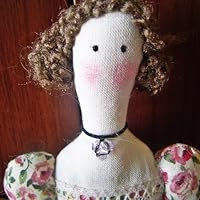
Lobato’s language is approachable yet precise, reflecting his researched take on Brazilian culture that sits somewhere between democratizing culture and paternalistically assuming the reader needs knowledge to be distilled. I believe that, in Sítio , we lean towards the former and good intentions reign—children, after all, objectively need linguistic adaptations. The necessity of approachability in children literature is not only a claim made by the author via his style but also via the plot. In the story “Pinocchio’s Brother”, for example, the narrator describes how Dona Benta feels the need to adapt the stuffy language of fairy tale books she reads for the children to create engaging stories, and only then everyone wants to listen in. Emília—a cloth doll who learns to speak—invents her own vocabulary with surprising logic and questions the (un)existence of certain words in the Portuguese language almost seamlessly; her own process of being fed a speaking pill and then starting to burp out words may be mirroring the idea that children, if allowed, can generate their own narratives and content as long as we understand their language.
These narratives do not need to be linear or cohesive, but they need to fundamentally share motifs and. While the book is organized as a short story collection, loosely in chronological order, it is questionable whether some stories are truly imagination accounts or a magical realism of sorts. And to say there are some continuity plot holes is an understatement: characters are dead and then alive, some are forgotten, and I have not even spoken about how hard it is to define the chronology of the entire Sítio series. But these stories all speak to each other, in fun, often unexpected ways. Minor characters that were presented at a glance in a story may come back later for a major role. The framing clearly delineates the start and the end of summer vacation, marking the real time in a phineas-and-ferb-esque “everything can happen” period. Quotes and catchphrases come and go, to different levels of importance. It’s almost as if some elements are remixed and sprinkled throughout the book as teasers, or as reminders.
Because of this not-so-chronological organization, most of Reinações feels like a slop-ish generation of stories from a small source material sometimes in different storytelling techniques. I do not mean this badly, rather, I mean this very well—for Lobato made me realize this is the process we ourselves use our creativity to play and generate stories when we are young. We create imaginary friends not out of nowhere, but based on TV cartoons and books we read; we obsess over and hyperfixate on such characters, because they have been with us for an enormous share of our lives. Our child play is but a generation of continuations, of unapproved bootlegged sequels to many pop culture icons. Most of the stories engage with characters from children’s literature and fairy tales, who share a feeling voiced by Little Thumbling: they are bored in their happily ever after and would like to start new adventures. So, in a way, Monteiro Lobato was aligned with the thousands of fan-fiction writers of AO3.
The narrative devices used, then, reflect this palimpsestic nature of children’s storytelling: all plotlines coexist and influence each other simultaneously. Character introductions are poorly timed—as if someone got too excited and decided to create a character only to leave them hanging for a few pages (for example, Felix the cat appears so early in the book at a glance, yet receives its protagonist moment much later). There are a few off-screen deaths that feel like a “oh yes we need to deal with them” situation, but who hasn’t killed their imaginary friend off-screen? That said, these devices do get a bit repetitive, especially in a book of over 10 stories: the repeated deus ex machina salvation of “we can just imagine that we are safe from a big peril” seems a bit frustrating, even for children—and to me read as lazy writing.
Some other notes:
This is the first time I read Reinações cover-to-cover (I have focused maybe too much on the Greek mythology stories, such as The Minotaur and The 12 Labours of Hercules ). I have definitely read the most famous stories—the visit to the underwater kingdom, for example—and I have watched perhaps too many renditions (and reprises of the same rendition) of the stories to the television.
The audiovisual imagery I have while reading these books invokes more nostalgia than the text itself: I can hear the theme songs from the early 2000s TV series, and I remember the landscapes of the Fable World or the 1001 Nights World in a way that colors the rest of the book. And I understand now that the constant adaptation creates its own palimpsestic layer of Sítio : reboots and later seasons are fanfictions of the show itself, proposing that even characters who are adapted from other stories can be further adapted by creative minds.
While I will always defend reading books in their original, unaltered text if possible, the racist comments about the cook Tia Nastácia next to joyful illustrations objectively bother me. I do not think that, in the original text, these books teach children the best values… I wish the collected Lobato works from the world of Sítio were edited in a more academic, footnoted and heavily prefaced; I would be more comfortable reading them as such. For the perusal of children, however, I am all for editing books, as I do believe overall the novels tell kids significantly important lessons–similar to how the TV adaptation has done. Maybe we need to make our own edits, and juxtapose them into the original a bit more definitively this time.