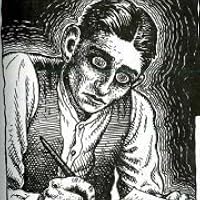
Mowing the lawn, automatic sprinklers, Little League baseball, school board meetings--the great French writer brings his talent, his analytic eye, to American suburbia: Connecticut in the 1950's.
Walter J. Higgins, supermarket manager, father of four, applies for membership in the local country club. He is a model citizen: active in the community, a churchgoer, doesn't drink or smoke. And yet someone on the admissions committee has blackballed him. The rejection opens childhood wounds, awakens painful secrets. Higgins becomes defiant, thinks of revenge. . . .
The Rules of the Game is the disturbing, moving story of a small man trying desperately to make something of himself and his family.
Georges Joseph Christian Simenon (1903 – 1989) was a Belgian writer. A prolific author who published nearly 500 novels and numerous short works, Simenon is best known as the creator of the fictional detective Jules Maigret. Although he never resided in Belgium after 1922, he remained a Belgian citizen throughout his life.
Simenon was one of the most prolific writers of the twentieth century, capable of writing 60 to 80 pages per day. His oeuvre includes nearly 200 novels, over 150 novellas, several autobiographical works, numerous articles, and scores of pulp novels written under more than two dozen pseudonyms. Altogether, about 550 million copies of his works have been printed.
He is best known, however, for his 75 novels and 28 short stories featuring Commissaire Maigret. The first novel in the series, Pietr-le-Letton, appeared in 1931; the last one, Maigret et M. Charles, was published in 1972. The Maigret novels were translated into all major languages and several of them were turned into films and radio plays. Two television series (1960-63 and 1992-93) have been made in Great Britain.
During his "American" period, Simenon reached the height of his creative powers, and several novels of those years were inspired by the context in which they were written (Trois chambres à Manhattan (1946), Maigret à New York (1947), Maigret se fâche (1947)).
Simenon also wrote a large number of "psychological novels", such as La neige était sale (1948) or Le fils (1957), as well as several autobiographical works, in particular Je me souviens (1945), Pedigree (1948), Mémoires intimes (1981).
In 1966, Simenon was given the MWA's highest honor, the Grand Master Award.
In 2005 he was nominated for the title of De Grootste Belg (The Greatest Belgian). In the Flemish version he ended 77th place. In the Walloon version he ended 10th place.
This is one of Simenon's 'psychological' novels, or 'roman durs' , which I tend to like just a little bit more than his Maigret novels. This novel was originally published in 1952. Placing it during Simenon's self imposed 'exile' from France from 1945 through 1955, when he lived in Quebec and the US and set some novels here as well.
In the novel, Walter Higgins is a suburban Connecticut businessman who goes through the typical mid life angst. His problems would appear to be minor; problems at work, at home, especially his problems associated with how he is perceived in his community. He certainly seems to have a good life, happy children, an understanding and loving wife, good job and career, yet he feels disassociated and removed from it all. So, "Ho Hum" you say, it's been done before, right? But then again, this is Georges Simenon! Master of observation! I was amazed at how well Simenon adapted to the change in setting from his usual France to the US. The details all rang true, as if he was channeling John Cheever or John O'Hara. What is most impressive about this book is Simenon's solution to the main character's problems. So completely unexpected. Very thought provoking, and not just for the character in question, but it also made me question how something similar could happen to anyone. Not just in the very specific situation described in the book, but how someone's choices in life can appear to be completely sensible, at least to them, but will actually result in a completely adverse conclusion.
I don't rate a lot of books 5 stars, and yes, I'm a huge fan of Simenon, but this is a 5 star book.
The first novel I've read of Simenon's set in the U.S., in a Connecticut suburban town to be exact. There is also no real crime in the novel but like his other non-Maigret novels, it hinges on a moment that causes a man to come to terms with himself and his life. In this case rejection (for the 2nd time) of his application to the Country Club...and why? Walter Higgins is an upstanding citizen, head of the town's supermarket, with a wife and four children, another on the way...
Perhaps it is Higgins' origins, his mother and her antics, even though he and his wife have carefully hidden her whereabouts (and theirs from her).
The novel is interesting in its view of American suburban life, the club-like atmosphere, who is in and who is out...but how much is in Higgins' head? How much comes from trying so hard to fit in?
Curious about Simenon's life in the U.S., I discovered he lived for five years in Lakeville, CT, a town I used to live in. He was determined to raise his children in the States and his son Marc was enrolled in the prestigious Hotchkiss School. Would love to know exactly which house he lived in.
Belle histoire Très belle histoire Un homme fait la crise de la quarantaine pour une boule noire sans importance Mais dommage que la fin est inachevée on attend la suite ou alors c'est au lecteur de l’imaginer
Once again, Simenon distinguished himself in this novel in displaying his perfect command of his LE-BON-USAGE style of French. Perfect French. I’ve studied French language, grammar and literature all my life and I still can’t speak French the way Simenon delivers it in writing and I wish I could… Simenon seems to have finished touring North America when he basically spit out this novel which is set in the American mid-Atlantic states, Connecticut, New Jersey, and New York, with the protagonist, Walter Higgins, driving across New York State quickly a few times. Huggins’ backstory is that he came from a dysfunctional, troubled and then broken home, alcoholism, kleptomania and abandonment in the parents, not to mention lack of parenting; unfit parents is a legal thing. But after completing high school in his hometown Oldbridge, New Jersey, [fictitious place] and doing a stint in the U.S. Army, he seems to have turned out ok, got married, has four, five, six kids, a newly constructed big house in a Williamson Connecticut, [another fictitious place, supposedly generic places, in the mind of the author, Simenon] suburban town. He seems to be a successful grocery store manager with extensive accounting experience. He puts down community roots. Church with the family, school building committee, marching with the American Legion on Memorial Days, and participating in a few more community committees and organizations. But there’s a fancy, upscale, high-falutin’ Country Club in town with restricted membership, a private golf course, private beach and private marina and he wants in to raise his family’s social status. And he goes and gets blackballed in his membership bid two years in a row and thus forever barred from the Country Club. His life starts to unravel and in a huff he publicly resigns from the school building committee and no one in town seems to care or even notice. He’s still counting his blessings and his friends, as it turns out, mistakenly. At that point his alcoholic and kleptomaniac unfit mother, previously permanently committed to a psychiatric residence in Glendale, New York, [fictitious place] acts up, escapes from there, flees and gets herself run over by a bus and killed back in Oldbridge, New Jersey. He does look after all the expensive funeral arrangements back in New Jersey, where he grew up, but after that he breaks down psychologically, clinically and also goes on an unexpected alcoholic bender, considering he absolutely never drinks at all, to the point of alcohol poisoning, but does make it home in the car to Williamson, Connecticut and his wife and kids. The doctor ‘friend’ still makes house calls and Higgins pulls through the whole dissociative episode thing with a substitute manager replacing him at the grocery store during his medical recovery. He aims to get back on track with absolutely everything in his life and live without the Country Club. It’s not too bad, he only quit the school building committee in anger. But his elder daughter finds out it’s his one remaining ‘friend’ who blackballed him for reasons unknown. I found the dénouement after all the conflicts to be not entirely culturally American but it was a French, or Belgian man’s dénouement, the way an obedient Frenchman or Belgian would have handled it. An American, if the damned Country Club really meant that much to him, would have gotten violent in some way [ why do you think there are so many guns in the good, old U.S.A. ?] or thrown in the towel, resigned from everything, perhaps even his job, or abandoned everything including his family and gone to live in some other state. His wife, Nora, hurriedly reminded him to remember his family so he didn’t give up anything else. Just making an American setting does not mean a writer understands Americans oh so much. But the storyline was believable; I know plenty of physicians who get very hot under the collar merely discussing the topic of blacklisting doctors from a hospital’s admitting privileges, and at the thought of how such blacklisting could destroy a medical career and life.
Lecture qui me laisse perplexe, confuse, à moitié satisfaite. Walter est un gars basico-basique, pas particulièrement heureux, pas particulièrement malheureux. Classe sociale basse, mais pas dans la misère (du tout) ; bref, un mec X comme il en existe des millions. Et comme ces millions-là, Walter veut s’élever dans « la société », atteindre la classe sociale « supérieure ». Via un de ces fameux clubs bon chic bon genre, option golf et bateaux, vous voyez le style. On le lui en refuse l’entrée à travers une boule noire lors d’un vote. Et là, Walter entre en dépression / rage absolue. Il est traversé par toutes les pensées les plus sombres de la Terre, de l’anxiété à la tristesse à la violence. Il remet tout en cause, depuis sa « société » (son bled paumé) à sa famille. Et il a raison dans son raisonnement, souvent : oui, l’origine du mal est bien le concept de l’égoïsme de ses compatriotes, oui, bien des gens sont des PNJ, des moutons suiveurs. Oui, le népotisme et « les connections » font tout, et non, nous ne sommes pas en méritocratie. Mais Walter n’est pas un génie et il est bien paumé sur la façon d’attaquer le système. Il s’en prend intérieurement à un communiste pour son alcoolisme, il s’en prend à ses voisins classistes (il a raison), mais continue de courber fièrement l’échine devant ses patrons dans le milieu professionnel. Et après ? Après que l’auteur nous ait fait monter en puissance dans la rage de Walter ? Rien ne se passe. L’histoire s’achève dans la confusion, via une histoire de famille liée à l’origine sociale originelle de Walter, mais sans vraie résolution. Aucune conclusion n’est avancée, on ne sait même pas quelle est l’ultime résolution de Walter, c’est juste nébuleux. On a donc un début de réflexion, entrecoupé bien sûr de sexisme et de racisme (l’auteur est certes de la vieille école mais nous ne détournerons pas les yeux de cette réalité), et ça s’arrête platement. C’est rare que je parvienne à cette conclusion, en général c’est plutôt le contraire, mais je pense que ce livre aurait dû… être rallongé ? Pour éclaircir les zones d’ombre ? À noter que le style d’écriture du livre était, cependant, rafraîchissant dans son ancienneté. De longues phrases (trop, parfois), enrichies d’un vocabulaire hélas perdu depuis. C’était plaisant de se sentir respectée en tant que lectrice, dans le fait qu’on ne nous prenne pas pour des élèves de primaire. C’est juste regrettable que l’auteur nous laisse sur notre faim ainsi, et bien sûr qu’il ne respecte ni les femmes ni les minorités, tout court.
PS : je me demande si c’était volontaire, cette sensation d’inachevé. Est-ce l’auteur qui ne sait pas tirer les conclusions sur le mal qui nous entoure (le capitalisme), ou est-ce simplement pour rester fidèle au personnage de Walter, à la fois simple et consumé par des volontés qu’il ne comprend pas pleinement, et ne PEUT PAS comprendre, d’ailleurs, de par sa nature faiblarde ? Je serais curieuse de découvrir la réponse à cette question. Edit Review
[Hamish Hamilton] (1988). HB/DJ. 1/1. 154 Pages. Purchased from John Westcott (jrwestcotts).
Walter J. Higgins considers himself to be an upright, decent family man. He’s obsessed with social climbing though, to his frustration, has achieved but modest success, and that slowly.
In certain respects, his plan of advancement (as he sees it) is stymied by the characters of those with whom he’s obliged to ingratiate himself. There are snobs, bigots, hypocrites, liars… a difficult path to navigate.
I had some sympathy with him until his Country Club membership application is rejected for the second time.
Then:
“The bastards! …I’ll kill them! …He had worked out a whole plan of revenge… He could kill, if he wanted, everyone in Williamson, or almost everyone, by poisoning a common item of food. The bread? The bacon? It would have to be thought out carefully… He wouldn’t do it. What good would it have done him?” (pp. 24-25.)
Rather dark.
Great cover art by Ashley Potter (~1957-).
This entire review has been hidden because of spoilers.
An engaging, character based, short novel about a married man with a family who is a hardworking, responsible citizen in a small town in Connecticut, USA. He is a retail manager. He grew up with only his mother. He learned early on to be able to look after himself as his mother was fairly unreliable. He started work as a delivery boy and work his way up in the retail organisation. He has set himself the goal of being a member of a country club, but is unable to gain admittance. This affects him deeply and he reassesses his life goals.
Quite compelling, and more than a little sad. A supermarket manager tries time and again to bask in the electric glow of the american dream/hallucination, only to find/feel that he's always on the other side looking in. Another I think would be good to reissue, and definitely one I'll re-read in a decade, if not sooner. There's a subtle thread running through this one that quite effectively levels some of the blame at the protagonist himself, while never lessening its indictment on the hollow insincere system itself.
I didn't really get this book, nor did I enjoy it very much. Some comments: all Simenon's books set in the US are very dated and all the characters are typecast. The lead is usually a neurotic male and the family (if there is one) are usually just pasted on. Walter (our hero) fits this mold. His real problem is that he doesn't know who he is or where he's going. At the end he thinks he's figured it out but I think he's still delusional.
Le roman d’un effondrement, d’une prise de conscience.
En lui refusant son adhésion au Country Club local, le gérant d’un commerce de la ville se fait remettre à sa place au sein de sa communauté. Il n’est pas des leurs !
Mais qui est-il ? C’est alors qu’il apprend le décès de sa mère, cleptomane et alcoolique.
Un roman bien sombre sur l’hypocrisie sociale… Une triste colère désabusée
‘Passing Jimmy’s Tavern, where there were always truck drivers and construction workers at the bar, he suddenly regretted the fact that he didn’t drink. It might be a relief, a respite, to let thoughts go hazy until the world seemed nothing but a dream. Was that what people looked for from alcohol?’
In between other books, tried Simenon for the first time. Maybe this wasn't the best one to begin with, and doubt I will read any more. Felt mostly no empathy for this man who faces several life altering crises. That's a very strange response for me who is usually always for the underdog...
Georges Simenon, a Belgian and a name that nobody associates with the American Dream, wrote about it from the outside, as an astute observer, when he lived in Lakeville, CT, while his son attended the prestigious Hotchkiss School.
The American Dream; it is the national epic, the story of the self-made man who becomes somebody, a contender for upward mobility, a number in the race for economic and material security; a dream that F. Scott Fitzgerald satirized in The Great Gatsby, that Arthur Miller eulogized in Death of a Salesman, and Dr. Martin Luther King, Jr. attempted to resurrect in “Letter from a Birmingham Jail.” At the heart of the American Dream, beneath the noble sentiment of “Life, Liberty, and the Pursuit of Happiness,” is Obsession, which is the theme and backdrop to all of Simenon’s romans durs, his ‘hard’ psychological novels.
Simenon’s Walter Higgins sincerely loves his wife, worries about his tomboyish daughter, Flo, and does all that is expected of him, including mowing the lawn, without any bickering. Walter, however, is restless, but he has a plan. The problem is that he is dependent on others. His bootstraps have lifted him only so far.
Walter believes that membership in the town’s country club will prove that he has ‘arrived.’ The club is his Obsession. He believes that this one thing will secure respect and status for his family. He is rejected. Worse, he knows the individuals who voted against his application, and worse than that is that he is rejected a second time. Simenon’s cynicism is dark. The reader knows that Walter will never be accepted. The reader understands the country club acceptance as something banal. Walter does realize where he came from, how far he has come up in society. He goes back to the neighborhood where he grew up with his difficult mother, appalled at the complacency and ignorance he finds there. He returns to the burbs, grateful, but his is an embattled contentment. His quiet despair is not in living the life of quiet desperation, but understanding that human life has no worth in American society. This is the unspoken rule in a cynical game.
There is no crime in here and readers may think that not much happens in this novel. Simenon’s style is understated, but cumulative in the details, and the car accident that is domesticity unfolds frame-by-frame to reveal just how fast, how senseless and how worthless life is to the people on the street before and during the accident. People will walk on.
Simenon valued his romans durs because he considered the psychological portrait harder work than his popular procedurals – this from a man who wrote over four hundred novels, seventy-five of them with Inspector Jules Maigret. Simenon extends some hope. Higgins has some awareness. The crime is that nothing will change, despite his energy, his movement to better himself. It is easy to forget Simenon’s prescience.
He wrote Rules in 1955, at a time when Ozzie & Harriet was on television. The novel, however, was not translated for English-speaking readers until 1988.
Georges Simenon, I have read, was prouder of his "psychological novels" than of his famous series of mysteries starring Chief Inspector Maigret of the Parisian police. This is the second one I've tried, and I'm going to have to say I disagree with him.
A long interior dialog by a man wishing he knew what to do to fit in with the rest of society. Events do transpire -- it's not the kind of book where nothing happens -- but I'm not very happy about them. I like personal crises to be dealt with less blatantly, I guess. We could have had all these events related without pitching them straight from the shoulder of the panicked central character.
If you like these, great. I'm going to stick with Maigret.
Rules of the game takes up one of Simenon's favorite themes: middle aged men coming to a crisis in their lives. While his description of the feelings of the protagonist is moving, he gives so much back story that the characterization felt rather clinical. The ending was also more redemptive than other Simenon books. I guess I like a darker Simenon.
A very self-absorbed Walter finally figures out "the rules of the game" AKA life!! I like the way Simenon turns a phrase - he does have a way with words! But I think Walter should have realized that no one really pays that much attention to anyone else - he is borderline paranoid and I'm glad he was finally able to see its a "live and let live world". Not all about him!!!