

What do you think?
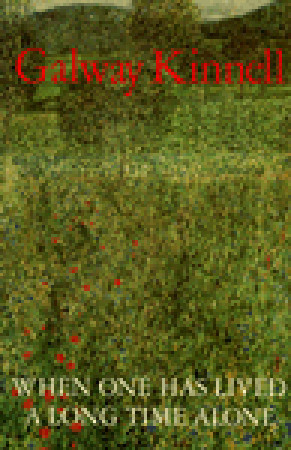
When One Has Lived a Long Time Alone
A collection of poems ranging from melancholy meditations of a solitary mind concerning estrangement and the longing for reconnection to the natural world and its creatures closely observed.
- GenresPoetry
80 pages, Paperback
First published October 31, 1990
About the author
Galway Kinnell
128 books195 followersKinnell studied at Princeton University, graduating in 1948. He later obtained a Master's degree from the University of Rochester.
As a young man, Kinnell served in the US Navy and traveled extensively in Europe and the Middle East. His first volume of poetry, What a Kingdom It Was, was published in 1960.
Kinnell became very involved in the U.S. civil rights movement upon his return, joining CORE (Congress of Racial Equality) as a field worker and participating in a number of marches and other civil actions.
Kinnell was awarded the Pulitzer Prize and a National Book Award for Selected Poems (1980), a MacArthur Fellowship, a Rockefeller Grant, the 1974 Shelley Prize of the Poetry Society of America, and the 1975 Medal of Merit from National Institute of Arts and Letters. He served as a Chancellor of the Academy of American Poets from 2001 to 2007.
As a young man, Kinnell served in the US Navy and traveled extensively in Europe and the Middle East. His first volume of poetry, What a Kingdom It Was, was published in 1960.
Kinnell became very involved in the U.S. civil rights movement upon his return, joining CORE (Congress of Racial Equality) as a field worker and participating in a number of marches and other civil actions.
Kinnell was awarded the Pulitzer Prize and a National Book Award for Selected Poems (1980), a MacArthur Fellowship, a Rockefeller Grant, the 1974 Shelley Prize of the Poetry Society of America, and the 1975 Medal of Merit from National Institute of Arts and Letters. He served as a Chancellor of the Academy of American Poets from 2001 to 2007.
Ratings & Reviews
Friends & Following
Create a free account to discover what your friends think of this book!
Community Reviews
Displaying 1 - 24 of 24 reviews

November 29, 2014
Wow. With the recent death of Galway Kinnell, the world has lost a vibrant voice. His imagery and wordsmithing is a thing of wonder. While I did not completely understand all of the poems, each one of them affected me in some manner. He is a poet that I will most assuredly turn back to again and again.
HIGHLY RECOMMENDED
HIGHLY RECOMMENDED
September 8, 2021
I'm crying so that's probably good.
I like how he talks. I wish people talked like this more often instead of like robots. Maybe if we got used to poetry we wouldn't cry when it happened. By we I mean me. I have lived a long time alone and I will be also alone in the grave. Oops, more crying. But actually a lot of this was just an old man with anxiety about dying and also like, reminiscing about really hot sex or whatever. So your standard fare. But fun phrasing, and isn't that what poetry is all about? Maybe not. 4 stars for style.
I like how he talks. I wish people talked like this more often instead of like robots. Maybe if we got used to poetry we wouldn't cry when it happened. By we I mean me. I have lived a long time alone and I will be also alone in the grave. Oops, more crying. But actually a lot of this was just an old man with anxiety about dying and also like, reminiscing about really hot sex or whatever. So your standard fare. But fun phrasing, and isn't that what poetry is all about? Maybe not. 4 stars for style.

Read
July 3, 2024“after a long time of solitude, after the many steps taken / away from one’s kind, toward the kingdom of strangers, / the hard prayer inside one’s own singing / is to come back, if one can, to one’s own,”

September 22, 2013
Gift from Michael
What could of been
I miss him still.
He inscribed a first edition
as a gift to me
still feel the tender
From an article in NYT
10/16/23
What could of been
I miss him still.
He inscribed a first edition
as a gift to me
still feel the tender
From an article in NYT
10/16/23
September 7, 2025
I appreciated the word play and some specific phrases, but feel no need to pick this up again in the future (the basis of my rating system). I suppose it's not surprising that one who has lived a long time alone things about sex so much.
I may pick up another Kinnell collection from the library one day.
I may pick up another Kinnell collection from the library one day.

June 17, 2017
I found this collection uneven, especially compared to Kinnell's early poetry that was so astounding. There are some stunning lines and images, but also some convoluted syntax that I could not figure out with multiple readings.

February 20, 2021
While I would classify most of these poems as nice but not my style, there were a few that really grabbed me. The imagery is spot on. The title poem, which comprises the entire fourth section, is just gorgeous.

August 8, 2019
Really very skillful!
This runs the gamut from sorrowful to joyous, nostalgic and beautiful. I'm just thankful good poetry like this exists. Wish it were longer.
This runs the gamut from sorrowful to joyous, nostalgic and beautiful. I'm just thankful good poetry like this exists. Wish it were longer.

March 19, 2020
Many of these poems were sexual. I think the author is "gay"? Best poem: Oatmeal.

November 13, 2021
Mythic, spare, and haunting.

September 28, 2022
"Love is the religion that bereaves the bereft."

Read
January 12, 2023it's all about part IV for me <3
May 3, 2023
There are some very good poems
There are some very good poems mixed with some good, some ok and some weaker poems. The book is worth reading.
There are some very good poems mixed with some good, some ok and some weaker poems. The book is worth reading.

April 9, 2024
to be a keen, gentle observer of life like this is a gift, something i covet intensely
December 5, 2025
Good collection by a poet I enjoy. Several longer poems in this collection.

February 21, 2017
personal confessions of their own personally boring life, why is it poetry, who knows?

July 4, 2014
The Man on the Hotel Room Bed (excerpt)
For him sleep means lying as still as possible
for as long as possible thinking the worst.
Nor does it help to outlast the night–
in seconds after the light comes
the inner darkness falls over everything.
...
Love is the religion that bereaves the bereft.
No doubt his mother's arms still waver up
somewhere reaching for him; and perhaps
his father's are now ready to gather him
there where peace and death dangerously mingle.
But the arms of prayer, which pressed his chest
in childhood–long ago, he himself, in the name
of truth, let them go slack.
For him sleep means lying as still as possible
for as long as possible thinking the worst.
Nor does it help to outlast the night–
in seconds after the light comes
the inner darkness falls over everything.
...
Love is the religion that bereaves the bereft.
No doubt his mother's arms still waver up
somewhere reaching for him; and perhaps
his father's are now ready to gather him
there where peace and death dangerously mingle.
But the arms of prayer, which pressed his chest
in childhood–long ago, he himself, in the name
of truth, let them go slack.

October 30, 2012
This is the first poetry collection I have had the pleasure of reading from Galway Kinnell. It started a bit slow for me and maybe a bit too far on the abstract side of things as well. However, as I dug further in, I felt the poems become more grounded with just the right mix of abstract for me to keep the work interesting, engaging, and somewhat mysterious. I also picked up his 1982 Selected Poems that won the National Book Award and the Pulitzer and plan on checking it out soon. Recommended.

Read
December 29, 2011I will not name a "date I finished this book" because I don't think I'll ever be finished with this book. The titular cycle defined a part of my life the summer after my sophomore year in college; there are poems in it that I still haven't read with the focus they deserve. Galway Kinnell uses language with sensuality, precision, despair, joy, observation, creation, and more; he doesn't need to invent a new genre of poems because the ones he writes are so fully themselves.

September 1, 2011
Despite a few stunning poems near the end, this collection felt haphazard and vague. Most of the poems lacked Kinnell's typical clarity of image, which, to me, seems like a necessary companion to his habitual complexity of thought. I'd recommend The Past over this collection if you're looking for really excellent mid-career Kinnell.

September 25, 2007
I had the great pleasure of hearing Kinnell read aloud from this volume and I will never forget the music with which he presented these poems. An incredibly moving event that changed the way I read and view poetry.
April 11, 2009
When I am needy, I reach for this.

October 2, 2012
sad and beautiful

November 4, 2015
I could not resonate with the poems except for 2-3. Poetry is a very individual thing. This just didn't do it for me.
Displaying 1 - 24 of 24 reviews