E ARC provided by Edelweiss Plus
Isabel has been living with her lolo and lola in the Philippines in 1999, helping them garden so they can earn a living by selling their produce in the market. Her mother has been in the US for five years, working as a nanny to three children in a wealthy family while studying nursing. Now, she is doing well enough to send for Isabel. It's hard to levae her grandparents and her best friends, Cristina and Rosamie, but there's no choice. Soon, she is on a plane to San Francisco, where she is greeted by her aunt and uncle, with whom she and her mother will live for a while, because her mother in job hunting. Her lolo has told Isabel that if she is sad in her new home, she should look for familiar things, and she tries her best to do this. The apartment is nice, and she stays in her cousins' room, since they are at college. There are a large number of family members in the Bay area, some having come to the US in the 1960s and 70s. Some, like her cousin Joss, don't even speak Tagalog, and Isabel worries about her accent. She is glad to pick out new clothes at the mall to wear to Bayview Middle school. Her first day doesn't go particularly well, but she makes some progress as the weeks go on. She is forced into a friendship with Melissa' whose father is her aunt's boss at a senior facility. Isabel rather enjoys visiting with the older people, who remind her of her grandparents, especially since there is even a garden there. She missing the Jasmine Sampaguita that was growing in her grandparents' garden, and when she finds out that her school has a long abandoned garden, she is glad to find the same plant there. She joins the cooking club at school, and some of the members are glad to help her out. When one of the men at the senior facility is robbed, Isabel talks her classmates into doing a fund raiser for the center, which might also help save the school garden from being turned into a location for portable school units. It's hard to reconnect with her mother, especially since Nicollette, a girl her mother helped raise, keeps calling, and Isabel worries that her mother might want to move them to New York. Isabel tries very hard to "bloom where you are planted", and while making a home with her mother in the US isn't easy, in the end, she is glad that the two can be together again.
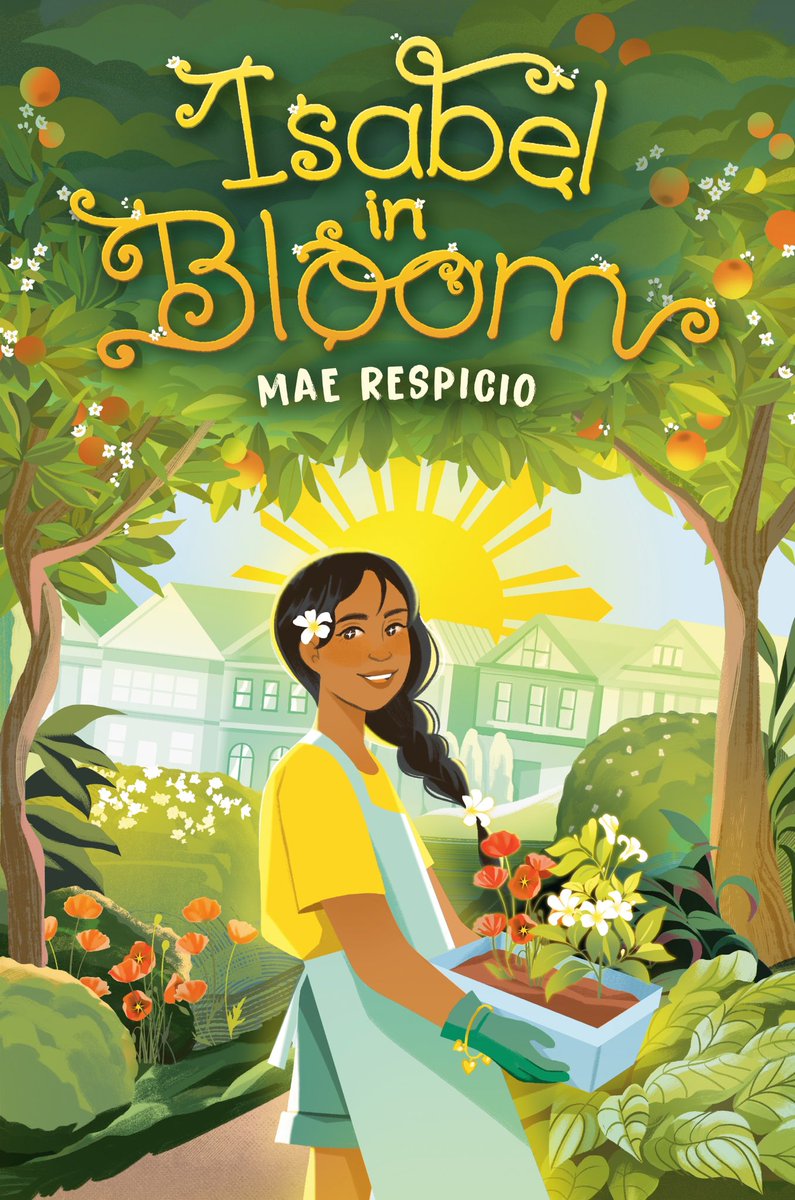
Strengths: Respicio always has such wonderful grandparents, even if the characters have to part from them. Even though Isabel wasn't keen on coming to the US, I appreciated that she tried to have a good attitude and tried her best to get along with people and overcome bad days. I was prepared for Melissa to be a horrible character and was rather relieved when she was not! The details of 1999 are good, including all of the fashions and teen magazines that Isabel enjoys. The gardening is a fun inclusion, and tweens are definitely fans of baking as well. There's plenty of Filipino culture, the practice of coming to the US to earn money to send back home is an interesting topic I haven't seen covered much in middle grade literature. The practice of sending Balikbayan boxes to relatives in the Philippines was very interesting; I know my mother loved to send me packages when I lived away from her, even mailing me cooked macaroni and cheese in the dead of winter when I was in college. I love the sunny cover on this one.
Weaknesses: While this is a well done novel in verse, if this were prose we might have been able to get more information about Filipino history that is lightly touched on. I'm not quite sure why this was set in 1999, other than to feature the very cool hamburger phone, let the girls spend time at the mall, and have the man at the senior center be a veteran of the Bataan Death March during WWII.
What I really think: Readers who enjoyed LaRocca's Red, White and Whole will find this a much more upbeat look at the immigrant experience, and fans of Respicio's How to Win a Slime War, The House That Lou Built, and Any Day With You will enjoy seeing this author try a different format.