

What do you think?

Die Prinzessin auf der Erbse
El príncipe quiere casarse con una princesa de verdad, pero ¿cómo comprobar si se trata o no de una verdadera princesa? La reina encuentra una ingeniosa solución: coloca un guisante en la cama donde ha de dormir la joven esa noche, y luego pone encima colchones y otros tantos edredones.
128 pages, Hardcover
First published May 8, 1835
About the author
Hans Christian Andersen
7,779 books3,603 followersHans Christian Andersen (often referred to in Scandinavia as H.C. Andersen) was a Danish author and poet. Although a prolific writer of plays, travelogues, novels, and poems, Andersen is best remembered for his fairy tales. Andersen's popularity is not limited to children; his stories — called eventyr, or "fairy-tales" — express themes that transcend age and nationality.
Andersen's fairy tales, which have been translated into more than 125 languages, have become culturally embedded in the West's collective consciousness, readily accessible to children, but presenting lessons of virtue and resilience in the face of adversity for mature readers as well. Some of his most famous fairy tales include "The Little Mermaid", "The Ugly Duckling", "The Nightingale", "The Emperor's New Clothes" and many more. His stories have inspired plays, ballets, and both live-action and animated films.
Andersen's fairy tales, which have been translated into more than 125 languages, have become culturally embedded in the West's collective consciousness, readily accessible to children, but presenting lessons of virtue and resilience in the face of adversity for mature readers as well. Some of his most famous fairy tales include "The Little Mermaid", "The Ugly Duckling", "The Nightingale", "The Emperor's New Clothes" and many more. His stories have inspired plays, ballets, and both live-action and animated films.
Ratings & Reviews
Friends & Following
Create a free account to discover what your friends think of this book!
Community Reviews
Displaying 1 - 30 of 195 reviews

May 1, 2016
The Princess and the Pea is a famous story from 1835, by Hans Christian Andersen, which has been adapted and retold numerous times. The original is quite short, and clearly satirical and tongue in cheek. Really it is a one-idea story, in which an obviously ridiculous situation is contrived, to test whether a princess is truly a princess. Charles Boner was the first to translate The Princess and the Pea into English, as "The Princess on the Peas" in "A Danish Story-Book" in 1846.
In the story, a prince is having difficulty finding a suitable wife. He suspects that all the candidates are imposters. They cannot truly be princesses, he thinks, because they are not perfect,
"He couldn't quite tell; there was always something that didn't feel right. So he came home very put out, for he did long for a real princess."
One stormy night a young woman, soaked to the skin with rain, asked for shelter in the prince's castle. She claimed to be a real princess, but the prince was dubious. His mother cunningly tested whether she was telling the truth by placing a single pea in the bed they offered the young woman for the night, covering it with twenty mattresses and twenty feather-beds.
The young woman doesn't get a wink of sleep, and complains the next morning that something hard in the bed had kept her awake. The prince, of course, is overjoyed at such clear proof of her pedigree, for,
"They could see that she was a real princess, as she had felt the pea through twenty mattresses and twenty feather-beds."
So the two are married, and live happily ever after.
The pea, the author tells us, is placed in a special Royal museum, where it can still be seen to this very day, unless someone has removed it. "That's a real story!" he concludes.
Hans Christian Andersen wrote a preface to the story, claiming to have heard it in his childhood, but it is not a traditional Danish fairy tale. It is thought that he may instead have heard a Swedish version, "Princess Who Lay on Seven Peas" ("Princessa' som lå' på sju ärter"), about an orphan girl is told by either a cat or a dog that something (a bean, a pea, or a straw) had been placed under her mattress, to test out her identity. In later adaptations, the story is spun out in various ways, such as the bedding being piled higher and higher to make the princess more comfortable before she finally retires for the night.
Some translations miss the final part - about putting the pea in a museum - out, and stress the high sensitivity of the princess instead. But this rather misses the humour of the story. It is a welcome relief to read a jokey story by this author. Even if Hans Christian Andersen was not responsible for originating the tale, he certainly made it popular, and the image of a highbred princess, so sensitive that she feels even a pea under her mattress, has been retained in fairy folklore to this day.
In the story, a prince is having difficulty finding a suitable wife. He suspects that all the candidates are imposters. They cannot truly be princesses, he thinks, because they are not perfect,
"He couldn't quite tell; there was always something that didn't feel right. So he came home very put out, for he did long for a real princess."
One stormy night a young woman, soaked to the skin with rain, asked for shelter in the prince's castle. She claimed to be a real princess, but the prince was dubious. His mother cunningly tested whether she was telling the truth by placing a single pea in the bed they offered the young woman for the night, covering it with twenty mattresses and twenty feather-beds.
The young woman doesn't get a wink of sleep, and complains the next morning that something hard in the bed had kept her awake. The prince, of course, is overjoyed at such clear proof of her pedigree, for,
"They could see that she was a real princess, as she had felt the pea through twenty mattresses and twenty feather-beds."
So the two are married, and live happily ever after.
The pea, the author tells us, is placed in a special Royal museum, where it can still be seen to this very day, unless someone has removed it. "That's a real story!" he concludes.
Hans Christian Andersen wrote a preface to the story, claiming to have heard it in his childhood, but it is not a traditional Danish fairy tale. It is thought that he may instead have heard a Swedish version, "Princess Who Lay on Seven Peas" ("Princessa' som lå' på sju ärter"), about an orphan girl is told by either a cat or a dog that something (a bean, a pea, or a straw) had been placed under her mattress, to test out her identity. In later adaptations, the story is spun out in various ways, such as the bedding being piled higher and higher to make the princess more comfortable before she finally retires for the night.
Some translations miss the final part - about putting the pea in a museum - out, and stress the high sensitivity of the princess instead. But this rather misses the humour of the story. It is a welcome relief to read a jokey story by this author. Even if Hans Christian Andersen was not responsible for originating the tale, he certainly made it popular, and the image of a highbred princess, so sensitive that she feels even a pea under her mattress, has been retained in fairy folklore to this day.

September 26, 2025
Shallow
No matter the intended audience, this story just didn’t work for me. It felt silly, shallow, and full of exaggeration that made little sense. While it may be considered a “classic,” I found it lacking in substance and far from enjoyable.
“A shallow, absurd tale that makes no sense—more fluff than fairy tale.”
No matter the intended audience, this story just didn’t work for me. It felt silly, shallow, and full of exaggeration that made little sense. While it may be considered a “classic,” I found it lacking in substance and far from enjoyable.
“A shallow, absurd tale that makes no sense—more fluff than fairy tale.”

December 19, 2020
"La princesa y el guisante" o "La real princesa" es un cuento que había escuchado su nombre pero no conocía en lo absoluto de su argumento. Trata de la búsqueda de una verdadera princesa aunque en realidad se queda bastante corto, por un lado porque no explica bien qué fue lo que no le convencía al príncipe en su búsqueda con las princesas anteriores y por otro lado la resolución es muy rápida y quita importancia a los protagonistas. Luego de ser sometida a una prueba con un guisante se descifrará el "valor" de la princesa. No creo como algunos han creído ver una burla a los reyes o aristócratas sino más bien algo simbólico y que resalta más bien la condición especial de los mismos.

September 4, 2016
What a lame story it is!
Overview:
A prince wants to marry a REAL princess. He tries to find, but couldn't. On the one rainy day, a girl comes to his castle and clams to be a real princess. But the queen doubts her and put her in a test which is:
Queen puts a pea under TWENTY MATTRESSES where the girl has to sleep. If she is sensitive enough to feel discomfort due to a pea then she is a real princess and if she can't then she isn't a real princess.
Things I didn't like:
- The story, That doesn't make any sense to me. Prince couldn't find a real princess on his own REALLY!!! I mean Doesn't he have any relatives like himself? If he does then author doesn't write it.
I think author has exaggerated this fact that rich people are very sensitive as compared to poors. Right! But that sensitive the author has written. WoW!
Overall, this story is a perfect time pass.....^__^
Overview:
A prince wants to marry a REAL princess. He tries to find, but couldn't. On the one rainy day, a girl comes to his castle and clams to be a real princess. But the queen doubts her and put her in a test which is:
Queen puts a pea under TWENTY MATTRESSES where the girl has to sleep. If she is sensitive enough to feel discomfort due to a pea then she is a real princess and if she can't then she isn't a real princess.
Things I didn't like:
- The story, That doesn't make any sense to me. Prince couldn't find a real princess on his own REALLY!!! I mean Doesn't he have any relatives like himself? If he does then author doesn't write it.
I think author has exaggerated this fact that rich people are very sensitive as compared to poors. Right! But that sensitive the author has written. WoW!
Overall, this story is a perfect time pass.....^__^

March 11, 2018
I don’t really understand how feeling something is a mattress is reason you are a princess?

May 16, 2024
Fantastic fairy tale of my childhood. I read this many times and still love it. There was a Prince, who only wanted to marry a real Princess, but he couldn't find her, so he returned to the kingdom without a wife. One evening, during a storm, a wet girl knocked on the gate, and said that she is a real Princess. The Queen told the maid, to put a pea under the mattress, which had more mattresses, and duvets on it. In the morning, the girl said she couldn't sleep,because something was pressing on her body. It turned out that she is a real Princess, and Prince married her.
Of course it's not true that Princesses are so delicate, that they can feel a pea under the mattress. It's just fiction. Each is human, and its impossible to do it
Of course it's not true that Princesses are so delicate, that they can feel a pea under the mattress. It's just fiction. Each is human, and its impossible to do it

June 15, 2017
Andersen ha escrito un final feliz!!!!
No sé si estar contenta o rematadamente decepcionada....
No sé si estar contenta o rematadamente decepcionada....
December 1, 2024
The Princess and the Pea is a ridiculous but still amusing story about a prince wanting to marry a real princess, but doesn't know who to marry as they all claim to be real princesses but don't act like one. I always understood by the pea that a princess must be sensitive (as also said in the text) and I also always thought that the sensitive part is due to noble people only getting the finest stuff so they are picky and notice if something isn't right than the poor folk who appreciates anything. Not sure till this day if that's the real meaning behind it, but I also noticed that the princess needed to be tested by a pea as she didn't have the appearance of a princess, so the story is probably about how looks can deceive.
Nevertheless, I really like the story and I'm happy to have read it once more.
Nevertheless, I really like the story and I'm happy to have read it once more.
December 4, 2022

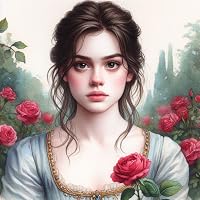
The story is about a silly test contrived by a queen to test the self proclaimed princess that showed up at the castle steps on a stormy night. The illustrations are very beautiful, they don't make them like this anymore. *longing tear*

November 12, 2024
حكاية حلوة ❤️
12 November 2024
12 November 2024

January 22, 2019
The Princess and the Pea, illustrated by Dorothée Duntze.
One of Hans Christian Andersen's briefest tales, The Princess and the Pea was originally published in 1835, in his first collection of fairy-tales, Eventyr, fortalte for Børn. Første Samling. Første Hefte. ("Tales, Told for Children. First Collection. First Booklet"). The story of a prince who wants to marry a "real" princess, and a princess so sensitive that twenty mattresses cannot soften the bruising impact of a small pea, it was described by Andersen as a traditional tale heard in his own youth.
This engaging edition features the beautifully stylized artwork of Dorothée Duntze - whose other fairy-tale projects include Andersen's The Emperor's New Clothes , as well as Rapunzel and The Twelve Dancing Princesses from the Brother Grimm - and her artwork gives the modest narrative real substance. From the decorative endpapers - embellished with little peas - to the gorgeously patterned clothing worn by the characters, Duntze creates an enchanting visual landscape. This edition is well worth the time of fairy-tale fans, particularly those who appreciate beautiful illustrations!
One of Hans Christian Andersen's briefest tales, The Princess and the Pea was originally published in 1835, in his first collection of fairy-tales, Eventyr, fortalte for Børn. Første Samling. Første Hefte. ("Tales, Told for Children. First Collection. First Booklet"). The story of a prince who wants to marry a "real" princess, and a princess so sensitive that twenty mattresses cannot soften the bruising impact of a small pea, it was described by Andersen as a traditional tale heard in his own youth.
This engaging edition features the beautifully stylized artwork of Dorothée Duntze - whose other fairy-tale projects include Andersen's The Emperor's New Clothes , as well as Rapunzel and The Twelve Dancing Princesses from the Brother Grimm - and her artwork gives the modest narrative real substance. From the decorative endpapers - embellished with little peas - to the gorgeously patterned clothing worn by the characters, Duntze creates an enchanting visual landscape. This edition is well worth the time of fairy-tale fans, particularly those who appreciate beautiful illustrations!

October 11, 2016
First impressions are not always correct and that the smallest of things can make a difference.
A young girl who shows up at the king’s house at night claiming to be a princess. Due to the girl’s poor and dishevelled appearance, the royal family has a hard time believing her story. The queen decides to test the girl and discover if she is telling the truth by placing a small pea under her bed, which is made up of 20 mattresses and 20 feather beds. The next morning, the girl complains of bruises and says she was unable to sleep because of something hard pressing down on her back. The queen then reveals the truth about the pea, and everyone rejoices as they realize that she was telling the truth all along because only a princess could have such delicate and sensitive skin. The prince, who was looking for a true princess, joyfully marries her, and they live happily ever after.
A young girl who shows up at the king’s house at night claiming to be a princess. Due to the girl’s poor and dishevelled appearance, the royal family has a hard time believing her story. The queen decides to test the girl and discover if she is telling the truth by placing a small pea under her bed, which is made up of 20 mattresses and 20 feather beds. The next morning, the girl complains of bruises and says she was unable to sleep because of something hard pressing down on her back. The queen then reveals the truth about the pea, and everyone rejoices as they realize that she was telling the truth all along because only a princess could have such delicate and sensitive skin. The prince, who was looking for a true princess, joyfully marries her, and they live happily ever after.
This entire review has been hidden because of spoilers.

August 19, 2018
প্রথম পড়ার পর এই গল্পটা নিয়ে মতামত চাইলে আমার কাছ থেকে "ফাটাফাটি!" বিশেষণটি পাওয়া যেত। পরে, যখন বামমার্গ ধরে হাঁটাহাঁটি করছি, তখন এই গল্পটা একেবারেই পোষাত না। এখন অবশ্য এর পেছনে অভিজাত রমণীর কুসুমকোমল ত্বক, বা দারুণ ঝড়ঝাপটা সামলে এক সন্ধ্যায় এক রাজকন্যা কোত্থেকে এসে উদায় হলেন অন্য দেশের রাজবাড়ির দোরগোড়ায়, এসব কূটপ্রশ্ন নিয়ে ভাবি না। তাই মাঝামাঝি তারাবাজি করা গেল।
September 21, 2011
This book tells the classic Hans Christian Andersen fairytale ‘The Princess and the Pea’ in which a young prince seeks to find a ‘real’ princess to marry. When a bedraggled girl knocks on the castle doors amidst a stormy night, the king and queen doubt her claims of being a ‘real’ princess. They decide to put her to the test, placing a pea under twenty mattresses and allowing her to sleep on it. Only a ‘real’ princess would object to such discomfort. In true fairytale style, the princess discovers the pea and lives happily ever after with the prince.
The pictures, although somewhat dated, are simple but relative, and accompany the story quite well.
Although this book is a very brief take on the classic fairytale, I feel it still provides a lot of opportunity for classroom activities.
The language used could inspire an activity on comparatives: ‘One was too tall and another was too small’ and ‘One was too sad and another was too jolly’. Also, the descriptive nature of the language could encourage a class discussion on weather: ‘Then one night there was a terrible storm. The lightening flashed, the thunder roared, the wind blew and the rain poured down’.
I like how the sentences are short and the vocabulary is differentiated, therefore making the book accessible to a range of reading abilities.
I dislike the hierarchical attitudes I feel the book presents, only a ‘real’ princess would be good enough for the prince and only a ‘real’ princess would be tender enough to feel a pea under twenty mattresses.
Overall, I enjoyed re-reading this classic fairytale, and feel it is a flexible piece of literature for use in the classroom.
The pictures, although somewhat dated, are simple but relative, and accompany the story quite well.
Although this book is a very brief take on the classic fairytale, I feel it still provides a lot of opportunity for classroom activities.
The language used could inspire an activity on comparatives: ‘One was too tall and another was too small’ and ‘One was too sad and another was too jolly’. Also, the descriptive nature of the language could encourage a class discussion on weather: ‘Then one night there was a terrible storm. The lightening flashed, the thunder roared, the wind blew and the rain poured down’.
I like how the sentences are short and the vocabulary is differentiated, therefore making the book accessible to a range of reading abilities.
I dislike the hierarchical attitudes I feel the book presents, only a ‘real’ princess would be good enough for the prince and only a ‘real’ princess would be tender enough to feel a pea under twenty mattresses.
Overall, I enjoyed re-reading this classic fairytale, and feel it is a flexible piece of literature for use in the classroom.

January 13, 2015
I enjoyed particularly what this artist did to portray this story. It is unique and interesting, the mattresses being portrayed in a fun way as well as the attire of the princess and people. The author portrayed the story in a interesting way that made me realize I didn't know the story as well as I had thought. Its defiantly older than any version I have heard but I enjoyed how it seemed to stick true to what I would think is the original telling of this tale.
Read
October 7, 2018I'm actually unsure how to rate this story. It's very short indeed and is not like other fairy tales, where you can sense a certain doom or moral in the story.
I also read this two times in German but remember neither liking or disliking it. It's sort of "meh" to me.
I also read this two times in German but remember neither liking or disliking it. It's sort of "meh" to me.

March 1, 2019
Without artwork supporting it this is less a short story and more a satirical parable, but I enjoyed it nonetheless and found it similar in tone to some of the satirical, biting short fiction of Mark Twain.

February 19, 2023
“As for the pea, they put it in the museum. There it’s still to be seen, unless somebody has taken it.
There, that’s a true story.”
Nice :) (she was just spoiled. That's it. Thats the moral of the story. )
There, that’s a true story.”
Nice :) (she was just spoiled. That's it. Thats the moral of the story. )

August 23, 2008
This is my all time favorite children's story and I wanted to get a pretty hard cover version for my shelf!

October 1, 2017
A very short and yet enjoyable story
December 27, 2017
Kinda problematic isn't it? telling girls that princesses are dainty and fragile?
July 19, 2024
A classic! Should be read to every child. I read it to my oldest daughter every night and once finished I would start reading it again and again till she fell asleep.

November 20, 2020
¿Por qué estoy leyendo cuentos infantiles?
Se termina el año, hace tiempo que sufro de un "bloqueo lector" y no voy a poder cumplir mi desafío de lectura, así que decidí hacer un poquito de "trampa".
Nunca había leído esta historia, no tengo mucho que comentar, solo que sirve para pasar el rato (y para aumentar el número de mis libros leídos en el año).
Se termina el año, hace tiempo que sufro de un "bloqueo lector" y no voy a poder cumplir mi desafío de lectura, así que decidí hacer un poquito de "trampa".
Nunca había leído esta historia, no tengo mucho que comentar, solo que sirve para pasar el rato (y para aumentar el número de mis libros leídos en el año).

Read
May 11, 2022H. C. is a BIG part of my childhood :))

Read
December 4, 2022Ajudando a minha irmã pt.1
June 23, 2024
Por ser tan breve, la historia es un tanto vacía. Aún así todas las ilustraciones que he visto de este cuento me fascinan.
May 16, 2026
me, in an alternate universe… (probably)
June 5, 2026
En klassiker utan dess like. Lätt att ta sig igenom och inte ens 30 sidor. Fantastiskt komponerad. En riktig page turner. Jag är nöjd

July 26, 2026
Children's picture book based on the story by Hans Christian Anderson retold by Susanna Davidson.
An enjoyable little book about a prince looking for a real princess to marry
An enjoyable little book about a prince looking for a real princess to marry
February 10, 2025
widac ze mezczyzna pisal
Displaying 1 - 30 of 195 reviews