

What do you think?

Aldrig mera krig
Goodreads Choice Award
Nominee for Readers' Favorite History & Biography (2011)En iskall gryning i norra Frankrike, januari 1917. Trettiosex skott smattrar genom tystnaden och arkebuseringen av de brittiska underofficerarna Joseph Stones, Peter Goggins och John McDonald är fullbordad. Deras brott var att ha flytt undan ett tyskt anfallskommando.
Krigsmotståndarna fackföreningsmän, författare, journalister, arbetare förföljdes skoningslöst under första världskriget. 6 000 av de 20 000 män som vägrade värnplikt hamnade i fängelse.
Adam Hochschild berättar den gripande historien om dem och om de många som på hemmaplan i Storbritannien förde en ojämn kamp mot den massiva värvningsyran och krigspropagandan.
Första världskriget skördade mer än sex gånger fler dödsoffer än något tidigare krig. Hade nästa världskrig gått att undvika om freden i Versailles utformats bättre? Vad hade hänt om Storbritannien aldrig gett sig in i kriget 1914?
Adam Hochschild har på svenska också givit ut Spräng bojorna. Han är en av grundarna till tidskriften Mother Jones och undervisar vid journalisthögskolan vid Berkeley, Kalifornien.
Krigsmotståndarna fackföreningsmän, författare, journalister, arbetare förföljdes skoningslöst under första världskriget. 6 000 av de 20 000 män som vägrade värnplikt hamnade i fängelse.
Adam Hochschild berättar den gripande historien om dem och om de många som på hemmaplan i Storbritannien förde en ojämn kamp mot den massiva värvningsyran och krigspropagandan.
Första världskriget skördade mer än sex gånger fler dödsoffer än något tidigare krig. Hade nästa världskrig gått att undvika om freden i Versailles utformats bättre? Vad hade hänt om Storbritannien aldrig gett sig in i kriget 1914?
Adam Hochschild har på svenska också givit ut Spräng bojorna. Han är en av grundarna till tidskriften Mother Jones och undervisar vid journalisthögskolan vid Berkeley, Kalifornien.
437 pages, Hardcover
First published April 11, 2011
About the author
Adam Hochschild
33 books1,253 followersHochschild was born in New York City. As a college student, he spent a summer working on an anti-government newspaper in South Africa and subsequently worked briefly as a civil rights worker in Mississippi in 1964. Both were politically pivotal experiences about which he would later write in his book Finding the Trapdoor. He later was part of the movement against the Vietnam War, and, after several years as a daily newspaper reporter, worked as a writer and editor for the leftwing Ramparts magazine. In the mid-1970s, he was one of the co-founders of Mother Jones.
Hochschild's first book was a memoir, Half the Way Home: a Memoir of Father and Son (1986), in which he described the difficult relationship he had with his father. His later books include The Mirror at Midnight: a South African Journey (1990; new edition, 2007), The Unquiet Ghost: Russians Remember Stalin (1994; new edition, 2003), Finding the Trapdoor: Essays, Portraits, Travels (1997), which collects his personal essays and reportage, and King Leopold's Ghost: A Story of Greed, Terror, and Heroism in Colonial Africa (1998; new edition, 2006), a history of the conquest and colonization of the Congo by Belgium's King Léopold II. His Bury the Chains: Prophets and Rebels in the Fight to Free an Empire's Slaves, published in 2005, is about the antislavery movement in the British Empire.
Hochschild has also written for The New Yorker, Harper's Magazine, The New York Review of Books, The New York Times Magazine, and The Nation. He was also a commentator on National Public Radio's All Things Considered. Hochschild's books have been translated into twelve languages.
A frequent lecturer at Harvard's annual Nieman Narrative Journalism Conference and similar venues, Hochschild lives in San Francisco and teaches writing at the Graduate School of Journalism at the University of California, Berkeley. He is married to sociologist Arlie Russell Hochschild.
Taken from http://en.wikipedia.org/wiki/Adam_Hoc...
Hochschild's first book was a memoir, Half the Way Home: a Memoir of Father and Son (1986), in which he described the difficult relationship he had with his father. His later books include The Mirror at Midnight: a South African Journey (1990; new edition, 2007), The Unquiet Ghost: Russians Remember Stalin (1994; new edition, 2003), Finding the Trapdoor: Essays, Portraits, Travels (1997), which collects his personal essays and reportage, and King Leopold's Ghost: A Story of Greed, Terror, and Heroism in Colonial Africa (1998; new edition, 2006), a history of the conquest and colonization of the Congo by Belgium's King Léopold II. His Bury the Chains: Prophets and Rebels in the Fight to Free an Empire's Slaves, published in 2005, is about the antislavery movement in the British Empire.
Hochschild has also written for The New Yorker, Harper's Magazine, The New York Review of Books, The New York Times Magazine, and The Nation. He was also a commentator on National Public Radio's All Things Considered. Hochschild's books have been translated into twelve languages.
A frequent lecturer at Harvard's annual Nieman Narrative Journalism Conference and similar venues, Hochschild lives in San Francisco and teaches writing at the Graduate School of Journalism at the University of California, Berkeley. He is married to sociologist Arlie Russell Hochschild.
Taken from http://en.wikipedia.org/wiki/Adam_Hoc...
Ratings & Reviews
Friends & Following
Create a free account to discover what your friends think of this book!
Community Reviews
Displaying 1 - 30 of 769 reviews

May 17, 2011
"When this century collapses, dead at last,
And its sleep within the dark tomb has begun,
Come, look down upon us, world, file past
And be ashamed of what our age has done.
Inscribe our stone, that everyone may see
What this dead era valued most and best:
Science, progress, work, technology
And death - but death we prized above the rest."
These verses, written by early 20th-century Czech playwright and author Karel Capek, sounded a fitting leitmotif as I read Adam Hochschild's "To End All Wars: A Story of Loyalty and Rebellion, 1914-1918." The 20th century was one ravaged by two world wars, genocide, and countless `smaller' wars. But for sheer brutality, for the slaughter that turned hundreds of miles of trenches into a charnel house of unprecedented proportions it is hard to imagine a place or time when death was prized more than it was during the war to end all wars.
Histories of World War I abound, from Barbara Tuchman (The Guns of August) to Winston Churchill (The World Crisis, 1911-1918) to John Keegan (The First World War). There are no shortage of books about the bravery of the soldiers who rose from their trenches and marched into certain death. Similarly there are no shortage of books about the almost criminally incompetent British and French Generals whose strategic planning (if you could call it that) was horrifically simple: send hundreds of thousands of men forward against entrenched positions and hope the Germans ran out of machine gun bullets before the British and French forces ran out of men. Not so readily available are books that take a look at the relatively few people who stood up and spoke out against the indiscriminate slaughter. Hochschild balances the scales a bit by taking a look at the stories and motivations behind those few souls who opposed it.
The book is set up as a straightforward chronological narrative beginning with Queen Victoria's Diamond Jubilee in 1897 celebrating the 60 years of her monarchy, through the Boer War and the introduction of concentration camps and the use of machine guns as one of the original weapons of mass destruction, the lead up to war, and then a chronological narrative of the war itself. This is all well-plowed ground and if this were simply a narrative of the war it would be a well-written popular history that would serve as a good introduction to the period. However, Hochschild intersperses the traditional narrative with a parallel narrative that was not nearly so familiar to me. While focusing on Britain's role in the war, Hochschild tells us the stories of people like Keir Hardie, Sylvia Pankhurst, Charlotte Despard (the brother of General John French, who was to become Commander in Chief of the British Expeditionary Forces), Emily Hobhouse, Bertrand Russell and others. These were people from all walks of life who for various reasons, political, social, or religious, opposed the war. Hochschild also looks at some of those who stridently supported the war from the sidelines, including Rudyard Kipling and the author John Buchan (The Thirty-Nine Steps (Dover Thrift Editions)) who lashed out at those who did not adopt the motto For King and Country.
What Hochschild does very well in his book is to explore the family and social connections between the groups leading Britain into war and those few who opposed it. Causalities in World War I, as Hochschild points out hit the upper classes particularly hard. The officer class in the British military was almost exclusively drawn from the upper echelons of British society and their losses in the war were very high. One cliché about the American Civil War describes it as one in which brother fought against brother. Here we had upper class families rent asunder between those who fought (and often died) and those within their ranks who opposed it and sometimes went to prison for those beliefs.
The Russian poet Nadezhda Mandelstam once wrote of the great deeds that can be accomplished by people who with great courage stand up and speak out on behalf of their conscience: that "a person with inner freedom, memory, and fear is that reed, that twig that changes the direction of a rushing river." Hochschild does an excellent job writing about the twigs that desperately wanted to change the rushing river of blood that carried millions of people off to die. Their failure to achieve this goal, however, in no way diminishes their value and the value of this book.
And its sleep within the dark tomb has begun,
Come, look down upon us, world, file past
And be ashamed of what our age has done.
Inscribe our stone, that everyone may see
What this dead era valued most and best:
Science, progress, work, technology
And death - but death we prized above the rest."
These verses, written by early 20th-century Czech playwright and author Karel Capek, sounded a fitting leitmotif as I read Adam Hochschild's "To End All Wars: A Story of Loyalty and Rebellion, 1914-1918." The 20th century was one ravaged by two world wars, genocide, and countless `smaller' wars. But for sheer brutality, for the slaughter that turned hundreds of miles of trenches into a charnel house of unprecedented proportions it is hard to imagine a place or time when death was prized more than it was during the war to end all wars.
Histories of World War I abound, from Barbara Tuchman (The Guns of August) to Winston Churchill (The World Crisis, 1911-1918) to John Keegan (The First World War). There are no shortage of books about the bravery of the soldiers who rose from their trenches and marched into certain death. Similarly there are no shortage of books about the almost criminally incompetent British and French Generals whose strategic planning (if you could call it that) was horrifically simple: send hundreds of thousands of men forward against entrenched positions and hope the Germans ran out of machine gun bullets before the British and French forces ran out of men. Not so readily available are books that take a look at the relatively few people who stood up and spoke out against the indiscriminate slaughter. Hochschild balances the scales a bit by taking a look at the stories and motivations behind those few souls who opposed it.
The book is set up as a straightforward chronological narrative beginning with Queen Victoria's Diamond Jubilee in 1897 celebrating the 60 years of her monarchy, through the Boer War and the introduction of concentration camps and the use of machine guns as one of the original weapons of mass destruction, the lead up to war, and then a chronological narrative of the war itself. This is all well-plowed ground and if this were simply a narrative of the war it would be a well-written popular history that would serve as a good introduction to the period. However, Hochschild intersperses the traditional narrative with a parallel narrative that was not nearly so familiar to me. While focusing on Britain's role in the war, Hochschild tells us the stories of people like Keir Hardie, Sylvia Pankhurst, Charlotte Despard (the brother of General John French, who was to become Commander in Chief of the British Expeditionary Forces), Emily Hobhouse, Bertrand Russell and others. These were people from all walks of life who for various reasons, political, social, or religious, opposed the war. Hochschild also looks at some of those who stridently supported the war from the sidelines, including Rudyard Kipling and the author John Buchan (The Thirty-Nine Steps (Dover Thrift Editions)) who lashed out at those who did not adopt the motto For King and Country.
What Hochschild does very well in his book is to explore the family and social connections between the groups leading Britain into war and those few who opposed it. Causalities in World War I, as Hochschild points out hit the upper classes particularly hard. The officer class in the British military was almost exclusively drawn from the upper echelons of British society and their losses in the war were very high. One cliché about the American Civil War describes it as one in which brother fought against brother. Here we had upper class families rent asunder between those who fought (and often died) and those within their ranks who opposed it and sometimes went to prison for those beliefs.
The Russian poet Nadezhda Mandelstam once wrote of the great deeds that can be accomplished by people who with great courage stand up and speak out on behalf of their conscience: that "a person with inner freedom, memory, and fear is that reed, that twig that changes the direction of a rushing river." Hochschild does an excellent job writing about the twigs that desperately wanted to change the rushing river of blood that carried millions of people off to die. Their failure to achieve this goal, however, in no way diminishes their value and the value of this book.

January 14, 2015
A book that brilliantly succeeds in finding a new way to talk about the First World War, by looking at the protesters and conscientious objectors who opposed it along the way. I must admit, in my head antiwar protests started sometime around the 60s with Vietnam; but it turns out that the British peace movement during 1914–18 is one of the most impressive in history.
So riveting are many of the details here that you end up feeling amazed and annoyed that they aren't included in more general histories of the conflict. I've read countless thousands of words on John French over the last year, yet I somehow had no idea that the field marshal's own sister was Charlotte Despard, one of the most intransigent, outspoken activists of the period. Despard denounced ‘the wicked war of this Capitalistic government’ while her brother was busy orchestrating it – and yet the two of them were as close as ever, regularly visiting each other and writing off their siblings' political views as charming quirks.
Despard also championed many other progressive causes of the time, notably women's suffrage. The so-called suffragettes are a key part of the story, and a good illustration of how divided liberal activists were when the war broke out. Emmeline Pankhurst and her daughter Christabel went from planting bombs in Lloyd George's house to working hand-in-hand with him from speaking-platforms and in editorials: ‘If you go to this war and give your life,’ Emmeline told a cheering crowd in Plymouth, ‘you could not end your life in a better way – for to give one's life for one's country, for a great cause, is a splendid thing.’ An argument that became impossible after Owen.
Perhaps it helped cement the votes-for-women movement as being within the establishment – sure enough, women were enfranchised in 1918 before the war ended. Nevertheless as a modern reader all your sympathies are with the younger Pankhurst daughter, Sylvia, who remained absolutely committed to the antiwar movement and was more or less thrown out of her own family as a result. Sylvia's secret lover – the pacifist independent MP Keir Hardie – is another key character in here, and one I'd previously known nothing about. Both of them were shunned, isolated, mocked.
Bertrand Russell also flits in and out of these pages, a towering moral presence. Every time I read about him I admire him more and more. Russell was jailed for six months for his antiwar activism (when the warder took down his details on arrival, he asked Russell's religion, and he replied, ‘agnostic’. Asking how to spell it, the warder sighed, ‘Well, there are many religions, but I suppose they all worship the same God’). He still managed to keep in touch with two of his lovers while in prison, too – he wrote to a French actress in French, a language his jailers couldn't understand, and sent letters to another woman smuggled out in copies of the Proceedings of the London Mathematics Society, which he told her was ‘more interesting than it appeared’.
Hochschild does a brilliant job not just in uncovering the activities of these characters, some of whom have been comprehensively neglected, but also in tying their stories together: the narrative often reads like a novel with a large but interconnected cast. The whole thing is animated by a steady but unintrusive sense of injustice, and the writing is clear, notwithstanding a few foibles (he deploys, for instance, that odd American hypercorrection ‘felt badly’).
What's particularly sad, after following these people for so long, and hoping for some kind of victory on their behalf, is seeing how desperately almost all of them latched on to the Russian Revolution in 1917. It's a harsh but enlightening test of moral character to see how quickly people could bring themselves to bail on the Soviet dream when things started going wrong – not a test many leftists passed with flying colours (but that's a story better told elsewhere). And overall, this is a story of failure and disappointment, though the tone is moving and hopeful rather than depressing. The title points up the overarching irony. President Wilson had called the slaughter the ‘war to end all wars’ – but Sir Alfred Milner was more prescient in 1918 when, peering into the future as the bodies were cleared away, he described the Treaty of Versailles as ‘a Peace to end Peace’.
So riveting are many of the details here that you end up feeling amazed and annoyed that they aren't included in more general histories of the conflict. I've read countless thousands of words on John French over the last year, yet I somehow had no idea that the field marshal's own sister was Charlotte Despard, one of the most intransigent, outspoken activists of the period. Despard denounced ‘the wicked war of this Capitalistic government’ while her brother was busy orchestrating it – and yet the two of them were as close as ever, regularly visiting each other and writing off their siblings' political views as charming quirks.
Despard also championed many other progressive causes of the time, notably women's suffrage. The so-called suffragettes are a key part of the story, and a good illustration of how divided liberal activists were when the war broke out. Emmeline Pankhurst and her daughter Christabel went from planting bombs in Lloyd George's house to working hand-in-hand with him from speaking-platforms and in editorials: ‘If you go to this war and give your life,’ Emmeline told a cheering crowd in Plymouth, ‘you could not end your life in a better way – for to give one's life for one's country, for a great cause, is a splendid thing.’ An argument that became impossible after Owen.
Perhaps it helped cement the votes-for-women movement as being within the establishment – sure enough, women were enfranchised in 1918 before the war ended. Nevertheless as a modern reader all your sympathies are with the younger Pankhurst daughter, Sylvia, who remained absolutely committed to the antiwar movement and was more or less thrown out of her own family as a result. Sylvia's secret lover – the pacifist independent MP Keir Hardie – is another key character in here, and one I'd previously known nothing about. Both of them were shunned, isolated, mocked.
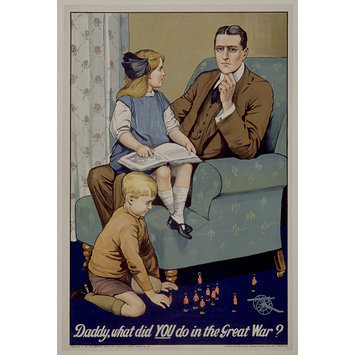
Hardie's friend Bob Smillie, leader of the Scottish mineworkers, said his reply would be: ‘I tried to stop the bloody thing, my child.’
Bertrand Russell also flits in and out of these pages, a towering moral presence. Every time I read about him I admire him more and more. Russell was jailed for six months for his antiwar activism (when the warder took down his details on arrival, he asked Russell's religion, and he replied, ‘agnostic’. Asking how to spell it, the warder sighed, ‘Well, there are many religions, but I suppose they all worship the same God’). He still managed to keep in touch with two of his lovers while in prison, too – he wrote to a French actress in French, a language his jailers couldn't understand, and sent letters to another woman smuggled out in copies of the Proceedings of the London Mathematics Society, which he told her was ‘more interesting than it appeared’.
Hochschild does a brilliant job not just in uncovering the activities of these characters, some of whom have been comprehensively neglected, but also in tying their stories together: the narrative often reads like a novel with a large but interconnected cast. The whole thing is animated by a steady but unintrusive sense of injustice, and the writing is clear, notwithstanding a few foibles (he deploys, for instance, that odd American hypercorrection ‘felt badly’).
What's particularly sad, after following these people for so long, and hoping for some kind of victory on their behalf, is seeing how desperately almost all of them latched on to the Russian Revolution in 1917. It's a harsh but enlightening test of moral character to see how quickly people could bring themselves to bail on the Soviet dream when things started going wrong – not a test many leftists passed with flying colours (but that's a story better told elsewhere). And overall, this is a story of failure and disappointment, though the tone is moving and hopeful rather than depressing. The title points up the overarching irony. President Wilson had called the slaughter the ‘war to end all wars’ – but Sir Alfred Milner was more prescient in 1918 when, peering into the future as the bodies were cleared away, he described the Treaty of Versailles as ‘a Peace to end Peace’.
May 24, 2011
I think for many Americans this book will be something of a shocker. It tells the story of the British anti-war movement during World War I. First is the story of the enormous incompetence of those prosecuting the war; the highest ranking authority on the civil side was Prime Minister Asquith, and on the military side, the Generals French and Haig. This is a tale of enormous inhumanity, not just for the enemy, but for one's own troops as well, who were ordered to make suicide attacks by the tens of thousands. (Sadly things were even worse on the German side. See my review of Ernst Jünger's Storm of Steel.) Hochschild tells his tale economically thereby establishing the broader context for the other aspects of his story.
At the heart of the book, what makes it unique, are stories of the trials and tribulations of the British anti-war movement. Peopled in large part by well-meaning persons of a socialist bent, the movement was undermined and smeared by the British government who had all aspects of the national press completely under its thumb. Part of the anti-war story is about the Conscientious Objector (CO) community. I'm so glad Mr. Hochschild is getting this story out with this book, for their treatment by members of the British police authorities, who shamelessly violated their civil rights, was horrendous. Early on the COs were sent to the front anyway, where the plan was to shoot them when they refused to obey orders. Fortunately, political advocates at home prevented this from happening. They were then moved to a filthy prison in Boulogne where the rats ran over them at night, and the food was disgusting. But even this, I suppose, was better than sitting at the front listening to the big guns thunder and wondering if you'd live to see your loved ones.
Another thing Hochschild does well here is to tell the tale of the Russian Revolution and the subsequent collapse of the Czarist state in 1917 in context with how the Brits were trying to win the war. This is fascinating.
At the heart of the book, what makes it unique, are stories of the trials and tribulations of the British anti-war movement. Peopled in large part by well-meaning persons of a socialist bent, the movement was undermined and smeared by the British government who had all aspects of the national press completely under its thumb. Part of the anti-war story is about the Conscientious Objector (CO) community. I'm so glad Mr. Hochschild is getting this story out with this book, for their treatment by members of the British police authorities, who shamelessly violated their civil rights, was horrendous. Early on the COs were sent to the front anyway, where the plan was to shoot them when they refused to obey orders. Fortunately, political advocates at home prevented this from happening. They were then moved to a filthy prison in Boulogne where the rats ran over them at night, and the food was disgusting. But even this, I suppose, was better than sitting at the front listening to the big guns thunder and wondering if you'd live to see your loved ones.
Another thing Hochschild does well here is to tell the tale of the Russian Revolution and the subsequent collapse of the Czarist state in 1917 in context with how the Brits were trying to win the war. This is fascinating.

February 14, 2014
I got a lot of pleasure and education from this book because of the author’s talent in weaving together stories of individual people and letting the bigger themes emerge from them. The focus is on individuals who resisted the war in Britain balanced by the personal tales of a select set of true believers. I was uplifted to experience how it was that some had the courage to work for peace and saddened by coming to terms with the futility of their efforts. On the other side of things, I came to put a human face to those who were very much a part of political and societal engines of war. Along the way, I got plenty of perspective on the overall war, despite limited coverage of military campaigns and political events in other countries involved in the war. In his introduction, Hochschild outlines his approach:
In a sense …this is a story about loyalties. What should any human being be most loyal to? Country? Military duty? Or the ideal of international brotherhood? And what happens to loyalty within a family if, as happened to several of the families in these pages, some members join the fight while a brother, a sister, a son, takes a stance of opposition that the public sees as cowardly or criminal? …The men and women in the following pages are a cast of characters I have collected over the years, as I found people whose lives embodied very different answers to the choices faced by those who lived at a time when the world was aflame. Among them are generals, labor activists, feminists, agents provocateurs, a writer turned propagandist, a lion tamer turned revolutionary, a cabinet minister, a crusading working-class journalist, three soldiers brought before a firing squad at dawn …
Quite a few of the characters of this special history make their appearance in the book’s excellent beginning with the Boer War at the turn of the century. There we find Alfred Milner as the Royal Governor of South Africa, architect of this war of imperial expansion with diamond mines a plum, and future Cabinet Minister during World War 1. John French and Douglas Haig, future competing military leaders for Britain in the Great War, achieve glory here with a cavalry charge to relieve the beleaguered gold town of Kimberly. This success and their prior experience with the slaughter at the Battle of Omdurman in India contributed to their clinging to horse cavalry as a key strategy when barbed wire and machine guns made them ineffectual from the first battles of WW1. Media cheerleaders for the future Great War, Rudyard Kipling and John Buchnan, also enter Hochschild’s stage in the Boer War.
All these figures get humanized by the book’s end (except Haig, who is only de-demonized a bit). Milner becomes more human from his long-lasting love affair as a married man with Violet Cecil, the daughter of a Prime Minister, and by a humane aspect to his pragmatism when a Cabinet Minister which sought not to make martyrs our of draft dodgers, war resistors, and mutinous soldiers. Kipling changes as a figure of extreme imperialist fervor when his 17-year son with the Irish Guards at the early Battle of Loos ends up missing. He spends years searching out his fate, one shared by 500,000 other British MIAs. He never really cracked in seeing the war as a noble cause for civilization against the Huns, but he left the ambiguous lines in a post-war book “Epitaphs of the War”: If any question why we died,/Tell them, because our fathers lied. Buchnan, as the first true propaganda director, sincerely believed lying about the devastating outcomes of trench warfare served national survival. His sympathetic tales of heroic and tragic actions by soldiers at the front in his book on the Battle of Somme may was a shield hiding the reality of astronomical losses, but he let slip a film of the front there which could not hide all the truths of the conditions there. When it sank in what sacrifice was going on there, it only strengthened public resolve to fight the war to the end.
On the resister side of Dramatis Personae, Emily Hobhouse makes for a wonderful story starting with her role in exposing the cruel excesses of the Boer War. As a minister’s daughter, she was drawn to South Africa to serve in organizing relief efforts for the children and families of impacted civilians. We feel her outrage and call to action over the plight of the roughly 100,000 refugees who were evicted from their lands, their farms were burned in a scorched-earth policy to suppress the rebels, and then placed in massive concentration camps, where about 27,000 died. Her publicizing of these inhumane excesses helped spark her political activism at home, ironically bringing her into alignment with the sister of French, Catherine Despard, and the liberal politician (and future Prime Minister) Lloyd George. Hobhouse’s story gets richer as her own brother, Stephen, becomes one of the many draft dodgers and conscientious objectors who served prison time. At one point, she represents Britain’s resisters at a socialist peace discussion in Switzerland among representatives of opposing sides and subsequently slips into Berlin to lobby for a prisoner swap and to support a negotiated peace.
The other threads for the antiwar figures followed in the book come from the suffragette and socialist labor groups. The Pankhurst family, which embraced extreme civil disobedience over women’s suffrage, split over support of the British involvement in the Great War, with Sylvia following the path of women like Hobhouse and Despard, while mother Emmeline and sister Christabel becoming rabid supporters. The story of labor opposition to British entry into the war and resistance to its prosecution once it started is told largely through the life of Keir Hardie, a boy miner who became a leader with the Scottish Miners’ Federation, then the Independent Labour Party, and later a Minister of Parliament. His socialist dream of an international brotherhood of workers which would defy participation in imperialist wars was a dangerous idea. Sylvia’s illicit love relationship with the married Hardie gets some tender treatment as a human refuge for them in the maelstrom of public disapproval and government harassment that came to people who spoke out against the war once it got started. Despard’s story gets a lot of independent focus in the book. She got her start in charity and advocacy work for the impoverished families of London’s Battersea slum. How she remained in loving relationship to her brother over the years, despite opposing political views, is a wonder Hochschild dwells on.
The story of conscientious objectors gets covered by Hochschild through several threads. At one extreme, about 50 COs were forceably inducted into the armed forces and shipped to France, where they were threatened with execution like deserters if they refused to fight. Seventeen such men were sentenced to death, but their sentences were commuted. Here is the author’s a summary of the larger scope of the CO issue:
Before the end of the war, more than 20,000 men of military age would refuse to enter the British military forces. Some accepted alternative labor as conscientious objectors, but—usually because they refused that option on principle or because they were denied CO status—more than 6,000 resisters spent time in prison. Today, it is easy enough to look back and see the maniford tragic consequences of the First World War, but when the guns were firing and the pressure from friends and family to support the war effort was overwhelming, it required rare courage to resist.
Their image as individuals driven by a moral imperative was undermined by media declarations that they represented pure cowardice, a movement funded by German money, or the outcome of an infectious idea which should be treated like an invasive fungus. Hochschild goes for a bit of levity in portraying how a lawyer named Bodkin prosecuting a CO case thundered “war will become impossible if all men were to have the view that war is wrong.” The punch-line is that the No-Conscription Federation used his own words in a poster as a bit of wisdom. When a member was arrested for it, their lawyer argued that Bodkin should be arrested as the author of the offending words, while offering his societies benefits during any trial he might incur.
Bertrand Russell, the eminent Cambridge scholar, got a special emotional spur to antiwar action through being awakened in the middle of night by the sound of cheering. When it turned out to reflect glee from neighborhood residents over the burning up of zeppelin airmen after an explosion, he knew the war was perverting human nature on both sides. The German bombing of civilians from airships and planes was a horror that killed over 1,400 and wounded about 3,400 in English cities, but cheering the burning death of soldiers was beyond the pale for him . His letters, articles, and books in support of ending the war was a voice of clarity for the movement. He attended the court martials of COs and visited them in prison, and donated much manpower to the No-Conscription Fellowship, which was started by the Quakers.
The government’s experience with civil disorder wreaked by the suffragettes, labor strikes, and advocates for Irish independence already strengthened the hand of the growing domestic security apparatus within Scotland Yard. With the onset of war, the domestic spying operations of the Ministry of Munitions also expanded greatly. When so few German spy operations to be dug up, the pressure of self-justification of their jobs appears to have contributed to much agent provocateur actions. Such appears to be the case for the conspiracy conviction against Alice Wheeldon for plotting to kill Lloyd George by means of a poisonous blowgun, which seems more bizarre than fiction. She is sentenced to 10 years and her daughter and son-in-law to lesser sentences. Alice goes on hunger strikes, which is met with force feeding. Her story is a focus in Pat Barker’s excellent novel “The Eye in the Door,” the title of which refers to the doors in Wheeldon’s prison having a peepholes centered on painted eyes to torment them over the constant monitoring.
Another area of potentially excessive zeal is the execution of soldiers who mutiny and dereliction of duty. Hochschild presents the statistic that the Allied Forces had about 100 such cases compared to 40 or 50 for Germany. Then he takes the time to tell the story of three soldiers executed after a court martial for refusing their duties. A man in the brig for another infraction was tasked with burial duty and was so moved by his experience, he wrote a book in outrage.
The case of Lieutenant Sigmund Sassoon was a different kettle of fish which was handled more cautiously. As an active, decorated officer (and poet) on leave, he publicized his intention to stop fighting because the war had become one of British aggression. Russell helped him draft his statement and Sylvia Pankhurst published it in her newsletter, with the expectation that a public court marshall could trigger enough depart to spark a movement of soldiers to follow the Boshevik’s lead of laying down their weapons. Instead, after a period of medical review (featured in Barker's novel "Regneration"), a public statement proclaimed, “Sassoon has been reported by the medical board as not being responsible for his action, as he was suffering from a nervous breakdown.” Eventually, Sassoon chose to return to fighting at the front, noting in his diary that “I am only here to look after some men.” Hochschild summarizes:
It was a haunting reminder of the fierce power of group loyalty over that of political conviction—and all the more so because it came from someone who had not in the slightest changed, nor ever in his life would change, his belief that his country’s supposed war aims were fraudulent.
One could claim that French in his position as military chief in Ireland did create martyrs by executing 15 of the leaders of the Easter Rising in 1916. The insurgents of the Irish Republican Brotherhood took over by force several government buildings in Dublin and declared an independent Ireland, leading to a massive military response from French, replete with naval artillery strikes. A collusion with Germany to acquire substantial arms was attempted but did not pay off, one step that added to the gravity of the judgment of the crimes.
Despite these examples, Hochschild gives credence to historians’ perspectives that the British government brakes on dissension and dissent was overall marked by restraint:
With some exceptions, … the authorities did not jail people speaking out against the war or ban meetings. Seldom, points out the historian Brock Millman, “did the government prohibit, where it could discourage, or discourage where it was safe or politic to ignore.”
In many ways, the government’s fears of a socialist spurred civilian rebellion and military mutiny were legitimate concerns. The drop-out from the war by Russia was proof that such a movement could happen, and the implosion of Germany’s will to fight at the end of the war did lead to their downfall right when they were making large territorial advances in France. Yet attempts by the radicals to organize antiwar “soviets” in England failed, as their meetings were broken up by patriotic crowds. Hochschild concludes:
Critics could point out, of course, that Despard and Russell were quite far from being either workers or soldiers. But the real cause of their failure was that Britain was a democracy; however imperfect a one. Unlike Russia, there was little pent-up hunger for revolution, and the government waging the war had been elected. The radical Leeds conference made the headlines, but a more accurate gauge of British working class feeling was to be found at a meeting in Manchester this same year where delegates representing nearly two million union members voted by a margin of more than five to one that Britain should carry on the war until Germany was fully defeated.
In sum, I felt this book was a highly readable account of a largely ineffectual but courageous fight of a small minority of Britons against the war. The stories of an intersecting set of true-believers in the war effort provide a window on what a strong edifice they were up against. There is plenty enough background on major events of the war to provide one a reasonable overview along with these sets of voices. That the author is a professor of journalism who teaches narrative writing can help account for the compelling quality in his writing, which is otherwise backed with a ton of scholarly references more typical of card-carrying historians. The book also has a great set of photographs, such as this one of Alice Wheeldon in prison (with her two daughters and a matron).

In a sense …this is a story about loyalties. What should any human being be most loyal to? Country? Military duty? Or the ideal of international brotherhood? And what happens to loyalty within a family if, as happened to several of the families in these pages, some members join the fight while a brother, a sister, a son, takes a stance of opposition that the public sees as cowardly or criminal? …The men and women in the following pages are a cast of characters I have collected over the years, as I found people whose lives embodied very different answers to the choices faced by those who lived at a time when the world was aflame. Among them are generals, labor activists, feminists, agents provocateurs, a writer turned propagandist, a lion tamer turned revolutionary, a cabinet minister, a crusading working-class journalist, three soldiers brought before a firing squad at dawn …
Quite a few of the characters of this special history make their appearance in the book’s excellent beginning with the Boer War at the turn of the century. There we find Alfred Milner as the Royal Governor of South Africa, architect of this war of imperial expansion with diamond mines a plum, and future Cabinet Minister during World War 1. John French and Douglas Haig, future competing military leaders for Britain in the Great War, achieve glory here with a cavalry charge to relieve the beleaguered gold town of Kimberly. This success and their prior experience with the slaughter at the Battle of Omdurman in India contributed to their clinging to horse cavalry as a key strategy when barbed wire and machine guns made them ineffectual from the first battles of WW1. Media cheerleaders for the future Great War, Rudyard Kipling and John Buchnan, also enter Hochschild’s stage in the Boer War.
All these figures get humanized by the book’s end (except Haig, who is only de-demonized a bit). Milner becomes more human from his long-lasting love affair as a married man with Violet Cecil, the daughter of a Prime Minister, and by a humane aspect to his pragmatism when a Cabinet Minister which sought not to make martyrs our of draft dodgers, war resistors, and mutinous soldiers. Kipling changes as a figure of extreme imperialist fervor when his 17-year son with the Irish Guards at the early Battle of Loos ends up missing. He spends years searching out his fate, one shared by 500,000 other British MIAs. He never really cracked in seeing the war as a noble cause for civilization against the Huns, but he left the ambiguous lines in a post-war book “Epitaphs of the War”: If any question why we died,/Tell them, because our fathers lied. Buchnan, as the first true propaganda director, sincerely believed lying about the devastating outcomes of trench warfare served national survival. His sympathetic tales of heroic and tragic actions by soldiers at the front in his book on the Battle of Somme may was a shield hiding the reality of astronomical losses, but he let slip a film of the front there which could not hide all the truths of the conditions there. When it sank in what sacrifice was going on there, it only strengthened public resolve to fight the war to the end.
On the resister side of Dramatis Personae, Emily Hobhouse makes for a wonderful story starting with her role in exposing the cruel excesses of the Boer War. As a minister’s daughter, she was drawn to South Africa to serve in organizing relief efforts for the children and families of impacted civilians. We feel her outrage and call to action over the plight of the roughly 100,000 refugees who were evicted from their lands, their farms were burned in a scorched-earth policy to suppress the rebels, and then placed in massive concentration camps, where about 27,000 died. Her publicizing of these inhumane excesses helped spark her political activism at home, ironically bringing her into alignment with the sister of French, Catherine Despard, and the liberal politician (and future Prime Minister) Lloyd George. Hobhouse’s story gets richer as her own brother, Stephen, becomes one of the many draft dodgers and conscientious objectors who served prison time. At one point, she represents Britain’s resisters at a socialist peace discussion in Switzerland among representatives of opposing sides and subsequently slips into Berlin to lobby for a prisoner swap and to support a negotiated peace.
The other threads for the antiwar figures followed in the book come from the suffragette and socialist labor groups. The Pankhurst family, which embraced extreme civil disobedience over women’s suffrage, split over support of the British involvement in the Great War, with Sylvia following the path of women like Hobhouse and Despard, while mother Emmeline and sister Christabel becoming rabid supporters. The story of labor opposition to British entry into the war and resistance to its prosecution once it started is told largely through the life of Keir Hardie, a boy miner who became a leader with the Scottish Miners’ Federation, then the Independent Labour Party, and later a Minister of Parliament. His socialist dream of an international brotherhood of workers which would defy participation in imperialist wars was a dangerous idea. Sylvia’s illicit love relationship with the married Hardie gets some tender treatment as a human refuge for them in the maelstrom of public disapproval and government harassment that came to people who spoke out against the war once it got started. Despard’s story gets a lot of independent focus in the book. She got her start in charity and advocacy work for the impoverished families of London’s Battersea slum. How she remained in loving relationship to her brother over the years, despite opposing political views, is a wonder Hochschild dwells on.
The story of conscientious objectors gets covered by Hochschild through several threads. At one extreme, about 50 COs were forceably inducted into the armed forces and shipped to France, where they were threatened with execution like deserters if they refused to fight. Seventeen such men were sentenced to death, but their sentences were commuted. Here is the author’s a summary of the larger scope of the CO issue:
Before the end of the war, more than 20,000 men of military age would refuse to enter the British military forces. Some accepted alternative labor as conscientious objectors, but—usually because they refused that option on principle or because they were denied CO status—more than 6,000 resisters spent time in prison. Today, it is easy enough to look back and see the maniford tragic consequences of the First World War, but when the guns were firing and the pressure from friends and family to support the war effort was overwhelming, it required rare courage to resist.
Their image as individuals driven by a moral imperative was undermined by media declarations that they represented pure cowardice, a movement funded by German money, or the outcome of an infectious idea which should be treated like an invasive fungus. Hochschild goes for a bit of levity in portraying how a lawyer named Bodkin prosecuting a CO case thundered “war will become impossible if all men were to have the view that war is wrong.” The punch-line is that the No-Conscription Federation used his own words in a poster as a bit of wisdom. When a member was arrested for it, their lawyer argued that Bodkin should be arrested as the author of the offending words, while offering his societies benefits during any trial he might incur.
Bertrand Russell, the eminent Cambridge scholar, got a special emotional spur to antiwar action through being awakened in the middle of night by the sound of cheering. When it turned out to reflect glee from neighborhood residents over the burning up of zeppelin airmen after an explosion, he knew the war was perverting human nature on both sides. The German bombing of civilians from airships and planes was a horror that killed over 1,400 and wounded about 3,400 in English cities, but cheering the burning death of soldiers was beyond the pale for him . His letters, articles, and books in support of ending the war was a voice of clarity for the movement. He attended the court martials of COs and visited them in prison, and donated much manpower to the No-Conscription Fellowship, which was started by the Quakers.
The government’s experience with civil disorder wreaked by the suffragettes, labor strikes, and advocates for Irish independence already strengthened the hand of the growing domestic security apparatus within Scotland Yard. With the onset of war, the domestic spying operations of the Ministry of Munitions also expanded greatly. When so few German spy operations to be dug up, the pressure of self-justification of their jobs appears to have contributed to much agent provocateur actions. Such appears to be the case for the conspiracy conviction against Alice Wheeldon for plotting to kill Lloyd George by means of a poisonous blowgun, which seems more bizarre than fiction. She is sentenced to 10 years and her daughter and son-in-law to lesser sentences. Alice goes on hunger strikes, which is met with force feeding. Her story is a focus in Pat Barker’s excellent novel “The Eye in the Door,” the title of which refers to the doors in Wheeldon’s prison having a peepholes centered on painted eyes to torment them over the constant monitoring.
Another area of potentially excessive zeal is the execution of soldiers who mutiny and dereliction of duty. Hochschild presents the statistic that the Allied Forces had about 100 such cases compared to 40 or 50 for Germany. Then he takes the time to tell the story of three soldiers executed after a court martial for refusing their duties. A man in the brig for another infraction was tasked with burial duty and was so moved by his experience, he wrote a book in outrage.
The case of Lieutenant Sigmund Sassoon was a different kettle of fish which was handled more cautiously. As an active, decorated officer (and poet) on leave, he publicized his intention to stop fighting because the war had become one of British aggression. Russell helped him draft his statement and Sylvia Pankhurst published it in her newsletter, with the expectation that a public court marshall could trigger enough depart to spark a movement of soldiers to follow the Boshevik’s lead of laying down their weapons. Instead, after a period of medical review (featured in Barker's novel "Regneration"), a public statement proclaimed, “Sassoon has been reported by the medical board as not being responsible for his action, as he was suffering from a nervous breakdown.” Eventually, Sassoon chose to return to fighting at the front, noting in his diary that “I am only here to look after some men.” Hochschild summarizes:
It was a haunting reminder of the fierce power of group loyalty over that of political conviction—and all the more so because it came from someone who had not in the slightest changed, nor ever in his life would change, his belief that his country’s supposed war aims were fraudulent.
One could claim that French in his position as military chief in Ireland did create martyrs by executing 15 of the leaders of the Easter Rising in 1916. The insurgents of the Irish Republican Brotherhood took over by force several government buildings in Dublin and declared an independent Ireland, leading to a massive military response from French, replete with naval artillery strikes. A collusion with Germany to acquire substantial arms was attempted but did not pay off, one step that added to the gravity of the judgment of the crimes.
Despite these examples, Hochschild gives credence to historians’ perspectives that the British government brakes on dissension and dissent was overall marked by restraint:
With some exceptions, … the authorities did not jail people speaking out against the war or ban meetings. Seldom, points out the historian Brock Millman, “did the government prohibit, where it could discourage, or discourage where it was safe or politic to ignore.”
In many ways, the government’s fears of a socialist spurred civilian rebellion and military mutiny were legitimate concerns. The drop-out from the war by Russia was proof that such a movement could happen, and the implosion of Germany’s will to fight at the end of the war did lead to their downfall right when they were making large territorial advances in France. Yet attempts by the radicals to organize antiwar “soviets” in England failed, as their meetings were broken up by patriotic crowds. Hochschild concludes:
Critics could point out, of course, that Despard and Russell were quite far from being either workers or soldiers. But the real cause of their failure was that Britain was a democracy; however imperfect a one. Unlike Russia, there was little pent-up hunger for revolution, and the government waging the war had been elected. The radical Leeds conference made the headlines, but a more accurate gauge of British working class feeling was to be found at a meeting in Manchester this same year where delegates representing nearly two million union members voted by a margin of more than five to one that Britain should carry on the war until Germany was fully defeated.
In sum, I felt this book was a highly readable account of a largely ineffectual but courageous fight of a small minority of Britons against the war. The stories of an intersecting set of true-believers in the war effort provide a window on what a strong edifice they were up against. There is plenty enough background on major events of the war to provide one a reasonable overview along with these sets of voices. That the author is a professor of journalism who teaches narrative writing can help account for the compelling quality in his writing, which is otherwise backed with a ton of scholarly references more typical of card-carrying historians. The book also has a great set of photographs, such as this one of Alice Wheeldon in prison (with her two daughters and a matron).

January 26, 2025
Adam Hochschild didn’t set out to write a military history of WW1, or an exhaustive one. Instead of a blow-by-blow account he examines the war largely from a British perspective, and primarily through a small number of individuals. Some of these are pro and some are anti-war, military and civilian, the grand and not-so-grand. He starts with the Boer war, where the British were proponents of the cavalry charge, and which also saw the emergence of the machine gun. But while Hochschild traces the development of military technology and tactics, he is more concerned people and society - including socialism and the suffragette movement. He is critical of military leaders, and the post-war negotiations and sanctions which practically guaranteed a second world war. But more than anything he shines a light on the neglected stories of protesters and conscientious objectors who stood up, and sometimes died for their beliefs, forgotten heroes of the war. In doing so he succeeds in looking at WW1 from a new and enlightening perspective.

August 25, 2014
Immediately upon finishing this book, I gave it 4 stars; however, now that I think about my review, I'm upping it to 5. I'm not normally a "history reader" as such, preferring to get my impressions from fiction and memoirs, but as a member of the World War I group, I felt I needed some facts and timelines. Adam Hochschild did what all good teachers should do, he made his subject come alive.
He did this in two ways. First, by combining the stories of the conscientious objectors and demonstrators against the war at home in England with those of the generals, politicians, and writers (men and women on both sides) who supported the war. He combined what was happening at home at the same time millions of men were being slaughtered in ill-advised trench warfare.
Secondly, Hochschild is a damn good writer. I didn't just read this book ---- I lived it. I was there for it all, could feel the despair of the men who knew the futility of what they were asked to do, the parents who lost their sons, the nations who lost so much for so little. The last chapter brought me to tears with the account not only of lives lost worldwide, but the new era of wars and bloodshed unleashed upon mankind.
It will take me a while to get over this book, but I am so glad I read it. Highly recommended to anyone needing an understanding of this stupid, stupid war.
He did this in two ways. First, by combining the stories of the conscientious objectors and demonstrators against the war at home in England with those of the generals, politicians, and writers (men and women on both sides) who supported the war. He combined what was happening at home at the same time millions of men were being slaughtered in ill-advised trench warfare.
Secondly, Hochschild is a damn good writer. I didn't just read this book ---- I lived it. I was there for it all, could feel the despair of the men who knew the futility of what they were asked to do, the parents who lost their sons, the nations who lost so much for so little. The last chapter brought me to tears with the account not only of lives lost worldwide, but the new era of wars and bloodshed unleashed upon mankind.
It will take me a while to get over this book, but I am so glad I read it. Highly recommended to anyone needing an understanding of this stupid, stupid war.

September 21, 2011
In a word...terrific. I like this author and he doesn't disappoint with this book about WWI, the military leadership and the pacifists who attempted to sway public opinion. Told from the British perspective, it pulls no punches regarding the military leaders who still believed that the mounted cavalry was the ultimate weapon and who measured success by the number of their own troops killed in a battle. Although the pacifists and COs did not play much of a part in the overall scenario of war, they were a thorn in the side of the government and their stories are fascinating. The slaughter of the Great War still staggers the imagination and the author vividly describes what men will do in the name of honor. A particular quote from this book says it all (and I paraphrase)...."War is the only thing that causes men to willingly travel hundreds of miles to be killed". A chilling book.

October 22, 2016
King Leopold's Ghost was good. This is better. I don't often give five stars nowadays.
Unlike most histories of the English involvement in World War I, Hochschild gives equal time to those who resisted it. Thus, in addition to such incompetent warlords as British Generals French and Haig, one is introduced to such courageous heroes as Charlotte Despard, Emily Hobhouse, Keir Hardie, Sylvia Pankhurst and the Wheeldon family. One is also given something of the context of the war, ranging from the brutal destruction of the Boer states and the radical activism of the suffragettes prior to its commencement to the disastrous Versailles Treaty at its end.
Unlike most histories of the English involvement in World War I, Hochschild gives equal time to those who resisted it. Thus, in addition to such incompetent warlords as British Generals French and Haig, one is introduced to such courageous heroes as Charlotte Despard, Emily Hobhouse, Keir Hardie, Sylvia Pankhurst and the Wheeldon family. One is also given something of the context of the war, ranging from the brutal destruction of the Boer states and the radical activism of the suffragettes prior to its commencement to the disastrous Versailles Treaty at its end.

April 1, 2012
This is a compelling book that focuses on Britain during the Great War. Hochschild makes the conflict come alive, absolutely, and he is a writer of prodigious talent and skill. However, for some reason I can't quite explain, I never found his descriptions of the life and work of British peace activists -- really, the book's main thrust -- quite as compelling. I'm a huge admirer of those who have the fortitude and capacity for original thought necessary to hold their own when faced with a tidal wave of opposition, as is the case with those Hochschild features here, but much as I admired their courage, I eventually found myself skipping through those parts of the book that featured them. If there was ever a war that begged the voice of peace activists, the Great War was it so I couldn't quite figure out why I never found their stories compelling enough to follow, especially throughout the book's second half.
Here is a possible scenerio: Hochschild is pretty far left on the political spectrum (this comes out very clearly in several instances) and his admiration for early 20th century British liberals, stemming from his own 21st century political persuasion (ideologies separated by a century that are worlds apart in terms of repercussions for their adherents), perhaps led him to write a book about them, framing their work with the backdrop of the war. Fair enough but it's possible that he admired them so much that he thought just telling their story would be enough. Not true: in my opinion his backdrop jumps off the page but the activists never do.
Because Hochschild makes the destructive war come to life, I would have enjoyed (hardly the right word for such a depressing topic) the book more had he included more material on other combatant countries besides Britain and Russia; he includes some material on the latter only because many of the British peace activists had great hopes for the outcome of the Russian Revolution.
But by and large it's a very good read and quite thorough if you're looking to understand British issues during the Great War.
Here is a possible scenerio: Hochschild is pretty far left on the political spectrum (this comes out very clearly in several instances) and his admiration for early 20th century British liberals, stemming from his own 21st century political persuasion (ideologies separated by a century that are worlds apart in terms of repercussions for their adherents), perhaps led him to write a book about them, framing their work with the backdrop of the war. Fair enough but it's possible that he admired them so much that he thought just telling their story would be enough. Not true: in my opinion his backdrop jumps off the page but the activists never do.
Because Hochschild makes the destructive war come to life, I would have enjoyed (hardly the right word for such a depressing topic) the book more had he included more material on other combatant countries besides Britain and Russia; he includes some material on the latter only because many of the British peace activists had great hopes for the outcome of the Russian Revolution.
But by and large it's a very good read and quite thorough if you're looking to understand British issues during the Great War.

July 2, 2011
Today marks 100 YEARS TO THE DAY that the First World War began with the invasion of Serbia by the Austro-Hungarian Empire.
"To End All Wars" is the story, told from a variety of viewpoints, of how Britain fared under the stresses of war between 1914 and 1918. The author "focuses on the long-ignored moral drama of [the war's] critics, alongside its generals and heroes." Among the persons with whom the reader becomes familiar are: Sir John French, a hero of the Boer War and the first commander of the British Expeditionary Force (BEF); Charlotte Despard, Sir John's beloved older sister with whom he shared a close bond, though she was a prominent critic of the war and a staunch Socialist; Bertrand Russell, a distinguished academic, mathematician, writer and philosopher, who went to jail for his opposition to the war; Sir Douglas Haig, Sir John's replacement as commander of the BEF; Alfred, Lord Milner, a fervent supporter of the British Empire blessed with remarkable administrative talents, who came to occupy high office under a wartime government, helping to develop and shape policy; Keir Hardie, Member of Parliament and one of the founders of the Labour Party who was a staunch antiwar activist; and the Pankhurst family made up of mother Emmeline and her daughters Christabel and Sylvia who had been actively involved in the prewar movement for women's suffrage, but with the coming of war, the family became sharply divided, Emmeline and Christabel fully supporting the war effort, while the youngest daughter Sylvia allied herself with the antiwar movement.
The greatest value of this book lies in its attempt to give the reader a comprehensive account of how the First World War impacted upon British society. For that reason, I highly recommend it for any reader interested in the war and in social history.
"To End All Wars" is the story, told from a variety of viewpoints, of how Britain fared under the stresses of war between 1914 and 1918. The author "focuses on the long-ignored moral drama of [the war's] critics, alongside its generals and heroes." Among the persons with whom the reader becomes familiar are: Sir John French, a hero of the Boer War and the first commander of the British Expeditionary Force (BEF); Charlotte Despard, Sir John's beloved older sister with whom he shared a close bond, though she was a prominent critic of the war and a staunch Socialist; Bertrand Russell, a distinguished academic, mathematician, writer and philosopher, who went to jail for his opposition to the war; Sir Douglas Haig, Sir John's replacement as commander of the BEF; Alfred, Lord Milner, a fervent supporter of the British Empire blessed with remarkable administrative talents, who came to occupy high office under a wartime government, helping to develop and shape policy; Keir Hardie, Member of Parliament and one of the founders of the Labour Party who was a staunch antiwar activist; and the Pankhurst family made up of mother Emmeline and her daughters Christabel and Sylvia who had been actively involved in the prewar movement for women's suffrage, but with the coming of war, the family became sharply divided, Emmeline and Christabel fully supporting the war effort, while the youngest daughter Sylvia allied herself with the antiwar movement.
The greatest value of this book lies in its attempt to give the reader a comprehensive account of how the First World War impacted upon British society. For that reason, I highly recommend it for any reader interested in the war and in social history.

May 26, 2014
Hochschild intends to present two sides to this war: that of combatants and that of war protesters. While other countries cannot be excluded, he focuses almost exclusively on Britain. He starts with giving us the prewar environment and introduces us to the main participants. The next five parts are the war years, one part for each calendar year. In the final part is the Treaty and what happens in the lives of the major participants beyond.
Those of us who remember only Vietnam to the present were made to feel as if anti war protests were invented in the 1960s. I did not know there even was an anti war movement in WWI, and I now have no reason to believe there haven't always been such protesters. Hochschild doesn't give himself room enough to tell us about the movement in countries other than Britain, Germany and Russia. To say that Britain was intolerant would be an understatement. They jailed many. Some Conscientious Objectors were taken to the war anyway, and then shot when they refused to take up arms.
There is no background leading up to the war in Russia, but we are told that more than a million Russian soldiers simply walked off the battlefield and returned to their farms. There was plenty of political unrest, as we know because the Bolshevik Revolution happened concurrently. I didn't realize that Germany helped that revolution succeed by liberating Lenin from neutral Switzerland and putting him on a train back to St. Petersburg.
Hoshschild spares no words showing us how incompetent British General Haig was. Haig still believed that the cavalry was the winning instrument of war, failing to understand that that the new weapon - the machine gun - would neutralize any mounted charge. He also seemed not to understand that cannons could not do anything to barbed wire. He just sent men across no man's land to be annihilated. Hundreds of thousands of men were ordered to move against the Germans, only to be slaughtered in wave after wave.
There is so much to be read here. I will never be one who says we shouldn't fight to defend ourselves, but each time I read about this war, it becomes every more plain that winning needs to take place off the battlefield as well as well as on it. I cannot let this go without at least one quote.
Those of us who remember only Vietnam to the present were made to feel as if anti war protests were invented in the 1960s. I did not know there even was an anti war movement in WWI, and I now have no reason to believe there haven't always been such protesters. Hochschild doesn't give himself room enough to tell us about the movement in countries other than Britain, Germany and Russia. To say that Britain was intolerant would be an understatement. They jailed many. Some Conscientious Objectors were taken to the war anyway, and then shot when they refused to take up arms.
There is no background leading up to the war in Russia, but we are told that more than a million Russian soldiers simply walked off the battlefield and returned to their farms. There was plenty of political unrest, as we know because the Bolshevik Revolution happened concurrently. I didn't realize that Germany helped that revolution succeed by liberating Lenin from neutral Switzerland and putting him on a train back to St. Petersburg.
Hoshschild spares no words showing us how incompetent British General Haig was. Haig still believed that the cavalry was the winning instrument of war, failing to understand that that the new weapon - the machine gun - would neutralize any mounted charge. He also seemed not to understand that cannons could not do anything to barbed wire. He just sent men across no man's land to be annihilated. Hundreds of thousands of men were ordered to move against the Germans, only to be slaughtered in wave after wave.
There is so much to be read here. I will never be one who says we shouldn't fight to defend ourselves, but each time I read about this war, it becomes every more plain that winning needs to take place off the battlefield as well as well as on it. I cannot let this go without at least one quote.
Would we have devised such means of inflicting pain, terror, and death without the First World War? Probably yes, for human beings have been inventing new ways to kill each other for thousands of years. But the scale of the conflict and the way the belligerents mobilized their economies for total war accelerated such developments greatly, and left a bloodied Germany determined to seek revenge. The most toxic legacy of the conflict and its misbegotten peace settlement lies in the hardly imaginable horrors that followed. If we were allowed to magically roll back history to the start of the twentieth century and undo one — and only one — event, is there any doubt that it would be the war that broke out in 1914?This is not an easy read - not because of the prose nor the structure of the work, but because of the subject. Still, it is a 5-star read for me.

March 22, 2024
The War to Start All Stupid Wars.
This is my third Hochschild read and I must say, this guy is absolutely amazing. He has a way of drawing into the historical narrative in a way I find engaging, balanced and disimpassioned. To End All Wars is about World War 1 and it is from the perspective of Britain and contains a host of players there, and around the world. If you’re looking for a book that explains the political conditions before the war as well as the causes and utter stupidity of the war, then this is your book.
In this telling, we start with a lot of the drop of the British Empire leading up to WWI, as far back as the 1880s. This backdrop is important because it sets the stage for the cavalry and artillery war that would play out on the European western front, but also many of the same leaders were involved with the British empire during this time. This book starts out with the South Africa Boer War when a bunch of gold was discovered there and the British empire was like nuh-uh that’s ours now. The Boers were descendants of Dutch, German and French settlers and they actually wanted to keep control of the gold mines there and so they had war and the British won but not of course without Alfred Milner erecting a couple of concentration camps where around 30,000 women and children died. The fact that it was two nations of white people fighting for South African resources and that the actual darker skin natives of the land had no say whatsoever is so laughably obvious it's barely worth repeating here.
But this was all preamble with key figures such as Milner but also Field Marshals John French and Douglas Haig who would be instrumental in the dumbest and one of the most deadly wars of all time. But, here we also get an introduction to tons of British leftist dissent and activism. Charlotte Despard (John French’s sister!) who was an anglo-Irish suffragist, Emeline Pankhurst and her daughters Sylvia and Christabel (also women activists) along with Bertrand Russel and Roger Casement. You see this book is also a huge tale about the anti-war and militant Leftist activism that was alive and well during this time.
So Milner, Haig and French all returned home after their South African slaughter among tons of speculation that there would be Europe war with Germany. WWI didn’t just spring from zeus’ head after the assassination of Archduke Ferdinand. No. Many people believed it was already inevitable. And why? Freaking imperialism rivalry. You see, WWI was nothing more than Germany and Austria-Hungary empire being envious of the pillaging of their rivals and they had enough of that and so went to war. That’s kind of it. Ferdinand assassination was most definitely the spark that lit the already well laid dynamite. Germany and Austria-Hungary were allies. As soon as a Serb extremist killed Ferdinand, Wilhelm was like “sweet, we have our excuse. Go forth my Ottoman brethren, invade Serbia”, which they did when they fired the first shot of WWI in Belgrad.
So then Germany was like “sweet, we’ll just walk through neutral Belgium and go take France.” Which they did. Which then forced Britain's hand. And thus started the four year hellscape of trench warfare and using the underclass as artillery fodder in the dumbest and most banal war I think I’ve ever read about. The people running the show were stupid. What I mean is, they were thinking in terms of traditional gentleman’s war when suddenly there was advanced artillery that just mowed down the poor men forced to march out into it. This just became a barbed wire trench war very, very quickly which then degenerated into chlorine and mustard gas warfare along with flamethrowers and zeppelin bombing of civilians on both sides. An idiotic turf war of egos between British Field Marshals Haig and French got thousands and thousands of men pointlessly mowed down by gunfire. The war then sparked ethnic factions elsewhere in not only Serbia but in Turkey where something like 1 million Armenians were genocided.
The conscientious objection in Britain at this time was enormous. Tons of socialist and anarchist counter sentiments with the Pankhursts and Despand as well as Bertrand Russel and many others. Opposite them you have Kipling who was nothing more or less than a loquacious war and imperial propagandist. Tons of protestors and writers were imprisoned, including Bertrand Russel. Same thing was happening in the US with Debs and others. The Christmas Truce really freaked out the British and German leaders because if soldiers just decided to not fight, then that was that. It’s kind of what happened in Russia at this same time when Lenin and his Bolsheviks (at the encouragement of the Kaiser) seized power at the Kremlin. Of course during the first Bolshevik provisional government election, the party suspected they weren’t getting enough votes so they shut down the elections for about seventy years.
Honestly the only good thing that happened during this time is Britain finally decided women should probably vote or the militant movements would do something similar to the Bolsheviks. Of course only women with property who were only 30 years old could vote, but hey I guess when everything is terrible, this looked like a decent gain.
I walk away from this amazing book quite depressed. The whole thing was such a dumpster fire disaster that it’s hard to not lose faith in humans. Anyway, if you would like to continue the self-flagellation in learning this part of history, read his other WWI book with American perspective. And spoiler alert: the Americans were just as bad. https://www.goodreads.com/review/show...
This is my third Hochschild read and I must say, this guy is absolutely amazing. He has a way of drawing into the historical narrative in a way I find engaging, balanced and disimpassioned. To End All Wars is about World War 1 and it is from the perspective of Britain and contains a host of players there, and around the world. If you’re looking for a book that explains the political conditions before the war as well as the causes and utter stupidity of the war, then this is your book.
In this telling, we start with a lot of the drop of the British Empire leading up to WWI, as far back as the 1880s. This backdrop is important because it sets the stage for the cavalry and artillery war that would play out on the European western front, but also many of the same leaders were involved with the British empire during this time. This book starts out with the South Africa Boer War when a bunch of gold was discovered there and the British empire was like nuh-uh that’s ours now. The Boers were descendants of Dutch, German and French settlers and they actually wanted to keep control of the gold mines there and so they had war and the British won but not of course without Alfred Milner erecting a couple of concentration camps where around 30,000 women and children died. The fact that it was two nations of white people fighting for South African resources and that the actual darker skin natives of the land had no say whatsoever is so laughably obvious it's barely worth repeating here.
But this was all preamble with key figures such as Milner but also Field Marshals John French and Douglas Haig who would be instrumental in the dumbest and one of the most deadly wars of all time. But, here we also get an introduction to tons of British leftist dissent and activism. Charlotte Despard (John French’s sister!) who was an anglo-Irish suffragist, Emeline Pankhurst and her daughters Sylvia and Christabel (also women activists) along with Bertrand Russel and Roger Casement. You see this book is also a huge tale about the anti-war and militant Leftist activism that was alive and well during this time.
So Milner, Haig and French all returned home after their South African slaughter among tons of speculation that there would be Europe war with Germany. WWI didn’t just spring from zeus’ head after the assassination of Archduke Ferdinand. No. Many people believed it was already inevitable. And why? Freaking imperialism rivalry. You see, WWI was nothing more than Germany and Austria-Hungary empire being envious of the pillaging of their rivals and they had enough of that and so went to war. That’s kind of it. Ferdinand assassination was most definitely the spark that lit the already well laid dynamite. Germany and Austria-Hungary were allies. As soon as a Serb extremist killed Ferdinand, Wilhelm was like “sweet, we have our excuse. Go forth my Ottoman brethren, invade Serbia”, which they did when they fired the first shot of WWI in Belgrad.
So then Germany was like “sweet, we’ll just walk through neutral Belgium and go take France.” Which they did. Which then forced Britain's hand. And thus started the four year hellscape of trench warfare and using the underclass as artillery fodder in the dumbest and most banal war I think I’ve ever read about. The people running the show were stupid. What I mean is, they were thinking in terms of traditional gentleman’s war when suddenly there was advanced artillery that just mowed down the poor men forced to march out into it. This just became a barbed wire trench war very, very quickly which then degenerated into chlorine and mustard gas warfare along with flamethrowers and zeppelin bombing of civilians on both sides. An idiotic turf war of egos between British Field Marshals Haig and French got thousands and thousands of men pointlessly mowed down by gunfire. The war then sparked ethnic factions elsewhere in not only Serbia but in Turkey where something like 1 million Armenians were genocided.
The conscientious objection in Britain at this time was enormous. Tons of socialist and anarchist counter sentiments with the Pankhursts and Despand as well as Bertrand Russel and many others. Opposite them you have Kipling who was nothing more or less than a loquacious war and imperial propagandist. Tons of protestors and writers were imprisoned, including Bertrand Russel. Same thing was happening in the US with Debs and others. The Christmas Truce really freaked out the British and German leaders because if soldiers just decided to not fight, then that was that. It’s kind of what happened in Russia at this same time when Lenin and his Bolsheviks (at the encouragement of the Kaiser) seized power at the Kremlin. Of course during the first Bolshevik provisional government election, the party suspected they weren’t getting enough votes so they shut down the elections for about seventy years.
Honestly the only good thing that happened during this time is Britain finally decided women should probably vote or the militant movements would do something similar to the Bolsheviks. Of course only women with property who were only 30 years old could vote, but hey I guess when everything is terrible, this looked like a decent gain.
I walk away from this amazing book quite depressed. The whole thing was such a dumpster fire disaster that it’s hard to not lose faith in humans. Anyway, if you would like to continue the self-flagellation in learning this part of history, read his other WWI book with American perspective. And spoiler alert: the Americans were just as bad. https://www.goodreads.com/review/show...

December 10, 2016
The height of human folly, waste, idiocy. This is what WWI represents to me. It is a war that endlessly fascinates me, an infinite surreal grand tragedy that yielded so little for the actors, except it laid the seeds for what could be considered an even grander tragedy for the world (the Nazis). It laid waste to a whole generation, with the cultural, intellectual, and economic capital of the great European powers going up in smoke.
I think there are soooo many lessons that can be drawn from WWI, lessons that inform us on human nature, politics, warfare, international diplomacy, the human predicament, technology, and the pitfalls of nationalism run rampant (parallels to today? nationalism in China, Russia, and US are frightening imo and could draw us all into conflict. It's like every once in a while humanity needs to indulge in grand folly on an epic scale, I sort of feel we are trending that way right now...).
Another reason I feel a deep connection and fascination with this war is my own family's history with this event. 3 of my 4 great grandfathers were involved on the French side. One was enmeshed in a Senegalese unit, he was KIA. Another was taken prisoner of war by the Germans and put to work in the salt mines (this was supposedly a real pain in the @!#!@3. Obviously). And another fought all four years of the war and survived, but faced lifelong repercussions from a devastating mustard gas attack. It likely played a role in his death and cut his life short.
Anyhow, all that to say that I'm into this war for various reasons. It was fought 100 years ago and yet there is an invisible family thread winding its way through time and space connecting me to this historical folly, making it oddly tangible for me.
I do love the writer, Adam Hochschild, I think he is both a meticulous researcher and a fabulous writer. I read King Leopold's Ghost a little while back, one of the best books I've read. But sadly this book fell a bit below my expectations. It's not that it wasn't good, I just didn't feel as invested in the storylines. Which is weird, because Hochschild really focuses on the British anti-war movement, and other progressive actors who were involved both in anti-war, suffragette, economic movements. I tend to love this kind of angle, many of my great inspirations in history are progressives, so normally I should have loved this type of storytelling. It is a unique lens through which to tell the story of WWI. But alas, it just didn't hit the mark as much for me, at least nowhere near to the level that King Leopold's Ghost marked me.
That said, I think many people will love this book. Hochschild is a great writer, he is exploring the war from a unique angle, and he has various interesting interpretations and analysis of the politics and international diplomacy. My favorite question he poses (near the end of the book) is should the Brits have joined in the war effort, especially considering that the war was not fought on British soil. He seems to say no, I'm not totally sold, but hey, given the outcome (millions of young men injured or killed) it is a fair question and a fair answer regardless of my personal inclinations. As for the French, they had no choice, they had to fight. Unfortunately for them demographics were not on their side and in certain respects they were receiving payback for all the previous centuries in which they'd been the wanton aggressors on the continent (back when demographics WERE on their side).
What sucks is how vindictive the allies were with the peace terms, there were high level figures on the allied side who recognized how this would lay the seeds for a future calamity, galvanizing resentment and nationalism in Germany. And hindsight makes this seem so obvious now.
This was a war pushed by elites, created by elites, but as always it is the people who suffer. Although one can argue that unlike today it is the whole spectrum of society that fought this war and paid the price, both the aristocrats and the "peasants" fought this war, and they all died and suffered to a similar degree. But what a disgusting tragedy for all sides involved, the Germans, the French, the Brits, the Russians, and so many other countries. A defensive war that sent millions from various nationalities to slaughter.
Could it all have been avoided? I love this question, and I think the answer is no. If the contingency of the assassination of the Archduke hadn't happened, something else would have triggered this war. There was too much animosity, rising nationalism, and competition for spheres of power amongst the European powers that made a continental conflict on this scale unavoidable.
I think there are soooo many lessons that can be drawn from WWI, lessons that inform us on human nature, politics, warfare, international diplomacy, the human predicament, technology, and the pitfalls of nationalism run rampant (parallels to today? nationalism in China, Russia, and US are frightening imo and could draw us all into conflict. It's like every once in a while humanity needs to indulge in grand folly on an epic scale, I sort of feel we are trending that way right now...).
Another reason I feel a deep connection and fascination with this war is my own family's history with this event. 3 of my 4 great grandfathers were involved on the French side. One was enmeshed in a Senegalese unit, he was KIA. Another was taken prisoner of war by the Germans and put to work in the salt mines (this was supposedly a real pain in the @!#!@3. Obviously). And another fought all four years of the war and survived, but faced lifelong repercussions from a devastating mustard gas attack. It likely played a role in his death and cut his life short.
Anyhow, all that to say that I'm into this war for various reasons. It was fought 100 years ago and yet there is an invisible family thread winding its way through time and space connecting me to this historical folly, making it oddly tangible for me.
I do love the writer, Adam Hochschild, I think he is both a meticulous researcher and a fabulous writer. I read King Leopold's Ghost a little while back, one of the best books I've read. But sadly this book fell a bit below my expectations. It's not that it wasn't good, I just didn't feel as invested in the storylines. Which is weird, because Hochschild really focuses on the British anti-war movement, and other progressive actors who were involved both in anti-war, suffragette, economic movements. I tend to love this kind of angle, many of my great inspirations in history are progressives, so normally I should have loved this type of storytelling. It is a unique lens through which to tell the story of WWI. But alas, it just didn't hit the mark as much for me, at least nowhere near to the level that King Leopold's Ghost marked me.
That said, I think many people will love this book. Hochschild is a great writer, he is exploring the war from a unique angle, and he has various interesting interpretations and analysis of the politics and international diplomacy. My favorite question he poses (near the end of the book) is should the Brits have joined in the war effort, especially considering that the war was not fought on British soil. He seems to say no, I'm not totally sold, but hey, given the outcome (millions of young men injured or killed) it is a fair question and a fair answer regardless of my personal inclinations. As for the French, they had no choice, they had to fight. Unfortunately for them demographics were not on their side and in certain respects they were receiving payback for all the previous centuries in which they'd been the wanton aggressors on the continent (back when demographics WERE on their side).
What sucks is how vindictive the allies were with the peace terms, there were high level figures on the allied side who recognized how this would lay the seeds for a future calamity, galvanizing resentment and nationalism in Germany. And hindsight makes this seem so obvious now.
This was a war pushed by elites, created by elites, but as always it is the people who suffer. Although one can argue that unlike today it is the whole spectrum of society that fought this war and paid the price, both the aristocrats and the "peasants" fought this war, and they all died and suffered to a similar degree. But what a disgusting tragedy for all sides involved, the Germans, the French, the Brits, the Russians, and so many other countries. A defensive war that sent millions from various nationalities to slaughter.
Could it all have been avoided? I love this question, and I think the answer is no. If the contingency of the assassination of the Archduke hadn't happened, something else would have triggered this war. There was too much animosity, rising nationalism, and competition for spheres of power amongst the European powers that made a continental conflict on this scale unavoidable.

November 1, 2011
Having read numerous books on the Great War I wondered if Adam Hochschild’s new book; “To End All Wars” could bring anything new to the field. I am happy to say that it does. I found this book to be an enjoyable and fascinating account of the Great War and those within British society who opposed England’s participation.
Overall it provides the reader with a compelling account of those soldiers who went off to war and fought and those who objected and refused to serve and their supporters. It covers a range of topics and fields, suffragettes and women’s rights, conscientious objectors, propaganda, the Irish question but always there is the fighting along the Western Front and the horrors of trench warfare.
This is a great book and well worth the time to read, you will learn something new about the First World War.
Overall it provides the reader with a compelling account of those soldiers who went off to war and fought and those who objected and refused to serve and their supporters. It covers a range of topics and fields, suffragettes and women’s rights, conscientious objectors, propaganda, the Irish question but always there is the fighting along the Western Front and the horrors of trench warfare.
This is a great book and well worth the time to read, you will learn something new about the First World War.

March 23, 2012
Coming off the current frenzy of the popular TV series Downton Abbey, this book tied right in with its intellectual and entertaining explanation of how British officers approached WWI as if it were a fox hunt, and the calvary--immaculate in its red coats and precision--was the perceived answer to victory. Since the war did not end quickly or smoothly, we follow the transformation from a gentleman's war to an industrial one. We also learn of the many dissenters and their fate. I'm not into war books, but this one was a fabulous read. I remembered much that I had forgotten in school, learned things I never learned, and enjoyed all the triva such as: the first tanks were bungling machines that did not live up to their task, but they became immensely popular when parked in town squares as a station for selling war bonds. The author also puts WWI into perspective as a trigger for the world's forthcoming bad behavior. One would think the unfathomable number of deaths would open our eyes.
February 28, 2012
There is no question that Adam Hochschild is a great writer. To End All Wars is well organized, thoroughly researched and passionately told narrative, but I cannot recommend the book without some serious qualification:
1. This book is about Great Britain's role in the war. Events such as the assassination of archduke Ferdinand in Sarajevo, the sinking of the Lusitania, the fall of Tsarist Russia, and the US deployment to France are given passing mention and little more. Additionally, he focuses almost entirely on events in Belgium and France, giving almost no mention to campaigns in the Middle East, Asia, the Atlantic, or even the Eastern front.
2. This is not a military history of World War I in any sense. The Great War is merely a backdrop to Mr. Hochschild's analysis of some of WWI's primary personalities. He manages to explain strategies and tactics of many major engagements faced by the British during the war in Flanders, and that's really about it. While particularly adept at bringing the reader into the trench warfare experience with all its horrors and depredations, he doesn't even pretend to give a clear chronicle of every strategic shift during those years.
3. The personalities given the most attention in the book are not necessarily big decision makers. Hochschild focuses a lot of energy on minor players in the War. This isn't, by itself, a bad thing--Hugh Ambrose has made a career out of it with Band of Brothers and its follow ups. With few exceptions, however, Hochschild chooses to focus his attention on figures in the radical movements; particularly the women's suffrage, peace, and Socialist movements in Britain--movements that tended to overlap during the course of history.
4. Despite his thorough research into these personalities, the characters are remarkably archetypal. On one side of the coin are the war-mongers. They are inept, aristocratic, arrogant, and at every pass show nothing but contempt for the common man. On the other side of the coin, the ever-compassionate socialist radicals suing for peace.
5. The effect of the British radicals on the overall prosecution of the war is greatly exaggerated. Despite pages of adoring praise for their work (much of which shows an enviable clarity of conscience), World War I was ended by force of arms. The US's belated entry into the war (with men, weapons, and supplies), after all other combatants were so completely exhausted, demoralized and finally broke the back the Germans. While there is a strong argument that the radical anti-war movement was correct in its assessment that the cost of the war could not be justified, the impact of those radicals simply did not end World War I.
If taken narrowly as a history of radicalism and social change in Britain during the period of WWI, the To End All Wars is a good read. It's Hochschild's attempt attempt to expand the role and accomplishments of these radicals beyond their actual impact gives the book a clear feeling of being little more than leftist revisionism.
1. This book is about Great Britain's role in the war. Events such as the assassination of archduke Ferdinand in Sarajevo, the sinking of the Lusitania, the fall of Tsarist Russia, and the US deployment to France are given passing mention and little more. Additionally, he focuses almost entirely on events in Belgium and France, giving almost no mention to campaigns in the Middle East, Asia, the Atlantic, or even the Eastern front.
2. This is not a military history of World War I in any sense. The Great War is merely a backdrop to Mr. Hochschild's analysis of some of WWI's primary personalities. He manages to explain strategies and tactics of many major engagements faced by the British during the war in Flanders, and that's really about it. While particularly adept at bringing the reader into the trench warfare experience with all its horrors and depredations, he doesn't even pretend to give a clear chronicle of every strategic shift during those years.
3. The personalities given the most attention in the book are not necessarily big decision makers. Hochschild focuses a lot of energy on minor players in the War. This isn't, by itself, a bad thing--Hugh Ambrose has made a career out of it with Band of Brothers and its follow ups. With few exceptions, however, Hochschild chooses to focus his attention on figures in the radical movements; particularly the women's suffrage, peace, and Socialist movements in Britain--movements that tended to overlap during the course of history.
4. Despite his thorough research into these personalities, the characters are remarkably archetypal. On one side of the coin are the war-mongers. They are inept, aristocratic, arrogant, and at every pass show nothing but contempt for the common man. On the other side of the coin, the ever-compassionate socialist radicals suing for peace.
5. The effect of the British radicals on the overall prosecution of the war is greatly exaggerated. Despite pages of adoring praise for their work (much of which shows an enviable clarity of conscience), World War I was ended by force of arms. The US's belated entry into the war (with men, weapons, and supplies), after all other combatants were so completely exhausted, demoralized and finally broke the back the Germans. While there is a strong argument that the radical anti-war movement was correct in its assessment that the cost of the war could not be justified, the impact of those radicals simply did not end World War I.
If taken narrowly as a history of radicalism and social change in Britain during the period of WWI, the To End All Wars is a good read. It's Hochschild's attempt attempt to expand the role and accomplishments of these radicals beyond their actual impact gives the book a clear feeling of being little more than leftist revisionism.

December 3, 2013
A book about WWI told from a British point of view. Fascinating to learn that some in England "wanted" a world war, thinking that it would take care of several of the issues that were going on at home - uprising in Ireland, socialism, and the suffragettes.
Notes from 1915 - massive loses for the Allies, and an ill-fated battle at Loos. This was a year of trench warfare with not a lot of movement, and a stalemate. Barbed wire had a huge impact on this type of land war. The allies were short on binoculars, and the Germans became their suppliers, while the allies supplied the Germans rubber. Where the trenched soldiers were so close to the other side, there was a "tacit system of 'live and let live,'" where both sides would communicate when officers were approaching, and shoot overheard, instead of at each other; they'd not shoot at meal times; and if finding the opposition during night time patrols, both sides would turn around and go back.
Notes from 1916 - the major Battle of the Somme, which started July 1, 1916 - massive loses for the Allies, and not much of anything to gain. Conscientious objectives (CO's) were on the rise. The press and propaganda became a very important part of the war at this point.
Notes from 1917 - Deserters increased, major losses on all sides, no real headway in terms of what they were fighting for, German U-boats did major damage to merchant ships. The US declared war on Germany April 7th, 1917, but everyone already engaged in the war knew it would take a long time for the US to mobilize & send any troops. Russia pulled out of the war in November because of its own Bolshevik revolution.
Notes from 1918 - 2 major things contributed to the turning of the war towards the allies - the Americans were coming, and the Russian revolution greatly impacted the Germans, leading to many deserting. The Germans made a frantic push towards Paris trying to beat the impending arrival of the Americans, but couldn't make it. American reinforcements helped to push back the Germans, and the war was officially declared over on Nov. 11th, 1918.
Unfortunately, the Treaty of Versailles, which was signed on June 28, 1919 did more to "create more wars" than "to end all wars."
This was a fantastic book - so very readable and at the right level for what I was looking for.
Notes from 1915 - massive loses for the Allies, and an ill-fated battle at Loos. This was a year of trench warfare with not a lot of movement, and a stalemate. Barbed wire had a huge impact on this type of land war. The allies were short on binoculars, and the Germans became their suppliers, while the allies supplied the Germans rubber. Where the trenched soldiers were so close to the other side, there was a "tacit system of 'live and let live,'" where both sides would communicate when officers were approaching, and shoot overheard, instead of at each other; they'd not shoot at meal times; and if finding the opposition during night time patrols, both sides would turn around and go back.
Notes from 1916 - the major Battle of the Somme, which started July 1, 1916 - massive loses for the Allies, and not much of anything to gain. Conscientious objectives (CO's) were on the rise. The press and propaganda became a very important part of the war at this point.
Notes from 1917 - Deserters increased, major losses on all sides, no real headway in terms of what they were fighting for, German U-boats did major damage to merchant ships. The US declared war on Germany April 7th, 1917, but everyone already engaged in the war knew it would take a long time for the US to mobilize & send any troops. Russia pulled out of the war in November because of its own Bolshevik revolution.
Notes from 1918 - 2 major things contributed to the turning of the war towards the allies - the Americans were coming, and the Russian revolution greatly impacted the Germans, leading to many deserting. The Germans made a frantic push towards Paris trying to beat the impending arrival of the Americans, but couldn't make it. American reinforcements helped to push back the Germans, and the war was officially declared over on Nov. 11th, 1918.
Unfortunately, the Treaty of Versailles, which was signed on June 28, 1919 did more to "create more wars" than "to end all wars."
This was a fantastic book - so very readable and at the right level for what I was looking for.
This entire review has been hidden because of spoilers.

May 25, 2012
Hochschild has many admirable qualities as a writer. For one he seems generally obsessed with the worst that humanity can do. The Slave trade, the horrors and depredations of the Congo Free State have all been addressed, and in this current book the inferno of the Great War. But rather than wallowing in cheap nihilism and shock he is equally if not even more so, intrigued by those who against the currents of their day recognized an evil, and raised a voice, even if it was a feeble voice. Here that voice accomplished little but is as they say, now seen by many as being on the right side of history. Like his other subjects, the Great War is one of those moments in history so devoid of point and pity as to cause serious conjecture on the nature of humanity. But the nature of humanity in all its incongruities and paradoxes is what Hochschild loves pondering. He writes in the journalist/historian tradition (the journalist tag usually applied as a pejorative.) of Halberstam, Shirer, and Barbara Tuchman (we can add American as an adjective also I guess), but closest I believe to Tuchman who I believes he leans on heavily in this book. Like Tuchman he weaves a web of characters and well digested information that makes such an absorbing narrative of the grimmest of situations. He presents his characters whether a voice for or against the war (which he sees as a colossal mistake.) without judgment (unlike Shirer), and with fascination for their idiosyncrasies, heroism, and convictions. This is a humane history of a destructive and tragic epoch and alongside Peter Englund’s wonderful Beauty and the Sorrow, one the more essential books published recently on it.

Read
August 24, 2023This is a Ken book, not a Barbie book.

June 23, 2023
This book is the story of world war one told in a way that may be new to you. It certainly was new to me, and I learned a good deal about World War I it that I had never learned before.
At the end of the e-book, there is a considerable list of sources and a bibliography.
In a strange way this book is from one point of view a continuous antiwar book. It repeatedly goes back to the story of conscientious objectors to the war, and to people who worked against the war in a variety of ways. And the insanity of so many of the battles is its own statement against war.
At the end of the e-book, there is a considerable list of sources and a bibliography.
In a strange way this book is from one point of view a continuous antiwar book. It repeatedly goes back to the story of conscientious objectors to the war, and to people who worked against the war in a variety of ways. And the insanity of so many of the battles is its own statement against war.
June 6, 2020
Very well written. I would highly recommend for those interested in studying a different aspect of WW1. I would award 4.5 stars if possible.

May 7, 2012
Unlike World War II and the Cold War, World War I was not about any principles an individual could support or reject. Closer to our time, if the Cuban Missile Crisis of 1962 or the Able Archer crisis of 1983 had degenerated into a full-scale nuclear war, it also would not have been about anything. That war would have been over in a matter of hours, slaughtered hundreds of millions, and transformed a large portion of the Earth's surface into a radioactive wasteland. In contrast, World War I took over 4 years, slaughtered millions, and only transformed a narrow strip of Northern France and Belgium into a wasteland that is, thankfully, not radioactive but so filled with unexploded ordnance that French engineers still remove hundreds of tons of it each year. Unlike an exchange of nuclear-tipped ballistic missiles, it could be stopped. This book is about the individuals in Great Britain who spoke and acted against the war. Doing it meant going against both the public opinion and the government of the nation during the period in modern history when it came closest to fascism, but they did it anyway.
The anti-war activists were certainly a diverse bunch. At one end of the spectrum was the Fifth Marquess of Lansdowne, who circulated a paper in November 1916 arguing that the war would destroy civilization and calling for a return to the status quo ante bellum. In November 1917 he published his ideas in a letter to The Daily Telegraph saying that the war "will spell ruin for the civilised world, and an infinite addition to the load of human suffering which already weighs upon it," and calling for peace negotiations with Germany. At the other end was Keir Hardie, the Scottish socialist who became a miner at age 10, and later a union organizer and one of the founders of the Labour Party; he tried to stop the war by organizing a general strike in the belligerent countries. When another trade unionist saw the poster "Daddy, what did YOU do in the Great War?", he said that he would reply, "I tried to stop the bloody thing, my child." Field Marshal John French, Commander-in-Chief of the British Expeditionary Force between August 1914 and December 1916, had a sister named Charlotte Despard née French, a social worker, Suffragist, vegetarian and pacifist who co-founded something called Women's Peace Crusade. One prolific intellectual who argued against the war was Bertrand Russell; he was imprisoned for his antiwar activism for half a year, though because he was an earl, his prison conditions were far better than ordinary. Another imprisoned antiwar activist was journalist E. D. Morel, hero of Hochschild's book about the Belgian Congo, who, in Russell's words, "collapsed completely, physically and mentally, largely as the result of insufficient food" during his imprisonment.
I must say that I have a great deal more sympathy for the peace activists profiled in this book who tried to stop World War I than for those mentioned in Nicholson Baker's Human Smoke, who tried to stop World War II, because World War II was a struggle of the imperfect good against the perfect evil, and in World War I none of the major belligerents were significantly more evil than the others - certainly not to a large enough degree to justify the bloodbath.
The anti-war activists were certainly a diverse bunch. At one end of the spectrum was the Fifth Marquess of Lansdowne, who circulated a paper in November 1916 arguing that the war would destroy civilization and calling for a return to the status quo ante bellum. In November 1917 he published his ideas in a letter to The Daily Telegraph saying that the war "will spell ruin for the civilised world, and an infinite addition to the load of human suffering which already weighs upon it," and calling for peace negotiations with Germany. At the other end was Keir Hardie, the Scottish socialist who became a miner at age 10, and later a union organizer and one of the founders of the Labour Party; he tried to stop the war by organizing a general strike in the belligerent countries. When another trade unionist saw the poster "Daddy, what did YOU do in the Great War?", he said that he would reply, "I tried to stop the bloody thing, my child." Field Marshal John French, Commander-in-Chief of the British Expeditionary Force between August 1914 and December 1916, had a sister named Charlotte Despard née French, a social worker, Suffragist, vegetarian and pacifist who co-founded something called Women's Peace Crusade. One prolific intellectual who argued against the war was Bertrand Russell; he was imprisoned for his antiwar activism for half a year, though because he was an earl, his prison conditions were far better than ordinary. Another imprisoned antiwar activist was journalist E. D. Morel, hero of Hochschild's book about the Belgian Congo, who, in Russell's words, "collapsed completely, physically and mentally, largely as the result of insufficient food" during his imprisonment.
I must say that I have a great deal more sympathy for the peace activists profiled in this book who tried to stop World War I than for those mentioned in Nicholson Baker's Human Smoke, who tried to stop World War II, because World War II was a struggle of the imperfect good against the perfect evil, and in World War I none of the major belligerents were significantly more evil than the others - certainly not to a large enough degree to justify the bloodbath.

January 17, 2012
I love Hochschild and I would be a lot more positive if I didn't expect so much from him. The end of King Leopold's Ghost makes you think he has a sequel in mind about ED Morel, Rodger Casement and the movement against WWI in Britain. That isn't this book at all. Morel is only dealt with briefly and in an almost dismissive fashion, which is puzzling since Hochschild seems to adore him so in KLG.
This is more of a history of Britain's involvement in WWI in general with some attention payed to resisters. I wanted the resisters alone to be the story, because I think we know the Somme and Verdun... I guess his other books do the same, paying as much attention to Leopold as Morel, or the slave trade as Clarkson and Sharp. Still, there are so many military history books, I just don't feel he needed to waste his time on that.
When he does give us resisters it can be incredibly moving, like with the story of the Bantam soldiers (who actually I guess weren't even resisting). Those are the people truly lost in history. He says at the start that he doesn't want to give us the obvious personalities we already know like the Bloomsbury group, but then the whole book is about the Pankhursts, Kipling, French, and Haig. Not exactly unknowns.
If you didn't know about the Rubber Genocide, Hochschild wrote the perfect book, and if you don't know about WWI this is probably also the perfect book. It just leaves someone else to write the definitive history of war resisters.
This is more of a history of Britain's involvement in WWI in general with some attention payed to resisters. I wanted the resisters alone to be the story, because I think we know the Somme and Verdun... I guess his other books do the same, paying as much attention to Leopold as Morel, or the slave trade as Clarkson and Sharp. Still, there are so many military history books, I just don't feel he needed to waste his time on that.
When he does give us resisters it can be incredibly moving, like with the story of the Bantam soldiers (who actually I guess weren't even resisting). Those are the people truly lost in history. He says at the start that he doesn't want to give us the obvious personalities we already know like the Bloomsbury group, but then the whole book is about the Pankhursts, Kipling, French, and Haig. Not exactly unknowns.
If you didn't know about the Rubber Genocide, Hochschild wrote the perfect book, and if you don't know about WWI this is probably also the perfect book. It just leaves someone else to write the definitive history of war resisters.

January 28, 2019
In recent years, I have read quite a number of good World War II books, but have remained largely ignorant of World War I. I started one WWI book several times, but found it sleep-inducing, which is not a good quality in a book you are listening to while driving.
I stumbled on this work published in 2011 and decided to give it a try, and I was richly rewarded.
Rather than focusing on the intricacies of the complicated international dynamics that led to the War, Hochschild focuses on the war from a British point of view, putting it in a cultural and historical context, and he tells the stories not just of the war generals and soldiers, but of those who opposed the war (conscientious objectors, and others). He discusses the wastefulness of the war in terms of men and resources, and he balances his primary British focus with helpful information on Germany, Russia, and France. The United States, which was an extreme latecomer to this war, plays a minor role in his narrative, although we are not ignored.
The cultural and historical context of the war has two primary components, British colonialism and the major movements of the early 20th century such as women's suffrage, socialism, labor, and peace.
British colonialism was far-flung and at a peak at the beginning of the 20th century, but the British were not particularly benevolent overlords. The Boer War in South Africa at the turn of the century revealed much about the empire's potential for brutality and inhumanity, foreshadowing some of the terrors such as concentration camps that would later be used so mercilessly by the Nazis. The British were certainly not spreading a gospel of equality and freedom in their colonialism, but rather were conquerors who would not allow peoples to decide for themselves what they wanted. One of the key characteristics of colonialism is military might, and thus the British were itching for an opportunity to earn military glory when WWI sort of "happened".
At the same time, several movements were growing during the early years of the century, sometimes as allies, sometimes independently of one another. These movements include the push for woman's suffrage, which was a global movement. There were peace movements and labor movements, and then there were socialist movements, most notably that movement in Russia that culminated in the creation of the USSR. Hochschild identifies various leaders and figures who were important to these movements in Great Britain, many of whom were women. The only names that I was familiar with was that of Bertrand Russell, who was a prominent and outspoken critic of imperialism and of WWI.
Hochschild proceeds to discuss the conditions that led to the war in 1914, and then takes the reader through the war, year by brutal year. In addition to talking about what happens, or didn't happen, on the battlefield, he also discusses the activities of the various movements as the war progresses. Here are a few of the key points in the book:
1) The British military was extremely slow to recognize that the nature of war was changing, and that tactics had to change. Machine guns now meant that bayonet charges were extremely costly in terms of human life, and barbed wire was now used as a major impediment to any kind of battlefield charges on a defensive position by infantry or by cavalry. The British had a great affinity for their calvary, (most of their leaders came up through the cavalry) and they kept thinking their horses would win the war. Poison gas and flamethrowers were used in this war, and one of the things that changed the war in favor of the British was the tank, although it took the British a while to figure out how to use them.
2) The number of dead from the war, directly and indirectly, is staggering. Partly, this was the result of a military mindset that considered success to be measured by the higher number of casualties, making the erroneous assumption that if "our" casualties were high, then the enemies' must be high as well. At one point during the war, the British commander publicly criticized one leader for not having enough casualties among his troops. The proportion of young men in Germany, France, and Great Britain that were killed during this war is mind-boggling. But there were civilian casualties as well, particularly in Russia, even before the Russian civil war. There was also the Armenian Genocide in present day Turkey, where 1.5 million Armenians were murdered.
3) Many of the prominent citizens in the various movements became "patriotic" supporters of the war once it began, and Hochschild does a very good job presenting the dilemma that occurs when your nation goes to war and members of your family go to war. Persons who are critical of a war are often ostracized by those who support it, and it is difficult to stand against your nation's war policy when your family, friends and neighbors are dying. You start looking for a way to justify their deaths. Leaders of the British women's suffrage movement became ardent supporters of the war. Hochschild suggest that this was partly because they recognized that supporting the war would help the government look more favorably on them after the war, and might thus advance the cause of women's suffrage.
4) Rudyard Kipling was one of the great champions of and spokespersons for British colonialism. Yet, he and his wife lost their only son in the war, and his body was never recovered. Kipling continued to write supporting the colonial agenda until his death in 1936.
5) The British imprisoned large numbers of conscientious objectors during the war, and usually gave young men no alternative to military service. Many co's were drafted into the army, and then sent to the front where they could be executed for disobeying orders.
6) Finally, Hochschild does a good job of discussing the ways that this war did not end all wars, but just paved the way for the next great war.
I stumbled on this work published in 2011 and decided to give it a try, and I was richly rewarded.
Rather than focusing on the intricacies of the complicated international dynamics that led to the War, Hochschild focuses on the war from a British point of view, putting it in a cultural and historical context, and he tells the stories not just of the war generals and soldiers, but of those who opposed the war (conscientious objectors, and others). He discusses the wastefulness of the war in terms of men and resources, and he balances his primary British focus with helpful information on Germany, Russia, and France. The United States, which was an extreme latecomer to this war, plays a minor role in his narrative, although we are not ignored.
The cultural and historical context of the war has two primary components, British colonialism and the major movements of the early 20th century such as women's suffrage, socialism, labor, and peace.
British colonialism was far-flung and at a peak at the beginning of the 20th century, but the British were not particularly benevolent overlords. The Boer War in South Africa at the turn of the century revealed much about the empire's potential for brutality and inhumanity, foreshadowing some of the terrors such as concentration camps that would later be used so mercilessly by the Nazis. The British were certainly not spreading a gospel of equality and freedom in their colonialism, but rather were conquerors who would not allow peoples to decide for themselves what they wanted. One of the key characteristics of colonialism is military might, and thus the British were itching for an opportunity to earn military glory when WWI sort of "happened".
At the same time, several movements were growing during the early years of the century, sometimes as allies, sometimes independently of one another. These movements include the push for woman's suffrage, which was a global movement. There were peace movements and labor movements, and then there were socialist movements, most notably that movement in Russia that culminated in the creation of the USSR. Hochschild identifies various leaders and figures who were important to these movements in Great Britain, many of whom were women. The only names that I was familiar with was that of Bertrand Russell, who was a prominent and outspoken critic of imperialism and of WWI.
Hochschild proceeds to discuss the conditions that led to the war in 1914, and then takes the reader through the war, year by brutal year. In addition to talking about what happens, or didn't happen, on the battlefield, he also discusses the activities of the various movements as the war progresses. Here are a few of the key points in the book:
1) The British military was extremely slow to recognize that the nature of war was changing, and that tactics had to change. Machine guns now meant that bayonet charges were extremely costly in terms of human life, and barbed wire was now used as a major impediment to any kind of battlefield charges on a defensive position by infantry or by cavalry. The British had a great affinity for their calvary, (most of their leaders came up through the cavalry) and they kept thinking their horses would win the war. Poison gas and flamethrowers were used in this war, and one of the things that changed the war in favor of the British was the tank, although it took the British a while to figure out how to use them.
2) The number of dead from the war, directly and indirectly, is staggering. Partly, this was the result of a military mindset that considered success to be measured by the higher number of casualties, making the erroneous assumption that if "our" casualties were high, then the enemies' must be high as well. At one point during the war, the British commander publicly criticized one leader for not having enough casualties among his troops. The proportion of young men in Germany, France, and Great Britain that were killed during this war is mind-boggling. But there were civilian casualties as well, particularly in Russia, even before the Russian civil war. There was also the Armenian Genocide in present day Turkey, where 1.5 million Armenians were murdered.
3) Many of the prominent citizens in the various movements became "patriotic" supporters of the war once it began, and Hochschild does a very good job presenting the dilemma that occurs when your nation goes to war and members of your family go to war. Persons who are critical of a war are often ostracized by those who support it, and it is difficult to stand against your nation's war policy when your family, friends and neighbors are dying. You start looking for a way to justify their deaths. Leaders of the British women's suffrage movement became ardent supporters of the war. Hochschild suggest that this was partly because they recognized that supporting the war would help the government look more favorably on them after the war, and might thus advance the cause of women's suffrage.
4) Rudyard Kipling was one of the great champions of and spokespersons for British colonialism. Yet, he and his wife lost their only son in the war, and his body was never recovered. Kipling continued to write supporting the colonial agenda until his death in 1936.
5) The British imprisoned large numbers of conscientious objectors during the war, and usually gave young men no alternative to military service. Many co's were drafted into the army, and then sent to the front where they could be executed for disobeying orders.
6) Finally, Hochschild does a good job of discussing the ways that this war did not end all wars, but just paved the way for the next great war.
April 27, 2012
This is one of the best history books that I have ever read. It is, of course about World War I. But it is so much more than a series of plans and generals and battles.
This book tells the story of the struggle through the both eyes of those who saw the war as a noble cause and those who saw it as utter madness to pit workers of the world against one another. This is what makes this book so unique. Included in it are both the British Commander-in-chief of the Western Front and his ardently pacifist sister. Another excellent aspect is the way the events of the Boer War contributed to the military doctrine that proved so disastrous in this conflict. I was aware of the tremendous loss of life during The War to End All Wars but I really had no idea of just how blunderingly needless the slaughter of a whole generation of young men was. If you read history, don't miss this excellent book.
This book tells the story of the struggle through the both eyes of those who saw the war as a noble cause and those who saw it as utter madness to pit workers of the world against one another. This is what makes this book so unique. Included in it are both the British Commander-in-chief of the Western Front and his ardently pacifist sister. Another excellent aspect is the way the events of the Boer War contributed to the military doctrine that proved so disastrous in this conflict. I was aware of the tremendous loss of life during The War to End All Wars but I really had no idea of just how blunderingly needless the slaughter of a whole generation of young men was. If you read history, don't miss this excellent book.

December 13, 2022
If ever there was a war that need not have been, the Great War of 1914-1918 was it!
Focusing mostly on England's experience during what we now know as WW I, Adam Hoshschild gives a very personal rendering of what this war meant -- and what it was thought to represent at the time.
He presents us with some fascinating dualisms: a prominent woman suffragist and opponent of the war and her brother who is one of the officers most prominent in it; a family where all three members, mother, and both sisters, embrace feminism and its demand for female suffrage, but then is sundered when the mother and elder daughter turn out to be supporters of the war while the younger daughter pursues her embrace of socialism to be a prominent war-resister; and the experiences of several men who opposed the war as conscientious objectors, most of whom were imprisoned and suffered greatly, and some of whom paid the ultimate price by being shot as traitors.
Although his intent is not primarily to focus on how the war began -- that story has been ably, if sadly, told elsewhere -- he does give us a competent overview of its main causes: the assassination of one of the royals in the Austrian-Hungarian Empire -- ironically, one of the royals most in favor of raising the status and voice of other nationalities within th eEmpire -- by a young Serb who thought that by killing such a figure (he also shot and killed his wife) he would somehow inaugurate "justice" for his people; the excuse that this provided to the Austrian-Hungarian Empire for pouring into Serbia to eliminate those trouble-makers for whom they had long been chafing to silence; the fateful link of inter-state alliances that, once shots were fired, like dominos began to fall, each one causing another to take a similar step, even though no one wanted an all-European war; the fact that since mobilization took so much time then (given the state of transportation in the various countries, especially Russia), states like Russia and Austria began almost instant mobilization SO THAT THEY WOULD NOT BE CAUGHT UNPREPARED BY THE OTHER which had other states scrambling to initiate mobilization on their own in response; the fact that many throughout Europe had, despite these 50 years of peace, come to expect some kind of "incident" soon; and the fact that Europe's leaders at the time were not as clear-sighted or clear-thinking as needed in order to take the necessary steps to stop the escalation towards all-out war.
Ghastly, foolish, and horrible!
And then -- in all the countries -- men marched willingly to war, convinced that "it would all be over by Christmas," and cheered on wildly by women waving handkerchiefs and men who only the day before were socialists committed to international brotherhood.
The bulk of the book follows the fortunes (and misfortunes) of several fascinating human beings, many of whom I would have liked to know personally.
But Hochschild also rightly condemns the insanity of what became years of insane trench warfare, in which generals from both sides -- although most wastefully by the French and British -- repeatedly sent waves of soldiers "over the top" to face the impossible task of cutting through several lines of barbed wire while undergoing withering machine-gun fire. The slaughter was great; the scandal is that it happened REPEATEDLY.
The physical destruction was immense, especially in that largely fixed line of territory over which the armies fought for most of the war. The author mentions how many tons of unexploded ammunition and other wartime debris keeps being dug up EVERY YEAR even today, and how many tractors of both Belgian and French farmers have metal shielding underneath the driver's compartment lest in farming their fields they explode some left-over buried shell.
This is a work in which the reader becomes immersed in the people of the time, hearing once again passionate pleas for and against the war, and -- at the end of the book -- pondering, just as those who survived the war did, what in the hell was worth all of this?
Americans live at a time now 50 years after Vietnam and almost 80 years after the end of World War II, the last major engagements in which the existence of the draft meant that the wide majority of Americans felt connected to those events. Today's all-volunteer army has, unfortunately, left the fighting, suffering and dying to only a small proportion of US citizens, leaving the rest of us not only emotionally unscathed but, much worse, effectively removed from the actual cost of war.
This book can help to remind all of us that wars are ALWAYS hell; that they accomplish little except the vast wasting of young lives and the wrecking of fields and towns which have flourished for centuries..
Perhaps this is a very good time, given the fevered discussions about Russia and China these days, for more of us to reacquaint ourselves with the real consequences and costs of war so that we, unlike those fools who fancied themselves "leaders" in 1914, we will have the wisdom, courage, and grit to AVOID war this time!
For our children's sake, I hope so!
Focusing mostly on England's experience during what we now know as WW I, Adam Hoshschild gives a very personal rendering of what this war meant -- and what it was thought to represent at the time.
He presents us with some fascinating dualisms: a prominent woman suffragist and opponent of the war and her brother who is one of the officers most prominent in it; a family where all three members, mother, and both sisters, embrace feminism and its demand for female suffrage, but then is sundered when the mother and elder daughter turn out to be supporters of the war while the younger daughter pursues her embrace of socialism to be a prominent war-resister; and the experiences of several men who opposed the war as conscientious objectors, most of whom were imprisoned and suffered greatly, and some of whom paid the ultimate price by being shot as traitors.
Although his intent is not primarily to focus on how the war began -- that story has been ably, if sadly, told elsewhere -- he does give us a competent overview of its main causes: the assassination of one of the royals in the Austrian-Hungarian Empire -- ironically, one of the royals most in favor of raising the status and voice of other nationalities within th eEmpire -- by a young Serb who thought that by killing such a figure (he also shot and killed his wife) he would somehow inaugurate "justice" for his people; the excuse that this provided to the Austrian-Hungarian Empire for pouring into Serbia to eliminate those trouble-makers for whom they had long been chafing to silence; the fateful link of inter-state alliances that, once shots were fired, like dominos began to fall, each one causing another to take a similar step, even though no one wanted an all-European war; the fact that since mobilization took so much time then (given the state of transportation in the various countries, especially Russia), states like Russia and Austria began almost instant mobilization SO THAT THEY WOULD NOT BE CAUGHT UNPREPARED BY THE OTHER which had other states scrambling to initiate mobilization on their own in response; the fact that many throughout Europe had, despite these 50 years of peace, come to expect some kind of "incident" soon; and the fact that Europe's leaders at the time were not as clear-sighted or clear-thinking as needed in order to take the necessary steps to stop the escalation towards all-out war.
Ghastly, foolish, and horrible!
And then -- in all the countries -- men marched willingly to war, convinced that "it would all be over by Christmas," and cheered on wildly by women waving handkerchiefs and men who only the day before were socialists committed to international brotherhood.
The bulk of the book follows the fortunes (and misfortunes) of several fascinating human beings, many of whom I would have liked to know personally.
But Hochschild also rightly condemns the insanity of what became years of insane trench warfare, in which generals from both sides -- although most wastefully by the French and British -- repeatedly sent waves of soldiers "over the top" to face the impossible task of cutting through several lines of barbed wire while undergoing withering machine-gun fire. The slaughter was great; the scandal is that it happened REPEATEDLY.
The physical destruction was immense, especially in that largely fixed line of territory over which the armies fought for most of the war. The author mentions how many tons of unexploded ammunition and other wartime debris keeps being dug up EVERY YEAR even today, and how many tractors of both Belgian and French farmers have metal shielding underneath the driver's compartment lest in farming their fields they explode some left-over buried shell.
This is a work in which the reader becomes immersed in the people of the time, hearing once again passionate pleas for and against the war, and -- at the end of the book -- pondering, just as those who survived the war did, what in the hell was worth all of this?
Americans live at a time now 50 years after Vietnam and almost 80 years after the end of World War II, the last major engagements in which the existence of the draft meant that the wide majority of Americans felt connected to those events. Today's all-volunteer army has, unfortunately, left the fighting, suffering and dying to only a small proportion of US citizens, leaving the rest of us not only emotionally unscathed but, much worse, effectively removed from the actual cost of war.
This book can help to remind all of us that wars are ALWAYS hell; that they accomplish little except the vast wasting of young lives and the wrecking of fields and towns which have flourished for centuries..
Perhaps this is a very good time, given the fevered discussions about Russia and China these days, for more of us to reacquaint ourselves with the real consequences and costs of war so that we, unlike those fools who fancied themselves "leaders" in 1914, we will have the wisdom, courage, and grit to AVOID war this time!
For our children's sake, I hope so!

December 15, 2022
Excellent. 4.5. Learned a ton re: WW1. Such a devastating time and so many lives lost unnecessarily. Now ready to visit Ypres and areas close by on next visit to belgium

June 25, 2012
To End All Wars focuses primarily on the British experience during World War I, a fine choice because few other nations left a complete enough written record to assemble the kind of story this book endeavors to tell. This is not another battlefield history of tactics and maneuver. Those things have been covered well enough in any number of military histories. This book covers the human and social sides of the conflict, and its impact on the British public, and does so from two disparate perspectives. On one hand we get too look into the minds of the British leaders and supporters of the war, their thoughts, attitudes and opinions. On the other hand we also see the less-often reported side of the conflict, the dissenters who opposed the war and who often went to prison for their beliefs, among them the eminent Bertrand Russell.
There are a few surprises along the way, such as the ardent hawkishness of Rudyard Kipling mixed with the sorrow over the death of his son. We meet ardent suffragettes often at odds with the law who become firms supporters of the war effort at its outbreak. We meet Charlotte Despard, one of the most outspoken opponents of the war and vocal supporter of the IRA, whose brother was Sir John French, Britain's first commander in the field, and later the man sent to crush the rebellion in Ireland.
Covered in this book is the battle for the hearts and minds of the British public: the historically unprecedented propaganda machine intended to sway public opinion, and the war of surveillance and secret police conducted against the dissenters. We see the war for the hearts and minds of the soldiers too, including the paranoia that lead to such peculiar steps as Australian soldiers being billeted apart from British soldiers so the latter would not be "infected" by egalitarian ideas. We see the evolution of the attitudes of the war's supporters and foes, and of the public at large as the war progressed. Also covered is the less than equal treatment meted out to the empire's non-white subjects called upon to help prosecute the war.
All in all its a fine look at sides of the war that are rarely covered in any depth. The wiring is almost novel-like in pace and the quality of its storytelling. The human scope elevates it above the often dry statistics of conventional military histories. I highly recommend it.
There are a few surprises along the way, such as the ardent hawkishness of Rudyard Kipling mixed with the sorrow over the death of his son. We meet ardent suffragettes often at odds with the law who become firms supporters of the war effort at its outbreak. We meet Charlotte Despard, one of the most outspoken opponents of the war and vocal supporter of the IRA, whose brother was Sir John French, Britain's first commander in the field, and later the man sent to crush the rebellion in Ireland.
Covered in this book is the battle for the hearts and minds of the British public: the historically unprecedented propaganda machine intended to sway public opinion, and the war of surveillance and secret police conducted against the dissenters. We see the war for the hearts and minds of the soldiers too, including the paranoia that lead to such peculiar steps as Australian soldiers being billeted apart from British soldiers so the latter would not be "infected" by egalitarian ideas. We see the evolution of the attitudes of the war's supporters and foes, and of the public at large as the war progressed. Also covered is the less than equal treatment meted out to the empire's non-white subjects called upon to help prosecute the war.
All in all its a fine look at sides of the war that are rarely covered in any depth. The wiring is almost novel-like in pace and the quality of its storytelling. The human scope elevates it above the often dry statistics of conventional military histories. I highly recommend it.

February 15, 2013
I admit it: I am a "Downton Abbey" addict. After watching season two, I became curious to know more about World War I and settled on this book, which looks at the war primarily from a British perspective. This is nonfiction at its very best. No dry military history, this is more a social history of the war, full of interesting, complicated people. The author is a storyteller par excellence and has captured the conflicting emotions of the time, from ardent, patriotic hawks to the heavily spied upon, largely derided pacifists. There is a felt sympathy in this book for those pacifists, and really, as I read of relentless death tolls, I was surprised there weren't more of them. He does point out, though, that this was the first time nations really made use of propaganda to support their causes. Just as in "Downton Abbey", young men not in uniform were presented with white feathers as a symbol of cowardice. For patriotic, imperial-minded families, there was great pride in seeing their sons going off to what would surely be a quick victory. The tales of sorrow, though, lace the pages and build to an unstoppable current as the story unfolds. You read of Rudyard Kipling, a real jingoistic, imperial hawk, whose son went missing-in-action. The anguish of the parents at not knowing where their son's body was, or even, for a long time, if he had indeed been killed, is heart-breaking. I got totally wrapped up in this book with its huge cast of characters. It prompted me to order a BBC DVD series on the Great War, to find out more.
Oh, and I found out that "Downton Abbey" is very historically accurate, so I can say my guilty pleasure is "educational".
Here is a short book trailer:
http://www.youtube.com/watch?v=QxBeSp...
Here is a longer presentation by the author for Book TV:
http://www.c-spanvideo.org/program/To...
Oh, and I found out that "Downton Abbey" is very historically accurate, so I can say my guilty pleasure is "educational".
Here is a short book trailer:
http://www.youtube.com/watch?v=QxBeSp...
Here is a longer presentation by the author for Book TV:
http://www.c-spanvideo.org/program/To...

October 3, 2012
An absolutely fascinating Anglo-centric history of WW I written from the perspective of those who opposed the war. Hochschild is a master raconteur as he connects the lives of the have and have nots and the left with the right. We meet Sir John French, the commander of the BEF, whose very own sister is a dedicated leftist and peace agitator. We get into the plight of the conscientious objectors (CO's) who were put in prison and went on hunger strikes. We learn of the British soldiers who were executed for fleeing from battle-no such thing as shell shock to Field Marshall Haig. The propaganda machine cranks out the propaganda while the socialist presses are closed down. Just lots of info here. The most surprising revelation was a year into the war the British were buying optics from the Germans so they could better see German soldiers to kill them. The Germans wanted rubber in return for the optics. Just unbelievable stuff-sounds like Iran-gate almost. This book reminded me of a Howard Zinn history, a whole other perspective.
Displaying 1 - 30 of 769 reviews