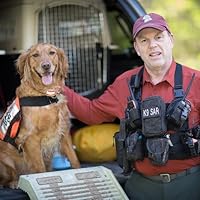
As the son of a California Highway Patrolman who was a contemporary of the slain officers in the famed 1970 Newhall shooting, Michael E. Woodgrew up hearing about the event and its influence on the CHP and law enforcement community. That experience led to his authoring"Newhall Shooting: A Tactical Analysis," arguably the most thoroughly researched and documented account of the shooting to date. He is a lifelong shooter and student of armed self-defense and a graduate of civilian self-defense training schools, including the Lethal Force Institute and The HALO Group. Wood is a military officer and pilot with 22 years of experience in operational environments, including combat operations, and is accustomed to analyzing events and deriving "lessons learned" for application in training and programs."
U.S.A.F. Lieutenant Colonel (Ret.) Mike Wood is an NRA Law Enforcement Division certified firearms instructor and the author of "Newhall Shooting: A Tactical Analysis".
An excellent tactical and technical analysis of one of the most infamous police involved shootings in the history of the United States. The Newhall Shooting took place in what was then the unincorporated are of Newhall, Los Angeles County, California on April 5, 1970.
It's always difficult analyzing shootings in which officers were killed. I tell myself that it's necessary for professional development as well as my own well-being, but it doesn't make it easier. More often than not you are looking at mistakes those deceased officers made. If you're an officer yourself it feels wrong to critique fellow officers who went down in the line of duty.
I've been a police officer for over 14 years and I would be less than honest if I didn't admit to being on calls in which my tactics and decisions were less than stellar. When I review those calls (sometimes reluctantly) I force myself to look at what I did and I conclude that I was lucky. Relying on luck is not a good way to have a long career in law enforcement so I strive to improve my performance. One of the ways I do that is review incidents in which other officers were not as lucky. As a firearms instructor with my department I feel an even greater need to analyze these events since it's my responsibility to train other officers. Painful as it might be I have to do it.
On April 5, 1970 Jack Twining and Bobby Davis shot and killed four California Highway Patrolmen in less than five minutes. CHP Officers Walter Frago,James Pence,George Alleyn and Roger Gore all died between 11:54 P.M. - 11:58 P.M. Not one of the four officers had more than two years of experience. All four were married and between them they left behind seven children. Two of the officers were 24 years old and the other two were 23 years of age.
Twining and Davis fled the scene. Later ,on the following day, Twining broke into a house where he was cornered by the police. After speaking to the police and the local news media via telephone he committed suicide. Twining was thirty-five years old and had been in and out of eight different prisons (to include five years in Alcatraz) since he was sixteen. He had killed a fellow prisoner (self-defense) while he was in Alcatraz.
Davis was twenty-seven at the time of the shooting. He was captured and sentenced to death. In 1973 it was commuted to life without possibility of parole. He committed suicide in his prison cell in 2009. Davis had been out of prison for eight months when the Newhall shooting took place and was on parole in Texas.
Mike Wood is the son of a thirty year veteran of the CHP and is a retired Air Force fighter pilot with 550 combat hours in Iraq and Afghanistan. While he is not a police officer he is a lifelong gun-owner and shooter and has attended several private and governmental firearms training programs.
Mr. Wood acknowledges the difficulty in examining what the officers did wrong, but it's the only way to learn. In addition to the shooting he examines the training, equipment, politics and culture of the CHP as it existed in 1970. He continues past 1970 to show how police departments reacted to the shooting and what changes are now permanently in place and which ones have been discarded/forgotten. Wood states that he felt obligated to examine the shooting because he came to realize that in the forty plus years since the shooting there is an entire generation of officers who have never even heard of Newhall.
Mr. Wood's approach is methodical and detailed (as befitting an experienced fighter pilot). There are numerous color photographs of the crime scene taken by investigators the morning of April 6, 1970 as well as many black and white photos of equipment and past CHP officers in training and on duty over the past decades. In addition to the photos Mr. Wood had diagrams showing a bird's eye view of the gunfight as it progressed and line maps showing how everyone got from point A to point z (site of the shooting). At no time did I find myself struggling to picture the shooting and that's important. All too often detailed descriptions of these type of events can leave a reader feeling confused without extensive diagrams illustrating who moved where and did what to whom.
To wrap it all up Mr. Wood has an extensive appendix of the history of the CHP firearms, ammunition, equipment and firearms training from the agency's beginning in 1929 up to 2010. It's an impressive piece of technical history and one that I appreciate.
If there is any fault with Mr. Wood's book it would be that he does not have a chapter detailing what happened after the shooting on the following day and perhaps a brief look at what happened to Bobby Davis (suicide 2009) and the officer's families. I understand that Mr. Woods wrote a tactical analysis and not a biography, but a little background would have been appreciated. As it was I found the additional information on the Internet with no difficulty. A small quibble, but one that stops me from rating the book five stars.
As I wrote at the beginning of this review this is an excellent analysis. For those who are in law enforcement or just have an interest in such things it's well worth the time and money. I recommend it.
A well-written analysis of the Newhall Shooting. He shows the many tactical errors so the same mistakes are not made today. However he also shows that the supposed "training scar" of the casings in the pocket did NOT happen. (LASD crime scene photos show Ofc. Pence' spent casings on the ground near where he was reloading.)
Also of interest are his research and photos of CHP tactics, equipment, and the crime scene (which is of particular interest for SCV residents and those who have been to Magic Mountain.) Wood also has phase-by-phase diagrams of the shooting which are helpful to understanding the shooting.
Anyone in law enforcement, those with an interest in military/combat tactics, and those who enjoy local SCV history should read this book. It is a lesson in tactical decision making.
Postscript - For locals I would highly recommend visiting the memorial to Ofcs. Frago, Gore, Alleyn, and Pence which is outside the CHP Newhall office. My oldest son and I visited it last month on the anniversary of the shooting and it was a solemn yet special experience.
Great analysis of a sad night in California Highway Patrol history. My dad was a CHP officer in the old Pomona office when this happened and I remembered reading the CHP Information Bulletin of this incident when I got older. I became a CHP officer myself in 1992 and the Department still remembers and learns from the events of April 5, 1970.
In 1970 a shootout took place in Newhall California killing 4 CHP police officers, in 4 separate police cruisers, in just a matter of minutes. This book is a breakdown of a timeline of events which took place on that ominous day. It has become unfortunately a deep seared lesson of miscalculated actions in the use of deadly force gone terribly wrong in this senseless tragedy. This book a technical evaluation of the gun battle is both a frightening analysis and sad account of the brave officers who died that day at the hands of brutal killers is even more significant in our conflicted world of law enforcement today, 45 years later.
This entire review has been hidden because of spoilers.
The most thorough account of the Newhall Massacre ever written. It goes into great detail about the actions of all the participants and exactly what happened that tragic night. It also examines in depth the errors made by the police officers and how those errors were later remediated by CHP training methodology.
The only thing that would make the book better is if it touched on the effects it had on the survivors and followup information about the perpetrators.
This book discusses important concepts of officer safety and real-life police work. However, even classroom instructors presenting the driest material can make the material interesting with a bright presentation. This book fails in that regard, and as a result readers will put down the book and miss hearing important information.
Excellent explanation of the tragic event that took 4 officers' lives in 1970. Wood examines details that lead to mistakes that can be corrected by both officers and the department of Highway Patrol. Many of these can apply to different situations in life. Quite technical in a number of areas.