Jump to ratings and reviews
Rate this book

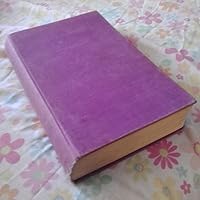
The Forgotten Rebels of Eureka

Rate this book
The Eureka Stockade. The story is one of Australia’s foundation legends, but until now it has been told as though only half the participants were there.

What if the hot-tempered, free-wheeling gold miners we learnt about in school were actually husbands and fathers, brothers and sons? And what if there were women and children inside the Eureka Stockade, defending their rights while defending themselves against a barrage of bullets?

As Clare Wright reveals, there were thousands of women on the goldfields and many of them were active in pivotal roles. The stories of how they arrived there, why they came and how they sustained themselves make for fascinating reading in their own right. But it is in the rebellion itself that the unbiddable women of Ballarat come into their own.

Groundbreaking, absorbing, crucially important—The Forgotten Rebels of Eureka is the uncut story of the day the Australian people found their voice.

512 pages, Hardcover

First published January 1, 2013

48 people are currently reading
1090 people want to read

About the author

Clare Wright

16 books54 followers
Clare Wright is an historian who has worked as a political speechwriter, university lecturer, historical consultant and radio and television broadcaster. Her first book, 'Beyond the Ladies Lounge: Australia’s Female Publicans', garnered both critical and popular acclaim and her second, 'The Forgotten Rebels of Eureka', won the 2014 Stella Prize.

She researched, wrote and presented the ABC TV documentary Utopia Girls and is the co-writer of the four-part series The War That Changed Us which screened on ABC1.

Ratings & Reviews

What do you think?
Rate this book

Friends & Following

Create a free account to discover what your friends think of this book!

Community Reviews

5 stars
109 (27%)
4 stars
187 (47%)
3 stars
83 (21%)
2 stars
13 (3%)
1 star
3 (<1%)
Displaying 1 - 30 of 78 reviews
Profile Image for Dale Harcombe.
Author 14 books426 followers
November 25, 2013
The Eureka Stockade is an interesting point in Australia’s history and yet one I suspect many people know very little about. Even what we may know is probably skewed. The Forgotten Rebels of Eureka seeks to redress this problem by recognising the part women and children played in the development of Ballarat. Until now it seems to have been pretty much assumed women and families were not thereon the gold fields. Clare Wright has researched extensively and involved ample evidence to prove this was not the case. Almost a quarter of the on the gold fields at Ballarat were female. In fact, the Chinese were considered strange because they did not bring their women with them.

This book is no sugar coating of nostalgia but gives the reality of what life was like for those on the diggings. I loved the way Clare Wright brought the past to life in the small details and assured us that, ’for all of us the past is a whisper away.’ That whisper is made louder as she details items from diaries and letters of the time. Just one example is that of Ellen Campbell, who shared her grandmother's diary. Her grandmother Margaret Brown Howden Johnston was married to Assistant Resident Gold commissioner James Johnston n. She was pregnant with their first child while living at Ballarat. Yet her granddaughter was not invited to the 150th anniversary of Eureka. The book is littered with many fascinating stories that have not been told till now.

The focus has for too long has been on the diggers and not their wives and families who experienced the hardships with them. For anyone with an interest in Australian history this gives a fascinating account of events leading up to the Eureka Stockade. As you read, you can almost feel yourself working with the women to sew the flag and then marching from Bakery Hill to Eureka. Mrs Shann led the group that consisted of not just miners but their wives and children. A crowd of five hundred agreed ‘to stand truly by each other, and fight to defend our rights and liberties.’

So the book goes on filling in the gaps as the diggers and their wives and families sought to protect their rights. Some of the descriptions of what happened at the Stockade are brutal and show the inhumanity of the soldiers. Other stories show the humanity of one human being to another and how some women risked their own lives to help others. This book gives a vivid picture of both and will leave you wondering how many other aspects of our history have been given skewed versions that did not show the involvement of women. Given the amount of research involved and the material included in this book I am not surprised to hear that Clare Wright said it was ten year in the making. It was worth it as it is a valuable resource and insight into the times.
Profile Image for Ali.
1,797 reviews162 followers
December 27, 2013
This book didn't entirely come together for me, and I'm not entirely sure why. Wright retells the story of the Eureka Stockade focusing on the experiences of the women involved. Possibly the story would work better for someone intimately familiar with the Eureka story, but for me, with only the barest remembrances of the main cast of characters it felt too disjointed to be an effective retelling. The themes, of gender norms in flux, were more occasional suggestions thrown out than fully explored. In the end the book felt neither fish nor fowl, neither straightforward retelling nor thematic exploration, and left me unsatisfied.

By far the biggest strength of the book was the sense of atmosphere on the goldfields that it conjures up. And on this alone, it earns three stars. The community of diggers and diggers wives, military men and families, and local commerce comes sharply to life. Like a lot of Australians I'm descended from gold rush emigrants who cut their Australian teeth in the 1850s goldfields, and to get a sense of what life was like for them was cool
Profile Image for Jennifer (JC-S).
3,531 reviews285 followers
April 14, 2023
‘The women of Eureka have always been there.’

This book is focussed on the period between the discovery of gold at Ballarat in 1851 until the aftermath of the Eureka Stockade in 1854. Dr Wright also provides a domestic and international context for the events in Ballarat as well as referencing other instances where women became politically mobilised (such as during the French Revolution). When I first learned about Eureka at school almost half a century ago, the only names used were male, the only pronouns masculine. The events at the Eureka Stockade were, we were told, the beginning of Australian democracy, a recognition that there should be no taxation without representation. The Eureka Stockade is the only Australian example of an armed rebellion leading to reform of unfair laws. The term `digger' was later adopted by the ANZAC soldiers in World War I. The wording of the resolution passed by the diggers on the 11th of November 1854 still echoes in my memory: that it was `the inalienable right of every citizen to have a voice in making the laws he is called on to obey, that taxation without representation is tyranny.' It didn't occur to me then to wonder where the women were.

`Women were there. They mined for gold and much else of economic value besides. They paid taxes. They fought for their rights. And they were killed in the crossfire of a nascent new world order.'

Dr Wright's research led her to discover there were 5165 women in Ballarat in December 1854, and 6356 children. And at least one of those women died during the Stockade.

This book provides an engrossing account of the events leading up to, and immediately after, the Eureka Stockade. The accounts of lives lived (and lost) on the muddy goldfields. Women as agitators, fund-raisers and petitioners. Women as wives and mothers. Women conducting business and mining for gold. A number of women become the book's main characters. Those women include: Martha Clendenning, the storekeeper and doctor's wife; Margaret Johnston, the young wife of Assistant Gold Commissioner James Johnston; actress and theatre-manager Sarah Hamner; and Clara Seekamp, who acted as publisher of the Ballarat Times.

I found this book fascinating: it made me think about aspects of the Eureka Stockade I'd never before considered (including the role of women and the dispossession of the indigenous inhabitants). It also reminded me of the relative recency of representative democracy in Australia, and the continuing struggles over land ownership and use. I'd recommend this book to anyone seeking to look at the Eureka Stockade from another perspective.

`It's what happened after the surrender that really matters.'

Dr Clare Wright won the 2014 Stella Prize for this book.

Jennifer Cameron-Smith
Profile Image for Michael Livingston.
795 reviews291 followers
April 19, 2014
This is the kind of book the Stella Prize is all about - something I'd never have picked up without the prompt of the long list that turned out to be a fascinating account of a moment in Australia's history I knew surprisingly little about. In focussing on the role of women, Wright shifts the story from the standard outline we all learned about at school and brings new and intriguing insight to bear on the goldfields, the Eureka movement and the nascent women's rights movement of the time. It's long and at times dry, but there's a lot to like here.
Profile Image for Kate.
1,070 reviews13 followers
August 10, 2018
To be perfectly frank, the Australian gold rush history I learnt at school was dull. We suffered through it for the excursion to Sovereign Hill, of which the highlights were having personalised 'Wanted' posters printed and spending a vast amount of money on boiled lollies. I'm sure we covered stuff about living conditions, the growth of Ballarat, and the far-reaching effects of the miners' protests about compulsory licences... I probably filed it under 'Oh yeah, that was the Eureka Stockade', and moved on to Sovereign Hill's chief attraction - panning for gold.

Imagine if I'd been taught from Clare Wright's The Forgotten Rebels of Eureka ? It's a spectacular, riveting book that gives an account of the events leading up to the Eureka Stockade from the perspective of individual women on the gold fields. Until Wright's book, women had been left out of the Gold Rush and Eureka story, despite the fact that they played a significant role and in turn shaped Victorian history.

Notably, traditional gender roles were challenged. Women were lease and land holders (for example, pub licences required a female on the lease, the logic being that a female presence would keep behaviour in check). Women ran businesses, mined for gold, and in terms of marriage, could afford to be very picky (they were the minority, hence they did the choosing). Equally, men were required to do things they weren't accustomed to doing. In a letter to his mother, miner Henry reports "I'm a first-rate washerwoman, or if the lasses like, washerman...".

The events on the gold fields represented the first gains for Victorian suffragettes - "They did not want to change the system of government, they wanted to be included in it." Wright's vivid description of the political environment is interwoven with the everyday - the bitter Ballarat winters, the birth (and loss) of babies, the fashions favoured by those who had struck gold.

Wright demonstrates that there's no need for history books to be dry and plain. The Forgotten Rebels of Eureka is exquisitely written and has flourishes you don't expect. Women were left in "...forsaken towns like the soapy ring around a bathtub" while their husbands rushed to get to the gold fields. On the influence and importance of immigrants, Wright says -

...the ideas, aspirations and language of the old world seeped into the porous new cultural and political landscape. Seen from this angle, the Victorian gold rush doesn't represent a new dawn in Australia's young history so much as the long dusk of Europe's age of revolutions.


This is an embarrassingly paltry review of what is an epic book. In short, it's absorbing, informative and memorable (and a worthy Stella Prize winner).

4/5 I need a post-book trip to Ballarat.
Profile Image for George.
3,258 reviews
May 31, 2021
3.5 stars. An interesting historical non fiction book about the period 1851 to 1855 when there was a gold rush at Ballarat, Victoria, Australia. The author provides details of the people who arrived at Ballarat, focussing more on the women, ‘the forgotten rebels’. The information provided gives a good perspective of the types of people who became miners and entrepreneurs at Ballarat, the poorly trained undermanned police force, the perceived injustices including the mining licence imposed on all miners, that lead to the slaughter by the military of 26 people in the mining camps on Sunday morning, 3 December 1854. Four army soldiers were also killed. This event is called the ‘Eureka Rebellion’ and is identified with the birth of democracy in Australia.

This book was first published in 2013 and won the 2014 Stella Prize. The Stella Prize is an annual literary award established in 2013 for writing by Australian women in all genres, worth $50,000.
Profile Image for Sam.
570 reviews87 followers
February 9, 2018
I really liked all the stuff I learned while reading this book.

Think of it as a feminist history of the Eureka stockade. This is a Stella prize winning work of non-fiction, but I'm not entirely sure that all the women in this book were forgotten. There seemed to be quite a lot of information available for people who were supposedly forgotten.

There were a lot of people to learn about and it was pretty amazing the things they managed to accomplish in a time where women were constantly undervalued. But there wasn't much time spent on most people so they were very hard to keep track of.

My major criticism was that very little of the book was actually devoted to the stockade itself, which I don't feel I've learned much more about after reading this book.

There's no denying that Claire Wright has written an amazing feminist history of what I think is an under-taught area of Australian history.

I would recommend this to anyone who wants to know more about women in history in Australia, and boy do I want to go to Ballarat now.
Profile Image for Text Publishing.
713 reviews289 followers
June 22, 2018
‘The best source on women at Eureka.’
Big Smoke

‘This is a wonderful book. At last an Australian foundation story where women are not only found, but are found to have played a fundamental role.’
Chris Masters

‘Brilliantly researched and fun to read. An exhilarating new take on a story we thought we knew.’
Brenda Niall

‘Fascinating revelations. Beautifully told.’
Peter FitzSimons

‘Lively, incisive and timely, Clare Wright’s account of the role of women in the Eureka Stockade is an engrossing read. Assembling a tapestry of voices that vividly illuminate the hardscrabble lives endured on Ballarat’s muddy goldfields, this excellent book reveals a concealed facet of one of Australia’s most famous incidences of colonial rebellion. For once, Peter Lalor isn’t the hero: it’s the women who are placed front and centre…The Forgotten Rebels links the actions of its heroines to the later fight for female suffrage, and will be of strong relevance to a contemporary female audience. Comprehensive and full of colour, this book will also be essential reading for devotees of Australian history.’
Bookseller and Publisher

‘The Forgotten Rebels of Eureka offers us a full cast of flesh-and-blood women who belong in any telling of the Eureka story, and in any account of Australian goldfields life.’
Robyn Annear, Monthly

‘Clare Wright’s revisionary history of the Eureka stockade is immediately entrancing. A social history of the Ballarat goldfields in Victoria circa 1854, it recreates the landscape as one of bustling domesticity, commerce, theatre and constantly shifting authority. It is a far cry from the stories and images of my school history books which portrayed a shanty town of tents and men.’
Guardian

‘Beautifully written, her book takes readers on a vivid journey of what life was like for the families of the miners, merchants, prostitutes and police in a landscape that had been totally annihilated by the race to dig up gold…It’s a great story.’
Courier Mail

‘This history is based on impeccable research….The book makes a strong case for the forgotten rebels of Eureka, and it brings to life the experiences of so many young immigrants to Australia in the 1850s. It has been handsomely produced with illustrations, detailed references and index, making it an excellent addition to libraries. Women, in particular, will enjoy this refreshing new look at Eureka, that champions the female role in the development of Australian democracy.’
Sydney Morning Herald/Saturday Age

‘Fascinating.’
Irish Echo

‘With her new book The Forgotten Rebels of Eureka, historian Dr. Clare Wright has taken a huge step towards a more truthful examination of the Stockade and its players…What this book does is lay down a new way for women…to view themselves, and for all of us to understand our past through truth rather than reliance on myth.’
King's Tribune

‘A must-have book to add to your collection. Comprehensively researched, throughly illuminating account of the hardships, highlights and the sheer determination of the women of Eureka that shaped our national consciousness.’
Nicole Maher, Great Escape Books

‘Not only has [Clare Wright’s] research shown that women were working alongside the male miners as shopkeepers, laundresses, housekeepers and prostitutes—often as the primary breadwinner—it enabled Wright to resurrect some “extraordinary” female characters who were leaders in the movement.’
AEU News

‘Whether you enjoy lively stories about goldfields, women’s history, colonial attitudes or workers’ civil rights, there’s something for everyone in this freshly researched and colourfully told account.'
NZ Listener

‘Extraordinary…There is so much to be learned from her prodigality of content…not just about the role of women of women in Eureka and on the goldfields…but also about Australian society.’
Australian Book Review

'As Wright points out, for too long Eureka has been a masculine myth. Women’s presence has never been fully explored. Indeed, their absence has been assumed. Her work fills an enormous gap. Furthermore, The Forgotten Rebels of Eureka supports her claim that women’s presence does not just add colour to the picture, it changes the very outline.'
Weekend Australian

‘In The Forgotten Rebels of Eureka [Wright] presents a refreshing take on the 1854 rebellion, by sharing the untold stories of the men, women and children who were there.’
Walkley Magazine
Profile Image for Lisa.
946 reviews81 followers
March 9, 2017
I must have learnt about the Eureka Stockade sometime during my time at school. But, like my most topics, it was remembered vaguely, not even at half-strength. I could paint the event broadly (the flag, miners' rights, Peter Lalor, tragedy) and felt very familiar with the nameless, faceless cast of characters: cruelty male authority and the rebels, typical Aussie battlers: standing up for a fair go, fighting against enormous odds for justice and, also, yes, male. That women were ever involved in this iconic Australian event never occurred to me until I saw The Forgotten Rebels of Eureka on the bookshop shelves.

Clare Wright recalls a similar reaction, stumbling across women as she began to push closer to Eureka. As a student in an all-girls' school, taught history by women, she asks: "why did not one of us ever think to ask, where are we in this story?"

But, as Wright concludes, "the women of Eureka have always been there" and her book seeks out to explore their lives and to see one of Australian history's defining moments through the perspectives and experiences of those the historical record has glossed over.

That Wright has been successful is obvious from the awards, nominations and praise that the front cover of this edition make clear. Her writing is clear, precise, evocative and occasionally humorous, making the act of reading easy and delightful — but without sacrificing historical integrity. Wright is able to bring the people she writes about to life, without it feeling like she's delving into fiction.

Wright's narrative doesn't require the reader to have an extensive understanding of the Eureka Stockade either. Prior to starting this book, this was something I was concerned about — as noted above, my own understanding was poor and I didn't want to find myself struggling because of the gaps in my own knowledge. However, I found that Wright's approach provided me with enough information that I could comprehend the events leading up to the Stockade and to appreciate the new light Wright sheds on them.

The Forgotten Rebels of Eureka does more than merely writing women back into the Eureka narrative. It explores their narrative. What it was like to come out to Australia in hope of making a fortune in the gold rush, to arrive in Melbourne and journey up to Ballarat, what it meant to live as the wives of miners, the freedoms the goldfields offered – and yes, what it meant to be a woman caught up with the rebellion and it's tragic ending.

Occasionally, there are stumbles in this book — times when I thought Wright was reaching with her theories, but these were few enough and the book so good that it didn't really impact my enjoyment of it.

There is a boldness in this narrative, but it is a tempered boldness. Wright doesn't try to reinvent the story of the Eureka Stockade, sticking to facts and (reasonably) credible theories, but she is unapologetic about the history she reveals.

"The great gift of Eureka," Wright writes in her preface, "is that the story of women's effort, influence and sacrifice is both politically correct and historically true."

The same could be said of her own account.
17 reviews1 follower
March 4, 2018
I assume that like myself, most Australian's are not familiar with the actual events that culminated in the Eureka stockade and the impact it had on union movements, and democracy in Australia. The Eureka legend has been hyper-mascularised, with the role of women in the goldfields all but deleted from national history. This exhaustively researched book, a result of a PhD thesis, serves to accurately reset the record on what has utlimately become a historical fiction.

This book also works at length to investigate the synthesis of the "Australia flag", now known as the "Eureka flag". A beautiful design that held so much meaning for those who created it, and whose symbolism was utterly unique when compared to the patriotic flags of the Empires of the time.

From 2018, companies face being banned from doing any federal building work in Australia "if employees display the Eureka flag or union slogans on employer-supplied clothing and equipment". Offending material, specifically includes images generally attributed to, or associated with an organisation, such as the iconic symbol of the five white stars and white cross on the Eureka Stockade flag". This ban is a result of government restrictions on workers showing support for the CFMEU.

Current politics aside, the Eureka flag as a symbol has been claimed by many organisations over the years, as has the stockade itself. A re-education of the nation on the impacts of the stockade would have this flag venerated instead of banned. As such, this book is an excellent candidate as a core text in history or english classes. I commend the efforts of those in parliament who are trying, like Clare Wright, to reclaim Eureka for what it is - "the birthplace of the Australian spirit of mateship ... a victory of self-reliant individuals over big government ... and excessive taxation."

Lastly, I was completely surprised to learn through this book that women's rights in Australia were accelerated toward equalisation during the Gold Rush years. Only after the collapse of the Gold Rush period did Australian society's dictate on women's inequality truly come into force. We have come a long way, but further progress is still neccessary.

An excellent read.
Profile Image for Sue.
169 reviews
November 16, 2018
If you’re not Australian, you may not have heard of the Eureka Stockade. It was a significant event in colonial Australia’s march to democracy and independence, involving the British army and police attacking a stockade created by miners whose grievances included the payment of a compulsory miner’s licence and the fact that this licence, which they saw as a form of taxation, did not give them the right to vote in the legislature. It has traditionally been framed in masculine terms, but Wright discovered, somewhat by accident while researching another project (as historians do!), a new angle – the role of women in the rebellion.

For my full review, please see: https://whisperinggums.com/2014/11/09...
Profile Image for Kristine.
612 reviews
December 26, 2020
Well researched and interesting social history of women in the Gold Rush period in Australia. While I found much of it interesting, I struggled with the book as it didn't flow well and was best appreciated in small doses that each dealt with the different snippets of lives, cultural and social elements of the times. I felt overwhelmed at times with the amount of detail and number of characters, and at the same time cheated by the superficial analysis of issues that were mentioned but not really pursued. Perhaps I expected too much of the book, or perhaps it was too ambitious in scope. Regardless, it was a worthwhile read.
Profile Image for Simon.
18 reviews1 follower
July 28, 2024
Expertly researched and brilliantly told, a compelling, fulsome retelling of Eureka's resistance.
Profile Image for Lisa.
3,781 reviews491 followers
January 22, 2016
Whenever I see a reference to ‘The Forgotten’, my antennae are on alert: there are always so many demands on our attention now, so why should we remember these particular Forgotten? Have they been forgotten because, however interesting they might have been as individuals, they weren’t really very important in the great scheme of things, or was there some systemic (or sinister) reason why their stories have been overlooked (or suppressed)? Do these Forgotten in fact have some significance that demands that their story be resurrected?

However, this was not a question that I was expecting to confront when I took on reading The Forgotten Rebels of Eureka by Clare Wright. Even though Australian history is comparatively young, there are groups of people whose contribution to the historical record has been marginalised, and their stories should be told. There are plenty of PhDs in this field, and some of these become books for a general readership. Wright’s book, emerging from her research, is about the women involved in the Eureka Stockade of 1854, and it’s an important work that aims to set the male-only record straight. It’s written in a reader-friendly, chatty style, and although it’s thoroughly referenced with endnotes, it wears its scholarship lightly. The problem for me was that not all of it seemed to warrant my attention.

To read the rest of my review pleased visit http://anzlitlovers.com/2014/03/03/th...
Profile Image for David Hunt.
Author 5 books230 followers
May 14, 2016
This was my second reading of Clare Wright's wonderful book about the Eureka uprising, with a particular focus on the women involved in, or affected by, the events of 1854. I absolutely love this book. It's beautifully written and places Eureka in the context of mid 19th century social and political reform. One star for each of those in the Southern Cross from me.
Profile Image for Carofish.
541 reviews1 follower
October 16, 2014
This is an interesting part of Australian history. Some comments not correct and quite a lot of repetition. But on the whole , a pretty good read
Profile Image for Alexandra.
838 reviews138 followers
April 13, 2020
Well I'm only about six years behind on this. 

It's a truth universally acknowledged that I don't much care for Australian history. Except for the women's suffrage bit. There are lots of reasons for this and some of them are the same ones everyone else trots out and some of them are idiosyncratic (I really like my history to be properly old, and I like the textual/ architectural etc remains, which is problematic for Indigenous history).

Anyway. I loved You Daughters of Freedom and back when we were still able to congregate with others (ah, the good old days), I went to hear Clare Wright speak about it. I took my copy of Daughters to get signed... and then while I was there I thought I should get this, and also get it signed (which meant lining up a second time which she thought was very funny). This is partly because I was feeling a bit giddy-fan-girl, and partly because she described it as her 'democracy trilogy' - the third to be about the Yirrkala bark petitions, I believe, which I will absolutely be buying and reading. I also figured that while I'm fairly indifferent towards the whole Eureka myth and the way it figures in Australian history, I could trust that Wright wouldn't give me a rah-rah-tattoo-the-Southern-Cross-on-your-chest story.

Wright does a marvellous job of peopling the gold rush fields of Ballarat with real people - men and women and children, from many different places around the world. This is the real key to her work. She points out just how masculine the story has been, and the take-away myths that have grown up around it; and then she debunks those myths by not only pointing out that women were there, but by pointing up how significant the contribution of women was.

Women as publicans. Women holding gold licences. Women running shops. Women running the newspaper, and writing copy for it. Women running a theatre. Women holding together their families. Women being expected by the government to make the place more civilised. The lack of Chinese women being used as an excuse to be racist shits. Women giving birth (including in the middle of the storming of the Stockade!) and women dying. Women as reasons for men to try and make more money, to look after the families - and to stop the woman from being the one supporting the family. Lady Hotham being appealed to, to intervene with her husband, the ruler of the colony. They were there. And important. And ultimately shoved back into old gender roles, for the most part, when the gold fields got more mechanised and Ballarat organised itself as more of a regular town and when the franchise got extended to more men, but no women. 

One of the things I liked about Daughters is that it recognised that Indigenous women were excluded from the achievements of 1902 (although Ruby Hamad has words to say about how this is discussed and to what extent, in White Tears Brown Scars). The Wathaurung people appear occasionally in this story: reminders that they had been finding gold in the area for centuries, and that some of them engaged in commerce and relationships with Europeans, and so on; but overall not that much. It seems that Wright had to do immense digging (heh) in the archives to find the information about the white women that she uses in the book; that there would be far less archival information about Indigenous people and their interactions with each other or Europeans doesn't surprise me at all. Sadly. Could Wright have done better? Maybe. Would it have made the project even bigger? Absolutely. Was it the point of the book? No. If someone hasn't tried to do a really in-depth look at the Indigenous experience of the Victorian goldfields, that should absolutely happen. 

I have a much greater appreciation for what life was like on the goldfields (pretty shit), the political situation with both Hotham back in Melbourne and the local authorities (also pretty shit, for a variety of reasons), and some of what led the miners to actually create what we know as "the Eureka Stockade" (pretty haphazard, not really intended to be a Great Last Stand Bastion), and of course the place of women in all of this. The entire situation really does deserve a place in discussions about the development of Australia as a democracy, as a social liberal experiment, and in how Australia developed its identity (exclusion of the Chinese, other variations on racism, how people spoke of themselves in relation to Britain, etc etc). Which is something I never thought I would say. 

(My enthusiasm has one caveat. There's this weird bit where she talks about women's menstrual cycles synchronising, and something something hormones affecting a situation, and... it's just odd. It doesn't fit with the rest of her style, and the synchronising almost certainly isn't true, and... yeh. I was a bit thrown.) 

Even if you think you don't like Australian history - if you like history, and the reclaiming of forgotten groups, this is definitely one to read. 
Profile Image for Stef Rozitis.
1,700 reviews84 followers
January 5, 2019
I liked a lot about this book, but I expected to like it even more. One of the things I didn't like was how covert the ideology was- I like a bit of transparency and reflexivity with that, because historians are deluded if they think they really keep their work value-free. This book seemed to try hard to be value free, but at the same time there was so much unnecessary metaphor and fanciful language that you couldn't really call it dispassionate, that seemed the wrong way around to me.

Another nit-pick, one that would only annoy hardened nerds was that many of the things she cited (secondary sources mainly) were not referenced or not in full and did not appear in her bibliography. This was a problem for me because I wanted to look a could of them up at least on google scholar and certainly I wanted to know the date at which people said some of the things that surprised me a bit. I have heard of Geoffrey Blainey for example (and read him a lot) but the same can't be said of everyone she quoted because history while interesting is not really my field. Also while I liked that she looked at some feminist scholarship on gold-rushes elsewhere I would have liked a soupcon of feminist method (I do realise this was not meant to be an academic text).

The text was thorough, at times too thorough with the balance of attention swinging back to the men. Many parts of the book came across as racist too, although I couldn't tell if perhaps those comments were meant to be sarcastic. I get told off when I use sarcasm but if I was sure it was that I would have felt ok about it. There was an inclusion of Indigenous people but exclusively through the eyes of Europeans, which may have been inevitable if there were no primary sources to see "them" any other way but needed to be discussed and critiqued more then. Some of what was said about Indigenous people was pretty horrible or unlikely to be true. Because we heard so much about the soldiers I wanted to hear more about the soldiers wives, mothers and daughters. It's not the authors fault of course if they didn't keep more detailed journals or correspond more.

I appreciated the roll call of characters and their stories at the end. Much of the information was when and what age they died which is probably all that remains of many people. For such a long book at times it seemed to be making much of little. It did give me a better idea of goldfields life though, not just rekindling the romance of it (that first bit me when I was a kid) but qualifying it with all the many hardships, deprivations and anxieties folk would have experienced. I really appreciated the details about the adelphi theatre, it was much different than I would have expected and I felt hungry for more and more details about that. I love the thought of this femme fatale who lies about her age and marital status and pretty much wraps the whole goldfields around her finger. I was more sympathetic and worried about her daughter who I would have like to have known more about. It was horrifying how young some of the girls married.

I appreciated the "Dear Jamie" journal because from all other sources he was so awful!

All in all this was a significant thing to read and definitely having started reading it before I went back into Sovereign Hill gave me a lot more to think about and understand. History really isn;t just playing dressups and it isn't even a series of significant events (although mind blown that Eureka was 15 minutes). It's all the bubbling interests and values of people. I saw a lot of genuine debate about loyalty to empire and about democracy in the characters in this history, I didn't see just the self-interest we are asked to accept these days as "inevitable" for all that there were thieves and sly grog sellers and women of ill repute on the one side and murderous, hypermasculine thugs on the other. I think I would read more from Clare Wright (my friends tell me I should) and I would definitely read more about women in the goldfields!
Profile Image for Libby Drew.
11 reviews6 followers
June 30, 2020
I have such mixed feelings about this book. I admire the amount of research Wright has done and am grateful to her for telling the story of the women of early Ballarat. My problem with it is that too much was included in the final edit. It took me forever to plod through this huge and very detailed book (alas, I have a weird reading ethic that prevents me from skimming). I can see why - having done 10 years of research - you'd want to include so much of what you uncovered, but ultimately the result is a work that loses its impact through too much superfluous information.

There are some really fascinating stories and characters here but just when you're enjoying a piece of interesting narrative, Wright throws in paragraphs full of statistics and bang, you find your mind wandering. I didn't need to know how old every single person was. I didn't need to read an entire chapter about the sea voyage and then another whole chapter about the road to Ballarat. Even in the epilogue where she wraps up the lives of the book's characters, she feels the need to mention not just how many kids each person had but their names, the year each was born, when they died, how old they were when they died, etc, etc, etc. Most perplexing in the epilogue is the inclusion of some characters who had the very briefest mention in the book, whilst other key players (such as Raffaello Carboni, an important figure in the Eureka story who is mentioned frequently throughout the book) are omitted all together. So again, just when I thought I was going to feel something for these characters, the effect of an almost moving epilogue was diluted through the inclusion of unnecessary detail.

There are some jarring moments stylistically, as Wright alternates between academic language and a more fiction-like narrative voice, with some pretty clumsy similes and the odd structural clanger. Some examples:
"The flies were as thick as Connecticut snow", (referring to the souveniring of the Eureka flag) "small patches of Prussian blue wool have been turning up in public collections ever since, roosting like pigeons scattered on the breeze" (huh?) and "...Catherine Bentley, who was also pregnant with a toddler, and now homeless to boot...". So perhaps my issue is with her editor rather than Wright herself - a sentence like that shouldn't make it into the final edit of any book.

About halfway through reading this I learned that there is an abridged version aimed at secondary students. About half the length, I think this is the book I should have read. I sincerely hope it is full of the stories with less of the stats.
Profile Image for Joel D.
339 reviews
January 12, 2020
I read this book because I wanted to spend 2020 getting through the so-called "Democracy Trilogy". I was interested in learning more about Australian history and social movement history.

Unfortunately, I have decided I won't read further works by Clare Wright.

I came to "The Forgotten Rebels of Eureka" with minimum prior knowledge of the Eureka stockade. So, I learnt some things from the book. On the other hand, I am sceptical of some of the books claims. Growing up outside Victoria, I never really felt like the Eureka Stockade mythology was that prevalent or important.

As I read through, I found myself often bored. Good non-fiction can read like a compelling narrative, with a manageable cast of characters and a strong storyline. This book failed at this. There were too many characters, for one. And the plot didn't really hold my interest. Wright seemed to be aiming to build the suspense towards the fateful events of 3 December 1854, but it was more like a radio host filling in time while waiting for a guest to arrive. It just wasn't terribly engaging. Other, better written books, would have been much more fun to read.

Then, towards the end of the book, Wright throws in a reference to 'menstrual synchrony'. This is the cute-but-untrue idea that women who live near each other develop synchronised menstrual cycles. Wright actually takes it further and argues that women at the diggings would have been synchronised not only with each other, but with the full moon. This is just bunkum. And when I'm reading a book that claims to be a *history*, having such a nonsense claim crop up is pretty alarming. I think it would be unfair to doubt all of this book because of this one weird belief of the author, but it is a red flag for me (pardon the pun). I don't appreciate getting 70% of the way through a work of non-fiction, trusting that the author is communicating reality, only to come across a debunked scientific theory.

So overall 2 stars because I did get something out of it. But I won't read the other book and if I had my time again maybe I wouldn't read this one.
Profile Image for Magpie.
2,228 reviews15 followers
March 9, 2022
⭐️⭐️⭐️⭐️⭐️ -wonderful storytelling about the origin stories of the Eureka riots/disturbances/incident/war/fracas - different voices call it different things over time which is telling in itself about how the event and its aftermath were perceived once the dust had settled and the bodies were buried.
Illegal sedition or freedom fighters?
Naive assembly or national security threat?

I appreciated the 10 years of research and the voices heard ringing out of the goldfields after all this time and I really can’t be bothered to get involved in a debate about “ oh that’s the one that’s written by a woman that focuses on the women that were there isn’t it?” Like that negates the worth of the writing and smugly ignores the reality that 99.9% of history is written by men prominently featuring men.
Please sir? Can we have a turn?

The delight of the book for me is that the author includes everyone. Men, women, children, indigenous, immigrants who spoke languages other than English. Individuals who practiced religions other than the dominant ones.
This is what diversity really looked like, sounded like, smelt like and they were all bound together by the common drug of hope.
The social cohesion experienced, the hopes for freedom and prosperity nurtured in their breasts makes for heady reading.

The writing also works as well as any thriller you will read about the times. The tinder that lit the Eureka moment was a long time coming, the perfect confluence of weather, personalities and mis management. How it didn’t blow before escapes me.

Wonderfully told, gripping and scholarly this is historical research made flesh, never felt long or dry. Just brilliant
♥️⭐️⭐️⭐️⭐️⭐️
M 2022
Profile Image for Natasha (jouljet).
881 reviews35 followers
October 31, 2022
The Eureka Stockade is synonymous with the stories of Australia's early White beginnings, of rebels, the burning of miner's licenses to defy authorities, the tales of battle and escape. Always such a male dominant narrative.

I grew up in Ballarat, and was taken to the Eureka Stockade over and over as a school excursion, but only remembered the very basics of the story. The name Peter Lalor, and the flag. I knew that a group of women sewed the flag, but do not remember any other highlighting of women's presence in the goldfields, the discussions of the day, nor the roles they played as wives, mothers, homemakers, business owners, fighters and rebels.

Clare Wright has delved into the true history of the goldfields, the tinderbox on tensions, the political and class realities, the challenges and She has found the characters, the strength and fight of women, but also the sheer resilience to carry on through anything. The notion of a birthing woman in the middle of the storming of the Stockade that night will stay with me.

The moments of rebellion, of community movement and uprising to fight for rights, that formed the beginning of democracy and social reform in this colonised country, were of course something women were part of. Women were there, were active in planning, voicing opinion and driving collective thought (including editorial from one's own newspaper), constructed the iconic flag, were raped and murdered in the famous massacre, and rose triumphant to continue the work of making Australia what it is today. This read ensures we all know that, know the moments and acts, know the names. Women were there, and were a crucial part of Eureka.
855 reviews1 follower
March 3, 2024
An in depth look at the women who lived alongside the men at the gold diggings through tumultuous times. The author has used letters, both personal and official, newspaper reports, court papers and Official documents to enlighten us about the role women played. There were wives of diggers, soldiers, and officials, there were business women - they ran the pubs, entertainment venues and printing presses. And yet most of history ignores them.
As well as the 458 pages of events, the author includes an epilogue of potted histories of what happened to the players after the rebellion, 20+ pages of notes and several pages of references.

The Eureka Stockade. The story is one of Australia’s foundation legends, but until now it has been told as though only half the participants were there. What if the hot-tempered, free-wheeling gold miners we learnt about in school were actually husbands and fathers, brothers and sons? And what if there were women and children inside the Eureka Stockade, defending their rights while defending themselves against a barrage of bullets? As Clare Wright reveals, there were thousands of women on the goldfields and many of them were active in pivotal roles. The stories of how they arrived there, why they came and how they sustained themselves make for fascinating reading in their own right. But it is in the rebellion itself that the unbiddable women of Ballarat come into their own. Groundbreaking, absorbing, crucially important—The Forgotten Rebels of Eureka is the uncut story of the day the Australian people found their voice.
Profile Image for Angela.
68 reviews1 follower
December 28, 2021
3.5 stars.

This book was unlike others on the subject of the Eureka Stockade in that it reported on women and their involvement in the whole affair.
I loved that about the book. I loved reading about the everyday lives of women on the goldfield, their political protestations, and their direct involvement with the stockade. It really cast aside the gentle, helpless picture of victorian women so often painted by books written about the time. These women were tough, and this book does a good job at presenting that.

My qualms about this book rest primarily in the pacing - some parts are really interesting, while others dragged on. Then there was an issue of repetition - I feel like I was told about 20 times in 10 different ways that "lots of people came to the goldfields in 1853," and "Australia had to import women," and "Everyone sold sly grog, and everyone knew it." (Obviously 20 times is an exaggeration, but it really was repeated more than necessary).

I personally wouldn't re-read this book - I can't imagine I'd get much more out of it. However, of you're interested in the Eureka stockade, I'd definitely recommend it - it has a lot to offer that other books on the subject don't.
Profile Image for Philip Hunt.
Author 5 books5 followers
August 17, 2019
It is to my discredit that I didn't really know the Eureka Story. Guess I missed studying it in my schooling in NSW and Qld. I did know there was some sort of uprising, and somehow had formed the prejudice against the government of the time. Clare Wright's wonderful book does not dispel that prejudice.

At the same time she opens up the story by telling it from the female point of view. Here we have the women of the Ballarat goldfields in all their diversity, endurance and (yes) power. The quality of her research jumps off every page, but better still, she knows how to write a ripping yarn. It's a long book at over 500 pages but I read it easily in less than a week (and I do have other things to do).

You wouldn't have to be a Victorian to enjoy it. And to learn something new.
Profile Image for Ellen.
Author 4 books26 followers
November 12, 2025
This places women and children at the centre of the gold mining at Ballarat. It was not a town of men, but of families, often very young familes. The book described the action leading up to (and following on from) the Eureka Stokade. It shows the tensions, the hopes and the hard work. It shows the jealousies, fear and panic. It is still relevant reading.

I read this after reading Naku Dharuk: The Bark PetitionsNaku Dharuk: The Bark Petitions.
Profile Image for Bec.
18 reviews19 followers
August 20, 2017
Wright chronicles the events and mood of the Victorian goldfields leading up to and after the Eureka Stockade, shedding light on women's participation on the goldfields. Wright persuasively argues that the social, economic and political
structures of the goldfields provided the context for women to aspire to political citizenship and economic emancipation. It's a fascinating account that remains prescient, particularly in analogies between goldrush immigrants and refugees. It's also a great reminder of the very different histories of NSW and Victoria that remain evident in today's political discourse.
Profile Image for Leah.
635 reviews74 followers
April 12, 2019
Clare Wright is a fantastic historian, though I’m more than a little jealous of the amount of primary sources she had to work with here.

I honestly hadn’t thought about the Eureka stockade since school, and its importance as a piece of political history had never impressed itself on me as a West Australian. So it was a nice surprise to discover its importance put into context alongside the apparently revelatory discussion of its women.
Displaying 1 - 30 of 78 reviews

Can't find what you're looking for?

Get help and learn more about the design.