

What do you think?

The Last Lover
Winner of the 2015 Best Translated Book Award for fiction, presented by Three Percent, a resource for international literature
In Can Xue’s extraordinary book, we encounter a full assemblage of husbands, wives, and lovers. Entwined in complicated, often tortuous relationships, these characters step into each other’s fantasies, carrying on conversations that are “forever guessing games.” Their journeys reveal the deepest realms of human desire, figured in Can Xue’s vision of snakes and wasps, crows, cats, mice, earthquakes, and landslides. In dive bars and twisted city streets, on deserts and snowcapped mountains, the author creates an extreme world where every character “is driving death away with a singular performance.”
Who is the last lover? The novel is bursting with vividly drawn characters. Among them are Joe, sales manager of a clothing company in an unnamed Western country, and his wife, Maria, who conducts mystical experiments with the household’s cats and rosebushes. Joe’s customer Reagan is having an affair with Ida, a worker at his rubber plantation, while clothing-store owner Vincent runs away from his wife in pursuit of a woman in black who disappears over and over again. By the novel’s end, we have accompanied these characters on a long march, a naive, helpless, and forsaken search for love, because there are just some things that can’t be stopped—or helped.
In Can Xue’s extraordinary book, we encounter a full assemblage of husbands, wives, and lovers. Entwined in complicated, often tortuous relationships, these characters step into each other’s fantasies, carrying on conversations that are “forever guessing games.” Their journeys reveal the deepest realms of human desire, figured in Can Xue’s vision of snakes and wasps, crows, cats, mice, earthquakes, and landslides. In dive bars and twisted city streets, on deserts and snowcapped mountains, the author creates an extreme world where every character “is driving death away with a singular performance.”
Who is the last lover? The novel is bursting with vividly drawn characters. Among them are Joe, sales manager of a clothing company in an unnamed Western country, and his wife, Maria, who conducts mystical experiments with the household’s cats and rosebushes. Joe’s customer Reagan is having an affair with Ida, a worker at his rubber plantation, while clothing-store owner Vincent runs away from his wife in pursuit of a woman in black who disappears over and over again. By the novel’s end, we have accompanied these characters on a long march, a naive, helpless, and forsaken search for love, because there are just some things that can’t be stopped—or helped.
320 pages, Paperback
First published January 1, 2005
About the author
Can Xue
95 books494 followers残雪
Can Xue (Chinese: 残雪; pinyin: Cán Xuĕ), née Deng Xiaohua (Chinese: 邓小华), is a Chinese avant-garde fiction writer, literary critic, and tailor. She was born May 30, 1953 in Changsha, Hunan, China. Her family was severely persecuted following her father being labeled an ultra-rightist in the Anti-rightist Movement of 1957. Her writing, which consists mostly of short fiction, breaks with the realism of earlier modern Chinese writers. She has also written novels, novellas, and literary criticisms of the work of Dante, Jorge Luis Borges, and Franz Kafka. Some of her fiction has been translated and published in English.
(from Wikipedia)
Can Xue (Chinese: 残雪; pinyin: Cán Xuĕ), née Deng Xiaohua (Chinese: 邓小华), is a Chinese avant-garde fiction writer, literary critic, and tailor. She was born May 30, 1953 in Changsha, Hunan, China. Her family was severely persecuted following her father being labeled an ultra-rightist in the Anti-rightist Movement of 1957. Her writing, which consists mostly of short fiction, breaks with the realism of earlier modern Chinese writers. She has also written novels, novellas, and literary criticisms of the work of Dante, Jorge Luis Borges, and Franz Kafka. Some of her fiction has been translated and published in English.
(from Wikipedia)
Ratings & Reviews
Friends & Following
Create a free account to discover what your friends think of this book!
Community Reviews
Displaying 1 - 30 of 58 reviews
June 6, 2019
Ok. The first hundred pages I was trying to apply some common sense to reading this book and I found this exercise very frustrating. But then, when i relaxed and let my common sense go out of the window, the the book has started working for me and it has turned into quite an unusual but pleasantly trippy experience actually. So my advice would be not to try to rationalise what you read as it might not work.
The author calls Kafka as her literary influence. But i did not find any existential dread which is so palpable in Kafka. It is more like “Alice in Wonderland” for the adults, if anything. It also reminded me Daniel Kharms and Russian literature of absurd. It is not a magical realism per se as there is hardly any connection to the daily reality as we know it.
So what it is? “Everyday life has transformed into a dreamland, one that was like a chain of interlocking rings” - says the author on behalf of a character. That is exactly what the book was for me: a chain of connected surreal stories that play with and often merge the dichotomies of East-West, love-sex and even humans-animals. There are six main characters, 3 couples, and the noisy numerous supporting cast. All main characters are either lost themselves or lost the connection with their love. As a result, they are on the individual quests to recover their status. But we never know whether they are moving physically or just within their consciousness. All relationships are illusive. There are lots of unfilled desires within the relationship, but satisfied somehow outside. The pages are buzzing with insects, snakes, mice. There are forests from books, rubber plantations, gambling city and poppy fields. The one of the most intriguing sequences reminded me vaguely Pedro Paramo while a female character arrives to a place sustaining on the farming tortoises. But the place looks totally deserted as inhabitants do not generally come out of the houses.
Many characters are intended to be westerners as they are inhabitants of the country A which is a Western country according to the book. But i really struggled to believe them as the westerners so devoid of logic they were, even in their mental landscapes. I think it is a deeply eastern (maybe even Chinese) view of a western person.
Someone said about her other book that her novels are like a vase. Each reader fills it in with its own content. I could have started to fill it in with my interpretations, but i generally did not have a need as I enjoyed the illusiveness and the absurd of what i’ve been reading when i stopped caring about applying any logic to it. It was like looking through a kaleidoscope when you would never guess the next combination of the elements, but would enjoy the pattern nevertheless. Overall, jolly good ride, not for everyone probably. I will be more mentally ready if i decide to read her other books.
3.5 stars rounded up
The author calls Kafka as her literary influence. But i did not find any existential dread which is so palpable in Kafka. It is more like “Alice in Wonderland” for the adults, if anything. It also reminded me Daniel Kharms and Russian literature of absurd. It is not a magical realism per se as there is hardly any connection to the daily reality as we know it.
So what it is? “Everyday life has transformed into a dreamland, one that was like a chain of interlocking rings” - says the author on behalf of a character. That is exactly what the book was for me: a chain of connected surreal stories that play with and often merge the dichotomies of East-West, love-sex and even humans-animals. There are six main characters, 3 couples, and the noisy numerous supporting cast. All main characters are either lost themselves or lost the connection with their love. As a result, they are on the individual quests to recover their status. But we never know whether they are moving physically or just within their consciousness. All relationships are illusive. There are lots of unfilled desires within the relationship, but satisfied somehow outside. The pages are buzzing with insects, snakes, mice. There are forests from books, rubber plantations, gambling city and poppy fields. The one of the most intriguing sequences reminded me vaguely Pedro Paramo while a female character arrives to a place sustaining on the farming tortoises. But the place looks totally deserted as inhabitants do not generally come out of the houses.
Many characters are intended to be westerners as they are inhabitants of the country A which is a Western country according to the book. But i really struggled to believe them as the westerners so devoid of logic they were, even in their mental landscapes. I think it is a deeply eastern (maybe even Chinese) view of a western person.
Someone said about her other book that her novels are like a vase. Each reader fills it in with its own content. I could have started to fill it in with my interpretations, but i generally did not have a need as I enjoyed the illusiveness and the absurd of what i’ve been reading when i stopped caring about applying any logic to it. It was like looking through a kaleidoscope when you would never guess the next combination of the elements, but would enjoy the pattern nevertheless. Overall, jolly good ride, not for everyone probably. I will be more mentally ready if i decide to read her other books.
3.5 stars rounded up

September 27, 2020
ALAS, NO CRUSH ON THE LAST LOVER 💘
The fact that I have been reading this book for almost two months could mean two things:
* I loved it so much that I savoured every single word and did everything I could to prolong the delightful experience.
OR
* Reading this novel was a torment and I forced myself to swallow chunks of it from time to time, as I tend not to give up on books easily.
Unfortunately, the latter answer is correct.
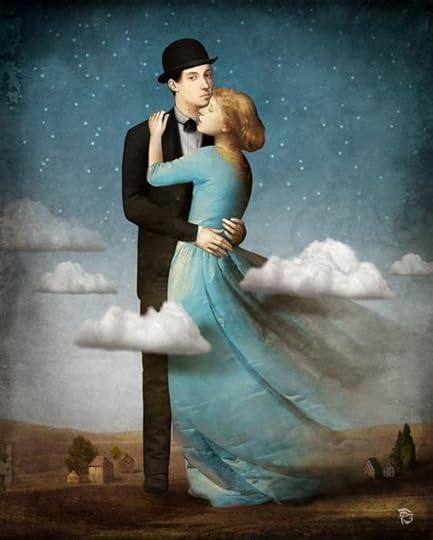
Christian Schloe
I absolutely adore surrealism and magical realism, nevertheless, Can Xue's version turned out to be indigestible for me. From the first page until the last one I had the impression that there is absolutely no connection between me and the author. The words were flowing, weird things were happening, violent and disturbing included, and I was totally indifferent to them, not even one tiny emotional muscle trembled. The characters had bizarre adventures and encounters but still, I remained uninvolved. Maybe I did not try hard enough, distracted by hectic and stressful reality in the last few weeks.
Imagine that for many, many hours someone keeps telling you her strange and disquieting dreams - the plot of The Last Lover is pretty oneiric indeed - and you not only do not care at all but also feel awkward and cannot wait until this strange monologue finishes. I was truly relieved when I read the last sentence yesterday. I admire the author's imagination, some passages are really stunning, but the novel as a whole absolutely did not resonate with me. 'What's the point?' was the question I asked myself hundreds of time. Still no convincing answer found.
The disappointment is bitter, as my expectations have grown pretty high - The Last Lover and I seemed to be a perfect match, based on the reviews. Despite high hopes regarding this book, the reality has been annoyingly biting me for two months. I wish I had not been clueless and frustrated while reading Can Xue's novel but unfortunately that is exactly how I felt.
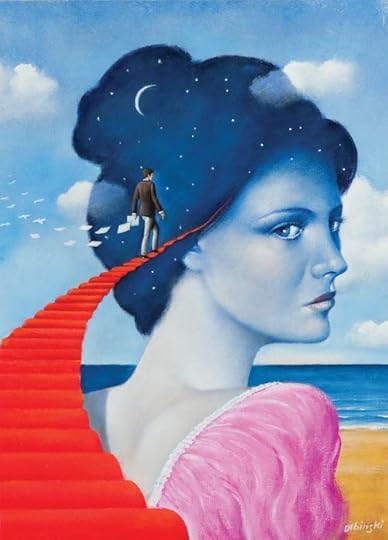
Rafał Olbiński
The fact that I have been reading this book for almost two months could mean two things:
* I loved it so much that I savoured every single word and did everything I could to prolong the delightful experience.
OR
* Reading this novel was a torment and I forced myself to swallow chunks of it from time to time, as I tend not to give up on books easily.
Unfortunately, the latter answer is correct.
Christian Schloe
I absolutely adore surrealism and magical realism, nevertheless, Can Xue's version turned out to be indigestible for me. From the first page until the last one I had the impression that there is absolutely no connection between me and the author. The words were flowing, weird things were happening, violent and disturbing included, and I was totally indifferent to them, not even one tiny emotional muscle trembled. The characters had bizarre adventures and encounters but still, I remained uninvolved. Maybe I did not try hard enough, distracted by hectic and stressful reality in the last few weeks.
Imagine that for many, many hours someone keeps telling you her strange and disquieting dreams - the plot of The Last Lover is pretty oneiric indeed - and you not only do not care at all but also feel awkward and cannot wait until this strange monologue finishes. I was truly relieved when I read the last sentence yesterday. I admire the author's imagination, some passages are really stunning, but the novel as a whole absolutely did not resonate with me. 'What's the point?' was the question I asked myself hundreds of time. Still no convincing answer found.
The disappointment is bitter, as my expectations have grown pretty high - The Last Lover and I seemed to be a perfect match, based on the reviews. Despite high hopes regarding this book, the reality has been annoyingly biting me for two months. I wish I had not been clueless and frustrated while reading Can Xue's novel but unfortunately that is exactly how I felt.
Rafał Olbiński

April 24, 2026
https://kansasbooks.blogspot.com/2026...
“Sin embargo, he ansiado siempre comunicarme con el lector, ya que mis historias con sus características particulares solo existirán si se pueden comunicar. En otras palabras, mi experiencia vital temporal debe seguir la experiencia vital temporal del lector. De esta manera, mi obra podrá ser difundida, ya que, de lo contrario, no podrá decírse que existe."
(Can Xue)
Esta cita incluida en el prólogo de El último amante, funciona casi como una clave de lectura de toda la novela. Más que una simple reflexión, parece una advertencia: lo que Can Xue propone no es una historia cerrada, sino una experiencia que solo cobra sentido en el momento en que el lector entra en ella y la recorre desde su propia percepción porque desde el inicio, la novela plantea esa especie de pacto implícito. No basta con leer; hay que implicarse, dejar que la experiencia del texto dialogue con la del lector, y si uno no está dispuesto a dejarse llevar, será mucho más honesto abandonar. Y, sin embargo, esa comunicación no es sencilla ni directa: está llena de interrupciones, de vacíos, de desajustes que obligan al lector a situarse constantemente, a preguntarse qué está buscando exactamente la autora y desde dónde debe leer.
"Cada vez que Qiao se iba de casa, la casa se llenaba súbitamente de ruido, como si algo importante e inesperado fuese a suceder. Por ejemplo, en ese momento, Ma Liya podía escuchar a dos gatos gritando desesperadamente en el patio trasero, y un grupo de gorriones bastante aterrorizado aterrizaba de repente en las escaleras. Se oía entonces el sonido de la ropa ondeando por los vientos del sur."
Ahí es donde la cita cobra todo su peso. Porque si la obra “solo existe” en esa comunicación, también es cierto que no exige cualquier lector sino uno dispuesto a embarrarse y seguir ciegamente a Can Xue: alguien capaz de moverse en la ambigüedad, de renunciar a certezas y de asumir que lo que tiene entre manos no es una historia en el sentido tradicional, sino una experiencia que se construye —y se deshace— en el propio acto de lectura. "Durante muchos años leyó un libro tras otro, y se mezclaron en su cabeza todo tipo de historias. A menudo tomaba asiento en su despacho de la Ciudad de B con una novela escondida entre sus documentos y fingía que estaba trabajando, pero en realidad estaba leyendo todo tipo de historias." Quizás por eso resulte tan sugerente su seudónimo elegido por la autora, que ya mencioné en mi crónica de La Frontera: Can Xue se traduce literalmente como “nieve residual” o “nieve que queda” tras el deshielo, que evocan una sensación de soledad y extrañeza, muy en sintonía con el tono de su obra por lo que encaja bastante bien con su estilo: una escritura que se mueve en los márgenes, que no busca lo evidente ni lo estable, sino precisamente esos restos, esas zonas ambiguas y difíciles de encasillar que permanecen cuando todo lo demás se disuelve. Por tanto se puede decir que no se lo pone fácil al lector al que de alguna forma, si está dispuesto a seguirla, está sugiriéndole, se preste a convertirse él mismo en nieve residual.
"Él y la mujer de negro del Medio Oriente se quedaron parados frente a la ventana y observaban los movimientos que se producían entre las hierbas que había en la planta de abajo. Cuando la mujer caminaba, su vestido susurraba y emitía un sonido como el que emite una lluvia ligera al caer."
Al comenzar El último amante, tuve la sensación de que todo estaba, de algún modo, bajo control. Creía reconocer a los personajes, intuía sus relaciones y me apoyaba en una lógica que parecía sostener el conjunto. Tenía perfectamente controladas las tres parejas protagonistas, Qiao y Ma Liya, Wen Sente y Li Sha, y finamente Li Gen y Ai Da, tres parejas circundadas por personajes secundarios que van y vienen, crean conexiones y desaparecen.... "- A veces la gente que has frecuentado y que creías desaparecida está a tu alrededor." Sin embargo, a medida que avanzaba hacia el final, ese control que creía tener sobre la historia, empezó a resquebrajarse: las tramas se diluyen, las identidades se fragmentan y se difuminan y lo que antes parecía firme entra en una especie de vacío existencial difícil de controlar. De todas formas, ya sabía que esta deriva no es casual. En mi caso, además, ya venía de leer La frontera y algunos de sus cuentos, así que esa narrativa tan personal suya no me resulta en absoluto nueva. Aun así, hay algo casi inevitable: incluso sabiendo a lo que uno se enfrenta, el lector tiende a buscar un cierto sentido, una linealidad, un hilo al que aferrarse. Y es precisamente ahí donde la lectura se vuelve más exigente, porque la novela se resiste una y otra vez a esa necesidad, haciendo que en muchos momentos avanzar resulte difícil.
"Porque...porque...hay tantos recuerdos escritos en su rostro. Nadie puede escapar de ella. Tarde o temprano deberás enfrentarte al rostro de esa mujer."
Y realmente una vez que entiendes el estilo de Can Xue también se comprende que no vale preguntarse: “¿Qué ocurrió exactamente?”, sino más bien: “¿Qué sensación expresa esta escena?”. Porque Can Xue no escribe una novela de la acción, sino del inconsciente. Lo que tenemos delante no es tanto una historia como una especie de mapa emocional: una exploración de sensaciones y, quizá también, una crítica indirecta a cierta alienación moderna. Leer a Can Xue exige un pequeño desplazamiento mental: no se trata de entender en el sentido tradicional, sino de aceptar que la autora parece buscar otra cosa, algo que no se deja fijar en una interpretación única. El lector, entonces, tiene que situarse en ese terreno inestable, renunciar a la necesidad de control y dejarse arrastrar por una narrativa que, más que construir, deshace porque en un principio todo parece que tiene lógica y a medida que avanzamos en la lectura seremos conscientes que todo lo que parecía construido, se va deshaciendo y desvaneciendo.
"¿Acaso había algo que no pudiese ser transformado en ficción?"
[Xugou chulai de: El proceso de fabricación o falsificación (xugou) de la realidad, que tiene que ver con el ejercicio de vaciar (xu) la realidad de su significado, de des-realizarla. Nota del traductor.]
Al igual que ocurría en La Frontera y en algunos de sus cuentos, Can Xue rompe de manera sistemática cualquier lógica narrativa reconocible. Los escenarios cambian sin explicación, las escenas se encadenan como si obedecieran a una lógica onírica y el simbolismo nunca termina de fijarse del todo. No hay una “verdad absoluta” a la que aferrarse: todo queda filtrado por una percepción profundamente subjetiva, inestable, a veces incluso contradictoria. Leerla, en definitiva, como atravesar un sueño, o caminar sonámbulo.
Publicada en 2005, la obra se sitúa en un espacio ambiguo, casi suspendido, donde los límites entre realidad, deseo y memoria se desdibujan constantemente. Aunque la trama sigue a tres parejas, pronto queda claro que no estamos ante una historia lineal: lo importante no es tanto “qué pasa”, sino cómo se percibe, cómo se deforma y cómo se interpreta cada experiencia. Y como es una novela en torno al amor y al deseo, a la ilusión del ser humano de conexión ciega, Can Xue, parece que quiere convertirlo en vacío, en deconstrucción de la realidad en torno a esta ilusión. El amor aparece fragmentado, inalcanzable, lleno de malentendidos. Los personajes insisten en buscar una conexión auténtica, pero siempre fracasan en el intento, como si esa unión verdadera fuera más una idea que una posibilidad real y como si el deseo sexual y el deseo mental, no físico, fueran totalmente incompatibles. Al final, queda la sensación de que el deseo humano está condenado a no satisfacerse del todo, a moverse siempre en ese terreno de lo incompleto.
"Sintió algo extraño y emocionante surgir de él, un sentimiento como nunca había sentido con una mujer: era un deseo carente de deseo sexual".
[Tal vez es ésta la pregunta clave de toda la novela: el acto de enamorarse y su posibilidad (o imposibilidad). Nota del traductor]
Esa misma lógica se traslada a los continuos desplazamientos de los personajes. Entran y salen de ciudades ambiguas, atraviesan desiertos, habitan casas laberínticas y recorren paisajes que cambian sin previo aviso, todo en una especie de limbo, o de límite fronterizo envuelto en una neblina. En apariencia son viajes físicos, pero poco a poco se perciben más como movimientos interiores, como si cada espacio fuera una proyección de su propio estado mental. Serán también personaje que habitan historias, historias en los libros, en los sueños, y llegado un punto no sabremos en qué plano de la realidad estarán situados. Y quizá ahí esté una de las ideas más sugerentes del libro: que la realidad interior acaba siendo mucho más poderosa que cualquier intento de realidad externa, ordenada y comprensible. El propio título termina cobrando un sentido distinto al que cabría esperar. Ese “último amante” no es tanto una persona concreta como una idea: una forma idealizada del amor, algo que se persigue constantemente pero que nunca llega a alcanzarse. Más que un personaje, representa ese deseo humano de conexión absoluta, plena, que siempre parece un imposible.
"-Tu exmarido también me dijo que tú no eres una persona real; pero ¿por qué?
- Ay, algunas personas son un enigma para otras, que nunca podrán resolver. Vivir con alguien como Kim le hará desaparecer progresivamente."
Desde ahí, la novela se entiende también como una invitación —o quizá una provocación— al lector. El último amante no busca entretener de forma convencional, sino desestabilizar, incomodar incluso, y empujar a preguntarse qué es realmente lo que está leyendo: qué es real, qué significa amar, cómo construimos nuestra propia identidad. Entiendo que es una obra exigente si se intenta buscar una linealidad, si llegado un punto hemos captado, que hay que dejarse llevar por las sensaciones de los mundos oníricos de Can Xue, y si uno acepta su lógica —o su falta de ella—, la experiencia resulta profundamente rica, casi hipnótica, como si al cerrar el libro algo siguiera moviéndose todavía en un lugar difícil de nombrar. Puede que nunca termine de entender bien de qué van sus obras, pero lo que si es cierto, es que se me quedan muy grabadas
La traducción del chino es de Blas Piñero (magníficas y reveladoras notas de traductor).
"- Pero ¿qué hay en mi libro? ¿Lo sabes?
- Sitios en los que nunca has estado."
♫♫♫ Lovers of the past - Mareaux ♫♫♫ ♫♫♫
“Sin embargo, he ansiado siempre comunicarme con el lector, ya que mis historias con sus características particulares solo existirán si se pueden comunicar. En otras palabras, mi experiencia vital temporal debe seguir la experiencia vital temporal del lector. De esta manera, mi obra podrá ser difundida, ya que, de lo contrario, no podrá decírse que existe."
(Can Xue)
Esta cita incluida en el prólogo de El último amante, funciona casi como una clave de lectura de toda la novela. Más que una simple reflexión, parece una advertencia: lo que Can Xue propone no es una historia cerrada, sino una experiencia que solo cobra sentido en el momento en que el lector entra en ella y la recorre desde su propia percepción porque desde el inicio, la novela plantea esa especie de pacto implícito. No basta con leer; hay que implicarse, dejar que la experiencia del texto dialogue con la del lector, y si uno no está dispuesto a dejarse llevar, será mucho más honesto abandonar. Y, sin embargo, esa comunicación no es sencilla ni directa: está llena de interrupciones, de vacíos, de desajustes que obligan al lector a situarse constantemente, a preguntarse qué está buscando exactamente la autora y desde dónde debe leer.
"Cada vez que Qiao se iba de casa, la casa se llenaba súbitamente de ruido, como si algo importante e inesperado fuese a suceder. Por ejemplo, en ese momento, Ma Liya podía escuchar a dos gatos gritando desesperadamente en el patio trasero, y un grupo de gorriones bastante aterrorizado aterrizaba de repente en las escaleras. Se oía entonces el sonido de la ropa ondeando por los vientos del sur."
Ahí es donde la cita cobra todo su peso. Porque si la obra “solo existe” en esa comunicación, también es cierto que no exige cualquier lector sino uno dispuesto a embarrarse y seguir ciegamente a Can Xue: alguien capaz de moverse en la ambigüedad, de renunciar a certezas y de asumir que lo que tiene entre manos no es una historia en el sentido tradicional, sino una experiencia que se construye —y se deshace— en el propio acto de lectura. "Durante muchos años leyó un libro tras otro, y se mezclaron en su cabeza todo tipo de historias. A menudo tomaba asiento en su despacho de la Ciudad de B con una novela escondida entre sus documentos y fingía que estaba trabajando, pero en realidad estaba leyendo todo tipo de historias." Quizás por eso resulte tan sugerente su seudónimo elegido por la autora, que ya mencioné en mi crónica de La Frontera: Can Xue se traduce literalmente como “nieve residual” o “nieve que queda” tras el deshielo, que evocan una sensación de soledad y extrañeza, muy en sintonía con el tono de su obra por lo que encaja bastante bien con su estilo: una escritura que se mueve en los márgenes, que no busca lo evidente ni lo estable, sino precisamente esos restos, esas zonas ambiguas y difíciles de encasillar que permanecen cuando todo lo demás se disuelve. Por tanto se puede decir que no se lo pone fácil al lector al que de alguna forma, si está dispuesto a seguirla, está sugiriéndole, se preste a convertirse él mismo en nieve residual.
"Él y la mujer de negro del Medio Oriente se quedaron parados frente a la ventana y observaban los movimientos que se producían entre las hierbas que había en la planta de abajo. Cuando la mujer caminaba, su vestido susurraba y emitía un sonido como el que emite una lluvia ligera al caer."
Al comenzar El último amante, tuve la sensación de que todo estaba, de algún modo, bajo control. Creía reconocer a los personajes, intuía sus relaciones y me apoyaba en una lógica que parecía sostener el conjunto. Tenía perfectamente controladas las tres parejas protagonistas, Qiao y Ma Liya, Wen Sente y Li Sha, y finamente Li Gen y Ai Da, tres parejas circundadas por personajes secundarios que van y vienen, crean conexiones y desaparecen.... "- A veces la gente que has frecuentado y que creías desaparecida está a tu alrededor." Sin embargo, a medida que avanzaba hacia el final, ese control que creía tener sobre la historia, empezó a resquebrajarse: las tramas se diluyen, las identidades se fragmentan y se difuminan y lo que antes parecía firme entra en una especie de vacío existencial difícil de controlar. De todas formas, ya sabía que esta deriva no es casual. En mi caso, además, ya venía de leer La frontera y algunos de sus cuentos, así que esa narrativa tan personal suya no me resulta en absoluto nueva. Aun así, hay algo casi inevitable: incluso sabiendo a lo que uno se enfrenta, el lector tiende a buscar un cierto sentido, una linealidad, un hilo al que aferrarse. Y es precisamente ahí donde la lectura se vuelve más exigente, porque la novela se resiste una y otra vez a esa necesidad, haciendo que en muchos momentos avanzar resulte difícil.
"Porque...porque...hay tantos recuerdos escritos en su rostro. Nadie puede escapar de ella. Tarde o temprano deberás enfrentarte al rostro de esa mujer."
Y realmente una vez que entiendes el estilo de Can Xue también se comprende que no vale preguntarse: “¿Qué ocurrió exactamente?”, sino más bien: “¿Qué sensación expresa esta escena?”. Porque Can Xue no escribe una novela de la acción, sino del inconsciente. Lo que tenemos delante no es tanto una historia como una especie de mapa emocional: una exploración de sensaciones y, quizá también, una crítica indirecta a cierta alienación moderna. Leer a Can Xue exige un pequeño desplazamiento mental: no se trata de entender en el sentido tradicional, sino de aceptar que la autora parece buscar otra cosa, algo que no se deja fijar en una interpretación única. El lector, entonces, tiene que situarse en ese terreno inestable, renunciar a la necesidad de control y dejarse arrastrar por una narrativa que, más que construir, deshace porque en un principio todo parece que tiene lógica y a medida que avanzamos en la lectura seremos conscientes que todo lo que parecía construido, se va deshaciendo y desvaneciendo.
"¿Acaso había algo que no pudiese ser transformado en ficción?"
[Xugou chulai de: El proceso de fabricación o falsificación (xugou) de la realidad, que tiene que ver con el ejercicio de vaciar (xu) la realidad de su significado, de des-realizarla. Nota del traductor.]
Al igual que ocurría en La Frontera y en algunos de sus cuentos, Can Xue rompe de manera sistemática cualquier lógica narrativa reconocible. Los escenarios cambian sin explicación, las escenas se encadenan como si obedecieran a una lógica onírica y el simbolismo nunca termina de fijarse del todo. No hay una “verdad absoluta” a la que aferrarse: todo queda filtrado por una percepción profundamente subjetiva, inestable, a veces incluso contradictoria. Leerla, en definitiva, como atravesar un sueño, o caminar sonámbulo.
Publicada en 2005, la obra se sitúa en un espacio ambiguo, casi suspendido, donde los límites entre realidad, deseo y memoria se desdibujan constantemente. Aunque la trama sigue a tres parejas, pronto queda claro que no estamos ante una historia lineal: lo importante no es tanto “qué pasa”, sino cómo se percibe, cómo se deforma y cómo se interpreta cada experiencia. Y como es una novela en torno al amor y al deseo, a la ilusión del ser humano de conexión ciega, Can Xue, parece que quiere convertirlo en vacío, en deconstrucción de la realidad en torno a esta ilusión. El amor aparece fragmentado, inalcanzable, lleno de malentendidos. Los personajes insisten en buscar una conexión auténtica, pero siempre fracasan en el intento, como si esa unión verdadera fuera más una idea que una posibilidad real y como si el deseo sexual y el deseo mental, no físico, fueran totalmente incompatibles. Al final, queda la sensación de que el deseo humano está condenado a no satisfacerse del todo, a moverse siempre en ese terreno de lo incompleto.
"Sintió algo extraño y emocionante surgir de él, un sentimiento como nunca había sentido con una mujer: era un deseo carente de deseo sexual".
[Tal vez es ésta la pregunta clave de toda la novela: el acto de enamorarse y su posibilidad (o imposibilidad). Nota del traductor]
Esa misma lógica se traslada a los continuos desplazamientos de los personajes. Entran y salen de ciudades ambiguas, atraviesan desiertos, habitan casas laberínticas y recorren paisajes que cambian sin previo aviso, todo en una especie de limbo, o de límite fronterizo envuelto en una neblina. En apariencia son viajes físicos, pero poco a poco se perciben más como movimientos interiores, como si cada espacio fuera una proyección de su propio estado mental. Serán también personaje que habitan historias, historias en los libros, en los sueños, y llegado un punto no sabremos en qué plano de la realidad estarán situados. Y quizá ahí esté una de las ideas más sugerentes del libro: que la realidad interior acaba siendo mucho más poderosa que cualquier intento de realidad externa, ordenada y comprensible. El propio título termina cobrando un sentido distinto al que cabría esperar. Ese “último amante” no es tanto una persona concreta como una idea: una forma idealizada del amor, algo que se persigue constantemente pero que nunca llega a alcanzarse. Más que un personaje, representa ese deseo humano de conexión absoluta, plena, que siempre parece un imposible.
"-Tu exmarido también me dijo que tú no eres una persona real; pero ¿por qué?
- Ay, algunas personas son un enigma para otras, que nunca podrán resolver. Vivir con alguien como Kim le hará desaparecer progresivamente."
Desde ahí, la novela se entiende también como una invitación —o quizá una provocación— al lector. El último amante no busca entretener de forma convencional, sino desestabilizar, incomodar incluso, y empujar a preguntarse qué es realmente lo que está leyendo: qué es real, qué significa amar, cómo construimos nuestra propia identidad. Entiendo que es una obra exigente si se intenta buscar una linealidad, si llegado un punto hemos captado, que hay que dejarse llevar por las sensaciones de los mundos oníricos de Can Xue, y si uno acepta su lógica —o su falta de ella—, la experiencia resulta profundamente rica, casi hipnótica, como si al cerrar el libro algo siguiera moviéndose todavía en un lugar difícil de nombrar. Puede que nunca termine de entender bien de qué van sus obras, pero lo que si es cierto, es que se me quedan muy grabadas
La traducción del chino es de Blas Piñero (magníficas y reveladoras notas de traductor).
"- Pero ¿qué hay en mi libro? ¿Lo sabes?
- Sitios en los que nunca has estado."
♫♫♫ Lovers of the past - Mareaux ♫♫♫ ♫♫♫

June 17, 2015
The Last Lover, written by Can Xue and translated into English by Annelise Finegan, won the prestigious Best Translated Book Award for 2015, as well as being longlisted for the Independent Foreign Fiction Prize and the National Translation Award.
The initial set up and cast of characters is relatively straightforward. Joe is a salesman at the Rose Clothing Company in country A in the west. We are quickly introduced, in the first 20 pages, to his wife Maria and their son Daniel, his boss Vincent and his wife Lisa, one of Joe's key customers Reagan, a rubber plantation owner, and his employee Ida (seemingly a Filipino - although her nationality is only alluded to).
Joe is an avid reader:
"Since the previous year Joe had been envisaging a magnificent plan: to reread all the novels and stories he'd ever read in his life, so that the stories would be connected together. That way, he could simply pick up any book and move without interruption from one story to another. And he himself would be drawn into it, until the outer world wouldn't be able to disturb him...
... he always started right in on the first page of a book, and then slowly entered into its web. Often the story's background was one he developed for himself. Or perhaps it was all in his imagination. Invariably as he reached the middle of the book, he began to suspect that the sentences were jumping from his head onto the page. Otherwise why was it that when he assumed the story was set in Mongolia, the hunters wearing short gowns in the beginning section all began wearing long robes?"
And this is where Can Xue quickly takes the novel into a whole different dimension - Joe's reading, his dreams and his fantasies start to merge with his real life, and the dreams, fantasies and life of the other characters. There is a linear progression to the novel of sorts - a form of dream quest - but characters appear, disappear and morph seemingly at random, with various recurring motifs and background characters such as a mysterious black-clad Eastern woman (West meets East is one key theme), wolf cubs, wasps, dripping-wet crows and cats.
Literary comparisons are difficult. From modern literature the nearest I can come is Murakami's Wild Sheep Chase meets Ishiguro's Unconsoled, and from classical literature Calvino, Bruno Schulz, Borges, Dante and Kafka who the author acknowledges as influences ("My literary works are the same as theirs: every piece has a solution, a taut emotional logic", interview in Bomb (http://bombmagazine.org/article/30593...). She also acknowledges Shakespeare, Cervantes, Goethe, Tolstoy, Dostoevsky and the Bible.
The characters are all on a journey of sorts - indeed over time most seem to join in the "long march", which starts as Lisa's private reverie:
"When Lisa was young, no one foresaw that the scarlet-cheeked, incredibly driven young woman would be one for reverie...But there truly was a reverie that belonged to her. Every day it took place at a set time in the middle of the night, a secret of which no one was aware. Every night after midnight, at the time of utter silence, a few strange people assembled at the walls of her bedroom and discussed the long march...observing the shades assembled at the wall, with their unchanging, conspiratorial air, listening attentively to those tedious, nervous dialogues, and imagining the army's march through that endless hell, year after year, Lisa came little by little to understand that the long march was not another's, it was related only to her own life, something she should do her utmost to forget, but was also a deep thought destined to be inscribed on her heart."
Sometimes the stories form memorable vignettes - e.g. a visit to a rural mysterious village where the inhabitants have taken up an unusual form of agriculture - farming tortoises who live in jars:
"At first they ran into the village in packs, jumped into our jars, and sat there without moving. Then, later on, we domesticated them...Before this, we planted rice paddies for our livelihood. After the tortoises came, no one planted any more...For a long time now they haven't eaten anything... Just think, you wouldn't want to run a business that required no investment? You only have to change the water once a day! And a tortoise sells for 200 yuan. As each day lengthens the people of the village becomes more like tortoises. You didn't meet anyone on the road coming in, did you? It's because they were all lying down inside their houses."
At other times, the reader simply has to go with the flow. Towards the novel's end Joe travel to C (a country which seems to resemble but which isn't China since China is separately referred to by name, presumably instead a China of his own invention). He has been attacked by one of the frequently reoccuring wasps, and overhears a conversation between the flight attendant and a reappearance of the mysterious woman in black:
"Once people are out of the cabin the freezing wind will bite their faces," the attendant said.
"I got used to it a long time ago. Every morning I draw water at the side of the brook," the woman said. "At noon, the grass bakes in the sun, and Mother speaks to me from the balcony. She asks me whether I want a drink of milk."
"You see this man, his face is swelling so terribly.". The flight attendant pointed to Joe.
He wanted to move his lips into a smile, but they wouldn't move.
"His wife is a woman named Mei," the black-clad woman said, indicating him. "This morning, at home, she saw a wolf. It bit her clothing and would not let go. She grew agitated and cried out."
Joe didn't understand what she was saying.
The reader can only sympathise with Joe (whose wife incidentally isn't named Mei) - reading the paragraph in context makes little more sense.
The translation manages brilliantly both to make the text highly readable but retain the dream like air. One interesting decision by Annelise Finegan in this regard was to choose not to translate, but simply phonically transcribe into English, the many Chinese onomatopoeias that Can Xue uses, such as "weng weng" for a wasp's buzz, "wang wang" for a dog's bark, "pu tong, pu pong" for a parrot's flapping wings, "zhi ya" for a door opening, "hua hua" for pebbles rubbing together.
And Can Xue's themes are clearly powerful - much more so that for example Murakami - and seem to include:
- the art of reading - and taking reading to a new level where the reader opens his or her soul to the text;
- the relationship between the East and West - and how each represents a sort of fantasy of the others;
- the relationship between husband and wife and the extent to which they can ever fully understand each other;
"Sometimes the people one meets by chance were already by one's side"
- memory vs. fantasy;
"What do you think, what is this memory then, after all?"
"Memory is the things people think up." Ida spoke too freely.
But I came away feeling than I as a reader hadn't quite measured up. Indeed the author herself sets the bar for the reader rather high - from the same Bomb Magazine interview:
"Reading my fiction requires a certain creativity. This particular way of reading has to be more than just gazing at the accepted meanings of the text on a literal level, because you are reading messages sent out by the soul, and your reading is awakening your soul into communication with the author's...Most of my readers stop at the level of “dream reading,” which is still a conventional way of reading."
For a review by a reader who managed to move beyond dream reading, I would commend:
http://www.musicandliterature.org/fea...
The initial set up and cast of characters is relatively straightforward. Joe is a salesman at the Rose Clothing Company in country A in the west. We are quickly introduced, in the first 20 pages, to his wife Maria and their son Daniel, his boss Vincent and his wife Lisa, one of Joe's key customers Reagan, a rubber plantation owner, and his employee Ida (seemingly a Filipino - although her nationality is only alluded to).
Joe is an avid reader:
"Since the previous year Joe had been envisaging a magnificent plan: to reread all the novels and stories he'd ever read in his life, so that the stories would be connected together. That way, he could simply pick up any book and move without interruption from one story to another. And he himself would be drawn into it, until the outer world wouldn't be able to disturb him...
... he always started right in on the first page of a book, and then slowly entered into its web. Often the story's background was one he developed for himself. Or perhaps it was all in his imagination. Invariably as he reached the middle of the book, he began to suspect that the sentences were jumping from his head onto the page. Otherwise why was it that when he assumed the story was set in Mongolia, the hunters wearing short gowns in the beginning section all began wearing long robes?"
And this is where Can Xue quickly takes the novel into a whole different dimension - Joe's reading, his dreams and his fantasies start to merge with his real life, and the dreams, fantasies and life of the other characters. There is a linear progression to the novel of sorts - a form of dream quest - but characters appear, disappear and morph seemingly at random, with various recurring motifs and background characters such as a mysterious black-clad Eastern woman (West meets East is one key theme), wolf cubs, wasps, dripping-wet crows and cats.
Literary comparisons are difficult. From modern literature the nearest I can come is Murakami's Wild Sheep Chase meets Ishiguro's Unconsoled, and from classical literature Calvino, Bruno Schulz, Borges, Dante and Kafka who the author acknowledges as influences ("My literary works are the same as theirs: every piece has a solution, a taut emotional logic", interview in Bomb (http://bombmagazine.org/article/30593...). She also acknowledges Shakespeare, Cervantes, Goethe, Tolstoy, Dostoevsky and the Bible.
The characters are all on a journey of sorts - indeed over time most seem to join in the "long march", which starts as Lisa's private reverie:
"When Lisa was young, no one foresaw that the scarlet-cheeked, incredibly driven young woman would be one for reverie...But there truly was a reverie that belonged to her. Every day it took place at a set time in the middle of the night, a secret of which no one was aware. Every night after midnight, at the time of utter silence, a few strange people assembled at the walls of her bedroom and discussed the long march...observing the shades assembled at the wall, with their unchanging, conspiratorial air, listening attentively to those tedious, nervous dialogues, and imagining the army's march through that endless hell, year after year, Lisa came little by little to understand that the long march was not another's, it was related only to her own life, something she should do her utmost to forget, but was also a deep thought destined to be inscribed on her heart."
Sometimes the stories form memorable vignettes - e.g. a visit to a rural mysterious village where the inhabitants have taken up an unusual form of agriculture - farming tortoises who live in jars:
"At first they ran into the village in packs, jumped into our jars, and sat there without moving. Then, later on, we domesticated them...Before this, we planted rice paddies for our livelihood. After the tortoises came, no one planted any more...For a long time now they haven't eaten anything... Just think, you wouldn't want to run a business that required no investment? You only have to change the water once a day! And a tortoise sells for 200 yuan. As each day lengthens the people of the village becomes more like tortoises. You didn't meet anyone on the road coming in, did you? It's because they were all lying down inside their houses."
At other times, the reader simply has to go with the flow. Towards the novel's end Joe travel to C (a country which seems to resemble but which isn't China since China is separately referred to by name, presumably instead a China of his own invention). He has been attacked by one of the frequently reoccuring wasps, and overhears a conversation between the flight attendant and a reappearance of the mysterious woman in black:
"Once people are out of the cabin the freezing wind will bite their faces," the attendant said.
"I got used to it a long time ago. Every morning I draw water at the side of the brook," the woman said. "At noon, the grass bakes in the sun, and Mother speaks to me from the balcony. She asks me whether I want a drink of milk."
"You see this man, his face is swelling so terribly.". The flight attendant pointed to Joe.
He wanted to move his lips into a smile, but they wouldn't move.
"His wife is a woman named Mei," the black-clad woman said, indicating him. "This morning, at home, she saw a wolf. It bit her clothing and would not let go. She grew agitated and cried out."
Joe didn't understand what she was saying.
The reader can only sympathise with Joe (whose wife incidentally isn't named Mei) - reading the paragraph in context makes little more sense.
The translation manages brilliantly both to make the text highly readable but retain the dream like air. One interesting decision by Annelise Finegan in this regard was to choose not to translate, but simply phonically transcribe into English, the many Chinese onomatopoeias that Can Xue uses, such as "weng weng" for a wasp's buzz, "wang wang" for a dog's bark, "pu tong, pu pong" for a parrot's flapping wings, "zhi ya" for a door opening, "hua hua" for pebbles rubbing together.
And Can Xue's themes are clearly powerful - much more so that for example Murakami - and seem to include:
- the art of reading - and taking reading to a new level where the reader opens his or her soul to the text;
- the relationship between the East and West - and how each represents a sort of fantasy of the others;
- the relationship between husband and wife and the extent to which they can ever fully understand each other;
"Sometimes the people one meets by chance were already by one's side"
- memory vs. fantasy;
"What do you think, what is this memory then, after all?"
"Memory is the things people think up." Ida spoke too freely.
But I came away feeling than I as a reader hadn't quite measured up. Indeed the author herself sets the bar for the reader rather high - from the same Bomb Magazine interview:
"Reading my fiction requires a certain creativity. This particular way of reading has to be more than just gazing at the accepted meanings of the text on a literal level, because you are reading messages sent out by the soul, and your reading is awakening your soul into communication with the author's...Most of my readers stop at the level of “dream reading,” which is still a conventional way of reading."
For a review by a reader who managed to move beyond dream reading, I would commend:
http://www.musicandliterature.org/fea...

December 7, 2015
Calling this a "difficult read" would be quite an understatement. Can Xue obviously has an enormous imagination, and her ability to weave in and out of reality is truly captivating. At times. And in extremely small doses. I never thought a book could be "too weird" for me, but this one nearly broke me.
I am glad I persevered, however, as there were passages sprinkled throughout that were beautifully-written and powerful, but they were hidden amid a sea of confusion and bewilderment. I was never able to really connect with any of the characters, so it felt like there were no real emotional stakes for me as a reader, just a bunch of seemingly random weirdness. It's possible that I just wasn't on the right wavelength, so I would like to give it another read in the future.
In a way I feel like I failed the book, rather than the other way around. There were several times where I was this close to giving a crap and becoming somewhat engaged, only to become lost in the wilderness for the next few chapters. I'm still interested in reading Xue's short story collections, as I feel the short form may suit her uniquely strange vision of the world a lot better, and her dense prose may be more palatable.
2.5 Stars
I am glad I persevered, however, as there were passages sprinkled throughout that were beautifully-written and powerful, but they were hidden amid a sea of confusion and bewilderment. I was never able to really connect with any of the characters, so it felt like there were no real emotional stakes for me as a reader, just a bunch of seemingly random weirdness. It's possible that I just wasn't on the right wavelength, so I would like to give it another read in the future.
In a way I feel like I failed the book, rather than the other way around. There were several times where I was this close to giving a crap and becoming somewhat engaged, only to become lost in the wilderness for the next few chapters. I'm still interested in reading Xue's short story collections, as I feel the short form may suit her uniquely strange vision of the world a lot better, and her dense prose may be more palatable.
2.5 Stars

May 25, 2018
Can Xue’s Wikipedia page states: ‘As for those who struggle to find meaning in her stories, Can Xue has this to say: "If a reader feels that this book is unreadable, then it’s quite clear that he’s not one of my readers.” ‘
Going by this particular reading experience, I guess I belong to the above category.
A series of inanities from cover to cover- this book is so bad I don’t have adequate words to describe it!
If an imaginatively challenged person is forced to tell a story what would they do? I guess they would be stuck in a bind telling the same story over & over again- recycling the same situation, presenting the same characters in different avatars & so on. Here we have three couples who seem iterations of one another, undergoing similar experiences & all this to what purpose? — Can Xue herself can only enlighten us.
If the premise is that no matter where you go, you only end up running into yourself- The Last Lover is a pretty tortuous way of arriving at that. And who is this so-called last lover?!
Take your pick: a bunch of ubiquitous green snakes/ wet crows/wasps/mud frogs/parrots/woman in black/road sweeper/the world of books, etc, etc. In other words; don’t look for meaning here.
There are books about whom it’s said if they didn’t exist, the world literature would be poorer for that. The only person this book seems to have benefited is its translator.
Going by this particular reading experience, I guess I belong to the above category.
A series of inanities from cover to cover- this book is so bad I don’t have adequate words to describe it!
If an imaginatively challenged person is forced to tell a story what would they do? I guess they would be stuck in a bind telling the same story over & over again- recycling the same situation, presenting the same characters in different avatars & so on. Here we have three couples who seem iterations of one another, undergoing similar experiences & all this to what purpose? — Can Xue herself can only enlighten us.
If the premise is that no matter where you go, you only end up running into yourself- The Last Lover is a pretty tortuous way of arriving at that. And who is this so-called last lover?!
Take your pick: a bunch of ubiquitous green snakes/ wet crows/wasps/mud frogs/parrots/woman in black/road sweeper/the world of books, etc, etc. In other words; don’t look for meaning here.
There are books about whom it’s said if they didn’t exist, the world literature would be poorer for that. The only person this book seems to have benefited is its translator.

August 17, 2018
Can Xue,
Its not you. Its me.
Maybe a little bit you but mostly me.
I am out.
-S
Its not you. Its me.
Maybe a little bit you but mostly me.
I am out.
-S

Did Not Finish
October 26, 2022There is a hypnotic and beguiling aspect to Xue, esp. in the excellent Frontier, but in this instance the surreal waft of the story failed to retain my interest past p.104.

June 18, 2014
The Last Lover is written by Can Xue (pen name for Deng Xiaohua), and translated from Chinese into English by Annelise Finegan Wasmoen.
If Quentin Tarantino were living in a Vanilla Sky-esque world in the middle of a Twilight Zone episode and writing in traditional Chinese metaphors, this book would be the result. This has to be the strangest book I have ever read. Having a little bit of background in Chinese culture, I was able to understand some of the writing stances of the author. Many Chinese stories are told through metaphors (much like reading Aesop’s fables).
In The Last Lover, we follow along the journeys of the characters Joe: a worker at a clothing factory, and separately his wife, Maria. Vincent: the clothing factor's owner and his wife Lisa from the gambling city. Reagan: the owner of a Rubber Tree plantation who buys his uniforms from the clothing factory and briefly his sometimes mistress, Ida.
Each of these characters is on their own journey through their thoughts, and everyone has trouble telling reality from the created worlds within their minds. There is a blending of realities between characters as they each feature at some point or another within the “reality” of the other characters. Can Xue has also created many other interesting characters along the way?
I can’t really say that this is a “good” book, but I can’t very well rate it below 3 stars. If nothing else, the creativity and originality of the Last Lover is beyond comparison. Can Xue paint beautiful descriptions of the people (when relevant) and their locations? She does a fantastic job of making you constantly question reality, just as each character does themselves.
The beginning is a little hard to get into the flow with her unique writing style. However, once you grasp how Can Xue has chosen to tell her story, you are more easily to follow along with the journeys. The characters themselves are interesting to get to know, and I think that Maria and Joyner were my favorite characters. Can Xue depict the fears and desires from the depths of each character’s psyche?
Overall I still stand by my 3/5 star review due to the actual story as a whole. I had many grand illusions of what the point of the book itself would be. Given the Chinese desire to leave a story with a messed up ending, I should have known, but I even anticipated this and still felt extreme disappointment in the final closing scene. I wanted there to be a better wrap-up of all that had transpired. In its way, there is a closure, but I wanted something more from the intense journeys that were traveled with the characters than the ending that fell flat from such expectations. If you are interested in taking a journey unlike any other, this book is still worth reading, and it is a unique story. I could easily see it being made into a Vanilla Sky type of movie, and again, I must commend Can Xue on her beautiful originality, even if the journey was a bit messed up.
*I received a copy of this book for free in exchange for a fair and honest review.
If Quentin Tarantino were living in a Vanilla Sky-esque world in the middle of a Twilight Zone episode and writing in traditional Chinese metaphors, this book would be the result. This has to be the strangest book I have ever read. Having a little bit of background in Chinese culture, I was able to understand some of the writing stances of the author. Many Chinese stories are told through metaphors (much like reading Aesop’s fables).
In The Last Lover, we follow along the journeys of the characters Joe: a worker at a clothing factory, and separately his wife, Maria. Vincent: the clothing factor's owner and his wife Lisa from the gambling city. Reagan: the owner of a Rubber Tree plantation who buys his uniforms from the clothing factory and briefly his sometimes mistress, Ida.
Each of these characters is on their own journey through their thoughts, and everyone has trouble telling reality from the created worlds within their minds. There is a blending of realities between characters as they each feature at some point or another within the “reality” of the other characters. Can Xue has also created many other interesting characters along the way?
I can’t really say that this is a “good” book, but I can’t very well rate it below 3 stars. If nothing else, the creativity and originality of the Last Lover is beyond comparison. Can Xue paint beautiful descriptions of the people (when relevant) and their locations? She does a fantastic job of making you constantly question reality, just as each character does themselves.
The beginning is a little hard to get into the flow with her unique writing style. However, once you grasp how Can Xue has chosen to tell her story, you are more easily to follow along with the journeys. The characters themselves are interesting to get to know, and I think that Maria and Joyner were my favorite characters. Can Xue depict the fears and desires from the depths of each character’s psyche?
Overall I still stand by my 3/5 star review due to the actual story as a whole. I had many grand illusions of what the point of the book itself would be. Given the Chinese desire to leave a story with a messed up ending, I should have known, but I even anticipated this and still felt extreme disappointment in the final closing scene. I wanted there to be a better wrap-up of all that had transpired. In its way, there is a closure, but I wanted something more from the intense journeys that were traveled with the characters than the ending that fell flat from such expectations. If you are interested in taking a journey unlike any other, this book is still worth reading, and it is a unique story. I could easily see it being made into a Vanilla Sky type of movie, and again, I must commend Can Xue on her beautiful originality, even if the journey was a bit messed up.
*I received a copy of this book for free in exchange for a fair and honest review.

September 26, 2018
THE LAST LOVER is the third Can Xue book I have read and the second novel. This is a writer w/ a very distinctive voice and method, but it bears some emphasis just how much the two novels I have read have in common. Both FRONTIER and THE LAST LOVER feature a number of interrelated characters orbiting around one another, almost every chapter title including the name of one or more of the characters. Many of these characters (especially in THE LAST LOVER) have Western names (like Joe, Daniel, or Linda). Can Xue's writing mobilizes what the psychoanalysts call an "other scene," in the way that dream does. It is a world mimetic of our own in only the most cursory ways. These are not stories peppered here and there w/ strange incidents. They are made up entirely of such incidents, expediently amassed. What is perhaps most fascinating about Can Xue's endlessly fascinating novels is the way that they would seem to project a fantasy global village. Although China is very much enmeshed in globalization and the predations of global capitalism, it remains a fundamentally sequestered society, access to information aggressively mediated. Can Xue creates a fantasy world where Chinese people coexist with Koreans, Vietnamese, Arabs, people of African decent, and Westerners, often as not from fictional countries (Country A being the preeminent example here). This is world as fantasy assemblage, in which the compass points loom like omens or harbingers (the North and the East take on especially weighted import here). The world does not behave the way we expect it to in Can Xue, and our models of the world we are navigating when we read her are perpetually being outmoded. Like in a dream, the terrain never stops morphing. As I said in my recent review of her collection VERTICAL MOTION, Can Xue's brand of surrealism has more than a little in common w/ that of Bruno Schulz. Both writers create hallucinatory busily-self-modifying literary environments. I sometimes think of a kind of Mendel genetics experiment run amok. I found THE LAST LOVER darker and more adult than FRONTIER. I think in part this is due to the former's sinister suffusion w/ the specter of Thanatos. Sexuality here seems married to dissolution and annihilation. The book is in many ways about how each of our lives is an ongoing series of disappearing acts. I navigated the bulk of THE LAST LOVER is an atypical series of fits and stars as I was reading it whilst attending a film festival (in fully-rapacious film-going mode). Routinely pulling myself out of and dropping myself back into Can Xue's world only served to maximilize the affect of its fundamentally disorienting mien.

i-want-money
May 28, 2015CONGRATULATIONS to translator Annelise Finegan Wasmoen -- WINNER of the coveted Best Translated Book Award ::
http://www.complete-review.com/saloon...
I'm not on the Can Xue train just yet, so I won't chastise too hard, but wtf.... pub'd a year ago and only 19 gr=ratings? !?...
http://www.complete-review.com/saloon...
I'm not on the Can Xue train just yet, so I won't chastise too hard, but wtf.... pub'd a year ago and only 19 gr=ratings? !?...

March 20, 2015
At first, I liked the present tense narration and the idea of reality being little by little permeated by the numerous books the narrator reads (if I got that right). But as the confusion grew, it felt over the top weird to me and going nowhere.
DNFed
DNFed

Read
August 14, 2026Definitivamente, este libro no ha sido para mí. A veces, el no leer la sinopsis, pasa factura.
No había leído a la autora y me adentré a ciegas, me gusta dejarme llevar por la historia pero, en este caso, ha sido difícil . Si no es porque la edición es muy buena y está llena de anotaciones a pie de página hechas por el traductor, me habría perdido desde el principio.
Esta nocela está cargada de simbolismo, no tiene muchos personajes principales, solo seis pero, aún así me ha costado, aunque soy muy cabezota y lo he leído entero.
Hay historias y autores que, por mucho que te empeñes, no son para tí. Y creo que en este caso Can Xue es demasiado para mí.
La historia empieza bien, de hecho, me encantó uno de los protagonistas que amaba tanto los libros que leía hasta en el trabajo. Y, a, principio, los simbolismos, que forman parte de toda la novela, los veis más o menos claros a través de las anotaciones de Blas Piñero, pero poco a poco, cuanto más iba leyendo, más me iba perdiendo.
Siento no haber llegado a entender esta historia, pero quizás, a vosotros, os sea más fácil que para mí.
No había leído a la autora y me adentré a ciegas, me gusta dejarme llevar por la historia pero, en este caso, ha sido difícil . Si no es porque la edición es muy buena y está llena de anotaciones a pie de página hechas por el traductor, me habría perdido desde el principio.
Esta nocela está cargada de simbolismo, no tiene muchos personajes principales, solo seis pero, aún así me ha costado, aunque soy muy cabezota y lo he leído entero.
Hay historias y autores que, por mucho que te empeñes, no son para tí. Y creo que en este caso Can Xue es demasiado para mí.
La historia empieza bien, de hecho, me encantó uno de los protagonistas que amaba tanto los libros que leía hasta en el trabajo. Y, a, principio, los simbolismos, que forman parte de toda la novela, los veis más o menos claros a través de las anotaciones de Blas Piñero, pero poco a poco, cuanto más iba leyendo, más me iba perdiendo.
Siento no haber llegado a entender esta historia, pero quizás, a vosotros, os sea más fácil que para mí.

February 18, 2025
okay i think i've cracked the code for which can xues i like best and i think it's when there are clear characters, and even character arcs, but where the individual beats of the story are hypnogogic enough that it doesn't matter and the characters can be swallowed, slothrop-style, by the imagery. anyway yeah this is one of the good ones.

Want to Read
June 12, 2014http://www.full-stop.net/2014/07/28/r...
Review by Larissa Pham
In Can Xue’s prickly and surreal novel The Last Lover, the reader encounters a dizzying array of characters who could all, in theory, be the titular last lover. The characters — pale-eyed businessmen, mystic wives, demonic corporate clients, a beautiful refugee girl with extremely long arms — are tossed around the book’s interconnected stories like colored beads in a kaleidoscope, all roiling with a sexual desire that seems to come out of some dark abyss, much like Can Xue’s writing itself. None of it makes sense: there are writhing snakes and screaming cooks, grotesquely swollen limbs and boys stung repeatedly by bees, and rosebushes that bloom, inexplicably, throughout the year. Yet listing these images does not accurately describe the way the novel unfolds as a performance unfolds; my writing them down will not make the novel happen as, when reading, it happens to you.
The Last Lover is not an easy read. But it is incandescent and engrossing if you are okay with losing your sense of self for a few hours. Here is how I experienced it.
Hour one: I sit in a coffee shop with a paperback copy and a cup of ginger tea. The prose is dense, peculiar. The characters are given to sudden declarations.
Hour two: I am astonished to realize that I have only read less than fifty pages.
Hour three: My head hurts. I feel like I have been translating. I have stopped tweeting.
Hour four: I succumb to the book. I let it carry me. My cup is empty. I do not question anything that happens in the novel: wolfish faces; floating couples; inexplicable transformations; the motif of heads separating from bodies and hovering there, as if still connected. Nor do I question the characters’ reactions, who take all of these surreal developments gamely, as they must, as we accept the eerie faces we sometimes see in the periphery of our vision.
Read the rest here: http://www.full-stop.net/2014/07/28/r...
Review by Larissa Pham
In Can Xue’s prickly and surreal novel The Last Lover, the reader encounters a dizzying array of characters who could all, in theory, be the titular last lover. The characters — pale-eyed businessmen, mystic wives, demonic corporate clients, a beautiful refugee girl with extremely long arms — are tossed around the book’s interconnected stories like colored beads in a kaleidoscope, all roiling with a sexual desire that seems to come out of some dark abyss, much like Can Xue’s writing itself. None of it makes sense: there are writhing snakes and screaming cooks, grotesquely swollen limbs and boys stung repeatedly by bees, and rosebushes that bloom, inexplicably, throughout the year. Yet listing these images does not accurately describe the way the novel unfolds as a performance unfolds; my writing them down will not make the novel happen as, when reading, it happens to you.
The Last Lover is not an easy read. But it is incandescent and engrossing if you are okay with losing your sense of self for a few hours. Here is how I experienced it.
Hour one: I sit in a coffee shop with a paperback copy and a cup of ginger tea. The prose is dense, peculiar. The characters are given to sudden declarations.
Hour two: I am astonished to realize that I have only read less than fifty pages.
Hour three: My head hurts. I feel like I have been translating. I have stopped tweeting.
Hour four: I succumb to the book. I let it carry me. My cup is empty. I do not question anything that happens in the novel: wolfish faces; floating couples; inexplicable transformations; the motif of heads separating from bodies and hovering there, as if still connected. Nor do I question the characters’ reactions, who take all of these surreal developments gamely, as they must, as we accept the eerie faces we sometimes see in the periphery of our vision.
Read the rest here: http://www.full-stop.net/2014/07/28/r...

September 6, 2021
I've now finished The Last Lover by Can Xue - my second of her novels (the other being Five Spice Street).
It isn't easy to describe her work, but something about them contains the extremely fantastical sort of thing that I've never encountered in a novel before; I recognize a vision of elusive and incomprehensible world building that is similar to what is sometimes seen in Hayao Miyazaki's films, but here is it turned up from a mere 10/10 to a 13/10. Can Xue is breaking the scale and creating entirely new ideas for how to explore ideas or tell stories.
The big question though, is "does it work?"
My feeling is that it absolutely does, but I accept that it is not a universally held belief. She is unique, but not just for the sake of being unique. There are tangible ideas and themes here, but, just like the world and characters that she writes, they are somewhat elusive - so what we are witnessing is a near-complete denial of realism as the literary ideal. And I enjoy it.
The Last Love is all about trying to understand the relationships we build with our most intimate of partners (or the partners we wish we could have). It takes eight (I think) characters and puts them all on grand adventures to try and figure out how to connect or escape with somebody they are attracted to - or in love with. And the adventures are unique. Some are horrific, and others are purely unusual, some are fantastical; throughout there is a specter of uncertaintly mixed with each character's willingness to simply accept what comes there way. Whatever it might be.
And this mixes in with what I can only possibly describe as an effort to write in dreamscapes. At times sleep is called upon as a narrative element, but more often than not the adventure seems to move from the merely surreal to the very nearly inexplicable with a sudden sound-induced trance. If not for the wush wush italics, though, you might not see the landmark of what has happened; but you can feel it in its way. Each chapter/adventure starts out kind of feeling real, and then something twists and turns and the full power of Can Xue's imagination really takes over. I've not had to imagine so breathlessly since reading Mulata by Miguel Angel Asturias, and for it to work I needed to just step into the writing and reading almost as though I was also falling into a dream.
There are moments where the writing is beautiful and lyrical, but it is never sentimental in any manner - shocking, when you think of the title or what I believe to be the core theme, and given the particular role that dreams play in the delivery. But it works well, both for falling into the text and rolling with whatever is thrown our way as readers, and for pushing the energy forward.
Here's a scene that I think captures some of the unique writing. It's from a scene about 50% of the way through the book:
[blockquote]The bar was in an out-of-the-way spot. A green neon light, which flickered like ghostly eyes, was set on a grapevine trellis out in front of the restaurant. It was by chance that Ida had come here. Once she arrived she fell in love with the plan, then, unexpectedly, disocvered that the owner was from her hometown and the bar's customers were all to her liking. For the most part, customers arrived one after another around midnight. Almost everyone walked, very few of them drove. Without anyone realizing it, the seats at the counter and in the large dining room filled. People kept straight faces, spoke in lowered voices, and discussed serious issues in groups of two and three. The owner, Alvin, told Ida that the tone of the bar came about naturally, and only people who spent all day in illusions liked to come here. When they arrived, they poured out to each other the nightmares pent up in their hearts. Alvin called this "woe telling."[/blockquote]
The paragraph continues from then on... but I think you can see here some of the things that I enjoy about Can Xue's writing. It is direct and descriptive but it misses plenty enough details that the world you are trying to make sense of never really takes shape. It has an uncertainty of motive as well; what is woe telling? Where do these people come from? Why is it so hard to recognize when they arrive, and what does it mean to spend all day in illusions? Very few of these questions get answered before they are completed crowded out by new ones. Kudos to Annelise Finegan Wasmoen for being brave enough to translate this.
There is definitely a political story here too. It is often opaque and is never the central theme, but there are moments where you can see a critical political awareness of history and power. I was surprised to see it resurface again in the final paragraph.
Last but not least - a quick comment on Five Spice StreetFive Spice Street. Five Spice Street is a comedy, through and through. It has hilarious characters, hilarious events, hilarious reactions, and it deals with serious ideas and thoughts about living in a community and not really knowing your people. The tone for The Last Lover is remarkably different. If it weren't for the imagination and the particular writing rhythm, I would suspect that it is hard to see how the two could come from the same writer. But they did, and they both made me wonder at the frontiers of literature in a way that doesn't happen often enough.
It isn't easy to describe her work, but something about them contains the extremely fantastical sort of thing that I've never encountered in a novel before; I recognize a vision of elusive and incomprehensible world building that is similar to what is sometimes seen in Hayao Miyazaki's films, but here is it turned up from a mere 10/10 to a 13/10. Can Xue is breaking the scale and creating entirely new ideas for how to explore ideas or tell stories.
The big question though, is "does it work?"
My feeling is that it absolutely does, but I accept that it is not a universally held belief. She is unique, but not just for the sake of being unique. There are tangible ideas and themes here, but, just like the world and characters that she writes, they are somewhat elusive - so what we are witnessing is a near-complete denial of realism as the literary ideal. And I enjoy it.
The Last Love is all about trying to understand the relationships we build with our most intimate of partners (or the partners we wish we could have). It takes eight (I think) characters and puts them all on grand adventures to try and figure out how to connect or escape with somebody they are attracted to - or in love with. And the adventures are unique. Some are horrific, and others are purely unusual, some are fantastical; throughout there is a specter of uncertaintly mixed with each character's willingness to simply accept what comes there way. Whatever it might be.
And this mixes in with what I can only possibly describe as an effort to write in dreamscapes. At times sleep is called upon as a narrative element, but more often than not the adventure seems to move from the merely surreal to the very nearly inexplicable with a sudden sound-induced trance. If not for the wush wush italics, though, you might not see the landmark of what has happened; but you can feel it in its way. Each chapter/adventure starts out kind of feeling real, and then something twists and turns and the full power of Can Xue's imagination really takes over. I've not had to imagine so breathlessly since reading Mulata by Miguel Angel Asturias, and for it to work I needed to just step into the writing and reading almost as though I was also falling into a dream.
There are moments where the writing is beautiful and lyrical, but it is never sentimental in any manner - shocking, when you think of the title or what I believe to be the core theme, and given the particular role that dreams play in the delivery. But it works well, both for falling into the text and rolling with whatever is thrown our way as readers, and for pushing the energy forward.
Here's a scene that I think captures some of the unique writing. It's from a scene about 50% of the way through the book:
[blockquote]The bar was in an out-of-the-way spot. A green neon light, which flickered like ghostly eyes, was set on a grapevine trellis out in front of the restaurant. It was by chance that Ida had come here. Once she arrived she fell in love with the plan, then, unexpectedly, disocvered that the owner was from her hometown and the bar's customers were all to her liking. For the most part, customers arrived one after another around midnight. Almost everyone walked, very few of them drove. Without anyone realizing it, the seats at the counter and in the large dining room filled. People kept straight faces, spoke in lowered voices, and discussed serious issues in groups of two and three. The owner, Alvin, told Ida that the tone of the bar came about naturally, and only people who spent all day in illusions liked to come here. When they arrived, they poured out to each other the nightmares pent up in their hearts. Alvin called this "woe telling."[/blockquote]
The paragraph continues from then on... but I think you can see here some of the things that I enjoy about Can Xue's writing. It is direct and descriptive but it misses plenty enough details that the world you are trying to make sense of never really takes shape. It has an uncertainty of motive as well; what is woe telling? Where do these people come from? Why is it so hard to recognize when they arrive, and what does it mean to spend all day in illusions? Very few of these questions get answered before they are completed crowded out by new ones. Kudos to Annelise Finegan Wasmoen for being brave enough to translate this.
There is definitely a political story here too. It is often opaque and is never the central theme, but there are moments where you can see a critical political awareness of history and power. I was surprised to see it resurface again in the final paragraph.
Last but not least - a quick comment on Five Spice StreetFive Spice Street. Five Spice Street is a comedy, through and through. It has hilarious characters, hilarious events, hilarious reactions, and it deals with serious ideas and thoughts about living in a community and not really knowing your people. The tone for The Last Lover is remarkably different. If it weren't for the imagination and the particular writing rhythm, I would suspect that it is hard to see how the two could come from the same writer. But they did, and they both made me wonder at the frontiers of literature in a way that doesn't happen often enough.

January 17, 2024
What a truly wonderful, strange novel. If you like surreal, unexpected, dream-logic novels, you'll love this (hence 5 stars), but if you don't like books you have to think too hard about, get confused easily by surrealism, or otherwise just like the books you like and this seems like a stretch for you, you will likely put this book down within a few pages.
To make it more relatable to folks, I think The Last Lover reads like a David Lynch film on psychedelics. The story moves quickly, seamlessly between realism and dream-states. Every page is a surprise and there's no predictability where the story is going, and certainly none on how it will all end or get wrapped up.
I was thoroughly invested and entertained by The Last Lover, and I'm excited to read more Can Xue.
To make it more relatable to folks, I think The Last Lover reads like a David Lynch film on psychedelics. The story moves quickly, seamlessly between realism and dream-states. Every page is a surprise and there's no predictability where the story is going, and certainly none on how it will all end or get wrapped up.
I was thoroughly invested and entertained by The Last Lover, and I'm excited to read more Can Xue.

April 2, 2017
Viena no grāmatām, kas jāpārlasa, lai kaut sāktu aptvert, kas īsti bija tas sirreālistiskais dzīvnieku, dziņu, sapņu un asiņu mikslis. Mani ļoti pieķēra, jo atradu sevī iekārienu brist un plūst cauri tiem (dažkārtējiem) džungļiem.

March 18, 2024
Can Xue adalah penulis paling sombong yang pernah saya baca. Tentang keluarga dan hubungan antar manusia yang diceritakan secara berbeda. Boleh untuk mereka yang ingin membaca sesuatu yang ditulis tidak seperti biasanya.
November 20, 2025
novel where every main character acts like an NPC. dreamy but in a zoloft dream way

August 24, 2025
De Chinese schrijfster Can Xue (1953) staat al jaren hoog in de goklijsten voor de Nobelprijs. Haar werk wordt door gerespecteerde recensenten zeer geprezen. Ook trekt zij wereldwijd steeds nieuwe enthousiaste lezers. Vooral in Amerika. Toch zijn Can Xues verhalen en romans heel eigenzinnig, weerbarstig en ondoorgrondelijk. Dus niet lekker leesbaar geschreven voor een breed publiek. Velen vinden haar boeken zelfs volkomen onbegrijpelijk.
Aan plotlijnen of psychologische verklaringen doet Can Xue namelijk niet. Aan kop en staart al evenmin. In haar verhaalwerelden heerst de grillige en veelvormige logica van nachtmerrie en droom. Haar personages zijn enigmatische schimmen, die voortdurend van gedaante veranderen. Wat zij zeggen, denken, horen en zien is bovendien volkomen onbevattelijk. Hoe helder en simpel Can Xues taal vaak ook lijkt. Want veel van haar zinnen lijken niet samen te hangen met de zinnen ervoor. En vaak lijken ook haar simpelste woorden geen band meer te hebben met de fenomenen die wij menen te kennen.
Veel recensenten zeggen dan ook dat Can Xue met niemand te vergelijken is. Wel is haar plotloosheid en haar ongrijpbare psychologie duidelijk Chinees. Denk maar aan de romans van Shi Tiesheng en Han Shaogong. Ook is zij beïnvloed door experimentele auteurs als Borges, Calvino en – vooral- Kafka. Auteurs die de raadsels niet ontraadselen, maar ons juist in raadsels onderdompelen. In interviews en essays bewondert Can Xue bovendien Kafka’s “exuberant creativity”. Veel lezers denken bij Kafka aan Unheimlichkeit en aan schuld en boete. Maar Can Xue laat zich juist inspireren door Kafka’s talent om absurde werelden te scheppen die je in geen enkel conventioneel boek ziet. Daarom roemt ze Kafka’s enorme vitaliteit, zijn bevrijdende rebellie tegen alle conventies, en zijn vermogen om de irrationele absurditeit van het bestaan met indringende beelden te vatten.
Zelf lees ik Kafka’s werk ook graag als een ontdekkingsreis in het absurde. En in dimensies van vreemdheid en onwerkelijkheid die ook ons eigen bestaan kenmerken. Al was het maar in ons onbewuste, onze dromen, onze nachtmerries, onze angsten, onze mythen. En dat alles herken ik in het werk van Can Xue. Haar visie op Kafka was voor mij dus verhelderend én inspirerend bij het lezen van The last lover. Al ben ik ben benieuwd wat haar essayboek Kafka & I, dat binnenkort uitkomt, mij nog meer zal leren over Kafka. En over Can Xue.
Cruciaal is bovendien dat Can Xue niet planmatig of analytisch schrijft, maar intuïtief. Schrijven ziet zij vooral als iets loswoelen in haar onbegrepen, onbewuste en pre- rationele regionen. Ze noemt dat een ‘performance’, of een dans, waarbij ze haar hele lichaam en geest inzet zonder dat haar verstand domineert. Wat ze schrijft redigeert ze niet. En ze begrijpt het evenmin. Haar teksten dienen bovendien ook door hun lezers niet begrepen te worden, zo vindt ze. De lezers moeten dus niet te veel zoeken naar thema’s, allegorische sleutels of symbolen die de raadsels verklaren. Integendeel, die raadsels moeten door de lezers bijna lichamelijk worden ondergaan. In al hun ambigue raadselachtigheid.
Can Xues ondoorgrondelijkheid is dus bewust, en is bedoeld om veel los te woelen bij de lezer. Bij mij lukte haar dat. Dat ondoorgrondelijke en intuïtieve past bovendien goed bij de Kafkaëske ontdekkingsreis in het irrationele, die in The last lover voorop staat. Beter dan een goed doordacht realistisch verhaal met kop en staart. Beter dan een magisch- realistisch verhaal met een duidbare allegorische symboliek.
De performance van "The last lover" begint in “City B”, gelegen in “Country A”. “City B” is een anonieme, contourloze locatie, die voortdurend metamorfoseert en verder vervaagt. Net als de vele andere locaties in dit boek. De verwarrend vele personages zijn al net zo ongrijpbaar. We kennen ze alleen bij voornaam, en via hun grillige confrontaties met zichzelf en de continu transformerende wereld. In zestien hoofdstukken ontmoet je bovendien steeds nieuwe raadselachtige personages, en krijg je steeds verrassend nieuwe invalshoeken op de vele toch al zo raadselachtige personages die je eerder tegenkwam. Ook versmelten de personages soms, door elkaars dromen te bewonen of door elkaars kenmerken voor even over te nemen. Zo onvast is dus hun identiteit. Bovendien leveren die versmeltingen alleen maar nieuwe contradicties op, en geen éénheid of hoger inzicht.
"The last lover" is kortom ongrijpbaar en pluriform. Temeer omdat droom en realiteit voortdurend versmelten, in een continu uitdijende onwerkelijkheid. Ook is "The last lover" doordesemd van fysieke en mentale afgronden. De personages hebben vaak een hallucinatoir gevoel van “dropping into an abyss”. Ook dalen ze om de haverklap af in al dan niet gedroomde ondergrondse gangen en ruimten. Alsof elke vaste grond onder hun voeten per definitie onvast is. Alsof het afdalen in peilloze mentale en fysieke diepten het enige is wat voor hen telt. De personages dompelen zich bovendien onder in grillige, schrijnende en schroeiende verlangens. Ook daarom dalen ze vaak af in peilloze diepten, vol twijfels en innerlijke tegenstellingen. Niet voor niets oppert iemand: “The most frightening thing is the thing we most want to experience”. Ook wordt gezegd: “Before, Ida had never known there was a kind of longing like this: longing for the thing or person one absolutely needed to escape”. Verlangen is soms een verscheurend verdriet dat alles aantast. Maar tegelijk zweren de personages bij precies dat verscheurende verdriet: “The strange thing was that this soul- corroding grief in the night did not wear down her body. It was even nourishing: she looked excessively healthy”.
Bovendien zijn er veel erotische, surrealistische en groteske droomervaringen. Bijvoorbeeld: “There was a deep riverbed, with a crowd of snakes dancing madly. The snakes entered into their bodies without friction and came out again from another side. In a state near to unconsciousness, Joe saw the woman, indistinct, above him. She put a dagger, flickering in the cold light, into his hand, and with infinite tenderness pressed it down on her wild breasts. Joe subconsciously took the dagger and cut into her lef breast. His last thought was: how could there be waves in the deep, dry riverbed?”
Intrigerend grotesk zijn ook de scènes waarin seksueel verlangen ontstaat uit slangenbeten. Opmerkelijk zijn de alinea’s over “unfamiliar and intense desire”, dat bij sommige personages opgewekt wordt door heftig copulerende, elektrisch geladen zwarte katten. Tevens zijn er meeslepende passages waarin erotiek geassocieerd wordt met “dark ravines” vol van amorf golvend water. ‘Ontlading’ in de gebruikelijke zin is er vaak niet, want “Desire is a valley that is impossible to fill”. Maar er zijn juist wel allerlei huiveringwekkend intense extases van een onbekende en nieuwe soort. Waarin de climax tegelijk een “inferno” is, en het “delight” samengaat met “elimination of the body”. Verlangens zijn voor Can Xue dus afdalingen in het volstrekt onbekende. En ontdekkingsreizen in buiten- conventionele terreinen waar de ratio niet meer meetelt.
Intrigerend zijn bovendien de ontdekkingsreizen van het echtpaar Joe en Maria. Joe leeft in een parallelle onwerkelijke werkelijkheid van in elkaar overlopende, voortdurend metamorfoserende boeken. Maria weeft “tapestries” met afbeeldingen van onbegrijpelijke droomfenomenen die niemand ooit heeft gezien. Deze weefsels en Joe’s boeken vormen samen een hallucinatoire “snare of mental journeys”, vol van “deeper levels of communication” waar de taal geen vat op heeft.
Vooral in de wandkleden van Maria is dan ook nauwelijks een patroon te herkennen. “Maria’s hands wove a fluctuating design. It was impossible to name its shape: it could be called a whirlpool, or a snowy mountain, or even a square without edges”. Maar terwijl ze weeft, en haar onbewuste loswoelt, denkt ze voortdurend: “Joe, Joe, Joe”. Alsof haar fluctuerende en onbegrijpelijke gedachten aan Joe alleen vorm kunnen krijgen in een weefsel, dat ‘iets’ afbeeldt wat net zo min benoemd kan worden als Joe. En alsof juist het niet- begrijpen de drijfveer is onder Maria’s weefsels.
In Maria’s weefsels wordt Joe wel vaker in onbegrijpelijke beelden gevat. Maria’s vriendin verbaast zich daarover: “Lisa watched this woman who in weaving transformed her husband into a scorpion in the grass”. Maar precies die transformatie ervaart Lisa ook als geestverruimend: “Abruptly, she felt unexpected passageways appear in her mind”. Maria tast, al wevend, naar beelden die juist de ongrijpbare en onbekende kanten van Joe zichtbaar maken. Zoals het beeld van een schorpioen in het gras. Of het ongerijmde beeld van een vierkant zonder randen, dat tegelijk een turbulente stroom is én een besneeuwde berg. Weven is voor Maria dus een intuïtieve performance, waarmee ze onverwachte dingen losmaakt in haar onbewuste. Daarmee zoekt ze “unexpected passageways” in haar waarneming en geest. Misschien is zij dus een alter ego van Can Xue, die in haar schrijven ook zulke “passageways” zoekt.
Het raadselachtige beeld van de besneeuwde berg keert bovendien in andere verhaallijnen terug. Met name in passages waarin het verblindend witte licht van de sneeuw sommige personages in “pale shadows” verandert, en alle kleuren en vormen wegwist. Joe heeft zelfs de sensatie dat hijzelf door het licht en de kou in het onkenbare verdwijnt: “He was crushed. His body disappeared. He wanted to touch his face with his hand, but he had no hand, and he had no face”. Maar juist dat opent een nieuwe toegang tot een onmogelijke, onvoorstelbare, intens- orgiastische ervaring: “Now Joe’s face was pressed tot he surface of the ice. Perhaps the snow- covered mountain was kissing him? How unusual, he felt the bone – piercing frozen wind cut through his whole body – his body shook without stopping- but his desire was as before. The snowy mountain leaned towards him, as if pressing against his body, but it wasn’t heavy. Joe squinted. He saw butterflies flying in the ice and snow, masses of colorful butterflies mixed in with the snowflakes. Joe’s organ was frozen by the ice and snow. Moaning, his spirit lost in rapture, he came”.
Joe geeft zich dus extatisch over aan de massa van vlinders en sneeuwvlokken, aan de ijzige wind, aan de besneeuwde berg. Daardoor verliest hij al zijn vertrouwde contouren en kenmerken. En dat alles brengt hem op even onbegrijpelijke als intense wijze in totale vervoering.
"The last lover" is volkomen doordrenkt van ongerijmde droomscènes en beelden, die van alles losmaken in mijn hoofd. Juist omdat ik ze niet begrijp. Ik vind dit boek dan ook een geweldige ontdekkingsreis in het onbekende. Natuurlijk zullen veel mensen er helemaal niets mee kunnen. Maar ik vond het schitterend. En ik ben nog lang niet klaar met Can Xue.
Aan plotlijnen of psychologische verklaringen doet Can Xue namelijk niet. Aan kop en staart al evenmin. In haar verhaalwerelden heerst de grillige en veelvormige logica van nachtmerrie en droom. Haar personages zijn enigmatische schimmen, die voortdurend van gedaante veranderen. Wat zij zeggen, denken, horen en zien is bovendien volkomen onbevattelijk. Hoe helder en simpel Can Xues taal vaak ook lijkt. Want veel van haar zinnen lijken niet samen te hangen met de zinnen ervoor. En vaak lijken ook haar simpelste woorden geen band meer te hebben met de fenomenen die wij menen te kennen.
Veel recensenten zeggen dan ook dat Can Xue met niemand te vergelijken is. Wel is haar plotloosheid en haar ongrijpbare psychologie duidelijk Chinees. Denk maar aan de romans van Shi Tiesheng en Han Shaogong. Ook is zij beïnvloed door experimentele auteurs als Borges, Calvino en – vooral- Kafka. Auteurs die de raadsels niet ontraadselen, maar ons juist in raadsels onderdompelen. In interviews en essays bewondert Can Xue bovendien Kafka’s “exuberant creativity”. Veel lezers denken bij Kafka aan Unheimlichkeit en aan schuld en boete. Maar Can Xue laat zich juist inspireren door Kafka’s talent om absurde werelden te scheppen die je in geen enkel conventioneel boek ziet. Daarom roemt ze Kafka’s enorme vitaliteit, zijn bevrijdende rebellie tegen alle conventies, en zijn vermogen om de irrationele absurditeit van het bestaan met indringende beelden te vatten.
Zelf lees ik Kafka’s werk ook graag als een ontdekkingsreis in het absurde. En in dimensies van vreemdheid en onwerkelijkheid die ook ons eigen bestaan kenmerken. Al was het maar in ons onbewuste, onze dromen, onze nachtmerries, onze angsten, onze mythen. En dat alles herken ik in het werk van Can Xue. Haar visie op Kafka was voor mij dus verhelderend én inspirerend bij het lezen van The last lover. Al ben ik ben benieuwd wat haar essayboek Kafka & I, dat binnenkort uitkomt, mij nog meer zal leren over Kafka. En over Can Xue.
Cruciaal is bovendien dat Can Xue niet planmatig of analytisch schrijft, maar intuïtief. Schrijven ziet zij vooral als iets loswoelen in haar onbegrepen, onbewuste en pre- rationele regionen. Ze noemt dat een ‘performance’, of een dans, waarbij ze haar hele lichaam en geest inzet zonder dat haar verstand domineert. Wat ze schrijft redigeert ze niet. En ze begrijpt het evenmin. Haar teksten dienen bovendien ook door hun lezers niet begrepen te worden, zo vindt ze. De lezers moeten dus niet te veel zoeken naar thema’s, allegorische sleutels of symbolen die de raadsels verklaren. Integendeel, die raadsels moeten door de lezers bijna lichamelijk worden ondergaan. In al hun ambigue raadselachtigheid.
Can Xues ondoorgrondelijkheid is dus bewust, en is bedoeld om veel los te woelen bij de lezer. Bij mij lukte haar dat. Dat ondoorgrondelijke en intuïtieve past bovendien goed bij de Kafkaëske ontdekkingsreis in het irrationele, die in The last lover voorop staat. Beter dan een goed doordacht realistisch verhaal met kop en staart. Beter dan een magisch- realistisch verhaal met een duidbare allegorische symboliek.
De performance van "The last lover" begint in “City B”, gelegen in “Country A”. “City B” is een anonieme, contourloze locatie, die voortdurend metamorfoseert en verder vervaagt. Net als de vele andere locaties in dit boek. De verwarrend vele personages zijn al net zo ongrijpbaar. We kennen ze alleen bij voornaam, en via hun grillige confrontaties met zichzelf en de continu transformerende wereld. In zestien hoofdstukken ontmoet je bovendien steeds nieuwe raadselachtige personages, en krijg je steeds verrassend nieuwe invalshoeken op de vele toch al zo raadselachtige personages die je eerder tegenkwam. Ook versmelten de personages soms, door elkaars dromen te bewonen of door elkaars kenmerken voor even over te nemen. Zo onvast is dus hun identiteit. Bovendien leveren die versmeltingen alleen maar nieuwe contradicties op, en geen éénheid of hoger inzicht.
"The last lover" is kortom ongrijpbaar en pluriform. Temeer omdat droom en realiteit voortdurend versmelten, in een continu uitdijende onwerkelijkheid. Ook is "The last lover" doordesemd van fysieke en mentale afgronden. De personages hebben vaak een hallucinatoir gevoel van “dropping into an abyss”. Ook dalen ze om de haverklap af in al dan niet gedroomde ondergrondse gangen en ruimten. Alsof elke vaste grond onder hun voeten per definitie onvast is. Alsof het afdalen in peilloze mentale en fysieke diepten het enige is wat voor hen telt. De personages dompelen zich bovendien onder in grillige, schrijnende en schroeiende verlangens. Ook daarom dalen ze vaak af in peilloze diepten, vol twijfels en innerlijke tegenstellingen. Niet voor niets oppert iemand: “The most frightening thing is the thing we most want to experience”. Ook wordt gezegd: “Before, Ida had never known there was a kind of longing like this: longing for the thing or person one absolutely needed to escape”. Verlangen is soms een verscheurend verdriet dat alles aantast. Maar tegelijk zweren de personages bij precies dat verscheurende verdriet: “The strange thing was that this soul- corroding grief in the night did not wear down her body. It was even nourishing: she looked excessively healthy”.
Bovendien zijn er veel erotische, surrealistische en groteske droomervaringen. Bijvoorbeeld: “There was a deep riverbed, with a crowd of snakes dancing madly. The snakes entered into their bodies without friction and came out again from another side. In a state near to unconsciousness, Joe saw the woman, indistinct, above him. She put a dagger, flickering in the cold light, into his hand, and with infinite tenderness pressed it down on her wild breasts. Joe subconsciously took the dagger and cut into her lef breast. His last thought was: how could there be waves in the deep, dry riverbed?”
Intrigerend grotesk zijn ook de scènes waarin seksueel verlangen ontstaat uit slangenbeten. Opmerkelijk zijn de alinea’s over “unfamiliar and intense desire”, dat bij sommige personages opgewekt wordt door heftig copulerende, elektrisch geladen zwarte katten. Tevens zijn er meeslepende passages waarin erotiek geassocieerd wordt met “dark ravines” vol van amorf golvend water. ‘Ontlading’ in de gebruikelijke zin is er vaak niet, want “Desire is a valley that is impossible to fill”. Maar er zijn juist wel allerlei huiveringwekkend intense extases van een onbekende en nieuwe soort. Waarin de climax tegelijk een “inferno” is, en het “delight” samengaat met “elimination of the body”. Verlangens zijn voor Can Xue dus afdalingen in het volstrekt onbekende. En ontdekkingsreizen in buiten- conventionele terreinen waar de ratio niet meer meetelt.
Intrigerend zijn bovendien de ontdekkingsreizen van het echtpaar Joe en Maria. Joe leeft in een parallelle onwerkelijke werkelijkheid van in elkaar overlopende, voortdurend metamorfoserende boeken. Maria weeft “tapestries” met afbeeldingen van onbegrijpelijke droomfenomenen die niemand ooit heeft gezien. Deze weefsels en Joe’s boeken vormen samen een hallucinatoire “snare of mental journeys”, vol van “deeper levels of communication” waar de taal geen vat op heeft.
Vooral in de wandkleden van Maria is dan ook nauwelijks een patroon te herkennen. “Maria’s hands wove a fluctuating design. It was impossible to name its shape: it could be called a whirlpool, or a snowy mountain, or even a square without edges”. Maar terwijl ze weeft, en haar onbewuste loswoelt, denkt ze voortdurend: “Joe, Joe, Joe”. Alsof haar fluctuerende en onbegrijpelijke gedachten aan Joe alleen vorm kunnen krijgen in een weefsel, dat ‘iets’ afbeeldt wat net zo min benoemd kan worden als Joe. En alsof juist het niet- begrijpen de drijfveer is onder Maria’s weefsels.
In Maria’s weefsels wordt Joe wel vaker in onbegrijpelijke beelden gevat. Maria’s vriendin verbaast zich daarover: “Lisa watched this woman who in weaving transformed her husband into a scorpion in the grass”. Maar precies die transformatie ervaart Lisa ook als geestverruimend: “Abruptly, she felt unexpected passageways appear in her mind”. Maria tast, al wevend, naar beelden die juist de ongrijpbare en onbekende kanten van Joe zichtbaar maken. Zoals het beeld van een schorpioen in het gras. Of het ongerijmde beeld van een vierkant zonder randen, dat tegelijk een turbulente stroom is én een besneeuwde berg. Weven is voor Maria dus een intuïtieve performance, waarmee ze onverwachte dingen losmaakt in haar onbewuste. Daarmee zoekt ze “unexpected passageways” in haar waarneming en geest. Misschien is zij dus een alter ego van Can Xue, die in haar schrijven ook zulke “passageways” zoekt.
Het raadselachtige beeld van de besneeuwde berg keert bovendien in andere verhaallijnen terug. Met name in passages waarin het verblindend witte licht van de sneeuw sommige personages in “pale shadows” verandert, en alle kleuren en vormen wegwist. Joe heeft zelfs de sensatie dat hijzelf door het licht en de kou in het onkenbare verdwijnt: “He was crushed. His body disappeared. He wanted to touch his face with his hand, but he had no hand, and he had no face”. Maar juist dat opent een nieuwe toegang tot een onmogelijke, onvoorstelbare, intens- orgiastische ervaring: “Now Joe’s face was pressed tot he surface of the ice. Perhaps the snow- covered mountain was kissing him? How unusual, he felt the bone – piercing frozen wind cut through his whole body – his body shook without stopping- but his desire was as before. The snowy mountain leaned towards him, as if pressing against his body, but it wasn’t heavy. Joe squinted. He saw butterflies flying in the ice and snow, masses of colorful butterflies mixed in with the snowflakes. Joe’s organ was frozen by the ice and snow. Moaning, his spirit lost in rapture, he came”.
Joe geeft zich dus extatisch over aan de massa van vlinders en sneeuwvlokken, aan de ijzige wind, aan de besneeuwde berg. Daardoor verliest hij al zijn vertrouwde contouren en kenmerken. En dat alles brengt hem op even onbegrijpelijke als intense wijze in totale vervoering.
"The last lover" is volkomen doordrenkt van ongerijmde droomscènes en beelden, die van alles losmaken in mijn hoofd. Juist omdat ik ze niet begrijp. Ik vind dit boek dan ook een geweldige ontdekkingsreis in het onbekende. Natuurlijk zullen veel mensen er helemaal niets mee kunnen. Maar ik vond het schitterend. En ik ben nog lang niet klaar met Can Xue.

January 24, 2017
Oof! Any prowess I thought I had in navigating the farther reaches of - I dunno - consciousness, shall we call it? Past the safe zones and into the lawless...? Nothing. I'm a novice. Can Xue is extraordinary and I am in awe.
This may not stand out in my memory in the same way as some of her other writing. This book is more like entering a fog, existing in the fog, experiencing the gradual and transient awarenesses as dense and as intangible as a fog... My mind is a more familiar place when I'm mid-way through a Can Xue book. I see things that I'd previously not thought to notice, but that were there all along. The wild isn't tamed - I just remember that I'm wild.
This may not stand out in my memory in the same way as some of her other writing. This book is more like entering a fog, existing in the fog, experiencing the gradual and transient awarenesses as dense and as intangible as a fog... My mind is a more familiar place when I'm mid-way through a Can Xue book. I see things that I'd previously not thought to notice, but that were there all along. The wild isn't tamed - I just remember that I'm wild.

April 23, 2015
an amazing book! maybe there is nothing new under the sun but the speed at which we process it and fragment them together, it's like a fuckedup rpg (where the characters don't solve anything but keep revisiting the haunted old inn, or the exotic island with snakes and birds) played on all levels of consciousness, skewed fairy tales overlapping layers on the astral plane, it sometimes wants to be about itself and then it fights against its own existence, "put me down..."...fantastic fucking book!

March 12, 2020
Literature in Cubism - If I’d name an artist to describe the style of Can Xue in this novel, I would say Picasso. Unexpected, abstract, rebellious, surreal, inter-weaving subject and background and spirit, jumping out of three dimensional space to describe the core.
If you understand Picasso, you will understand the art of Can Xue. Undoubtedly, Can Xue is an authentic Chinese author with deep influence by western culture. The amazing mixture, as a result, by chance and by effort, makes Can Xue the very first one of a unique type in literature, just like Picasso in art.
If you understand Picasso, you will understand the art of Can Xue. Undoubtedly, Can Xue is an authentic Chinese author with deep influence by western culture. The amazing mixture, as a result, by chance and by effort, makes Can Xue the very first one of a unique type in literature, just like Picasso in art.

December 6, 2024
"Where there is desire, there is a wilderness."
In my review of Love in the New Millennium, I compared the book to a modern mythological epic with up-to-date motifs, none of which are understood by the reader at the outset and which have to be pieced together through their contexts in the narrative. The same is true of The Last Lover, though this is a very different book, complete with its own symbolic vocabulary. I don't think it's possible to apply a single skeleton key to the writing of Can Xue. Everything she writes is different and has its own internal structure.
The predominant motif in the book is the "east," which seems to hold multiple layers of meaning. For the most part, Asian countries are depicted in the book through the lens of European and American orientalism - mysterious, exotic, irrational, and vaguely dangerous. There's clearly a sense of humor at play here. More than once, it's mentioned that everyone from a particular country either has the same name or a name based on a common syllable. There's a city in the east, "Country C", in which the people smoke opium and time flows backwards. These stereotypes are reconfigured to comprise an ever-changing network of interdependent symbols, providing keys to the intricate narrative threads that the characters become increasingly entangled in.
The east, in the book, is far more than just a parody of cartoonish western perceptions. It seems to refer to a type of interiority which, when combined with the qualities symbolically associated with the "west," allows for the possibility of a wholeness which is otherwise impossible. In a sense, it serves as a place of myth, allowing several main characters to confront the archetypal, for better or for worse. I have a feeling there are several additional layers that I'm missing.
Another principal motif is that of "the long march," which represents a search for truth or meaning, both in the self and in the world. Every major character in the book is involved in this in some way, yet the march is different for each person, though some of the character's marches intersect with those of others before diverging again. The march is decidedly toward the "east," or perhaps a combination of east and west, and, at least in one case, involves a "Red Army."
The imagery found within the book is incredibly profuse and has its own consistent inner logic - nefarious serpents that enter people's bodies, in one case killing and resurrecting a man; books that allow their readers to travel to mysterious destinations; a perilous climb up the "Five Dragon Tower"; an immortal parrot in an oven; hallucinated wolves; black cats that manifest latent sexual desire; flowers that bloom in dreams - this is only the tip of the tip of the iceberg. One of things that makes this book so difficult to find one's footing in is its luxuriant abundance of its symbols, almost all of which are bristling with psycho-spiritual significance and which serve as a nexus for several interlocking layers of possible interpretation. Can Xue's books are meant to be studied as much as read, though it seems unlikely that a single interpretation could ever be enough. Like myth, her writing is a palimpsest whose ultimate significance must eclipse even the understanding of its author.
The following two interviews with Can Xue have helped me come to grips with what she's doing with these books.
https://yalebooks.yale.edu/2024/04/09...
https://bombmagazine.org/articles/201...
I can't help but wonder if I would have understood Love in the New Millennium better if I'd read this book first, though the opposite could just as well be true - adapting myself a little to Can Xue's methods might have made it easier for me to find my way through this one.
"'One day Joe will travel to some country in the East and settle there forever.'
'That East is you then?'
'Ah, that is a difficult question to answer.'"
In my review of Love in the New Millennium, I compared the book to a modern mythological epic with up-to-date motifs, none of which are understood by the reader at the outset and which have to be pieced together through their contexts in the narrative. The same is true of The Last Lover, though this is a very different book, complete with its own symbolic vocabulary. I don't think it's possible to apply a single skeleton key to the writing of Can Xue. Everything she writes is different and has its own internal structure.
The predominant motif in the book is the "east," which seems to hold multiple layers of meaning. For the most part, Asian countries are depicted in the book through the lens of European and American orientalism - mysterious, exotic, irrational, and vaguely dangerous. There's clearly a sense of humor at play here. More than once, it's mentioned that everyone from a particular country either has the same name or a name based on a common syllable. There's a city in the east, "Country C", in which the people smoke opium and time flows backwards. These stereotypes are reconfigured to comprise an ever-changing network of interdependent symbols, providing keys to the intricate narrative threads that the characters become increasingly entangled in.
The east, in the book, is far more than just a parody of cartoonish western perceptions. It seems to refer to a type of interiority which, when combined with the qualities symbolically associated with the "west," allows for the possibility of a wholeness which is otherwise impossible. In a sense, it serves as a place of myth, allowing several main characters to confront the archetypal, for better or for worse. I have a feeling there are several additional layers that I'm missing.
Another principal motif is that of "the long march," which represents a search for truth or meaning, both in the self and in the world. Every major character in the book is involved in this in some way, yet the march is different for each person, though some of the character's marches intersect with those of others before diverging again. The march is decidedly toward the "east," or perhaps a combination of east and west, and, at least in one case, involves a "Red Army."
The imagery found within the book is incredibly profuse and has its own consistent inner logic - nefarious serpents that enter people's bodies, in one case killing and resurrecting a man; books that allow their readers to travel to mysterious destinations; a perilous climb up the "Five Dragon Tower"; an immortal parrot in an oven; hallucinated wolves; black cats that manifest latent sexual desire; flowers that bloom in dreams - this is only the tip of the tip of the iceberg. One of things that makes this book so difficult to find one's footing in is its luxuriant abundance of its symbols, almost all of which are bristling with psycho-spiritual significance and which serve as a nexus for several interlocking layers of possible interpretation. Can Xue's books are meant to be studied as much as read, though it seems unlikely that a single interpretation could ever be enough. Like myth, her writing is a palimpsest whose ultimate significance must eclipse even the understanding of its author.
The following two interviews with Can Xue have helped me come to grips with what she's doing with these books.
https://yalebooks.yale.edu/2024/04/09...
https://bombmagazine.org/articles/201...
I can't help but wonder if I would have understood Love in the New Millennium better if I'd read this book first, though the opposite could just as well be true - adapting myself a little to Can Xue's methods might have made it easier for me to find my way through this one.
"'One day Joe will travel to some country in the East and settle there forever.'
'That East is you then?'
'Ah, that is a difficult question to answer.'"

December 18, 2023
Saya yakin penulisnya lagi mabuk waktu menulis novel ini. Mungkin dalam kondisi "trance"? Sulit saya bayangkan bisa menulis karya semacam ini dalam kondisi "sadar". Bagaimana bisa? Hamparan imajinasinya tak terbatas, banyak sekali yang mengejutkan dan tak terbayangkan! Sangat sureal. Luar biasa sureal! Mungkin karya semacam Can Xue ini yang bisa kita sebut sebagai eksperimen sureal yang tak terbatas pada "isi"nya saja, tapi juga "kerangka" atau "bentuk" yang digunakan. Sebab ruang dan waktu benar-benar lebur. Nyaris tak ada bagian yang "realis" di sini. Benar-benar seperti mimpi, mengambang bebas, dialog-dialognya juga banyak yang "non-sequitur". Tokoh-tokohnya seperti hanya melempar gumaman, "sleep talk".
Di sastra Indonesia, kita ada "Cala Ibi" yang mungkin mendekati karya seperti ini. Dibandingkan "Cala Ibi", aku lebih bisa mengikuti karya Can Xue ini. Novel Can Xue lebih asyik untuk diikuti lompatan-lompatannya karena banyak menciptakan imaji yang menarik. Selain itu kalimat-kalimatnya juga jelas, ringkas, runut, tapi apa yang muncul dari kejelasan sintaksisnya justru adalah hal-hal yang penuh semiotik.
Omong-omong soal karya sureal, saya jadi teringat karya-karya Haruki Murakami yang juga kerap memasukkan unsur-unsur sureal. Tetapi surealnya Murakami sangat berbeda dengan surealnya Can Xue. Surealnya Murakami masih bisa pembaca ikuti karena isinya yang sureal itu tetap dihantar oleh kerangkanya yang "realis". Jadi alur kronologisnya kelihatan jelas. Kita tidak kalang-kabut mencari mana ujung dan mana pangkal. Tetapi kalau surealnya Can Xue ini membawamu benar-benar lenyap ke semestanya. Ibarat jempol kakimu baru menyentuh permukaan "genangan cerita", dan tiba-tiba sekelilingmu sudah dilingkupi kabut psikedelik. Halusinasi tanpa klimaks. Tak ada lagi pertanyaan mana awal mana akhir. Yang tinggal cuma sensasi untuk terus menerus mengkhidmati letupan-letupan imajinya.
Novel ini lebih tampil sebagai sugesti-sugesti dibandingkan sesuatu yang bisa kita telisik secara linear. Ada hal menarik yang belakangan saya sadari yakni perihal relasi ‘tuan dan budak’ yang kerap muncul dalam novel ini. Tak seperti di karya-karya Franz Kafka yang memperlihatkan kerumitan ‘bawahan’ yang diperdaya oleh kuasa sistem dari ‘atasan’, dalam novel Can Xue justru si ‘tuan’ dibuat sangat risau oleh perbuatan budaknya. Oleh si ‘budak’, si ‘tuan’ kerap dibuat tenggelam dalam kesedihan, kebingungan, keresahan, yang selalu berujung memaafkan atau memaklumi tindak-tanduk budaknya itu. Relasi ini menambah nuansa ganjil novel secara keseluruhan.
Ini pertama kalinya saya membaca karya Can Xue yang membuat saya menulis puisi berjudul “Purple Perilla” [terbit di Koran Tempo Edisi, 22 Oktober 2023]. Meski judulnya menggunakan judul novel Can Xue yang lain, isi puisinya merujuk pada apa yang terjadi dalam novel “Kekasih Terakhir” ini. Saya berharap suatu saat bisa membaca karya Can Xue yang lain, sebab saya ingin terus mengulang menikmati sensasi narasi memabukkan Can Xue yang teramat kepayang, yang membuat saya tak lagi mempersoalkan apa yang nyata dan tak nyata.
Di sastra Indonesia, kita ada "Cala Ibi" yang mungkin mendekati karya seperti ini. Dibandingkan "Cala Ibi", aku lebih bisa mengikuti karya Can Xue ini. Novel Can Xue lebih asyik untuk diikuti lompatan-lompatannya karena banyak menciptakan imaji yang menarik. Selain itu kalimat-kalimatnya juga jelas, ringkas, runut, tapi apa yang muncul dari kejelasan sintaksisnya justru adalah hal-hal yang penuh semiotik.
Omong-omong soal karya sureal, saya jadi teringat karya-karya Haruki Murakami yang juga kerap memasukkan unsur-unsur sureal. Tetapi surealnya Murakami sangat berbeda dengan surealnya Can Xue. Surealnya Murakami masih bisa pembaca ikuti karena isinya yang sureal itu tetap dihantar oleh kerangkanya yang "realis". Jadi alur kronologisnya kelihatan jelas. Kita tidak kalang-kabut mencari mana ujung dan mana pangkal. Tetapi kalau surealnya Can Xue ini membawamu benar-benar lenyap ke semestanya. Ibarat jempol kakimu baru menyentuh permukaan "genangan cerita", dan tiba-tiba sekelilingmu sudah dilingkupi kabut psikedelik. Halusinasi tanpa klimaks. Tak ada lagi pertanyaan mana awal mana akhir. Yang tinggal cuma sensasi untuk terus menerus mengkhidmati letupan-letupan imajinya.
Novel ini lebih tampil sebagai sugesti-sugesti dibandingkan sesuatu yang bisa kita telisik secara linear. Ada hal menarik yang belakangan saya sadari yakni perihal relasi ‘tuan dan budak’ yang kerap muncul dalam novel ini. Tak seperti di karya-karya Franz Kafka yang memperlihatkan kerumitan ‘bawahan’ yang diperdaya oleh kuasa sistem dari ‘atasan’, dalam novel Can Xue justru si ‘tuan’ dibuat sangat risau oleh perbuatan budaknya. Oleh si ‘budak’, si ‘tuan’ kerap dibuat tenggelam dalam kesedihan, kebingungan, keresahan, yang selalu berujung memaafkan atau memaklumi tindak-tanduk budaknya itu. Relasi ini menambah nuansa ganjil novel secara keseluruhan.
Ini pertama kalinya saya membaca karya Can Xue yang membuat saya menulis puisi berjudul “Purple Perilla” [terbit di Koran Tempo Edisi, 22 Oktober 2023]. Meski judulnya menggunakan judul novel Can Xue yang lain, isi puisinya merujuk pada apa yang terjadi dalam novel “Kekasih Terakhir” ini. Saya berharap suatu saat bisa membaca karya Can Xue yang lain, sebab saya ingin terus mengulang menikmati sensasi narasi memabukkan Can Xue yang teramat kepayang, yang membuat saya tak lagi mempersoalkan apa yang nyata dan tak nyata.
May 22, 2026
I just finished reading my second novel by Chinese writer Can Xue. This one is titled “The Last Lover.” I picked up the book because I saw an article stating that Can Xue would be a good pick for the Nobel Prize. If anyone has read one of her novels, please let me know what you think. I finished them both. Both times, as I got to the last page, I felt as though I had just finished a long and confusing hallucination. I was in City B in a Western nation, The East, a gambling city, a floating city, a bookstore, Five Dragon Tower and a ranch. There are a lot of snakes in one of the places and in the Floating Garden, a disabled man appears and disappears. But that is nothing unusual. People appear and disappear all the time in this book. They also teleport. The main characters (sort of) are names Lisa, Vincent, Marie and Joe. If I had to say what they are up to, I’d say they are looking for themselves — sometimes literally. Lisa and Marie go on “The Long March”, though I can’t say for sure what that means, but they occasionally run into soldiers.
Why, you may wonder, did I finish a second novel of Can Xue’s? Obviously, I am struggling to understand what she is all about. The first novel, “Love in the New Millennium” was also completely off the rails. Would I call it magical realism? I suppose so, if you take out the word realism. Having read a few reviews of that book, I’d argue that it is futile to try and explain what the story is about. The Paris Review gave a summary, and even though I’ve read the book, nothing in the summary helped me understand what I read. So what is this all about?
All I can say is that I finished the books. And for much of the time, I felt like a very small particle bumping up against larger pieces of a universe I did not and never would understand. At times, it was deeply comforting. When I googled the author, I saw a picture of Can Xue, but I could not believe that the woman in the picture wrote the books I read. I expected a picture of a shimmering, shapeless object — maybe a pen with eyes and hair. But not an ordinary looking person.
Would I recommend these books? Sure. If you want to spend some time feeling lost and enraged. But there is something I cannot find words for. Something about the way she constructs an entire novel that is more a spiderweb than a narrative. Like a curious insect, you get caught in it. And when you are caught, there is nothing else to do but accept your fate and focus on the design of what holds you captive.
Why, you may wonder, did I finish a second novel of Can Xue’s? Obviously, I am struggling to understand what she is all about. The first novel, “Love in the New Millennium” was also completely off the rails. Would I call it magical realism? I suppose so, if you take out the word realism. Having read a few reviews of that book, I’d argue that it is futile to try and explain what the story is about. The Paris Review gave a summary, and even though I’ve read the book, nothing in the summary helped me understand what I read. So what is this all about?
All I can say is that I finished the books. And for much of the time, I felt like a very small particle bumping up against larger pieces of a universe I did not and never would understand. At times, it was deeply comforting. When I googled the author, I saw a picture of Can Xue, but I could not believe that the woman in the picture wrote the books I read. I expected a picture of a shimmering, shapeless object — maybe a pen with eyes and hair. But not an ordinary looking person.
Would I recommend these books? Sure. If you want to spend some time feeling lost and enraged. But there is something I cannot find words for. Something about the way she constructs an entire novel that is more a spiderweb than a narrative. Like a curious insect, you get caught in it. And when you are caught, there is nothing else to do but accept your fate and focus on the design of what holds you captive.

March 1, 2018
Calling The Last Lover difficult is an understatement - the plot surreally drifted in and out of my comprehension and there were many occasions where I was just reading to move forward, unsure of what Can Xue was writing or how and why it mattered to the story.
And yet, as translated by Annelise Finegan Wasmoen, it is an excellent piece of literature. The translation read smoothly and stood out by leaving the Chinese onomatopoeia untranslated, giving Can Xue's world a slight twist, a feeling of uncanniness, this pervades the novel with visions of snakes and wasps, otherworldly earthquakes and mazes of stories. Reading much like a combination of Murakami and Kafka, The Last Lover is filled with allusions to reading - how Joe, one of the main characters, transforms his reality into one connected story is a central component of the novel.
Parts of the novel stand out as intriguing pieces of writing, the vivid imagery and cryptic words creating a powerful sense of atmosphere; much more of the novel feels impenetrable. Can Xue has chastised her readers beforehand for being too ignorant for her works, for not reading the books on a deep enough level. I must confess I have failed her reading The Last Lover. As much as I wanted to enjoy and experience it, much of the time, I felt like only sheer perseverance would let me finish.
And yet, as translated by Annelise Finegan Wasmoen, it is an excellent piece of literature. The translation read smoothly and stood out by leaving the Chinese onomatopoeia untranslated, giving Can Xue's world a slight twist, a feeling of uncanniness, this pervades the novel with visions of snakes and wasps, otherworldly earthquakes and mazes of stories. Reading much like a combination of Murakami and Kafka, The Last Lover is filled with allusions to reading - how Joe, one of the main characters, transforms his reality into one connected story is a central component of the novel.
Parts of the novel stand out as intriguing pieces of writing, the vivid imagery and cryptic words creating a powerful sense of atmosphere; much more of the novel feels impenetrable. Can Xue has chastised her readers beforehand for being too ignorant for her works, for not reading the books on a deep enough level. I must confess I have failed her reading The Last Lover. As much as I wanted to enjoy and experience it, much of the time, I felt like only sheer perseverance would let me finish.
March 12, 2025
Menyelesaikan membaca buku ini membuat saya merasa gagal sebagai pembaca. Saya tidak bisa menemukan logika yang menyatukan dan mendasari keseluruhan isi cerita di dalamnya. Sebelumnya saya baca buku Bae Suah Untold Day and Night yang selama membacanya juga membuat saya mengerutkan kening dalam-dalam, tapi percayalah, kesan rumit dan samar yang dihadirkan dalam tulisan Bae Suah belum ada apa-apanya dibandingkan yang ada dalam dunia ciptaan Can Xue dalam novel ini. Alasan yang membuat saya terus melanjutkan membacanya hingga halaman terakhir adalah daya tarik dari kejutan-kejutan janggal yang dimunculkan Can Xue dalam setiap kalimat, lalu rasa penasaran akan bagaimana nasib karakter-karakternya di akhir cerita, tetapi dalam hal itu pun saya juga tidak terlalu yakin sudah mendapatkan kejelasan. Satu-satunya kejelasan adalah Can Xue menuntut kemampuan di atas rata-rata dan daya tafsir yang liar dari pembacanya, dan sepertinya saat ini saya belum sanggup untuk memenuhi tuntutan itu.
January 14, 2026
Reality and subconscious of our characters blend as you read one passage to the next, but in this world, reality isn't much less strange than our dreams. Deeply imaginative. I tried very hard to make sense of what I was reading, to identify that "this passage describes the internal journey of our character, this isn't the physical realm" and vice versa, but that was... kind of tiring.
About a third of the way in I decided to take a step back and approach the story as more matter-of-fact, after which I found myself floating through some sections then still trudging through others. This helped me "get through" the book but then I felt like I wasn't giving it the attention it demands?
I tried to love it but I only kind of liked it lol.
About a third of the way in I decided to take a step back and approach the story as more matter-of-fact, after which I found myself floating through some sections then still trudging through others. This helped me "get through" the book but then I felt like I wasn't giving it the attention it demands?
I tried to love it but I only kind of liked it lol.
Displaying 1 - 30 of 58 reviews