In 1780s London, American anatomist Dr. Thomas Silkstone is plunged into a swirling cauldron of sorcery, slavery, and cold-blooded murder . . .
When the sole survivor of an ill-fated scientific expedition to Jamaica goes missing upon his return to London, Dr. Thomas Silkstone--entrusted with cataloging the expedition's New World specimens--feels compelled to investigate. There are rumors of a potion that has the power to raise the dead--and the formula is suspected to be in the private journal that has disappeared along with the young botanist.
As Dr. Silkstone searches for clues to the man's whereabouts, he is drawn deeper into a dark and dangerous world of vengeance, infidelity, murder, and the trafficking of corpses for profit. Without the support of his beloved Lady Lydia Farrell--from whom he has been forcibly separated by law--he must confront the horrors of slavery, as well the very depths of human wickedness. And after a headless corpse is discovered, Dr. Silkstone begins to uncover the sinister motives of those in power who would stop at nothing to possess the Lazarus potion. . .
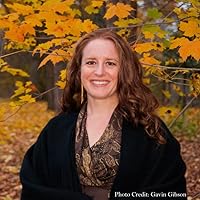
From the author's website:After studying History at Oxford University, I began my journalistic career on a newspaper in my home town of Louth, in Lincolnshire. I progressed onto a London newspaper, where I became women's editor. From there I moved to become a feature writer on Best magazine. After two years I was made editor of a regional arts and listings publication. This was followed by another two years as deputy editor on Heritage magazine. Motherhood meant a spell as a freelance, contributing to several national magazines, such as Country Homes & Interiors, Perfect Home and Woman's Journal, as well as newspapers such as The Times, The Telegraph and The Guardian. During this time I also worked as a literary publicist and for a documentary-making company. In 2005 I was made editor of Berkshire Life magazine.
In 2000 I won a European-wide screenplay writing competition run by the London Screenwriters' Workshop and the resulting screenplay was optioned by a film company. The script was set in 18th century London and my subsequent research led to the invention of Dr Thomas Silkstone, an American anatomist and the world's first forensic scientist.
Wikipedia http://en.wikipedia.org/wiki/Charles_... Author Tessa Harris[5] also made him one of the main characters in her book The Dead Shall Not Rest which uses a fictional character Thomas Silkstone to examine the beginnings of forensic science, anatomy and surgery. The book, which is well referenced, emphasises the difficulty and need of anatomists of the time gaining access to bodies to dissect, and the illegal trade in dead bodies that eventuated due to this.
My first encounter with this series and, for reasons I'll explain, my last.
It's 1783 and the Royal Society's latest expedition to the Caribbean (think "Voyage of the Beagle" but a few decades earlier and with a more limited scope) is returning with countless plant and animal specimens but not, alas, its two scientists; the only survivor of the scientific team is its illustrator, Matthew Bartlett. Soon, though, Bartlett disappears in suspicious circumstances, and a headless corpse found in the Thames seems to tell its own story. At the time of his disappearance Bartlett had with him the journal that the expedition's principal scientist kept containing all his detailed notes on their findings.
What could have attracted the attentions of murderous badhats? We don't have to wait long to find out. There have been rumors that the slaves in the Caribbean know of a concoction that puts people into a deathlike coma. When they're revived with the antidote, their character has changed: they're passive, amenable, obedient. In the wrong hands the Lazarus drug, so called, could be used to enslave the world, bwahahaha!
Okay, so we're not talking plausibility here; but that's all right.
Sir Joseph Banks, President of the Royal Society, drafts in young Dr. Thomas Silkstone -- a Pennsylvanian anatomist living and working in London -- to do the classification of the expedition's specimens as best he can without those missing scientific notes. I'm not 100% certain why Banks should pick a medical man for the job over any of the qualified naturalists who were members of the Royal Society at the time and therefore on tap, so to speak, but there you go.
I'm also not 100% certain why the author tells us on page 11 that "While the backdrop to this novel is based on fact, all the characters are fictitious apart from Granville Sharp and Thomas Clarkson" when Banks, who plays a relatively prominent role here, was indubitably a genuine historical personage.
So Silkstone starts work on the specimens, although we see him doing almost none of this work. Instead he dives into an investigation of the murder of Bartlett and the underlying mystery of who might have organized the theft of that crucial scientific journal. Over the course of the novel he does surprisingly little actual detection -- indeed, it's more or less a lucky accident that finally offers up to him an explanation of what's been going on -- but instead finds himself confronting quite a lot concerning the slave trade, the brutality with which the North American colonists (who've recently become ex-colonists) treat the slaves, and the barbarous treatment of black people in England even after the official banishment of slavery there. Harris handles this material, some of it horrifying, very well; I'm not quite persuaded that an 18th-century white anatomist, however liberal his views, would have 21st-century sensibilities about race (remember that even 19th-century liberals like Darwin and Lincoln held views on the subject that we'd regard as appalling), but that implausibility is quite acceptable, I think, within the context of an historical novel.
And it's as an historical novel that I think The Lazarus Curse should be judged. As I say, there's very little detectiving going on (in that sense, the cover's "A Dr. Thomas Silkstone Mystery" is borderline misleading) amid the splendid stuff on race and slavery and also a major subplot concerning Thomas's lover -- the widowed Lady Lydia Farrell -- and her son. A good deal of the time I felt as if I were reading Charles Palliser Lite, although Harris isn't as good a writer as Palliser, filling her text with annoying cutesy archaisms of vocabulary and syntax. Aside from reminding me that it's about time I read another Palliser novel (I still have a couple to go), this comparison inclined me toward reading more of Tessa Harris's work.
And then I got to the closing pages of The Lazarus Curse. I dislike cliffhanger endings to novels at the best of times because they seem to be a violation of the implicit contract that author and publisher are making with you when you buy a novel, that the tale you're shelling out your hard-earned cash for is complete in itself. (There are certain allowable exceptions, as when you know you're buying what's effectively an episode of a longer tale.) Yet I cannot recall an instance of a cliffhanger ending infuriating me more than this one did.
All cliffhanger endings are mercenary and manipulative: the author is deploying the technique in an effort to make you want to buy the next book. That's a given. But the one here transcends all bounds of acceptability. Just for starters, it's a tack-on, reading as if someone had told the author it'd make commercial sense to end the book on a cliffhanger -- say, what about throwing Lady Lydia into peril? -- and so Harris scrabbled around for a way of doing this. What makes it even worse is that the relevant chapter invalidates entirely the preceding actions of one of the characters involved, Sir Montagu. There's no explanation on offer as to why he should do a sudden volte face. Perhaps it's all a cunning plan and those who read the next novel will discover it's an elaborate bluff, or something . . . but this I'll never know.
Wow! It was with much trepidation combined with excitement that I read this book about slavery in Britain. The fourth in the author's Dr. Thomas Silkstone series, this book won't be released until July, but I was lucky enough to get an Advanced Readers Copy directly from the publisher. As a black American, I was curious to learn more about a barely documented part of British history. About 8 pages in I was so taken aback by a certain scene that I was "thisclose" to abandoning this effort. But, just like passing a bad wreck on the highway, you don't want to look but can't turn away!
Much of the subject matter - black magic, voodoo, obeah, etc. was not new to me, especially as it pertains to enslaved Africans. But I knew nothing about the horrible conditions that existed among enslaved and free blacks in England during this era. However, the author manages to expertly present a sensitive and uncomfortable issue without interjecting "political correctness" - a habit among white authors that I find to be unnecessary when recounting actual historical facts to a present day audience. Who are you trying to protect? As blacks, we still feel the pain of oppression whether you say "n-word" or "nigger"! A rose by any other name......etc.
Tessa Harris did a magnificent job here. As usual, the reader is educated on a little known part of history that had a major impact on a small amount of the English population. Yes, there were some parts that were very difficult for me as a black person and will be just as uncomfortable for ANY human being. But, the story is well-researched, shocking and plausible. Dr. Silkstone continues to be a respected and likable person with the returning characters still well-developed. The villains are despicable and the heroes sympathetic. Even the black characters are finely drawn with none of the disturbing stereotypes which often pollute such stories.
That said, all of the above goes right out the door in the cliff-hanger ending! I swear I didn't see it coming! I was left with my jaw in my lap, mad because now I have to wait another year for the next installment! I was so distraught that it took a double Black Jack with beer back to steady my nerves - and I don't even drink! Like the 1990 MC Hammer "Please Hammer Don't Hurt 'Em" tour, Tessa Harris "hurt" me with this book! But it HURT SO GOOD that I can't wait for more! I'm fortunate because I usually buy my books from Audible.com so I get to take another ride when the book is finally published. If master narrator Simon Vance is onboard as he is on "The Anatomist's Apprentice", "The Dead Shall Not Rest", and "The Devil's Breath", the audio version will be complete with the many layers and textures that make the Dr. Silkstone series so outstanding and addictive. Well played, Ms. Harris!
In 1782, London, England, an expedition to Jamaica returns home. Its journey to collect plants and fauna of the island claims the lives of its two scientists. Dr. Thomas Silkstone is entrusted to catalog the specimens. But Silkstone is not British and is of the recently independent new country of the Americas and finds himself under constant scrutiny. To complicate the issue, Silkstone also finds the deaths of the two scientists suspicious and in his investigation finds that what the ship was truly bringing back from the island was more than plants and specimens for study. What is was truly returning with was a potion used by the native islanders. A potion that can raise the dead.
"...It did not happen quickly. Another hour, maybe two, elapsed until it came to pass. And when it did, the crowd watched in stunned silence as slowly the boy's eyes opened. Another few moments and his fingers moved, then his toes, until finally the priest took his hand and he rose from his reed mat. The youth had been raised from the dead by the magic man. 'Like Lazarus,' muttered Dr. Perrick, his eyes wide in awe. 'Fascinating,' said Dr. Welton, looking up from his journal. He was recording everything he saw in detail, his pencil moving furiously across the page. Turning to the young man at his side he asked, 'Mr. Bartlett, you have a sketch of this remarkable plant..."
Beyond the deadly and miraculous plant, Silkstone is thrown into a world of where though many Africans in England were considered free, many more still lived in bondage and treated as slaves. Silkstone must determine the truth of the Lazarus Curse as he battles to the prevailing notion of slavery and freedom.
Review -
Tessa Harris writes incredible historical mysteries. Her control and research of the setting and the times is impeccable. The Lazarus is keenly plotted, with several subplots revolving around the main theme, the only issue being is the main theme the plant which can raise the dead, or the enslavement of African men and women in what purports to be a free society in the England of 1782. Harris weaves them together well until they seem seamless in their delivery.
Silkstone, an 18th century anatomist, a forerunner of what we would look at today as a forensic scientist, is adrift as an American in a country so recently at war with his homeland. His nationality immediately making him suspect in all he says and does. The English, primarily the aristocratic class are painted as selfish and self serving, considering all about them beneath them despite their noble and liberal words. Something that has not changed in two hundred plus years on either side of the ocean.
The Lazarus potion itself is something of a let down. Primarily sought after not for its medicinal properties but what it might do in the field of battle. For when it raises the dead, it also makes them compliant and susceptible to influence. As you can guess, it makes them controllable zombies. This plot is somewhat fanciful and might have lost the book had Harris not kept the tale grounded in the pain and suffering of the slaves still being kept in a free England.
The Lazarus Curse is a well plotted and paced Historical mystery. A welcome addition to an already well stocked field. For that reason I hope it does not get lost in the volume of such mysteries out there and gets its due audience.
This series is wearing a little thin. I think it could become enjoyable again if she would just drop the dead weight that goes by the name Lady Lydia Farrell. Here's a hint: If Lydia likes someone, you can bet that they're going to be a total dillweed (with the exception of Thomas, of course.) I just no longer give a crap about her and I want Thomas to find someone less Mary Sue. I'm rooting for the newly widowed Miss Perrick. She seems clever and could be a suitable partner for a man of intelligence like Silkstone.
Dr Silkstone is caught up in a fellow academic's murder, and the murky world of slave freedom in London.
I received a free copy from Netgalley in exchange for an honest review.
First of all, I would like to state that I DID NOT KNOW THIS WAS PART OF A SERIES. When I requested this from Netgalley, nowhere did it mention that this was not the first book - it just said that it was a Dr Silkstone book. Nowhere on the cover or introductory pages in my ecopy did it mention the rest of the series or a series order. Perhaps if I had known this was an established world I might have been a bit more forgiving, and the things that annoyed me might not have... as much. I don't know, maybe Harris wants her books to be read as stand-alones as well as part of a series. And you can read it as a stand-alone; it is easy to follow and you quickly learn the characters and their place in the world.
I just... didn't care. I have come into this story in a place where Thomas and Lydia are in love but are not permitted to marry. They lead very separate lives (Thomas, a busy doctor in London; Lydia managing her estate and young son in the country); they keep in touch by letter, but these are highly edited and keep major facts hidden from each other (that Thomas is investigating a murder; and that Lydia has employed a new estate manager that her son adores). Aside from the letters, there are no connections or intersecting storylines between these two. The chapters that focus on Thomas are a murder mystery and questioning of the slave trade. Lydia's chapters could well be scenes from a Jane Austen novel. Both are good in their own way, but feel shoved together unnaturally in this book.
I did like the plot - that earned the stars for me. A voyage to collect newly discovered plants seems to be cursed as two of the senior scientists died on the return trip; and the third, a young illustrator, is murdered in London. There seems to be something about the innocent, purely academic trip that has caught the attention of some very dark characters. At the same time, Thomas gets drawn into the woes of black slaves. Slavery has been made illegal in England, but visiting American slaves are still at the mercy of their masters, and are seeking any way out.
Both were good, but again - very disconnected. The only thing that linked the two was the fact that they involved Thomas, and he just wasn't a strong enough character to pull it off.
So, Thomas. He was very bland. He was a good scientific narrator, he took you along the story logically, but with only a sniff of emotion and no personality. I didn't care about him. He is a good guy, acts like a gentleman to everyone he meets, and always does the right and moral thing. He isn't preachy, he isn't entitled, he isn't... anything. I questioned quite a few things that he did. Why is this doctor investigating a murder? I found it bizarre that this man of medicine took it upon himself to look into the murder, and why his colleagues didn't raise any objections, and weren't the least bit surprised (again, this could be something established in the rest of the series, but at the time I didn't know it was the 4th book). Why is he investigating? He isn't tenacious or driven by curiosity. He isn't excited when it goes right, or frustrated when it goes wrong. He is just this blank space that drifts from one scene to the next. The clues felt like some sort of game. Have you spoken to the prostitute? YES. You have unlocked the next clue. Have you spoken to the widow? NO. Go back to the widow to unlock your next clue. Information was drip fed to Thomas to keep him going in the right direction, and I got annoyed when certain characters decide that they will unveil something now, when they could have before, it was all just a little clunky.
Thomas treats each person as an individual, regardless of the colour of their skin, or their gender. That is nice and all written believably. That this simpering and soft Dr Silkstone who shows no physical merit throughout the book, is suddenly able to fend off a couple of brutes long enough for a nightwatchman to come by? Sure.
So overall, an interesting array of historical stories, even if they didn't mesh. I don't think I'll be reading the rest of the series.
The Lazarus Curse is the fourth volume in Tessa Harris’s Dr. Thomas Silkstone mystery series. It’s the first of these novels that I’ve read—and I’m definitely looking forward to reading more.
Thomas Silkstone is a surgeon and anatomist in London, shortly after England’s defeat by its American colonies. Silkstone is highly capable at his craft; he’s also an enemy alien. He’s accorded respect and distrust in equal amounts.
In this novel, Silkstone has been hired to inventory the samples from a scientific expedition recently returned from Jamaica. Of the three scientists who traveled on this expedition, two have died, the third has disappeared, along with a key journal of their observations, and he’s feared dead.
Along with this central mystery, Silkstone finds himself wrestling with a number of other problems which force him to confront the acceptance of slavery in Britain, despite a judicial ruling years earlier determining that those who enter the country as slaves have a right to demand their freedom. Just as in our own time, the letter of the law and its actual practice are at odds. As Silkstone tends slave owners and their slaves he is confronted with the violence and dehumanization at the heart of the institution. What he formerly viewed as an abstract issue of justice is now an immediate and distressing challenge.
Harris also gives us a love interest, Silkstone’s former fiancee, the widowed Lady Lydia Farrell. Following her husband’s death, Lady Lydia’s son has become a ward of the crown, which means she can no longer consort with Silkstone because of his enemy status.
As you can see, there’s a lot going on, and Harris balances these different plots adeptly. Too often, series novels either require familiarity with previous volumes or overcompensate by providing unnecessary backstory. The Lazarus Curse does neither of these. Harris’s portrayal of characters is rich enough that the reader quickly comes to know them—and this knowing allows the missing pieces of their stories to be inferred.
While Silkstone sorts out many of the problems he’s confronted with, he doesn’t quite manage all of them. Clearly Harris is already planning volume five in the series. Given her knowledge of this historical period and her skills as a writer, I’m looking forward to reading it.
I agree with previous reviewers in that I am really sick of Lydia! At this point I would happily hit her over the head with her own book!
The reason for the one star, however, is that I detest authors who end their books on such obvious cliff hangers! It is incredibly frustrating to the reader and makes the author look way too desperate for the next sale.
I will not be buying or reading the next book in this series.
Molto interessante la parte storica sulla schiavitù e il movimento abolizionista in Gran Bretagna. La figura di Thomas Silkstone e i suoi metodi d'indagine diventano sempre più interessanti. Ora però sono ansiosa di sapere cosa succederà a Lydia!!! Serie da leggere preferibilmente in ordine cronologico.
Although I didn't care for the topic of this story, the delivery was impressive. I enjoy 18th century forensics. The side story with Thomas and Lydia is full of angst, almost sending me over the edge.
A fantastic mystery set in London that masterfully blends natural science, the cruelties of slavery, and voodoo into a heart pounding adventure that will leave the reader chilled to the bone.
The Lazarus Curse follows Dr. Thomas Silkstone as he finds himself smack in the middle of a deadly adventure when he asked to catalogue the specimens brought back by an ill fated expedition to the new world. When an important journal disappears and the only remaining member of the expedition party is murdered, Silkstone is thrown into a mystery that will expose him to the cruelties of slavery and the cruelties of people that spans the world.
This story is one that will haunt the reader long after the pages have finished turning. Exposing the reader to not only the cruelties of slavery in England, but to the wickedness of the human being, The Lazarus Curse is a book that will have the reader turning away from the story in horror and eagerly awaiting more in equal parts.
This is the first book that I have read by Tessa Harris and I have to say that I really enjoyed her style of writing. She writes in a manner that is descriptive, without being overly so. Her descriptions of London and the horrors that befell the characters were vivid and easily pictured, yet it was easy to imagine all of the extra pieces without her having to explicitly state what everything looked like exactly. Harris also writes passages of immense action in a smooth and easily followed manner. At no point during the story was I at a loss as to what was going on, the author definitely understands how to paint a clear picture with her words.
I would highly recommend this book to anyone who is interested in fascinating stories that masterfully blend the world of natural science with that of slavery and voodoo. The Lazarus Curse is a fast paced story that will not disappoint.
I received this book for review purposes via NetGalley.
I could break The Lazarus Curse down into three parts: the mystery- what happened to Matthew Bartlett, the botanist/artist who disappeared upon returning from Jamaica; the background research and storyline on the plight of slaves who were brought to England by their masters; and what's going on with Lydia, Thomas' lover.
The mystery was okay. There's supposedly a Lazarus Potion that can bring people back from the dead, and the theory is that the expedition found the formula and someone killed Bartlett for the information. There were a couple of suspects but no good option.
The part of the plot centering around the slaves was the most engrossing. There were Americans currently staying in London. In England at the time, slavery was not legal, but the American's slaves are still more or less considered property for all intents and purposes. At the same time, one of Thomas' fellow anatomists is getting very fresh, seemingly healthy, black corpses to dissect. Too many of them, which raises concerns for Thomas. I thought I knew what was going on, but I was wrong.
If the story had just consisted of those portions, my rating would have been much higher. I could have done without all of Thomas and Lydia's domestic issues.
The Lazarus Curse is the fourth outing for 18th century anatomist Dr. Thomas Silkstone, and the good Dr. has been invited by the president of the Royal Society to catalogue flora and fauna recently collected by three scientists on a research expedition to the West Indies. This trip has been rather ill fated as 2 of the 3 died on the journey home and the third, Matthew Bartlett has disappeared with a notebook which details the ships discoveries.
This is not just a mystery set in 18th century London, Tessa Harris deals with a period when forward thinking men in Britain were questioning and challenging the laws on slavery, eventually occurring in 1833, and it is the plight of the slaves at the centre of this novel. Amongst this, Harris also adds to the plot with vivid descriptions of voodoo and black magic, with a vivid description of an obdeah at work at the beginning of the book.
If you love historical mystery, this is worth checking out as Dr Silkstone is based upon a true life physician, Dr. William Shippen Jnr.
I agree with several other reviewers who are tired of the Lydia/Thomas dynamic. Not so much the romance, but the nonstop hurdles to the romance. Plus, Lydia started the series with the promise of being woman finding her strength (interesting!) but has since turned into the heroine tied to the railroad tracks waiting for a man to save her (boring). Also, does Dr. Silkstone HAVE any flaws? Let's see a little more depth from this do-gooder.
Despite my criticisms, of course I'll read the next book since young American anatomist + pet rat named Franklin + Georgian England = cool
And, as I have mentioned before, I'd listen to audiobook performer Simon Vance read the phonebook.
It is almost unbelievable that a book is written with no ending. It appears that this offer wrote this book with the intention of you buying a following book. It wasn't a great book but to leave it with the love interest in an asylum and not follow up is disgraceful. I am surprised and disappointed that good reads would encourage an author like this. People that bought this book should be given a refund.
Pulling the plug on this series. Do I like Silkstone and his mentor? Yes...so I will be sad to leave them behind. The author did bring a new flavor to this stew introducing subject of slavery, check. But oh, oh, the melodrama with Lydia again? Enough! Why such extremes? I am beyond disappointed, and feel angry after coming to the preposterous conclusion of this book. GRRRRRRR!
This is turning into a merry-go-round story... the dame is always in need of saving. You have to ask is she worth it? I think not and what happened to the mysteries?
judder: verb; (especially of something mechanical) shake and vibrate rapidly and with force. "the steering wheel juddered in his hand"
judder: noun; an instance of rapid and forceful shaking and vibration. "the car gave a judder"
You will need this definition if you are going to read the Doctor Thomas Silkstone series. I’m an English major and had to look it up when I first encountered it. No problem. It is always interesting to learn a new word. But it seems like the author, Tessa Harris, discovered this word while writing the first book and liked it so much, she wanted to play with it even more. She used it 25 times in her first six books. In Book 4 alone, she used it 11 times. It got to the point where each time I encountered it, it distracted me from the story. May I suggest occasional alternatives such as quiver, waver, shudder, shake, tremble, or quake?
I had just finished reading a series of books about the Civil War and I needed a break from an overload of war, death, scholarship, and military tactics. So, I turned to Harris’s Dr. Silkstone series to cleanse my reading palate.
I enjoyed the main character, Dr. Silkstone, very much. He is engaging, intelligent, and ahead of his time in terms of this profession. As an American in England towards of the end of the Revolutionary War, he is a fish out of water. The side characters are well drawn and interesting.
However, by the end of the fourth book, I had had enough of Silkstone’s love interest, Lady Lydia. She is tiny and frail, always in peril and needing rescue from the handsome and incredibly patient Silkstone. She falls apart, her emotions never in check, to any problem or threat. People could be dying on every side and Silkstone still has to choose his words carefully lest he upset her brittle equilibrium. Lydia certainly faces formidable challenges and dangers, but she never rises to meet them, always needing Silkstone to save her. Too many pages are devoted to Silkstone’s attempts to comfort and cosset her always shattered emotional state. I would have loved to see her grow from a fragile flower to a woman discovering her power. Six books into the series, this has yet to happen.
I enjoyed the mysteries, medical elements, history, and most of the characters. These books provided what I needed: light reading. But when I finish the sixth book, I won't get anymore in the series, mostly because I just don’t understand the practical and inexplicably devoted Silkstone’s attraction to such a fragile, clinging, distraught, high maintenance, damsel in perpetual distress.
(I received a free copy of this book from Net Galley in exchange for an honest review.)
In 1780s London, American anatomist Dr. Thomas Silkstone is plunged into a swirling cauldron of sorcery, slavery, and cold-blooded murder . . . When the sole survivor of an ill-fated scientific expedition to Jamaica goes missing upon his return to London, Dr. Thomas Silkstone--entrusted with cataloging the expedition's New World specimens--feels compelled to investigate. There are rumors of a potion that has the power to raise the dead--and the formula is suspected to be in the private journal that has disappeared along with the young botanist. As Dr. Silkstone searches for clues to the man's whereabouts, he is drawn deeper into a dark and dangerous world of vengeance, infidelity, murder, and the trafficking of corpses for profit. Without the support of his beloved Lady Lydia Farrell--from whom he has been forcibly separated by law--he must confront the horrors of slavery, as well the very depths of human wickedness. And after a headless corpse is discovered, Dr. Silkstone begins to uncover the sinister motives of those in power who would stop at nothing to possess the Lazarus potion...
This was, as it turns out, the fourth book in the Silkstone mystery series. I was unaware when I started that this was the case. And it is pretty important to know...
We pick up the story with some well-established characters and relationships, which makes it hard from the outset to get into. Thomas and Lydia are good characters but, without knowing their backstories, it is hard to gauge how their characters have developed over the course of this series, as well as how they grow in this book.
The mystery of the dead scientists is quite intriguing - however, I didn't go much on the plot revolving around the slavery. I just found it not to my tastes. I don't see the point of making it a plot point.
Overall, a decent enough read but I do recommend finding book 1 and starting there - it may make this one more enjoyable when you get to it.
judder: verb; (especially of something mechanical) shake and vibrate rapidly and with force. "the steering wheel juddered in his hand"
judder: noun; an instance of rapid and forceful shaking and vibration. "the car gave a judder"
You will need this definition if you are going to read the Doctor Thomas Silkstone series. I’m an English major and had to look it up when I first encountered it. No problem. It is always interesting to learn a new word. But it seems like the author, Tessa Harris, discovered this word while writing the first book and liked it so much, she wanted to play with it even more. She used it 25 times in her first six books. In Book 4 alone, she used it 11 times. It got to the point where each time I encountered it, it distracted me from the story. May I suggest occasional alternatives such as quiver, waver, shudder, shake, tremble, or quake?
I had just finished reading a series of books about the Civil War and I needed a break from an overload of war, death, scholarship, and military tactics. So, I turned to Harris’s Dr. Silkstone series to cleanse my reading palate.
I enjoyed the main character, Dr. Silkstone, very much. He is engaging, intelligent, and ahead of his time in terms of this profession. As an American in England towards of the end of the Revolutionary War, he is a fish out of water. The side characters are well drawn and interesting.
However, by the end of the fourth book, I had had enough of Silkstone’s love interest, Lady Lydia. She is tiny and frail, always in peril and needing rescue from the handsome and incredibly patient Silkstone. She falls apart, her emotions never in check, to any problem or threat. People could be dying on every side and Silkstone still has to choose his words carefully lest he upset her brittle equilibrium. Lydia certainly faces formidable challenges and dangers, but she never rises to meet them, always needing Silkstone to save her. Too many pages are devoted to Silkstone’s attempts to comfort and cosset her always shattered emotional state. I would have loved to see her grow from a fragile flower to a woman discovering her power. Six books into the series, this has yet to happen.
I enjoyed the mysteries, medical elements, history, and most of the characters. These books provided what I needed: light reading. But when I finish the sixth book, I won't get anymore in the series, mostly because I just don’t understand the practical and inexplicably devoted Silkstone’s attraction to such a fragile, clinging, distraught, high maintenance, damsel in perpetual distress.
In a way I'm glad that there is only two more books in this series. Each installment gets darker and darker. While its based on fact, doesn't make it easier to read.
The main story line continues the romance between Dr. Thomas Silkstone and Lady Lydia who is a widower with a young son. But also is the current owner of a large estate. This puts her at risk to being manipulated into doing things agains her will. The side story covers the harsh reality of slaves and free men/women in England in the late 19th century.
The blacks of this time were not viewed as equals in England. They were still treated with disrespect, abused and had no rights. The only thing they had as their own was their religion. And sometimes that was not enough to keep them safe. Everyone including blacks, when they died could become targets of the "sack-it-up men" or "Burked". This meant that grave robbers would wait until dusk and retrieve the freshly interred bodies and taking them to the dissection rooms for a fee.
It was not a safe time for anyone no matter what your color. There was also a drive to take blacks traffiked from Africa and Carribean, to the newly created Liberia existing Sierra Leone, also to Haiti.
The other story line brings another brutal reality to light. That women had no rights in England. Their lives were completely governed by a male relative. In this case Lady Lydia's guardian has made it almost impossible for her and Thomas to marry. During a medical emergency her gaurdian tells her a lie that proves her undoing. She is sent to a Bedlam, a notorious mental institution that may prove to be Lady Lydia's final chapter.
Normaly I would be unhappy with a short story arc. This series only has six books. But with the each story getting darker and darker, I'm unlikely to be sad that the arc finishes with book six. I get it history is not all sunshine and kittens. But as I age I don't always want to be bombarded with the brutality of history.
I randomly wound up reading this book, #4 in the Dr. Thomas Silkstone series, without having read any of the others in the series. Without a doubt, the part of the story I found most interesting was the book's coverage of slavery in Britain at the time. I was always most engrossed in the chapters that involved the enslaved characters. It was without a doubt, their stories that mattered most to me when reading the book.
The actual mystery happening was secondary to me in interest. And dead last in interest was every single page devoted to Lydia. Perhaps if I had read this series from the start, I would have had any interest at all in her, but she seemed like dead weight when reading this book as a stand alone. I'd forget she even existed, only to groan a bit when a new chapter would be about her again. And while typically I'd be very annoyed by a book that ends on such an obvious money-grab of a cliffhanger, trying to force you to purchase the next book; because this cliffhanger involved Lydia, I couldn't muster up any ability to even care about what happens to her in book #5. It so happens that I also own #6 in this series, now, but I'm not entirely sure I want to start another one of these, especially when the back cover synopsis starts off with you guessed it---Lydia.
I seem to have a love/hate relationship with this series, for reasons I can't put my finger on just yet. This book falls into the Love category! Dr. Silkstone has been tasked with cataloging the findings of a research trip to Jamaica as both the scientists on the mission passed away from fever. He's supposed to have help from the ship's artist - but the artist vanishes before Thomas gets but a glimpse of him. He's also curious about where another anatomist is getting a fresh supply of rare, black bodies from for research Meanwhile, his quasi-fiancée Lydia faces challenges of her own in finding an estate manager for Broughton Hall and adjusting to parenting her son, Richard. In a case and a novel fraught with mysterious powers, the reality of slave life, and moments and actions dark enough to turn your stomach, Dr. Silkstone's intellect and morals are tested in new ways. If this book makes you feel at all uncomfortable while reading it - good. It should. I was left mulling things over for a long while after I put down this novel. It's not for the faint of heart, to say the least. However, the writing and plot are excellent and will keep you wanting to turn the pages. Read my full review at samiamreadingandreviewing.wordpress.com.
This is the fourth in the Thomas Silkstone series by Tessa Harris. This novel deals with the treatment of persons of color in the late 1700's in England which is a subject with which I was unfamiliar. Ms. Harris has done her research and adds notes at the end of her books explaining some of the names and events mentioned in them. In this novel Thomas is investigating a story about a plant in the West Indies that can kill a person and then later revivify him. Members of the Royal Society have hired Thomas to do this work for them. There are lots of twists and turns in the plot as Thomas becomes involved with a group that prevails on the poor Blacks in order to have bodies to dissect. Lady Lydia is still in the picture although I personally wish the author would leave her out because she shows the brilliant Doctor Silkstone to be gullible and naive. The plot strands dealing with Thomas' quest to solve the mystery of the superstitious natives of the West Indies are interesting enough to keep the reader's attention without using the relationship between Thomas and Lydia as a subplot. The author's choice of names for her characters is unusual too. Now I'm looking for Book 5 to see what happens next!
This one had particular appeal for the topic it explored. Amid a special commission to examine new herbal medications brought recently aboard a ship from the Caribbean, Dr Thomas Silkstone faces a strange feeling of unease when a professor of anatomy has far too much ease accessing recently deceased cadavers. It’s fishy. That, and a special herb that supposedly has the power to resurrect the dead, a medical journal, and its important keeper have all mysteriously gone missing. Not to mention the suspicious deaths of the doctors responsible for the transport of the herbs. Well, you get the picture: Thomas gets a lot dumped on his plate. And he’s super curious. He needs to know.
No punches held in this one addressing the developing laws and established practices involving the way humans treated one another based on the colour of skin. The exploration of this social issue was the best part of the novel, and the additional characters involved were almost more interesting than Thomas and Lydia (well, we liked them better than Lydia, that’s for sure. She doesn’t improve much here, and in fact, I tried to like her more, but I think she probably gets a bit worse; her saving grace is that she’s not present much).
The part about the secret formula to raise the dead was a bit weird. Indeed, that whole plot-line was anticlimactic in resolution, but necessary for the web woven here. It just ended on a bit of an eye-roll. Not sure what could have been done with it otherwise as it was so super fantastical, but more creativity required for this solution.
Anyway, it all goes to hell at the very end, like putridly and morosely, just as we’re starting to maybe care a touch more for Lydia, but I can see the potential for the exploration of this particular confrontation of an old system…
I’m glad I’m reading these long after the whole series has been published because I’d be a tad annoyed at that ending — on to the next, cos no. Can’t end there.
Another excellent Dr. Silkstone Mystery. Silkstone is a late 18th century anatomist in London. In each of the books in the series, Harris probes a societal failing; in this book it is slavery, but all her books also touch on the inequalities suffered by women of all classes. Harris' books are always well researched, depicting life in late 18th century England and the chasm between social classes. However, many of the problems she addresses remain in the world today, both in rich industrialized nations to poor emerging so that her books are part mystery, part history and part social commentary, but they are always well written and interesting as well as being thought provoking. At times, the reader is astounded by how little society has changed in 250 years. I have read several books in the series and intend to read them all . I recommend that you do the same.
A jump from anatomist to botanist doesn’t stop the bodies from dropping and a mystery unfolding in Thomas Silkstone’s life. Plants from Jamaica (a British seat of slave trade) may hold the power to revive the dead. Obviously more than one person would kill to obtain this Lazarus Cure/Curse. There is some excellent historical research pertaining to both the English slave trade and English Black Freedman. I like the way the author has dealt with questions of morality throughout this series. This has been especially well written.
A forced legal separation from Lydia has Thomas attempting to do the “right” thing for Lydia and her son. There is a shocking twist here.
The Lazarus Curse is number 4 in a series of 6 books. Dr. Thomas Silkstone as an American in England makes for a compelling character. I found this book a little slow in the beginning but it quickly picked up speed as things fell into place. I found the book compelling enough to order the #5 book but I must admit the constant story line keeping Silkstone and Lady Lydia apart is getting tiresome. There seems so much against them but it does figure into the overall story line. I found the first 3 books to be the best of the series thus far but if you’re reading the series don’t skip#4. Its interesting and compelling as a component in the series.