This comparison of the political and social systems of Europe and black Africa from antiquity to the formation of modern states demonstrates the black contribution to the development of Western civilization.
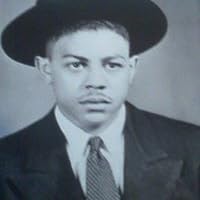
Cheikh Anta Diop was an Afrocentric historian, anthropologist, physicist and politician who studied the human race's origins and pre-colonial African culture.
Diop's first work translated into English, The African Origin of Civilization: Myth or Reality, was published in 1974. It gained a much wider audience for his work. He proved that archaeological and anthropological evidence supported his view that Pharaohs were of Negroid origin. Some scholars draw heavily from Diop's groundbreaking work, , while others in the Western academic world do not accept all of Diop's theories. Diop's work has posed important questions about the cultural bias inherent in scientific research. Diop showed above all that European archaeologists before and after the decolonization had understated and continued to understate the extent and possibility of Black civilizations. The Swiss archaeologist Charles Bonnet's discoveries at the site of Kerma shed some light on the theories of Diop. They show close cultural links between Nubia and Ancient Egypt, though the relationship had been acknowledged for years. This does not necessarily imply a genetic relationship, however. Mainstream Egyptologists such as F. Yurco note that among peoples outside Egypt, the Nubians were closest ethnically to the Egyptians, shared the same culture in the predynastic period, and used the same pharaonoic political structure. He suggests that the peoples of the Nile Valley were one regionalized population, sharing a number of genetic and cultural traits. Diop argued that there was a shared cultural continuity across African peoples that was more important than the varied development of different ethnic groups shown by differences among languages and cultures over time.
His books were largely responsible for, at least, the partial re-orientation of attitudes about the place of African people in history, in scholarly circles around the world.
This book provides an analysis of Africa's contributions to modern Western civilization. Great African kingdoms such as Songhi, Mali and Zimbabwe is evidence of African genius and that Black history does not begin with the Trans-Atlantic Slave Trade. White supremacist bias, anti-Black racism and discrimination in Egyptology, what we call "history", anthropology, and archeology, has geo-politically and ideologically removed Egypt from the continent of Africa. Professor Diop boldly offers readers an African-centred perspective that challenges such Eurocentric narratives. This book, and similarly Diop's "African Origins of Civilization" answers the question about what it truly means to look at Africa through anti-racist and African/Black eyes - outside of the white gaze. A highly recommended read for those interested in anti racism education, dismantling anti-Black racism, disrupting white supremacy, history, geography, politics and anthropology. A great book to kick start Black History/African Heritage Month.
Until now (1960, date of the first edition), the history of Black Africa has always been written with dates as dry as laundry lists and no one has almost ever tried to find the key that unlocks the door to the intelligence the understanding of African society Failing which no researcher has ever succeeded in revivifying the African past in bringing it back to life in our minds before our eyes so to speak while remaining strictly within the realm of science Yet the documents at our disposal allow us to do that practically without any break in continuity for a period of two thousand years, at least insofar as West Africa is concerned Therefore it had become indispensable to unfreeze in a manner of speaking to defossilize that African history which was there at hand, lifeless, imprisoned in the documents However this work is not properly speaking a book of history but it is an auxiliary tool indispensable to the historian It indeed affords him a scientific understanding of all the historical facts hitherto unexplained In that sense it is a study in African historical sociology It permits us no longer to be surprised at the stagnation or rather the relatively stable equilibrium of precolonial African societies: the analysis of their socio-political structures presented in it allowing us to gauge the stabilizing factors in African society One thereby understands the technical and other lags to be the result of a different kind of development based upon absolutely objective fundamental causes Thus there is no longer any reason for embarrassment Once the awareness achieved we can immediately and fully in almost every slightest detail relive all the aspects of Africans national life the administrative, judicial, economic, and military organizations, that of labor, the technical level, the migrations and formations of people and nationalities thus their ethnic genesis and consequently almost linguistic genesis etc Upon absorbing any such human experience we sense deep within ourselves a true reinforcement of our feeling of cultural oneness
I was quite lost while reading the first thirty or so pages of this history. I was expecting a more chronologically linear history of Africa, but in the preface Cheikh Anta Diop writes:
'This book is not properly speaking a book of history; but it is an auxiliary tool indispensable to the historian. It indeed affords him a scientific understanding of all the historical facts hitherto unexplained. In that sense, it is a study in African historical sociology.'
I did come to really enjoy this book. It's a patchwork of information on pre-colonial Africa, the history and societal structures. Diop directs the reader's attention throughout the book mainly to cultures and old empires of West Africa chiefly Songhai, Ghana, Mali, and Cayor. He compares the lives of the masses of African people and the nobility with that of those in Europe at similar time periods. West Africa after the coming of Islam is talked about extensively and how the religion often blended in well with local beliefs. He ends the book discussing the origins and similarities of names in West Africa to many found in the Nile Basin going back to pharaonic times. Much of the information that Diop presents comes from earlier sources such as the Tarikh es Sudan, a chronicle written in Arabic in the 17th century.
Comparing this book to others I've started reading in the last couple of years about African history, I'd say once past about page 36 Pre-colonial Black Africa is another very good introductory book for those starting to learn about Africa south of the Sahara.
A must read for those who are interested in pre-colonial Africa and those who espouse the Pan African ideology. It is a difficult book to read, and must not be read quickly, but that as it may it is a worthy read.
What a weird book. Two of the first three chapters in this book about Precolonial Black Africa are about the history of Classical Greece and the development of Europe. A lot of the book is obviously factually incorrect (there has never been an uprising in Africa?!). When it says a history of Black Africa, it really means a very small region of Western Africa despite constantly referring to history in all of "Africa".
But it is still an interesting historical ethnography, even if the consistent inclusion of historical falsehoods make me question a lot of it.
This classic by the great Cheikh Anta Diop is a comparative analysis of the social, political, and economic organization of various Black African states, and their European counterparts. Diop traces the development of both continents, focusing his attention on the advanced nature of African empires in the pre-colonial era.
Diop starts out by highlighting the differences in “caste” systems in West Africa, noting that while the continent did have social and economic hierarchy, it was not inherently exploitative the way European systems were. Diop states that European states formed out of a “self-centered” patriotism of the city-state, supported by the power of the Church. Contrarily, African states never revolved around individualism, and thus were able to keep hyper-nationalism and chauvinism at bay.
Diop continuously highlights the continuity of African kingdoms across the continent, a theme his work is known for. He also states that monarchic Africa, while dominant across the continent, did not preclude the tribalistic African traditions at the margins of the great African states. Diop links the traditional African “aristocratic collectivism” to notions of socialism, explaining that despite psychological and spiritual differences (with Europeans), Africans were naturally inclined to seek solidarity, disavow massive levels of individual wealth accumulation, and champion the sharing of resources. African clans also shared socialistic characteristics (“clanic collectivism was proletarian”).
Diop also details how domestic slavery was “rife” in African society, and how slavery was the “great chink in African social organization.” Diop explains that both Arabs and Europeans were able to acquire Black African slaves by attaching themselves to the structure and trade that already existed in pre-colonial Africa. Even Arab and Europeans living in the Ghana Empire were able to acquire slaves—not through conquest—but through regular imperial trade, and all under the auspices of a Black African emperor.
This book makes clear that political organization under the African empires were more developed and superior than that of the European states from the period of the fall of the Roman Empire through the Middle Ages. The European masses suffered under a state of feudalism, while Africa did not. Diop explains this by identifying (1) African religion (which prevented them from taking advantage of political weaknesses to devolve the system into feudalism); (2) Africa’s strong imperial administrative control that left little chance for feudal tendencies or succession; (3) the lack of constant, persistent barbarian invasions that justified the need for feudal security (Arabs / Islam never “conquered” Africa the way Barbarians did Europe, due to the strength of Africa’s various empires); and (4) a different relationship to land (African Kings and nobility didn’t “possess” or “own” the land, the people did).
The abundance of gold in Africa also defined the differences between African and European economics. There was so much gold that African empires had no issue allowing “peasants” to accumulate wealth in the form of gold dust from the mines. European serfs got no such opportunity. I found Chapter 6, which covered the differences in economic organization between Europe and Africa, the most riveting in the whole book. Diop firmly dismissed the racist notion that pre-colonial Africa was “underdeveloped” or “primitive” economically, noting that only the tribes on the margins of African kingdoms maintained the traditional practices of bartering. The empires / kingdoms, to the contrary, were highly advanced in their utilization of currency (gold coins, salt, gold dust, etc.), stock markets, merchant classes, import and export taxation, and extensive foreign trade (Diop notes that precolonial Africa was “hospitable to foreigners”). Diop essentially explains that wealth was easily accumulated and widely distributed in Africa due to the abundance of land and natural resources. So much so that there was little to no poverty in pre-colonial Africa. Due to this abundance, African populations were healthy and robust, and would have remained that way but for the escalation of slave trade.
Citing Karl Marx, Diop briefly traces the rise of capitalism (born out of feudal relations) in Europe, noting that the goal was profit and super-profit, and relied on the enclosure of common land and subjugation of former surfs into a peasant, wage-laboring class. Diop notes that as capitalism created the conditions for unemployment and poverty, the European states turned to repressive measures to ensure that the peasants would not revolt against the system. These measures essentially resulted in the mass enslavement of the peasant class by European employers, ultimately leading to the fleeing from Europe by some of these peasants (Diop notes that many white Americans today are the descendants of enslaved Europeans).
Diop next details why capitalism was slow to develop in Africa, first explaining that capitalism is a “European export,” and thus never developed locally outside Europe independent of European imposition. Contrasted from Europe, African economies revolved around “domestic industry,” where every home produces the means for their own survival (depending on which labor “caste” they belonged to). For the other areas of basic need, Africans relied on open market purchases and trade by barter. Diop reinforces the differences between European and African property relations, explaining that Africans did not conceive of “private property” and “land ownership” the way Europeans did. As such, private land sales in Africa were basically non-existent. In effect, everyone in African society—even slaves—were land owners. It was truly a society of the commons.
Finally, Diop also spends time in chapter 6 contrasting European enslavement of other Europeans with its African counterpart. Diop makes clear that African slaves were in a much better social position than European slaves and lived under much better conditions. Further, the African slave trade directed by Europeans was far worse on Africans than the trade directed by Africans.
This summary doesn’t begin to touch on the depth and detail of of Diop’s analysis. This is a must-read for anyone looking to definitely refute the racist narrative that Africa has no history.
Precolonial Black Africa – Cheik Anta Diop English Translation
Cheik Anta Diop is a Senegalese historian, physicist and politicians. He is an Afrocentrist scholar who posed important questions about cultural bias. He was born to an aristocratic Muslim Lebu family which enabled him to study in Paris, for a degree in mathematics then switched to philosophy at the Faculty of Art of the Sorbonne graduating in 1948. He then would study Chemistry at the Faculty of Science at the same Sorbbonne, receiving two diplomas by 1950. Having satisfied his inquiry into Science he registered for a Doctors of Letters programme under the instruction of the French Philosopher of Science Professor Gaston Bachelrad in 1949. He attempted another thesis under Professor Marcel Griaule completing the latter in 1954 but for lack of examiner he was not awarded his doctorate for this either. In registered thesis ideas 1956 and 1957 teaching Physics and Chemistry in College de France. He would finally receive his doctorate in 1960. In the present text Anta Diop attempts to reconstruct the Black African contribution to history and compare it to Western Civilization. Anto Diop a European train Scientist, Philosopher and analysis of Social and Political System as the latter was his doctoral work, compare Europe and Africa from their antiquity to the formation of the modern state. Diop is controversial but highlights similarities and differences between Black Africa and Europe. Anta Diop begins with the African concept of the Caste System which he claims to be of either two form in West Africa Aristocratic Hierarchy for the states of the Niger Basin and Tribal Hierarchy for the Forest Dwellers of the Guinea Cost. The Nile Basin and North and East Africa (Ethiopia) would there in follow the Aristocratic Hierarchy, Central, Eastern and Southern Africa following Tribal Hierarchies. The Caste in India as Africa dealt with one Profession, with claim such were inheritable and entire generation were tide to that Caste. In India Caste would rise and fall, as entire Caste through fighting would exert themselves over others, in Japan the individual through fighting could change their Caste. Whilst in Africa Tribal Caste were more permanent and less severe but tied to marriage. Unlike fortune and wealth of European Caste where a peasant having acquired fortune become accepted by the ruling classes after accepting their value. In Africa one could only have ones children be of a higher Caste upon the fortune of marriage. He examine Caste in more detail, slaves in all such localities being at the bottom of said systems. Serfdom never became widespread in Africa as it was in Europe. Asian Serfdom was not as severe as Europe. He next examines the condition of the slave in each society. Slaves having worst conditions than serfs in all system and slaves in the old world being and accepted practice based on social classes, captives of war and conquest or debt. This slaves in Africa, Asia and Europe must be treated separately than slaves in the Americas. As in the later it reached the lowest of depravity. Anta Diop examine the genesis of caste in Egypt and India. In both countries caste transcended skin colour as there were all shade in call castes. He examine the political evolution of Africa. Thus beginning with the concept of the Ancient City State, Ancient Greece and the Italian Peninsula were the cradle of European drive toward the city. Ancient Sumer and the Levant were the cradle for the Middle East and the second in the world. Th Indus valley were that for the Indian Subcontinent and Valley of the Yangtze and Yellow river last of the first civilizations. The first in the world was on the Nile Valley corresponding to present day Egypt and parts of Sudan. Within the City State the first concept of urban social class began Aristocrats, Priest and Plebs. From the concept of the City State spread the Kingdom and Empire the first of these categories also being Ancient Egypt and its Pharaohs. Nigeria does provide a location for the City State as early as the 400 B.C. Kingdoms and Empires facilitated the social revolution and the movement of ideas. Acculturation became a process leading to standardising of belief systems and culture on a broad sense. Egypt was able for its power to influence the development of Ancient Greece, in terms of ideas and thus furnish Rome and the European civilization in general, who have all modeled their system on Ancient Greece, the cradle of European civilization. The modern European states were formed after they had abandoned the ideas of the Greeks largely gradually assimilated these from the example of the Arabs of the Middle Age who were the arbiters of intellectualism and stable socio-politics. Whilst the Indians were toppling Castes and the Orient were Meritocracy however hierarchical Europe had embrace the brutal-est serfdom, and where people are subjugated to severe degree then tend to believe in themselves the more and abandon the social collectivism for individualism. Serfdom was the roots of individualism in Europe. China not have so brutal a serfdom remain collective and India remain so too. Collective idea seeks peace within a social group. Individualism champions independence from the group. Africa would tend toward the collective peace with the Mossi Constitution in modern Burkina Faso which created a powerful Kingdom beginning in the 11th century and Constitution of Cayor in Senegal and their Kingdom from the 16th century. He looks at the West African Republics who sometimes followed the line of Secular and Religious (Tribal). The Monarchic system, although they all began as tribal evolved to constitutional regimes as the Magna Carta of England. These provide a splendid court-life beyond the courts of Europe in the Middle Ages but extravagant as the Ancient Romans. There use of bronze work and sculpture similar to the marble sculptures of the Roman and Byzantines. In the arena of political power Ghana, Mali and Songhai could field armies larger than those of Europe. The land empires even lager than much of Europe and at time comparable or more the widest expansion of the Romans. The administration of these empires particularly Mali and Songhai; whom both had use of writing scripts both Native and Arabic allowed for efficient tax customs, fees and administrative functions akin to the efficiency of Romans. Europe would not see similar efficiency until after the Renaissance. The Military organizations of Ghana, Mali and Songhai consisted of Knights and Foot Soldiers but were unlike European Chivalry where the Knight had brutal contempt for the Foot Soldiers who were peasant levies and not the Professional Foot Soldier as in the Roman and Byzantine Empires. The Soldiery and Chivalry order of the Giant African Empire were of the order of the Roman Legionnaires and sometime became a separate and distinct tribe as with the Mande people and aided acculturation. There were uses of Strategy and Tactics thus an appreciation for the Art of War and a level of Judicial Organization better seen in China and the Middle East at that time and unseen in Europe since the fall of the Roman and before the degeneration of the Byzantines. The economic organization was barter in the tribal areas of the Forest Dwellers of the Guinea Cost, however there were Giant Empire furnished their populace with coinage from Mines both Silver and Gold provide a standard currency with the figure of the raining monarch. This allowed massive import-exports and these Empire Ghana, Mali and Songhai were some of the Wealthiest States at the time. Road networks of easy transportation had been constructed while Europe had largely abandoned the paved stone road of the Roman for dirt tracts. In term of Navigation Egypt was largely a non-Mediterranean naval power except for the maritime conquest of Cyprus under Ramses II. Phonetician fleet and sailor would largely man Egyptian navies. The loss of the Levant would see the loss of naval prowess for Egypt. The Ghana, Mali and Songhai were largely land powers but they were recorded attempts to navigate the Atlantic from Senegal under Kankan Musa Emperor of the Mali who sent 200 ships to cross the Atlantic Ocean. Being man by 25 to 40 persons on each ship this first expedition would at minimum send 5,000 African to the Americas in the 13th Century A.D. One ship having returned with a tale of devastation and land now believe to be Brazil, the mouth of the Amazon River. Leading to Kankan Musa outfitting 2,000 additional ships and with a thirst for adventure and a minimum estimate of 50,000 sailors, Knights, Soldiers and Civilians in total along with Kankan Musa himself and massive treasures, fabric and food; set sail to find the river. Mansa Musa who took the throne of Mali after Kankan left never heard from his brother again or word from the fleet. No other Mali expedition would cross the Atlantic. Kankan Musa has disappeared from history but as the Viking reached Nova Scotia it is possible that Kankan and the 50,000 Mali reached Brazil and were in some ways assimilated or killed. Anta Diop agree largely with Ivan Van Sertima, the Guyanese Historian who claimed African reach Hispaniola. In my opinion no Pre-Colombian State resembling Mali was formed in the Americas. Either in Hispaniola or Brazil. The Maya Empire’s Classic period began in the 3rd Century long before Kankan's Expedition. It was not an Empire but City States unlike the Mali Empire of the time. Hispaniola was united Pre-Columbus and Dark Indian were seen but Hispaniola is without the structural architecture seen in Mali of the 13th Century. Brazil may furnish a wilder scope for an early African presence in the Americas particularly the highly urban Amazon River, but the presence of Cannibal Tribes in Brazil would create a difficulty as Mali although not yet converted to Islam as done by Mansa Musa and not Kankan Musa, were still not cannibalistic, head hunting was a habit of the Forest Dwellers of the Guinea Cost and not of the maritime riverine communities of Mali Empire whose tribesmen Kankan Musa vanished with out of history. Anta Diop ends his work discussing the seizure of Timbuktu by the Moors in the 17th Century as a symbol of prestige. The Soldiers there were abandoned to form their own state by Morocco. Architecture of Nilotic Sudan, Zinibab and the Niger Bend was discussed in his concluding remarks.
A HISTORICAL AND DOCUMENTARY PERSPECTIVE ON ANCIENT AFRICA
Cheikh Anta Diop (1923-1986) was a historian, anthropologist, physicist, and politician who was involved in the freedom and nationalization movements in Africa.
He wrote in the Preface to this 1960 book, “Until now, the history of Black Africa has always been written with dates as dry as laundry lists, and no one has almost ever tried to find the key that unlocks the door to the intelligence, the understanding of African society. Failing which, no researcher has ever succeeded in revivifying the African past, in bringing it back to life in our minds, before our very eyes, so to speak, while remaining strictly within the realm of science. Yet the documents at our disposal allow us to do that practically without any break in continuity for a period of two thousand years, at least insofar as West Africa is concerned. Therefore, it had become indispensable to unfreeze… that African history which was … imprisoned in the documents. However, this work is not properly speaking a book of history; but it is an auxiliary tool… [which] affords [the historian] a scientific understanding of all the historical facts hitherto unexplained.
“In that sense, it is a study in African historical sociology. It permits us no longer to be surprised at the … relatively stable equilibrium of precolonial African societies: the analysis of their socio-political structures presented in it allowing us to gauge the stabilizing factors in African society… Thus, there is no longer any reason for embarrassment. Once this awareness is achieved, we can immediately and fully in almost every slightest detail relive all the aspects of African national life: the administrative, judicial, economic, and military organizations, that of labor, the technical level, the migrations and formations of peoples and nationalities, thus their ethnic genesis, and consequently almost linguistic genesis, etc. Upon absorbing any such human experience, we sense deep within ourselves a true reinforcement of our feeling of cultural oneness.”
He notes, “It has often been maintained, without production of any conclusive historical documents, that it was the Aryans themselves who created the caste system after having subjugated the Black aboriginal Dravidian populace. Had this been the case, the criterion of color should have been at its foundation: there should have been at most three castes, Whites, Blacks, and the gamut of crossbreeds. However, this is not the case, and in India also the castes effectively correspond to a division of labor, without any ethnic connotations.” (Pg. 12)
He states, “Without any doubt, these universalist ideas derived from the southern world and in particular from Egypt. A thousand years before the Greek thinkers, Socrates Plato, Zeno, etc., the Egyptians, with the reform of Amenophis IV, had clearly conceived the idea of a universal God responsible for creation, whom all men, without distinction, could adore: He was not the God of any particular tribe, nor of any city, or even any nation, but indeed the God of all humankind.” (Pg. 31-32)
He observes, “It would not be outside the framework or our main topic---the meaning of royalty---for us to examine the nature of this new power which has been inaccurately dubbed a ‘republic.’ To do this, it is indispensable that we trace the genesis of events and return to the village of Koki-Diop. We cannot be certain of the origins of the Diop clan, for, in the present state of research, it is difficult to trace their migration across Africa by relying on totemic names, for example. There is no doubt, however, that some Diops were to be found in Nubia…” (Pg. 69-70)
He explains, “Insofar as there exists a certain persistent tendency to allude to more or less mythical White conquerors to explain African civilizations, it is worthwhile to reestablish the truth strictly based on facts and documents, with regard to the relationship between White and Black cultures toward the close of the First Millennium---when Africa’s history was beginning just about everywhere… as early as the eighth century… Arab traders crossed the Sahara as far as the Sudan… Henceforth new connections, never again interrupted, were being forged with the outside, particularly the Arab Orient and the Mediterranean world. These first traders discovered that the Sudan was governed by a Black emperor whose capital was Ghana…” (Pg. 89-90)
He continues, “The white populations then inhabiting the land were under the strict authority of the Blacks… All the white minorities living in Africa might own Black slaves, but slaves and white masters alike were all subjects of a Black Emperor; they were all under the same African political power. No historian worth his salt can permit the obscuring of this politico-social context, so that only the one fact of Black slavery emerges from it.” (Pg. 90, 92)
He points out, “Africa, in the eyes of the specialists, is depicted as a land which prior to colonization was only at the level of a subsistence economy: the individual, virtually crushed by the force of nature, was able to produce only what he absolutely needed to survive. No creation, no activity reflecting a society freed from material constraints might be found there. Exchange relationships were governed by barter. Notions of money, credit … belong to a type of commerce connected with a higher economic organization: they could not have been found at the alleged level of African economy. Seldom has an opinion been so little founded on fact. This one arose from a preconceived idea of African societies: they had to be specifically primitive, therefore endowed in every respect with systems characteristic of such a condition.” (Pg. 130)
He comments, “After it contact with Africa, sixteenth-century Europe progressively lost the custom of internal slavery and, taking advantage of its superiority of arms, substituted Black slavery. After the contact with Europe, the last of Africa’s slaves suddenly got worse, since it them became possible for them to be sold to persons who would export them, with the whole chain of well-known evils entailed in these forced crossings. Slavery is the great chink in African social organization; but the documents available prove that the African slaves who were not deported in general enjoyed living conditions incomparably superior to those of white slaves in Europe. Slaves of the kings of Mali and the Askias of Gao enjoyed complete liberty of movement.” (Pg. 152-153)
He suggests, “in Black Africa to this very day, despite the formal doctrines of the Koran, there are no believers who dedicate themselves only to God and his Prophet; a third personage, the one known as his marabout, is needed by all laymen, from the masses up to the sovereign. The power of Islam was such that it might have eliminated or attenuated slavery in the Middle Ages if it had decreed that the enslavement of one man by another was a mortal sin.” (Pg. 168)
He summarizes, “Long before colonization, then, Black Africa had acceded to civilization. It might be argued that these centers of civilization were, for the most part, influenced by Islam, and that there was nothing original, nothing specifically African about them. All that has gone before allows us to evaluate that. Moreover, we have already stressed that Christian Europe at the time was no more original than Mohammedan Black Africa.” (Pg. 184-185)
This book will be of great interest to those studying the history of Africa.
A somewhat patchwork appraisal of the economic and social structures of West Africa south of the Sahara - predominantly the successor empires of Ghana, Mali, and Songhai (found in approximately the modern nation of Mali). The book is somewhat difficult to follow for those not already familiar with the history of the region, and, while it starts with an interesting discussion of how the differences between European and African social structures led to differences in how the societies evolved, it doesn't really come together into a compelling narrative and diverges into a variety of more academic details.
I also found it a bit off-putting that it keeps referring to "black Africa" while almost entirely neglecting most of the continent.
As I'm looking for a good introductory narrative into the pre-colonial history of the region (ie. something like how "1491" did for the Americas), this really wasn't what I was looking for. I might give it another look when I've developed more familiarity with the subject.
I don't get why this book gets so much praise. Is it because I'm white? The author jumps from topic to topic, dedicates too much time to talk about Greco-Roman social structures and focuses mainly on West Africa instead of the broader 'Black Africa'. After 1/3 of the book I don't feel I learned anything useful.
Feelings about the book: - First things first, it's interesting to note that Diop does mention matriarchal societies. So, he goes on the very short list of those who believe they existed. It's a shame he doesn't talk about them (amongst other things), but I'll get to that.
- This may be one of those books where I need to know more about Arab, European and African history to help fill in the blanks.
- This attempts to build what Africa looked like before colonialism, but it doesn’t have hard evidence in a lot of places. And that comes across in the writing.
Premise/Plot: - Diop examines the political, economic and social organisation of African societies before European colonial conquest. He mainly focuses on West Africa, particularly Ghana.
- He spends a large part of the book detailing historical European societies. His aim is to compare the growth of these societies in comparison to African political institutions. The comparisons range from technology, trade, centralised states, monarchy etc.
Themes: - Islamification, trade, social structures, religion and more.
Pros: 1. Love the front cover, it's the best thing about this book (usually a bad sign).
2. I can see and appreciate what Diop is trying to do. If he was able to pull off a detailed, comprehensive comparison between precolonial Africa and Europe - it would have been quite a read.
Cons: 1. The chapters, and subsequently, the book, are way too short to really do the information needed justice.
2. I also didn’t like the writing structure. It was hard to tell what era Diop was talking about. And even though he went by themes at times (just like The State of Africa), Diop wasn’t able to pull it off as well as Martin Meredith.
3. As much as I like reading about a wide range of different systems (European feudalism etc), Diop attempted to connect and compare them to the African way of living – but it wasn’t done well.
a. This can be explained partly due to Diop’s poor storytelling and writing structure. Themes, historical facts etc didn’t flow well in this book. I don't think it was the translation neither, especially with a book this short. I think the source material by Diop just isn't good.
Quotes: ‘In the precolonial period the entire continent was indeed covered by monarchies and empires.’
‘All the white minorities living in Africa might own Black slaves, but slaves and white masters alike were all subjects of a Black Emperor: they were all under the same African political power.’
Reading Precolonial Black Africa as an African felt necessary. A lot of what passes for “history” in school starts at colonisation, as if nothing meaningful existed before Europeans arrived. This book pushes back on that. It puts names, structures, and continuity to societies that are usually treated as background.
Diop focuses on political organisation, social systems, and cultural patterns across different regions. Kingdoms, governance structures, trade networks — all laid out in a way that shows these societies were organised and functioning long before colonial contact. That alone shifts how you think about the continent’s past.
The book leans heavily on comparison with Europe. European history is used as a reference point throughout. At times it feels excessive, as if African systems need validation through similarity or contrast. At the same time, the comparisons help anchor the discussion, especially for readers more familiar with European timelines. It makes it easier to place African developments within a broader frame.
One thing that stood out is how little physical evidence is easily visible today. When you think of ancient Europe, you can point to buildings, sculptures, clothing, and written records that survived. With many African civilisations, much of that is gone or harder to access. The book relies more on reconstruction through available records, oral traditions, and external accounts. That gap is noticeable.
Which leads to another question: if writing systems existed in parts of these societies, why do so many of the written accounts come from Arab and Muslim visitors? Diop references these sources frequently. They are valuable, but they also reflect an outsider’s perspective. It leaves you wondering what internal records existed, how much was lost, and what those voices would have added.
Reading this also raises a broader question about continuity. If these societies had structure, literacy, and organised systems, what happened over time? How does a continent move from those conditions to the present realities of widespread illiteracy, institutional weakness, and a sense of inferiority that still lingers in many places? The book doesn’t fully answer that, but it makes the question hard to ignore.
L'Afrique noire pré-coloniale – Der große historische Schock Dieses Buch ist Cheikh Anta Diops intellektuelle Kriegserklärung an die koloniale Geschichtsschreibung. Mit der Präzision eines Naturforschers und dem Mut eines Revolutionärs nimmt sich Diop im Jahr 1960 – mitten in den Unabhängigkeitswellen – die Zeit, die politischen und sozialen Systeme des sogenannten „dunklen Kontinents“ systematisch mit jenen Europas von der Antike bis zur Moderne zu vergleichen. Das Ergebnis ist entwaffnend: Afrika hat nicht auf Europa gewartet, um Politik zu erfinden. Diop zeigt, dass viele vorkoloniale afrikanische Gesellschaften hochentwickelte politische Strukturen, stabile Institutionen und ausgefeilte soziale Ordnungen besaßen – oftmals weit konsistenter als die der angeblich überlegenen Europäer. Am Ende steht ein historischer Weckruf von maximaler Sprengkraft: Wenn Afrika vor der Kolonialisierung so gut organisiert war, worin bestand dann eigentlich der „zivilisatorische Beitrag“ des Westens?
Generally a good read. Some of the claims are a bit over the top and unsubstantiated but these are not that difficult to identify. We can also appreciate alternative ideas and hypotheses about them because they give us some insight and food for thought. It is also interesting in the sense that other claims are very surprising -- and, indeed, verifiable and true. There's really a lot of interesting African history in here worth everyone's time.
Perhaps some of the more valuable observations are of a sociological nature and revelations about the West African psyche.
Diop's writing style is also entertaining and captivating.
Worth your time if you are interested in African history and I am a firm believer that it is best to have someone from that people or that region really tell us the history from a local perspective. You will not be disappointed with Diop in this regard at all.
It's one thing to know vaguely that the people you come from, the numerous tribes & ways of life on the continent that is Africa, contributed heavily to what we call civilization. It is quite another to have it fleshed out with facts. That's what this book did for me.
From different cultures, to caste systems, to full on kingdoms. Diop also talks about significant historical realities, such as how land was viewed collectively as for everyone, that prevented certain developments that occurred in Indo-European & European cultures from taking place as they were unnecessary to the various African ways of life.
Diop also talks about societies that made contact with each other via trade & sometimes conquest, that makes it clear that civilization started in Africa & the world is indebted to it.
Short read but very thorough & packed with information that will have you thirsting for more.
Cheikh Anta Diop’s Precolonial Black Africa is a groundbreaking work that challenges Eurocentric narratives by highlighting the rich political, economic, and social structures of African civilizations before colonization. As a Gambian with Serer and Wolof heritage, I found this book deeply personal, especially seeing my own surname, Njie (Ndiaye), documented in its historical context. Diop’s linguistic analysis was particularly fascinating, especially the striking similarities between Wolof and ancient Egyptian words, reinforcing the deep historical connections between West and North Africa. The book not only restored knowledge I had lost about my roots but also strengthened my pride in the profound legacy of African civilizations.
Exquisite scholarly work by one of the best African historians ever. This book is an excellent starting point for those looking for an introduction to pre-colonial civilizations in Africa, or those already deeply entrenched in the study looking to round a few corners. In a nutshell, Africa was thriving way before a foreign introduced what would be called "Civilization" in the form of "Christianity". Black Africa thrived out of a Mohammedan culture built on sharp principles and communion.
I can tell Cheikh changed the whole historical ballgame with this one. This is so well done and he is absolutely dedicated and brilliant. Despite being so full of tribal verbage, it was extensive and easy to follow. He cross examines theories and traces of lineage and movement using several historical works. Really well done. I even found two excerpts where he seems to uncover unnamed peoples talked about in the Quran (but these are my speculations).
A very surprising book that does away with many stereotypes. I was fascinated by its perspective and how seemingly little things could shape the whole society. This should be known by more people. First to understand Africa better and to see how societies evolve
The book is interesting. Learning about the different nations and peoples was very helpful. The only thing about this book that bothered me was the title. "Pre-colonial" this makes it seem like Africa's history must be tied to Europe. Perhaps "Ancient and Medieval Africa" would fit better.
Having read “Precolonial Black Africa” and “The African Origin of Civilization” by Cheikh Anta Diop three times, I continue to marvel at the depth and brilliance of these works.
Diop’s academic approach to African history is unmatched, as he dismantles Eurocentric narratives and uses evidence from history, linguistics, and science to reassert Africa’s pivotal role in the development of civilization.
Both books are dense but incredibly rewarding, offering a profound understanding of precolonial African societies and their global contributions. Each re-read feels like uncovering new layers of knowledge and empowerment, making these works essential for anyone passionate about African heritage and history.