

What do you think?
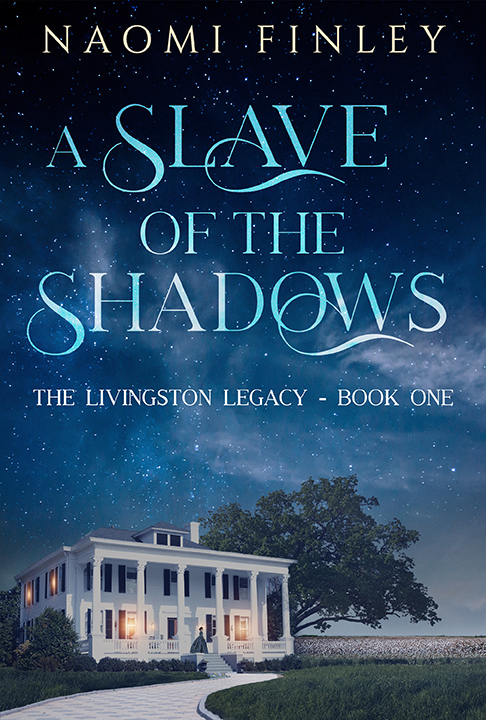
The Livingston Legacy #1
A Slave of the Shadows
In 1850 Charleston, South Carolina, brutality and cruelty simmer just under the genteel surface of Southern society. In an era where ladies are considered mere property, beautiful and headstrong Willow Hendricks’ father has filled her life with turmoil, secrets, and lies.
Her father rules her life until she finds a kindred spirit in spunky, outspoken Whitney Barry, a northerner from Boston. Together these Charleston belles are driven to take control of their own lives—and they are plunged into fear and chaos in their quest to fight for the rights of slaves. Against all odds, these feisty women fight to secure freedom and equality for those made powerless and persecuted by a supposedly superior race.
Only when they’ve lost it all do they find a new beginning.
Book 1 presents Willow and Whitney—and the reader—with the hardships the slaves endure at the hands of their white masters.
Her father rules her life until she finds a kindred spirit in spunky, outspoken Whitney Barry, a northerner from Boston. Together these Charleston belles are driven to take control of their own lives—and they are plunged into fear and chaos in their quest to fight for the rights of slaves. Against all odds, these feisty women fight to secure freedom and equality for those made powerless and persecuted by a supposedly superior race.
Only when they’ve lost it all do they find a new beginning.
Book 1 presents Willow and Whitney—and the reader—with the hardships the slaves endure at the hands of their white masters.
Kindle Edition
First published March 5, 2018
About the author
Naomi Finley
14 books158 followersNaomi is a writer guided by a deep devotion to humanity and the stories that shape us across time. Drawn to the lives lived before us, she finds inspiration in the shared memory, resilience, and wisdom carried forward through generations.
Through her historical fiction, Naomi creates characters who feel real, tender, and unmistakably human. She is devoted to portraying people as they are, flawed, resilient, searching, and capable of profound love. In their struggles and survival, she believes we come to understand ourselves more fully.
For Naomi, storytelling is an act of remembrance and connection. A place where we meet our own humanity through story, learn from lives not our own, and return to what binds us together across generations and time.
Through her historical fiction, Naomi creates characters who feel real, tender, and unmistakably human. She is devoted to portraying people as they are, flawed, resilient, searching, and capable of profound love. In their struggles and survival, she believes we come to understand ourselves more fully.
For Naomi, storytelling is an act of remembrance and connection. A place where we meet our own humanity through story, learn from lives not our own, and return to what binds us together across generations and time.
Ratings & Reviews
Friends & Following
Create a free account to discover what your friends think of this book!
Community Reviews
Displaying 1 - 30 of 113 reviews

May 15, 2018
The best book I've read in a long time! I have always been fascinated with reading about slavery in the 1800's. Such an incredibly dark time for the Negro people. Such a morally wrong time. The author's descriptions of the horrors that happened to these people just makes me cry. What gave the white Southerners the right to do what they did to the slaves. No one has a right to enslave another human being . No animal should ever be treated the way these slaves were let alone another person. When they dared to rebel they were all killed every last man,woman and child. No one spared, this is after what they already endured. This book is just amazing and I am glad to see the author has some more books coming out. I must read them. This is the first book in the series and you'd never know it's a debut author. The emotions this book evoke really make you think and question past history.
Pub Date 28 Feb 2018
I was given a complimentary copy of this book from Huntson Press Inc. through NetGalley . Thank you. All opinions expressed are my own.
Pub Date 28 Feb 2018
I was given a complimentary copy of this book from Huntson Press Inc. through NetGalley . Thank you. All opinions expressed are my own.

January 17, 2019
The Great White Hope
I felt like this story was written by a conservative woman who was raised to believe the greatest time in history was the bondage of slaves. For some reason I never got the feeling that the characters in this book sincerely believed that slavery was wrong. I felt like author positioned her characters to feel this way cause it’s the politically right thing to do. Do I believe that the author is a sympathizer to the plight of African Americans and the struggles we endure either in 1819 or in 2019. No I don’t believe she can relate.
I felt like this story was written by a conservative woman who was raised to believe the greatest time in history was the bondage of slaves. For some reason I never got the feeling that the characters in this book sincerely believed that slavery was wrong. I felt like author positioned her characters to feel this way cause it’s the politically right thing to do. Do I believe that the author is a sympathizer to the plight of African Americans and the struggles we endure either in 1819 or in 2019. No I don’t believe she can relate.

Read
June 26, 2018DNF at 56%
I am totally the wrong person for this book.
A quick, superficial and prejudiced read if you can be satisfied with it.
I missed some depth in the characters and the plot.
After struggling with it for more than one month I decided to give up.
***ARC provided kindly by the publisher via NetGalley in exchange for an honest review.***
I am totally the wrong person for this book.
A quick, superficial and prejudiced read if you can be satisfied with it.
I missed some depth in the characters and the plot.
After struggling with it for more than one month I decided to give up.
***ARC provided kindly by the publisher via NetGalley in exchange for an honest review.***

May 22, 2018
This is the first book by author Naomi Finley and I have become a loyal reader after reading this book. A Slave of the Shadows is a well-written book with very strong female characters. In a world where one race feels superior to the other females like Willow and Whitney come forward and fight for their rights and equality.
As soon as I started the book I was glued right away to the story. It always gives me the inspiration to read such stories where strong-willed people go against the so-called rules set by people in power and break stereotypes.
The revelation of secrets and surprise factor is on point, especially towards the end. I liked all the characters in the story and the voice that these strong headed ladies put forth.
https://reviewingnerds.com/2018/05/22...
As soon as I started the book I was glued right away to the story. It always gives me the inspiration to read such stories where strong-willed people go against the so-called rules set by people in power and break stereotypes.
The revelation of secrets and surprise factor is on point, especially towards the end. I liked all the characters in the story and the voice that these strong headed ladies put forth.
https://reviewingnerds.com/2018/05/22...

November 20, 2018
Oh! This book was beautiful torture. I loved this story to the brink of tears. I originally completed this book in November 2018. I wrote a long, expressive review on Amazon. However, when I went to submit my review (without saving a copy - I never learn!) I found out that Amazon had banned me from writing reviews because I had somehow (no explanation was given) breached community guidelines. Umm...if you've ever read one of my reviews I believe you will find that I'm rather level headed. I rarely utter a curse word and I always try to be extremely fair. I prefer giving an honest opinion but I don't subscribe to the practice of insulting an author's creative outlet of writing. I actually think my Amazon ban was the result of a terse review I'd written on an extremely disappointing series/movie I had watched. Again, I've re-read THAT review over & over and I simply cannot find one broken guideline. Let's start from the beginning once again. After trying to submit my brilliant (and it was!) review on A SLAVE OF THE SHADOWS that Finley was kind enough to send to me while I was recuperating from a traumatic beach accident, and unable to hold a physical book, I immediately contacted Naomi to tell her that I could not review her book. As a top reviewer on Amazon for several years, I was hurt that Amazon could wipe away my reviews without a legitimate reason. So began correspondence with customer service at Amazon. I wrote email after email demanding to know why they'd chosen to ban me, ruining my stellar reviewer status that I had worked so hard to establish over the years. I have lots of independent author friends that self publish and heavily rely on every single review. I'm certainly not insinuating that my reviews make or break an author's success, but I was heartbroken that Naomi was kind enough to send me a book and I couldn't return the favor of writing the review her fabulous story deserved. If you don't think your review matters to an author, well, think again. Even if it's a short review! Finally, after Amazon did an "investigation" and, I suspect, tired of receiving my numerous email complaints - my status has been restored. Turns out, I hadn't broken any community guidelines. Unfortunately, my original review for A SLAVE OF THE SHADOWS was forever lost. Therefore, I've decided to submit the email I sent to Naomi because my feelings about this book are real. This story is a painful yet meaningful tale of the sins of slavery. Finley examined the hard truths of slavery and what it meant to be a woman in the early days. Sadly, women and slaves were at the mercy of men. Except for being born into privilege, I'm not sure that women of this era had much more rights or freedom than a slave.
* Email to Naomi Finley:
Naomi, I just finished your amazing Book One and I absolutely loved it!! I cannot thank you enough for sharing this incredible story with me, a woman that also believes as Willow and Whitney did. How unjust was the cruelty of slavery?! I'm anxiously awaiting Book Two, A GUARDIAN OF SLAVES. I'll be sharing my reviews on my social media sights. Unfortunately, I have recently run into a small, troublesome issue with Amazon and their Community Guidelines. As a top reviewer for over two years, I've suddenly found myself BANNED from reviewing on Amazon (without any explanation!) but it is under review. I can assure you, I have NEVER broken any guidelines on Amazon, used profanity, nor was I ever disrespectful in any way. I have contacted Amazon to reinstate my good standing and investigate why and HOW I violated these guidelines. Until this ridiculous accusation is set straight (AND IT WILL BE!!), I am unable to review your book on Amazon. No worries. I'll post my reviews EVERYWHERE! Your book is a story that speaks volumes and must be shared! I can honestly tell you that A SLAVE OF THE SHADOWS has been one of my favorite reads of 2018. Thank you!! Thank you for generously sending me a digital copy when I couldn't hold a book due to my injuries. If anything great came out of that accident it's that I found a new favorite author and book series. Consider me a fan for life! Again, I'm dreaming of Book Two already. Willow and Whitney are truly inspirational women in a time when women had little value other than to procreate and look pretty. I agree with Willow. Women were treated only slightly better than slaves. It's a treasure to find two heroic protagonists to cheer on. You are a FABULOUS storyteller.
* Finley's response: (I've chosen to include an excerpt of her response to my email because I feel it really comes from a writer's heart.)
"I want to write stories people will remember. When I read a story, I want to be moved. To experience all the emotions we have as humans. So I write what I want to read.
Thank you for your message. I'm beyond thrilled that you loved my book. I've received hundreds of emails, and every one of them has pushed me to put every ounce of passion I had into Book Two."
* Email to Naomi Finley:
Naomi, I just finished your amazing Book One and I absolutely loved it!! I cannot thank you enough for sharing this incredible story with me, a woman that also believes as Willow and Whitney did. How unjust was the cruelty of slavery?! I'm anxiously awaiting Book Two, A GUARDIAN OF SLAVES. I'll be sharing my reviews on my social media sights. Unfortunately, I have recently run into a small, troublesome issue with Amazon and their Community Guidelines. As a top reviewer for over two years, I've suddenly found myself BANNED from reviewing on Amazon (without any explanation!) but it is under review. I can assure you, I have NEVER broken any guidelines on Amazon, used profanity, nor was I ever disrespectful in any way. I have contacted Amazon to reinstate my good standing and investigate why and HOW I violated these guidelines. Until this ridiculous accusation is set straight (AND IT WILL BE!!), I am unable to review your book on Amazon. No worries. I'll post my reviews EVERYWHERE! Your book is a story that speaks volumes and must be shared! I can honestly tell you that A SLAVE OF THE SHADOWS has been one of my favorite reads of 2018. Thank you!! Thank you for generously sending me a digital copy when I couldn't hold a book due to my injuries. If anything great came out of that accident it's that I found a new favorite author and book series. Consider me a fan for life! Again, I'm dreaming of Book Two already. Willow and Whitney are truly inspirational women in a time when women had little value other than to procreate and look pretty. I agree with Willow. Women were treated only slightly better than slaves. It's a treasure to find two heroic protagonists to cheer on. You are a FABULOUS storyteller.
* Finley's response: (I've chosen to include an excerpt of her response to my email because I feel it really comes from a writer's heart.)
"I want to write stories people will remember. When I read a story, I want to be moved. To experience all the emotions we have as humans. So I write what I want to read.
Thank you for your message. I'm beyond thrilled that you loved my book. I've received hundreds of emails, and every one of them has pushed me to put every ounce of passion I had into Book Two."

May 12, 2018
A Slave of the Shadows by Naomi Finley is a fantabulous (yes, yes, I know this is not a real word!) read! I adored it and cannot wait for the other books in the series! Finley’s main character, Willow, and her new best friend, Whitney, are outrageous, audacious women on a mission to help mistreated slaves in the south where they live. Willow is also determined to find out more about her mother, who died when she was a child, whom no one is willing to speak of. There are several interesting side stories that I assume will come to fruition in Book 2, coming out in 2019. I was quite delighted with this read. Fans of Gone With the Wind will truly enjoy A Slave of the Shadows.
February 25, 2018
Willow Hendricks, the main character of Naomi Finley’s A Slave of the Shadows, is a headstrong and forward-thinking southern belle who wants nothing more than to see the slaves on her father’s plantation freed. Having been raised without her mother, cared for by Mammy, and raised alongside Mammy’s daughter, Mary Grace, Willow does not share her father’s love for running their plantation, Livingston. Run-ins with cruel and sadistic slave catchers, the burden of a childhood trauma, and the forging of new relationships fill Finley’s historical fiction drama set in 1850s Charleston. Willow, progressive and fearless, is a heroine like no other.
As I began A Slave of the Shadows, I picked up on that Gone With the Wind vibe. It is evident, however, that Finley has taken an entirely different turn from other novels based in this era. It is not often that we see a heroine’s story played out minus a heavy focus on romance. Willow Hendricks, a girl in her late teens, is as liberal and unyielding as a young woman could possibly be in the pre-Civil War South. Her disdain for seeing the slaves on her father’s plantation kept in servitude overcomes her, and that fire continues to build within her as the novel progresses. She is in no way shy about her feelings and, as violent as her father becomes at her opposition, she remains grounded and vocal.
Willow’s relationship with James, the blacksmith on her father’s plantation, is precious and touching. He loves her as much as the daughter he lost to circumstances beyond his control. In return, Willow sees him as every bit the father her own is unwilling to be. James is ever-protective of Willow and knows their relationship is a source of concern for everyone around them should Willow’s father, Charles, realize how close they are.
I appreciate the shift in point of view Finley provides throughout her work. Each of the brief chapters written in third person describing the secondary characters’ backgrounds adds necessary and interesting layers to the plot. In addition, Willow’s first-person account is perfectly crafted. The reader is afforded the opportunity to glimpse inside her mind and feel the anguish she experiences regarding the unanswered questions she has about her father’s business and her mother’s death.
The tension created by the early encounters with Bowden Armstrong serves to create an even more vivid picture of Willow Hendricks as a force with which to be reckoned. Her obvious pain and embarrassment at Bowden’s previous treatment of her shapes Willow into a fighter by all accounts. Her vulnerability later with Bowden is timed well and welcomed as this reader wanted to see Willow, a tormented soul, find happiness.
The side story involving Ruby is one I wanted to see more of and wanted it to come quickly. However, Finley moves at a quick pace in a different direction with the plot. I never felt quite satisfied with the outcome of Willow’s trip to New York and her chance meeting with Ruby.
I give A Slave of the Shadows an enthusiastic 5 out of 5 stars. Finley weaves a beautiful tale of genuine love and understanding while keeping her writing true to the era. The human spirit is alive and well in her character, Willow Hendricks, and Willow is, without a doubt, a worthy heroine.
As I began A Slave of the Shadows, I picked up on that Gone With the Wind vibe. It is evident, however, that Finley has taken an entirely different turn from other novels based in this era. It is not often that we see a heroine’s story played out minus a heavy focus on romance. Willow Hendricks, a girl in her late teens, is as liberal and unyielding as a young woman could possibly be in the pre-Civil War South. Her disdain for seeing the slaves on her father’s plantation kept in servitude overcomes her, and that fire continues to build within her as the novel progresses. She is in no way shy about her feelings and, as violent as her father becomes at her opposition, she remains grounded and vocal.
Willow’s relationship with James, the blacksmith on her father’s plantation, is precious and touching. He loves her as much as the daughter he lost to circumstances beyond his control. In return, Willow sees him as every bit the father her own is unwilling to be. James is ever-protective of Willow and knows their relationship is a source of concern for everyone around them should Willow’s father, Charles, realize how close they are.
I appreciate the shift in point of view Finley provides throughout her work. Each of the brief chapters written in third person describing the secondary characters’ backgrounds adds necessary and interesting layers to the plot. In addition, Willow’s first-person account is perfectly crafted. The reader is afforded the opportunity to glimpse inside her mind and feel the anguish she experiences regarding the unanswered questions she has about her father’s business and her mother’s death.
The tension created by the early encounters with Bowden Armstrong serves to create an even more vivid picture of Willow Hendricks as a force with which to be reckoned. Her obvious pain and embarrassment at Bowden’s previous treatment of her shapes Willow into a fighter by all accounts. Her vulnerability later with Bowden is timed well and welcomed as this reader wanted to see Willow, a tormented soul, find happiness.
The side story involving Ruby is one I wanted to see more of and wanted it to come quickly. However, Finley moves at a quick pace in a different direction with the plot. I never felt quite satisfied with the outcome of Willow’s trip to New York and her chance meeting with Ruby.
I give A Slave of the Shadows an enthusiastic 5 out of 5 stars. Finley weaves a beautiful tale of genuine love and understanding while keeping her writing true to the era. The human spirit is alive and well in her character, Willow Hendricks, and Willow is, without a doubt, a worthy heroine.

March 19, 2018
Publisher’s Description:
In 1850 Charleston, South Carolina, brutality and cruelty simmer just under the genteel surface of Southern society.
In an era where ladies are considered mere property, beautiful and headstrong Willow Hendricks’ father has filled her life with turmoil, secrets, and lies. Her father rules her life until she finds a kindred spirit in spunky, outspoken Whitney Barry, a northerner from Boston. Together these Charleston belles are driven to take control of their own lives—and they are plunged into fear and chaos in their quest to fight for the rights of slaves. Against all odds, these feisty women fight to secure freedom and equality for those made powerless and persecuted by a supposedly superior race. Only when they’ve lost it all do they find a new beginning. Book 1 presents Willow and Whitney—and the reader—with the hardships the slaves endure at the hands of their white masters.
My Thoughts:
This amazing debut novel has a Gone With The Wind feel but it’s told like you are reading a journal.
Each character’s back story is told individually so that you have at least a small sampling of what they are about.
Willow has a feisty side, something unexpected of a southern belle of this time period. She would like nothing more than to free not only her Father’s slaves but also all of those on neighboring plantations as well.
There are secrets abound most of which will affect Willow’s life in one way or another.
With a controlling father, a friend whose Father is a cruel slave master, violence and subterfuge this book is impossible to put down.
The only real problem is that it ends without a complete story resolution.
I gave this book 4.5 of 5.0 stars for storyline and character development. Their is an underlying and building love that we never see resolved so we must wait for a sequel.
I received a complimentary digital copy of this book to read via Hidden Gems.
This in no way affected my opinion of this book which I read and reviewed voluntarily.
In 1850 Charleston, South Carolina, brutality and cruelty simmer just under the genteel surface of Southern society.
In an era where ladies are considered mere property, beautiful and headstrong Willow Hendricks’ father has filled her life with turmoil, secrets, and lies. Her father rules her life until she finds a kindred spirit in spunky, outspoken Whitney Barry, a northerner from Boston. Together these Charleston belles are driven to take control of their own lives—and they are plunged into fear and chaos in their quest to fight for the rights of slaves. Against all odds, these feisty women fight to secure freedom and equality for those made powerless and persecuted by a supposedly superior race. Only when they’ve lost it all do they find a new beginning. Book 1 presents Willow and Whitney—and the reader—with the hardships the slaves endure at the hands of their white masters.
My Thoughts:
This amazing debut novel has a Gone With The Wind feel but it’s told like you are reading a journal.
Each character’s back story is told individually so that you have at least a small sampling of what they are about.
Willow has a feisty side, something unexpected of a southern belle of this time period. She would like nothing more than to free not only her Father’s slaves but also all of those on neighboring plantations as well.
There are secrets abound most of which will affect Willow’s life in one way or another.
With a controlling father, a friend whose Father is a cruel slave master, violence and subterfuge this book is impossible to put down.
The only real problem is that it ends without a complete story resolution.
I gave this book 4.5 of 5.0 stars for storyline and character development. Their is an underlying and building love that we never see resolved so we must wait for a sequel.
I received a complimentary digital copy of this book to read via Hidden Gems.
This in no way affected my opinion of this book which I read and reviewed voluntarily.

January 20, 2019
This was a WOW 5+ It as a wonderful read. It brought back in a time that I love. I love reading about the beautiful plantations in the South and the way of life. I course it was a very difficult time. It is just unbelievable to me how some people treat others. The characters of this book were will developed.
I just loved Willow and hope there is more romance in her future. I loved how free spirited Willow was and how strong a young woman she was. This book is also full of adventure and mystery. I can't wait to read the next book.
I just loved Willow and hope there is more romance in her future. I loved how free spirited Willow was and how strong a young woman she was. This book is also full of adventure and mystery. I can't wait to read the next book.
May 27, 2018
This is an amazing book about Southern plantation life. Willow is a white woman, the daughter of a slave owner. she loves her father's slaves as the family she never had. However, she is exposed to the ugly aspect of unkind slave owners. She is resolved to do something about it. She is plagued with violence and secrets kept by her father. She tries to find the courage within herself to do the right thing.
I loved this book. The characters were well developed and the history was accurate for the time period. It shows that there were kind slave owners. I love the fact that the author included a freed slave staying on the plantation. This was not one of America's finer moments of history, but the author did a good job catching both sides of it. The book does describe in detail the abuse suffered by slaves, as well as the people that helped to free them.
I loved this book. The characters were well developed and the history was accurate for the time period. It shows that there were kind slave owners. I love the fact that the author included a freed slave staying on the plantation. This was not one of America's finer moments of history, but the author did a good job catching both sides of it. The book does describe in detail the abuse suffered by slaves, as well as the people that helped to free them.

July 9, 2018
Helping those who needed it.
An extreme portrayal of slavery and the horor it inflicted not only on slaves but on the people who loved them. Well written and executed. Flawless historical literary excellence.
An extreme portrayal of slavery and the horor it inflicted not only on slaves but on the people who loved them. Well written and executed. Flawless historical literary excellence.

April 5, 2020
Fascinating
I read this book on a whim....and I am so glad that I did. Such attention to details. I loved the characters and the way the story went. I highly recommend reading this book if you are a history lover.
I read this book on a whim....and I am so glad that I did. Such attention to details. I loved the characters and the way the story went. I highly recommend reading this book if you are a history lover.

May 25, 2018
Wow!! I absolutely loved this book and I am looking forward to reading book 2!
My favorite character would be Willow. I always thought if I were to live in that era, I would be just like her. I would never be able to mistreat anyone. And, I would find myself in trouble and predicaments all the time to try to help them.
I highly recommend this book for those who like to read historical fiction books.
I received this book through the Goodreads giveaways. I appreciate the opportunity to be able to read it and review it. Thanks
My favorite character would be Willow. I always thought if I were to live in that era, I would be just like her. I would never be able to mistreat anyone. And, I would find myself in trouble and predicaments all the time to try to help them.
I highly recommend this book for those who like to read historical fiction books.
I received this book through the Goodreads giveaways. I appreciate the opportunity to be able to read it and review it. Thanks
May 21, 2018
A Slave of the Shadows was a thoroughly engaging book, a tale woven beautifully with characters well portrayed and fleshed out. It is a tale of strength of commitment in a time when it was easier to follow the status quo and to blithely enjoy the riches of the elite in plantation life in the south. Through family secrets unveiled as the tale progresses, the reader finds a family with much more social conscienous than was previously apparent. A Slave of the Shadows was a book that was hard to put down, as the tale and the writing drew the reader in.
March 25, 2018
A Slave of the Shadows by Naomi Finley
The 1800s were a very dark time in history. The countryside was rampant with sadistic slave owners. Women received no recognition or respect. The white man was a self-professed god among inferior humans. However, nature and nurture conspired to make Willow Hendriks into a formidable force. She was headstrong and forward thinking. She feared no man. Her interaction with one infuriating man only worked to strengthen her resolve.
Set in 1850 in Charleston, North Carolina, this story revolves around Willow’s fight against brutality and cruelty. She grew up without a mum but was close to her father’s servants. She was brought up alongside her minder’s child and was also very close to the blacksmith despite the risk. She made a stance against persecution against a ‘superior’ section of the populace. She would not even let her father’s violent reaction to her stance deter her from chasing freedom and equality for those rendered powerless.
Unlike most history-based stories, this one is more focused on the heroine and her struggles rather than on whatever romance she may get embroiled in. The period the story is set in was very male-centric which makes this story all the more unique. It is refreshing without deviating from the traits of that period. It is interesting and captivating. Right from the beginning, the reader understands Willow’s struggle being her father’s only child. One understands just how much of a burden her father’s expectations are.
The characters in A Slave of the Shadows are individually developed. Each of them has a background story. The reader gets to meet each of them. One gets to understand the nuances and personality of each character. The characters come to life and interact with the reader. This only enhances the experience by making one feel like they are walking around the plantation. Breathing in the fresh country air. They have depth and are relatable. The relationship between James and Willow is especially special. He feels a void that Willow’s father refuses to fill. He is protective and affectionate of Willow in an endearing way. This is despite what could happen if Willow’s father found out.
The story is told from Willow’s perspective for the most part. The reader gets a unique opportunity to wander through her mind, wading through her thoughts. The reader will experience the torment in Willow’s being at having lost her mother and living with her father’s ideals in excruciating detail. Other facets of the story are told from a third person perspective. This gives the story a sort of three-dimensional feel. One feels like they are part of the story. Involved in Willow’s activities but only observing the rest of the action.
Naomi Finley has left this story open. There is no conclusive resolution to the story. In the end, one is left with a sense of foreboding. It is a genius way of building anticipation for a sequel. She has done an excellent job of telling a great story with a seamless flow and brilliant storyline. This book deserves five stars
The 1800s were a very dark time in history. The countryside was rampant with sadistic slave owners. Women received no recognition or respect. The white man was a self-professed god among inferior humans. However, nature and nurture conspired to make Willow Hendriks into a formidable force. She was headstrong and forward thinking. She feared no man. Her interaction with one infuriating man only worked to strengthen her resolve.
Set in 1850 in Charleston, North Carolina, this story revolves around Willow’s fight against brutality and cruelty. She grew up without a mum but was close to her father’s servants. She was brought up alongside her minder’s child and was also very close to the blacksmith despite the risk. She made a stance against persecution against a ‘superior’ section of the populace. She would not even let her father’s violent reaction to her stance deter her from chasing freedom and equality for those rendered powerless.
Unlike most history-based stories, this one is more focused on the heroine and her struggles rather than on whatever romance she may get embroiled in. The period the story is set in was very male-centric which makes this story all the more unique. It is refreshing without deviating from the traits of that period. It is interesting and captivating. Right from the beginning, the reader understands Willow’s struggle being her father’s only child. One understands just how much of a burden her father’s expectations are.
The characters in A Slave of the Shadows are individually developed. Each of them has a background story. The reader gets to meet each of them. One gets to understand the nuances and personality of each character. The characters come to life and interact with the reader. This only enhances the experience by making one feel like they are walking around the plantation. Breathing in the fresh country air. They have depth and are relatable. The relationship between James and Willow is especially special. He feels a void that Willow’s father refuses to fill. He is protective and affectionate of Willow in an endearing way. This is despite what could happen if Willow’s father found out.
The story is told from Willow’s perspective for the most part. The reader gets a unique opportunity to wander through her mind, wading through her thoughts. The reader will experience the torment in Willow’s being at having lost her mother and living with her father’s ideals in excruciating detail. Other facets of the story are told from a third person perspective. This gives the story a sort of three-dimensional feel. One feels like they are part of the story. Involved in Willow’s activities but only observing the rest of the action.
Naomi Finley has left this story open. There is no conclusive resolution to the story. In the end, one is left with a sense of foreboding. It is a genius way of building anticipation for a sequel. She has done an excellent job of telling a great story with a seamless flow and brilliant storyline. This book deserves five stars
March 29, 2018
A compelling, intricate and harrowing tale of a young woman growing up during colonial America is what readers will find in Naomi Finley’s book A Slave of the Shadows. Our protagonist, Willow Hendricks, is a young white woman who is the sole daughter and heir to a plantation in Charleston in 1850. For a woman who lives in an era of being seen and not heard, Willow is stubborn, outspoken and refreshingly honest. She dislikes the accepted treatment of black people and is not afraid to let it show: in appropriate situations. While she risks herself to defend them, she is naïve and privileged. She will learn in due time that good intentions cannot make the world a better place on their own.
Finley’s mastery over the written word is evident in this book. The descriptions of characters, locations and expressions make the reader believe that they are present in that world: you can smell the grass, feel the heat and sense the raw emotion that exudes from the characters. There is never a wasted word, sentence or paragraph. Everything has its place and everything has meaning. These are troubling times for America and Finley uses that discomfort and uncertainty in her tale. The story is told primarily through first person experiences with Willow, but Finley does take the time to shift perspective to other important characters. This keeps the tale from being stale and boring.
Willow, however, is privileged. She is white; she is the daughter of a highly respected man and is well off in all manners of life. While readers will get the impression that Willow is not comfortable with the way slaves are treated, she is blinded by delusions of grandeur. In the beginning of the book she is a single outspoken woman in a world dominated by white men. She is reckless and puts herself in the path of harm more often than she should. She doesn’t truly seem to understand how much the colour of her skin keeps her alive. As the book develops, however, her naiveté is challenged and she truly begins to become an ally to slaves and their plight. It’s a good tactic for a book that is the first in a series. While things are not wholly resolved in this first book, they begin to move in a promising direction.
Given the state of the world when this review was written, it may be difficult to read this book for many reasons. It is a stark reminder of the standing of blacks in America and how things have really not changed all that much. The storytelling is divine and it is exciting to see where things will lead in the second book. Naomi Finley creates a strong female lead in her book A Slave of the Shadows and describes the world of colonial America in 1850 so well it’s as if you can feel it as you read. The story is engaging, fantastically written and will leave readers wanting more. High expectations for the book that will follow.
Finley’s mastery over the written word is evident in this book. The descriptions of characters, locations and expressions make the reader believe that they are present in that world: you can smell the grass, feel the heat and sense the raw emotion that exudes from the characters. There is never a wasted word, sentence or paragraph. Everything has its place and everything has meaning. These are troubling times for America and Finley uses that discomfort and uncertainty in her tale. The story is told primarily through first person experiences with Willow, but Finley does take the time to shift perspective to other important characters. This keeps the tale from being stale and boring.
Willow, however, is privileged. She is white; she is the daughter of a highly respected man and is well off in all manners of life. While readers will get the impression that Willow is not comfortable with the way slaves are treated, she is blinded by delusions of grandeur. In the beginning of the book she is a single outspoken woman in a world dominated by white men. She is reckless and puts herself in the path of harm more often than she should. She doesn’t truly seem to understand how much the colour of her skin keeps her alive. As the book develops, however, her naiveté is challenged and she truly begins to become an ally to slaves and their plight. It’s a good tactic for a book that is the first in a series. While things are not wholly resolved in this first book, they begin to move in a promising direction.
Given the state of the world when this review was written, it may be difficult to read this book for many reasons. It is a stark reminder of the standing of blacks in America and how things have really not changed all that much. The storytelling is divine and it is exciting to see where things will lead in the second book. Naomi Finley creates a strong female lead in her book A Slave of the Shadows and describes the world of colonial America in 1850 so well it’s as if you can feel it as you read. The story is engaging, fantastically written and will leave readers wanting more. High expectations for the book that will follow.

March 28, 2018
I just finished reading A Slave of the Shadows by Naomi Finley and I really liked it. It is not a typical book I would usually read but once the story got into the nitty gritty I found myself enthralled in the story line and left wanting to find out more. Initially the book introduces certain characters and upon the first few chapters I thought it would solely be about those few but as the story continues it brings in more main characters and makes the story just come together very nicely. I usually stick to mystery or fantasy novels but this one had me really intrigued. It did not start slow and the story continued to flow nicely without getting dull or having any boring parts. As we all know how slavery worked back in the day this story, while fiction, does a pretty darn good job of portraying the era and how things went down. There are a few parts in the book that could be tough for some to read if you tend to read light hearted books. One of my favorite parts of the book are the flashbacks the author has given to each character. We really aren’t left wondering too much after those chapters. They were fit into the book perfectly. From reading the description of this book there seems like there might be more books in this series. If that is so, I will likely read them as I am now enchanted with the story of these two young women. I am also happy to see that there are no spelling or grammar errors. Usually when I read a book from an unknown author that I got free or cheap they are not thoroughly edited and can sometimes be hard to understand because of it but not this one. I downloaded this one on Amazon Kindle and the pages numbers were really weird. I do not know if this has to deal with the way the book was uploaded or if it was a Kindle problem but it was hard to remember page numbers, which isn’t really needed since it saves your place but still.
The book followed the story of a young Southern Belle by the name of Willow. We follow her through her mental battle with her father and the ways of the south. The book was set in a time where white men still owned slaves and plantations were a grand way of life for the white. Willow struggles to be the perfect Southern lady and has befriended many slaves. This is forbidden in this era. Willow makes choices that are frowned upon and is a very outspoken woman. Mid way through the story a lovely lady by the name of Whitney comes into the story and shares similar views to those of Willow and slavery. Willow soon learns she has more friends than she trusted herself to have and she does some good for those caught in slavery. I cannot say too much without giving away parts of the story but it was a lovely book to read. Definitely 5 stars.
The book followed the story of a young Southern Belle by the name of Willow. We follow her through her mental battle with her father and the ways of the south. The book was set in a time where white men still owned slaves and plantations were a grand way of life for the white. Willow struggles to be the perfect Southern lady and has befriended many slaves. This is forbidden in this era. Willow makes choices that are frowned upon and is a very outspoken woman. Mid way through the story a lovely lady by the name of Whitney comes into the story and shares similar views to those of Willow and slavery. Willow soon learns she has more friends than she trusted herself to have and she does some good for those caught in slavery. I cannot say too much without giving away parts of the story but it was a lovely book to read. Definitely 5 stars.

June 25, 2021
Reeks of white saviorism throughout. Seriously, if you want to understand the trope, this book is Exhibit A. The emphasis is on White angst and pain over the plight of enslaved Blacks and how wonderful the White heroine, Willow, is for becoming an Underground Railroad conductor. The heroine's slaves love their mistress and praise her repeatedly. Willow's "Mammy" calls her "angel gal." Mammy is a stereotype through and through. Mammy and her daughter ARE ACTUALLY FREE but they remain in SC and live as slaves because Mammy loves her White mistress so much. I can't even.
The dialogue and narration are thoroughly modern. Anachronistic names, especially heroine Willow. Characters are ridiculously self-aware. The characterization of Willow's father is inconsistent. He calls her "an abomination" just because she's a girl, but by the end, we discover he's really a good guy. Half the slave-holding Southern characters are secretly abolitionists. Yeah, right.
The hero picked on the heroine at their one-room schoolhouse like something out of the Old West. In reality, girls and boys were not educated together in the Old South. They would have private tutors or they would attend sex-segregated boarding schools. Finley seems to have transposed a Hollywood version of the American West into the American South. There also wasn't a "general store" in Charleston. Heroine has her underwear around her ankles in an outhouse. In fact, women wore split-crotch drawers to make relieving themselves easier. Rice and Sea Island cotton weren't grown on the same plantation within land travel of Charleston. It's in the name (which Finley uses): Sea ISLAND cotton.
The pacing is all over the place, with frequent tangents into characters' backstories and a rushed, over-the-top ending. The titular "Slave of the Shadows" isn't an actual enslaved Black person but a White man, which basically tells you what you need to know about the real priorities of this book.
In the author's note at the end, Finley touts her "extensive research," but her actual story proves she did only superficial research and/or what she read didn't sink in. Willow and Whitney, two young White planters' daughters, casually go into Charleston unaccompanied by anyone but their enslaved driver. They don men's clothing and turn vigilante, kidnapping and whipping White rapists. They end up running Willow's plantation on their own by the end. Yeah, right.
This is a 21st-century fantasy of the American South. You can almost hear the White author patting herself on the back as her enslaved characters lavish praise on her enlightened White Mary Sue heroine.
On the plus side, Reagan Boggs does a fine job narrating the audiobook and has a lovely singing voice too.
The dialogue and narration are thoroughly modern. Anachronistic names, especially heroine Willow. Characters are ridiculously self-aware. The characterization of Willow's father is inconsistent. He calls her "an abomination" just because she's a girl, but by the end, we discover he's really a good guy. Half the slave-holding Southern characters are secretly abolitionists. Yeah, right.
The hero picked on the heroine at their one-room schoolhouse like something out of the Old West. In reality, girls and boys were not educated together in the Old South. They would have private tutors or they would attend sex-segregated boarding schools. Finley seems to have transposed a Hollywood version of the American West into the American South. There also wasn't a "general store" in Charleston. Heroine has her underwear around her ankles in an outhouse. In fact, women wore split-crotch drawers to make relieving themselves easier. Rice and Sea Island cotton weren't grown on the same plantation within land travel of Charleston. It's in the name (which Finley uses): Sea ISLAND cotton.
The pacing is all over the place, with frequent tangents into characters' backstories and a rushed, over-the-top ending. The titular "Slave of the Shadows" isn't an actual enslaved Black person but a White man, which basically tells you what you need to know about the real priorities of this book.
In the author's note at the end, Finley touts her "extensive research," but her actual story proves she did only superficial research and/or what she read didn't sink in. Willow and Whitney, two young White planters' daughters, casually go into Charleston unaccompanied by anyone but their enslaved driver. They don men's clothing and turn vigilante, kidnapping and whipping White rapists. They end up running Willow's plantation on their own by the end. Yeah, right.
This is a 21st-century fantasy of the American South. You can almost hear the White author patting herself on the back as her enslaved characters lavish praise on her enlightened White Mary Sue heroine.
On the plus side, Reagan Boggs does a fine job narrating the audiobook and has a lovely singing voice too.
This entire review has been hidden because of spoilers.

April 30, 2018
Exquisite cover, and a lovely piece of historical fiction, set in the 1850’s in the Deep South, in Charleston.
Willow Hendricks is determined to find out about her mother. Little does she know quite how alike she is of her deceased parent. Willow holds strong views on the welfare and treatment of slaves. Upon her visit to New York she meets with her friend, a reformist, she is in her element.
The story focuses on several slaves lives, and also Willows growing friendship with newly arrived Whitney.
A solid story with a good set of believable characters. The next book is due out in late 2019 and is named ‘A Guardian of Slaves’
5 stars ⭐️⭐️⭐️⭐️⭐️
Willow Hendricks is determined to find out about her mother. Little does she know quite how alike she is of her deceased parent. Willow holds strong views on the welfare and treatment of slaves. Upon her visit to New York she meets with her friend, a reformist, she is in her element.
The story focuses on several slaves lives, and also Willows growing friendship with newly arrived Whitney.
A solid story with a good set of believable characters. The next book is due out in late 2019 and is named ‘A Guardian of Slaves’
5 stars ⭐️⭐️⭐️⭐️⭐️

April 22, 2018
In Charleston, South Carolina in the 1800's Willow Hendricks grew up wealthy on a large plantation. She was raised by her Mammy, a slave, Willow's mother died at an early age. Willow's father owned an import/export Business and ran the Plantation. Mary Grace was Mammy's daughter about the same age as Willow. Willow's father gave Mary Grace permission to be in Willow's room at night. Growing up together Willow and Mary Grace were close to each other from an early age.
This history was well written about the hardships the slaves endured and their masters. There were some dark sides to the plot but true to history. This was a sad and complicated time for the slaves as well as the owners.
The setting were well defined, the characters were believable with multiple personalities. This is Naomia Finley's first novel which is well written with outstanding research. The author wove history, adventure, and the plot with many twists and turns into a beautiful novel. There are hints of another book is in the making. Thank you Naomi for sharing your talent with us.
This history was well written about the hardships the slaves endured and their masters. There were some dark sides to the plot but true to history. This was a sad and complicated time for the slaves as well as the owners.
The setting were well defined, the characters were believable with multiple personalities. This is Naomia Finley's first novel which is well written with outstanding research. The author wove history, adventure, and the plot with many twists and turns into a beautiful novel. There are hints of another book is in the making. Thank you Naomi for sharing your talent with us.

April 4, 2018
All I can say is....WOW!
A Slave of the Shadows by Naomi Finley is quite possibly the best book I have read in a long time. Finley brought to life what it was like in the 1800s for both slaves, and those who tried to protect them. I cried so many times while reading this book, even as she describes the horror I just can’t imagine what these people went through. Finley has a way with words and did a truly amazing job of creating her characters and describing 1800 Charleston, South Carolina in such a way that I felt like I was there. As a friend and co-conspirator with Willow and Whitney and seeing what they were seeing. This book is truly what I would say is a page turner. It sucked me in and I literally stayed up all night reading it because I had to know what was going to happen next. After this, I will happily read anything that Naomi Finley puts out but I truly hope there is more to the story of Willow, Whitney, and the rest of the group. I feel like we have just barely scraped the surface!
A Slave of the Shadows by Naomi Finley is quite possibly the best book I have read in a long time. Finley brought to life what it was like in the 1800s for both slaves, and those who tried to protect them. I cried so many times while reading this book, even as she describes the horror I just can’t imagine what these people went through. Finley has a way with words and did a truly amazing job of creating her characters and describing 1800 Charleston, South Carolina in such a way that I felt like I was there. As a friend and co-conspirator with Willow and Whitney and seeing what they were seeing. This book is truly what I would say is a page turner. It sucked me in and I literally stayed up all night reading it because I had to know what was going to happen next. After this, I will happily read anything that Naomi Finley puts out but I truly hope there is more to the story of Willow, Whitney, and the rest of the group. I feel like we have just barely scraped the surface!

October 1, 2019
I had a lot of trouble with the history in this book. Mammy is a character even though historically that's mostly a post-slavery Jim Crow stereotype. The dialogue and narrative voices frequently use anachronistic language that yank the reader back into the 21st century. For me personally, it's difficult to enjoy historical novels unless I can buy them as possible reality. I can't recommend this book if you've studied the 19th century in depth.

May 19, 2019
I was intrigued by this first novel written by a Canadian author. It has been receiving rave reviews on GRs but in the end I found the writing and character development weak. This book could have been so much more.
April 8, 2018
Loved it...
Can't wait for sequel. I love books about plantations and this one rates well. Characters are real and believable. Awesome
Can't wait for sequel. I love books about plantations and this one rates well. Characters are real and believable. Awesome

April 9, 2018
A Slave of the Shadows
I absolutely could not put this book down. This is an excellent story. I wish the next installment were available right now!
I absolutely could not put this book down. This is an excellent story. I wish the next installment were available right now!
June 4, 2018
Just ok
The characters had no depth. A book you could easily put down. I forced myself to finish it. Time waster.
The characters had no depth. A book you could easily put down. I forced myself to finish it. Time waster.

January 25, 2021
A white savior fantasy that still manages to minimize and dehumanize people who were in bondage.
June 3, 2018
This review can also be found on www.nikaleighreads.com I received this copy of A Slave in the Shadows from Net Galley and Huntson Press Inc. It is the first novel for author Naomi Finley and the first book in its series of four. The second book, Guardian of Slaves, is due to release early winter 2019.
Nikaleigh's Synopsis:
Willow Hendricks is a fiery spirit. She's outspoken, intelligent, and tenacious. Qualities that are quite dangerous for a women in Charleston in the 1850's. Her father tries his best to keep her abolitionist views quiet; for her own safety. Though he's one of the few plantation owns who treats his slaves with dignity, she resents him for not doing more - not quite understanding the danger of her own outspokenness.
When Whitney Barry moves into town from Boston, she finally finds herself an ally. Whitney is another strong women, one who's had to find her strength on her own terms: at the hands of her cruel and abusive father.
Whitney and Willow soon become an egalitarian force to be reckoned with, but not without first facing just how cruel and heartless the south really is.
Nikaleigh's Thoughts:
This novel told an absolutely beautiful story and the authors writing style truly brought the time period and characters to life.
It would leave me feeling amazed that a man as shy as him could have a laugh that started from his toes and worked its way all the way up until it filled the air around you with an inexplicable happiness.
The connection between Willow and her slaves was palpable, her conviction felt real - yet the plot felt slow. It wasn't until around the 50% mark where the storyline began to pick up. It was only the authors eloquence in setting the scene that kept me reading through the first half.
While I do wish the pace of the first half of this book better matched that of the second half and prologue, I do understand that first books in a series can tend to have a slower build. For this reason, along with the authors writing style, I decided to give this read a LIKED it! instead of a So-So rating. The novel certainly did redeem itself in the second half for me and I believe this would greatly appeal to anyone who is interested in historical fiction. - This review will go live on NikaleighReads.com at 8am EST on 6/6/18
Nikaleigh's Synopsis:
Willow Hendricks is a fiery spirit. She's outspoken, intelligent, and tenacious. Qualities that are quite dangerous for a women in Charleston in the 1850's. Her father tries his best to keep her abolitionist views quiet; for her own safety. Though he's one of the few plantation owns who treats his slaves with dignity, she resents him for not doing more - not quite understanding the danger of her own outspokenness.
When Whitney Barry moves into town from Boston, she finally finds herself an ally. Whitney is another strong women, one who's had to find her strength on her own terms: at the hands of her cruel and abusive father.
Whitney and Willow soon become an egalitarian force to be reckoned with, but not without first facing just how cruel and heartless the south really is.
Nikaleigh's Thoughts:
This novel told an absolutely beautiful story and the authors writing style truly brought the time period and characters to life.
It would leave me feeling amazed that a man as shy as him could have a laugh that started from his toes and worked its way all the way up until it filled the air around you with an inexplicable happiness.
The connection between Willow and her slaves was palpable, her conviction felt real - yet the plot felt slow. It wasn't until around the 50% mark where the storyline began to pick up. It was only the authors eloquence in setting the scene that kept me reading through the first half.
While I do wish the pace of the first half of this book better matched that of the second half and prologue, I do understand that first books in a series can tend to have a slower build. For this reason, along with the authors writing style, I decided to give this read a LIKED it! instead of a So-So rating. The novel certainly did redeem itself in the second half for me and I believe this would greatly appeal to anyone who is interested in historical fiction. - This review will go live on NikaleighReads.com at 8am EST on 6/6/18
June 2, 2024
I have been in such a reading slump…until now!!
"A Slave of the Shadows" by Naomi Finley is a haunting and emotionally charged journey through the antebellum South, revealing the hidden cruelties masked by a veneer of Southern gentility. Set in 1850 Charleston, South Carolina, the story plunges readers into the turbulent lives of two remarkable women, Willow Hendricks and Whitney Barry.
Willow, shackled by the oppressive constraints of her father's iron rule, epitomizes the struggle of women viewed as mere property. Her existence is fraught with secrets, lies, and an omnipresent turmoil that threatens to consume her. Despite this, her inner strength and determination shine through, creating an inspiring portrait of resilience and defiance.
Whitney Barry, a fiery and outspoken northerner from Boston, becomes Willow's ally and confidante. Their friendship, forged in the crucible of shared ideals and mutual respect, is a beacon of hope in a world marred by bigotry and brutality. Whitney's courage and forthrightness offer a stark contrast to the stifling norms of Southern society, and together, these two women embark on a perilous journey to challenge the status quo.
The narrative doesn't shy away from depicting the harrowing realities faced by slaves, laying bare the inhumanity and suffering endured at the hands of their white masters. This unflinching portrayal serves as a powerful reminder of the enduring human spirit and the relentless quest for justice and equality.
As Willow and Whitney navigate their way through fear, chaos, and unimaginable loss, they discover the true meaning of strength and solidarity. Their fight for the rights of the enslaved becomes a personal crusade, transforming them and those around them. Finley's masterful storytelling evokes a profound emotional response, drawing readers into the visceral heartache and fervent hope that drive the characters forward.
In the end, "A Slave of the Shadows" is more than a historical novel; it is a poignant exploration of the human condition, a testament to the indomitable spirit of those who dare to stand against oppression. The journey of Willow and Whitney resonates deeply, leaving an indelible mark on the reader's soul, reminding us all of the enduring power of courage and compassion.
"A Slave of the Shadows" by Naomi Finley is a haunting and emotionally charged journey through the antebellum South, revealing the hidden cruelties masked by a veneer of Southern gentility. Set in 1850 Charleston, South Carolina, the story plunges readers into the turbulent lives of two remarkable women, Willow Hendricks and Whitney Barry.
Willow, shackled by the oppressive constraints of her father's iron rule, epitomizes the struggle of women viewed as mere property. Her existence is fraught with secrets, lies, and an omnipresent turmoil that threatens to consume her. Despite this, her inner strength and determination shine through, creating an inspiring portrait of resilience and defiance.
Whitney Barry, a fiery and outspoken northerner from Boston, becomes Willow's ally and confidante. Their friendship, forged in the crucible of shared ideals and mutual respect, is a beacon of hope in a world marred by bigotry and brutality. Whitney's courage and forthrightness offer a stark contrast to the stifling norms of Southern society, and together, these two women embark on a perilous journey to challenge the status quo.
The narrative doesn't shy away from depicting the harrowing realities faced by slaves, laying bare the inhumanity and suffering endured at the hands of their white masters. This unflinching portrayal serves as a powerful reminder of the enduring human spirit and the relentless quest for justice and equality.
As Willow and Whitney navigate their way through fear, chaos, and unimaginable loss, they discover the true meaning of strength and solidarity. Their fight for the rights of the enslaved becomes a personal crusade, transforming them and those around them. Finley's masterful storytelling evokes a profound emotional response, drawing readers into the visceral heartache and fervent hope that drive the characters forward.
In the end, "A Slave of the Shadows" is more than a historical novel; it is a poignant exploration of the human condition, a testament to the indomitable spirit of those who dare to stand against oppression. The journey of Willow and Whitney resonates deeply, leaving an indelible mark on the reader's soul, reminding us all of the enduring power of courage and compassion.
This entire review has been hidden because of spoilers.
June 29, 2026
I struggled with this book for reasons that go beyond the writing itself. In the author's bio, she explains that her affinity for the Deep South and its history was cultivated during her childhood living in a Tennessee plantation house. That context made it difficult for me to engage with a story that, in my view, romanticizes the lives and experiences of enslaved people.
For me, there is an important distinction between researching history and writing from a perspective that attempts to capture the trauma of enslavement. The book left me feeling that the brutality, generational trauma, and dehumanization of slavery were softened in ways that didn't sit right. Living in or feeling connected to a plantation's history does not equate to understanding the lived experiences of those who were enslaved there.
Historical fiction carries a responsibility when depicting atrocities like slavery. While authors are free to write the stories they choose, I believe some stories require a depth of lived perspective and cultural understanding that cannot simply be inherited through fascination with a place or its past. This book wasn't for me, and it reinforced my feeling that some books are better left unwritten by certain people.
For me, there is an important distinction between researching history and writing from a perspective that attempts to capture the trauma of enslavement. The book left me feeling that the brutality, generational trauma, and dehumanization of slavery were softened in ways that didn't sit right. Living in or feeling connected to a plantation's history does not equate to understanding the lived experiences of those who were enslaved there.
Historical fiction carries a responsibility when depicting atrocities like slavery. While authors are free to write the stories they choose, I believe some stories require a depth of lived perspective and cultural understanding that cannot simply be inherited through fascination with a place or its past. This book wasn't for me, and it reinforced my feeling that some books are better left unwritten by certain people.
Displaying 1 - 30 of 113 reviews