The ultimate global dilemma
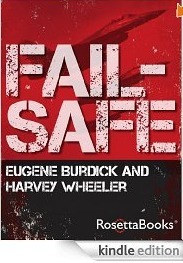
The 1962 novel ‘Fail-Safe’ is, in addition to hundreds of other TV shows, films, and books from that time, a product of the Cold War. However, ‘Fail-Safe’ is the novel that was serialized in three installments in the Saturday Evening Post on October 13, 20, and 27. These days coincide with the dates of the Cuban Missile Crisis occurring October 16-28. So, in a sense, while the events were unfolding, readers could console or frighten themselves with a nightmare happening in an alternate universe. ‘Fail-Safe’ is the ultimate Cold War myth.
The authors in their introduction state that they have not had access to classified information; however, they have derived certain conclusions freely from unclassified files. The novel takes place in 1967. Having been written before the Cuban Missile Crisis it was ironically fortuitous that a real-world crisis that alluded to the very concerns, possibilities, and probabilities posited in the novel was placed in the path of the authors. In ‘Fail-Safe’ Khrushchev is named but the president is not. However, based on his physical description and easily identifiable New England accent we can accept that this John Kennedy lived to be re-elected for a second term. In our world neither of them holds the position of power in that year that they do in this novel. The makers of the extremely faithful 1964 film version wisely steered clear of any Kennedy impressions, casting one of our ultimate film heroes of the Everyman, Henry Fonda, as the president.
‘Fail-Safe’ is very strong in characterization. These people are not chess pieces in a plot. They are people with back stories and personal dramas that all influence their behavior in this ‘accidental war’. Regardless of particulars, this global error is entirely plausible as presented in the novel. We have the president and his translator going into their fallout shelter hundreds of feet below ground, an Air Force command center in Omaha, and a meeting of high echelon military personnel in the Pentagon, all wired in through telecommunications to make decisions as the events unfold.
An unknown aircraft has been detected coming from Europe. Bombers are directed to fly toward the area where it is traveling, going to the Fail-Safe points, where they will stay unless they receive a direct alert ordering them to proceed to their targets. “Fail-Safe” means that if something fails it is still safe. Bombers will not go to war except by a direct order. One group of Vindicator bombers accidentally receives the attack code. Once they travel within range of detection, Russia jams their radio signal so they cannot receive a recognizable signal from their command center. The president orders bombers to pursue the Vindicators to shoot them down. However, they all run out of fuel before they reach them and fall into the Atlantic Ocean.
As the situation escalates, the president contacts the Soviet premier and explains what has happened and that the U.S. will do everything in their power to take them down. The Soviets are obviously wary, thinking this must be a ploy or a trap, but are finally convinced that the president is sincere. The scenario in which the U.S. intentionally tries to prevent its own aircraft from succeeding in its bombing mission is highly ironic and leads the players into unique positions in which they are conflicted by opposing inclinations. When the president finally makes radio contact with the last surviving Vindicator, he tells the commander, Colonel Grady, who he is, what has happened, and what he is ordering Grady to do. Grady thinks this is the voice of a Soviet imposter trying to trick him and he cuts off radio contact.
Aside from the president, the major characters are General Black, an old friend and classmate of the president’s, an Air Force pilot who has been having nightmares lately that he can’t make sense out of but which he interprets as portents of some upcoming disaster. Another classmate of Blacks’, a political analyst, Professor Groteschele, is in the meeting at the Pentagon. He has advised that the U.S. follow this accidental attack with a full-scale attack forcing the Soviets to surrender. The president dismisses this course of action immediately. Black’s assistant, Colonel Cascio, has been conflicted from the beginning. When Cascio sees that the American aircraft are going to destroy the Vindicators, he mutinies and takes brief command before he is subdued. His brief coup has used up some valuable time.
When the last Vindicator jet survives all the attacks from the Soviets and the Americans, it successfully bombs Moscow. What the president decides to do to prevent full escalation into nuclear retaliation is something I’m not sure that Kennedy, or any other president from then to now, would be willing to do. He is faced with an unthinkable, tragic decision and decides to order General Black to drop a nuclear bomb on New York City. Black’s family is there as well as the First Lady. Both men know they are there and so the sacrifice is deeply personal for them. “An eye for an eye, a city for a city” as one character states.
Perhaps the overriding theme of the novel is expressed by Black’s wife Betty at a cocktail party earlier in the novel at which the Blacks as well as Groteschele were present:
“The world,” Betty continued, her voice now edged with despair, “is no longer man’s theater. Man has been made into a helpless spectator. The evil forces he has created—science and the state—have combined into one monstrous body. We’re at the mercy of our monster and the Russians are at the mercy of theirs. They toy with us as the Olympian gods toyed with the Greeks. And like the gods of Greek tragedy, they have a tragic flaw. They know only how to destroy, not how to save. That’s what we’re now watching in our cold war: a Greek tragedy in modern form with our godlike monsters playing out the last act of their cataclysmic tragedy.”
This perfect nuclear storm seemed constantly likely as ‘Fail-Safe’ and other nightmare scenarios emerged in our culture in the 1960’s. At one point, General Bogan, the commander of the Omaha center, says, “What we would do is make sure that the single plane did not have a runaway pilot who wanted to commit hara-kiri on New York or Montreal”. This brings to my mind the previously unconsidered possibility that a fanatic of some extremist cause would actually concoct a plan in which hijacked passenger planes fly into skyscrapers. So that is one disaster that has already happened in the almost sixty years since ‘Fail-Safe’ was first published. Here we are in 2020 in which a statement that General Black makes at another point, worrying about the possibility of a paranoid schizophrenic becoming president that it is “Not likely, for American politics ruthlessly screened out the unstable personalities, but a possibility” has indeed become a possibility and a certainty. The fears of the Cold War have multiplied into other fears inconceivable in 1962. Nevertheless, ‘Fail-Safe’ is a myth that has retained its potency. Technology has changed enormously, but human nature has remained indelibly the same.