This superb work of history tells the story of the Lower Rio Grande Valley and the people who struggled to make this daunting land their home. Spanish conquistadors and Mexican revolutionaries, cowboys and ranchers, Texas Rangers and Civil War generals, entrepreneurs and empire builders are all a part of this centuries-long saga, thoroughly researched and skillfully presented here.
Steamboats used the inland waterway as a major transport route, and fortunes were made when the river served as the Confederacy’s only outlet for money and munitions. Mexican presidents and revolutionaries, European empires and investors, American cattle kings and entrepreneurs all considered this river frontier crucial. Men, women, and beasts braved the unforgiving climate of this land, and its cattle and cowboys gave rise to the great cattle drives up the Chisholm Trail to Kansas. It was and remains a crossroads of international cultures.
In this moving account of the history of the families of the Santa Anita land grant, almost two hundred years of the history of the lower Rio Grande Valley (1748–1940) are revealed. An important addition to any collection of Texas history, I Would Rather Sleep in Texas is one of the most complete studies of the lower Rio Grande, abundantly illustrated with maps and photographs, many never before published.
In 1790 the Santa Anita, a Spanish land grant, was awarded to merchant José Manuel Gómez. After the land passed to Gómez’s widow, part of the grant was acquired by María Salomé Ballí, the daughter of a powerful Spanish clan. Salomé Ballí married Scotsman John Young, and her family connections combined with his business acumen helped to further assemble the Santa Anita under one owner.
In 1859, after Young’s death, Salomé struggled to hold onto her properties amid bandit raids and the siege of violence waged in the region by borderland caudillo Juan Nepomuceno Cortina. Soon after the beginning of the Civil War, she married Scotch- Irish immigrant John McAllen. They participated in the rapid wartime cotton trade through Matamoros and had business associations with a group of men—Mifflin Kenedy, Richard King, Charles Stillman, and Francisco Yturria—who made fortunes that influenced businesses nationwide. Rare firsthand accounts by Salomé Ballí Young de McAllen, John McAllen, and their son, James Ballí McAllen, add to a deeper understanding of the blending of the region’s frontier cultures, rowdy politics, and periodic violence.
All the while, the Santa Anita remained the cornerstone of the business and stability of this family. As the lower Rio Grande Valley moved into the modern era, land speculation led economic activity from 1890 through 1910. The construction of railroads brought improved means for transportation and new towns, including McAllen, Texas, in 1905. The book’s ending reveals how, in 1915, Mexican warfare again spilled over the banks of the Rio Grande with deadly results, tragically affecting this family for the next twenty-five years. I Would Rather Sleep in Texas tells a remarkable story that covers a broad sweep of Texas and borderlands history.
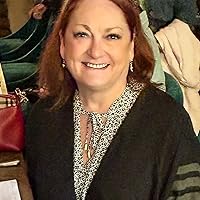
Mary Margaret McAllen is a historian and author whose work explores transnational history through vivid, character-driven narratives. Her critically acclaimed book Maximilian and Carlota: Europe’s Last Empire in Mexico was praised for bringing historical figures to life beyond dates and battles. She is also the author of I Would Rather Sleep in Texas, an award-winning, extensively researched study of Texas history, and A Brave Boy and A Good Soldier. McAllen has appeared on PBS series including History Detectives, contributed to major historical anthologies, and lives in San Antonio, Texas.
An article in a journal made the case that this book attempts to go further than simply a family history by including the history of the region in general. The author of the article suggests that the book falls short when the authors neglect to look more deeply at the amount of violence perpetuated against Mexican Americans in the early decades of the 20th century. I tend to agree. This violence is mentioned, but almost casually.
For a family memoir, the only part of the book that contained cherished family stories was the epilogue.
Otherwise, it's a good history of the McAllen Family and their holdings in southern Texas from the late 18th century until 1916 when James McAllen died.
I read this book because some of my ancestors lived for a short time in Mercedes, TX during the time of the Pancho Villa raids. I wanted some more context.
It was very well researched and gave me some insight as to the ongoing disputes over the Rio Grande Valley on both sides of the river. It also gave me some interesting perspective on the current border issues and how fluid the border was at one time.
WAY more details than I needed, so it tended to be ponderous at times. Hence the 3 stars.
Balance of Content The balance between dialogue, description, and action is maintained quite well. No single element dominates the text, which creates a harmonious flow for the reader. The author moves between these different modes of writing with professional ease. Discover the ratio of action to dialogue by following the link. >>> https://script.google.com/macros/s/AK...
A beautifully written story of a family that came to Texas long before the Republic. They built a ranch that was held continuously by the family to the present day. A very loving tale about one man who helped to make it happen with a very determined woman by his side.