Jump to ratings and reviews
Rate this book

Disaster #6

The War of the Worlds Murder

Rate this book

Orson Welles is the bombastic wonder boy of radio and stage. But is he also a murderer?

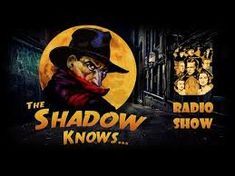
Walter Gibson—creator of pulp superhero the Shadow—travels to New York City to collaborate on a script with Welles, star of the radio show The Mercury Theatre on the Air. The young Welles is a charming but difficult taskmaster who relishes dramatic blowouts with friends, lovers, and colleagues. So when a dead body is found in the studio minutes before the live broadcast of The War of the Worlds, Gibson knows Welles will be the New York Police Department’s number one suspect. Gibson has exactly one hour—while Welles is on the air enacting the infamous hoax story of a Martian invasion—to find the real murderer and clear the radio star’s name. With its brilliant reconstruction of the broadcast that hoodwinked the nation, The War of the Worlds Murder is a paean to radio’s golden age.

Page Numbers Source ISBN: 1612185150

270 pages, Kindle Edition

First published July 1, 2005

57 people are currently reading
307 people want to read

About the author

Max Allan Collins

802 books1,321 followers
Received the Shamus Award, "The Eye" (Lifetime achievment award) in 2006.

He has also published under the name Patrick Culhane. He and his wife, Barbara Collins, have written several books together. Some of them are published under the name Barbara Allan.

Book Awards
Shamus Awards Best Novel winner (1984) : True Detective
Shamus Awards Best Novel winner (1992) : Stolen Away
Shamus Awards Best Novel nominee (1995) : Carnal Hours
Shamus Awards Best Novel nominee (1997) : Damned in Paradise
Shamus Awards Best Novel nominee (1999) : Flying Blind: A Novel about Amelia Earhart
Shamus Awards Best Novel nominee (2002) : Angel in Black

Japanese: マックス・アラン・コリンズ
or マックス・アラン コリンズ

Ratings & Reviews

What do you think?
Rate this book

Friends & Following

Create a free account to discover what your friends think of this book!

Community Reviews

5 stars
95 (25%)
4 stars
139 (36%)
3 stars
117 (31%)
2 stars
15 (3%)
1 star
10 (2%)
Displaying 1 - 30 of 59 reviews
Profile Image for Jim.
1,449 reviews96 followers
November 1, 2019
I enjoyed this book so much that I just read it a second time, something I can't do often as there are so many books I want to read for the first time! I like it because it brings to life 1930s America and the world of radio. The murder mystery takes place around the time of the famous (or infamous) Halloween 1938 broadcast of HG Wells' "The War of the Worlds." This is the broadcast that caused a panic in America as so many listeners believed that a Martian invasion was occurring. To me, it's almost unbelievable that no one was killed in that panic. Instead of ruining his career, the broadcast made the creator of the radio show--Orson Welles--a very famous man. Collins does a great job bringing Welles to life, complete with his towering ego. He also gives us another fascinating character who becomes involved with the murder mystery and that is Walter Gibson. I think he may be a largely forgotten figure today, but he was the pulp magazine writer who created "The Shadow." As a crime writer, he uses his expertise to solve the murder. I have to say that the murder mystery is the weakest part of the story. I give this one a solid **** as Collins brings to vivid life a time that seems long gone, the 30s, and also brings to life two remarkable real-life characters--Welles and Gibson. If you have any interest at all in the old pulp magazines and/or old-time radio shows, this is a must-read for you!
Profile Image for Johnny.
Author 10 books144 followers
May 12, 2014
Wow! The way Max Collins interweaves his real experience with Walter Gibson (aka Maxwell Grant) at a 1975 convention of mystery writers and a story in which Gibson solves a mystery involving the great Orson Welles and the brilliant John Houseman leaves one wondering where the “history” ends and the fiction begins. Collins has done his homework on both Welles and Houseman, as well as the most famous radio broadcast in U.S. history, The War of the Worlds. He demonstrates the phenomenal energy of the boyish maestro who regularly astounded the nation from the Nazi Julius Caesar and Voodoo Macbeth (where a negative reviewer was said to have died suddenly shortly after writing a castigating column) through the famous broadcast to the clever Citizen Kane that made a powerful enemy in William Randolph Hearst and underappreciated gems like Lady from Shanghai and The Magnificent Ambersons. He documents the panic and personal experiences of those who heard the broadcast—some I’ve read before and some I hadn’t heard (How did I miss the story about hunters firing on a water tower thinking it was one of the Martian tripods?).
Welles always experimented with new things and I liked the way it showed how dangerous his gimmicks could be. The murder weapon in this mystery was the knife that Orson used in the Nazi Julius Caesar, the one he wielded in Julius Caesar as Brutus and literally wounded Caesar (an actor named Holland) during the death scene. Welles blamed Holland for not moving as choreographed. Holland blamed Welles for his insistence that the audience would be able to tell a stage knife from a real one and he wanted them to gasp. Well, the real blood should have helped get the effect.

It is clear that some events have been collapsed into other events by dramatic license and that other events have new characters acting as agents in different roles than they would have in the actual events. Collins documents a lot of these in the afterword, but he leaves plenty of mystery even there. One still has a delightful task of sorting fact from fiction and even how much of the framing story is true. I rather liked the fact that Collins disguised the guest of honor at the mystery writers convention as Lawrence E. Trout instead of Robert L. Fish (author of the book which inspired the movie, Bullitt. Apparently, “Trout” proved to be rather boorish in his reaction to pulp magazine detective writers (Mickey Spillane, in particular). I’m assuming the name was disguised rather than having readers actually purchase any of “Trout’s” books and reward his undue snobbery.

It’s very difficult to write about this book without revealing a spoiler. There is a certain dramatic tension and interplay between Houseman and Welles that is extremely important in understanding the events that take place. There is a certain proclivity in Welles’ character that leads to the circumstances surrounding the murder. There is even a certain amount of mystery in exactly how much he intended to panic the general population. But to comment on any of these would spoil a fascinating narrative. However, I can easily say that the murder is unlike any I’m used to encountering in either historical or modern mysteries. It may be because I am a great admirer of Welles, own an audio recording of the broadcast, and enjoy the writing of Collins (including his collaborations with Mickey Spillane in the comic, Mike Danger, and finishing certain Spillane mysteries like The Consummata). This may not be brilliant prose, but it hooked me from start to finish in record time.
Profile Image for Jean-Pierre Vidrine.
635 reviews4 followers
April 25, 2010
For someone like me who is a fan of Orson Welles, the Shadow, classic radio shows, and all things War of the Worlds, this book was a godsend. Featuring Orson Welles and Shadow creator Walter Gibson as main characters, the novel tells of all the creativity and chaos that went into creating the simulated newscasts that fooled thousands and caused panic. But, moments before the broadcast, a dead body is found in the studio . . . and that's all I'll tell you about that. I'm not one to give out spoilers. The parts of the book that were the most fun were the segments where Collins takes us into various people's homes and cars and (based on actual cases) illustrates the various ways people reacted to the "news" of the Martian Invasion. I can't recommend this book highly enough.
Profile Image for Frank.
2,101 reviews30 followers
August 26, 2024
On October 30, 1938, Orson Welles, the actor and director, presented an adaptation of the classic novel War of the Worlds by H.G. Wells on his Halloween episode of the CBS radio series The Mercury Theatre on the Air. The episode is famous for inciting a panic by convincing some members of the listening audience that a Martian invasion was taking place. The broadcast was changed from the original story and set in New Jersey using a "breaking news" style of storytelling where a music program was interrupted by bogus news alerts about a Martian invasion. Because many listeners didn't tune in at the start of the program, they were convinced this was an actual live broadcast and that we were being invaded by Martians!

Max Allan Collins used this as his basis for his novel THE WAR OF THE WORLDS MURDER. This is the sixth in his series of books that use actual historical events which interweave a murder into the story using an historical character involved in the story. I've read two of his other books in this series, THE LUSITANIA MURDERS and THE PEARL HARBOR MURDERS which I enjoyed very much. Collins is excellent at combining a good murder mystery with actual historical events that he spends a lot of time researching.

In War of the Worlds Murder, Collins starts the story with his meeting with Walter Gibson, the author of The Shadow pulp novels from the 1930s and 40s that were the basis for The Shadow radio program that originally featured Orson Welles as The Shadow. Gibson goes on to tell Collins that he was present with Welles during the infamous War of the Worlds broadcast in 1938 and that there was also a murder involved in the story. The book goes on to tell the story of the days before and during the War of the Worlds broadcast. Collins did a great job as usual in his research and tells of the collaboration between Welles and his team at CBS including John Houseman and others. And then he goes on to describe the broadcast and the panic it created in different locales, especially in rural New Jersey where the attack was supposedly taking place. And while this was all going on, Gibson was on the trail of murderer at the studio.

I really enjoyed this one. I first heard about Welles broadcast and the panic it created from reading an article about it in the back of an old War of the Worlds comic book. I am also a fan of pulp novels including The Shadow and I have actually listened to a few of the old radio broadcasts of the show with Orson Welles.

I'm also a fan of Welles and his movies. Many consider his Citizen Kane as the best movie of all time. His collaborator, John Houseman went on to star in later life in the movie and TV series, The Paper Chase, another favorite of mine. So overall, this one really hit on a lot of my likes. After reading this, I also found and listened to the original radio broadcast of The War of the Worlds on Youtube. It was good fun and I could see how this could cause a panic if you listened to it without knowing the context. I'll be looking forward to reading more of Collins disaster series.
Profile Image for Tom.
94 reviews8 followers
April 29, 2023
This might be my favorite read this year. Collins imasterfully mixes fact with fiction. This pairing of a young Orson Welles and Walter Gibson is absolutely delightful.
Profile Image for Bev.
3,268 reviews346 followers
May 5, 2012
Unlike the Sherlock Holmes pastiche of a similar name (which I read last year), The War of the Worlds Murder by Max Allan Collins does not take place in the world of the H. G. Wells classic. At least, not exactly. This story revolves around the historic Mercury Theatre radio presentation of The War of the Worlds by Orson Welles which caused mass panic in 1938. It features Welles, John Houseman, and Walter Gibson (aka Maxwell Grant), creator of the Shadow, among other historical figures. And, as in his other "disaster" mysteries, Collins uses an author of detective fiction (in this case, Gibson) as his amateur crime solver.

The first half or so of the book is spent in build up. We are introduced to the characters and given a very plausible set up for the murder. Collins gives us a look at the creative spirit of Welles and how the dramatic production of the Martian invasion came about. Gibson is brought into contact with Welles when he (Welles) decides that it would be a great idea to collaborate on a Shadow movie, as a natural extension of the successful radio show. Then Gibson (and through him, the reader) is introduced to the worshipers, admirers, hangers-on...and even possible enemies of the brilliant young actor/director.

Just as the radio production is about ready to go on the air, Welles, Gibson and Houseman discover the body of a young woman in one of the empty sound rooms. She had been the latest in a long line of Welles flings--just recently given the heave-ho. There is blood everywhere and and an incriminating knife that points straight at Welles. The door is locked (but there is a window which has given them the view)...and by the time the security guard can be summoned to bring a key the body and the weapon have disappeared!

But you know what they say in show business...the show must go on. And so it does. One of the most historic radio programs ever goes on the air and panic takes over the country as thousands believe that the Martians are really invading. In the midst of all this, Gibson is watching, thinking and gathering clues to the real disaster that has taken place off-stage. Who killed the young woman? Was it someone trying to frame Welles--or has the actor/director (and amateur magician) pulled a conjuring trick of his own? And what happened to the body? By the end of the evening Gibson will have answers to all these questions.

Collins, as always, has done his homework--and that is quite evident. Historical and anecdotal details are superb. The tale of the panic-inducing radio broadcast is quite interesting. And exciting--as Collins takes us from snippets of the broadcast to scenes from the world outside the broadcasting studio. He uses stories of actual audience reactions to show how effective the broadcast was. The murder mystery itself leaves a bit to be desired. It's not nearly as good as either The Titanic Murders or The Hindenburg Murders, for instance. But for a look at the world of 1938 and particularly for a look at what happened when Welles allowed the Martians to invade...it's very good. Three stars for a good solid story overall.

{This review is mine and was first posted on my blog at http://myreadersblock.blogspot.com/20.... Please request permission to repost any portion. Thanks.}
Profile Image for Bev.
3,268 reviews346 followers
October 25, 2023
Unlike the Sherlock Holmes pastiche of a similar name (which I read in 2010), this War of the Worlds mystery does not take place in the world of the H. G. Wells classic. At least, not exactly. This story revolves around the historic Mercury Theatre radio presentation of The War of the Worlds by Orson Welles which caused mass panic in the United States in 1938. It features Welles, John Houseman, and Walter Gibson (aka Maxwell Grant), creator of the Shadow, among other historical figures. And, as in his other "disaster" mysteries, Collins uses an author of detective fiction (in this case, Gibson) as his amateur crime solver.

The first half to two-thirds of the book is spent in build up. We are introduced to the characters and given a very plausible set up for the murder. Collins gives us a look at the creative spirit of Welles and how the dramatic production of the Martian invasion came about. Gibson is brought into contact with Welles when he (Welles) decides that it would be a great idea to collaborate on a Shadow movie, as a natural extension of the successful radio show. Then Gibson (and through him, the reader) is introduced to the worshipers, admirers, hangers-on...and even possible enemies of the brilliant young actor/director.

Just as the radio production is about ready to go on the air, Welles, Gibson and Houseman discover the body of the young receptionist in one of the empty sound rooms. She had been the latest in a long line of Welles flings--just recently given the heave-ho. There appears to be blood everywhere and and an incriminating knife that points straight at Welles. The door is locked (but there is a window which has given them a view) but by the time the security guard can be summoned to bring a key the body and the weapon have disappeared!

But you know what they say in show business...the show must go on. And so it does. One of the most historic radio programs ever goes on the air and panic takes over the country as thousands believe that the Martians are really invading. In the midst of all this, Gibson is watching, thinking and gathering clues to the real disaster that has taken place off-stage. Who killed the young woman? Was it someone trying to frame Welles--or has the actor/director (and amateur magician) pulled a conjuring trick of his own? And what happened to the body? By the end of the evening Gibson will have answers to all these questions.

Collins, as always, has done his homework--and that is quite evident. Historical and anecdotal details are superb. The tale of the panic-inducing radio broadcast is quite interesting. And exciting--as Collins takes us from snippets of the broadcast to scenes from the world outside the broadcasting studio. He uses stories of actual audience reactions to show how effective the broadcast was. The murder mystery itself leaves quite a bit to be desired. It's not nearly as good as either The Titanic Murders or The Hindenburg Murders, for instance. But for a look at the world of 1938 and particularly for a look at what happened when Welles allowed the Martians to invade...it's very good. ★★★ for a good solid story overall.

My Reader's Block.
Profile Image for H (trying to keep up with GR friends) Balikov.
2,125 reviews819 followers
March 29, 2015
Max Allan Collins is a meticulous writer, but that doesn't mean that there is anything tedious about his work. The War of the Worlds Murder is, perhaps, his best of the Disaster Series where Collins takes a historical event (the sinking of the Titanic; the bombing of Pearl Harbor, etc.) and couples that with a period author who becomes the story's investigator.

The War of the Worlds is not only the creation of H.G. Wells, but also the basis for another Welles creation, the CBS radio show that resulted in panic and mayhem during the late 1930's when it was aired. The other Welles is Orson, the young tyro whose fame was already writ large by the time he was 22. Actor, writer, director, impresario, he did it all. And, when I say that Collins is meticulous, that includes giving us that Welles in all his overblown glory. It is particularly in the dialogue where this comes through and not only for Welles but for others including John Houseman (who some may remember for his central role in the movie, The Paper Chase), and Franklin D. Roosevelt.

This is an account of the events that led up to that incredible broadcast. Collins' detective is Walter Gibson, the author of (under the pseudonym of Maxwell Grant) of hundreds of stories of The Shadow, a character of the demi-monde who fights crime and criminals while "clouding men's minds." It is a contrivance that Gibson is brought to New York City to consult with Welles on a Shadow movie project while all the rest is going on. And, in Collins version, Gibson helps rescue Welles' War of the Worlds from a plodding narrative to a tumultuous event.

To get there, Collins has to do a bit more set up than usual. Gibson is relating the events to Collins about forty years after they have taken place. The event is a mystery writers "convention" and it seems that Collins and Gibson actually did meet at one. So, we get much more of the biography of Max Allan Collins than he offers us in almost any other of his scores of novels. For Collins' fans, this is a special treat.

"The show is terribly slow in its opening third!"
"But it builds, Jack---it builds." (says Welles to John Houseman as they are creating their War of the Worlds drama)
This can also be said of this book. For me, the set up is necessary and proper and once in place, the story rushes at breakneck speed to its resolution. Collins is deft with not only dialogue but with settings. He gives us a quite different New York City in the 1930's than we know in the 21st Century. The depression is still affecting almost everyone and Hitler's advance across Europe is in full swing. Collins also gives us a perspective on the media and how radio had taken over people's lives and how newspapers were very concerned about their future place in the average American's household. It is interesting and becomes important to the plot. Collins does a brilliant job of building this thriller and it is well worth the ride.

Profile Image for Bruce.
173 reviews
May 16, 2009
As the title implies, this murder mystery takes place in and around the recording of the infamous radio play. Besides the known players, we are introduced to Walter Gibson, the creator of the Shadow (as we know him) an writer of MANY of the Shadow's adventures.

The first half of the book sets up the motives for the mystery but at the same time is a fascinating look at the day to day lives of The Mercury Theartre players at that time.

Don't start the second half of the book if you don't have the time to finish it because it's a non-stop roller coaster ride from that time on, alternating between what's going on in the studio, the murder investigation, and what's going on in the outside world!

A pretty quick read at 234 pages (not counting the 10 page afterword). Bear in mind that I'm a huge fan of Orson Welles, fascinated by Walter Gibson, and also a big fan of Old Time Radio, so this may have colored my judgment, but for me, it's an easy 4 stars.
Profile Image for Susan Jo Grassi.
385 reviews22 followers
February 27, 2012
I really enjoyed this book. It was a very fast read and kept my attention through out. My mother had told me about the broadcast and how she and her family had to turn off the lights and sit in the floor of their living room to listen to it because of the crazy people running up and down the street screaming and firing guns in the air. I'm looking forward to finding another of Collins' "disaster" series.
Profile Image for Karen.
Author 27 books164 followers
April 18, 2015
I love this series. Collins does an excellent job of combining a historical event with a a crime writer of the time.
Profile Image for Andrew.
677 reviews10 followers
January 21, 2019
The War of the Worlds Murder provided an interesting story-telling technique. Author Max Allan Collins talks about spending an evening with author Walter B. Gibson, creator and chronicler of “The Shadow”. Collins relates a tale told to him by Mr. Gibson over adult beverages, about hanging around with Orson Welles to discuss a possible “Shadow” movie, while the actor / director / man about town was busy with his “Mercury Theatre On the Air” as they prepared to air a (now-infamous) dramatization of H.G. Wells (no relation) “War of the Worlds”. Much of this is common knowledge decades later – but not the discovery of a dead body shortly before air time …

Did Gibson originally tell a true story? Did Collins embellish it? Or, did Collins make the whole thing up? Truth is, it doesn't matter. The story as related to us, the reading (or in my case, listening, as I had the audio version) public, was entertaining and kept my interest. The story talked about the famed Orson Welles and his numerous excesses – some towards his art, some towards his personal wants – and his relationship with his theater company, and its economic manager, John Houseman (who at the time was NOT known for his curmudgeonly characterizations on the big and small screens). The discovery of the missing company member and her subsequent re-discovery in the locked room was almost a distraction towards the tale of War of the Worlds, which itself was almost a distraction towards the story of a short portion of the life of the legendary Welles.

This book was definitely with the read – or, in my case, listen – and I would recommend it to those looking for a more offbeat murder mystery, or to those interested in the early days of radio, or in the sociology of that famed Halloween night when many Americans thought that the Martians HAD arrived.

RATING: 5 stars. Bonus points to the narrator for his John Houseman impersonation.
Profile Image for Holmes Girl.
109 reviews
May 25, 2021
For anyone who enjoys or is fascinated by the era of early 20th Century radio and the 1938 broadcast of "War of the Worlds", this is a must read/listen.

Max Allan Collins flawlessly blends personal experience, actual historical events and creative imagination for an attention-grabbing, fantastic story. Starting with his attendance at a writers conference, Collins connects with Walter Gibson, best known for his work on The Shadow, it then segues into Gibson relaying a story of when he met Orson Welles & the Mercury Theater players. Gibson tells "a story within a story" on how he was privy to behind the scenes drama & murder of the famous CBS Radio Halloween broadcast. The reader/listener feels like they are there as Collins includes several excerpts from the broadcast as it unfolds.

I listened to the audio version & Dan John Miller is the perfect narrator for this setting. He does rather well with providing a variety of voices for all the characters & has a firm grasp on capturing the nuances of Welles' & Hausman's voices.

This is a 5 star for me as it is highly entertaining & I wouldn't hesitate reading/listening again
63 reviews1 follower
November 13, 2023
I've had this title on my "Want To Read" list for 3 1/2 years. ...that was 3 1/2 years too long!

It is a great piece of writing that combines Fiction/Mystery/Science Fiction and Non-Fiction all under one literary roof.

I listened to the recording of the Mercury Theater's "War Of The Worlds" 1938 radio broadcast multiple times in the 1970's, and thoroughly enjoyed it; but reading this "mystery" from Max Collins added several new dimensions to my understanding of the broadcast, and how it really had affected thousands of people across the U.S. that night when it went over the radio airwaves.

Collins has also done an impressive job of researching and biographing Orson Welles - the 'genius' who brought "War" to radio - along with weaving in much historical detail about how those radio dramas and comedies of yesteryear were created and produced.

Collins' real artistry was weaving all of that 'non-fiction' together with a superb fictional "who-done-it" - that most will not decipher until the very end.
Profile Image for John.
541 reviews18 followers
November 29, 2021
I enjoyed this novel, even though it was somewhat slow. The research was outstanding, and gives the reader an idea of what the “Panic Broadcast “ was all about. The main characters were very interesting, and most of the story was fairly accurate. The panic results were mostly taken from “The Invasion From Mars” by Hadley Cantril (1940) which has been largely discredited today. However, other than the mass panic, which is most certainly exaggerated, the characters described in the panic portion of the story, were based on actual people (as the author explains in his excellent afterwards of the book). Although the first half of the book is chronological, the second half skips around a lot. If you are looking for a solid murder mystery, you probably won’t enjoy this. But if you are looking for a tale about a fake disaster, this is a fun read.
Profile Image for Linda C.
2,490 reviews3 followers
May 19, 2024
This is an interesting concept for a series. Each volume deals with a particular ‘disaster’ and within the fictionalized rendering of the disaster, the author includes a murder mystery. This ‘disaster’ is Orson Welles’ Mercury Theater On the Air broadcast of H.G. Wells’ The War of the Worlds done as news broadcast as if it were happening in real time. The set up is a story within a story. A young mystery writer who is an enthusiast of Mickey Spillane pulp fiction runs into the writer of The Shadow magazine stories at a mystery conference. The writer tells him about the time Welles contacted him about working on a Shadow project and invited him to NYC to discuss it at the time he was getting ready to perform The War of the Worlds. It was a great set up and I learned a lot about what happened around the production. The murder mystery was a small part of the book.
Profile Image for Stacy.
290 reviews
March 25, 2018
This is a tricky book to rate as it was a bit all over the place. I tagged it as mystery, just to sync up with the other books in this series, but this one wasn't really a mystery at all. When the first half of the book was focused on Walter Gibson, I honestly wasn't engaged and found myself bored. When it switched over to Orson Welles about half way through, then it really became fun and interesting. I feel like the author really just wanted to write a book about Welles, and sort of shoehorned that into this series. So, the book felt like it was trying to be 3 different books at once. If I rated the first half and the "mystery" - I would have given it 1 star, but the Orson Welles and radio broadcast part would be rated at 4 or 5, so I settled on 3 for the overall book.
Profile Image for Ursula Johnson.
2,029 reviews20 followers
October 13, 2020
A Fun Look Back with a Mystery Added

This was a fun trip back in time to the War of the Worlds radio broadcast. This is a fictional crime set in a real world event and the insights into life at that time, as well as Orson Wells career are fascinating. The murder is interesting, but the real fun is the running description of the actual broadcast, intersped with reactions from different people that is the heart of the book. A great deal of fun and wonderful narration by Dan John Miller make this a fun read/listen.
Profile Image for Mark Lemmerman.
2 reviews
October 12, 2025
BORING!
Nothing happens in this book for the first almost 130 pages and the murder is not very memorable at all. It picks up the pace during the radio broadcast, but even that can’t save this book. I really want to like Max Allan Collins, but I just can’t. I’m impressed by his body of work, but his books read like an 8th grade writing assignment. I recommend skipping this book and listening to the radio broadcast from 1938.
Profile Image for Allen Gregory.
Author 5 books5 followers
June 27, 2022
Collins Shines Again!
One of my favorite authors, Max Allan Collins displays his writing chops by composing another intriguing twist on a historical event. Seamlessly weaving fiction and fact, Collins has crafted an excellent tale that gives the reader a ringside seat for a 'panic broadcast and a mysterious 'murder'. A fun ride, I enjoyed every minute - looking forward to the next Collins read!
Profile Image for Sandi.
1,641 reviews48 followers
November 8, 2018
Set eighty years ago during the run-up to and the broadcast of the famous War of the Worlds radio program that caused a panic among listeners, this did a nice job of mixing historical fact with a mystery. Listened to the audio version which was read by Dan John Miller who did a fine job.
Profile Image for Julia.
65 reviews
January 6, 2019
Not much about the murder mystery. It was mostly about the War of the Worlds broadcast and how it led to mass panic. That's OK because it was an interesting story. Makes me want to go listen to old time radio shows.
402 reviews4 followers
January 7, 2022
One does not read a book set during the infamous radio broadcast of The War of the Worlds when one has the option to listen to it! The narrator does a superb job, especially with his John Houseman impression.
Profile Image for Jameson.
1,032 reviews14 followers
December 3, 2018
If you like OTR, Orson Welles, The Shadow, the 1930s, historical fiction, or golden age whodunits, you’ll get a kick out of this one. If you like all of those things, hurry up and read it already.
Profile Image for Michael Wilson.
412 reviews3 followers
December 2, 2020
MAC does disasters well

Orson Wells the great terrible enfant is a great character to spin a mystery while paying homage to the author of the Shadow. A fun read.
Profile Image for NK.
413 reviews3 followers
May 1, 2022
I thoroughly enjoyed this book and would read more historical/fiction from this author.
Profile Image for Josh Burnell.
99 reviews2 followers
March 4, 2025
Mostly just a "Play It Again, Same" with Orson Welles, which might hit more if that's your jam.
Profile Image for Sally Sugarman.
235 reviews6 followers
December 25, 2016
Walter Gibson, the writer of The Shadow is the mystery writer about whom I know the least in this disaster series by Collins. However, this is one of the best of the series. Having read another murder mystery about War of the Worlds which I enjoyed greatly, I wondered how I would like this one. I liked it immensely. Collins adopts the style of the writer who is his detective. Since I have never read anything by Gibson, I can’t judge whether that is true or not in this case. However, it does seem to have its own distinctive style. The portrait of Welles is delicious, but when is one of him not. He is a person who was meant to be a character in a novel. This is a convincing depiction of the man or at least seems to be since I only know him from legend. However, the sense of radio and its possibilities is so clear. I also loved the vignettes of the people listening, particularly the ten year old fan of the Shadow who knew immediately that the story was fiction. When the boy tried to tell his grandfather, the man was concerned and the boy’s father sat him down and told him that he needed to know the difference between truth and fiction. The boy replied that he knew and hoped his father did too. Of course, the boy was vindicated. There were wonderful touches throughout. The claim is made that the incident was the beginning of the breakup of Welles and Houseman. When the trio of Welles, Houseman and Gibson find the bloody body of the receptionist, who had also been Welles mistress, Welles was shaken, but Houseman persuaded him to go on with the program anyway. He gave Gibson the job of doing the initial investigation before they notified the police after the program. Then the body disappeared. Nevertheless, Gibson solved the murder. It is an appropriate solution in the context of the radio program. As with the Christie book, there was a warning not to read the afterword about the truth and the research until after finishing the book. In this case that was well warranted advice.
Profile Image for Michael Bradley.
Author 9 books121 followers
December 24, 2014
Being a fan of the excitement and drama that came out of the Golden Age of Radio, I found myself drawn to the book that I just finished reading. The War of The World Murder by Max Allan Collins is set in 1938, just before and during the famous "War of the Worlds" radio broadcast by Orson Welles and the Mercury Theater of the Air on CBS. Collins embroils Orson Welles and pulp writer Walter Gibson - creator of the pulp superhero The Shadow - in a murder mystery when a body is discovered in the CBS studios just minutes before the famous broadcast of War of the Worlds is scheduled to begin. With Welles as the number one suspect, Gibson has exactly one hour - while Welles is on the air enacting the infamous hoax story about Martian invasion - to find the real murderer and clear the radio star's name.

The concept of involving real life characters in fictitious mysteries is not a new one. Ron Goulart had a very successful series involving Groucho Marx. Harry Houdini was a member of a fictional secret society in The Arcanum by Thomas Wheeler. The trend has gone on for years.

Let me start by saying that I loved this book. The pacing was excellent, the detail of an era gone by was incredible, and the characterization of some of Old Time Radio's legends was fantastic. Collins did an admirable job in building up the relationships between the characters and providing insight into the daily dynamic of each individual. The way that Collins intermixes Gibson's investigation with the radio broadcast as well as the world's reaction to said broadcast was incredible, making the last half of the book a page turner that you just don't want to put down.

It was obvious that Collins placed a great deal of effort in researching his topic. His detail surrounding the historical context of the story seemed precise, making it easy for the reader to envision each scene with ease.

If I had only one complain about the book, it would be this. When the solution to the crime is revealed (and I won't give anything away), I found myself, for a moment, feeling a little cheated. But, after I considered the surrounding historical events, the ending makes perfect sense and wouldn't have been correct if done any other way.

This is, by far, one of the most enjoyable books I've read in recent months. It drew me in, and kept me hooked until the end. I would highly recommend it.
Displaying 1 - 30 of 59 reviews

Can't find what you're looking for?

Get help and learn more about the design.