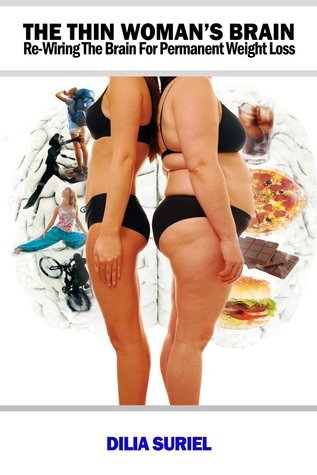
Despite fueling a $63 billion diet industry, the United States is the fattest country on the planet! Every year there are thousands upon thousands of books on dieting which paradoxically starts a chronic dieting cycle. The Thin Woman's Brain explains this cycle of why we continue to successfully lose weight but why we then struggle to keep the weight off. More importantly the book defines the Thin Cognitive Behavior protocol designed to assist the reader to chart a personal road map for restoring their pre-diet, healthy brain.
The Thin Woman's Brain cites many of the studies in the significant body of science which explains why any eating strategy predicated on unrealistic restrictions will plunge your brain into food obsession, which then leads to compulsive overeating.
The Thin Woman's Brain not only explains the compelling science behind food addiction but more importantly how to restore the brain to healthy eating. It explains why many women are naturally thin while others can only claw to thinness through obsessive vigilance. The Thin Woman's Brain guides the reader through a step by step Thin Cognitive Behavioral protocol which restores the brain to a healthy relationship with food. Natural eating behaviors are what end the dieting struggle restoring healthy body weight.
The Thin Woman's Brain is a must read for everyone seeking weight loss. As someone who recently dropped weight, the premise of this book drew me immediately. The brain is much more powerful than we think and the science recited in the text provides ample evidence that the brain is the most important weight loss tool in your arsenal.
Suriel's nine behaviors of thin women provides contrast between the mentalities of the thin and obese that are right on the money. Anyone who struggles dieting can relate to having a “relationship with food [that] runs the gamut from iron-willed self-control to a frenzied, all-bets-are-off tornado”. It's because, as the author states, of food obsession. It's a sort of addiction that we don't really think of as a real addiction, but what else would it be? The brain is obsessed with fantasizing, obtaining, and consuming food. Suriel calls it what it is, explaining why, and how it can be fixed.
One of the exercises in the book explores mindful eating and gives a step-by-step guide on how to mindfully eat just like a thin woman using behavior therapy. Each step in how you eat is crucial to changing your eating habits and rewiring your brain. Suriel explains each one and its importance. She also explains why you must incorporate formerly forbidden foods in your diet otherwise they will always be your binge foods. For me, this made perfect sense. Once I started eating my own forbidden foods in moderation, the desire to binge on them faded because I knew I was going to eat them. We always want most what is forbidden, so if you take that label away, you free yourself.
Overall, I was very impressed with Suriel's research and detail in explaining the science of the brain in relation to weight loss and overeating. In the past, I'd failed many times at dieting because I was hungry or binge eating or stressed, but then I figured out the key that is featured in this book: my brain! Changing my thinking and reaction to hunger and eating helped me adjust my eating habits to be more healthy and to use moderation without the stress of the usual diet. This book tells us why our brains are so important in our weight loss journey and I can say from experience that this is the first book you need to read if you are looking to lose and keep off unwanted weight. Understanding how your weight struggle works is the first step in overcoming it, and The Thin Woman's Brain will help you immensely. Rewire your brain and experience long term success. It works!
It feels like this book took me forever to read since I read a little of it each morning as part of my exercise/study routine. It fits in nicely with other books I've read on re-wiring your brain to improve your health, weight, and life in general.
There is a lot of insight in this book worth mulling over and more than once, I would deep dive on the internet into topics that the author mentions. I made lots of notes in the book, and I often felt like I was having a discussion with Dilia Suriel on what I agreed and disagreed with her on when it comes to weight loss.
The strength of this book is in the information shared. I would not recommend it as a program for weight loss since her 10 stage plan is really too broad to get through the gritty day to day of actual weight loss. For that, I would recommend Brightline Eating or James Clear's Atomic Habits even. (Personally, I've lost and kept off 60 pounds since 2018--so I have some experience in the field.)
My other hang-up about this book is the lack of any photo of the author. If someone is touting "permanent weight loss" on the cover of her book, I want to see some photos! The lack of before/after photos in the book and even on her website causes me to assume that she has collected good info, but doesn't have the case studies to back it up--even her own. But I still enjoyed the information she shares.
I think goodreads might have bumped this review because I did multiple books at once. Take two.
As a personal trainer, I have to do continuing education courses to keep my certification current from year to year. One year I did an eating disorders course. It talked about chronic dieters altering towards disordered eating as a matter of course. It also mentioned something briefly as a solution that sounded intriguing: cognitive behavioral therapy. This book is written by a women who actually was a chronic dieter, and gives step by step instructions on using cognitive behavioral therapy to "cure" herself. Whatever you want to call it. She describes "famine brain" which I've experienced firsthand. She talks about the difference between "naturally thin" women, and "will-powered thin" women and how everyone can reprogram their brain to be the former. The difference is peace inside --taking the anxiety out of eating and food choices. I took almost a full year off of watching what I ate last year, and spent some time a little heavier. Although I've been "invited" to try a certain diet by many of my friends, I'm glad I resisted (with some help from my husband) and used that time to try to accept myself where I was at. I feel like I've finally at least broke out of the "famine brain" mode and lost some anxiety, but I have a ways to go. I'm planning on using this program to take my final steps. I also hope to bring it to my clients as a more permanent, practical, peaceful solution for weight control.
Loved this book! It was recommended to me by my therapist to help me with weight/food issues. I truly believe in the power of CBT and her plan for retraining the brain makes total sense to me. I definitely feel I was accurately described in the book when she gave examples of people with food addiction. Not using that as an excuse for being overweight, but she gives steps on how to get your brain to where you are in control, not your emotions.
Some interesting things. The details on changes in neuroscience were interesting. Most of what was said was not new. Good book if you've not read a book like this or copies of Women's Health or Fitness magazines.
Disappointed. Thought I'd find some new neuroscience, but most of this book was a rehash. Forced myself through it and did glean a bit much later on, mostly in the addendum.
Si bien es un libro sobre el sobrepeso, no está enfocado en la alimentación sino eb la actitud y mentalidad hacia la comida. Es más como un manual para personas, especialmente, mujeres que quieren bajar de peso.
Aunque a veces repetitivo, creo que en este tipo de libros es importante para que sirva de recordatorio los puntos principales.
Es bastante simple de leer pero tiene un mensaje importante, aunque creo que muchas persona con sobrepeso no están dispuestas a escuchar porque es más fácil creer que el problema son los alimentos mismos y no las razones por las que los comemos; incluso mencionan esto en libro; y es algo que veo muy frecuentemente durante las consultas con mis pacientes.
Me pareció interesante el enfoque, aunque ya lo había leído en otro libro 'Piense como flaco' pero aquí han tratado otros puntos y con mayor profundidad.
There was a time when I considered this book to be my salvation many years ago. And it's a good start for anyone looking up ways to be binge free. But intuitive eating isn't for everyone and the book needs to be updated with the latest information.
really interesting information on compulsive or obsessive eating. some really good behavioral information for getting to the point where you don't think about food ALL DAY LONG ;)
This book changed my thinking in ways that surprised me, I am really glad I read this book and I will listen to it again periodically to remind me of how to successfully lose weight and keep it off.
Doctor recommended reading this. Quality writing and research, many different ideas. However, not every person who is overweight is suicidially obsessed just by the smell of food. Some of us just have bad habits. I had to give up reading.
Despite some flat patches in the writing of this book, comprehensive examination, exploration and dissertation of persistent weight loss problems, particularly for women, though can be applicable to all. Initially, done in the style of Kiyosaki's Rich Dad / Poor Dad, the points of relatability for the reader increases exponentially and offers a no-nonsense approach as to how to unglitch your brain and behaviour. However, as with Kiyosaki, the advice and direction is robust, but the propensity for people not to patiently persist with the behaviour change is probable. Useful book that I would not hesitate to recommend as a resource to better mental and physiological health.
Had some good advice, and interesting research. However, many other books, magazines, coaches, etc. know this research and techniques, other than the meditation - they usually replace it with journalling, or other forms of accountability. The language was ok, the images in the book are not the best since I got the paper back they are all in black and white, and some (ie. various brain scans) need to be viewed in color. The idea behind how do naturally thin women think compared to a woman who struggles with weight loss and gain, is interesting and noticed a lot of my friends behave the same concerning food, while I eat out of boredom, or stress, or famine brain. Awareness is key, an once you are aware curbing the behavior becomes easier, for some more than others. The book says that you will fail if you do not follow the steps in the book, and not sure that is entirely true. Also the book states that find something that works for you "LONG TERM", that is important. Finding something that works for you short term, and then you don't follow through after a month, ie. a diet is not worth it.
This entire review has been hidden because of spoilers.
Quite an interesting, factual, scientific read. It is based on the Naturally Thin's Woman behaviour and how anyone can achieve the Thin Woman's mentality through Cognitive Behavioral Therapy. The book just lacks organization and direct, clear simple steps for the everyday woman. I found it difficult to point out where to start. What to tackle first? What is required of me? It won't win the award for the best-written book of the year but it's definitely a valued addition to anyone who wants to live healthily ever after.
I liked the research and different perspective on weight loss in this book as well as the idea of using cognitive-behavioral therapy techniques to address personal thinking around food and body, but the organization didn't translate well to audiobook format. I'm interested in re-reading on Kindle or paper (though if on paper, with a book cover. Yeesh.).
It actually rewires the brain a lot.. I could easily refuse cookies today. But it won't help me not to put so much chocolate spread on my bread last night. It explains well how "naturally thin women" have a relationship with food that's not obsessive and why diets fail etc.
I thought it was a good book. I need to read it a second time to understand it a little better. There were a lot of good action plans in there to rewire your brain.
I loved this book. It explained how the brain is connected to eating and how dieting has affected our thought processes. So interesting and life changing; easy to understand.