Jump to ratings and reviews
Rate this book

Masks

Rate this book
Published for the first time in the UK, one of Japan's greatest modern female writers

Ibuki loves widow Yasuko who is young, charming and sparkling with intelligence as well as beauty. His friend, Mikamé, desires her too but that is not the difficulty. What troubles Ibuki is the curious bond that has grown between Yasuko and her mother-in-law, Mieko, a handsome, cultivated yet jealous woman in her fifties, who is manipulating the relationship between Yasuko and the two men who love her.

123 pages, Paperback

First published January 1, 1958

170 people are currently reading
9907 people want to read

About the author

Fumiko Enchi

57 books215 followers
See author 円地文子.

Fumiko Enchi was the pen name of the late Japanese Shōwa period playwright and novelist Fumiko Ueda.

The daughter of a linguist, Fumiko learned a lot about French, English, Japanese and Chinese literature through private tutorage.

Fumiko suffered from poor health as a child and spent most of her time at home. She was introduced to literature by her grandmother, who showed her to the likes of The Tale of Genji, as well as to Edo period gesaku novels and to the kabuki and bunraku theater. By 13 years old her reading list had grown to include works of the lights of Oscar Wilde, Edgar Allan Poe, Kyōka Izumi, Nagai Kafū, Ryūnosuke Akutagawa. She discovered a special interest in the sadomasochistic aestheticism style of Jun'ichirō Tanizaki,

She was inspired to write plays after attended lectures by the founder of modern Japanese drama, Kaoru Osanai.

Ratings & Reviews

What do you think?
Rate this book

Friends & Following

Create a free account to discover what your friends think of this book!

Community Reviews

5 stars
837 (21%)
4 stars
1,517 (38%)
3 stars
1,230 (30%)
2 stars
315 (7%)
1 star
83 (2%)
Displaying 1 - 30 of 455 reviews
Profile Image for Jim Fonseca.
1,163 reviews8,487 followers
December 8, 2019
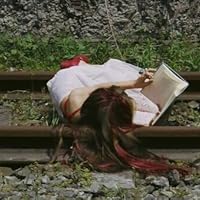
All the world's a stage, and the main character of this book - even though she is often behind the scenes - is a vicious, manipulative woman who controls those around her. All those she comes in contact with are in her theater. She approaches life as if she wrote the script, designed the set, and directed the play.

description

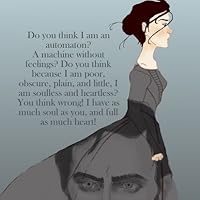
Her son has died and now she is controlling her daughter-in-law and her daughter-in-law’s male admirers. She eventually manipulates everyone, including a woman who is intellectually challenged, to gain a grandson to re-create her deceased son. There must be a special place in hell for this woman.

description

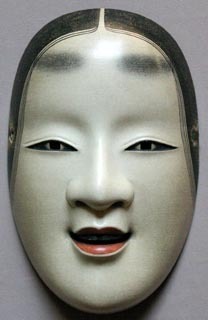
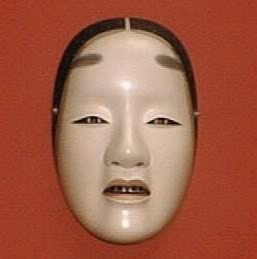
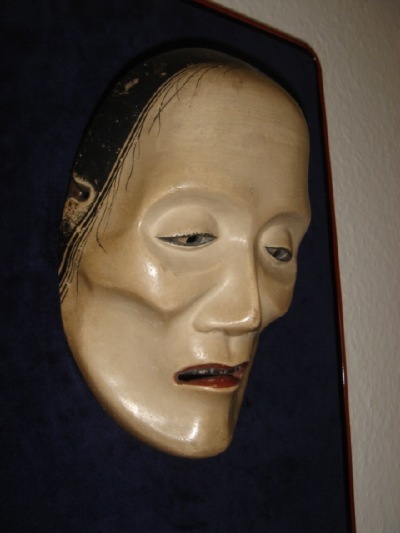
The book, published in 1958, is translated from the Japanese and has a bit of local color from Japan of the 1950's. Some themes in the book include the Japanese noh masks and Japanese folklore about spirit possession.

description

Top photo: noh masks from historyofmasks.net/images/historyofmasks
Middle photo from ae01.alicdn.com/Wood-Japanese-Noh-Mas...
The author from theblankgarden.files.wordpress.com

Edited 12/8/19 to add photos and correct typos
Profile Image for Samadrita.
295 reviews5,197 followers
July 13, 2015
No longer mere object, no longer prey.
No longer the one who wouldn't dare,
No more stung by the prick of infidelity.
Yet no less woman than she was yesterday.

No more the unloved girlchild of yore.
No longer pushed aside to a lesser role.
No more just the wronged one -
Who dons her mantle of victimhood,
And channels her impotent fury at the world.

She has her Noh masks now -
To wear like second skins at this masquerade ball.
Do you know the real her?
She who lays out her cards and plays her hand well -
And risks all for the assertion of self.
She who is both seductress and stoic.
She who soothes the fussing baby nestled in her arm's crook.
She who condemns herself to a love so sadistic,
And scribbles tanka poetry in her notebook.
She who lends a voice to the maligned Rokujō lady .
She who relegates Genji to the sidelines.
She who births a daughter in criminal secrecy,
And pines for her from afar.
She who feigns allegiance to a lesser half.
She who plots terrible vengeance and leaves no stone unturned.
She who deceives man and husband and son.

Can you tell them apart?
Will you call this duplicity or craft?
She is ryo no onna , descended from her demon-haunted hell.
She is masugami -
The exiled madwoman finally escaping her prison cell.
She is fukai , but no more a stolid bearer of pain.
She is woman reborn, woman unveiled.
Profile Image for Cheryl.
525 reviews843 followers
August 2, 2015
It was late at night, past midnight, that moment of silent serenity coupled with the magical sounds of nightlife, when I finished this book; a night not so blue as the night I finished Didion's Blue Nights, nor a night as sensational as the one I recall when I think of how I read A Good Scent from a Strange Mountain cover to cover, but a unique night nonetheless. I'll remember the strange solemnity of that night because the mood around me seemed to embrace the mood of the book, making it an even more peculiar read, and it's not too often that I recall a book and remember my particular posture at the time I was reading it. Eerie - all the talk about spirit connections and possessions in the novel and there I was, the book taking control of my faculties, its syntactical structuring and storytelling binding me.
When you know the masks as well as we do, they come to seem like the faces of real women.

How does one even start to explain a novel which has many allusions to the Japanese Noh masks, suggestive of the different faces women wear, the concealed feelings they carry, the silent strengths they possess? There is so much uncovered so subtly through symbolism that it's sometimes easy to miss in this carefully moving plot. I didn't think I would be so smitten by the vindictively clever Mieko, the poet, and Yasuko, her daughter-in-law and research assistant, yet I was.
...A deeply inward kind of look. I think Japanese women long ago must have had that look. And it seems to me she must be one of the last women who lives that way still - like the masks - with her deepest energies turned inward.

Ibuki is a married man in love with his friend's widow, Yasuko. His best friend Mikamé, a bachelor and modern man interested in marrying but not particularly interested in living the traditional married life, is also in love with Yasuko and her seemingly independent lifestyle. However, Yasuko and her mother-in-law Mieko are so close, they could be lovers. And nestled deep within the layers of the spooky mystery, is the stunning Harumé. Who is she and what is her role in all this drama?

Of course, someone gets their feelings hurt, but since this is in no way the average drama of female protagonists, the conclusion could come as a surprise; in fact, it may even break your heart a little. I, on the other hand, enjoyed every delicious turn and relished the idea of actually disliking a female protagonist's use of prowess, ecstasy that was like dwelling in a world apart from reality. Yes, the element of surprise in a novel is always a much-anticipated treat for me.
Just as there is an archetype of woman as the object of man's eternal love, so there must be an archetype of her as the object of his eternal fear, representing, perhaps, the shadow of his own evil actions.
The story moves in parallels of folklore and references to The Tale of Genji, which could prove frustrating to some, but for me the joy was in the discovery of the text within the text. I haven't read "The Tale" yet, but I didn't feel as though I missed anything by not reading it, as the references are made with just the right subtexts. If anything, I'm now encouraged to read that book and many other books with Japanese settings, seeing as how Enchi now has me enthralled with Japanese mysticism and storytelling that in some ways runs parallel to West African and Latin American storytelling textures.
Profile Image for Praj.
314 reviews900 followers
January 24, 2015
Two parts of rice powder + one part of Cetaphil lotion, softening in the reluctant warmth of my palm, on a droning afternoon. Not a single Noh mask in sight. The docile wintry wind was hardening the gummy paste onto my fingers; restricting the imminent bastardization of the Kabuki splendour about to take place in front of an ignorant mirror. Two streaks on the cheeks, one pat on the nose, then the forehead and remaining three strokes on the neck. The wheatish dermal stretch steadily concealed within the ephemeral white sheath. The shiny red lacquer swiftly swept across the lips prompting the black kohl liner to smartly march beneath the eyes. With the last swipe of the palm, my face had confined itself within the gelatinous pale interiors, its fine lines disappearing among the smooth exterior. Ethereal unfamiliarity reflecting through the mirror and the pair of lonely perplexed dark brown irises turned out to be the solitary window of sincerity. What was I thinking? What was I testing? This act of frivolity. The pasty concoction plastered on my face had somehow pacified my nerves entangling them within my frenzied thoughts; the rowdy roads outside were suddenly silenced. The blood gushing through my veins seemed to have forgotten to warm up my skin, bursting it into a sea of goosebumps. Such was the captivating power this childish act.

Ryo no Onna 霊女


“Just as there is an archetype of woman as the object of man’s eternal love, so there must be an archetype of her object of his eternal fear, representing, perhaps the shadow of his own evil actions."

The famous Rokujo Lady, the scorned lover of Prince Genji occupies a pivotal position mirroring the temperament of the Togano matriarch. As the love chronicle replays in the 'Tale of Genji', the Rokujo Lady after feeling betrayed and envious of Genji’s new wife Lady Aoi, the repressed soul of Rokujo lady caused the spirit to leave her body and torment Lady Aoi. Enchi’s prominence on the portrayal of Rokujo Lady conceptualizes the origin of Mieko’s facade. Mieko Togano’s affinity towards the Rokujo Lady, purely on empathetic grounds, brings forth a human aspect to one of the most devilish personality in the Japanese literary history. The nationally prized ‘Ryo no onna’ mask is chilling in its ghoulish appearance. The frosty exterior concealing a burning secret asphyxiating long nurtured desires with astound tranquillity. The act of séance, the ceaselessly floating spirit possessing another soul whilst creating a physical medium to procure communication reflects the mystical properties of a ‘mask’ possessing a physical visage fastening on to its human medium. The darkness of inhibited desires, muffled sexual prowess transmits a “shamanistic” vibe haunting the dilemma of a woman’s self-pride. The role plays interchanging between Mieko and the Aguri lady. Enchi’s inclusion of the ‘shamanistic ritual’ as a route probing the validity of an outwardly experience in a world of reality favours the depth of attraction that Mieko has toward the Rokujo Lady and the connotation of Yasuko and Mieko veiled under a inexplicable expression.

Furthermore, besides the symbolic inclusion of The Tale of Genji , Enchi makes noteworthy references to ‘Yoru no Nezame’ and ‘The Tales of Ise’ to elucidate the magnetism of sexual ecstasy that segregates realism from dreamy confusions orchestrating the incompetence of human emotions and the competence of self- ego, a weight indissoluble from a woman’s being.

Masugami 増髪


“This mask forms a unique type, that of a woman in a state of frenzy.” – Toyoichiro Nogami.

The philosophical lyricism that Mieko found in the Rokujo Lady descends on Harume’s existence. The Masugami masks represents the “madwoman” or rather “a young woman in a state of frenzy”; a divine being heightened by spirit of shamanisms, the body meant for human manipulation. The worldly, newly married Mieko, the Aguri lady in the Togano family or Harume whose beauty shines with soft docility amid fireflies, who would be the true possessor of the mask, I wondered? The silent body of Harume reveals the inner eccentric world of the Togano domesticity. Enchi’s delineation of Harume borders on ghostly metaphors creating a chimera of a pure soul and an untainted body, acquiring an impenetrable emptiness. Sex is viewed as more of a corporeal act dismissing any logical reasoning, prostituting the body as a medium in trance yielding a woman’s reticent self-worth; sarcastically opposing the patriarchal institution. The Masugami mask perfectly fits Harume whose ‘bright-camellia lips’ pouring with sensuality, mask the melancholic silence that consumed her.

Fukai 深い


Her spirit alternated constantly between spells of lyricism and spirit possession making no philosophical distinction between the self alone and in relation to the other and unable to achieve the solace of a religious indifference.”

A middle-age woman with “exceedingly deep heart”, tattered by the memories of a loved one. A gloomy well where secrets buried deeply in the colourless waters are echoed through freezing solitude. The woman who is driven by her painful past, her unappeasable ambition and her swindled pride and who finds solace in poetic charms, Mieko becomes the mask and the mask anticipates the arrival of Yasuko.

Magojirō 孫次郎


The mask representing a young woman with an alluring femininity at the zenith of her beauty forms the caricature of Yasuko. Yasuko’s relationship with Mieko suggestively marginalizes cynicism of a homosexuality. Conversely to the many debatable assumptions, Yasuko’s faithful attachment to Mieko represents the unwritten rules of sisterhood and the lasting love for Akio. The quandary of hankering independence and incidental dependence calculates Yasuko as the quintessential masked host, the illusory medium. Enchi’s ‘Masks’ develops into a forbidden malicious game challenging the age-old hierarchal social institutions.


When you know the masks as well as we do, they come to seem like the faces of real women.

The ornately convoluted narrative interweaves a pandemonium of manipulation, vengeance, sexuality, androgyny, undertones of homosexuality, shamanistic procedures defining the fine line between mythical divinity and human psychology and most of all the spirituality of a woman and her body polluted by the hypocritical patriarchy. Enchi’s women are represented through their bodies residing on the periphery of a social system. The female body becomes a liberating source unifying the mind into one single entity. The body becomes the mind voicing the dilemmas of a repressed woman. The uterus then becomes the twofold weapon of fulfilment and misery. Sexuality strongly comes in play categorising body, sex and womb as significant parameters of female identity unable to find recognition through the world of thoughts. Enchi’s emphasis of bringing the female individuality through the representation of a perishable yet sexual physicality depicts the second-rate status of women in a patriarchal society. The body and the womb, which could be easily outlawed for being futile or fouled, cultivate the victimisation of a woman bordering ambivalent psyche. Mieko Togano’s brazen usage of sexual ecstasy mocks the feudal social codes turning the patriarchal system upside down. Meiko's malevolent strategies of using men as pawns for the fulfilment of her own aspirations is downright fascinating when perceived with ironical display of men bestowing the equivalent treatment to women for decades.

Enchi‘s insatiable prose immaculately communicates between the nobility of the Noh art and the interrelated configurations illuminating the empathetic world beyond the dreamy artistry asserting the awareness and subjectivity of self-existence in societal segregation and the search for a plausible independence. The androgynous nature of Noh (male actors playing female roles) delicately unearths the unisexual nature constituting spirituality between a male and a female foetus embodying the equitable nature of the womb. Enchi further takes this particular Noh element into depicting the similarities between the divergent subsistence of Akio and Harume. Masks is Enchi’s masterwork in exploring the fundamental nature of a woman’s mentality through the realms of her body inferring the palpable scenario of the female body resonating the cry of an demoralized soul when the mouth is muted.

Are women a bunch of vengeful creatures? Are they viciously manipulative? If a woman’s naive devotion to the capricious love rapidly festers into endless flow of a rancorous “river of blood”; the power of hatred thunderously churning the vicissitudes of love, the unjust reality and the deepened longings harbouring the darkness of its remoteness. If a woman’s hatred is terrifying, if the fascination for retribution resonates the shrieks of a frenzied banshee possessing the very constitution of a wounded woman; the puppetry of the stoic masks fervently gripping the intensity of grief, its arrogance only to be momentarily washed down by a solitary soft tear. Then what would one concur about the ‘man’ who had helped to sow these fateful seeds of acrimony? Yes, what about that person? Does he not play a single part in the crime? Where would the man stand in the indicted arena of being either an accomplice or rather a culprit? Or is it that the man has always been a privileged animal of a blameless acquittal? Men are susceptible to that sort of thing. Our society gets so worked up over it now, always siding with the woman, that no one dares examine the matter fairly, that’s the way it is.

The eastern winds had boorishly cracked the pearly smoothness. Yet, the aura of the pasty concoction withstood the repugnance of the flaky visage. Shamelessly exposed and vulnerable as my face stood amid the grainy diluted swirls, it was still caught up in the rapture of the Rokujo Lady and the women of the Togano household. The lasting traces of goosebumps could vouch for it.


Profile Image for Rowena.
501 reviews2,771 followers
February 2, 2015
“The secrets inside her mind are like flowers in a garden at nighttime, filling the darkness with perfume.”- Fumiko Enchi, Masks

This is my first book by a female Japanese author. The ones that come after Enchi will have a lot to live up to. The book started off slowly but it soon held my interest and was quite surprising in some ways despite its subtle tone.

I don’t know much about Noh plays but it was clear that the use of masks was a metaphor for hiding one’s true self. In this case, the secrecy is evident in the bizarre relationship between the widowed Yasuko, and Mieko, her 50-something year old mother-in-law, who seems to be manipulating Yasuko, plus the two men who are in love with her. We spend the entire novel trying to get to know more about Mieko:

“She has a peculiar power to move events in whatever direction she pleases, while she stays motionless. She’s like a quiet mountain lake whose waters are rushing beneath the surface toward a waterfall. She’s like the face of a No mask, wrapped in her own secrets.”

This book is shrouded in mystery which is made even more fascinating by discussion of spiritualism, and the love triangle between Yasuko and her two suitors. There is curiosity about whether Mieko is controlling Yasuko’s spirit, this fact even questioned by Yasuko herself:

“Not I, Mother. It’s you who like him—somehow, time and again, your feelings seem to take hold of me. This is not just some crazy excuse; so many times I’ve found myself doing things that don’t make a bit of sense—and every time, without fail, I feel you there in the background, manipulating me like a puppet.”

I enjoyed the literary critique of a section of “The Tale of the Genji”, which I’ve never read before, regarding female shamanism. I think the book can in part be seen as an analysis of the Japanese woman, both in more modern times and in the olden days. I’m not sure if much has changed, at least according to Enchi; women are seen as manipulative, jealous etc. At the same time, I think Enchi allowed us to see how multi-faceted her female characters were, which is something I always appreciate in literature. Not only are women multi-faceted, apparently they are sort of enigmas too, unknowable to the male characters:

“Children—think what endless trouble men have gone to over the ages to persuade themselves that the children their women bore belonged to them! Making adultery a crime, inventing chastity belts…but in the end they were unable to penetrate even one of women’s secrets.”

In the end all these ingredients leave us with is a story that is so compelling, interesting and shocking. I’m also left with the desire to read “The Tale of the Genji.” I’m sure with that book under my belt, and more knowledge of Noh plays, I’ll rate this book higher.

Profile Image for Henk.
1,195 reviews304 followers
January 30, 2023
Detached and not hitting the heart for me. I feel I would have enjoyed this book much more if I new more of Heian era Japanese literature or Noh theatre
Love affairs are always more foolish than the lovers know

A short book, but I struggled quite a bit with it and yesterday almost fell asleep while finishing the first chapter. Masks tells the story of an enigmatic pair of widows, which have two men chasing for one of them. In the end there are tragic backstories and some hints of spirit possession and a revenge plot centered on furthering the bloodline.

If that sounds exciting, the reading experience was not. I had trouble keeping especially both men apart for the largest part of the book. There is also a callousness and disregard in how Ibuki treats his wife, which I found the only reasonably acting character, that made me feel uncomfortable and I had a hard time imagining writer Fumiko Enchi being a woman (maybe indicating that she so dead on managed to nail misogyny, that I should really applaud her for that).

The long essay on The Tale of Genji at the end of the first chapter, which I still need to read, pulled me out of the reading and made me feel more and more like I'm reading and erudite retelling of The Iliad without knowing the source material.
In the end Masks is a story with only victims, many of whom should have some kind of agency or foresight to prevent some of the events from happening, which made this a rather frustrating read overal.
Profile Image for Elena.
124 reviews1,140 followers
April 13, 2018
3.5-4*
Lo he disfrutado mucho.. La trama y sus personajes me han resultado muy enigmáticos (hasta debo reconocer que quizá un punto demasiado enigmático para mis capacidades intelectuales xD) consiguiendo atraparme en una atmósfera oscura, misteriosa y claustrofóbica, siempre con la presencia de los espíritus posesivos de los que habla el folklore japonés (y que son estudio de los personajes) al acecho.
Esta novela es además una crítica al machismo de la sociedad japonesa, me ha gustado mucho lo que simbolizan las "máscaras femeninas".
La extraña relación entre la viuda Mieko y su nuera Yasuko (viuda también) me ha atrapado durante la lectura y no me va a soltar en días...
Profile Image for Caro the Helmet Lady.
833 reviews462 followers
October 5, 2016
If you look for fuckery intrigue, especially tagged with such words as "women", "revenge", "manipulation" and "wtf is going on here" - pick Japanese! They mastered all the aforementioned subjects.

Well, I've got a very mixed feelings about this book. On one hand I enjoyed it, the writing style and the main idea, but I got lost about "why?" and "so?...". Anyway, 3.5 stars is pretty fair, it seems to me.
Profile Image for Nicole~.
198 reviews297 followers
December 7, 2014
A man may try as hard as he likes but he'll never know what schemes a woman may be slowly and quietly carrying out behind his back.

The Tale of Enchi-
Fumiko Enchi started her career as a dramatist; she was influenced by Ibsen and Strindberg, and cultivated an interest in kabuki. She emerged in the early 50's as "a novelist of the fates of women both past and contemporary." Between 1967 and 1972 , she translated Murasaki Shikibu's The Tale of Genji into modern Japanese. It is with this most enduring Japanese literary classic that Masks draws its parallels, supping on the perception of a woman's possession of a hidden supernatural energy.

Masks is the story of vindictiveness, passion, jealousy and vengeance, of women in solidarity aiming to achieve retribution against men, to perpetrate "a crime only women could commit." It is an exploration of class, sexual oppression and the suppression of women in a traditionally patriarchal society. Enchi brilliantly weaves a reinterpretation of the character Rokujō lady from The Tale of Genji with the vengeful spirit of the heroine Mieko, whose husband Togano Masatsugu, "believed to be descended from a powerful clan in line to become feudal lords" and who still adhered to dominating, misogynistic codes, had caused her severe and immeasurable humiliation and suffering throughout their marriage.

The novel is sectioned into three chapters, each named for Nō masks which metaphorically depict the novel's "cloaked" particulars, and in turn define its supernatural concerns.

The first chapter named Ryō no onna means 'spirit woman', the vengeful spirit of an older woman tormented by the bitterness of her life. Mieko's obsession with 'shamanism', spirit possession, and artful yet subtle manipulation become evident here. In her scholarly treatise relating to The Tale of Genji, Mieko seems to sympathize and identify with the character Rokujō lady. She writes : "As passion transforms the Rokujō lady into a living ghost, her spirit taking leave of her body again and again to attack and finally to kill Genji's wife Aoi, the commentators see in her tragic obsession a classic illustration of the evil karma attached to all womankind...the Rokujō lady turned unconsciously to spirit possession as the only available outlet for her strong will. The Rokujō lady is instead a Ryō no onna: one who chafes at her inability to sublimate her strong ego in deference to any man, but who can carry out her will by forcing it upon others and that indirectly, through the possessive capacity of her spirit."

The second section of the novel is named for the Nō mask Masugami meaning "young madwoman," a woman as victim, a young woman in a state of frenzy . Each female character had at some point been reduced to a frenzied state: Aguri -the mistress, Mieko -the wife, Yasuko- the daughter in law, Harumé -the mentally handicapped daughter. Through Yasuko, Mieko controls the seduction of Ibuki (Yasuko's lover). He awakens to find Harumé in his bed; the treachery that he experiences is veiled in a dreamlike scenario. "Her heavily rouged, camellia-bright lips were ripe with sensuality, and her face was the face of Masugami - The mask of the young madwoman which he had seen at the home of Yorikata Yakushiji. It was all wrong...not knowing whether he might be drunk or dreaming, but sensing with faint vestiges of consciousness that rational thought lay for the time beyond his powers."

A woman's love is quick to turn into a passion for revenge - an obsession that becomes an endless river of blood flowing on from generation to generation.

Fukai heads the third and final chapter, meaning "deep well or deep woman", depicting middle-aged women, a metaphor comparing "the heart of an older woman to the depths of a bottomless well-a well so deep that its water would seem totally without color." Mieko finally defines herself in this mask. After the twist and anguish that comes full circle like karmic influence, Mieko is left bereft. She comes to understand the crime she has perpetrated, realizes the result of her revenge and its effect on herself and others. The final scene is so esoteric- the reader is mesmerized by Mieko's hypnotic kabuki -like pose: "In that moment, the mask dropped from her grasp as if struck down by an invisible hand. In a trance she reached out and covered the face on the mask with her hand, while her right arm, as if suddenly paralyzed, hung frozen, immobile, in space."

For those who have read The Tale of Genji, Masks is a welcomed, very brief revisitation of the Murasaki classic. The supernaturalism is rendered in typical Japanese style- subtle, mysterious, illusory, poetic; it will utterly engage fans of Japanese fiction writers like Tanizaki and Kawabata.
Profile Image for Mariel.
667 reviews1,209 followers
May 3, 2011
I don't know (another goodreader already made the noh/know pun or I would do it right noh) much about noh dramas, apart from tinges hinging on other stories (rather than the colors lens of the storytelling itself, I mean. The door itself?). Tosh (a most excellent goodreads reviewer) wrote in a review of another book (I think it was a Yukio Mishima book of noh plays?) comparing it as part filmmaker Robert Bresson. I am going to absorb that like I do for all mysterious poetry, art, nature, human beings explanations. It makes sense in the way that something makes sense to me (now I have to try and explain how it makes sense to me, oh noh!). That sense being a measurement of other senses to rely on, company, frames of reference, boxed in corners and circular lines, blah blah blah. (I have the feeling I've said this plenty of other times on goodreads) Robert Bresson's Notes on the Cinematographer is a "self-help" book for me to explain shit to me. (I'll say, Masks was an interesting follow-up read to Soseki's Kusamakura.) What relation to art is life? (I need my self-help book now.) It's my staring off into space and trying to feel there's something sitting next to me, that's what. I feel like I need some natural movement with the masks. "Don't run after poetry. It penetrates unaided through the joins (ellipses)." What Bresson said!

"Avoid paroxysms (anger, terror, etc.) which one is obliged to simulate, and which everybody is alike." - Robert Bresson
The masks are what already is of the anger, terror, etc, the everybody alikeness. There would have to be frustrating limitations of assignments of age and status, like wearing a uniform. Then it would be up to people to not see just a middle aged woman... (I guess that's the old high school debate of to be or not to be uniforms?)

Fumiko Enchi's Masks very nearly gets there as a work of art drawing on life imitating art imitating life imitating art. The seeing inside deliberately chosen masks. There was a point when the timed theatre curtains should have parted to show what was different, like Bresson. I think it is important to recognize the sameness AND the differences for the chance of poetry. Shades, damnit. Art AND life.

The mask's forehead and cheeks were well rounded; the suggestion of a smile hovered around the eyes, their lids curved and drooping, and the lips, half parted to reveal a glimpse of teeth. By some extraordinary artistry in the carving of the mask, that smile could change mysteriously into a look of weeping.

I admit it, I'm deeply fascinated with the masks as these sort of alike, all too human emotions that become different from what's inside, behind that mask, what is turned inward for oneself and what's outside. The artistry is the part that comes outside. That is the part that I can never get enough of. It was frustrating because there are glimpses of that in Masks.

"I couldn't help thinking that the one person meant to see those masks must be my own mother-in-law, not because she sees No performed so often or because she can appreciate the artistry of the masks, but because of that look of utter tranquillity they have- a deeply inward sort of look. I think Japanese women long ago must have had that look. And it seems to me she must be one of the last women who lives that way still- like the masks- with her deepest energies turned inward. I'd sensed something of the sort all along, in a vague way, but yesterday, as I watched her studying those masks and costumes, it came to me more clearly than ever before."

Mieko is mother-in-law to Yasuko. Her son had died in an avalanche a year prior to the events of Masks. Mieko replaces her son in Yasuko's life. I'm not sure that I swallowed the Tale of Genji echoes of shamanism within women on each other, and on the men in their lives. Two men of their acquaintence are in love with Yasuko, supposedly all designed by the still waters supposedly run oh so deep Mieko. The sign says KEEP OUT! BEWARE OF DOG! Yasuko confesses to feeling that she is directed by Mieko. The married of the two men, Ibuki, senses there is more to the puppet strings than she will say. He is right. The directness of the speech about the man behind the green curtain was intriguing, at first. Romances could defintely feel staged. Parental influence as sinister? Yeah.

I liked this description:
In T'ang and Sung paintings of beautiful women or in a Moronou print of a courtesan, the main figure is always twice the size of her attendants. It's the same with Buddhist triads: the sheer size of a main image makes the smaller bodhisattvas on either side that much more approachable. Perspective has nothing to do with it, so at first the imbalance is disturbing, but then it has a way of drawing you in... Anyway, to me Mieko is the large-sized courtesan and Yasuko is the little-girl attendant at her side."

When Mieko was young, she married a man who had a mistress installed as a housemaid in their home. She designed for Mieko to be killed (she survived, the baby did not). Mieko has an affair with another man and it was to him that she births a boy and a girl. The girl is forever a child. The Genji parallels comes into it again (at least as believed by Mieko and her protege) when the mistress gets her revenge on Mieko by years later causing the death of the two adult children, as a spirit of female ego from Genji. Mieko gets her revenge in before the other woman's revenge by arranging for Yasuko's lover to knock up the simple minded twin when he thinks he's getting it on with Yasuko. They have a baby and the mistress doesn't succeed in wiping out the line. Okay, I don't think that the revenge plans were all that interesting after the build up of inward soul searching of Mieko. THAT was it? Dictionary jealousy and revenge? BUT WHAT ABOUT THE REST OF THEIR LIVES?!

It's too bad because for a good part of the book Enchi had me going that the expressions of grief and longing were shared on the two women, like they could be wearing the same face and sharing something so personal by that recognition. Kinda like, "That must be what I look like. I miss him too. This must be how you feel." Enchi almost had it, when she was hovering between the unseen emotions on plain dark sleeves. Instead the scent from her "flowers of darkness" were stale. Store bought potpurri! Anyone can have that. What is influence from the west? What it means to be a woman? I don't get it when I read in books that women are jealous, it is in their nature to cleave, blah blah. What are these female masks? They must look different when someone puts them on... That's what I needed... Sorry, Enchi, the lights came on too soon.

After Mieko had taken the mask Fukai in her hands and studied it, the sunken-cheeked, sorrow-stricken face traveled around the circlce, from hand to hand. All of the young women, married and single, were gaily dressed and vivacious, but as each one held up the mask and gazed at it in turn, her features would be crossed by a look of lonely solemnity that seemed to mirror the shadows in the mask. As if to escape that solemnity, they were lavish with praise, exclaiming over the masks like foreigners. "What an exquisite, sad sort of beauty it has! Women today have lost this quiet gracefulness."


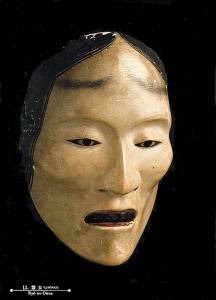
Fukai


Zo no onna


Ryo no onna


P.s. Praj is right that I should read Tales of Genji. Fumiko Enchi translated Gengi into modern Japanese. I can tell that the story had had a big influence on her. I'll read it with the female ego in mind...
Profile Image for Mrs.Martos .
187 reviews7 followers
January 20, 2023
" El amor de una mujer muda muy pronto en anhelo de venganza, una obsesion que se convierte en un interminable rio de sangre que fluía de una generación a otra."
Profile Image for Raul.
370 reviews294 followers
December 30, 2022
This is a strange little book, the second of Enchi’s books I’ve read–the first being The Waiting Years which was also remarkable. Mieko, a widowed wealthy woman, is the central character of this story. A poet, publisher and literary figure, she draws others to her because of the mystery and ambiguity that surrounds her and has a bizarre way of captivating and manipulating those she chooses to. The leitmotif of the story being power: that over self and others. Mieko, even during moments of personal tragedy, is always able to still turbulence that would throw anyone into despair and this apparent cool that always masks her true feelings both confounds those around her and brings her their admiration. From an evolutionary perspective this makes a lot of sense, where control, in the emotional sense of shielding oneself from vulnerability and reluctance to show weakness, is considered strength as well as that human, and animal (humans also being animal), need to follow those they feel to be strong. In this story, just as in most where human beings give themselves over to those deemed powerful, Mieko manipulates those around her towards whatever ends she wants, and in this case mostly her daughter-in-law, Yasuko, although aware of Mieko’s insidious influence, is still entrapped and used to entrap others, with Mieko knowing no boundaries, even her own disabled daughter, Harumé, being used.

With many references to Japanese folklore, nō plays and masks, and poetry and novels, including The Tales of Ise and The Tale of Genji (which looms throughout this book and is spoiled in ways, so caution to those who haven’t read it and don’t want anything from it divulged, although I personally don’t think much is spoiled or not enough to have angered me anyway), the writer explores power as expressed in ancient Japanese literature. It’s a disturbing little book in that it seems that the people here are either controlled or control others, and the most vulnerable being most exposed, and yet this is only a reflection of the way of the world since god-knows-when. It’s an incredible book, and a great achievement. I would like to thank Alex Teyie, who like this book’s protagonist, is a brilliant poet, publisher and literary figure (far more generous, kind and good than the book’s protagonist obviously) based in Nairobi, and their work with the Karara Library which is a radical platform for sharing books in Nairobi and other towns in Kenya through which this incredible book was made available to me.

Profile Image for Lauren .
1,834 reviews2,549 followers
January 15, 2020
"'Your feelings seems to take hold of me. This is not just some crazy excuse; so many times I've found myself doing things that don't make sense - and every time, without fail, I feel you there in the background, manipulating me like a puppet."'
.
From MASKS by Fumiko Enchi, translated from the Japanese by Juliet Winter Carpenter / 1958 Japanese, 1983 English translation
#JanuaryinJapan

A darkly enchanting and sensual tale of revenge, destruction, sex, secrets, power, and legacy. Enchi wrote one hell of a story ~ Just 140 pages with a small cast of characters, and it leaves an indelible mark in my mind.

Each chapter is named after a traditional mask used in the Nō theater, and characters in the story take on similar characteristics of the mask - the bitter, the frenzied, the experienced women. Included in the story are fascinating details about the ancient Nō theatrical form, and the masks as historic and artistic objects themselves.

A familiarity with The Tale of Genji- the 11th century Japanese epic - may be helpful for a deeper understanding, but I have not read this "first novel" and was able to keep up and deeply appreciate. Enchi was a scholar and translator of the ancient text into modern Japanese, so it's clear why this literature plays a large role in her novels.

The more I think about this one, the more I loved it. Seductive and psychologically thrilling.

I'm reminded of one of my faves from 2019, The Naked Woman by Armonía Somers, translated from the Spanish by Kit Maude. Although different in form, and from the other side of the globe (Uruguay), there's a similar unbridled and supernatural/divine feminine element in both. Cool synergy - both amazing stories.
Profile Image for Libros Prestados.
472 reviews1,045 followers
April 17, 2017
No hay furia en el infierno como la de una mujer despechada: la novelización.

Por supuesto, es una novela japonesa, así que nadie espere escenas con estallidos emocionales o una explicación racional de lo que está pasando. Porque no hay nada de eso.

El lector debe hacerse una idea uniendo todos los puntos, escuchando los silencios, intentando discernir la personalidad de las mujeres en lo que hacen, pero sobre todo en lo que dejan de hacer.

Tal vez en otra ocasión me hubiera resultado una lectura fascinante (como muestra casi quirúrgica del machismo en Japón) pero la personalidad de Mieko es demasiado enigmática, demasiado cerrada. Su comportamiento demasiado cruel para lo que quiere conseguir (dando por hecho que he entendido sus planes). Tanto esoterismo me ha alejado del texto. Aunque agradezco que haya cierta parte de metaliteratura hablando del "Genji Monogatari", novela que leí en su día pero de cuyo argumento no recuerdo mucho. De hecho, ambas novelas parecen estar unidas en ser escritos de mujeres que en realidad hablan de mujeres y de su sufrimiento dentro de una sociedad tan machista como la nipona.

"Mascaras femeninas" es una lectura interesante, pero no creo que yo le haya sacado todo el jugo que debería.
Profile Image for Kansas.
812 reviews486 followers
August 28, 2023
https://kansasbooks.blogspot.com/2023...

“Era una cara que parecía una máscara de teatro Noh, aunque la impresión que daba eran la de un mayor misterio que el de una máscara. Mieko también era humana, debía de sonreir y fruncir el ceño como los demás, pero él no recordaba haberle visto la menor expresividad. “


La verdad es que no suelo reseñar novelas con las que no he conectado demasiado, esto no tiene que significar que no carezcan de calidad, solo que al no haber conectado con ellas, no me siento con la capacidad de transmitir ciertos detalles con la objetividad con la que debiera. En este caso, Máscaras Femeninas es una novela que me ha resultado algo incómoda por la frialdad que despliega la autora, aunque pensándolo bien, esa frialdad pueda estar justificada porque monta la historia como si estuviera en una especie de obra teatral, o mejor dicho, una obra donde los personajes son marionetas que se mueven no por hilos invisibles, sino por hilos que son muy evidentes. El libro está seccionado en tres partes, cada una de ellas llevando el nombre de una máscara de Noh: La Ryo no onna (mujer espiritú), la Masugami (mujer frenética) y finalmente la Fukai (mujer de mediana edad). Cada una de de estas partes representará a una mujer de la historia, y quizás aquí esté la madre del cordero. Al mismo tiempo que estas máscaras parecen inexpresivas o unidimensionales, quizás muestren más de lo que parece dependiendo de que quién las lleve.


“-Debo irme de aquí, madre. Cuanto más tiempo vivo contigo, tanto más me siento como una marioneta en tus manos, y tanto más me detesto a mí misma..."


Máscaras Femeninas es una novela muy corta con una trama que poco a poco se va revelando. Comienza con la conversación entre dos profesores, Ibuki Y Mikame, que se enuentran en un café de Kioto y a partir de la conversación sale a relucir el nombre de Yasuko, una mujer que acaba de quedarse viuda. Ambos están interesados en ella y no parece que se le dé la menor importancia al hecho de que Ibuki esté casado. Yasuko vive con su suegra, Mieko, una poeta y fundadora de una revista de poesía, que parece tener el control absoluto de la vida de su nuera, Yasuko. A partir de aquí, en una suerte de encuentros entre estos personajes, se desarrolla una trama en la que ambos hombres emprenden una especie de acercamiento hacia Yasuko, un acercamiento aparentemente inocente y sin embargo, pronto el lector irá percibiendo que quién maneja los hilos de esta historia son las mujeres. Son ellas quienes conducirán a Ibuki y Mikame hacia una especie de juego en la que son ellas, sobre todo Mieko, la mujer adulta de la historia, la que parece tener un plan marcado desde el inicio.


“De alguna manera tus sentimientos parecen apoderarse de mí. Muchas veces he hecho cosas que no tienen el menor sentido, y siempre, en todas y cada una de las esas ocasiones, he tenido la sensación de que estabas detrás de mí, manipulándome como a una marioneta."


Como dije antes, quizás el acercamiento de Fumiko Enchi me parece frio y desapasionado pero estoy segura de que es una manera de que hacer un ejercicio paralelo a la aparente inexpresividad de las máscaras a las que se está aludiendo continuamente, y cuyas mujeres, Yasuko, Mieko y Harume, parecen portar continuamente, tanta es la manipulación que exuda esta historia. Máscaras Femeninas es sobre todo una historia de venganza, manipulación y castigo por un pasado no resuelto, donde la mayor parte de la trama se asienta en los diálogos, que desvelarán parte de la profundidad psicológica de sus personajes. Fumiko Enchi hace un análisis muy aséptico del amor totalmente alejado, quizás de la literatura más clásica y aquí es donde quizás podamos intuir a la autora moderna que es. Apenas hay descripciones y sin embargo, quizás lo que me ha resultado más interesante es como se muestran las diferentes identidades, cómo se ve a hombres y mujeres en un Japón ya cambiante. Aunque no haya conectado del todo sí que me ha parecido una novela interesante en cómo expone la manipulación que ejercemos sobre los demás.


“Rememoró aquella noche de nieve en el antiguo salon de la casa de Toganoo y le pareció que la relación entre Mieko y Yasuko se caracterizaba por una humedad, una adherencia propias del reino animal. Le recordaba una telaraña."
Profile Image for Luke.
1,626 reviews1,193 followers
June 26, 2017
I'm not going to pretend I know what exactly was going on here, or that my main motivation for rewarding this four stars is anything more complicated than the thrills of fear and lust. Woman as mother, woman as horror, woman as the womb of the tomb. It's all be done before, and so long as rapists are viewed as delicate unjailable flowers who could not possible survive the chance of being raped themselves, it will continue. The intrigue, then, is a matter of how involved an artist is in complicating this same-old same-old, playing out the recognizably modern against a backdrop of a millennium that has less to do with politics and everything you commit yourself to in the deepest socket of overwhelming night. Telling a story helps, for the free potential of narratives pales in comparison to the expectations of readers who compose the hegemony that draws the line between literature and all the rest. Murasaki Shikibu was a woman, but survival has never been anything more than a theatre of chance and exploitation. If you want to use her to circumvent all that, be prepared to descend into the stigma generated around sex work and emotional labor and menstruation and disability, else you'll just be glutting yourself alongside all the rest.

Lately, I've been mulling over revenge horror played in the female key, from a sequential (re)watch of Ju-On 1 and 2 to my favorite character story arc in the current season of Penny Dreadful. One thing I've noticed is, however bad it gets, and however much audiences choose to ignore it, the patriarchy is always worse. Sure, innocent victims die a dime a dozen, but it takes a special kind to murder a woman and have it automatically assumed that she drove you to it. Miscarriage and monthly bleeding and maternal influence and call be a drag, but how do you think the human species continues in the first place? Certainly not by the various means of erotic auto-asphyxiation conducted by men, wanting it all despite never being able to have anything to show for it when all is said and done and that gender of self-titled perfection is so much bone and ash. From that you get the manipulation, the socioeconomic exploitation of the one and the normalized rape of the masculine of the other (a man is 33 times more likely to be raped than to be falsely accused of rape, don'tcha know), the strangling and the chopping and whatever else is necessary to revenge oneself after being bought and sold like so much livestock and even after, as insult to injury, sabotaged in the midst of the breeding. Everyone knows why women shed the blood they do. What's rare is to tell the truth about the origin.

Honestly, I don't think anyone should attempt reading this until they've gotten The Tale of Genji and The Waiting Years under their belt, if not others, but that sort of bias is easily circumvented by rereading. Still, there are those out there who hold their first reads sacred. Personally, I"m off to chase down 500 bajillion more articles/books/lecture series that focus on the first work mentioned. I don't know what it is that stokes this particular appetite of mine, but with a millennium of criticism that will even at times lurk into the realms of fictional literature, I'm in good company.
Profile Image for Jonathan.
1,009 reviews1,229 followers
June 1, 2025
Too much lost in translation here I think - not least the importance of Genji (which I really really need to get round to reading)
Profile Image for Carol Rodríguez.
Author 4 books34 followers
October 5, 2016
Anoche terminé este libro, que fue una recomendación de Isa Martínez (https://www.youtube.com/channel/UCBZU...) y Magrat Ajostiernos (https://www.youtube.com/channel/UCGaM...), y he tenido toda la noche para madurar mis impresiones. En serio, creo que he soñado con retazos de esta historia. Es un libro extraño, creo que jamás he leído nada que se le parezca mínimamente, lo que ya lo convierte en algo a tener muy en cuenta. Tiene una narración estrictamente japonesa, es decir, pausada, sutil, descriptiva en cuanto a entorno y expresividad de los personajes, y muy para leer entre líneas, pero a mí me encanta este tipo de escritura y, en este caso concreto, me enganchó desde la primera página. Pero también me enganchó por otros factores, y estos son 1) el misterio que se genera, 2) lo perverso y seductor de los personajes, 3) el sentimiento continuo de "¿dónde me lleva este libro? Tengo que saberlo".

Es una historia en la que se habla mucho de los tipos de espíritus japoneses, y el imaginario paranormal de Japón es muy amplio. Esto se mezcla con pinceladas del teatro Noh y sus máscaras más siniestras, y con dos personajes que te enredan, te confunden y te embrujan: una joven viuda y su suegra, una misteriosa mujer poetisa, buscadora de espíritus y que esconde mucho más de lo que parece a simple vista.

No quiero contar mucho más porque el libro es tan corto que acabaría haciendo spoiler sin darme cuenta, pero solo decir que el final me ha resultado totalmente inesperado (hasta cierto punto) y que sin duda es un libro que deja poso e invita a reflexionar y a volver atrás en ciertas páginas para ir atando cabos y detalles. Es siniestro, sensual, seductor, espeluznante a veces, sencillo a la vez que complejo (pocos personajes y fácil de seguir pero con tramas en diversas capas) y me ha dejado buen sabor de boca.

Un saludo,
Carol Rodríguez
Profile Image for Jeanette.
4,088 reviews837 followers
January 29, 2020
This review is next to impossible. Because I don't know enough about Noh / Classical Japanese drama to fully understand all the asides and references. But I will give my take in reaction.

I do know that it was creepy. For valid reasons. It's about spirit possession in the sense that is used within the Tales of Genji. Fully comprehensive of a Japanese definitive for the inward controlled and focused power of women. In this sense the daughter-in-law was the medium and her mother-in-law the controller.

Many are merely used instead of loved for themselves or their own possible affection in return. Primarily men, but also a sub-normal IQ woman is used as if holding no significance herself. And most truth of/in emotion hid behind other often opposite actions- in masks of reality's converse and interaction. Not just the physical masks of the play that are so finely detailed as art and as symbols.

There's more too. Poetry and forms. This holds the feel of the stories of Japanese fox spirits disrupting throughout the entire. Threatening and viscous, and sexual. All of these actions have dubious motives too, men and women.

The core of defining Female in this piece, is the most disturbing, IMHO. Very dismal. And women who are not capable (have too strong a "spirit")not to achieve by sublimating themselves within a man are deemed more than a worthy adversary. And yet they are equated TOO- as "with power" witches. Evil closely connected within their purposes using this power. Unable to focus their emotive and intelligent nature inward (normal)- they focus it outward. Harmful "spirit possession" of others.
Profile Image for Repellent Boy.
634 reviews657 followers
February 13, 2018
Por fin me inicio con Enchi. ¡Y que alegría! Que gustazo ha sido leer cada palabra de esta novela. La historia nos habla de Mieko y Yasuko, suegra y nuera. Ambas unidas tras la muerte de Akio, hijo de una, marido de la otra. La relación entre las mujeres se trata todo el tiempo con cierto misterio y delicadeza. Aparecen dos amigos que se disputan la atención de Yasuko. Una gran y sútil historia de vegenza, engaños, e incluso me atrevería a decir, feminista. Una lástima que Fumiko Enchi solo tenga dos novelas publicadas en español. Sobre todo, teniendo en cuenta que los autores hombres de renombre de su época tienen, prácticamente, toda su obra traducida. El mundo necesita más de Enchi. Diosa.
Profile Image for Maria.
265 reviews157 followers
May 17, 2023
A strange tale about revenge within a family - and in particular, female revenge - quiet and cruel. The pacing wasn't to my liking but the writing and subliminal messages that the author provides are incredibly interesting and eerie.
Profile Image for Claire.
811 reviews366 followers
August 17, 2016
A mysterious novella that begins in a quiet humble way as we meet the young widow Yasuko whose husband, the only son of Meiko Togano, was killed tragically in an avalanche.

Yasuko has stayed close to her mother-in-law who is like a peripheral character, but as the story ventures further, it becomes apparent she is manipulating events and that this is not the first time in her life she has done so. Yasuko wants to move on with her life and the two men who are in love with her become part of the triangle of deception.

Mieko is a poet and an essay she wrote called 'The Shrine in the Fields', resurfaces, which intrigues the two men. It is a reference to a location in the Japanese classic The Tale of Genji that comes in connection with the Rokujo lady.
"She has a peculiar power to move events in whatever direction she pleases, while she stays motionless. She's like a quiet mountain lake whose waters are rushing beneath the surface toward a waterfall. She's like the face on a No mask, wrapped in her own secret."

At this point, it is worth knowing a little about the plot of The Tale of Genji and the 'Masks of No' from the dramatic plays, as we realise there are references and connections to what is unfolding here.

It may be that Masks, is in fact an allegory to one or more chapters of The Tale of Genji, something that made remember reading Sjon's The Whispering Muse which did a similar thing with the Hellenistic poet, Apollonius of Rhodes, The Argonauts.

Masks is an enchanting read, that begins as a straightforward narrative and becomes an intriguing multi-layered tapestry of long held deceptions and narcissistic conspiracies that will haunt the lives of these characters and shock the reader.

An intriguing, thought-provoking read, that expands our literary horizons!
Author 6 books253 followers
May 30, 2018
A novel that is disturbing, weird, and disturbingly inexplicable. And weird. A cultured mother-in-law poet manipulates her widowed daughter-in-law, the mentally retarded twin of the dead son/husband and a pair of older suitors for sinister purposes. It sounds straightforward on the surface, but there is a running vein of that inexplicable I just mentioned: dark shamanesses, "living possession", and the masks of the title, here noh masks that represent the different stages of corruption and darkness that come with age. Enchi successfully fuses Japanese dark lore with modern obsessions with art, fidelity, and the spiritually banal (seances). It all hurtles together in an inspired, black ending that one can't read in any one certain way, hence Enchi's genius!
Profile Image for Mariola.
170 reviews42 followers
February 14, 2023
Recomiendo este libro de narrativa elegante y fondo cruel. Es todo un juego de máscaras que oculta a personajes muy turbios.
Profile Image for Meltem Sağlam.
Author 1 book165 followers
October 19, 2025
Noh tiyatrosu maskeleri temel alınarak yazılmış bir roman. Yalnızca Japon kültürüne doğanlar ya da konu üzerinde çalışması olanlar tarafından anlaşılabileceğini düşündüğüm bölümler vardı. Ancak bu teknik ve sanatsal ayrıntılar üzerine oturtulmuş, etkileyici hikayeyi beğendim.
Profile Image for Leslie.
953 reviews92 followers
May 31, 2022
The title refers not to masks in general but to the carefully crafted masks used by performers (all male) in traditional Noh drama. So they suggest hiding and artifice and performance and falsity and beauty and tradition and the complexities of gender all mixed up together. The performer is simultaneously hidden/anonymous and engaged in public performance, both fulfilling and manipulating traditional expectations. The book is divided into three parts, each named for a particular kind of mask: Ryo no Onna (the vengeful spirit of an older women tormented beyond the grave by unrequited love), Masugami (a mad young woman or a shamaness possessed by spirits), and Fukai (a mature woman marked by melancholy and grief). Are all these masks (and others mentioned in the text) aspects of Mieko? or can they be tied to the three main female characters--Mieko, the older woman, grieving her dead son, a lost lover, and a difficult marriage; Yasuko, her daughter-in-law, also a widow, dominated by her mother-in-law and looking for escape (maybe); and Harume, Mieko's daughter, a twin abandoned in favour of her now-dead brother, beautiful but brain-damaged, an empty shell of a woman constantly described in terms of how her appearance aligns with ideal beauties in old pictures. In comparison with these women, the male characters are pretty forgettable. The real narrative energy lies not with them, twisting as they try to figure out who these women are and what they want and how they can be used for the men's purposes, but with the real women behind the masks and the categories of female characters they delineate.
Profile Image for Fulya.
544 reviews198 followers
September 10, 2017
Uzun bir süredir okumak istediğim bir kitaptı Masks. İngilizce çevirisi de oldukça başarılı ve zengin olmuş.

Son derece sürükleyici bir kadın mitosu bu hikaye. Mieko, Yasuko ve Harume'nin erkekleri şeytani bir planın parçası yaptığına şahit oluyor okuyucu. Mieko evrensel cadı mitoslarında okuyup bildiğimiz kötücül yaşlı cadı gibi tarif edilse de son derece derinliği ve katmanları olan bir karakter. İnsan onu okurken ona karşı ikilemde kalıyor: hem hayranlık hem de tiksinti duymamak elde değil adeta.

No tiyatrosundaki maskeler genel olarak ilgimi çeken bir konudur zaten. Yazar da hem no tiyatrosundan kadın karakterleri ve hem de Tale of Genji'yi kendi hikayesinin içine katmış ve ortaya çağdaş bir No tiyatrosu çıkmış adeta.

Japon Edebiyatı'na ilgi duyan herkesi bu kitabı okumaya şiddetle çağırıyorum. Bu senenin benim için açık ara en iyilerinden. Üniversitenin kütüphanesine aldırdığıma pişman değilim.
Profile Image for Freddie.
429 reviews42 followers
December 19, 2025
The references of Noh theater masks and The Tale of Genji (which I have not read 🫣), peppered generously with Japanese mysticism to portray some really brilliantly shady women characters make the story feels propulsive, stylish, and super engaging. The character dynamics, especially between the women, are wonderfully complex and maybe even perplexing. I have so many questions after finishing this book.
Displaying 1 - 30 of 455 reviews

Can't find what you're looking for?

Get help and learn more about the design.