The Superpox-99 virus has wiped out nearly the entire human race. Governments have collapsed. Cities have become graveyards filled with unspeakable horror. People have resorted to scavenging from the dead, or taking from the living. The entire industrialized world has become a wasteland of abandoned cars, decaying bodies, and feral animals.
To stay alive, U.S. Deputy Marshal Mason Raines must forage for food, water, and gasoline while outgunning those who seek to take advantage of the apocalyptic anarchy. Together with his giant Irish wolfhound, Bowie, he aligns with survivors of the town of Boone in a life and death struggle against a gang of violent criminals. With each deadly encounter, Mason is forced to accept his place as one of the nation's few remaining lawmen. In a world now populated by escaped convicts, paranoid mutants, and government hit squads, his only hope to save the townspeople is to enforce his own brand of frontier justice.
Events have made me who I am, neither a hardcore survivalist nor an all-trusting soul. I am a Boy Scout in the truest sense of the word—dedicated to family, country, and good citizenship. As you may already know, an enabling element of those ideals is being prepared.
It took the horrific events of 9/11 to wake me from my routine complacency. In one single moment, I came to realize that our world is not as safe as we would all like to believe. We have no guarantee of safety in this world. Disasters occur on an almost daily basis all around the globe. Major events in recent years have included the devastating tsunamis striking Japan and the coast of Sumatra, the rash of tornadoes that swept across the U.S. in 2011, Hurricane Katrina, the deadly earthquake in Haiti, and the oil spill in the Gulf of Mexico to name just a few.
I believe with all my heart that we have a duty to prepare our families for the dangers they face. I started my preparation by reading nearly every disaster preparedness book currently available. If you check Amazon, you will see that I am the #1 reviewer for many of these books. Even with all the material out there, I could not find a single book that offered a complete, well-reasoned approach to practical preparedness. As a NASA engineer, I took up the challenge by conducting very careful research – disecting fact from folklore. Three years and many thousands of dollars later, I have finally released a handbook that offers well-researched advice that can be put into practice in the real world by normal families.
I wrote this handbook for my own family, but I would be honored to share it with yours. If you are not fully satisfied with the Handbook to Practical Disaster Preparedness for the Family, send it back, and I’ll refund your money, no questions asked.
LOL at the ridiculousness of this book. Curious if the people who rated it 4 or 5 stars have actually read another book... as in, ANY other book.
Essentially the author saw an episode of Justified and liked the lead characters Deputy U.S. Marshal Raylan Givens and Ava Crowder so much he decided to include them in his story. He changed Raylan's name to Mason, but left Ava's the same. Then he added 10,000% stupid, and there you have book one of The Survivalist series.
Nearly every man in the book is the size of a NFL linebacker. Women serve only the purposes of being entirely helpless or to 'fill a man's needs', if you know what I'm saying.
Characters are absolute good or evil; white or black, if not entirely colorless. Warner Bro's Looney Toons have more depth than any character in this book. The characters are laughable. They're caricatures.
The book is also full of laugh out loud moments like every time Raylan Givens feels the need to shoot every stranger he meets in the throat or face just because they look at him wrong, or the idea that the federal government would start their culling process by first sending their agents to Boone, population 17,000. This book is so poorly conceived and thought out it's literally the poster child of what not to do with a story.
Particular moments I liked (read: thought were absurd):
When Raylan... errr Mason... says "Please don't feel the need to do anything so womanishly stupid in the future". He's such a ladies man.
When a love scene is described as, "It was as if Aphrodite herself was summoning him, and as a mere mortal, he had no hope of resisting her call".
Terrible. Terrible. Terrible. Have I mentioned yet how painfully bad this book is? That a story this amateurish can be written in this day and age is truly something to behold. If a story combining a middleschooler's day dream and wet dream sounds interesting to you, then you'll probably like this book.
Spoiler Alert: This story has no redeeming qualities other than the dog... which of course is the biggest badass dog the author could think of. If you actually made it through the book, then pat yourself on the back because YOU my friend ARE. THE. SURVIVALIST!
This is a really hard book for me to review. The first two pages had me excited because it felt like I was starting a Robin Cook medical thriller; a well-written antagonist who is an expert microbiologist and virologist plotting the destruction of mankind. That ended up setting my expectations fairly high. But then the next scene had the main character opening up his family cabin after it was vacant for six months; prepping it for a three week vacation that went on for four pages. Not an exciting lead off. I found myself wondering how raccoons could get in his house to knock things over when he's so meticulous about his preparations and preserving his home to be unattended for half a year at a time.
But I knew I would soon be treated to a tension-filled scene of the bad guy carrying out his evil plan, so I eagerly read on. But then we skip forward in time and learn about it after the fact with so little detail, I wasn't even sure if the calamity that the president is being informed of was the same event that the book opened with. Did a different disaster strike before the mad scientist got a chance to implement his plan?
This gave me some mixed feelings early on and I began to lower my expectations - especially when I read unusual lines like, "A virus was spreading faster than sightings of Elvis."
Really? When was the last time anyone heard of an Elvis sighting? I'd like to say that this is the worst of such lines, but at least half of the similes made me stop and question what the author was thinking when he wrote them.
Despite what appeared to be weird, guest-written sentences every once in a while, the story finally got its hooks in me. I love it when a book does that and I literally don't want to stop reading after the half-way point. But I prefer it when the read is like a smooth ride without mental speed bumps that knock you out of the suspension of reality for a second or two, but at least none of them put me in reverse where I would have to go back and re-read something to figure out what was meant.
For the most part, the writing was very well done and the plot definitely unfolded well. Most of the characters were well written. The dialogue was believable. The protagonist’s father who has his own sideline story is a more colorful and interesting character and was more enjoyable to me than the main storyline.
On the downside, the book seemed really well edited until the last 25 percent and then there were several errors - usually involving omitted words. This made me wonder if the editor/proofreader was in a hurry - or did no one but the author himself look over the book before publication? (Surely another set of eyes would've pointed out some of the less sensible similes and metaphors.)
The one thing that I consistently had a problem with was the instant bonding and practically psychic communication between the main character and the dog he adopts. They understand each other like partners who've worked together for years but have only just met (and the dog went from being on the verge of death to a ferocious killer after a few cans of food and a day of rest.)
On the very good upside, I learned some real-life, practical information that I'll never forget, and I'm motivated to learn more of such information.
With the story building up steam and still managing to entertain extremely well despite its fallbacks, I was so glad to see that the second in the series is out already so I bought it and look forward to finding out what happens in the side story that is left hanging, and to see what the bad guy in the government has planned. I can probably guess, but maybe I'll be surprised.
I was also glad to see that the author has written practical and clearly explained disaster preparation books that I'll also be buying. I can tell from the way he describes things in his fiction that his non-fiction will be easy to read and understand and implement.
I was torn between giving the book either 2 stars for the bad/weird elements and 5 stars for doing what a book should do, and that's to entertain the reader. In this case, I was entertained, educated, and sufficiently interested in the story to buy the sequel, so I'm going with 4 stars overall and a recommendation to read this.
The Survivalist is a mostly fun and eventually gripping read that leaves you with practical survival info that I hope we'll never need to know, but could easily save lives if we ever do.
As the young folks say, "Meh." I would have been interested in a "survivalist" angle, but this was mostly about "frontier justice," which is better left to Louis L'Amour and Zane Grey. And how many times do we need to read a grisly description of a decaying corpse? And the metaphors!! I like a well-placed metaphor as much as the next person, but this was overkill. Not a "good read."
Having read much of the "end of the world as we know it" fiction that is available out there. I must say this was a refreshing departure form the norm. Mr, Bradley is a consummate author in the non-fiction realm and his books are a must have for those who would like to learn how to not only survive the end but do it well. I was presently surprised with his presentation of that vast amount of knowledge within the the story. I mentions many different things but does not focus on them. Its part of the story. The story is believable and one which given the recent avian flu that has been spoken of is a very real possible future we may have to deal with.
I like that the Author delves into the psychological aspects it gives good depth to his characters and makes the story more enjoyable.
Unlike most of the series that are available out there this story is in an of itself complete. While we do not know the final outcome there is some satisfaction when you are done reading it cause the sort term plot lines have been put to bed.
I look forward to the next book with anticipation. I also hope that Mr Bradley writes some more stories utilizing some of his other areas of expertise including his research into Solar flares and such.
A very stereotypical good guy vs evil government story...complete with overly convenient genial attack dogs who instantly bond with their new master (who curiously seemed useless to their murdered previous owner). Seriously, this book is so full of stereotypes that it is almost satirical.
I've read a few of Dr. Bradley's non-fiction works and found them to be concise, informative, and generally very well-written. For a man with his professional pedigree, it should come as no surprise that he would engage such topics as disaster preparedness with a high level of expertise and communicate his vast knowledge in a very approachable manner. Indeed, with his experience as a NASA engineer, he has likely written tomes in the form of research papers and, given his status as an Army veteran, he could likely pen an equal amount regarding his military service.
Making the leap from writing non-fiction to fiction can sometimes be a Sisyphean endeavor; the two require very different skill sets and employ a number of writing techniques that do not necessarily overlap. As such, with Dr. Bradley's first fictional work, The Survivalist: Frontier Justice, he bridges the gap with aplomb and has produced an extremely enjoyable novel.
The only comparison that I will draw between Dr. Bradley's disaster preparedness manuals and his fiction is this: both bear the hallmarks of a passionate, knowledgeable man eager to share his passion and wisdom and ultimately capable of doing both. Though The Survivalist: Frontier Justice is a work of fiction, some of Dr. Bradley's practical prepping advice sneaks its way in but it does so in a completely unobtrusive fashion. If one were not looking for or attuned to such topics then it would be possible that one would gloss right over the informative aspects of the book.
As a first novel, The Survivalist: Frontier Justice is not without its faults. Dr. Bradley is clearly cutting his proverbial teeth here but I found that the negatives rarely interfered with my ability to enjoy the novel and, in a few cases, actually served to enhance my appreciation of it. In the interest of specificity, I'll enumerate what I found to be the sole sour notes for me and provide examples where applicable.
Many of the metaphors and similes tend to ruin the flow of the writing with some seeming completely out of place. A few run far too long and wind up being distracting, especially when the pace of the plot has quickened. Here are a few examples:
"...stared at the paper with the same horror that a frightened man might study a contract he had just signed in blood with a Crossroads Demon."
"The man fell back against the church's massive door, leaving a trail of blood like mucus from a giant banana slug."
Some come across as hokey or contrived:
"He felt a powerful desire that had been bottled up longer than the fizz in Vernor's ginger ale."
There is an occasional surfeit of detail that drags the pace down a bit, particularly when describing certain specific items (like firearms/mechanical devices) or conditions (like decomposition). This, like the similes, is something that will work itself out in future works but for The Survivalist: Frontier Justice, it did detract a bit from my overall enjoyment.
To a lesser degree, there is also some repetition either in descriptors or events (rigor mortis is mentioned around a half dozen times or more). In reciting the protagonist's inner monologue, the narrator occasionally provides too many questions that cause the somber reflection of the moment to feel more like a laundry list of inquiries.
Finally, the dialogue between two particular characters was very difficult to enjoy. It felt forced and, at times, unbelievable in the sense that most folks simply don't speak the way that these two characters were engaging one another. The short, brisk replies are visibly evident on the page but the truly troubling aspect--or at least the part I had the most difficult time believing--were the responses of the younger character. Precocity aside, eleven year olds simply do not speak or think the way that this particular character does and I found myself reading a little more quickly through these sections so that I could return to the excellent, engrossing story.
Now, those negatives pale in comparison to the positives of The Survivalist: Frontier Justice. Despite revealing the hallmarks of a first-time fiction writer, Dr. Bradley belies a powerful grip on the single most important ability an author can have: the capability of crafting a gripping, engaging story. The characters are all extremely likeable and believable, the plot itself is wholly within the realm of possibility, and the pace is nearly perfect. Dr. Bradley segues seamlessly between story archs, serving to build the ever-mounting tension that exists between these plots as the overarching tale presses forward.
Some have complained that either the book is too short or that there were loose threads that they felt should have been tied up by the end. On the contrary, I felt that it was perfect in length and the plot germs that were planted in this first book of The Survivalist series will undoubtedly be explored in greater detail and ultimately brought to fruition in later works. I also enjoyed the stellar illustrations that pepper the pages and feel like they were chosen carefully to heighten the emotion of certain scenes.
Ultimately, Dr. Bradley writes with an easily approachable, engaging style and has crafted both an excellent cadre of characters and a tension-laden, nail-biting environment for them to interact in. Channeling some of the best works of the respective genres The Survivalist: Frontier Justice represents, it coalesces into one part post-apocalyptic action/horror a la Stephen King's "The Stand," one part spaghetti western like "The Good, The Bad, and The Ugly," and, best of all, one part Arthur Bradley. The author's stamp is evident throughout the book whether it is with the technical accuracy of the mechanical/scientific aspects, the military components, or, of course, the survivalist/prepping sections. I highly recommend reading both this novel and any that follow down the road.
A virus has been let loose and most of the country has been devastated.The people who made it out unscathed have to scavenge food and supplies from the dead.But there's more, ....water,gas,and electricity all gone and people have to go back to bare basics.
Amidst this turmoil some convicts had been let out of prison.This was a humanitarian thing
issued by the president in order to save lives.But doing this let some reprehensible people among the populace.The MC is a sheriff and he works at trying to protect the people from the convicts.
I liked this book,I thought it was written well.But hey,post-apocalyptic is one of my favorite genres.
This started out so great. (Well, aside from the "this is mother nature's time to take back the world" bunk that started off the apocalypse. Aren't the humans supposed to be the good guys?) Once a crazy scientist starts the spread of a highly contagious smallpox varient, many quickly perish. Bodies are everywhere and a rash of prison escapes provide the needed anarchy.
Mason the US Marshal embarks on a journey to find his parents, comes upon a town of survivors led by the priest Father Paul and threatened by a gang, and decides to stay and help fashion the citizens into a force to fight the threat and continue surviving in this bleak new world. His dad Tanner rescues and protects the President's daughter in their navigations of the area. This is frontier justice, and it takes good people who are willing to do the hard, and often violent thing, to stop the bad guys who will run everything over if allowed.
Then, all of a sudden, a hookup scene. Two, actually. Both by the heroic, upstanding men who are leading the charge against evil in the land. It fades out but there's enough before and after to be quite inappropriate. And they BOTH get romantically and physically involved with women in what they know are short-term affairs. But hey, they feel like it so why not have sex.
This completely ruined the book. Dragged it down from a 5 to a 2.5. For a much better, and moral, apocalyptic survival novel with TONS of practical tips, read "The Perseid Collapse."
Bad. I barely got through the first through chapters before deciding it just wasn't worth my time, and I am not one to put down a book after I've started reading, let alone leave it unread.
If you're looking for nuanced and interesting interactions between believable and likeable characters working together to overcome the challenges that a disaster/apocalypse scenario presents, eking out a living and slowly working to better their situation as human beings until they are able to thrive through cooperation and the skills they've been able to cobble together? This is not the book for you. Maybe try World War Z or Defying Doomsday?
If you're looking for a violent misogynist gun nut prepper fantasy where the main character, a cop, immediately shoots the first people he meets after a disaster because they have guns on them (not drawn, but visibly nervous that MC is actively threatening them with his) and he doesn't want to explain that he doesn't want to share his food and water even though he just came to the detailed conclusion that he has essentially limitless resources; the only female character present as helpless as a baby and can't even feed her kid let alone get him out of immediate danger despite the fact that the apocalypse has been happening for quite a while now and can only call for help in a desperate bit to get some male direction... then go for it I guess? There's plenty books on the subject, but who knows, you may like this one.
I'm giving this books a weak two. While it was clear that the author had done his research on being a survivalist, it is also clear that he's an unabashed misogynist. The story plays out like a survivalist's wet dream. Bradley has carefully crafted a world where evil violent men can only be stopped by good violent men. The women in the book are weak, helpless, desperate and 2 dimensional.
Do you consider yourself a man's man who dreams of a world were your marksmanship and survivalist skills can save the day? Do you wish you lived in a world where the strong ruled over the weak? Then maybe this is the book for you.
For that average person though, you'll likely find the story predictable and the dialog almost impossible to get through. I switch over to whisper sync audio hoping the narration would breath some life into the back and forth. Sadly, even Jamie Buck, who I usually quite enjoy, couldn't make the exchanges sound believable.
The real shame is that behind the sexism and mediocre dialog were some decent action scenes and quality post apoc drama. Normally this would have me jumping ahead to future publications in the hopes that the authors writing improves but in my experience chauvinist seldom get better with age.
Definitely one of the best books I’ve read this year. The Survivalist is a brilliant work of detailing what life would be like after a major epidemic sweeps across the world, killing almost 99% of the planets population. What would life be like for the remaining 1%? That is the question and Arthur Bradley portrays a very real scenario without unwanted heroics or over-the- top dialog. It was more like listening to a conversation than reading a book.
And if that hasn’t grabbed your attention, Mr. Bradley has sprinkled the work with excellent black and white original sketches, thrusting us into the scenes. An excellent touch!
Folks, this a quick paced read and yes, I will be reading the second one.
Having read some apocalyptic fiction, I can say that for me this wasn't among the best of the lot. Other than a few named weapons (the Supergrade .45, for example) the story included little in the way of utilization of actual survival or emergency preparedness gear. It seemed to be little more than a rather outlandish plot providing a setting for showing off the heroes fighting skills. As is true for many books (and movies) like these, the heroes nearly always hit their targets with pinpoint accuracy while the villains rarely do more than make a lot of noise. Tactics are unsound or nonexistent, and most other characters are but pale shadows of the real people they are supposed to represent.
A pandemic has hit the world and it was deliberately leaked. It's every man for himself and the US government has signed a decree that all those carrying or infected by the virus are to be euthanized. Cometh the hour, cometh the man. Mason is rallying the troops in a backwater town called Boone. And his father, an escaped convict is chaperoning the presidents daughter to safety. This is a pretty easy read and entertaining. And you learn stuff about survival. It's pretty cool. It's not my sort of book, but I'm branching out and I enjoyed this book and am saving my shekels to get the next book in the series. Good work Mr. Bradley
Not a zombie novel as expected (bloody empty shells of human..) but a really good story featuring a hero (who at first is a little bit reclusive), some good and bad people (convicts released from US President order), some good and bad motives but the credo is that in a more than strenious circonstances humans have to stick together and not kill each other...
There also a little bit of romance: the fact this is falling for a pretty woman doctor is not bad too
I enjoymy zombie books with a lot of hope for the human race
Just a few clicks away to start Book 2 from Amazon :-)
this book had a good pace and was an end of the world book. I can't wait to read the next one. It really kept my interest. It ends in a complete cliff hanger and makes you want to grab the next book right away. This town is trying to survive against people who are just bad people and want to harm people that don't want to follow their plan. It was a good book and if you like the end of the world books you will like this one for sure. There are no zombies, at least not yet lol but there are people who are left deformed from the virus. It hit most of the population. Really decent read.
This is a great read. The author created interesting characters any reader can relate to. Even better, the author made his story a solid PG rating which is appreciated. I'd recommend this to anyone interested in apocalyptic genres or even just adventure stories. Only thing that kept it from being 5 stars for me is the fact that it is an obvious lead into a series and has a lot of unfinished 'business'. Would have liked a more definitive ending that wrapped up the story as a stand-alone. Nicely done. Great formatting without spelling and grammar errors.
Story is an average low budget television show with lots of violence, some interesting information and a bit of really bad love story (or sex story). I found there were way too many bad similes, some one right after another. A bloody smear of mucous down the wall-enough said. It doesn't need to be compared to the trail left by a banana slug. That is just distracting especially since the slug wouldn't tend to be leaving a bloody trail. The ebook was free. I won't be trying another in the series.
This book reminded me of the westerns that I read as a kid. The main character was the classic fast draw cowboy. The main premise of the story is solid and the tale moves along at a fast pace. I enjoyed this book, but have two complaints. One, it felt a bit short, and second the (woman) President of the US is unnecessarily portrayed as a weak gender stereotype.
It wasn't bad it just wasn't original. If you are new to the genre then by all means read it.
I gave up after 75% as the author exercises every post apocalyptic scenario you come to expect in this genre. I found myself not caring about our gun loving marshal. I may be genre jaded.
Note: this review is based upon a complimentary copy of the novel tendered by the author.
I've read a few of Dr. Bradley's non-fiction works and found them to be concise, informative, and generally very well-written. For a man with his professional pedigree, it should come as no surprise that he would engage such topics as disaster preparedness with a high level of expertise and communicate his vast knowledge in a very approachable manner. Indeed, with his experience as a NASA engineer, he has likely written tomes in the form of research papers and, given his status as an Army veteran, he could likely pen an equal amount regarding his military service.
Making the leap from writing non-fiction to fiction can sometimes be a Sisyphean endeavor; the two require very different skill sets and employ a number of writing techniques that do not necessarily overlap. As such, with Dr. Bradley's first fictional work, The Survivalist: Frontier Justice, he bridges the gap with aplomb and has produced an extremely enjoyable novel.
The only comparison that I will draw between Dr. Bradley's disaster preparedness manuals and his fiction is this: both bear the hallmarks of a passionate, knowledgeable man eager to share his passion and wisdom and ultimately capable of doing both. Though The Survivalist: Frontier Justice is a work of fiction, some of Dr. Bradley's practical prepping advice sneaks its way in but it does so in a completely unobtrusive fashion. If one were not looking for or attuned to such topics then it would be possible that one would gloss right over the informative aspects of the book.
As a first novel, The Survivalist: Frontier Justice is not without its faults. Dr. Bradley is clearly cutting his proverbial teeth here but I found that the negatives rarely interfered with my ability to enjoy the novel and, in a few cases, actually served to enhance my appreciation of it. In the interest of specificity, I'll enumerate what I found to be the sole sour notes for me and provide examples where applicable.
Many of the metaphors and similes tend to ruin the flow of the writing with some seeming completely out of place. A few run far too long and wind up being distracting, especially when the pace of the plot has quickened. Here are a few examples:
"...stared at the paper with the same horror that a frightened man might study a contract he had just signed in blood with a Crossroads Demon."
"The man fell back against the church's massive door, leaving a trail of blood like mucus from a giant banana slug."
Some come across as hokey or contrived:
"He felt a powerful desire that had been bottled up longer than the fizz in Vernor's ginger ale."
There is an occasional surfeit of detail that drags the pace down a bit, particularly when describing certain specific items (like firearms/mechanical devices) or conditions (like decomposition). This, like the similes, is something that will work itself out in future works but for The Survivalist: Frontier Justice, it did detract a bit from my overall enjoyment.
To a lesser degree, there is also some repetition either in descriptors or events (rigor mortis is mentioned around a half dozen times or more). In reciting the protagonist's inner monologue, the narrator occasionally provides too many questions that cause the somber reflection of the moment to feel more like a laundry list of inquiries.
Finally, the dialogue between two particular characters was very difficult to enjoy. It felt forced and, at times, unbelievable in the sense that most folks simply don't speak the way that these two characters were engaging one another. The short, brisk replies are visibly evident on the page but the truly troubling aspect--or at least the part I had the most difficult time believing--were the responses of the younger character. Precocity aside, eleven year olds simply do not speak or think the way that this particular character does and I found myself reading a little more quickly through these sections so that I could return to the excellent, engrossing story.
Now, those negatives pale in comparison to the positives of The Survivalist: Frontier Justice. Despite revealing the hallmarks of a first-time fiction writer, Dr. Bradley belies a powerful grip on the single most important ability an author can have: the capability of crafting a gripping, engaging story. The characters are all extremely likeable and believable, the plot itself is wholly within the realm of possibility, and the pace is nearly perfect. Dr. Bradley segues seamlessly between story archs, serving to build the ever-mounting tension that exists between these plots as the overarching tale presses forward.
Some have complained that either the book is too short or that there were loose threads that they felt should have been tied up by the end. On the contrary, I felt that it was perfect in length and the plot germs that were planted in this first book of The Survivalist series will undoubtedly be explored in greater detail and ultimately brought to fruition in later works. I also enjoyed the stellar illustrations that pepper the pages and feel like they were chosen carefully to heighten the emotion of certain scenes.
Ultimately, Dr. Bradley writes with an easily approachable, engaging style and has crafted both an excellent cadre of characters and a tension-laden, nail-biting environment for them to interact in. Channeling some of the best works of the respective genres The Survivalist: Frontier Justice represents, it coalesces into one part post-apocalyptic action/horror a la Stephen King's "The Stand," one part spaghetti western like "The Good, The Bad, and The Ugly," and, best of all, one part Arthur Bradley. The author's stamp is evident throughout the book whether it is with the technical accuracy of the mechanical/scientific aspects, the military components, or, of course, the survivalist/prepping sections. I highly recommend reading both this novel and any that follow down the road.
After a WE seminar what was Dr. Victor Jarvis contemplating? Glynco, GA. Federal Law Enforcement Training Center (FLETC). US Deputy Marshal Mason Raines is the firearms instructor. Blue Ridge Mountains He was now enjoying some time off at the family’s cabin. Oval Office, Washington, DC. Tom Barnes (Chief of Staff) had some very shocking an urgent news for President Rosalyn Glass. A Superpox-99 deadly viral contagion had been released at the Army’s Biological Warfare Lab in Ft. Detrick, MD.
The researcher is quarantined at Johns Hopkins in Baltimore, MD. There is no vaccine. The CDC is working 24/7 on one. President Glass’ husband/son (11) had been taken to a secure underground facility in Colorado. On his way back home, US Deputy Marshall Raines (retired US Army Special Forces: 75th. Ranger Regiment, Iraq, Afghanistan) spotted an old blue Chevrolet PU pulled over on the curb. 3 bodies were inside they had been shot/killed. It looked like a Murder suicide. A 38 was in the seat by 1 deceased. No cell/radio reception he headed for the nearest town to call it in. US Deputy Raines was shocked. Everyway highway had wrecked vehicles, & decaying bodies in all of them. Gloucester, VA. Back at the cabin he got on the ham radio KB4VXP. Kathryn “Kate” Battens (wife/mother) from Ukiah, CA. got his call. Everyone in her town was dead also. She/son survived somehow. Sugar Grove One-Stop convenience store. US Deputy Marshall Raines stopped to load up on whatever he could scavenge. Bowie (Irish wolfhound) became his new friend. Carl Tipton, John Tipton (Carl’s brother), Jules Tipton John’s wife), Lucy daughter (10, John/Jules daughter), had arrived & introduced their-selves. Mr. Tanner Raines (54, father, former Talladega Federal Correctional Institution inmate, manslaughter) now had a tagalong; Samantha “Sam” (young girl). Oval Office, Washington, DC. VP Lincoln Pike (former speaker of the House) was giving President Glass an update of the deadly virus. Then it was General Hood’s turn. Boone. US Deputy Marshal Raines informed Father Paul he was going to help rebuild this community. Dr. Avany “Ava” Moura worked at the ER center. Mason, Max Blue (retired Boone PD chief), Deputy Sheriff Vince Tripp (Watauga County), Don Potts (Army MP), & Coon introduced their-selves. Oval Office, Washington, DC. President Glass had signed/issued the Executive Order 16661 Establishment of the Viral Defense Corps.
What were the Boone towns PPL requesting? Father Paul was seeing that cleaning up at the Church of the Fallen Saints (King St.) was getting done. Who will survive who will perish?
I did not receive any type of compensation for reading & reviewing this book. While I receive free books from publishers & authors, I am under no obligation to write a positive review. Only an honest one.
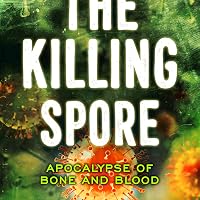
A very awesome book cover, great font & writing style. A very well written pandemic horror book. It was very easy for me to read/follow from start/finish & never a dull moment. There were no grammar/typo errors, nor any repetitive or out of line sequence sentences. Lots of exciting scenarios, with several twists/turns & a great set of unique characters to keep track of. This could also make another great pandemic horror movie, or better yet a mini TV series. To be continued. It was just OK for me, so I will only rate it at 4/5 stars.
Thank you for the free author; CreateSpace Independent Publishing Platform; DailyFreeBooks; Amazon Digital Services LLC.; book Tony Parsons MSW (Washburn)
Dr Jarvis is a psycho scientist who decides to unleash a virus to thin out the population and soon people are becoming infected and dying. At a remote holiday cabin, US Deputy Marshal Mason Raines escapes infection and is discovering bodies between him and the nearby town, and takes the time to rescue an abandoned Irish wolfhound which he names Bowie and nurses back to health. When Mason gets reports about a criminal gang taking over the town, he realises that it is up to him to deal with it.
Mason is very much a take-charge guy and he refuses to stop being a marshal just because the world has suddenly gone to hell. The idea of the town being taken over by a criminal gang does not sit easily with him and he is determined to mount a defence and take back the town so the people can start a new life as a community in the uncertain future. I liked Mason and was rooting for him and Father Patrick to hatch a plan to save the town. There were several good characters amongst the people in the town and I liked the way they were prepared to work together against the gang, despite their own limitations.
There was a lot to like in this book. The opening scenes where Mason was slowly working out what was happening and getting involved in town affairs was handled in what seemed to me to be a realistic manner. I liked the way the scene was set for battle with the criminals and found that interesting as it evolved. The big battle scene was exciting to read and well written, and yes, as usual I was worrying about the dog! WHY are these poor animals always so close to danger!!! It is bad for my nerves!
The other story that we follow is the prison escape of Mason's father Tanner, and as he heads home, he rescues a child from wreckage, unaware that Sam is being sought by rogue government agents who want to capture and use her. Tanner soon becomes aware that they are in danger and not just from the infected people who are starting to display zombie behaviour. Now every survivor must be viewed with suspicion. I liked Sam and Tanner and I did find their situation interesting to read about.
However, I wasn't greatly impressed by the other side story featuring the President. She is worrying about her husband and daughter who are missing, and this is used to manipulate her into signing executive orders which will kill many other survivors. Her decision not to get more information before taking such a drastic solution did not sit well with me and I thought she was portrayed as a weak woman pretending to be a President, and being easily manipulated by evil men around her. I didn't like her much.
The different versions of infected people were interesting. There were those who died from the infection, those infected who recovered but are still damaged by the infection, and now infected people showing zombie traits, which is making the government decide to kill all infected survivors. We know there are infected people alive in the town who helped in the battle so what is their fate going to be and will the town defend them? There are fascinating scenarios being set up for the rest of the series and I will be interested to see what happens next.
I recommend the book to readers of apocalypse and prepper fiction.
This is a chilling read, chilling because it is not some far-fetched tale, but rather a well-told story of what is not only feasible, but also a distinct possibility at some point.
Dr. Jarvis, a genius pioneer in microbiology and virology, is obsessed with the idea that mankind is a parasite destroying the earth and sees himself as the savior of the planet. He has the knowledge, the resources, and the means to develop a kind of super-smallpox virus, and he has the opportunity to introduce it on a world-wide basis almost simultaneously. He surmises a very small percentage of the earth’s population will survive but he really doesn’t care if every last human dies.
This parallel story line focuses on a small group of those survivors in Georgia and two in Alabama. Mason Raines, in Georgia, is a U.S. Marshall and firearms expert and instructor. The other unlikely protagonist/bad guy is Tanner Raines, a convict in an Alabama prison.
This book was fast paced, the characters well developed, and I particularly liked the interaction between Tanner Raines and elven year old Sam, daughter of the sequestered President of the United States.
The author does an excellent job of painting the picture of what would happen if a pandemic wiped out almost all of the population of the earth. Society and infrastructures would collapse. Life would be a minute-by-minute struggle for survival. His presentation is realistic and scary.
Well written. The book did end a bit abruptly, but that is often the case with a series. I am going to read the next one at least to find out what happens to Tanner and Sam. Highly recommended.
The author does a great job of quickly grabbing your attention and putting you smack in the middle of the story. The book focuses in on two groups in the country as they try to survive a flu pandemic. The author does a great job with the narration vs. a lot of what you see with some books where there is conversation just to have conversation, and takes the time to explain in layman’s terms what is going on as well as some of the disaster preparedness.
I think what struck me most of all about this book is it is something tangible most people can wrap their heads around - a worldwide pandemic and the sense of fear, panic, and the ensuing struggle as people try to survive. There aren't a lot of whistles and bells to this novel, but the author really makes you feel like you are there in the middle of the action. I had a hard time putting this one down, and I continue to think about it well after finishing it.
I picked this one up for just 99 cents for the Kindle version and received a lot more than that for entertainment value. I’ve gone and purchased the next book of the series, and will see where the author’s imagination takes us next.
I don't even know what to say about this book, It was a good thing it was free and I gave it two stars instead of one because it was free also it gave me something to do .. which was get to the end of it, the Author should not put romance in his books, he has no skills there. and he makes women out to be weak and kinda stupid. Honestly how many dead bodies do we need to hear about and they leave them laying around .. for a survivalist you would think he would know about things like the black plague and the innumerable other diseases a person could get with dead bodies just laying around. the dog was a nice touch .. but he should have been in a Dean Koontz book with his unusual understanding of things. I also thought Sam was a great character she was smarter then everyone in the whole book and she was only 11.
The characters had zero depth, and the only interesting character (Sam) was barely in the book. Granted this is a series so that might be forgivable, but the main character (Mason) had so little depth that I could literally sum him up in a single sentence and you'd how'd they react in every situation.