

What do you think?
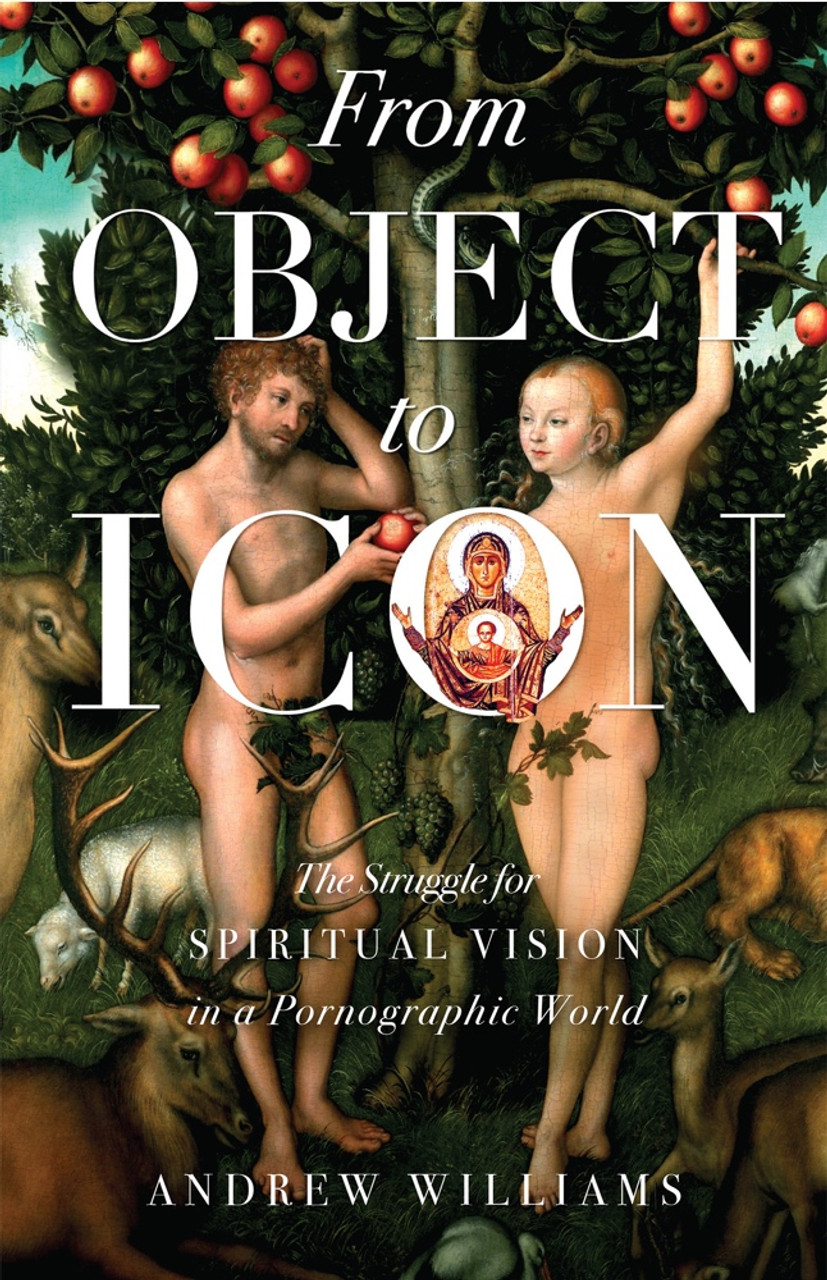
From Object to Icon: The Struggle for Spiritual Vision in a Pornographic World
Since the advent of the internet, it has become increasingly obvious that our society suffers from a pornography problem-and Orthodox Christians are no exception. While many practical resources are available to help those who struggle with pornography use, these fail to address the problem at its deeper, spiritual root. From Object to Icon offers a solution by showing all of us how to change the way we see-how to see iconographically rather than pornographically. Whether or not we struggle with pornography use, this book shows us how to stop objectifying others and instead see the spiritual reality in everyone we encounter.
266 pages, Paperback
Published August 6, 2023
About the author
Andrew Williams
272 books8 followersLibrarian Note: There is more than one author in the GoodReads database with this name. See this thread for more information.
Ratings & Reviews
Friends & Following
Create a free account to discover what your friends think of this book!
Community Reviews
Displaying 1 - 29 of 29 reviews

September 14, 2026
Well, well, well... this was intriguing, beautiful, and quite the journey through the heart of man.
In a way, it reminded me of the overall feel of A Quiet Mind to Suffer With, in that such a book was *about mental health* but really it was far more than a didactic or expository treatment of the topic. In similar ways, this one approached such a journey through the issue of pornography with repetitive concepts that more circle the topic, reframing the spiritual imagination of the heart. Both books do this gorgeously.
Of course, this book is written by an Orthodox author, so if it reads that way... don't be shocked. If you don't ascribe to their theology of icons or any of the rest of it, well, there will still be plenty here that's valuable.
Perhaps more to come in long form. I took pages and pages of notes, so really, I must!
In a way, it reminded me of the overall feel of A Quiet Mind to Suffer With, in that such a book was *about mental health* but really it was far more than a didactic or expository treatment of the topic. In similar ways, this one approached such a journey through the issue of pornography with repetitive concepts that more circle the topic, reframing the spiritual imagination of the heart. Both books do this gorgeously.
Of course, this book is written by an Orthodox author, so if it reads that way... don't be shocked. If you don't ascribe to their theology of icons or any of the rest of it, well, there will still be plenty here that's valuable.
Perhaps more to come in long form. I took pages and pages of notes, so really, I must!
November 8, 2024
The single best book I've read on the Orthodox theology of icons, iconography, and personhood. Recommended reading for anyone interested in why icons are so important to the Orthodox faith, or for inquirers or converts wondering why we venerate icons. An utterly profound exploration of what being human truly means. Adding this to my "read again" list.

January 21, 2025
Whether you have "porn problem" or not, we're living in a world with pornographic vision. This book is an incredible dive into the root of the problem that can only be addressed with recovering an iconographic vision of the world. Highly recommend. Will reread.
February 13, 2024
This book will become one of the must reads for my boy when he enters his teenage years. This book draws on the powerful twisting nature that sexual explicit imagery plays on each of us and how we may redirect our eyes in God's image. In 2005, when I was a teenager, about 25% of teenage boys viewed porn, in 2017 nearly 100% viewed it.
Both pornography and iconography draw on the human desire for connection. Pornography twists the real connection we can have with one another, it cuts ourselves off a person without taking any responsibility. Iconography, on the other hand, is about making ourselves vulnerable as we look into the face of the sanctified. This book not only tackles the dangers of an overly sexualized society, but it's purpose is to allow ourselves to become vulnerable instead of hiding behind masks. As we move from object to icon, we find freedom in acknowledging our vulnerability.
I Definitely recommend this book to any teenager, as there is a true "struggle for spiritual vision in a pornographic world."
Both pornography and iconography draw on the human desire for connection. Pornography twists the real connection we can have with one another, it cuts ourselves off a person without taking any responsibility. Iconography, on the other hand, is about making ourselves vulnerable as we look into the face of the sanctified. This book not only tackles the dangers of an overly sexualized society, but it's purpose is to allow ourselves to become vulnerable instead of hiding behind masks. As we move from object to icon, we find freedom in acknowledging our vulnerability.
I Definitely recommend this book to any teenager, as there is a true "struggle for spiritual vision in a pornographic world."

January 9, 2024
One of the best books I have ever read, it's one that changes the way that I must live, just by knowing the truth! I pray that this helps many see others around them in the image of God!!!
April 23, 2026
What a simply beautiful book. Except, it's not simple at all. It intertwines the secular statistical (in speaking on pornography's pervasiveness, for ex.) with the spiritual reverential. Particularly, it brings to the modern reader the apostolic and traditional Christian ethos and wisdom, devoid of any "fundamentalist conservatism" (fundamental of the last 100 years? Lol).
I must say, the way in which this book calls me out hits in a different way from secular books on the topic. He brings up a story of a monk facing lustful temptation, and how a demon was trying to convince him not to venerate the icon of Theotokos out of shame, whereas we learn that shunning these images is what the devil wants, and that properly venerating them is what we need. Not to be ashamed of them and look away, implicitly understanding them as taboo or forbidden (like men avoiding looking at women), but rather to look on with innocent veneration, appreciating the form from a divine perspective, to where the lust doesn't even occur to the mind. I have found this weakness in my own recovery, as I can remember times where after relapsing I would avoid praying my Rosary because I felt unworthy of it. How foolish, to think I would come closer to God following my mistakes by intentionally avoiding prayer. How funny is that? Such is all sinful folly.
The idea of "polishing one's mask" was an especially hard-hitting callout. I am immensely guilty of this. The willingness to break addiction is not enough, as he tells us. I became essentially addicted to "self-improvement", which did many good things for me, but perhaps for wrong reasons, and certainly didn't address the issue. I have people see me as this virtuous man striving for the best in every aspect, to cope with the shame of pornographic addiction.
I think that the ancient traditions of the Church reveal in a way that modern "worship" simply can't how the pornified world has exactly corrupted the world, and this book clearly portrays this. The veneration of icons is a direct contrast to the fallen nature of the pornified world, serving as the light whereas pornography is the dark corruption. It calls, in the same way, to the Eucharist being the center of our liturgy, where we are most present with God, versus abortion, where we go from "I sacrifice my body for you" to "I sacrifice your body for me". Let us understand, then, the Iconographic vs Pornographic vision of the world as Andrew Williams explains it. Pornography reduces people to objects for the purpose of personal appetites, whereas the icon reveals a spiritual reality, which goes past the physical form. Some other things to understand, in Williams' language, are masks and veils. Masks are artificial or performance based barriers that hide our truest self and which promote isolation/objectification. Veils are transparent coverings that mediate reality and invite true communication with the soul. "Veils, of course, are strongly associated with marriage; the veil is a symbol of union and the possibility of union. In contrast, the mask, representing sin and separation, is a symbol of play-acting, of deception, and of unfaithfulness." Williams argues we must be spiritually transformed through prayer/confession/sacramental life in order to heal our perception of the world and of others, away from the view of objects, but into living icons. Every man we see should be an image of Christ, and every woman an image of Mary. Let us expand.
Iconographic vs Pornographic.
In pornography, Williams says "we as human beings take other vulnerable human beings and use their images to feed our baser appetites in a manner that precludes any real encounter with them. In iconography, conversely, we encounter human beings in their images, and through meeting them, we meet God." This initial statement is so beautiful, and I think lives deep within ancient Church tradition. He points out "real encounters", which to me speaks directly back to the Eucharist, where we encounter Christ. To get the cheap imitation through pornography is to negate the true communion with each other, and negates the ability to see God in each other. One thing I always meditate on during the second joyful mystery of the rosary is the ability to see Christ in each other, because what we do to the least of us, we do to Him. To live the iconographic life is to see the Christ present in each other, is to live in a state of grace and to come into communion with the body of Christ. Icons are often called "windows into heaven", and Williams points out that "from the reverse perspective of the icon, heaven looks upon us." This statement seems hard to me, but I think I get his meaning, and I don't think he's necessarily personifying physical icons, further corroborated by this statement: "I practice idolatry when I see the created thing only in itself, and instead of seeing the power and glory of God in what He has created, I invest the creation itself with power. Similarly, in pornography I specifically see the flesh". Williams gives a brief, but I think important, defense of the use of icons. He references St. Athanasius in "On the Incarnation", which makes it possible for us to portray God in an icon. The Incarnation gave us the flesh to use to see the truth, to see God through the flesh. Obviously, this has a deep tie-in to the wicked perversion of this ideal in pornography. You don't look through the body to God in pornography, your baseness stops you at the material appetites consumed in the physical, and makes no attempt to transcend into the spiritual. Williams argues that the habitual use of pornography puts us into an objectified and idolized physical reality, as we control sex and orient it towards ourselves, which, by negating the ability to meet another person at a deep level, thus creates no way to meet God. The more carnal modes we live in, the more carnal we become, in which we see the flesh in everything, as opposed to seeing God beyond the flesh. Essentially, and Williams makes this connection too, when we channel sexual desire into pornography, it subverts connection in the same way that worshipping an idol as an end in itself does.
Williams touches on infidelity as an example of how pornography warps our human relationships. He says one may view pornography to gratify desire without "technically" cheating, due to their being no physical contact with anyone else, but "Faithfulness, however, is not a technicality". He simplifies what is meant by unfaithfulness as being "the act of turning away", which I find simple and poignant, and demonstrates that seeking sexual connection apart from one's spouse is inherent infidelity, regardless of how it's done. Sexual temptation, he argues, is attractive precisely because it's a subtle twisting of our true desire. Another truism, if I may say so. All evil, remember, is merely an inversion or imperfection of the good, and so too in love, lust is the incomplete or the twisted love. It is the desire to come into communion and eternal bond with someone else, fallen and misshapen into a physical and temporal connection, which ontologically must exist within the confines of time, whereas eternal matrimony lives outside its bounds. This highlights to me the immorality of sexual contact with someone before marriage, because if you end up not marrying that person, then your sexual contact is still a betrayal and a damaging act to your eternal spouse. Your marriage exists outside of time, and so even though you aren't "temporally" unfaithful, I still think any sexual contact prior to your relationship prior to meeting your spouse is unfaithful to the eternal covenant which would later be temporally revealed to you.
Williams speaks on the growing prevalence of pornography in our society, which is of course important to note (By 2020, as many as 90% men and 60% women in the US had used porn in the last month), but seeing as that is not the primary focus, and as I've made note of it in many other books, I will let that be glossed over here. What is important to note, is what the substantial effects of this are. Porn kills Love is a phrase I'm fond of, and its evident in our anecdotes here. "Even when he and I were intimate, the sex wasn’t intimate. We were two people just sort of taking care of ourselves with each other.” one woman says. Luckily, through the grace of God and our neuroplasticity, even just a couple of weeks devoid of pornography has shown remarkable change in how we begin to view the opposite sex.
The perpetuating cycle of pornography for many people, especially among Christians, is one of shame and despair. "the internal judgment of my own conscience, however buried, is enough. So trying to hide my shame in pornography use can lead to a vicious circle, where shame causes me to turn to pornography, which in turn increases the very shame that led me there in the first place." Essentially, we meld into our sin, we become unable to separate our being from an association with sin, and continue to cyclically fall into it. This is where Williams draws us into icon veneration. "The way we begin to purify our vision and our desires is by venerating the holy icons, venerating with our whole selves—body, mind, and spirit. Sometimes I may feel unworthy to approach the saint in the icon because of the impurity of my soul, but this is backwards: I need to start with veneration, and that is the path to finding purity." What an all too common story! How many times I have wanted to shun the blessed virgin or Christ Himself, because I felt too lowly to approach! Alas we know that He does not call the qualified, he qualifies the called. And there will be more joy in Heaven over one sinner who repents than over 99 righteous persons who have no need of repentance! "Shame: The delusion that death is victorious" And of course we can come to see, as Williams demonstrates through a monk's lust story, that the devil's true plan is not to merely tempt us into lust, but to shame us away from venerating the icon, and from worshipping Christ. Williams calls us to a more natural, ancient love. He brings up the concept of Eros, which he says is "a love that desires an ever fuller and more complete union—as distinct from agape, which is a love that acts for the good of the other. In an icon, eros and agape meet as we cease to be at the center of things and our earthly desires touch another world beyond that immediately visible to our senses."
Williams speaks of "masks", which are artificial barriers we put up to the world, showing who we want them to see, in turn "covers the true image of God in [us]". Either consciously or unconsciously, we use these masks which make it harder for others to perceive us as we truly are. Examples of using masks: inauthenticity, objectification, and isolation. He ties this into our habitual sin which mirrors addiction, and how willingness to change is not sufficient itself. With only the willingness to change, "The best I can do is resolve to do something that will 'improve' me superficially - but this may do nothing more than polish and beautify my mask. Its a common story, to confess these same sins. To want so badly to be better and to determine oneself to change, only to give into temptation yet again. I've been guilty of this myself. I can recall times when I'd be out the day after falling and carrying myself with a certain macho bravado, as if proving to everyone else (though truly to myself) that I was a "real man", when of course, what I was doing behind closed doors betrayed that. Williams tells us that healing begins when we become aware of our own masks, and the ones we impose on others. This I think I still have trouble with. I think I understand conceptually this idea of artificial barriers, caricatures, if you will, of ourselves and others, but IDing them is hard. Williams speaks on three such masks: lust, shame, and fantasy. These things hold characteristics of all masks: "they are flesh disconnected from the spirit of life, delusions that drive us from all truth, and ultimately a mockery of God, denying our dependence on Him." I will say, while repetitive and at times seemingly grasping for one-liners, this books call-outs still feel bruising. I think that the mask analogy is supposed to create this two way view, in which you elevate yourself and denigrate the other. Take what Williams describes for lust: "From the viewpoint of my lust mask, I appear to be more than I really am, but the other appears to be only what he, she, or it is in fact. In other words, I do not allow others to transcend their physical bodies; I do not recognize them as images of God to venerate, while at the same time seeing myself as much more than my physical body alone". This is why pornography in particular is so dangerous, Williams argues. Because even in a physical relationship initiated by lust, upon making physical connection, you are forced to encounter them at least partially in their reality, rather than just the mask, whereas the physical separation of pornography disturbs this chance, and masks impossible to connect with that person in reality, creating instead only perpetual fantasy.
It's important to separate righteous guilt from defeating shame. "Guilt refers to my awareness that I have committed some kind of sin in thought, word, or deed. I feel uncomfortable about this incongruence with what I believe and with the person I would like to be, and that enables me to reflect, repent where necessary, and live on. Shame, on the other hand, occurs when I cannot distinguish my sin in thought, word, or deed from my true nature: in shame it seems to me (consciously or unconsciously) that the sin reflects who I really am in the depths of my heart." This sort of shame is toxic, and doesn't allow us to see sin as a temptation foreign to our nature as persons made in Imago Dei. Dropping this shame allows us to disown the sin. I believe part of this fixation on icons is that, as Williams says, we will never fully realize the vision of love without masks on this Earth, and so I think this window into Heaven, this iconographic view of the world, allows us to offer and receive the vision of what that perfected world would look like.
Lust and shame, while issues for me, are easier to handle. Williams incursion on fantasy, however, is a righteously tough pill to swallow. "Fantasy is designed to protect me from the dangers of reality—or at least create for me a more palatable version of reality—but has the effect of cutting me off from the possibility of real relationship." Where the gut punch comes is in speaking of sexual fantasy, Williams holds the mirror up to us and reminds us of our high calling and standard as believers: "Sexual fantasy, in particular, is pornography of the mind. And just as with pornography, this is sexual abuse." He speaks of Christs teaching on lust in the heart, and says that since this occurs without consent, our sexual fantasizing is "to rape her in my heart". In my fantasy I am all-powerful—even if I do not think of myself that way as I fantasize. Godlike, I create worlds and people; godlike, I destroy them. But this is a mockery of God, for none of it connects to Reality, and therefore none of it can ultimately satisfy. Relating pornography to fantasy, he speaks on extreme content and fetishization which naturally would not occur to us. He argues that fantasy builds on fantasy, and (as can be read in neuro-science literature) that this parallels toleration in addiction, in which the addict needs increasingly intense stimuli for the same effect. And so the drain of fantasy into pornography builds upon itself like a tower of babel, trying to take Godlike control over what is His alone.
Williams seems to take a hard stance against despair. He tells us that it is at our lowest point that a fullness of life may begin that we couldn't imagine. Hope is of course one of the three theological virtues, which inspires us to realize our redemption and salvation in Christ's resurrection and ascension. One of our greatest tools is to build the liturgical life, which Williams reminds us should bleed into our entire lives, not just typical participation. Despair, he says, prevents us from hoping that the current pain will be over, and so we turn to our coping behaviors. Icons can give us a sense of hope, because while they aren't the fullness of reality themselves, they give us a window into the fullness of reality.
The ultimate aim of seeing the world Iconographically is very interesting, and I think goes against typical tried methods of abstaining from lust. Rather than avoiding looking at beautiful women, for instance, Williams' argument here is essentially that if we were living iconographically, we could freely look at beautiful women without viewing them pornographically. "if I were pure in heart and eye, I would be able to see the misdirection of the demonic mask as a veil in itself and find a way to relate to the angelic life beyond." This might be a stretch beyond what Williams means, but it seems to me that a thing is not inherently pornographic per se, but rather can be a reflection of the viewer. "I may look at an image and see a pornographic picture, while another may look at the same image and see a person made in God’s image". This is why the fight against lust must be on two fronts: holding to certain modest standards, yes, but also holding a covenant of the eyes. The case of Sodom seems to be the inversion of what we aspire for. "Can we even imagine being so desensitized that, seeing an icon of Christ, we could experience Him as an object for lust? This seems to be what happened to the men of Sodom."
Williams refers to Simone Weil in warning against dissociation as a form of despair essentially. "Simone Weil identified this in her famous comment that there are “two ways of killing ourselves: suicide or detachment.” To dissociate, to hide behind our mask, is to reject vulnerability, to reject truth. Vulnerability is scary, Williams agrees, "But in reality, seeing, facing, acknowledging, and knowing my vulnerability is strength". The Church is there to help us, because we are not strong enough to turn from sin alone. We must confess our sins and turn to the mysteries of the Church. Furthermore, we must not despair, because as long as we're alive, there is a chance to enter into the Father's house. There are two things required of us to overcome the pornified lens: humility and love. These are things we must choose, that we must embody. These are habits, not just mere acts. The story of the OT is Israel's love for God, and her unfaithfulness, always seeking lesser than perfect unions. The root of our lust is not necessarily evil, Williams says, but a missing of the mark, which defines all sin. Christ is the full man, and to lack fullness, to lack Christ, is sin. Williams encourages confession, which he describes as coming to ourselves and seeing who we really are. "Through repentance we can find that life of meaning and communion, of joy and of fulfillment. Without repentance, we can only sink further into existential despair." God always knows us, but we must know ourselves. Our desire is a thirst for the infinite, which we do have capacity for, but only God can fill it.
Brief points b/c low on space:
- Incarnation justifies icons, which prevent us from denying the incarnation
- Don't despair over your wretched saint. Your kiss on the icon may not be totally pure, but nothing puts you beyond God's love
- This book introduced me to St Mary of Egypt! Now a personal favorite
"Knowledge of God's love means knowledge of possibility for me to be loved, and that it is good to love me, because God only ever does good. I do not need to search after love; I already have it"
A/A+ Tier. At times repetitive; there are occasional points of ortho theology i don't align with, but overall a beautiful find.
I must say, the way in which this book calls me out hits in a different way from secular books on the topic. He brings up a story of a monk facing lustful temptation, and how a demon was trying to convince him not to venerate the icon of Theotokos out of shame, whereas we learn that shunning these images is what the devil wants, and that properly venerating them is what we need. Not to be ashamed of them and look away, implicitly understanding them as taboo or forbidden (like men avoiding looking at women), but rather to look on with innocent veneration, appreciating the form from a divine perspective, to where the lust doesn't even occur to the mind. I have found this weakness in my own recovery, as I can remember times where after relapsing I would avoid praying my Rosary because I felt unworthy of it. How foolish, to think I would come closer to God following my mistakes by intentionally avoiding prayer. How funny is that? Such is all sinful folly.
The idea of "polishing one's mask" was an especially hard-hitting callout. I am immensely guilty of this. The willingness to break addiction is not enough, as he tells us. I became essentially addicted to "self-improvement", which did many good things for me, but perhaps for wrong reasons, and certainly didn't address the issue. I have people see me as this virtuous man striving for the best in every aspect, to cope with the shame of pornographic addiction.
I think that the ancient traditions of the Church reveal in a way that modern "worship" simply can't how the pornified world has exactly corrupted the world, and this book clearly portrays this. The veneration of icons is a direct contrast to the fallen nature of the pornified world, serving as the light whereas pornography is the dark corruption. It calls, in the same way, to the Eucharist being the center of our liturgy, where we are most present with God, versus abortion, where we go from "I sacrifice my body for you" to "I sacrifice your body for me". Let us understand, then, the Iconographic vs Pornographic vision of the world as Andrew Williams explains it. Pornography reduces people to objects for the purpose of personal appetites, whereas the icon reveals a spiritual reality, which goes past the physical form. Some other things to understand, in Williams' language, are masks and veils. Masks are artificial or performance based barriers that hide our truest self and which promote isolation/objectification. Veils are transparent coverings that mediate reality and invite true communication with the soul. "Veils, of course, are strongly associated with marriage; the veil is a symbol of union and the possibility of union. In contrast, the mask, representing sin and separation, is a symbol of play-acting, of deception, and of unfaithfulness." Williams argues we must be spiritually transformed through prayer/confession/sacramental life in order to heal our perception of the world and of others, away from the view of objects, but into living icons. Every man we see should be an image of Christ, and every woman an image of Mary. Let us expand.
Iconographic vs Pornographic.
In pornography, Williams says "we as human beings take other vulnerable human beings and use their images to feed our baser appetites in a manner that precludes any real encounter with them. In iconography, conversely, we encounter human beings in their images, and through meeting them, we meet God." This initial statement is so beautiful, and I think lives deep within ancient Church tradition. He points out "real encounters", which to me speaks directly back to the Eucharist, where we encounter Christ. To get the cheap imitation through pornography is to negate the true communion with each other, and negates the ability to see God in each other. One thing I always meditate on during the second joyful mystery of the rosary is the ability to see Christ in each other, because what we do to the least of us, we do to Him. To live the iconographic life is to see the Christ present in each other, is to live in a state of grace and to come into communion with the body of Christ. Icons are often called "windows into heaven", and Williams points out that "from the reverse perspective of the icon, heaven looks upon us." This statement seems hard to me, but I think I get his meaning, and I don't think he's necessarily personifying physical icons, further corroborated by this statement: "I practice idolatry when I see the created thing only in itself, and instead of seeing the power and glory of God in what He has created, I invest the creation itself with power. Similarly, in pornography I specifically see the flesh". Williams gives a brief, but I think important, defense of the use of icons. He references St. Athanasius in "On the Incarnation", which makes it possible for us to portray God in an icon. The Incarnation gave us the flesh to use to see the truth, to see God through the flesh. Obviously, this has a deep tie-in to the wicked perversion of this ideal in pornography. You don't look through the body to God in pornography, your baseness stops you at the material appetites consumed in the physical, and makes no attempt to transcend into the spiritual. Williams argues that the habitual use of pornography puts us into an objectified and idolized physical reality, as we control sex and orient it towards ourselves, which, by negating the ability to meet another person at a deep level, thus creates no way to meet God. The more carnal modes we live in, the more carnal we become, in which we see the flesh in everything, as opposed to seeing God beyond the flesh. Essentially, and Williams makes this connection too, when we channel sexual desire into pornography, it subverts connection in the same way that worshipping an idol as an end in itself does.
Williams touches on infidelity as an example of how pornography warps our human relationships. He says one may view pornography to gratify desire without "technically" cheating, due to their being no physical contact with anyone else, but "Faithfulness, however, is not a technicality". He simplifies what is meant by unfaithfulness as being "the act of turning away", which I find simple and poignant, and demonstrates that seeking sexual connection apart from one's spouse is inherent infidelity, regardless of how it's done. Sexual temptation, he argues, is attractive precisely because it's a subtle twisting of our true desire. Another truism, if I may say so. All evil, remember, is merely an inversion or imperfection of the good, and so too in love, lust is the incomplete or the twisted love. It is the desire to come into communion and eternal bond with someone else, fallen and misshapen into a physical and temporal connection, which ontologically must exist within the confines of time, whereas eternal matrimony lives outside its bounds. This highlights to me the immorality of sexual contact with someone before marriage, because if you end up not marrying that person, then your sexual contact is still a betrayal and a damaging act to your eternal spouse. Your marriage exists outside of time, and so even though you aren't "temporally" unfaithful, I still think any sexual contact prior to your relationship prior to meeting your spouse is unfaithful to the eternal covenant which would later be temporally revealed to you.
Williams speaks on the growing prevalence of pornography in our society, which is of course important to note (By 2020, as many as 90% men and 60% women in the US had used porn in the last month), but seeing as that is not the primary focus, and as I've made note of it in many other books, I will let that be glossed over here. What is important to note, is what the substantial effects of this are. Porn kills Love is a phrase I'm fond of, and its evident in our anecdotes here. "Even when he and I were intimate, the sex wasn’t intimate. We were two people just sort of taking care of ourselves with each other.” one woman says. Luckily, through the grace of God and our neuroplasticity, even just a couple of weeks devoid of pornography has shown remarkable change in how we begin to view the opposite sex.
The perpetuating cycle of pornography for many people, especially among Christians, is one of shame and despair. "the internal judgment of my own conscience, however buried, is enough. So trying to hide my shame in pornography use can lead to a vicious circle, where shame causes me to turn to pornography, which in turn increases the very shame that led me there in the first place." Essentially, we meld into our sin, we become unable to separate our being from an association with sin, and continue to cyclically fall into it. This is where Williams draws us into icon veneration. "The way we begin to purify our vision and our desires is by venerating the holy icons, venerating with our whole selves—body, mind, and spirit. Sometimes I may feel unworthy to approach the saint in the icon because of the impurity of my soul, but this is backwards: I need to start with veneration, and that is the path to finding purity." What an all too common story! How many times I have wanted to shun the blessed virgin or Christ Himself, because I felt too lowly to approach! Alas we know that He does not call the qualified, he qualifies the called. And there will be more joy in Heaven over one sinner who repents than over 99 righteous persons who have no need of repentance! "Shame: The delusion that death is victorious" And of course we can come to see, as Williams demonstrates through a monk's lust story, that the devil's true plan is not to merely tempt us into lust, but to shame us away from venerating the icon, and from worshipping Christ. Williams calls us to a more natural, ancient love. He brings up the concept of Eros, which he says is "a love that desires an ever fuller and more complete union—as distinct from agape, which is a love that acts for the good of the other. In an icon, eros and agape meet as we cease to be at the center of things and our earthly desires touch another world beyond that immediately visible to our senses."
Williams speaks of "masks", which are artificial barriers we put up to the world, showing who we want them to see, in turn "covers the true image of God in [us]". Either consciously or unconsciously, we use these masks which make it harder for others to perceive us as we truly are. Examples of using masks: inauthenticity, objectification, and isolation. He ties this into our habitual sin which mirrors addiction, and how willingness to change is not sufficient itself. With only the willingness to change, "The best I can do is resolve to do something that will 'improve' me superficially - but this may do nothing more than polish and beautify my mask. Its a common story, to confess these same sins. To want so badly to be better and to determine oneself to change, only to give into temptation yet again. I've been guilty of this myself. I can recall times when I'd be out the day after falling and carrying myself with a certain macho bravado, as if proving to everyone else (though truly to myself) that I was a "real man", when of course, what I was doing behind closed doors betrayed that. Williams tells us that healing begins when we become aware of our own masks, and the ones we impose on others. This I think I still have trouble with. I think I understand conceptually this idea of artificial barriers, caricatures, if you will, of ourselves and others, but IDing them is hard. Williams speaks on three such masks: lust, shame, and fantasy. These things hold characteristics of all masks: "they are flesh disconnected from the spirit of life, delusions that drive us from all truth, and ultimately a mockery of God, denying our dependence on Him." I will say, while repetitive and at times seemingly grasping for one-liners, this books call-outs still feel bruising. I think that the mask analogy is supposed to create this two way view, in which you elevate yourself and denigrate the other. Take what Williams describes for lust: "From the viewpoint of my lust mask, I appear to be more than I really am, but the other appears to be only what he, she, or it is in fact. In other words, I do not allow others to transcend their physical bodies; I do not recognize them as images of God to venerate, while at the same time seeing myself as much more than my physical body alone". This is why pornography in particular is so dangerous, Williams argues. Because even in a physical relationship initiated by lust, upon making physical connection, you are forced to encounter them at least partially in their reality, rather than just the mask, whereas the physical separation of pornography disturbs this chance, and masks impossible to connect with that person in reality, creating instead only perpetual fantasy.
It's important to separate righteous guilt from defeating shame. "Guilt refers to my awareness that I have committed some kind of sin in thought, word, or deed. I feel uncomfortable about this incongruence with what I believe and with the person I would like to be, and that enables me to reflect, repent where necessary, and live on. Shame, on the other hand, occurs when I cannot distinguish my sin in thought, word, or deed from my true nature: in shame it seems to me (consciously or unconsciously) that the sin reflects who I really am in the depths of my heart." This sort of shame is toxic, and doesn't allow us to see sin as a temptation foreign to our nature as persons made in Imago Dei. Dropping this shame allows us to disown the sin. I believe part of this fixation on icons is that, as Williams says, we will never fully realize the vision of love without masks on this Earth, and so I think this window into Heaven, this iconographic view of the world, allows us to offer and receive the vision of what that perfected world would look like.
Lust and shame, while issues for me, are easier to handle. Williams incursion on fantasy, however, is a righteously tough pill to swallow. "Fantasy is designed to protect me from the dangers of reality—or at least create for me a more palatable version of reality—but has the effect of cutting me off from the possibility of real relationship." Where the gut punch comes is in speaking of sexual fantasy, Williams holds the mirror up to us and reminds us of our high calling and standard as believers: "Sexual fantasy, in particular, is pornography of the mind. And just as with pornography, this is sexual abuse." He speaks of Christs teaching on lust in the heart, and says that since this occurs without consent, our sexual fantasizing is "to rape her in my heart". In my fantasy I am all-powerful—even if I do not think of myself that way as I fantasize. Godlike, I create worlds and people; godlike, I destroy them. But this is a mockery of God, for none of it connects to Reality, and therefore none of it can ultimately satisfy. Relating pornography to fantasy, he speaks on extreme content and fetishization which naturally would not occur to us. He argues that fantasy builds on fantasy, and (as can be read in neuro-science literature) that this parallels toleration in addiction, in which the addict needs increasingly intense stimuli for the same effect. And so the drain of fantasy into pornography builds upon itself like a tower of babel, trying to take Godlike control over what is His alone.
Williams seems to take a hard stance against despair. He tells us that it is at our lowest point that a fullness of life may begin that we couldn't imagine. Hope is of course one of the three theological virtues, which inspires us to realize our redemption and salvation in Christ's resurrection and ascension. One of our greatest tools is to build the liturgical life, which Williams reminds us should bleed into our entire lives, not just typical participation. Despair, he says, prevents us from hoping that the current pain will be over, and so we turn to our coping behaviors. Icons can give us a sense of hope, because while they aren't the fullness of reality themselves, they give us a window into the fullness of reality.
The ultimate aim of seeing the world Iconographically is very interesting, and I think goes against typical tried methods of abstaining from lust. Rather than avoiding looking at beautiful women, for instance, Williams' argument here is essentially that if we were living iconographically, we could freely look at beautiful women without viewing them pornographically. "if I were pure in heart and eye, I would be able to see the misdirection of the demonic mask as a veil in itself and find a way to relate to the angelic life beyond." This might be a stretch beyond what Williams means, but it seems to me that a thing is not inherently pornographic per se, but rather can be a reflection of the viewer. "I may look at an image and see a pornographic picture, while another may look at the same image and see a person made in God’s image". This is why the fight against lust must be on two fronts: holding to certain modest standards, yes, but also holding a covenant of the eyes. The case of Sodom seems to be the inversion of what we aspire for. "Can we even imagine being so desensitized that, seeing an icon of Christ, we could experience Him as an object for lust? This seems to be what happened to the men of Sodom."
Williams refers to Simone Weil in warning against dissociation as a form of despair essentially. "Simone Weil identified this in her famous comment that there are “two ways of killing ourselves: suicide or detachment.” To dissociate, to hide behind our mask, is to reject vulnerability, to reject truth. Vulnerability is scary, Williams agrees, "But in reality, seeing, facing, acknowledging, and knowing my vulnerability is strength". The Church is there to help us, because we are not strong enough to turn from sin alone. We must confess our sins and turn to the mysteries of the Church. Furthermore, we must not despair, because as long as we're alive, there is a chance to enter into the Father's house. There are two things required of us to overcome the pornified lens: humility and love. These are things we must choose, that we must embody. These are habits, not just mere acts. The story of the OT is Israel's love for God, and her unfaithfulness, always seeking lesser than perfect unions. The root of our lust is not necessarily evil, Williams says, but a missing of the mark, which defines all sin. Christ is the full man, and to lack fullness, to lack Christ, is sin. Williams encourages confession, which he describes as coming to ourselves and seeing who we really are. "Through repentance we can find that life of meaning and communion, of joy and of fulfillment. Without repentance, we can only sink further into existential despair." God always knows us, but we must know ourselves. Our desire is a thirst for the infinite, which we do have capacity for, but only God can fill it.
Brief points b/c low on space:
- Incarnation justifies icons, which prevent us from denying the incarnation
- Don't despair over your wretched saint. Your kiss on the icon may not be totally pure, but nothing puts you beyond God's love
- This book introduced me to St Mary of Egypt! Now a personal favorite
"Knowledge of God's love means knowledge of possibility for me to be loved, and that it is good to love me, because God only ever does good. I do not need to search after love; I already have it"
A/A+ Tier. At times repetitive; there are occasional points of ortho theology i don't align with, but overall a beautiful find.
September 16, 2026
While keeping pornography as we know it (the vile sexual content on the internet) always in focus, proceeds to reach to far more profound depths of sin, spiritual blindness, and the hope and healing offered by Christ through an iconological, iconographic vision. Ultimately, this is a treatise on all passions and addictions, and the folly of man as he seeks peace, relationship, and joy in things that are outside of God and his grace.
The most fascinating teaching in this book is on iconography, and what the author calls and “iconological” life. This teaching is rich, deep, beautiful, edifying, and applies to everything, far more than just as a defense against lust. Having such wonderful iconographic theology in this book that the cover/title made seem like this would be exclusively focused on pornography, was like looking for gold and finding diamonds. Loved it.
Also fantastic was the orthodox teaching on how the body and soul are tied together, and the exploration of icons in liminal space the material world, and the oft-forgotten but very real spiritual world. I got tired of these words used ad nauseam, but the teaching on “veils” and “masks” was enlightening. (some of the teaching would be better received if rendered succinctly, there’s quite a bit of repetition, redundancy, and overuse of the same vernacular.
To support the ideas espoused herein, the author cites many studies and professional opinions on the subject matter discussed, so this book weaves back and forth from a scholarly exploration to a theological discourse. First few chapters had a really interesting “history” of pornography, and etymological study of the word across times and cultures.
Very worth the read if you have any struggles with sin (you do.), and even more worth it if lust is chief among them. convicting and l encouraging, offers tremendous strength and wisdom against the passions.
The most fascinating teaching in this book is on iconography, and what the author calls and “iconological” life. This teaching is rich, deep, beautiful, edifying, and applies to everything, far more than just as a defense against lust. Having such wonderful iconographic theology in this book that the cover/title made seem like this would be exclusively focused on pornography, was like looking for gold and finding diamonds. Loved it.
Also fantastic was the orthodox teaching on how the body and soul are tied together, and the exploration of icons in liminal space the material world, and the oft-forgotten but very real spiritual world. I got tired of these words used ad nauseam, but the teaching on “veils” and “masks” was enlightening. (some of the teaching would be better received if rendered succinctly, there’s quite a bit of repetition, redundancy, and overuse of the same vernacular.
To support the ideas espoused herein, the author cites many studies and professional opinions on the subject matter discussed, so this book weaves back and forth from a scholarly exploration to a theological discourse. First few chapters had a really interesting “history” of pornography, and etymological study of the word across times and cultures.
Very worth the read if you have any struggles with sin (you do.), and even more worth it if lust is chief among them. convicting and l encouraging, offers tremendous strength and wisdom against the passions.

June 7, 2026
I'm glad I came across this book. The correlation between holy icons and pornographic imagery, which the author clearly defines as more than just explicit content, is a very fascinating concept which I've never heard before. The Orthodox theology on iconography is so beautiful and thought-provoking, and the way it directly contrasts with pornography is a very obvious connection once presented. Porn, as defined in the book, obviously includes explicit content, but goes beyond that to include any and all imagery which objectifies other people, thus emphasizing vigilance in a pornographic world.
The core message of the book is that we, as Christians, must cultivate an "icongraphic vision" that sees individuals as living icons that reflect the image of God, and not a pornographic vision that fails to see beyond the physical as an object for consumption. Therefore, iconographic venerates and pornographic objectifies.
All humans bear the image of God, and whether they respect themselves or not, we must see the image of God reflected within them and so give them the veneration and respect they deserve, not falling to lust.
I really enjoyed the Orthodox theology of the Icons, which was described in great detail in this book, and in contrast to "the devil's iconography" that is pornography.
There is also a common theme throughout the book, which is the concept of "Masks and Veils." Masks are opaque barriers that hide, disfigure, deceive, or obscure true reality. They represent performance, defense mechanisms, projections, and inauthenticity we impose on ourselves and others, covering the image of God and blocking genuine communion, leading to isolation and objectification.
Veils, by contrast, are transparent or semi-transparent coverings that invite, reveal intentionally, suggest, and enable two-way communication and visibility. They mediate deeper spiritual realities, allowing us to see through the physical and behavioral to the soul.
The key spiritual movement is the softening or transformation of masks into veils through practices like prayer, icon veneration, confession (revealing our true face), asceticism, and sacraments, enabling us to see and relate to others (and ourselves) as living icons rather than objects.
The core message of the book is that we, as Christians, must cultivate an "icongraphic vision" that sees individuals as living icons that reflect the image of God, and not a pornographic vision that fails to see beyond the physical as an object for consumption. Therefore, iconographic venerates and pornographic objectifies.
All humans bear the image of God, and whether they respect themselves or not, we must see the image of God reflected within them and so give them the veneration and respect they deserve, not falling to lust.
I really enjoyed the Orthodox theology of the Icons, which was described in great detail in this book, and in contrast to "the devil's iconography" that is pornography.
There is also a common theme throughout the book, which is the concept of "Masks and Veils." Masks are opaque barriers that hide, disfigure, deceive, or obscure true reality. They represent performance, defense mechanisms, projections, and inauthenticity we impose on ourselves and others, covering the image of God and blocking genuine communion, leading to isolation and objectification.
Veils, by contrast, are transparent or semi-transparent coverings that invite, reveal intentionally, suggest, and enable two-way communication and visibility. They mediate deeper spiritual realities, allowing us to see through the physical and behavioral to the soul.
The key spiritual movement is the softening or transformation of masks into veils through practices like prayer, icon veneration, confession (revealing our true face), asceticism, and sacraments, enabling us to see and relate to others (and ourselves) as living icons rather than objects.

April 18, 2025
✨🌿God does not call us to cut off desire at the root but to don the wedding garment and join the banquet 🌿✨
September 18, 2023
Pornography is increasingly a powerful force in our modern world. However, the pornographic mindset that Williams describes is even more prevalent.
The main structure of the book sets pornography against iconography as antithetical worldviews.
A man who sees pornographically sees the whole world as object, including himself. To see iconographically, on the other hand, is to see through the veil of material things and physical people, to the deeper realities underlying them, and ultimately to God.
Williams does a really good job developing these ideas, and elaborates by using a comparison to masks (pornographic mindset) and veils (iconographic mindset).
To wear a mask is to hide, disfigure, deceive, or obscure reality.
To wear a veil is to invite, to reveal intentionally, to trust and rely on the deeper realities of life.
The essence of these two worldviews then, are sexual pornography on the one hand, and icons of saints, Christ, and the Theotokos on the other hand.
Porn is the complete objectification of the other, and as Williams points out, ultimately objectification of the self.
Icons within the church, however, are images that are made to convey spiritual truths and realities far beyond the wood and paint that compose them physically.
Our goal then, according to Williams, is to pursue an iconographic vision to the extent that we begin to see the whole world this way. That each person we run into would be an icon of Christ to be venerated and loved.
This is a great book, and Williams does a very good job of maintaining a humble and edifying tone while discussing a very challenging topic.
The main structure of the book sets pornography against iconography as antithetical worldviews.
A man who sees pornographically sees the whole world as object, including himself. To see iconographically, on the other hand, is to see through the veil of material things and physical people, to the deeper realities underlying them, and ultimately to God.
Williams does a really good job developing these ideas, and elaborates by using a comparison to masks (pornographic mindset) and veils (iconographic mindset).
To wear a mask is to hide, disfigure, deceive, or obscure reality.
To wear a veil is to invite, to reveal intentionally, to trust and rely on the deeper realities of life.
The essence of these two worldviews then, are sexual pornography on the one hand, and icons of saints, Christ, and the Theotokos on the other hand.
Porn is the complete objectification of the other, and as Williams points out, ultimately objectification of the self.
Icons within the church, however, are images that are made to convey spiritual truths and realities far beyond the wood and paint that compose them physically.
Our goal then, according to Williams, is to pursue an iconographic vision to the extent that we begin to see the whole world this way. That each person we run into would be an icon of Christ to be venerated and loved.
This is a great book, and Williams does a very good job of maintaining a humble and edifying tone while discussing a very challenging topic.
January 5, 2025
I have always been fascinated with the ideas of perceptions and the fact we see the world through a story or narrative. For example, we don't perceive objects as their atomic makeup or matter, but instead see stories, narratives, and ways objects can be used or obtained (for example, you don't see the matter of a cup; instead, you see a way to drink or hold water—you see meaning).
This book aims to explore this divide between the meaning of objects and our perspectives. For instance, the author presents this view or idea (through Orthodox Christianity) in terms of masks and veils. Masks are the reality or story we wish to see (or that are put on to block the reality) of objects or people. For instance, seeing myself as someone I'm not or failing to see the reality of a woman/person in pornography. Veils are instead the opposite, allowing for visibility into the reality of people and objects. Seeing myself for who I am, being able to connect with individuals and see them for who they truly are—without all my projections, fantasies, and desires. Essentially, a mask obscures a person or object, while a veil communicates the person or object's presence or meaning.
For example, if I removed all my conditionings and instead saw the world through a veil (there are chapters dedicated to how), I would be able to connect and love the world and see the horrors of pornography for what it truly is (or any sin/deed).
Andrew argues that icons, or iconography, are no different than language or numbers. They are representations of reality. They ARE reality. "Language, [or even numbers], are veils—they always stand between us and the reality we are trying to communicate or trying to perceive."
This book is also really a dive into the nature of sin, not just pornography (in fact, I would say this book has little to do with pornography and more to do with addictions, sin, perceptions, and how to grow closer to God). Hence the title of the book. It is essentially a manual on how to move from viewing people and things as mere objects (materialistic/rational/pornographic) to viewing them as having meaning, importance, love, and, most importantly, God. All through a proper spiritual vision or fix of perception.
The topics discussed in this book are too deep and profound to leave a short review on, hence the need for an entire book on such topics. But they will forever leave one with a much better understanding of the nature of the universe and reality/truth.
Furthermore, it must be said that these topics, particularly that of the narrative/perception and its relationship to reality, meaning, and truth, are something so heavily under-researched and discarded—particularly due to universities and academia's focus on materialistic empiricism—that they are in an immense need for further research (as I thank Andrew himself for pursuing) because I genuinely believe there is something we are missing in our understandings of nature, being, meaning, and truth.
This book derives teachings from saints, Christianity, orthodoxy, neuroscience, Greek, and psychology. Leaving a compelling and in-depth analysis of the topics discussed at hand. It is a deeply profound book to read, going against every modern form of perception and deeply challenging and fixing the materialistic/rationalistic/pornographic mindset.
The subjects discussed in this book are my favorite subjects to talk about and investigate. It is very hard to find books or even people who are interested in such things. Especially in our current culture. And I think Andrew Williams, through the beautiful and true works of Orthodox Christianity, is providing us with a solution (and vision) of the reality of the world around us to help aid us in these modern, chaotic times.
Thank you Andrew.
This book aims to explore this divide between the meaning of objects and our perspectives. For instance, the author presents this view or idea (through Orthodox Christianity) in terms of masks and veils. Masks are the reality or story we wish to see (or that are put on to block the reality) of objects or people. For instance, seeing myself as someone I'm not or failing to see the reality of a woman/person in pornography. Veils are instead the opposite, allowing for visibility into the reality of people and objects. Seeing myself for who I am, being able to connect with individuals and see them for who they truly are—without all my projections, fantasies, and desires. Essentially, a mask obscures a person or object, while a veil communicates the person or object's presence or meaning.
For example, if I removed all my conditionings and instead saw the world through a veil (there are chapters dedicated to how), I would be able to connect and love the world and see the horrors of pornography for what it truly is (or any sin/deed).
Andrew argues that icons, or iconography, are no different than language or numbers. They are representations of reality. They ARE reality. "Language, [or even numbers], are veils—they always stand between us and the reality we are trying to communicate or trying to perceive."
This book is also really a dive into the nature of sin, not just pornography (in fact, I would say this book has little to do with pornography and more to do with addictions, sin, perceptions, and how to grow closer to God). Hence the title of the book. It is essentially a manual on how to move from viewing people and things as mere objects (materialistic/rational/pornographic) to viewing them as having meaning, importance, love, and, most importantly, God. All through a proper spiritual vision or fix of perception.
The topics discussed in this book are too deep and profound to leave a short review on, hence the need for an entire book on such topics. But they will forever leave one with a much better understanding of the nature of the universe and reality/truth.
Furthermore, it must be said that these topics, particularly that of the narrative/perception and its relationship to reality, meaning, and truth, are something so heavily under-researched and discarded—particularly due to universities and academia's focus on materialistic empiricism—that they are in an immense need for further research (as I thank Andrew himself for pursuing) because I genuinely believe there is something we are missing in our understandings of nature, being, meaning, and truth.
This book derives teachings from saints, Christianity, orthodoxy, neuroscience, Greek, and psychology. Leaving a compelling and in-depth analysis of the topics discussed at hand. It is a deeply profound book to read, going against every modern form of perception and deeply challenging and fixing the materialistic/rationalistic/pornographic mindset.
The subjects discussed in this book are my favorite subjects to talk about and investigate. It is very hard to find books or even people who are interested in such things. Especially in our current culture. And I think Andrew Williams, through the beautiful and true works of Orthodox Christianity, is providing us with a solution (and vision) of the reality of the world around us to help aid us in these modern, chaotic times.
Thank you Andrew.

March 28, 2024
I first encountered Andrew Williams’ work in 2016 via Ancient Faith Radio when he did a short podcast series called, ‘Finding the Freedom to Live.’ It was incredibly eye-opening for me, and I found the series to be beneficial as well. I have re-listened to it many times over the years, and benefited from it each time.
Listeners of that podcast will recognize some examples, and themes addressed in this book, but there is also a lot covered in this book that wasn’t covered in the podcast. The book is just as insightful as the podcast, and I can definitely see myself revisiting it many times in the future.
Listeners of that podcast will recognize some examples, and themes addressed in this book, but there is also a lot covered in this book that wasn’t covered in the podcast. The book is just as insightful as the podcast, and I can definitely see myself revisiting it many times in the future.

September 16, 2023
It's about getting past the mask we wear to hide the broken places inside of us to who we really are- made in the image of God, but also sinful and broken. Pornography is the form of darkness which received the focus, but any addiction, any idol that has gripped us tight calls for the crucial self-examination described here in the book so that we may be healed. There's no 5 step method described here to achieve this. But there are plenty of dots to connect that can get us moving toward the goal of wholeness in Christ. Not a particularly easy read; it has a lot of substance.

March 29, 2024
A helpful read. Definitely one to struggle with though.
July 24, 2026
Wonderfully insightful book, however I think it's marketed wrong! The focus of the book is about seeing one another iconographically - seeing Christ in one another. I can understand, however, that it is important to demonstrate to readers the polar opposite of this way of living, i.e. seeing the world through a pornified lens and objectifying all those you see in person or through a screen. My point is that this book is not solely addressed to porn addicts (whose ranks, glory to God, I have not been among for a long time now). It is addressed to everyone, for we all live in the same, unavoidable, pornified world. How do we navigate life in this world? Well, the book addressed that in spectacular fashion.
It also demonstrates very well the importance of venerating icons, being vulnerable before them and in prayer. It calls us to venerate one another as icons of Christ, to see others not with our physical eyes, but with our minds eyes (the nous).
It has been especially helpful for me in coming to understand my dismissive avoidant ex-girlfriend, who I have nothing but love for, and in coming to terms with how she discarded me. I've come to understand that the avoidant and toxic behaviours she exhibits are just the result of a mask she has come to wear. I'm not sure whether this mask is to shield against men with ill intentions, whether it is a result of past trauma, or whether it is simply a way to hide without addressing complex mental health needs; it would not be charitable for me to conclusively ascribe one particular reason. I know, however, that this is a mask, because I have known her, loved her, and been loved by her, for some time before this mask went up. I have seen the kind and sensitive woman that hides behind the mask; I have been lucky enough and she has been comfortable enough with me previously to show me this vulnerability that lies behind the mask. You can never truly know a person like God does, however I feel like I have seen her previously through a veil, seen her as an icon of Christ, and venerated all her beautiful qualities. It was her, after all, that brought me to the Eastern Orthodox faith, and watching her pray inspired me spiritually.
Having read this book, I understand now that through consistent prayer, attendance to the liturgy, inward reflection, sacrifice, and through trying to view the world iconographically, I will be able to see behind the masks that others wear for a number of complex, personal reasons. I will be able to see behind hers too, if I am ever to see her face and hear her voice again. Instead of letting the cruel nature of our separation bring me to resentment and hatred, I will be able to find forgiveness and understanding in my heart. I will continue to see her as an icon of Christ, even as she persists in wearing this cold, distant mask.
I've already found myself putting some of this book's wisdom into practice. I find I am far more open with friends, family, and colleagues about my feelings, experiences, and faith. I find myself being more vulnerable around them, whilst remaining dependable (socially and professionally), strong, and joyful.
A quote from the book:
To hide behind the mask is to make myself alone, and yet, "it is not good for the person to be alone" (Genesis. 2:18).
God bless everyone reading. God bless her. Lord Jesus Christ, son of God, have mercy on me, a sinner.
It also demonstrates very well the importance of venerating icons, being vulnerable before them and in prayer. It calls us to venerate one another as icons of Christ, to see others not with our physical eyes, but with our minds eyes (the nous).
It has been especially helpful for me in coming to understand my dismissive avoidant ex-girlfriend, who I have nothing but love for, and in coming to terms with how she discarded me. I've come to understand that the avoidant and toxic behaviours she exhibits are just the result of a mask she has come to wear. I'm not sure whether this mask is to shield against men with ill intentions, whether it is a result of past trauma, or whether it is simply a way to hide without addressing complex mental health needs; it would not be charitable for me to conclusively ascribe one particular reason. I know, however, that this is a mask, because I have known her, loved her, and been loved by her, for some time before this mask went up. I have seen the kind and sensitive woman that hides behind the mask; I have been lucky enough and she has been comfortable enough with me previously to show me this vulnerability that lies behind the mask. You can never truly know a person like God does, however I feel like I have seen her previously through a veil, seen her as an icon of Christ, and venerated all her beautiful qualities. It was her, after all, that brought me to the Eastern Orthodox faith, and watching her pray inspired me spiritually.
Having read this book, I understand now that through consistent prayer, attendance to the liturgy, inward reflection, sacrifice, and through trying to view the world iconographically, I will be able to see behind the masks that others wear for a number of complex, personal reasons. I will be able to see behind hers too, if I am ever to see her face and hear her voice again. Instead of letting the cruel nature of our separation bring me to resentment and hatred, I will be able to find forgiveness and understanding in my heart. I will continue to see her as an icon of Christ, even as she persists in wearing this cold, distant mask.
I've already found myself putting some of this book's wisdom into practice. I find I am far more open with friends, family, and colleagues about my feelings, experiences, and faith. I find myself being more vulnerable around them, whilst remaining dependable (socially and professionally), strong, and joyful.
A quote from the book:
To hide behind the mask is to make myself alone, and yet, "it is not good for the person to be alone" (Genesis. 2:18).
God bless everyone reading. God bless her. Lord Jesus Christ, son of God, have mercy on me, a sinner.
September 22, 2023
I was very excited to start reading From Object to Icon: The Struggle for Spiritual Vision in a Pornographic World by Andrew Williams, especially when I heard that this book was not just for pornography addicts. As we find out in the book, pornography is simply a symptom of a much wider problem – not viewing people (including ourselves) as icons of Christ. As a recent convert to Orthodox Christianity, I am eager to see the world in new ways, especially if it will help me to love God and my neighbors better. I suspected this work would help me do so, but it has even gone beyond that. I have learned more about icons and the reasons behind venerating them – why they are so necessary to Orthodoxy and an Orthodox phronema.
There are also several chapters devoted to the masks we create that keep us separated from our neighbors and the path toward communion – whether it be healing/wholeness, an iconographic vision of God’s creation, or ultimately, theosis. In preparation for communion, in all its meanings, we must confess and reveal our true face by removing our masks. It truly was an answer to prayer to read the chapter about confession, which talks about confessing our true faces, not simply the deeds we have done or not done.
Another thing that impressed me is how Mr. Williams identifies with the reader. Mr. Williams explains about his usage of the first person in the book and how we need to identify with all sorts of sins that, on the surface, we may think we’re not guilty of but really are.
I have also found that the author did a podcast for Ancient Faith Radio called Finding the Freedom to Live, which seems to cover a lot of the book’s content, but I haven’t listened to all of the episodes yet. It is a great supplement to the printed book, which surprises me because I am a usually retain information better from printed material. Even after listening to the podcast, I imagine I will be re-reading the book at least one more time so I can further internalize this important shift in mindset for me.
There are also several chapters devoted to the masks we create that keep us separated from our neighbors and the path toward communion – whether it be healing/wholeness, an iconographic vision of God’s creation, or ultimately, theosis. In preparation for communion, in all its meanings, we must confess and reveal our true face by removing our masks. It truly was an answer to prayer to read the chapter about confession, which talks about confessing our true faces, not simply the deeds we have done or not done.
Another thing that impressed me is how Mr. Williams identifies with the reader. Mr. Williams explains about his usage of the first person in the book and how we need to identify with all sorts of sins that, on the surface, we may think we’re not guilty of but really are.
I have also found that the author did a podcast for Ancient Faith Radio called Finding the Freedom to Live, which seems to cover a lot of the book’s content, but I haven’t listened to all of the episodes yet. It is a great supplement to the printed book, which surprises me because I am a usually retain information better from printed material. Even after listening to the podcast, I imagine I will be re-reading the book at least one more time so I can further internalize this important shift in mindset for me.

February 16, 2026
To be frank I’m not too sure what to say about this book; on the one hand this work opened my eyes to the essence of what sin truly is, a twisting of that which is good and sanctified. In this regard I’ve come to understand my deeper self and needs in Christ and in communion with his creation and I’ve been reinvigorated in my struggle with all my sins of which there are many.
I am not ashamed to say that I’ve wept many a year during prayers and liturgies, ashamed of my many sins and the unbearable thought that every sin I commit is to make a mockery of Christs suffering for me. However this book looks at it from a different perspective, that a man ought to feel regret not shame, for regret is the belief that your sin is part of who you truly are, however regret is to acknowledge that your sin thought evil and wicked is a perversion or mask of who you were created to be, and that in your weakness it is inevitable that you should sin. Hence when you fall do not despair but pray and repent for to fail to do so is the true mockery of Christs suffering.
A large speaking point of this book is the idea of the hearts eye and how if your heart is not pure than you will be unable to recognise and venerate others as image bearers of Christ, so how do we obtain this pure heart? How do we turn the masks of this reality into veils? The simple answer is through the ascetic practices of prayer, fasting and confession as well as communion for it is in the liturgy that we come into complete love for each other, who amongst our brethren can gaze upon his sister and strip her of personhood when before him is the altar and throne of the most high and all loving God.
All in all I’d say this book is a treasure trove for those struggling with any sin or passion; after reading this I can say that my perception of sin, the world and others has been changed for the better. I give this book a 3.9/5 rating.
I am not ashamed to say that I’ve wept many a year during prayers and liturgies, ashamed of my many sins and the unbearable thought that every sin I commit is to make a mockery of Christs suffering for me. However this book looks at it from a different perspective, that a man ought to feel regret not shame, for regret is the belief that your sin is part of who you truly are, however regret is to acknowledge that your sin thought evil and wicked is a perversion or mask of who you were created to be, and that in your weakness it is inevitable that you should sin. Hence when you fall do not despair but pray and repent for to fail to do so is the true mockery of Christs suffering.
A large speaking point of this book is the idea of the hearts eye and how if your heart is not pure than you will be unable to recognise and venerate others as image bearers of Christ, so how do we obtain this pure heart? How do we turn the masks of this reality into veils? The simple answer is through the ascetic practices of prayer, fasting and confession as well as communion for it is in the liturgy that we come into complete love for each other, who amongst our brethren can gaze upon his sister and strip her of personhood when before him is the altar and throne of the most high and all loving God.
All in all I’d say this book is a treasure trove for those struggling with any sin or passion; after reading this I can say that my perception of sin, the world and others has been changed for the better. I give this book a 3.9/5 rating.
January 31, 2024
I picked this one up when looking at the most popular new books coming from an Eastern Orthodox press, Ancient Faith Publishing. The idea sounded really interesting . . . how to view the world iconographically instead of pornographicly. I know very little about the Orthodox view of icons still, but this book was a surprisingly helpful and and beautiful take on spiritual vision, whether you are orthodox or not (like me).
The author's main contention is that we should never look at people as severed from spirit, as severed from the image of God they were created in. Instead, we should view them as the orthodox view icons - the image that we see through to the image of God beneath. To deny the spiritual value in a person is the only way to justify many harms, including pornography but also much more than that. When we deny the value in a person and refuse to look past the physical, we also have to deny the same in ourselves and 'forget' that we too are created in the image of God.
I loved this book but its very thought provoking. I found reading one chapter a day was plenty. Highly recommend this one for anyone who wants to wrestle with some difficult but rewarding concepts. Like it or not, we live in a pornographic world and this book helps the reader to see a different way.
The author's main contention is that we should never look at people as severed from spirit, as severed from the image of God they were created in. Instead, we should view them as the orthodox view icons - the image that we see through to the image of God beneath. To deny the spiritual value in a person is the only way to justify many harms, including pornography but also much more than that. When we deny the value in a person and refuse to look past the physical, we also have to deny the same in ourselves and 'forget' that we too are created in the image of God.
I loved this book but its very thought provoking. I found reading one chapter a day was plenty. Highly recommend this one for anyone who wants to wrestle with some difficult but rewarding concepts. Like it or not, we live in a pornographic world and this book helps the reader to see a different way.

April 21, 2025
Ostensibly a book about porn, this is one of the best books of Orthodox theology I’ve read. Pornography here is essentially a stand-in for sin. Williams offers a clear-eyed, deeply hopeful and helpful, view of the human predicament, repentance, and redemption. Recommended to all teen through adult Orthodox Christians, and anyone else willing to wade through some potentially new terminology and concepts (the nous, iconography, etc.)

June 10, 2025
A great, in-depth look at pornography and how it twists worship of Christ. If Christ is in every created thing, how could we lust after him through those things? (way easier said than done). This goes into what St. Augustine teaches. When he sought ultimate meaning in the world, he was lost. But once he encountered God, he understood what it was to really live.
A little repetitive, hence not 5 stars, especially if you already understand the science behind trauma and recovery.
A little repetitive, hence not 5 stars, especially if you already understand the science behind trauma and recovery.

April 4, 2025
Not just about porn.
This book was so helpful to me as it describes how we should strive to see others in this life and how venerating icons can help show us the way. It’s a book I believe I will re-read as it has so much richness. Everyone should read this book, even if you don’t personally struggle with pornography; it’s about so much more than that. Wonderfully and insightfully written.
This book was so helpful to me as it describes how we should strive to see others in this life and how venerating icons can help show us the way. It’s a book I believe I will re-read as it has so much richness. Everyone should read this book, even if you don’t personally struggle with pornography; it’s about so much more than that. Wonderfully and insightfully written.
November 7, 2024
This book is for everyone, not just pornography addicts. Indeed, it is about being able to look past an world in which everything is an object somehow meant to serve our needs, to something much larger, deeper, and real.

December 17, 2024
I'd recommend this to anyone struggling with any addiction, not just pornography. I think that at the heart, the book addresses our deep thirst to be truly seen and loved. It describes a path toward seeing ourselves how Chirst sees us.
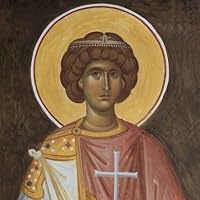
June 24, 2026
Williams places the issue of pornography in light of iconography and the veneration of icons in the Byzantine tradition. I absolutely loved this book and the direction that Williams takes. I believe that this is a must read for everyone.

April 30, 2025
Would have given it 5 based on content alone but the delivery in the book wasn't as reader/listener friendly as his podcast series "Finding the Freedom to Live" on the same material
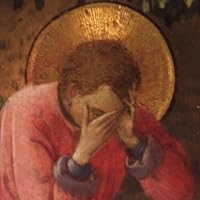
September 27, 2025
I rate a lot of books five stars, but man - this book is genuinely life changing, life giving.
October 17, 2025
One of the greatest books I've read on spiritual struggle. Every Christian should read this, as it has so much insight into this world.

April 20, 2026
a must read to return to sanity and sobriety

July 19, 2026
Wow!!!
Displaying 1 - 29 of 29 reviews