

What do you think?

War God #1
War God: Nights of the Witch
A young girl called Tozi stands at the bottom of a pyramid, waiting to be led to the top where her heart will be cut out...
Pepillo, a Spanish orphan who serves a sadistic Dominican friar, is aboard the Spanish fleet as it sails towards Mexico...
This is the epic story of the clash of two empires, two armies and two gods of war. Five hundred desperate adventurers are about to pit themselves against the most brutal armies of the ancient Americas, armies hundreds of thousands strong.
This is a war of gods and men. Dark powers that work behind the scenes of history show their hand as the prophecy of the return of Quetzalcoatl is fulfilled with the arrival of Cortes. The Aztec ruler Moctezuma fights to maintain the demands of the war god Huitzilopochtli for human sacrifice. The Spanish Inquisition is planning an even greater blood-letting.
Caught up in the headlong collision between two gods of war are Tozi, Pepillo and the beautiful sex slave Malinal whose hatred of Moctezuma runs so deep she will sell out her own land and people to destroy him.
Pepillo, a Spanish orphan who serves a sadistic Dominican friar, is aboard the Spanish fleet as it sails towards Mexico...
This is the epic story of the clash of two empires, two armies and two gods of war. Five hundred desperate adventurers are about to pit themselves against the most brutal armies of the ancient Americas, armies hundreds of thousands strong.
This is a war of gods and men. Dark powers that work behind the scenes of history show their hand as the prophecy of the return of Quetzalcoatl is fulfilled with the arrival of Cortes. The Aztec ruler Moctezuma fights to maintain the demands of the war god Huitzilopochtli for human sacrifice. The Spanish Inquisition is planning an even greater blood-letting.
Caught up in the headlong collision between two gods of war are Tozi, Pepillo and the beautiful sex slave Malinal whose hatred of Moctezuma runs so deep she will sell out her own land and people to destroy him.
568 pages, Paperback
First published January 1, 2013
About the author
Graham Hancock
129 books4,227 followersGraham Hancock is a British writer and journalist. His books include Lords of Poverty, The Sign and the Seal, Fingerprints of the Gods, Keeper of Genesis (released in the US as Message of the Sphinx), The Mars Mystery, Heaven's Mirror (with wife Santha Faiia), Underworld: The Mysterious Origins of Civilization, Talisman: Sacred Cities, Secret Faith (with co-author Robert Bauval), Supernatural: Meeting with the Ancient Teachers of Mankind and Magicians of the Gods. He also wrote and presented the Channel 4 documentaries Underworld: Flooded Kingdoms of the Ice Age and Quest for the Lost Civilisation. His first novel, Entangled, was published in 2010.
Ratings & Reviews
Friends & Following
Create a free account to discover what your friends think of this book!
Community Reviews
Displaying 1 - 30 of 116 reviews

November 15, 2014

Description: A young girl called Tozi stands at the bottom of a pyramid, waiting to be led to the top where her heart will be cut out...
Pepillo, a Spanish orphan who serves a sadistic Dominican friar, is aboard the Spanish fleet as it sails towards Mexico...
This is the epic story of the clash of two empires, two armies and two gods of war. Five hundred desperate adventurers are about to pit themselves against the most brutal armies of the ancient Americas, armies hundreds of thousands strong.
This is a war of gods and men. Dark powers that work behind the scenes of history show their hand as the prophecy of the return of Quetzalcoatl is fulfilled with the arrival of Cortes. The Aztec ruler Moctezuma fights to maintain the demands of the war god Huitzilopochtli for human sacrifice. The Spanish Inquisition is planning an even greater blood-letting.
Caught up in the headlong collision between two gods of war are Tozi, Pepillo and the beautiful sex slave Malinal whose hatred of Moctezuma runs so deep she will sell out her own land and people to destroy him.
Opening: Tenochtitlan (Mexico City), Thursday 18 February 1519: Moctezuma loved eminences, for to stand on any high place was to be reminded that he was the greatest and most magnificent of men, wielding the power of life and death over all he surveyed. Yet of the countless high places in his kingdom, none offered him a deeper and more abiding sense of ownership, or clearer evidence of his own importance, than the summit platform of the colossal pyramid on which he now perched, soaring three hundred feet above his glorious capital city Tenochtitlan, which in turn stood on an island in the midst of a vast lake at the centre of an immense valley surrounded by lofty, snow-capped mountains.
 As expected, the beginning is a veritable gorefest of human sacrifice - those Aztecs weren't big on heart, unless you're talking about ripping it out of a live body! The book is a top to toe bloody adventure, which is in keeping with the subject, yet I am sure that the reader doesn't have to be shown so many gore scenes, we get the picture Mr. Hancock, truly we do.
 The different storylines are very exciting in their own right, especially when Cortes does a moonlight flit in one chapter, whilst the three are at the top of the pyramid in the next. Phewie!
□ □ □ □ □ □ □
LATER: as the adventure proceeds there is increased switching between all the perspectives, a mere couple of paragraphs to a storyline then...
switch
switch
switch
For me, this heightened the excitement, yet I can see that others will get fed up, RIGHT HERE, with this approach because honestly, there is a huge cast of two dimensional characters in what can only be called teams, each with their own agenda.
If you fancy a blood soaked story ending in a battle between three gods then I can recommend this
□ □ □ □ □ □ □
BEST LINES:
'You know nothing, Ahuizotl! - Memories of Jon Snow - P.206
'Moctezuma felt it coming now, felt death all over him like a swarm of bees' - Memories of Eddie Izzard - P.208
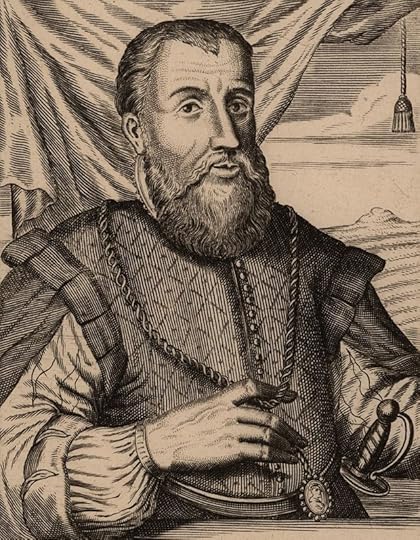 Diego Velasquez de Cuellar
FROM WIKI: Noting the weakness of the natives, Velázquez authorized the importation of black slaves in 1513. He authorized various expeditions to explore lands further west, including the 1517 Francisco Hernández de Córdoba expedition to Yucatán (see: Spanish Conquest of Yucatán), and Juan de Grijalva's 1518 expedition. He was made the 1st Adelantado of Cuba with jurisdiction over the former Governorship of the Indies. He initially backed Hernán Cortés's famous expedition to Mexico but pulled back his support before the expedition was scheduled to launch and then that was the end. Cortés disobeyed Velázquez's orders to disband his expeditionary force and left for Mexico anyway.
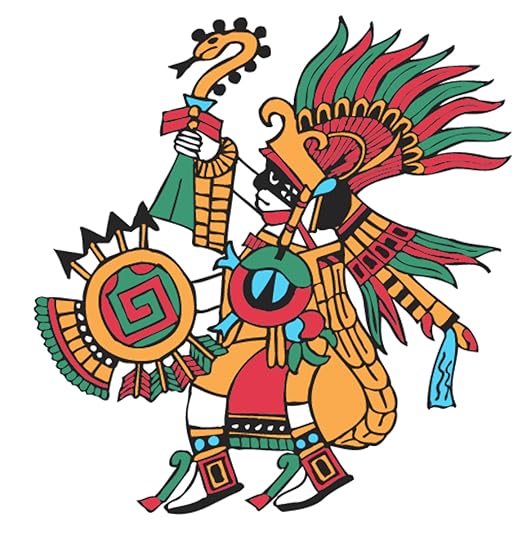 Huitzilopochtli
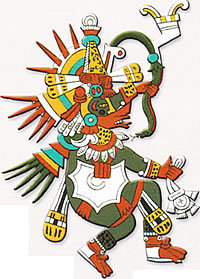 Quetzalcoatl
By the way, does anyone else remember Atari's Montezuma's Revenge? This book reminds me of that game.
If you would prefer a non-fiction then I heartily recommend this. It is just as crammed with gore, natch!
3* Fingerprints of the Gods: The Evidence of Earth's Lost Civilization
4* The Sign and the Seal: The Quest for the Lost Ark of the Covenant
TR Supernatural: Meetings with the Ancient Teachers of Mankind
4* The Message of the Sphinx: A Quest for the Hidden Legacy of Mankind
3* Heaven's Mirror: Quest for the Lost Civilization
1* Entangled
CR War God
4* Talisman: Sacred Cities, Secret Faith

May 8, 2015
3.5 *
With some historical facts included and several mystical scenes, the tale begins in the year 1519 as the Aztecs sacrifice literally thousands of people on top of their sacred pyramid. Unknown to them the gold hungry Spaniards are about to arrive on their shores and take their treasures at any cost. Graham Hancock provides a superb and powerful story while introducing several strong characters as they struggle to survive and find peace in their lives. For readers who are not faint of heart as it is extremely graphic with much blood and gore, along with massive battle scenes.
With some historical facts included and several mystical scenes, the tale begins in the year 1519 as the Aztecs sacrifice literally thousands of people on top of their sacred pyramid. Unknown to them the gold hungry Spaniards are about to arrive on their shores and take their treasures at any cost. Graham Hancock provides a superb and powerful story while introducing several strong characters as they struggle to survive and find peace in their lives. For readers who are not faint of heart as it is extremely graphic with much blood and gore, along with massive battle scenes.

June 7, 2018
We jump back 200 years from my last book & start C 1519
The chapters are told through different POV’s with a common timeline & introductions are swiftly made through the first 50 pages. Further characters do come into the story but they follow the storylines of the main characters.
Our story starts with Moctezuma & we are introduced to the world of the Mexicas (commonly referred to as the Aztecs) through his eyes, they are a warlike people who subjugate all around them making them pay tribute else they make war & take prisoners for human sacrifice (which is covered in some detail early on)...... he comes across as a tad unhinged. Within his prisoner pens where thousands are held awaiting ritual sacrifice we are introduced to a teenage girl (14 year old Tozi) who is renounced as a witch by all around..... YES Magic is involved; more like mind control / hypnosis if you will plus she can fade out of vision....... It’s a bit eye rolling at first but the chapters are short & we at least get a view from those suffering at the hands of the Aztecs.
The Tlascalans who stand alone against the Aztecs are represented through the eyes of one of their war chiefs & through this POV we learn about the peoples of the time, belief systems & the alike.
From the Spanish side we of course we have THE Hernan Cortes, it would be remiss without him! His trusted lieutenant also has a role to play who is a bit of a dab hand with a sword. Pepillo, another youngster comes to us early on, an orphan raised by the Dominican monks who has been seconded to the expedition, that of Cortes sailing to the new lands in the West from Cuba, to serve as a page to a certain Father Munoz...... Boo Hiss..... none other than an Inquisitor who is portrayed/typecast as a religious zealot & sadistic sodomite to boot, from the off.
I found myself fully engrossed within the first 100 pages, enjoying the historical setting & the array of characters the author has created/utilised. The chapters are short & do tend to leave a cliffhanger or three at the end of every POV. I would also say some of the characters are a little overdramatic at times but I’ll admit I found it a lively opening & a really enjoyable tale set on the eve of the Spanish conquest of the Americas.
However...... at jus over halfway some of the plotting is a little weak within the Mexicas camp (Moctezuma & Tozi specifically) with the “magic/god” element becoming more & more fantastical to such an extent that Tozi, now being able to “fade” for longer, certainly becomes handy, for when the plots get a tad dodge....... eye roll! Some of the characters are becoming a bit too dramatic as well whilst others are jus plain pathetic & have outlived their need...... a shame as I was quite enjoying the opening story.....
That said, the last 150 pages deal mostly with the conquistadors invasion of the new lands & “contact” with the Mayans & it’s a good read depicting the warcraft of the era along with a dose of intrigue through the sub-plots...... as well as major battle scenes. The impact/differences in religion are also covered & fits well within the story.
Overall.... If you want human sacrifices, tripping on shrooms, sword fights, mass battles, treachery, evil inquisitors with a fair splash of magic under the guise of historical fiction then look no further...... if you don’t, well this book might very well disappoint. I’l admit it does get silly at times what with Moctezuma conversing with his god “hummingbird” whilst on mushrooms & Cortes having a one-to-one with St Peter whilst he’s dreaming but putting that aside it’s mostly good fun, certainly it needs to be read in that context. The fantastical element (or two) does get stronger as you go deeper into the book, reminds me a bit of certain David Gemmil stories Ive read in that actuality & it’s not really a pure historical fiction novel come journey’s end. Jus don’t take it too seriously & you’ll be fine as the h/f content is still good & it’s a period not all that well covered hence my interest.
As a caveat you’ll need to enjoy both h/f & fantasy, certainly not one for the purists amongst you.
Me though I mostly enjoyed it, 3.75 stars rounded up to 4 for this swashbuckler! Now if they’d kept to a superstition based ingredient within the Mexicas pov’s instead of delving into fantastical magic I would have rated much much higher as that would have been more within the realm of believability!
The chapters are told through different POV’s with a common timeline & introductions are swiftly made through the first 50 pages. Further characters do come into the story but they follow the storylines of the main characters.
Our story starts with Moctezuma & we are introduced to the world of the Mexicas (commonly referred to as the Aztecs) through his eyes, they are a warlike people who subjugate all around them making them pay tribute else they make war & take prisoners for human sacrifice (which is covered in some detail early on)...... he comes across as a tad unhinged. Within his prisoner pens where thousands are held awaiting ritual sacrifice we are introduced to a teenage girl (14 year old Tozi) who is renounced as a witch by all around..... YES Magic is involved; more like mind control / hypnosis if you will plus she can fade out of vision....... It’s a bit eye rolling at first but the chapters are short & we at least get a view from those suffering at the hands of the Aztecs.
The Tlascalans who stand alone against the Aztecs are represented through the eyes of one of their war chiefs & through this POV we learn about the peoples of the time, belief systems & the alike.
From the Spanish side we of course we have THE Hernan Cortes, it would be remiss without him! His trusted lieutenant also has a role to play who is a bit of a dab hand with a sword. Pepillo, another youngster comes to us early on, an orphan raised by the Dominican monks who has been seconded to the expedition, that of Cortes sailing to the new lands in the West from Cuba, to serve as a page to a certain Father Munoz...... Boo Hiss..... none other than an Inquisitor who is portrayed/typecast as a religious zealot & sadistic sodomite to boot, from the off.
I found myself fully engrossed within the first 100 pages, enjoying the historical setting & the array of characters the author has created/utilised. The chapters are short & do tend to leave a cliffhanger or three at the end of every POV. I would also say some of the characters are a little overdramatic at times but I’ll admit I found it a lively opening & a really enjoyable tale set on the eve of the Spanish conquest of the Americas.
However...... at jus over halfway some of the plotting is a little weak within the Mexicas camp (Moctezuma & Tozi specifically) with the “magic/god” element becoming more & more fantastical to such an extent that Tozi, now being able to “fade” for longer, certainly becomes handy, for when the plots get a tad dodge....... eye roll! Some of the characters are becoming a bit too dramatic as well whilst others are jus plain pathetic & have outlived their need...... a shame as I was quite enjoying the opening story.....
That said, the last 150 pages deal mostly with the conquistadors invasion of the new lands & “contact” with the Mayans & it’s a good read depicting the warcraft of the era along with a dose of intrigue through the sub-plots...... as well as major battle scenes. The impact/differences in religion are also covered & fits well within the story.
Overall.... If you want human sacrifices, tripping on shrooms, sword fights, mass battles, treachery, evil inquisitors with a fair splash of magic under the guise of historical fiction then look no further...... if you don’t, well this book might very well disappoint. I’l admit it does get silly at times what with Moctezuma conversing with his god “hummingbird” whilst on mushrooms & Cortes having a one-to-one with St Peter whilst he’s dreaming but putting that aside it’s mostly good fun, certainly it needs to be read in that context. The fantastical element (or two) does get stronger as you go deeper into the book, reminds me a bit of certain David Gemmil stories Ive read in that actuality & it’s not really a pure historical fiction novel come journey’s end. Jus don’t take it too seriously & you’ll be fine as the h/f content is still good & it’s a period not all that well covered hence my interest.
As a caveat you’ll need to enjoy both h/f & fantasy, certainly not one for the purists amongst you.
Me though I mostly enjoyed it, 3.75 stars rounded up to 4 for this swashbuckler! Now if they’d kept to a superstition based ingredient within the Mexicas pov’s instead of delving into fantastical magic I would have rated much much higher as that would have been more within the realm of believability!

May 14, 2018
-Directa a video, si hablásemos de cine.-
Género. Novela histórica (a su particular manera, hay que aclararlo).
Lo que nos cuenta. El libro El dios de la guerra: las noches de la bruja (publicación original: War God, 2013) nos lleva a Tenochtitlan a medidados de febrero de 1519, cuando Moctezuma se prepara para dirigir en persona los sacrificios a Huitzilopochtli. Entre las prisioneras se encuentra la joven Tozi, con ciertos poderes sobrenaturales, que trata de cuidar de su amigo Cóyotl, un niño enfermo. En Santiago de Cuba se prepara una expedición hacia tierras aztecas, comandada por Hernán Cortés, en la que tomará parte el joven Pepillo al servicio del sacerdote Gaspar Muñoz. Primer libro de la serie El dios de la guerra.
¿Quiere saber más de este libro, sin spoilers? Visite:
http://librosdeolethros.blogspot.com/...
Género. Novela histórica (a su particular manera, hay que aclararlo).
Lo que nos cuenta. El libro El dios de la guerra: las noches de la bruja (publicación original: War God, 2013) nos lleva a Tenochtitlan a medidados de febrero de 1519, cuando Moctezuma se prepara para dirigir en persona los sacrificios a Huitzilopochtli. Entre las prisioneras se encuentra la joven Tozi, con ciertos poderes sobrenaturales, que trata de cuidar de su amigo Cóyotl, un niño enfermo. En Santiago de Cuba se prepara una expedición hacia tierras aztecas, comandada por Hernán Cortés, en la que tomará parte el joven Pepillo al servicio del sacerdote Gaspar Muñoz. Primer libro de la serie El dios de la guerra.
¿Quiere saber más de este libro, sin spoilers? Visite:
http://librosdeolethros.blogspot.com/...
July 17, 2013
Very exciting story about the Spanish conquest of the new world, although this book is only part one of a series. I liked most of Hancock's non-fiction and was pleasantly surprised by Entangled, his first work of fiction. In War God he shows himself a skillful writer of exciting historical fiction, spinning a fascinating tale full of adventure, violence, drama and more than a whiff of the supernatural. I can't wait for the sequel.

July 14, 2013
Graham Hancock has ventured into novel writing to great effect.
Known for his excellent investigative pieces in alternative viewpoints on history and archeology, his writing might have been too didactic to be entertaining. In fact, the reverse is true. His empathy for the history of the 16th Century and its excesses of zealotry, underpin an excellent evocation of an era. To call this book a fantasy is a misnomer. Some fantastical things happen, but they are within the belief systems of the characters and so work rather well.
Here is my full Amazon review (there are no spoilers)
Clash of the War Gods
Fasten your seat-belts for a roller-coaster ride when you embark on War God. You meet, in short order, young Pepillo by Santiago harbour, carrying the unspeakable belongings of his master, the dark hearted inquisitor. At the same time, a few hundred miles away from Cuba, the orphaned witch Tozi is struggling to stay alive in the fattening pens, in sight of the blood soaked pyramids of the Aztecs. Dominating a pyramid is the Aztec king Moctezuma, on a huge killing spree, while his armies gather to attack neighbouring tribes to capture more victims for slaughter. Spying from a hillside above one of these armies, the courageous warrior Shikotenka, has a desperate stratagem to save his people from the altars of blood.
Graham Hancock’s first novel, charting the clash of two warrior empires, is both gripping and convincing. War God is described as historical within the fantasy genre. Hancock uses forays into the paranormal to powerful effect and in a way that is entirely believable. The Spaniards, with their absolute certainty of their moral right, live in a world where saints can, and do, intervene in human affairs. Moctezuma, uses hallucinogens and the psychic power of mass slaughter, to alter his consciousness to commune with the fickle god, Hummingbird. He knows he lives in a year when the fates decree his empire is at risk and he is determined to prevent this. Young Tozi can, at great physical cost to herself, become briefly invisible to others not skilled in her magic. This is how she has, so far at least, avoided losing her heart to a slash of an obsidian knife.
Both militant Christianity and the barbarous rites of the Mexica people, involved mass slaughter of innocents. Yet within each of these traditions were individuals of true nobility who influenced the course of history. Hancock provides an attractive portrayal of the wily and courageous Cortes. The war exploits of Shikotenka presents some of the finest action writing since O’Brian’s Aubrey and Maturin series.
We must hope this novel is the first of a his own series.
Known for his excellent investigative pieces in alternative viewpoints on history and archeology, his writing might have been too didactic to be entertaining. In fact, the reverse is true. His empathy for the history of the 16th Century and its excesses of zealotry, underpin an excellent evocation of an era. To call this book a fantasy is a misnomer. Some fantastical things happen, but they are within the belief systems of the characters and so work rather well.
Here is my full Amazon review (there are no spoilers)
Clash of the War Gods
Fasten your seat-belts for a roller-coaster ride when you embark on War God. You meet, in short order, young Pepillo by Santiago harbour, carrying the unspeakable belongings of his master, the dark hearted inquisitor. At the same time, a few hundred miles away from Cuba, the orphaned witch Tozi is struggling to stay alive in the fattening pens, in sight of the blood soaked pyramids of the Aztecs. Dominating a pyramid is the Aztec king Moctezuma, on a huge killing spree, while his armies gather to attack neighbouring tribes to capture more victims for slaughter. Spying from a hillside above one of these armies, the courageous warrior Shikotenka, has a desperate stratagem to save his people from the altars of blood.
Graham Hancock’s first novel, charting the clash of two warrior empires, is both gripping and convincing. War God is described as historical within the fantasy genre. Hancock uses forays into the paranormal to powerful effect and in a way that is entirely believable. The Spaniards, with their absolute certainty of their moral right, live in a world where saints can, and do, intervene in human affairs. Moctezuma, uses hallucinogens and the psychic power of mass slaughter, to alter his consciousness to commune with the fickle god, Hummingbird. He knows he lives in a year when the fates decree his empire is at risk and he is determined to prevent this. Young Tozi can, at great physical cost to herself, become briefly invisible to others not skilled in her magic. This is how she has, so far at least, avoided losing her heart to a slash of an obsidian knife.
Both militant Christianity and the barbarous rites of the Mexica people, involved mass slaughter of innocents. Yet within each of these traditions were individuals of true nobility who influenced the course of history. Hancock provides an attractive portrayal of the wily and courageous Cortes. The war exploits of Shikotenka presents some of the finest action writing since O’Brian’s Aubrey and Maturin series.
We must hope this novel is the first of a his own series.

May 9, 2013
http://thefoundingfields.com/2013/06/...
“An epic book that details the Spanish Conquest of Mexico. Hancock’s prose is strong and the story encompasses a vast scale, but ultimately there are some elements that let the book down.” ~The Founding Fields
I went into War God not really knowing what to expect. I’d heard of Graham Hancock before, but this was the first time I’d come across any of his fiction. I also went into the book expecting historical fiction, but it isn’t long before it comes clear that this viewpoint of the Spanish Conquest of Mexico is in fact historical fantasy, not historical fiction. The author takes you on an epic tour of events giving you perspectives from multiple viewpoints, allowing for an enthralling story that will keep you reading. But it isn’t perfect – there are some issues that I had with War God which I shall touch on later in this review.
"A young girl called Tozi stands at the bottom of a pyramid, waiting to be led to the top where her heart will be cut out…
Pepillo, a Spanish orphan who serves a sadistic Dominican friar, is aboard the Spanish fleet as it sails towards Mexico…
This is the epic story of the clash of two empires, two armies and two gods of war. Five hundred desperate adventurers are about to pit themselves against the most brutal armies of the ancient Americas, armies hundreds of thousands strong.
This is a war of gods and men. Dark powers that work behind the scenes of history show their hand as the prophecy of the return of Quetzalcoatl is fulfilled with the arrival of Cortes. The Aztec ruler Moctezuma fights to maintain the demands of the war god Huitzilopochtli for human sacrifice. The Spanish Inquisition is planning an even greater blood-letting.
Caught up in the headlong collision between two gods of war are Tozi, Pepillo and the beautiful sex slave Malinal whose hatred of Moctezuma runs so deep she will sell out her own land and people to destroy him."
The blurb itself is epic, and that word really nails the description of the book. It’s epic. War God certainly isn’t light reading, coming in at over six hundred pages in the hardback version that I was sent for review. The characters are varied, and the book boasts such a large amount of cast that the writer has had to include a dramatis personae at the end of the book in order to inform the reader of their roles. I’m a bit torn on the needs of dramatis personaes myself – whilst they’re helpful for checking up on characters and reminding readers what role they play – shouldn’t a good book be able to make you remember them without needing one? Sure, A Game of Thrones by George RR Martin had a massive list of characters – but the fact that they were so well crafted meant that I never had to use it for reference once. The same cannot be said with War God, for the characters, whilst are strong in certain elements, are let down in others.
Tozi, Malinal, Cortes and others are all enjoyable characters, but they’re just not as memorable as I’d like them to be. I kept wondering who these people were – their voices were never really distinctive enough to stand out. It isn’t helped by the fact that the book is difficult to read in places, and the chapters themselves are quite short – normally this works in a thriller, but a thriller War God is not. It’s Historical Fantasy. Whilst there are some battle sequences and moments that are quicker paced, it only really works if the whole novel is a non-stop ride, and War God certainly isn’t that. It starts slow, and takes a while to get going. The plotlines themselves are far too predictable and as a result, Hancock is forced to move this book into an historical fantasy setting to make the book even more interesting, like the case with Conn Iggulden’s epic Rome series, of which I’ve read the first two volumes of. Only the difference is that whilst Iggulden didn’t need to change history to make it more unpredictable, it was indeed needed here.
The time period itself however is what makes this book compelling, allowing for an interesting scenario. As I’ve never read a book about the Aztec Conquest of Mexico before this book was engrossing and when Hancock does stick to the facts, it’s clear that he knows his history, having written numerous books in the past. The action sequences delivered here are well written, bloody and no-holds barred. I’ve mentioned Game of Thrones earlier in this review and I’m going to bring it up again, this book has a similar level of gore and violence, allowing for a dark outlook that just shows how grim this period of history was. He’s shed a light onto a period of history that not many people will know much about and it’s refreshing to read a tale that does not focus on characters from either a British or American perspective. It’s not a bad book despite the negatives that I’ve had to say – and I’m pretty sure that you’ll find something to enjoy here if you’re a fan of either historical fiction or historical fantasy – or both, so this’ll be one that you shouldn’t pass up.
VERDICT: 3/5
“An epic book that details the Spanish Conquest of Mexico. Hancock’s prose is strong and the story encompasses a vast scale, but ultimately there are some elements that let the book down.” ~The Founding Fields
I went into War God not really knowing what to expect. I’d heard of Graham Hancock before, but this was the first time I’d come across any of his fiction. I also went into the book expecting historical fiction, but it isn’t long before it comes clear that this viewpoint of the Spanish Conquest of Mexico is in fact historical fantasy, not historical fiction. The author takes you on an epic tour of events giving you perspectives from multiple viewpoints, allowing for an enthralling story that will keep you reading. But it isn’t perfect – there are some issues that I had with War God which I shall touch on later in this review.
"A young girl called Tozi stands at the bottom of a pyramid, waiting to be led to the top where her heart will be cut out…
Pepillo, a Spanish orphan who serves a sadistic Dominican friar, is aboard the Spanish fleet as it sails towards Mexico…
This is the epic story of the clash of two empires, two armies and two gods of war. Five hundred desperate adventurers are about to pit themselves against the most brutal armies of the ancient Americas, armies hundreds of thousands strong.
This is a war of gods and men. Dark powers that work behind the scenes of history show their hand as the prophecy of the return of Quetzalcoatl is fulfilled with the arrival of Cortes. The Aztec ruler Moctezuma fights to maintain the demands of the war god Huitzilopochtli for human sacrifice. The Spanish Inquisition is planning an even greater blood-letting.
Caught up in the headlong collision between two gods of war are Tozi, Pepillo and the beautiful sex slave Malinal whose hatred of Moctezuma runs so deep she will sell out her own land and people to destroy him."
The blurb itself is epic, and that word really nails the description of the book. It’s epic. War God certainly isn’t light reading, coming in at over six hundred pages in the hardback version that I was sent for review. The characters are varied, and the book boasts such a large amount of cast that the writer has had to include a dramatis personae at the end of the book in order to inform the reader of their roles. I’m a bit torn on the needs of dramatis personaes myself – whilst they’re helpful for checking up on characters and reminding readers what role they play – shouldn’t a good book be able to make you remember them without needing one? Sure, A Game of Thrones by George RR Martin had a massive list of characters – but the fact that they were so well crafted meant that I never had to use it for reference once. The same cannot be said with War God, for the characters, whilst are strong in certain elements, are let down in others.
Tozi, Malinal, Cortes and others are all enjoyable characters, but they’re just not as memorable as I’d like them to be. I kept wondering who these people were – their voices were never really distinctive enough to stand out. It isn’t helped by the fact that the book is difficult to read in places, and the chapters themselves are quite short – normally this works in a thriller, but a thriller War God is not. It’s Historical Fantasy. Whilst there are some battle sequences and moments that are quicker paced, it only really works if the whole novel is a non-stop ride, and War God certainly isn’t that. It starts slow, and takes a while to get going. The plotlines themselves are far too predictable and as a result, Hancock is forced to move this book into an historical fantasy setting to make the book even more interesting, like the case with Conn Iggulden’s epic Rome series, of which I’ve read the first two volumes of. Only the difference is that whilst Iggulden didn’t need to change history to make it more unpredictable, it was indeed needed here.
The time period itself however is what makes this book compelling, allowing for an interesting scenario. As I’ve never read a book about the Aztec Conquest of Mexico before this book was engrossing and when Hancock does stick to the facts, it’s clear that he knows his history, having written numerous books in the past. The action sequences delivered here are well written, bloody and no-holds barred. I’ve mentioned Game of Thrones earlier in this review and I’m going to bring it up again, this book has a similar level of gore and violence, allowing for a dark outlook that just shows how grim this period of history was. He’s shed a light onto a period of history that not many people will know much about and it’s refreshing to read a tale that does not focus on characters from either a British or American perspective. It’s not a bad book despite the negatives that I’ve had to say – and I’m pretty sure that you’ll find something to enjoy here if you’re a fan of either historical fiction or historical fantasy – or both, so this’ll be one that you shouldn’t pass up.
VERDICT: 3/5

January 28, 2014
Fantastic! I couldn't put it down!
If you are interested in history and how the Spanish managed to conquer so many native people in North America, then this book is for you.
I could visualize being in the places described in the book and I could almost smell the fear of the people or the sweat on the horses. Now I have a great understanding of how the people of Mexico lived and fought before Cortez arrived and how the Spanish were organized to take on such huge armies.
I can't wait for the next book in this obvious series!!!
If you are interested in history and how the Spanish managed to conquer so many native people in North America, then this book is for you.
I could visualize being in the places described in the book and I could almost smell the fear of the people or the sweat on the horses. Now I have a great understanding of how the people of Mexico lived and fought before Cortez arrived and how the Spanish were organized to take on such huge armies.
I can't wait for the next book in this obvious series!!!

April 28, 2025
I don’t know what I expected from this novel, but what I got was a very fun popcorn entertainment with a lot of action, good characters, swift pacing, and welcome surprises.
This is a popcorn novel in the best sense of the word. Good page-turner.
This is a historical fiction about the last days of Montezuma and the coming of Cortes into today’s Mexico. We meet characters from the Mexica lands and plenty of Spaniards. All characters are well-drawn with distinct voices.
For those who don’t know, the Aztecs didn’t shy away from blood and guts, so if that sort of thing is not for you, you’ve been warned.
This is a popcorn novel in the best sense of the word. Good page-turner.
This is a historical fiction about the last days of Montezuma and the coming of Cortes into today’s Mexico. We meet characters from the Mexica lands and plenty of Spaniards. All characters are well-drawn with distinct voices.
For those who don’t know, the Aztecs didn’t shy away from blood and guts, so if that sort of thing is not for you, you’ve been warned.

September 27, 2020
You won't believe this story, but I swear on all I hold dear, it's true.
I was minding my own business, enjoying this book, making it all the way through to its final chapter.
One day, on a very dark day, I found myself helping out some family friends at the local church - of which I'm not a part of - and I brought my little signed copy of NIGHTS OF THE WITCH book along with me to finish. I'm in the background, reading up to the final chapter whilst the church is doing its thing, and afterwards I help pack their stuff away. I do not recall if I placed the book back in my bag or left it on the bench, but what I do know is that after helping out and bring my bag with me outside, lo and behold my book has vanished. I know it was there. I know what happened. But I will never be able to prove that my dear, heathen-looking copy of the NIGHTS OF THE WITCH was picked up by some petrified, god-fearing old lady, brought home in a plastic bag whilst chanting the name of Jesus over it, drowned in holy water, and thrown into the fires of hell. I searched and searched. I got the caretaker to search. I got the bloody pastor to search. Nada. I asked the whole flaming congregation over the weeks to come. No one came forward. But I know. I know.
To this day I have not read that final chapter.
FIVE. YEARS. I am too heart-broken to buy another copy. I even have a signed book of the sequel.
I was minding my own business, enjoying this book, making it all the way through to its final chapter.
One day, on a very dark day, I found myself helping out some family friends at the local church - of which I'm not a part of - and I brought my little signed copy of NIGHTS OF THE WITCH book along with me to finish. I'm in the background, reading up to the final chapter whilst the church is doing its thing, and afterwards I help pack their stuff away. I do not recall if I placed the book back in my bag or left it on the bench, but what I do know is that after helping out and bring my bag with me outside, lo and behold my book has vanished. I know it was there. I know what happened. But I will never be able to prove that my dear, heathen-looking copy of the NIGHTS OF THE WITCH was picked up by some petrified, god-fearing old lady, brought home in a plastic bag whilst chanting the name of Jesus over it, drowned in holy water, and thrown into the fires of hell. I searched and searched. I got the caretaker to search. I got the bloody pastor to search. Nada. I asked the whole flaming congregation over the weeks to come. No one came forward. But I know. I know.
To this day I have not read that final chapter.
FIVE. YEARS. I am too heart-broken to buy another copy. I even have a signed book of the sequel.

August 20, 2013
I had never heard of Graham Hancock prior to picking this book up, but it's apparent that he's had a long and successful career writing nonfiction. It's also apparent that he is less adept at fiction and could really use a good editor. The novel isn't so much an historical account but a fantasy built largely on historical accuracy.
Hancock has a tin ear for dialog and scatters anachronisms and colloquialisms throughout (get an editor!). The dialog is particularly grating when his characters commune with their various spiritual guides and gods. He also clutters the book up with details and explanations that do nothing to advance the story. Seriously, if I want to know the names of every piece of horse armor I'll look it up; I don't need it in the midst of a piece of fiction.
Still, Hancock did manage to hold my interest for 500 pages, perhaps simply because the setting is so exotic and rich. A good editor, even a good copy editor would go a long way toward an actual novel. If I had an inkling this had happened (less and less likely these days with a successful author) I'd consider reading the next volume. Otherwise, I'll keep working on my To Be Read piles focusing on real fiction.
Hancock has a tin ear for dialog and scatters anachronisms and colloquialisms throughout (get an editor!). The dialog is particularly grating when his characters commune with their various spiritual guides and gods. He also clutters the book up with details and explanations that do nothing to advance the story. Seriously, if I want to know the names of every piece of horse armor I'll look it up; I don't need it in the midst of a piece of fiction.
Still, Hancock did manage to hold my interest for 500 pages, perhaps simply because the setting is so exotic and rich. A good editor, even a good copy editor would go a long way toward an actual novel. If I had an inkling this had happened (less and less likely these days with a successful author) I'd consider reading the next volume. Otherwise, I'll keep working on my To Be Read piles focusing on real fiction.

October 12, 2014
I first downloaded the sample from amazon, which included the first few chapters. I don't know why but I found the first chapter overly descriptive and a bit boring, so I left it for quite a while. Then after reading his other novel, Entangled, I decided to finish War God, and it was one of the best books I've ever read. My favorite characters are probably Tozi and Pepillo because they only have good intentions, while the morality of a lot of other characters can be ambiguous at times. The Spaniards in particular. It's true that many of the Spaniards during the inquisition were religious and committed a lot of atrocities in the name of the Christian god. It's also true that some of them just wanted to plunder a new land to become rich. I love how this book is historically accurate (mostly) yet it also draws on other less tangible things and takes the beliefs held by both the European and South American cultures and creates a backstory of this manipulative war god that seeks only destruction and death and tricks both sides into doing so.
Definitely worth a read if you haven't already
Definitely worth a read if you haven't already

July 4, 2019
I liked the genre, the fantasy like historical world that is created, however for me the story in the book is not complicated enough and progresses too slow.
Stopped reading after 50%, so the third star is in case the second half of the book is better than the first half. :)
Stopped reading after 50%, so the third star is in case the second half of the book is better than the first half. :)
July 12, 2021
DNF at 100 pages, because the writing style was just not for me.
It's more a historical fantasy than historical fiction, with certain characters performing invisibility-magic or communing with gods and spirits, but that's not what put me off--I do enjoy a well-crafted fantasy. What threw me was, in the author's desire to keep chapters short and compelling, almost every damn chapter was a cliffhanger, to the point that it felt like every scene was getting abruptly cut off and you didn't get to see almost anything get done before jumping into the next chapter in another location in someone else's point of view doing something not directly related. Sometimes a single brief sword fight would get split into 2-3 chapters, each separated from each other by 2-3 other chapters. In jumping around so much, it feels like no progress is made--like those days when you're trying to do one thing but every 2 minutes someone interrupts you with another side-quest, which gets interrupted by another and another, and by the end of the day NOTHING gets done.
There are several characters to keep track of, and it seems the author's point was that everybody at the time was awful, not a lot of grey to their personalities: Moctezuma is a snooty creep with a violence-fetish, likewise his head priest and his cronies (they never look at anyone, they almost always 'leer'); Cortes, Velazquez, and other high-ranking Spanish characters are all either nasty self-interested thugs out for blood or straight-up sadists. Nobody comes out of this looking flattering, which would be okay except nobody comes out of this looking like a three-dimensional person, either. Now, I've read a lot of books about some very violent time periods, so it's not that I'm squeamish or didn't know what to expect from this era. I've read some unpleasant and violent characters, even complete psychos, who have enough facets to their personalities that you can hate/fear them and yet understand where they're coming from or see what they're getting at, even if you abhor their deeds, but so far these guys are all just "Yup...he's a jerk. If not downright evil." That makes me not want to watch their progress through more miserable actions (Oh look, he eviscerated another dude--how delightful and entirely unexpected -_- ). A few of the lower-ranking characters, like the captive in the sacrifice-fattening pen and the naive boy assigned to serve the Inquisitor, seemed fairly sympathetic to start with, but that abrupt writing style means I'm not sticking around to watch them either develop unpleasant characteristics or get murdered by one of the others. I hear the second half gets bogged down in unnecessarily detailed torture-porn, which does not encourage me to continue.
Not my cup of tea, which is a shame, because it is an interesting time period I'd like to read about!
It's more a historical fantasy than historical fiction, with certain characters performing invisibility-magic or communing with gods and spirits, but that's not what put me off--I do enjoy a well-crafted fantasy. What threw me was, in the author's desire to keep chapters short and compelling, almost every damn chapter was a cliffhanger, to the point that it felt like every scene was getting abruptly cut off and you didn't get to see almost anything get done before jumping into the next chapter in another location in someone else's point of view doing something not directly related. Sometimes a single brief sword fight would get split into 2-3 chapters, each separated from each other by 2-3 other chapters. In jumping around so much, it feels like no progress is made--like those days when you're trying to do one thing but every 2 minutes someone interrupts you with another side-quest, which gets interrupted by another and another, and by the end of the day NOTHING gets done.
There are several characters to keep track of, and it seems the author's point was that everybody at the time was awful, not a lot of grey to their personalities: Moctezuma is a snooty creep with a violence-fetish, likewise his head priest and his cronies (they never look at anyone, they almost always 'leer'); Cortes, Velazquez, and other high-ranking Spanish characters are all either nasty self-interested thugs out for blood or straight-up sadists. Nobody comes out of this looking flattering, which would be okay except nobody comes out of this looking like a three-dimensional person, either. Now, I've read a lot of books about some very violent time periods, so it's not that I'm squeamish or didn't know what to expect from this era. I've read some unpleasant and violent characters, even complete psychos, who have enough facets to their personalities that you can hate/fear them and yet understand where they're coming from or see what they're getting at, even if you abhor their deeds, but so far these guys are all just "Yup...he's a jerk. If not downright evil." That makes me not want to watch their progress through more miserable actions (Oh look, he eviscerated another dude--how delightful and entirely unexpected -_- ). A few of the lower-ranking characters, like the captive in the sacrifice-fattening pen and the naive boy assigned to serve the Inquisitor, seemed fairly sympathetic to start with, but that abrupt writing style means I'm not sticking around to watch them either develop unpleasant characteristics or get murdered by one of the others. I hear the second half gets bogged down in unnecessarily detailed torture-porn, which does not encourage me to continue.
Not my cup of tea, which is a shame, because it is an interesting time period I'd like to read about!
October 20, 2014
I want to start this review by saying that I am a fan of Hancock. I really enjoyed his finger prints of the gods and although some of his other non fiction is a little on the "evidence please" side, I still didn't mind them for the narrative.
This is his first adventure into fiction and I must say I found it a little bloated (according to Hancocks notes at the end, this is the streamlined version...). The main characters where interesting, but the auxiliaries largely forgettable and I suspect that is why he included an index at the end for them.
The book started slow and I actually found myself in a few sections, kind of engaging endurance reading mode. However I don't think it was for want of poor narrative, rather excessive details that the sections felt slow. That being said there are some really intriguing parts that compensate measurably for this.
I also found part two to be a little tortue pornish. There seemed to be some South American (or South Americans) being murdered horribly on each page (really not joking, every bloody page!).
An argument could be made that this reflects the reality of the situation and I completely understand, though I'd argue the frequency bloats the book for little gain and could of been expressed more intelligently via a few examples, instead of this desensitizing approach (again details!).
Finally I want to comment on the language used. It's clear this book was written by a English man in their sixties, when such phrases as "toss pot", "girly man", "wanker", "let's go chaps" and finally when Cortess exclaims "Tally - ho! Let's withdraw our cricket bats and give these fellows a mighty fine spanking" (fine... made that last one up!) are used.
to conclude, when you pick up a book titled "war god" you kind of know what to expect. Your going to sprout a few mustache hairs, such is the manliness within these pages and it's not for the faint hearted *closes book in a manly way and uses it for bicep curls*.
Overall it contained some good bits (read the above fan reviews for them). but was a bit too bloated and lacking in subtleties for my tastes.
This is his first adventure into fiction and I must say I found it a little bloated (according to Hancocks notes at the end, this is the streamlined version...). The main characters where interesting, but the auxiliaries largely forgettable and I suspect that is why he included an index at the end for them.
The book started slow and I actually found myself in a few sections, kind of engaging endurance reading mode. However I don't think it was for want of poor narrative, rather excessive details that the sections felt slow. That being said there are some really intriguing parts that compensate measurably for this.
I also found part two to be a little tortue pornish. There seemed to be some South American (or South Americans) being murdered horribly on each page (really not joking, every bloody page!).
An argument could be made that this reflects the reality of the situation and I completely understand, though I'd argue the frequency bloats the book for little gain and could of been expressed more intelligently via a few examples, instead of this desensitizing approach (again details!).
Finally I want to comment on the language used. It's clear this book was written by a English man in their sixties, when such phrases as "toss pot", "girly man", "wanker", "let's go chaps" and finally when Cortess exclaims "Tally - ho! Let's withdraw our cricket bats and give these fellows a mighty fine spanking" (fine... made that last one up!) are used.
to conclude, when you pick up a book titled "war god" you kind of know what to expect. Your going to sprout a few mustache hairs, such is the manliness within these pages and it's not for the faint hearted *closes book in a manly way and uses it for bicep curls*.
Overall it contained some good bits (read the above fan reviews for them). but was a bit too bloated and lacking in subtleties for my tastes.

September 18, 2015
Il primo romanzo della serie "La guerra degli dei" tratta principalmente due temi: gli usi e costumi delle popolazioni maya e dei aztechi enfatizzando la loro cultura piena di superstizione, Dei mitologici e sacrifici cruenti di massa e delle prime esplorazioni dei conquistadores parlando dei retroscena di come Cortés organizza la spedizione sulle coste messicane, raccontando le prime sanguinose battaglie dopo lo sbarco tra loro e le popolazioni indigene.
Il romanzo si presenta molto impegnativo da leggere, le scene di battaglia sono cruente, i costumi dei protagonisti ben descritti e partecipano molte figure, di conseguenza ne viene fuori un romanzo storico molto complesso e un po' lento visto il quantitativo di situazioni che lo scrittore vuole impostare in questo libro; quindi lo sconsiglio a chi si vuole cimentare per la prima volta a leggere un romanzo storico, mentre lo consiglio a chi piacciono i romanzi storici che non affrontino il tema in maniera circostanziale ma approfondita, enfatizzando la battaglia e il contesto in modo da risultare il tutto molto realistico e facile da immaginare per il lettore.
Personalmente posso dire che questo libro mi è piaciuto per la sua accuratezza, si legge proprio che dietro a questo romanzo c'è un lavoro di ricerca del contesto storico da parte dello scrittore che apprezzo molto, tuttavia l'unica nota negativa è la presenza fantasy che poteva essere gestita meglio, la parte fantasiosa stona un po'accostata alla bella parte storica del romanzo. Sicuramente se uscirà leggero anche il seguito !
Il romanzo si presenta molto impegnativo da leggere, le scene di battaglia sono cruente, i costumi dei protagonisti ben descritti e partecipano molte figure, di conseguenza ne viene fuori un romanzo storico molto complesso e un po' lento visto il quantitativo di situazioni che lo scrittore vuole impostare in questo libro; quindi lo sconsiglio a chi si vuole cimentare per la prima volta a leggere un romanzo storico, mentre lo consiglio a chi piacciono i romanzi storici che non affrontino il tema in maniera circostanziale ma approfondita, enfatizzando la battaglia e il contesto in modo da risultare il tutto molto realistico e facile da immaginare per il lettore.
Personalmente posso dire che questo libro mi è piaciuto per la sua accuratezza, si legge proprio che dietro a questo romanzo c'è un lavoro di ricerca del contesto storico da parte dello scrittore che apprezzo molto, tuttavia l'unica nota negativa è la presenza fantasy che poteva essere gestita meglio, la parte fantasiosa stona un po'accostata alla bella parte storica del romanzo. Sicuramente se uscirà leggero anche il seguito !
January 4, 2014
I would really like to rate this a 3.5, but I can't. The story is really good, and I love that I get to learn a bit about history while reading. However, it's seriously drawn out. As long as this book is, I should have been able to learn about not only Corez's initial conquest, but also the entire conquest. Hancock just went too much into detail on stuff that had absolutely no bearing on the story at all. There was probably 20% of the book devoted to two characters that had absolutely nothing to do with the story whatsoever, and I'm honestly racking my brain as to why he included these two ladies at all. Not only did he include these two ladies, but he made them out to be some kind of mystical beings that colluded with the gods of their people. Then, he also discussed other tribes that were fighting which didn't have anything to do with the story. After all of this, when it got to about 95% of the way through the book, I was completely confused as to where he was going and how he could possibly end the book. Well, it ended abruptly thereafter and was simply a description like you'd read in a history book in college. Strange.
January 11, 2015
I really enjoyed this book from a historical perspective. It is extremely well researched and, as far as I can tell, fairly historically accurate, and I certainly learned a lot about a period of history that I did not know a lot about.
Additionally, it was just a good read. It was exciting and very compelling to read.
However, I found the characters to be rather underdeveloped. (This might be because there are simply too many of them that it would be impossible to delve too deep.) They were all fairly one dimensional and, as a result, a lot of them came off looking rather ridiculous (ie Alvarado, Moctezuma). I imagine there was a lot more going on with these characters than what came across in the novel, and I think it would have been interesting to explore that.
Finally, I found a lot of the gore and violence fairly gratuitous. By the end, I found myself so desensitized by it that I was skipping over while passages describing the Mayans mangled bodies and other such things.
Still, it was a highly readable book and I look forward to continuing on with the trilogy.
Additionally, it was just a good read. It was exciting and very compelling to read.
However, I found the characters to be rather underdeveloped. (This might be because there are simply too many of them that it would be impossible to delve too deep.) They were all fairly one dimensional and, as a result, a lot of them came off looking rather ridiculous (ie Alvarado, Moctezuma). I imagine there was a lot more going on with these characters than what came across in the novel, and I think it would have been interesting to explore that.
Finally, I found a lot of the gore and violence fairly gratuitous. By the end, I found myself so desensitized by it that I was skipping over while passages describing the Mayans mangled bodies and other such things.
Still, it was a highly readable book and I look forward to continuing on with the trilogy.
March 27, 2014
I have to say that I was expecting a greater read. I loved GH's first novel "Entangled" in fact I rate it as one of the best novel I have ever read! So I had very high expectations (which by the way is my problem). War God is a very good book, but for me, it didn't captivate me as much as I thought it would have. The book, of course flows really well therefore you can't put it down. The characters are fantastic, although the dialogs are too modern. I do look forward to the sequel which will be out in October 2014 and I'm sure that the 2 books together will deliver a 5 star ratings. Right now GH is my favorite fiction novel writer.

January 12, 2017
Compré este libro pensando que sería algo interesante porque había una bruja en él. Las primera páginas eran algo duras, pero con el correr de la historia, me di cuenta que no era de mi gusto, para nada. Hay algunos personajes interesantes, sí, tanto de uno como del otro lado del océano, pero no bastan para convencerme.
Exceso de suciedad, de sangre, de violencia, de algo que parece ser malicia con respecto a las culturas precolombinas, aunque ningún lado es trigo limpio ni puede hablar de ética, contexto histórico o no.
¿Veredicto final? Un tope de puerta caro. Habría hecho mejor en usar mi dinero en un libro que me gustase más. Eso me pasa por no tener el servicio de bola de cristal.
Exceso de suciedad, de sangre, de violencia, de algo que parece ser malicia con respecto a las culturas precolombinas, aunque ningún lado es trigo limpio ni puede hablar de ética, contexto histórico o no.
¿Veredicto final? Un tope de puerta caro. Habría hecho mejor en usar mi dinero en un libro que me gustase más. Eso me pasa por no tener el servicio de bola de cristal.

October 16, 2017
L'epopea della conquista del Messico ad opera di Cortés è l'argomento di questo romanzo e del successivo che non ho ancora letto: Hancock si dimostra profondo conoscitore dell'argomento ma anche abile scrittore di battaglie e di schermaglie politiche, capace tessitore di una saga che al tempo stesso è storia e mito. I personaggi principali del libro sono ben delineati nell'aspetto fisico e nel carattere e più facile risulta al lettore scegliere i suoi beniamini. Un romanzo avventuroso ambientato in luoghi esotici e lontani cinquecento anni fa, ma attuale e affascinante
April 2, 2016
Este libro tiene un ritmo de tragedia griega, ya que uno de todos modos sabe lo que va a pasar, sabe que Cortés vencerá a Moctezuma porque es lo que nos dice la historia, pero uno disfruta cada página, cada acercamiento a lo que el autor nos presenta como el destino programado por los dioses tanto aztecas como el dios europeo, más que un relato fiel a la historia convierte al choque entre estos imperios en un relato épico digno de Homero.

July 23, 2013
Slow to gain my interest, but once it did it had me glued and unable to put it down. Absolutely amazing...I sincerely hope the series is continued and not shelved by the publisher.

May 13, 2014
This book is epic! It is well worth the price to enter the past and get to know the places, people and things that happened in this particular and peculiar part of history!

August 26, 2014
Reconozco que soy una total analfabeta en cuanto a historia mexicana, pero siempre he sentido una atracción my fuerte hacía ese momento histórico en el que chocaron dos culturas completamente disimiles: la conquista de América, y más concretamente, cuando los conquistadores se toparon con el floreciente imperio Azteca. Y es por eso que este libro llamó mi atención desde el comienzo.
El autor relata, en este primer libro, los sucesos acaecidos entre el 18 de febrero y el 18 de abril de 1519. Es decir, desde que Cortés se embarcó hacía las nuevas tierras, hasta que decide marchar hacía Tenochtitlán, el corazón del imperio mexica.
Lo interesante del relato es que no solo se enfoca en la mirada española de la travesía, sino también tenemos puntos de vista de distintos pueblos originarios, representados por diferentes personajes. Los puntos de vista son variados y van desde niños hasta adultos, de diferentes etnias, lo que enriquece enormemente la narración.
Entre los muchos personajes tenemos a Tozi una joven azteca que posee extraños poderes (le llaman bruja) y se encuentra prisionera, esperando ser sacrificada por los mexicas. En dicha prisión conoce a Coyolt, un niño abandonado por sus padres y a Malinal una cortesana maya.
En el mismo escenario tenemos también a los mexicas (nombre real de los aztecas): Moctezuma el gran emperador que realiza sacrificios humanos para complacer al sanguinario dios de la guerra, Huitzilopotchli . Cuauhtémoc príncipe de los mexicas y sobrino del emperador, que se encuentra en una batalla a muerte con el rey de Tlaxcala, Xicotenga.
Las historias de estos personajes se irán entrecruzando para, finalmente, ser Malinal la encargada de guiar a los conquistadores a Tenochtitlán, enseñándoles cómo sacar provecho de la profecía del regreso de Quetzalcóatl. En estos capítulos puede entenderse el gran odio de los pueblos originarios por los mexicas y por qué, dado el momento, muchos de ellos se pusieron del lado de los españoles para derrotar a Moctezuma.
Por el lado de los españoles, tenemos obviamente a Hernán Cortés, el capitán de la expedición a México, Pepillo, su secretario, el encargado de documentar todo lo sucedido en la expedición, Gaspar Muñoz, un fraile dominicano designado inquisidor de la expedición, Pedro de Alvarado, amigo y aliado incondicional de Cortés con un amor irracional por el oro, y los alféreces, Gonzalo de Sandoval y Bernal Díaz.
Su historia comienza con la partida apresurada y clandestina de la isla de Cuba, huyendo del gobernador. Para luego relatar las cruentas batallas contra los mayas chontales. El libro termina al poco tiempo de cruzarse con Malinal y emprender la marcha hacía Tenochtitlán.
Si bien es un libro histórico, el autor se toma algunas licencias (que el mismo aclara al final del libro). Esta relatado a modo de epopeya épica con toques fantásticos. Hay tres personajes dónde esto puede verse claramente: Tozi, Huitzilopotchli y San Pedro. Tozi posee poderes sobrenaturales que le permiten desde hacerse invisible hasta curar heridas. Por otro lado Huitzilopotchli ., el dios de la guerra, parece ser el gran marionetista de la obra y da la sensación de que, en todo momento, los personajes hacen exactamente lo que él quiere que hagan, aún cuando solo manipula unos pocos hilos. Suele aparecérsele a Moctezuma, aunque Tozi y Cuauhtémoc lo han visto también. San Pedro se aparece en sueños al Padre Muñoz y Cortés, prometiéndoles riquezas si llevan a cabo la obra de Dios, eliminando a los infieles de las nuevas tierras, aunque todo de un modo excesivamente violento.
Es, más que nada, un libro de aventuras con mucha violencia en el medio. Por ejemplo, los sacrificios humanos que llevaban a cabo los mexicas o las batallas ganadas por la superioridad española. El romance está casi ausente, lo cual me pareció muy raro, porque en toda historia épica hay alguno y, además, hay personajes que se prestaban para el romance como Malinal , Bernal Díaz , Gonzalo de Sandoval y, hasta el mismo Hernán Cortés . Mas sin embargo, el romance esta dado por una pareja muy rara y que jamás se me hubiese ocurrido. Quiero suponer que en el próximo libro tendremos más romance y, espero que no solo dado por la pareja que ya está en ciernes.
El libro tiene una ambientación y una reconstrucción de los sucesos sublime, te hace vivir la historia y comprenderla de una manera en que ningún manual podría jamás. El autor agrega muchos datos en el medio de la narración, pero esto no vuelve el relato pesado, al contrario. Me enseño mucho. Adoro aprender a través de los libros.
¡Recomiendo este libro a todo el mundo! Es una manera fácil y divertida de aprender una parte esencial de la historia de la humanidad y cuestiones que aun hoy en día sigue vigente (el choque de civilizaciones, el respeto a otras culturas, la discriminación, el cruce entre las diferentes religiones). No es un libro excesivamente complicado, pero si hay que tener una sensibilidad especial para leer ciertas escenas que son tal vez demasiado fuertes por los niveles de violencia del relato.
Tengo entendido que el autor ha planeado que esta sea una trilogía y muero de ganas de leer los siguientes. Deseo saber lo que el destino les deparó a estas personas (la mayoría de ellos, existieron realmente) y cómo se cambio la historia de México para siempre con el sometimiento de los mexicas.
El autor relata, en este primer libro, los sucesos acaecidos entre el 18 de febrero y el 18 de abril de 1519. Es decir, desde que Cortés se embarcó hacía las nuevas tierras, hasta que decide marchar hacía Tenochtitlán, el corazón del imperio mexica.
Lo interesante del relato es que no solo se enfoca en la mirada española de la travesía, sino también tenemos puntos de vista de distintos pueblos originarios, representados por diferentes personajes. Los puntos de vista son variados y van desde niños hasta adultos, de diferentes etnias, lo que enriquece enormemente la narración.
Entre los muchos personajes tenemos a Tozi una joven azteca que posee extraños poderes (le llaman bruja) y se encuentra prisionera, esperando ser sacrificada por los mexicas. En dicha prisión conoce a Coyolt, un niño abandonado por sus padres y a Malinal una cortesana maya.
En el mismo escenario tenemos también a los mexicas (nombre real de los aztecas): Moctezuma el gran emperador que realiza sacrificios humanos para complacer al sanguinario dios de la guerra, Huitzilopotchli . Cuauhtémoc príncipe de los mexicas y sobrino del emperador, que se encuentra en una batalla a muerte con el rey de Tlaxcala, Xicotenga.
Las historias de estos personajes se irán entrecruzando para, finalmente, ser Malinal la encargada de guiar a los conquistadores a Tenochtitlán, enseñándoles cómo sacar provecho de la profecía del regreso de Quetzalcóatl. En estos capítulos puede entenderse el gran odio de los pueblos originarios por los mexicas y por qué, dado el momento, muchos de ellos se pusieron del lado de los españoles para derrotar a Moctezuma.
Por el lado de los españoles, tenemos obviamente a Hernán Cortés, el capitán de la expedición a México, Pepillo, su secretario, el encargado de documentar todo lo sucedido en la expedición, Gaspar Muñoz, un fraile dominicano designado inquisidor de la expedición, Pedro de Alvarado, amigo y aliado incondicional de Cortés con un amor irracional por el oro, y los alféreces, Gonzalo de Sandoval y Bernal Díaz.
Su historia comienza con la partida apresurada y clandestina de la isla de Cuba, huyendo del gobernador. Para luego relatar las cruentas batallas contra los mayas chontales. El libro termina al poco tiempo de cruzarse con Malinal y emprender la marcha hacía Tenochtitlán.
Si bien es un libro histórico, el autor se toma algunas licencias (que el mismo aclara al final del libro). Esta relatado a modo de epopeya épica con toques fantásticos. Hay tres personajes dónde esto puede verse claramente: Tozi, Huitzilopotchli y San Pedro. Tozi posee poderes sobrenaturales que le permiten desde hacerse invisible hasta curar heridas. Por otro lado Huitzilopotchli ., el dios de la guerra, parece ser el gran marionetista de la obra y da la sensación de que, en todo momento, los personajes hacen exactamente lo que él quiere que hagan, aún cuando solo manipula unos pocos hilos. Suele aparecérsele a Moctezuma, aunque Tozi y Cuauhtémoc lo han visto también. San Pedro se aparece en sueños al Padre Muñoz y Cortés, prometiéndoles riquezas si llevan a cabo la obra de Dios, eliminando a los infieles de las nuevas tierras, aunque todo de un modo excesivamente violento.
Es, más que nada, un libro de aventuras con mucha violencia en el medio. Por ejemplo, los sacrificios humanos que llevaban a cabo los mexicas o las batallas ganadas por la superioridad española. El romance está casi ausente, lo cual me pareció muy raro, porque en toda historia épica hay alguno y, además, hay personajes que se prestaban para el romance como Malinal , Bernal Díaz , Gonzalo de Sandoval y, hasta el mismo Hernán Cortés . Mas sin embargo, el romance esta dado por una pareja muy rara y que jamás se me hubiese ocurrido. Quiero suponer que en el próximo libro tendremos más romance y, espero que no solo dado por la pareja que ya está en ciernes.
El libro tiene una ambientación y una reconstrucción de los sucesos sublime, te hace vivir la historia y comprenderla de una manera en que ningún manual podría jamás. El autor agrega muchos datos en el medio de la narración, pero esto no vuelve el relato pesado, al contrario. Me enseño mucho. Adoro aprender a través de los libros.
¡Recomiendo este libro a todo el mundo! Es una manera fácil y divertida de aprender una parte esencial de la historia de la humanidad y cuestiones que aun hoy en día sigue vigente (el choque de civilizaciones, el respeto a otras culturas, la discriminación, el cruce entre las diferentes religiones). No es un libro excesivamente complicado, pero si hay que tener una sensibilidad especial para leer ciertas escenas que son tal vez demasiado fuertes por los niveles de violencia del relato.
Tengo entendido que el autor ha planeado que esta sea una trilogía y muero de ganas de leer los siguientes. Deseo saber lo que el destino les deparó a estas personas (la mayoría de ellos, existieron realmente) y cómo se cambio la historia de México para siempre con el sometimiento de los mexicas.

January 15, 2019
This was nice fiction(more on this later), albeit slow to get into. Initially the dialogue felt clumsy and drawn out, but became more natural in the latter half of the book. The pace of the action also picked up in the second half of the book. After the halfway mark the read became a bit of a page turner.
The setting is the conquest of Central America(initially and subsequently to the Caribbean isles) by Spanish invaders in the early 16th century. It follows the fascinating contact and soon to be war between representatives of the Spanish Crown and the peoples of the newly discovered(from the invaders' perspective) Americas. The exploits of conquistador Hernan Cortes and Emperor Moctezuma of the Mexica takes central stage as well as several people and nation in their surrounds. Several POV characters are effectively used to indicate the thoughts of the involved parties and their motivation. Characters come from all social classes and functions as well as the realms of the Gods. "Good" and bad character's Points Of View are represented.
The depiction of war is vivid and leave nothing to the imagination. It is blood and guts, made real by the fact that these historic battles really happened. This brings me to what I personally gained from the novel. I know the Author would have done his research well (Check his track record on his non-fictional works) and therefore I ended up reading this book as non-fiction. If you end up reading fiction as non-fiction, the fiction is particularly good. In this case, however, it is closer to fact than not.
All this left me with the realization(again, and for the n-th time in my life) that humans are a brutal race, capable of building great things and then destroying them spectacularly due to a difference of opinion.
One might point out that the religious parts of the novel constitute the fantasy part. But for religious and god fearing people those elements would not be fantastical at all. For people not in tune with our spiritual realm, i guess, it would feel familiar, even real.
I would give this book 70%, rounded up to 4 stars and it was well worth the read.
The setting is the conquest of Central America(initially and subsequently to the Caribbean isles) by Spanish invaders in the early 16th century. It follows the fascinating contact and soon to be war between representatives of the Spanish Crown and the peoples of the newly discovered(from the invaders' perspective) Americas. The exploits of conquistador Hernan Cortes and Emperor Moctezuma of the Mexica takes central stage as well as several people and nation in their surrounds. Several POV characters are effectively used to indicate the thoughts of the involved parties and their motivation. Characters come from all social classes and functions as well as the realms of the Gods. "Good" and bad character's Points Of View are represented.
The depiction of war is vivid and leave nothing to the imagination. It is blood and guts, made real by the fact that these historic battles really happened. This brings me to what I personally gained from the novel. I know the Author would have done his research well (Check his track record on his non-fictional works) and therefore I ended up reading this book as non-fiction. If you end up reading fiction as non-fiction, the fiction is particularly good. In this case, however, it is closer to fact than not.
All this left me with the realization(again, and for the n-th time in my life) that humans are a brutal race, capable of building great things and then destroying them spectacularly due to a difference of opinion.
One might point out that the religious parts of the novel constitute the fantasy part. But for religious and god fearing people those elements would not be fantastical at all. For people not in tune with our spiritual realm, i guess, it would feel familiar, even real.
I would give this book 70%, rounded up to 4 stars and it was well worth the read.
February 23, 2024
Do you know the Aztec, sorry, Mexica? Graham Hancock certainly does, and he's gonna tell you all about them. Above all things, this book feels like a time machine taking you back to the days of Cortez and the beginning of the end of Native American rule on the continent. A note on Hancock, He is a highly controversial figure in the world of anthropology and archeology. I encourage the curious reader, to delve deeper than headlines, to engage with his ideas and then make up your own mind. This book however, is fiction. There are no theories about comet impacts or ancient civilizations. This book is a passion project . He breaks himself free of the yoke of cited academic literature, and tells us what I believe he really thinks, what he is not allowed to say in his other works. And, right or not he offers to bring us on a wild ride through the past with this book. The series focuses on the Characters of Cortez, Moctezuma, and an orphan child named Tozi, who like her mother before her is blessed with the skills of witchcraft. The leading men are influenced heavily through their dreams by their own, respective, Deities. St. Peter (I know not a deity but never mind that) to Cortez and Huitzilopochtli (usually reffered to in the book as Hummingbird which is the rough translation) the Mexica War God, to Moctezuma. Both Beings; however, framed through their own customs and traditions, give very similar advice and directives (hmm?). Kill, make war, and conquer. It is the will of God and he fights with them. This book follows a hugely impactful, and bloody conflict and one that is this readers view, has been severely under represented and explored. Hancock blends the facts of people, place, and time with entertaining speculation on personality, rationale, and Divinity in this series. If you have a strong stomach, and heart I cannot recommend this book series enough.

September 1, 2022
Tozi is a magical person, daughter of a witch , and she has a great destiny before her. Trapped in the fattening pen of the Aztecs things start getting rather urgent. Persecuted by others for her magical ability and the increasing appetite of the Hummingbird God make it imperative for her to escape.
While in this fattening pen Tozi befriend a young baby Coyotl and a Mayan slave girl named Malinal.
On the outside things are getting worse. Europeans are arriving under the leadership of Hernan Cortes and they are armed to the teeth. Montezuma the great speaker hallucinates mushrooms and the a hummingbird god tells him to sacrifice 50 thousand women to help him to defeat Cortes. The blood sacrifices ar endless. It takes a heavy toll on the other tribes that are not under Aztec rule.
It is during this run of sacrifices that Tozi and her friend make their escape. Tozi links up with an Aztec spy who wants to bring down Montezuma. Together they hatch a plan. Meanwhile Malinal goes back to her home town where in we find she was royalty but through acts of betrayal found herself a slave. Coyotl gets lost in the mix.
While looking for sacrifices an Aztec chieftain is caught by Shikotenko a Tlascan warrior. The two fight and the Aztec nephew is left for dead . But he lives and through Tozi he lives but this is part of the plan.
All the while the Mayan are slaughtered by European munition. This is a work,of historical fiction . The author does a good job of exposing the flaws of both European and Native populations. Both were human and both had serious flaws . The coming of Europeans to America was not a good thing.
While in this fattening pen Tozi befriend a young baby Coyotl and a Mayan slave girl named Malinal.
On the outside things are getting worse. Europeans are arriving under the leadership of Hernan Cortes and they are armed to the teeth. Montezuma the great speaker hallucinates mushrooms and the a hummingbird god tells him to sacrifice 50 thousand women to help him to defeat Cortes. The blood sacrifices ar endless. It takes a heavy toll on the other tribes that are not under Aztec rule.
It is during this run of sacrifices that Tozi and her friend make their escape. Tozi links up with an Aztec spy who wants to bring down Montezuma. Together they hatch a plan. Meanwhile Malinal goes back to her home town where in we find she was royalty but through acts of betrayal found herself a slave. Coyotl gets lost in the mix.
While looking for sacrifices an Aztec chieftain is caught by Shikotenko a Tlascan warrior. The two fight and the Aztec nephew is left for dead . But he lives and through Tozi he lives but this is part of the plan.
All the while the Mayan are slaughtered by European munition. This is a work,of historical fiction . The author does a good job of exposing the flaws of both European and Native populations. Both were human and both had serious flaws . The coming of Europeans to America was not a good thing.

May 16, 2018
Malinche in Mexican Spanish is a synonym of "traitor." Malinchista means "he/she (Mexican national) who favors white people & dislikes brown people." There's a TV channel in Mexico that, for decades, hired "white Hispanics", descendants of Europeans, as their main actors/actresses for their telenovelas, giving the roles of maids & servants to morenos or brown-skinned people. To this day, people who have a darker skin tone are discriminated against & people who are light skinned claim their Spanish heritage as if it were sacrosanct. Nahuatl is not spoken by middle-class or wealthy Mexicans.
In this context it is worthwhile mentioning that, since the Spanish Conquest, Malinche (Malinal in the novel) has been the national symbol of treason for siding with the Spaniards and not with the Mexica... This was also my particular standpoint. Until I read her biography some years ago.
Unfortunately in Mexico, whatever sexual encounter happens to a girl, even forceful ones, are her fault. She caused it somehow. She wore something she shouldn't have. She did something she shouldn't have. She attracted attention in a way she shouldn't have. Men are, therefore, never to blame. It is never his intention but rather her disposition what society will eventually punish.
Another peculiarity in Mexican society is the preference of sons over daughters. This component makes a huge impact in society and how it works: The mother of a son will idolize him. No matter what he does. She will not doubt him. She will never blame him. She'll always protect him... The daughter... Not so much.
The third aspect that complicates matters is the sacred pedestal on which Mexican society places mothers: Mothers are perfect. Unblemished. Like the Virgin Mary. So, when a mother decides to cast her daughter, or when there's evidence of child abuse, or when the mother offers her daughter to a man, the sad truth is that she will never be held accountable: She most certainly didn't know. It was not her fault nor her responsibility... But the daughter...
This is Malintzin's (Malinal's) background. An abused child who was sold into slavery & prostitution by her mother in order to protect her newborn son. And I would like to thank Graham Hancock for redeeming her.
In this context it is worthwhile mentioning that, since the Spanish Conquest, Malinche (Malinal in the novel) has been the national symbol of treason for siding with the Spaniards and not with the Mexica... This was also my particular standpoint. Until I read her biography some years ago.
Unfortunately in Mexico, whatever sexual encounter happens to a girl, even forceful ones, are her fault. She caused it somehow. She wore something she shouldn't have. She did something she shouldn't have. She attracted attention in a way she shouldn't have. Men are, therefore, never to blame. It is never his intention but rather her disposition what society will eventually punish.
Another peculiarity in Mexican society is the preference of sons over daughters. This component makes a huge impact in society and how it works: The mother of a son will idolize him. No matter what he does. She will not doubt him. She will never blame him. She'll always protect him... The daughter... Not so much.
The third aspect that complicates matters is the sacred pedestal on which Mexican society places mothers: Mothers are perfect. Unblemished. Like the Virgin Mary. So, when a mother decides to cast her daughter, or when there's evidence of child abuse, or when the mother offers her daughter to a man, the sad truth is that she will never be held accountable: She most certainly didn't know. It was not her fault nor her responsibility... But the daughter...
This is Malintzin's (Malinal's) background. An abused child who was sold into slavery & prostitution by her mother in order to protect her newborn son. And I would like to thank Graham Hancock for redeeming her.

July 27, 2021
As a self-proclaimed connoisseur of Mesoamerican fiction, I confess that every year I devour book after book charting the rise and fall of Mesoamerican empires albeit via fiction. How long have I been doing so? For a good one decade. Hancock's is the first narrative which left a lasting impression on me owing to its viscerality and vivid imagery. To achieve all this (and no I am not claiming to be fussy) through the medium of words alone is a significant achievement. And what makes it all the more effective? The fact that Hancock has no 'slacking off' or 'cooling down' parts in his book where his story becomes monotonous. Rather, its an ascending crescendo of literary orgy set against the backdrop of the New World vs. The Old.
The slight issue I had with 'Nights Of The Witch' was that its richness in antagonists and protagonists is offset by the limited time they have in the narrative. I was literally left clawing for more consistency in the narrative. Events switch from Pepillo to Tozi to Moctezuma to Cortez to Hummingbird and even Saint Peter is thrown into the mix. At times this achieves a cliffhanger passion, at others it doesn't.
Overall verdict? Its going to be a long time before Hancock will be beaten at his own game.
The slight issue I had with 'Nights Of The Witch' was that its richness in antagonists and protagonists is offset by the limited time they have in the narrative. I was literally left clawing for more consistency in the narrative. Events switch from Pepillo to Tozi to Moctezuma to Cortez to Hummingbird and even Saint Peter is thrown into the mix. At times this achieves a cliffhanger passion, at others it doesn't.
Overall verdict? Its going to be a long time before Hancock will be beaten at his own game.
Displaying 1 - 30 of 116 reviews