Jerusalem may have fallen to the Saracens but in the Baltic Bishop Albert of Riga has created the crusader state of Livonia to bring the word of God to the indigenous pagans. The battle to convert the natives is savage and unrelenting and into this holy war is thrust Conrad Wolff, a young native of the city of Lübeck whose family has suffered a terrible injustice. Forced to leave his homeland to seek sanctuary in Livonia, Conrad’s fate is soon entwined with that of the Sword Brothers, the order of warrior monks that fights to defend and expand Christendom in the Baltic. But as Conrad begins his training to become a member of the brethren, the enemies of the Bishop of Riga gather and soon Livonia is surrounded and battling for its very existence. Conrad and the order soon find themselves fighting for their lives as the enemies of the Sword Brothers close in on all sides. This, the first volume in the Crusader Chronicles, tells the story of Conrad Wolff and the Baltic Crusade during the first years of the thirteenth century.
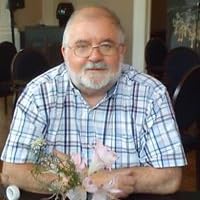
I was raised in Grantham, Lincolnshire and attended the King's Grammar School after passing the Eleven Plus exam. In the latter I clearly remember writing an essay on Oliver Cromwell – my first piece of military writing.
Then came a BA in history and international relations at Nottingham followed by a Master of Philosophy course at the University of York. The subject was the generalship and cavalry of Prince Rupert of the Rhine, my boyhood hero, during the English Civil War. The year I spent researching and writing at York, Oxford and at the British Library in London was a truly wonderful time. I moved to London and eventually joined a small publishing company as an editor. Thus began my writing career.
Peter Darman's 6-novel series about the Sword Brothers is well worth reading. The only reason I gave it 4* instead of 5 was the typos/misspellings. Another run with a proof reader may have cure this. I had never heard of the Sword Brothers but they were similar to the Knights Templar but fought the Baltic and Finnic pagans in the area of modern-day Estonia, Latvia and Lithuania. The series focuses on the journey of Conrad Wolff from orphan to Marshall of Estonia. The battle scenes are well described as is the political scheming among the church's hierarchy, kings - pagan and Christian. Well worth a read.
This is now the 5th Peter Darman book I've read, after reading his Parthian books (which are amazing by the way, check them out if you like anything like Saxon Chronicles, Killer of Men/Long War, or any historical fiction).
I have read a few Templar books, but never one about the Northern Crusades. It took me a little bit to get into it and learn the characters and the territories this story takes place in. Estonia, Livonia, Russia...never read a book that took place in this time period in these areas.
This ones about a group called the Sword Brothers and has various POVs, from enemies to other crusaders you can see how brutal this time was. I'm glad it doesn't get into too much of the brutality of the time (he does show how Christians burned Pagans alive), but as you are reading you get a visual of how people lived in this time.
The Church tells the Crusaders killing Pagans will grant them a spot in heaven, the MC Conrad - along with a few others question this, but still have to follow orders. It's a little bit of a coming of age story for Conrad, who journeys here when hes still young and you follow him and his other friends as they train and grow and watch as the Crusaders try to build another Jerusalem amongst their enemy.
It was a solid book, great cast of characters and reading it made me Google the Northern Crusades and learn a little bit more about history.
I am a firm believer that historical fiction is a balancing act. Stray too far into the historical side, and you risk coming across as a dry textbook. Too much fiction, and you might as well write fantasy.
Another truism, is a historical fiction novel is going to be compared against the greats, like Conn Iggulden and Bernard Cornwell.
Unfortunately, The Sword Brothers was a slog to get through, because it was so clinical in its delivery. It felt like Peter Darman wanted to write a historical text, rather than a historical fiction. He does a good job of telling you how many soldiers were taken into the numerous battles, but the actual descriptions of the fighting were lacking any real emotion. Some authors are guilty of being gratuitously gory, but I’d suggest Darman is guilty of being excessively sanitary.
As for the characters? I’m not sure what can be said about them. There is basically no character growth that I could see. Unless you count Henke’s randomly switching between being antagonistic and supportive, towards Conrad. Which is surprising, consider at least some of the players are apparently real people. And the novel felt several hundred pages too long.
Ultimately, I came away feeling frustrated with The Sword Brothers. There is a strong foundation for a brilliant story, and I couldn’t help wondering what Iggulden or Cornwall would have done with it. Which is unfair on Peter Darman, I know.
I had purchased the entire series based on the strength of the Kindle sample, so I will read them eventually. I’m just not sure when that will be.
HISTORICAL BRUTALITY IN THE NAME OF RELIGION: AN IMMERSION INTO A BRUTAL TIME
This is the fiction about the Baltic crusaded. Frankly, it grabbed me from the opening story and engulfed me into a world that I’d never known. The characters are rich, as are descriptions of uniforms, animals, food, drink, structures and the environment. But most engrossing were descriptions of the battles fought.
Of course the point of the story is the character conversion of native pagans in the Baltic states to Roman Catholicism. My reaction to this premise was a sense of revulsion at the hubris of the Roman Church, the crusaders and the landed gentry of Germany in supplying support to this ill motivated effort to impose their fictional beliefs onto the inhabitants of non-Christian tribes. Included in all of this is the conflict between Eastern Orthodox Russia and Roman Catholic Germany which just amplified my impression that both sides suffered from a degree of fanaticism based on how to believe in imaginary supernatural beings.
Aside from the ridiculous nature of religious zealotry that resulted in an untold number of deaths, I loved the book! A story well told. I recommend it to all who are able to escape into an historical fictional world that seems well researched and may very well resemble the harsh realities of an age long past.
If you like a book about the crusades and constant battles, you will enjoy this book. I had no idea there was a crusade in the Baltic region!! Look forward to book number two in this series.
Well constructed. Entertaining, lively action, and historically appeasing on a subject little known in western Christian historical fiction. Highly recommend it.
I enjoyed the book but at times became very confused owing to the different profusion of place names and characters. A part of history I knew nothing about. The enforcement of catholic christianity by brutal invasion was an eye opener
Having read, and thoroughly enjoyed, the author's Parthian Chronicles, I thought I would give this series a try. Although I do read a lot of historical fiction, this period is not one that often attracts me, but the setting is so unusual that I was intrigued. Set in the early thirteenth century in the Baltic region, the work is set against the background of the Church attempting to carry Catholic Christianity into the area. The story follows young Conrad Wolff; his family is destroyed by injustice, and he is given the chance of a new life by the Sword Brothers - the Baltic equivalent of the Templars or the Hospitallers. The book, although long, is well paced; for once the main character is not transformed from nothing to all-conquering hero in 20 pages. This is the first in a five or six volume series, and it tells the story of Conrad's time as a novice and how he is trained, and learns his new trade. All this is set against a believable historical background - some factual, some fictional. The main characters on all sides develop well, with good back-stories, and most of them are very mixed personalities - this is no black and white tale. After all, to the inhabitants, the Catholic Christians are simply another band of invaders to be expelled. The author does a good job of describing the region and it's inhabitants. There are a myriad of tribes and sub-tribes, and initially the large cast of characters can seem a bit overwhelming, but the author is careful to bring them all to life, and you soon work out who is who. The only criticism I have - unfortunately not for the first time with the author - is that he really does need to find a good editor and proof-reader. There are simply too many errors to be ignored. However, this does not take away from an intriguing story, well told and well paced.
I like the content, it was interesting and there was a lot of it. There are very few books about the Sword Brothers or Teutonic Knights, and this is probably the only historical fiction about that part of history that I've seen out there.
That being said, it was a slow read. Although there were multiple battles and plenty of content, it was just downright boring at times. The characters aren't developed too well and the interactions between the characters are often choppy, disconnected, and hollow. It's fairly amateur work, and you're not drawn into the book like you would be for a Bernard Cornwall, Conn Iggulden, or Jack Whyte book.
I am going to buy the next book in the series and give it a shot, but if the style doesn't improve I'll probably give up on the series.
This story of 13th century battles between the Christian knight-priests and the pagans of Lithuania and others is action-filled and realistic. The author overdoes the details of numbers of combatants , carts, wagons, etc. and jumps too often from scene to scene, but his descriptions are done well and the characters are believable. Good story!
This was a very long book, and much of it could have been pruned to keep the narrative and pacing tight. Some of the characters were cardboard thin, but I still found myself rooting for Conrad and his fellows, and felt that I had an emotional stake in the book's outcome. Also, I'm just happy someone is writing about the northern crusades.
Gave me a new awareness of a crusade that I had heard little about and was not aware of until this book. The description of life during these times very insightful and enlightening.
Long story with a lot of characters and twists and turns. The hero of the story is is strong and cannot be killed which made the story a bit predictable. But never the less a good read. Will be reading the next book.