This ambitious, largely autobiographical novel opens at the turn of the century with the story of a young Dutchman growing up on the island of Java, and ends against the backdrop of the growth of fascism in Europe in the 1930s. It encompasses the lives and loves of the author's colorful acquaintances - whole identities are often only thinly disguised - including the European writers Pascal Pia and Andre Malraux.
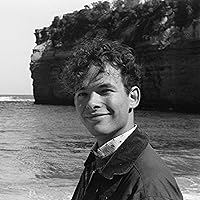
Charles Edgar du Perron (1899–1940) was an influential Dutch literary critic, novelist and poet of Indo-European descent. He is best known for his acclaimed modernist masterpiece Land van herkomst (Land of origin, 1935). Together with Menno ter Braak and Maurice Roelants he founded the short-lived but influential literary magazine Forum in 1932.
Du Perron came from a noble family that had been based in the Dutch East Indies for generations. He grew up on Java and moved to Europe after the First World War, where he lived in Paris and Brussels. In 1922, Du Perron moved to Montmartre where he led a bohemian life and became acquainted with painters and writers of that time. His first book, Manuscrit trouvé dans une poche (1923), was published in 1923.
As a poet, Du Perron published several collections, of which Parlando (1930) became the best known. His poetry and poetic views inspired an entire generation, such as the entire later Criterium group, including Gerard den Brabander, Jac. van Hattum and Ed. Hoornik
I started reading this book since Du Perron and Ter Braak are the heroes of Voskuil and Vogels. It follows more or less in the tradition of Stendhal incorporating autobiographical elements in literature
Wonderful autobiographical story of Du Perron's alter ego Arthur Ducroo. The story from his youth and teen years on early 19th century, colonial Java, is intertwined with journal like chapters from his later years in Paris and Brussels.
I especially liked his accounts of his discussions and conversations with (now) famous contemporaries among which Andre Malraux (Heverle in the novel), Menno ter Braak (Wijdenes) and Alexandre Alexeieff (Goeraeff).
The chapters in Paris are highly political as they reflect on the social and political turmoil of the Interbellum.
The final chapter especially appealed to me. There, Ducroo is discussing with Malraux about the 'intellectual's' stance in the communist and socialist movements / revolutions and against the national socialist movement. Malraux argues that ideology supersedes the human or person. He says: "You can ignore the persons if you can empathyse strong enough for the myth (or ideology ed.)". Du Perron answers: "I do not believe I will ever be able to do that. Maybe I am not intellectual enough for that. If everything comes down to war, I will only able to wage war next to my friends".
To me, that is the key to the whole book and it also feels a lot like the human philosophy of his contemporary Camus (Camus is my friend). Humanity is not striving for abstract noble ideals (myths). Humanity is unconditionally helping your friend because he is your friend.
Het is dat ik dit boek moest lezen voor mijn studie, anders was ik al na 2 hoofdstukken gestopt met lezen. Ik begrijp dat dit een goed beeld kan geven van bepaalde literaire stromingen, maar ik ben nog nooit zó blij geweest een boek uit te hebben.
Jeugdherinneringen aan Nederlands Indië, gemengd met omgang met intellectualistische kringen. Heel on-Nederlands, proustiaans in zijn herinneringen, maar erg gezocht.
Mijn vader kende het boek en dacht dat het een dikke, moeilijk verteerbare pil was. Het is wel dik, maar het las zeer gemakkelijk weg (zeker vergeleken met "Under the Volcano" van Malcolm Lowry, welke ik ook lees momenteel) en staat bomvol grappige anekdotes, voornamelijk over Nederlands-Indië:
"Zodra hij op dat land gekomen was, liet mijn vader 's avonds deuren en ramen open en ging in de voorgalerij zitten lezen. Men kwam hem waarschuwen dit niet te doen, met het oog op de ,,slechte mensen''. - O, voor mensen ben ik nooit bang, zei hij; alleen voor tijgers en slangen. - Maar soms zag hij schaduwen in de tuin en schoot er dan met een pistool overheen; ook kocht hij enige honden, die de landerijen afliepen en, omdat zij niet zo erg goed gevoed werden, de kippen van de ,,opgezetenen'' opvraten. Af en toe werd er een vergiftigd, maar mijn vader liet aankondigen dat hij voor iedere vergiftigde hond er twee in de plaats zou kopen. Het waren beesten zonder enig ras en dus spotgoedkoop: op het laatst had hij er er vier-en-twintig, waarna men ophield ze te vergiftigen."
Zoiets als hierboven vind ik ontzettend geestig, en zo zijn er nog tientallen (misschien wel honderden) korte leuke anekdotes te bespeuren.
Dat is eigenlijk ook precies waarom ik dit boek wilde lezen, ik miste nog een gevoel voor dat deel van de Nederlandse geschiedenis. "Max Havelaar" had dit al enigszins ingekleurd, maar ik was nog niet verzadigd. Je zou "Het land van herkomst" kunnen lezen als ware het geschreven door een kleinzoon van een van de figuren in dat boek.
Het boek wordt enigszins getemperd door de overpeinzingen in Europa, die grotendeels blootleggen hoe lamlendig Arthur is geworden. Gelukkig worden de hoofdstukken goed afgewisseld tussen Indië en Parijs/België.
“Het boek van onze generatie”, aldus kwalificeerde Rien Marsman ‘Het land van herkomst’. Het is een indrukwekkend boek en, in deze vorm, ook een indrukwekkende uitgave. Bulfhof en Dorleijn maakten er een soort litteraire totaalervaring van. Geen detail, flardje kennis over de roman, over de schrijver, noch over de tijd waarin deze leefde en schreef, blijft onvermeld. En dat is voor de lezer die ik ben een groot pluspunt. Grote omissie vind ik dat de bezorgers de zeer fundamentele kritiek van W.F. Hermans op HLVH niet bespreken. Dat is een prachtig stuk, gepubliceerd onder de al even prachtige titel ‘Proeve van rustig lesgeven’. Het is te vinden in ‘Mandarijnen op zwavelzuur’.
Het verhaal, de manier van vertellen, het alterneren van de Indische en Parijse stukken is een wonderlijk geheel, dat je doet afvragen: Is Du Perron wel zo’n goede schrijver. Ik weet dat eerlijk gezegd niet. Het boek is eerder een verslag dan een roman. Het zoeken naar een geschikte vrouw, de grote jacht op De Eene is naar verluidt de motivatie van Du Perron geweest voor het schrijven van HLVH. De gesprekken hebben iets wezenloos, zijn nogal abstract. De handeling is vlak en, het woord ‘verslag’ zegt het al, op een notaris-achtige toon verteld. Eerder een navertelling dan een verhaal. De lezer blijft op geduchte afstand tot de gebeurtenissen staan.
Toch maakt het boek indruk - zou het dan toch de persoonlijkheid van de schrijver, de vent, zijn die het boek redt?
Een enorme uitdaging om te lezen, maar zowel een prachtig persoonlijk als cultuur-historisch document uit de woelige jaren 30 van de vorige eeuw. Op een gekke manier ook herkenbaar (polarisering, dreiging).
This is a book i came to because it is referred to, a couple of times in the writings of JJ Voskuil. I’m not sure if it is in ‘Bij Nader Inzien’ or ‘Binnen de Huid’, but it crops up in talk between Maarten Koning and Paul DeHoes, where Maarten expresses glowing admiration for Du Perron’s novel (not just ‘mieters’, something altogether more appreciative).
So many are the parallels between Maarten Koning and Voskuil that one is inevitably reminded that Voskuil has written and spoken of having been influenced by the movement around the journal ‘Forum’, which was co-founded by Du Perron, and which sought to apply the ideas of Bauhaus to literature. This is an area i know frustratingly little about so most of what follows is pretty thin and speculative. My current understanding is that the literary application of Bauhaus ideas in the Netherlands came to be known by the terms ‘de nieuwe zakelijkheid’ and‘ventism’, the latter apparently deriving from a remark by J C Bloem (“Niet de vorm maar de vent”). However, i am still not clear what is distinctive about ‘ventism’ or ‘de nieuwe zakelijkheid’ in Dutch literature.
From this, it is clear that my reading of ‘Het Land van Herkomst’ is quite uninformed and i am aware that i do Du Perron a considerable disservice in reading him primarily to gain perspective on Voskuil. That said, in line with my interest in Forum and ‘ventism’, my focus here is on two aspects of the book - what it has to say about ‘vorm’ and what it has to say about ‘de vent’.
The novel is presented as an account, or perhaps even a justification, of Ducroo’s life which he writes for the benefit of his wife Jane. In the opening chapter, Ducroo frames this personal history with a description of an evening’s conversation with ‘Goeraëff’ (based on A. Alexejeff - a Russian artist and later film maker) following which he returns to his room and writes until the early hours. For Ducroo, the middle of the night is a time when consciousness fights with sleep and the temporal boundaries of his life become hazy and all options for fixing the truth through fiction lead to distortion: “Het doet er niet toe waar ik nu begin, omdat ook dit tijdstip al willekeurig lijkt in mijn leven, omdat ik nooit een geregeld dagboek het kunnen bijhouden, omdat vandaag of gisteren of morgen, op ieder ander tijdstip waarschijnlijk, met de kunstmatige gewaarwording van een begin, de reële gewaarwording komt van niets meer to kunnen achterhalen” (29). This suggests that any single choice of a beginning is an artifice that makes it impossible to recall authentic perceptions. The ‘kunstmatige gewaarwording’, and its distorting effect, then seems to be identified with ‘poëzie’, understood as the literary impulse more broadly. Writing, however, still remains important for Ducroo as it provides the chance ‘om de toekomst te vergeten’. Memory and poëzie can also serve in helping to forget the present, with its anxieties over the ‘huurkontrakt’ that ties him and his wife Jane to Paris, while ‘wij dit schaakspelletje om materiële dingen moeten spelen’ (ibid.). Ducroo makes it clear, though, that the price of forgetting the future and the present through poëzie is high - poëzie is naïve and is likened to opium, a drug that helps one forget, but which also distorts reality. Ducroo tells the reader that he intends to write only about Jane because his history and identity culminates in his meeting with her [“waar het mijn verleden betreft vanaf de tijd toen ik reeds ik was, voorbestemd om tot haar te komen zoals ik het deed) voeren alle wegen van de herrinering tot haar” - ibid.]. Ducroo concedes that he may succumb in the future, but he will leave at least one thing behind - a portrait of Jane. This aspiration to write about Jane, however, is immediately damned by Ducroo, who condemns it as another shameless deceit of ‘poëzie’, again understood as distorting artifice: “het portret van Jane zou immers altijd iets anders dan zij zelf zijn” (29). The chapter immediately following, ‘Familie-album’, is the start of the novel proper, where Ducroo proposes to write not a portrait of Jane, but an account of his own life before they met, an account which is also a ‘settling of accounts’ - “een verantwoording vanuit het verleden” (30). Although he has expressed suspicion about the distorting effect of literary forms, Ducroo admits that he is attracted to “historiese terugblikken” (ibid.), as though historical writing has some claim to some greater authenticity - or ‘objectivity’ if that is a reasonable translation of ‘de nieuwe zakeligheid’. An account of his youth and growing to manhood in Indonesia is then the substance of the novel he writes for Jane, but its conclusion is, again, framed by perspectives taken from his time in France after they had met. Moreover, in the van Oorschott edition, the novel concludes with the annotations taken from the ‘Greshoff exemplaar’ , offering Du Perron’s commentary on Ducroo’s ‘authenticity’ or departures from authenticity - (see, for example, Du Perron’s comment on chapter XXXIII at p. 492, one of those chapters “die voor mij ‘onzeker’ zijn”).
If ‘Het Land van Herkomst’ expresses suspicion about literary ‘vorm’ compromising authenticity, there is also the question of what significance the focus on ‘de vent’ has in Du Perron’s writing. The account of Ducroo’s growing up might seem little different to a memoir, although names are changed - including that of the central character - and, in Du Perron’s ‘Greshoff annotations’, he says that, at the proof reading stage, he made revisions to certain chapters intending “mijn standpunt te bepalen en tegelijk uit de journalistiek te komen, het hele boek weer te ‘verheffen’” (p. 493). The issue would seem to be what changes Du Perron considers essential to elevating the book above a journalistic’ account of ‘life and times’, but i remain very unclear about what Du Perron thinks is necessary to elevate historical or journalistic writing to the level of fiction or the novel.
Following the account of his youth, in the chapter, ‘Terug in Parijs’, Ducroo is confronted by the financial problems arising from the loss of the family fortune and the political turmoil of France in the thirties. Ducroo and Jane visit ‘Hervelé (Andre Malraux) shortly after he had made a public commitment to the communist cause: “het belangrijkste van alles is dat hij nu werkelijkgekozen heeft voor het kommunisme” (360). Their discussion of communism raises issues of identity that seem relevant to that other term in the formulation by Bloem - ‘de vent’. Ducroo listens to Hervelé’s passionate description of his addresses to large crowds. He asks what Hervelé feels about the inevitable simplification involved in such public speaking: “maar wat voel je er zelf bij als je zoiets zegt?” (361). Hervelé is dismissive, public speaking has its own rules he says - “ik druk hiermee uit wat ik werkelijk meen, op de meest doeltreffende manier, en er is dan nog een zekere poëzie in het beeld” (ibid, emphasis original). Ducroos makes no reply, but ‘poëzie’ retains a suspect status for him and he sees, also, no authenticity in Hervelé’s passion over communist politics and ‘ideologie’. It makes Ducroo reflect - “het maakt dat ik mij weer afvraag wat hij [Hervelé] ontvluchten kan als hij hierin stort; niet welke samenleving, maar wat in zichzelf” (ibid.). Here, Ducroo seems to construct a tension between the ‘community’ and an essential ‘self’, which the individual may flee or deny. Ducroo’s focus on the psychological reflex behind Hervelé’s public commitment to communism prompts Hervelé to attack Ducroo’s individualism. He asks about Ducroo’s beliefs: “Geloof je aan de kunst, aan de liefde?” he asks rhetorically, and immediately answers his own question: “Je ‘ik’ is vooruit veroordeeld als je het alleen voelt als verschillend van al het andere. Het kan uitstekend dienst doen om te zoeken naar jouw waarheid; maar deze waarheid, denk je dat die beter is dan andere, omdat het de enige is waar je ‘ik’ toegang toe heeft? Wat een positieve opvatting voor een relativist!” (pp. 361-2). The conversation then shifts to the subject of love and monogamy. In the context of talk about adultery (which Ducroo rejects in thoroughly bourgeois terms) Jane expresses the view that a wife may sometimes feel that she has betrayed her husband “door het verlies van haar eigen persoonlikheid” (367); there comes a time in the conjugal relationship where, through her devotion to her husband, “zij soms verliest wat haar in zichzelf interesseert” (ibid.). Although these remarks are directed to what is felt to be particular to the way a woman ‘geeft zich’ to a man, it is a further example of the ‘self’ being considered as an essence that can be lost or betrayed through one’s social relations. The chapter ends with Ducroo questioning why the conversation had turned from communism to sexual relations and he asks himself why he reacts to the subject as he does, is it his rational response or “is het, als men goed kijkt, altijd weer de Indiesman in mij die protesteert - tegen Europa, tegen Parijs?” (368). His answer is a rejection of his own rationalisations of his position, saying- “ik protesteer van mijn ‘kern’ uit; de reste is analyse” (ibid.). The idea of ‘de kern’ - which was, perhaps, later taken up by Frida Vogels - is again suggestive of an essentialist model of self-hood. It is a model that seems far removed from the sophistication of Voskuil’s construction of Maarten Koning as one whose ‘self’ is built on a requirement for ‘solidariteit’ with others and, when removed from the social environment of ‘het bureau’, leads to the social death of Maarten Koning. As will be clear by now, i do not really grasp what is distinctive about ‘ventism’, nor do I understand how ‘ventism’ informs the critical and (explicitly) antifascist stance of the ‘nieuw-zakelijke literatuur’ associated with Forum. In the anglophone literary context, with which i am most familiar, i know of no literary influence derived from Bauhaus. Equally, i do not know, if ventism is in any way linked with the much later works associated with the French writers associated with ‘autofiction’. Ventism seems to be more socially engaged than the ‘autofiction’ writers and also part of the generational response to WW II.
One article i came across suggests that Du Perron’s essay ‘Gesprek Over Slauerhoff’ (in ‘De Vrije Bladen’, december 1930) “bevatte in grote lijnen het programma van het tijdschrift Forum” (1) . This sounded helpful and i tracked the essay down in a volume of collected essays over Slauerhoff ‘s poetry- “Er Bleef toch Geen Bewijs”, edited by Dirk Kroon (2). The essay is in the form of a mildly amusing dialogue between Du Perron and a stranger he meets in Brussels, however, apart from understanding that Du Perron values all of Slauerhoff’s work highly, and sees in it a unity deriving from Slauerhoff’s personality, i learnt nothing that might be said to amount to a program for the journal ‘Forum’. Given i have not read more than a couple of Slauerhoff’s poems perhaps i should not expect to have learnt anything at all. My dilettante enquiries will be continued. (The footnotes are for anyone who want to look at the articles just mentioned).
1. In ‘Bzzlletin’, jaargang 13 (1985) ‘Du Perron en Slauerhoff: een eigenaardig koppel’ by Herman Vernout, pp. 36-9, available from the Digital Bibliotheek voor de Nederlandse Letteren: - https://www.dbnl.org/tekst/_bzz001198...).
2. ‘Er Bleef Toch Geen Bewijs: opstellen over de poëzie van J. Slauerhoff’, verzamelaar Dirk Kroon, BZZTȏH, ‘s-Gravenhage, 1982. (i think this essay can also be found in a volume of Du Perron’s collected works).
Vooral mee begonnnen vanwege interesse in Nederlandse klassiekers van voor de tijd van de grote drie e.d. Maar vooral ook vanwege de schrijver natuurlijk.
Ik wist dat het een modernistische (dus kaleidoscopische, stream-of-consiousness) autobiografische roman was, maar ik was niet voorbereid op het meanderende en vaak niet direct voortstuwende tempo. Dat maakt het behoorlijk taai om doorheen te komen en de zeker de eerste helft wist ik ook niet zo goed wat ik aan dit boek had.
Maar, zoals wel vaker, begon ergens net over de helft het kwartje te vallen en liet ik meevoeren in de gedachtenstroom. Voor het tijdsbeeld van het onstuimige interbellum, de vreemde spagaat waar du Perron als 'Indiese jongen' in Europa in zat, en een blik op kolonialisme van een van de laatste generaties die de wereld nog niet anders kon voorstellen.
In stukjes en beetjes gelezen. Naar huidige maatstaven vond ik het taai om te lezen; maar voor de tijd waaruit het stamt (jaren ‘30 van de twintigste eeuw) is het heel modern. Geeft een inkijk in de koloniale geschiedenis van Nederlands-Indië en de mentaliteit die daarbij hoorde. In andere hoofdstukken krijgen we inzicht in het intellectuele leven in Parijs. De aantekeningen in mijn versie (uit het ‘Greshoff-exemplaar’) verhelderen welke personages op werkelijke mensen zijn geïnspireerd en hoe Du Perron te werk is gegaan bij het schrijven van dit werk. Een monumentale onderneming om te schrijven - en voor mij ook om te lezen.
Ik heb enorm genoten van de jeugd verhalen uit Nederlands indië. Hij verkeerde in de kringen waar mijn oma in verkeerde, en mede daardoor, voel ik dat zijn memoires mij dichter bij haar hebben gebracht.
Ik vind het ook erg interessant dat hij zich er net als ter Braak erg van bewust is, schrijver te zijn en probeert te begrijpen wat dat betekent. Onder meer onderzoekt hij de relatie tussen woorden en de realiteit.
De stukken van dialoog met zijn collega’s in Europa troffen mij iets minder, maar hier zijn waarschijnlijk ook veel dingen uit te leren.
Ik heb het boek biet uitgelezen, maar doe dit wellicht later nog een keer….
Het land van herkomst gaat over Athur Ducroo. Een man wiens familie's wortels in Frankrijk liggen, maar is opgegroeid in Nederlands-Indië. In dit boek blikt hij terug op zijn jeugd en beschrijft hij zijn leven omtrent 1933 . Thema's zoals individualisme, kolonialisme en de oprukking van het nationaalsocialisme komen aanbod. Het is een boek dat enkele kennis vergt, maar het zeker waard is om een keer open te slaan. Zeer indrukwekkend.
I genuinely thought I’d already reviewed this one.
I read it for school and it was sometimes a bit tough to get to because of it being mandatory, but it genuinely is an impactful book. The way people’s emotions and thoughts are described really do something to you. That made it hard to get through because of all the personal tragedies you read about. It gave me a newfound appreciation for the deep and terrible struggles of some of the colonialists in Indonesia.
Ontzettend moeilijk om doorheen te komen. Ik had het gelezen voor de Nederlands leeslijst. Ik heb de hoofdstukken in het 'nu' maar overgeslagen, maar de terugblikken op zijn jeugd vond ik wel erg mooi.
As a book writen by dutch man who inheritage french bloodline, and since it was written during the dutch colonial era in Indonesia, many of us will categorize it as dutch indies literature. after i read the book, the book tell me much about personal identity of the guy in story. how he define himself after long passage of life since his ancestor to him. how he define himself as a white man in a colonial country. Conflict of personal identity that could be happen to every body in every age all over the world. but the specific content of the book that make it qualified as dutch colonial era is how the author give personal detil to the place in Indonesia in that era. Du Perron vividly describe about Jatinegara in that era. The last but not least (hehehe so..cliche!), this book may be interpreted as personal autobiography of the author.
In mijn uitgave op de achterflap voorgesteld als het belangrijkste boek van het interbellum... !?
Dit is weer even doorbijten. Het boek begint met twee intelectuelen die hun filosoferende opmerkingen geven op de gebeurtenissen van hun tijd om zo tot hun eigen verhaal te komen. Volzinnen van 5 lijnen en meer zijn geen uitzondering. Het filosofisch gewauwel maakt er niet bepaald vlotte lectuur van.
Feitelijk vertelt de auteur zijn familiegeschiedenis, maar in stukken en brokken, zodat het niet te gemakkelijk zou zijn. Wat er zo belangrijk aan dit boek zou zijn, ontgaat me enigszins !