

What do you think?

The Ice Master: The Doomed 1913 Voyage of the Karluk
The Karluk set out in 1913 in search of an undiscovered continent, with the largest scientific staff ever sent into the Arctic. Soon after, winter had begun, they were blown off course by polar storms, the ship became imprisoned in ice, and the expedition was abandoned by its leader. Hundreds of miles from civilization, the castaways had no choice but to find solid ground as they struggled against starvation, snow blindness, disease, exposure--and each other. After almost twelve months battling the elements, twelve survivors were rescued, thanks to the heroic efforts of their captain, Bartlett, the Ice Master, who traveled by foot across the ice and through Siberia to find help. Drawing on the diaries of those who were rescued and those who perished, Jennifer Niven re-creates with astonishing accuracy the ill-fated journey and the crews desperate attempts to find a way home.
435 pages, Kindle Edition
First published November 1, 2000
About the author
Jennifer Niven
20 books15.5k followersJENNIFER NIVEN is the #1 New York Times and internationally bestselling author of All the Bright Places, Holding Up the Universe, and Breathless. Her books have been translated in over 75 languages and have won literary awards around the world.
An Emmy-award winning screenwriter, she co-wrote the script for the All the Bright Places movie— currently streaming on Netflix and starring Elle Fanning and Justice Smith. She is also the author of several narrative nonfiction titles and the Velva Jean historical fiction series.
Her latest YA novel, When We Were Monsters, was published September 2, and she has an adult novel-- Meet the Newmans-- releasing January 6, 2026.
Jennifer divides her time between coastal Georgia and Los Angeles with her husband and literary cats.
An Emmy-award winning screenwriter, she co-wrote the script for the All the Bright Places movie— currently streaming on Netflix and starring Elle Fanning and Justice Smith. She is also the author of several narrative nonfiction titles and the Velva Jean historical fiction series.
Her latest YA novel, When We Were Monsters, was published September 2, and she has an adult novel-- Meet the Newmans-- releasing January 6, 2026.
Jennifer divides her time between coastal Georgia and Los Angeles with her husband and literary cats.
Ratings & Reviews
Friends & Following
Create a free account to discover what your friends think of this book!
Community Reviews
Displaying 1 - 30 of 268 reviews

March 5, 2019
“Who were they before they gave up their living, breathing souls to this desolate place?”
I’m an educated Canadian reader. I’m a lover of the outdoors and I’ve experienced the difficulties of camping and hiking in the high Arctic. I’m a fan of well-written Canadian history – Ken McGoogan, Pierre Berton, Lawrence Hill and Joseph Boyden, among others, already hold places of honour on my bookshelves. As a particular fan of the history of Canadian Arctic exploration and development, I was thrilled to read the dust jacket description of Jennifer Niven’s THE ICE MASTER – a chronicling of the doomed 1913 voyage of the Karluk. In the opening chapter, Niven wrote,
“This was to be the grandest and most elaborate Arctic expedition in history. It was also to be the most comprehensive scientific attack on the Arctic of all time, widely advertised as having the largest scientific staff ever taken on an expedition. [Vilhjalmur] Stefansson, the man who had dreamed it up, was well known for his unrelenting ambition and his grand ideas”.
I had heard of the USS Jeanette and its disastrous attempt to find a warm water passage through the Bering Strait to the North Pole but I had never heard of the Karluk and was thrilled at the possibility of extending my knowledge of the Canadian Arctic.
William McKinlay, one of the survivors of the astonishing Karluk debacle wrote of his experience in the context of WW I following on the heels of his return to civilization,
“Not all the horrors of the Western Front, not the rubble of Arras, nor the hell of Ypres, nor all the mud of Flanders leading to Passchendale, could blot out the memories of that year in the Arctic.”
And yet, despite the astonishing power of the material in the story – privation, frostbite, suicide, kindness, starvation, cold, isolation, hoarding, thieving, hostility, courage, cowardice, leadership, snow blindness, racism, illness, perseverance and more – Niven never really manages to match her writing to the awesome power of her subject and lift it off the page with a compelling narrative. I’m thrilled to have discovered the story. I’m pleased to have read the book and would recommend it to any fan of Canadian Arctic history, to be sure. But it fell short of what it could have been and what it should have been.
On a more specific note, I’d strongly recommend that any future editions (if there are to be any), be accompanied with more informative and more detailed maps as well as a larger set of photographs. Last but not least, I definitely felt short-changed when it came to the story of what happened to Stefansson as a result of his (in hindsight) craven disregard for the lives of the people that he so quickly and casually abandoned at the virtual outset of the entire affair as it became clear that his ambitious project was doomed to failure by the early onset of a severe winter.
Paul Weiss
I’m an educated Canadian reader. I’m a lover of the outdoors and I’ve experienced the difficulties of camping and hiking in the high Arctic. I’m a fan of well-written Canadian history – Ken McGoogan, Pierre Berton, Lawrence Hill and Joseph Boyden, among others, already hold places of honour on my bookshelves. As a particular fan of the history of Canadian Arctic exploration and development, I was thrilled to read the dust jacket description of Jennifer Niven’s THE ICE MASTER – a chronicling of the doomed 1913 voyage of the Karluk. In the opening chapter, Niven wrote,
“This was to be the grandest and most elaborate Arctic expedition in history. It was also to be the most comprehensive scientific attack on the Arctic of all time, widely advertised as having the largest scientific staff ever taken on an expedition. [Vilhjalmur] Stefansson, the man who had dreamed it up, was well known for his unrelenting ambition and his grand ideas”.
I had heard of the USS Jeanette and its disastrous attempt to find a warm water passage through the Bering Strait to the North Pole but I had never heard of the Karluk and was thrilled at the possibility of extending my knowledge of the Canadian Arctic.
William McKinlay, one of the survivors of the astonishing Karluk debacle wrote of his experience in the context of WW I following on the heels of his return to civilization,
“Not all the horrors of the Western Front, not the rubble of Arras, nor the hell of Ypres, nor all the mud of Flanders leading to Passchendale, could blot out the memories of that year in the Arctic.”
And yet, despite the astonishing power of the material in the story – privation, frostbite, suicide, kindness, starvation, cold, isolation, hoarding, thieving, hostility, courage, cowardice, leadership, snow blindness, racism, illness, perseverance and more – Niven never really manages to match her writing to the awesome power of her subject and lift it off the page with a compelling narrative. I’m thrilled to have discovered the story. I’m pleased to have read the book and would recommend it to any fan of Canadian Arctic history, to be sure. But it fell short of what it could have been and what it should have been.
On a more specific note, I’d strongly recommend that any future editions (if there are to be any), be accompanied with more informative and more detailed maps as well as a larger set of photographs. Last but not least, I definitely felt short-changed when it came to the story of what happened to Stefansson as a result of his (in hindsight) craven disregard for the lives of the people that he so quickly and casually abandoned at the virtual outset of the entire affair as it became clear that his ambitious project was doomed to failure by the early onset of a severe winter.
Paul Weiss

October 28, 2019
I enjoyed this book. It's about an Artic expedition aboard a ship named Karluk. I felt the author did an excellent job of bringing this event, and these people, to life. Without giving any spoilers, sufficeth to say, it is full of heroes, rascals, innocents, and more. Some die, some live, and I had to keep turning the pages to see what happened next.
4 Stars = Outstanding. It definitely held my interest.
4 Stars = Outstanding. It definitely held my interest.

June 9, 2012
I bought this book because of two reasons: there is "ice" in the title and the day I bought this, the temperature in Manila was averaging 36 deg Centigrade. Teethering below fever temperature. So, I said why not read something that is set in a snowy or icy land? When I saw this book being sold at P45 ($1), I bought it right away and cracked it open after few days. But tough luck, it took me two weeks to finish this and when I was winding down, the rainy season has just started and the weather was no longer unbearable. In fact, while typing this review there is an on-going typhoon Butchoy that is flooding the streets and my daughter cannot decide whether to go to school or not.
Anyway, the other reason why I picked this up is sea adventure. Since I read Kon-Tiki three years ago, I am amazed how man and the sea could either get along well or hate each other. This love-hate relationship is like the most fascinating that man has with nature. Then there is ice in this book that imprisoned the crew of the ship called Karluk. So, it was like Kon-Tiki meeting Titanic or Poseidon. I have read and liked all of these.
HMCS Karluk was an American built whaler that was bought by the Canadian government for the Canadian Artic Expedition in 1913. It was trapped in ice, sunk in January 1914 after floating for several months. Out of the 25 crew members, 11 died before they got to their temporary refuge in an island called Wrangel. This is the story of the ship and the hardship and triumph of the ship's crew.
The good thing about reading survival stories is that they are always inspiring. No matter what kind of problem we have in our daily lives, there are always stories that are worst than what we are having. If your are short of cash to buy something, you think of these people who are ice-camping while trying to reach land (after Karluk sunk) who have no food except for dried meat and since they have no other food, they suffer from nephritis because of too much protein. So, the food that sustains them is also the food that kills them, writes Niven towards the end of the book. While, we here in the city, we complain about the traffic, the flood, the temperature but we have lots of available food. Yet, we normally choose the wrong ones: fatty or sugary.
If you love survival stories, i.e., man's triumph against adversity, go for this book. It is well-written and not bogged-down with many cold historical facts. There is a nice revelation that has a lesson in the end that makes it not really your usual survival story.
Anyway, the other reason why I picked this up is sea adventure. Since I read Kon-Tiki three years ago, I am amazed how man and the sea could either get along well or hate each other. This love-hate relationship is like the most fascinating that man has with nature. Then there is ice in this book that imprisoned the crew of the ship called Karluk. So, it was like Kon-Tiki meeting Titanic or Poseidon. I have read and liked all of these.
HMCS Karluk was an American built whaler that was bought by the Canadian government for the Canadian Artic Expedition in 1913. It was trapped in ice, sunk in January 1914 after floating for several months. Out of the 25 crew members, 11 died before they got to their temporary refuge in an island called Wrangel. This is the story of the ship and the hardship and triumph of the ship's crew.
The good thing about reading survival stories is that they are always inspiring. No matter what kind of problem we have in our daily lives, there are always stories that are worst than what we are having. If your are short of cash to buy something, you think of these people who are ice-camping while trying to reach land (after Karluk sunk) who have no food except for dried meat and since they have no other food, they suffer from nephritis because of too much protein. So, the food that sustains them is also the food that kills them, writes Niven towards the end of the book. While, we here in the city, we complain about the traffic, the flood, the temperature but we have lots of available food. Yet, we normally choose the wrong ones: fatty or sugary.
If you love survival stories, i.e., man's triumph against adversity, go for this book. It is well-written and not bogged-down with many cold historical facts. There is a nice revelation that has a lesson in the end that makes it not really your usual survival story.

January 18, 2014
Great book. Amazing. Incredible. Marvelous. I couldn't put it down. Matter of fact, even though I finished reading it, I still don't want to put it down. I want to carry it around and show it to strangers and say, "Hey! See this book? You should read it." It's that good. Remarkable. Oh.... And I liked it.

July 10, 2023
I know of Jennifer Niven from her novel All the Bright Places, which I thought was absolutely fantastic. But during one of my family’s trips around the state libraries, I poked into the “sad boat” section and saw this book, and was blown away by the fact it was by the same author. Not only that, but this is her first published book.
I have known of the Karluk because a few friends and I are obsessed with failed polar expeditions during the so-called Heroic Age of Exploration, categorizing them as “sad boat” books. But it was news to me that Vilhjalmur Stefansson (born William Stephenson) had put together this team to explore the Canadian Arctic, only to literally walk away from his men and his ship as soon as things got to be slightly difficult. Only 14 of the 25 people aboard the Karluk when it sank ultimately survived. And then Stefansson sent four more men back to the Arctic, one of whom had survived the Karluk, along with an Inuit woman called Ada Blackjack, and all but she perished. I cannot fathom how Stefansson could sleep at night, knowing he was directly responsible for at least the deaths of 15 people.
At any rate, this was a compelling investigation of what exactly happened aboard the Karluk, from the slipshod and harried fitting out of the ship, which itself was a terrible choice to send to the Arctic, to its being locked in the ice and drifting farther and farther from its intended route, following that of the doomed Jeannette, to when the Karluk sank and the men had to find their way to Wrangel Island, off the treacherous ice. I’ve read quite a few tales of survival now, and it still surprises me when those in the group choose to remain strangers to one another. Having read Joan Druett’s Island of the Lost: Shipwrecked At The Edge Of The World, the comparison between the Grafton, where all the men banded together and decided to work together as one, versus the Invercauld, where it became every man for himself, leading to chaos and even cannabalism, is stark. The Karluk’s men never got to the point of cannabalism, but the infighting between the various groups surprised me, and it proves that not all people are strong in a crisis. Thank goodness for Captain Bartlett, who took his responsibility as captain so seriously that he made a 700-mile trek across Siberia to have his men rescued, and for William Laird McKinlay, who at the tender age of 24 managed to be far more mature than his years, and cared for his fellow sailors to the best of his ability.
I really enjoyed that Niven used a lot of primary sources, especially that of McKinlay. He definitely seems like the person with the most integrity, aside from Captain Bartlett, of the entire expedition, and the decision to focus quite a bit on him made the book much more readable, since a lot of the other men were less than savory. I was disappointed that Niven chose not to use the word “Inuit” for the native people who assisted the men of the Karluk (Kataktovik, Keraluk, his wife “Auntie” Keruk, and their daughters Helen and Mugpi). It’s so disrespectful to continue to use the word “Eskimo” for these folks. I could understand if she were quoting someone, but to choose not to use “Inuit” in her own words was disappointing.
Niven also got the details of the Jeannette wrong in that there were survivors of that expedition. She writes that all 13 men aboard the Jeannette perished, while the complement of the ship was actually 33 men, of whom 20 died.
As much as I enjoyed this book, I look forward to reading Buddy Levy’s Empire of Ice and Stone: The Disastrous and Heroic Voyage of the Karluk, a newer book on the Karluk that one of my “sad boat” friends says is even more readable than this book.
I have known of the Karluk because a few friends and I are obsessed with failed polar expeditions during the so-called Heroic Age of Exploration, categorizing them as “sad boat” books. But it was news to me that Vilhjalmur Stefansson (born William Stephenson) had put together this team to explore the Canadian Arctic, only to literally walk away from his men and his ship as soon as things got to be slightly difficult. Only 14 of the 25 people aboard the Karluk when it sank ultimately survived. And then Stefansson sent four more men back to the Arctic, one of whom had survived the Karluk, along with an Inuit woman called Ada Blackjack, and all but she perished. I cannot fathom how Stefansson could sleep at night, knowing he was directly responsible for at least the deaths of 15 people.
At any rate, this was a compelling investigation of what exactly happened aboard the Karluk, from the slipshod and harried fitting out of the ship, which itself was a terrible choice to send to the Arctic, to its being locked in the ice and drifting farther and farther from its intended route, following that of the doomed Jeannette, to when the Karluk sank and the men had to find their way to Wrangel Island, off the treacherous ice. I’ve read quite a few tales of survival now, and it still surprises me when those in the group choose to remain strangers to one another. Having read Joan Druett’s Island of the Lost: Shipwrecked At The Edge Of The World, the comparison between the Grafton, where all the men banded together and decided to work together as one, versus the Invercauld, where it became every man for himself, leading to chaos and even cannabalism, is stark. The Karluk’s men never got to the point of cannabalism, but the infighting between the various groups surprised me, and it proves that not all people are strong in a crisis. Thank goodness for Captain Bartlett, who took his responsibility as captain so seriously that he made a 700-mile trek across Siberia to have his men rescued, and for William Laird McKinlay, who at the tender age of 24 managed to be far more mature than his years, and cared for his fellow sailors to the best of his ability.
I really enjoyed that Niven used a lot of primary sources, especially that of McKinlay. He definitely seems like the person with the most integrity, aside from Captain Bartlett, of the entire expedition, and the decision to focus quite a bit on him made the book much more readable, since a lot of the other men were less than savory. I was disappointed that Niven chose not to use the word “Inuit” for the native people who assisted the men of the Karluk (Kataktovik, Keraluk, his wife “Auntie” Keruk, and their daughters Helen and Mugpi). It’s so disrespectful to continue to use the word “Eskimo” for these folks. I could understand if she were quoting someone, but to choose not to use “Inuit” in her own words was disappointing.
Niven also got the details of the Jeannette wrong in that there were survivors of that expedition. She writes that all 13 men aboard the Jeannette perished, while the complement of the ship was actually 33 men, of whom 20 died.
As much as I enjoyed this book, I look forward to reading Buddy Levy’s Empire of Ice and Stone: The Disastrous and Heroic Voyage of the Karluk, a newer book on the Karluk that one of my “sad boat” friends says is even more readable than this book.

June 3, 2013
From beginning to end, this well researched and haunting tale, brings the reader into the unforgiving arctic along with the ill fated crew of the Karluk. The audacity of Vilhjalmur Stefansson goes beyond what any person with a moral conscience can conceive. If not for the level headed and knowledgeable Robert Abram Bartlett, all hope would have been lost from the outset.
Using the actual journal entries from the members of the Karluk, Jennifer Niven has painted a vivid and long lasting picture of the trials and tribulations these men faced. It is a testament to the human spirit and to our desire to survive. I will long remember this book and men such as William Laird McKinlay. A great read for anyone with an adventurous soul.
Using the actual journal entries from the members of the Karluk, Jennifer Niven has painted a vivid and long lasting picture of the trials and tribulations these men faced. It is a testament to the human spirit and to our desire to survive. I will long remember this book and men such as William Laird McKinlay. A great read for anyone with an adventurous soul.

July 5, 2017
When I'm not wasting my time here on Goodreads I waste my time on Amazon Prime. Hey -- it's $12 a month for Amazon Prime and I want to get my money's worth, so I'm not reading as much as I used to. Anyway, I sat through this mostly incomprehensible (and yet somehow hypnotic) documentary called Icebound: The Final Voyage of the Karluk.
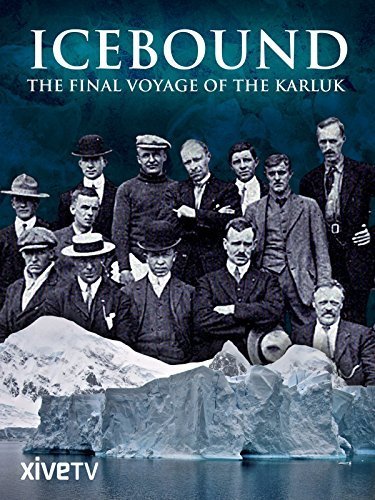
There was one point when the ship finally sunk the stranded survivors cheered. There was no explanation for why they cheered. They weren't total idiots. They knew that there wasn't a handy Walmart at the North Freaking Pole. They knew that some of them were going to die. So why they cheered perplexed me.
Now, there was one of two things I could do about this. I could just give up and get on with the rest of my life OR read a book about the Karluk and hope beyond hope that the cheering incident would be mentioned. Guess which choice I took?

The author of this book, Jennifer Niven, was interviewed in the crappy documentary. I wonder if Niven thought the documentary was crappy, too? Anyway, I found the book in my county's library system, ordered it and read it.
It did explain the cheering thing. And a lot more. It was a shame the documentary didn't follow the book instead of just interviewing Niven (BTW -- any relation to David?)
Now, this would have gotten five stars if it listed all of the dogs that survived. The dogs are forgotten about. At my count, only fifteen of the original 29 survived (plus three puppies born after the boat sinks.) Am I right or wrong about this? Twelve were taken away by the five or six guys deserting the sinking ship and made land and then there was only three adults left when the survivors were rescued. There were five or so dogs taken on a trip to reach Siberia by the captain of the doomed Karluk but there is no word as to whether they died or not.
Or did I miss that?
Now I've got another problem to ponder.

EDIT August 2024: I can no longer waste my time on Amazon Prime, since it became too expensive.
There was one point when the ship finally sunk the stranded survivors cheered. There was no explanation for why they cheered. They weren't total idiots. They knew that there wasn't a handy Walmart at the North Freaking Pole. They knew that some of them were going to die. So why they cheered perplexed me.
Now, there was one of two things I could do about this. I could just give up and get on with the rest of my life OR read a book about the Karluk and hope beyond hope that the cheering incident would be mentioned. Guess which choice I took?
The author of this book, Jennifer Niven, was interviewed in the crappy documentary. I wonder if Niven thought the documentary was crappy, too? Anyway, I found the book in my county's library system, ordered it and read it.
It did explain the cheering thing. And a lot more. It was a shame the documentary didn't follow the book instead of just interviewing Niven (BTW -- any relation to David?)
Now, this would have gotten five stars if it listed all of the dogs that survived. The dogs are forgotten about. At my count, only fifteen of the original 29 survived (plus three puppies born after the boat sinks.) Am I right or wrong about this? Twelve were taken away by the five or six guys deserting the sinking ship and made land and then there was only three adults left when the survivors were rescued. There were five or so dogs taken on a trip to reach Siberia by the captain of the doomed Karluk but there is no word as to whether they died or not.
Or did I miss that?
Now I've got another problem to ponder.
EDIT August 2024: I can no longer waste my time on Amazon Prime, since it became too expensive.

July 7, 2014
The year was 1913, polar expeditions had become the Last Great Adventure, and the names of Scott, Peary, and Shackleton were household words. Vilhjalmur Stefansson, a lesser-known Arctic explorer, persuaded the Canadian government to fund an expedition that he hoped would raise him to the same pantheon, for he meant to discover the vast continent he was sure lurked beneath the polar ice cap. Stefansson was one of those figures in history who are too sincere to be considered con men, too impressive to be written off as charlatans, and too dangerously self-assured to be trusted with other men's lives.
In appearance, the scale of the expedition was awesome: a flotilla of boats, the largest scientific staff ever taken on such a journey, several dog teams, tons of supplies, and loads of scientific equipment. In reality, afraid that someone else would beat him to the discovery of his imaginary continent, Stefansson bought supplies without examining them, hired almosst anyone who put themselves forward whatever their experience, and stuffed everything helterskelter into any boat he could hire that would float. Even so, they set sail too late, steaming out of the Esquimalt Naval Yard (Victoria, BC) in June. Six weeks later, the Arctic winter began, and the lead -- and largest -- boat, the H.M.C.S. Karluk, found itself frozen solid in the pack ice.
At that point, Stefansson, taking the best of the dog teams and his closest associates, abandoned ship. He assured the crew and the less favored members of his expedition that he was only going for help and would soon return, but in fact he never looked back, leaving the party to almost certain death. As he knew, the ice itself was slowly moving west, bearing the ship with it deep into the stormy and desolate Bering Sea.
Ironically, the Karluk carried with it an extensive library of books on polar exploration; among the collection was a volume recording a Russian expedition that had perished in just this way. One of the many poignant passages in The Ice Master tells of the members of the expedition, one after another, reading that book, each gradually realizing that they were eerily retracing the exact course of that doomed voyage.
For five months, the Karluk remained frozen in a massive block of ice, drifting further and further west. Then, in January 1914, the ice began to crush the boat, and order was given to abandon ship. With nothing but the stores they managed to offload onto the ice, Captain Bartlett, twenty-one men, an Inuit woman and her two small daughters, twenty-nine dogs, and one pet cat were now shipwrecked in the middle of the Arctic Ocean, hundreds of miles from inhabited land.
Captain Bartlett and one of two Inuit hunters began a desperate trip to Siberia, hundreds of miles away, to seek help, leaving the others, all in varying degrees of bad shape, to make their way to nearby Wrangel Island to await rescue. The island was barren and windswept, but at least there they would be off the ice (the shifting and breaking of which is a constant and terrifying threat) and possibly find game.
What follows is a riveting story of defeat and despair. Like evil, disaster, too, is ultimately banal, and the story builds in power through creeping increments of small failures -- moments of bad judgment and even worse luck, compounded by inexperience and incompetence. Supply dumps disappear in snowstorms, never to be found; seals roll off the ice and sink when shot; the canned food they have rescued at the risk of their lives is slowly poisoning them; their clothing has been so often shredded by the sharp ice that it has become all but impossible to patch.
As supplies and hope diminish, the men turn on each other, stealing, hoarding food, lying, and, in one instance, most likely commiting murder. Their eyes fail from the blinding brightness and the grit that is always blowing into them; their limbs swell up like balloons; their flesh becomes frostbitten and has to be hacked from their bodies. The one month of Arctic summer comes and goes, leaving them with only rotting seal pelts to eat and a sagging tent to protect them from the increasingly severe weather.
When a ship finally arrives (Bartlett heroically manages to get to Siberia and then to find his way back to Canada, where he organized the rescue attempt), it is almost beside the point -- although some do survive, including the Inuit woman and her two little girls (one of whom is alive today), one dog, and the pet cat. But as touching as their return to civilization is, they are less survivors than salvage, and they know it.
The Ice Master was passed on to me by a friend, and once I started it I couldn't stop, although I often wanted to. I would read a chapter a night, and dully lie in bed afterward, beset by that impersonal sense of despair that comes from witnessing men forced to bear the terrible consequences of someone else's folly. Furthermore, Jennifer Niven hasn't a clue when it comes to telling a story and her prose can be almost embarrassingly bad. But she has done her research (almost everyone on the voyage seems to have kept a journal of sorts) and eventually the narrative simply shrugs her aside and propels itself along on its own. The result is peculiarly compelling where by all rights it should be merely depressing. Tragedy has a logic and a meaning all its own.
In appearance, the scale of the expedition was awesome: a flotilla of boats, the largest scientific staff ever taken on such a journey, several dog teams, tons of supplies, and loads of scientific equipment. In reality, afraid that someone else would beat him to the discovery of his imaginary continent, Stefansson bought supplies without examining them, hired almosst anyone who put themselves forward whatever their experience, and stuffed everything helterskelter into any boat he could hire that would float. Even so, they set sail too late, steaming out of the Esquimalt Naval Yard (Victoria, BC) in June. Six weeks later, the Arctic winter began, and the lead -- and largest -- boat, the H.M.C.S. Karluk, found itself frozen solid in the pack ice.
At that point, Stefansson, taking the best of the dog teams and his closest associates, abandoned ship. He assured the crew and the less favored members of his expedition that he was only going for help and would soon return, but in fact he never looked back, leaving the party to almost certain death. As he knew, the ice itself was slowly moving west, bearing the ship with it deep into the stormy and desolate Bering Sea.
Ironically, the Karluk carried with it an extensive library of books on polar exploration; among the collection was a volume recording a Russian expedition that had perished in just this way. One of the many poignant passages in The Ice Master tells of the members of the expedition, one after another, reading that book, each gradually realizing that they were eerily retracing the exact course of that doomed voyage.
For five months, the Karluk remained frozen in a massive block of ice, drifting further and further west. Then, in January 1914, the ice began to crush the boat, and order was given to abandon ship. With nothing but the stores they managed to offload onto the ice, Captain Bartlett, twenty-one men, an Inuit woman and her two small daughters, twenty-nine dogs, and one pet cat were now shipwrecked in the middle of the Arctic Ocean, hundreds of miles from inhabited land.
Captain Bartlett and one of two Inuit hunters began a desperate trip to Siberia, hundreds of miles away, to seek help, leaving the others, all in varying degrees of bad shape, to make their way to nearby Wrangel Island to await rescue. The island was barren and windswept, but at least there they would be off the ice (the shifting and breaking of which is a constant and terrifying threat) and possibly find game.
What follows is a riveting story of defeat and despair. Like evil, disaster, too, is ultimately banal, and the story builds in power through creeping increments of small failures -- moments of bad judgment and even worse luck, compounded by inexperience and incompetence. Supply dumps disappear in snowstorms, never to be found; seals roll off the ice and sink when shot; the canned food they have rescued at the risk of their lives is slowly poisoning them; their clothing has been so often shredded by the sharp ice that it has become all but impossible to patch.
As supplies and hope diminish, the men turn on each other, stealing, hoarding food, lying, and, in one instance, most likely commiting murder. Their eyes fail from the blinding brightness and the grit that is always blowing into them; their limbs swell up like balloons; their flesh becomes frostbitten and has to be hacked from their bodies. The one month of Arctic summer comes and goes, leaving them with only rotting seal pelts to eat and a sagging tent to protect them from the increasingly severe weather.
When a ship finally arrives (Bartlett heroically manages to get to Siberia and then to find his way back to Canada, where he organized the rescue attempt), it is almost beside the point -- although some do survive, including the Inuit woman and her two little girls (one of whom is alive today), one dog, and the pet cat. But as touching as their return to civilization is, they are less survivors than salvage, and they know it.
The Ice Master was passed on to me by a friend, and once I started it I couldn't stop, although I often wanted to. I would read a chapter a night, and dully lie in bed afterward, beset by that impersonal sense of despair that comes from witnessing men forced to bear the terrible consequences of someone else's folly. Furthermore, Jennifer Niven hasn't a clue when it comes to telling a story and her prose can be almost embarrassingly bad. But she has done her research (almost everyone on the voyage seems to have kept a journal of sorts) and eventually the narrative simply shrugs her aside and propels itself along on its own. The result is peculiarly compelling where by all rights it should be merely depressing. Tragedy has a logic and a meaning all its own.

July 20, 2009
This book was a little out of my usual arctic grouping. Much like the Jeannette, they got stuck in the ice pack, the ship went down, and they ended up on Wrangel Island off Siberia.
The expedition was relatively late (1913-4), so they had learned some things from the other expeditions...but not nearly enough. Another fascinating arctic story.
I had some concerns with the accuracy of the book - she seemed to imply that no one survived the Jeannette expedition, which isn't true, and also repeated a story about relics being found off Greenland, which was the first I'd heard of that. That last claim was unsourced in the footnotes; one google search turned up an article (from 1896!) that seems to contradict the claim. So I'm not sure how much to believe much that didn't come from the diaries she used as primary sources.
Like most authors in the genre, she didn't do too much interpretation - there was an incident that seemed to suggest to me some homosexuality and another that implied cannibalism, but she didn't visit these ideas in any depth, which I might have liked. So, a solid enough book but not a standout.
The expedition was relatively late (1913-4), so they had learned some things from the other expeditions...but not nearly enough. Another fascinating arctic story.
I had some concerns with the accuracy of the book - she seemed to imply that no one survived the Jeannette expedition, which isn't true, and also repeated a story about relics being found off Greenland, which was the first I'd heard of that. That last claim was unsourced in the footnotes; one google search turned up an article (from 1896!) that seems to contradict the claim. So I'm not sure how much to believe much that didn't come from the diaries she used as primary sources.
Like most authors in the genre, she didn't do too much interpretation - there was an incident that seemed to suggest to me some homosexuality and another that implied cannibalism, but she didn't visit these ideas in any depth, which I might have liked. So, a solid enough book but not a standout.

June 1, 2025
Well I'm finished. That was a difficult journey indeed. I loved and loathed men in this book like few before. I'm glad it's only bookended sparsely by Stefansson's presence. At every turn his name is mud and I'm thin on light judgement for this ghastly showman. As for the conditions; the men showed themselves, all naked for their souls were tested. Qualities and Curs will out, it seems. Bless you Bob Bartlett, stoic and sweet soul, you had me at The Rubayiat. Bless you McKinlay a truth teller. And bless you Auntie and Karaluk and Hadley and such others that found it worse than they could endure or were ready for but carried on. Bless you Bjarne Mamen, some precious kind of jewel you proved to be. Hurrah for the King and Winge and for all promises kept to risk all to save a few and, Hurrah, for a boat that wasn't ready for her trials but carried all nontheless. Bless you Karluk. "..it is not a dance on roses.." 🌹

November 1, 2013
This account of early western-arctic exploration and misadventure is marred by Niven's transparent bias toward some crew members and against others. She details the transgressions of her villains in exquisite relief, even hinting broadly at murder without a shred of forensic evidence, while glossing over or conspicuously failing to recount the daily behavior and disposition of her chosen "good guys". The discrepancy is even more glaring as her principal source is the written - and rewritten - recollections of one of her protagonists.
As such, much of the book reads like "gotcha" journalism, particularly in bringing down multiple notches the reputation of famed American anthropologist, expedition leader, and probable egotistical ass Vilhjalmur Stefansson. Stefansson may have been a callous, disloyal jerk who was careless of his underlings' well-being and more than willing to sacrifice others' lives for scientific progress and his own acclaim. It is well-documented that he did some vicious and self-serving bad-mouthing of his own, particularly regarding the Karluk's Captain Robert Bartlett, so maybe Niven feels that turnabout is fair play and "sets the historical record straight". But those who signed on for this voyage, particularly his fellow scientists, were anything but babes in the woods, and they undertook the risks of high-arctic sea travel knowingly and willingly.
That caution aside: what a story this is! The two-year wanderings of the staff and crew of the Karluk, much of the time without even the footing of solid ground, make the trials of the Donner Party look like an afternoon tea. There is true nobility in these pages. Too bad it had to be juxtaposed against the author's clearly inflamed opinion about the sometimes-contentious relationships between those who set out together on the doomed ship.
As such, much of the book reads like "gotcha" journalism, particularly in bringing down multiple notches the reputation of famed American anthropologist, expedition leader, and probable egotistical ass Vilhjalmur Stefansson. Stefansson may have been a callous, disloyal jerk who was careless of his underlings' well-being and more than willing to sacrifice others' lives for scientific progress and his own acclaim. It is well-documented that he did some vicious and self-serving bad-mouthing of his own, particularly regarding the Karluk's Captain Robert Bartlett, so maybe Niven feels that turnabout is fair play and "sets the historical record straight". But those who signed on for this voyage, particularly his fellow scientists, were anything but babes in the woods, and they undertook the risks of high-arctic sea travel knowingly and willingly.
That caution aside: what a story this is! The two-year wanderings of the staff and crew of the Karluk, much of the time without even the footing of solid ground, make the trials of the Donner Party look like an afternoon tea. There is true nobility in these pages. Too bad it had to be juxtaposed against the author's clearly inflamed opinion about the sometimes-contentious relationships between those who set out together on the doomed ship.

May 6, 2008
Interesting, but none of the characters really "gripped" me and the maps were maddeningly insufficient.
May 29, 2022
I really wanted to like this, and I did finish the book. I'm extremely disappointed though. I don't think I"ve ever read a book with so many blatant inconsistencies. Just a few examples: The men unloaded the ship because it was going to be crushed. One passage says they got everything 'essential' out then went back in for anything else they could move. It goes on to say everything that could be moved was out of the ship. A few pages later, half the provisions were still on the ship when it sank. The captain also supposedly forced men to leave the tobacco and most personal items behind. So which is it, did they move everything out or did they get barely half of their provisions? That's a huge difference. The author is also very repetitive. She covers the same information several times, and the details change far too often.
Another example: The ship is poorly provisioned and the men don't have clothing fit for arctic weather. After the ship goes down, everyone frantically sews deerskins and sheepskins together to make multiple sets of clothings, socks, boots, and half-size sleeping bags. Where di those skins come from if the ship was so poorly provisioned? Why didn't the men make their clothing during the months of sitting on the ship doing nothing instead of waiting until it sank? That's just unbelievable. I don't believe the captain would have allowed that, and there were 24 adults on that ship. There's absolutely no way that all of those men were so lazy and clueless that they wasted months on end then attempted to sew clothing to keep themselves alive at the last minute. It's ridiculous. Supposedly, even the scientists on board made the same poor decisions.
There are many other examples of rampant stupidity that are just too much to believe scattered throughout the book. The behavior of three antagonistic scientists on the expedition was too over-the-top. The captain and the entire crew just let 3 grown men whine and complain and refuse to lift a finger for anything while everyone else worked. Right. I'm sure it happened just like that. The conflict that supposedly created the divisions and bad feelings between the two groups wasn't explained very well. It certainly didn't explain the level of antagonism and disrespect.
This book just wasn't written well, and I really doubt it was well-researched either. There are so many errors and inconsistencies that should've been caught in editing, but they obviously weren't. I don't trust this author's account of events.
Another example: The ship is poorly provisioned and the men don't have clothing fit for arctic weather. After the ship goes down, everyone frantically sews deerskins and sheepskins together to make multiple sets of clothings, socks, boots, and half-size sleeping bags. Where di those skins come from if the ship was so poorly provisioned? Why didn't the men make their clothing during the months of sitting on the ship doing nothing instead of waiting until it sank? That's just unbelievable. I don't believe the captain would have allowed that, and there were 24 adults on that ship. There's absolutely no way that all of those men were so lazy and clueless that they wasted months on end then attempted to sew clothing to keep themselves alive at the last minute. It's ridiculous. Supposedly, even the scientists on board made the same poor decisions.
There are many other examples of rampant stupidity that are just too much to believe scattered throughout the book. The behavior of three antagonistic scientists on the expedition was too over-the-top. The captain and the entire crew just let 3 grown men whine and complain and refuse to lift a finger for anything while everyone else worked. Right. I'm sure it happened just like that. The conflict that supposedly created the divisions and bad feelings between the two groups wasn't explained very well. It certainly didn't explain the level of antagonism and disrespect.
This book just wasn't written well, and I really doubt it was well-researched either. There are so many errors and inconsistencies that should've been caught in editing, but they obviously weren't. I don't trust this author's account of events.
April 13, 2010
My grandfather Babb spent a great deal of time traveling and lecturing, and I assume that is how he acquired an autographed photograph of Vihjalmar Stefansson, a polar explorer. As a child I was fascinated by this picture of the famous man that my Grandpa knew – a man with a strange name, dressed in fur and skins. Now that I have read this book, I have a rather different picture of the man. The Karluk was one of three ships in an expedition poorly organized by Stefansson, planned to survey the Arctic in 1913, hoping to claim land under the polar ice cap for Canada. Captain Robert Bartlett becomes the real hero of this story as the Karluk becomes stuck in the ice and Bartlett sets out on a long trek to Siberia to return with a ship and rescue those of the crew who were still alive. (Stefansson, meanwhile, has abandoned the expedition altogether.) This is an exciting arctic exploration story, well researched and told. Incidentally, my mother threw out the picture of Stefansson when my parents moved from the house I grew up in.

August 6, 2011
There are so many plus points to Jennifer Niven's 'The Ice Master'. Primarily the author has meticulously researched a long lost polar epic that should not have been forgotten or ignored in the first place. Also the author has embellished her narrative with a descriptive excellence that is of the highest quality writing in the field of historical non-fiction. To learn that Niven has been employed as a screenwriter for ABC television is not a surprise. The reader is gripped in this compulsive page turner more surely than the HMCS Karluk was held fast in arctic ice.
It is also very pleasing to see historical accuracy that uncovers the criminally incompetent and raises the real heroes to their rightful places.
An incredible true story of extreme hardship in northern latitudes, 'The Ice Master', published in 2000, is Jennifer Niven's first book and hopefully not her last in this genre.
It is also very pleasing to see historical accuracy that uncovers the criminally incompetent and raises the real heroes to their rightful places.
An incredible true story of extreme hardship in northern latitudes, 'The Ice Master', published in 2000, is Jennifer Niven's first book and hopefully not her last in this genre.

November 18, 2020
Would rate it 3.5.
It is really an amazing and remarkable true story recount about the survival of the expedition and their adventures.
An intimate look at the lives and experiences of the members of involved.
However, the writing felt somewhat repetitive, and at times, longer then necessary.
So, that was a let down for me. Costing star and a half.
Nevertheless, this is a true story. And a very extraordinary one. You simply cannot take that away from it.
Recommending.
It is really an amazing and remarkable true story recount about the survival of the expedition and their adventures.
An intimate look at the lives and experiences of the members of involved.
However, the writing felt somewhat repetitive, and at times, longer then necessary.
So, that was a let down for me. Costing star and a half.
Nevertheless, this is a true story. And a very extraordinary one. You simply cannot take that away from it.
Recommending.

March 31, 2022
This was something of a mixed bag. Call me crazy, but I love books about polar exploration, ships, and being trapped in the ice. This was a particularly good one as it started out. However, once the unfortunate explorers were marooned on the ice and on the island, it got a bit tedious (get rescued, already). They struggled for a long time, and it was recorded on a month to month basis. The shipwrecked sailors and scientists were divided up in different camps or on different treks, so events had to be shown from different perspectives (meanwhile, back at the ranch . . .). Still, it is an amazing story of survival in the most adverse circumstances imaginable.
I think my appreciation of such stories as these is the pitting of a "civilized" person, pigeonholed by society into a certain rank or class, against the wild, unstructured violence of nature, and observing who breaks down and who rises above. But when the book actually got to the breaking down of practically everyone on the expedition, I got bogged down. Very few handled it well; very few approached any nobility of character. I think that I found that reassuring. Frailty, thy name is everybody.
I think my appreciation of such stories as these is the pitting of a "civilized" person, pigeonholed by society into a certain rank or class, against the wild, unstructured violence of nature, and observing who breaks down and who rises above. But when the book actually got to the breaking down of practically everyone on the expedition, I got bogged down. Very few handled it well; very few approached any nobility of character. I think that I found that reassuring. Frailty, thy name is everybody.

August 1, 2020
Welcome to the Karluk, the ill-fated ship of the lamest, most uncooperative bunch of misfits to ever undertake an Arctic expedition. Led by a slack expedition leader named Stefansson who chooses an unworthy ship and carelessly staffs and provisions it, disaster strikes early when the ship is crushed by the ice and only a few heroes emerge, particularly the maligned ship's captain Bartlett and magnetician McKinlay. We see men at their worst: lazy and classist before catastrophe, then worse still when their very lives are at risk on the ice - racist, elitist men who won't work and won't share; who lie, steal and ostensibly even murder their mates.
The Ice Master is a well-researched, well-written adventure that will capture your interest as much as 'In the Kindgom of the Ice' by Hampton Sides or any of the many excellent books about Shackleton's expediton to Anarctica. You will be just as relieved as the captain and surviving crew when they are rescued.
The Ice Master is a well-researched, well-written adventure that will capture your interest as much as 'In the Kindgom of the Ice' by Hampton Sides or any of the many excellent books about Shackleton's expediton to Anarctica. You will be just as relieved as the captain and surviving crew when they are rescued.

September 3, 2026
I would have probably enjoyed this even more if I hadn’t read The Worst Journey In The World earlier this year, which is very similar in construction and story (non fiction retelling of a failed (ant)arctic expedition with tons of primary source excerpts from the diaries of the people on the expedition), but is on another level because the author was a survivor of the expedition writing about his comrades and his personal experiences.
That being said, this is a compelling and tragic story of the needless suffering and loss of life that stems from the western world’s need to understand and catalogue everything in existence and unending need for a frontier, and a story of human triumph in the face of adversity, as all arctic exploration stories are.
That being said, this is a compelling and tragic story of the needless suffering and loss of life that stems from the western world’s need to understand and catalogue everything in existence and unending need for a frontier, and a story of human triumph in the face of adversity, as all arctic exploration stories are.

September 16, 2022
4 stars - English Ebook

September 25, 2024
3.75/5 - the story is crazy... I can't believe people can survive in -40F , but it was at times a little repetitive and slow. Definitely worth reading though .

October 26, 2024
A surprisingly great story

July 9, 2015
Review originally published 6 October 2016 at Falling Letters.
My introduction to the Karluk voyage came via Eric Walter’s Trapped in Ice . Walter’s book is one of the earliest chapter books I remember reading, perhaps in grade three. Earlier this year, I read Captain Bartlett’s official journals of the event in The Karluk’s Last Voyage . Both of these books indulge in some sugar coating and neither of them explore what happened to those left on the ice after Bartlett departed. The Ice Master by Jennifer Niven (author of All the Bright Places ) fills in those gaps, offering a detailed account of how the Karluk‘s final voyage went so wrong. The fate of the Karluk provides an excellent exploration of how one terrible choice after another can lead to disastrous outcomes.
I enjoyed how Niven constructed the narrative. She attempts to allow “the people of the Karluk […] to speak on these pages in their own distinctive and passionate voices” (ix). This results in a tale that is less a factual account and more an adventure novel, though it still has that non-fiction vibe to it. She describes small yet poignant moments, such as when Mamen’s pocket watch suddenly starts working again during a dull day (78). However, Niven’s narrative makes it almost too easy to root for the good guys and boo at the bad guys. It’s harder to keep in mind that these were real people Niven didn’t know. The personalities of and interactions between the men may have been more complex than Niven portrays. Still, I enjoyed rallying behind Mamen and nodding in agreement with his judgment of certain characters.
The time the men spent on the island was a lot darker than I imagined. (The other two accounts I read of the Karluk were poor influences on my expectations.) Some nasty characters inhabited the Karluk, even if they weren’t in actuality as awful as Niven portrays them. I can’t help but wonder if any of it was inspiration for The North Water . Of course, that book is on a whole nother level; it’s a bit of a stretch to link the two…but I can see how one might get some seedlings of ideas from the Karluk’s situation.
My introduction to the Karluk voyage came via Eric Walter’s Trapped in Ice . Walter’s book is one of the earliest chapter books I remember reading, perhaps in grade three. Earlier this year, I read Captain Bartlett’s official journals of the event in The Karluk’s Last Voyage . Both of these books indulge in some sugar coating and neither of them explore what happened to those left on the ice after Bartlett departed. The Ice Master by Jennifer Niven (author of All the Bright Places ) fills in those gaps, offering a detailed account of how the Karluk‘s final voyage went so wrong. The fate of the Karluk provides an excellent exploration of how one terrible choice after another can lead to disastrous outcomes.
I enjoyed how Niven constructed the narrative. She attempts to allow “the people of the Karluk […] to speak on these pages in their own distinctive and passionate voices” (ix). This results in a tale that is less a factual account and more an adventure novel, though it still has that non-fiction vibe to it. She describes small yet poignant moments, such as when Mamen’s pocket watch suddenly starts working again during a dull day (78). However, Niven’s narrative makes it almost too easy to root for the good guys and boo at the bad guys. It’s harder to keep in mind that these were real people Niven didn’t know. The personalities of and interactions between the men may have been more complex than Niven portrays. Still, I enjoyed rallying behind Mamen and nodding in agreement with his judgment of certain characters.
The time the men spent on the island was a lot darker than I imagined. (The other two accounts I read of the Karluk were poor influences on my expectations.) Some nasty characters inhabited the Karluk, even if they weren’t in actuality as awful as Niven portrays them. I can’t help but wonder if any of it was inspiration for The North Water . Of course, that book is on a whole nother level; it’s a bit of a stretch to link the two…but I can see how one might get some seedlings of ideas from the Karluk’s situation.
The ice was misleading. It was easy to feel safe when the ice was still and settled and the men were tucked safely inside the ship. Their frozen home gave them a false sense of security. The scenery, too, was unspeakably beautiful, and it was hard to believe that something so lovely could at the same time be so deadly. The sky was bright as a mirror at times, and there was only ice and snow “and a few openings and small water channels that shine and glitter” as far as the eye could see, observed Mamen. (64)Niven’s prose itself isn’t exceptional, but it doesn’t need to be. The subject matter impresses on its own. A handful of moments (I would have appreciated more of them) made me pause as I imagined what it would have been like to truly experience the Arctic ice, snow, and darkness.
There were two degrees of frost on McKinlay’s bunk, and everything that was freezable in the Cabin DeLuxe was frozen and frozen hard. When the men awakened, the room looked like a glittering ice palace. It covered everything, and long, jagged icicles shone from the ceiling. (87)The Bottom Line:A well-researched and well-written (and at times emotional) account of a lesser-known disastrous Arctic journey.

June 26, 2023
A riveting true Arctic adventure. This expedition started in 1913 to find the land continent under the Arctic ice. Needless to say, they did not find it. The ship was not an ice-breaker and it got stuck in the ice and eventually was crushed and sunk. The expedition leader abandoned the ship and its members leaving them to fend for themselves. The Captain of the ship took control. It was never a sure thing whether or not help would come to rescue them before they all perished. In fact, most of them seemed to be within only a few days of dying when they were rescued. The second half of the book was a page-turner. Niven conducts extensive research and her writing is excellent! Loved it!

April 5, 2012
On Tuesday, June 17, 1913 a whaling boat named The Karluk set out on a scientific exploratory adventure that it was destined to never complete. At thirty-nine meters long and 250 tons this wooden hulled fishing boat was ill prepared to face the travails of arctic water and her newly hired master had grave concerns about her abilities as a freighter let alone as an ice-breaker. But a glory seeking explorer Named Vilhjalmur Stefansson found her to be cheap and available and thought she would do just fine. Although a world renowned explorer, Stefansson turned out to be an egotistical fool and the boat’s captain, Robert Bartlett, a hero. This powerful and true story takes crew members, the science team and several indigenous guides to edge of human endurance in the frozen arctic, from which only some manage to return. Compiled from diaries and written records of the events, it’s difficult to believe that the men---and one woman, who was also heroic---could possibly prevail. Even though the ultimate outcome is known from the beginning, the insights into courage and individual fear make it a real page turner.

January 2, 2015
Ever wonder what would happen if you compiled a group of arctic explorers and added in an abnormally high number of nefarious ones? I think you'd have what happened to the Karluk, starting with the captain abandoning her as soon as he possibly could to starving men stealing from other starving men. There is definitely worse to mention, but I won't spoil.
The struggle for survival, what the human mind and body will do, is fascinating and Niven did an excellent job telling the story of these men. For the ones who behaved admirably, what a sad fate in many cases. I was glad she followed up on how each of them died, both on this journey and later. It's a great follow-up to In the Kingdom of Ice, especially since the journey of the Jeanette is mentioned several times.
(However, this last point is also the reason for the dinged star. Early on Niven implies there were no survivors of the Jeanette, which is very much not true. It casts an unfortunate cloud over the remainder of the facts, though I assume given that the Karluk is the main focus, the information about it is much more accurate.)
The struggle for survival, what the human mind and body will do, is fascinating and Niven did an excellent job telling the story of these men. For the ones who behaved admirably, what a sad fate in many cases. I was glad she followed up on how each of them died, both on this journey and later. It's a great follow-up to In the Kingdom of Ice, especially since the journey of the Jeanette is mentioned several times.
(However, this last point is also the reason for the dinged star. Early on Niven implies there were no survivors of the Jeanette, which is very much not true. It casts an unfortunate cloud over the remainder of the facts, though I assume given that the Karluk is the main focus, the information about it is much more accurate.)

March 25, 2013
I am a huge fan of polar exploration stories and Jennifer Niven's book "The Ice Master: The Doomed 1913 Voyage of the Karluk" fits right in among the great books I've read on the subject.
The Karluk expedition occurred after the North Pole was already discovered and appeared to have little purpose, except to get the organizer out onto the ice, as he left 20 other men to fend for themselves. More than half of the crew died after the ill-fated Karluk got trapped in the pack ice.
Niven mostly tells the story well. There were parts that dragged a bit, mainly because she appears to have had so much source material. I had trouble keeping so many crew members straight-- it didn't help that so many members of the crew had last names beginning with an M.
That said, the story is told so well it reads more like a work of fiction. I would absolutely read another book of Niven's based on this one.
The Karluk expedition occurred after the North Pole was already discovered and appeared to have little purpose, except to get the organizer out onto the ice, as he left 20 other men to fend for themselves. More than half of the crew died after the ill-fated Karluk got trapped in the pack ice.
Niven mostly tells the story well. There were parts that dragged a bit, mainly because she appears to have had so much source material. I had trouble keeping so many crew members straight-- it didn't help that so many members of the crew had last names beginning with an M.
That said, the story is told so well it reads more like a work of fiction. I would absolutely read another book of Niven's based on this one.

January 7, 2008
This is a piece of journalism about the 1913 sinking of the Karluk as scientific vessel sent out to try to find the mythical northern polar continent. I love this kind of book: the hardships, the dying of frostbite and scurvy, the long wait for rescue which may never come, but although I enjoyed this book somewhat, I wouldn't read another by this author. Her research was very thorough and I felt that she recreated some of the characters very well, so that when they start to die, I really felt their deaths. But her writing failed to flow in many places, and when she tries the hardest to create a vivid description is when it becomes the most obvious that she doesn't have an ear for the flow of prose.

August 29, 2012
What a harrowing tale. Sometimes I was exhausted and despondent while reading it, the survival part on Wrangel Island. It did get repetitive in that part, but then, their lives were repetitively horrible at that time.
This book was on the suggested reading list for an expedition cruise I took to the Chukchi Sea in 2011, which included a day on Wrangel Island and setting foot on Herald Island. I wish I had read this before that trip. I would have had more awe and reverence about them.
Well worth reading this tale of survival from the early 1900s. The author has done a good thing.
This book was on the suggested reading list for an expedition cruise I took to the Chukchi Sea in 2011, which included a day on Wrangel Island and setting foot on Herald Island. I wish I had read this before that trip. I would have had more awe and reverence about them.
Well worth reading this tale of survival from the early 1900s. The author has done a good thing.

January 24, 2016
What a great book! I became totally immersed in the lives of the crew members and captain of the Karluk in this true story of an Artic shipwreck and it's crews struggle to survive in the far north. I experienced their day to day struggles with them to find food, to keep warm in their thread bare clothes and how they found themselves in a constant battle against the nature elements The meticulous research that the author did on this book was derived from diaries and personal interviews with one remaining survivor and family members. Excellent book.
Displaying 1 - 30 of 268 reviews