

What do you think?
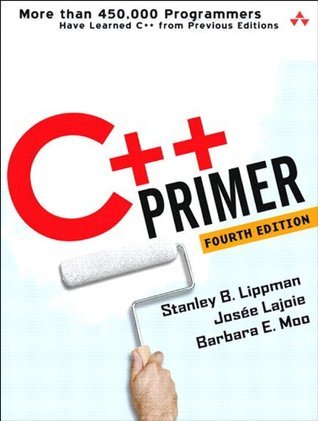
C++ Primer
This popular tutorial introduction to standard C++ has been completely updated, reorganized, and rewritten to help programmers learn the language faster and use it in a more modern, effective way. Just as C++ has evolved since the last edition, so has the authors' approach to teaching it. They now introduce the C++ standard library from the beginning, giving readers the means to write useful programs without first having to master every language detail. Highlighting today's best practices, they show how to write programs that are safe, can be built quickly, and yet offer outstanding performance. Examples that take advantage of the library, and explain the features of C++, also show how to make the best use of the language. As in its previous editions, the book's authoritative discussion of fundamental C++ concepts and techniques makes it a valuable resource even for more experienced programmers. Program Faster and More Effectively with This Rewritten Classic
885 pages, Kindle Edition
First published January 1, 1989
Ratings & Reviews
Friends & Following
Create a free account to discover what your friends think of this book!
Community Reviews
Displaying 1 - 30 of 50 reviews

February 12, 2011
general:
A really good C++ book for beginners. I mean, it probably won't work as the very first book on programming, but if you have some programming background and just want to learn C++, this should work really well. The whole thing is structured very nicely, and in the rare case when you have some questions, they are typically answered on the next page.
personal:
I realized that nobody ever taught me C++ properly, so I decided to try reading a few classic textbooks, starting with the very basics - this one. It felt funny: I was like "Meh, I know 85% of this stuff" all the way, but now these 85% are much better structured in my head - and the remaining 15% turned out pretty useful. Anyways, moving on to the more interesting stuff.
Also, that's the longest book I've read since "The Lord of the Rings".
Well, maybe only "War and Peace" and "Tikhy Don" were longer. Let's make it "the longest book I've voluntarily read since LotR".
A really good C++ book for beginners. I mean, it probably won't work as the very first book on programming, but if you have some programming background and just want to learn C++, this should work really well. The whole thing is structured very nicely, and in the rare case when you have some questions, they are typically answered on the next page.
personal:
I realized that nobody ever taught me C++ properly, so I decided to try reading a few classic textbooks, starting with the very basics - this one. It felt funny: I was like "Meh, I know 85% of this stuff" all the way, but now these 85% are much better structured in my head - and the remaining 15% turned out pretty useful. Anyways, moving on to the more interesting stuff.
Also, that's the longest book I've read since "The Lord of the Rings".
Well, maybe only "War and Peace" and "Tikhy Don" were longer. Let's make it "the longest book I've voluntarily read since LotR".

November 21, 2012
I've been using this book to brush up on my C++ for interviews - I've been writing C++ for a while, but I've also worked in some environments (embedded) where C++ was written more like C (no use of vectors, strings, etc.), so I needed to brush up on these topics the most.
On that account, I think the book is great (I'd even say 4-star worthy).
However....one thing I found slightly disturbing is that the book seems to imply that learning about pointers and memory management are a thing of the past (just use the libraries!) - no need to really cover it in-depth or understand it well either.
All of my jobs have required serious knowledge on these topics and now I am beginning to understand why we would get people in interviews with no real skills in this area - are people really being taught that there's no need for this knowledge anymore? Please - if you have any interest in embedded work - you have to go beyond this book!

December 20, 2013
This is a fantastic book, and a great learning resource. I initially started with Scott Meyer's "Effective Modern C++: 42 Specific Ways to Improve Your Use of C++11 and C++14", but realized there were too many conceptual gaps I needed to fill. This book was just the ticket. It was about a week-long detour, but essential to further progress. Even though I've "finished" the book, I know I'll go back and refer to sections that I skimmed.

December 29, 2012
The first good C++ intro that fully adopts C++11 style and features. Read it!

September 20, 2018
A big help on refreshing my long-gone C++ knowledge that reminded my why it was gone in the first place... This "primer" with 400+ pages sorts out all ambiguities between raw pointers and smart pointers and is loaded with insightful comments, including the new C++11 syntax. Some gripes I had were the weird usage of example code that started from something existing on the web instead of a simple example from zero, and the here and there wrong stresses on certain concepts - but that might have more to do with my preference of clean, readable code that isn't easy with STL's overuse of templates. We are actually encouraging students to learn basic C(++) concepts using this book.
April 2, 2021
First half is mandatory, second half is useful as a reference.
Can't believe after all this not even one module for my degree uses C++
Can't believe after all this not even one module for my degree uses C++
March 2, 2015
This book is a good solid introduction to modern C++. It covers a lot of language features and it does so in the right way, i.e. it does not teach you C++ through C as many other books do, but rather introduce the reader directly to modern C++ which is mostly free from its C heritage. The overall structure of the book is quite logical, explanations are thorough and clear, examples are right up to the point.
However, few things should be noted. First, the book is only for those who does have some prior programming experience: it would not teach you programming, it would teach you mostly the language. Secondly, while the book covers a lot of C++11 features I would not recommend it to anyone who is already familiar with C++ and would like just to learn new C++11 features. The reason is that C++11 features are smeared all over the book and explanations while clear are usually also too wordy.
However, few things should be noted. First, the book is only for those who does have some prior programming experience: it would not teach you programming, it would teach you mostly the language. Secondly, while the book covers a lot of C++11 features I would not recommend it to anyone who is already familiar with C++ and would like just to learn new C++11 features. The reason is that C++11 features are smeared all over the book and explanations while clear are usually also too wordy.
July 27, 2014
Least number of examples and exercises. Better as a reference. Digs deep into the concept.

June 24, 2017
Read to review my C++ knowledge as I haven't used it in production for a while.

Read
February 15, 2023Mosttexts presentC++ intheorderinwhichitevolved. TheyteachtheCsubset of C++ first, and present the more abstract features of C++ as advanced topics at the end of the book. There are two problems with this approach: Readers can get bogged down in the details inherent in low-level programming and give up in frustration. Those who do press on learn bad habits that they must unlearn later.
Throughout C++ Primer, we emphasize good style: We want to help you, the reader, develop good habits immediately and avoid needing to unlearn bad habits as you gain more sophisticated knowledge. We highlight particularly tricky matters and warn about common misconceptions and pitfalls.
cement their grasp of the language.
Source code for the extendedexamplesis availableon the Webatthe following URL: http://www.informit.com/title/0321714113
The compiler we use most frequently is the GNU compiler, version 4.7.0.
{
return 0;
}
The only statement in this block is a return, which is a statement that terminates a function.
Most compilers, including those that come with an IDE, provide a commandline interface.
Program files are normally referred to as a source files. On most systems, the name of a source file ends with a suffix, which is a period followed by one or more characters. The suffix tells the system that the file is a C++ program. Different compilers use different suffix conventions; the most common include .cc, .cxx, .cpp, .cp,and.C.
Comments help the human readers of our programs. Theyaretypically used to summarize an algorithm, identify the purpose of a variable, or clarify an otherwise obscure segment of code.
A single-line comment starts with a double slash (//) and ends with a newline.
The other kind of comment uses two delimiters (/* and */) that are inherited from C. Such comments begin with a /* and end with the next */.
We often need to comment out ablock of code during debugging.
Throughout C++ Primer, we emphasize good style: We want to help you, the reader, develop good habits immediately and avoid needing to unlearn bad habits as you gain more sophisticated knowledge. We highlight particularly tricky matters and warn about common misconceptions and pitfalls.
cement their grasp of the language.
Source code for the extendedexamplesis availableon the Webatthe following URL: http://www.informit.com/title/0321714113
The compiler we use most frequently is the GNU compiler, version 4.7.0.
{
return 0;
}
The only statement in this block is a return, which is a statement that terminates a function.
Most compilers, including those that come with an IDE, provide a commandline interface.
Program files are normally referred to as a source files. On most systems, the name of a source file ends with a suffix, which is a period followed by one or more characters. The suffix tells the system that the file is a C++ program. Different compilers use different suffix conventions; the most common include .cc, .cxx, .cpp, .cp,and.C.
Comments help the human readers of our programs. Theyaretypically used to summarize an algorithm, identify the purpose of a variable, or clarify an otherwise obscure segment of code.
A single-line comment starts with a double slash (//) and ends with a newline.
The other kind of comment uses two delimiters (/* and */) that are inherited from C. Such comments begin with a /* and end with the next */.
We often need to comment out ablock of code during debugging.
June 9, 2020
A great introductory book to C++, teaches the important features of the language and the standard library right away. Given that this edition is two, almost three C++ standards old it still holds remarkably well, partly due to C++14 and C++17 being minor and medium upgrades, as opposed to the major upgrade of C++11, which this book teaches.
Definitely worth the read for anyone wanting to learn C++. This is a great place to start even with modern C++.
Definitely worth the read for anyone wanting to learn C++. This is a great place to start even with modern C++.
April 6, 2019
The book is great, except that I never finish it. It's more like a dictionary rather than a introduction for novice even if it attempts to be one, which is worse because the effort to make it more friendly eventually makes it a dictionary without order.

May 2, 2021
The book certainly does not replace the best way of learning programming through doing, but it's an amazingly efficient way to fill in any gaps in beginner/intermediate knowledge. The language is clear, progression of topics is coherent and the questions and exercises included are well adjusted.
April 15, 2022
The single best book for learning c++ that I have come across, it goes from the very basics to the intermediate without ever feeling like it is talking down to you. Cannot recommend enough if you are thinking about learning c++

April 24, 2025
Too simple for its own good. Lacks any depth of discussion on the topic of actually coding projects, effectively using OOP, using build tools, and all other presented features; A lot of which are even too obscure or useless in any practical capacity.
June 24, 2017
Must read

July 21, 2017
I learned my C++ 4 years ago from this book together with Stroustrup's "the C++ programming language". And I often come back to some chapters in here when I need reference, like a Bible.
September 13, 2017
Excellent resource for programmers learning C++. It's very lengthy and assumes the reader has programming background. Worth the time and effort.
September 14, 2018
My favorite beginner c++ book.

Want to Read
August 27, 2020completed 49/1399
January 12, 2021
Good for looking up things for reference.
January 31, 2021
5th edition, pretty good and comprehensive, missed concurrency topic
May 31, 2021
this books is helpful, helped me a lot to learn the basics
June 30, 2021
I learned C++ with this book.

April 17, 2022
Very thorough but a little too wordy for experienced programmers.
Not good as a reference, which is a shame.
Not good as a reference, which is a shame.
July 13, 2022
Very detailed book. Highly recommanded
October 20, 2022
A quite technical book, dive deep into basics of C++11.
Read
August 28, 2023Skipped this one and decided on Bjarne Stroustrup's Principles and Practice as an introductory.
January 15, 2024
Good book taking me years, now to move on the practice rather than language.
May 31, 2024
Oh boy, this book is the best place to start learning cpp. It has practices to do at the end of each chapter, which forces you to recal and use the information that you've learned.
Displaying 1 - 30 of 50 reviews