Napoleons Feldzug in Rußland war das vielleicht größte militärische Desaster aller Zeiten und eine menschliche Tragödie von beispiellosen Ausmaßen – das erste historische Beispiel eines totalen Krieges. Adam Zamoyski hat mit 1812 das meisterhafte Epos über die Hybris eines Eroberers, den Wahnsinn des Krieges und einen der dramatischsten Wendepunkte der Weltgeschichte geschrieben. Das Ergebnis ist ein unvergeßliches Buch, das Geschichte so hautnah erzählt, wie es nur wenigen Autoren gelingt.«Ich konnte nicht schlafen, nachdem ich 1812 gelesen hatte. Eine der überwältigendsten Geschichten, die je erzählt wurden.»Christopher Woodward«So brillant geschrieben, dass es unmöglich ist, das Buch aus der Hand zu legen… Ein Meistererzähler am Werk.»Michael Burleigh«Mitreißend… Zamoyskis Darstellung des Feldzugs von 1812 ist ein Musterbeispiel an Eleganz und Klarheit.»T. J. Binyon«Ein absolut bewundernswertes Buch.»Antony Beevor
A historian and a member of the ancient Zamoyski family of Polish nobility. Born in New York City and raised in England. He is Chairman of the Board of the Princes Czartoryski Foundation. On June 16, 2001, in London, England, he married the artist Emma Sergeant.
Was it the winter or was it Napoleon? The answer is mostly Napoleon, although the weather was the final nail in the badly bludgeoned coffin. This is an extraordinary tale of how one bad decision followed several catastrophic choices led to the change in the course of history and the downfall of one of the most powerful men in history at the high of his strength.
Beginning with two great powers facing off, one built by the Romanov Tsars of Peter the Great and Catherine the Great and lead by Catherine’s grandson, Alexander I. Basking in the glory of the precious century. The other, new, all mighty and lead by an upstart artillery officer, Napoleon Bonaparte. The later having been born out of the French Revolution which had rattled Europe and had placed nearly everywhere under it’s boot. History often repeats itself and it is impossible not to compare the stand off to that of 1939 and Nazi Germany and Soviet Russia. Operation Barbarossa ended the same way, after shaky alliance between both sides. Alexander does not bend to Napoleon’s will and why should he? The Corsican upstart, was arrogant, untrustworthy and had played games over marriage to his sister, whilst also chasing the Austrian Emperor Francis II’s daughter, who he eventually married.
Napoleon growing impatient and most likely over confident, gathered the largest army the world have ever seen. With 600,000 he crossed the Nieman into Russia, the majority never to be seen again (around 35,000 would make it back, in some sought of fighting ability). Zamoyski shows that the death starts straight away, horses eating grass which was too wet and dying within the first days. Soldiers begin dropping away almost immediately. Small battles frustrate Napoleon before the collision at Borodino and then the sacking of Moscow. What follows next is unimaginable. A relentless, spiral of horror. One tragedy after another. When you think it’s over, more comes, hitting you in the face like cold water. Until every mound of snow from Moscow to Vilnius had a human limb protruding from it.
Napoleon fled to France, through fears of a coup, leading his men behind. He was determined to return to finish Alexander off. This did not happen, as this was the catalyst of events which turned Europe, state by star against the emperor. Alexander reprimanded Mikhail Kutuzov at first, then trusted his judgement as the French were slowly worn away. Tolstoy could not have written this any better!
What sets Moscow 1812 apart from other accounts of the campaign is Zamoyski’s nuanced analysis of the factors that contributed to Napoleon’s downfall. While many histories of the invasion focus primarily on the military aspects, Zamoyski takes a broader approach, examining the political, cultural, and psychological dimensions of the campaign. He explores Napoleon’s overconfidence and hubris, the miscalculations of his generals, and the resolve of the Russian people, led by Tsar Alexander I, to defend their homeland at any cost.
Zamoyski also provides a balanced perspective on the Russian side of the conflict. He does not merely depict the Russians as passive victims of Napoleon’s aggression but instead highlights their strategic decisions and the crucial role that the Russian winter and scorched-earth tactics played in wearing down the French army. This balanced approach adds depth to the narrative and helps readers understand why the campaign ended in such catastrophic failure for Napoleon.
The writing in Moscow 1812 is clear and accessible, making it suitable for both general readers and those with a deeper interest in Napoleonic history. Zamoyski’s ability to convey complex military maneuvers and political dynamics without overwhelming the reader is commendable. His prose brings to life the horrors of the campaign, from the freezing temperatures to the desperate battles and the chaotic retreat, creating a vivid and immersive reading experience. However, it must be noted that the book has been criticised for its focus on the human aspects of the campaign. For example, the personal experiences of soldiers and civilians, which has occasionally overshadowed the broader strategic and political context. While this focus makes the book more engaging and relatable, those looking for a more traditional military history might find the emphasis on personal narratives a bit limiting.
That being said, for me Moscow 1812 one of the best books on the Napoleonic Wars. It is extremely well written and moves at a great pace. I flew through this book, the stories are captivating. What the French went through, the heroics, the suffering, the near misses and the sheer tenacity to survive in what was a series of horrors Hollywood could not write. A poignant tale, with each page having the ability to surprise and shock. This is a campaign like no other and is told like a great novel. Only it happened and it leaves a lasting feeling of alarm and dejection of what they went though. I bow and remove my bicorne hat to Count Adam Zamoyski.
Triggers: war violence and carnage; suffering and death of humans, horses, dogs; cannibalism.
🪰Here we discover humanity at its worst and, infrequently, at its best. Here Lord of the Flies is played out on a Napoleonic tableau. When soldiers are reduced to a “me or you” situation on the long winter’s march back to France, they do not have self-sacrifice in mind. They will kill you. Then they will roast you and eat you. They may even eat you alive. Whatever it takes to survive. Even if they feel they must kill infants. And do.
I am a teacher of history and a few other disciplines but I confess I don’t know much about Napoleon. To me, he comes across as arrogant and narcissistic. He is desultory about invading Russia but does it anyway. When he should be leading his army he is off having inconsequential talks with someone. When Kutuzov, the Russian general, leaves Napoleon an empty city, the latter doesn’t know what to do with it. Instead of setting up winter quarters there or heading home, Napoleon does neither, but lingers past the safe point for a long march, not wanting it to look like a retreat which he feels would reflect poorly on himself. When things fall apart as winter descends, killing men and horses by the thousands, he blames everyone else for the debacle he created.
Admittedly, the Napoleon of 1812 is not the Napoleon of 1815 and the Battle of Waterloo. In 1815 his mind is razor sharp, his troop movements decisive, his commitment to victory unwavering. As Wellington said, the British general who fought him, Waterloo was “a near run thing”. In other words, Napoleon almost won.
🪰This book reads like a novel. Ah, if only it were fiction. I feel like giving this book to everyone who extols the virtues of warfare. By its end, we see humans reduced to shells of their former selves, physically and psychologically, preying on other humans as cougars or lions prey on other animals for their meals. Altruism, mercy, kindness and compassion are left on the roadway with the other dead. The spark that apparently makes humans better than animals, reptiles, birds and insects, is out or greatly diminished, as soldiers begin eating horses that are still alive - or roasting humans for consumption who were their beloved comrades in arms hours or minutes before.
Atrocities are committed by French and Russian soldiers alike. There is nothing noble about Russian actions. They loot and slaughter like everyone else. Napoleon lost but the Russians did not win. They did nothing to deserve Tchaikovsky’s 1812 Overture. That’s simply another bit of propaganda like War and Peace. Yes, Russians troops fought. They also murdered. On a massive scale. Killing prisoners and leaving enemy wounded to rot. Just as the French did. Just as Russian civilians and peasants did. There is no moral high ground here.
⚔️ There is no point in my going on and on. The book is extremely well written, absolutely approachable, and essential in what it has to say about war a la Remarque and what truly happened in Russia in 1812. Never mind Tolstoy’s sugar frosted propaganda. He and Tchaikovsky are a pair. I read the truth of the conflict here and I come away impaled.
This entire review has been hidden because of spoilers.
Das beste Buch über Geschichte, das ich je gelesen habe. Mit Abstand. Zamoyski berichtet über ein schicksalhaftes Jahr für Europa, einen Wendepunkt in der Geschichte. Eigentlich will Napoleon nur etwas Demut von Zar Alexander, eine anerkennende Geste hinsichtlich der Großartigkeit des kleinen Korsen. Ein Friedensabkommen hätte ihm schon gereicht. Er kommt ihm mit seiner Grand Armee auch entgegen, überquert den Njemen, hofft auf eine schnell gewonnene Schlacht wie schon so häufig davor in Austerlitz, Jena oder in Italien. Doch was machen diese unorganisierten Russen? Ziehen sich immer weiter zurück. Dazwischen ein paar brutale Schlachten in Smolensk und Borodino. Bis nach Moskau dringt Napoleon vor und die Russen geben ihm ihre Hauptstadt kampflos. Und dann beginnt eine Tragödie zwischen September bis Dezember 1812, die einen fassungslos macht.
Warum ist Zamoyskis Schreibweise so außergewöhnlich? Aufgrund der Dicke des Werks bleibt kein Aspekt unberücksichtigt. Durch seine Detailtiefe der Berichterstattung bleiben wir nicht auf einer hohen Flugebene und betrachten den Feldzug nicht nur aus strategischen Gesichtspunkten oder aus dem Blick der Kriegsherren. Zamoyski hat so intensiv recherchiert, dass er auch über unzählige Schicksale einfacher Soldaten berichtet, die aus vielen Ländern zusammengestellt wurden, um im Namen der Franzosen zu kämpfen. Unser Geist ist gar nicht in der Lage, das Leid in modernen Kriegen und Genoziden in seiner Gänze erfassen zu können. Sind jetzt 500.000 Franzosen gefallen oder erfroren? Oder was es nur 450.000? Dörfer würden zerstört, Frauen vergewaltigt, gemordet, gebrandschatzt. Alles nur Wörter und Zahlen.
Wenn aber jedes Schicksal einer Person zugeordnet werden kann mit Namen und Herkunft, wenn wörtlich aus deren Briefen und Tagebucheinträgen berichtet wird, dann wird das Ausmaß dieser Katastrophe für mich erst greifbar. Zwischenzeitlich dachte ich mal bei diesem desaströsen Rückzug der Franzosen, dass ich nun genug über erfrorene Gliedmaßen, Kanibalismus, Tierquälerei, Gier, Habsucht, Mord und Aufgabe gelesen hätte. Aber im Grunde war jedes Einzelschicksal es wert, erzählt zu werden. Das Buch treibt jemand wie mich, der dem Genre Horror weitgehend aus dem Weg geht, an den Rand des Zumutbaren aufgrund der Masse der Schreckensereignisse.
Tolstois Krieg und Frieden ist schon sehr nahe an der Wahrheit dran. Zamoyski veredelt den Klassiker erst richtig. Ich war vor der Lektüre schon kein Anhänger Napoleons gewesen. Nach diesem Buch ist die Begeisterung vieler Menschen für Napoleon zur dieser Zeit, ob einfache Leute oder Gelehrte, kaum nachvollziehbar. 1812 ist die Demaskierung vieler Kriegshelden. Was für eine grausame Tragödie.
This book is the ideal addition to Tolstoy's "War and Peace". Despite being a serious scientific work it feels almost like a novel. It is very rich in quotes by participants of the events, both from the higher classes as well as citizens and rank and file soldiers. Being able to read the sources in five major languages (English, Polish, French, Italian and Russian) Adam Zamoyski manages to keep a relatively unbiased position. A slight inclination towards the Polish nation is understandable given that the author is a descendant of Polish top nobility.
I probably made more than a hundred marks, but would like to mention only three surprising insights. In order to provide positive news, numbers of combat-ready soldiers and mounts were inflated through the ranks, so that Napoleon never had a realistic image of the real size of his army. But he either discounted the numbers or the Russian side made the same and so ignorance balanced out. One reason for the disastrous retreat was the fact, that the Grande Armée did not spike the horseshoes, so horses slipped and were not able to draw the cannons. The biggest "wow", however, was the fact that the crossing of the Berezina was not the disaster, as it is often painted, but a miraculous escape from an almost hopeless situation with a Russian army holding the Western bank and the main forces under Kutusov in their back.
This is a detailed, well-researched and absorbing book about Napoleon’s invasion of Russia in 1812, his tragic retreat from Moscow and his ultimate defeat.
This book starts with a birth surrounded by all the pomp and power of an empire at its peak. in reality the book is about failure and indecision, about the useless sacrifice of thousands in a vain and pointless enterprise that somehow manages to sum up all that is wrong with man's ambition - in fact, Napoleon summed it all up when he coined his quip on reaching Warsaw, having abandoned his men; "From the sublime to the ridiculous there is but one step." Watching the build-up to the Russian campaign is like watching a samurai preparing himself for ritual suicide... there is that sense of inevitability - that driving desire to destroy oneself. The "French" army is actually a massive coming together of forces throughout Europe; the courageous Italians, the various Germans, Austrians, Dutch, Belgians, Spaniards and, of course, the "largest non-French contingent... who numbered some 95,000", the Poles. Napoleon's arrogance towards and exploitation of his allies, his incompetence and dithering is astounding. His deception and abuse of his Polish allies, whose courage is constantly proven, is inexcusable! The French were poorly equipped with out-of-date weaponry, poorly designed and uncomfortable uniforms and a genuine lack of logistical planning for a war to be held in an Eastern Europe that was a total contrast to the more "civilised" and comfortable conditions found in the West. "The troops (were) subjected to a rude awakening... there was an element of surprise at the exoticism and the backwardness of many of the areas east of the Oder. they marvelled at the emptiness of the landscape..." The roads were unsuitable, the villages were squalid, there was a lack of food and infrastructure that could "support" such large invading forces... even the fact that the troops had to bivouac in the field rather than be billeted in comfortable farmhouses and towns... all contributed to the great discomfort of the men and the failure of the campaign. Some of the mistakes made were so similar to Hitler's over a hundred years later... right down to the alienation of potential allies within Russian-occupied territory! "The Frenchmen came to remove our fetters," the peasants quipped, "but he took our boots too." The Russians wore more comfortable uniforms and had superb artillery but Russian troops were conscripted for a period of twenty-five years - when they left their villages they were given a symbolic funeral since they were never expected to return. Their training and discipline was harsh and they did not lay down their arms; "Frederick the Great is alleged to have said that one first had to kill the Russian soldier and then push him over." The real tragedy is that they were lead by a gang of in-fighting incompetents that belong more in a school staffroom than on the field of battle. "Napoleon's military success in the past had rested on his capacity to make a quick appraisal of any situation and to act intelligently and decisively on its basis. Yet from the moment he set out on his (campaign) he displayed a marked inability... to act decisively...(He had) a difficulty in comprehending what his opponents were trying to achieve... The Russians had spent a year and a half deploying for an offensive, only to retreat the moment operations began. This... led Napoleon to expect a trap, and then to assume that they were avoiding battle out of fear of losing. He was not to know that most of it was the result of chaos and intrigue at Russian headquarters." When the fighting begins cities are razed, the slaughter is immense. The agony of the wounded is heart-rending. One small fact jumped out at me - it concerned the battle of Borodino: "It had been the greatest massacre in recorded history, not to be surpassed until the first day of the Somme in 1916." Perhaps the most surprising bit of the story is the march on Moscow. History (or is it romantic vision) concentrates on the horrors of the retreat of a failed army, in the freezing depths, harassed by Cossacks, under fire, starving. Yet the march to Moscow, in the blazing heat and rain, bitten by mosquitos and dying of hunger and thirst cost the French almost a third of their forces! In the retreat, Napoleon's concern about his loss of face meant that suitable, life-saving action was not taken prior to and during the march back. In fact constantly we see not a great leader at the head of his men but a great vacillator, a man full of indecision, skulking in his carriage or hidden away in luxury whist all about him struggle and die. When he did make decisions they were the wrong ones and had terrible consequences. His men "should have blamed Napoleon but did not because he belonged to them as much as they to him... His glory was their common property, and to diminish his reputation by denouncing him and turning away from him would have been to destroy the common fund of glory they had built over the years and which was their most prizes possession." What I really like about this sort of book is the way it tries to tell the story of the ordinary men. We hear (and see) individual tragedies played out on this cruel stage littered with frozen bodies and abandoned booty. The terrible cold, the lack of food, the conditions... even the lice... One shudders as one watches the growing indifference to the torment of their comrades, the desperate acts they became prey to simply in order to survive. My heart went out to them. Every time they thought they'd reached safety things just got worse. And the death toll was astounding! "...it is safe to say that all in all, between the Grande Armee's crossing of the Niemen at the end of June 1812 and the end of February 1813, about a million people died, fairly equally divided between the two sides." Europe was changed. The Russian Campaign set the seeds for the setting up of autocratic structures throughout, and this in the face of the desires for greater freedom the man-in-the-street (especially the Russian exposed to the greater liberties of the West) expected. Russia and Prussia became dominant powers and it is no conceit to see in Napoleon's failure the sowing of the seeds of that greater conflict to come in 1939. That I enjoyed this book should not need stating, that it is a good read is undeniable. Zamoyski writes with an ease that encompasses us and a knowledge that gives us material to bore our friends with for a long time to come. This is an epic tale told in an epic manner.
This is an excellent book to give the reader a wide-ranging account of Napoleon’s tragic 1812 foray into Russia. The author covers everything from the political and diplomatic situation to the logistic preparation to the actual march into and out of Russia. Decent, if brief accounts of the major battles and pretty good maps/diagrams of the movements are included. I appreciated his restraint in explaining the strategy and motivations of each side. Napoleon definitely doesn’t come off as the military genius of the age and Alexander and his generals are a mass of conflicting plans. No one wants to fight Napoleon and Napoleon just wants to get Alexander in line. In the end, the common soldier of each side pays the price, although the Grand Armee gets the worst of it. Highly recommended but you will need to do a lot of additional reading to fully comprehend this massive campaign. 4 Stars
A Háború Istene és a Halogatás Géniusza összecsap. Naná, hogy a halogatás győz.
(Moszkva, a világ legfeleslegesebben felgyújtott nagyvárosa.)
A szorító egyik sarkában Napóleon, az addig ismert leghatalmasabb és talán legütőképesebb hadsereg, a Grande Armée élén. Ő a Legyőzhetetlen, akihez képest a kor többi tábornoka csak nyüzüge kiscserkész. Ha őt kérded, azt mondja, tiszta jószándékból akarja elfoglalni a komplett bolygót, hogy mindenhol az értelem és a humanizmus fáklyája világítson. Ha viszont engem kérdezel, akkor a háborús spirál foglya - mivel azt tapasztalta, hogy a csatákhoz ért a legjobban, ezért ahová megy, előbb-utóbb csatába bonyolódik. Olyan, mint a pestis: amerre jár, hullanak a népek. Mindemellett az önáltatás mestere is, aki "rendkívüli képességekkel bírt, hogy elhitessen magával valamit azáltal, hogy egyszerűen igaznak nyilvánítja." Egy nárcisztikus pöts, egyszóval.
Vele szemben pedig ott van Sándor, minden oroszok cárja, az ifjú idealista, aki kezdetben rajong Napóleonért, később viszont elhatalmasodik rajta a hivatástudat: meggyőződésévé válik, hogy az ő feladata megszabadítania a világot a gall mételytől. Hogy mit kínál helyette? Nos, leginkább örök jobbágyságot, ahol a sorkatonai szolgálat azt jelenti, hogy 25 évre elrabolják a parasztot a falujából, és elviszik olyan messzire, hogy akkor se tudna onnan hazatérni, ha engednék. Mák, hogy nem is engedik. Hadvezére pedig Kutuzov, akiből az orosz történetírás hőst csinált, holott tevékenysége kimerült abban, hogy igyekezett elkerülni az ellenséget. Ami az adott körülmények között elég is volt a diadalhoz.
Az egész hadjárat tanulsága az, hogy lehetsz te bármekkora májer a csatatéren, ha nem uralod a csaták közti üresjáratokat, akkor cseszheted. Napóleon voltaképp az összes összecsapást megnyerte, amikor sikerült találkoznia az oroszokkal - azzal együtt, hogy az orosz katonák fatalista bátorsága sok gondot okozott neki -, csak épp azok mindent megtettek, hogy ne találkozzanak vele. Átengedték a francia hadsereget Tél Tábornoknak, valamint a végtelen orosz sztyeppének, ami olyan térélménnyel szolgált, hogy az egész armada beleszédült. Napóleon pedig túl lassan értette meg, hogy a Gárda hősiessége lópikulát sem ér, ha nincs mögötte logisztika. A pocsék orosz infrastruktúra lehetetlenné tette az utánpótlás biztosítását, a helyi parasztok pedig eleve nincstelenek, lehetetlen volt érdemben rekvirálni tőlük*. Már pusztán az élelmiszer és a takarmány hiánya a francia sereg** lemorzsolódásához vezetett volna, de az egészre még rá is rétegződött a közmondásos orosz tél a maga mínuszaival. És mivel a Császárnak derogált, hogy megfelelő ruházatról vagy épp karmos patkókról gondoskodjék, ezért Zamoyskinak alkalma nyílik a fagyási sérülések gyomorforgató tárházává alakítani a kötet egyes szakaszait.
Napóleon keleti kalandja olyan szenvedésszimfónia, ami a borzalmak teljesen új szintjére emelte a hadviselést. Ez nagyrészt a Császár felelőssége - előtte a háborúskodás a hivatásosok többé-kevésbé udvarias sportja volt, ahol a csapatok kartáccsal verették egymást, kardozgattak, aztán az egyik elismerte vereségét, mire a másik lovagiasan megdicsérte ügyességéért, és pezsgőztek egyet az izgalmakra. A franciák viszont azzal, hogy a nemzet eddig ismeretlen erőforrásait is mozgósították, becsempészték a totalitást a hadviselésbe, és elhintették máshol is a nacionalizmus magjait. Hogy ez hová vezetett, azt már Spanyolországban is láthatták, de Oroszországban visszakapták kamatostul. A kedélyes úri csetepaték helyét átvette a brutalitás, ahol a kozák szabadcsapatok és a parasztok válogatott kegyetlenséggel kínoztak meg mindenkit, aki a kezük közé került. Miért is ne tették volna, ha egyszer a propaganda*** azt harsogta, hogy ezek nem emberek, hanem ördögök?
Mindent összevetve az egésznek annyi értelme volt, hogy bebizonyosodott: ha az uralkodók összekülönböznek, abba a talpasok pusztulnak bele. De ezt meg úgyis tudtuk.
Ja, meg még talán az is haszon, hogy Zamoyski az egészből írhatott egy közel tökéletes monográfiát. De hát biztos abból is írhatott volna jót, ha franciák és oroszok végig kart karba öltve virágot szednek és hógolyóznak. Bár ez talán mégse olyan biztos. Mindazonáltal ki lehetett volna próbálni.
* Nyilván az se sokat segített a dolgon, hogy Kutuzov a felperzselt föld taktikáját alkalmazta, aminek a helyi parasztok biztos marhára örültek. De hát az oroszok sose arról voltak híresek, hogy kikérik a parasztok véleményét. ** Az egyszerűség kedvéért azt mondom, hogy "francia sereg", holott a Grande Armée-ben ott volt Európa szinte összes nációja a portugáloktól a horvátokig. Csak kevesen jöttek önként - zömük azért volt kénytelen a Császár rendelkezésére bocsátani haderejét, mert Napóleon azt megelőzően alárendelt szerepbe kényszerítette. *** A propaganda volt az egyetlen, amiben Kutuzov közel olyan jó volt, mint Napóleon. Híres volt többek közt arról, hogy nem akadt olyan szégyenletes fiaskó, amit ne lett volna képes világraszóló orosz győzelemként interpretálni.
Geschichte sehr lebendig erzählt. Das Buch ist voller Zeitzeugenaussagen, die das ganze Grauen dieses Krieges mit erlebbar macht. Teile des Buches konnte ich nur kapitelweise vertragen, da es einfach zu schrecklich war, was Menschen (Soldaten und Zivilisten) und Tiere erleiden mussten. So viele Tote und alles für ein Krieg ohne echtes Ziel. Irgendwie sind sie da reingeschlittert... mit katastrophalen Folgen - auf der eine Seite der Zar und auf der anderen Napoleon.
Lückenlose Chronik eines vorhersehbaren Scheiterns eingebettete eigene Überlegungen kursiv
Lückenlose Chronik eines von vorn herein zum Scheitern verurteilten Feldzugs. Zamoyski zeigt ebenso gründlich die Mängel der Vorbereitung bzw. die logistische Unmöglichkeit auf, eine derartige Riesenarmee auf den Weg zu bringen und im Feindesland zu versorgen, bzw. die generellen Defizite bei der Infrastruktur. Im Gegensatz zu seinem gut 100 Jahre früher an anderen Faktoren gescheitertem Vorgänger Karl XII., der mit englischem Wohlwollen operierte, waren Napoleon die Seewege versperrt. Der schwedische König bezahlte zudem die Landbevölkerung für die Versorgung, besser sogar als die Einheimischen und ließ die besiegten Städte statt dessen bluten, bzw. die reiche Bürgerschaft zur Ader, während Napoleons Truppen Freund und Feind ausplünderten, so war es ja der Brauch auf allen seinen Feldzügen gewesen, bei denen sich seine Armee aus dem Land versorgen musste. In den republikanischen Anfangszeiten ging das gar nicht anders, aber immerhin gab es damals den Anspruch der Befreiung der Völker vom feudalen Joch. Die Abkehr vom Befreiungsethos früherer Tage, in Sachen Polen wie der Leibeigenen, ist sicherlich die zweite Todsünde und verbindet sich mit der generellen Unentschlossenheit vor diesem Feldzug, der eher als Strafexpedition gedacht war, um den vermeintlichen Freund Alexander wieder auf die eigene Seite zu bringen. Eine schier unglaubliche Kumpel-Sentimentalität, jeder echte Macchiavelist hätte auf die Befreiungskarte gesetzt und zumindest einen Teil der Bevölkerung auf die eigene Seite gebracht, statt ein feindseliges Hinterland von bislang unbekannten Ausmaßen in Kauf zu nehmen. Zamoyski stellt auch überzeugend dar, warum sich Alexander zu keinerlei Verhandlungen mehr bereit erklärte: 1) Beim Memel-Treffen, das Napoleon immer in verklärter Erinnerung behielt, fühlte sich der junge Zar vom charismatischen Franzosenkaiser über den Tisch gezogen. Schwache Naturen, reagieren auf die Einsicht, dass sie düpiert wurden, gern mit Komplett-Blockade, ganz egal, was und wie viel die andere Seite beim nächsten Anlauf nachlegt. 2.) Alexander stand selbst unter innenpolitischem Druck, denn die Mörder seines Vorgängers befanden sich auch in seinem Gefolge/Kabinett und hätten bei zu viel Nachgiebigkeit gegenüber den Franzosen schnell Platz für einen genehmeren Nachfolger gemacht. 3.) Die Kontinentalsperre erwies sich als Exportbeschränkung für das Agrarland Russland, dessen Artikel sich als Schmuggelware eigneten. 4.) Der von allerlei Napoleon-Gegnern (Clausewitz, Gneisenau) aus unterworfenen Ländern beratene Zar kannte das Verfahren seines Gegners (Sieg im Feld, Einzug in die Hauptstadt, Fliettierung des Landes). Allerdings führte der Experten-Overkill eher unfreiwillig dazu, dass die immer wieder hinausgezögerte Schlacht auf einem denkbar ungeeigneten Gelände und auf engstem Raum stattfand. Von daher geriet Borodino zum schlimmsten Gemetzel bis zur Somme-Schlacht, aber die Routine-Fehler der Weltkriegsgeneräle übertreffen so gut wie alles, was sich Napoleon auf dem Weg nach Moskau geleistet hat. Allerdings ließ sich der ungewöhnlich zaghafte Kaiser die Gelegenheit entgehen, einen Sieg nach seinen Standards zu erringen, indem er die Reste der gegnerischen Armee entkommen ließ, statt sie von ihrer Ausgangsbasis abzuschneiden. Der Weg nach Moskau bzw. die Gründe, warum die Eroberung einer so großen Stadt nicht nur militärisch bedeutungslos, sondern in jeder Hinsicht zur fatelen Falle geriet, stellen auch die üblichen Napoleon-Bios ziemlich überzeugend dar, die den Weg zurück, aber eher als Telegramm VERSPÄTETER AUFBRUCH EINER MIT BEUTE UND BRÄUTEN ÜBERLADENEN ARMEE- PUTSCH IN PARIS - WUNDER DER BERESINA - ALLMACHTSPHANTASIEN IN DER KUTSCHE UND GRUSS AN GOETHE bringen. Der Umstand, dass die Versorgung der Pferde den Ausschlag für den Aufbruch gab, war mir neu, ergibt aber Sinn, die Fütterung von praktisch nie gebrauchten Pferden für das britische Expeditions-Corps, war ein ganz großes logistische Herausforderung im Weltkrieg. Dass die Franzosen in Sachen Hufeisen ziemlich sorglos unterwegs waren und bei Kälte einen ziemlich hohen Tribut zahlten, war mir schon bekannt, dass der damit einher gehende Verlust der Kavallerie sogar noch beim Ausschlag der Schlacht von Waterloo den Ausschlag gab, dagegen neu. Aufgrund der Masse an bislang unterschlagenen Leidensgeschichten vor der Beresina, schrumpfte mein Lesetempo beträchtlich in Vier-Seiten-Etappen humpelte ich den Rückweg wie ein angeschlagener Kavallerist, der für immer abgesessen war. Dabei erfüllte mir Zamoyski sämtliche Wünsche seit dem ersten Kontakt mit dem Kaiser und seinem Russlandfeldzug. Ich konnte das Ende das Kapitels The Mirage of Smolensk nur in drei Etappen bewältigen, große und kleine Tragödien und ein Kaiser, der auf dem Allerwertesten einen Hang herunter rutschen muss, weil es nicht anders geht. Allein aus den letzten 10 Seiten könnte man mehrere großartige Erzählungen oder gar einen dicken Roman gestalten. Auch seine Generäle haben ihre bezeichnenden Erlebnisse, die spätere Reaktionen (Neys unhaltbares Käfigversprechen) oder persönliche Absetzbewegungen (Murat) erklären. Die Weigerung den Schwager und tollkühnen Kavallerie-General schlechthin für Waterloo wieder in Gnaden aufzunehmen und statt dessen den übervorsichtigen Ney an die Spitze der Reiterei zu setzen, der mit dem Stürmen einer anfangs unterbesetzten Stellung zu zögerlich vorgeht, ist ein weiteres Echo des Rückzugs von 1812. Dabei stellt Zamoyski die Schwächen von Napoleons Nepotismus gnadenlos bloß, wie beim Übergang eines Flüsschens, den Stiefsohn Eugene gnadenlos verpatzt, die schweren Kanonen ruinieren schnell die Furt, bei der Rettung des Gepäcks bis in die Abendstunden kommt es zu fatalen Unterkühlungen. Dabei waren zahlreiche Soldaten schon vorher ohne späten Kontakt mit eiskaltem Wasser erfroren. Auf Schritt und Tritt des Rückzugs rächen sich die erschütternde Fahrlässigkeit/Ignoranz bei der Vorbereitung dieses Feldzugs tausendfach in Form von ohne Fremdeinwirkung getöteten Soldaten und verlorenen Pferden. Beim russischen Klima reicht auch kein Riesendusel, der Napoleon bei früheren Gelegenheiten gerettet hat, auch kein vereinzeltes Täuschungsmanöver, auch wenn der Übergang über die Beresina, frühere Erfolge wie Lodi, Arcole und co sicherlich in den Schatten stellt. Denn immerhin gelingt es einen Teil der von der Ausgangsbasis abgeschnittenen Armee und der Kaiser wird nicht mit seinen eigenen Mitteln geschlagen und gefangen genommen, sondern kann die übelste Etappe so schnell wie möglich hinter sich bringen. In Sache Leute verheizen, war er immer schon ziemlich skrupellos, bei der Pflege der Pestkranken vor Akkon ging er immerhin vorbildlich voran, aber Leid ohne militärischen Nutzen in diesem Ausmaß ist auch eine neue, vorher unvorstellbare Erfahrung. Dem anfangs unterschätzten russischen Winter war mit napoleonischem Witz nicht beizukommen, mit diesem Gegner ließ sich nicht verhandeln. Tatsächlich folgt das härteste Winter-Fiasko auf den Übergang über die Beresina. Insofern wäre seine Einschätzung richtig, dass ihn nur der äußerst strenge Winter besiegt hätte. Aber gerade das Wilna-Kapitel, mit frischen Truppen, die ohne Gelegenheit zur Anpassung an die klimatischen Verhältnisse in eine tödliche Winternacht gehetzt wurden, zeigt, wie viel mörderische Routine in der französischen Armee herrschte. Dass der Kaiser auf der Durchreise an den örtlichen Kommandanten keine entsprechenden Hinweise gab, war natürlich grob fahrlässig. Erst recht, wenn man dagegen hält, in welchen Allmachtsphantasien für die nächste schnell verheizte Armee, bzw. Liebesträumen der Kaiser auf der weiteren Rückfahrt schwelgte. Die Kälte war die neue Erfahrung, die Armee unvorstellbar größer als das seinerzeit im Stich gelassene Ägypten-Heer. Da der Landweg wie der Seeweg durch die Briten gesperrt war, entging Napoleon nur durch einen tiefen Sonnenstand den Blicken der Flotte, die ihn fangen sollte und im Erfolgsfall schon 1798 für immer aus dem Verkehr gezogen hätte. Aus dergleichen Erfahrungen ziehen derartige Naturen natürlich ihren Sendungsglauben und tragen ihn in unzählige Biographien hinüber. Zamoyski hat der halben Million, die auf der Strecke eines komplett verfehlten und durch nichts gerechtfertigten Krieges blieb, eine Stimme gegeben und sämtliche Gründe für ein unvorstellbares Fiasko aufgeführt. Das allein rechtfertigt fünf Sterne, dass die manische Wirkung dieses Mannes auf seine Zeitgenossen bei dieser Entzauberung auf der Strecke blieb, - geschenkt. Es gibt unzählige Bücher, die dem Phänomen überreichlich gerecht werden.
As of this writing (July 2021), a Kindle download of this 600+-page book is still a bargain at $5.99. Hour for hour, this fun-to-read book is much much cheaper than streaming video or any other form of entertainment save old-school analog radio or the library.
“My principal aim in writing this book has been to tell an extraordinary story, of which everyone has heard but very few have any real knowledge,” writes Zamoyski at Kindle location 212
I must go and back-fill my knowledge of Napoleon now, with a book that covers the years where he committed the acts which earned him the reputation as a fearsome warrior and a master tactician, because in this book he is mostly the cause of massive and purposeless suffering for clearly idiotic ends. With the benefit of hindsight, it's hard to believe that anyone would follow him down the block to the grocery store, much less march across Europe at his command to meet a senseless frozen demise.
“The supply machine [Napoleon] had devoted so much time and thought to had never quite materialized,” writes Zamoyski at location 2253.
The result was a gruesome circus of starvation and cruelty, even before the French army got to Moscow. Reading about this may not be everyone's idea of a good time, but I read this book as I was moving across country post-pandemic and it put my problems (“Will the airline really let my cat on the plane?”) in perspective.
“With every day Napoleon spent in Moscow, the harder it was to leave without loss of face, and the usually decisive Emperor became immobilised by the need to choose between an unappealing range of options on the one hand, and the stubborn belief in his lucky star on the other. He fell into the trap of thinking that by delaying a decision he was leaving his options open,” writes Zamoyski at location 5562.
After Moscow, the lunacy rockets out sight, as French and allied soldiers and officers somehow believed that they would be able to haul the looted samovars and oil paintings of the Russian capital across a frozen landscape. They were mistaken.
“It is much easier to defeat and even dispossess countries than to force them to do one's bidding,” writes Zamoyski at location 686.
Sometimes a history of long ago will have a line that will seem very very relevant to the present day.
Napoleon “had assembled the greatest army the world had ever seen, with no defined purpose. And, by definition, aimless wars cannot be won,” writes Zamoyski at location 1815.
Of course, reading this book, like many histories, means that you must have patience with the ceaseless barrage of names of places and of members of the nobility. Sometimes you just have to stop and go “Huh?” and use your Kindle's search function to see where we heard about this person or place before. One note: I thought the decision to use an alternate spelling of the frequently-occurring “Vilnius” (Vilna) was odd, but it did not detract from my enjoyment of the book.
The best recommendation for this book that I can make is to say that I immediately downloaded the author's follow-up, Rites of Peace, about the post-Napoleonic Congress of Vienna, also a bargain at, again, $5.99, this time for 581 pages plus notes, bibliography, etc.
Nobody knows the Napoleonic era better than Adam Zamoyski. This book reads like a novel and yet is thoroughly researched. Amazingly Zamoyski even finds something new to say about this absurd and famous moment in history. His use of the Aleksander Fredro archives greatly enhances the section on the retreat.
I wish Tolstoy had read this book before starting the second volume of War and Peace, as Zamoyski clearly shows how the retreat should have been described. Tolstoy, however, was trying to protect the reputation of some his relatives and unquestionably would have become quite cross with Zamoyski over his assessment of General Kutuzov. He would however have approved of Zamoyski's descriptions of the suffering of the French and Russian Army during the retreat.
Adam Zamoyski's excellent book on Napoleon's Russian campaign is excellent. Not only a great military history, but the use of personal narratives makes this a pleasure to read.
This book is an in-depth look at the Russian campaign. Starting with politics, Napoleon tries to maintain an alliance with Tsar Alexander but it turns out there will be at loggerheads. Napoleon then plans a campaign to invade Russia and occupy Moscow.
Zamooyski covers the political side and we see the complex situation deteriorate as Alexander and other nations begin to feel the bite of the Continental System and most feel a deep threat to Napoleon's rule.
What Zamoyski does very well is detail Napoleon's mistakes. It is likely that Napoleon was ill during most of the campaign as shown in his lack of hands-on tactical command during major engagements, as well as seriously making errors in force composition and dispersion, unlike his usual acumen.
While the military and political aspects are quite enlightening, it is Zamoyski's use of first-hand notes and journals that give us a superb view of the horrors of this campaign. This is a campaign Napoleon should have won. It is also a campaign with a few key different choices that would not have resulted in the annihilation of the Grande Armee. It is fair to say that this campaign led to the downfall of Napoleon, in the long run, as it destroyed key parts of his military, including good units and the majority of his cavalry forces.
Zamoyski's history shines when he injects the little tidbits from various notes and journals. It drives home some of the awful and horrible events that occurred in this campaign and sears the imagery of suffering, cruelty, and sheer horror indelibly into one's mind.
An excellent history, fit for experts and laymen. Fascinating and interesting to read, it is never dull. A truly wonderful history and one highly recommended for Napoleon fans.
The court-sanctioned art of Ingrès and David, together with the unmistakably resplendent dress uniforms, have given Napoleonic campaigns a contemporary luster that continues to dazzle us two centuries on.
The 1812 invasion of Russia is gilded with an extra layer of pathos (in the demise of the Grande Armée) and patriotism (in the Tolstoyesque Russian historiography). Zamoyski strips some of it away through the drawings and engravings made in situ . Here the artillery crews push their caissons struggle through the mud, cacked up to the loins. His use of diaries and memoirs also reveal that deprivation was not confined to the retreat.
How it all came to pass after he charmed and hugged the youthful Tsar on that raft in the middle of the Neman River is murky. Napoleon himself later admitted that they had got themselves into the position of two blustering braggarts who, having no wish to actually fight each other, seek to frighten one another. Si vis pacem para bellum indeed. Perhaps it is best to see the Patriotic War as the direct escalation of a cold war between the main continental powers; most notably Dominic Lieven has marked the Napoleonic timeline with the date 1807-1814 for a reason*.
Despite a maximum effort to establish forward supply bases & tag along meat on the hoof, in the knowledge that Russia was completely different from the densely populated and fertile German lands, the logistical demands of an army 400.000 strong (the exact number remains a point of contention) overburdened whatever measures were supposed to alleviate the meagre spoils of the land.
The crux of LOGISTICS centered on MOBILITY. Like all armies predating the internal combustion engine, it could only march and fight by virtue of the horse. Without cavalry, it was blind. Without wagons , it starved. Without cannon, it was emasculated. Napoleon's very timing of the campaign was tailored to the fact that horse fodder could not be transported in bulk. The best workaround was to provide the cavalry with sickles and let beast compete with man over the harvest.
Colonel Boulaert of the Guard artillery describes the pitiful conditions of the horses as early en route as East Prussia:
A cold start of the year meant that the harvest was late. We were obliged to cut the grass of the meadows [and] when there was none, reap corn, barley and oats which were only just sprouting. In doing so we both destroyed the harvest and prepared the death of our horses by giving them the worst possible nourishment for the forced marches and labour to which we were subjecting them day after day. Fed on unripe barley and oats, the horses blew up with colic and died in large numbers... my men would have to plunge their arms up the poor creatures' anuses up to the elbow in order to pull out rock-hard lumps of dung. Without such attentions their stomachs would blow up and explode.
The probing colonel may have possessed better skills regarding butchering, cooking and saddle sore relief than teenage recruits, but the march ration did not protect him from nutritional disease : 550 g of biscuit. 60 g of dried vegetables or 30 g of rice. 240 g of fresh meat or 200 g of salt beef and lard. To wash it down, a quarter liter of wine, a soda can's worth of 'medicinal' brandy and some vinegar in hot weather. He got creative to stave off dehydration ...
the excreta left behind by men and animals on the Russian side testified to a good state of health, while ours showed in the clearest way possible that the entire army, horses as well as men, was suffering from diarrhoea... how many times did I not throw myself down on my belly in the road drink out the horsetracks a liquid whose yellowish tinge makes my stomach heave today.
Another backwards echo of operation Barbarossa (1941): The summer campaign cancelled the need for tents.
The Borodino battlefield – its lethality in statistics unsurpassed until the Great War of the next century – is likewise laid bare and bloody. Looking at it within the wider context of the military campaign from the Russian side, it is striking how cautious the commanders were to preserve their armies to fight another day, against better odds. Did the Berezina crossing finally offer them? Conversely, Napoleon is an eternal optimist; the fact that fair weather held until his retreat from Moscow was well under way had much to do with it. Hereafter, attrition by hypothermia or Cossack still didn’t restore the balance between numbers and provisions: hunger haunted the French back to their starting points in Poland and into the Baltics.
The darkest shade of war, as usual, colours the civilian experience. Dead babies litter the retreat, from a starved and frozen trio in an abandoned peasant hut to a cantinière and her newborn that disappear in the icy river. Just as depressing is the fate of the French wounded left behind in hospitals along the route, dying from thirst and medical neglect on a bed of straw and maggots. On a bright note in veteran’s recollections, one of the pregnant camp followers’ son made it to France and served under the colours in the 1820’s.
Nachdem ich im letzten Jahr mit einer Lesegruppe hier Tolstois "Krieg und Frieden" bewältigt habe, wollte ich mehr über die historischen Hintergründe erfahren. Nun habe ich wieder unterstützt durch Mitlesende dieses hervorragende Sachbuch gelesen. Es liest sich aber gar nicht wie ein Sachbuch, sondern wie ein sehr spannender, aufwühlender Roman. Und das obwohl man die Geschichte und den Ausgang ja eigentlich kennt.
Die Lebendigkeit kommt auch durch die zahlreichen eingefügten Zitate und Augenzeugenberichte. Dazu gibt es noch viele Zeichnungen und anderes Bildmaterial.
Vieles wird mir sicher noch lange im Gedächtnis bleiben, so bildhaft standen die Ereignisse durchs Lesen vor mir. Viel viel Grauen und auch die Frage wieviel ein Mensch aushalten und ertragen kann und was das aus ihm macht.
A very interesting and detailed narration of the events of Napoleon's invasion of Russia in 1812. The author uses historical sources but above all uses the narratives of those who lived through all these tragic events, thus giving a humanistic aspect to his book. Perhaps it sometimes overdone it, making some chapters somewhat tedious but most of the time these extracts contribute to the value of this book.
excellent account of Napoleon's defeat from a Polish perspective (and it shows as the "French" = in reality a coalition of troops from all over Europe including Italians, Germans, poles, Swiss, Spanish etc are bad, but the Russians worse, incompetent and scared by napoleon's reputation till the end and the Berezina final disaster when they had Napoleon and the remains of the Grand Armee for the taking and they let it got from fear of defeat- I read a ton of books on Napoleon including his memoirs, A Castelot famous biography, A Roberts' recent one (the first English language favorable one btw), also the recent Lieven Russia against napoleon (this one written by a descendant of high command Russian - German balt officer who was involved intimately in the war against Napoleon and it also shows as the Russians are heroes who planned the defeat etc) fiction, recently visited the Waterloo battlefield memorial etc etc - so I am quite familiar with the subject but still this book managed to bring vividly the reality of the disaster - it is graphic, explicit so may put people off with brutal scenes from various memoirs, but an invaluable book to understand both napoleon's dramatic fall and the realities of warfare in an unforgiving land
One of the big surprises of the book for me was in actually how much of the Grand Armee dissipated before the Moscow retreat - on the way in - as the going was fairly brutal too in a land with scarce food and long distances without towns; it's true that by Moscow, the Grand Armee was reduced to its veteran core and was an extremely formidable force still and only Napoleon's hesitation to leave Moscow for 2 fatal weeks led to the ultimate disaster as an earlier retreat would have allowed the army to crush any Russian opposition and reach and defend Smolensk and Minsk where they had supplies (the author argues cogently this and sounds quite plausible), but many factors (not least napoleon's hubris and belief that destiny will find a solution for him in the end as well as his precarious health as he had already entered his abrupt physical decline - speculated to be due to a failure of his pituitary gland which leads to obesity and low energy quite fast) contributed to this dramatic fall and ultimate disaster as by 1813 Napoleon's enemies got the courage to band together and bring him finally to bay while Waterloo was the final coda
the contrast between Napoleon in Germany 1811 attended by Emperor Francis, the King of Prussia and many other lesser kings, dukes, princes at his levee like a supreme ruler of the world, and the 1813 war of all of the above against him shows clearly how the title of the book is perfect
Overall - graphic and brutal but an invaluable book about Napoleon and his times told through historical narration and many original narratives from participants in the campaign of all kinds and from all countries; highly, highly recommended
Napoleon threw men around like toy soldiers and reading this remarkably compelling book you’re left thinking what it was all about, so much waste and suffering. At the time he was considered a monster by many and a hero by many others, the ‘world spirit’ even, and I think it was only because he burst onto the old European scene of Royal dictatorships and shook the whole medieval edifice finally loose and became a hero to the likes of the Romantic poets and Beethoven (for a while) that he was considered great at the time, especially his own armies which he wasted so almost casually. He was obviously a complete egocentric and came to see himself in some sort of divine role, as they all do of course one way or another. I did learn something about the power politics of the time and was relieved of my illusion that Kutuzov was a master of strategy (Tolstoy) rather than an equally egocentric dissembler and even a coward in refusing to face the French and making sure all blame lay with others. And Alexander was more interested in gaining ground in Europe than protecting ‘Mother Russia’ against the aggressor. As usual things are never black and white, and the Russian campaign laid the ground for the history of the twentieth century, world wars, the Cold War and much else besides. I suspect that it is the passage of time that has lent a sheen of romanticism to this chap. It was amazing reading about starving soldiers suffering from frostbite with bits falling off and putting up rearguard actions where it is almost incidentally mentioned that the French lost 25,000 men and the Russians 20,000, or that 150,000 horses died in a couple of days at the start of the campaign due to flash floods. The numbers leave you numb. Perhaps the greatness of Napoleon lies in the fact that he clearly didn’t care about individual lives, only the outcomes of his battles and how things reflected on him. He was like Stalin and Hitler in that respect, and probably plenty of other charismatic ‘leaders of men’. He didn’t go in for genocide, but apart from that he’s clearly another head case by modern standards. For once, the blurb on the front cover that claimed the book to be unputdownable was true, and I finished it in two days. Perhaps my own adolescent worship of the man, the times, the battles and my wargaming with school chums had something to do with it. It all came flooding back, as when I read a book about dinosaurs recently and was left wondering why I felt as extinct as the Allosaurus.
"My friend, the ages of the past Are to us a book with seven seals, And what you call the spirit of the past Is at bottom only the spirit of those gentlemen In whom the past is reflected. And honestly, Most of the time it’s a pitiful affair! One look, and you leave; it’s a junk heap, A lumber room – a tragedy, all blood and thunder, Stuffed full of fine sententious maxims."
A clear, detailed and compelling history of Napoleon’s Russian campaign.
Zamoyski vividly describes the brutal conditions and hardships faced by both the French and Russian armies, as well as the combination of bad planning, bad execution and bad weather that ended up turning against the French. Napoleon comes off as indecisive. Alexander comes off as vain, lazy, and easily duped by Napoleon. Zamoyski is critical of Kutuzov, and describes how popular ideas about the campaign developed (“General Winter,” the “Russian Spirit,” Napoleonic hubris, etc.). He also disputes the idea of Moscow as completely destroyed and that all of the French troops were unprepared for winter.
The narrative is intimate, engaging and readable. The coverage of the the battles is straightforward, and Zamoyski does a great job describing the soldiers’ experience and weaving everything into a coherent whole. The misery of the soldiers and the brutality of the fighting is presented vividly, and there are many well-chosen anecdotes such as soldiers walking into fires and staying there to fight the cold. Neither Napoleon or Alexander seem to have reflected too much about the immense casualties they suffered.
Some more coverage of Napoleon’s decision to invade would have helped, and the narrative does not get into as much detail militarily as some readers might expect. Also, it sometimes seems like Russian atrocities are given more coverage than French ones. At one point Zamoyski writes that France’s enemies were “bent on restoring the Bourbon dynasty.” Were they all genuinely committed to this? Many of these states were willing to improve relations with Napoleon, and many were involved in wars of their own during Napoleon’s era.
Still, a well-researched, well-written and informative work.
I'm going to be completely honest here: I bought this book approximately a million years ago solely because of the 1812 Overture. Yeah. I knew nothing about Napoleon's march on Moscow, but I knew and loved the 1812 Overture, so I figured I may as well learn the story behind it.
And going into a reread probably 8 years after I bought it, all I remembered was one disturbingly descriptive scene of how French soldiers ended up slicing bits off the officer's horses as they were walking along and eating them, and how it was so freaking cold that the horses didn't feel a thing.
On reread, I mostly found this...dull? Admittedly, military history isn't really my thing. I quite like NAVAL history, but military history? Meh.
This book is FULL of troop numbers and casualty numbers and how many horses died on a particular day (seriously, I think at least a million horses had died in horrible ways in the 295 pages that I read), and there's little illustrations of the troop movements in various battles. But because I wasn't finding it engaging reading, I found that I wasn't really following it.
There are a LOT of names dropped in here - you've got all the Russian officers and commanders, plus the Russian royal family. Then you've got the French officers and commanders and the French royal family. Then you've got Italian troops and German troops and Polish troops that got picked up along the way and all of THEIR officers and commanders.
So I wanted to find this completely fascinating. But I really really didn't.
Still, if you like military history and reading about a LOT of horses dying in horrible ways (like, there's way more description around how the horses died than how the men died), maybe you'll have a better experience with this than I did!
A work about of Napoleon's vast objective, the invasion of Russia. The author tell us about disaster campaign and the horrible events described for the soldiers. Zamoyski also analysed the political run up to the campaign, maybe not enough detail on battle strategy. Well described and researched, the author also made an excellent use of the first hand accounts of the soldiers and witness the suffering like cannibalism; the best part of the book is about of the retreat, well described for example the heroism of the pontoneers and the Berezina river's crossing. Definitely recommended.
Dieses Buch hat mich mehr begeistert, als die Napoleon-Biographie des gleichen Autors; und doch ergänzen sich beide Werke wunderbar. Während in "Napoleon" dessen ganze Lebensgeschichte skizziert und sein Umkreis ausgeleuchtet wird, wir seine Familie und seine engsten Verbündeten und internen Feinde kennenlernen, auf Kosten einer eingehenderen Analyse der einzelnen Ereignisse, wie eben den Russlandfeldzug, verzichtet Zamoyski bei "1812" weitgehend auf nähere Personenbeschreibungen und gibt den Soldaten, Zivilisten und sonstigen Zeitzeugen mehr Raum, von ihren oft horrenden, gelegentlich auch schönen Erlebnissen zu erzählen. Hier ist Napoleon nur eine weitere Figur, deren Handlungen man folgt.
Die wahren Protagonisten sind aber jene Zeitzeugen, die Furchtbares auszustehen hatten; von Eiseskälte, Hunger, Gewaltmärschen, Verwundungen im Kampf, Qualen mit Läusen, diebischen Mitstreitern, lauernden Kosaken, etc. Zamoyski lässt sehr viele Zeitzeugen auf beiden Seiten berichten und schafft dadurch ein reichlich gefülltes Gesamtbild. Die russische Seite, die in der Napoleon-Biographie nur sehr abgespeckt wiedergegeben wurde, war für mich das zweite Highlight; hier versucht der Autor zu deuten, weshalb die Truppen unter Feldmarschall Kutusow so gehandelt haben könnten, wie sie es taten, obwohl sich ihnen häufig Chancen auftaten, die theoretisch zur Vernichtung der Grande Armée und zur Gefangennahme Napoleons, sowie seiner Generäle, hätten führen können.
Für militärhistorisch-interessierte Leser ist dieses Buch weniger zu empfehlen. Zamoyski befasst sich bei den wenigen direkten Schlachten, die im Russlandfeldzug durchaus vorkamen, nicht mit Details und nutzt zur Beschreibung auch keinen Fachjargon. Für mich günstig, der ich sowieso kein großes Interesse an Militärhistorischen habe; mir haben die kurzen, aber meist genügend anschaulichen Beschreibungen vollauf gereicht.
Für mich war das menschliche Leid das Interessante, das, wie schon gesagt – übrigens mit reichlichen Illustrationen von Soldaten ergänzt – in Hülle und Fülle erzählt wurde. Aber nicht nur das Leid war Thema dieser Erzählungen, nein, auch menschliche Größe. Zamoyski erzählt hierbei von Gruppen, die einander halfen zu überleben; von einem Kavalleristen, der zuerst an sein Pferd dachte, dann an sich und somit auch das Pferd vor dem Tod rettete; von einer Marketenderin, die es nicht schaffte durch einen Fluss zu waten, zumindest aber ihr Baby an das Ufer retten konnte, wo es ein Vorbeigehender auflas und in Sicherheit brachte; von einem Jungen, der einem Soldaten, dessen beiden Füße abgefroren waren, mit einem Karren aus Russland herauszog, usw.
So viele weitere beeindruckende Anekdoten finden Platz im Buch; und natürlich ebenso auch Schreckliches, bei dem es mich tatsächlich fror, denn auch vor den menschlichen Abgründen macht Zamoyski nicht Halt.
Abschließend kann ich wohl sagen, es hat Eindruck auf mich gemacht. Man sagt, es wäre die perfekte Lektüre, wenn man vorhat "Krieg und Frieden" von Tolstoi zu lesen. Nun, das hab ich vor und dann hoff ich, dass ich dem zustimmen kann.
La prima parte, con il racconto di tutti i motivi che portarono all'invasione della Russia, è assurda, come tutte le storie di regni e nazioni e imperi. Ma rimane realistica; così come la parte dell'invasione: con i generali russi che non sanno cosa fare, si fanno dispetti tra di loro e lo zar che non capisce cosa accade. Come sempre, leggere di come fossero organizzate le armate dei secoli scorsi mi lascia basito: un lavoro immane, fatto con penna calamaio e carta e gente che correva da una nazione all'altra a cavallo impiegando tempi che ora sarebbero insopportabili. Sono un amante dell'horror, sia su carta che in video, ma non ho mai provato l'orrore che ho provato leggendo la ritirata. Tra il gelo e le sue conseguenze e il comportamento delle persone ... mai, mai ho sperimentato un tale raccapriccio.
Fascinating and highly accessible account of Napoleon's most disastrous campaign. Zamoyski writes clear and compelling prose, mercifully free of any academic tedium, without allowing the vast scale of events to obscure the human element. Recommended for history buffs or anyone who wants to know why a very wise man once said, 'Never get involved in a land war in Russia.'
An excellent book to learn about this brutal campaign. Zamoyski looks at the weakness and strengths of both sides, turning the light on the psychological as well as the military aspects of two men who led their countries in victory and defeat.
in many ways, the napoleonic wars were kind of a heated rivalry *camera pans out revealing that the entire city of moscow is on fire and over 700,000 men are dead*
the books depicts the true cruel reality of war, although the author has pay too much attention to the soilders suffering but the book is written at nice pace the first half start superbly with the prevelant political atmosphere between the Russians and napoleon's France turning sour later it's slowly moves towards the actual war fought and the suffering of the soilders facing the harsh Russian winter and the last chapter summarise the aftermath in the European politics at the moment of time.must read for history buffs, napoleon's fans.



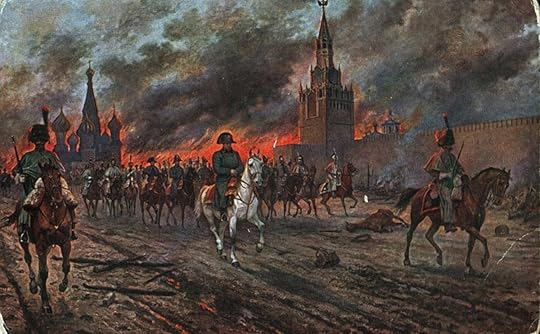
 Russia Against Napoleon: The Battle for Europe, 1807 to 1814 by Dominic Lieven