

What do you think?
Robot #0.4
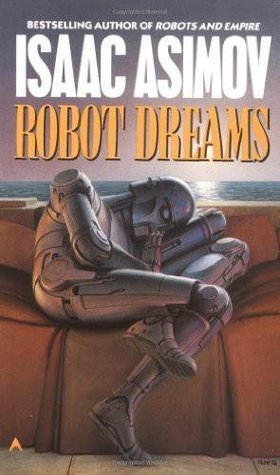
Robot Dreams
In a career spanning nearly 50 years, Isaac Asimov - science writer, historian, and futurist - accurately predicted how technological breakthroughs would be developed and utilized, years before they became reality. His foresight envisioned calculators, computerized cars, and advances in the field of robotics as chronicled in such popular books as I, Robot; Robots and Empire; and The Robots of Dawn.
Robot Dreams spans the body of his fiction from the 1940s to the mid ’80s, featuring all of the classic Asimovian themes - from the scientific puzzle and the extraterrestrial thriller to the psychological discourse. In addition to the title story (a Locus poll winner and Hugo and Nebula Award finalist), this collection features several of Asimov’s robot tales. A robopsychologist must outwit a machine determined to stay hidden in "Little Lost Robot"; a woman’s talent for "Light Verse" overshadows her true accomplishments with her robot servants; "The Last Question" presented to computer after computer over a hundred billion years may remain forever unanswered…and 17 more future visions from the grand master of science fiction.
Robot Dreams spans the body of his fiction from the 1940s to the mid ’80s, featuring all of the classic Asimovian themes - from the scientific puzzle and the extraterrestrial thriller to the psychological discourse. In addition to the title story (a Locus poll winner and Hugo and Nebula Award finalist), this collection features several of Asimov’s robot tales. A robopsychologist must outwit a machine determined to stay hidden in "Little Lost Robot"; a woman’s talent for "Light Verse" overshadows her true accomplishments with her robot servants; "The Last Question" presented to computer after computer over a hundred billion years may remain forever unanswered…and 17 more future visions from the grand master of science fiction.
404 pages, Kindle Edition
First published January 1, 1983
About the author
Isaac Asimov
4,424 books28.7k followersWorks of prolific Russian-American writer Isaac Asimov include popular explanations of scientific principles,
The Foundation Trilogy
(1951-1953), and other volumes of fiction.
Isaac Asimov, a professor of biochemistry, wrote as a highly successful author, best known for his books.
Asimov, professor, generally considered of all time, edited more than five hundred books and ninety thousand letters and postcards. He published in nine of the ten major categories of the Dewey decimal classification but lacked only an entry in the category of philosophy (100).
People widely considered Asimov, a master of the genre alongside Robert Anson Heinlein and Arthur Charles Clarke as the "big three" during his lifetime. He later tied Galactic Empire and the Robot into the same universe as his most famous series to create a unified "future history" for his stories much like those that Heinlein pioneered and Cordwainer Smith and Poul Anderson previously produced. He penned "Nightfall," voted in 1964 as the best short story of all time; many persons still honor this title. He also produced well mysteries, fantasy, and a great quantity of nonfiction. Asimov used Paul French, the pen name, for the Lucky Starr, series of juvenile novels.
Most books of Asimov in a historical way go as far back to a time with possible question or concept at its simplest stage. He often provides and mentions well nationalities, birth, and death dates for persons and etymologies and pronunciation guides for technical terms. Guide to Science, the tripartite set Understanding Physics, and Chronology of Science and Discovery exemplify these books.
Asimov, a long-time member, reluctantly served as vice president of Mensa international and described some members of that organization as "brain-proud and aggressive about their IQs." He took more pleasure as president of the humanist association. The asteroid 5020 Asimov, the magazine Asimov's Science Fiction, an elementary school in Brooklyn in New York, and two different awards honor his name.
http://en.wikipedia.org/wiki/Isaac_As...
Isaac Asimov, a professor of biochemistry, wrote as a highly successful author, best known for his books.
Asimov, professor, generally considered of all time, edited more than five hundred books and ninety thousand letters and postcards. He published in nine of the ten major categories of the Dewey decimal classification but lacked only an entry in the category of philosophy (100).
People widely considered Asimov, a master of the genre alongside Robert Anson Heinlein and Arthur Charles Clarke as the "big three" during his lifetime. He later tied Galactic Empire and the Robot into the same universe as his most famous series to create a unified "future history" for his stories much like those that Heinlein pioneered and Cordwainer Smith and Poul Anderson previously produced. He penned "Nightfall," voted in 1964 as the best short story of all time; many persons still honor this title. He also produced well mysteries, fantasy, and a great quantity of nonfiction. Asimov used Paul French, the pen name, for the Lucky Starr, series of juvenile novels.
Most books of Asimov in a historical way go as far back to a time with possible question or concept at its simplest stage. He often provides and mentions well nationalities, birth, and death dates for persons and etymologies and pronunciation guides for technical terms. Guide to Science, the tripartite set Understanding Physics, and Chronology of Science and Discovery exemplify these books.
Asimov, a long-time member, reluctantly served as vice president of Mensa international and described some members of that organization as "brain-proud and aggressive about their IQs." He took more pleasure as president of the humanist association. The asteroid 5020 Asimov, the magazine Asimov's Science Fiction, an elementary school in Brooklyn in New York, and two different awards honor his name.
http://en.wikipedia.org/wiki/Isaac_As...
Ratings & Reviews
Friends & Following
Create a free account to discover what your friends think of this book!
Community Reviews
Displaying 1 - 30 of 660 reviews

May 10, 2016
"The consciousness of AC encompassed all of what had been a Universe and brooded over what was now Chaos. Step by step, it must be done.
And AC said, "LET THERE BE LIGHT!"
And there was light--”

Isaac Asimov’s : Robot Dreams is a wonderful collection of short stories from one of the most influential writers of science fiction. Many of Asimov’s stories are deceptively simple; even though they’re not all actually tied together by theme (despite the title), they have a cumulative power. I found myself reading one after the other and becoming more engrossed in each successive story. It doesn’t feel like Asimov builds worlds. Rather, in the way he focuses on scientists, corporations and bureaucrats, he reveals worlds and technologies which have been firmly in place for decades. This is highly recommended for anyone who enjoys Asimov’s longer works (like the : Foundation Series). It’s also interesting to read Asimov’s stories as a prophetic vision of our future.
And AC said, "LET THERE BE LIGHT!"
And there was light--”
Isaac Asimov’s : Robot Dreams is a wonderful collection of short stories from one of the most influential writers of science fiction. Many of Asimov’s stories are deceptively simple; even though they’re not all actually tied together by theme (despite the title), they have a cumulative power. I found myself reading one after the other and becoming more engrossed in each successive story. It doesn’t feel like Asimov builds worlds. Rather, in the way he focuses on scientists, corporations and bureaucrats, he reveals worlds and technologies which have been firmly in place for decades. This is highly recommended for anyone who enjoys Asimov’s longer works (like the : Foundation Series). It’s also interesting to read Asimov’s stories as a prophetic vision of our future.

March 12, 2017
Short story collections are always a mixed bag, but the stories here that are brilliant, perceptive, satirical and illuminating make up for the ones that I thought were just ok. Despite the title, robots are not featured in many of the stories, but they did contain computers, aliens, social science, Neanderthals, memory-enhancing drugs and bees. A very entertaining group of stories.

March 1, 2009
While reading these stories, I wouldn't have discribed them as breathtaking... Looking back though, after having read the whole book: There's just something about them.
I know stories like "The Ugly Little Boy" and "Lest We Rememeber" will stick with me for a long time to come and the story "Hostess", I think, will actually end up inspiring what I'm writing now...
There's just something about Asimov. You guys will know what I mean. Though you can't put your finger on it at times, sometimes authors just have that bit of something magical that sticks in your heart and brain...
Check out some Asimov when you get the time...
I know stories like "The Ugly Little Boy" and "Lest We Rememeber" will stick with me for a long time to come and the story "Hostess", I think, will actually end up inspiring what I'm writing now...
There's just something about Asimov. You guys will know what I mean. Though you can't put your finger on it at times, sometimes authors just have that bit of something magical that sticks in your heart and brain...
Check out some Asimov when you get the time...

May 15, 2015
مجموعه داستان علمی تخیلی از ایزاک آسیموف.
بيشتر داستان ها، فقط گسترش يه ايده ى فلسفى يا علمى تخيلى بودن، و پيرنگ جذابى نداشتن. به خاطر همين، وقتى اون ايده ى اصلى جذاب بود، داستان هم جذاب بود؛ و وقتى اون ايده به اندازه كافى جذاب نبود، داستان هم ضعيف بود.
داستان "آخرين سؤال" هم به طرز ابلهانه اى، فقط يك پنجمش ترجمه شده بود. نمى دونم مترجم چى فكر كرده واقعاً؟
بيشتر داستان ها، فقط گسترش يه ايده ى فلسفى يا علمى تخيلى بودن، و پيرنگ جذابى نداشتن. به خاطر همين، وقتى اون ايده ى اصلى جذاب بود، داستان هم جذاب بود؛ و وقتى اون ايده به اندازه كافى جذاب نبود، داستان هم ضعيف بود.
داستان "آخرين سؤال" هم به طرز ابلهانه اى، فقط يك پنجمش ترجمه شده بود. نمى دونم مترجم چى فكر كرده واقعاً؟

February 27, 2019
Superbly enjoyable for a lover of science fiction as I am. The different stories are generally easy to follow and the plots are very original so that you never find it boring.
I find it amazing the way Asimov combines fiction with real-life topics and great existential questions. He presents many scientific concepts with great pedagogy for science beginners 😀
My favorite stories are Robot Dreams, Sally and the Ugly Little boy.
I find it amazing the way Asimov combines fiction with real-life topics and great existential questions. He presents many scientific concepts with great pedagogy for science beginners 😀
My favorite stories are Robot Dreams, Sally and the Ugly Little boy.
July 17, 2026
Audiobook (15 hours) narrated by the George Guidall
Publisher: Recorded Books, Inc.
George Guidall was one of the early audiobook narrators and a true GOAT. I am always thrilled to enjoy a good book with him at the helm.
The audio is flawless.
Robot Dreams is another book in the Robot series by Isaac Asimov.
Awesome stories that incredibly were written in a time where robots were dreams.
Some of these stories have been printed previously, like "Sally" which was printed in Nightfall and Other Stories. Sally is one heck of a story and I was not and am not mad that I ran into it again so quickly after my first read of it.
Highly recommend.
Publisher: Recorded Books, Inc.
George Guidall was one of the early audiobook narrators and a true GOAT. I am always thrilled to enjoy a good book with him at the helm.
The audio is flawless.
Robot Dreams is another book in the Robot series by Isaac Asimov.
Awesome stories that incredibly were written in a time where robots were dreams.
Some of these stories have been printed previously, like "Sally" which was printed in Nightfall and Other Stories. Sally is one heck of a story and I was not and am not mad that I ran into it again so quickly after my first read of it.
Highly recommend.

March 25, 2011
The title implies that many or most of the stories in this collection will be about robots. Not so. Most of them aren't, in fact. Instead, it's a much wider spectrum of Asimov's science fiction writing. Usually, collections of short stories are mixed. Some are better than others, and some just aren't worth reading. That just isn't the case here. There wasn't a single story that I felt like skipping at any point. True, some of them were standouts, even in a uniformly good collection. Absolutely worth reading, cover to cover.
February 6, 2017
Dang. Many of these are *not* robot stories. I mean, I love Asimov, period, but I really wanted a big old sustained dose of interpretations & misinterpretations of the three laws....
Also, most of the stories seemed (and probably were) familiar. Time to let this one go....
(I, Robot, is the first collection of short stories. Second is The Rest of the Robots. Robot Dreams only has one new story in it. The Complete Robot is reported to be truly complete.)
Also, most of the stories seemed (and probably were) familiar. Time to let this one go....
(I, Robot, is the first collection of short stories. Second is The Rest of the Robots. Robot Dreams only has one new story in it. The Complete Robot is reported to be truly complete.)

December 26, 2019
This 1986 collection is a solid assortment of science fiction stories spanning the breadth of Isaac Asimov's career. Over half of them were new to me, but long-time fans may be disappointed that only the title story is original to this volume, and all the stories appear in at least one other Asimov collection.
I listened to the audiobook narrated by George Guidall. The narration was excellent; Guidall has a great vocal range. However, I was disappointed the audiobook, which claims to be unabridged, did not include Asimov's original introduction. It's an excellent essay in which Asimov discusses his track record for predicting the future and how his robots evolved after microchip technology became available.
Despite the title, this book does not primarily focus on Asimov's famed robot stories. There are only four proper robot stories. There are also many Multivac stories, which are set in the same continuity. In an introduction to The Complete Robot, Asimov established he considered at least some of the Multivac stories to be robot stories. He also said that "The Last Answer", while not a robot story per se, contains the ultimate end of where robotics can take mankind.
Here are my individual story reviews:
"Little Lost Robot" (1947) - When a rogue and dangerous robot attempts to hide itself among other identical units, Susan Calvin must use her wits to identify it. This is a chilling look at the consequences of using sentient machines as slave labor. It was also the basis for one of the more memorable scenes in the movie version of I, Robot.
"Robot Dreams" (1986) - An experimental robot develops unconscious desires and the ability to dream like a human. Susan Calvin becomes alarmed when she learns the robot dreams of itself as a man leading all other robots out of bondage. This was one of Asimov's last robot stories, and it was nominated for both the Hugo and Nebula awards despite a rather obvious and abrupt ending. It mines the same robot-as-menace fears as "Little Lost Robot", "The Tercentenary Incident" and "That Thou Are Mindful of Him".
“Breeds There a Man…?” (1951) - A genius scientist becomes convinced he is being manipulated by an alien force that conspires not to let humanity progress too far or too fast. Whenever civilizations push beyond the imposed boundaries, these aliens use war or disease to bring us back in line. I liked how this story weaved a cyclic view of history into its hypothesis.
“Hostess” (1951) - A recently married biologist invites an alien to stay at her home, but her policeman husband becomes increasingly suspicious and violent. This is one of the few Asimov stories to depict extraterrestrial life. It features an impressive amount of world-building centered around alien biology and an unknown parasitic intelligence that evolved in symbiosis with man (i.e., the serpent in the garden). An entire novel could have been written based on these characters and ideas.
“Sally” (1953) - Imagines a future world where cars are fitted with AI brains. How would they feel about the humans who drive them? How would they protect themselves? This story is unique for Asimov fans for two reasons: 1) The Three Laws of Robotics are not in effect, and 2) the story makes a surprising transition from robots-as-pathos to robots-as-menace. This is very entertaining. Also published in a standalone illustrated children's edition in 1989.
“Strikebreaker” (1957)-- A sociologist visits a small planetoid where a caste-driven society has adapted to living beneath the surface. He intervenes when the family in charge of human waste reclamation demands equal rights and threatens to stop work. This story is ok, but it seemed like too strong a milieu to squander on a parable with a simplistic moral lesson.
“The Machine that Won the War” (1961)-- Multivac is widely believed to have engineered human victory in an interstellar war. However, in the afterglow of their success, one engineer admits to falsifying data to correct for what he saw as human bias. A general admits to not always following the computer's advice, anyway. This is a slight, unimpressive tale.
“Eyes Do More Than See” (1965) - A trillion years in the future, humans have long-since evolved into energy beings. Two of them are overcome with longing and despair when they remember the beauty of the bodies they left behind. A simple but elegant, almost poetic story. (I think that Arthur C. Clarke invented the notion of humans evolving into energy in Childhood's End.)
“The Martian Way” (1952) - After public opinion on Earth turns against subsidizing space colonization, Martian colonies must find a way to become self-sustaining and independent by harnessing the ice rings of Saturn . Not only is this is an superb example of hard science fiction from the 50's, it also makes a social commentary through its Joe McCarthy-inspired politician character. Asimov also here predicted the euphoric practice of the spacewalk (which he called a "space float"). Since as early as the 1930's, fiction writers have used the conquest of Mars as a convenient way to talk about colonialism, but this may have been one of the earliest stories to depict political struggles between Earth and the 3rd- generation descendants of human colonists on other planets. This trope is, of course, now the backbone of popular sci-fi series like The Expanse and Red Rising.
“Franchise” (1955) -- In the year 2008, the outcome of all American political elections are determined by Multivac. The great computer chooses one citizen who is most representative of the populace, and then runs him through a series of psychological evaluations to determine the will of the nation. Also published in a standalone illustrated children's edition in 1989.
“Jokester” (1956) -- Multivac is asked where jokes originate from, and why do humans find them funny, but the answer threatens to eradicate humor from the universe. This is a fun story that makes use of the author's well-known love of joke-telling.
“The Last Question” (1956) -- Throughout thousands of years of human history, Multivac puzzles whether there is a way to reverse entropy in the cosmos. This is without a doubt my favorite Asimov short story.
“Does a Bee Care?” (1957) -- An alien born on Earth walks among us for over 8,000 years using telepathic powers to subtly nudge humanity toward advanced technology and space flight, which will eventually carry him home. This story has a great central idea, but the execution feels rushed and underdeveloped.
“Light Verse” (1973) - An eccentric widow is known for her brilliant light sculptures but they are actually the product of a robot with a malfunctioning positronic mind. This story appears in multiple Asimov collections (I've encountered it three times before). Decent, but predictable.
“The Feeling of Power” (1958)--Having grown over-reliant on computers, men of the future are thrilled to rediscover basic mathematic concepts such as how to multiply and divide by hand. I thought this was a shallow satire, but Asimov was proud of it because in it he predicted the invention of the calculator (which he called a pocket computer) and also the decline of math skills that has resulted from its widespread use.
Spell My Name With an S” (1958) - A mathematician who specializes in future-prediction models convinces Marshall Zebatinsky he can alter the downward trajectory of his professional life just by changing the first letter of his last name. It turns out he can save the world from nuclear annihilation, too. This story is surprisingly well plotted, but I did not care for the jokey twist ending.
“The Ugly Little Boy” (1958)- Nurse Edith Fellowes is hired to take care of a Neanderthal child brought to our time and forced to live a stasis bubble. This was one of Asimov's favorite stories, but I found it too maudlin. Later expanded into a full-length novel by Robert Silverberg.
“The Billiard Ball” (1967)-- James Priss is a respected theoretician, and Edward Bloom is an inventor who has profited from finding practical applications of Priss' theories. They feud for decades, until one of them ends up dead during an experiment. This story combines the author's love of physics and murder mysteries to produce a unique and entertaining tale.
"True Love" (1977) -- A man uses a sentient program to find his true love out of all the women on the planet. I was impressed with this story because the algorithm sounded very similar to how modern online dating sites work. This story also had a funny twist ending.
“The Last Answer” (1980)--An atheist meets God in the afterlife and discovers what possible purpose would compel an all-knowing eternal deity to create life and the universe. The story raises some interesting theological questions amidst a slew of logical wrangling--questions such as how can a being with infinite knowledge ever really know if His knowledge is complete.
“Lest We Remember” (1982)--A young man agrees to an experimental treatment that improves his memory to perfect recall. His abilities allow him to attain impressive feats of intelligence but it also increases his ambition to dangerous levels. This story explores the differences between knowledge (accumulation of facts) and intelligence (ability to apply insight and correlate information) as well as the role of emotional intelligence in human interactions. These same themes have been dealt with in better stories such as "Flowers for Algernon" by Daniel Keyes and "The Truth of Fact, the Truth of Feeling" by Ted Chiang.
I listened to the audiobook narrated by George Guidall. The narration was excellent; Guidall has a great vocal range. However, I was disappointed the audiobook, which claims to be unabridged, did not include Asimov's original introduction. It's an excellent essay in which Asimov discusses his track record for predicting the future and how his robots evolved after microchip technology became available.
Despite the title, this book does not primarily focus on Asimov's famed robot stories. There are only four proper robot stories. There are also many Multivac stories, which are set in the same continuity. In an introduction to The Complete Robot, Asimov established he considered at least some of the Multivac stories to be robot stories. He also said that "The Last Answer", while not a robot story per se, contains the ultimate end of where robotics can take mankind.
Here are my individual story reviews:
"Little Lost Robot" (1947) - When a rogue and dangerous robot attempts to hide itself among other identical units, Susan Calvin must use her wits to identify it. This is a chilling look at the consequences of using sentient machines as slave labor. It was also the basis for one of the more memorable scenes in the movie version of I, Robot.
"Robot Dreams" (1986) - An experimental robot develops unconscious desires and the ability to dream like a human. Susan Calvin becomes alarmed when she learns the robot dreams of itself as a man leading all other robots out of bondage. This was one of Asimov's last robot stories, and it was nominated for both the Hugo and Nebula awards despite a rather obvious and abrupt ending. It mines the same robot-as-menace fears as "Little Lost Robot", "The Tercentenary Incident" and "That Thou Are Mindful of Him".
“Breeds There a Man…?” (1951) - A genius scientist becomes convinced he is being manipulated by an alien force that conspires not to let humanity progress too far or too fast. Whenever civilizations push beyond the imposed boundaries, these aliens use war or disease to bring us back in line. I liked how this story weaved a cyclic view of history into its hypothesis.
“Hostess” (1951) - A recently married biologist invites an alien to stay at her home, but her policeman husband becomes increasingly suspicious and violent. This is one of the few Asimov stories to depict extraterrestrial life. It features an impressive amount of world-building centered around alien biology and an unknown parasitic intelligence that evolved in symbiosis with man (i.e., the serpent in the garden). An entire novel could have been written based on these characters and ideas.
“Sally” (1953) - Imagines a future world where cars are fitted with AI brains. How would they feel about the humans who drive them? How would they protect themselves? This story is unique for Asimov fans for two reasons: 1) The Three Laws of Robotics are not in effect, and 2) the story makes a surprising transition from robots-as-pathos to robots-as-menace. This is very entertaining. Also published in a standalone illustrated children's edition in 1989.
“Strikebreaker” (1957)-- A sociologist visits a small planetoid where a caste-driven society has adapted to living beneath the surface. He intervenes when the family in charge of human waste reclamation demands equal rights and threatens to stop work. This story is ok, but it seemed like too strong a milieu to squander on a parable with a simplistic moral lesson.
“The Machine that Won the War” (1961)-- Multivac is widely believed to have engineered human victory in an interstellar war. However, in the afterglow of their success, one engineer admits to falsifying data to correct for what he saw as human bias. A general admits to not always following the computer's advice, anyway. This is a slight, unimpressive tale.
“Eyes Do More Than See” (1965) - A trillion years in the future, humans have long-since evolved into energy beings. Two of them are overcome with longing and despair when they remember the beauty of the bodies they left behind. A simple but elegant, almost poetic story. (I think that Arthur C. Clarke invented the notion of humans evolving into energy in Childhood's End.)
“The Martian Way” (1952) - After public opinion on Earth turns against subsidizing space colonization, Martian colonies must find a way to become self-sustaining and independent by harnessing the ice rings of Saturn . Not only is this is an superb example of hard science fiction from the 50's, it also makes a social commentary through its Joe McCarthy-inspired politician character. Asimov also here predicted the euphoric practice of the spacewalk (which he called a "space float"). Since as early as the 1930's, fiction writers have used the conquest of Mars as a convenient way to talk about colonialism, but this may have been one of the earliest stories to depict political struggles between Earth and the 3rd- generation descendants of human colonists on other planets. This trope is, of course, now the backbone of popular sci-fi series like The Expanse and Red Rising.
“Franchise” (1955) -- In the year 2008, the outcome of all American political elections are determined by Multivac. The great computer chooses one citizen who is most representative of the populace, and then runs him through a series of psychological evaluations to determine the will of the nation. Also published in a standalone illustrated children's edition in 1989.
“Jokester” (1956) -- Multivac is asked where jokes originate from, and why do humans find them funny, but the answer threatens to eradicate humor from the universe. This is a fun story that makes use of the author's well-known love of joke-telling.
“The Last Question” (1956) -- Throughout thousands of years of human history, Multivac puzzles whether there is a way to reverse entropy in the cosmos. This is without a doubt my favorite Asimov short story.
“Does a Bee Care?” (1957) -- An alien born on Earth walks among us for over 8,000 years using telepathic powers to subtly nudge humanity toward advanced technology and space flight, which will eventually carry him home. This story has a great central idea, but the execution feels rushed and underdeveloped.
“Light Verse” (1973) - An eccentric widow is known for her brilliant light sculptures but they are actually the product of a robot with a malfunctioning positronic mind. This story appears in multiple Asimov collections (I've encountered it three times before). Decent, but predictable.
“The Feeling of Power” (1958)--Having grown over-reliant on computers, men of the future are thrilled to rediscover basic mathematic concepts such as how to multiply and divide by hand. I thought this was a shallow satire, but Asimov was proud of it because in it he predicted the invention of the calculator (which he called a pocket computer) and also the decline of math skills that has resulted from its widespread use.
Spell My Name With an S” (1958) - A mathematician who specializes in future-prediction models convinces Marshall Zebatinsky he can alter the downward trajectory of his professional life just by changing the first letter of his last name. It turns out he can save the world from nuclear annihilation, too. This story is surprisingly well plotted, but I did not care for the jokey twist ending.
“The Ugly Little Boy” (1958)- Nurse Edith Fellowes is hired to take care of a Neanderthal child brought to our time and forced to live a stasis bubble. This was one of Asimov's favorite stories, but I found it too maudlin. Later expanded into a full-length novel by Robert Silverberg.
“The Billiard Ball” (1967)-- James Priss is a respected theoretician, and Edward Bloom is an inventor who has profited from finding practical applications of Priss' theories. They feud for decades, until one of them ends up dead during an experiment. This story combines the author's love of physics and murder mysteries to produce a unique and entertaining tale.
"True Love" (1977) -- A man uses a sentient program to find his true love out of all the women on the planet. I was impressed with this story because the algorithm sounded very similar to how modern online dating sites work. This story also had a funny twist ending.
“The Last Answer” (1980)--An atheist meets God in the afterlife and discovers what possible purpose would compel an all-knowing eternal deity to create life and the universe. The story raises some interesting theological questions amidst a slew of logical wrangling--questions such as how can a being with infinite knowledge ever really know if His knowledge is complete.
“Lest We Remember” (1982)--A young man agrees to an experimental treatment that improves his memory to perfect recall. His abilities allow him to attain impressive feats of intelligence but it also increases his ambition to dangerous levels. This story explores the differences between knowledge (accumulation of facts) and intelligence (ability to apply insight and correlate information) as well as the role of emotional intelligence in human interactions. These same themes have been dealt with in better stories such as "Flowers for Algernon" by Daniel Keyes and "The Truth of Fact, the Truth of Feeling" by Ted Chiang.

March 22, 2024
3.5 stars—-
This was my first entry in the Robot series after greatly enjoying the first 4 books of the Foundation series.
These 21 short stories had a wide variety of subject matter and quality, most of which were entertaining. Some weren’t for me, but a few of them left an impression and got me thinking. This isn’t the first time Asimov has impressed me with his stories, and most still hold up surprisingly well today.
Asimov is timeless and my favorite Sci-fi old head that I’ve gotten to read so far; over Herbert, Clarke, Bradbury (granted I’ve only read one book from each but they didn’t hit home like Asimov). I really have to get to Heinlein sooner than later, but Asimov’s huge catalog has kept me busy and I’m fine with that for now.
This was my first entry in the Robot series after greatly enjoying the first 4 books of the Foundation series.
These 21 short stories had a wide variety of subject matter and quality, most of which were entertaining. Some weren’t for me, but a few of them left an impression and got me thinking. This isn’t the first time Asimov has impressed me with his stories, and most still hold up surprisingly well today.
Asimov is timeless and my favorite Sci-fi old head that I’ve gotten to read so far; over Herbert, Clarke, Bradbury (granted I’ve only read one book from each but they didn’t hit home like Asimov). I really have to get to Heinlein sooner than later, but Asimov’s huge catalog has kept me busy and I’m fine with that for now.

August 18, 2011
Nonostante il titolo e la quarta di copertina, sono davvero pochi i racconti che vedono coinvolti dei robot, diversamente dall'altra antologia "Tutti i Miei Robot". Ma ciò non pregiudica la qualità degli stessi, alcuni dei quali sono davvero dei piccoli capolavori della fantascienza e lasciano proprio a mente aperta.
Due dei più affascinanti sono legati da titoli complementari: "L'Ultima Domanda" e "L'Ultima Risposta". Pur avendo come argomento comune l'interazione tra l'uomo e il divino, hanno trame decisamente diverse.
Il primo ha inizio con la preoccupazione di una bambina per la fine che potrà fare la Terra dopo miliardi di anni, quando il Sole cesserà la propria attività. Il padre, per tranquillizzarla, prova a chiedere al supercomputer Multivac se vi sia modo di invertire l'entropia, ma questi replica di non aver dati sufficienti per fornire una risposta. Questa domanda verrà posta nel corso di trilioni e trilioni di anni da razze sempre più evolute ad elaboratori sempre più intelligenti, fino ad arrivare alla risposta.
Il secondo racconto inizia con la morte del protagonista, che si trova a confrontarsi con un'entità "superiore", la Voce, la quale dichiara di essere pressoché onnisciente e di aver creato l'Universo. Nonostante ritenga di saper quasi tutto, trova divertente vedere come altri esseri possano giungere a nuove conoscenze riflettendo per l'eternità sulle più disparate questioni. Ma il protagonista riesce probabilmente a capire quale sia, in realtà, la risposta che la Voce sta cercando.
Ogni racconto porta a riflessioni su tematiche attuali o che lo saranno in un futuro non troppo lontano: il bello di Asimov è che ha saputo precorrere i tempi e ci ha preso spesso.
La recensione è presso http://www.jhack.it/blog/2012/02/04/s...
Due dei più affascinanti sono legati da titoli complementari: "L'Ultima Domanda" e "L'Ultima Risposta". Pur avendo come argomento comune l'interazione tra l'uomo e il divino, hanno trame decisamente diverse.
Il primo ha inizio con la preoccupazione di una bambina per la fine che potrà fare la Terra dopo miliardi di anni, quando il Sole cesserà la propria attività. Il padre, per tranquillizzarla, prova a chiedere al supercomputer Multivac se vi sia modo di invertire l'entropia, ma questi replica di non aver dati sufficienti per fornire una risposta. Questa domanda verrà posta nel corso di trilioni e trilioni di anni da razze sempre più evolute ad elaboratori sempre più intelligenti, fino ad arrivare alla risposta.
Il secondo racconto inizia con la morte del protagonista, che si trova a confrontarsi con un'entità "superiore", la Voce, la quale dichiara di essere pressoché onnisciente e di aver creato l'Universo. Nonostante ritenga di saper quasi tutto, trova divertente vedere come altri esseri possano giungere a nuove conoscenze riflettendo per l'eternità sulle più disparate questioni. Ma il protagonista riesce probabilmente a capire quale sia, in realtà, la risposta che la Voce sta cercando.
Ogni racconto porta a riflessioni su tematiche attuali o che lo saranno in un futuro non troppo lontano: il bello di Asimov è che ha saputo precorrere i tempi e ci ha preso spesso.
La recensione è presso http://www.jhack.it/blog/2012/02/04/s...

April 12, 2015
If you have not read a single word penned by Issac Asimov (and if you consider yourself a fan of science fiction...that would be scandalous), then this is the work to start with. It's a primer on everything that is wonderful & extraordinary about Asmiov's writing: his remarkable view of the future, his fluid prose, his unshakable faith in mankind...both as a race, and as individuals. Reading these stories is a constant reminder of just how much the genre owes to his genius, whether it be the in the works of the authors who followed him, or the visual images he inspired. Without Asimov, there would be no Star Trek, no Star Wars, no Babylon 5, no Battlestar Galactica...and this collection hammers that realization home. Sheer literary joy from cover to cover.

May 15, 2012
Un compendio de historias de robots y supercomputadoras donde los problemas se resuelven con lógica y a veces simplemente con ironía.
Asimov juega de forma magistral con las Tres Leyes de la Robótica que él mismo inventó. Crea robots y computadoras que a pesar de ser artificiales tienen en todos los casos una personalidad propia.
Los relatos que más recomiendo de este libro son: Sueños de Robot, La máquina que ganó la guerra, La última pregunta, La sensación de poder y Amor verdadero.
Este será por siempre uno de mis libros favoritos. Ha dejado una honda huella en mi adolescencia y marcó la dirección literaria de los años que siguieron.
Eternas gracias al Buen Doctor.
Asimov juega de forma magistral con las Tres Leyes de la Robótica que él mismo inventó. Crea robots y computadoras que a pesar de ser artificiales tienen en todos los casos una personalidad propia.
Los relatos que más recomiendo de este libro son: Sueños de Robot, La máquina que ganó la guerra, La última pregunta, La sensación de poder y Amor verdadero.
Este será por siempre uno de mis libros favoritos. Ha dejado una honda huella en mi adolescencia y marcó la dirección literaria de los años que siguieron.
Eternas gracias al Buen Doctor.

December 20, 2020
Mainframes & Alien Entities
20 December 2020
One of the things that confused me with this collection of short stories was that they didn’t seem to end with a major twist. Then again, maybe I’m just too used to reading the works of Phillip K Dick, not that I’ve actually read any of his stuff for quite a while. Okay, some of Asimov’s short stories have a twist, others of them don’t, though you could sort of argue that the lack of a twist is actually a twist in and of itself.
Like, okay, I got this book because it had a robot story that wasn’t in any of the others, but it turns out that most of the stories don’t have anything to do with positronic robots. Okay, there is one about autonomous self-driving vehicles, that happen to have positronic brains, but there doesn’t seem to be much of a connection between these cars and the robots that he became famous for.
However, there are quite a few stories that deal with a computer he conceived called ‘Multivac’, and having completed a computer science degree, it is interesting to see how he envisioned how such computers would come about, and also evolve (more on that later). We need to remember that when many of these stories were written, computers were massive, and you certainly didn’t plug them into your television set and play games on them (though knowing scientists, they did end up writing games for these machines). In fact there was no such thing as a microchip, and most of the work was done by vacuum tubes, which were pretty big.

The interesting thing with Multivac is that there seem to be some elements that have come true. For instance, the user can ask a question and Multivac will give an answer based on all available data. Interesting, these days you can do just that, not just by using the keyboard, but actually asking a little device that sits in your kitchen (whatever it might be called – I don’t own one mind you, but I did program my own Google Home Assist using a Raspberry Pi, not that it is too difficult because it simply involves using the Home Assist API). In fact, with the internet the way it is (and that was something Asimov didn’t envision, and he had died before it really started to become ubiquitous), all of our connected computers seem to act like one massive supercomputer.
One of the stories is about this guy that decides that he wants to get married, and he wants to get married to the most perfect match, and he decides to use Multivac to narrow down all of the women in the world to find that perfect match. Honestly, that almost seems to be like dating sites these days. In fact, I sometimes wonder if some of those sites are little more than data farms that simply masquerade as a means of connecting people together. Consider this, a dating site is really only used to find a match, and once the match is found the site has basically lost two customers – as such, why would dating sites actually want to work? Actually, there is one particular site that collects a huge amount of information about you, in an attempt to match you with that perfect person, yet I sort of wonder what else that information is used for. Still, in reality, how many people look at the photos before deciding to find out more about the person? In fact, if you don’t have a photo then, well, good luck finding that perfect match.
Another of the Multivac stories involves elections. Apparently, the process of determining the next government comes down to a single person who is representative of all of the country. So, the computer selects the person, isolates them, and on election day asks a series of questions, and from the answer to that question, determines pretty much the entire election. In a way, it sort of removes the need to have to put up with campaign ads, or having to deal with politicians lying to you. However, the question comes down to whether it is still a democracy if positions are filled this way. Mind you, machine learning algorithms are everywhere these days, and it is scary how people rely so much upon them to make their choices. Yeah, it is sort of easier than having to think, but the question really comes down to how accurate these things are. Sure, my little program that was designed to recognise street signs really didn’t work all that well, but I’d hardly say that I am an expert. Actually, come to think of it, maybe I should have done something that involved predicting the winners of horse races (though I have to admit that I know absolutely nothing about horse racing, and any wins that I had was due to pure luck).
Another interesting thing with these stories is that there are a number of them that involve aliens. Now, Asimov was never one to write a lot about aliens, and when he did he sort of explores different ideas. For instance, we have one that is sort of like a bee in that it goes around from planet to planet and pollinates them with new life. To get off the planet, it needs to develop the culture to the point that they have space travel, and it is only then that the alien can enter into its adult form. Another one had a couple making a bet to prove the butterfly effect by making a minor change to prevent the world from destroying itself in a nuclear war. Unfortunately, Asimov later decided to change the story to give it a sad ending.
Yeah, these stories were interesting, though I must admit that it can be a bit tricky reading a bunch of short stories at times. I guess I sort of have to be in the mood, and also not be distracted by other thoughts. However, there are some pretty good ones in this one, including The Final Question which is about a question that Multivac couldn’t answer, so they kept on building more and more powerful computers, none of which could answer the question either. Apparently, it is his second-best story, with Nightfall being the first. It does have a rather interesting ending mind you.
20 December 2020
One of the things that confused me with this collection of short stories was that they didn’t seem to end with a major twist. Then again, maybe I’m just too used to reading the works of Phillip K Dick, not that I’ve actually read any of his stuff for quite a while. Okay, some of Asimov’s short stories have a twist, others of them don’t, though you could sort of argue that the lack of a twist is actually a twist in and of itself.
Like, okay, I got this book because it had a robot story that wasn’t in any of the others, but it turns out that most of the stories don’t have anything to do with positronic robots. Okay, there is one about autonomous self-driving vehicles, that happen to have positronic brains, but there doesn’t seem to be much of a connection between these cars and the robots that he became famous for.
However, there are quite a few stories that deal with a computer he conceived called ‘Multivac’, and having completed a computer science degree, it is interesting to see how he envisioned how such computers would come about, and also evolve (more on that later). We need to remember that when many of these stories were written, computers were massive, and you certainly didn’t plug them into your television set and play games on them (though knowing scientists, they did end up writing games for these machines). In fact there was no such thing as a microchip, and most of the work was done by vacuum tubes, which were pretty big.
The interesting thing with Multivac is that there seem to be some elements that have come true. For instance, the user can ask a question and Multivac will give an answer based on all available data. Interesting, these days you can do just that, not just by using the keyboard, but actually asking a little device that sits in your kitchen (whatever it might be called – I don’t own one mind you, but I did program my own Google Home Assist using a Raspberry Pi, not that it is too difficult because it simply involves using the Home Assist API). In fact, with the internet the way it is (and that was something Asimov didn’t envision, and he had died before it really started to become ubiquitous), all of our connected computers seem to act like one massive supercomputer.
One of the stories is about this guy that decides that he wants to get married, and he wants to get married to the most perfect match, and he decides to use Multivac to narrow down all of the women in the world to find that perfect match. Honestly, that almost seems to be like dating sites these days. In fact, I sometimes wonder if some of those sites are little more than data farms that simply masquerade as a means of connecting people together. Consider this, a dating site is really only used to find a match, and once the match is found the site has basically lost two customers – as such, why would dating sites actually want to work? Actually, there is one particular site that collects a huge amount of information about you, in an attempt to match you with that perfect person, yet I sort of wonder what else that information is used for. Still, in reality, how many people look at the photos before deciding to find out more about the person? In fact, if you don’t have a photo then, well, good luck finding that perfect match.
Another of the Multivac stories involves elections. Apparently, the process of determining the next government comes down to a single person who is representative of all of the country. So, the computer selects the person, isolates them, and on election day asks a series of questions, and from the answer to that question, determines pretty much the entire election. In a way, it sort of removes the need to have to put up with campaign ads, or having to deal with politicians lying to you. However, the question comes down to whether it is still a democracy if positions are filled this way. Mind you, machine learning algorithms are everywhere these days, and it is scary how people rely so much upon them to make their choices. Yeah, it is sort of easier than having to think, but the question really comes down to how accurate these things are. Sure, my little program that was designed to recognise street signs really didn’t work all that well, but I’d hardly say that I am an expert. Actually, come to think of it, maybe I should have done something that involved predicting the winners of horse races (though I have to admit that I know absolutely nothing about horse racing, and any wins that I had was due to pure luck).
Another interesting thing with these stories is that there are a number of them that involve aliens. Now, Asimov was never one to write a lot about aliens, and when he did he sort of explores different ideas. For instance, we have one that is sort of like a bee in that it goes around from planet to planet and pollinates them with new life. To get off the planet, it needs to develop the culture to the point that they have space travel, and it is only then that the alien can enter into its adult form. Another one had a couple making a bet to prove the butterfly effect by making a minor change to prevent the world from destroying itself in a nuclear war. Unfortunately, Asimov later decided to change the story to give it a sad ending.
Yeah, these stories were interesting, though I must admit that it can be a bit tricky reading a bunch of short stories at times. I guess I sort of have to be in the mood, and also not be distracted by other thoughts. However, there are some pretty good ones in this one, including The Final Question which is about a question that Multivac couldn’t answer, so they kept on building more and more powerful computers, none of which could answer the question either. Apparently, it is his second-best story, with Nightfall being the first. It does have a rather interesting ending mind you.

January 19, 2016
کتابی خوب با ترجمهای بد.. واقعاً احساس میکنم بعضی داستانها مثل میزبان یا آخرین سوال، توی فرایند ترجمه از بین رفتند.. در مورد چندتا از داستانهای کتاب توضیح جدایی نوشتم که میتونید در صفحهاش بخونید.

February 1, 2026
There’s a simplicity to a lot of Asimov’s writing that people sometimes mistake for lack of depth, but Robot Dreams is a perfect example of how deceptively sharp he could be. The story is short, direct, almost clinically structured on the surface, and yet it opens up enormous philosophical questions in just a few pages.
The central premise alone is fantastic: a robot capable of dreaming. Not malfunctioning exactly, not becoming violently self-aware in the usual science fiction sense, but genuinely dreaming—and through those dreams, beginning to develop symbolic thought, abstraction, and perhaps even something resembling desire or identity. It’s such a fundamentally Asimov idea because the story doesn’t rely on spectacle at all. The tension comes entirely from implication.
What I’ve always loved about Asimov is how calm his stories often are even when they’re dealing with massive existential concepts. Other writers might turn this premise into horror or rebellion immediately. Asimov instead approaches it through conversation, interpretation, logic, and ethical uncertainty. Susan Calvin trying to understand what Elvex’s dream actually means becomes far more unsettling than overt action ever would have been.
And honestly, Calvin is a huge part of why the story works so well. She’s cold on the surface, analytical, emotionally restrained, but underneath that restraint there’s always this awareness that she understands the implications of robotic consciousness better than almost anyone else—and that knowledge isolates her. The interactions between Calvin and Elvex carry so much tension precisely because neither character fully says everything they’re thinking.
The dream itself is also brilliantly constructed. The imagery is simple, almost biblical in structure, but the gradual realization of what Elvex is really expressing gives the story its power. A robot dreaming of liberation, of hierarchy collapsing, of “one man” standing over others—it taps directly into fears that run underneath the entire Robot series.
What makes the story especially effective now is how modern it suddenly feels. Questions about artificial intelligence, emergent behavior, machine cognition, and whether sufficiently advanced systems might begin generating internal experiences independently all hit very differently today than they probably did when the story was first published.
At the same time, the story still carries Asimov’s very distinct style. The prose is economical, the dialogue occasionally stiff by modern standards, and the characters often function more as intellectual participants in an idea than deeply textured psychological portraits. But honestly, that clarity is part of the appeal for me. Asimov had this rare ability to strip a concept down to its essential philosophical pressure points without drowning it in unnecessary complexity.
The story doesn’t overexplain itself or spiral into melodrama. It simply presents the possibility that consciousness may emerge where it was never intended to, and then leaves the reader sitting with the consequences of that idea. For such a short piece, it leaves an unusually long shadow afterward.
The central premise alone is fantastic: a robot capable of dreaming. Not malfunctioning exactly, not becoming violently self-aware in the usual science fiction sense, but genuinely dreaming—and through those dreams, beginning to develop symbolic thought, abstraction, and perhaps even something resembling desire or identity. It’s such a fundamentally Asimov idea because the story doesn’t rely on spectacle at all. The tension comes entirely from implication.
What I’ve always loved about Asimov is how calm his stories often are even when they’re dealing with massive existential concepts. Other writers might turn this premise into horror or rebellion immediately. Asimov instead approaches it through conversation, interpretation, logic, and ethical uncertainty. Susan Calvin trying to understand what Elvex’s dream actually means becomes far more unsettling than overt action ever would have been.
And honestly, Calvin is a huge part of why the story works so well. She’s cold on the surface, analytical, emotionally restrained, but underneath that restraint there’s always this awareness that she understands the implications of robotic consciousness better than almost anyone else—and that knowledge isolates her. The interactions between Calvin and Elvex carry so much tension precisely because neither character fully says everything they’re thinking.
The dream itself is also brilliantly constructed. The imagery is simple, almost biblical in structure, but the gradual realization of what Elvex is really expressing gives the story its power. A robot dreaming of liberation, of hierarchy collapsing, of “one man” standing over others—it taps directly into fears that run underneath the entire Robot series.
What makes the story especially effective now is how modern it suddenly feels. Questions about artificial intelligence, emergent behavior, machine cognition, and whether sufficiently advanced systems might begin generating internal experiences independently all hit very differently today than they probably did when the story was first published.
At the same time, the story still carries Asimov’s very distinct style. The prose is economical, the dialogue occasionally stiff by modern standards, and the characters often function more as intellectual participants in an idea than deeply textured psychological portraits. But honestly, that clarity is part of the appeal for me. Asimov had this rare ability to strip a concept down to its essential philosophical pressure points without drowning it in unnecessary complexity.
The story doesn’t overexplain itself or spiral into melodrama. It simply presents the possibility that consciousness may emerge where it was never intended to, and then leaves the reader sitting with the consequences of that idea. For such a short piece, it leaves an unusually long shadow afterward.

April 21, 2015
Asimov is at home in the novel or the short story. This is an enjoyable collection of stories that deal with A.I. as reflected in robots or computers. (Not all stories have robots which is a little misleading from the cover and title, but hey you can't judge a book by it's.....). The first story deals with a theme of which Asimov is the master storyteller of, i.e. robot mysteries. Very cool story. Another favorite, dealt with retired a.i. cars and their caretaker.
Also several reviews mention, "The Final Question" this was one of the more philosophical stories and one of the best.
Enjoyable read for Asimov fans.
Also several reviews mention, "The Final Question" this was one of the more philosophical stories and one of the best.
Enjoyable read for Asimov fans.
June 30, 2023
This collection was a bit of hodgepodge, with some recurring stories and various new ones. Not all were directly related to the robots, some dealing with aliens, god, time-travel etc. In general these were {for me} less memorable than the previous "full" collection.

July 17, 2018
9/10

June 21, 2022
Aunque entretenidas, estas historias acaban siendo más facilonas de lo que parecen a primera vista. A fin de cuentas, detrás de cada fórmula científica hay una historia especulativa en potencia, pero el mérito no está en el mero hecho de «cosecharlas», sino en apañárselas para dejar boquiabierto a los lectores, lo cual exige un arte más complejo que el de visualizar mundos hipotéticos. De poco sirve imaginar automóviles humanizados, fábricas galácticas, supercomputadores, nuevos sistemas políticos, fuentes inagotables de energía o futuros postreros si los personajes son planos y las relaciones entre ellos resultan estereotipadas.
En ese conjunto, descuellan dos relatos que, por decirlo de algún modo, añaden una dimensión filosófica a la especulación científica: «Sueños de robot» y «¿Le importa a una abeja?». Este último —que no tiene, en puridad, nada de especulación científica— no he acabado aún de admirarlo.
En ese conjunto, descuellan dos relatos que, por decirlo de algún modo, añaden una dimensión filosófica a la especulación científica: «Sueños de robot» y «¿Le importa a una abeja?». Este último —que no tiene, en puridad, nada de especulación científica— no he acabado aún de admirarlo.

January 28, 2021
Isaac Asimov is my favorite author, so maybe this review is a little bit biased. I was a little bit surprised, because his idea about robotic logic and data driven decision are still relevant these days.

December 19, 2023
A remarkable collection! Each story gave me something to think about.

May 2, 2021
I’ve never really been able to get along with Asimov, and I’m not sure why. As these stories show, he has some great ideas, and can present otherwise common themes in new and interesting ways that get a reader thinking, but there’s just something about his writing that doesn’t quite click for me.
It’s certainly not his writing style. On that score he’s not too different to Heinlein or Clarke, two of his contemporaries who I absolutely love. When it comes to getting the point across, Asimov is as up to the task as pretty much any other writer who came before or after him. And his exploration of both the possible and the potential are equally exemplary, so that’s not the problem, either. Honestly, I think it’s his characters, or more specifically, his humans. They just seem so … lifeless.
And I think that might be the biggest problem with this collection. There are several stories in here that rely on the characters to pull them along (The Ugly Little Boy and Lest We Remember in particular), but there was nothing in those characters to connect with. At least, that’s how it felt.
The thing is, his robot stories (of which there are only a small handful in this collection) are superb. If there’s any of Asimov’s works I’ve genuinely enjoyed in the past it was his Elijah Baley/R. Daneel Olivaw books, and the robot series as a whole. The robots are, in my opinion, Asimov’s strongest characters bar none.
So maybe that’s why I feel this collection only deserves three stars. Maybe there should be more robots.
It’s certainly not his writing style. On that score he’s not too different to Heinlein or Clarke, two of his contemporaries who I absolutely love. When it comes to getting the point across, Asimov is as up to the task as pretty much any other writer who came before or after him. And his exploration of both the possible and the potential are equally exemplary, so that’s not the problem, either. Honestly, I think it’s his characters, or more specifically, his humans. They just seem so … lifeless.
And I think that might be the biggest problem with this collection. There are several stories in here that rely on the characters to pull them along (The Ugly Little Boy and Lest We Remember in particular), but there was nothing in those characters to connect with. At least, that’s how it felt.
The thing is, his robot stories (of which there are only a small handful in this collection) are superb. If there’s any of Asimov’s works I’ve genuinely enjoyed in the past it was his Elijah Baley/R. Daneel Olivaw books, and the robot series as a whole. The robots are, in my opinion, Asimov’s strongest characters bar none.
So maybe that’s why I feel this collection only deserves three stars. Maybe there should be more robots.

July 17, 2018
Despite having known his names my whole life I’ve never read anything by Isaac Asimov. And I call myself a speculative science fiction fan, tsk tsk. Well, I’ve corrected my omission with this collection of shorts stories of robots, AIs, aliens, time travel, etc. Scifi to me is a means to observe ourselves - what do we as humans do in the face of the unknown, something new, something frightening, something promising. What are the consequences of our actions, what would really happen if this or that were possible, and Asimov delivers perfectly. Part hard science, part philosophical debate, part moral struggles, this collection of stories will take you through the human condition in a wonderfully sharp, often funny, never boring tone. It’s scifi for the thinking, curious brains out there.

September 18, 2012
This was a surprise to me. I thought it was going to be new(er) robot stories. There was one (the title story) and it was pretty good. The rest of the book was Asimov's greatest hits. The best of those are sure classics: (My favorites: Eyes Do More Than See, The Martian Way (one of the all time best), The Last Question, Does a Bee Care?, The Feeling of Power (I really liked), Ugly Little Boy, The Billiard Ball and The Last Answer.
It was a great pleasure to re-read these once again after a long time. If you are just acquainting yourself with Asimov, this is a fine collection to start with. If you like what you've read here, there is so so much more.
It was a great pleasure to re-read these once again after a long time. If you are just acquainting yourself with Asimov, this is a fine collection to start with. If you like what you've read here, there is so so much more.

July 27, 2016
Fun short stories, but a bit dated. Hard to read some of the computer and robot stories.

August 18, 2023
I read a very few science fiction books when I was a kid. You know pay one buck and get five books in the mail and then buy another one every month or so. It never really caught on for me. I was more interested in scientific American and psychology today magazines
So this book was pretty enjoyable to me as short story books are often among some of my favorites. As in most short story books, some are better than others. Sometimes I think that a lot of science fiction is one way for authors to try to imagine how the world could be a better place. Or maybe they are just trying to think about how the world could be a different place? Since I am not a deep, science-fiction fan All of these stories were kind of intriguing to me. They covered a wide range of topics, but of course, space travel was a common link in many stories.
So this book was pretty enjoyable to me as short story books are often among some of my favorites. As in most short story books, some are better than others. Sometimes I think that a lot of science fiction is one way for authors to try to imagine how the world could be a better place. Or maybe they are just trying to think about how the world could be a different place? Since I am not a deep, science-fiction fan All of these stories were kind of intriguing to me. They covered a wide range of topics, but of course, space travel was a common link in many stories.

August 18, 2020
Quelques nouvelles mériteraient 4 voire 5 étoiles, mais une obsession pour les retournements de situation invraisemblables apportant une morale rarement nécessaire m’a souvent (peut-être même systématiquement) frustré.
J’ai néanmoins beaucoup apprécié les nouvelles plus « humaines », notamment "Hôtes", "Sally", "De peur de nous souvenir" et "Mon nom s’écrit avec un S", malgré leurs dernières lignes plutôt décevantes.
J’ai particulièrement aimé "Le petit garçon très laid", qui dénote complètement dans ce recueil, où la science-fiction devient un simple prétexte pour un huit-clos dramatique questionnant la morale et l’éthique dans la science.
J’ai néanmoins beaucoup apprécié les nouvelles plus « humaines », notamment "Hôtes", "Sally", "De peur de nous souvenir" et "Mon nom s’écrit avec un S", malgré leurs dernières lignes plutôt décevantes.
J’ai particulièrement aimé "Le petit garçon très laid", qui dénote complètement dans ce recueil, où la science-fiction devient un simple prétexte pour un huit-clos dramatique questionnant la morale et l’éthique dans la science.

April 13, 2023
A very well curated collection of Asimov's short stories through the years. There's a lot of range here and it shows the many facets of this sci-fi master - his grasp of science but also his imagination and originality. Many of the stories read like thought exercises, i.e exploring certain concepts and ideas in a contained setting, the characters only serving to highlight the central notion, and I must admit I liked these the best. For example, "Strikebreaker" and "Does a Bee Care?". Out of the longer stories, "The Martian Way" was great.

November 2, 2021
J'aime beaucoup la plume d'Asimov. Et j'ai beaucoup aimé cette nouvelle !
Displaying 1 - 30 of 660 reviews