

What do you think?

Tidal Waters
An epistolary, fictional account of one woman moving towards happiness in the black community of Colombia’s Pacific coast.
After a long absence, Vel has come home to Chocó – to the Afro-Colombian community, to her family, to the sea. This is where the Pacific meets the Caribbean, where she’s establishing herself anew. And the record she keeps is a series of letters to a friend, clarifying for herself where she stands, as she describes that homecoming to another. Vel works to build a literary centre, writing career, and festival with and for the people there. But her return to Chocó is also a claim-staking of her decision to pursue happiness now; an account of her immersion in the towns and rivers and forests she came from; and a redefinition of her relationship to sex and love in real time. And Tidal Waters is a vision of how creating something (for your community, for yourself) is a way of reading and writing your way into a known place and a new self.
After a long absence, Vel has come home to Chocó – to the Afro-Colombian community, to her family, to the sea. This is where the Pacific meets the Caribbean, where she’s establishing herself anew. And the record she keeps is a series of letters to a friend, clarifying for herself where she stands, as she describes that homecoming to another. Vel works to build a literary centre, writing career, and festival with and for the people there. But her return to Chocó is also a claim-staking of her decision to pursue happiness now; an account of her immersion in the towns and rivers and forests she came from; and a redefinition of her relationship to sex and love in real time. And Tidal Waters is a vision of how creating something (for your community, for yourself) is a way of reading and writing your way into a known place and a new self.
113 pages, Kindle Edition
Published May 14, 2024
About the author
Velia Vidal Romero
7 books32 followersEscritora. Promotora de lectura. Directora de Motete y de FLECHO (Fiesta de la lectura y la escritura del Chocó. Escritora. Comunicadora Social – Periodista. Especialista en Gerencia Social. Máster en literatura infantil y Promoción de la lectura (En desarrollo). Certificada en estudios afrolatinoamericanos. Ganadora de mención de honor en la primera cohorte del Certificado de Estudios Afrolatinoamericanos del Centro de Estudios Afrolatinoamericanos de la universidad de Harvard. Primera ganadora de la beca de Publicación de autoras afrocolombianas, negras, raizales o palenqueras del Ministerio de Cultura.
Ratings & Reviews
Friends & Following
Create a free account to discover what your friends think of this book!
Community Reviews
Displaying 1 - 30 of 42 reviews

October 29, 2024
An epistolary account of setting up a NGO in the most isolated region of Columbia. A woman with Graves’ disease returns with her husband to Chocó, the department in Columbia’s north where she grew up
I want to tell you lots of things, I always do, but there’s no way I’ll have time to tell you everything.
Velia Vidal Romero tells the story of becoming a writer and setting up a NGO, Motete, inspired by the weaving of baskets, is a non-profit focused on helping people and especially children read, in Chocó, a department of 500.000 people in the north of Columbia. The inhabitants are mainly descendants of enslaved people and indigenous people, and they have long been ignored by the central government. The title of the book, Tidal Waters, is taken from the waters of the Guapi river and the Pacific Ocean battling between them on the rhythm of the tides, leading sometimes to the water being still and at times the river streaming upwards.
I found it quite enjoyable to learn more about Chocó and would recommend for any reader to look into this article: https://en.m.wikipedia.org/wiki/Chocó...
The narrative is told through one sided letters, where we don't have the responses from the addressee who is a friend living further away. The whole setting up a NGO, starting of with taking care of the school food programme but expanding to literacy promotion, is rather lightly covered. I for instance have no recollection of anyone being named as a partner in setting the venture up, even though I am sure that it would require a village to get going and build connections with local communities. Also all the people management of scaling a business is not even mentioned in any kind of manner. There are some troubles mentioned in the broader society within the department, ELN violence and remnants of FARC and narcotrafficking, but all is very light touch.
Then we have some sentences on the free love the narrator seeks outside her marriage, but again this is fragmentary. The love for nature, mangroves, the sea, and the traditions and rituals of the region is clear, as is a budding desire to be a writer.
It is also clear writing is a reprieve, a sanctuary, both in personal and public life, but with the answers to the letters missing, this conversation is not fully complete and the narrator in my view remains more distant than I hoped.
Quotes:
As of four days ago I’m the new head of communications at the Chocó Chamber of Commerce.
To be honest, I don’t have much faith in the spirituality or emotional depth of many men.
Thanks for what? All I can offer are stories. And what’s the point of reading stories when life is so hard?
This has left me very sad. I cried that afternoon. I’m crying now. I’m asking myself a lot of questions. I feel like what I do is worthwhile, but I don’t know to what extent.
This evening, as I watched the sun set behind the jungle on the other side of the Atrato, I thought about how it all comes down to sowing seeds of hope. What you do, what I do, is read aloud to other people the story that encourages us every day, the story that says that just a bit further on, round the corner from that decision or that extra bit of effort, written on the page of a book, in the scent of some saplings or the taste of a plate of food, is the life we have always dreamed of.
I might disappear a little, but I have no intention of getting lost.
I want to tell you lots of things, I always do, but there’s no way I’ll have time to tell you everything.
Velia Vidal Romero tells the story of becoming a writer and setting up a NGO, Motete, inspired by the weaving of baskets, is a non-profit focused on helping people and especially children read, in Chocó, a department of 500.000 people in the north of Columbia. The inhabitants are mainly descendants of enslaved people and indigenous people, and they have long been ignored by the central government. The title of the book, Tidal Waters, is taken from the waters of the Guapi river and the Pacific Ocean battling between them on the rhythm of the tides, leading sometimes to the water being still and at times the river streaming upwards.
I found it quite enjoyable to learn more about Chocó and would recommend for any reader to look into this article: https://en.m.wikipedia.org/wiki/Chocó...
The narrative is told through one sided letters, where we don't have the responses from the addressee who is a friend living further away. The whole setting up a NGO, starting of with taking care of the school food programme but expanding to literacy promotion, is rather lightly covered. I for instance have no recollection of anyone being named as a partner in setting the venture up, even though I am sure that it would require a village to get going and build connections with local communities. Also all the people management of scaling a business is not even mentioned in any kind of manner. There are some troubles mentioned in the broader society within the department, ELN violence and remnants of FARC and narcotrafficking, but all is very light touch.
Then we have some sentences on the free love the narrator seeks outside her marriage, but again this is fragmentary. The love for nature, mangroves, the sea, and the traditions and rituals of the region is clear, as is a budding desire to be a writer.
It is also clear writing is a reprieve, a sanctuary, both in personal and public life, but with the answers to the letters missing, this conversation is not fully complete and the narrator in my view remains more distant than I hoped.
Quotes:
As of four days ago I’m the new head of communications at the Chocó Chamber of Commerce.
To be honest, I don’t have much faith in the spirituality or emotional depth of many men.
Thanks for what? All I can offer are stories. And what’s the point of reading stories when life is so hard?
This has left me very sad. I cried that afternoon. I’m crying now. I’m asking myself a lot of questions. I feel like what I do is worthwhile, but I don’t know to what extent.
This evening, as I watched the sun set behind the jungle on the other side of the Atrato, I thought about how it all comes down to sowing seeds of hope. What you do, what I do, is read aloud to other people the story that encourages us every day, the story that says that just a bit further on, round the corner from that decision or that extra bit of effort, written on the page of a book, in the scent of some saplings or the taste of a plate of food, is the life we have always dreamed of.
I might disappear a little, but I have no intention of getting lost.
April 27, 2024
Reading and Writing in Chocó
Review of the Charco Press paperback (official release May 14, 2024) translated by Annie McDermott from the Spanish language original Aguas de estuario (Estuary Waters) (September 22, 2020).
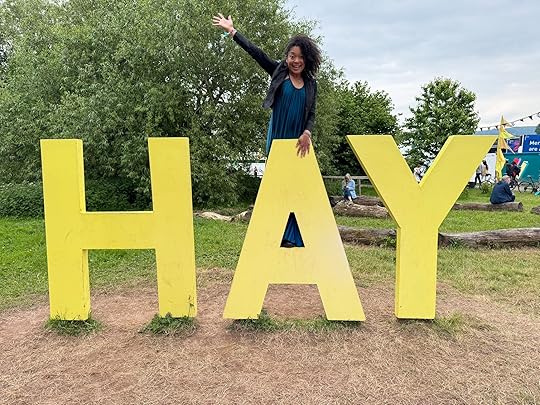
Couldn't resist adding this recent (June 3) photo of author Velia Vidal at the Hay Festival, Wales, UK. Image sourced from Charco Press' Twitter.
This is an inspiring and enticing (and sometimes frankly sexy) non-fiction novel told in letters by the author writing to a close friend, whose name and answers we never see. It is marketed as fiction but the subject matter is totally drawn from the author's own life of promoting reading and writing in the northwestern area of Colombia, South America called Chocó which lies between the Pacific and Atlantic Oceans on the border with Panama.
The letters tell the story of Vidal's work with the Motete cultural educational corporation and her founding of FLECHO (The Chocó Reading and Writing Festival). There are the expected ups and downs of funding issues but the overall tone is one of the joy and exultation of inspiring young readers and writers in an area which contains a large portion of the Afro-Colombian community. For the author there is also the satisfaction of returning to the part of Colombia which was her birth home and its proximity to the oceans and tides, a theme which recurs throughout.
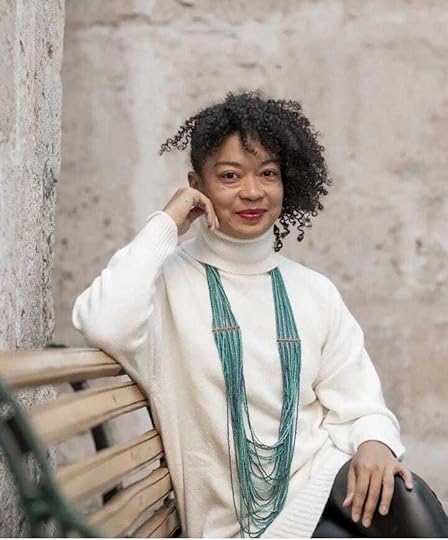
Author Velia Vidal. Image sourced from El Nuevo Siglo.
The author's books appear to be divided on Goodreads under two names Velia Vidal and Velia Vidal Romero with the latter having the more complete biography. The English language edition has an Introduction by Djamila Ribeiro which appears to have been updated from one written originally for the Portuguese Brazilian edition (2023).
I read an early copy of Tidal Waters thanks to my 2024 Fiction Bundle subscription from Charco Press. I recently enjoyed Selva Almada's Not a River (January 2024) also from this year's bundle, which I reviewed as Fire and Water. The latter book is on the Shortlist for the 2024 International Booker Prize with the winner to be announced May 21, 2024. Both books were translated by Annie McDermott.
Soundtrack
I thought of Jackson Brown's Rock Me On the Water (1972) which you can hear as the original here or as the cover by Linda Ronstadt here.
Trivia and Links
There is an interview with Velia Vidal with background at El Nuevo Siglo (in Spanish, turn on web translator as needed). The interview as done shortly after her being included on the BBC's 2022 List of 100 inspiring and influential women from around the world.
With Tidal Waters theme of promoting reading in remote communities in Colombia, I couldn't help but think of my favourite Iliad-related story which Alberto Manguel tells in his Homer's the Iliad and the Odyssey: A Biography (2007) and which you can read at this quote.
Review of the Charco Press paperback (official release May 14, 2024) translated by Annie McDermott from the Spanish language original Aguas de estuario (Estuary Waters) (September 22, 2020).
Couldn't resist adding this recent (June 3) photo of author Velia Vidal at the Hay Festival, Wales, UK. Image sourced from Charco Press' Twitter.
It occurs to me that our feeling for each other is like the tide: we're always there, sometimes closer - high tide - and sometimes further away - low tide - but always present. And when we see each other, we're like fireflies. All flickering, magical, necessary for life.
This is an inspiring and enticing (and sometimes frankly sexy) non-fiction novel told in letters by the author writing to a close friend, whose name and answers we never see. It is marketed as fiction but the subject matter is totally drawn from the author's own life of promoting reading and writing in the northwestern area of Colombia, South America called Chocó which lies between the Pacific and Atlantic Oceans on the border with Panama.
The letters tell the story of Vidal's work with the Motete cultural educational corporation and her founding of FLECHO (The Chocó Reading and Writing Festival). There are the expected ups and downs of funding issues but the overall tone is one of the joy and exultation of inspiring young readers and writers in an area which contains a large portion of the Afro-Colombian community. For the author there is also the satisfaction of returning to the part of Colombia which was her birth home and its proximity to the oceans and tides, a theme which recurs throughout.
Author Velia Vidal. Image sourced from El Nuevo Siglo.
The author's books appear to be divided on Goodreads under two names Velia Vidal and Velia Vidal Romero with the latter having the more complete biography. The English language edition has an Introduction by Djamila Ribeiro which appears to have been updated from one written originally for the Portuguese Brazilian edition (2023).
I read an early copy of Tidal Waters thanks to my 2024 Fiction Bundle subscription from Charco Press. I recently enjoyed Selva Almada's Not a River (January 2024) also from this year's bundle, which I reviewed as Fire and Water. The latter book is on the Shortlist for the 2024 International Booker Prize with the winner to be announced May 21, 2024. Both books were translated by Annie McDermott.
Soundtrack
I thought of Jackson Brown's Rock Me On the Water (1972) which you can hear as the original here or as the cover by Linda Ronstadt here.
Trivia and Links
There is an interview with Velia Vidal with background at El Nuevo Siglo (in Spanish, turn on web translator as needed). The interview as done shortly after her being included on the BBC's 2022 List of 100 inspiring and influential women from around the world.
With Tidal Waters theme of promoting reading in remote communities in Colombia, I couldn't help but think of my favourite Iliad-related story which Alberto Manguel tells in his Homer's the Iliad and the Odyssey: A Biography (2007) and which you can read at this quote.

April 15, 2024
Tidal Waters (2024) is Annie McDermott's translation of Aguas de estuario (2020) by Velia Vidal (the main Spanish edition of the novel is included under the longer name Velia Vidal Romero so doesn't link to this).
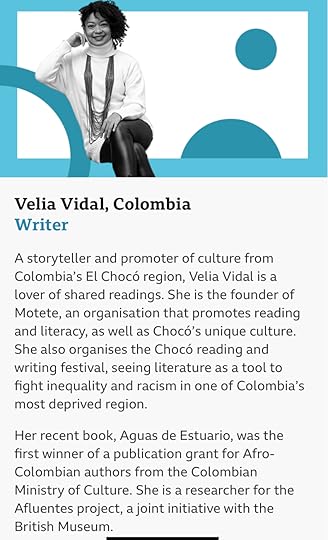
Vidal was chosen as one of the BBC 100 Women 2022, a list of 100 inspiring and influential women from around the world, and the citation serves to set up this novel.
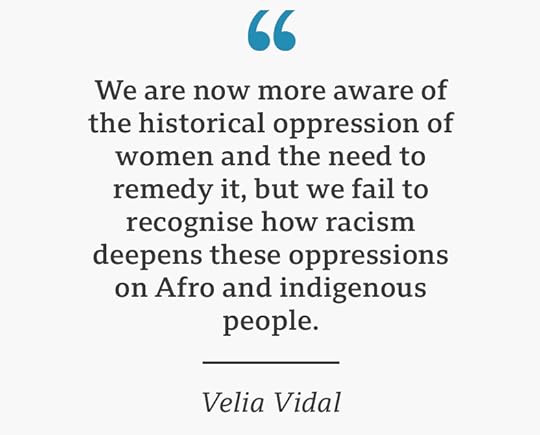
The English edition comes with an introduction from Brazilian philosopher and journalist Djamila Ribeiro, who brought the book into Portuguese translation and Brazil as the start of a project to promote literature written by black women from across South America, what the campaigner Lélia Gonzalez referred to as the 'Amerfican' community.
The novel (I think it can be called that) is an epistolary one, consisting of a series of letters (mostly via email) written by the narrator/author over the period May 2015 (when Vidal would have been in her early 30s) to September 2018 to a friend in Medellin (his responses, which the text indicates are brief, are not included).
They describe how she and her husband moved from Medellin, after several years living there, back to the Chocó Department in Colombia, which borders Panama and has both Pacific and Caribbean coasts, and, per Wikipedia is "known for hosting the largest Afro-Colombian population in the nation, and a large population of Amerindian and mixed African-Amerindian Colombians."
Chocó, this great jungle between two seas. One of the most biodiverse corners of the world, which finished off its beauty with a huge historic mistake: slavery, a mistake we find painful and condemn, but which, in the long run, has allowed us to complete the circle of biodiversity and given this place, already so rich in nature, the good fortune to be inhabited not solely by indigenous people, but also by mixed-race mestizos and direct descendants of Africa. All three, on coming together here, in this land of water and rain, seas and humidity, were fertilised and gave rise to a particular culture: the culture of Chocó.
It's often said that we Chocoans 'are the Pacific', that we're 'Africa in Colombia', and there's some truth to both these expressions. However, they also reduce us, because that's not all we are.
Originally the couple move to her hometown of Bahia Solano on the Pacific Coast, but when Vidal establishes her Motete Foundation, which promotes reading amongst the deprived communities in the area, she spends much of her time in and around the city of Quibdó.
And so this story is coming together. This basket, this Motete, is filling up. The slogan for my project is `Contenidos que tejen' — contents that weave — and every day I like it more. Every day I realise that these contents are weaving fulfilment and happiness within me. Do you know what a motete is yet? I think I sent you a photo. It's basically a basket used by indigenous people for carrying food, with a strap that goes over the head. `Motete' is what we call those baskets on the North Pacific coast (Bahia Solano, Jurad6, Nuqui) and in Panama. The thing is, motetes have always been used to carry food for the body: plantains, bushmeat, fish. Our idea is to fill them with food for the soul: art, culture, books. And just as motetes are woven by hand, I thought these new contents would also form a fabric: the fabric of society, of community, the fabric of souls.
At some point — sooner than you think — I'll need you, so we can keep on weaving a big motete and keep on filling it up. I haven't seen the sea since December and I miss it, of course.
This is a long, sustained absence of sea, but also one that I've chosen. I'm feeling it deeply. However, I'm surer by the day that the sea is inside me; it's part of what moves me to do this work.
The story she tells via the letters is a very personal one, indeed at one point she likens the self-discovery in what she is doing to reading a new book of her life:
Travelling along a stretch of the Quito river one day with forty teachers and forty-five books, meeting three women a couple of days later to discuss reading promotion in Chocó, then getting a phone call from a mother to check that the women's and children's clubs start on Saturday. This is how I'm reading another Chocó, discovering another story. I'm rereading Velia and discovering personality traits that feel new.
Characters appear who really are writing a new story between the water and the jungle. The idea of development is dealt with in a paragraph that seems almost incidental, and the characters who take centre stage in most things we read aren't even mentioned in these new texts.
Some months ago I was saying with total certainty that Chocó is where I belong in the world, the place I need to be, my base, from which I can go anywhere and still always return, and where I feel complete even though it lacks so many things, and I wasn't wrong. Now I know, too, that being Seño Velia is my mission on this earth; it's like it's what I was born to do.
The personal side includes confessions about her own love-life - her marriage with her husband is one most would describe as an open relationship, although she comments:We're not exactly an open couple; we're a strange invention that's very particular to us, in which these kinds of things happen. I'd say this invention is the result of many conversations, misunderstandings and infidelities that we've been able to address and which have made us accept how implausible it is to love just one person for all eternity. We decided to stay together on the basis that it's possible to build a life together while also admitting that sometimes other people appear who we want to have sex with, and that there's no reason for that to disrupt our shared life.
But at its heart, the novel covers the work that Vidal does in bringing communities together and promoting the local culture via her reading project, and the joys that literature can bring, both to those she reaches but also herself, when the Foundation is struggling with bureaucracy, funding and the adverse effects of the guerrilas and the narco-economy:
Then I'll be back here again with my long letters and my stories: on Saturday, when I read a José Manuel Arango poem with the children and talked about Porfirio Barba jacob, I remembered the importance of poetry in my life. It's like bathing in beauty or drinking the awareness of life in a single gulp; it's what it means to exist and, in the midst of it all, to submerge yourself in a tiny space that can reveal everything. It brings with it nostalgia, pain, happiness, many possible emotions. When I read a poem, it's like taking a deep breath and the air bringing with it the feeling described by the poem.
I remembered, too, that my life is full of poetry thanks to the sea, the Chocó sunsets, the water that falls from the sky and flows over the land, and this beautiful habit of writing to you and waiting for a reply. And no one can live without poetry.
A surprisingly effective novel - the simple format proving powerful.
Vidal was chosen as one of the BBC 100 Women 2022, a list of 100 inspiring and influential women from around the world, and the citation serves to set up this novel.
The English edition comes with an introduction from Brazilian philosopher and journalist Djamila Ribeiro, who brought the book into Portuguese translation and Brazil as the start of a project to promote literature written by black women from across South America, what the campaigner Lélia Gonzalez referred to as the 'Amerfican' community.
The novel (I think it can be called that) is an epistolary one, consisting of a series of letters (mostly via email) written by the narrator/author over the period May 2015 (when Vidal would have been in her early 30s) to September 2018 to a friend in Medellin (his responses, which the text indicates are brief, are not included).
They describe how she and her husband moved from Medellin, after several years living there, back to the Chocó Department in Colombia, which borders Panama and has both Pacific and Caribbean coasts, and, per Wikipedia is "known for hosting the largest Afro-Colombian population in the nation, and a large population of Amerindian and mixed African-Amerindian Colombians."
Chocó, this great jungle between two seas. One of the most biodiverse corners of the world, which finished off its beauty with a huge historic mistake: slavery, a mistake we find painful and condemn, but which, in the long run, has allowed us to complete the circle of biodiversity and given this place, already so rich in nature, the good fortune to be inhabited not solely by indigenous people, but also by mixed-race mestizos and direct descendants of Africa. All three, on coming together here, in this land of water and rain, seas and humidity, were fertilised and gave rise to a particular culture: the culture of Chocó.
It's often said that we Chocoans 'are the Pacific', that we're 'Africa in Colombia', and there's some truth to both these expressions. However, they also reduce us, because that's not all we are.
Originally the couple move to her hometown of Bahia Solano on the Pacific Coast, but when Vidal establishes her Motete Foundation, which promotes reading amongst the deprived communities in the area, she spends much of her time in and around the city of Quibdó.
And so this story is coming together. This basket, this Motete, is filling up. The slogan for my project is `Contenidos que tejen' — contents that weave — and every day I like it more. Every day I realise that these contents are weaving fulfilment and happiness within me. Do you know what a motete is yet? I think I sent you a photo. It's basically a basket used by indigenous people for carrying food, with a strap that goes over the head. `Motete' is what we call those baskets on the North Pacific coast (Bahia Solano, Jurad6, Nuqui) and in Panama. The thing is, motetes have always been used to carry food for the body: plantains, bushmeat, fish. Our idea is to fill them with food for the soul: art, culture, books. And just as motetes are woven by hand, I thought these new contents would also form a fabric: the fabric of society, of community, the fabric of souls.
At some point — sooner than you think — I'll need you, so we can keep on weaving a big motete and keep on filling it up. I haven't seen the sea since December and I miss it, of course.
This is a long, sustained absence of sea, but also one that I've chosen. I'm feeling it deeply. However, I'm surer by the day that the sea is inside me; it's part of what moves me to do this work.
The story she tells via the letters is a very personal one, indeed at one point she likens the self-discovery in what she is doing to reading a new book of her life:
Travelling along a stretch of the Quito river one day with forty teachers and forty-five books, meeting three women a couple of days later to discuss reading promotion in Chocó, then getting a phone call from a mother to check that the women's and children's clubs start on Saturday. This is how I'm reading another Chocó, discovering another story. I'm rereading Velia and discovering personality traits that feel new.
Characters appear who really are writing a new story between the water and the jungle. The idea of development is dealt with in a paragraph that seems almost incidental, and the characters who take centre stage in most things we read aren't even mentioned in these new texts.
Some months ago I was saying with total certainty that Chocó is where I belong in the world, the place I need to be, my base, from which I can go anywhere and still always return, and where I feel complete even though it lacks so many things, and I wasn't wrong. Now I know, too, that being Seño Velia is my mission on this earth; it's like it's what I was born to do.
The personal side includes confessions about her own love-life - her marriage with her husband is one most would describe as an open relationship, although she comments:We're not exactly an open couple; we're a strange invention that's very particular to us, in which these kinds of things happen. I'd say this invention is the result of many conversations, misunderstandings and infidelities that we've been able to address and which have made us accept how implausible it is to love just one person for all eternity. We decided to stay together on the basis that it's possible to build a life together while also admitting that sometimes other people appear who we want to have sex with, and that there's no reason for that to disrupt our shared life.
But at its heart, the novel covers the work that Vidal does in bringing communities together and promoting the local culture via her reading project, and the joys that literature can bring, both to those she reaches but also herself, when the Foundation is struggling with bureaucracy, funding and the adverse effects of the guerrilas and the narco-economy:
Then I'll be back here again with my long letters and my stories: on Saturday, when I read a José Manuel Arango poem with the children and talked about Porfirio Barba jacob, I remembered the importance of poetry in my life. It's like bathing in beauty or drinking the awareness of life in a single gulp; it's what it means to exist and, in the midst of it all, to submerge yourself in a tiny space that can reveal everything. It brings with it nostalgia, pain, happiness, many possible emotions. When I read a poem, it's like taking a deep breath and the air bringing with it the feeling described by the poem.
I remembered, too, that my life is full of poetry thanks to the sea, the Chocó sunsets, the water that falls from the sky and flows over the land, and this beautiful habit of writing to you and waiting for a reply. And no one can live without poetry.
A surprisingly effective novel - the simple format proving powerful.

April 30, 2024
4.5⭐️ This book is like a warm embrace. What a pleasant and heartwarming read.
This novel reads much like a memoir (and I assume it’s not really a novel at all) and is written in an epistolary format by way of emails to a friend of Vidals that we never hear from, but know replies with short yet meaningful messages.
Vidal tells this friend of her experience returning to her home of Chocó, Colombia to start an organization centered around promoting reading and literacy to the Afro-Colombian communities living in the region. Vidal’s words are as smooth as butter and her passion and warmth seep from the page. She was named as one of BBC’s 100 most influential and inspiring women in the world in 2022 and it is so very easy to see why.
Vidal reveals much to her friend. The messages are intimate and detail not only the progress of her reading programs, but also matters involving her open marriage with her husband and her deep connections to the people and landscape belonging to this corner of the country where the Pacific and Caribbean meet.
The prose is simple but addictive.
This novel reads much like a memoir (and I assume it’s not really a novel at all) and is written in an epistolary format by way of emails to a friend of Vidals that we never hear from, but know replies with short yet meaningful messages.
Vidal tells this friend of her experience returning to her home of Chocó, Colombia to start an organization centered around promoting reading and literacy to the Afro-Colombian communities living in the region. Vidal’s words are as smooth as butter and her passion and warmth seep from the page. She was named as one of BBC’s 100 most influential and inspiring women in the world in 2022 and it is so very easy to see why.
Vidal reveals much to her friend. The messages are intimate and detail not only the progress of her reading programs, but also matters involving her open marriage with her husband and her deep connections to the people and landscape belonging to this corner of the country where the Pacific and Caribbean meet.
The prose is simple but addictive.
October 28, 2024
Breathtaking.
Words, words, words. That's all we have, but what power they can have.
Creating connection, community, belonging.
Validation. Recognition. Acceptance.
Love.
This evening, as I watched the sun set behind the jungle on the other side of the Atrato, I thought about how it all comes down to sowing seeds of hope. What you do, what I do, is read aloud to other people the story that encourages us every day, the story that says that just a bit further on, round the corner from that decision or that extra bit of effort, written on the page of a book, in the scent of some saplings or the taste of a plate of food, is the life we have always dreamed of.
Stories are our life.
Words, words, words. That's all we have, but what power they can have.
Creating connection, community, belonging.
Validation. Recognition. Acceptance.
Love.
This evening, as I watched the sun set behind the jungle on the other side of the Atrato, I thought about how it all comes down to sowing seeds of hope. What you do, what I do, is read aloud to other people the story that encourages us every day, the story that says that just a bit further on, round the corner from that decision or that extra bit of effort, written on the page of a book, in the scent of some saplings or the taste of a plate of food, is the life we have always dreamed of.
Stories are our life.

August 7, 2024
I just read a book about Columbia, and decided to stay there for a bit. That book covered the flora and fauna of Columbia, the music, some literature, the wars - drug and political. That author wrote of the major river in Columbia, as reality and metaphor. And History, to include the importation of African slaves to supplement the Spanish exploitation of the indigenous.
This is a novel by a descendant of those slaves. It is mainly autobiographical. The author is a young (from my perspective) Black woman - an Afro-Columbian - who is the founder and director of various Columbian entities that bring literature to young children. This is her debut novel, and the first one translated so as I can read it.
The setting, mostly, is that area of Columbia that borders both Caribbean and Pacific waters. There's a river here, too (like that other work I referenced), which peters out as it hits the ocean, and backs up, saline. Given the title, that's likely some important allegory.
There's no disguise that the particulars of the novel match the author's life. But there's more going on here, and that's what I want to talk about.
This novel is epistolary. All of the letters are from our author/narrator to an unnamed recipient. Unnamed, except: Dear friend . . . My dear friend . . . My very dear friend . . . My dear. And she signs off: Kisses . . . Kisses . . . Hugs . . . Kisses and hugs . . . Lots of love . . . Hugs and kisses . . . Hugs, my dear friend . . . With love . . . A huge hug . . . Big hug . . . There are more Kisses, more Hugs, and more combinations of the two. And, very near the end, there are the three words, standing alone, which speak volumes.
So, who, you ask, is the recipient of these missives?
Well, it's not her husband, who she writes about with more than fondness. Nor is it any of her lovers, which escapades she shares in sometimes graphic detail.
We know the recipient is a male, but not his age nor his, well, circumstances. We are left to guess whether he's a financial supporter of her cause, an editor, a teacher. Perhaps a lover - they have met - though she doesn't share details as one might. Is he, a reader might wonder, a figment, a literary tool?
And that's the mystery of the novel, what turns the page. I won't tell you if there's an answer at the end. You'll have to read it for yourself.
What I loved was that she needed someone to write to. With passion. (He wrote back.) And that correspondence was its own life. She needed that - to write, and be written to - as much as she needed her comforts and ambitions.
She writes:
You're very important, even indispensable. I don't think anyone else in the world would be prepared to do this, not with the reliable replies, or the open mind and sensitive approach that are, essentially, what make those replies 'perfect'. . . .
People usually want either more or less than this. More would mean linking it to love in a concrete sense, talking about each other's lives, calling each other on the phone, meeting up, making promises, giving gifts; and less would mean intermittent, commitment-free friendship. Sporadic presences with no real bound. This is neither more nor less. . . .
It's a kind of creation with no room for easy adjectives. I don't have you on my list of friends, but that's what I call you in every letter and you often behave as a great friend would behave. It seemed a loose definition because we're not such good friends really, yet you're much closer to me than many of my friends. You know what I mean. I won't keep trying to explain. We both know that some things are simply there and require no explanation. . . .
This is an important part of my life and I want it to last a thousand years. . . .
So let's stay here, my dear friend, in this sea which belongs to neither the north nor the south, which doesn't know where it's going because there's no need, which ebbs and flows, and is nothing but present yet knows what's behind it and carries on into the future. . . .
And then she writes those three words.
You know what I mean.
This is a novel by a descendant of those slaves. It is mainly autobiographical. The author is a young (from my perspective) Black woman - an Afro-Columbian - who is the founder and director of various Columbian entities that bring literature to young children. This is her debut novel, and the first one translated so as I can read it.
The setting, mostly, is that area of Columbia that borders both Caribbean and Pacific waters. There's a river here, too (like that other work I referenced), which peters out as it hits the ocean, and backs up, saline. Given the title, that's likely some important allegory.
There's no disguise that the particulars of the novel match the author's life. But there's more going on here, and that's what I want to talk about.
This novel is epistolary. All of the letters are from our author/narrator to an unnamed recipient. Unnamed, except: Dear friend . . . My dear friend . . . My very dear friend . . . My dear. And she signs off: Kisses . . . Kisses . . . Hugs . . . Kisses and hugs . . . Lots of love . . . Hugs and kisses . . . Hugs, my dear friend . . . With love . . . A huge hug . . . Big hug . . . There are more Kisses, more Hugs, and more combinations of the two. And, very near the end, there are the three words, standing alone, which speak volumes.
So, who, you ask, is the recipient of these missives?
Well, it's not her husband, who she writes about with more than fondness. Nor is it any of her lovers, which escapades she shares in sometimes graphic detail.
We know the recipient is a male, but not his age nor his, well, circumstances. We are left to guess whether he's a financial supporter of her cause, an editor, a teacher. Perhaps a lover - they have met - though she doesn't share details as one might. Is he, a reader might wonder, a figment, a literary tool?
And that's the mystery of the novel, what turns the page. I won't tell you if there's an answer at the end. You'll have to read it for yourself.
What I loved was that she needed someone to write to. With passion. (He wrote back.) And that correspondence was its own life. She needed that - to write, and be written to - as much as she needed her comforts and ambitions.
She writes:
You're very important, even indispensable. I don't think anyone else in the world would be prepared to do this, not with the reliable replies, or the open mind and sensitive approach that are, essentially, what make those replies 'perfect'. . . .
People usually want either more or less than this. More would mean linking it to love in a concrete sense, talking about each other's lives, calling each other on the phone, meeting up, making promises, giving gifts; and less would mean intermittent, commitment-free friendship. Sporadic presences with no real bound. This is neither more nor less. . . .
It's a kind of creation with no room for easy adjectives. I don't have you on my list of friends, but that's what I call you in every letter and you often behave as a great friend would behave. It seemed a loose definition because we're not such good friends really, yet you're much closer to me than many of my friends. You know what I mean. I won't keep trying to explain. We both know that some things are simply there and require no explanation. . . .
This is an important part of my life and I want it to last a thousand years. . . .
So let's stay here, my dear friend, in this sea which belongs to neither the north nor the south, which doesn't know where it's going because there's no need, which ebbs and flows, and is nothing but present yet knows what's behind it and carries on into the future. . . .
And then she writes those three words.
You know what I mean.

December 23, 2024
Rarely have I read a book that has a such a strong sense of place. It doesn’t take much to inspire me towards more travel, I have spent much of my life on the road, but now there’s another place on that ‘yet to be visited’ list.
The setting is Chocó on the northwest Pacific coast of Colombia, with Panama to the north. The structure is of a series of letters from the author to an unnamed friend, and through these the author’s experiences are set out. It is a story of returning home, escaping the big city for a more peaceful life; swapping Medellín fo the coastal town of Bahía Solano, to work on a project, the Motete Educational and Cultural Corporation which works to promote reading and culture in Chocó.
The lyrical style is of water, with frequent references to the Ocean, the Guapi and the Quito rivers, their spirit and flow as they interact with their surroundings. The culture of the region is a highlight also.
It’s a short, yet very beautiful piece of writing, and one I would never have experienced if it wasn’t for the wonderful Edinburgh publisher, Charco.
The setting is Chocó on the northwest Pacific coast of Colombia, with Panama to the north. The structure is of a series of letters from the author to an unnamed friend, and through these the author’s experiences are set out. It is a story of returning home, escaping the big city for a more peaceful life; swapping Medellín fo the coastal town of Bahía Solano, to work on a project, the Motete Educational and Cultural Corporation which works to promote reading and culture in Chocó.
The lyrical style is of water, with frequent references to the Ocean, the Guapi and the Quito rivers, their spirit and flow as they interact with their surroundings. The culture of the region is a highlight also.
It’s a short, yet very beautiful piece of writing, and one I would never have experienced if it wasn’t for the wonderful Edinburgh publisher, Charco.
August 17, 2024
I feel really really bad but I just found this really boring and I didn’t like the lack of plot

May 19, 2026
The writing is lovely enough, yet it still felt distant.
September 30, 2024
this is such an inspiring story and really highlights the importance of literacy, especially in communities forgotten and less developed. i loved the way velia vidal capsulised her feelings about sex, relationships, poetry, education and the importance of rest. this was lovely!

April 24, 2024
A book about the power, and shortfalls, of language. I loved the prose.
April 1, 2026
“Do you know what a motete is yet? I think I sent you a photo. It’s basically a basket used by indigenous people for carrying food, with a strap that goes over the head. ‘Motete’ is what we call those baskets on the North Pacific coast (Bahía Solano, Juradó, Nuquí) and in Panama. The thing is, motetes have always been used to carry food for the body: plantains, bushmeat, fish. Our idea is to fill them with food for the soul: art, culture, books. And just as motetes are woven by hand, I thought these new contents would also form a fabric: the fabric of society, of community, the fabric of souls.”
This is how Velia, the protagonist of Velia Vidal’s epistolary novel“Tidal Waters”, introduces her project in emails she writes to a nameless male friend. In their correspondence, lasting for three years, she shares reflections on her wellbeing, sexual experiences, her relationship with her husband, her hopes and fears related to the organisation Motete, which she founded and through which she promotes reading, especially to children, and strengthens the economically deprived Afro-Colombian community of the Chocó region on the Colombia’s North-West coast - one of the most biodiverse corners of the world.
I am in awe of Vidal. On 135 pages she managed to portray Velia’s metamorphosis, describe the development of the project and evoke the political situation in Colombia as well as convey some of the culture of Quibdó, the Chocoan capital. I felt Velia was like ocean’s waves, sometimes full of anxiety (“What will happen if I let myself fall apart, if I stop pretending I’m strong, and scream and cry? What if one morning I decide I don’t want to get out of bed?”), at other times serene and in love with her life, happy with her life choices: “I remembered, too, that my life is full of poetry thanks to the sea, the Chocó sunsets, the water that falls from the sky and flows over the land, and this beautiful habit of writing to you and waiting for a reply. And no one can live without poetry.”
“Tidal Waters” is a wonderful book that rewards especially a seasoned reader with a rather inquisitive mind and able to find beauty in everything. I felt as if Velia’s each letter was written for me and it calmed me in the exact way I needed it.
P.S. The organisation Motete exists for real and the author is its founder and director.
This is how Velia, the protagonist of Velia Vidal’s epistolary novel“Tidal Waters”, introduces her project in emails she writes to a nameless male friend. In their correspondence, lasting for three years, she shares reflections on her wellbeing, sexual experiences, her relationship with her husband, her hopes and fears related to the organisation Motete, which she founded and through which she promotes reading, especially to children, and strengthens the economically deprived Afro-Colombian community of the Chocó region on the Colombia’s North-West coast - one of the most biodiverse corners of the world.
I am in awe of Vidal. On 135 pages she managed to portray Velia’s metamorphosis, describe the development of the project and evoke the political situation in Colombia as well as convey some of the culture of Quibdó, the Chocoan capital. I felt Velia was like ocean’s waves, sometimes full of anxiety (“What will happen if I let myself fall apart, if I stop pretending I’m strong, and scream and cry? What if one morning I decide I don’t want to get out of bed?”), at other times serene and in love with her life, happy with her life choices: “I remembered, too, that my life is full of poetry thanks to the sea, the Chocó sunsets, the water that falls from the sky and flows over the land, and this beautiful habit of writing to you and waiting for a reply. And no one can live without poetry.”
“Tidal Waters” is a wonderful book that rewards especially a seasoned reader with a rather inquisitive mind and able to find beauty in everything. I felt as if Velia’s each letter was written for me and it calmed me in the exact way I needed it.
P.S. The organisation Motete exists for real and the author is its founder and director.
January 5, 2026
4,5 ⭐️
I’m a big fan of auto-fiction and it was my first time reading it in epistolary format, and it was wonderfully done here! I loved her musings on community, love, words and their power, which were delivered in a simple yet beautiful writing style. Her connection with water was my favorite part of this novel, probably because I feel it too; the sea is a character in itself here, and its rhythms dictate those of the novel and of the character’s life. It sometimes got a bit repetitive, but since it’s so short it didn’t bother me much. The perfect length for an experience like this!
"Writing to you means telling myself the story of my life in a different tone."
"Loving like that is what gives me the strength to live like the tide, sometimes waning, but then returning with force."
I’m a big fan of auto-fiction and it was my first time reading it in epistolary format, and it was wonderfully done here! I loved her musings on community, love, words and their power, which were delivered in a simple yet beautiful writing style. Her connection with water was my favorite part of this novel, probably because I feel it too; the sea is a character in itself here, and its rhythms dictate those of the novel and of the character’s life. It sometimes got a bit repetitive, but since it’s so short it didn’t bother me much. The perfect length for an experience like this!
"Writing to you means telling myself the story of my life in a different tone."
"Loving like that is what gives me the strength to live like the tide, sometimes waning, but then returning with force."

June 10, 2024
4.5 ⭐️
“𝘞𝘦’𝘷𝘦 𝘪𝘯𝘷𝘦𝘯𝘵𝘦𝘥 𝘢 𝘸𝘰𝘳𝘭𝘥 𝘮𝘢𝘥𝘦 𝘰𝘧 𝘸𝘰𝘳𝘥𝘴 𝘧𝘰𝘳 𝘰𝘶𝘳𝘴𝘦𝘭𝘷𝘦𝘴, 𝘢 𝘭𝘰𝘷𝘦 𝘮𝘢𝘥𝘦 𝘰𝘧 𝘸𝘰𝘳𝘥𝘴, 𝘰𝘧 𝘵𝘩𝘦 𝘥𝘦𝘴𝘪𝘳𝘦 𝘧𝘰𝘳 𝘸𝘰𝘳𝘥𝘴, 𝘵𝘩𝘦 𝘱𝘳𝘰𝘴𝘱𝘦𝘤𝘵 𝘰𝘧 𝘸𝘰𝘳𝘥𝘴, 𝘵𝘩𝘦 𝘧𝘦𝘦𝘭𝘪𝘯𝘨𝘴 𝘴𝘵𝘦𝘮𝘮𝘪𝘯𝘨 𝘧𝘳𝘰𝘮 𝘸𝘰𝘳𝘥𝘴, 𝘧𝘳𝘰𝘮 𝘵𝘩𝘰𝘴𝘦 𝘢𝘭𝘳𝘦𝘢𝘥𝘺 𝘴𝘱𝘰𝘬𝘦𝘯 𝘢𝘯𝘥 𝘵𝘩𝘰𝘴𝘦 𝘺𝘦𝘵 𝘵𝘰 𝘣𝘦 𝘴𝘱𝘰𝘬𝘦𝘯, 𝘢𝘯𝘥 𝘦𝘷𝘦𝘯 𝘵𝘩𝘰𝘴𝘦 𝘵𝘩𝘢𝘵 𝘸𝘪𝘭𝘭 𝘳𝘦𝘮𝘢𝘪𝘯 𝘶𝘯𝘴𝘱𝘰𝘬𝘦𝘯 𝘣𝘶𝘵 𝘵𝘩𝘢𝘵 𝘸𝘦 𝘬𝘯𝘰𝘸 𝘢𝘳𝘦 𝘵𝘩𝘦𝘳𝘦.”
I recently finished reading 𝘛𝘪𝘥𝘢𝘭 𝘞𝘢𝘵𝘦𝘳𝘴 - this book was such a pleasant surprise! I was looking for a book with excellent writing, and something offering different perspectives. This novel delivered on all fronts. I enjoyed diving into the lives of Colombian communities, particularly the Afro-Colombian culture in Chocó. I found myself googling about the towns to better understand the setting of the novel.
The novel is written as letters from one woman to her friend, where she shares her thoughts, feelings, and aspirations as she moves between cities - from her birthplace Bahía Solano to Chocó - and finds a profession that becomes her passion.
The narrator’s dedication to promoting literacy and empowering communities to read was truly inspiring. She establishes an organisation to encourage children to develop a love for reading and books.
Vidal’s writing (and McDermott’s translation) is beautiful and poetic, making this an engaging read that I couldn’t put down. Vidal expresses her love of the sea, a love of words, and a love of her community in Chocó.
𝘛𝘪𝘥𝘢𝘭 𝘞𝘢𝘵𝘦𝘳𝘴 explores themes of friendship, belonging, fulfilment, pursuing one’s dreams, and finding a vocation. I’m glad I read this book, and I wouldn’t hesitate to recommend it!
“𝘈𝘯𝘥 𝘸𝘩𝘢𝘵 𝘧𝘰𝘭𝘭𝘰𝘸𝘦𝘥 𝘸𝘢𝘴 𝘢 𝘴𝘦𝘢𝘳𝘤𝘩 𝘧𝘰𝘳 𝘴𝘰𝘮𝘦𝘵𝘩𝘪𝘯𝘨 𝘵𝘩𝘢𝘵 𝘮𝘢𝘥𝘦 𝘮𝘦 𝘩𝘢𝘱𝘱𝘪𝘦𝘳, 𝘰𝘳 𝘵𝘩𝘢𝘵 𝘣𝘳𝘰𝘶𝘨𝘩𝘵 𝘮𝘦 𝘱𝘦𝘢𝘤𝘦 𝘣𝘦𝘤𝘢𝘶𝘴𝘦 𝘰𝘷𝘦𝘳 𝘵𝘪𝘮𝘦 𝘐’𝘷𝘦 𝘥𝘪𝘴𝘤𝘰𝘷𝘦𝘳𝘦𝘥 𝘵𝘩𝘢𝘵’𝘴 𝘸𝘩𝘢𝘵 𝘩𝘢𝘱𝘱𝘪𝘯𝘦𝘴𝘴 𝘪𝘴: 𝘧𝘦𝘦𝘭𝘪𝘯𝘨 𝘢𝘵 𝘱𝘦𝘢𝘤𝘦 𝘢𝘯𝘥 𝘧𝘳𝘦𝘦 𝘰𝘧 𝘶𝘯𝘧𝘪𝘯𝘪𝘴𝘩𝘦𝘥 𝘣𝘶𝘴𝘪𝘯𝘦𝘴𝘴, 𝘪𝘯𝘤𝘭𝘶𝘥𝘪𝘯𝘨 𝘥𝘦𝘧𝘦𝘳𝘳𝘦𝘥 𝘥𝘳𝘦𝘢𝘮𝘴.”
“𝘞𝘦’𝘷𝘦 𝘪𝘯𝘷𝘦𝘯𝘵𝘦𝘥 𝘢 𝘸𝘰𝘳𝘭𝘥 𝘮𝘢𝘥𝘦 𝘰𝘧 𝘸𝘰𝘳𝘥𝘴 𝘧𝘰𝘳 𝘰𝘶𝘳𝘴𝘦𝘭𝘷𝘦𝘴, 𝘢 𝘭𝘰𝘷𝘦 𝘮𝘢𝘥𝘦 𝘰𝘧 𝘸𝘰𝘳𝘥𝘴, 𝘰𝘧 𝘵𝘩𝘦 𝘥𝘦𝘴𝘪𝘳𝘦 𝘧𝘰𝘳 𝘸𝘰𝘳𝘥𝘴, 𝘵𝘩𝘦 𝘱𝘳𝘰𝘴𝘱𝘦𝘤𝘵 𝘰𝘧 𝘸𝘰𝘳𝘥𝘴, 𝘵𝘩𝘦 𝘧𝘦𝘦𝘭𝘪𝘯𝘨𝘴 𝘴𝘵𝘦𝘮𝘮𝘪𝘯𝘨 𝘧𝘳𝘰𝘮 𝘸𝘰𝘳𝘥𝘴, 𝘧𝘳𝘰𝘮 𝘵𝘩𝘰𝘴𝘦 𝘢𝘭𝘳𝘦𝘢𝘥𝘺 𝘴𝘱𝘰𝘬𝘦𝘯 𝘢𝘯𝘥 𝘵𝘩𝘰𝘴𝘦 𝘺𝘦𝘵 𝘵𝘰 𝘣𝘦 𝘴𝘱𝘰𝘬𝘦𝘯, 𝘢𝘯𝘥 𝘦𝘷𝘦𝘯 𝘵𝘩𝘰𝘴𝘦 𝘵𝘩𝘢𝘵 𝘸𝘪𝘭𝘭 𝘳𝘦𝘮𝘢𝘪𝘯 𝘶𝘯𝘴𝘱𝘰𝘬𝘦𝘯 𝘣𝘶𝘵 𝘵𝘩𝘢𝘵 𝘸𝘦 𝘬𝘯𝘰𝘸 𝘢𝘳𝘦 𝘵𝘩𝘦𝘳𝘦.”
I recently finished reading 𝘛𝘪𝘥𝘢𝘭 𝘞𝘢𝘵𝘦𝘳𝘴 - this book was such a pleasant surprise! I was looking for a book with excellent writing, and something offering different perspectives. This novel delivered on all fronts. I enjoyed diving into the lives of Colombian communities, particularly the Afro-Colombian culture in Chocó. I found myself googling about the towns to better understand the setting of the novel.
The novel is written as letters from one woman to her friend, where she shares her thoughts, feelings, and aspirations as she moves between cities - from her birthplace Bahía Solano to Chocó - and finds a profession that becomes her passion.
The narrator’s dedication to promoting literacy and empowering communities to read was truly inspiring. She establishes an organisation to encourage children to develop a love for reading and books.
Vidal’s writing (and McDermott’s translation) is beautiful and poetic, making this an engaging read that I couldn’t put down. Vidal expresses her love of the sea, a love of words, and a love of her community in Chocó.
𝘛𝘪𝘥𝘢𝘭 𝘞𝘢𝘵𝘦𝘳𝘴 explores themes of friendship, belonging, fulfilment, pursuing one’s dreams, and finding a vocation. I’m glad I read this book, and I wouldn’t hesitate to recommend it!
“𝘈𝘯𝘥 𝘸𝘩𝘢𝘵 𝘧𝘰𝘭𝘭𝘰𝘸𝘦𝘥 𝘸𝘢𝘴 𝘢 𝘴𝘦𝘢𝘳𝘤𝘩 𝘧𝘰𝘳 𝘴𝘰𝘮𝘦𝘵𝘩𝘪𝘯𝘨 𝘵𝘩𝘢𝘵 𝘮𝘢𝘥𝘦 𝘮𝘦 𝘩𝘢𝘱𝘱𝘪𝘦𝘳, 𝘰𝘳 𝘵𝘩𝘢𝘵 𝘣𝘳𝘰𝘶𝘨𝘩𝘵 𝘮𝘦 𝘱𝘦𝘢𝘤𝘦 𝘣𝘦𝘤𝘢𝘶𝘴𝘦 𝘰𝘷𝘦𝘳 𝘵𝘪𝘮𝘦 𝘐’𝘷𝘦 𝘥𝘪𝘴𝘤𝘰𝘷𝘦𝘳𝘦𝘥 𝘵𝘩𝘢𝘵’𝘴 𝘸𝘩𝘢𝘵 𝘩𝘢𝘱𝘱𝘪𝘯𝘦𝘴𝘴 𝘪𝘴: 𝘧𝘦𝘦𝘭𝘪𝘯𝘨 𝘢𝘵 𝘱𝘦𝘢𝘤𝘦 𝘢𝘯𝘥 𝘧𝘳𝘦𝘦 𝘰𝘧 𝘶𝘯𝘧𝘪𝘯𝘪𝘴𝘩𝘦𝘥 𝘣𝘶𝘴𝘪𝘯𝘦𝘴𝘴, 𝘪𝘯𝘤𝘭𝘶𝘥𝘪𝘯𝘨 𝘥𝘦𝘧𝘦𝘳𝘳𝘦𝘥 𝘥𝘳𝘦𝘢𝘮𝘴.”

July 16, 2024
While reading this short novella, it feels like you are following life journey of a friend; a dear one. All the moments of tentative hope and gentle joy, you end up cheering her. She wants to build a center that encourages literacy and reading in Afro-Colombian community. She comes back to her hometown Chocó, Colombia where Pacific ocean meets the Caribbean, to establish the community.
In the letters it is obvious that she and the unnamed person are close friends. She confesses the hurdles she is facing, the changes that's coming with every tide, and soft contentment when things do workout. We don't hear from this other friend and as far as narration goes, it doesn't hinder.
A lovely book about sea, balance, language and the melancholia of change.
In the letters it is obvious that she and the unnamed person are close friends. She confesses the hurdles she is facing, the changes that's coming with every tide, and soft contentment when things do workout. We don't hear from this other friend and as far as narration goes, it doesn't hinder.
A lovely book about sea, balance, language and the melancholia of change.

September 6, 2026
As a Colombian, I think it was an error to read this book in English. English can be such a sterile language sometimes. I can just imagine how much poetic must be in Spanish.
What it was not an error was that this book found me, thousands miles from home, and open my eyes to this author.
Fascinating and inspiring.
Women can truly change the world (and its mess) and still be able to smile.
She was the Pacific Ocean indeed.
So grateful to have found CharcoPress editorial.
What it was not an error was that this book found me, thousands miles from home, and open my eyes to this author.
Fascinating and inspiring.
Women can truly change the world (and its mess) and still be able to smile.
She was the Pacific Ocean indeed.
So grateful to have found CharcoPress editorial.

August 15, 2024
Pleasantly written, this book is easily read.
Alas, I was not swept away by the writing.
So what did I do?
Just kept reading it.
Believe it or not, you don't have to have an
emotional connection to every book you read.
Alas, I was not swept away by the writing.
So what did I do?
Just kept reading it.
Believe it or not, you don't have to have an
emotional connection to every book you read.
August 1, 2024
Oooh this book was very delightful… I imagine the author crouched over a desk writing her letters, whilst vines and plants grow around her and into her words. A very immersive read and I would definitely like to read more of her work!!
October 8, 2024
2.5/5
Not too sure what to make of this book. It wasn't my usual go to, for sure.
Velia Vidal is an amazing woman, there's no doubt about it! So is her voluntary sector work.
However, I struggled with the letters, I often felt that a lot of the information I wanted from them was omitted.
Not too sure what to make of this book. It wasn't my usual go to, for sure.
Velia Vidal is an amazing woman, there's no doubt about it! So is her voluntary sector work.
However, I struggled with the letters, I often felt that a lot of the information I wanted from them was omitted.
January 7, 2026
2.5/5💫- nice prose but i don’t think this was for me. no real plot that i was able to cling onto. i was left wanting more, from her own letters and to the friend she was writing to.
June 4, 2024
Wow, this book has the most beautiful writing I've ever read. It's perfect if you're in a reading slump—short, yet it eloquently explores the beauty and necessity of words. The protagonist, who is in the later years of adulthood, faces continuous challenges throughout the novel, such as health issues and rising violence that severely impacts her students. Despite these struggles, she clings to the things that give her life purpose: writing, the sea, her role in the community, and the letters she exchanges with her long-time friend.
I found myself underlining, notating, and underlining some more because the writing is simply breathtaking. It is filled with so many quotable lines that radiate hope, even during times when hope seems lost. The prose beautifully captures the essence of finding beauty in life, making it an uplifting read that encourages you to see the world through a more optimistic lens.
The book also underscores the importance of sometimes just being listened to. It is filled with letters written to a character we know nothing about, but the protagonist implies that sometimes it's good to just feel heard and understood. I love this because I sometimes can't find the right words to say in certain situations, but knowing that my simply being there brings comfort to others gives me great solace.
"Reading back over what I've written here, I like this life a lot. It has plenty of flaws, and there's a lot still to build, but I like the way it's going. I might disappear a little, but I have no intention of getting lost."
I found myself underlining, notating, and underlining some more because the writing is simply breathtaking. It is filled with so many quotable lines that radiate hope, even during times when hope seems lost. The prose beautifully captures the essence of finding beauty in life, making it an uplifting read that encourages you to see the world through a more optimistic lens.
The book also underscores the importance of sometimes just being listened to. It is filled with letters written to a character we know nothing about, but the protagonist implies that sometimes it's good to just feel heard and understood. I love this because I sometimes can't find the right words to say in certain situations, but knowing that my simply being there brings comfort to others gives me great solace.
"Reading back over what I've written here, I like this life a lot. It has plenty of flaws, and there's a lot still to build, but I like the way it's going. I might disappear a little, but I have no intention of getting lost."

August 4, 2024
Read for #WIT month in Aug 2024.
What a novel, good-hearted, open, vulnerable read. I'm not sure whether what I read was fictional or not, because much of what is described in the 'letters to a close friend' coincides with elements in the author bio inside the front cover of the book and the main character is Vel.
It is about a return to a place and finding a new purpose, along with the motivation to pursue it and taking others with you - and a correspondence that bears witness and though we don't see the replies, we can tell that they encourage and support both the idea and the human pursuing it.
The letters span 3 years from May 2015 and they track a significant change in Vel's life as she decides to return to Choco (to the Afro-Colombian community she was raised in) to start a new venture to bring reading, literacy and a love of books to it. They also exhibit the growth and expansion of her writing, the letter is her safe harbour and she tests it by taking her writing to another level, stretching into a more personal yet contained arena.
She is taking a risk starting a new venture, but believes in it and is surrounded by extended family and connections, which facilitate her ability to reach out even further into the community and invite everyone in, to be part of or benefit from her shared love of reading.
Her unnamed friend that she writes to is someone she hasn't known long, he occupies a space between the familiar and the unfamiliar that she claims as a freedom to express herself, to be vulnerable and open, someone who has mentored and shown her how to get funding, the range of things she can write to him of span a wide spectrum.
We never see the replies but the continuation of her own correspondence displays her life, her dealing with health problems, the double bind of her wounding and love, of being raised by doting grandparents, while having complicated relationships with a teenage mother unable to mother her and an emotionally absent father. Her later sadness and depression, helped through therapy, tears and conversations, to ways of coping and healing. Her optimism for her venture, and the community connections she creates keep her going.
One of the themes is the sea, the absence of sea, the way the river meets the sea and her relationship to it. She yearns for it when it has been absent for some time, just as she yearns for the letter writer and the relief that comes in the act of writing to him. She describes herself in her current role as being like the sea at that place where it meets the river.
I loved this slender book, it's project and generosity, its intimate sharing and platform for expanding and learning and having the courage to venture into new areas. It made me think of an exquisite title I'd forgotten about, Leslie Marmon Silko's slim book of correspondence The Delicacy and Strength of Lace: Letters Between Leslie Marmon Silko and James Wright.
That correspondence was written when Silko was 31 years old and Wright 51. They had planned to meet in the Spring of 1980, mentioned in letters of Oct/Nov of the previous year, not knowing he would be gone before then.
They discuss her novel, his poetry, language, his travels, her adventures with animals, their speaking engagements, their mutual challenges and experiences as university professors, and soon began to share more personal feelings, as she acknowledged the tough time she was having and he shared his own experience, expressing empathy.
Velia Vidal dedicates her book:
and when I read about her own projects in society, her love of the sea and shared readings and efforts to help move children and young adults out of poverty, it is all the more inspirational to read these letters, understanding the difference a letter can make, to see someone take a risk and pursue something that will help others from her community, while fulfilling her own dreams and aspirations.
What a novel, good-hearted, open, vulnerable read. I'm not sure whether what I read was fictional or not, because much of what is described in the 'letters to a close friend' coincides with elements in the author bio inside the front cover of the book and the main character is Vel.
It is about a return to a place and finding a new purpose, along with the motivation to pursue it and taking others with you - and a correspondence that bears witness and though we don't see the replies, we can tell that they encourage and support both the idea and the human pursuing it.
I don't know if I mentioned this specifically, perhaps not in a letter, though maybe when we met up before I left to come and live here here for good, but part of what pushed me to make this radical life change was the need to feel that my existence had meaning, that I was spending each day doing something I cared about and could feel proud of at the end of my life. And that's just what I found in being Seño Velia, the woman who has meetings with people about books, who tries to motivate children to love reading and books as much as she does, and who supports the teachers.
The letters span 3 years from May 2015 and they track a significant change in Vel's life as she decides to return to Choco (to the Afro-Colombian community she was raised in) to start a new venture to bring reading, literacy and a love of books to it. They also exhibit the growth and expansion of her writing, the letter is her safe harbour and she tests it by taking her writing to another level, stretching into a more personal yet contained arena.
Tomorrow I start a diploma in reading promotion, and with it my project, Motete. We've chosen three areas of Quibdo where I'll start running the workshops.
She is taking a risk starting a new venture, but believes in it and is surrounded by extended family and connections, which facilitate her ability to reach out even further into the community and invite everyone in, to be part of or benefit from her shared love of reading.
And so this project is coming together. This basket, this Motete, is filling up. The slogan for my project is 'Contenidos que tejen' - contents that weave - and every day I like it more. Every day I realise that these contents are weaving fulfillment and happiness within me...
The thing is, motetes have been used to carry food for the body: plaintains, bushmeat, fish. Our is to fill them with food for the soul: art, culture, books. And just as motetes are woven by hand, I thought these new contents would also form a fabric: the fabric of society, of community, the fabric of souls.
Her unnamed friend that she writes to is someone she hasn't known long, he occupies a space between the familiar and the unfamiliar that she claims as a freedom to express herself, to be vulnerable and open, someone who has mentored and shown her how to get funding, the range of things she can write to him of span a wide spectrum.
We never see the replies but the continuation of her own correspondence displays her life, her dealing with health problems, the double bind of her wounding and love, of being raised by doting grandparents, while having complicated relationships with a teenage mother unable to mother her and an emotionally absent father. Her later sadness and depression, helped through therapy, tears and conversations, to ways of coping and healing. Her optimism for her venture, and the community connections she creates keep her going.
I grew a lot. I learned. But most of all I tried to weave a new way of relating to my father that hurt as little as possible.
One of the themes is the sea, the absence of sea, the way the river meets the sea and her relationship to it. She yearns for it when it has been absent for some time, just as she yearns for the letter writer and the relief that comes in the act of writing to him. She describes herself in her current role as being like the sea at that place where it meets the river.
I'm like the Pacific Ocean, pressing at the river with its tides to make it flow the other way, or lapping at the land when its waters rise, when it feels like gaining inches of new ground. You need strong motivation to stick to this way of life, which isn't exactly a fight against the world, but rather the certainty of forging your own path.
I loved this slender book, it's project and generosity, its intimate sharing and platform for expanding and learning and having the courage to venture into new areas. It made me think of an exquisite title I'd forgotten about, Leslie Marmon Silko's slim book of correspondence The Delicacy and Strength of Lace: Letters Between Leslie Marmon Silko and James Wright.
That correspondence was written when Silko was 31 years old and Wright 51. They had planned to meet in the Spring of 1980, mentioned in letters of Oct/Nov of the previous year, not knowing he would be gone before then.
They discuss her novel, his poetry, language, his travels, her adventures with animals, their speaking engagements, their mutual challenges and experiences as university professors, and soon began to share more personal feelings, as she acknowledged the tough time she was having and he shared his own experience, expressing empathy.
Velia Vidal dedicates her book:
To my recipient,
simply for being there.
and when I read about her own projects in society, her love of the sea and shared readings and efforts to help move children and young adults out of poverty, it is all the more inspirational to read these letters, understanding the difference a letter can make, to see someone take a risk and pursue something that will help others from her community, while fulfilling her own dreams and aspirations.
March 13, 2026
When I pull this book out of my bag in the back seat, dad lights up. He knows the publishing house, Charco Press, and after reading the description on their website, I have a new crush. Based in Edinburgh, their mission is bringing English translations of Spanish writing to the world. Charco, meaning “puddle” in Spanish and often used to refer to the ocean, refers to the distance spanned by publishing these works. A press with such a specific goal, and one that I admire so deeply. It’s the perfect match for the content of Vidal’s novel.
I loved this book. Curiously, the epistolary format had me checking back to the last letter often. Because there wasn’t one specific driving plot to link each section together, it was important to me to remember what had last been on her mind. The epistolary format was used well, showing how our mindsets can nebulously drift and reorganize, adapting to things that once felt so hard. It also captured our ability to hold the same worries and ideas in our minds, mulling them over in a way that feels endless. I never grew tired of Velia’s voice. Her name drips off my tongue, a warm syrup.
I loved her description of the land, and the use of voice and writing to weave the culture of a specific place and moment in time. Her love of creation and for Chocó runs deep. I hear it in her speech for FLECHO, in her personal connection to the ocean, in the way her body responds to its environment, hands peeling painfully when she goes to an arid place.
Her description of relationships was personally relieving. To hear her speak of enjoying flirtation and attention made me feel less insatiable, and her ultimate refocusing on her husband, folding back into their marriage and sex life, made me feel hopeful.
Most of all, her joy. I love to read about a hardworking, successful woman feeling happy. In such a difficult situation, starting this organization after moving from home, in a low income area, as a racialized Black woman, her circumstances are not easy. But in her letters, an exercise that she uses to reconnect with herself, she is so appreciative, reflective and full. To be clear, I do not say this because I do not want to hear of her pain and struggles. But to hear her, in her own words, express her success and love and happiness, was a gift and a pleasure. There is hope in community, writing, reading and women.
I loved this book. Curiously, the epistolary format had me checking back to the last letter often. Because there wasn’t one specific driving plot to link each section together, it was important to me to remember what had last been on her mind. The epistolary format was used well, showing how our mindsets can nebulously drift and reorganize, adapting to things that once felt so hard. It also captured our ability to hold the same worries and ideas in our minds, mulling them over in a way that feels endless. I never grew tired of Velia’s voice. Her name drips off my tongue, a warm syrup.
I loved her description of the land, and the use of voice and writing to weave the culture of a specific place and moment in time. Her love of creation and for Chocó runs deep. I hear it in her speech for FLECHO, in her personal connection to the ocean, in the way her body responds to its environment, hands peeling painfully when she goes to an arid place.
Her description of relationships was personally relieving. To hear her speak of enjoying flirtation and attention made me feel less insatiable, and her ultimate refocusing on her husband, folding back into their marriage and sex life, made me feel hopeful.
Most of all, her joy. I love to read about a hardworking, successful woman feeling happy. In such a difficult situation, starting this organization after moving from home, in a low income area, as a racialized Black woman, her circumstances are not easy. But in her letters, an exercise that she uses to reconnect with herself, she is so appreciative, reflective and full. To be clear, I do not say this because I do not want to hear of her pain and struggles. But to hear her, in her own words, express her success and love and happiness, was a gift and a pleasure. There is hope in community, writing, reading and women.

July 28, 2024
After a long absence, a woman returns to the Afro-Caribbean community of Chocó on Colombia’s Pacific coast, writing to a friend of her homecoming and establishing herself anew in the town’s political and creative spheres…
When this one arrived as part of this year’s Charco Press subscription, I thought I’d read the first few pages to get a feel for it…before I knew it, I found myself two-thirds of the way through - it’s an enjoyable read. A lovely read, in fact, though that risks selling it short - lovely doesn’t mean light or fluffy and Vidal manages to touch on quite a few important themes, including identity, friendship, relationships, creativity, community and pursuing happiness.
Although Colombia’s racial history is not the main focus of the book, it’s there as an undertone. There’s a very strong sense of place to the novel and also a strong sense of unapologetically being of and belonging to a certain place, which I loved. The narrator’s relationship to her identity and her pursuit of her own happiness through creativity both feel rather radical.
Written as a one-sided series of correspondence to a friend, it’s also an ode to friendship and to maintaining a friendship through letter-writing - sometimes you can convey more intimate thoughts in writing than could ever be shared in conversation.
There are a number of smaller story threads that weave through the book - since I share the narrator’s sentiments about the soothing effect of the ocean, naturally I enjoyed that little thread. As for the project bringing stories and poetry to kids in deprived areas, well, what reader isn’t going to find that heart-warming?
A lovely story of being of a place, unapologetic identity, friendship and pursuing happiness told through a series of letters to a friend.
Read
February 22, 2025Unfortunately I did not realize these letters were real (the author writing to a friend) until I was 85% through. I’ll take some blame for not picking up on the cues, but to be fair, I got it in the fiction section at the literal Center for Fiction in Brooklyn lol.
The reason I had a hard time with the book, before and after the big nonfiction revelation, is that we only got one side of the correspondence. I don’t believe we ever learned the name of the friend. Maybe they didn’t want their letters published—totally fair. But then why publish the stories in the letter format at all?
The stories and insights themselves were interesting, but I would have preferred to read a standard memoir or essays about the same topics.
The reason I had a hard time with the book, before and after the big nonfiction revelation, is that we only got one side of the correspondence. I don’t believe we ever learned the name of the friend. Maybe they didn’t want their letters published—totally fair. But then why publish the stories in the letter format at all?
The stories and insights themselves were interesting, but I would have preferred to read a standard memoir or essays about the same topics.

February 8, 2026
Tidal Waters is an epistolary account of a woman returning to her Afro-Colombian community in Chocó and working to build a literary centre there.
I wanted this book to move me more than it did. Tidal Waters is quiet, careful, and deeply rooted in place, but it never rises above being fine. The river carries memory and silence “the river carries everything, even what we pretend to forget” , a strong idea the book leans on without deepening, probably because of the limitations of the use of letters to tell a story.
The prose is restrained and the characters remain distant, their inner lives suggested rather than lived. There’s sincerity and atmosphere here, but little urgency. It flows steadily but it never floods.
I wanted this book to move me more than it did. Tidal Waters is quiet, careful, and deeply rooted in place, but it never rises above being fine. The river carries memory and silence “the river carries everything, even what we pretend to forget” , a strong idea the book leans on without deepening, probably because of the limitations of the use of letters to tell a story.
The prose is restrained and the characters remain distant, their inner lives suggested rather than lived. There’s sincerity and atmosphere here, but little urgency. It flows steadily but it never floods.

March 26, 2025
Written entirely in letters to a close unnamed friend, Vidal's self-named character chronicles bits and pieces of her day-to-day life, most notably starting a literary program for children in Choco, Colombia. The prose in Tidal Waters is written with such eros for living-- a strong kinship with the ocean and the rain, the pleasures of local delicacies, and what drives passion and meaning for her in both work and recreation-- particularly in the power of language and words. While I can only read one side of this friendship, I can feel the warmth, trust, and love shared between them in each page.
September 3, 2025
'in the water I try to float and gaze at the sky, concentrating on the feeling of melting, of being just one tiny thing amid all this'
This was a beautiful book, the story of the authors move back home to begin a non-profit company to give children more access to books and stories. It is about the authors own love of words and the power that they hold for people. The story is told through letters to an unnamed friend of the writer, the descriptions of place are vivid and I loved seeing all the big and small shifts happening over the few years the letters were written in.
This was a beautiful book, the story of the authors move back home to begin a non-profit company to give children more access to books and stories. It is about the authors own love of words and the power that they hold for people. The story is told through letters to an unnamed friend of the writer, the descriptions of place are vivid and I loved seeing all the big and small shifts happening over the few years the letters were written in.

February 12, 2025
This is so far outside my wheelhouse in terms of genre and style - autobiographical, Afro-Colombian epistolary novel - that I really don't know what to make of it. There's nothing difficult about the prose per se, but the deliberate lack of plot and the one-sidedness of the conversation (we never see the reciprocal letters from Vidal's 'dear friend') gave me little to cling onto in all honesty. Not for me, Clive.

December 31, 2024
At some point in 2024 I decided to buy a bunch of Charco-published books because most of the books I have read that were published by them I have enjoyed. This one is composed of letters written to an unnamed friend over a three-year period. From the letters we learn what is happening in the letter writer's life and about her concerns and joys.
Displaying 1 - 30 of 42 reviews