Jump to ratings and reviews
Rate this book

Intentions

Rate this book
This book was converted from its physical edition to the digital format by a community of volunteers. You may find it for free on the web. Purchase of the Kindle edition includes wireless delivery.

133 pages, Kindle Edition

First published January 1, 1891

207 people are currently reading
1878 people want to read

About the author

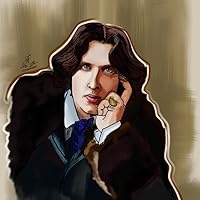
Oscar Wilde

5,496 books38.8k followers
Oscar Fingal O'Fflahertie Wills Wilde was an Irish poet and playwright. After writing in different forms throughout the 1880s, he became one of the most popular playwrights in London in the early 1890s. He is best remembered for his epigrams and plays, his novel The Picture of Dorian Gray, and his criminal conviction for gross indecency for homosexual acts.
Wilde's parents were Anglo-Irish intellectuals in Dublin. In his youth, Wilde learned to speak fluent French and German. At university, he read Greats; he demonstrated himself to be an exceptional classicist, first at Trinity College Dublin, then at Magdalen College, Oxford. He became associated with the emerging philosophy of aestheticism, led by two of his tutors, Walter Pater and John Ruskin. After university, Wilde moved to London into fashionable cultural and social circles.
Wilde tried his hand at various literary activities: he wrote a play, published a book of poems, lectured in the United States and Canada on "The English Renaissance" in art and interior decoration, and then returned to London where he lectured on his American travels and wrote reviews for various periodicals. Known for his biting wit, flamboyant dress and glittering conversational skill, Wilde became one of the best-known personalities of his day. At the turn of the 1890s, he refined his ideas about the supremacy of art in a series of dialogues and essays, and incorporated themes of decadence, duplicity, and beauty into what would be his only novel, The Picture of Dorian Gray (1890). Wilde returned to drama, writing Salome (1891) in French while in Paris, but it was refused a licence for England due to an absolute prohibition on the portrayal of Biblical subjects on the English stage. Undiscouraged, Wilde produced four society comedies in the early 1890s, which made him one of the most successful playwrights of late-Victorian London.
At the height of his fame and success, while An Ideal Husband (1895) and The Importance of Being Earnest (1895) were still being performed in London, Wilde issued a civil writ against John Sholto Douglas, the 9th Marquess of Queensberry for criminal libel. The Marquess was the father of Wilde's lover, Lord Alfred Douglas. The libel hearings unearthed evidence that caused Wilde to drop his charges and led to his own arrest and criminal prosecution for gross indecency with other males. The jury was unable to reach a verdict and so a retrial was ordered. In the second trial Wilde was convicted and sentenced to two years' hard labour, the maximum penalty, and was jailed from 1895 to 1897. During his last year in prison he wrote De Profundis (published posthumously in abridged form in 1905), a long letter that discusses his spiritual journey through his trials and is a dark counterpoint to his earlier philosophy of pleasure. On the day of his release, he caught the overnight steamer to France, never to return to Britain or Ireland. In France and Italy, he wrote his last work, The Ballad of Reading Gaol (1898), a long poem commemorating the harsh rhythms of prison life.

Ratings & Reviews

What do you think?
Rate this book

Friends & Following

Create a free account to discover what your friends think of this book!

Community Reviews

5 stars
238 (33%)
4 stars
259 (36%)
3 stars
159 (22%)
2 stars
43 (5%)
1 star
19 (2%)
Displaying 1 - 30 of 62 reviews
Profile Image for leynes.
1,320 reviews3,689 followers
May 8, 2019
I own The Complete Works of Oscar Wilde and read a bunch of his shorter essays (all of which are probably not published in Intentions but who cares.) I desperately wanted to review them and thought it would be useful to do that collectively (I'm reviewing the bigger essays seperately). So here goes nothing.

Mrs Langtry as Hester Grazebrook – 7 November 1882
During his visit to the States, Oscar made the acquaintance of many well-known actresses, Lilie Langtry being one of them. When he doubled as a guest drama critic for the New York World, he reviewed the actress's début as Hester Grazebrook in Tom Taylor's unexceptional old play An Unequal Match.

Sporting a new red suit that made him look like a 'red squash', in the jaundiced opinion of another theatergoer, Oscar produced a fulsome review that was remarkable for both what it said and what it left unsaid. Lantry, he wrote, was 'the ideal representation of marvelous beauty'. Hers was a beauty 'based on absolute mathematical laws' – he neglected to furnish the formula – a 'mingling of classic grace with absolute reality.' He pointedly said nothing about her acting ability, perhaps adhering to the adage that the less said the better. ;)

Other critics were not so merciful. The New York Dramatic Mirror found Langtry weak-voiced and stiff-limbed, and predicted that 'she is not and perhaps never will be an actress of genuine worth.' Ouch. I love that Oscar decided against hurting the feelings of that poor woman. It's crazy to think that, later in life, he as well would experience what it was like to be slandered in the press.

He ends his review in his typical Oscar fashion: 'But then it is only the impossible things that are worth doing nowadays!'

Woman's Dress – 14 October 1884
During his time as a contributor to The Pall Mall Gazette, Oscar received many responses from his readers – good and bad. In Woman's Dress [aka Oscar – The Fasion Expert] he takes upon 'that most charming of all pleasures, the pleasure of answering one's critics'. ;) [I'm still hollering.]

Oscar was an advocate for comfortable clothes. He was outspoken against the usage of corsets and high heels, which is pretty fucking cool considering the prevalent attitudes in Victorian London. He argued that with comfortable clothes 'there is more health, and consequently more beauty.' Aww. He's such a good boy!

I loved how easily he dismissed the critical letters he received concerning that people (of people who believed that a woman's dress code ought to be more strict).
Now, as regards to the first of these two statements, I will say, to begin with, that the warmth of apparel does not depend really on the number of garments worn, but on the material of which they are made.
Preach it, mister, he knew his shit. Overall this essay really delighted me because it showed that Oscar was an advocate of woman's rights in some part and refused to conform to the standard set by society.

Mr Whistler's Ten O'Clock – 21 February 1885
This is a review of a lecture on art by Mr Whistler that Oscar attended and quite enjoyed. He mused about Whistler's charming ease and grace of manner. It was interesting to see how Oscar's opinion on Art changed throughout his life.

In this review he states that 'an artist is not an isolated fact; he is the resultant of a certain milieu and a certain entourage. Later in life, after having published some plays and fiction pieces of his own, this view changed entirely. He came to the conclusion that artists were completely detached from society and not a representation of their age and cutlure.

Dinners and Dishes – 7 March 1885
This review of a cookbook was such a gold mine. It's only two pages long, so treat yourself and read it. In it Oscar muses about the imporant question of macaroni. [I SHIT YOU NOT] He also talks about the fact that Risotto is a delightful dish which is too rarely seen in England. And that he was happy that the cook managed to come up with a recipe that made Brussel sprouts eatable, and I quote, 'the last is, of course, a masterpiece.' Oh myyyy, my inner Oscar-fangirl is so happy right now. These are facts I didn't know I needed in my life.

Hamlet at the Lyceum – 9 May 1885
Oscar went to see Hamlet at the Lyceum in London and then reviewed the performance for the Dramatic Review. He states that he has seen many audiences more interesting than the actors, and that he has often heard better dialogue in the foyer than on the stage. At the Lyceum however, this was rarely the case.

The review is written in his usual humouristic manner. I literally spit out my tea when I read some of his hilarious statements.
I would like, in fact, to use the word ovation, but a pedantic professer has recently informed us that this expression is not to be employed except when a sheep is sacrificed.
It's always of great interest to me to see in which way Oscar examined Art. He made the distincion between living and existing, and here he talked about the difference between reciting a passage and acting one.

Additionally, it was fun to see what he thought of Hamlet as a play. We learn that he was never able to distinguish Guildenstern from Rosencrantz and that he considers Ophelia to be the most difficult part. Reading his review actually made me wanna reread Hamlet. s

Olivia at the Lyceum – 30 May 1885
This review wasn't all that interesting to me because I am not familiar with the play discussed. Nonetheless, I liked that Oscar talked about studying the same subject under different conditions of art (e.g. a poem vs a play vs a short story).

It also made me ridiculously happy to see how unapologeticaly gay some of these passages were. He mused about Thornhill being 'an admirable picture of a fascinating young rake' and that he was pleased to learn, above all, that Mr Burchell had a 'charming and attractive nephew.' Alrighty. ;)

A Handbook to Marriage – 18 November 1885
Oscar begins his review with the following words: 'In spite of its somewhat alarming title this book may be highly recommended to everyone.' I was a little scared about what Oscar would spit out on that touchy subject matter but was surprised at how well he handled it.
In our day it is best for man to be married, and men must give up the tyranny in married life which was once so dear to them, and which, we are afraid [!], lingers still, here and there.
I was pretty relieved to see that Oscar tried to promote the equality of men and women. Oh, I can't deny you this last fact, he uses the words 'Scotch lassie' once and I never cringed so hard in my life.

Balzac in English – 13 September 1886
Oscar being a huge fan of Balzac contemplates in this review why he is so rarely read in England. This whole thing is basically him roasting the terrible English translators. Being fluent in French as well as in English, he was appaled to see with what horrible translations these people came up with.
and to translate 'son coeur avait un calus à l'endroit du loyer' by 'his heart was a callus in the direction of the lease' is an insult to two languages.
It was also delightful to read how much he appreciated a well-written book. He proved himself to be a true bibliophile stating that he could understand anyone who would rather stay at home and read than meet their friends outside.
In spite of this, there are many people who havew declared the Comédie humaine to be indigestible. Perhaps it is: but then what about truffles?
Exactly, what about them? ;)

A Ride Through Morocco – 8 October 1886
This is yet another book review, so Oscar himself has never been to Morocco. Nonetheless, being the ignorant white male that he was, he judged the country pretty harshly talking about the fact that 'freedom of thought has been killed by the Koran' and that 'there is no doubt that in Morocco England has interests to defend and a mission to pursue.' UGH! I could cry. All of this colonialist bullshit makes me wanna puke. That's not how I raised my son.

The American Invasion – 23 March 1887
In this essay Oscar examines, yet again, the differences between the US and the UK. He says that one can dine in New York, but one does not dwell there. He thinks that American barbarism is far more interesting than American civilisation. Americans would sound like a series of exploding crackers. American girls have a wonderful charm, he states, whereas their mothers are dull and dreary. Basically, Oscar is judging everyone left and right as if it were nobody's business. All those generalizations about people he didn't even knew. Ugh! It's enough to piss me off. Nonetheless, I had to smirk upon reading this:
The American mother is a tedious person. The American father is better, for he is never seen in London.
I admit it, he got me there. It's interesting to see how his view on America changed five years after lecturing there. I'll definitely research what prompted this change.

Two Biographies of Keats – 27 September 1887
I don't care all that much about Keats but it was interesting to see Oscar's approach to art. He thinks that seperating the man from the artist is a mistake. He sees them as one. Also, he knew of Colerdige's Ode to a Nightingale and that makes me very happy.

Aristotle at Afternoon Tea – 16 December 1887
This is Oscar's review of a social guide on how débutantes and dandies should behave when going out to dine. It was fun to see with which points Oscar agreed and with which he didn't. He agreed that nothing can be more irritating than a person always repeting their phrases. It was fun to know that he would later write one of his female characters exactly this way to make her appear stupid and tedious. It's interesting to see how much thought he put into the shaping of his characters concerning their language.

He also thought that it's a faux pas to constantly apologize for one's own shortcomings/stupidity. And, as for sympathy, 'what could be more detestable than the man, or woman, who insists on agreeing with everybody.' To succeed among one's social superiors one must have no hesitation in contradicting them. I know Oscar was a little shit-head but you don't even know what I would give to have witnessed him live at one of the many London dinner parties he attended.
The maxim, 'If you find the company dull, blame yourself,' seems to us somewhat optimistic, and we have no sympathy at all with the professional story-teller who is really a great bore at a dinner-table.
Oh, Oscar, let's be pessimistic together!

Mr Morris on Tapestry – 2 November 1888
I shit you not, Oscar went to a lecture by Mr William Morris on the fucking topic of tapestry. Oh boy, that man definitely had too much time on his hands. Anyways it was interesting to see that Oscar thought that limitations (e.g. space, time, money) would make artists more creative and productive since they would be forced to concentrate. Kind of have to agree on that. I never get shit done unless someone pressures me. ;)

London Models – January 1889
In this essay Oscar is basically shitting on models as a whole. He isn't a fan of these modern models at all because they would do anything for me (even landscape, if necessary. :D You probably won't get this joke but you have to read the essay then. MUAHAHA). None of them can talk Greek, but all of them want to look Greek. So he's basically whining about the fact that culture is slowly but surely becoming superficial. And, so he infers, when art becomes artificial it becomes monotonous.
It is really of very little use to dress up a London girl in Greek draperies and to paint her as a goddess. The robe may be the robe of Athens, but the face is usually the face of Brompton.
I'm lowkey living for his pettiness though. Anyways, none of this really matters (to me, at least) because he also talked about fucking gymnastics and acrobatics (my passion) and how beautiful it is.

He also states that we live in a world that 'reads too much to be wise, and thinks to much to be beautiful'. I'm shook!
Profile Image for Laura ☾.
1,024 reviews320 followers
April 12, 2020
“For a dreamer is one who can only find his way by moonlight, and his punishment is that he sees the dawn before the rest of the world”

A collection of writings and observations, Intentions ponders topics such as what art is and whether criticism can be an art form to how wardrobe details affect a play and the audience’s perception of the play.

A little pretentious at times, but still rather entertaining, with Wilde’s usual sass and wit and incredible quote-ability, this was a thoroughly entertaining read.
Profile Image for T. Renee.
Author 7 books32 followers
November 21, 2018
The Decay of Lying is absolutely the most brilliant thing I've ever read. It's witty and relevant and insightful. When refering someone to a classic, it's number one on my list of absolute must reads.
Profile Image for christine ♡.
234 reviews45 followers
October 2, 2019
Gosh, I'm blown away. I just don't know what to say. This book.. this book is something else. It's on a whole new level. This book is so witty, so elegant in a way, so bold, so phenomenal, so unique. Oscar Wilde is the best, truly!
Profile Image for Mina_rrat.
512 reviews22 followers
May 1, 2014
If one cannot enjoy reading a book over and over again, there is no use reading it at all.

Intentions by Oscar Wilde, is a book which lets me ponder my current stance towards Art, Criticism and truth.

The first part of the book, where Vivian and Cyril talk about Art and Life, put me more on the side of Cyril because for me Art does not make Life, for me, Life is Life. Nothing else.
However, when Ernest and Gilbert start their conversation on Everything and Nothing, I could understand Gilbert's approach to the topic. His sayings got me thinking;

Music always seems to me to produce that effect. It creates for one a past of which one has been ignorant, and fills one with a sense of sorows that have been hidden from one's tears.>
It is indeed a noteable gain of music to stimulate one's emotions, how could you do it otherwise? Aside from Poetry and Art, which are harshly referred to in Intentions.

Further, I agree with his attitude of:

To know the vintage and quality of a wine one need not drink the whole cask. It must be perfectly easy in half an hour to say whether a book is worth anything or worth nothing. Ten minutes are really sufficient, if one has the instinct for form. Who wants to wade through a dull volume? One tastes it, and that is quite enough – more than enough, I should imagine.

With this conlusion, he gave me another perspective on 'not liking a book'. Now, I can admit to disliking a book after a few pages, without having regrets of saying so, like I had before. I do not have to wonder what others will think of me, or that I am weird – it simply IS.

Referring to opinions, and what other people will think of me, I am a very empathic person, which does not work in my favor some times. Oscar Wilde's status:
To the thinker, the real harm that emotional sympathy does is that it limits knowledge, and so prevents us from solving any single social problems.
has me thinking whether I am wrong to act like I do, does being empathic causes me to loose knowledge?

I liked the reference of Beauty having equal meanings as man has moods. The image and the reference where not natural, but achieved the message. Why can people not see that beauty is not everything? Why do they have to ponder or wish to be pretty, when beauty is just a symbol? An expressionless side effect of life?

Beauty has as many meanings as man has moods. Beauty is the symbol of symbols. Beauty reveals everything, because it expresses nothing. When it shows us itself, it shows us the whole fiery-coloured world.


I fully agree with the topic of man, giving man a mask, truly does wonders to his capability to telling the truth. I have experienced enough to be a judge of that, though experience never stops, but are you not of the same view as him? (Pardon dear men)

Man is least himself when he talks in his own person. Give him a mask, and he will tell you the truth.

To sum it up, Intentions was a memorable book for me, making me rethink all of my decisions and turning my world around. Albeit it would have been better if he left out the second and last part, where he talked about Shakespeare's fondness to include costumes into his plays.
Profile Image for Alok.
170 reviews13 followers
March 13, 2012
Not an interesting page turner and given the length of arguments which bore you to the core you might consider putting it down for something else.But the ideas in this book are quite deep and will make you realize things you should know about art and criticism.Is it worth the time?yes, it is constructive if you enjoy reading.
Profile Image for Sonia Anguelova.
26 reviews5 followers
March 16, 2023
"Intenciones" es una colección de cuatro ensayos de critica y de estetica: "La decadencia de la mentira", "Pluma, lápiz y veneno", "El crítico como artista" y "La verdad de las máscaras".
En ellos Wilde expone con delicada habilidad su filosofia del arte, de la literatura y de la vida.
"Ningún gran artista ve las cosas como son en realidad. Si lo hiciera, dejaría de ser artista."
Profile Image for david.
495 reviews23 followers
May 15, 2017
This books contains several stories. "The Decay of Lying" is brilliant. The other stories, I felt, were written for a different kind of audience at a different time. Very strong writing but I did not connect with it.
Profile Image for Nil.
26 reviews1 follower
December 20, 2023
"Every century that produces poetry is, so far, an artificial century, and the work that seems to us to be the most natural and simple product of its time is always the result of the most self-conscious effort"

"Society often forgives the criminal ; it never forgives the dreamer."

"If one loves Art at all, one must love it beyond all other things in the world, and against such love, the reason, if one listened to it, would cry out. There is nothing sane about the worship of beauty"

"Art finds her own perfection within, and not outside of, herself. She is not to be judged by any external standard of resemblance. She is a veil, rather than a mirror. She has flowers that no forests know of, birds that no woodland possesses. She makes and unmakes many worlds, and can draw the moon from heaven with a scarlet thread."

"Schopenhauer has analysed the pessimism that characterises modern thought, but Hamlet invented it. The world has become sad because a puppet was once melancholy. The Nihilist, that strange martyr who has no faith, who goes to the stake without enthusiasm, and dies for what he does not believe in, is a purely literary product."

"The basis of life is simply the desire for expression, and Art is always presenting various forms through which this expression can be attained. Life seizes on them and uses them, even if they be to her own hurt"

"Think of what we owe to the imitation of Christ, of what we owe to the imitation of Caesar."

"Nature is no great mother who has borne us. She is our creation. It is in our brain that she quickens to life. Things are because we see them, and what we see, and how we see it, depends on the Arts that have influenced us."
Profile Image for Nell.
18 reviews2 followers
July 31, 2021
3,5? Pas fan de tt ce que Wilde dit mais il rend tjrs les choses belles à lire!
Profile Image for Ismael Lazreg M.
89 reviews1 follower
July 4, 2025
La única persona más irónica que yo es Oscar Wilde
La cantidad de veces que pienso en él al día........ mi pobre.....
Profile Image for Sara.
98 reviews
April 20, 2021
La edición y traducción dejan mucho que desear. La introducción llena de lugares comunes que rozan lo ofensivo. Wilde, you deserve so much better.
Profile Image for Rosie.
481 reviews39 followers
September 11, 2024
Oscar Wilde writes brilliantly and flamboyantly as usual. The prose, the descriptions, and the witticisms made me sigh with appreciation more than a few times. I liked the first half of this collection better than the second, though; and, like many reviewers on this page, my favorite piece was The Decay of Lying. My least favorite was The Truth of Masks, but that may have been because I was trying to complete this in a short period of time when I should have been reading it bit by bit, with breaks in between, to better enjoy it; by the time I got to the last essay, I was trying to be finished more than anything else and was a tad impatient. My enjoyment gradually declined as I read on. I give this four out of five instead of the full five stars chiefly for that lack of total enjoyment I began to feel, but it doesn’t reflect the quality of the writing or the intellect of the writer, which both deserve five sparkling stars. Rating on Goodreads is definitely an interesting experience, because everyone rates based on different values…Just know that I may give the same four star rating to two different books, yet one of them is of vastly higher quality and is rated on a vastly different scale than the other; and in this case, Intentions is so. It really is on a totally different scale than many of the other books I’ve rated four stars. One other observation: I recognized a lot of witty liners in this series of essays from the biographies of Wilde I read, where they’re quoted (without their sources identified), so that was cool; knowing where they come from. I do recommend this, anyway! I want to see if I can get my hands on a copy someday, as it’s definitely a book that deserves a second and a third read.

Quotations:

Profile Image for Derek Davis.
Author 4 books30 followers
January 28, 2011
Wilde at his best is a delight; at his worst, he tends to kick himself in the ass. Both sides are present in this collection of four long essays mostly about criticism. Two of them are set up as dialogues, and they're a mess. One side of the dialogue is the arch critic, turning all truisms on their head. The other is the straw man who is knocked silly every time he utters even a mild conventionalism. They make Wilde seem a naughty prig and nothing more--except that occasionally he relaxes for a bit and really starts talking to the reader.

The final essay, though, "The Truth of Masks," is a gem. Here he delves into the use and necessity of proper costuming in plays--especially Shakespeare. He takes a subject that could bore the finish off a bureau and turns it into a true piece of enlightenment. He goes far beyond the giggle and bon mot into a straightforward, erudite but never pedantic study of a subject that most of us would never consciously think about. Coming down squarely on the side of "archaeological"--historically accurate--costuming that yet embodies the heart of a play, he presents a very interesting counter-balance to the modern trend for minimal staging. Being Wilde, he almost blows the whole thing with a ridiculous final paragraph, but it's easy to ignore.
Profile Image for The Bibliophile Doctor.
830 reviews284 followers
March 10, 2016
It takes hell lot of time to read this one...and even more time to understand it...not that its boring but I'm overwhelmed by the vast experience and literature knowledge of Oscar Wilde. And mentioning characters like Artemis, Narcissus, Aphrodite, ergo from Greek mythology and all those great writers and their work from 20th as well as 19th century... It is pretty complicated with all its paradoxes reversals and criticism.. Yes criticism is also an art coz for that you first have to get involved in arts...I love him for all his witty humorous and flamboyant writing... This one is too much to read undoubtedly !!
Profile Image for Doti.
123 reviews
June 30, 2011
Already a fan of his work as portrayed on film and stage, having enjoyed his humor and ability to mock his characters and their practices.
Mr. Wilde's knowledge and ability with language are wonders to encounter. Had to pay attention when reading this, but feel I am better for having read it.
I will, undoubtedly, read more of his work.
Profile Image for Dan'l Danehy-Oakes.
735 reviews16 followers
June 15, 2022
I have in front of me a collection of four essays, two in dialogue form, about various aspects of Wilde's aesthetic theories.

"The Decay of Lying: An Observation" is a dialogue betwee Cyril and Vivian. Vivian opens with the gambit that "the more we study Art, the less we care for Nature. Wha Art really reveals to us is Nature's lack of design, her curioius crudites, her extraordinary monotony, her absolution unfinished condition." He maneuvers the conversation to his new essay, "The Decay of Lying: A Protest".

Cyril. Lying! I should have thought that our politicans kept up that habit.
Vivian. I assure you that they do not. They never rise beyond the level of
misrepresentation, and actually condescend to prove, to discuss, to argue.

Passages like this might actually induce in me a sort of nostalgia for pre-Nixon, or at least pre-Reagan, forms of political discourse.

Anyway, Vivian explains that he is speaking of the decay of lying "as an art, a science, and a social pleasure."

From here he goes on to demonstrate, at least to his own satisfaction, that Art does not imitate, but improves upon, Nature. "They will call upon Shakespeare -- they always do -- and will quote that hackneyed passage forgetting that this unfortunate aphorism about Art holding the mirror up to Nature, is deliberately said by Hamlet in order to convince the bystanders of his absolute insanity in all art-matters."

The second essay, "Pen, Pencil and Poison -- A Study in Green," riffs on the life of one Thomas Griffiths Wainewright, "not merely a poet and a painter, an art-critic, an antiquarian, and a writer of prose, an amateur of beautiful things, and a dilettante of things delightful, but also a forger of no mean or ordinary capabilities, and as a sublte ans secret poisoner almost without rival in this or any age." The form is a brief biography and commentary on Wainewright, but also an ironic -- at least I _hope_ it's ironic! -- paean to him, with, of course, numberous digressions. He quotes liberally from Wainewright's criticism, which is quite well-written in itself.

The third essay is a dialogue in two parts, "The Critic as Artist: With Some Remarks Upon the Importance of Doing Nothing." The characters here are Ernest and Gilbert, who are indistinguishable from Cyril and Vivian respectively, in that they are a mouthpiece and a Watson-type, constantly astonished by the other's arguments, Gilbert advances a lengthy argument that critics are more creative than artists, and, that all the way back to the ancient Greeks, only ages rich in criticism are rich in art.

The final essay, "The Truth of Masks -- A Note on Illusion," dwells largely on Shakespeare to advance the opinion that costumes (as well as sets, and so on) in drama should be as accurate as possible to the period in which the action takes place.Much of the essay si taken up withg a detailed argument that "anybody who cares to study Shakespeare's method will see that there is absolutely no dramatist of the French, English, or Athenian stage who relies so much for his illusionist effects on the dress of his actors as Shakespeare does himself". There is, he observes, a great deal of remark on what the various characters of various plays are wearing; and it would be rather silly to suppose that Shakespeare put in these details to cue the audience as to what they should be imagining.

And, at the end of all this, he concludes the book thus:

Not that I agree with everything that I have said in this essay.
There is much with which I entirely disagree. The essay simply
represents an artistic standpoint, and in aesthetic criticism,
attitude is everything. For in art there is no such thing as a
universal truth. A Truth in art is that whose contradictory is
also true. And just as it is only in art-criticism, and through
it, that we can aprehend the Platonic theory of ideas, so it is
only in art-criticism, and through it, that we can realise
Hegel's system of contraries. The truths of metaphysics are
the truths of masks.

Whew!

The common thread of these essays is, of course, Wilde's own wit and elaborate paradoxes: as a master of the paradox, he is the clear predecessor of Chesterton. One thing about which I believe Wilde is quite sincere (and he surely would have detested being caught in a sincerity) is that criticism is vital to the health of both art and society, a position with which, if "criticism" be taken broadly enough -- and Wilde himself observes that the great gifrt of the Greeks to their posterity was critical thinking -- I must heartily agree.
Profile Image for Michael Percy.
Author 5 books12 followers
May 7, 2018
This collection of dialogues and essays demonstrates Oscar Wilde's aesthetic, but also his vast knowledge of the classics, Shakespeare, and other great things in nineteenth-century Anglo art, literature, architecture, and theatre. Three pages into The Decay of Lying and one has been exposed to Aristotle, William Morris, and Ralph Waldo Emerson. He uses a from of the "iceberg" principle (later perfected by Hemingway) that demonstrates his knowledge without appearing to be name dropping. It is one thing to mention Aristotle, Morris, and Emerson as part of Vivian's critique of nature; quite another to append one's own aesthetic to the name dropping that leaves no doubt as to the author's learning. For instance, William Morris once said:
Have nothing in your houses that you do not know to be useful or believe to be beautiful.
Wilde, in discussing nature versus art, mentions Aristotle (p. 3):
Nature has good intentions, of course, but as Aristotle once said, she cannot carry them out.
Vivian is discussing his preference for the indoors, and says (p. 4):
Why, even Morris' poorest workman could make you a more comfortable seat then the whole of Nature can... If Nature had been comfortable, mankind would never have invented architecture, and I prefer houses to open air.
This first part of the introduction is then neatly wrapped up with reference to Vivian (p. 5) writing the word "Whim" over the door of his library, echoing Emerson doing similar in his famous essay Self-Reliance. What does this all mean? It sets out several themes that thread through these five dialogues and essays. First is the interaction of art and nature in the human spirit. Second is contradiction. Vivian doesn't want to go outside, until he does. Vivian thinks writing is a waste of effort. But he is writing an article. In the final paragraph of the collection, Wilde writes:
Not that I agree with everything I have said in this essay. There is much with which I entirely disagree. The essay simply represents an artistic standpoint, and in aesthetic criticism, attitude is everything. For in art there is no such thing as a universal truth. A Truth in art is that whose contradictory is also true.
Third is the rhythm of life and the pursuit of human excellence. Wilde's characters in the dialogues go from contradictory point to contradictory point. In the essays we learn how ill-discipline and ignoring our intuition can lead to trouble (for instance, the poisoner leaves his ground-floor curtain open and is instantly recognised from the street); how Shakespeare used architecture and costume to make a point (as opposed to the theatrical archaeologists who point out Shakespeare's character's anachronistic raiment); how one moment we are focused, the next bored, even depressed, but we can be humorous, witty, intelligent, and dull. The dialogues read like a moment of intense thought that begins out of boredom and ends in boredom with thought. An indoor conversation is the scene of energy, but after talking "long enough", the outdoors beckons:
Egotism itself, which is so necessary to a proper sense of human dignity, is entirely the result of indoor life.
It is unsurprising that Oscar Wilde is so well read and witty. After all, he was a graduate of Oxford at a time when only the elite or those with elite patronage could dream of studying there. Yet there is an intense use of Plato's form of dialogue, an interesting blend of self-reliance and pompousness, intensity appearing indoors (even within Shakespeare's Globe Theatre), and the outdoors being a place of leisure (for the well-to-do, at least!). Yet the point of contradiction is not to be dishonest, but, through art, to bring to Nature the human experience:
The final revelation is that Lying, the telling of beautiful untrue things, is the proper aim of Art.
I recall in high school, when studying English literature, the teacher would ask: "What does the author mean by this or that?" to which I would say, "How should I know? And how do you know if you didn't ask them?" Logical to an egotistical teenager, to be sure, but hardly intelligent. And now? It would take several re-readings of these dialogues and essays and some intense study into Wilde's life at the point in time of writing these works to discover more. Yet, armed with the knowledge of reading given to me by Harold Bloom, Mortimer Adler, Italo Calvino, and Theodore Roosevelt (to name but a few), I think I can safely tell my teenage self that, contradictory to what I thought then, one can interpret and learn from the writings of others, even if the lessons learnt were never intended. And if Art cannot deliver such lessons, what other medium can?

Profile Image for Prashant Drolia.
81 reviews
May 11, 2020
Oscar W is one of my favorite writers. His capacity to write beautiful plays, novellas, and essays is unrivaled in modern literature. His prose is as sweet as poetry, and his use of language makes even the trivial, seem interesting and important.
Intentions are a very good example of the skills of the author as an essayist. His knowledge and criticisms of art aesthetics are understandable and interesting even to those of us like me, who do not have a big reservoir of knowledge of the arts. The author deals with various forms of art and the role of a critic in the world of fashion and the critic as an artist himself. In the first essay, he regales us with his highly witty and original arguments of lying as an art and how it has degraded since the onset of rationalism and realism. In the last essay, he explains to us the importance of masks such as costumes and make-up in the staging of a play, or any other sort of artistic representation.
The essays are highly enjoyable, and the author showcases his brilliant argumentative skills, his language and presentation skills, his knowledge of all contemporary themes, and books which he uses as references and examples in the essays.
I have cut one star, not because of any fault in the book, but due to my own shortcomings. The references in the book, of which there are several, are not properly known to me, as I had never read these works. Still, with basic knowledge of plays and essays in general, I got a pretty good understanding of what the author was trying to convey, though I would have enjoyed it more, had I known all the references the author has made in his essays.
Profile Image for Daniela.
289 reviews
February 19, 2021
As said by Wilde himself right at the beginning of this book “thinking is the most unhealthy thing in the world, and people die of it just as they die of any other disease”. In his paradoxical, puzzling way, he then starts to reflect on matters such as Beauty, Nature, and Art – quite the unexpected follow-up, as he himself has just apparently criticized the act/state of thinking. If this little detail does not sum up a bit of what he was as a writer and as a person, nothing else will. It is in his own name – bewildering – and his texts, beautiful works of art themselves, are eternal proof of that. Intentions consists of a collection of essays on topics around art, literature, criticism, and society. Once again, each sentence is a dignification of the Art which he endorsed above else – “Art has no other aim but her own perfection”. They show this writer at the best of his capabilities: educated, easy-going, and especially witty. But, above all, they show how perceptive he was, as a lot of his thoughts can still be applied to our present century.
Profile Image for W.S. Luk.
452 reviews5 followers
April 23, 2025
"That is what the highest criticism really is, the record of one’s own soul."

Oscar Wilde's arguments in this book are practically arabesques of ironies, his provocative defences of lying and art criticism couched in dramatic dialogues that keep you always at a remove from Wilde's true opinions on the matter (if the term "truth" even has a place in this conversation, that is). But underneath his quotable epigrams and louche disregard for artistic convention, this is also a radical exploration of art's possibilities, constructed on ferocious attentiveness to the mechanics of beauty, from the ways in which Walter Pater's essays transform the paintings that are their subjects to how physical costuming complements the performance techniques that might be employed in staging Shakespeare—and yet, in Wilde's endorsement of an art untethered to any consideration of external truth or morality, you can also see something of the point that Walter Benjamin makes when he condemns "l'art pour l'art" as a precursor to the aesthetics of fascism.
Profile Image for Octavia Cade.
Author 94 books135 followers
April 3, 2022
My goodness, but he does talk a lot of rubbish. The four essays in here, all dealing with Art in some fashion (and I use the capital letter deliberately, seeing as dear old Oscar gives the impression of utter disdain for anything else) are mildly clever but mostly interminable.

Reading them, I was struck mostly by the sense of incipient dread that any hostess must have felt when Oscar turned up for a dinner party. If she were lucky, she'd get the Wilde who wrote The Importance of Being Ernest, and he would make terribly witty, terribly well-constructed observations and be a delight to the whole table. If she were very unlucky, she'd get the Oscar of Intentions, a gaseous windbag pontificating at endless length about the proper understanding of Art until people drowned themselves in the soup, just to get it to stop.
Profile Image for Emma Debruyne.
142 reviews
April 16, 2018
I must admit, maybe this was just to difgicult for me to understand. I should reread this when I'm older.
Profile Image for Deity World.
1,415 reviews24 followers
November 27, 2022
I enjoyed it lots of William Shakespeare critiques it’s like they knew each other … they probably did.
Displaying 1 - 30 of 62 reviews

Can't find what you're looking for?

Get help and learn more about the design.