Larry Niven’s bestselling Man-Kzin series continues! The kzin, formerly invincible conquerors of all they encountered, had a hard time dealing with their ignominious defeat by the leaf-eating humans. Some secretly hatched schemes for a rematch, others concentrated on gathering power within the kzin hierarchy, and some shamefully cooperated with the contemptible humans, though often for hidden motives. In war and in uneasy peace, kzin and humans continue their adventures with a masterful addition to the Man-Kzin Wars shared universe created by multiple New York Times best-seller, incomparable tale-spinner, and Nebula- and five-time Hugo-Award-winner, Larry Niven.
At the publisher's request, this title is sold without DRM (Digital Rights Management).
About the Man-Kzin War Series: “[The Man-Kzin Wars series is] excellent . . .gripping . . .and expands well on Larry Niven’s universe. . . .” –Locus
About series creator Larry Niven: “Niven’s masterly use of SF strategies hits every note. . .“–Los Angeles Times
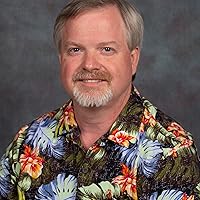
Larry Niven is the author of multiple New York Times bestsellers, both alone (The Integral Trees, The Ringworld Throne) and in collaboration with Jerry Pournelle (The Mote in God’s Eye, Lucifer’s Hammer, Footfall). His Known Space series, from which the highly successful Man-Kzin Wars books derive, is a landmark of modern science fiction, rating favorable comparison to Heinlein’s Future History series and Asimov’s Foundation series. Winner of a Nebula award and five Hugo awards, SF legend Niven remains among the foremost writers of the new century.
Laurence van Cott Niven's best known work is Ringworld(Ringworld, #1) (1970), which received the Hugo, Locus, Ditmar, and Nebula awards. His work is primarily hard science fiction, using big science concepts and theoretical physics. The creation of thoroughly worked-out alien species, which are very different from humans both physically and mentally, is recognized as one of Niven's main strengths.
Niven also often includes elements of detective fiction and adventure stories. His fantasy includes The Magic Goes Away series, which utilizes an exhaustible resource, called Mana, to make the magic a non-renewable resource.
Niven created an alien species, the Kzin, which were featured in a series of twelve collection books, the Man-Kzin Wars. He co-authored a number of novels with Jerry Pournelle. In fact, much of his writing since the 1970s has been in collaboration, particularly with Pournelle, Steven Barnes, Brenda Cooper, or Edward M. Lerner.
He briefly attended the California Institute of Technology and graduated with a Bachelor of Arts in mathematics (with a minor in psychology) from Washburn University, Topeka, Kansas, in 1962. He did a year of graduate work in mathematics at the University of California at Los Angeles. He has since lived in Los Angeles suburbs, including Chatsworth and Tarzana, as a full-time writer. He married Marilyn Joyce "Fuzzy Pink" Wisowaty, herself a well-known science fiction and Regency literature fan, on September 6, 1969.
Niven won the Hugo Award for Best Short Story for Neutron Star in 1967. In 1972, for Inconstant Moon, and in 1975 for The Hole Man. In 1976, he won the Hugo Award for Best Novelette for The Borderland of Sol.
Niven has written scripts for various science fiction television shows, including the original Land of the Lost series and Star Trek: The Animated Series, for which he adapted his early Kzin story The Soft Weapon. He adapted his story Inconstant Moon for an episode of the television series The Outer Limits in 1996.
He has also written for the DC Comics character Green Lantern including in his stories hard science fiction concepts such as universal entropy and the redshift effect, which are unusual in comic books.
Excellent SiFi shared world series. While the short stories and novellas in each book can be read on their own they subtly weave a wonderful shared world that forms some very intricate long running plots and themes. Very recommended
I'm a huge, HUGE fan of the Man-Kzin Wars books. I own them all. So you can imagine how much it pains me to one-star this entry.
During the 2008 Presidential election, when Sarah Palin was foisted upon us -- this is relevant, trust me -- it was clear she was playing so far above her head and intelligence level that it was cringe-worthy. Listening to her supporters during that period was a direct look into the less-educated parts of America: they liked her because she was pretty and seemed nice. After listening to a radio show one day, my friend said, "Are all of Palin's supporters this incoherent?"
Soon after that the Tea Party movement blossomed, which presented itself as a grassroots uprising on the part of the American public but, as we've come to find out, was actually orchestrated by the multibillionaire Koch brothers and their cronies, taking advantage of the public's general distaste for business as usual in Washington. But it was all phony. Instead of being grassroots, it is what's known as an astroturf campaign: fake.
The Tea Party has a single agenda: support corporations. They cloak it in patriotism and "family values" and the Constitution, but it's all about big money getting bigger. The Koch brothers are oil men, so they claim Global Warming is a fraud and that anyone who is not conservative is scamming good people. Which brings us to this book...
The very first story in this collection, A Man Called Saul, is a Tea Party screed and nothing more. It is an incoherent mess that jumps around from topic to topic with a single pulsing drumbeat underneath: conservatives are good and liberals are evil. It even throws in a denial of climate change (which will come back later), out of the blue. It was written by Hal Colebatch and Jessica Q. Fox, my least favorite contributors from previous collections. And now I know why. Not only can they not write a story, they have a twisted political agenda that is on the wrong side of history. Sadly, this meandering soup of codswallop and utter bullshit comprises nearly half the book.
The second story, Heritage, is by Michael Joseph Harrington, and it is superb. It is classic Known Space, featuring really smart people trapped in bizarre yet interesting circumstances and making the best of it. The ending is quite nice, stopping at the emotional high point of the tale, but I genuinely would've loved it if this story were the 97-pager instead of its mere 30 pages.
The Marmalade Problem is a solo entry by Hal Colebatch and it suffers from just being dumb. Marmalade is a telepathic kzin kit who is an utter coward who does a complete, out-of-character 180 and redeems himself by throwing himself on a bomb meant to kill muckety-mucks. It was just a ridiculously unbelievable about-face that I actually said aloud, "What. The. Fuck?" Even if I hadn't been subjected to the first nonsensical political essay, this story would've cemented my low opinion of Colebatch's abilities.
Matthew Joseph Harrington, thank god, returns with the story Leftovers, which again feels like classic Known Space, and it involves my favorite science fictional creations, the Protectors. (Here is the wiki on them. No, they don't make sense, but then neither do Vulcans or Jedi. Some things are just fun.) Sadly, the return is ever so brief, and then we're back to
Hal Colebatch, with the short-short The White Column which apparently has fuck-all to do with anything. In the frontispiece it mentions that Colebatch and Fox have a Man-Kzin Wars novel coming out -- sweet baby Cthulhu save us all, I hope that fucking thing bombs -- so it's possible this ties into that, but who the hell knows. It's some distance-viewer guy seeing the future or something. Whatevs. Then Colebatch follows it with Deadly Knowledge: A Story of the Man-Kzin Wars, which, duh, they all are. This one actually has a focus, I'll give it that, but it's not really interesting. We've been here before, with behind-the-lines stuff about telepathic kzinti and occupied blah blah blah. It's typo-ridden filler. (Also, I think on one page alone he used the phrase "had had" three times.)
The last story is a decent one by Alex Hernandez called Lions on the Beach. Like Hernandez's other tales in the previous collection, it feels like he's done his homework. He's taken the casual mention of kzin who fish on another planet and given us a look into a start-up version of that society. This takes place on the planet he created for the survivors of the spaceship Angel's Pencil, the first humans to encounter the kzinti. (I think. It's been a while since I read M-K XIII.) Anyway, a good story that features the return of the grogs, the descendants of the Slavers who once ruled the entire galaxy billions of years ago and created "food planets" which eventually led to the creation of all the creatures currently extant in Known Space. Unfortunately, it's spoiled by one last dig at climate change.
Sadly, the brief flashes of excellent storytelling can't save this book and get Colebatch's stink off of it.
I've been a big fan of the Man-Kzin Wars series ever since the first volume (still the best, in my opinion), and while there have been some excellent installments and some mediocre ones, never before has a truly awful one been released—until now. My disappointment was particularly acute so soon after the wonderful Man-Kzin Wars XII.
Even this volume would have been passable if not for the atrocious first story, "A Man Named Saul." The political content was apparently provided by a teenage Young Republican; a dash of climate-change denial completed the aura of smug ignorance. Conservatism is the best ever because FREEDOM! And INDIVIDUALITY! Down with EVIL COLLECTIVIZM!
I'll agree with one thing in this story, however: Kzinti would naturally be drawn to American-style conservatism. Anyone from a militaristic, authoritarian society built on the backs of slaves, who treats women like nonsentient incubators, would feel right at home in today's Republican party.
According to the cover, one of the major contributors Man-Kzin Wars XII actually wrote this sophomoric drivel, or at least signed off on it. Last time I was this crestfallen, I had just discovered that one of my brightest colleagues, a biological science Ph.D., was a big fan of Rush Limbaugh.
It's starting to feel as if this mine is about tapped out.
Nearly half the book is "A Man Called Saul" - a Tea Party manifesto hung on the frame of a bible story. A truly nasty man is set up by his even nastier aide, but the nicest of the nice people rescues him and he is redeemed, sigh, hearts, flowers. Ptui. The story wastes some interesting characters, and does have some good ideas about man-kzin cooperation and intersocialization. It trots along OK until we see where it was all leading, and then it becomes icky.
There was a bit of the Tea Party approach in the novel "The Goliath Stone" - by Niven and Matthew Harrington, who appears here.
The two shortest stories of the rest were very weak. That leaves about a third of a book worth of good stories.
I'm going to remember the worlds created by the early Niven, and not revisit the more recent ones.
One of my favorite authors curates another collection of stories from the Man-Kzin wars. If you like him or those stories, this is another great selection.
It is my custom when reviewing an anthology to write a few lines on each story. I'm not going to do that here. First reason: Although I vastly enjoyed MOST of the Kzin stories, I'm really only reviewing this volume as preparation for the NEXT volume, which will be published in February of 2019. If you are a Man/Kzin War fan, that will be a great event for you, and you've already read this volume before my review came out. Second reason: One of the stories just poked it's thumb under my ribs to tickle me so hard, it's gonna color my perception of every one of the other stories. Homage, satire, or pastiche, I do not know, but it's extreme enough that you either want to feature it in a parade, or bury it in a hole in the ground. However, here's what you get, in addition to that story: Tales of Wunderland, after the liberation, during the rebuild. Bad guys get second chances, and cowards become heroes. Buford Early has powers FAR greater than he, force him into action, then taunt him, playfully. Revelation of long-term hidden mysteries in literature. On a hidden planet, perhaps the deepest secret of all lies waiting. And I absolutely refuse to protect the thumb-in-my-ribs from ALL spoilers, but I will limit myself to this: " like Robinson Crusoe, as primitive as can be."
And I absolutely CAN'T believe that none of the other reviewers even commented on the flagrant pun/pastiche/whatever foul in the 'Heritage' story, by Matthew Joseph Harrington
This is unquestionably the weakest entry in this series so far. The first story, "A Man Named Saul" was entertaining for a while, but devolved into preachy and ridiculous; the concept of the hardened villain who is turned from his path by an encounter with a good, peaceful, non-judgemental priest has been done before, and this author is no Victor Hugo. And in that story, the villain had been a decent enough sort until the system chewed him up and spit him out; this one was just slime, until suddenly he developed a conscience out of whole cloth. Utterly jarring and unappealing; to make this work, we (as readers, we're privy to his inner thoughts) would have had to see some sign of hesitation in his prior villainy, some indication that he HAD a nascent conscience that the Abbot was able to awaken. We don't get that.
And none of the later stories are anywhere near good enough to make up for that one.
This volume is markedly thinner than previous ones -- about half to a third of the pages -- which makes me wonder if someone is winding this series down. There's only one story of substantial length -- "A Man Named Saul," about the Wunderkzin, which may be novelette or even novella length. All the rest are short story length, and several of them are more along the lines of "slice of life" than actual short stories.
I hope this isn't the going to end up being the last volume in this series. I would really hate to see it go.
Just doesn't measure up compared to previous collection volumes. The first story is great. The second has so many plot flaws it's ridiculous. The rest are pretty so so; not as good as the first, not as bad as the second.
An adequate entry in the series, but one somewhat dependant upon having read (and remembering) previous books, as some characters carry forward from them.
Maybe its time to let this series go. I've enjoyed them for decades, as fun examples of mil-SF in a universe I quite enjoy. This latest book, however, just seems tired and dated. There were few innovative examples of human ingenuity vs the fierceness of the kzinti. Instead I got treated to another lecture on why liberals are so moronically dumb and how anyone with two brain cells would support the clever, wise and oh-so-self-supportingly-brave conservative faction (you can always tell you are reading a Baen book nowadays by all the strawmen and self-back-patting).
This stuff may have flown in the 1970s, along with the dated gender roles. I am not a pre-teenage boy any longer, however, and this series has not only remained mired in a dated culture, I could swear that with this last effort it has actually regressed.