

What do you think?
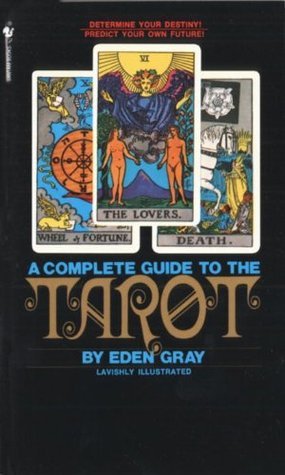
The Complete Guide to the Tarot: Determine Your Destiny! Predict Your Own Future!
For centuries, the strange and beautiful Tarot cards have been an endless source of fascination. Now one of the foremost authorities in the field reveals the intricacies of this ancient art. With detailed reproductions and explanations, Eden Gray offers explicit advice about the three different methods of reading the cards and using the Tarot for divination and meditation. Both beginning students and advanced devotees will find in this book insights into the ancient lore of the Tarot. “The Tarot is a symbolic record of human experience. Through deeply rooted mystic powers, the cards accomplish miracles of psychological insight, wise counsel and accurate divination.”—from A Complete Guide to the Tarot
236 pages, Kindle Edition
First published January 1, 1970
Ratings & Reviews
Friends & Following
Create a free account to discover what your friends think of this book!
Community Reviews
Displaying 1 - 30 of 57 reviews

December 30, 2020
I appreciate that this was first published in 1970, but it now feels dated and far too complicated for a beginner. If I’d picked this up at the start of my journey with tarot, I think it would have scared me off. It doesn’t need to be this complicated! There are far, far better books out there for beginners including those by Paul Fenton Smith or Dusty White.

December 26, 2013
I picked this book up again, after about 30 years, recently having read some how-to writing guides that deal with Jungian archetypes, which reminded me of tarot symbolism. For instance, the fact that character archetypes have reversed mirror image opposites of themselves, etc.
I believe that the tarot has more to do with Jung and less with the BS about ancient Egypt, Kabbalah, and so forth which some carny in a fake turban is going to tell you. That said, the tarot is one of those "unexplained" things that I found long ago that seem to work (the other that comes to mind being reflexology) in spite of the conflicting hogwash reasons given as to why.
The cards we have now aren't ancient, though the SMITH (glad to see in the intervening years since I've used the cards there's been more credit given to the woman who actually drew the damned things) deck is lovely and meaningful. The Brits have a lovely word --tosh-- which describes well a lot of the occult horse hockey that was produced in the last century, courtesy of Aleister Crowley and other charlatans, who in turn looked down their noses at fortune tellers. There's a lot of BS to go around here. Tosh sounds nicer. Or bollocks. That said, it can be uncanny.
Gray is apparently out of vogue now with the occult elite, but her books provided me with some spot-on readings as a young man. But then I found their real value was more as a TAT or Rorschach to help a troubled friend think out a dilemma. It was always important to point out that future is not fate: Gray is good at softening some of that stuff. I am about as far from psychic as one can be, and I had some eye-openers with Gray in hand.
That said, at the time, I preferred Gray's Tarot Revealed, which I have since misplaced so I'm going by memory. It repeats much of the content (the two books could be merged by a good editor, as I recall), but gives more detail on possible meanings.
I believe that the tarot has more to do with Jung and less with the BS about ancient Egypt, Kabbalah, and so forth which some carny in a fake turban is going to tell you. That said, the tarot is one of those "unexplained" things that I found long ago that seem to work (the other that comes to mind being reflexology) in spite of the conflicting hogwash reasons given as to why.
The cards we have now aren't ancient, though the SMITH (glad to see in the intervening years since I've used the cards there's been more credit given to the woman who actually drew the damned things) deck is lovely and meaningful. The Brits have a lovely word --tosh-- which describes well a lot of the occult horse hockey that was produced in the last century, courtesy of Aleister Crowley and other charlatans, who in turn looked down their noses at fortune tellers. There's a lot of BS to go around here. Tosh sounds nicer. Or bollocks. That said, it can be uncanny.
Gray is apparently out of vogue now with the occult elite, but her books provided me with some spot-on readings as a young man. But then I found their real value was more as a TAT or Rorschach to help a troubled friend think out a dilemma. It was always important to point out that future is not fate: Gray is good at softening some of that stuff. I am about as far from psychic as one can be, and I had some eye-openers with Gray in hand.
That said, at the time, I preferred Gray's Tarot Revealed, which I have since misplaced so I'm going by memory. It repeats much of the content (the two books could be merged by a good editor, as I recall), but gives more detail on possible meanings.

May 15, 2019
Pros: Half the book is illustrated (b/w only) of the Rider Waite deck with associated information and divinatory meanings, including meanings for reversed positions. This makes it a handy pocket guide for study. The author goes into more spiritual interpretations/inspirations for the symbols and meanings of the cards which goes beyond your more basic Tarot 101 books. There's also an interesting section on using the Tarot for meditation.
Cons: The whole sections on the history of the Tarot and its relation to Kabbalah, numerology, and astrology are rife with assumptions that are tenuous at best and outright factually incorrect at worst. The author apparently knows very little about Greek, Roman, and Egyptian mythology when trying to "assign" cards to certain deities. It's as if the author has simply created a system of correspondence with the Kabbalah and astrology out of thin air, much akin to the crazy Christian lady on YouTube who thinks Monster energy drinks are the work of Satan. Sure, you can find patterns and connections when you look for them, but patterns are not in themselves always miraculous or even meaningful. While it was interesting to read, I didn't buy half of it that was inspired by the "Dawning Aquarian Age" mentality of the 70's. It was, however, kind of poetic.
Also, some of the author's assigned meanings for some of the cards don't necessarily align with more popular interpretations. However, I can see the author's point and will incorporate it into my studies.
Mehs: It's mass market paperback style. You know, grayish scratchy no-gloss paper with fuzzy print. I actually like that kind of material but some people don't.
Cons: The whole sections on the history of the Tarot and its relation to Kabbalah, numerology, and astrology are rife with assumptions that are tenuous at best and outright factually incorrect at worst. The author apparently knows very little about Greek, Roman, and Egyptian mythology when trying to "assign" cards to certain deities. It's as if the author has simply created a system of correspondence with the Kabbalah and astrology out of thin air, much akin to the crazy Christian lady on YouTube who thinks Monster energy drinks are the work of Satan. Sure, you can find patterns and connections when you look for them, but patterns are not in themselves always miraculous or even meaningful. While it was interesting to read, I didn't buy half of it that was inspired by the "Dawning Aquarian Age" mentality of the 70's. It was, however, kind of poetic.
Also, some of the author's assigned meanings for some of the cards don't necessarily align with more popular interpretations. However, I can see the author's point and will incorporate it into my studies.
Mehs: It's mass market paperback style. You know, grayish scratchy no-gloss paper with fuzzy print. I actually like that kind of material but some people don't.
October 11, 2019
Eden Gray´s book a complete guide to the Tarot is a little handy beginners book on the RWS Tarot. It is very basic, a little bit about the history of Tarot, the meaning of each card (including reversed) and how to use the cards. Eden Gray covers the Celtic Spread, the Horoscope Spread and the Tree of Life. Lastly Eden Gray covers the major thoughts that influence the Tarot; Numerology, Kabbalah, Astrology and the Fool´s Journey. The book also has an index in the back. The book is illustrated with Rider Waite card images in black and white. I would not recommend this book for someone wishing to learn the Tarot. Frankly there are better books out there, this one is a little thin. I think however this book can serve as an interesting perspective from the past, especially considering the influence Eden Gray has had on modern Tarot divination.
You can buy this book on Amazon: https://amzn.to/3D64b6c
You can buy this book on Amazon: https://amzn.to/3D64b6c

February 29, 2012
Another POS tarot meanings book, and the very first 1 I learned from, since it's often packaged with starter sets. it's largely based in Waite's work, and carries his errors. For all that, I got VERY accurate readings as a teen when I still read for my friends w book in hand...

June 3, 2025
Very interesting read. I wouldn't recommend this to beginners, though, as the writing style can be confusing to those who have just approached Tarot/divination.
April 26, 2023
This book is great to learn the symbolisim found in the tarot cards... This will be a great companion and will help me deciphering new tarot decks that I am planning to buy. I seriously want to collect and learn all about reading the tarot and I think, this is a great way to start. 4 stars 🌟.

November 9, 2019
A Complete Guide to the Tarot. was published by Bantam Books and Crown Publishers, New York, 1970. I acquired a hardbound edition shortly after that. This book, along with Eden Grays other two books on Tarot, Tarot Revealed: A Modern Guide to Reading the Tarot Cards. Inspiration House, New York, 1960. reprinted, Signet Books 1969 and Mastering the Tarot: Basic Lessons in an Ancient, Mystic Art. Crown Publishers, New York, 1971, taught me the basics of reading Tarot.
Eden Gray was an actress prior to World War II. Her acting career was temporarily put on hold during World War II when she became a lab technician with the Woman's Army Corps. She also earned a Doctorate of Divinity degree from the First Church of Religious Science in New York. She opened a bookstore in the 1950s called Inspiration House Publishing, selling books on the occult and metaphysical issues. In the 1950s she wrote "Tarot Revealed" which was an introductory work to the tarot.
In a very nostalgic mood, I recently went looking for ebook versions of these three titles; sadly,, this is the only one that I have found as a legitimate edition (there is a pirate edition of one of the others, which has now been reported to the publisher - do not support book piracy!)
I highly recommend these three titles to deepen your understanding of the cards and what they mean.
Eden Gray was an actress prior to World War II. Her acting career was temporarily put on hold during World War II when she became a lab technician with the Woman's Army Corps. She also earned a Doctorate of Divinity degree from the First Church of Religious Science in New York. She opened a bookstore in the 1950s called Inspiration House Publishing, selling books on the occult and metaphysical issues. In the 1950s she wrote "Tarot Revealed" which was an introductory work to the tarot.
In a very nostalgic mood, I recently went looking for ebook versions of these three titles; sadly,, this is the only one that I have found as a legitimate edition (there is a pirate edition of one of the others, which has now been reported to the publisher - do not support book piracy!)
I highly recommend these three titles to deepen your understanding of the cards and what they mean.
March 8, 2011
Rating related to usefulness of this book in learning Tarot.
Scanning my own bookshelves that books I held on to through my last move (3 years ago)& found this. So many didn't make the cut but I did keep a handful of Tarot books. Both this and his "Mastering the Tarot" base their illustrations on the popular Rider Waite deck. I prefer a more intuitive approach to the cards, although as an addict to knowledge I appreciate the historical, traditional approach. You don't need both "Mastering the Tarot" and this - 90% of the books are repeat of what is in the other. They are clear, simple to follow books for anyone who'd like a handy reference. In this book, he adds sections to relate to Kabalah, astrology and numerology as well as including a good index. If you're interested in Tarot, I find it useful to not be programmed by just one approach but to look at a few different authors/decks to find what resonates.
Scanning my own bookshelves that books I held on to through my last move (3 years ago)& found this. So many didn't make the cut but I did keep a handful of Tarot books. Both this and his "Mastering the Tarot" base their illustrations on the popular Rider Waite deck. I prefer a more intuitive approach to the cards, although as an addict to knowledge I appreciate the historical, traditional approach. You don't need both "Mastering the Tarot" and this - 90% of the books are repeat of what is in the other. They are clear, simple to follow books for anyone who'd like a handy reference. In this book, he adds sections to relate to Kabalah, astrology and numerology as well as including a good index. If you're interested in Tarot, I find it useful to not be programmed by just one approach but to look at a few different authors/decks to find what resonates.

April 22, 2010
Good read for beginners. I need to read something some Robert Wang.

August 30, 2026
3.5 stars.
I read the wrong Eden Gray book because I hadn't realized that she had written a few tarot books. Apparently Mastering the Tarot: Basic Lessons in an Ancient Mystic Art is the one that a few tarot authorities like Benebel Wen and Mary K. Greer have shared in their blogs are either their personal favourite from Gray or that they return to! Fun Fact: A Complete Guide to the Tarot is where we get the tarot phrase "fool's journey" from.
A quick scan across the internet shows folks don't find this a tarot book friendly for beginners, despite that being its intended audience. And while I would not recommend it as my first book for understanding tarot, I do think it is worth reading out of historical curiosity.
Considered the "Godmother of the Modern American Tarot Renaissance", Gray ran a bookstore where customers complained tarot books were not easy to understand, so she set about writing these books that ended up being highly influential, this one being published in 1970. According to Greer's blog post on Gray, her books "formed the main impetuts to the hippie adoption of the Tarot as spiritual guide for navigating a world-turned-on-its-head, leading directly to the booming Tarot Renaissance that began in 1969 and continues to this day."
I think that if you read this book as a beginner to tarot, you will feel as though you need to memorize the cards, which I never found helpful. After developing a personal relationship to the cards, developing a familiarity with each archetype, it can then be of interest to read this book. I think A Complete Guide to the Tarot is like an explanation of the Waite-Smith tarot deck, how salamanders represent fire, the four animals in Wheel of Fortune can refer to the fixed zodiac signs, or the archangels present in Temperance or Judgment, to picking out smaller details like the winged helmet in Knight of Cups.
I'm not sure if I remember correctly, but I remember some folks I spoke to were disparaging of a certain tarot writer, and if I recall correctly, it might have been Gray. I came to the book later, scared off, but decided to just read it to see for myself. I was half-expecting to encounter racist or transphobic rhetoric. The only thing I picked out was pairing court cards with hair colour and skin tones, which is a dated approach, but it wasn't framed in a way that made the fair-complexion court cards seem superior. I was expecting my eyebrow to be raised. I recently read an astrology classic of its time, Linda Goodman's Linda Goodman's Sun Signs, which was fascinating and fun to read, but that to me had some old-fashioned ideas about straight men and women that felt very men are from Mars, women are from Venus, Cosmopolitan juju vibes.
Overall, I appreciated this book as a classic primer on the Waite-Smith cards, especially when numerological as well as Kabbalistic symbolic references are pointed out in plain language. I don't think it will help you to understand the cards, but it's good to refer back to once you've formed a personal relationship to them. Tarot is not an easy language to learn, due to the different teachers across historical time periods who have all added their own interpretations to the canon.
And yes, I am going to read the other Gray book lol.
I read the wrong Eden Gray book because I hadn't realized that she had written a few tarot books. Apparently Mastering the Tarot: Basic Lessons in an Ancient Mystic Art is the one that a few tarot authorities like Benebel Wen and Mary K. Greer have shared in their blogs are either their personal favourite from Gray or that they return to! Fun Fact: A Complete Guide to the Tarot is where we get the tarot phrase "fool's journey" from.
A quick scan across the internet shows folks don't find this a tarot book friendly for beginners, despite that being its intended audience. And while I would not recommend it as my first book for understanding tarot, I do think it is worth reading out of historical curiosity.
Considered the "Godmother of the Modern American Tarot Renaissance", Gray ran a bookstore where customers complained tarot books were not easy to understand, so she set about writing these books that ended up being highly influential, this one being published in 1970. According to Greer's blog post on Gray, her books "formed the main impetuts to the hippie adoption of the Tarot as spiritual guide for navigating a world-turned-on-its-head, leading directly to the booming Tarot Renaissance that began in 1969 and continues to this day."
I think that if you read this book as a beginner to tarot, you will feel as though you need to memorize the cards, which I never found helpful. After developing a personal relationship to the cards, developing a familiarity with each archetype, it can then be of interest to read this book. I think A Complete Guide to the Tarot is like an explanation of the Waite-Smith tarot deck, how salamanders represent fire, the four animals in Wheel of Fortune can refer to the fixed zodiac signs, or the archangels present in Temperance or Judgment, to picking out smaller details like the winged helmet in Knight of Cups.
I'm not sure if I remember correctly, but I remember some folks I spoke to were disparaging of a certain tarot writer, and if I recall correctly, it might have been Gray. I came to the book later, scared off, but decided to just read it to see for myself. I was half-expecting to encounter racist or transphobic rhetoric. The only thing I picked out was pairing court cards with hair colour and skin tones, which is a dated approach, but it wasn't framed in a way that made the fair-complexion court cards seem superior. I was expecting my eyebrow to be raised. I recently read an astrology classic of its time, Linda Goodman's Linda Goodman's Sun Signs, which was fascinating and fun to read, but that to me had some old-fashioned ideas about straight men and women that felt very men are from Mars, women are from Venus, Cosmopolitan juju vibes.
Overall, I appreciated this book as a classic primer on the Waite-Smith cards, especially when numerological as well as Kabbalistic symbolic references are pointed out in plain language. I don't think it will help you to understand the cards, but it's good to refer back to once you've formed a personal relationship to them. Tarot is not an easy language to learn, due to the different teachers across historical time periods who have all added their own interpretations to the canon.
And yes, I am going to read the other Gray book lol.

August 30, 2020
There is a particular joy I take in reading occult books of the mid-20th Century (1950s-1970s). Their aesthetic, in both images and text, is satisfyingly kitschy, and they are usually free of the tedious influence of self-help pop psychology thought found in those published during the New Age boom from 1980 onwards. Are they always accurate? Rarely, in fact. Do they remain historically fascinating objects? Absolutely.
Eden Gray's A Complete Guide to the Tarot, published in 1970, is one such classic. Gray's influence on tarot interpretation cannot be understated, having written some of the most enduringly popular books on the tarot during the initial explosion of interest in mysticism in the 1960s. This actress-turned-tarot expert also introduced the term The Fool's Journey to describe the narrative arc of the major arcana, which is now the most common way by which the Trump cards are understood.
That said, as with many books from this era, the history recounted here is no longer considered accurate (of particular note, the idea of tarot divination originating in Egypt and then being spread by the Romani people which Gray frequently refers to has now been discredited). So read these sections solely for the kitsch. Gray's interpretations of the cards are still useful and relevant for any reader, though Rachel Pollack has fleshed them out considerably since then. For it's £5 mass market paperback price tag, you really can get a lot of fun and quite a bit of insight out of this iconic little book.
Eden Gray's A Complete Guide to the Tarot, published in 1970, is one such classic. Gray's influence on tarot interpretation cannot be understated, having written some of the most enduringly popular books on the tarot during the initial explosion of interest in mysticism in the 1960s. This actress-turned-tarot expert also introduced the term The Fool's Journey to describe the narrative arc of the major arcana, which is now the most common way by which the Trump cards are understood.
That said, as with many books from this era, the history recounted here is no longer considered accurate (of particular note, the idea of tarot divination originating in Egypt and then being spread by the Romani people which Gray frequently refers to has now been discredited). So read these sections solely for the kitsch. Gray's interpretations of the cards are still useful and relevant for any reader, though Rachel Pollack has fleshed them out considerably since then. For it's £5 mass market paperback price tag, you really can get a lot of fun and quite a bit of insight out of this iconic little book.
November 6, 2024
I feel complicated about this book because it is interesting and offers some historical perspective (i.e. in referencing books from the 1920s through to the 1970s) on the Tarot, it is filled with neo-occult appropriation, such as in the reference to the "ancient keltic" spread and other kind-of hand-wavey "old" sources, which are treated as absolute, instead of the likely and natural evolution of oral tradition and the conflicts that arise from that. There is also a lot of references to the Roma people using the slur, g*psy.
I also feel like the organization of the book could have been much more accessible, since it covers a brief explanation of each card before talking about the influences, such as numerology. While this might just be a personal preference, I think talking about the then-known history of the Tarot and the influences believed to have affected it and /then/ talking about the cards themselves would have been better.
Also, a nitpick, but the paperback copy I have is described as "lavishly illustrated" on the cover, but the black and white prints of the cards and other diagrams are very dense, as in the black lines are very close together and not well delineated, so it's hard to tell what's going on, especially when the descriptions are pointing to specific elements that you can't see well.
Overall, I'm glad I read it and will probably keep it to look back at after reading other Tarot books, but I definitely don't see this as a "Complete" guide, especially given that I hope to move beyond whitewashed occultism.
I also feel like the organization of the book could have been much more accessible, since it covers a brief explanation of each card before talking about the influences, such as numerology. While this might just be a personal preference, I think talking about the then-known history of the Tarot and the influences believed to have affected it and /then/ talking about the cards themselves would have been better.
Also, a nitpick, but the paperback copy I have is described as "lavishly illustrated" on the cover, but the black and white prints of the cards and other diagrams are very dense, as in the black lines are very close together and not well delineated, so it's hard to tell what's going on, especially when the descriptions are pointing to specific elements that you can't see well.
Overall, I'm glad I read it and will probably keep it to look back at after reading other Tarot books, but I definitely don't see this as a "Complete" guide, especially given that I hope to move beyond whitewashed occultism.
September 12, 2026
Eden Gray helped make tarot accessible to a huge number of readers, and you can feel why in this book. She is clear, practical, and does not act like you need to join a secret order before you are allowed to shuffle a deck. The card meanings are easy to find, the spreads are laid out in a way a beginner can actually use, and the examples of readings make the book more helpful than a lot of older tarot manuals. I also have a soft spot for how directly she encourages people to simply practice. That said, it is very much a book of its time. The meanings are often fixed and fortune-telling oriented, the language around people and relationships is dated, and the larger history and symbolism behind the cards gets simplified pretty heavily. I found myself wishing Gray spent more time helping readers look at the images and develop their own interpretive skills instead of leaning so much on memorized definitions. It is an important stepping stone in tarot publishing, and I can see why so many people learned from it. I just think a beginner today deserves to read it alongside something that gives them more room to think, question, and make the cards their own.

February 13, 2021
Fairly simplistic explanations on each of the Major and Minor Arcana cards. However, it was an enjoyable exercise to go through the book in order, find the physical card and read over her explanations that included a summary, and then a few sentences each on Divinatory Meaning and Reversed qualities. She has a few short chapters after in which she relates Tarot to other systems of occult thought such as Numerology, Kabalah and Astrology. Most of the pages in these chapters I tended to skim over, rather seeking an introduction to them elsewhere.
How the author mentions she gave a reading to Jane, "who had twice gotten into trouble with the law in connection with smoking marijuana." is an example why I think other reviewers are saying it's dated.
Overall it's a pulpy 70's pop-occult/tarot Bantom Books paperback to throw around. Your fingers turn black from the mediocre print job. I can imagine it appearing on every Occult and Spirituality booksellers shelves in 1970, when it was first released.
How the author mentions she gave a reading to Jane, "who had twice gotten into trouble with the law in connection with smoking marijuana." is an example why I think other reviewers are saying it's dated.
Overall it's a pulpy 70's pop-occult/tarot Bantom Books paperback to throw around. Your fingers turn black from the mediocre print job. I can imagine it appearing on every Occult and Spirituality booksellers shelves in 1970, when it was first released.

September 6, 2019
This book was published a year after the Rider-Waite deck was first commercially introduced in America, and just like the deck, this book was the first modern, accessible manual of tarot.
It provides an accurate history of the cards with historical sources on tarot writings, and explanation of all the keys of the Major and Minor arcana based on the Rider-Waite deck. It then explains several of the most common spreads, progressing in difficulty.
Beyond that, there are several chapters linking tarot to other occult systems: numerology, Kabalah, and astrology, that further illuminate the tarot. It contains some quick reference to short card meanings and a simple glossary.
It covers similar material as Waites “Pictorial Key to the Tarot” (see my review) and often quoting it directly, but offers it in a much more direct and practical way.
A great introduction for modern readers looking to learn and use the Tarot.
It provides an accurate history of the cards with historical sources on tarot writings, and explanation of all the keys of the Major and Minor arcana based on the Rider-Waite deck. It then explains several of the most common spreads, progressing in difficulty.
Beyond that, there are several chapters linking tarot to other occult systems: numerology, Kabalah, and astrology, that further illuminate the tarot. It contains some quick reference to short card meanings and a simple glossary.
It covers similar material as Waites “Pictorial Key to the Tarot” (see my review) and often quoting it directly, but offers it in a much more direct and practical way.
A great introduction for modern readers looking to learn and use the Tarot.

December 14, 2022
Very outdated and not very suitable as a beginners' guide...the definitions are way too generalized and the symbols in the cards are merely listed and not very thoroughly explained, if explained at all. The feeling that the images and symbols provoke is often a large part of how the cards are read.
It also takes such a wordly and material approach to some of the cards when in fact the cards (outside of the suit of pentacles, which represents the worldly and material) have layers upon layers of spiritual meaning and represent many aspects of the human journey to enlightenment. I imagine this is influenced by the cover's claim (on my copy, at least) that tarot can help you predict the future. While I personally believe in divination, to claim that anybody can pick up tarot and predict the future of their careers and love lives is simply misleading.
It also takes such a wordly and material approach to some of the cards when in fact the cards (outside of the suit of pentacles, which represents the worldly and material) have layers upon layers of spiritual meaning and represent many aspects of the human journey to enlightenment. I imagine this is influenced by the cover's claim (on my copy, at least) that tarot can help you predict the future. While I personally believe in divination, to claim that anybody can pick up tarot and predict the future of their careers and love lives is simply misleading.

October 20, 2023
I bought a pack of tarot cards last year just for fun but really don't know much about them or how to use them. I googled books to get started and this one was recommended, so I decided to go with it. Overall it is very good! It gives a great breakdown of each card and what it means as well as recommendations for different ways to do a reading. I love that for each way to do a reading, the author provided a real life example.
There was a lot of outdated language in this book (like...using the word "hemaphrodite"...) but this book was written in the 70s so obviously things have changed a lot since then. I want to utilize more modern resources to learn more about tarot, but this was a good first start.
There was a lot of outdated language in this book (like...using the word "hemaphrodite"...) but this book was written in the 70s so obviously things have changed a lot since then. I want to utilize more modern resources to learn more about tarot, but this was a good first start.
July 20, 2024
The significance of this book is simple. When her earlier book came out it was on a display rack with the first commercially available deck, the 1JJ Swiss Deck. RWS was harder to find and required a back alley occult store. This one is better than the Tarot Revealed. Realistically everybody learned something from Eden Gray. Or they learned from somebody who did. Rachel Pollack did one emulating this format in tribute. I believe I first encountered Kaballah here before I learned about Jewish mysticism. This book is a wellspring of transmission. Having said that, when you know the cards you likely won't pull it. But for an introduction to the RWS deck that originally sold for a dollar and a quarter it is worth having. Mine is actually the second printing, but bookstores were scarcer then.
December 5, 2019
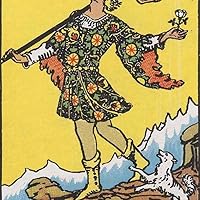
A seminal book on modern tarot, written by arguably one of the most influential tarot writers of the 20th century. Grey basically invented the concept of the Fool's Journey, which has grown to become one of the foundational intrpretations of the tarot in modern times.
Of course this book is a little dated; we no longer have to worry about matters of warring kingdoms or espionage. But there is still a lot to be gleaned in this book for people who are new to the tarot.
For people who are seeking a more modern interpretation of Gray's writings, Rachel Pollack's New Tarot Handbook is an excellent alternative.
Of course this book is a little dated; we no longer have to worry about matters of warring kingdoms or espionage. But there is still a lot to be gleaned in this book for people who are new to the tarot.
For people who are seeking a more modern interpretation of Gray's writings, Rachel Pollack's New Tarot Handbook is an excellent alternative.

February 6, 2022
This is a solid book on Tarot.
Next to the symbolisms of each card, fundamental links are made to the theoretical model of the Tree of Life and other concepts from Kabbalah, astrology, metaphysics, advaita vedanta, and Hinduism.
Some of these are a bit random, but others help to provide a strong deeper understanding of what the Tarot system is pointing to; the energetic universe behind life on Earth.
The cards are all explained, rather succinctly, but complete enough plus the reversed meaning is included.
Several layout methods are included:
- the Keltic Method
- the Horoscope Method
- the Tree of Life Method
I recommend this for beginners so they are thrown into the depths a bit.
Next to the symbolisms of each card, fundamental links are made to the theoretical model of the Tree of Life and other concepts from Kabbalah, astrology, metaphysics, advaita vedanta, and Hinduism.
Some of these are a bit random, but others help to provide a strong deeper understanding of what the Tarot system is pointing to; the energetic universe behind life on Earth.
The cards are all explained, rather succinctly, but complete enough plus the reversed meaning is included.
Several layout methods are included:
- the Keltic Method
- the Horoscope Method
- the Tree of Life Method
I recommend this for beginners so they are thrown into the depths a bit.
August 9, 2019
While this isn't a know-all see-all guide, this guide by Eden Gray is excellent for someone starting out with Tarot. It's especially excellent if you're someone studying the art, since there's a good amount of space for marginalia, which I used to put info from multiple sources into. Not enough information exists in the book about reverses. If you are just dipping your toes into tarot, consider this book, else move to more advance literature as this will feel unsatisfactory.

June 23, 2020
The first book I ever read on Tarot, and it's still as pertinent as it was way back in 19::mumble mumble:: Problem is, it's pretty dated, and goes through the Rider-Waite-Smith deck, of which most decks are now copies. Not necessarily what I would consider a great book on Tarot for beginners, but at the time, it's all I could get my hands on. It's four stars for nostalgia (six of cups).

February 22, 2021
A great introduction to the Tarot card. Using the standard 78 card (56 card minor and 22 card major arcana) the author goes through each card and both its positive and negative message.
Besides the beauty of some of these decks the author goes into their back ground and history and their links to various historical societies.
Recommended if you want a quick guide to tarot
Besides the beauty of some of these decks the author goes into their back ground and history and their links to various historical societies.
Recommended if you want a quick guide to tarot

August 2, 2018
Pretty outdated in many regards but still full of helpful information. Was particularly interested in the chapters dedicated to tarot and its relationship to numerology, the Kabbalah, and astrology- but wouldn’t recommend this to someone who is new to tarot.
August 8, 2017
Closer to 3.5, but 3 is good enough. Not a bad book for beginners, but still leaves something to be desired as far as information.

March 28, 2020
This was the very first tarot book I'd ever read ... I was 13 years old!
Read
July 25, 2020Many useful
April 4, 2021
Rating this from a newb perspective. Feels like a thorough rundown historically and gives a nice feel for how to use the cards.
September 18, 2021
Favorite tarot book thus far. I prefer it over the modern books on tarot. I love how it has depth and is to the point.
Displaying 1 - 30 of 57 reviews